- Tailoring = fitting the approach to the project. Models, methods and artifacts = the toolbox you tailor from.
- Two parts: Tailoring (slides 3–22) · Models, methods and artifacts (23–41).
- Tailoring = DELIBERATE adaptation of the approach, governance and processes to fit the environment and the work.
- Example: a nuclear reactor needs far more rigor and checks than an office building. Criticality drives the amount of process.
Related real-exam questions
Seen again
🎯 How this can come up · 2 questions
Tailoring is best defined as:
Correct: The deliberate adaptation of the PM approach, governance and processes to the environment and work.
A critical project such as a nuclear reactor needs less rigor than an office building because experts run it.
False. More criticality means more rigor, checks and reporting.
- Seven competing demands: speed, low cost, value, quality, compliance, stakeholder satisfaction, adapting to change. You cannot maximize all of them, which is why you tailor.
- Three benefits: the team commits more (they helped design the approach), a customer focus, and efficient use of resources.
🎯 How this can come up · 1 question
Which is a stated benefit of tailoring?
Correct: More commitment from team members who helped tailor the approach.
- Five things you can tailor: Life cycle and approach, Processes, Engagement, Tools, Methods and artifacts. Slides 8–12 take one each.
🎯 How this can come up · 1 question
Which of the following is NOT listed as a project aspect that can be tailored?
Correct: The laws of the country.
- Data centre example: building = predictive, computing capability = iterative, so the whole project is hybrid. Each team may only see its own approach.
Seen again
🎯 How this can come up · 1 question
A new data centre: the building is constructed in fixed phases, while the computing capabilities are explored in iterations. What is the overall approach?
Hybrid: predictive for the physical construction and iterative for the computing capabilities. At the project level the combination is hybrid.
- Five ways to tailor a process: Add, Modify, Remove, Blend, Align.
🎯 How this can come up · 1 question
Combining elements of two existing processes into one is which process-tailoring action?
Correct: Blended.
- Engagement tailoring: People (who, with which skills), Empowerment (how much freedom), Integration (with contractors and partners).
- The team usually knows the best tools, but cost and leadership constraints can override its choice.
- Tailor methods (how you work) and artifacts (documents and templates) to the project and the organization.
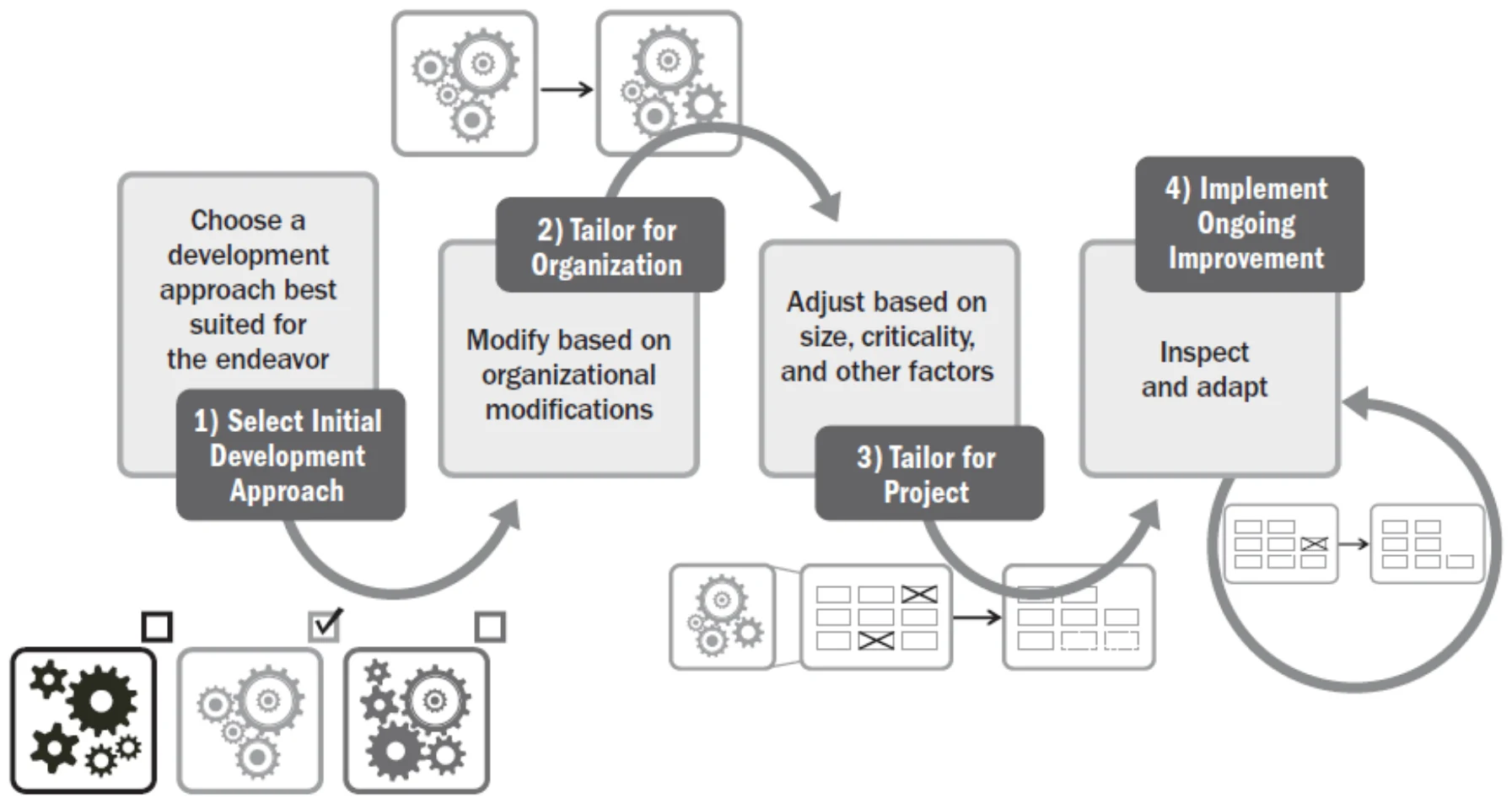
- Four steps: Select the initial approach → Tailor for the organization → Tailor for the project → Implement ongoing improvement. The last step loops.
🎯 How this can come up · 1 question
What is the correct order of the tailoring process?
Correct: Select initial approach → tailor for organization → tailor for project → ongoing improvement.
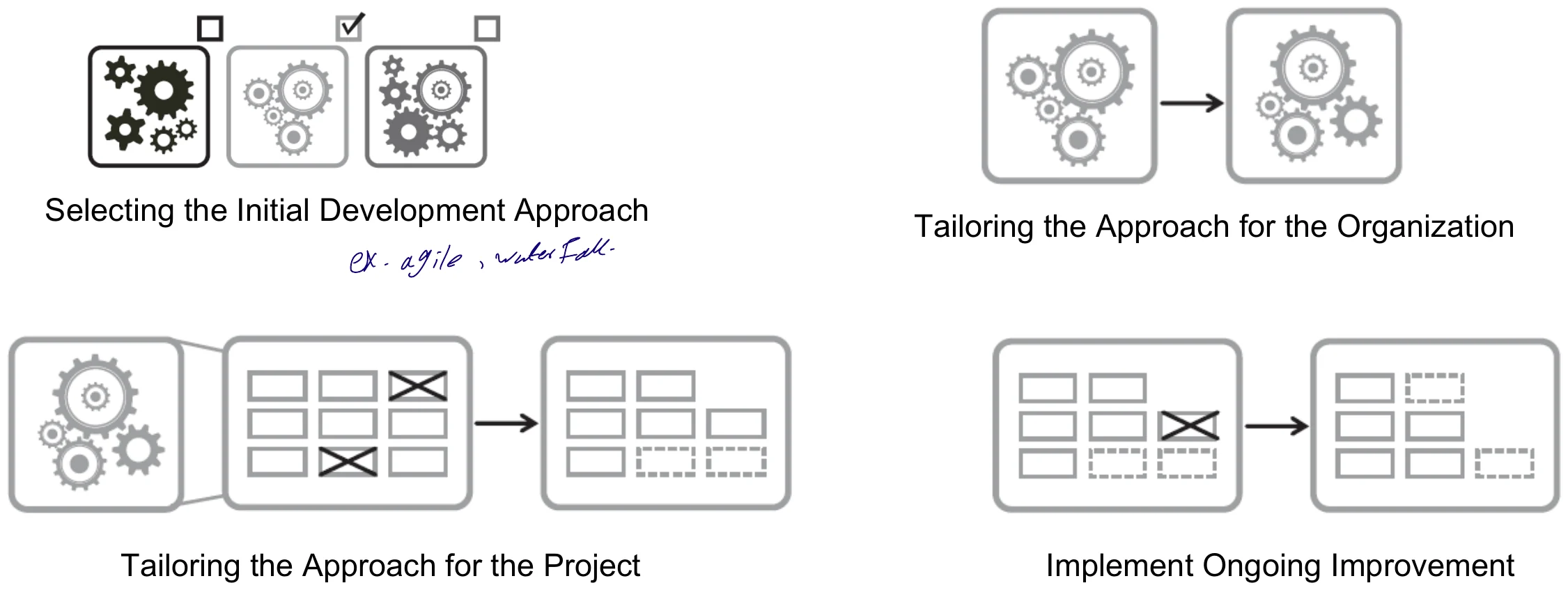
Under “Selecting the initial development approach”: “ex: agile, waterfall”.
- Step 1 is choosing the base approach (agile, waterfall, hybrid). The later steps refine it.
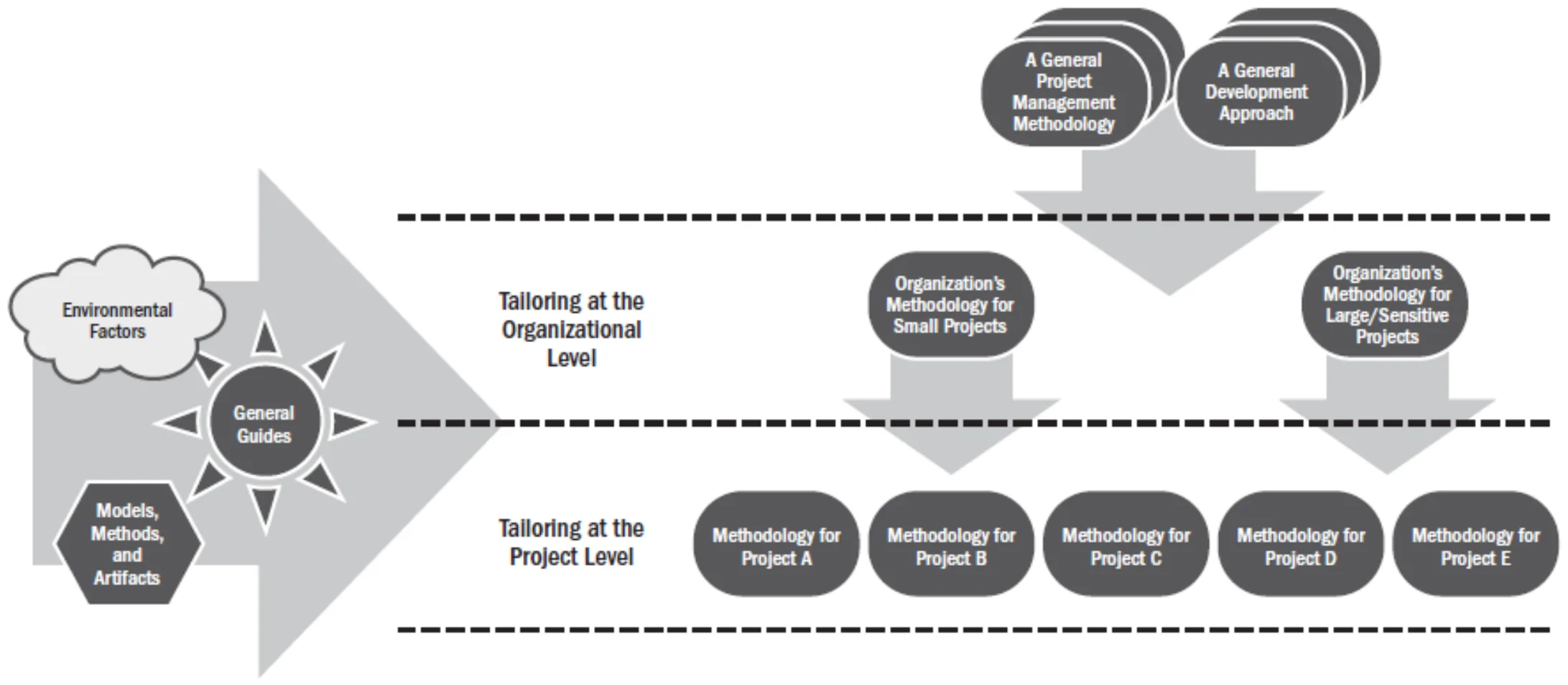
- Two levels: the organization first produces methodologies for small and large projects; each project then tailors further (methodologies A–E).
- Three project attributes: Product/deliverable, Project team, Culture. Slides 17–19 expand each one.
- Product attributes: compliance/criticality, type, industry, technology, time frame, requirement stability, security.
- Team attributes: size, geography, distribution, experience, access to the customer.
- Culture = shared norms, beliefs and practices. Does it fit a formal, an agile, a risk-averse or an innovative approach?
- Evaluate: buy-in, trust, empowerment, organizational culture.
- Tailoring never ends. It continues through progressive elaboration.
- Review points, phase gates and retrospectives are the chances to inspect and adapt.
🎯 How this can come up · 1 question
Retrospectives are an opportunity to further tailor the process.
True.
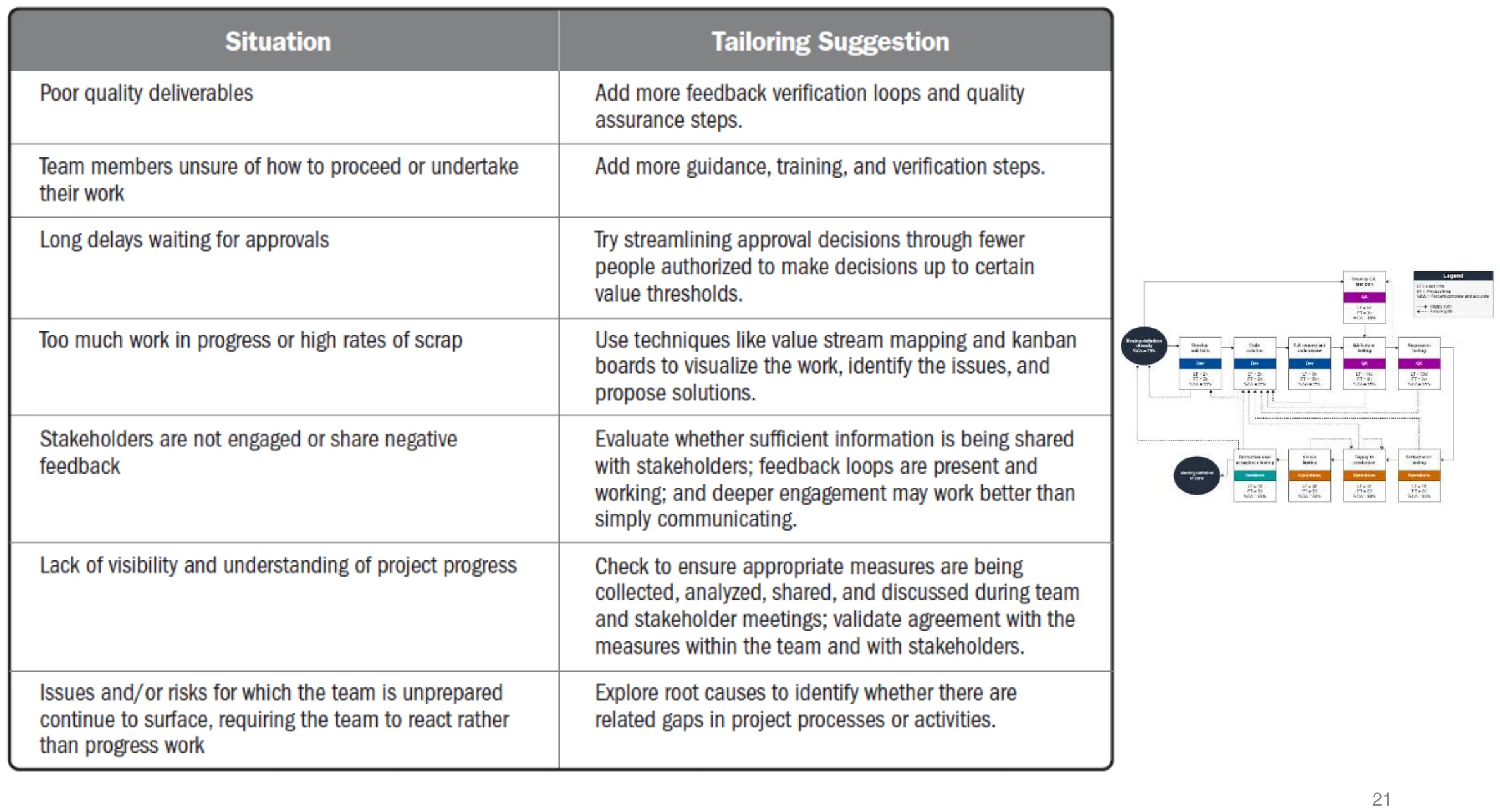
- Pattern: problem → add the missing control. Poor quality → more verification. Slow approvals → fewer approvers. Too much work in progress → value-stream mapping and kanban.
🎯 How this can come up · 1 question
Your team keeps waiting days for approvals. What tailoring suggestion does the table give?
Streamline approval decisions: have fewer people authorized to decide, up to certain value thresholds.
- One-line summary: tailor the people, processes and tools in 4 steps.
🎯 How this can come up · 1 question
What is tailoring and what are the four steps of the tailoring process?
Tailoring is the deliberate adaptation of the project-management approach, governance and processes to suit the environment and the work. It covers people, processes and tools. The four steps: (1) select the initial development approach, (2) tailor for the organization, (3) tailor for the project, (4) implement ongoing improvement through reviews, phase gates and retrospectives.
- This is a menu, not a checklist.
Next to Artifact: “Project deliverable is a good example.”
- Model = a way of THINKING (explains how something works).
- Method = a way of DOING (gets a result).
- Artifact = a THING (template, document, deliverable).
Related real-exam questions
🎯 How this can come up · 2 questions
A risk register is best classified as a:
Correct: Artifact.
“Estimating” is classified as a:
Correct: Method.
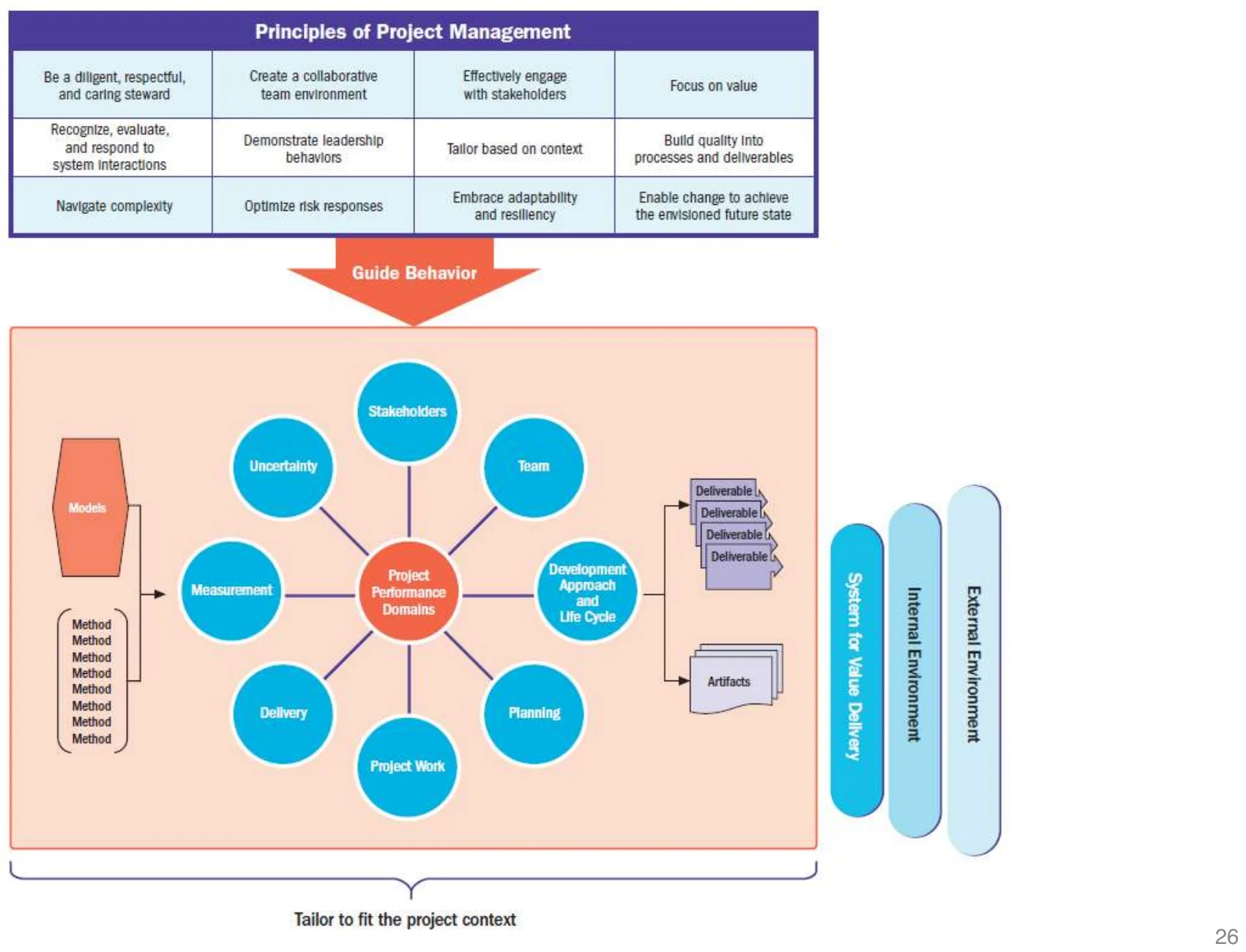
- The whole PMBOK v7 picture: principles → domains → models, methods and artifacts, all tailored to the context.
- Every tool has a cost. Avoid anything that duplicates work, is not useful, misleads, or serves one person instead of the team.
Next to the title: “don’t memorize, understand”.
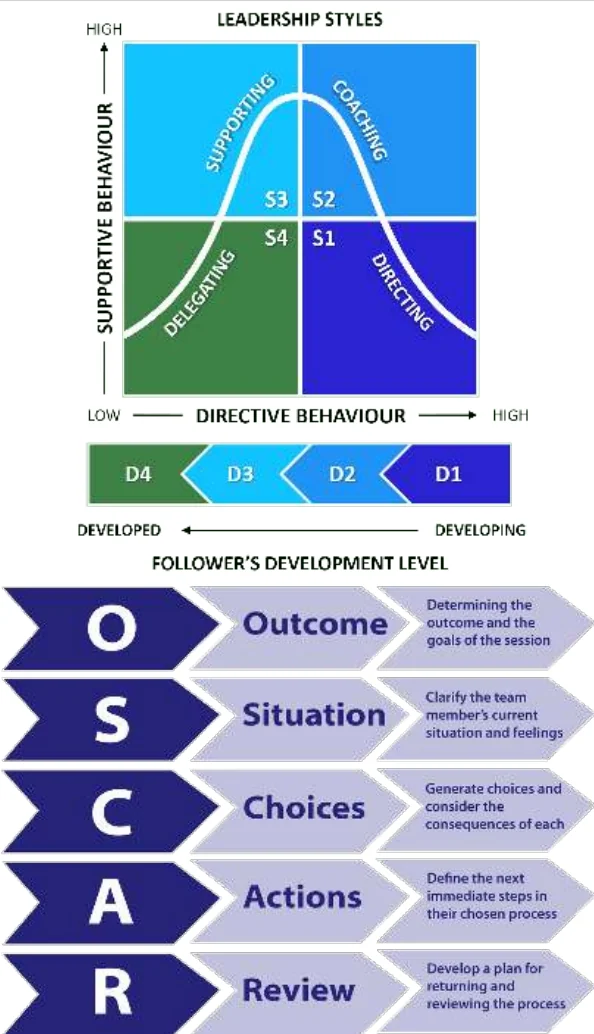
- Situational Leadership II: adapt your style (directing → coaching → supporting → delegating) to each member’s development level.
- OSCAR = Outcome, Situation, Choices, Actions, Review: a coaching conversation.
Seen again
🎯 How this can come up · 1 question
Which model helps a PM adapt leadership style to each team member’s development level?
Correct: Situational Leadership II.
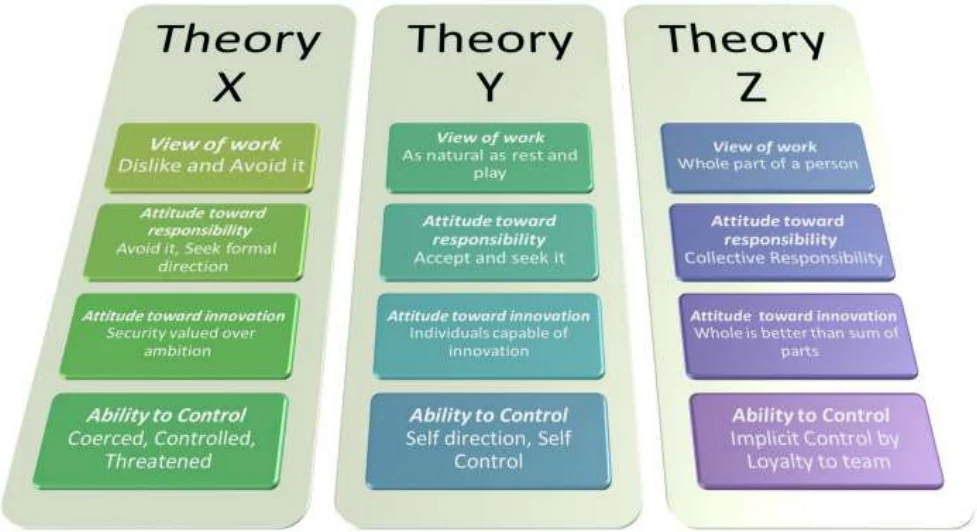
- Herzberg: hygiene factors (salary, conditions) only prevent dissatisfaction; motivators (achievement, recognition) actually motivate.
- Maslow: physiological → safety → belonging → esteem → self-actualization.
- Theory X = people avoid work (control them). Theory Y = people want to work (empower them). Theory Z = long-term loyalty and involvement.
Related real-exam questions
🎯 How this can come up · 2 questions
In Herzberg’s model, which is a MOTIVATOR rather than a hygiene factor?
Correct: Recognition.
A manager who assumes employees dislike work and must be closely controlled follows:
Correct: Theory X.
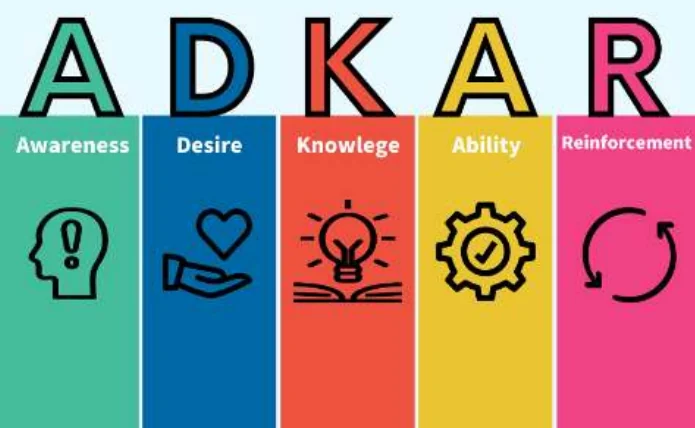
- ADKAR (individual change): Awareness → Desire → Knowledge → Ability → Reinforcement.
- Kotter’s 8 steps (organizational change): urgency → coalition → vision → volunteer army → remove barriers → short-term wins → sustain → institute.
🎯 How this can come up · 1 question
Which change model focuses on individual transformation?
Correct: ADKAR.
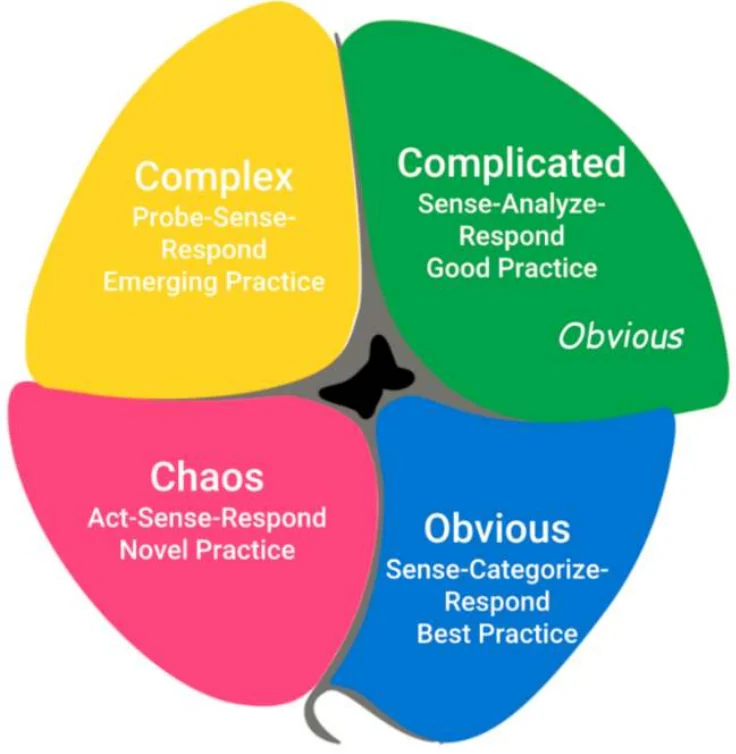
- Cynefin: Obvious → best practice; Complicated → expert analysis; Complex → probe and experiment; Chaos → act first.
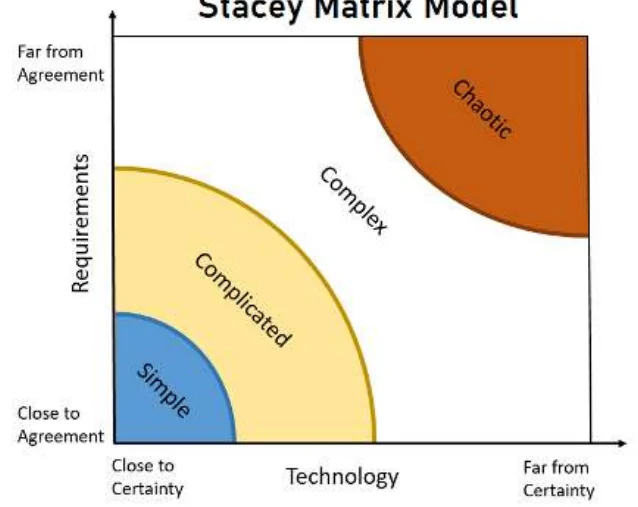
- Stacey matrix: the more uncertain the requirements and technology, the more agile you go.
🎯 How this can come up · 1 question
Which model helps decide between waterfall, agile or hybrid based on requirement and technology uncertainty?
Correct: Stacey matrix.
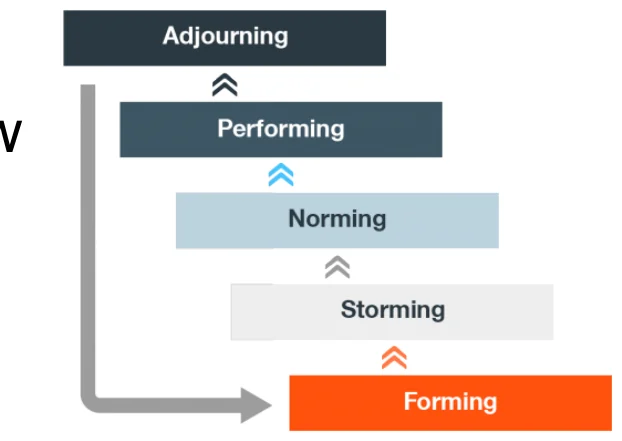
- Tuckman: Forming → Storming → Norming → Performing → Adjourning. Chapter 3 tests the stages.
- Drexler/Sibbet: 7 stages ending in renewal.
Related real-exam questions
🎯 How this can come up · 1 question
In Tuckman’s ladder, members competing for leadership and struggling with group processes is:
Correct: Storming.
- Salience model: prioritize stakeholders by power, legitimacy and urgency.
Related real-exam questions
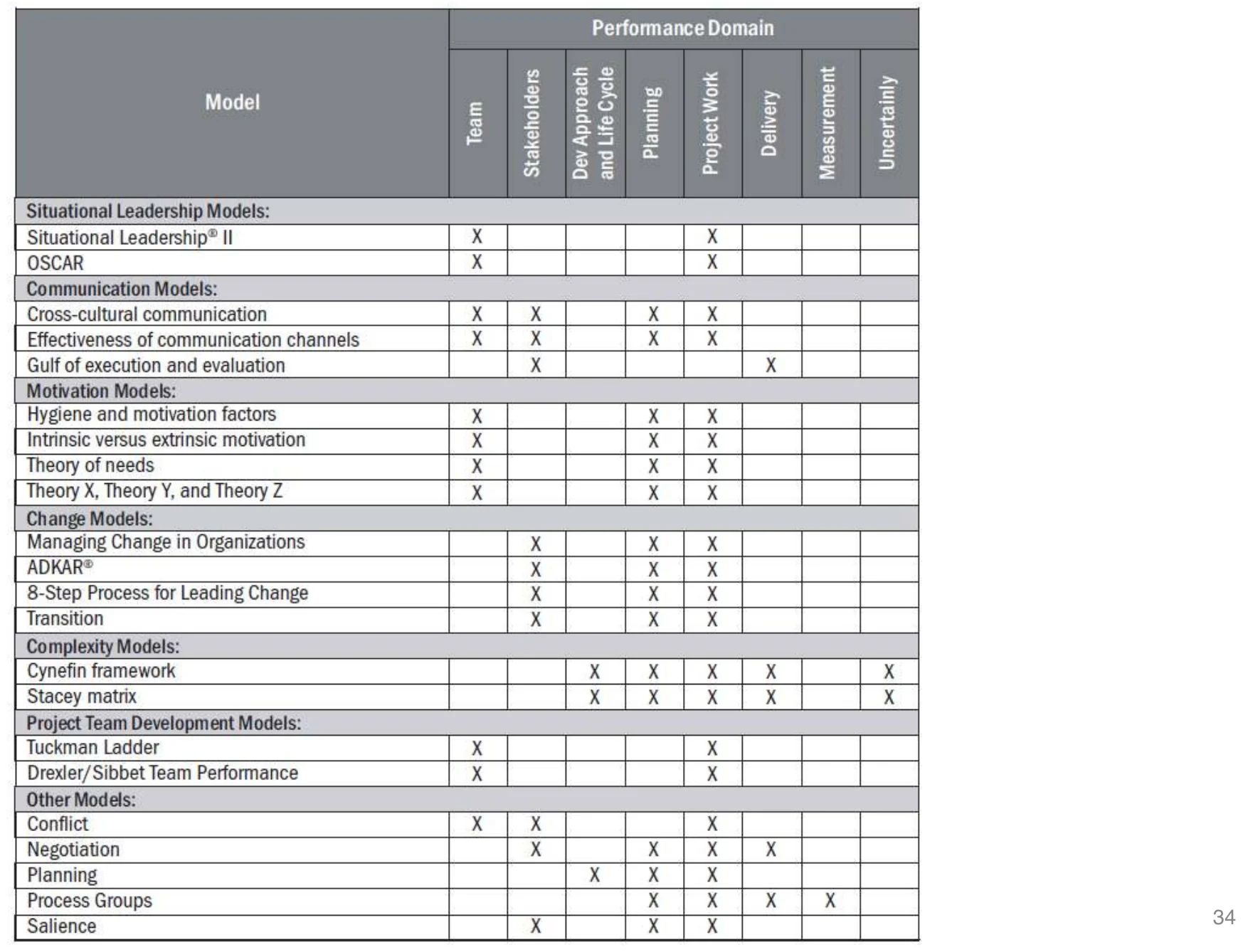
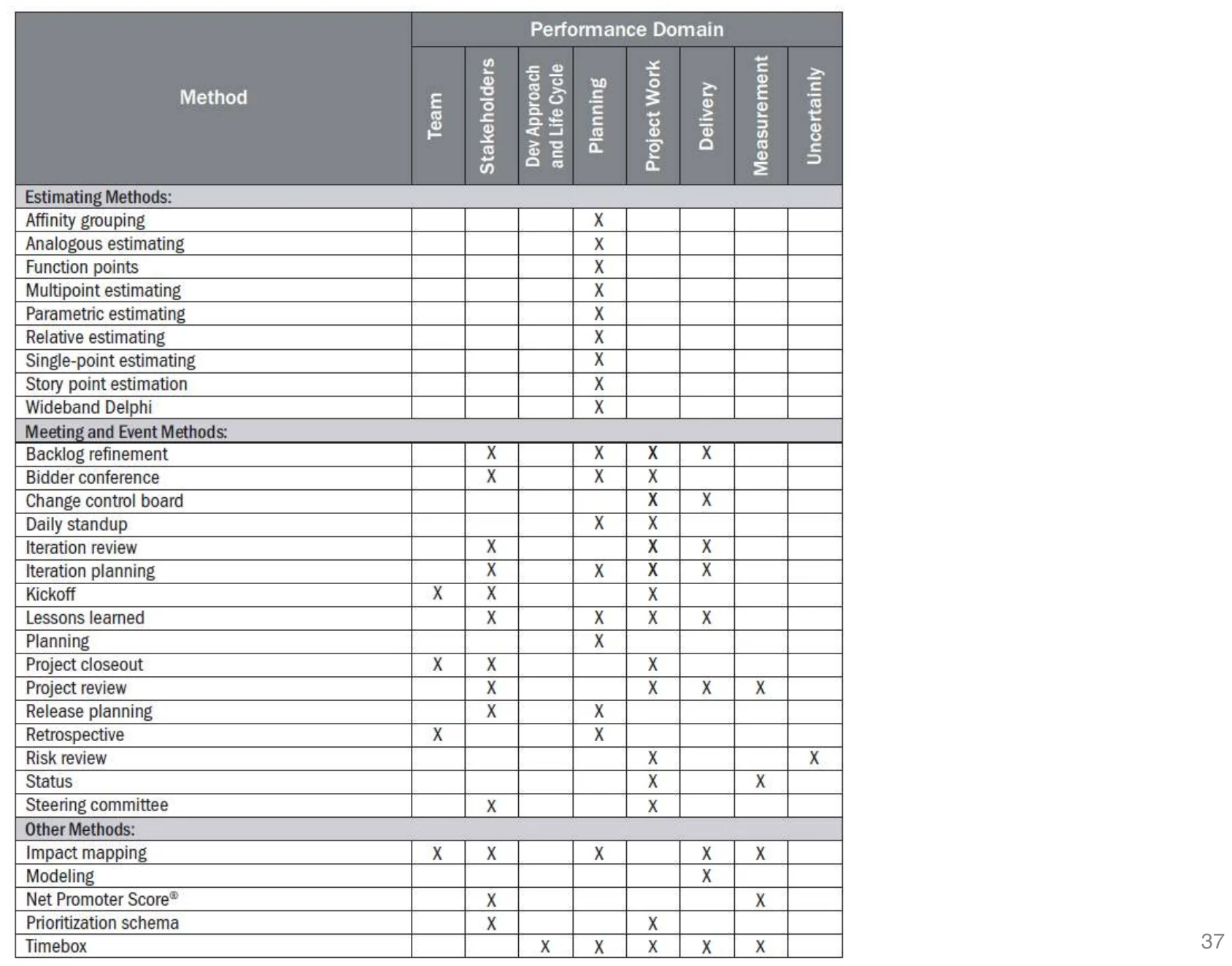
- Reference table: which performance domains each item is useful in. Not for memorizing. Use it to pick a tool for a scenario.
- Method families: data gathering and analysis, estimating, meetings and events, other.
Seen again
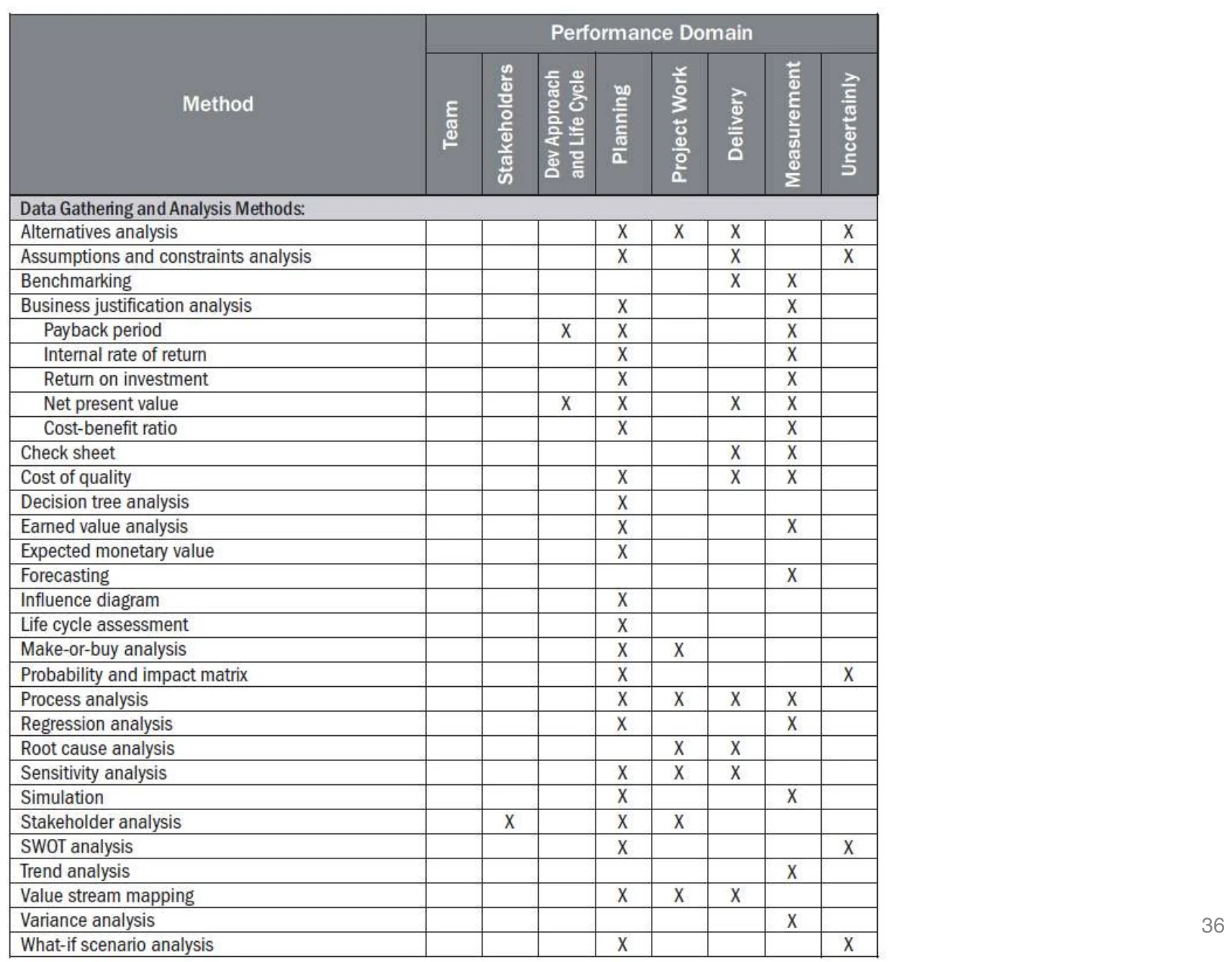
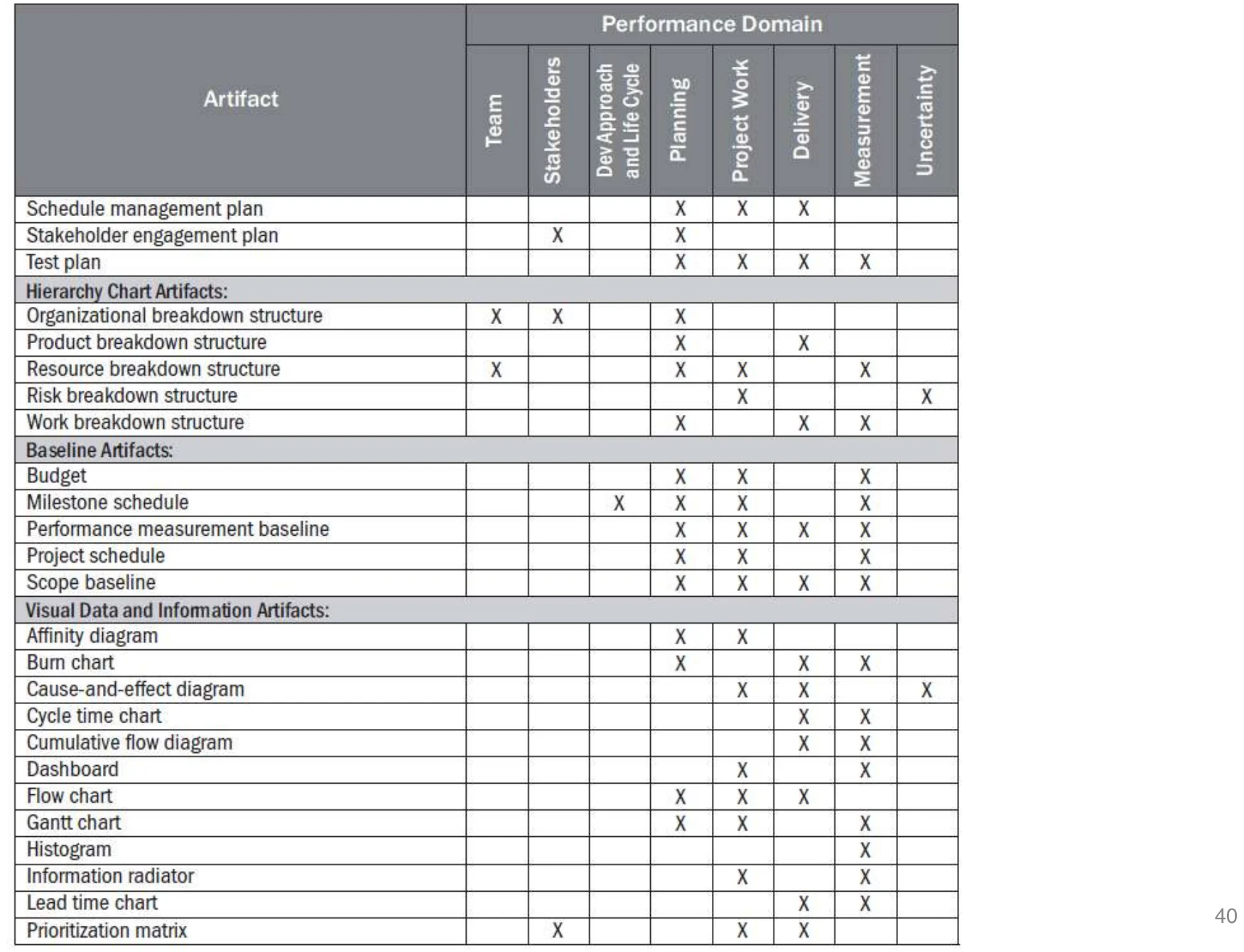
- Reference table: which performance domains each item is useful in. Not for memorizing. Use it to pick a tool for a scenario.
- Strategy artifacts: strategic plan, vision and mission, roadmap, business case.
- Logs and registers: issue log, risk register, communication log.
🎯 How this can come up · 1 question
A business case belongs to which artifact category?
Correct: Strategy artifacts.
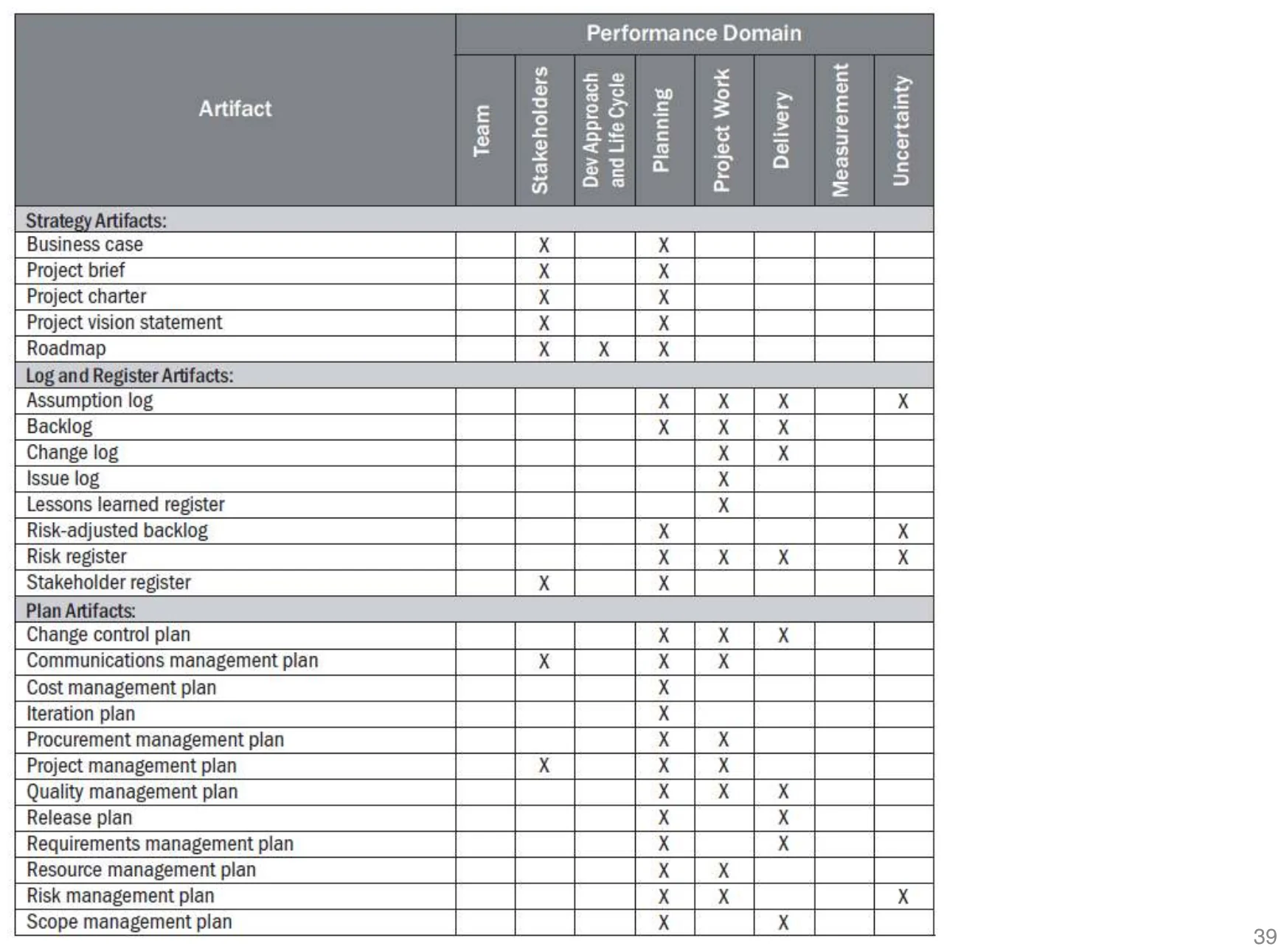
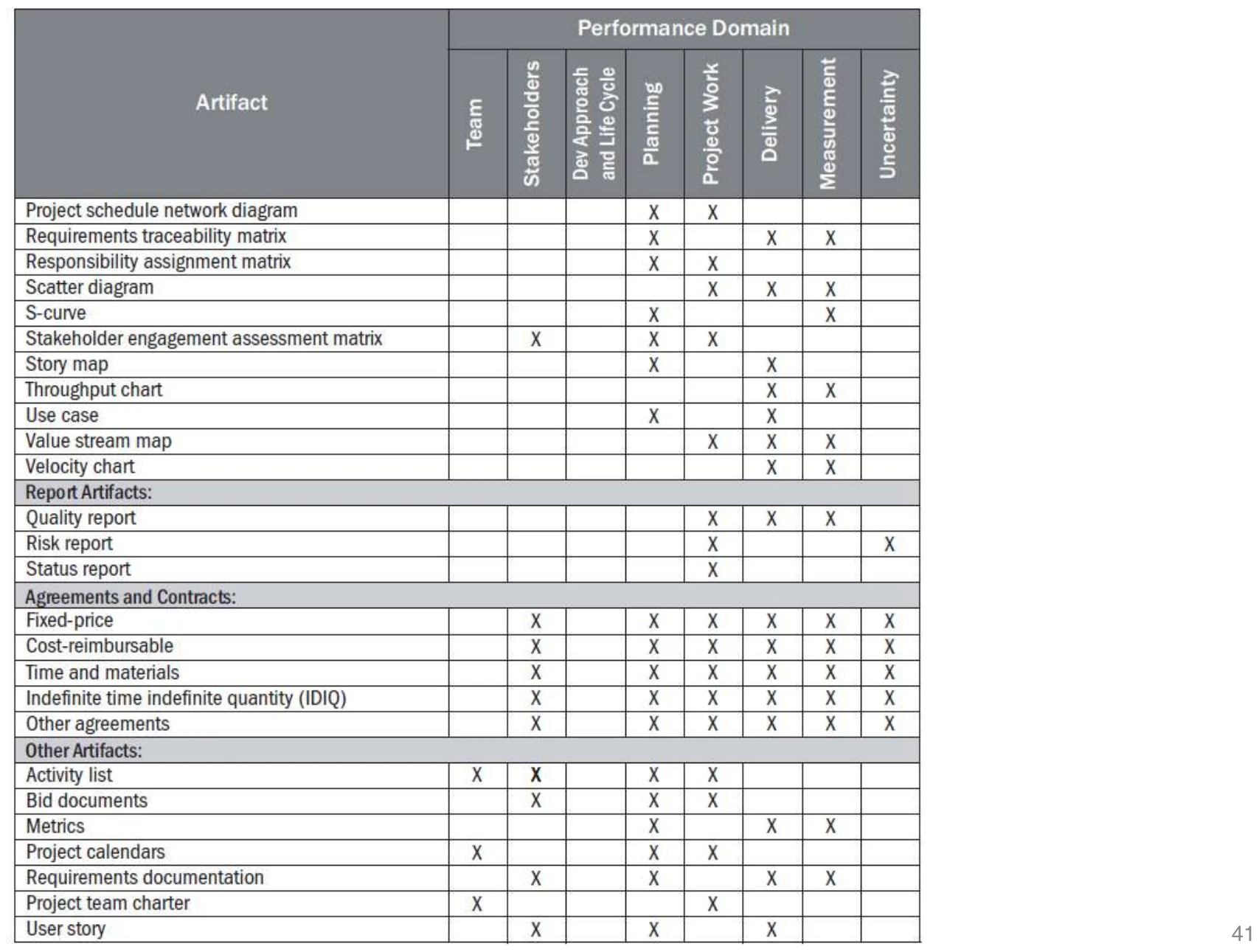
- Reference table: which performance domains each item is useful in. Not for memorizing. Use it to pick a tool for a scenario.
No slides match this filter.