SE423 · Annotated SlidesChapter 8 — Stakeholders
Chapter 8 · Annotated slides

Stakeholders

Stakeholder management (inputs, tools, outputs), engagement levels, communication planning, push/pull/interactive communication, communication channels and the mapping models. Final 242 asked for the process’s inputs/techniques/outputs, channels for 7 people and an engagement-level table with push/pull/interactive; Final 251 asked how to identify and prioritize stakeholders.
Slide text Instructor’s marks (from the original PDF) Study notes Highlight: key words Tips, tricks & traps Seen again elsewhere How it can come up

Stakeholders

SE423: Software Project Management
1
Exam weight Low
  1. Stakeholder management → communication → stakeholder communication (mapping and engagement).

Outline

  • Stakeholder Management
  • Communication
  • Stakeholders Communication
2
Exam weight Low
  1. Three parts, all exam-relevant.

Stakeholder Management

4
★ Past exam

Introduction

  • Stakeholder Management is the process of developing appropriate management strategies for all project stakeholders
  • The process goal is to effectively engage stakeholders throughout the project life cycle
  • Analyze their needs, interests, and potential impact on project success
  • The process provides a plan for interacting with project stakeholders with the project's interests as its goal①
5
Exam weight Medium
  1. Stakeholder management = develop strategies → engage → analyze → plan interactions.
★ Past exam

Stakeholder Management

Inputs

  • Project charter: Authorizes the project and names key stakeholders (e.g., sponsor, client).
  • Procurement documents: Reveal external stakeholders like vendors, contractors, or partners.
  • Enterprise environmental factors: like culture, regulations, or market conditions
  • Organizational process assets: Internal resources like templates, historical stakeholder lists, lessons learned, and communication policies.①

Tools & Techniques

  • Stakeholder analysis: identification of stakeholders, their interests, influence, and potential impact.
  • Expert judgment
  • Meetings/Company visits②

Outputs

  • Stakeholder register
  • Stakeholder management plan③
6
Exam weight High
  1. Inputs: charter, procurement docs, enterprise environmental factors, organizational process assets.
  2. Tools: stakeholder analysis, expert judgment, meetings.
  3. Outputs: stakeholder REGISTER and stakeholder MANAGEMENT PLAN.
TipThis slide answers Final 242 Q3.1 almost word for word. Learn two items per column.
🎯 How this can come up · 2 questions
Written

How does the stakeholder management process contribute to project success? Give two inputs, techniques and outputs (Final 242).

MCQ

Which is an OUTPUT of stakeholder management?

Stakeholder register

  • The stakeholder register is the primary output from the Identify Stakeholders process. For each stakeholder, the register contains:
    • Name
    • Position in organization
    • Location
    • Role in project
    • Contact information
    • List of stakeholder’s major requirements
    • List of stakeholder’s main expectations
    • Potential influence on the project
    • Phase in the lifecycle of most interest
    • A stakeholder classification. This may include internal/external; supporter/neutral/resister; and high/medium/low influence/power/ impact/interest①
7
Exam weight Low
  1. Register per stakeholder: name, position, role, contact, requirements, expectations, influence, phase of interest, classification (internal/external, supporter/neutral/resister).
★ Past exam

Stakeholders

  • Stakeholder engagement levels can be classified as:
    • Unaware . Unaware of project and its potential impacts
    • Resistant . Aware of project and its potential impacts and resistant to the changes anticipated by the project
    • Neutral . Aware of project and neither supportive nor resistant
    • Supportive . Aware of project and its potential impacts and supportive of the changes anticipated by the project
    • Leading . Aware of project and its potential impacts and actively engaged in ensuring the project’s success①
8
Exam weight High
  1. Five engagement levels: Unaware → Resistant → Neutral → Supportive → Leading.
Memory trick“U R No Strong Leader”: Unaware, Resistant, Neutral, Supportive, Leading.
🎯 How this can come up · 2 questions
Written

Compare stakeholder engagement levels and suggest the best communication method (pull, push or interactive) for each (Final 242).

MCQ

A stakeholder who is aware of the project and actively engaged in ensuring its success is:

Stakeholder management plan

  • The stakeholder management plan identifies the management strategies required to effectively engage stakeholders. It supplements the information in the stakeholder register with:
    • Desired and current engagement levels of key stakeholders
    • Scope and impact of change (due to project) to stakeholders
    • Identified interrelationships and potential overlap between stakeholders
    • Stakeholder communication requirements
    • Information to be distributed to stakeholders, including language, format, content, and level of detail
    • Reason for the distribution of that information and the expected impact on stakeholder engagement
    • Time frame and frequency for the distribution of required information to stakeholders
    • Method for updating and refining the stakeholder mgmt plan as the project progresses and develops
  • It contains sensitive information, appropriate precautions are needed to safeguard its information and prevent its inappropriate disclosure①
9
Exam weight Low
  1. The management plan adds current vs DESIRED engagement, communication needs and frequency. It is SENSITIVE, so protect it.

Stakeholder management plan

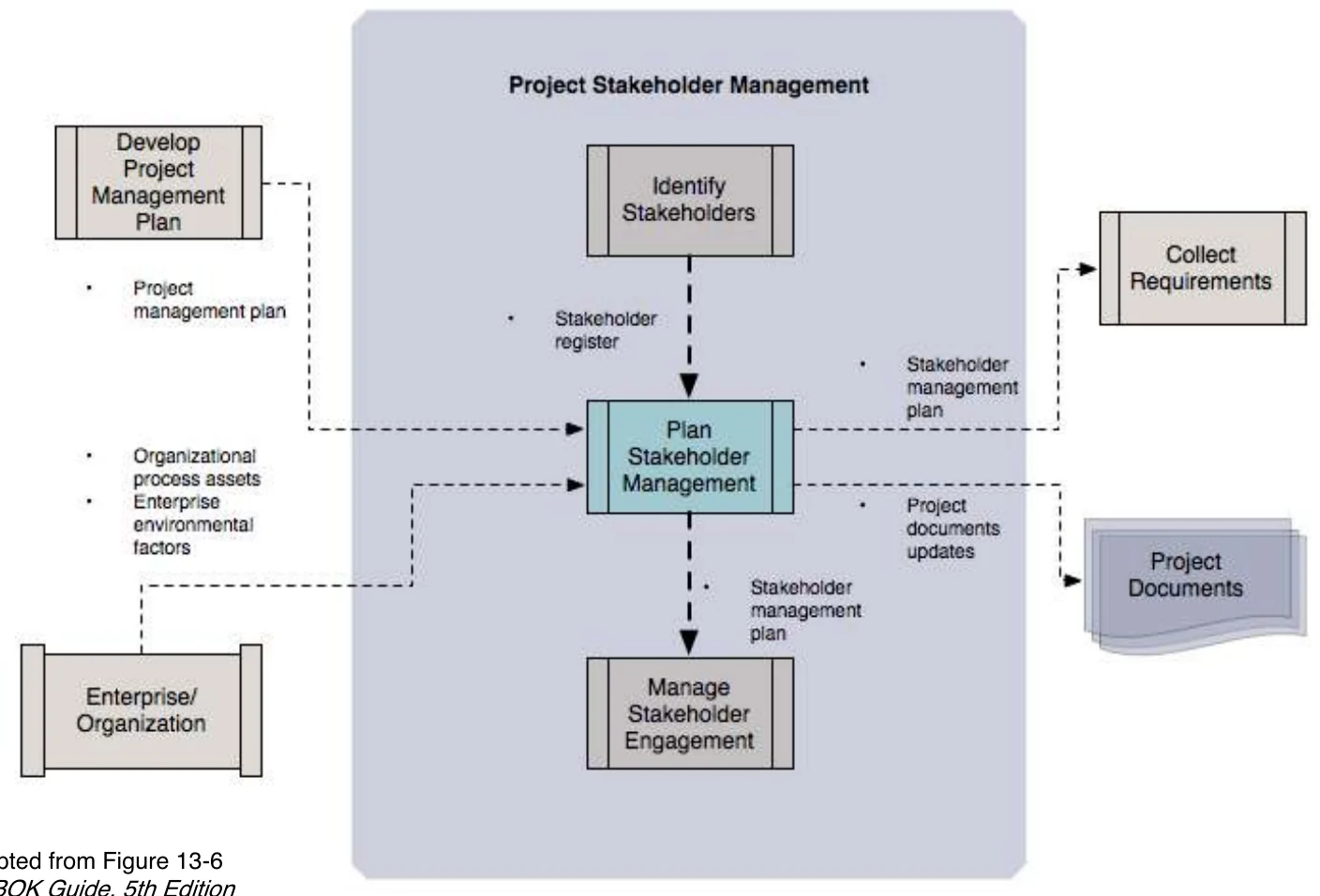
Adapted from Figure 13-6 PMBOK Guide, 5th Edition

11/23/2025

Engagement assessment matrix: C = current, D = desired level per stakeholder
10
Exam weight Medium
  1. C = current, D = desired engagement. The gap shows where to act.
🎯 How this can come up · 1 question
MCQ

In the stakeholder engagement assessment matrix, “C” and “D” mean:

Useful if conditions warrant

  • From the agile perspective, identifying stakeholders is a valuable process: the more inclusive your understanding of stakeholders, the better
  • Agile promotes the idea that transparency is the best policy (builds trust)
    • Agile utilizes information radiators: information tools (e.g., a project wiki) that make project information, including progress and impediments, visible to all interested stakeholders
    • This minimizes the chances for miscommunication and effectively short-circuits rumors①
11
Exam weight Low
  1. Agile: be inclusive and transparent; information radiators (e.g., a wiki) reduce rumors.

Useful if conditions warrant

  • In some cases, Stakeholder Management advocates tailoring information access and flow to the individual stakeholder
  • This approach may be justified in some situations: volatile, highly-politicized project, for example, it is not without its risks:
    • “Project managers should be aware of the sensitive nature of the stakeholder management plan and take appropriate precautions. For example, information to stakeholders who are resistant to the project can be potential①ly damaging, and due consideration should be given regarding the distribution of such information.”
12
Exam weight Low
  1. Tailoring information per stakeholder can be justified in political projects but is risky.

Important Stakeholders

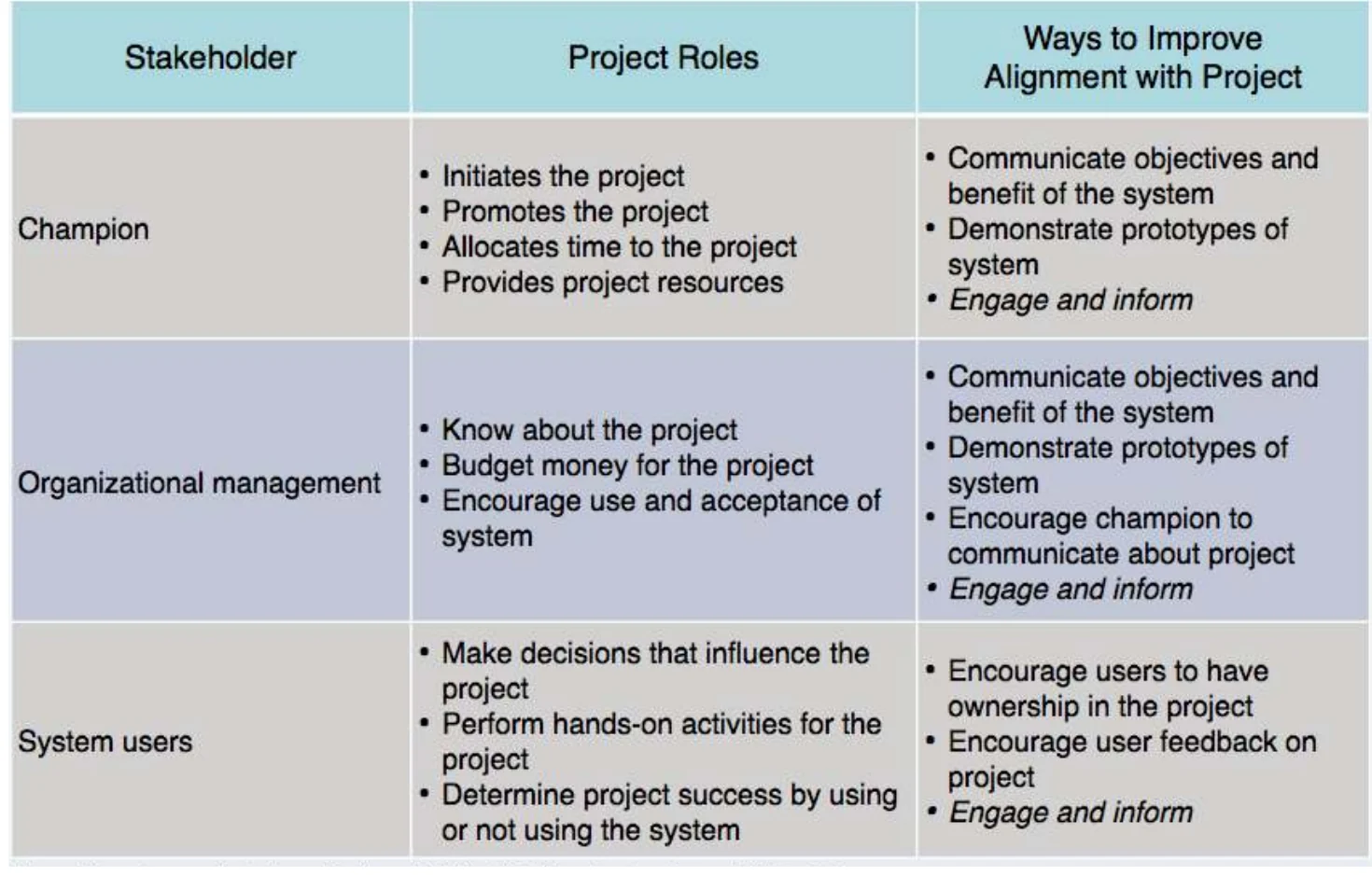
Champion: Often a senior leader, sponsor, or influential stakeholder

11/23/2025

Important stakeholders such as the champion
13
Exam weight Low
  1. Champion = a senior, influential supporter who promotes the project.

The Need for Stakeholder Reporting

  • DevOps and Agile needs proper tooling, particularly around reporting to key stakeholders, to be really successful.
  • As DevOps has evolved a complex tool chain has emerged to help manage Agile projects.
  • Because agile processes are iterative it is sometimes difficult for stakeholders to really understand what is happening in projects or whether projects are on time and on budget.①
14
Exam weight Low
  1. Agile/DevOps need good reporting tools so stakeholders understand iterative progress.

The Need for Stakeholder Reporting

  • These stakeholders include not only Dev and Ops but management, product management, marketing, sales, finance etc.
  • The problem is increased when stakeholders need to look across multiple projects.
  • Business value metrics dashboards provide managers with real-time automated reporting on best-practice KPIs.
  • Customers can set targets and automate KPI reporting in order to understand the agile processes that need to be improved.①
15
Exam weight Low
  1. Dashboards give real-time KPI reporting across projects.

Communication

16

Communication

  • Communication planning overlaps with stakeholder identification, analysis, prioritization, and engagement.
  • Communication is the most important factor in engaging with stakeholders effectively.①
17
Exam weight Medium
  1. Communication is THE key to engaging stakeholders.

Communication

  • Planning communication for the project entails considering the following:
    • Who needs information?
    • What information does each stakeholder need?
    • Why should information be shared with stakeholders?
    • What is the best way to provide information?
    • When and how often is information needed?
    • Who has the information needed?
  • There may be different categories of information, such as internal and external, sensitive and public, or general and detailed.
  • Analyzing the stakeholders, information needs, and categories of information provides the foundation for establishing the communications processes and plans for the project.①
18
Exam weight Low
  1. Plan: who needs what, why, best way, when/how often, who has it.
Memory trickWho · What · Why · How · When · Who-has.

Types of Communication

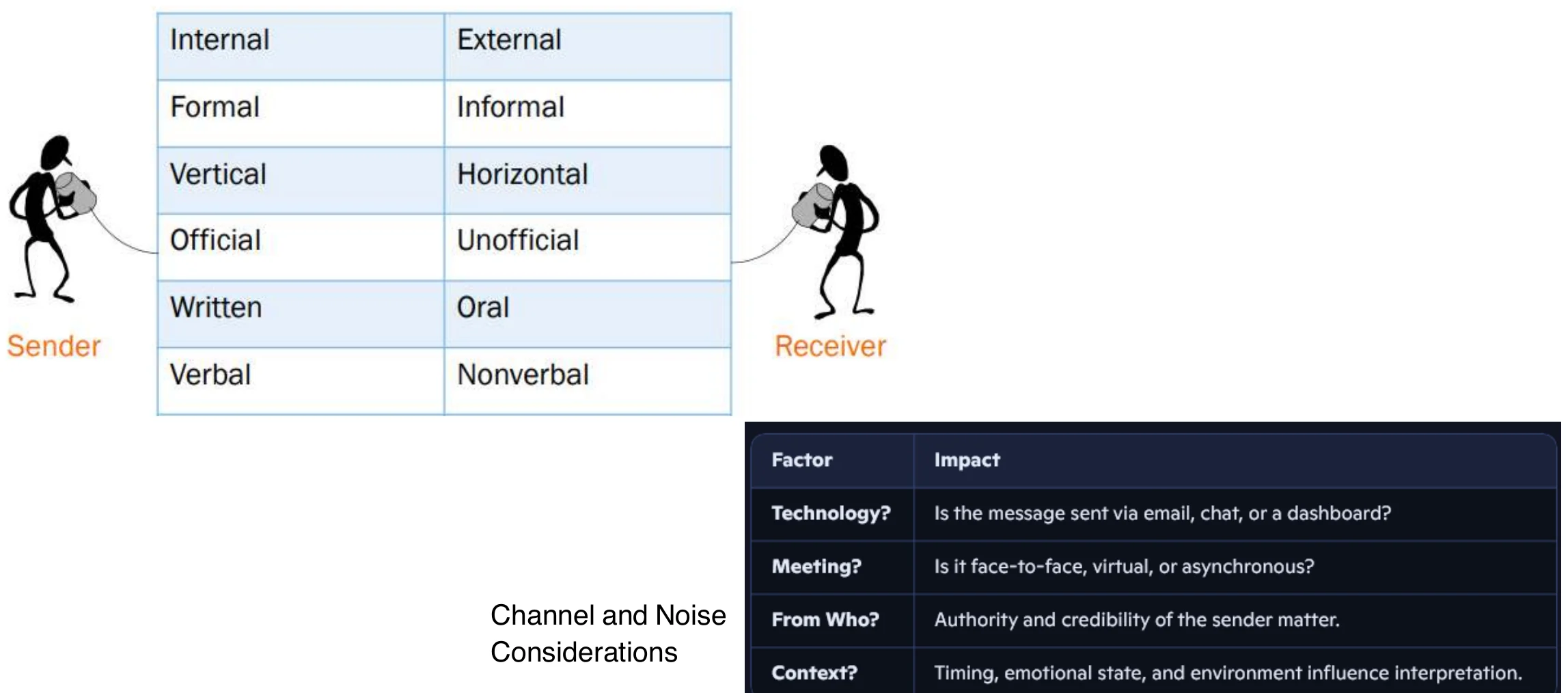
Channel and Noise Considerations

Internal/external, formal/informal, vertical/horizontal, official/unofficial, written/oral, verbal/nonverbal; channel and noise considerations
19
Exam weight Low
  1. Communication dimensions: internal/external, formal/informal, vertical/horizontal, official/unofficial, written/oral, verbal/nonverbal.
★ Past exam

Communication Concepts

  • Interactive vs. Push vs. Pull Communication
  • To achieve meeting Success
    • Send notice in advance / Time limit for the meeting
    • Regular but not too frequent
    • Clear purpose and agenda announced beforehand
    • Assign deliverables/action items from the meeting w/ clear time limits and distribution channels
    • Document and publish meeting minutes
  • Communication Channels
    • # Communication Channels = N(N − 1) / 2, where N = the number of people①
  • Communication Blockers (no agenda, poor timing, ...)
20
Exam weight High
  1. Channels = N(N−1)/2. Team of 7 → 21. This exact calculation was Final 242 Q3.2.
🎯 How this can come up · 2 questions
MCQ

Calculate the number of communication channels for a project team of 7 members.

MCQ

A team grows from 5 to 8 people. How many channels are added?

Plan Communications

  • Consider: culture, expectations, technology, methods, established policies and procedures
  • Plan to Communicate: Who, when, what channel, and with what frequency
  • Plan to Communicate: What Type / Examples Project Documents Charter, PM Plan Schedule/Resource WBS, Resource needs, Meeting Schedule, Work s Assignments (upcoming and current) Status General Status, Impacts to/from other projects, Performance Reports Risks New Risks, Uncertainties, Realized Risks (problems) Change Control Scope changes, CCB communications (change control board)
  • A Change Control Board (CCB) group of stakeholders (project managers, sponsors, technical leads, quality assurance, etc.)

responsible for reviewing, evaluating, and approving or rejecting change requests

in a project.①

21
Exam weight Low
  1. CCB = stakeholders who review, evaluate and approve/reject change requests.

Ethical Responsibility

  • As a PM or Team Member, communication is at the heart of ethical and honest behavior and responsibility.
  • Try to understand the truth
    • Be careful – your perception of the truth may be false
    • Seek the whole truth
  • Be truthful in all communications
    • Communicate honestly, even if the project is in trouble
  • Create an environment where others tell the truth
    • Telling the truth consistently lets project team members know that only the truth is acceptable①
22
Exam weight Low
  1. Ethics: seek the whole truth, be truthful even when the project is in trouble.

Professional Responsibility

  • Only accept assignments you are qualified to complete
    • Lack of qualification presents a major risk to the project
  • Protect proprietary information, Report unethical behavior and violations
  • Maintain an attitude of mutual cooperation
    • Consider other projects and operational work when asking for resources
    • Protect reputations of your team members as it relates to project work
    • Ask what communication method is favored by your stakeholders/team
  • Be direct in dealing with conflict
    • Openly discuss conflict with the other party, not behind their back
  • Continuously look for conflicts of interest and disclose them
    • Treat the search and resolution of conflicts of interest like risks①
23
Exam weight Low
  1. Professional: only accept qualified work, protect information, deal with conflict directly, disclose conflicts of interest.

Communication Management Plan

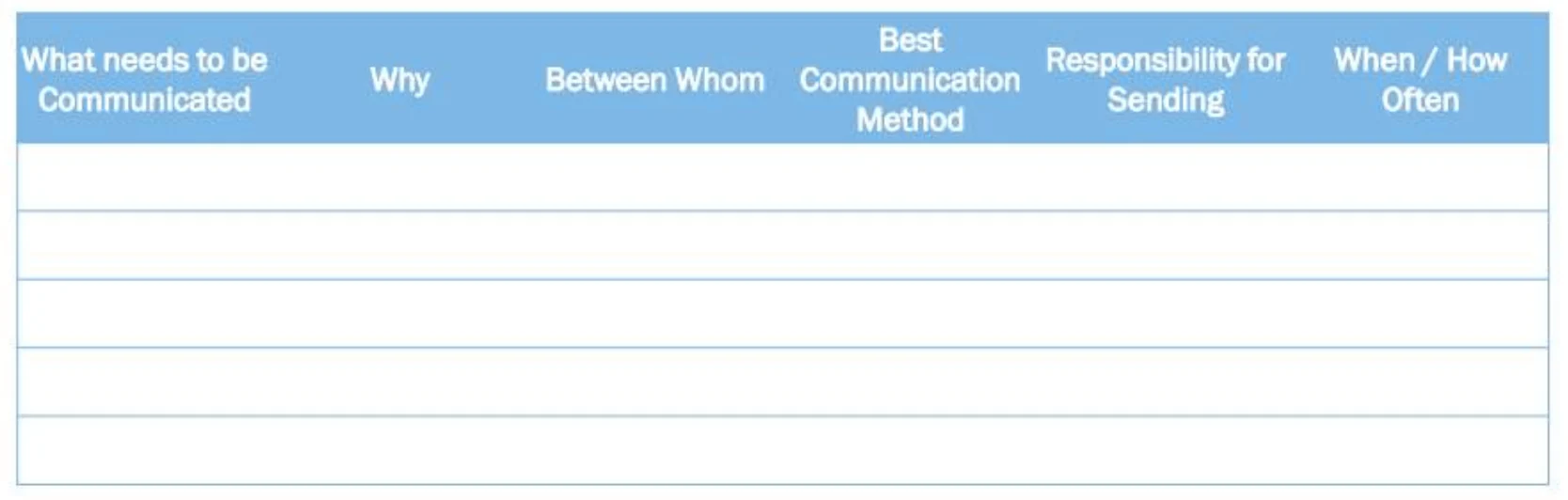
  • Primary output of Plan Communications
Communication management plan columns: what, why, between whom, best method, responsibility, when/how often
24
Exam weight Low
  1. Primary output of plan communications: what, why, who, method, responsible, when.

Stakeholders Communication

25
★ Past exam

Stakeholder Engagement

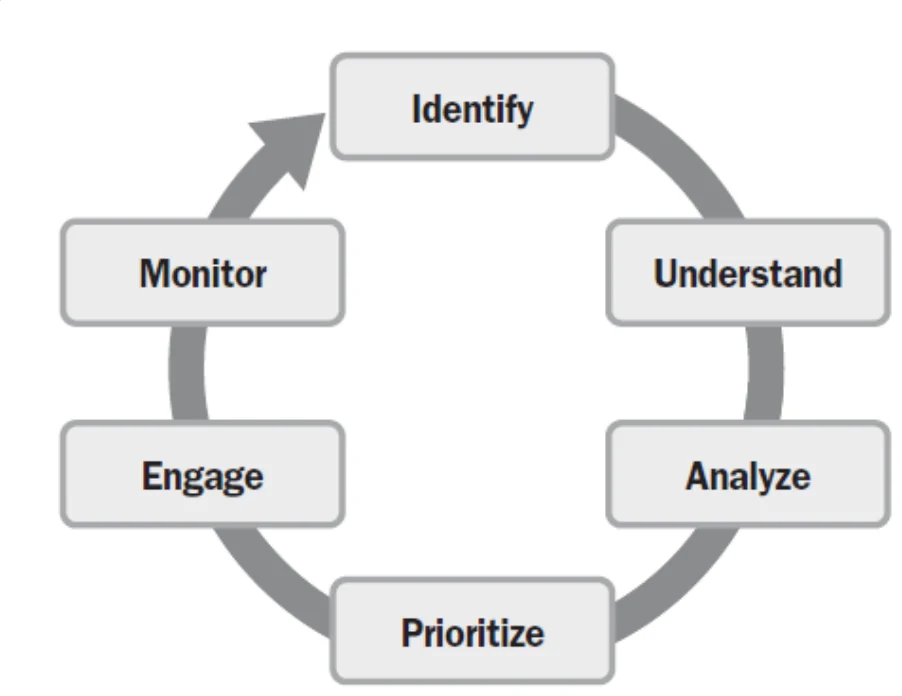
  1. Identify your stakeholders
  2. Understand your stakeholders
  3. Analyze your stakeholders
  4. Prioritize your stakeholders
  5. Engage your stakeholders
  6. Monitor your stakeholders①
Cycle: identify → understand → analyze → prioritize → engage → monitor
26
Exam weight Medium
  1. Six steps: Identify → Understand → Analyze → Prioritize → Engage → Monitor (a cycle).
Memory trick“I Understand And Prioritize Every Member”.

Identify Stakeholders

  1. Analyze Stakeholders continuously
  2. Create and Maintain a Stakeholder Register
  3. Create and execute a Stakeholder Management Strategy①
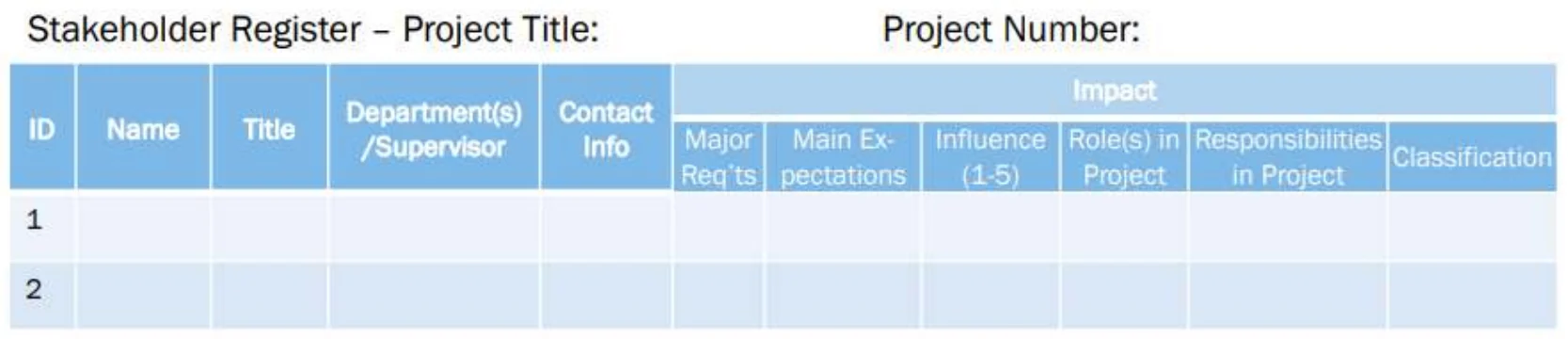
Stakeholder register template
27
Exam weight Low
  1. Register columns: ID, name, title, department, contact, major requirements, expectations, influence, role, classification.

Project Stakeholder Management

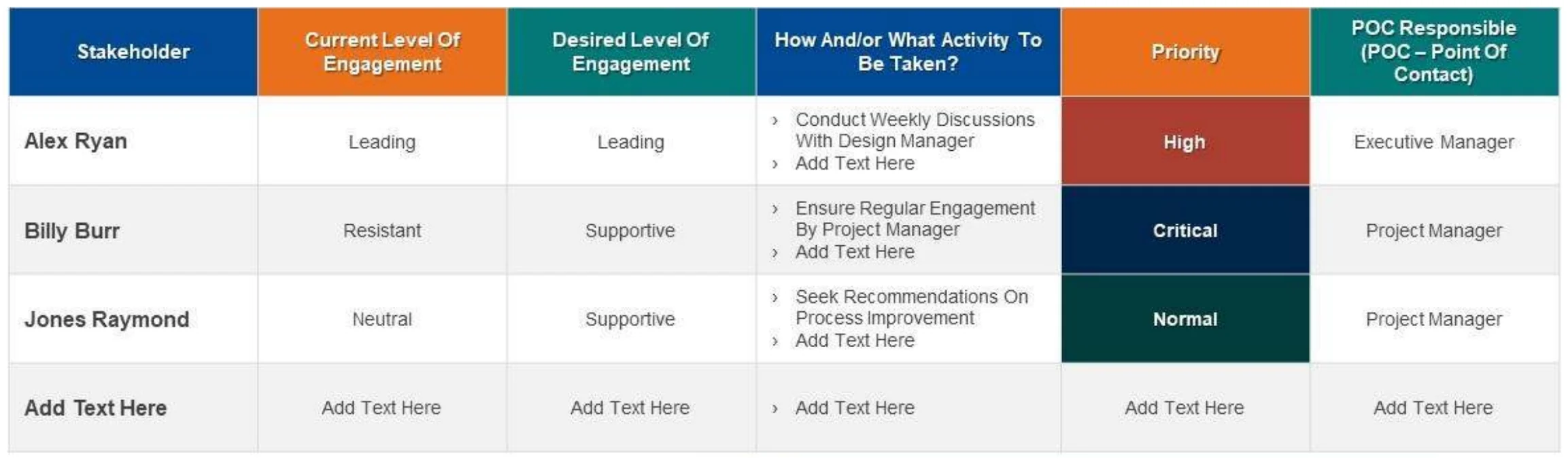
Table: stakeholder, current and desired engagement, actions, priority, point of contact
28
Exam weight Low
  1. Example: Billy Burr is Resistant → desired Supportive → critical priority.

Stakeholder Engagement Plan

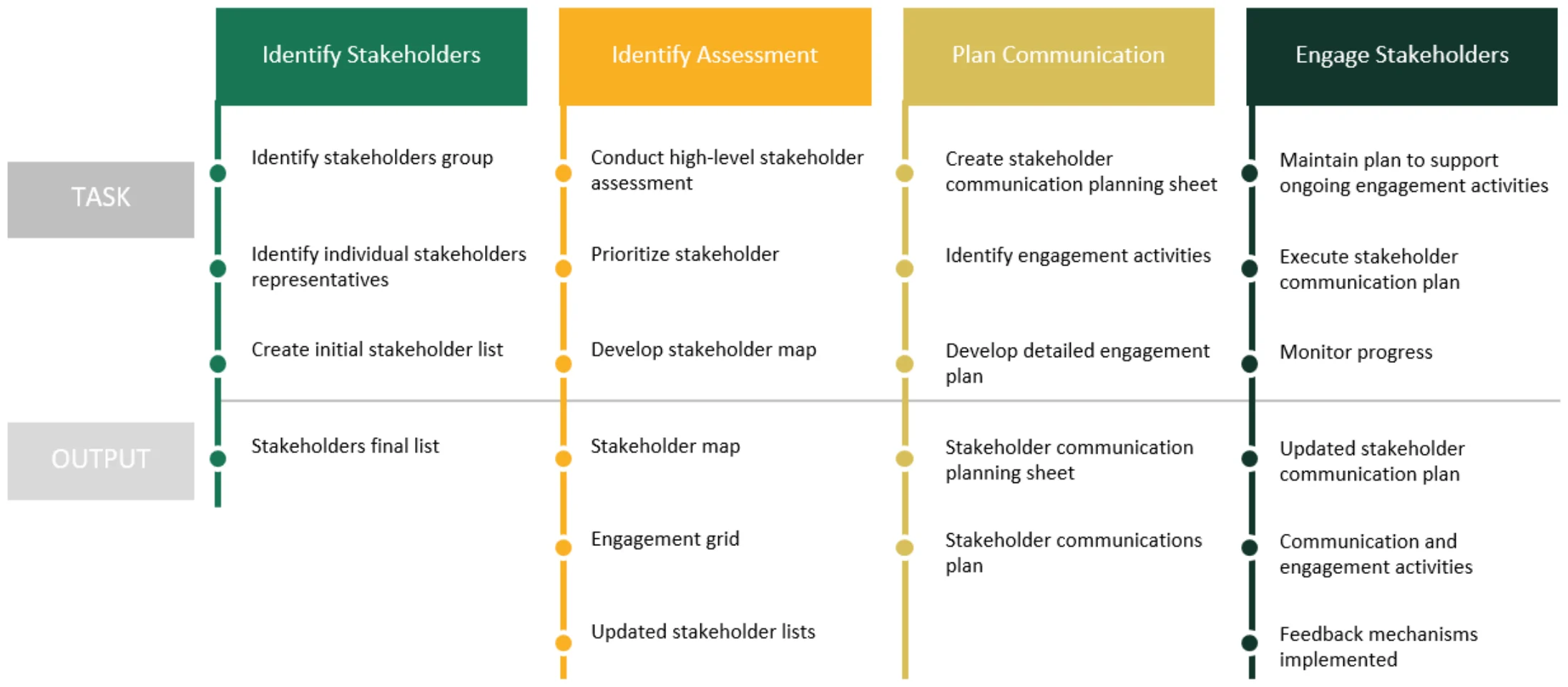
Engagement plan: identify, assess, plan communication, engage, with tasks and outputs
29
Exam weight Low
    ★ Past exam

    Common Stakeholder Mapping Models

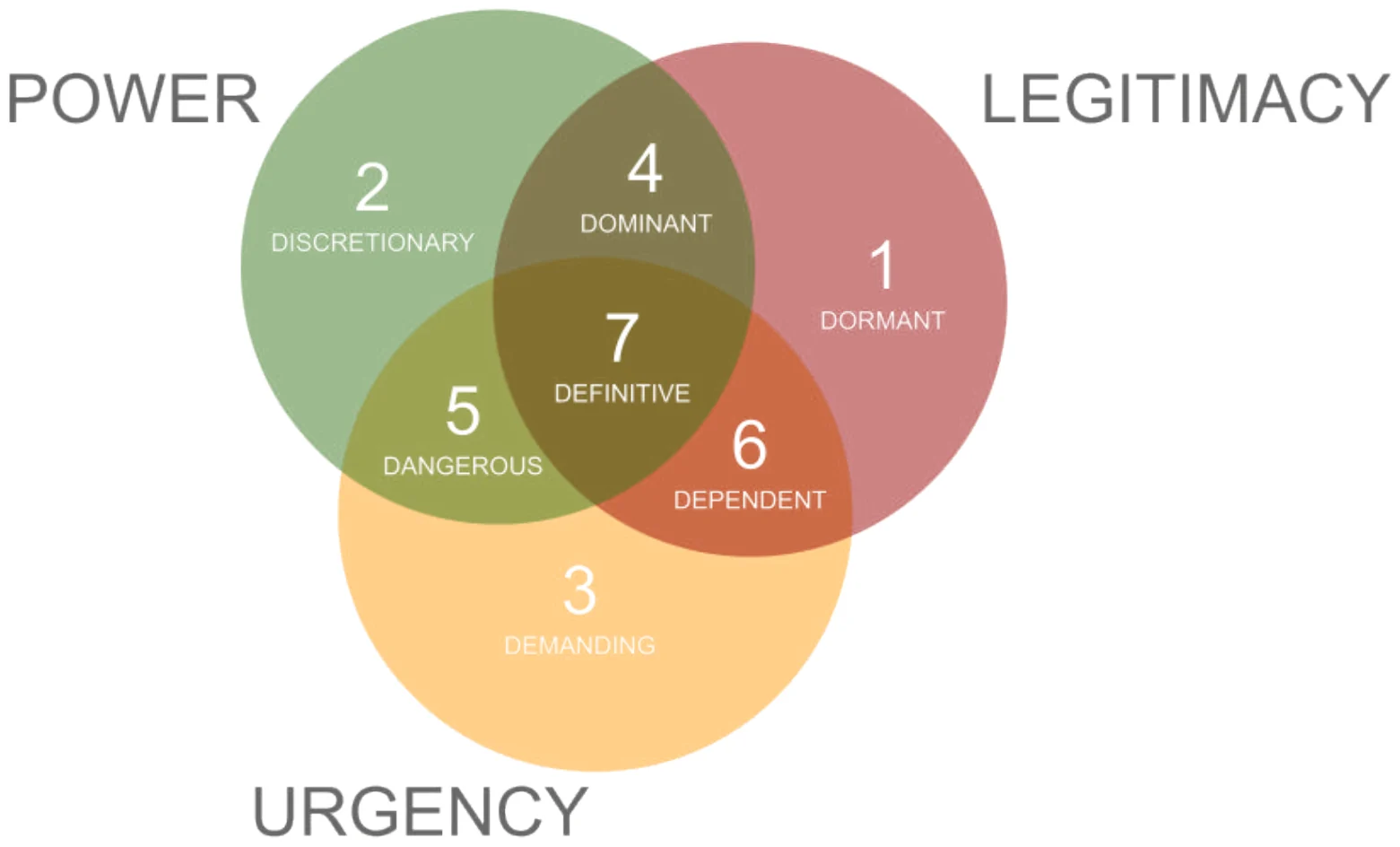
    • The Salience Model helps project managers prioritize stakeholders by how much attention they demand.①
    Salience model: power, legitimacy, urgency circles, 7 = definitive
    30
    Exam weight Medium
    1. Salience = Power + Legitimacy + Urgency. All three = definitive stakeholder (7): highest priority.
    🎯 How this can come up · 1 question
    MCQ

    In the salience model, a stakeholder with power, legitimacy AND urgency is:

    Common Stakeholder Mapping Models

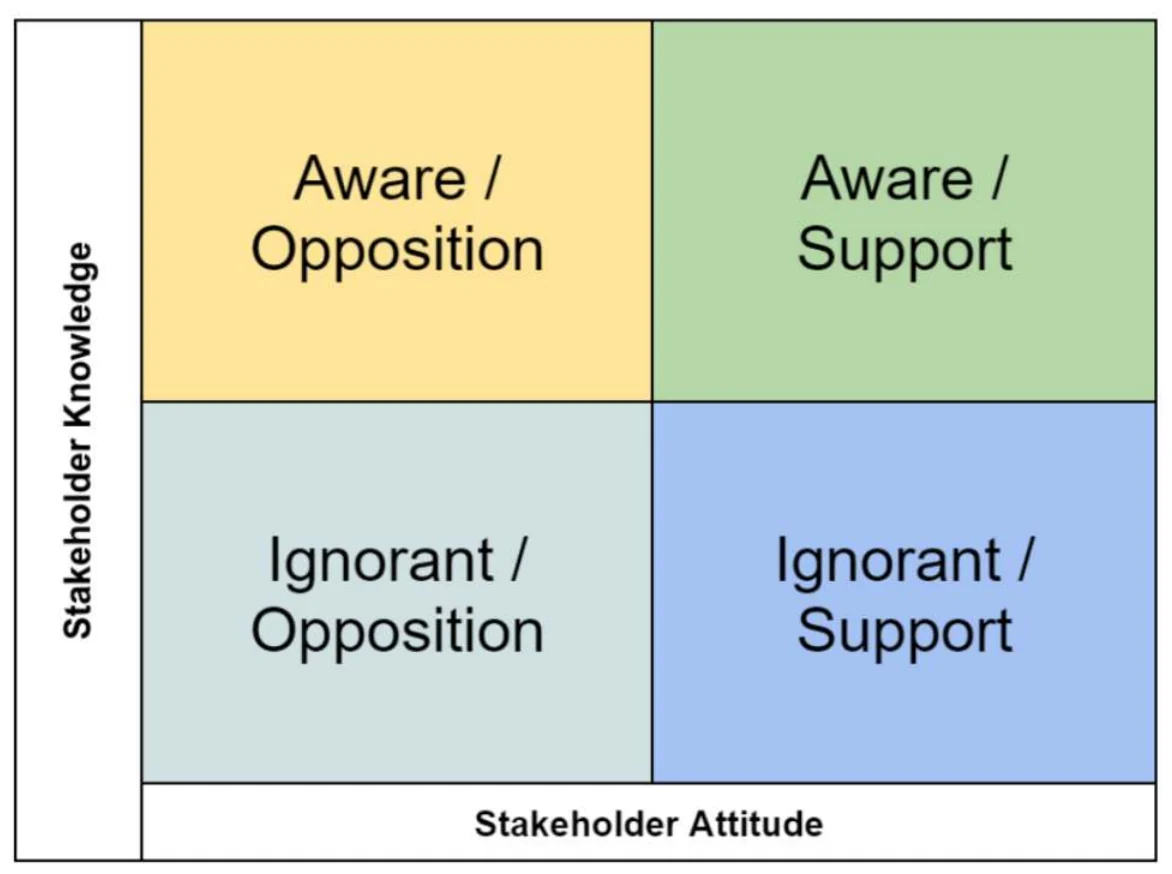
    • Stakeholder Knowledge Base Chart is a strategic tool for shaping communication tactics based on two dimensions: how much a stakeholder knows about the project, and whether they support or oppose it.①
    Knowledge (aware/ignorant) × attitude (support/opposition)
    31
    Exam weight Low
    1. Knowledge base chart: aware vs ignorant × support vs opposition.

    Stakeholder Knowledge Base Chart

    • Aware / Opposition
      • These stakeholders may be a risk and require management.
    • Aware / Support
      • These stakeholders are worth keeping informed so they can continue to champion your project or work.
    • Ignorant / Opposition
      • Increasing the understanding of these stakeholders may help to change their attitude.
    • Ignorant / Support
      • Engaging with these stakeholders will help to keep them onboard and strengthen their support.①
    32
    Exam weight Medium
    1. Aware/opposition = risk, manage. Ignorant/opposition = educate them.
    🎯 How this can come up · 1 question
    MCQ

    A stakeholder who opposes the project because they misunderstand it (ignorant/opposition) should be:

    ★ Past exam

    Power/Interest Grid

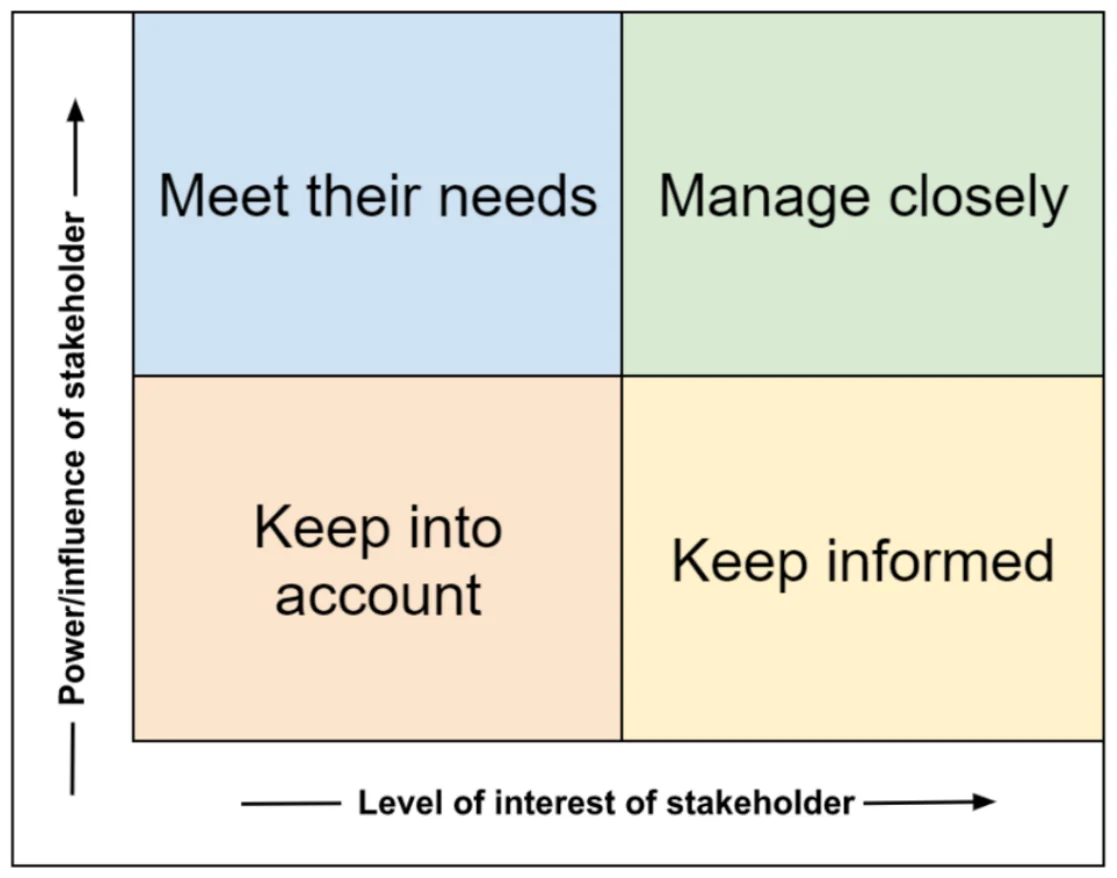
    • High power / high interest
      • Manage closely, regularly engage, and manage expectations
    • High power / low interest
      • Meet their needs, keep them satisfied, and actively consult
    • Low power / low interest
      • Monitor and provide information as needed
    • Low power / high interest
      • Keep informed and maintain interest①
    34
    Exam weight High
    1. High P/high I → manage closely. High P/low I → keep satisfied. Low P/high I → keep informed. Low P/low I → monitor.
    Exam trapHigh power + low interest = keep SATISFIED, not manage closely.
    🎯 How this can come up · 2 questions
    Written

    How can project managers identify and prioritize stakeholders, and how should they communicate with each group (Final 251)?

    MCQ

    A regulator with high power but little interest in day-to-day work should be:

    Stakeholder Engagement

    • Engage
      • Stakeholder engagement entails working collaboratively with stakeholders to introduce the project, elicit their requirements, manage expectations, resolve issues, negotiate, prioritize, problem solve, and make decisions.
      • Engaging stakeholders requires the application of soft skills, such as active listening, interpersonal skills, and conflict management, as well as leadership skills such as establishing the vision and critical thinking.①
    35
    Exam weight Low
    1. Engagement uses soft skills (listening, conflict management) and leadership.

    Stakeholder Engagement

    • Engage
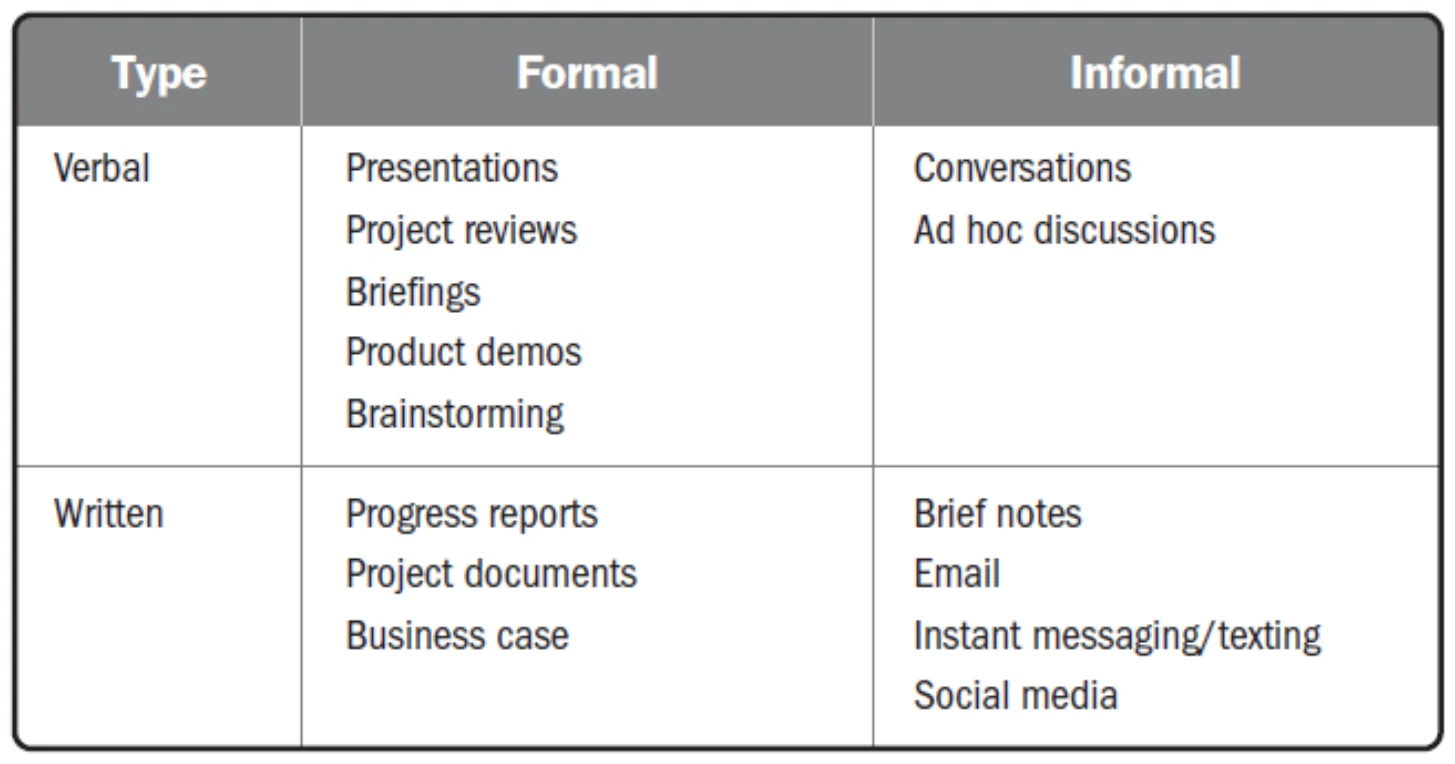
    Formal vs informal verbal and written communication examples
    36
    Exam weight Low
    1. Formal verbal: presentations, reviews. Informal written: email, instant messaging.
    ★ Past exam

    Stakeholder Engagement

    • Engage
      • Communication methods include push, pull, and interactive communication:
        • Push
          • Sent to stakeholders such as memos, emails, status reports, voice mail, and so forth.
          • One-way communications with individual stakeholders or groups of stakeholders.
          • Inhibits the ability to immediately gauge reaction and assess understanding; therefore, it should be used deliberately.①
        • Pull
          • Information sought by the stakeholder, such as a project team member going to an intranet to find communication policies or templates, running internet searches, and using online repositories.
          • Pulling information is used for indirect sensing of stakeholder concerns.②
    37
    Exam weight High
    1. Push = sent out (email, status reports); one-way, can’t gauge reaction.
    2. Pull = stakeholder fetches it (intranet, repository). Interactive = two-way (meetings, calls).
    Memory trickPush = I send. Pull = you fetch. Interactive = we talk.
    🎯 How this can come up · 1 question
    MCQ

    Posting templates on an intranet for team members to look up is:

    Stakeholder Engagement

    • Engage
      • With all forms of communication, quick feedback loops provide useful information to:
        • Confirm the degree to which the stakeholder(s) heard the message.
        • Determine if stakeholders agree with the message.
        • Identify nuanced or other unintended messages the recipient detected.
        • Gain other helpful insights.①
    38
    Exam weight Low
    1. Quick feedback loops confirm the message was heard and agreed.

    Manage Stakeholders Expectations

    • Items that may need regular communication
      • Schedule, Budget, Forecasts
      • Risk Register, Issue Log, Change Log
      • Items outside of the control of the project that affect the project
    • Involves the application of Communication Methods, Interpersonal Skills, and Management Skills to manage expectations of people important to the project.①
    39
    Exam weight Low
    1. Communicate schedule, budget, forecasts, risk/issue/change logs regularly.

    Performance Report Types

    • Status Report – Where is the project is against the performance measurement baseline?
    • Progress Report – What has been accomplished?
    • Trend Report – Is performance improving or deteriorating?
    • Forecasting Report – What are the predictions for the future?
    • Variance Report – How do the actual results compare to the baselines?
    • Earned Value Report – Where is the project in pure Earned Value/Cost Management terms?
    • Lessons Learned – What information could be useful for future projects?①
    40
    Exam weight Medium
    1. Status = where are we now vs baseline. Progress = what’s been done. Trend = improving or not. Forecast = future. Variance = actual vs baseline.
    🎯 How this can come up · 1 question
    MCQ

    “Is performance improving or deteriorating?” is answered by a:

    Making Reports and Metrics Useful

    • Collecting information, analyzing it, packaging it, and sending it to Stakeholders.
      • Level of Detail
      • Appropriate communication channel
      • Don’t let reports prevent you from managing the project
      • Are measurements against a consistent baseline
      • Truthful with accurate metrics
      • All three sides of the project triangle plus quality
      • Can and should be enhanced with forecasts
      • Get feedback
      • Use multiple types of reports①
    41
    Exam weight Low
    1. Useful reports: right detail and channel, consistent baseline, truthful, cover scope/time/cost + quality, include forecasts.

    Conclusion

    • Communication concepts must be applied to both stakeholder and team communication
    • Communication is not effective unless it is ethical and honest
    • Stakeholder Expectation Management starts with understanding each stakeholder, then deciding what communication is best for them
    • Make reports and metrics useful by viewing them from the Stakeholder’s perspective①
    42
    Exam weight Low
    1. Honest, tailored communication is the core of stakeholder management.