- Quality → QA → QC → project success → metrics.
- QA vs QC is the most testable distinction in this deck.
- Quality = conformance to requirements, following standards, AND meeting implicit requirements (e.g., maintainability).
- Meeting only explicit requirements isn’t enough.
🎯 How this can come up · 1 question
Software that meets all explicit requirements but is hard to maintain is still of suspect quality.
True. Implicit requirements count too.
- Testing assesses quality at every step, not just at the end with leftover budget.
- Testing MEASURES quality; it doesn’t create it.
- SQA = process improvement (prevent), fault tolerance (tolerate), V&V (detect).
🎯 How this can come up · 1 question
“Quality cannot be tested into a product” means:
Correct: Testing measures quality; good process and design create it.
- QA goal: few defects remain, and those that remain cause minimal damage.
- Quality planning sets project standards from deliverable, external (ISO 9000), organizational and customer standards.
- QC = check the PRODUCT/results against standards (inspection, testing).
- QA = the PROCESS framework and standards that make QC possible.
🎯 How this can come up · 2 questions
Monitoring specific project results for compliance with quality standards is:
Correct: Quality control.
Which provides the framework of activities and standards for performing quality control?
Correct: Quality assurance.
- The SQA group writes the SQA plan: evaluations, audits, standards, error tracking, change management, documents.
- SQA audits for compliance with the defined process and escalates noncompliance to senior management.
- Think small: tight requirements, one milestone at a time, increments.
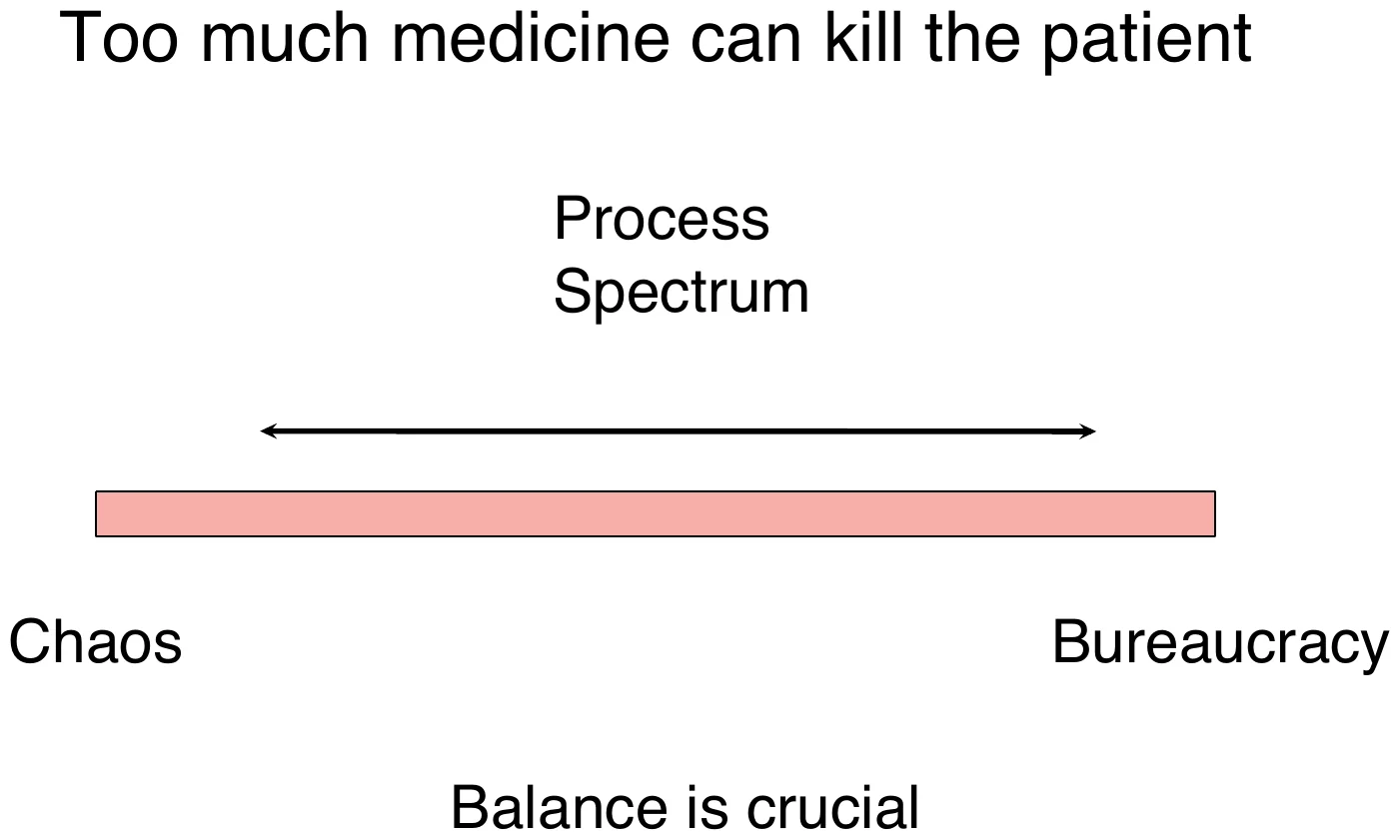
- Too little process = chaos; too much = bureaucracy. Balance (tailoring again).
Seen again
- Say no politely (“phase 2”).
- Analysis paralysis = over-process; paralysis paranoia = avoiding process out of fear.
- MBWA = management by walking around: be present, hear people 1-on-1. Delegate; keep a project home page.
- Success: on schedule, within budget, meets requirements, high quality, but the real measure is customer satisfaction.
🎯 How this can come up · 1 question
According to the slide, the only real measure of project success is:
Correct: Customer satisfaction.
- Success potential: size, duration, team size. Smaller tends to succeed more.
- Top success factor: EXECUTIVE SUPPORT, then user involvement, experienced PM, clear objectives, minimized scope…
🎯 How this can come up · 1 question
Which success factor is listed first and emphasized?
Correct: Executive support.
- Executives secure resources, approvals, cooperation and guidance.
- Two kinds of factors: social and technology.
- Failure: no measurement, no tools, no reviews or inspections, informal testing, >30% requirement creep. Success: the formal opposites, <10% creep.
- Social failure factors: schedule pressure, executives rejecting estimates, client friction, politics, poor communication.
- Sarcastic list: the opposite of each line is good practice.
- Measure what matters, not just what is easy to count.
- Measurement turns qualitative attributes into numbers for objective comparison.
- Measure = a quantity. Measurement = the act of obtaining it. Metric = a measure of the degree to which something has an attribute.
🎯 How this can come up · 1 question
“The act of obtaining a measure” is:
Correct: Measurement.
- Software metric: any measurement about the system, process or docs (LOC, person-days).
- Product metrics → quality of the product. Process & project metrics → efficiency of the process.
- Never use metrics to judge individuals; people will game them.
🎯 How this can come up · 1 question
Process metrics should be used to evaluate individual developers’ performance.
False. Metrics should not be used to evaluate individuals.
- Dynamic = measured while running → efficiency, reliability. Static = from code/design → complexity, maintainability.
🎯 How this can come up · 1 question
Cyclomatic complexity measured from source code is a:
Correct: Static product metric.
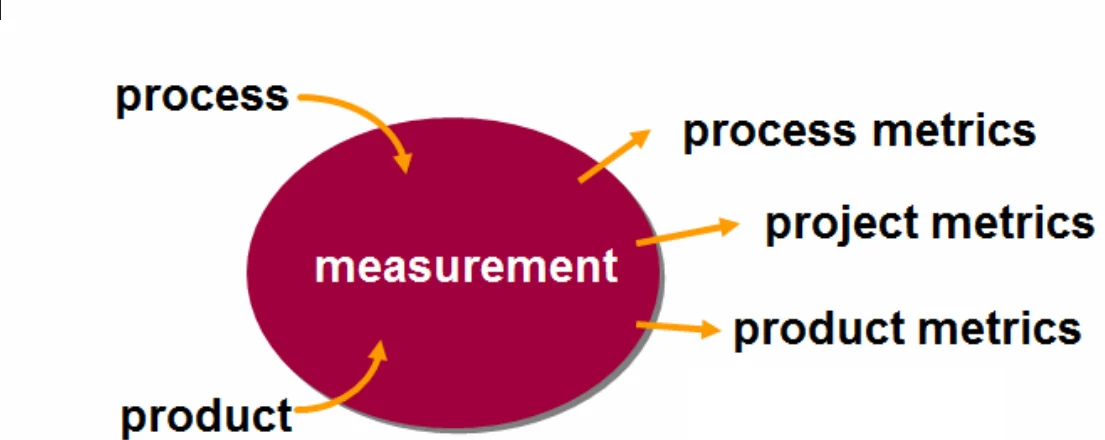
- Project metrics: inputs, outputs, results. Used to avoid delays and manage risk.
- Assumes what we measure relates to what we want to know, which isn’t always easy.
- No baseline data = no way to know if you’re improving.
- Direct: cost, effort, LOC, speed, defects. Indirect: functionality, complexity, reliability, maintainability.
🎯 How this can come up · 1 question
Which is an INDIRECT product measure?
Correct: Maintainability.
- Keep measurement data as an organizational asset for cross-project comparisons.
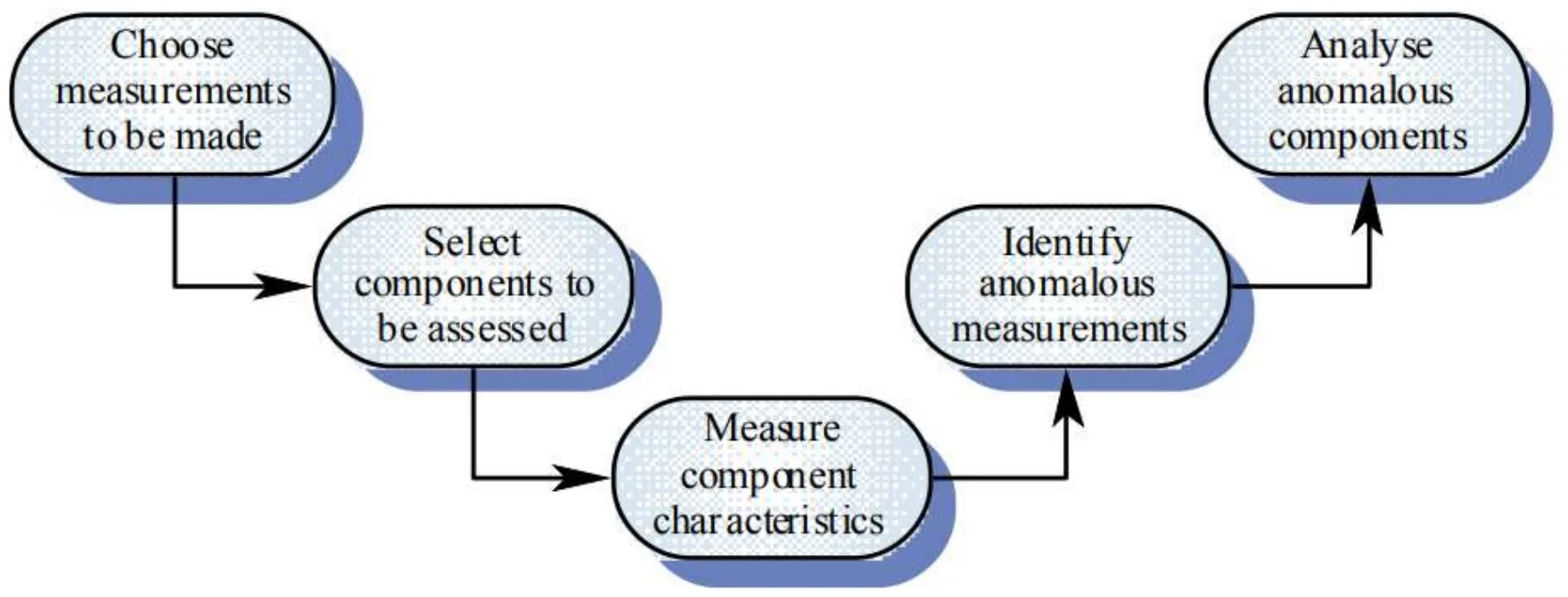
- Choose → select → measure → find anomalies → analyse them.
- Collect data immediately and automatically (static, dynamic, process).
- Collect only needed data, explain why, don’t rely on memory.
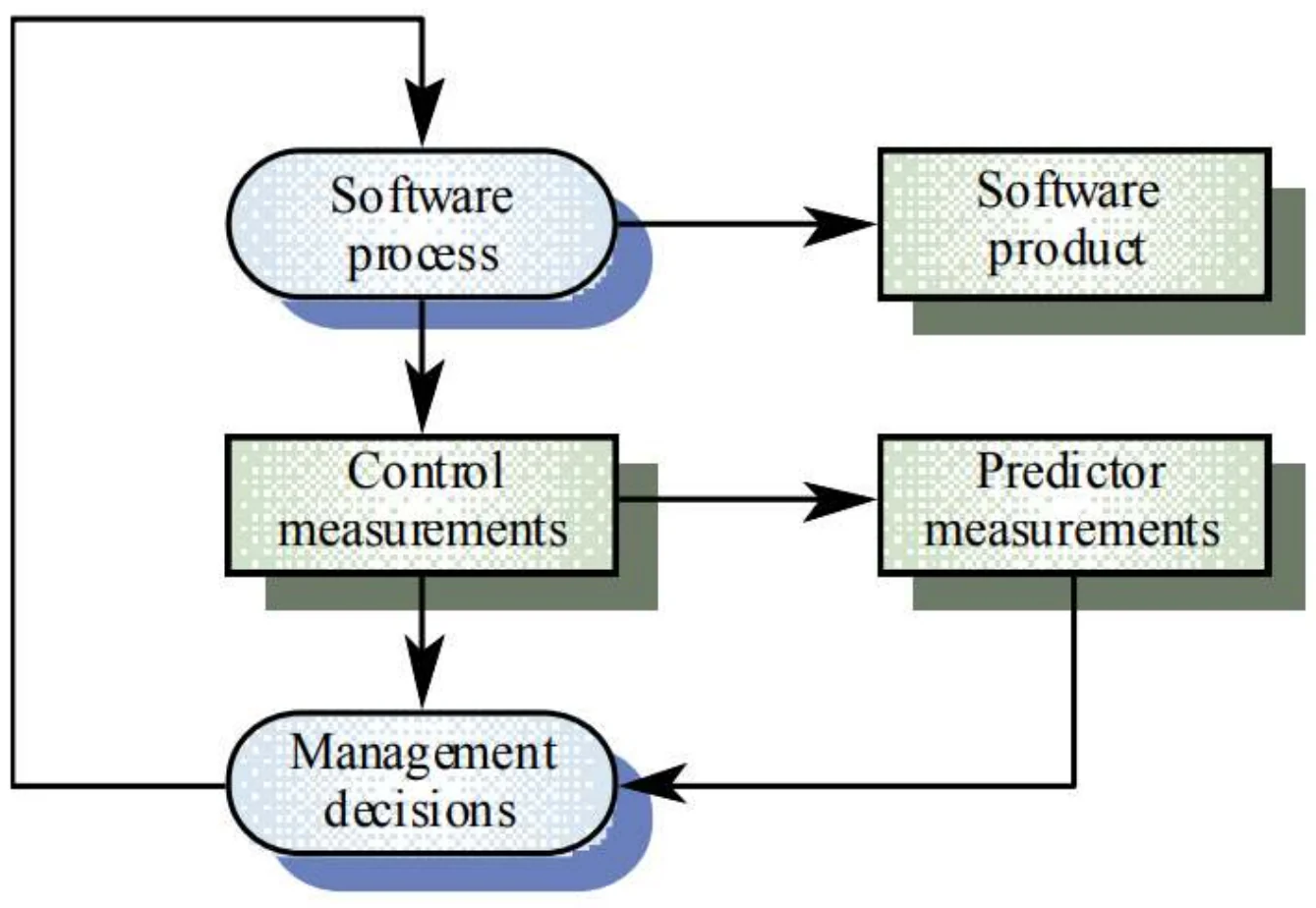
- Metrics exist to support management decisions: control (process) and prediction (product).
- Interpreting data is hard; use statisticians and local context.
- Size (LOC, defects), function (FP), web (C = Nsp / (Ndp + Nsp)), product (cyclomatic complexity, fan-in/out).
🎯 How this can come up · 1 question
A site has 30 static and 10 dynamic pages. Customization index C = Nsp/(Ndp+Nsp)?
30/40.
No slides match this filter.