- Four parts: methodology concepts → software development processes (waterfall vs. iterative) → agile (XP, Scrum) → DevOps.
- The middle two parts (processes and agile) carry most exam questions.
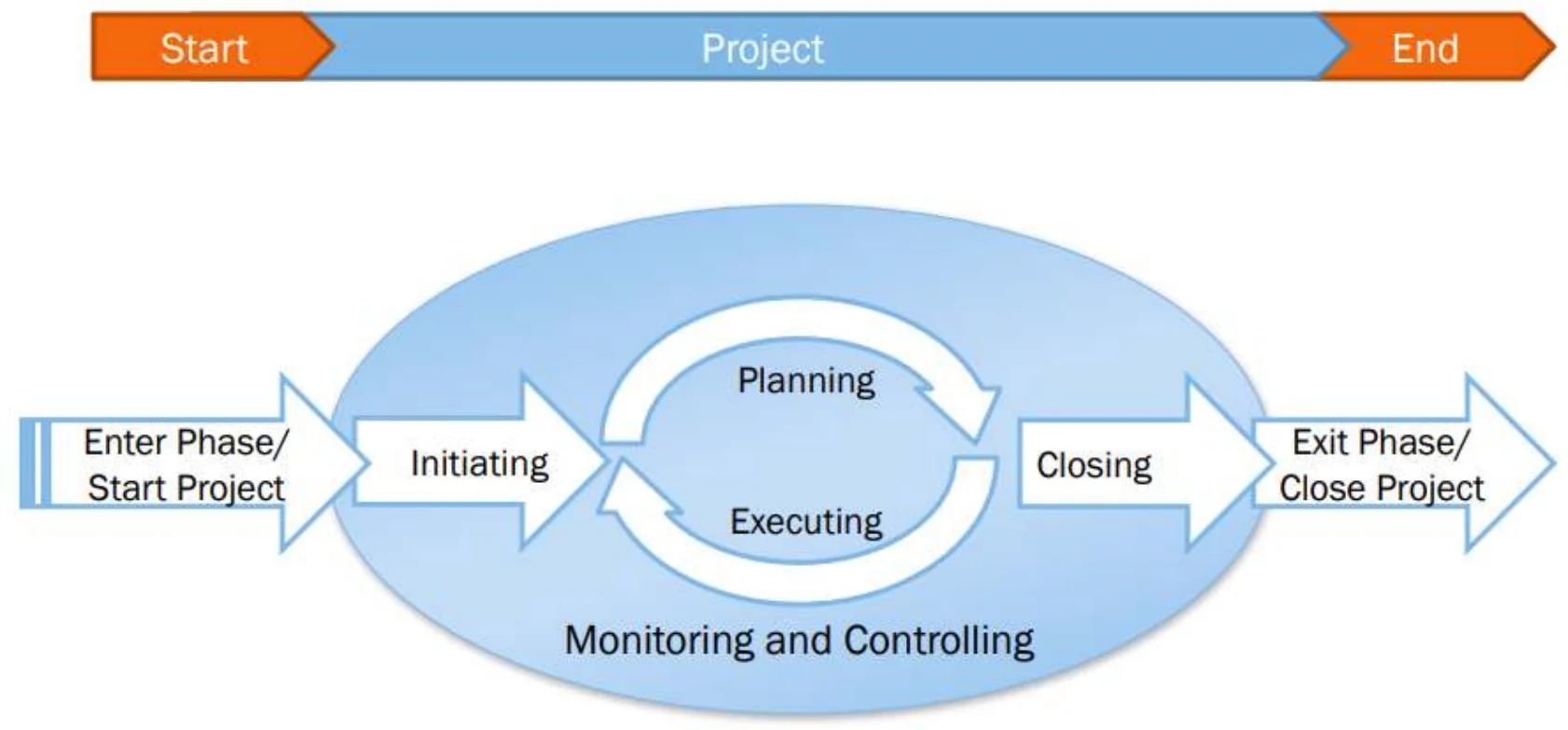
- Process groups: Initiating → Planning ↔ Executing (with Monitoring and Controlling around them) → Closing.
- Process = the activities to create a work product.
- Process model (life cycle) = an abstract view: waterfall, iterative, spiral…
- Methodology = a concrete, prescriptive instance: “how we work around here”.
🎯 How this can come up · 1 question
Waterfall, iterative and spiral are examples of:
Correct: Process models (life cycles).
- A methodology helps onboard and swap people, split responsibilities and show progress.
- Visibility (McConnell) = how easily and accurately you can assess status.
- Judge a methodology by: training speed, sales effect, freedom, responsiveness to change, protection of the organization.
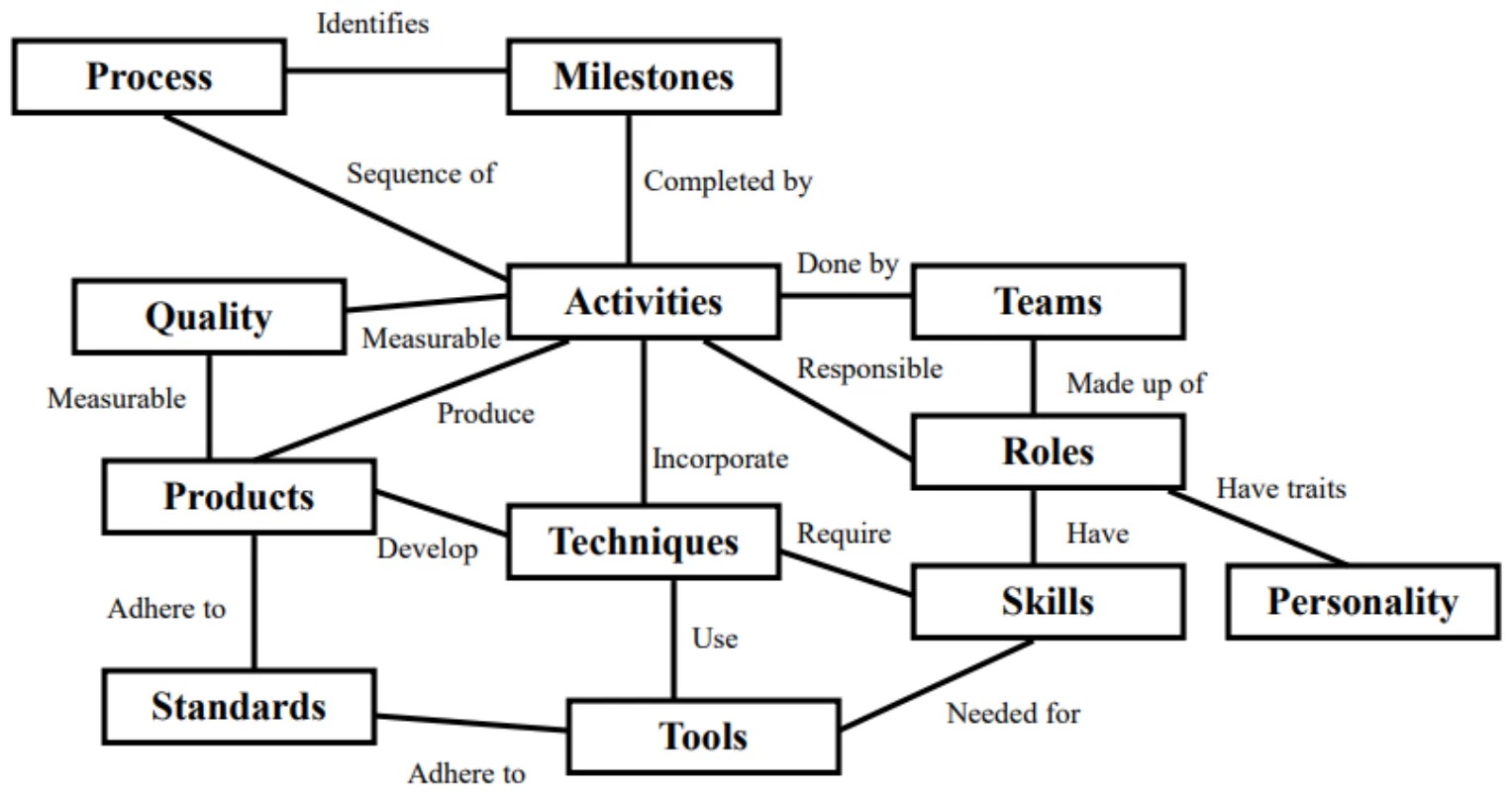
- Ten elements of a methodology (Cockburn). Slides 10–13 define each.
- Read it as sentences: teams are made of roles; roles need skills; activities produce products; products adhere to standards.
- A milestone is an INSTANT with zero duration: it is either fully met or not met. This matters for the Gantt question.
Related real-exam questions
Seen again
🎯 How this can come up · 1 question
A milestone can be 60% met.
False. Milestones mark an instant in time and are either fully met or not met.
- Teams = grouping; Roles = job descriptions; Skills = what the role needs.
- Products = what is handed over; Techniques = how the work is done; Tools = what is used.
- Standards = what is allowed (notation, decisions, conventions); Quality = what to track per deliverable.
- PLC (project life cycle) → project requirements (time, cost). SDLC → product requirements (features).
- You need both; integrating them is key to success.
🎯 How this can come up · 1 question
The SDLC is directed toward achieving:
Correct: Product requirements.
- Three families: Ad hoc (code and fix), Prescriptive (waterfall, evolutionary, Unified Process), Adaptive (lean and agile).
- Plan-driven = traditional, systems-engineering style, values defined work products.
- Plan-driven traits: predictability, standard processes, heavy documentation, up-front architecture, detailed plans, ongoing risk management, V&V.
- Royce (1970) actually used waterfall as an example of a BAD, risky practice.
- He recommended feedback loops; industry adopted the version without them.
🎯 How this can come up · 1 question
Winston Royce’s 1970 paper presented the sequential waterfall as an ill-conceived, risk-prone practice.
True.
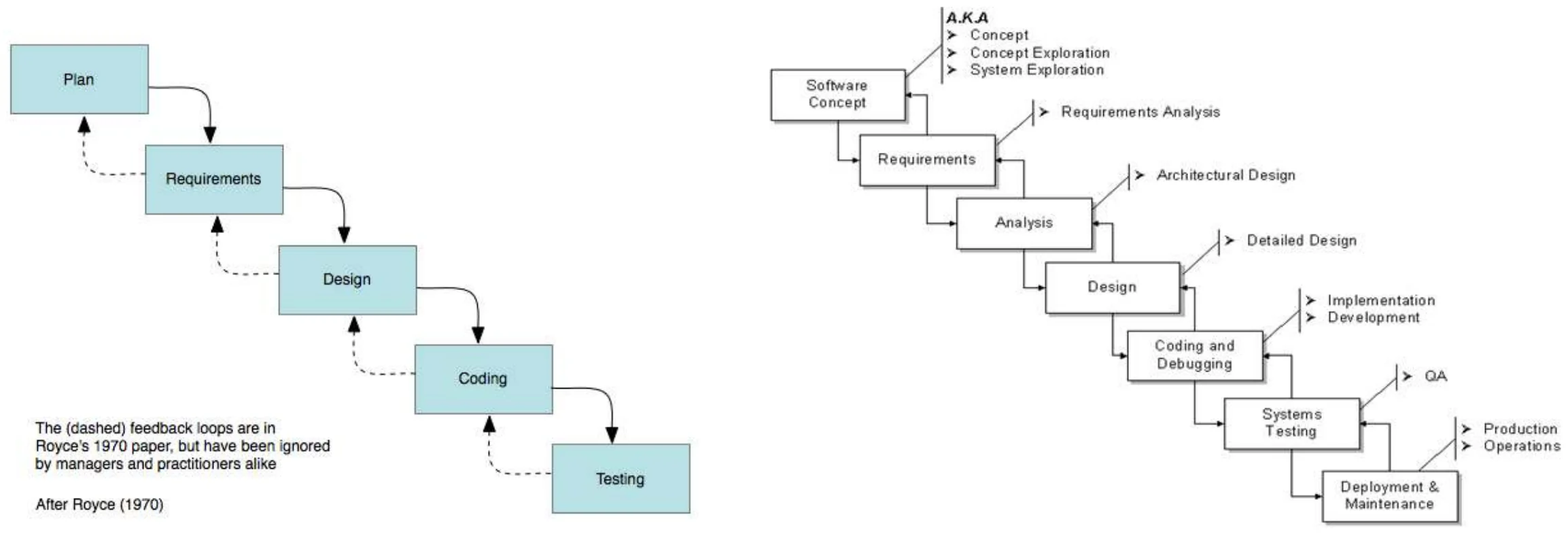
- Phases: Requirements → Analysis → Design → Construction → QA/Testing → Deployment. Each ends with deliverables.
- The dashed feedback arrows in Royce’s original were the part everyone ignored.
- Waterfall failure symptoms: late integration and breakage, late risk resolution, adversarial stakeholders, too many documents.
- Use waterfall when: requirements are clear and stable, technology is proven, complexity is low, time is adequate, the schedule is stable.
Related real-exam questions
🎯 How this can come up · 1 question
Which project suits a sequential (waterfall) SDLC?
Correct: Stable requirements, familiar technology, low complexity.
- Evolutionary = start with incomplete knowledge and converge, like a jigsaw.
- Advantages: robust architecture, handles changing requirements, continuous integration, early understanding, ongoing risk assessment.
- Five principles, each giving an element: architecture → design, iterative → risk management, components → technology, change management → control, round-trip → automation.
- Four iterative (Unified Process) phases: Inception → Elaboration → Construction → Transition.
🎯 How this can come up · 1 question
Which is the correct order of the iterative SDLC phases?
Correct: Inception, elaboration, construction, transition.
- Inception: product scope, feasibility, candidate architecture, business case.
- Elaboration is the MOST CRITICAL phase.
- Its key output: a baselined architecture, proven to support the vision.
🎯 How this can come up · 1 question
Which iterative phase is described as the most critical?
Correct: Elaboration.
- Construction: build releases (alpha, beta), manage resources, test components, assess against acceptance criteria.
- Transition: deploy (packaging, training), compare to the vision and acceptance criteria, plan the next iteration.
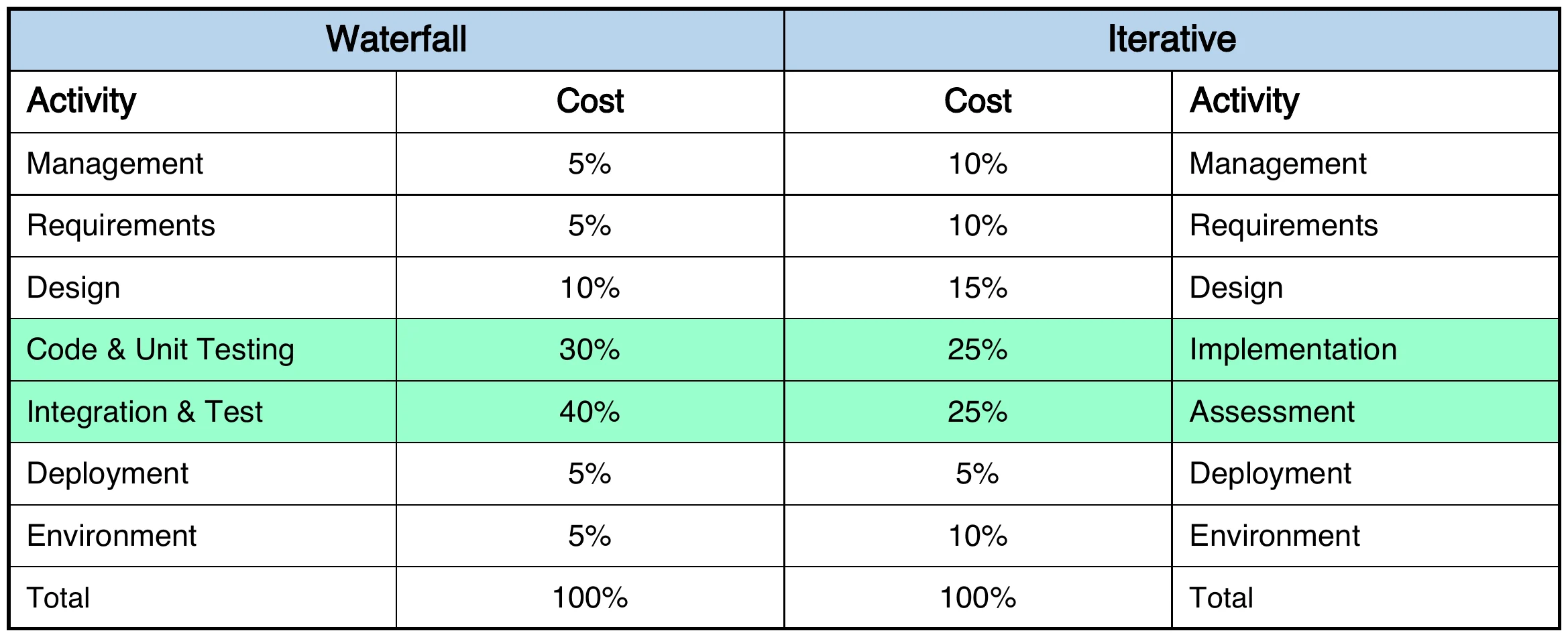
- Waterfall spends 70% on code and integration/test (late). Iterative spreads cost: more on management, requirements and design, less on late integration.
🎯 How this can come up · 1 question
In the waterfall expenditure profile, which activity consumes the largest share of cost?
Correct: Integration & test (40%).
- Use evolutionary/iterative when: requirements are reasonably clear (not perfect), technology is new, complexity is high, the schedule is short or variable.
- Rolling wave planning = plan near-term work in detail and later work roughly.
Asked in a real exam
🎯 How this can come up · 1 question
Given evolving requirements (student usability, advisor requests, IT integration rules), which development approach would you recommend for the Edugate app and why?
An agile or hybrid approach. The student-facing features have evolving requirements and need frequent feedback, which suits iterative, incremental delivery (sprints, demos, a prioritized backlog). The integration with Edugate is bound by fixed IT rules and suits up-front planning and change control. A hybrid gives predictable integration milestones while letting the user features adapt; pure waterfall would fail because the requirements are not stable.
- Agile in three words: deliver quickly, respond to change, minimize overhead.
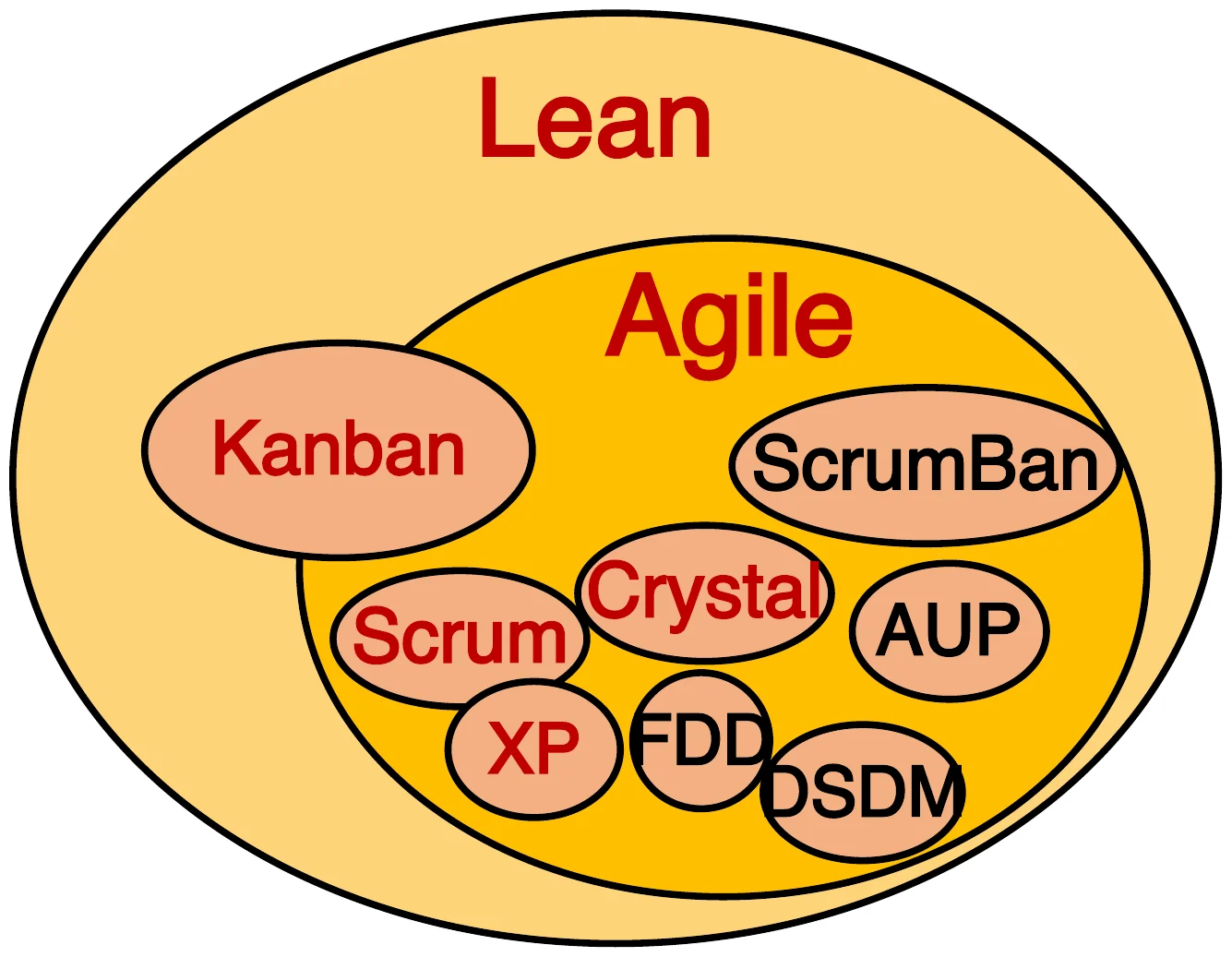
- Agile is an umbrella term. Scrum, XP, Kanban, Crystal and DSDM are all agile. Lean is even broader.
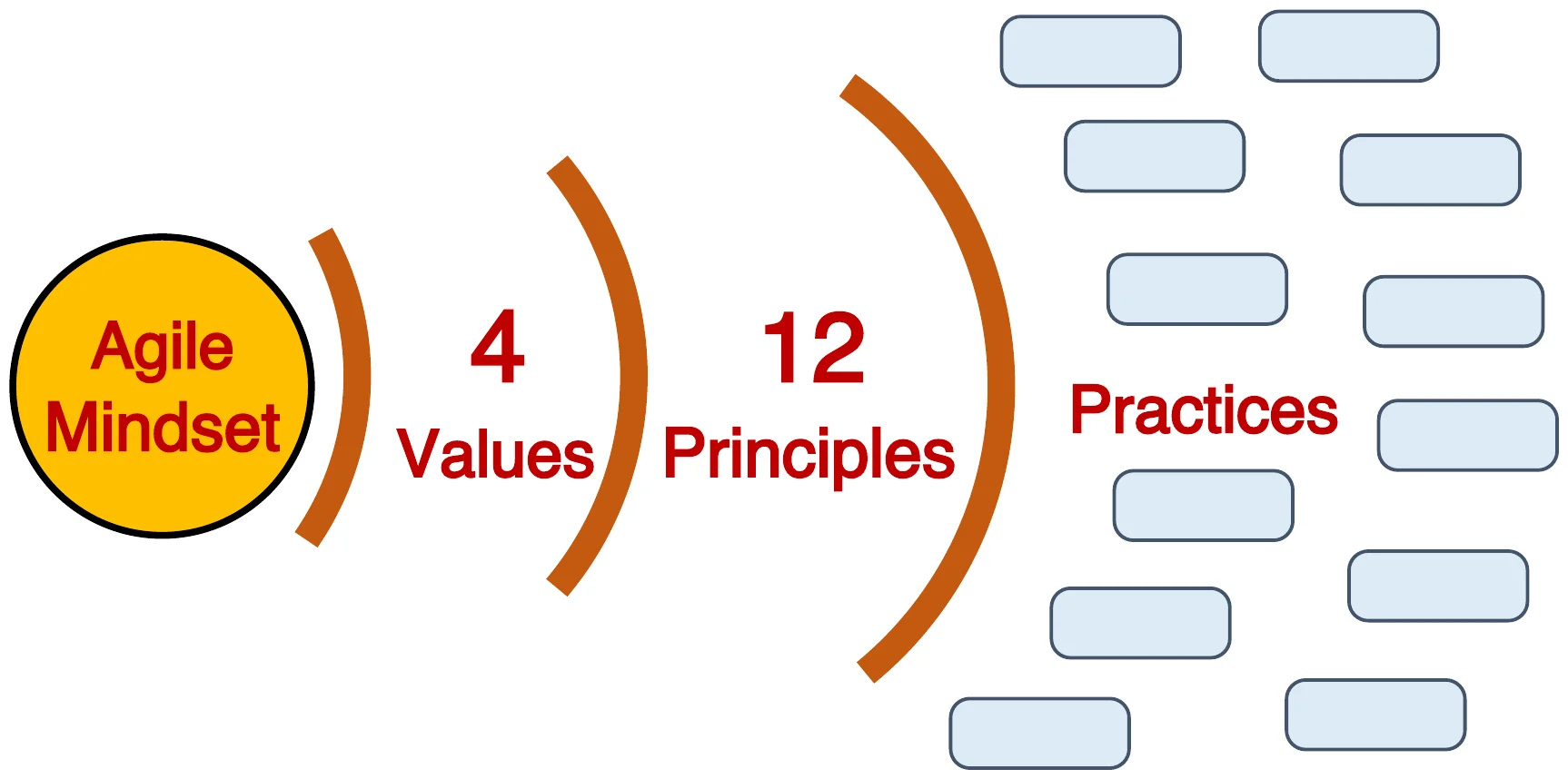
- Agile = a mindset → 4 values → 12 principles → practices you choose.
🎯 How this can come up · 1 question
Agile is best described as:
Correct: A mindset defined by 4 values and 12 principles, manifested through many practices.
- The 4 values: left side over right side. The right side still has value, just less.
🎯 How this can come up · 2 questions
Which is one of the four values of the Agile Manifesto?
Correct: Customer collaboration over contract negotiation.
The Agile Manifesto says documentation has no value.
False. There is value in the items on the right; the items on the left are valued more.
- Principles 1–6: customer satisfaction through early delivery, welcome change, deliver frequently, business and developers together daily, motivated individuals, face-to-face communication.
- Principles 7–12: working software measures progress, sustainable pace, technical excellence, simplicity, self-organizing teams, regular reflection (retrospectives).
🎯 How this can come up · 1 question
According to the agile principles, the primary measure of progress is:
Correct: Working software.
- Involve the customer (prioritize and evaluate), embrace change, develop and deliver in increments.
- Five agile development principles: involve the customer, embrace change, deliver incrementally, keep it simple, focus on people.
- There is no best agile method; it depends on the team and the product (tailoring again).
- Plan-driven = for large, long-lived systems, but with heavy overhead. Agile (1990s) = software over documentation, increments, less bureaucracy.
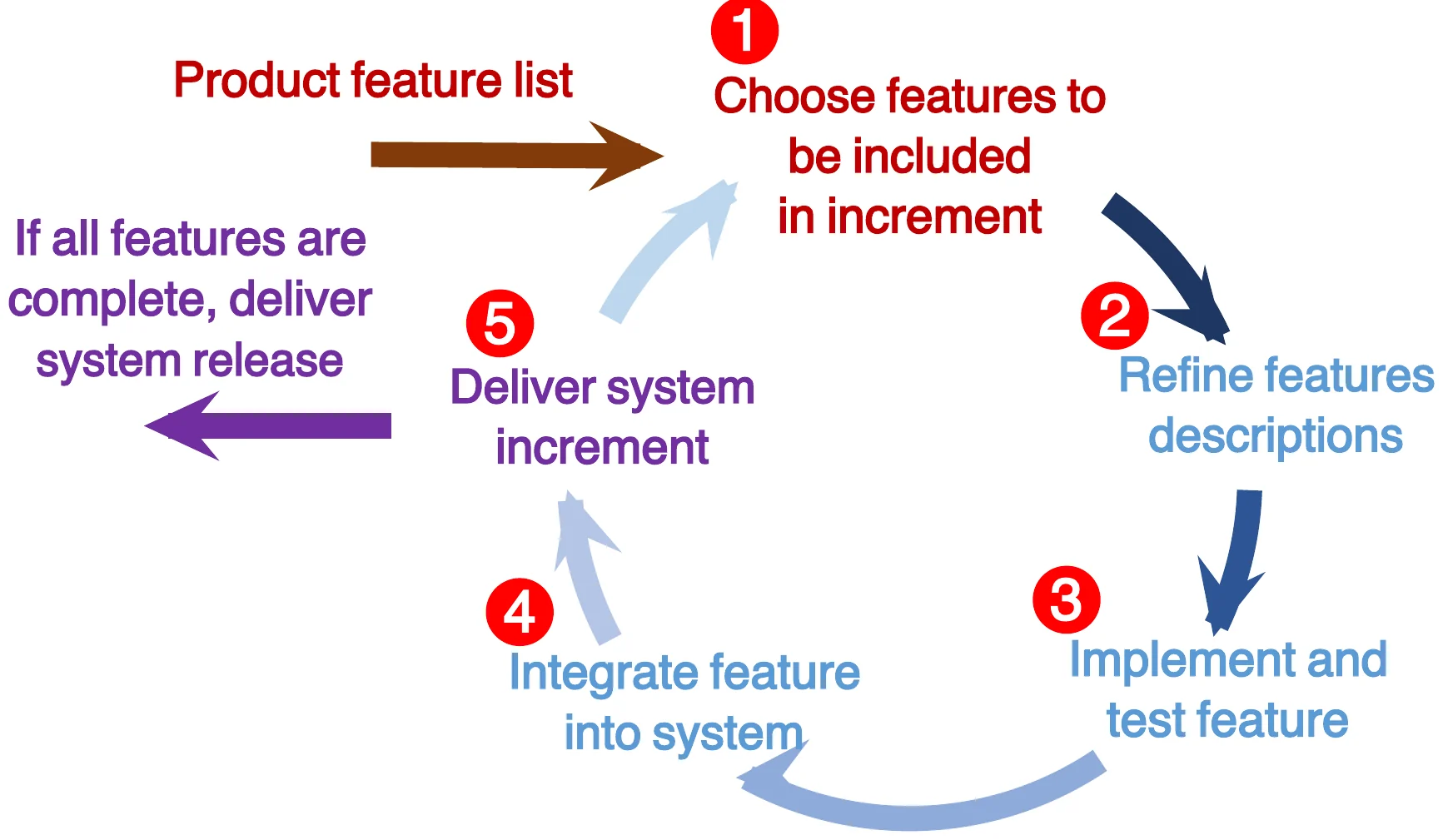
- All agile methods = incremental. Prioritize features, detail only the current one, deliver, get feedback.
- Five activities: Choose → Refine → Implement and test → Integrate and test → Deliver.
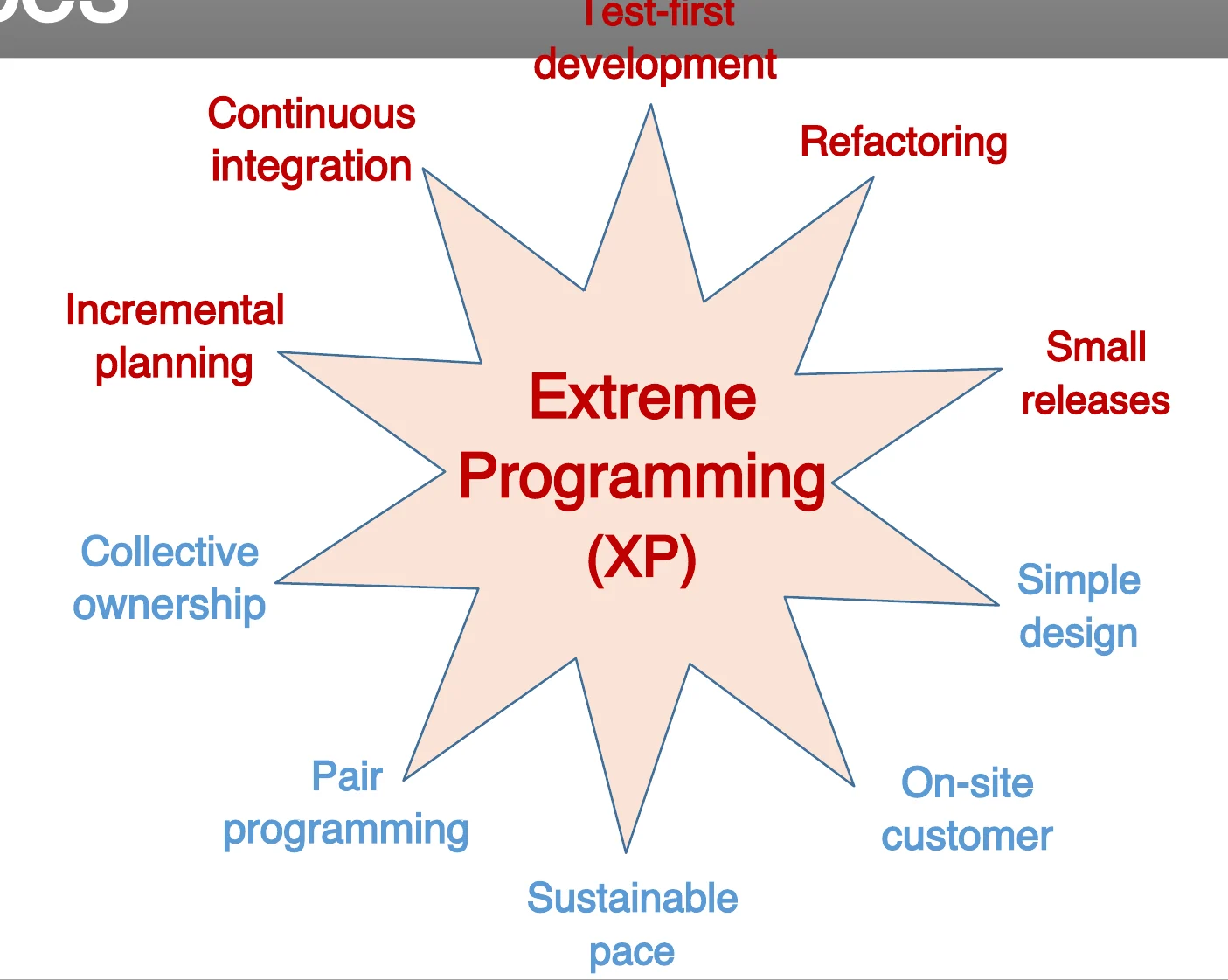
- XP (Kent Beck, 1998) = good practices pushed to the extreme.
- Ten XP practices on the star. The widely adopted ones (next slides): user stories, small releases, test-first, continuous integration, refactoring.
- No grand plan: requirements are user stories agreed with a customer representative.
- Small releases: smallest valuable feature set first, then frequent additions (the MVP idea).
- TDD: write the tests BEFORE the code; automated tests run after every change.
🎯 How this can come up · 1 question
In test-driven development, developers:
Correct: Write tests before writing the code.
- CI: integrate each finished task immediately; all unit tests must pass.
- Refactoring = improve the structure without changing behavior, as soon as an improvement is spotted.
- A repeat of slide 50 (user stories).
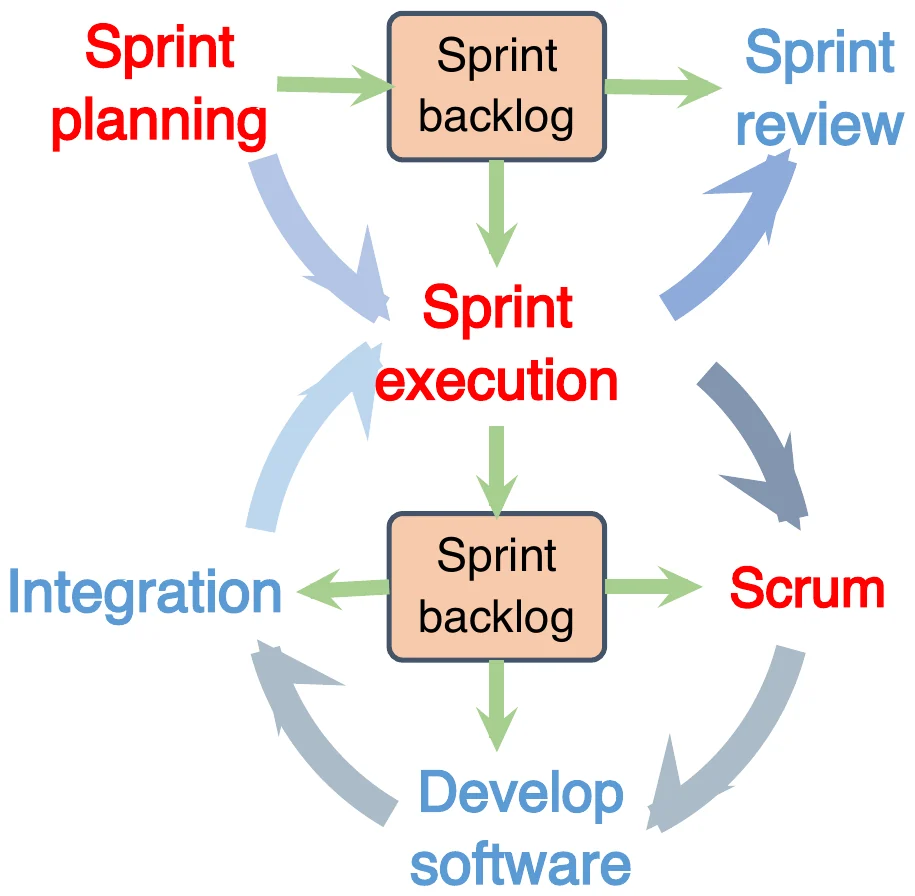
- Scrum = a planning and organization framework. Unlike XP, it prescribes NO technical practices.
🎯 How this can come up · 1 question
Scrum mandates specific technical practices such as pair programming.
False. Scrum provides a framework for organization and planning only.
- Scrum = the daily meeting. Sprint = 2–4 weeks. ScrumMaster = coach.
- Product owner = decides features and priorities. Product backlog = the to-do list.
- Development team = 5–8 people, self-organizing. Velocity = how much work fits in one sprint.
Seen again
- Product Owner keeps the team focused on the right product (often the product manager).
- ScrumMaster = coach, NOT a traditional PM (though some companies blend the roles).
🎯 How this can come up · 2 questions
Who keeps the team focused on the product instead of technically interesting but less relevant work?
Correct: Product Owner.
The ScrumMaster is a conventional project manager.
False. The ScrumMaster is a coach for the team.
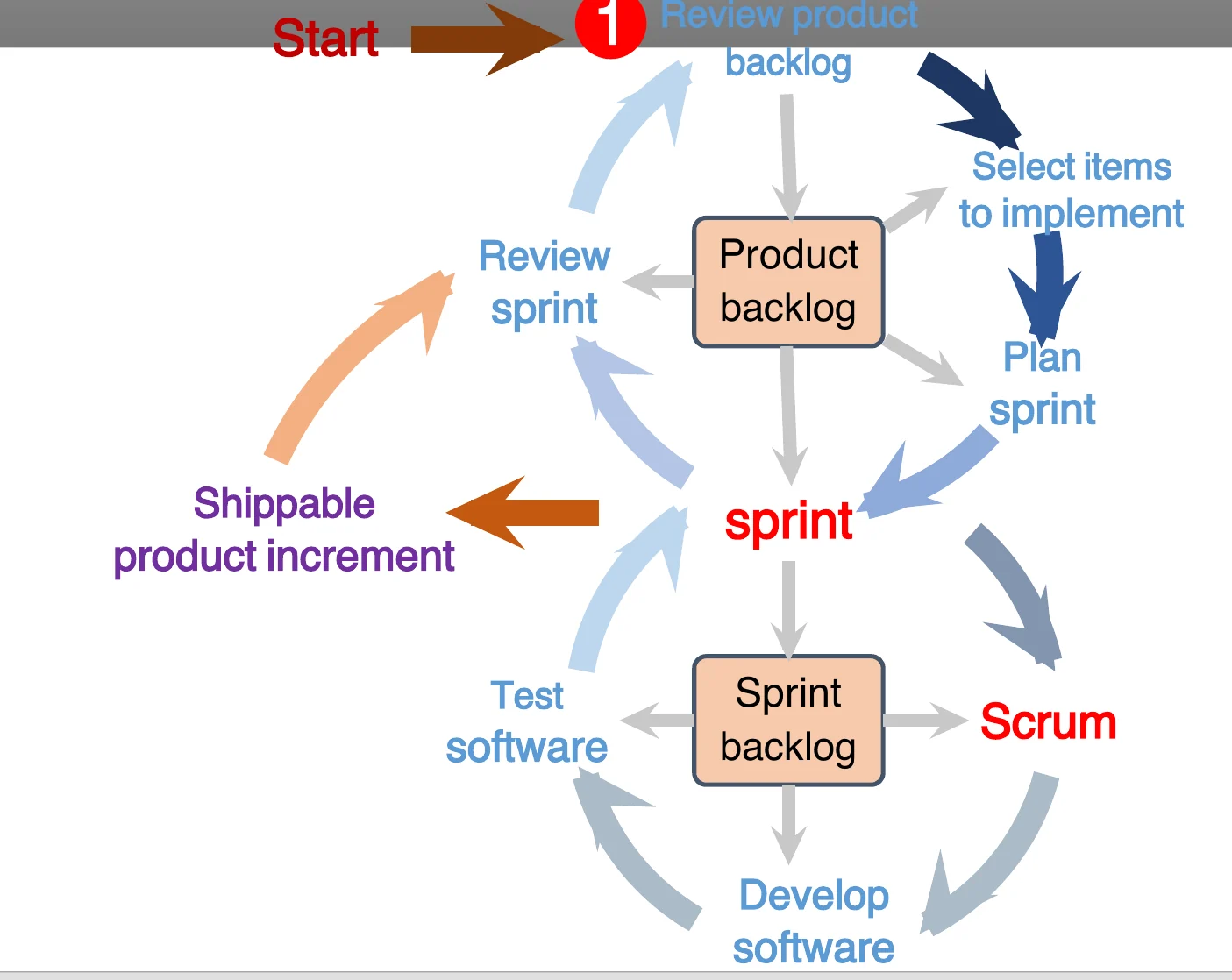
- Each sprint must end with a shippable increment.
- Three key Scrum practices: backlog, timeboxed sprints, self-organizing teams.
- Backlog = prioritized list of PBIs (features, requests, dev activities, engineering improvements).
- PBI types: feature, user request, development activity, engineering improvement.
🎯 How this can come up · 1 question
“Refactor UI code to improve performance” is which kind of PBI?
Correct: Engineering improvement.
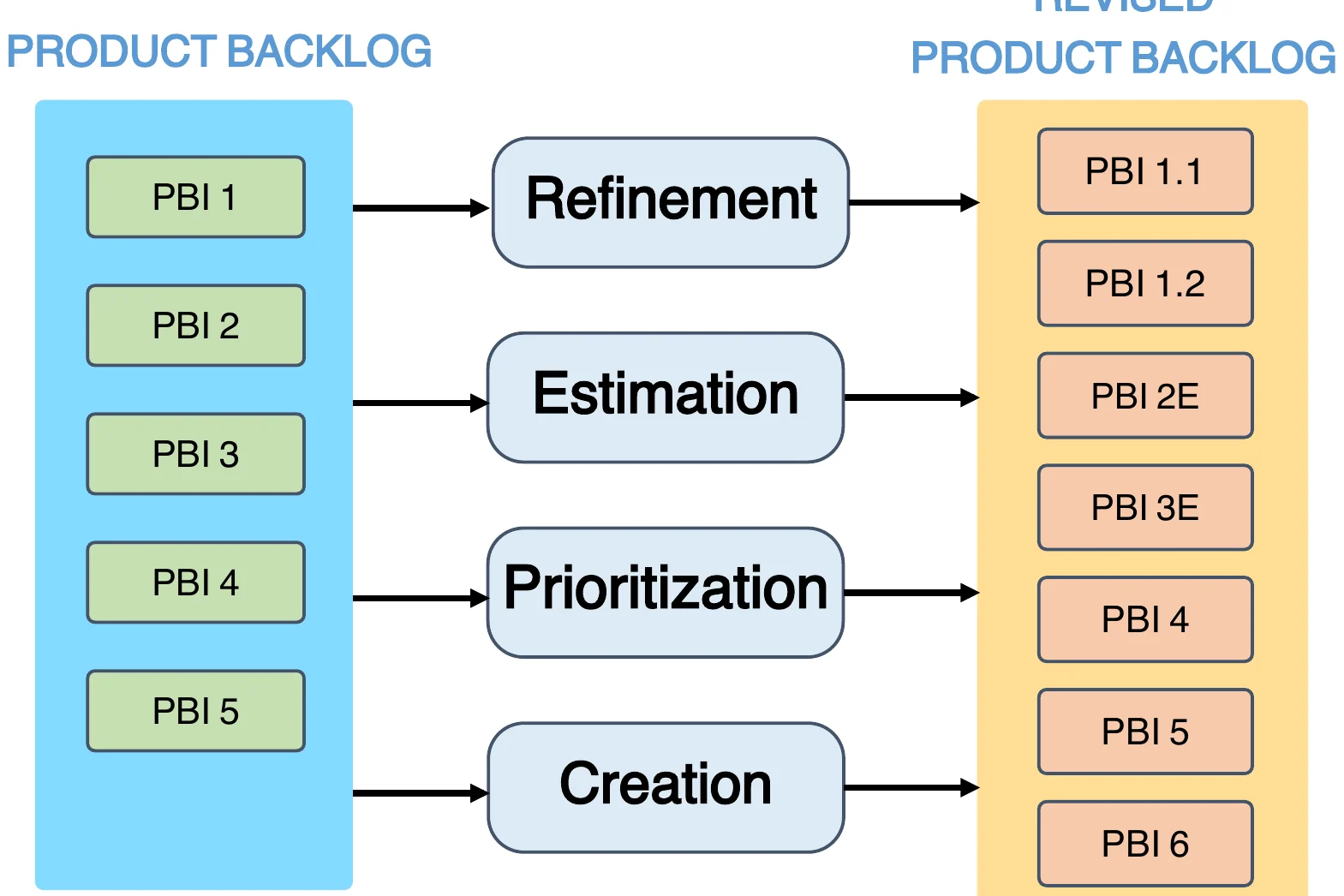
- Three states: consideration (tentative idea) → refinement (agreed, needs detail) → implementation (estimable, dependencies known).
- Four backlog activities: refinement, estimation, prioritization, creation.
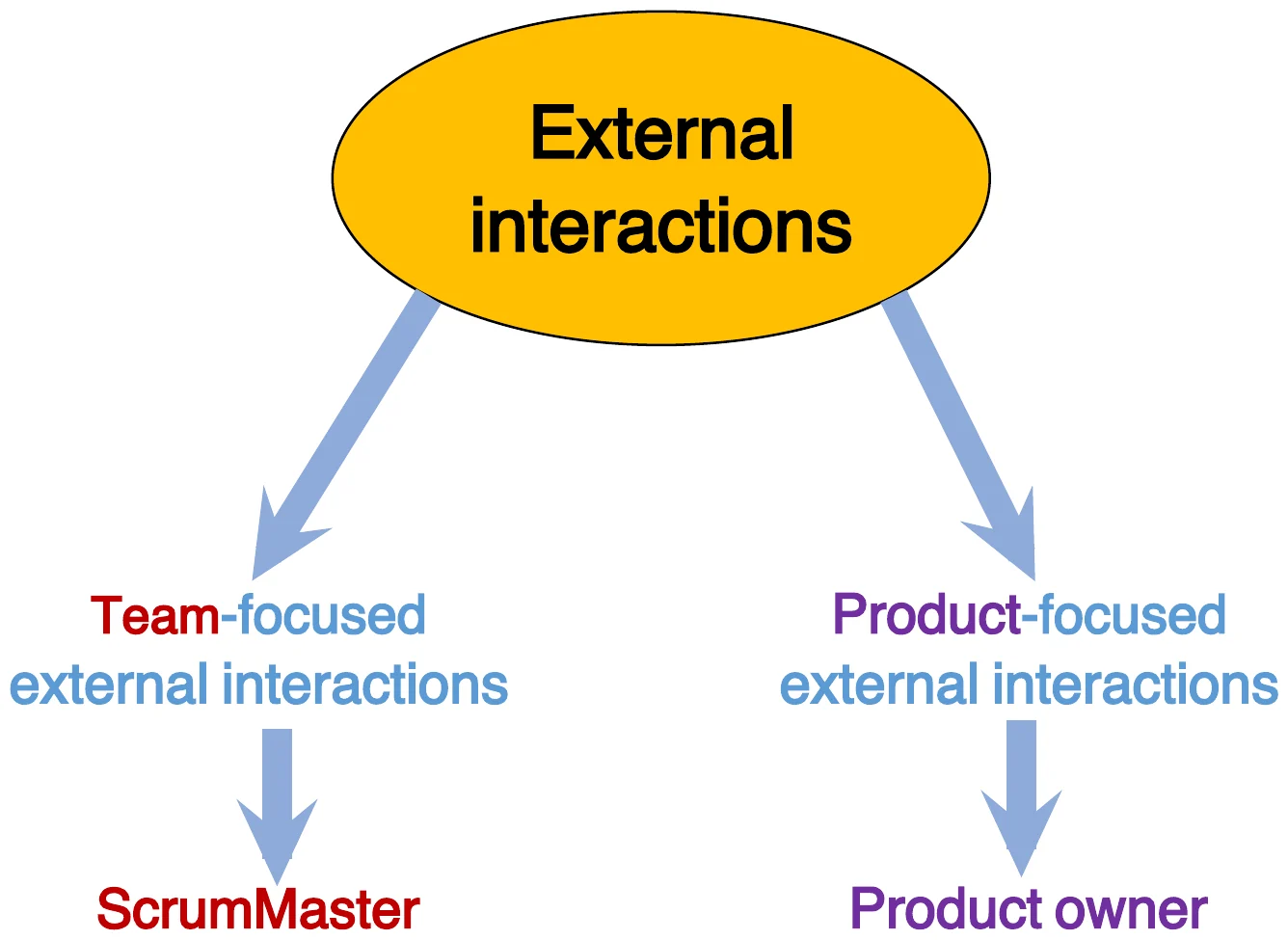
- Team-focused outside interactions → ScrumMaster. Product-focused → Product Owner.
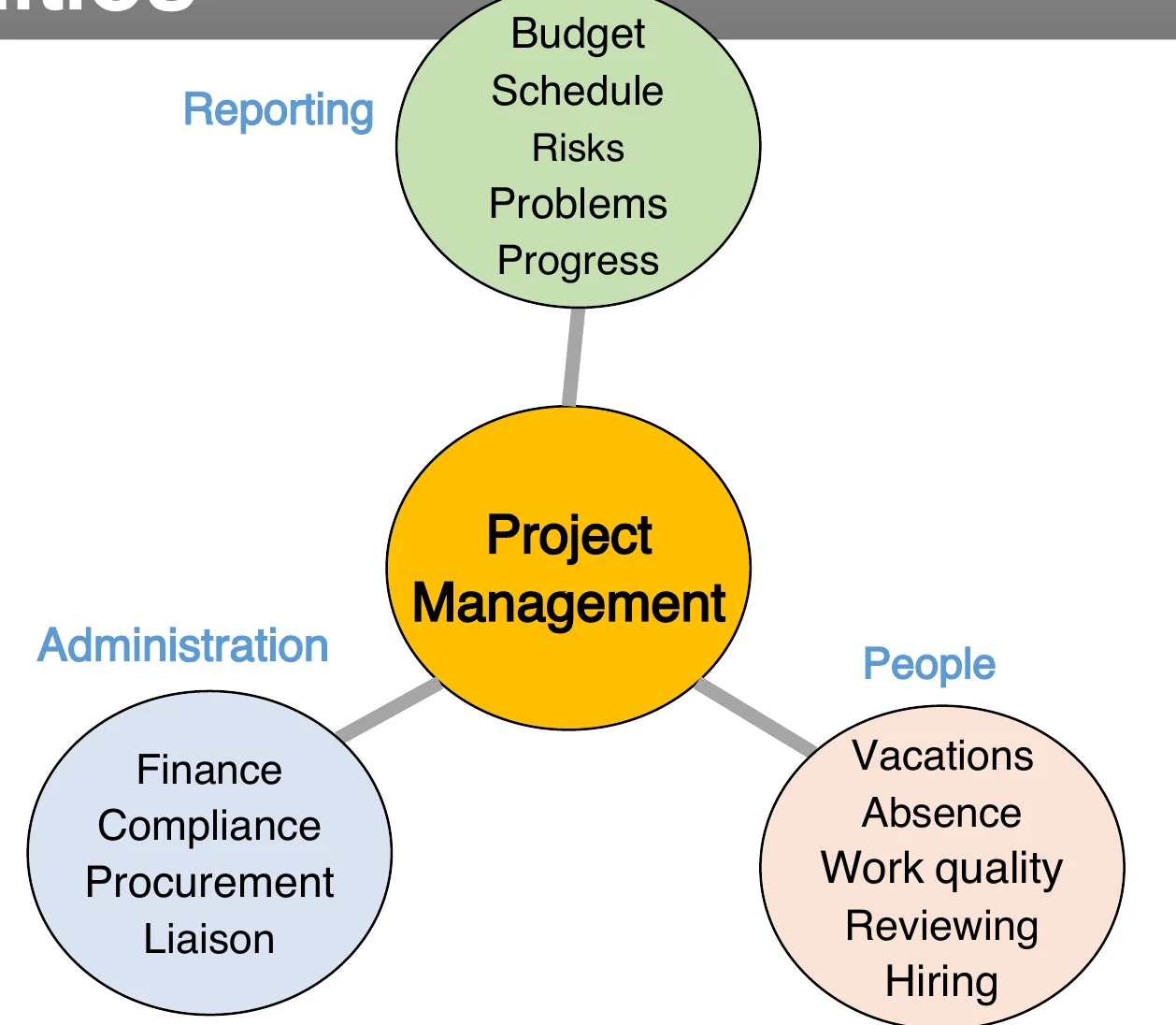
- Someone still has to do PM work: reporting (budget, schedule, risks), administration (finance, compliance, procurement) and people (absence, hiring).
- Summary: agile = increments and low overhead; XP = engineering practices; Scrum = planning (backlog, sprints, self-organizing teams).
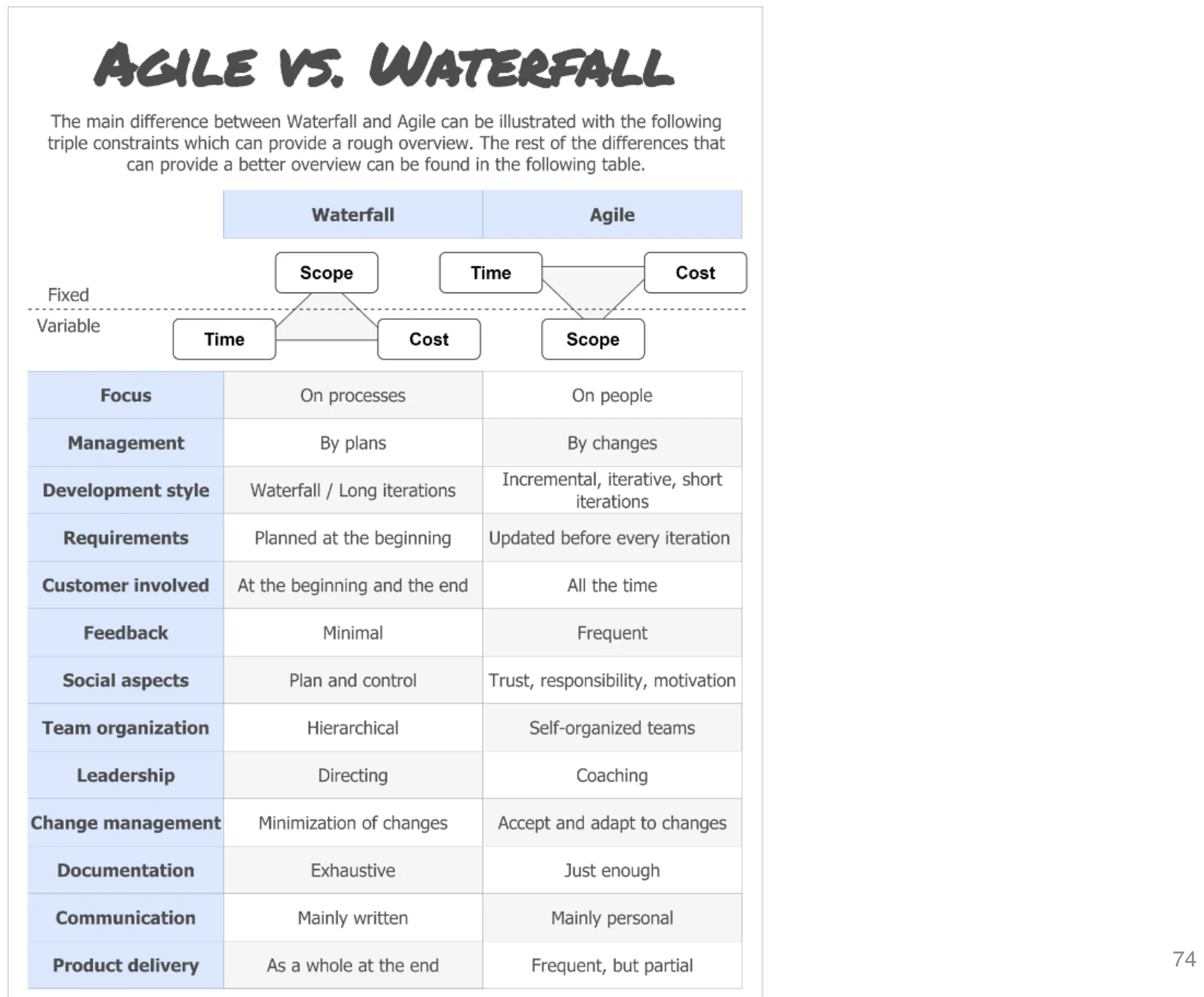
- The key line: waterfall FIXES scope (time and cost vary); agile FIXES time and cost (scope varies).
Related real-exam questions
🎯 How this can come up · 1 question
In agile, which of the triple constraints is typically allowed to vary?
Correct: Scope.
Above “DevOps”: “development and operations”.
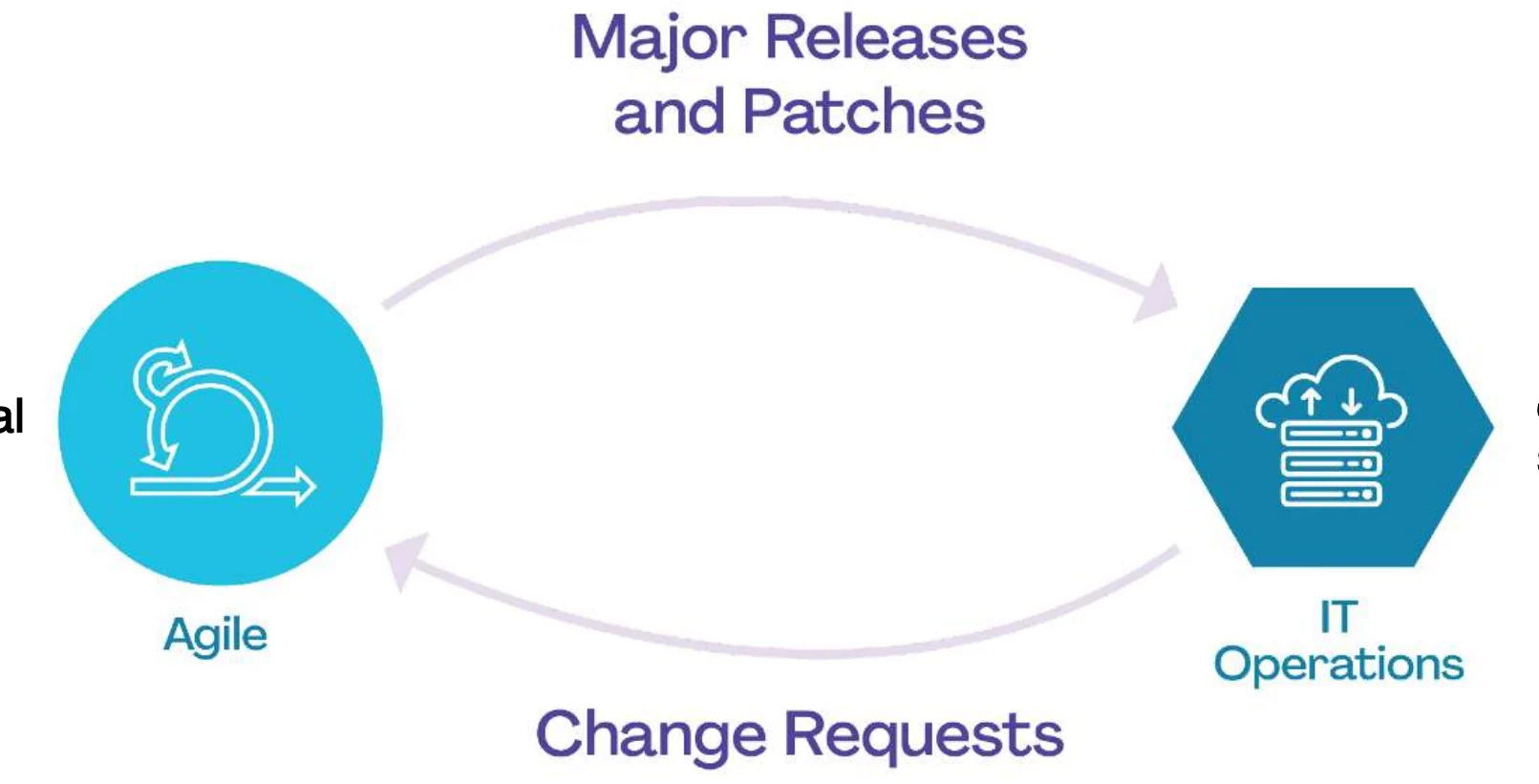
- The DevOps gap: development wants fast change; operations want stability.
- Close the gap by collaboration plus automation.
- Dev side adopts continuous delivery; ops becomes automated.
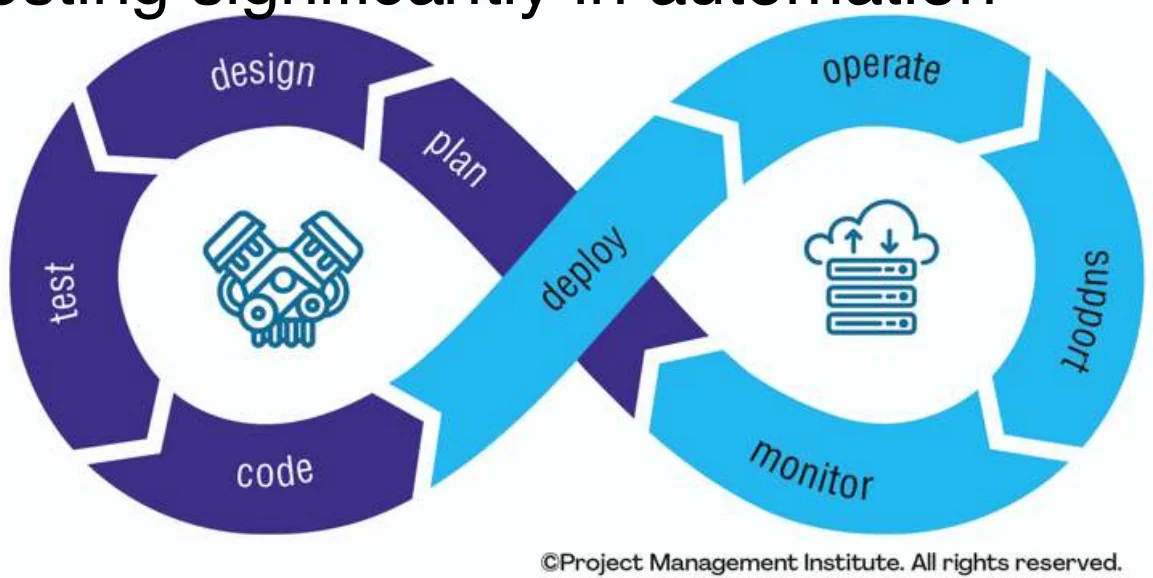
- DevOps = agile extended to operations: dev and ops become one unit, so there are fewer production defects.
🎯 How this can come up · 1 question
DevOps extends agile principles by:
Correct: Integrating development and operations into one unit.
- Market numbers are context only. The point: DevOps still needs planning and coordination.
- Classic PM (Gantt, fixed end) seems to clash with CI/CD, but it adapts: sprints, incremental deliveries.
- DevOps PM = coordinator and tracker of dependencies, and must understand the development process.
- Six best practices: collaborative culture, MVP, on-time AND quality, dependencies, tools, right metrics.
- The four DORA metrics: deployment frequency, lead time for changes, change failure rate, MTTR.
Related real-exam questions
🎯 How this can come up · 1 question
Which is one of the DevOps metrics listed on the slide?
Correct: Mean time to recovery (MTTR).
- Collaborative culture: leadership buy-in, tools, training, autonomy, shared responsibility, transparency, trust.
- MVP = simplest version meeting the core requirements; always have a deliverable each sprint.
- Balance speed with quality: watch defect rates and rollback frequency, and embed testing in the pipeline.
“For example: you can’t deploy before…” next to the dependencies point. Under the slide: “by the project manager”.
- Even microservices depend on each other. The PM tracks these dependencies, not only configuration.
Seen again
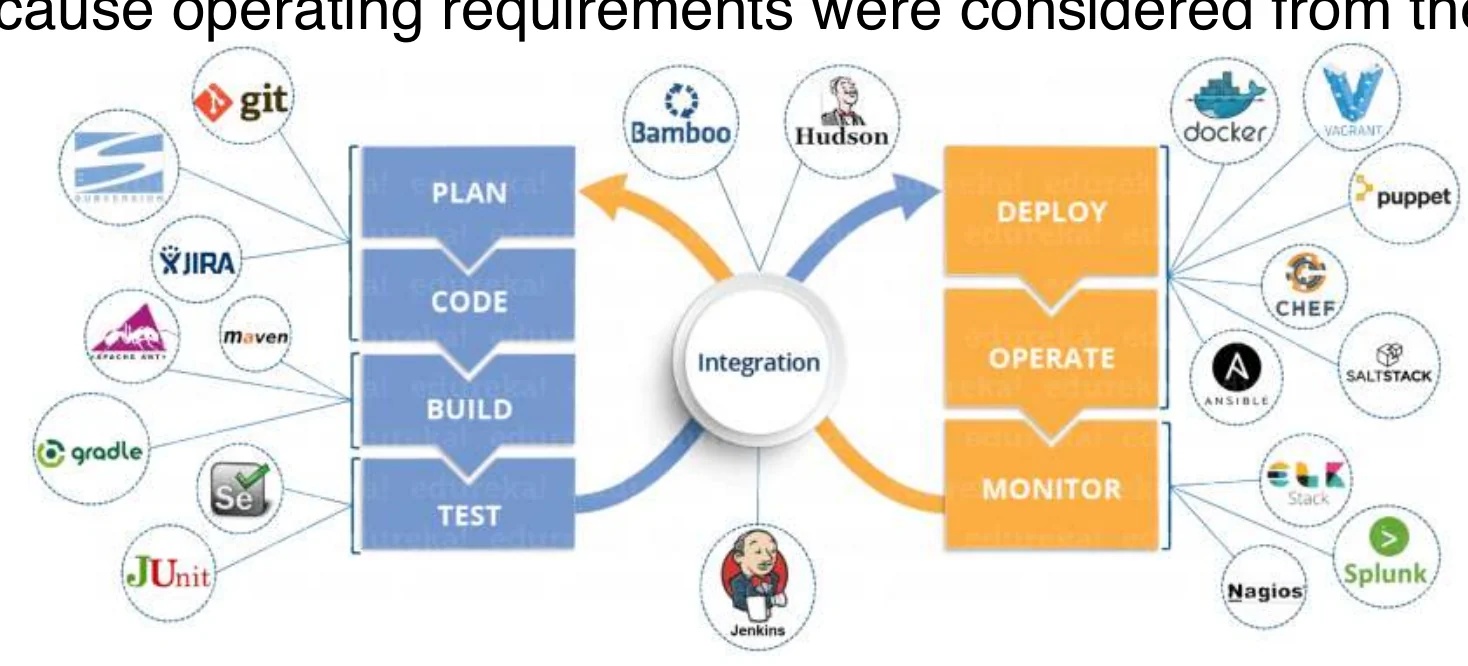
- Tools (Jira, Jenkins, dashboards) give a single source of truth. Jira updates are visible to the PM instantly.
Related real-exam questions
- Track metrics constantly: lead time, mean time to detect, issue severity, unit cost.
- DevOps practice + PM principles = better coordination and deployable increments.
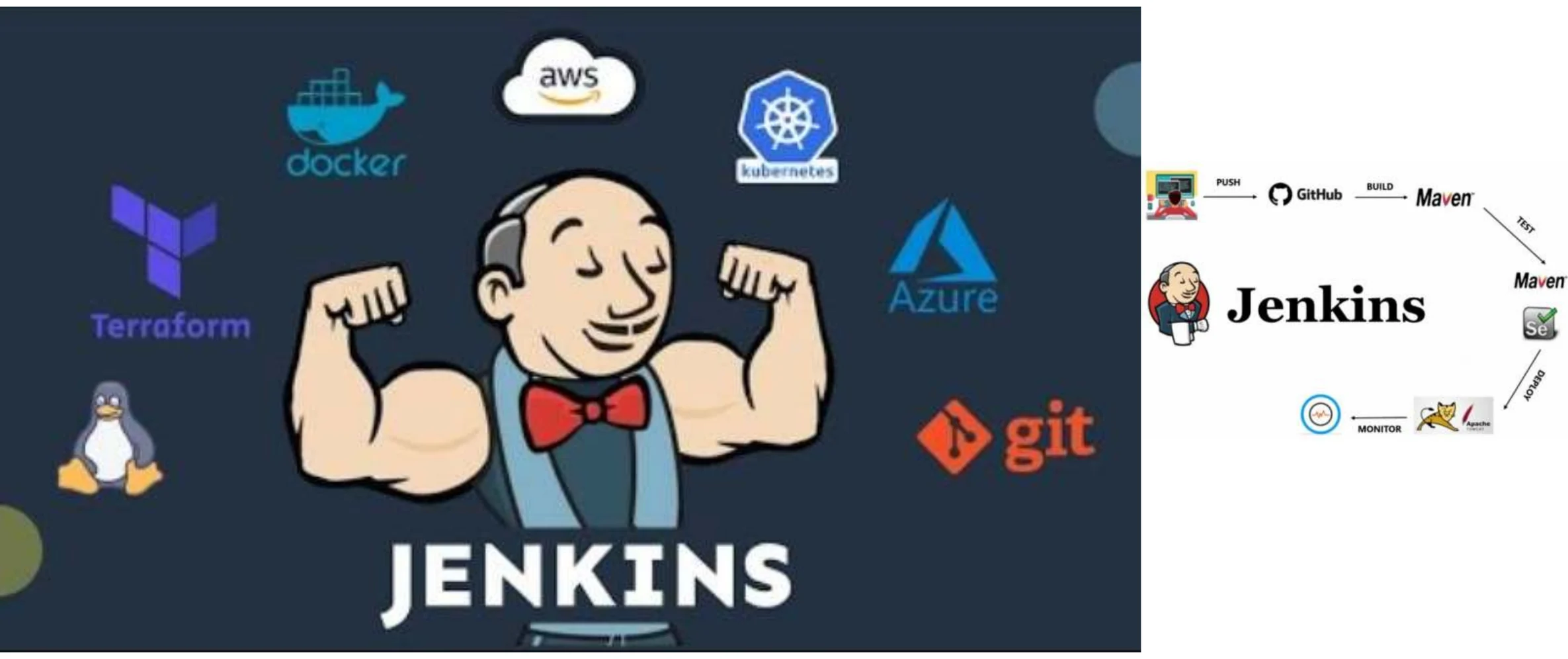
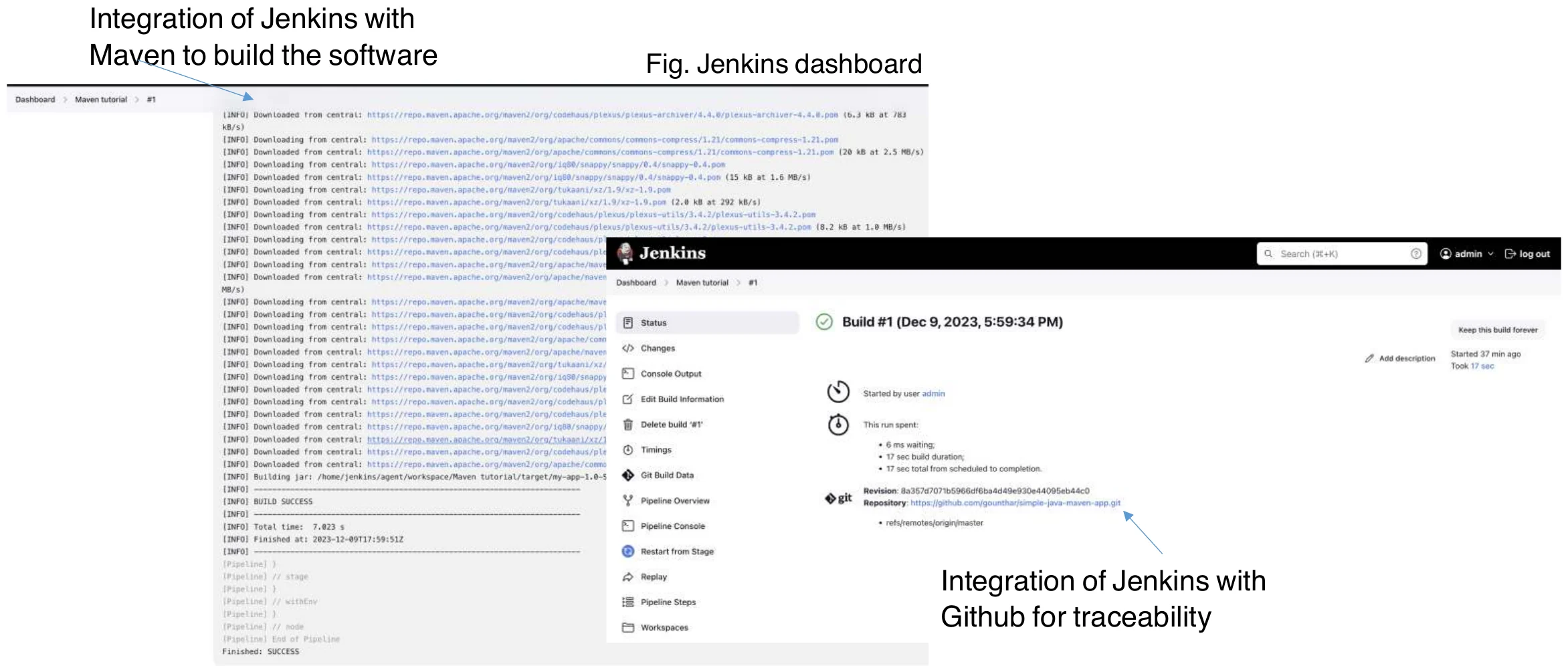
- Jenkins builds with Maven and links to GitHub for traceability.
- DevOps PM = a bridge and a technical orchestrator. Unlike a traditional PM, they also handle technical details.
🎯 How this can come up · 1 question
A DevOps project manager stays away from technical details, like a traditional project manager.
False. DevOps PMs work on technical details as technical orchestrators.
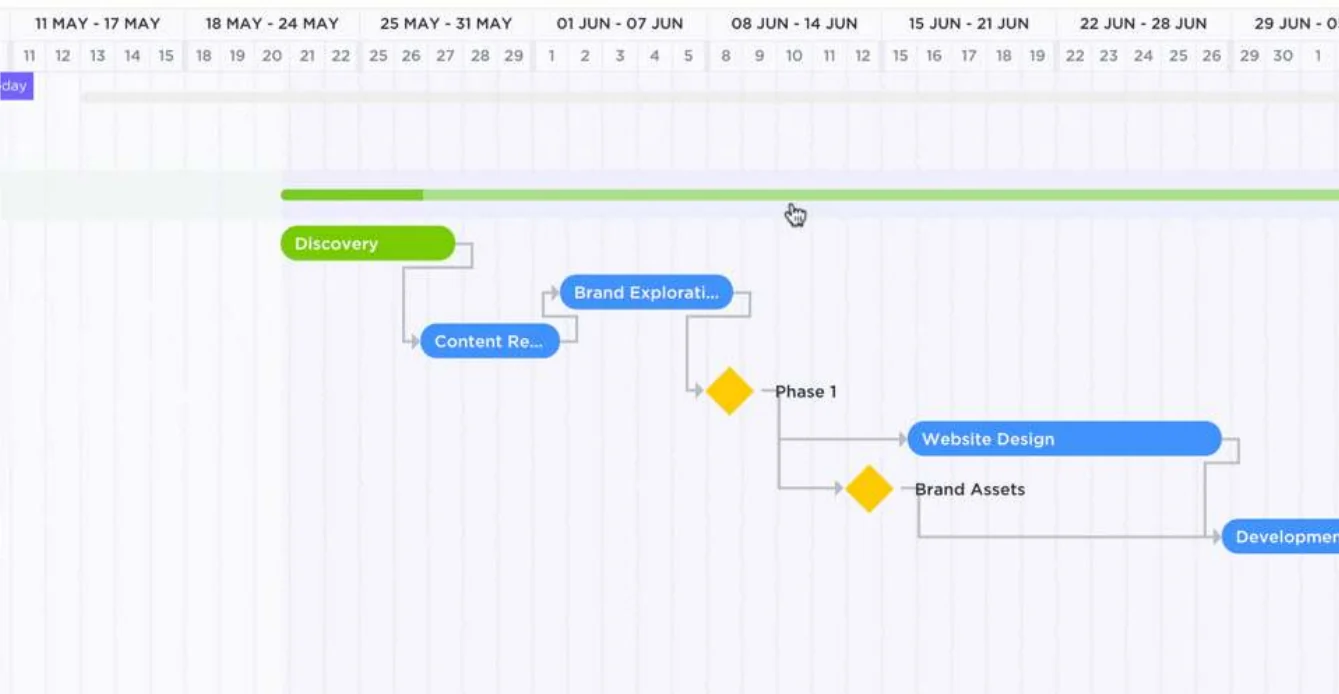
- Two specificities: treat dev and ops as one team; embrace change.
- Traditional hand-offs cause blame and delays; DevOps shares goals and tools from the start.
- Gantt = task scheduling. Value stream map = the whole flow, idea to deployment, showing waste. A natural next step for PMs.
- DevOps fails unless dev and ops truly collaborate.
- Communication is the PM’s main skill for managing incremental change.
- Start small, use the MVP, agile tools, no silos, fewer hand-offs, real-time visibility, less overhead, change together.
No slides match this filter.