Exam weight Low
- Guided (wired): twisted pair, coax, fiber. Unguided (wireless): radio, microwave, infrared.
- Know one advantage and one disadvantage of each, plus the frequency ranges of the three wireless types.
Guided media (twisted pair, coaxial, fiber) and unguided media (radio, microwave, infrared): how each one is built, what it is good and bad at, UTP vs. STP and the cable categories, RJ-45 pinouts and when you need a crossover cable. Most questions here are comparisons, so the notes keep pointing at the differences.
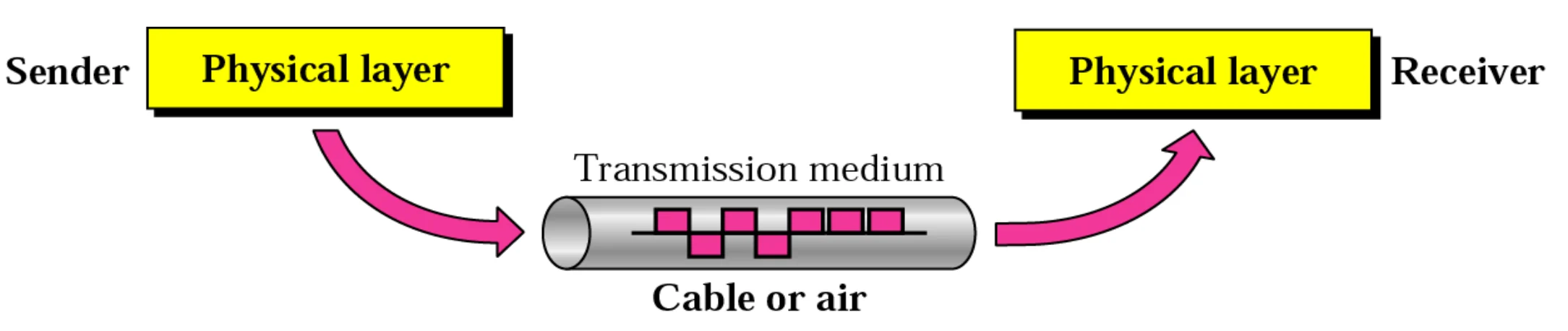
The transmission medium is located above the physical layer.
False. Below it, and controlled by it.
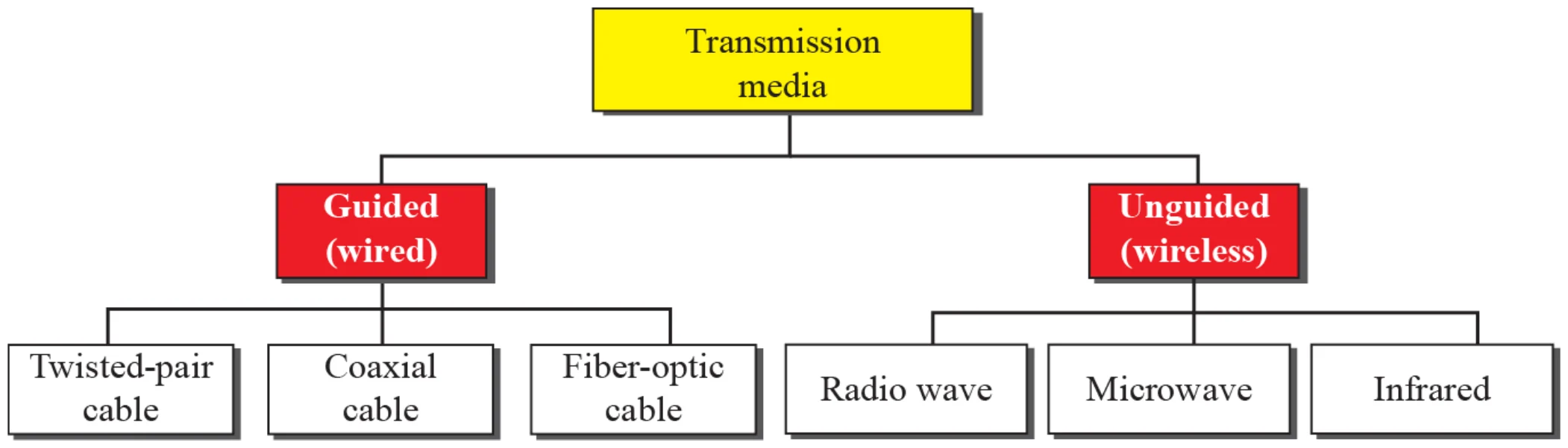
Which is an unguided medium?
Correct: Microwave.
Fiber-optic cable is classified as:
Correct: Guided media.
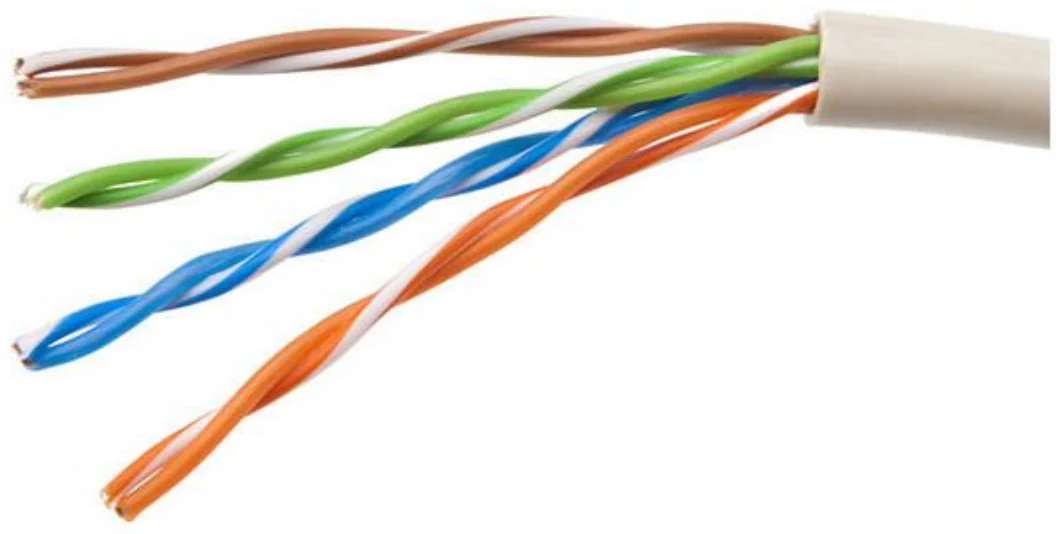
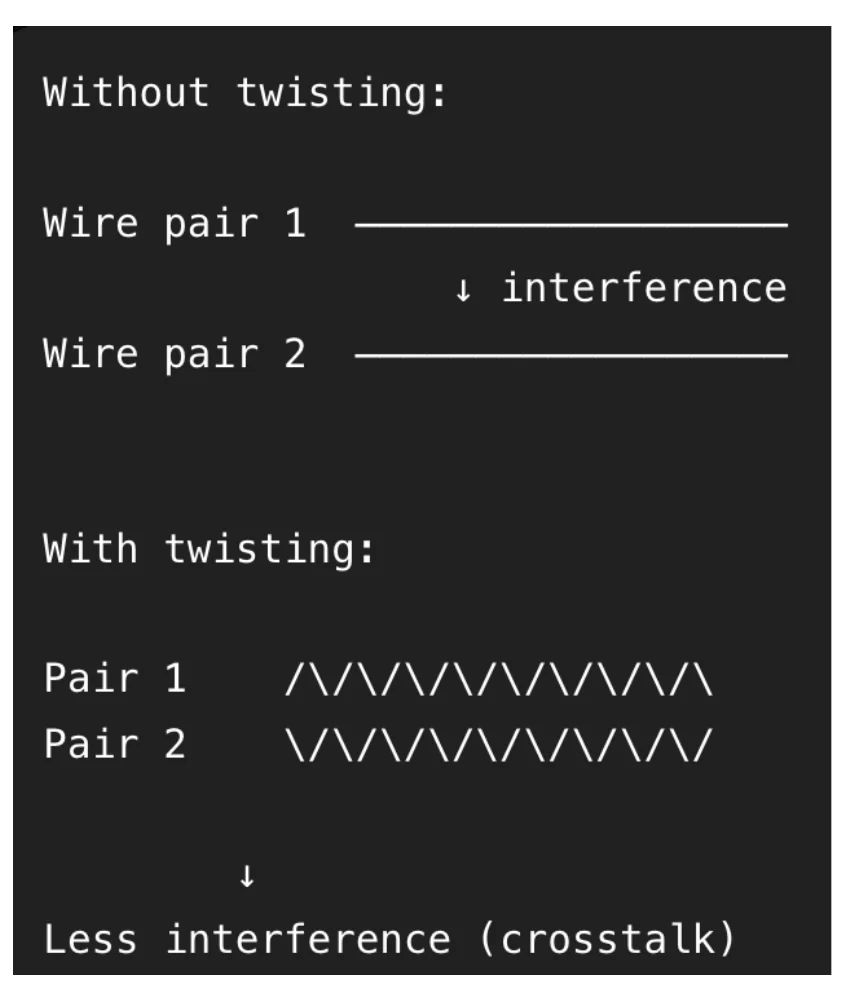
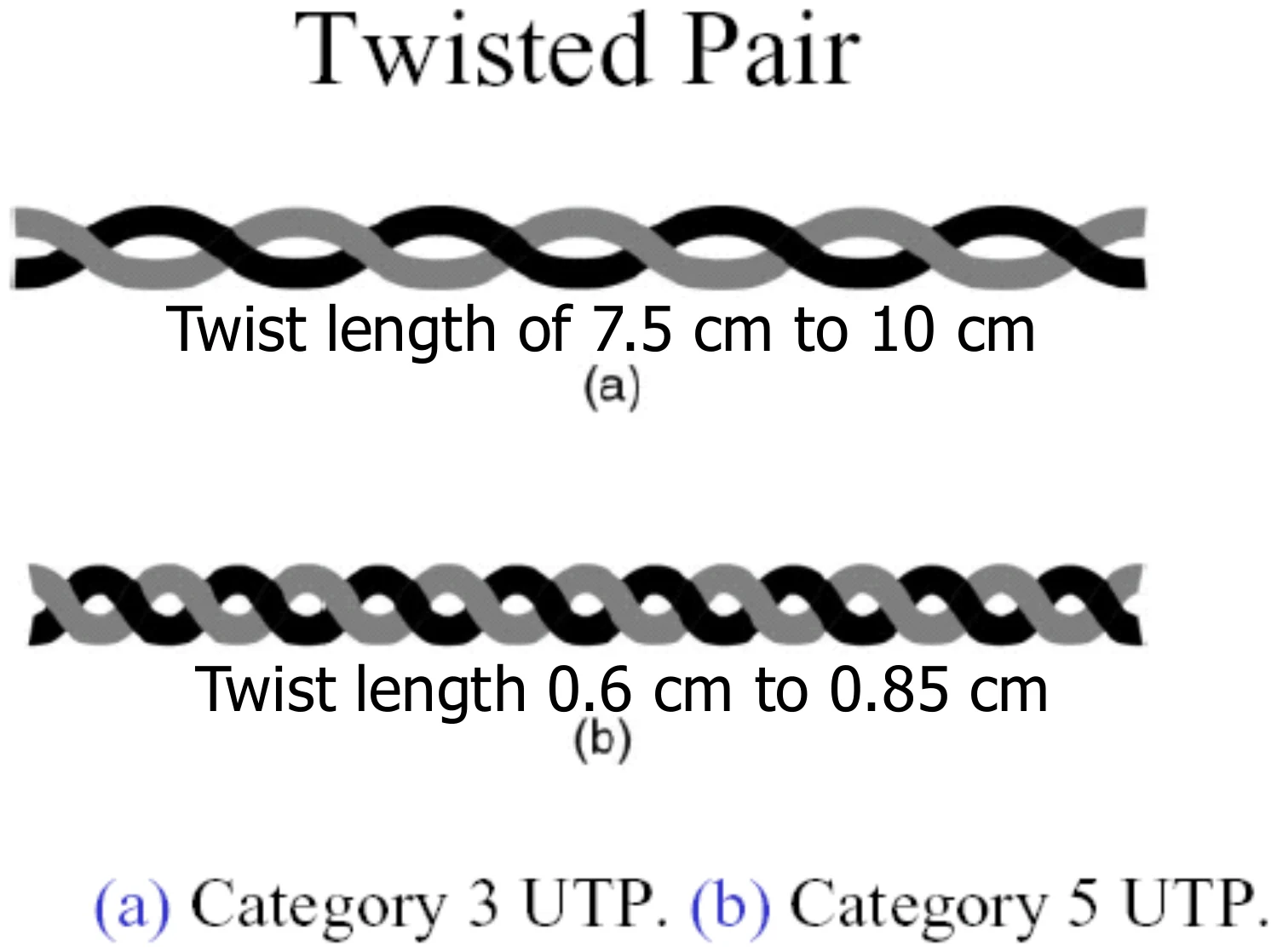
Why are the wires in a twisted pair twisted?
Correct: To reduce interference from nearby pairs.
More twists per length gives better quality twisted-pair cable.
True.
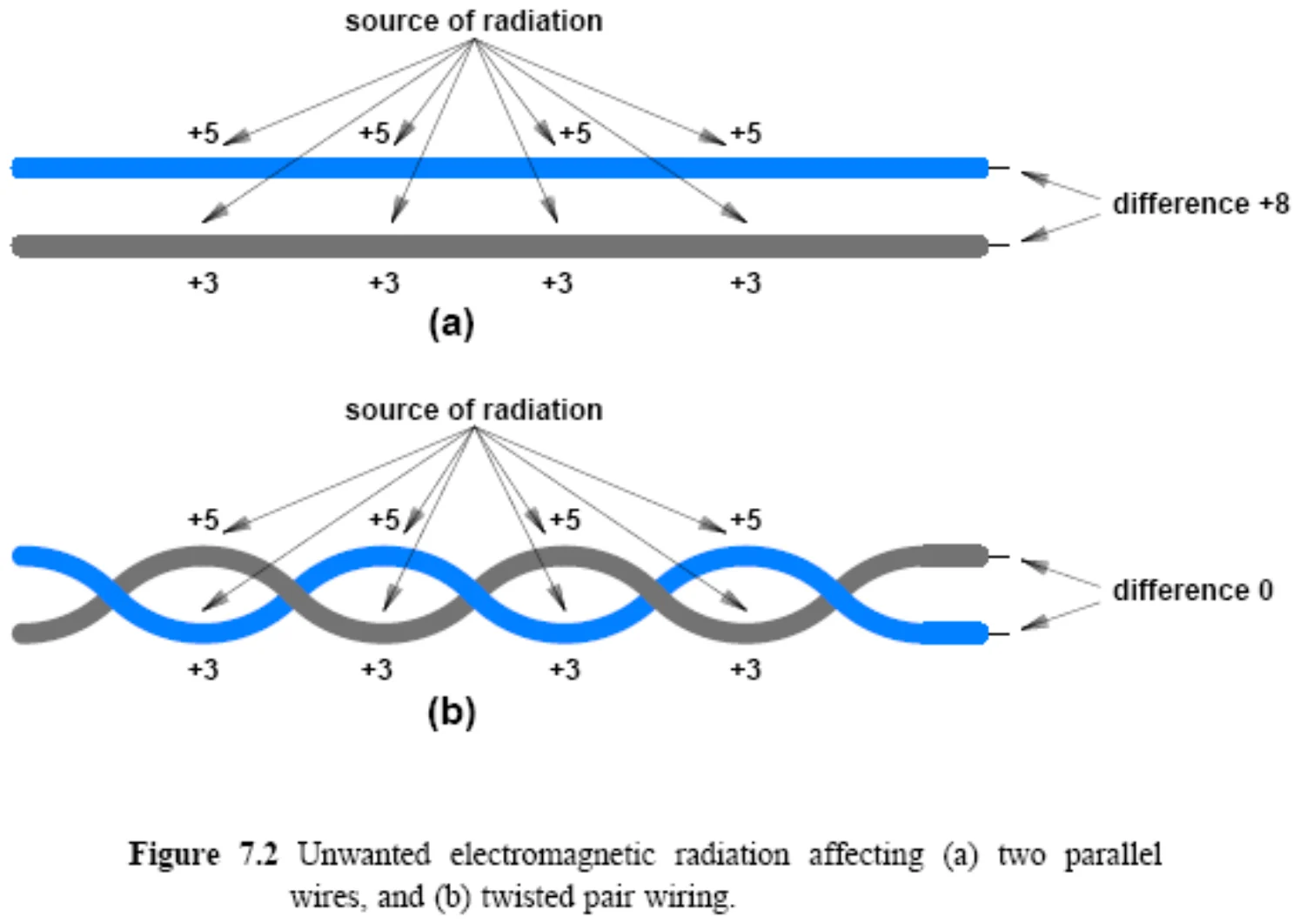
Explain how twisting a pair of wires reduces noise.
In parallel wires one wire is always closer to the noise source and picks up more noise, so a difference remains. Twisting swaps the positions all along the cable, so both wires pick up the same total noise; the receiver uses the difference between them, and the noise cancels.
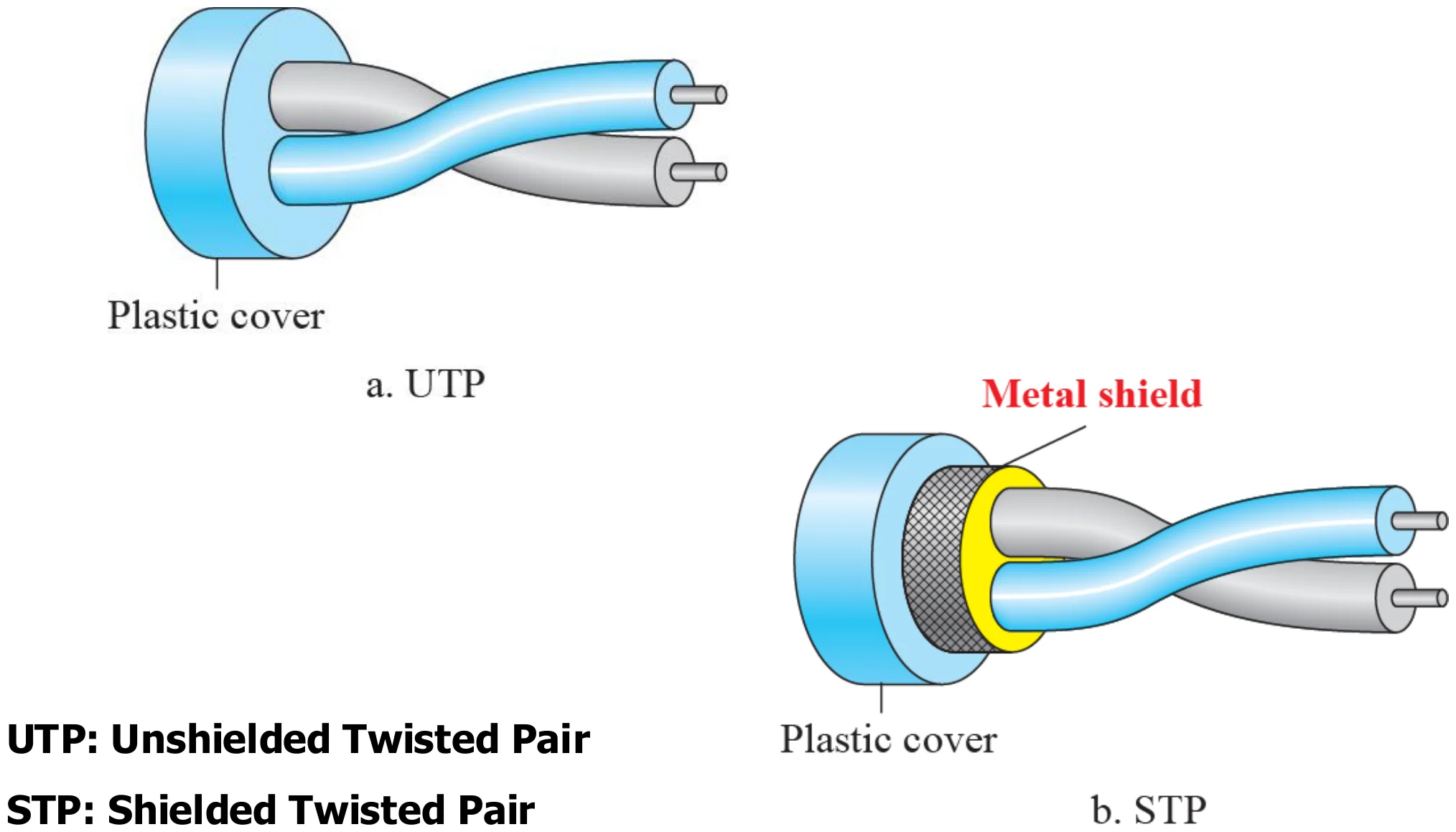
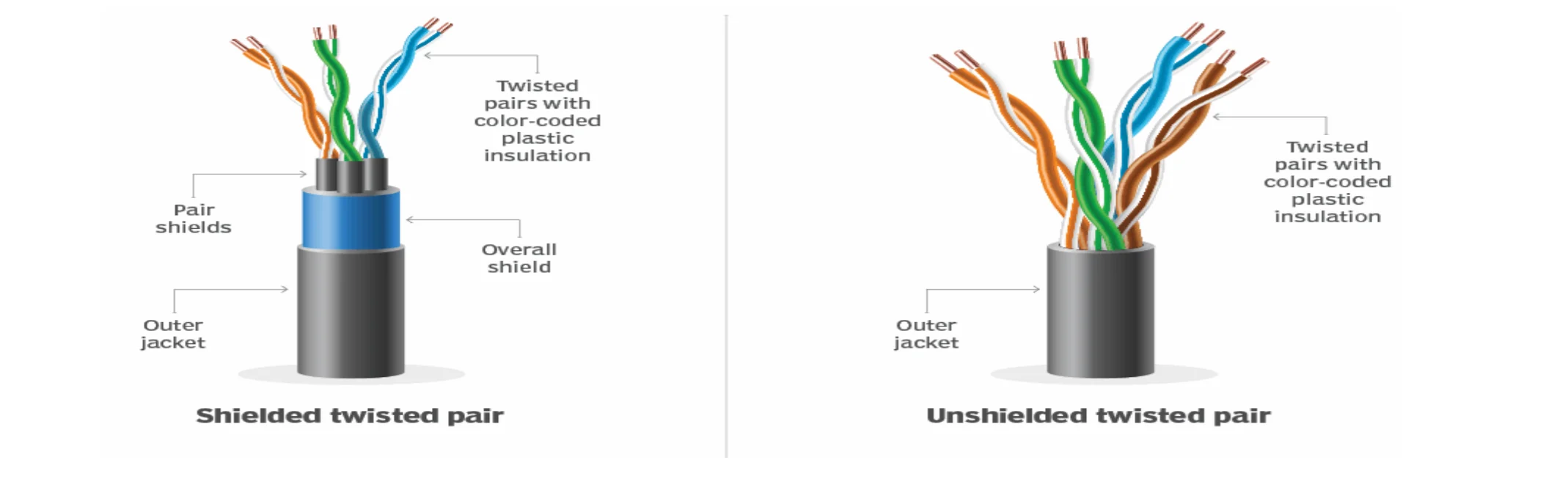
Compared with UTP, STP:
Correct: Reduces interference but costs more and is harder to handle.
A factory floor has heavy motors next to where the network cables will run. UTP or STP, and why?
STP. The motors cause electromagnetic interference (induced noise); the metal shield in STP reduces it. UTP would suffer from the EMI. (Fiber would be immune altogether.)
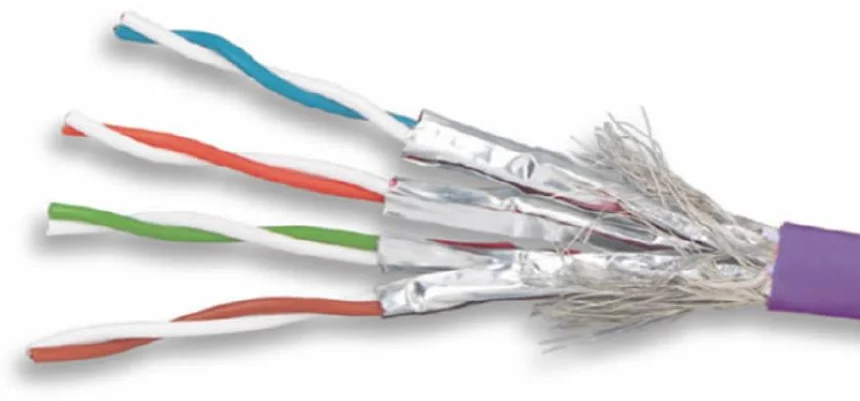
Which is the first category in the table that is shielded only?
Correct: CAT7.
CAT6a supports a maximum data rate of:
Correct: 10 Gbps.
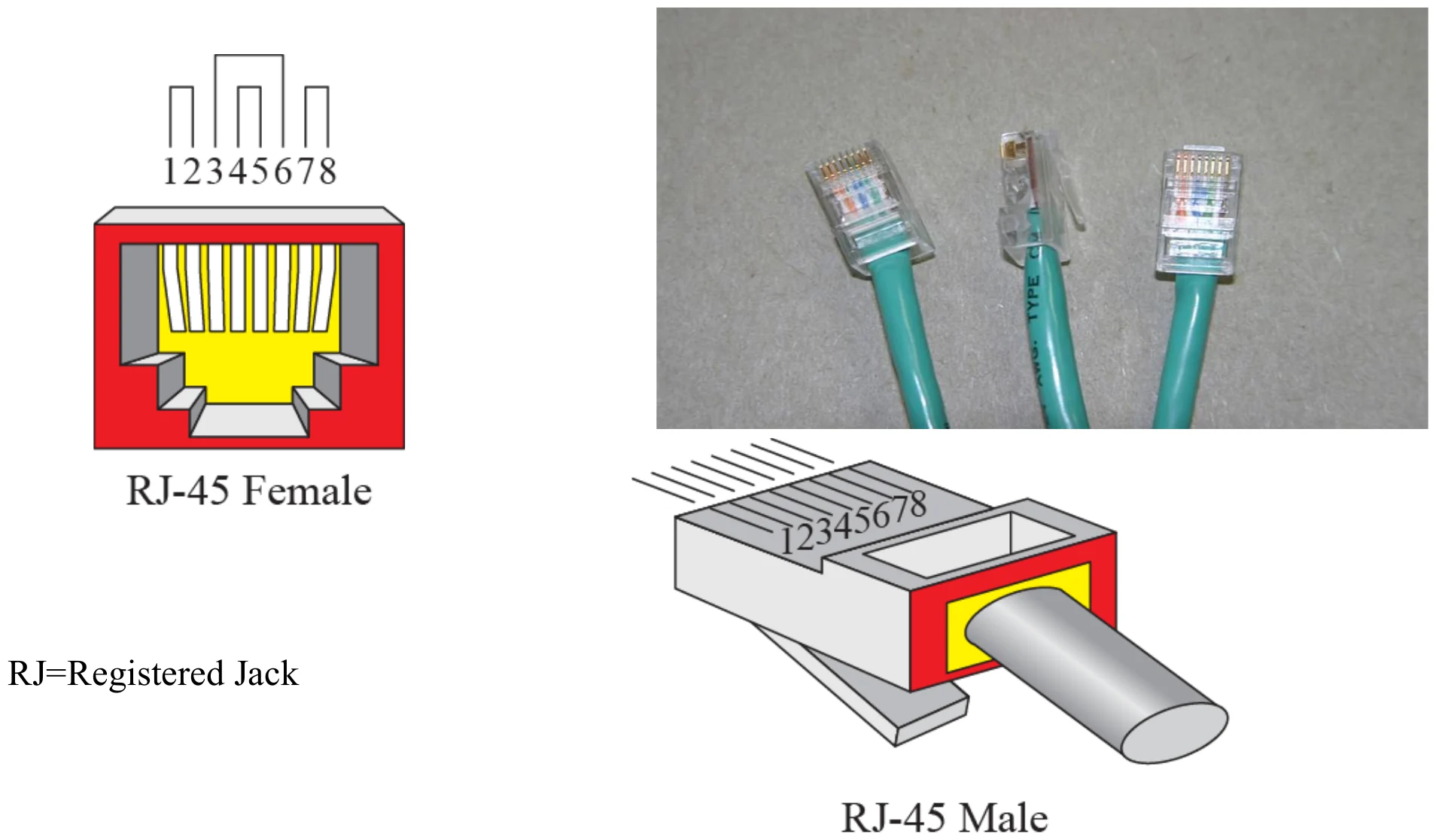
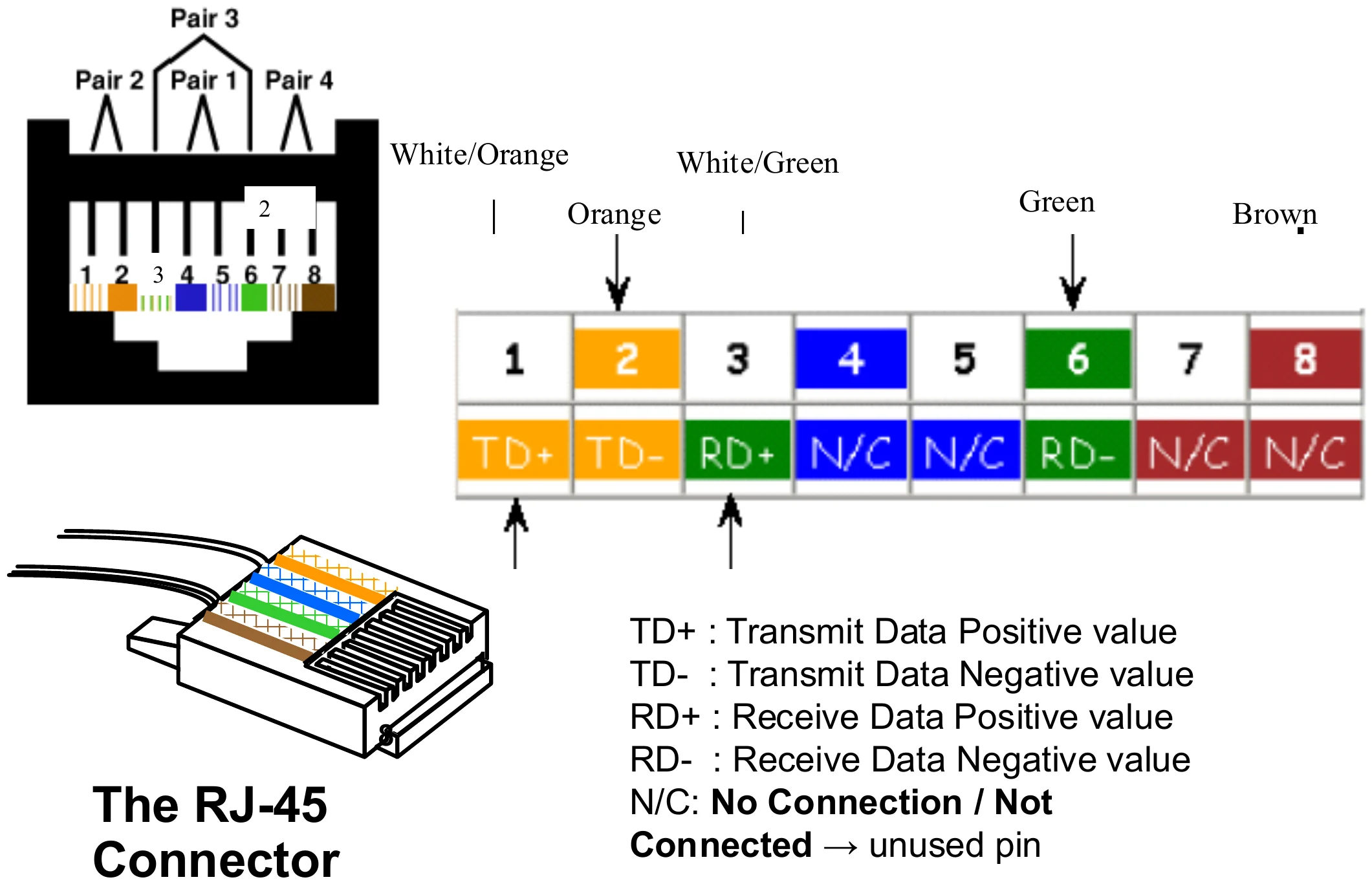
In 10/100 Ethernet, which RJ-45 pins are used to transmit?
Correct: 1 and 2.
Which pins receive data?
Correct: 3 and 6.
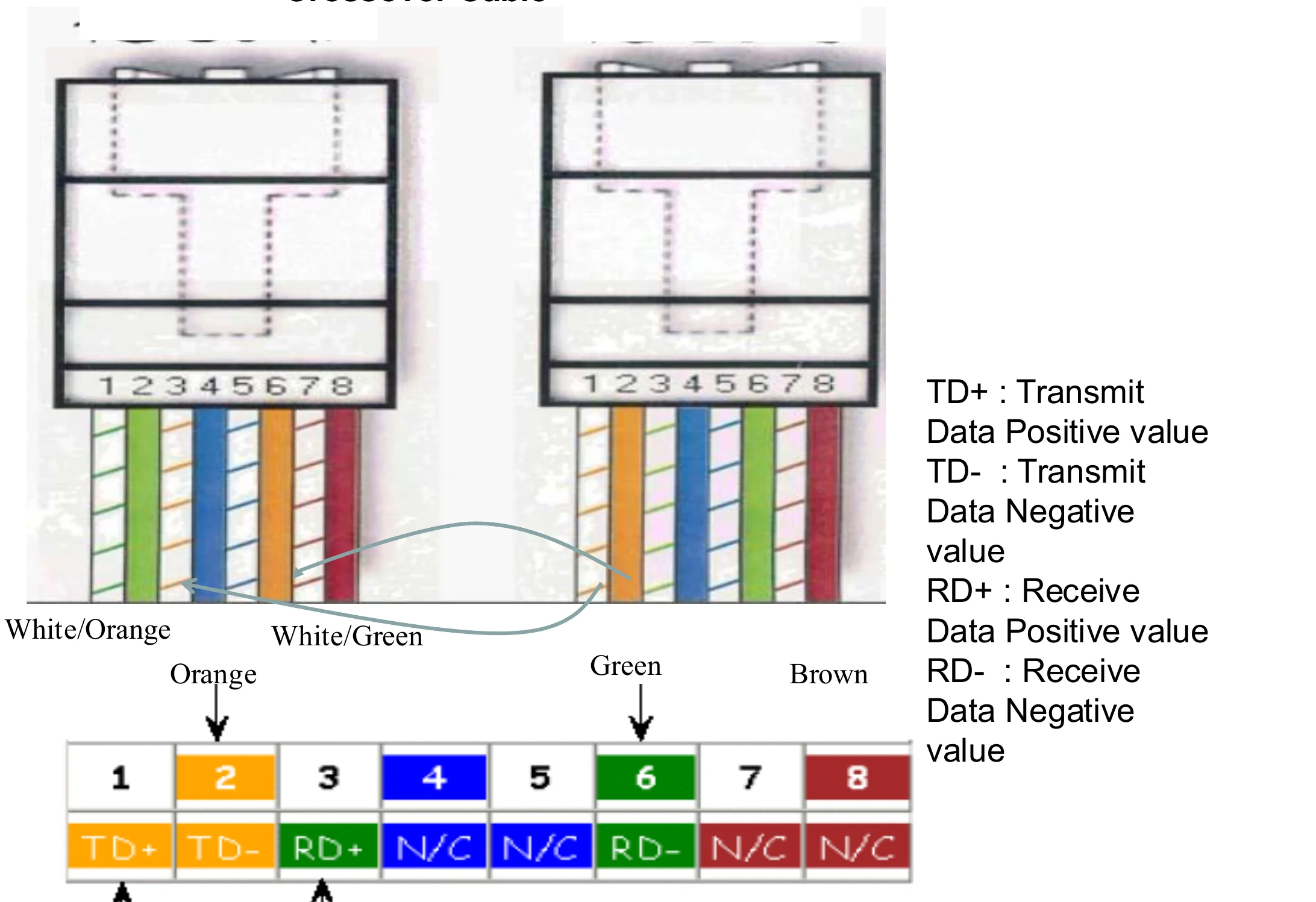
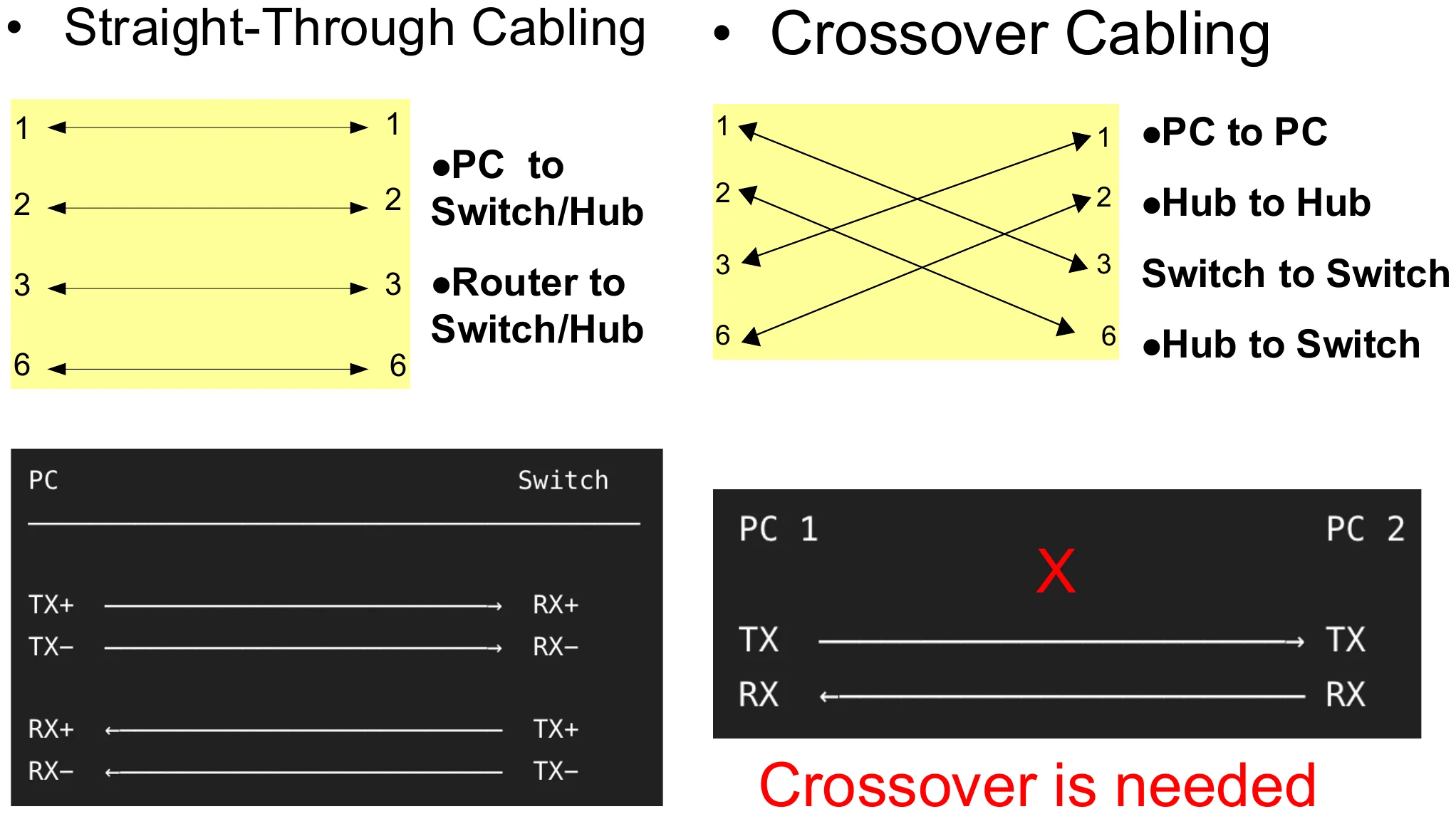
Which cable connects two PCs directly?
Correct: Crossover.
Which cable connects a PC to a switch?
Correct: Straight-through.
Two switches are connected with a straight-through cable.
False. Switch to switch needs a crossover (unless auto-MDIX).
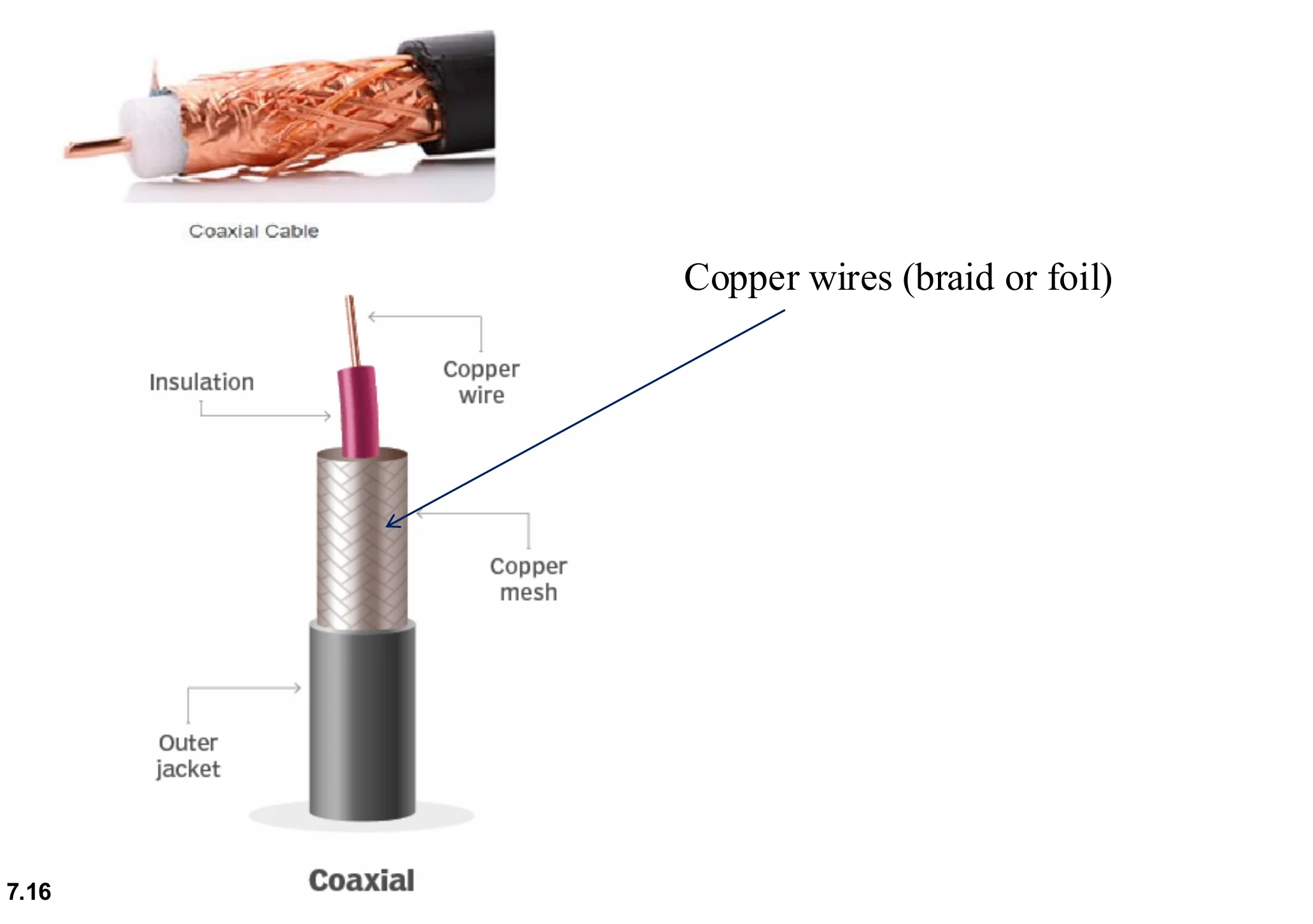
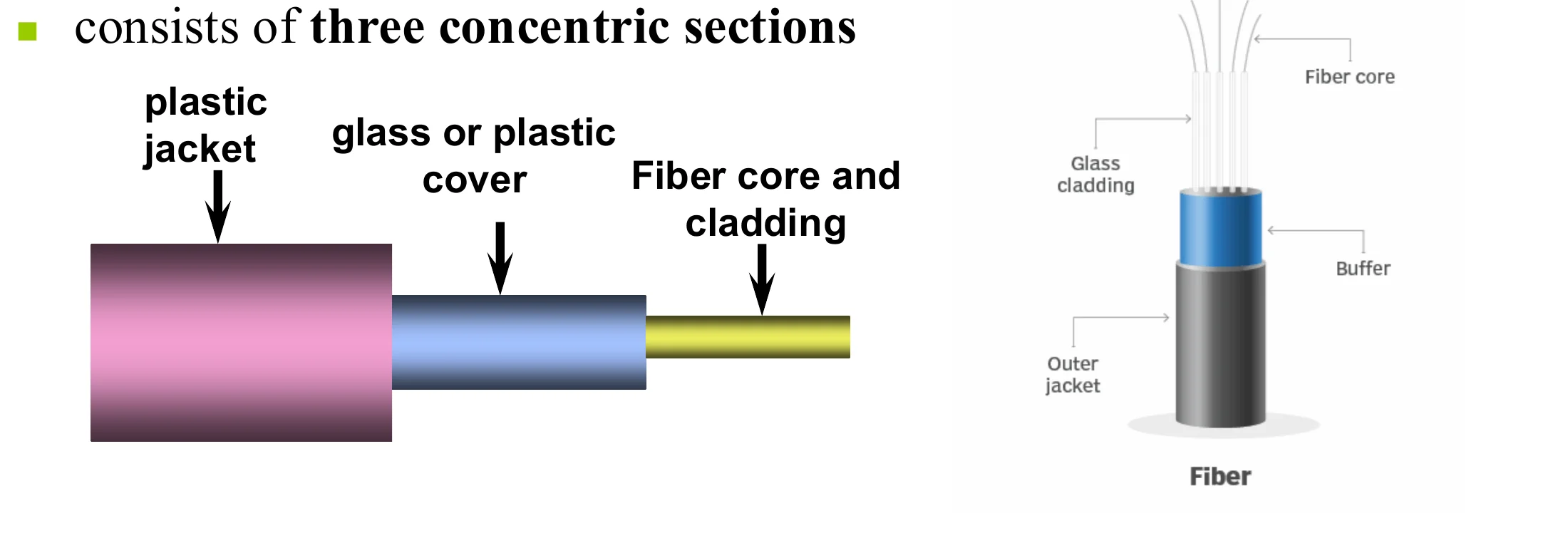
The layer of a fiber that keeps the light inside the core is the:
Correct: Cladding.

Which is a disadvantage of fiber-optic cable?
Correct: It needs special skills to install.
Fiber-optic cable is not affected by electromagnetic noise.
True.
Give three advantages of fiber over copper.
Higher bandwidth (hundreds of Gbps), lower attenuation so repeaters can be 50 km or more apart, immunity to noise and crosstalk, smaller size and weight, and better security because no light leaks out.
The maximum distance of a UTP segment in the table is about:
Correct: 100 m.
Two buildings 2 km apart must be linked, and a high-voltage line runs between them. Which cable?
Fiber. UTP only reaches about 100 m and is not immune to EMI or electrical hazards; fiber reaches tens of kilometres and is completely immune.
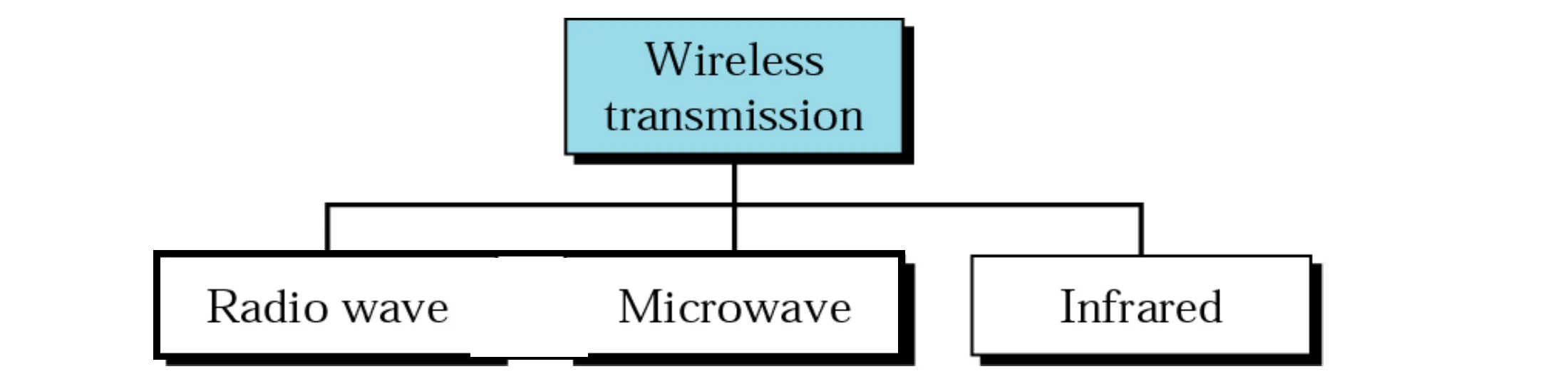
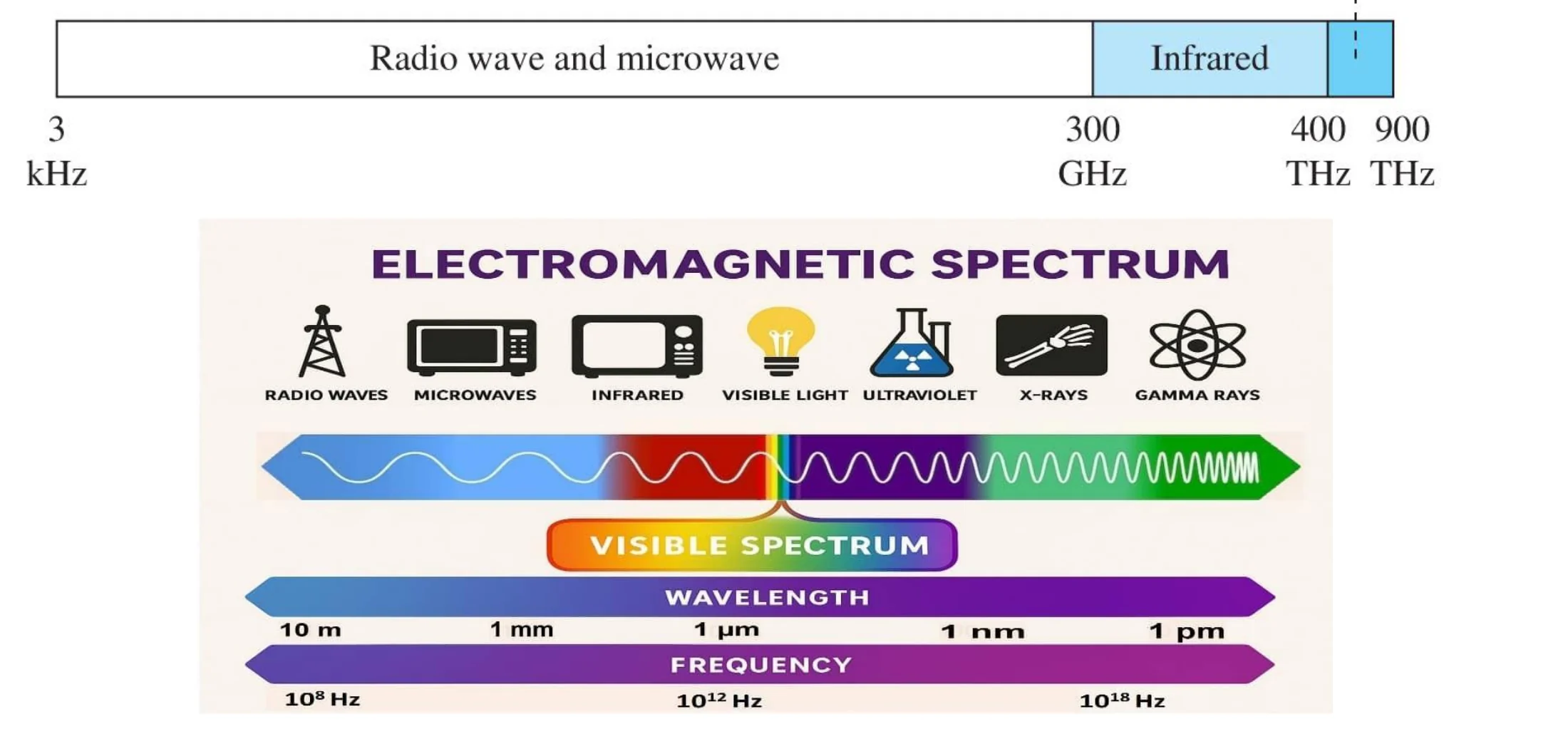
Which has the highest frequency?
Correct: Infrared.
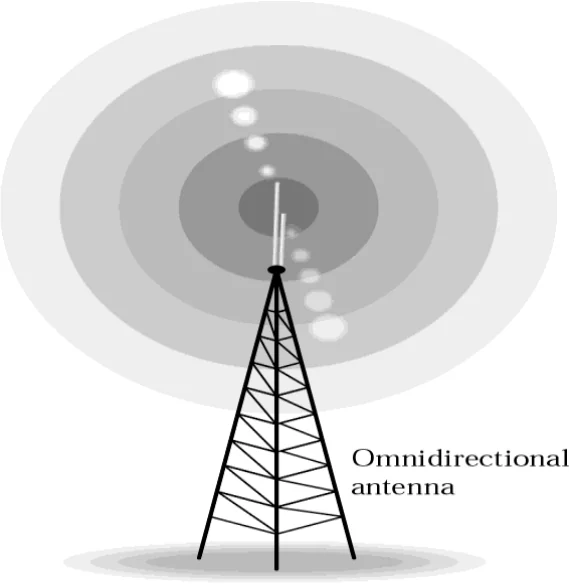
Radio waves are used for which type of communication?
Correct: Multicast (radio and TV).
Microwaves propagate:
Correct: In one direction (line of sight).
Higher frequencies pass through walls more easily.
False. Higher frequency means shorter wavelength and more difficulty with obstacles.
Cellular telephones and satellite networks mainly use:
Correct: Microwaves.
Why can’t infrared be used outdoors in the sun?
Correct: The sun’s infrared rays interfere.
Which wireless medium cannot penetrate walls and is used in TV remote controls?
Correct: Infrared.
Compare radio waves, microwaves and infrared by direction and typical use.
Radio (< 300 MHz): omnidirectional, long range, multicast such as radio and TV. Microwave (300 MHz – 300 GHz): unidirectional line of sight, unicast such as cellular, satellite and wireless LANs. Infrared (300 GHz – 400 THz): line of sight, short range inside a room, such as remote controls.
No slides match this filter.