Exam weight Low
- PKI overview, digital signatures, certificates.
Exam weight Low
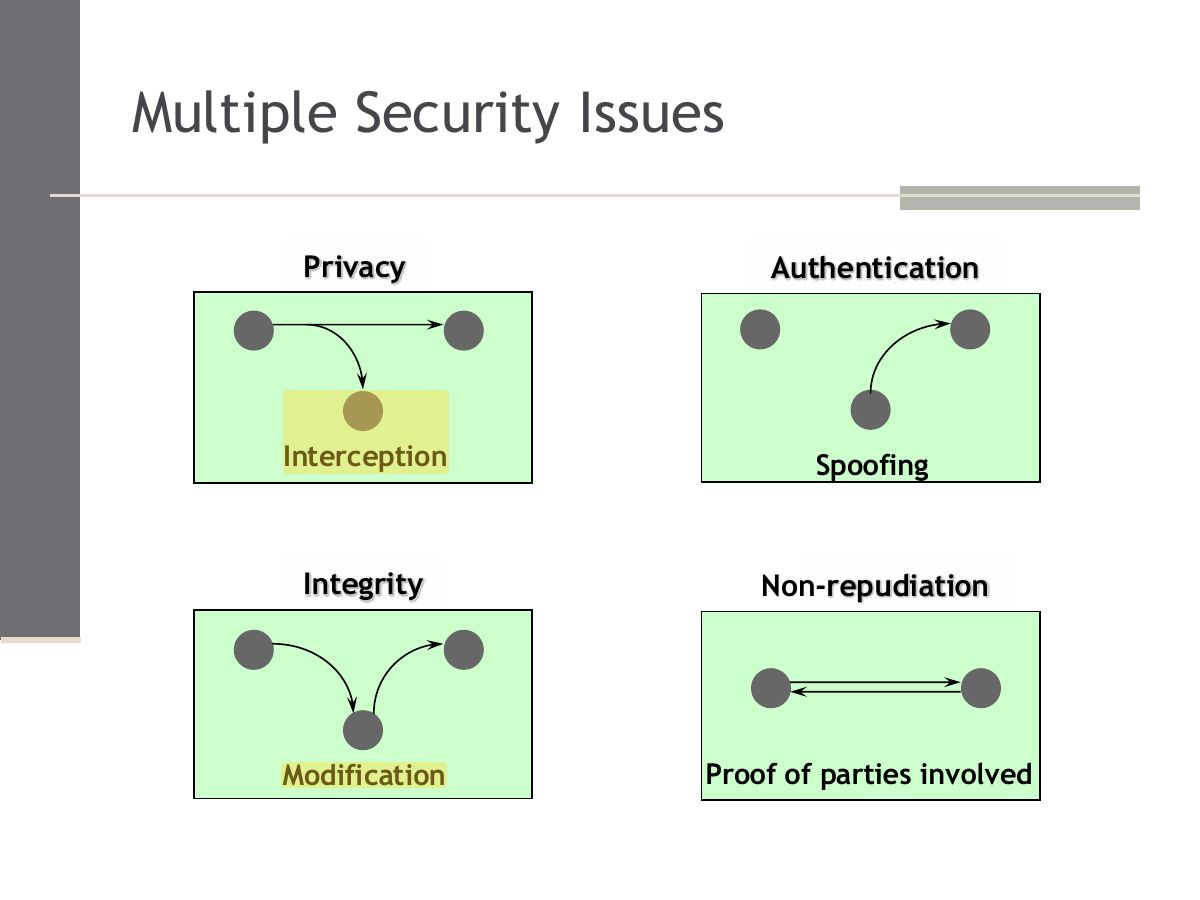
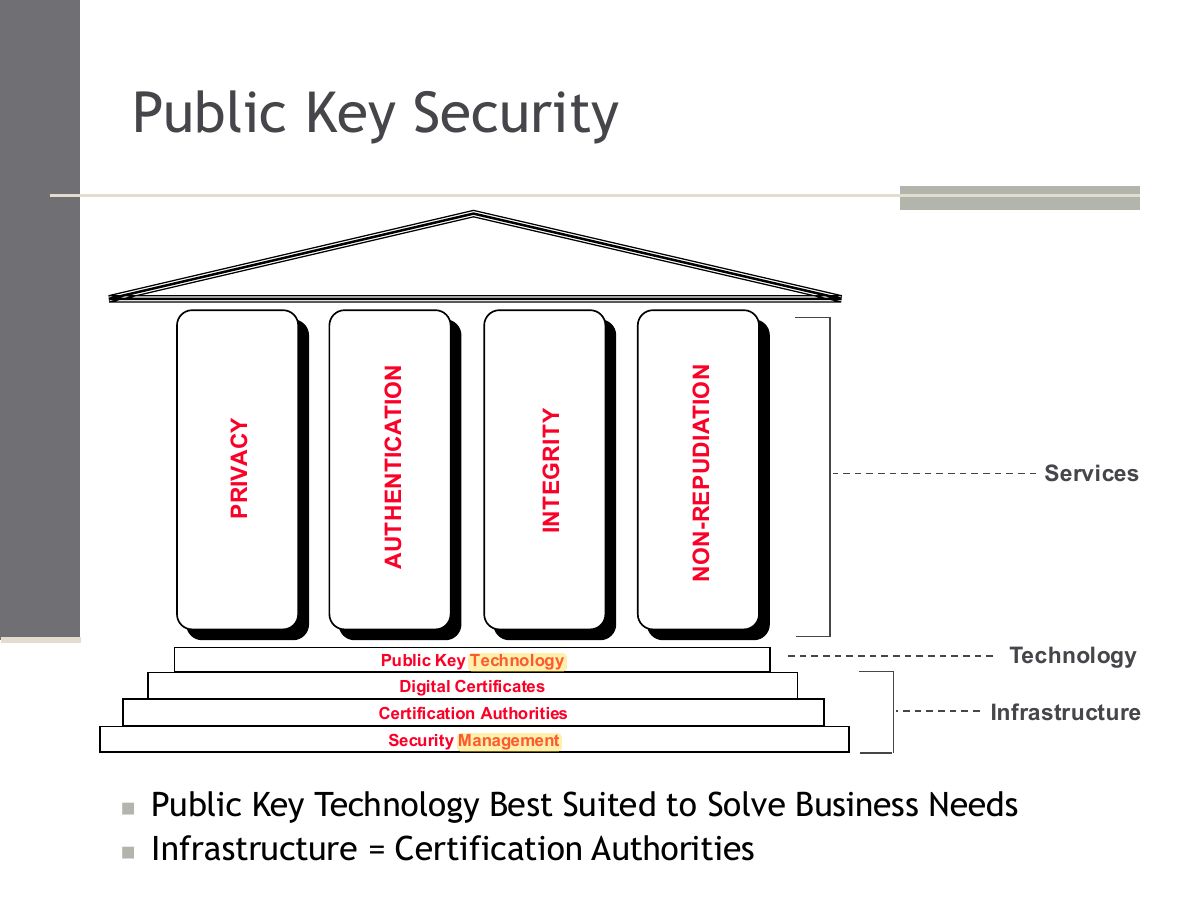
- Security issues: privacy (interception), integrity (modification), authentication (impersonation), non-repudiation.
Seen again
Exam weight
Medium
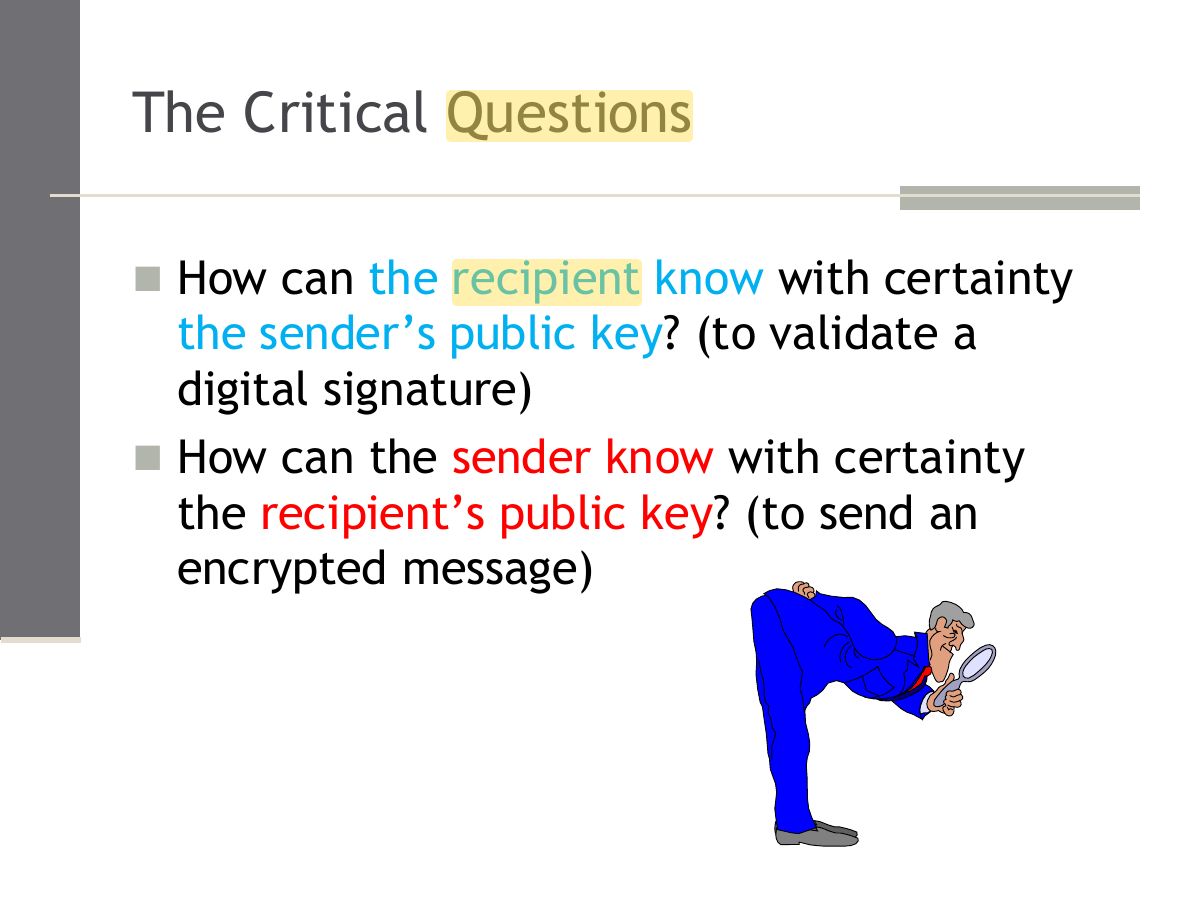
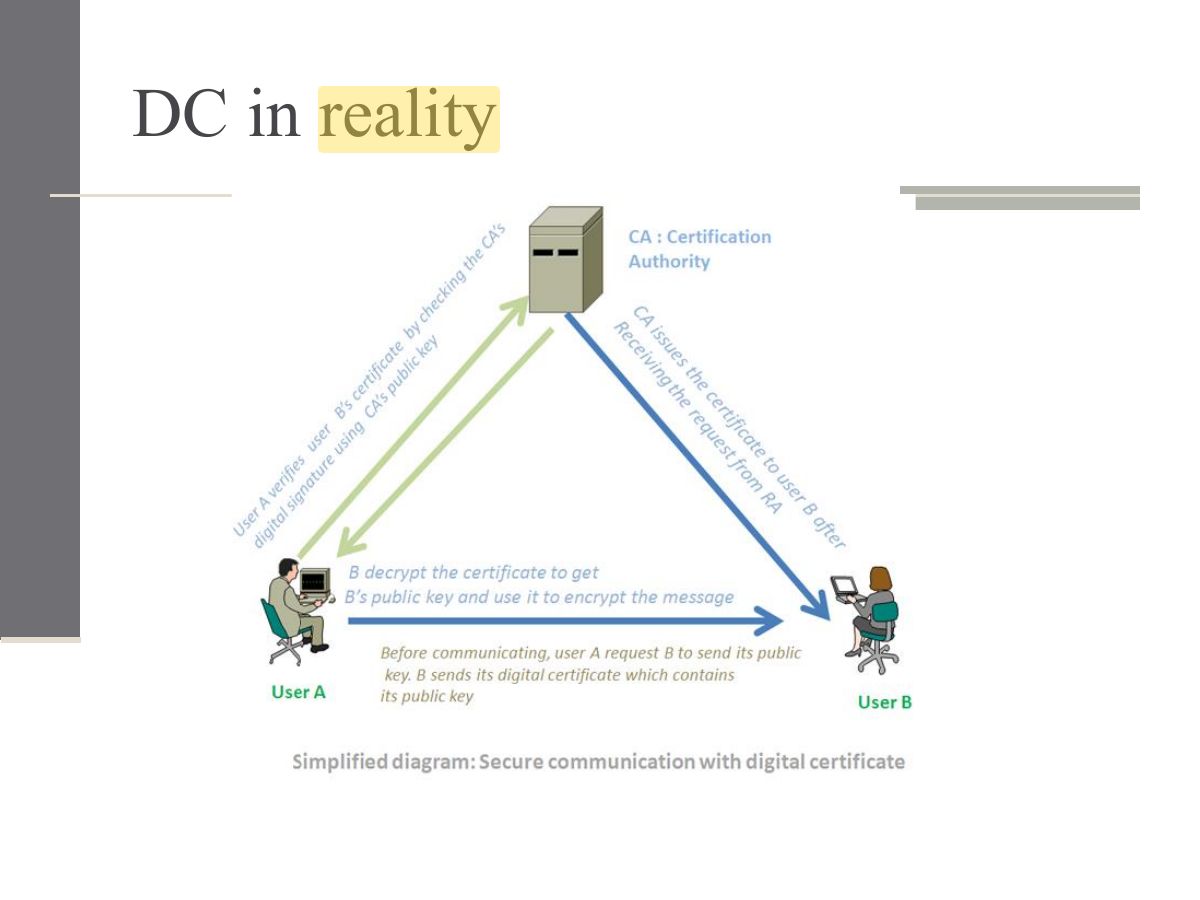
- The critical question: how do I KNOW a public key really belongs to that person? → certificates from a trusted CA.
Exam weight Low
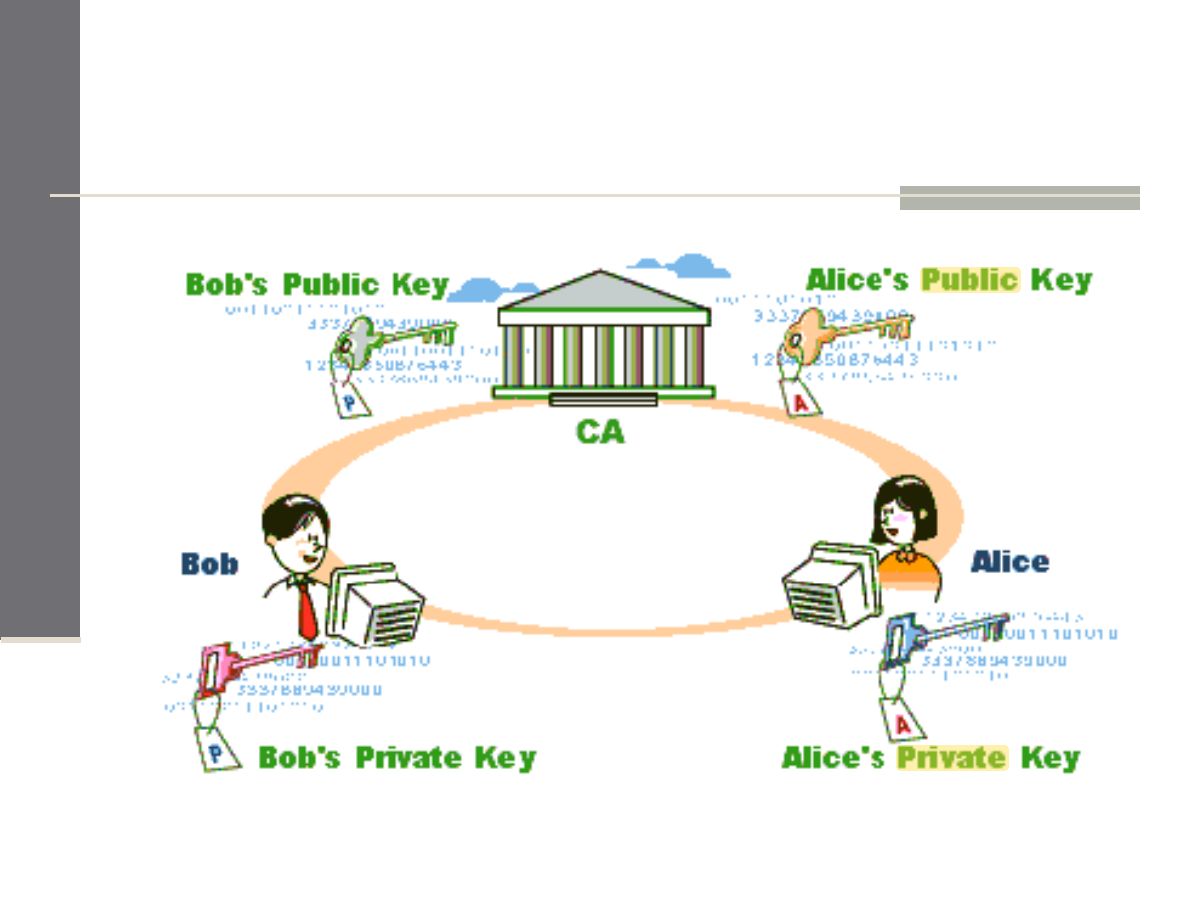
- Receiver’s public and private key in use.
Exam weight Low
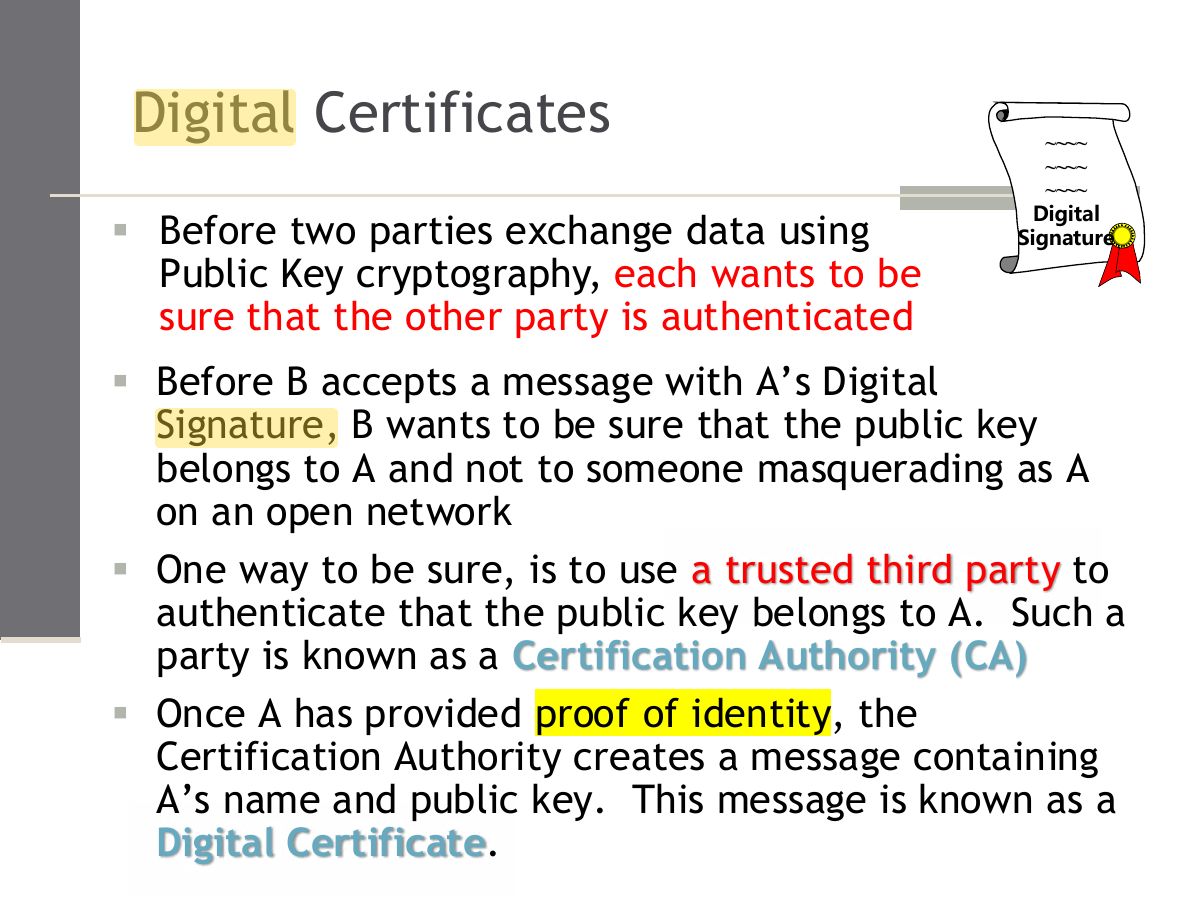
- A digital certificate binds an identity to a public key, signed by a CA.
Exam weight Low
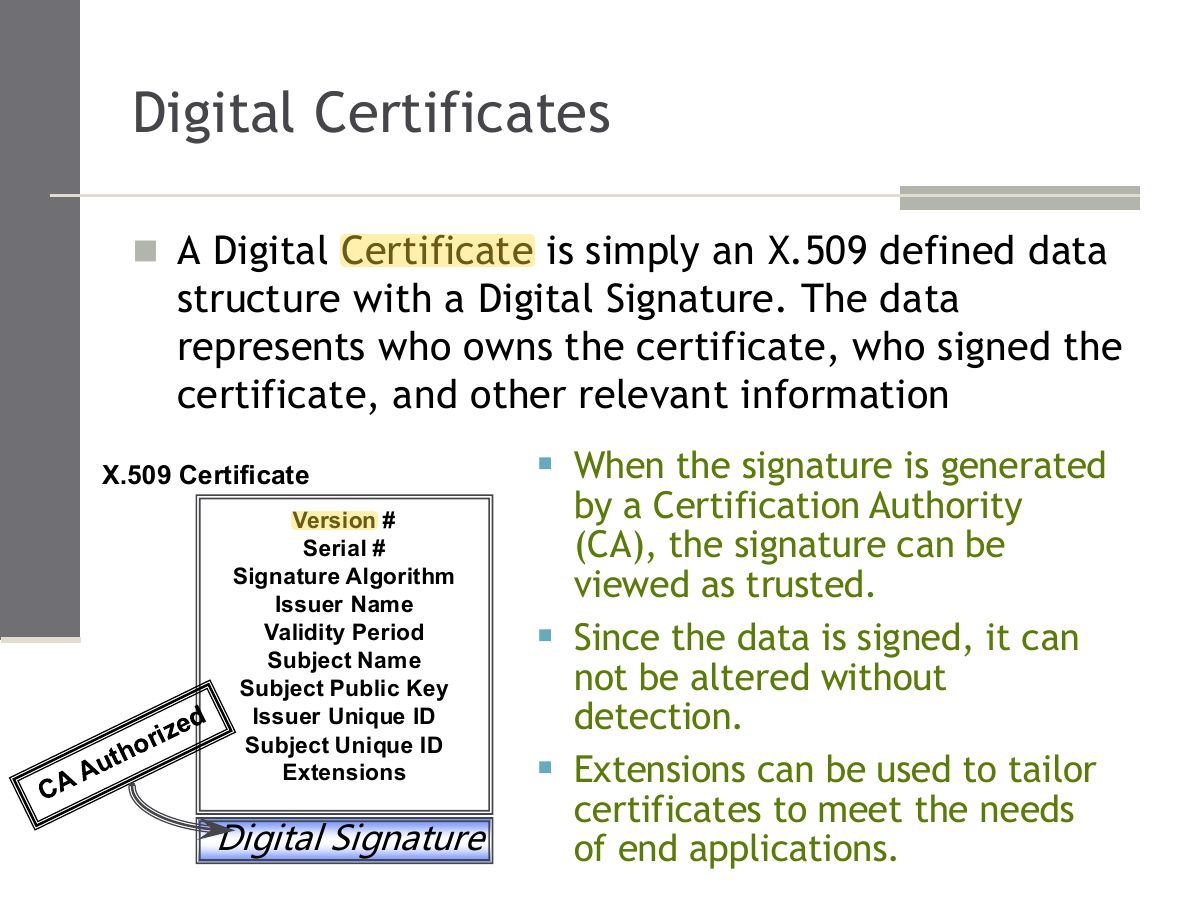
- Certificate contents.
★ Past exam
Exam weight
High
- X.509 certificate: owner, issuer (CA), validity, public key, signed by the CA. The CA signs with ITS private key; anyone validates with the CA’s public key.
Asked in a real exam
🎯 How this can come up · 1 question
Written
Which keys are used to issue and validate an X.509 certificate, and who issues it? (Final 221 B)
The Certificate Authority issues it and signs it with the CA’s private key; anyone validates the signature with the CA’s public key.
Exam weight Low
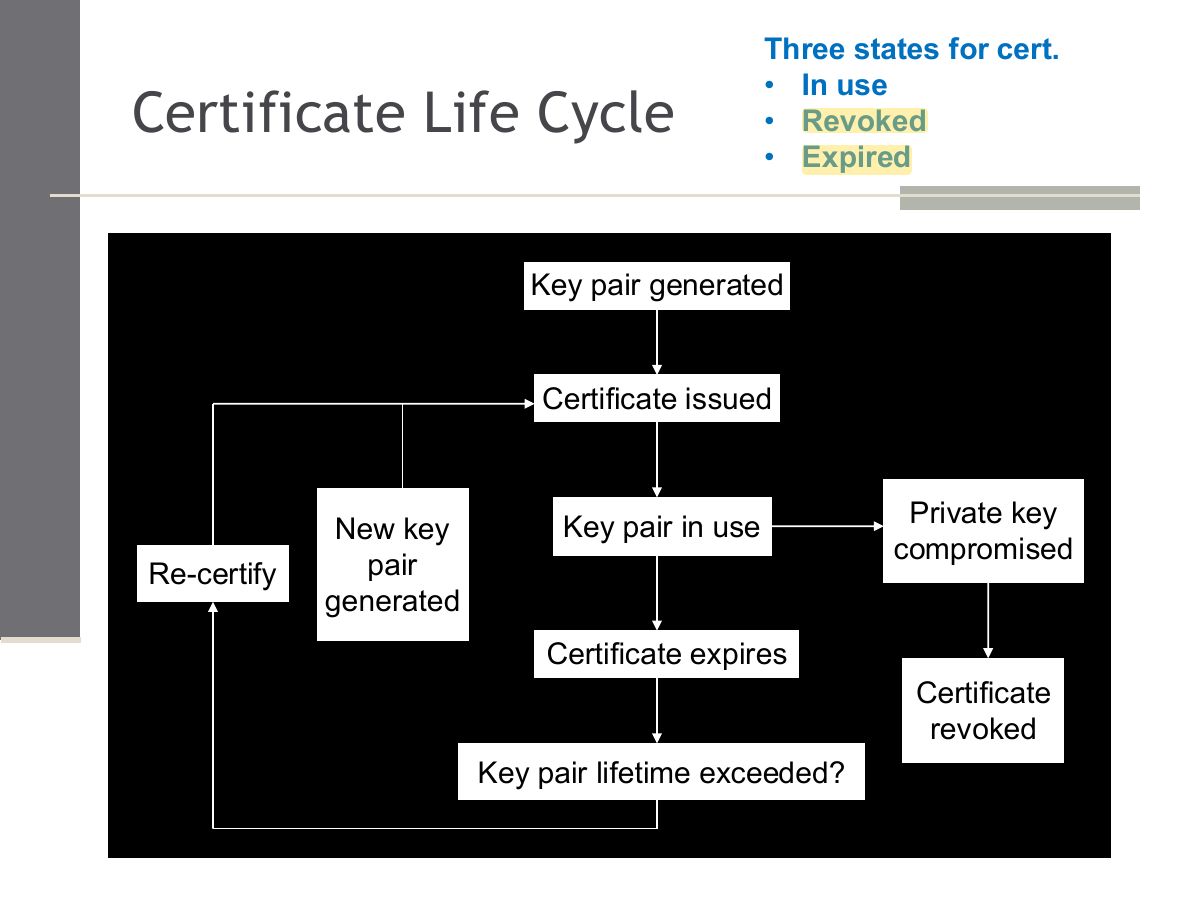
- Life cycle states: in use (valid), expired, revoked (e.g., the private key was compromised).
Exam weight
High
- CRL (Certificate Revocation List): published periodically by the CA (X.509). Also OCSP for online checks.
Asked in a real exam
🎯 How this can come up · 2 questions
Written
Where can you search for a revoked certificate? (Final 221 B)
In the Certificate Revocation List (CRL) that the CA periodically publishes (or by querying the CA’s OCSP responder).
MCQ
A CA revokes a user’s certificate when:
Major 181.
Exam weight Low
- A real certificate viewed in a browser.
Exam weight
High
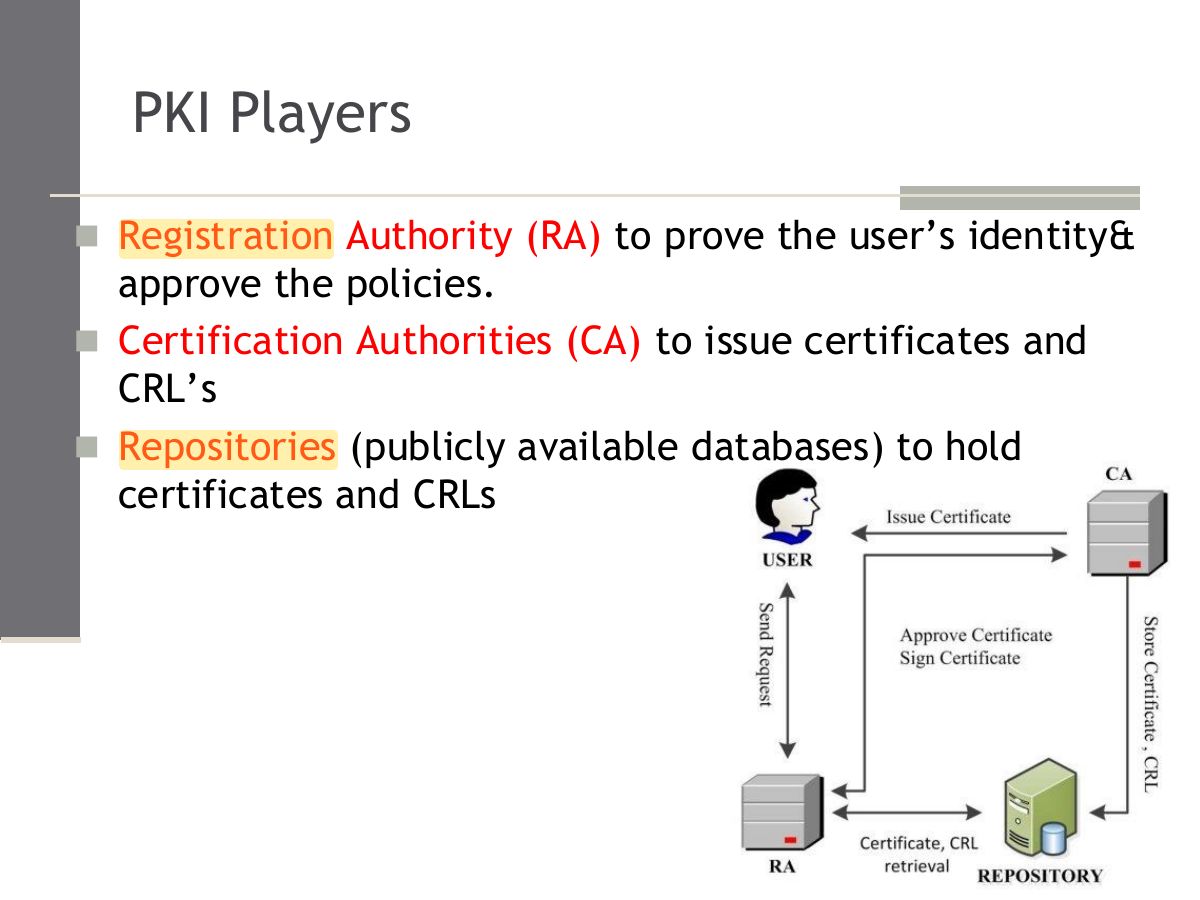
- PKI players: RA (verifies identity, approves), CA (issues certificates and CRLs), repositories, users.
🎯 How this can come up · 1 question
MCQ
Which PKI component verifies a user’s identity before a certificate is issued?
Correct: Registration Authority.
Exam weight Low
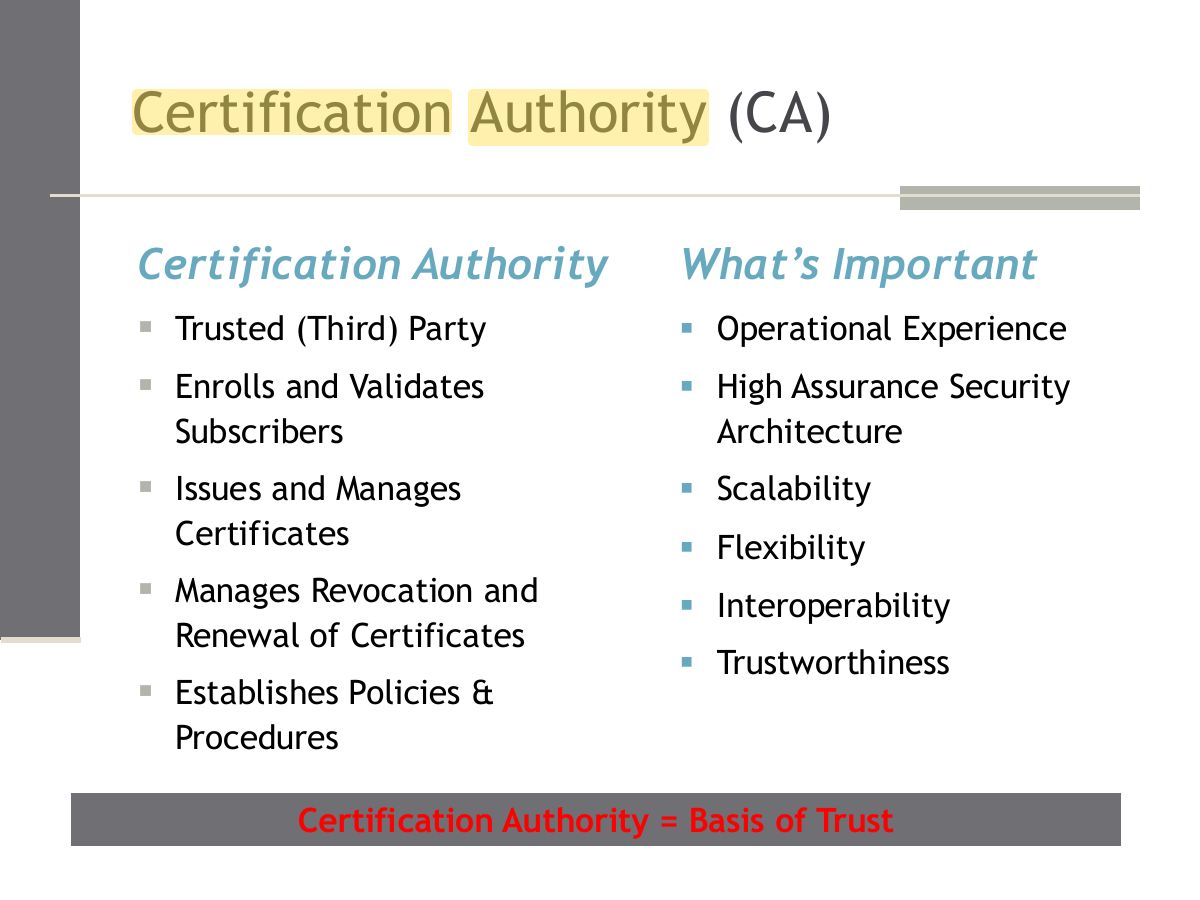
- CA: the trusted third party that issues, signs and revokes certificates.
Exam weight Low
- RA: enrols and de-enrols subscribers, validates applications.
Exam weight Low
- Certificate Policy: the basis for trust between unrelated parties.
Exam weight Low
- Public-key security relies on the private key staying private.
Exam weight Low
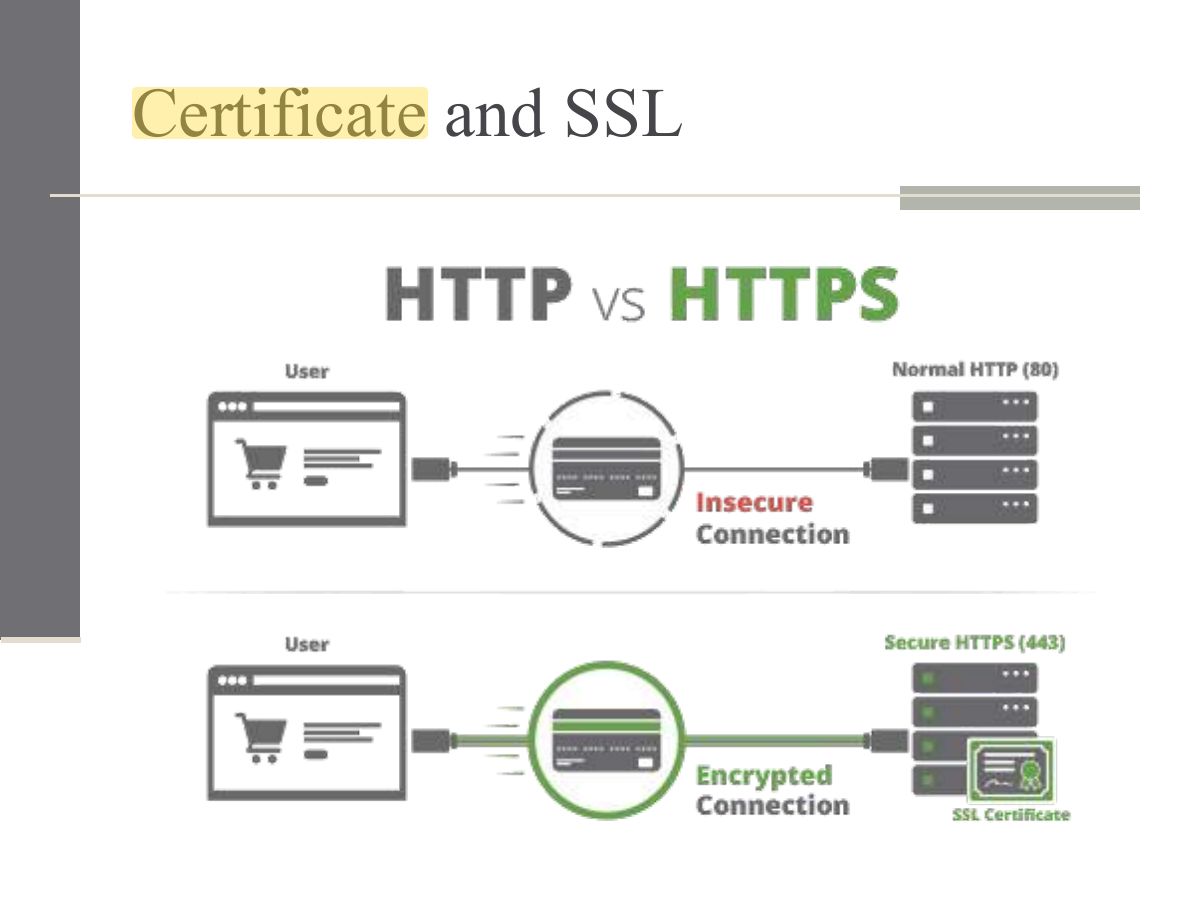
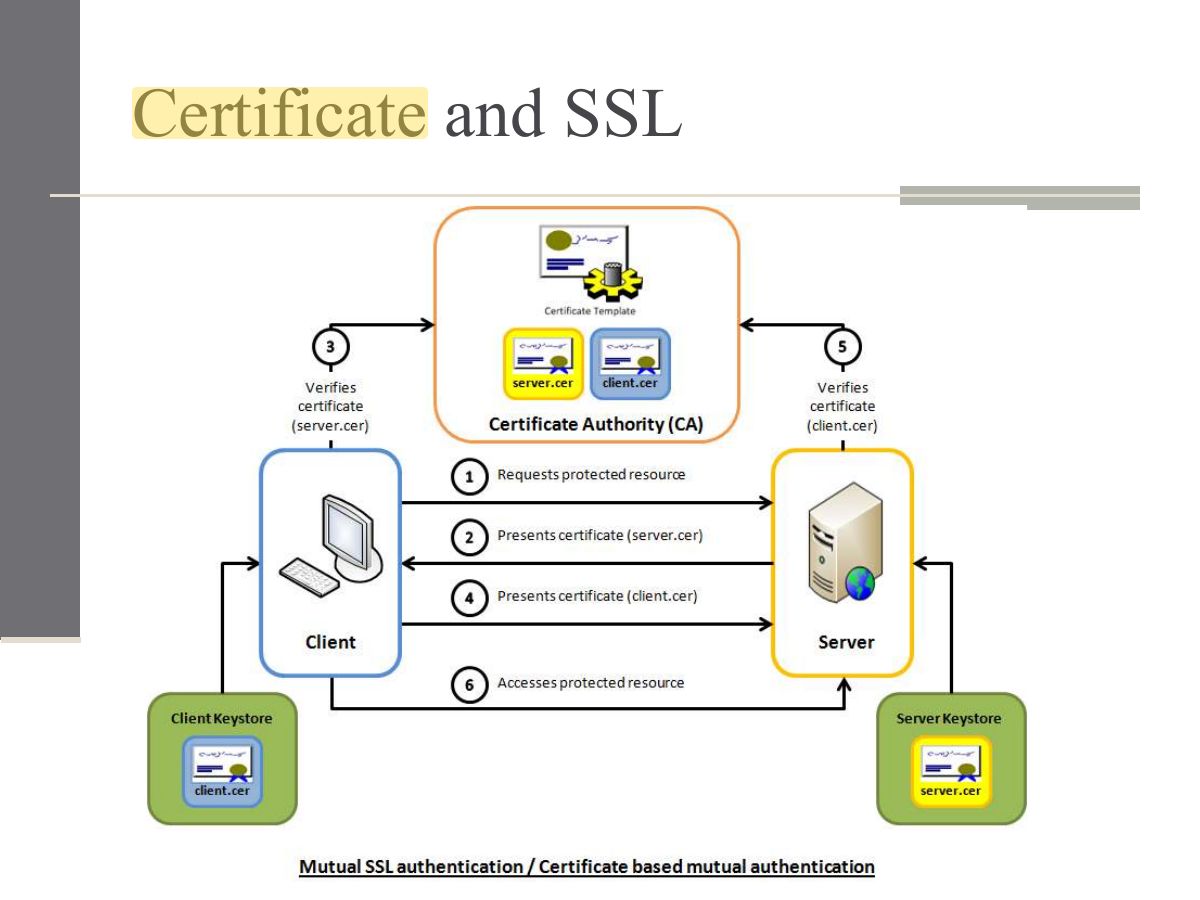
- Certificates in SSL/TLS: the server sends its certificate; the browser checks it against trusted CAs.
Exam weight
Medium
- TLS handshake uses the certificate to set up a shared symmetric session key (hybrid encryption).
Related real-exam questions
Exam weight Low
- End.
No slides match this filter.