Regression Testing · Annotated slides
Regression Testing
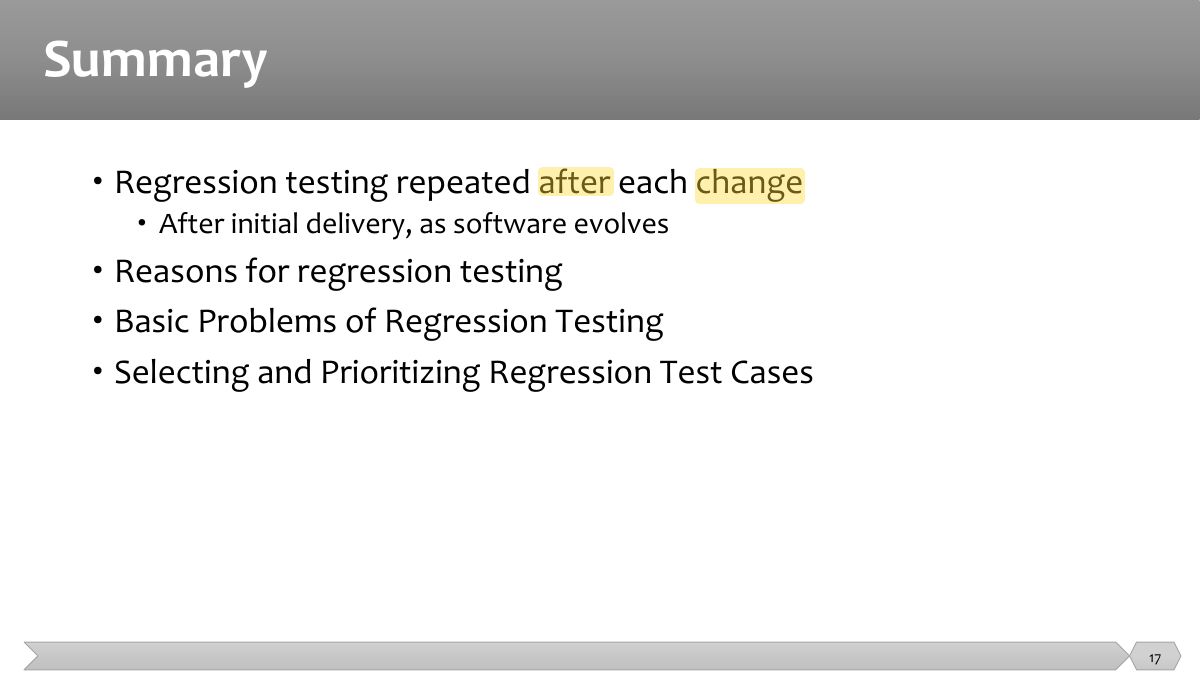
Software evolution and why changes break things, what regression testing is, reasons for it, its problems (test-suite maintenance, obsolete and redundant tests, cost), and selecting and prioritizing regression tests (code-based, specification-based, prioritized rotating selection).
- 17 slides
- 0 asked in real exams
- 0 related to real exam questions
- 2 practice questions
Slide text
Study notes
Highlight: key words
Tips, tricks & traps
Seen again elsewhere
How it can come up
Exam weight ●○○ Low
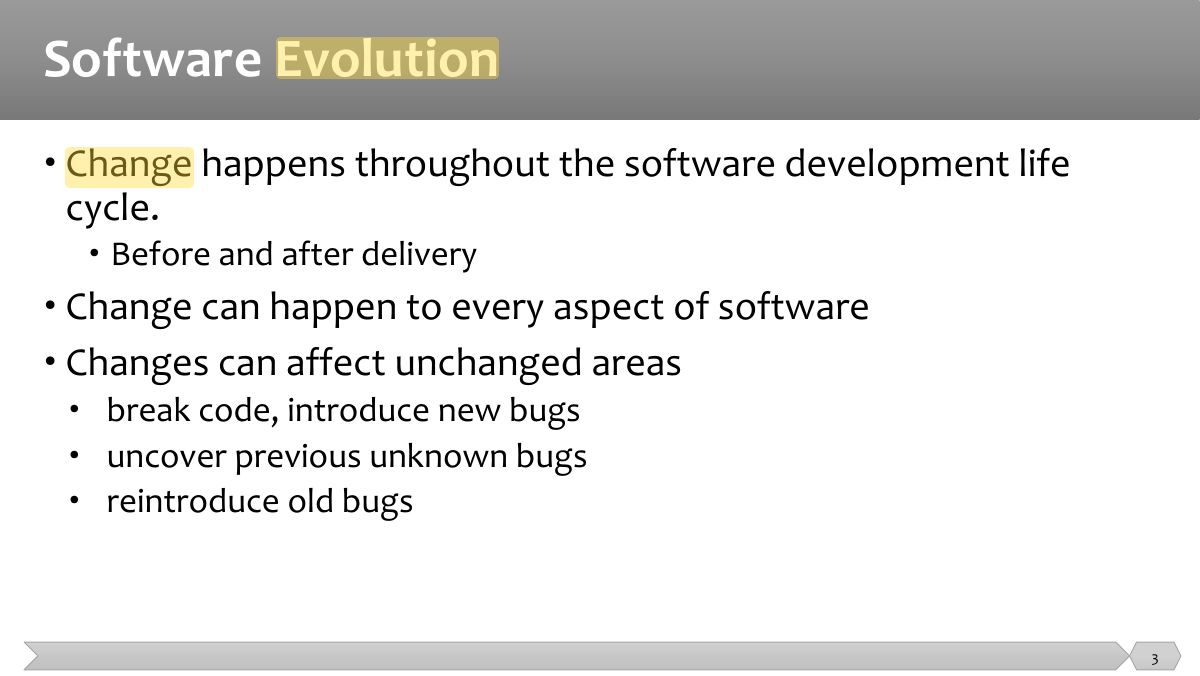
- Changes (fixes, new features, refactoring, new environments) can break unchanged parts, uncover old bugs or reintroduce fixed ones.
Exam weight ●●● High
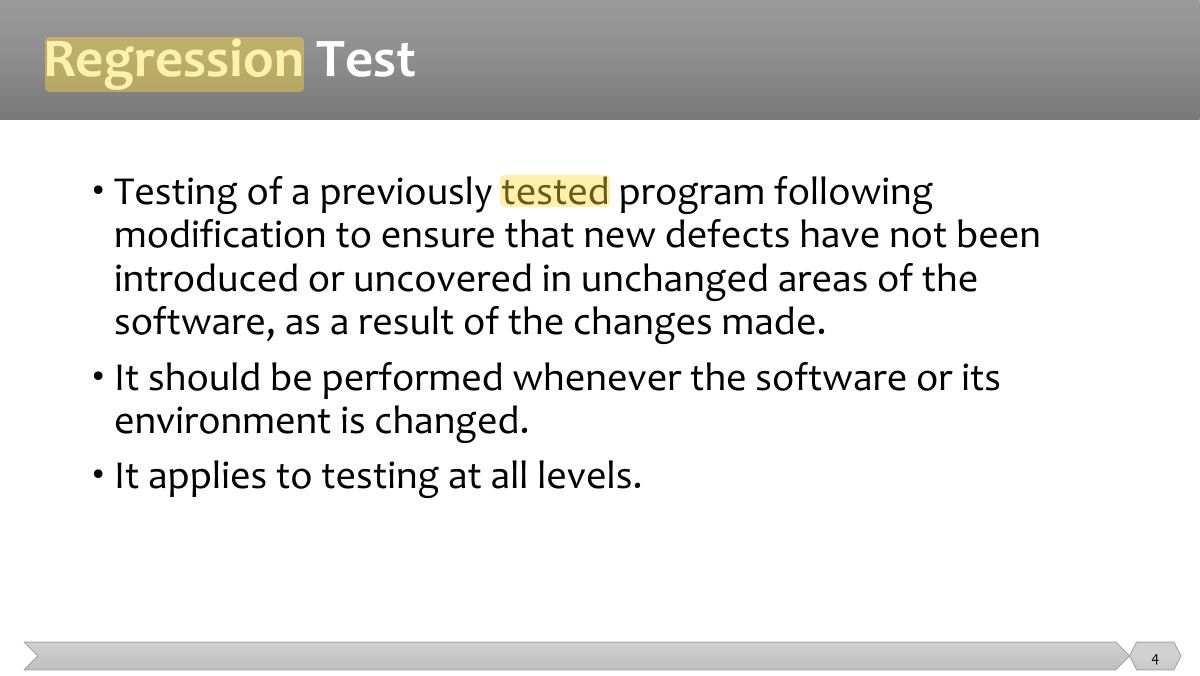
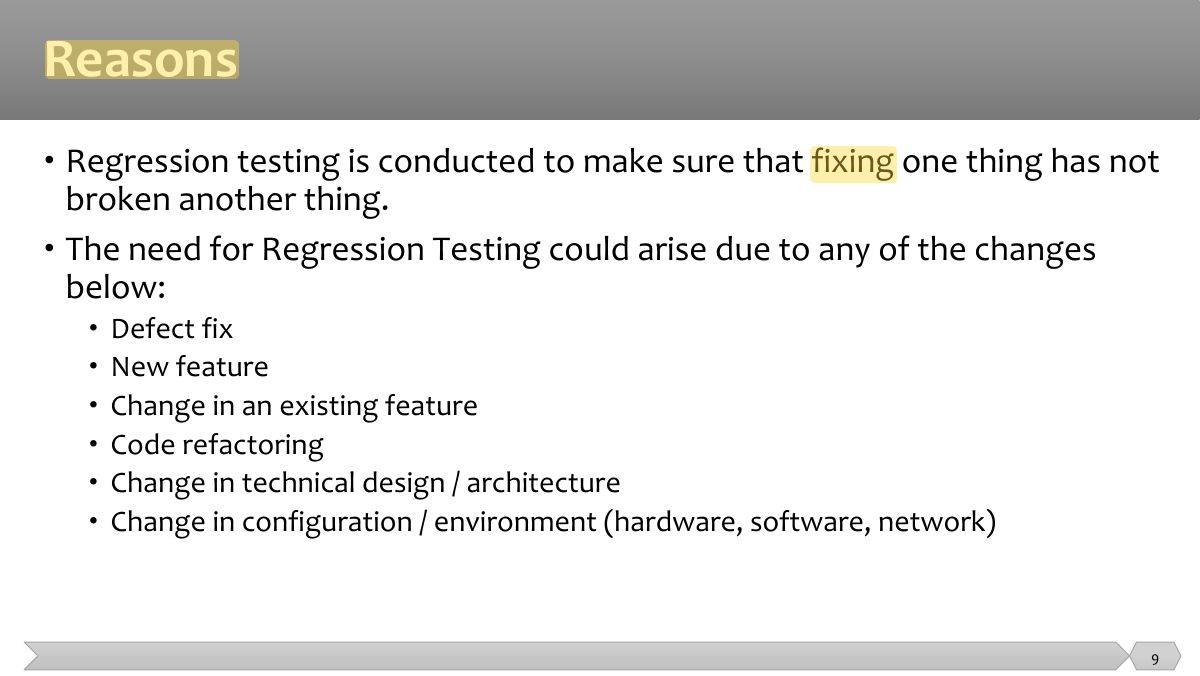
- Regression test: re-test a previously tested program after modification to make sure no new defects were introduced in unchanged areas.
Exam weight ●○○ Low
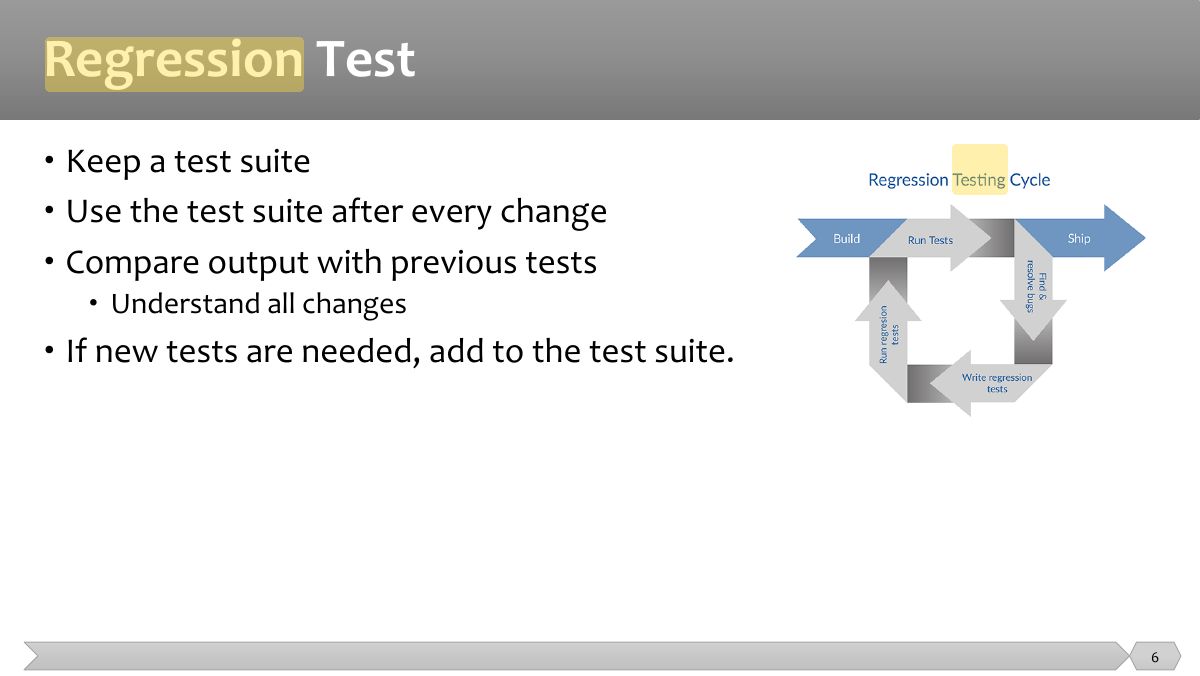
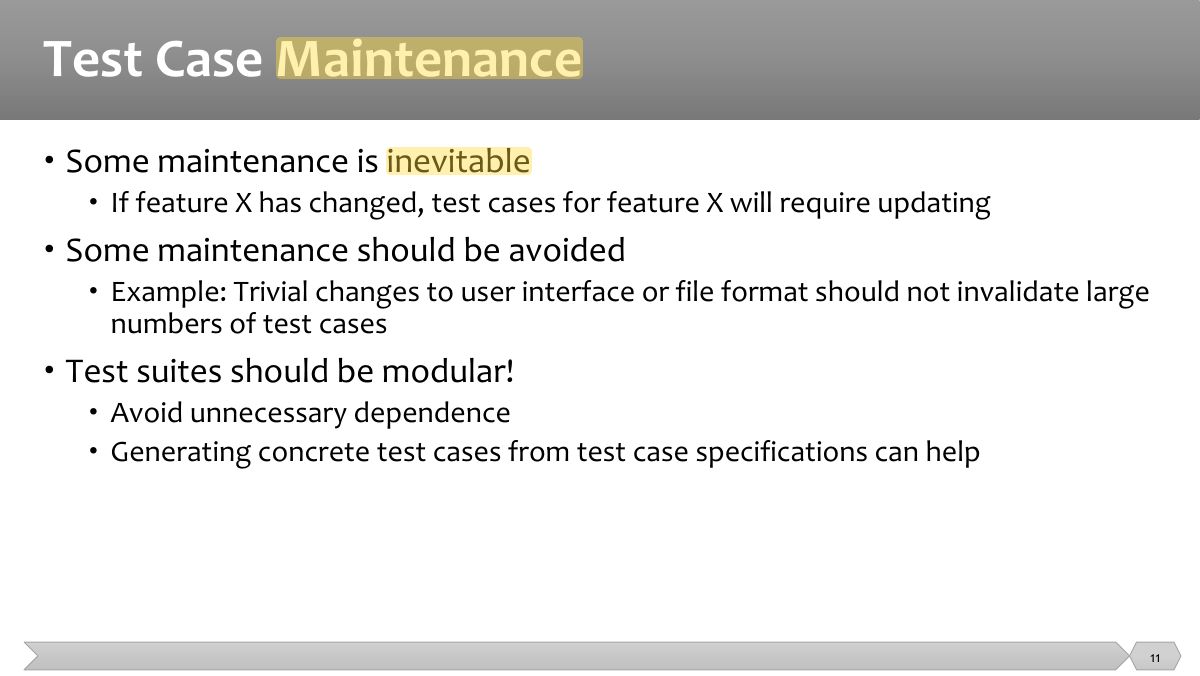
- Keep a test suite, run it after every change, compare with previous results, add new tests as needed.
Exam weight ●○○ Low
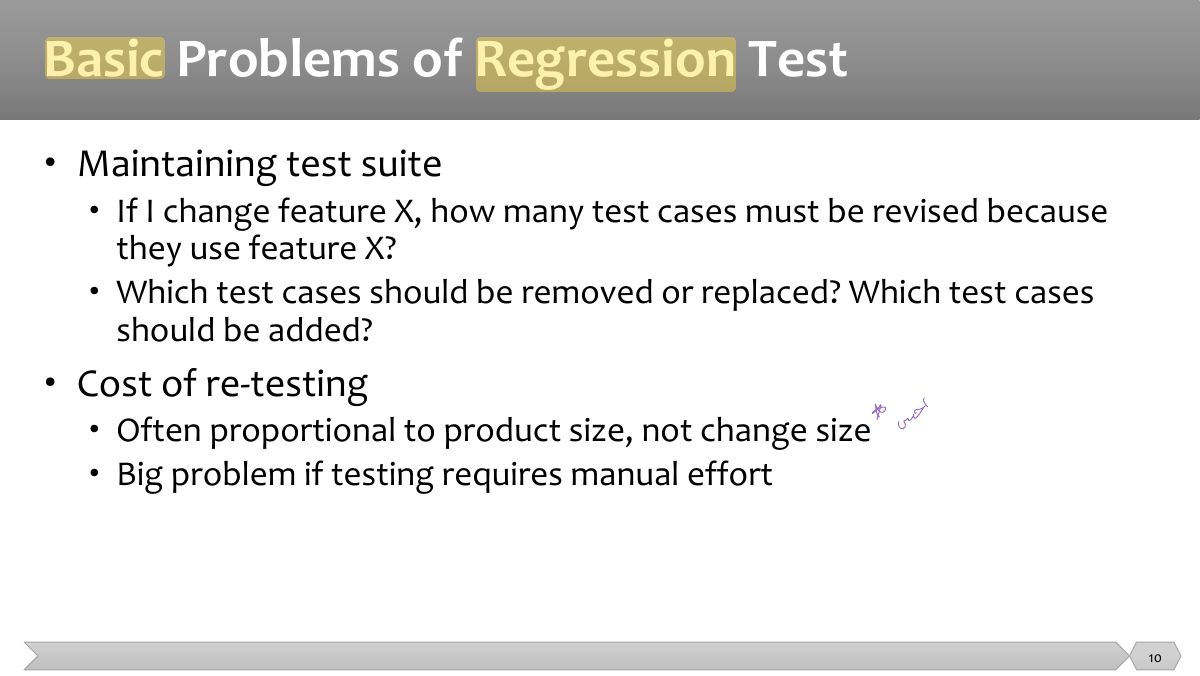
- Problems: maintaining the test suite, and the cost of re-testing (proportional to product size, not change size).
Exam weight ●○○ Low
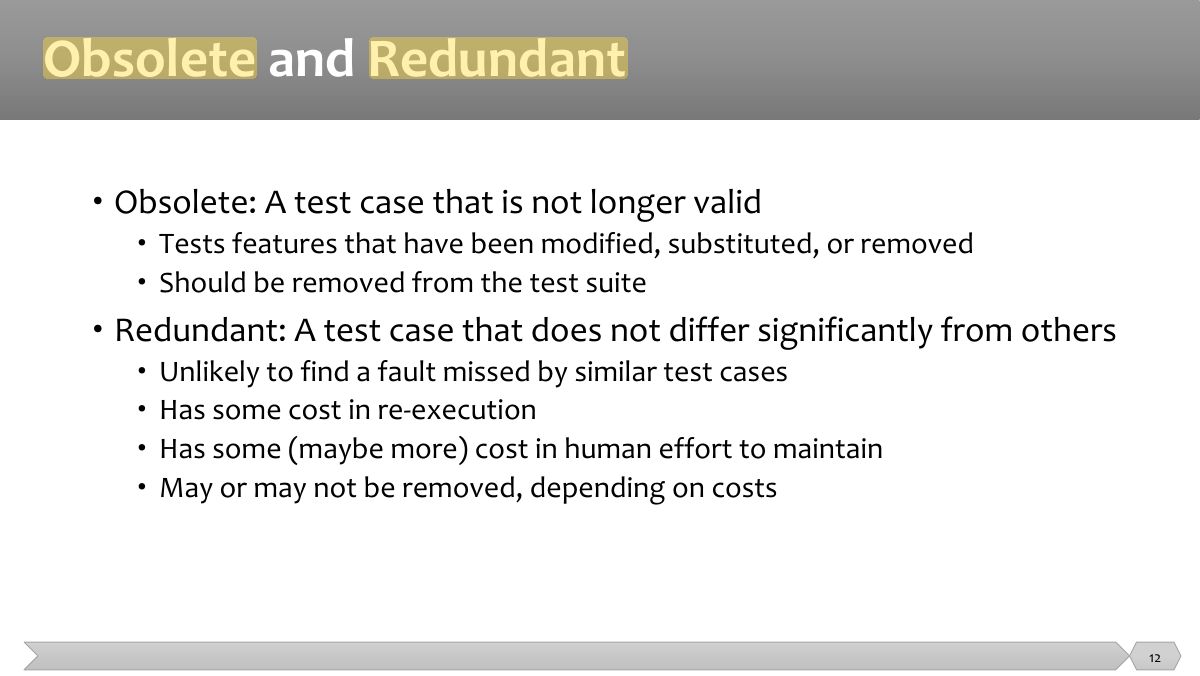
- Obsolete test: no longer valid for the changed system. Redundant test: doesn’t differ significantly from others.
Exam weight ●○○ Low
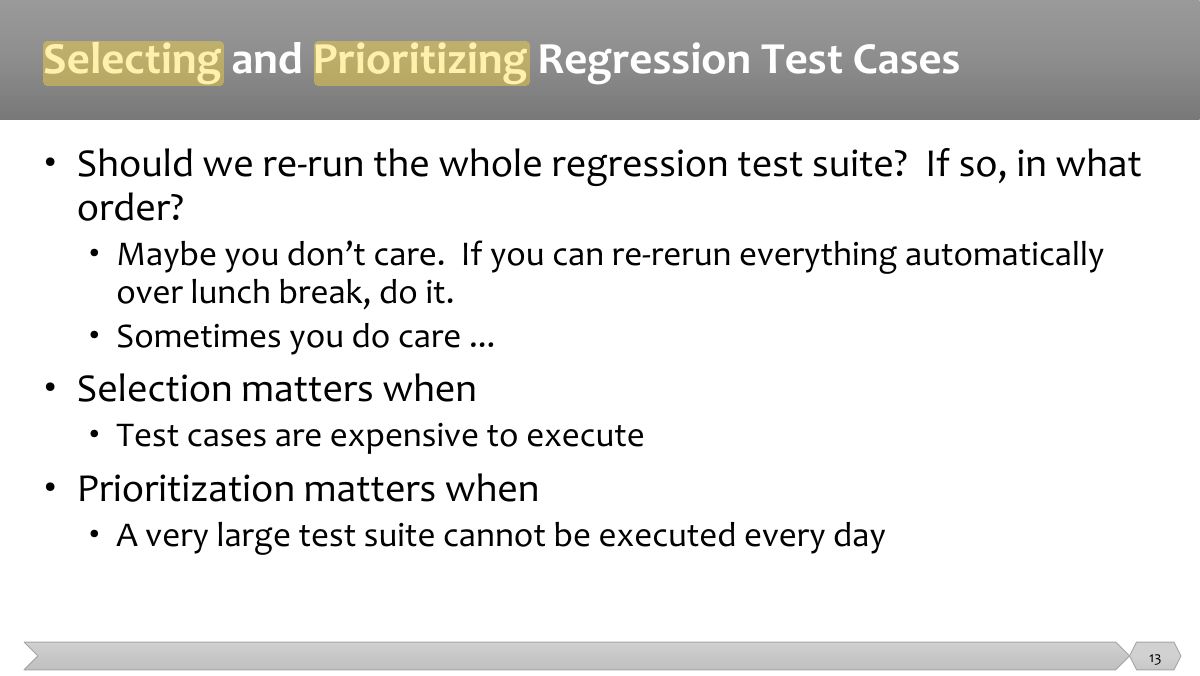
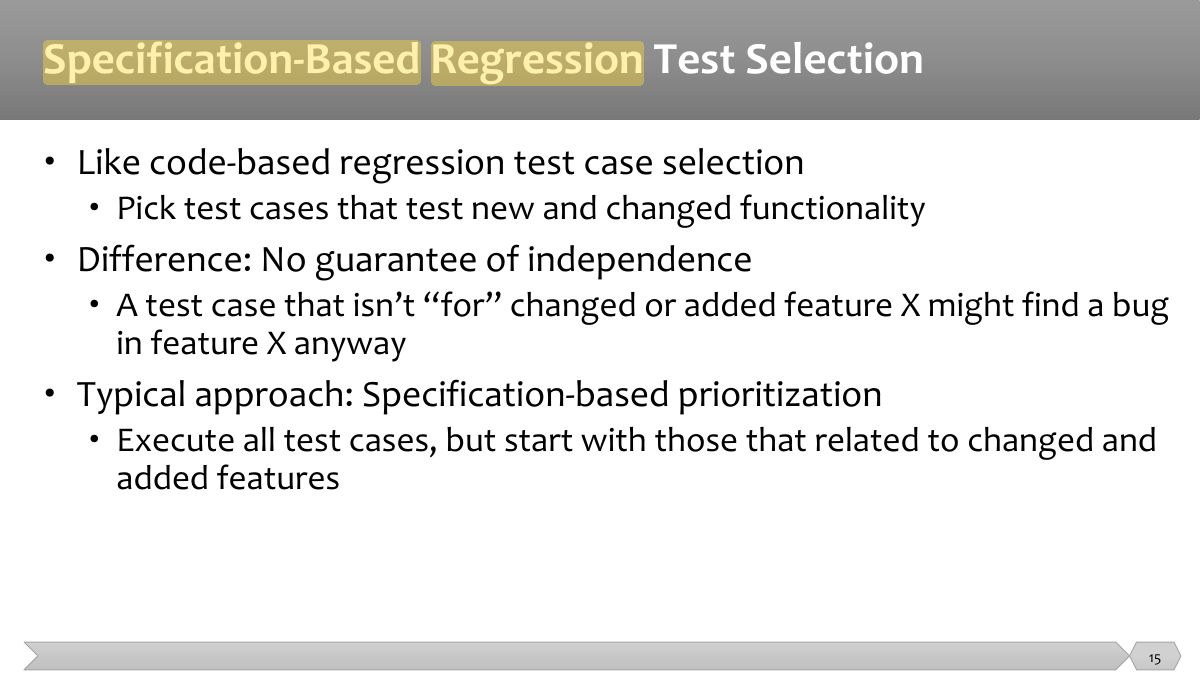
- Selection: run only the tests relevant to the change. Prioritization: run the most important ones first when time is short.
Exam weight ●●● High
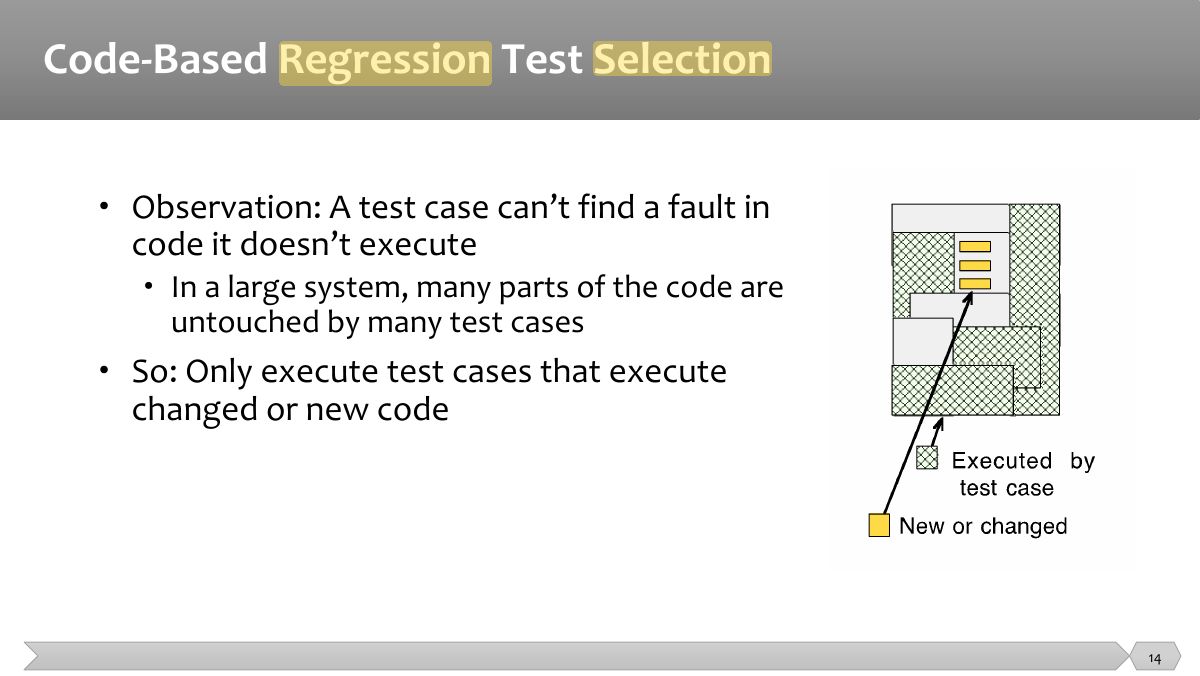
- Code-based selection: only tests that execute changed or new code.
Exam weight ●○○ Low
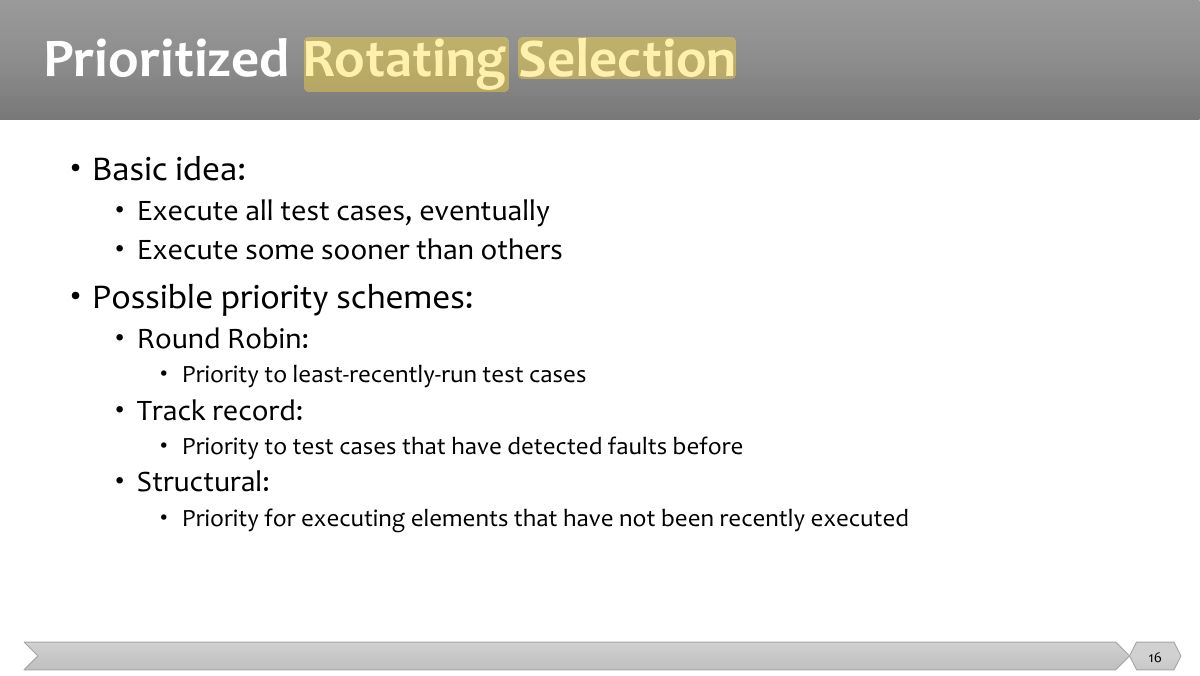
- Prioritized rotating selection: run all tests eventually, some sooner (round robin, track record of finding faults, structural coverage).
No slides match this filter.