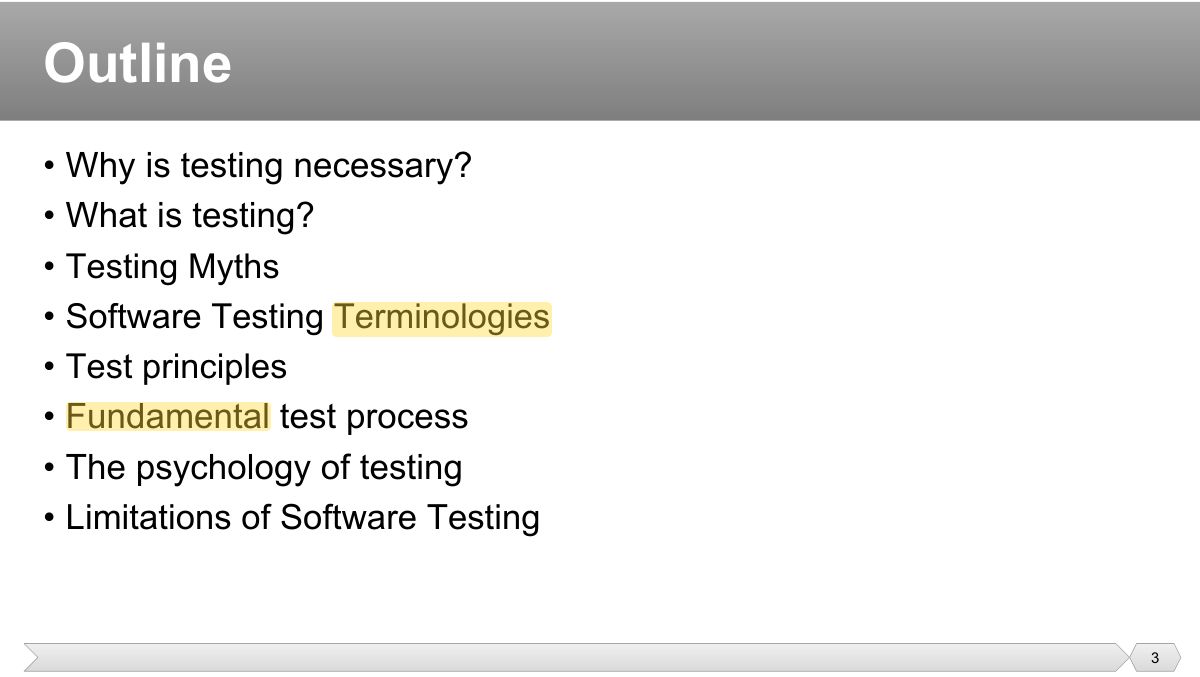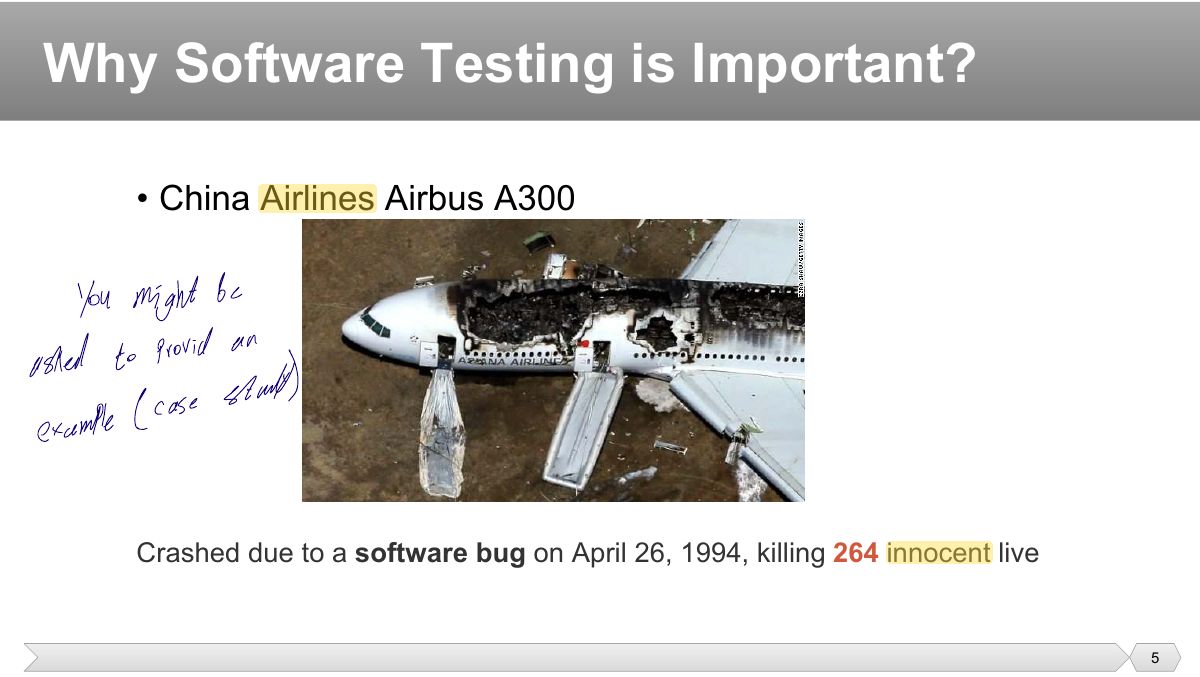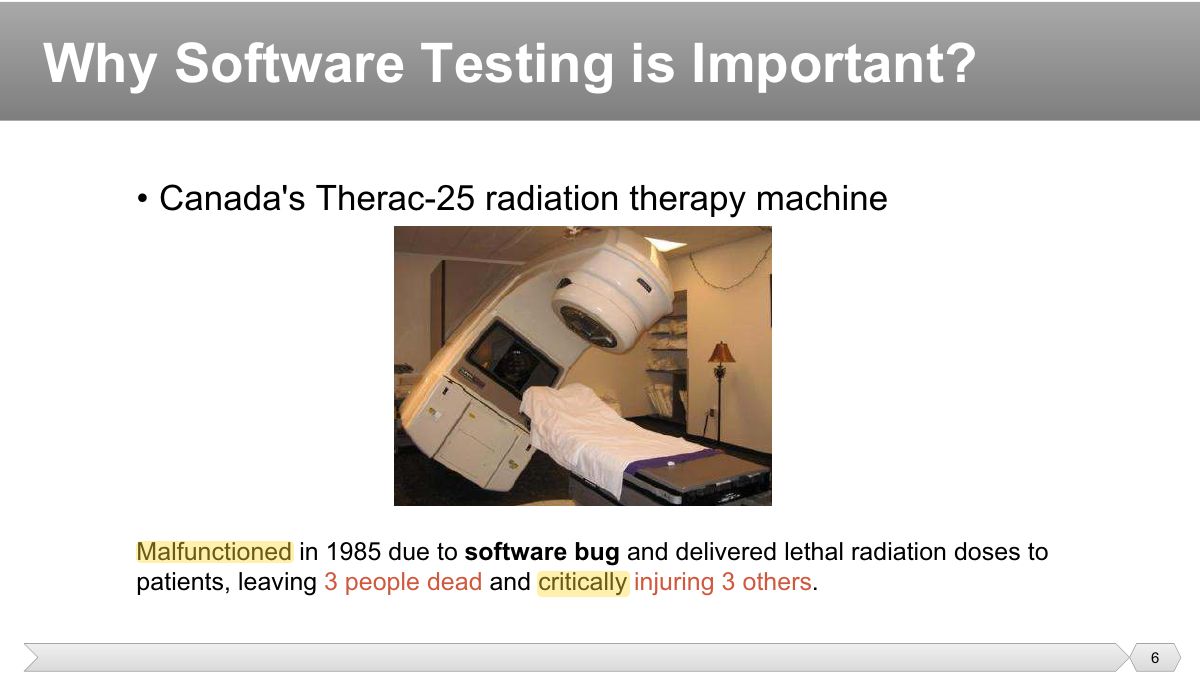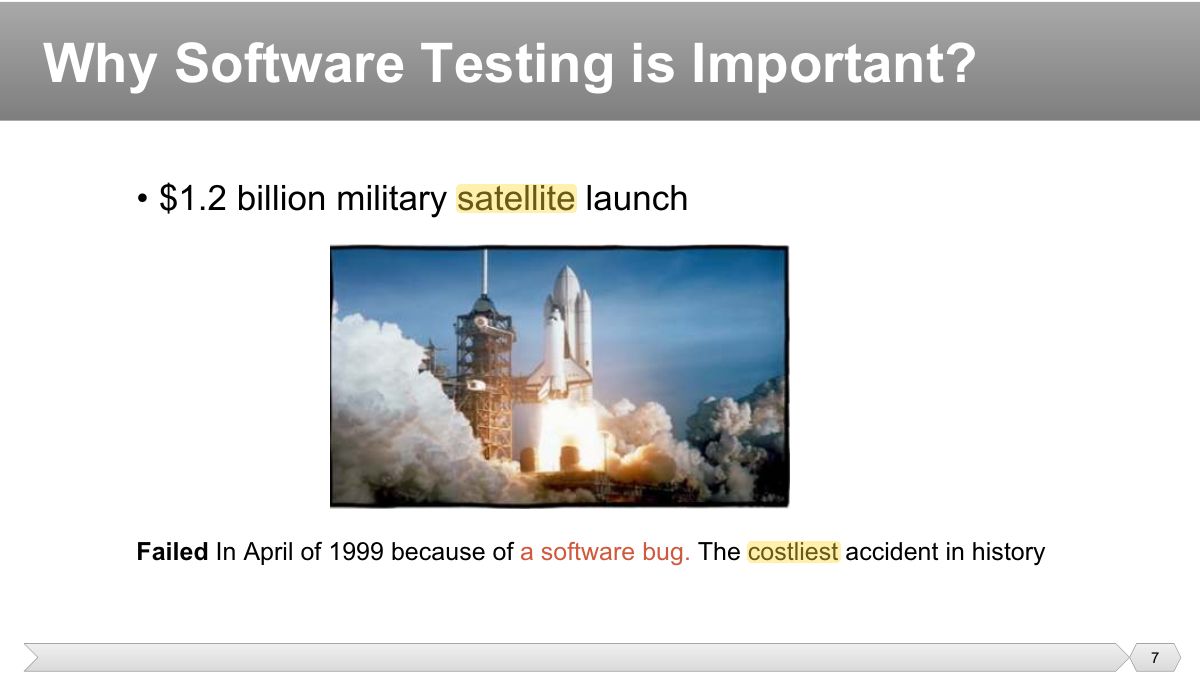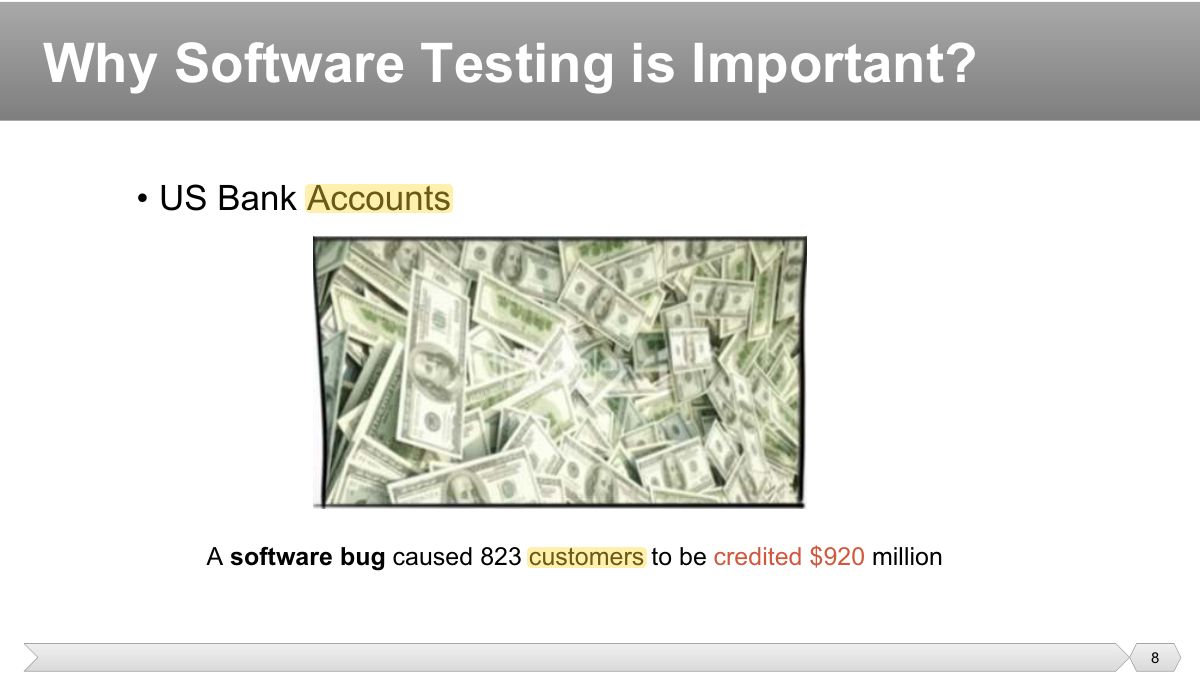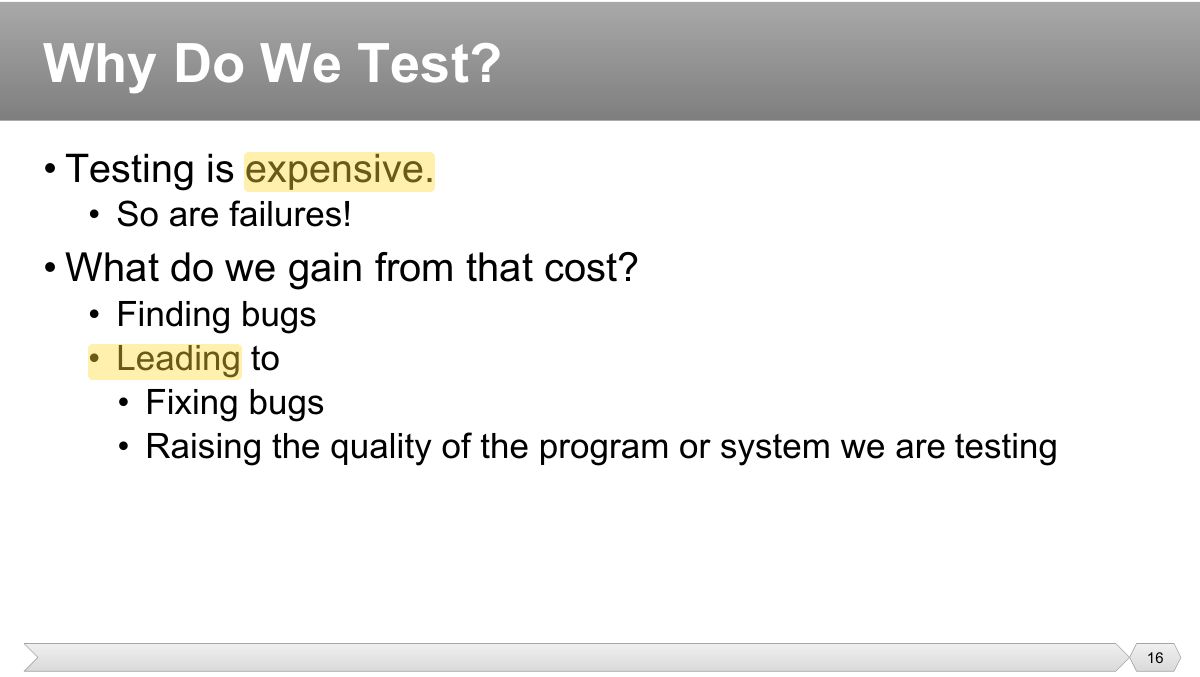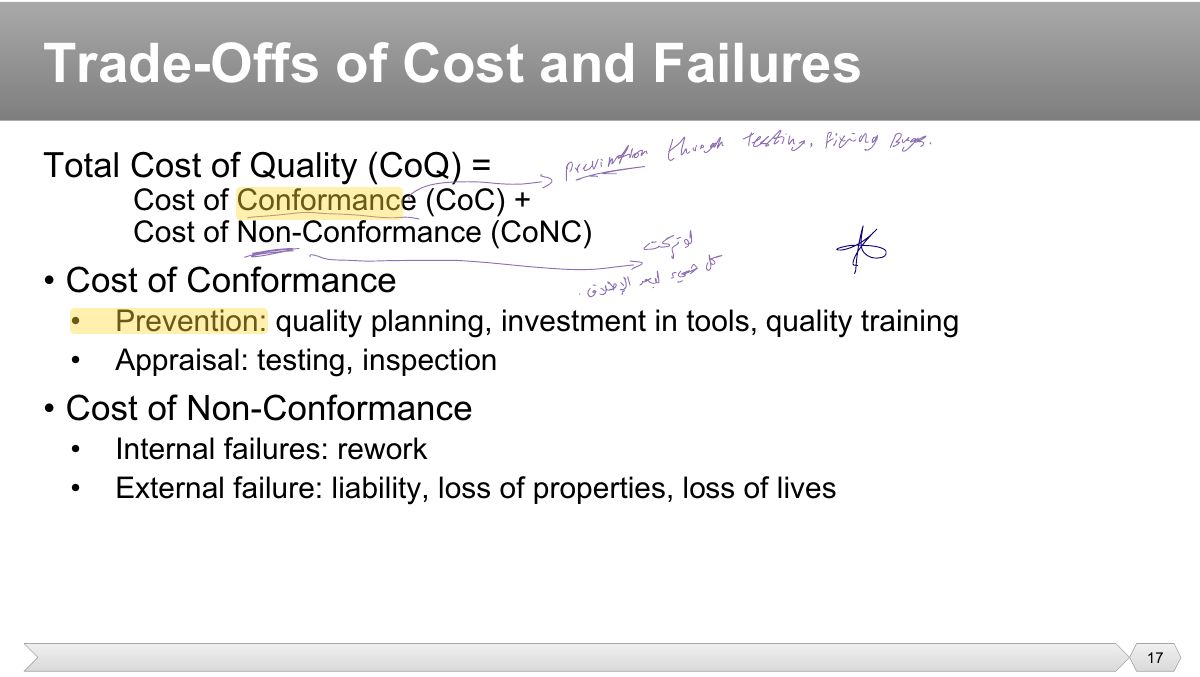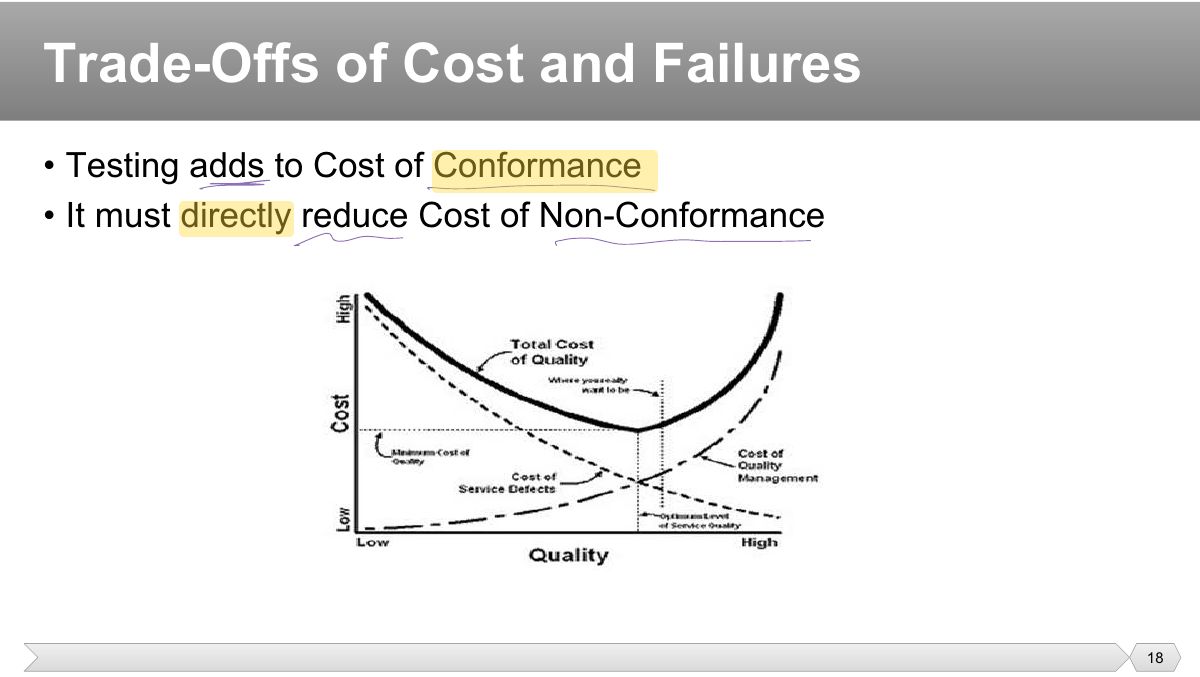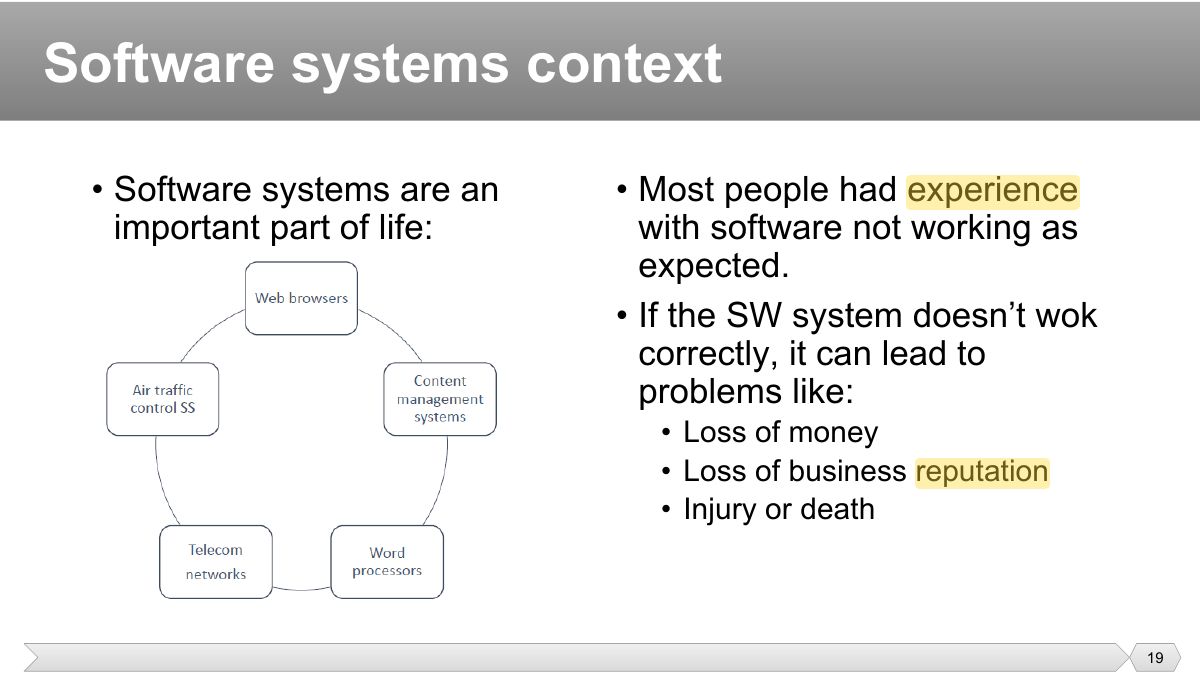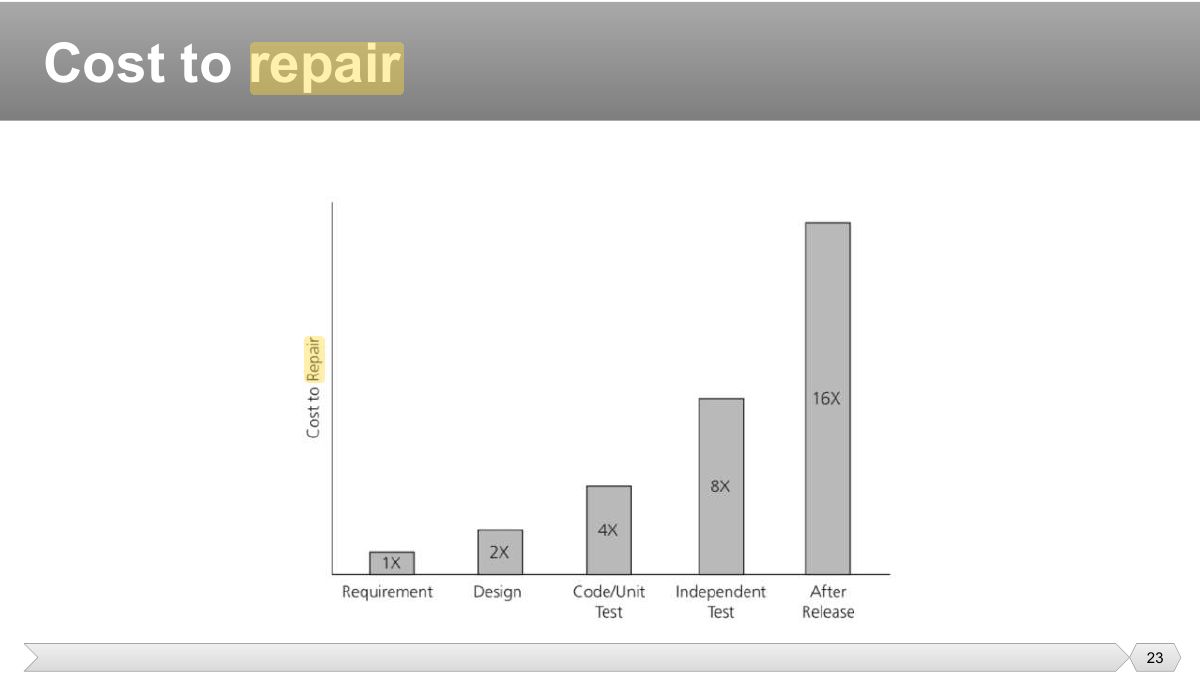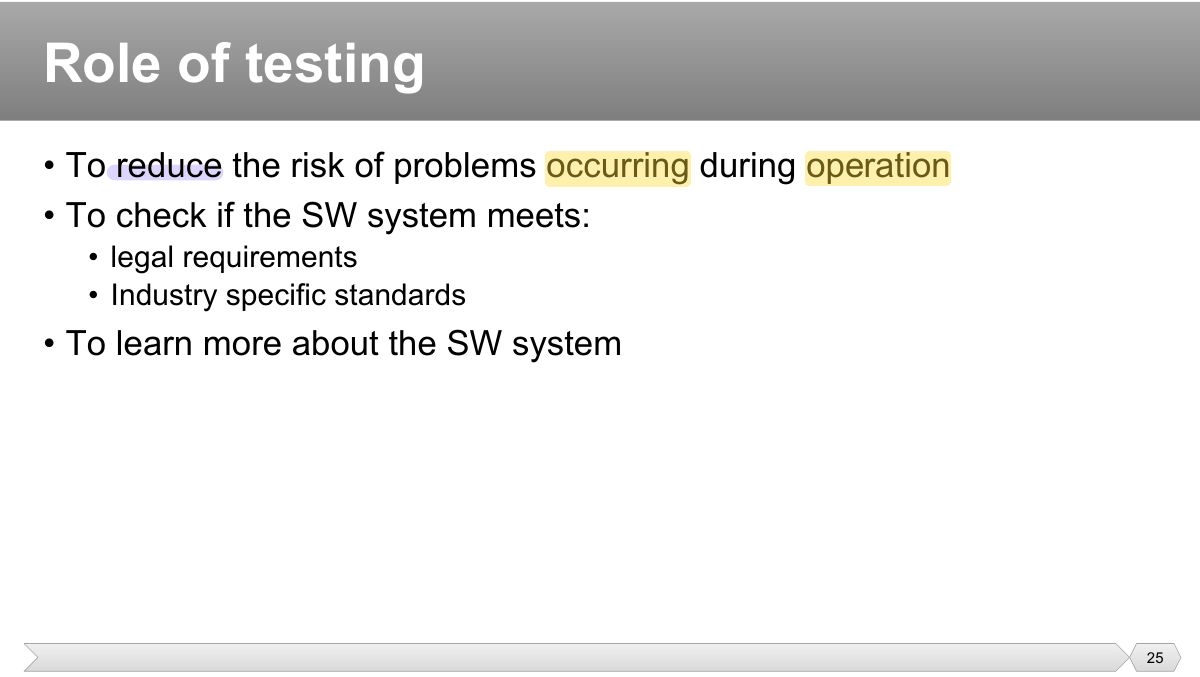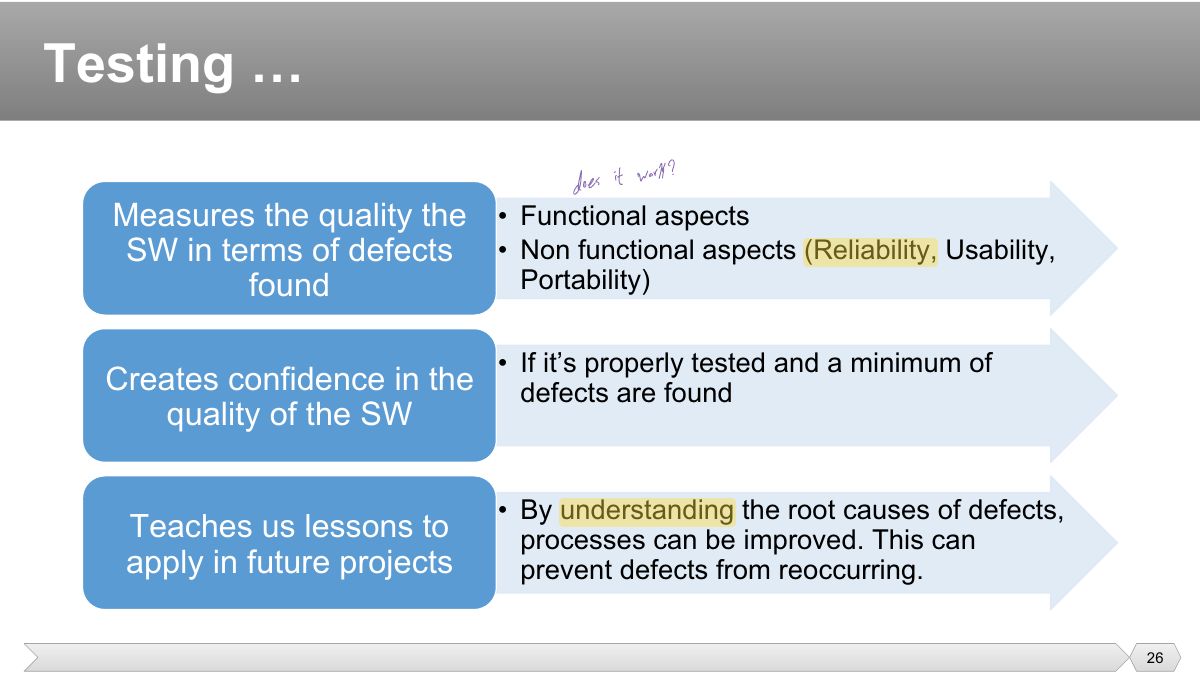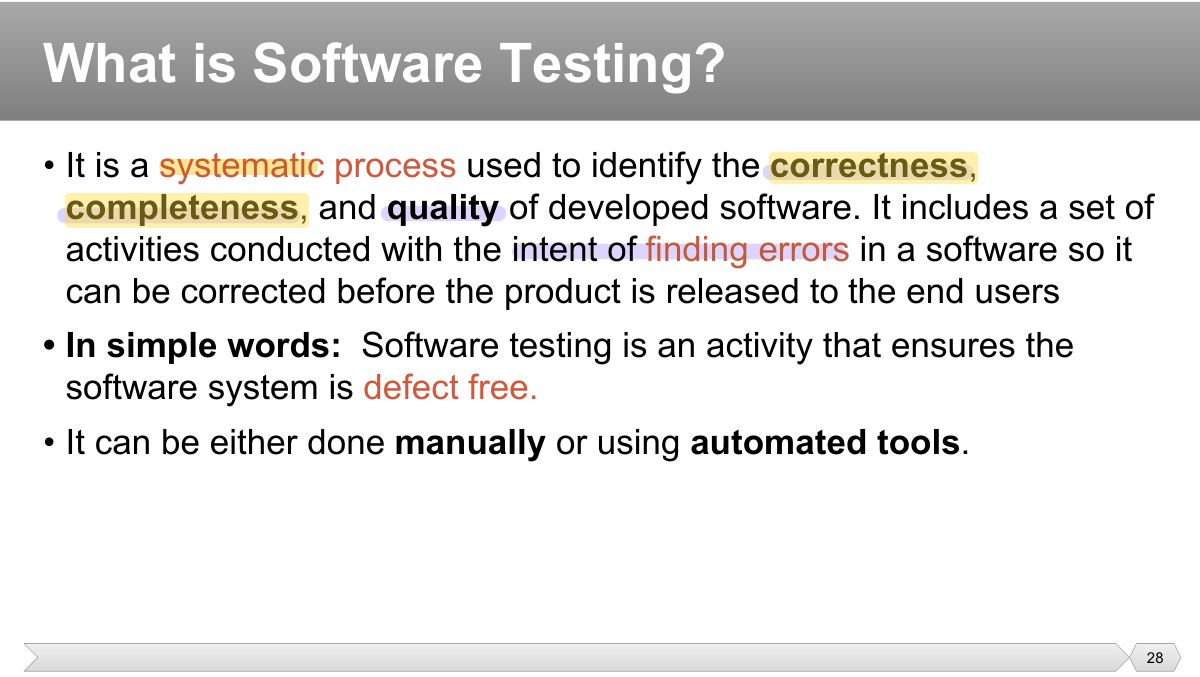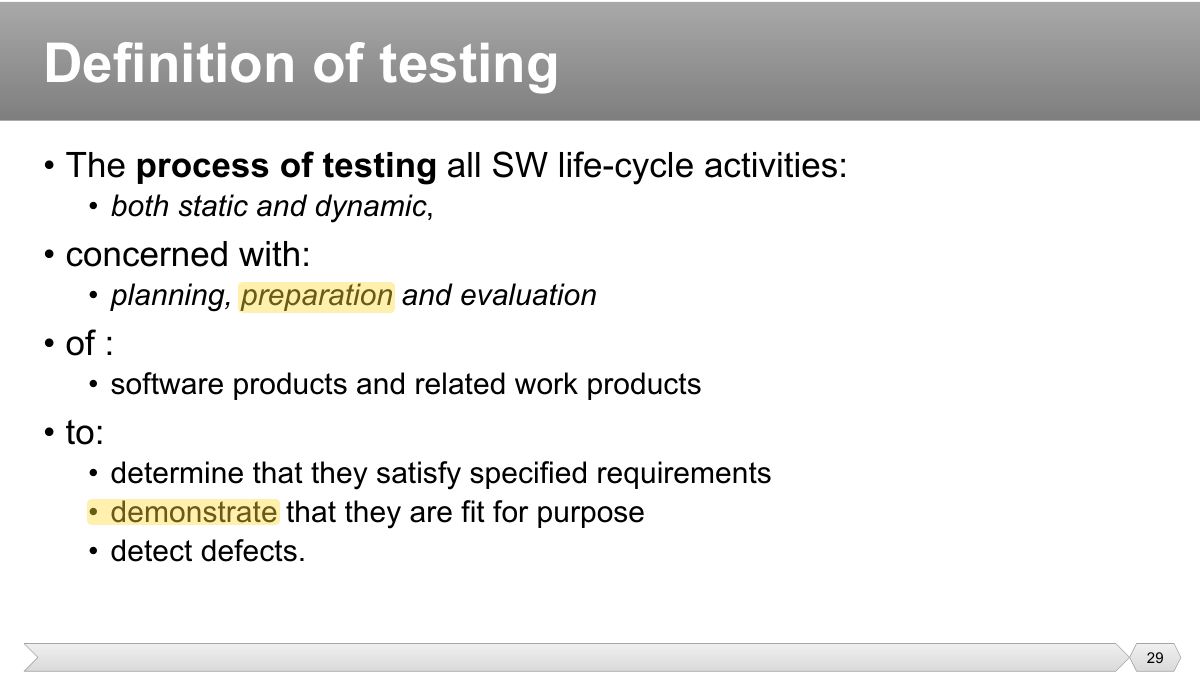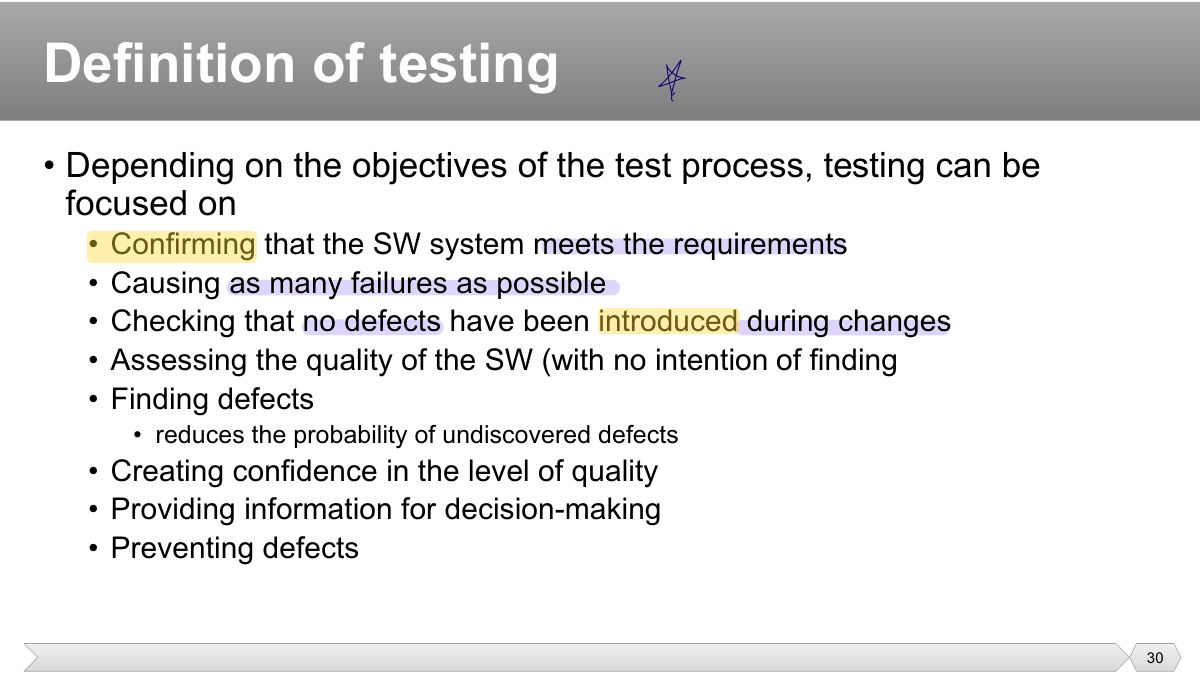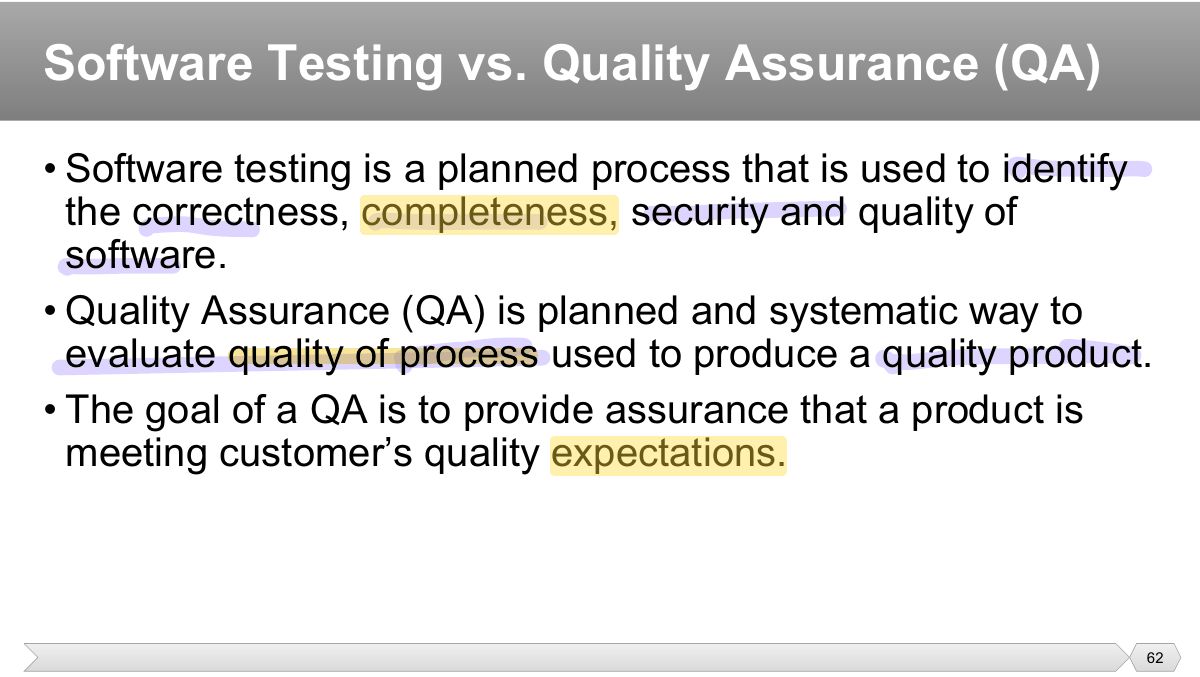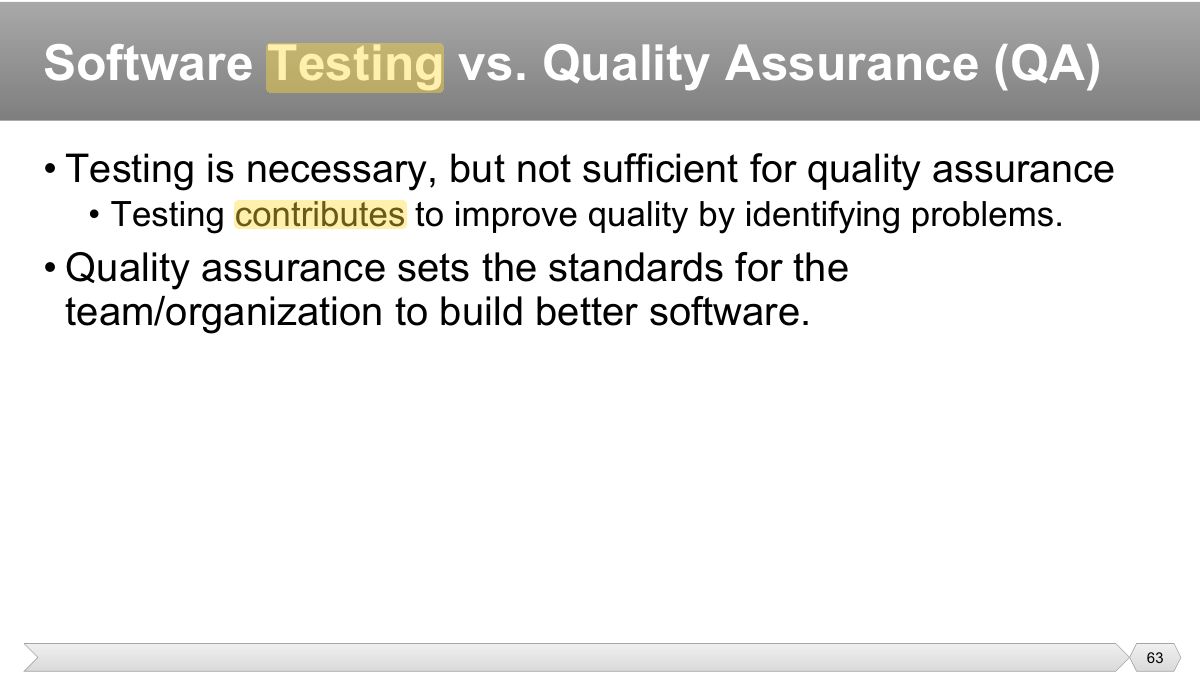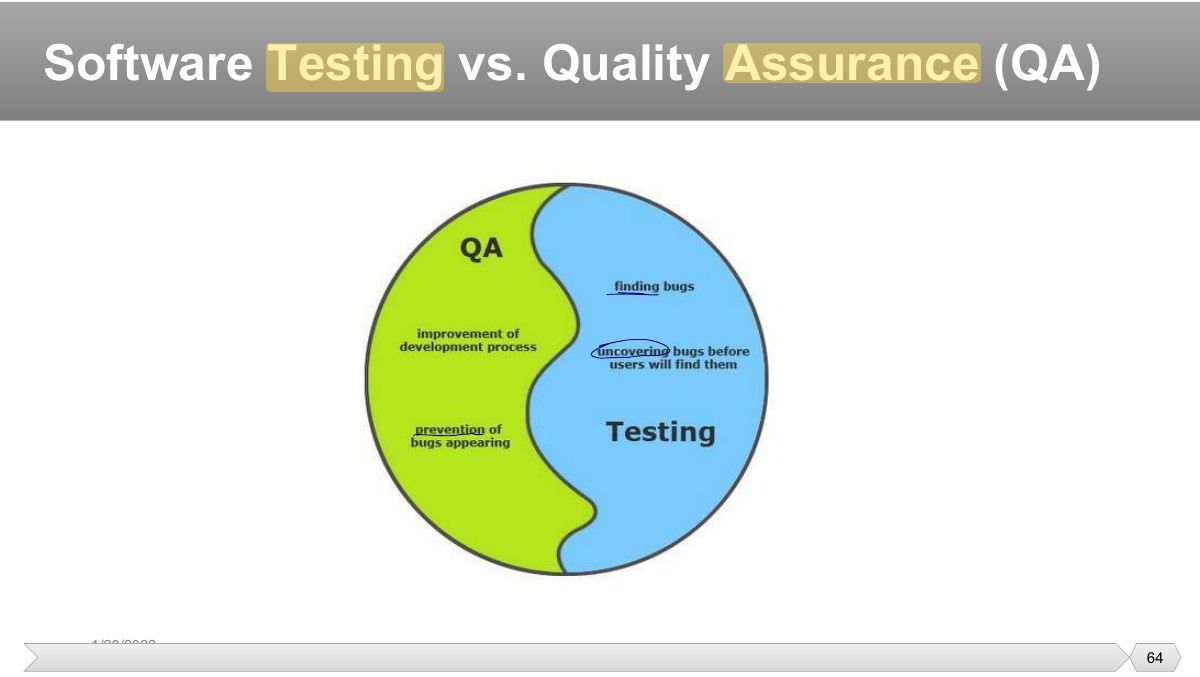
- Testing reduces the risk of failures in operation (Ariane 5, Therac-25, failed satellites, bank errors): poor quality is very expensive.
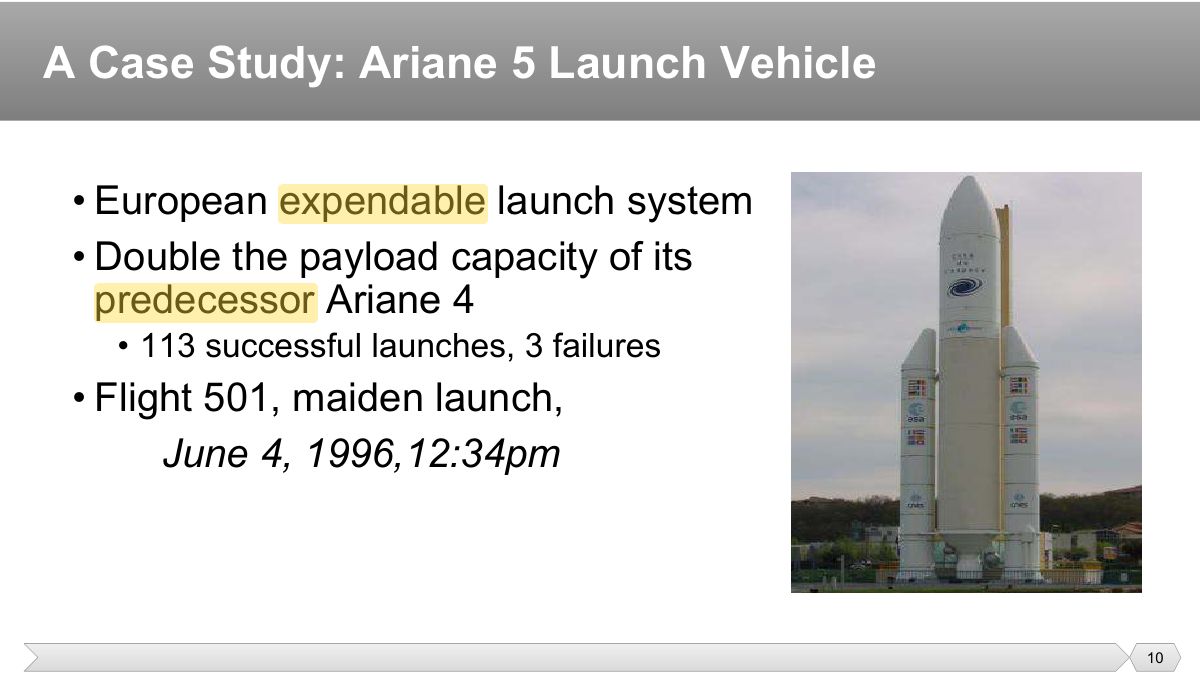
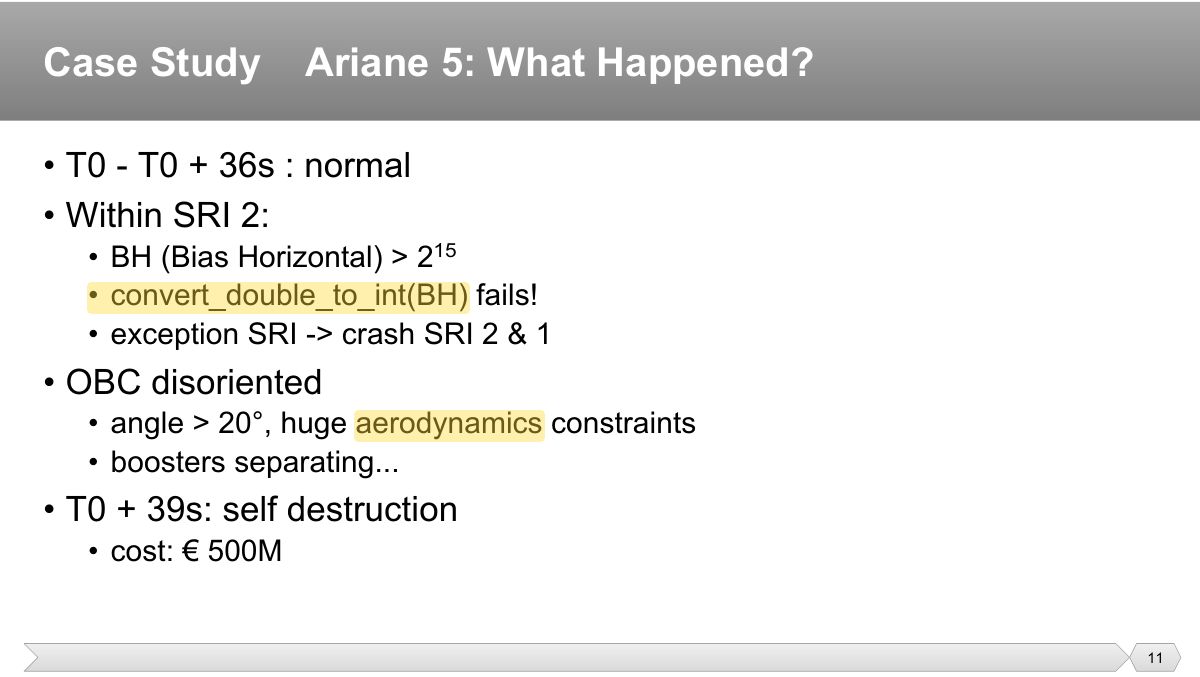
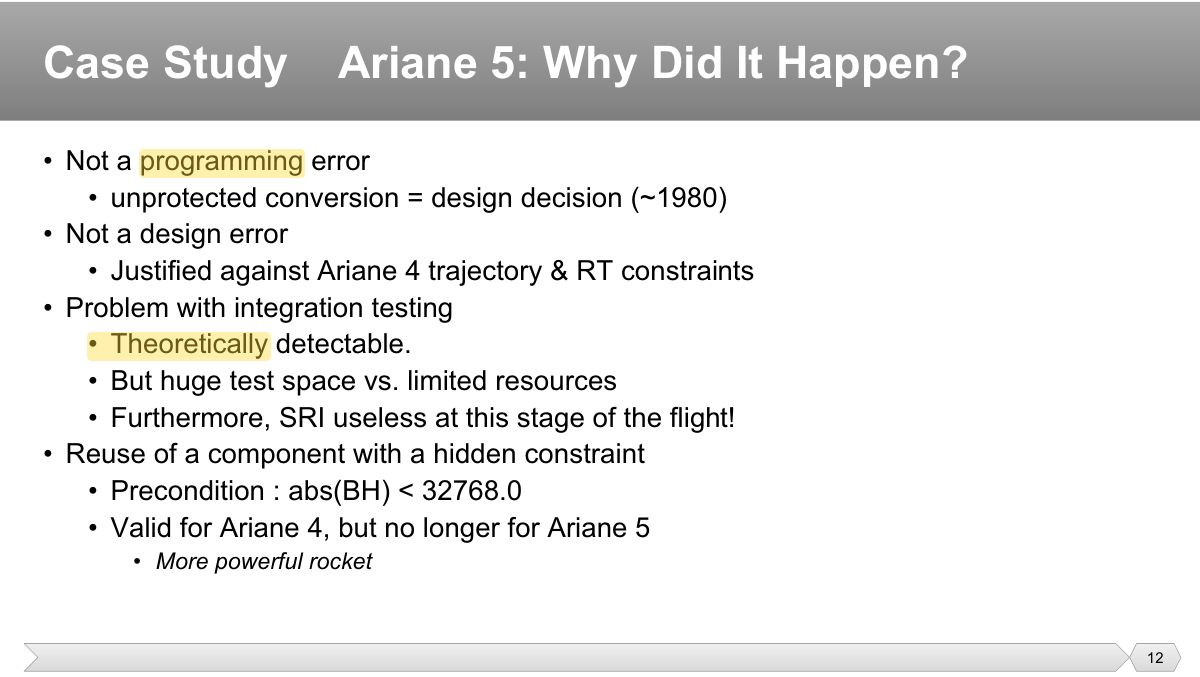
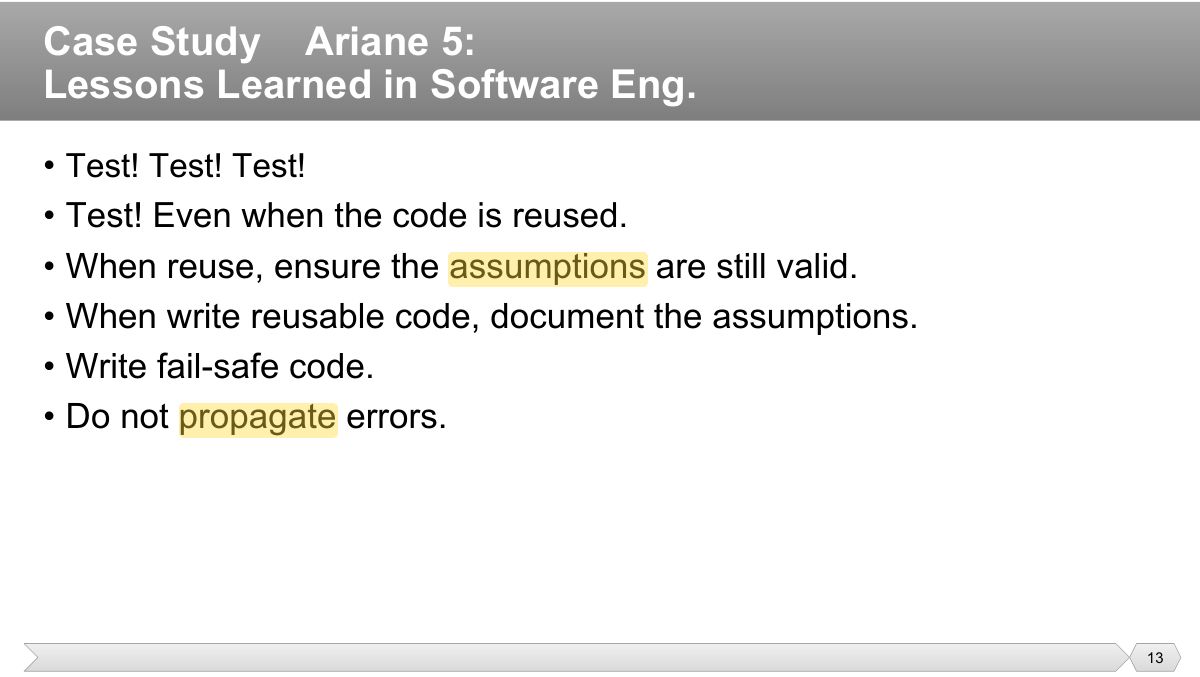
- Ariane 5 (1996): reused Ariane 4 code overflowed converting a 64-bit float to a 16-bit integer: not a coding slip, an untested assumption.
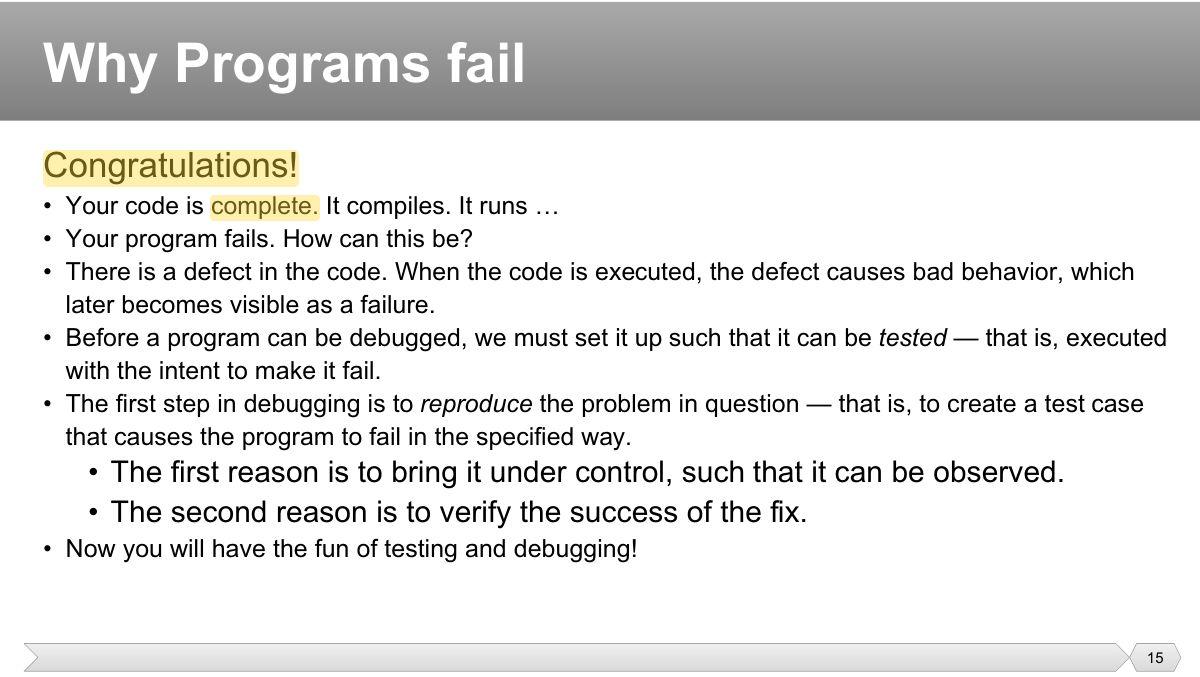
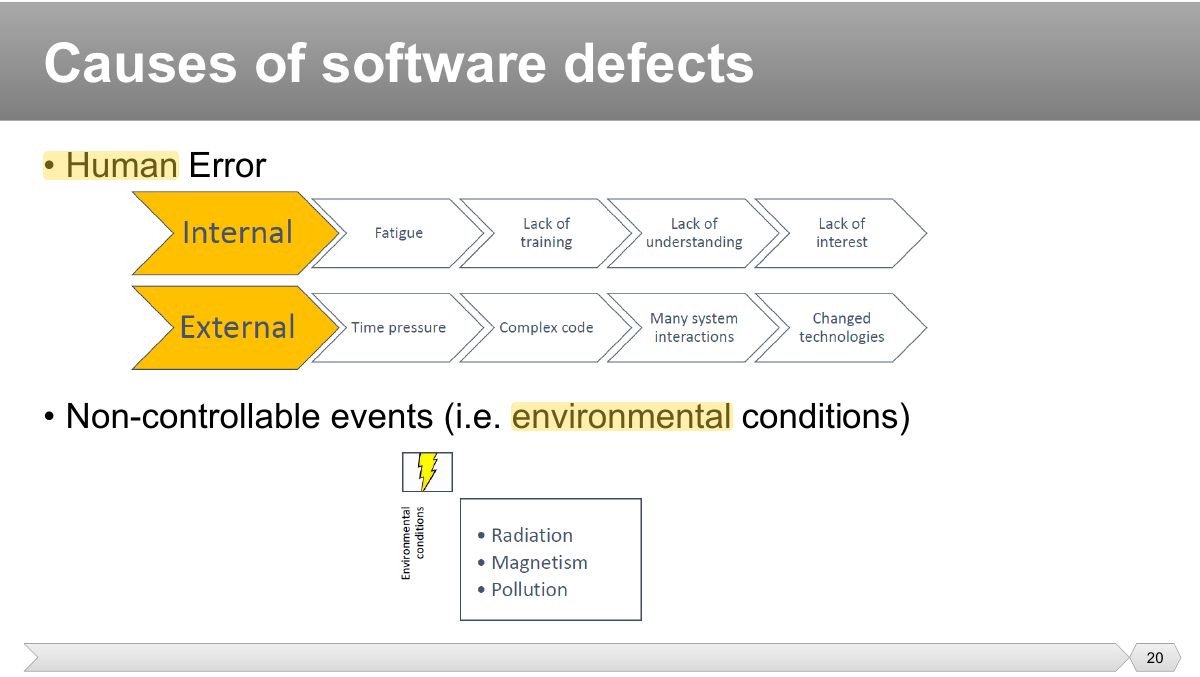
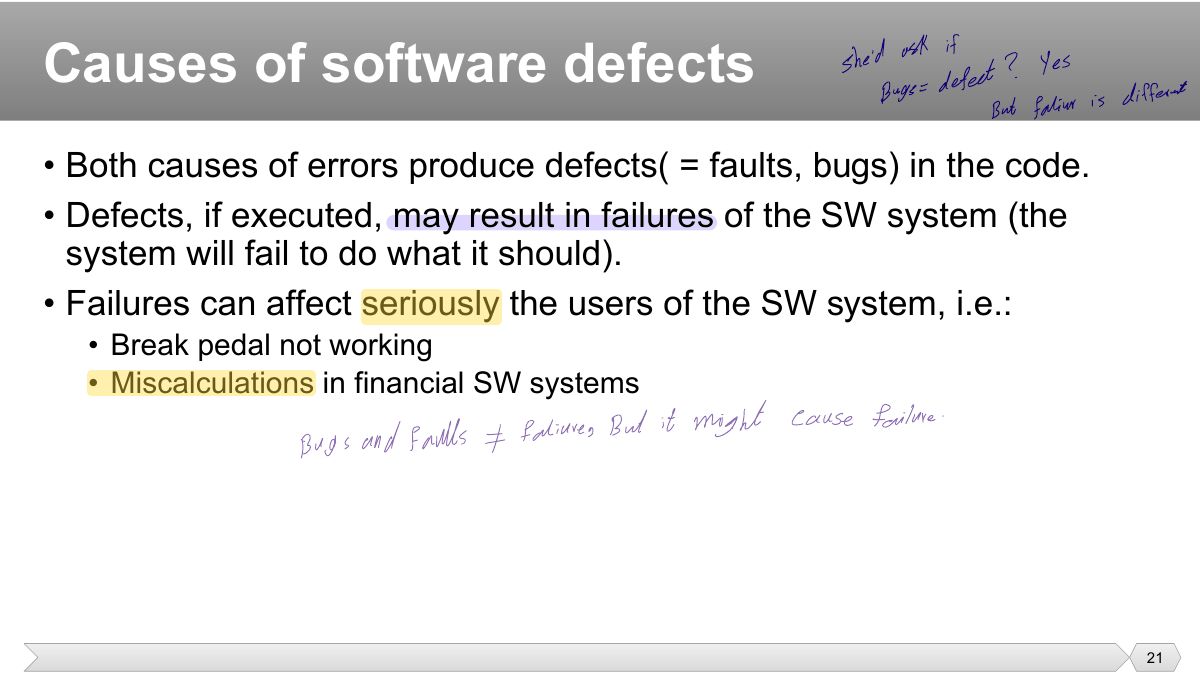
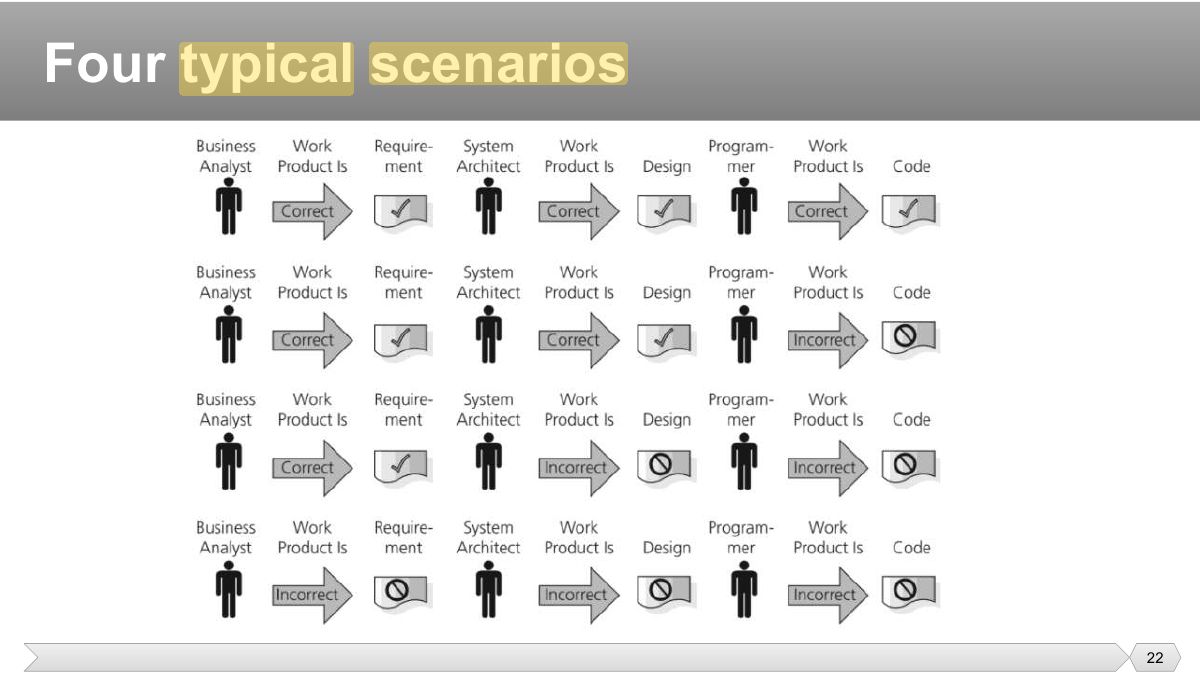
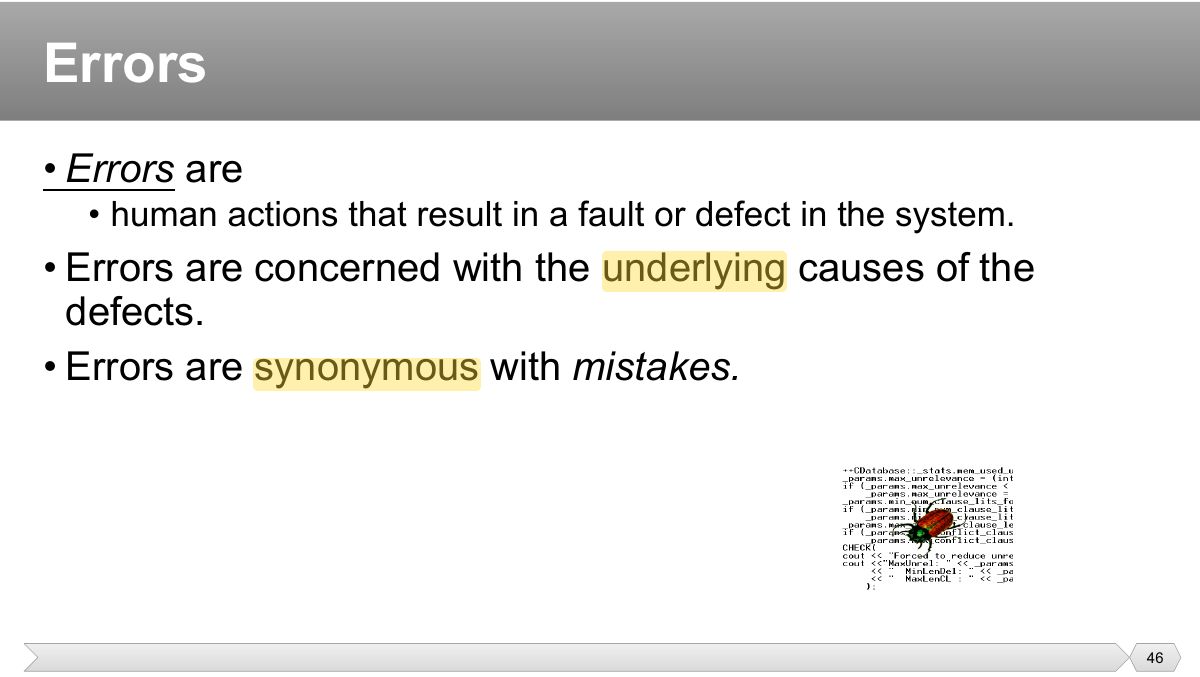
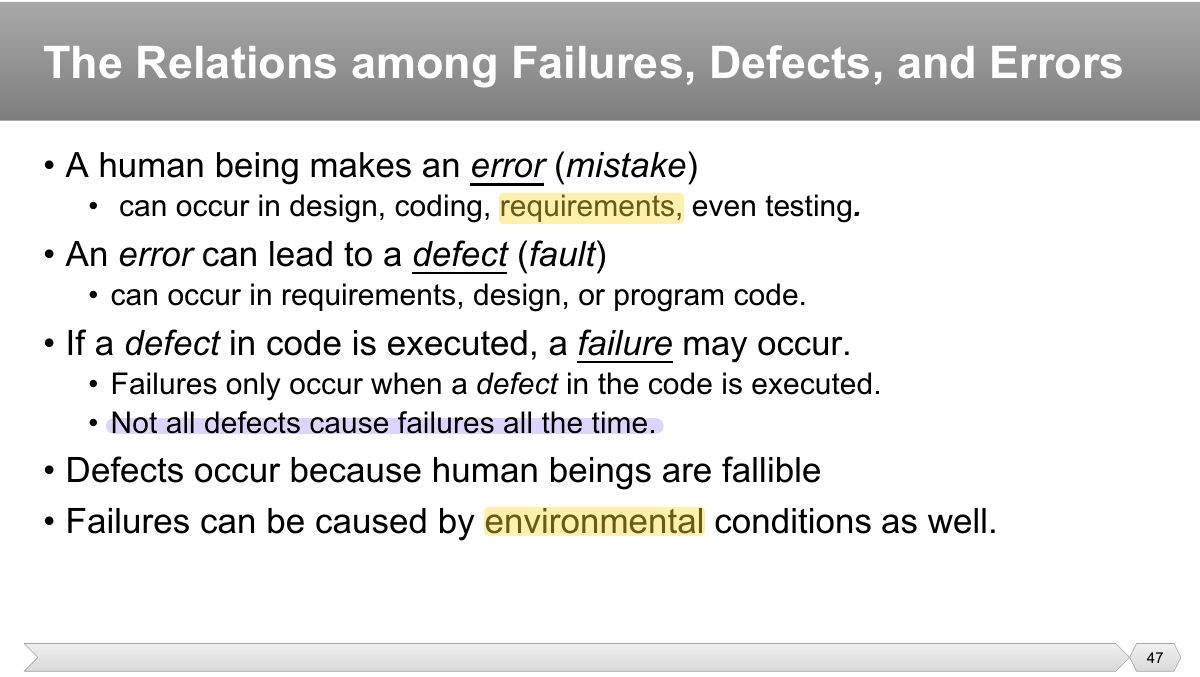
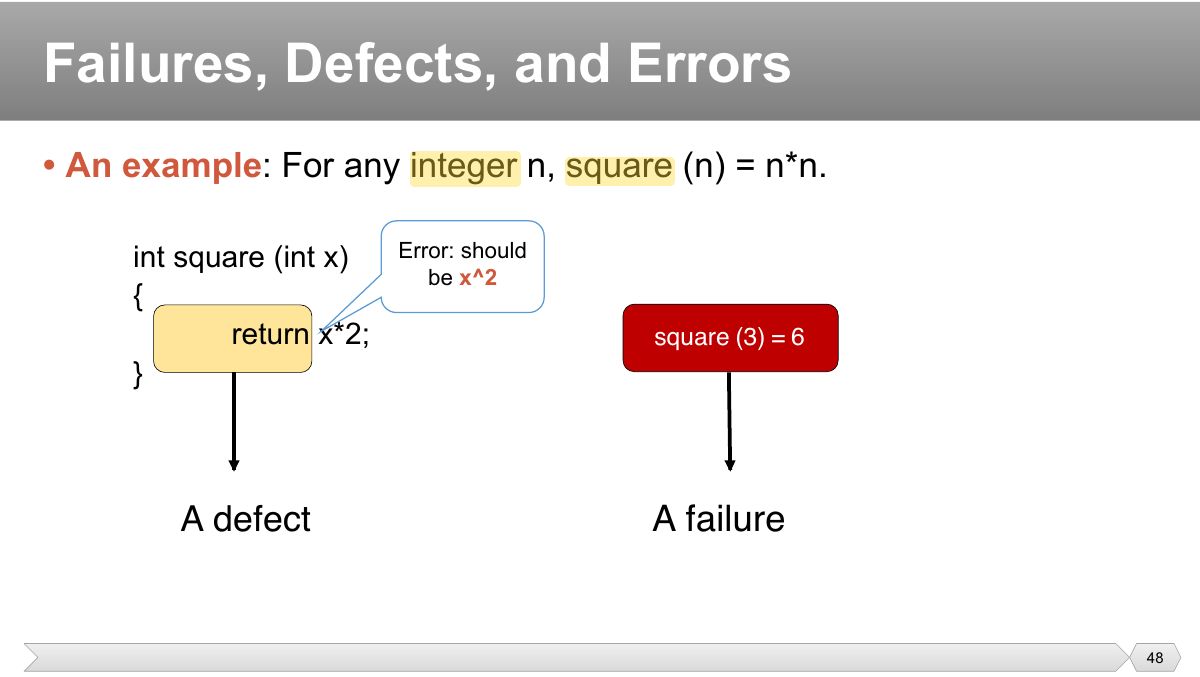
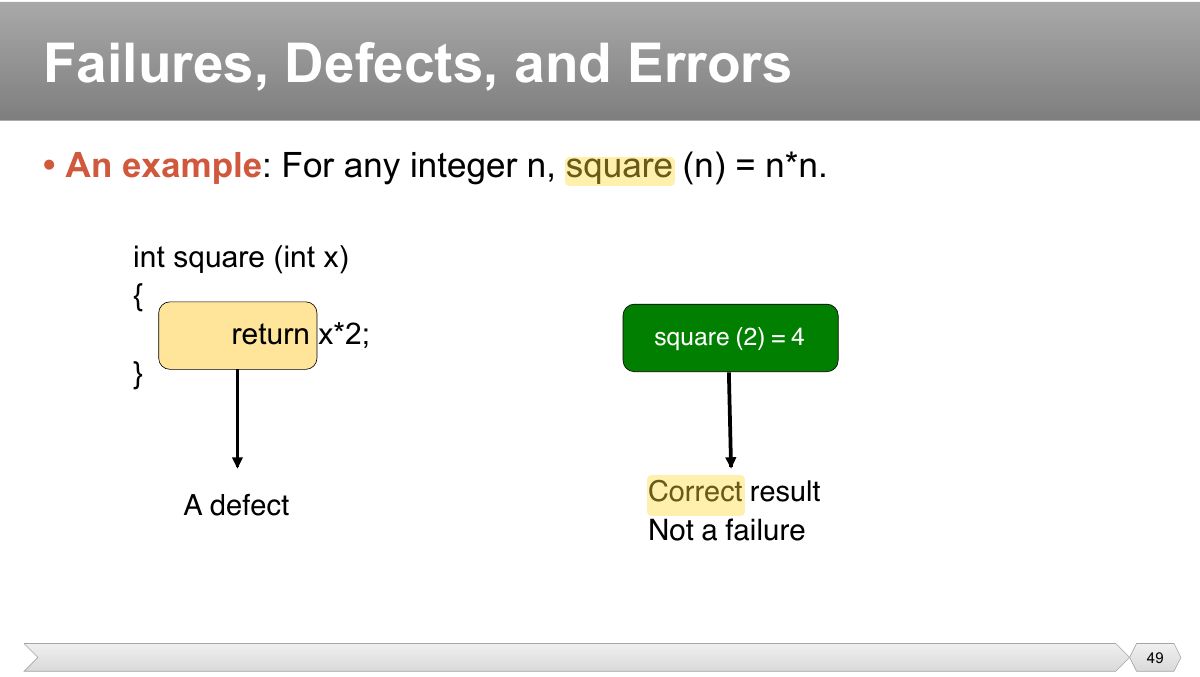
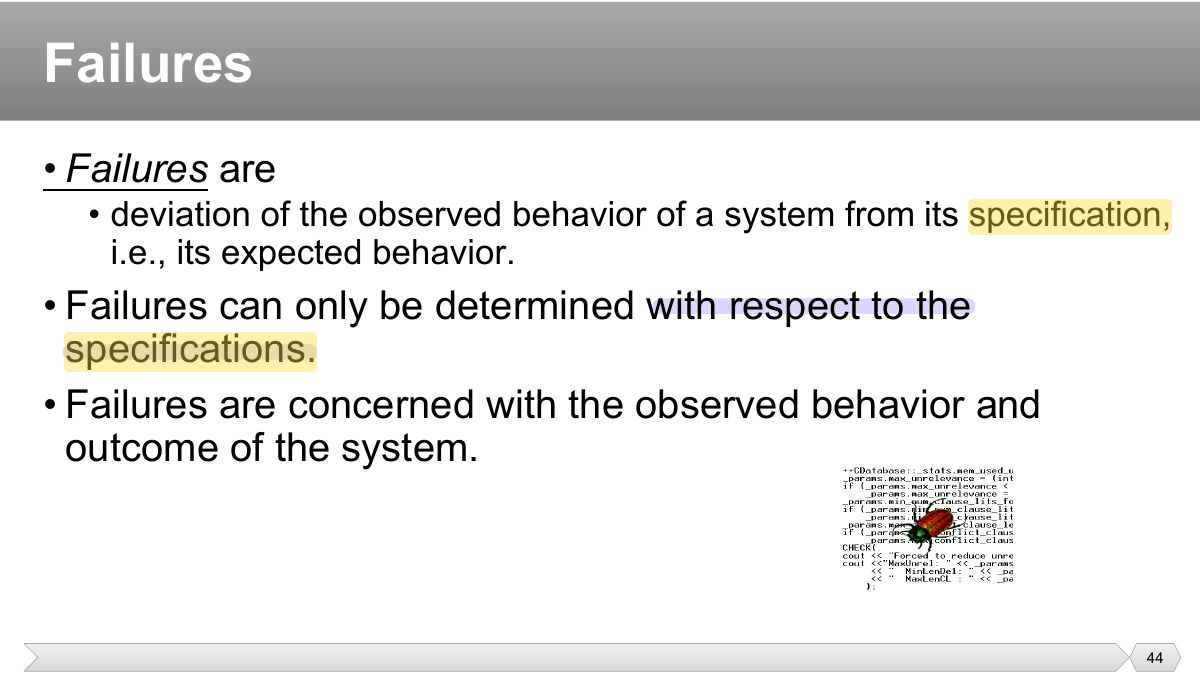
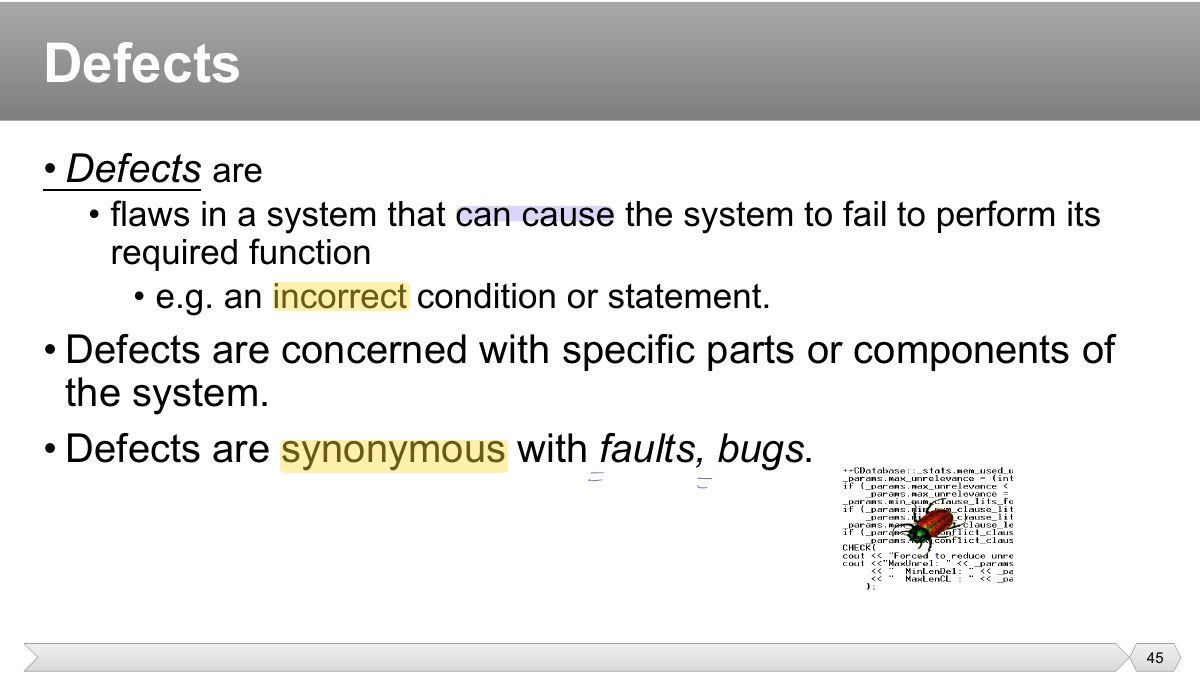
- A human makes an ERROR (mistake) → it leaves a DEFECT (fault, bug) in the code → running it may cause a FAILURE (wrong observable behaviour).
🎯 How this can come up · 2 questions
A programmer types < instead of <=. The wrong operator in the code is a:
The typing mistake is the error; the result in the code is the defect.
Every defect causes a failure.
False. Only if the defective code is executed under the right conditions.
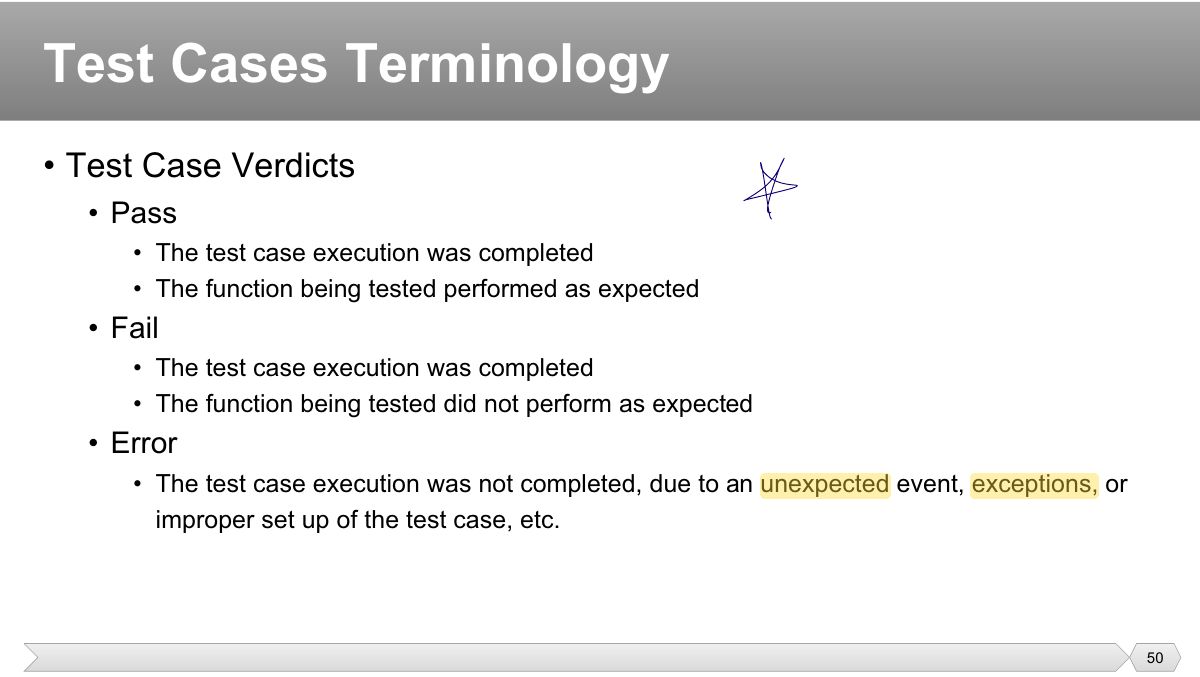
- Verdicts: pass, fail, inconclusive.
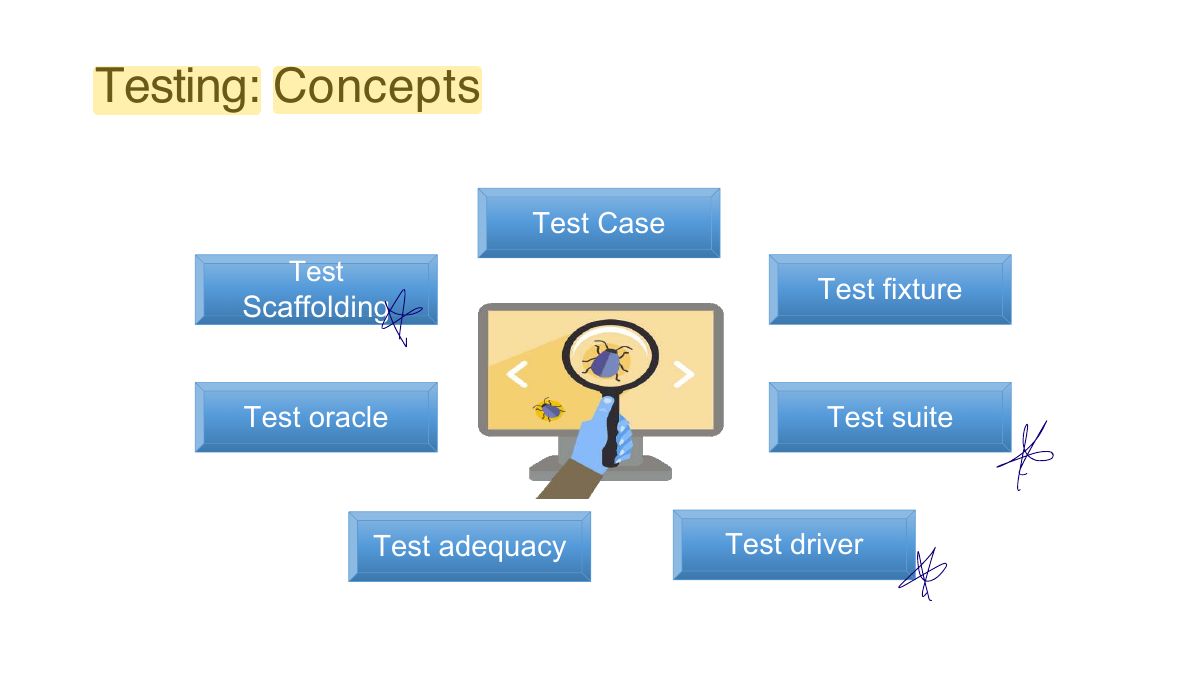
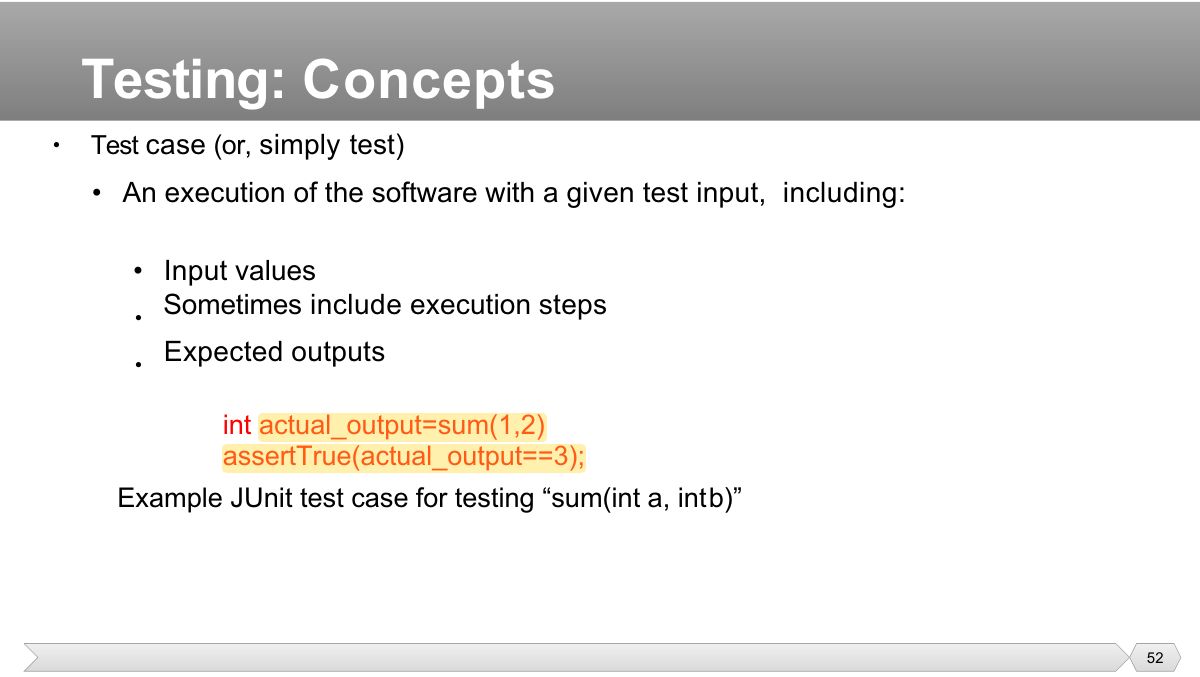
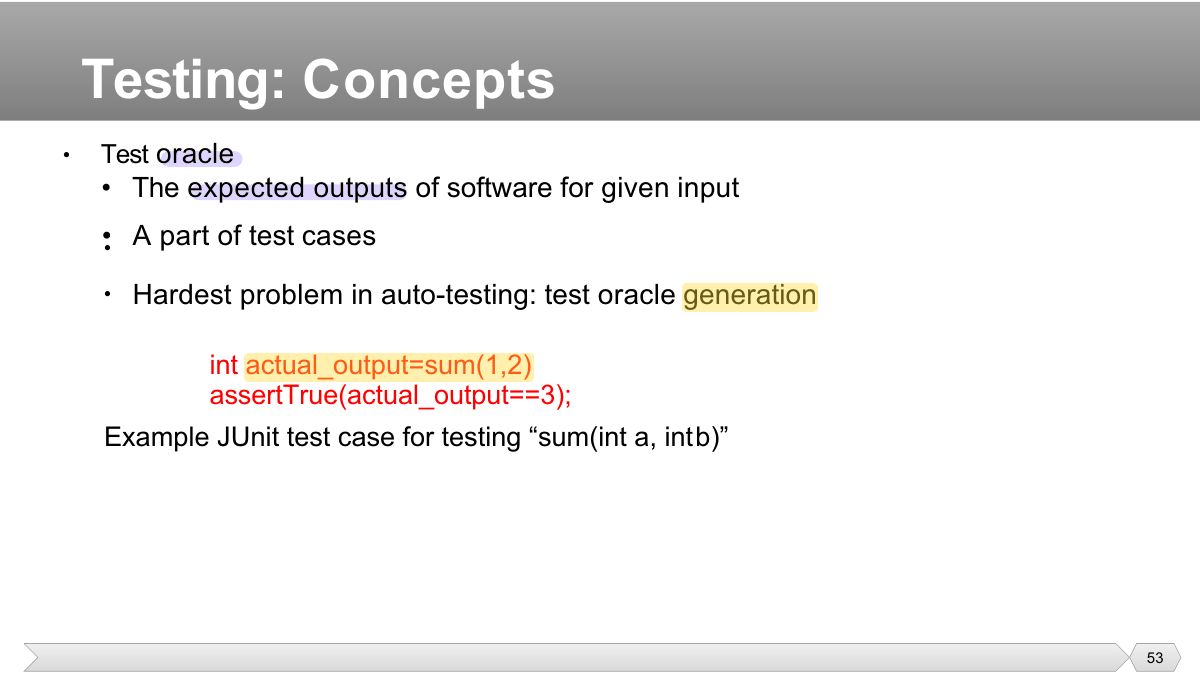
- Test oracle: the mechanism that decides whether an output is correct (expected results, a reference implementation, assertions).
🎯 How this can come up · 1 question
The source that tells you the expected result of a test is the:
Correct: Test oracle.
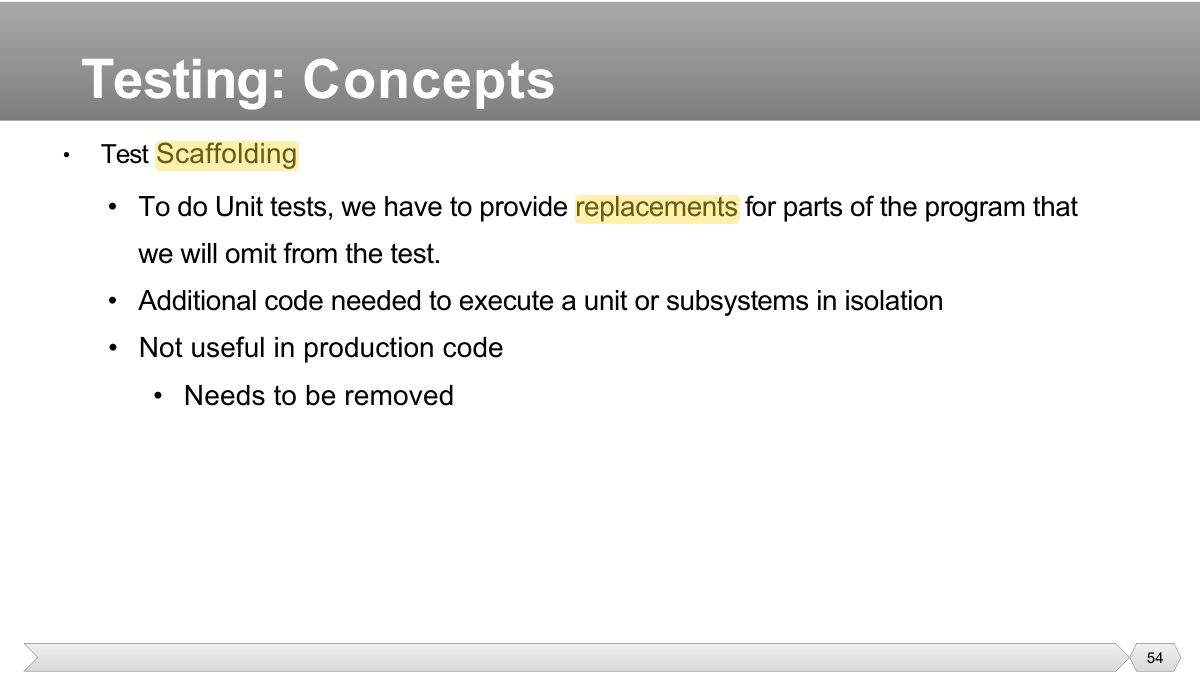
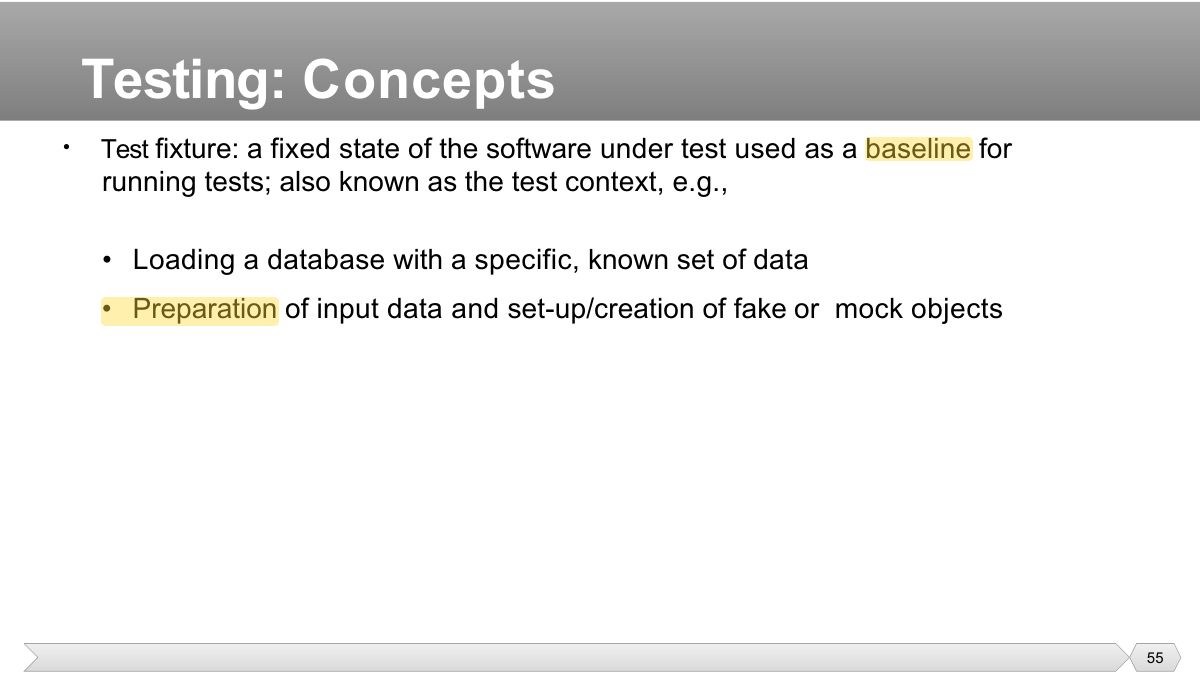
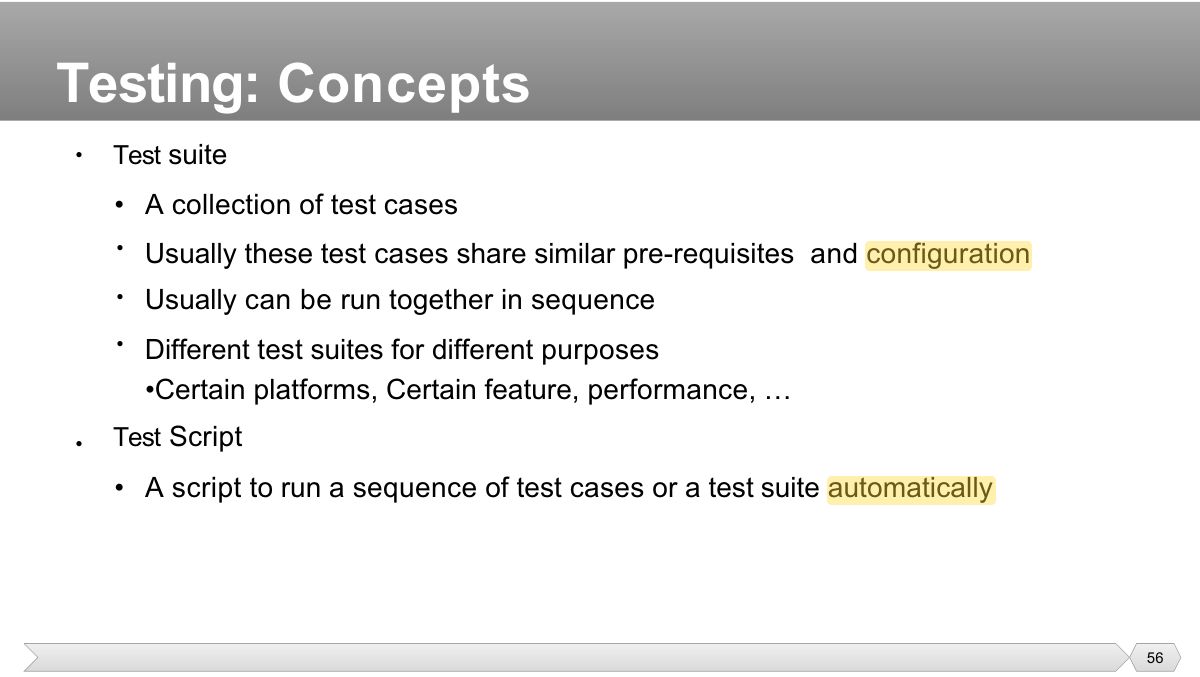
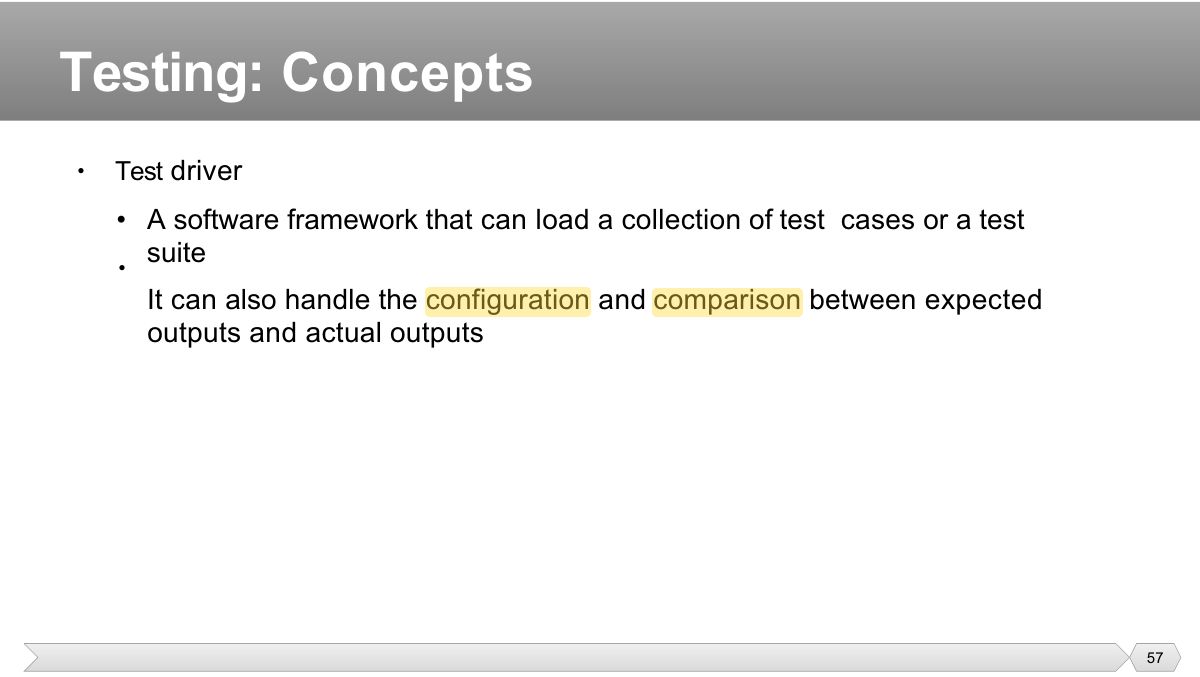
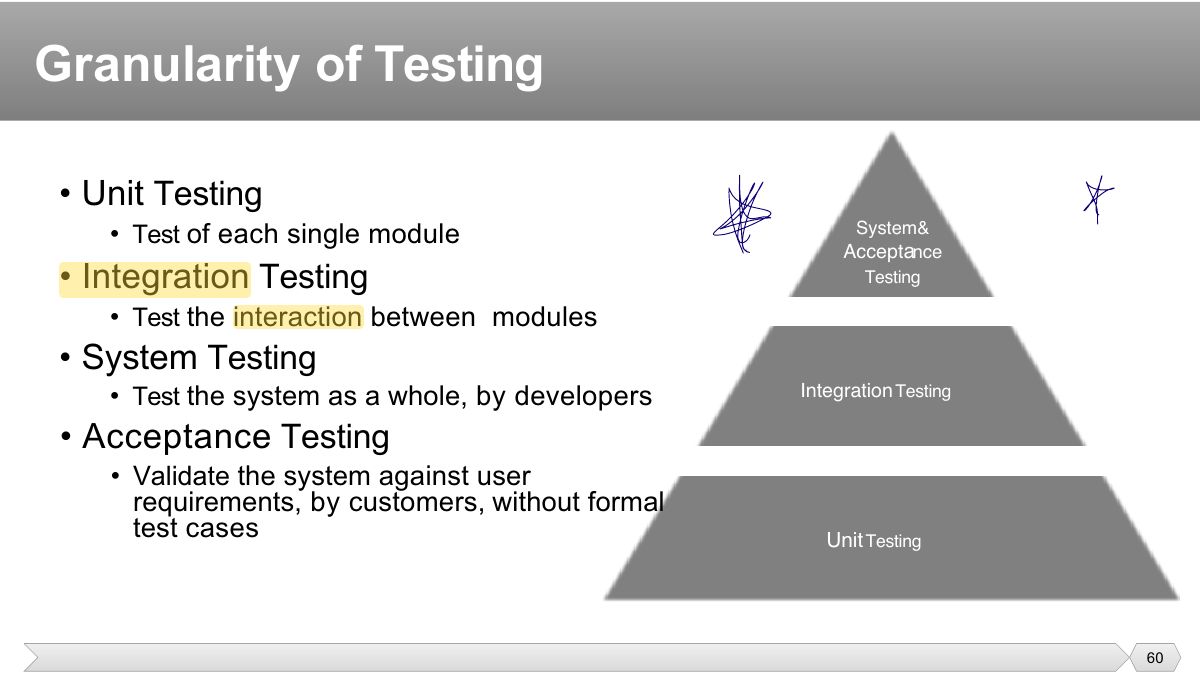
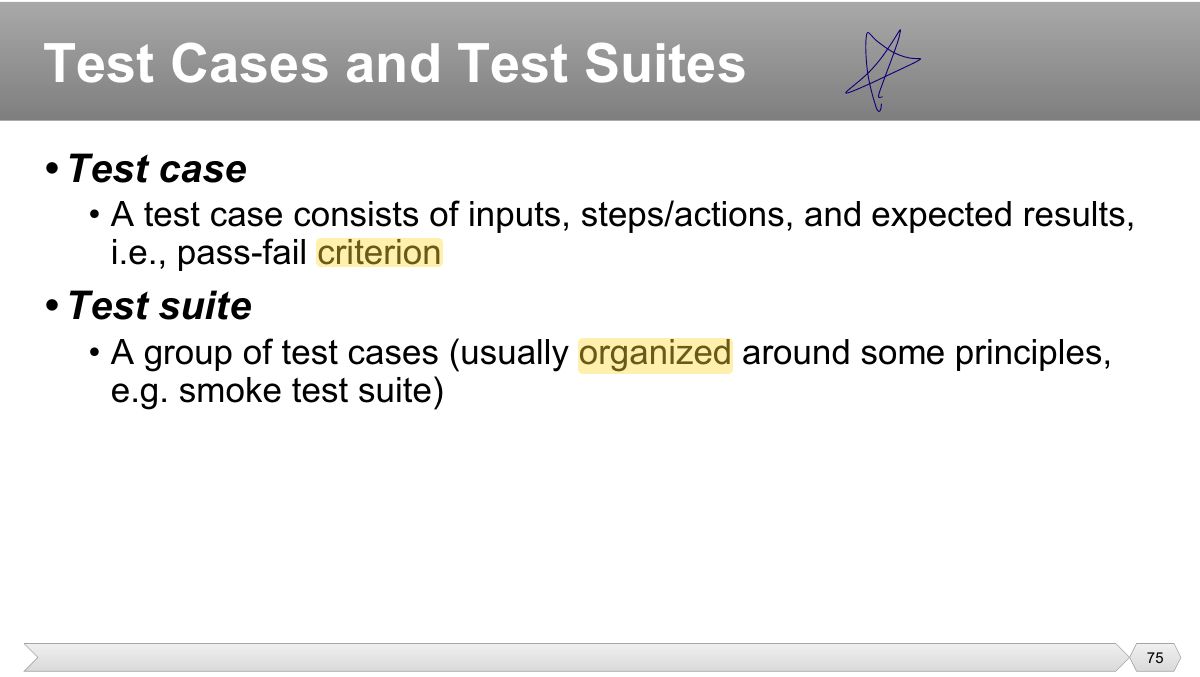
- Fixture: the fixed state the tests run against. Suite: a collection of test cases. Scaffolding: drivers, stubs, harnesses.
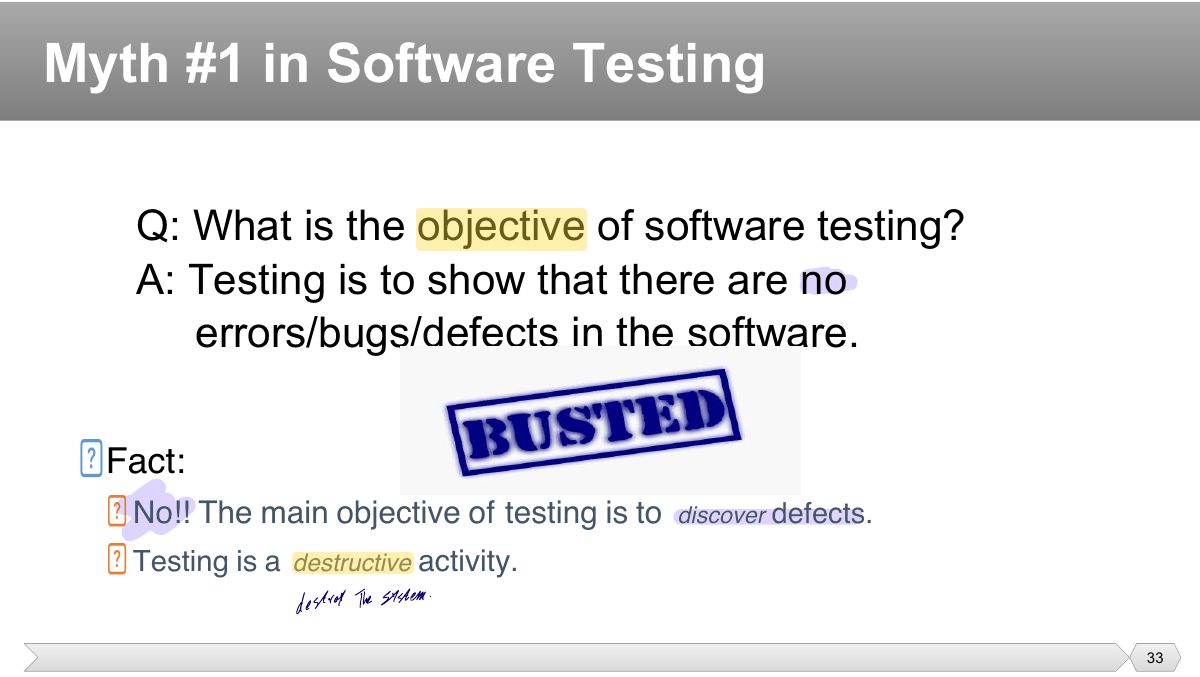
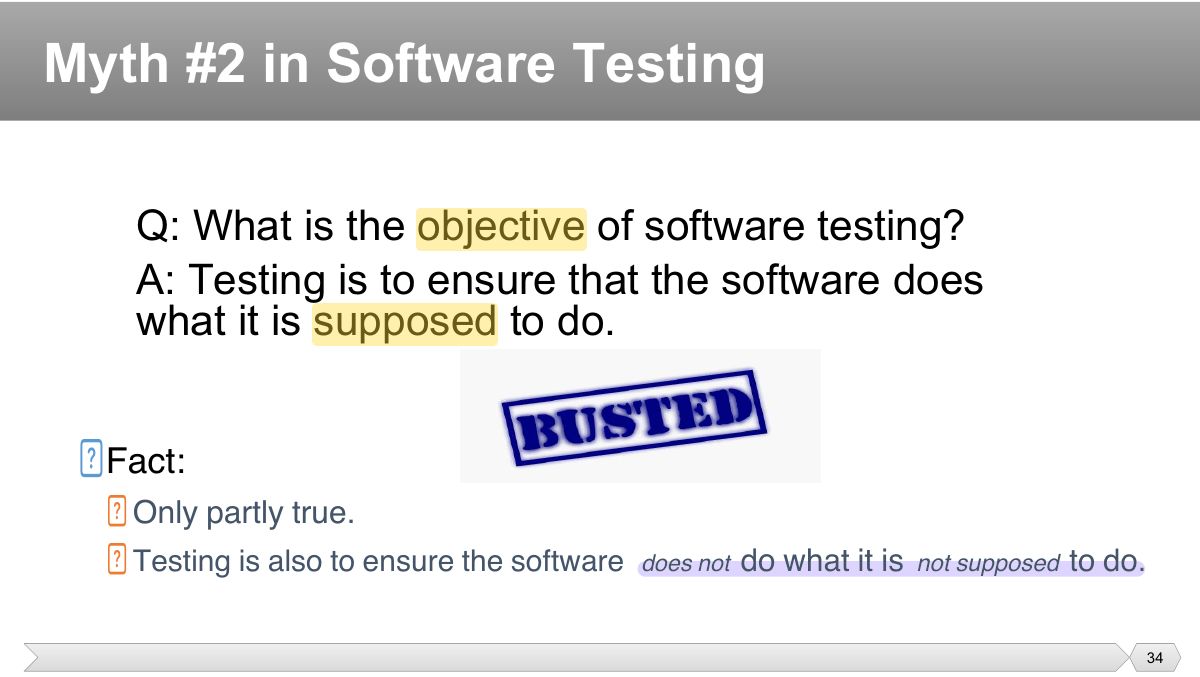
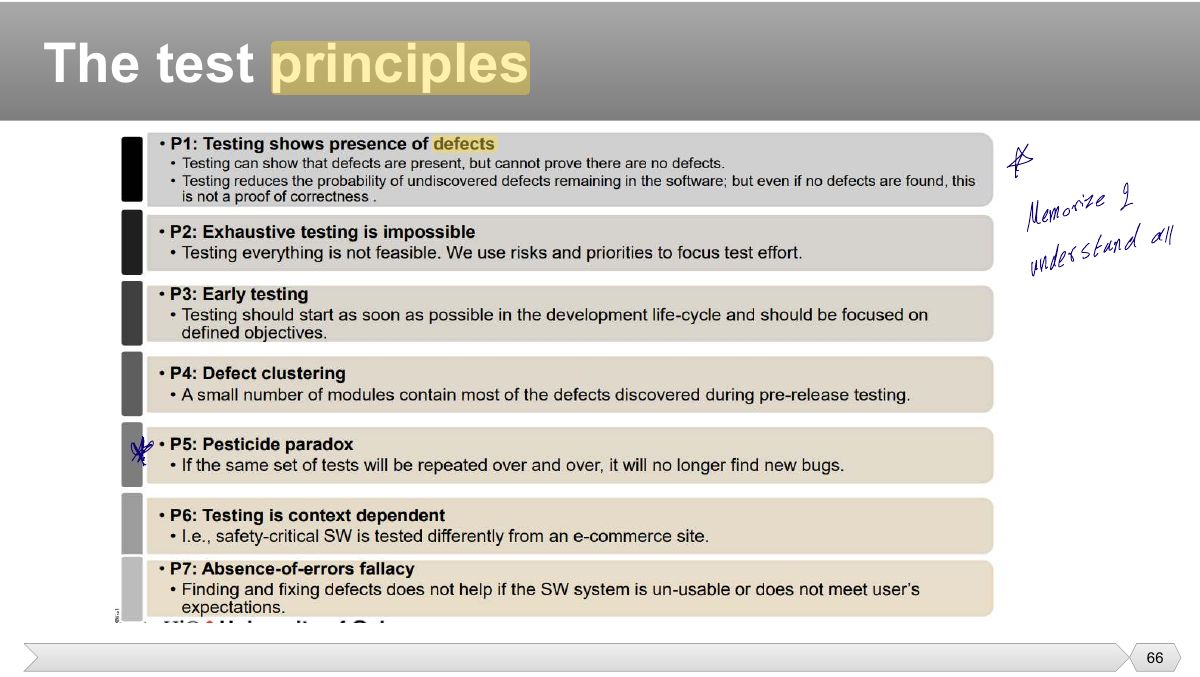
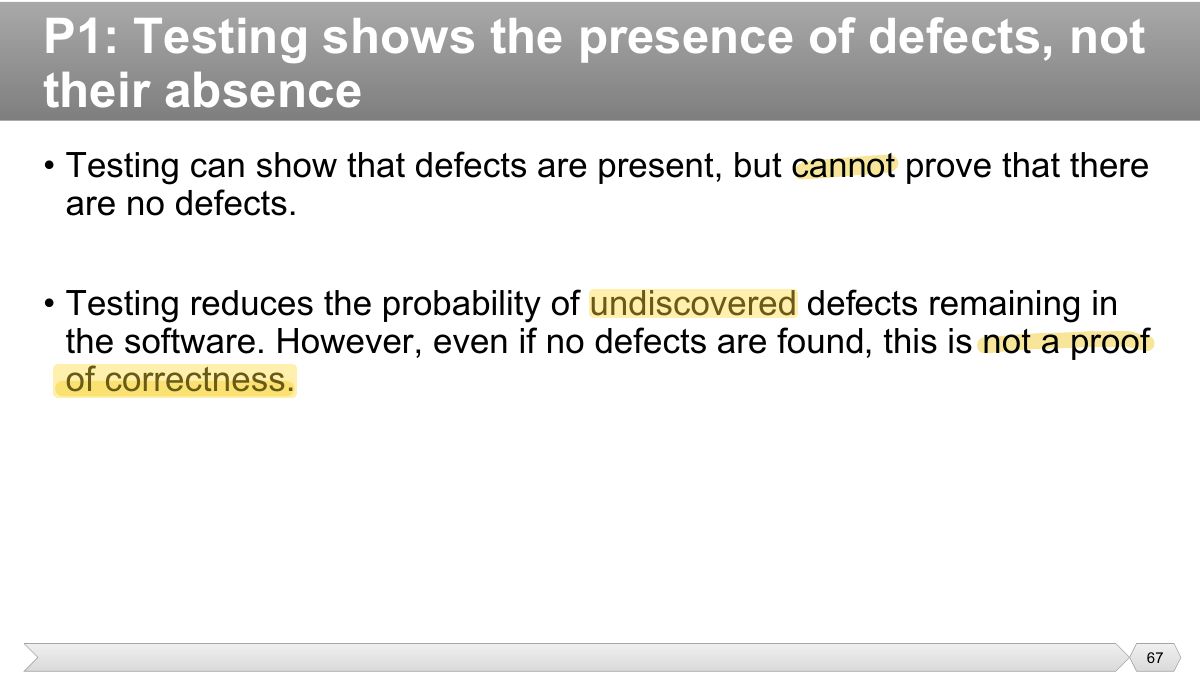
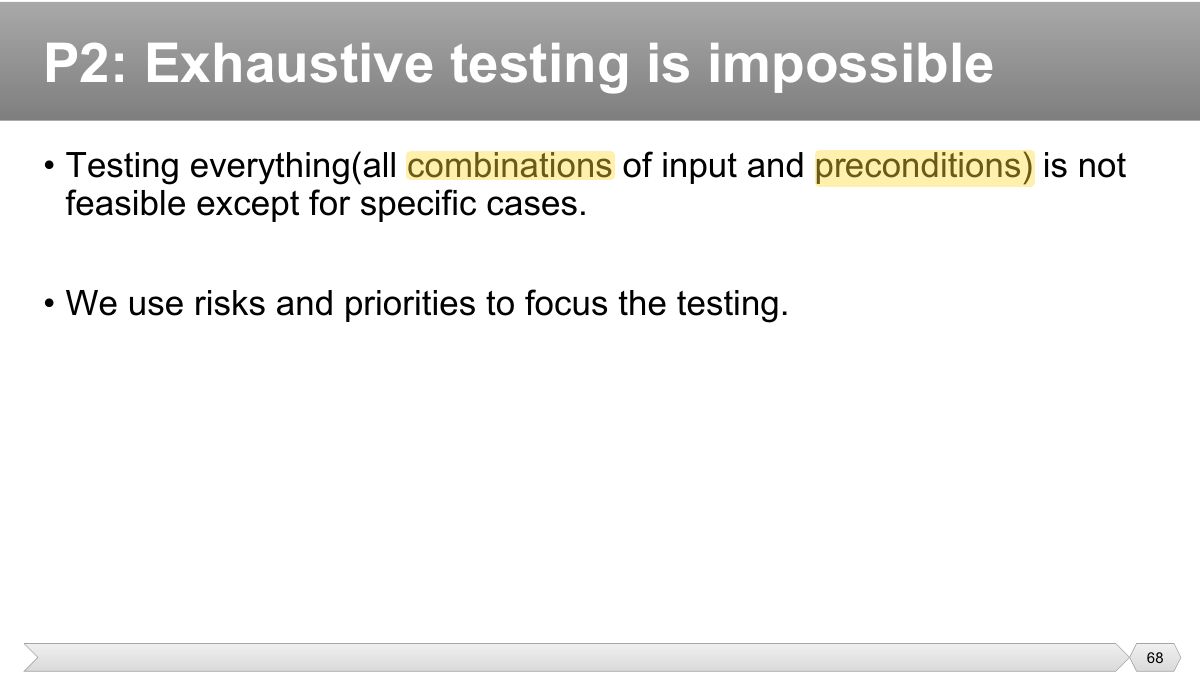
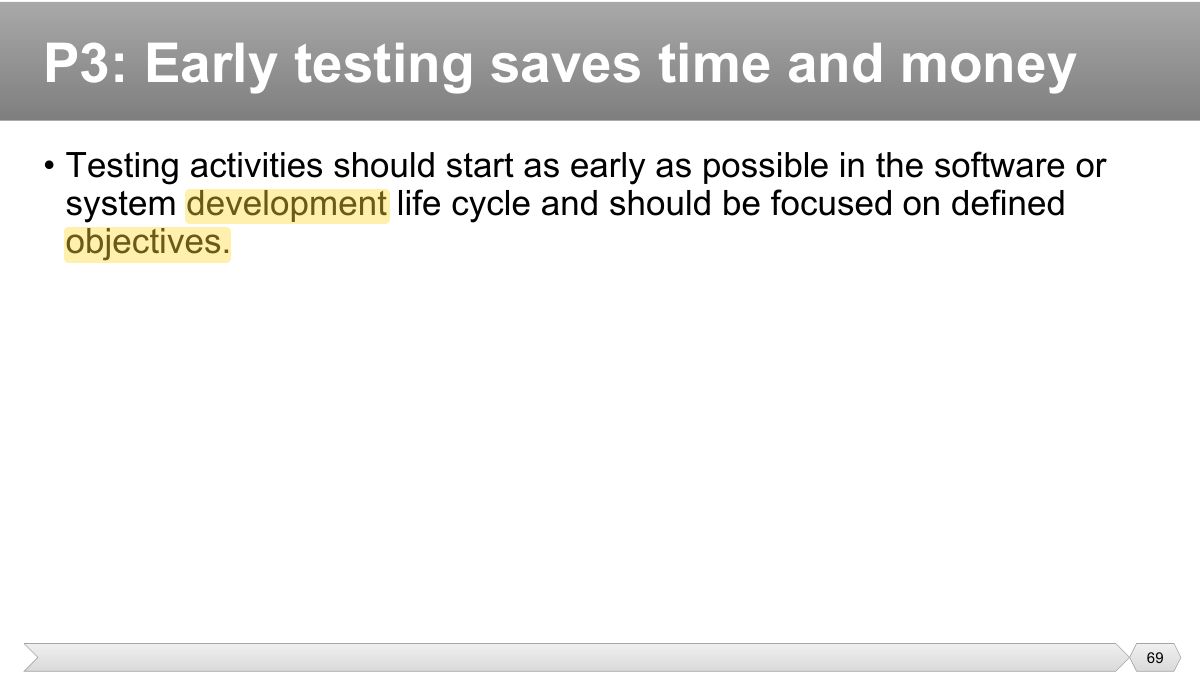
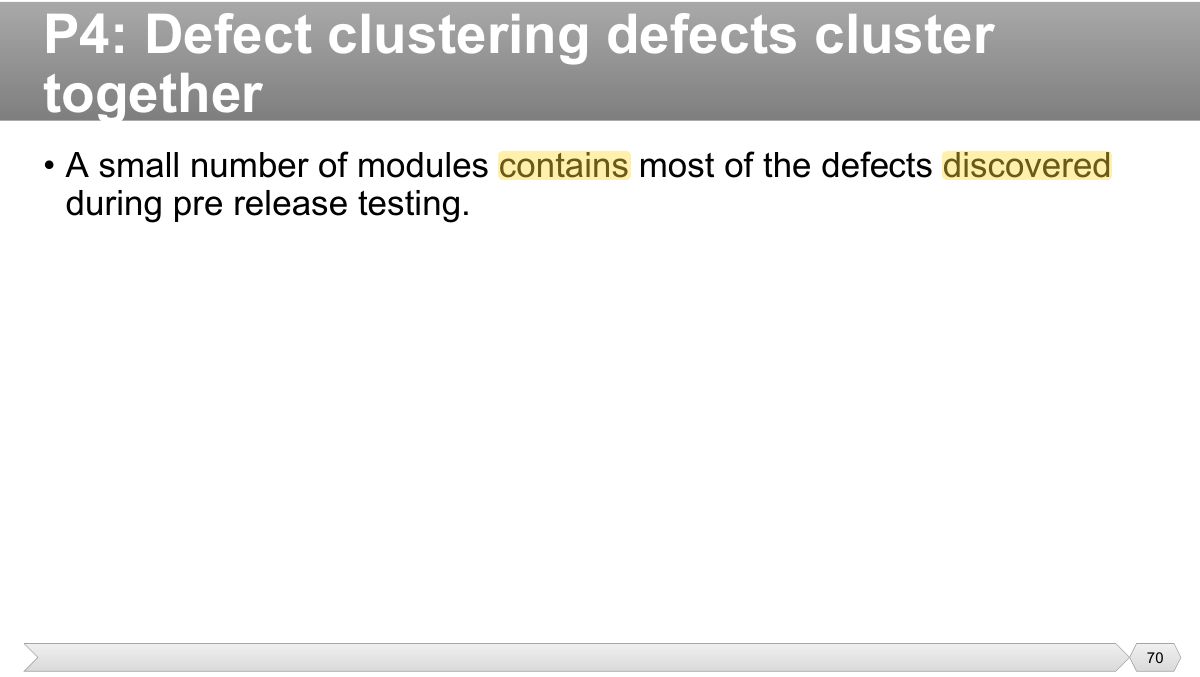
- Seven principles: testing shows presence of defects (not absence) · exhaustive testing is impossible · early testing · defect clustering · pesticide paradox · testing is context dependent · absence-of-errors fallacy.
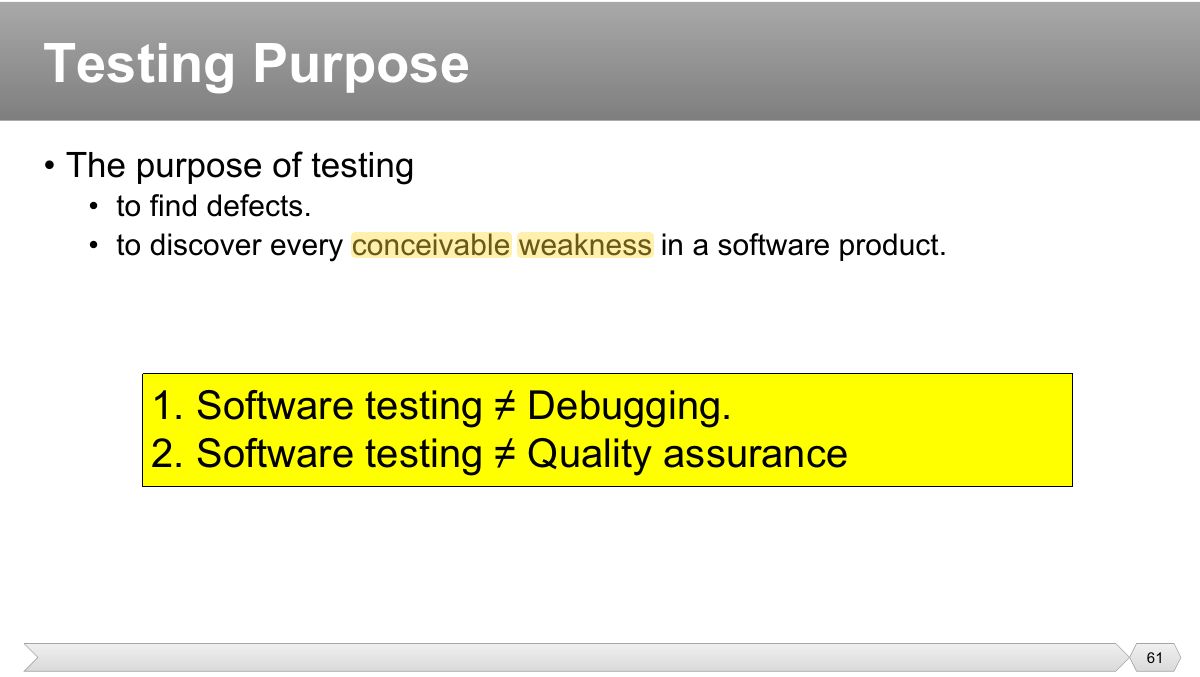
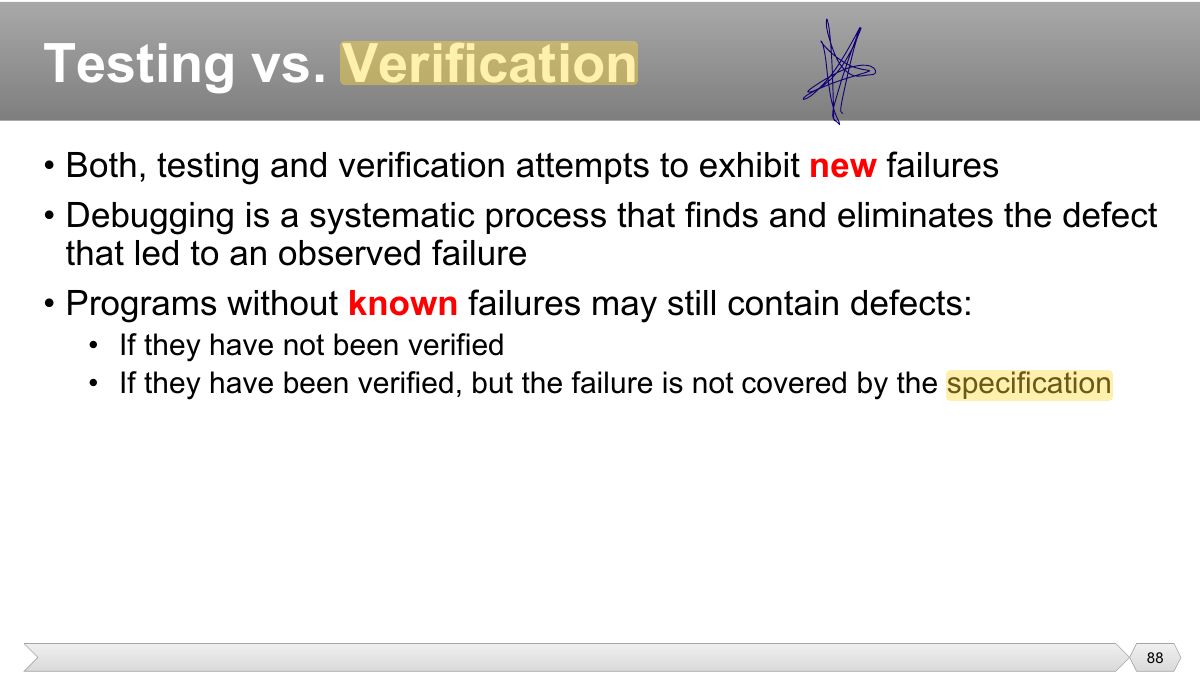
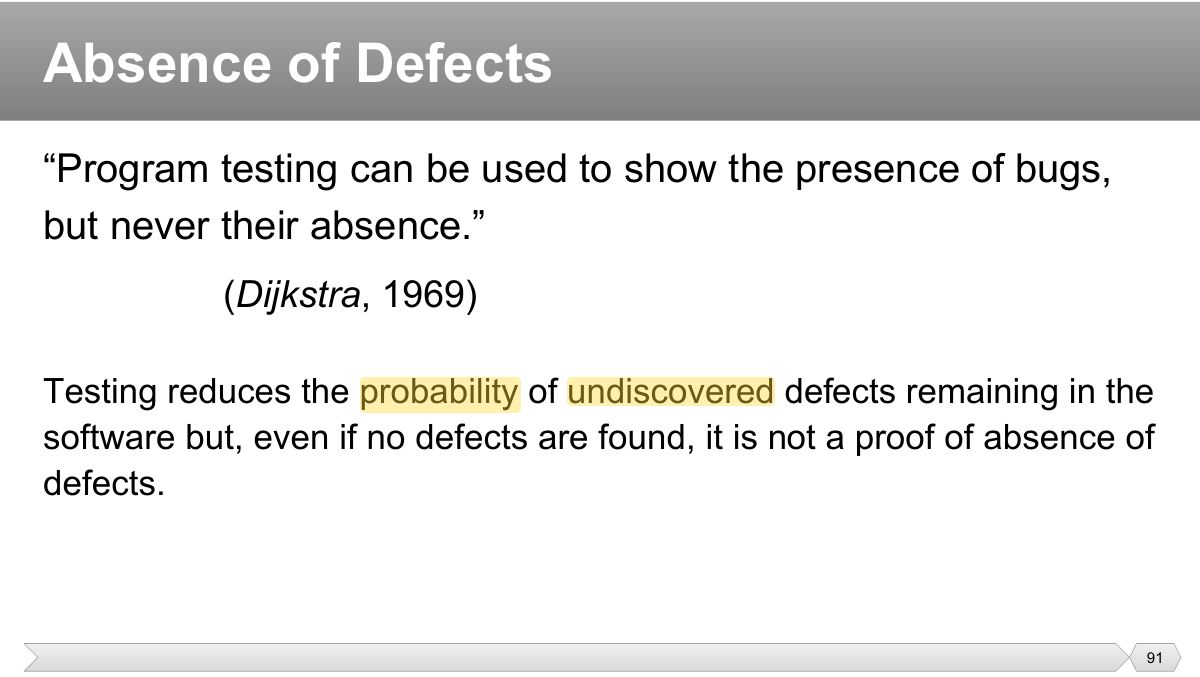
- Testing can show defects are present, never that they are absent.
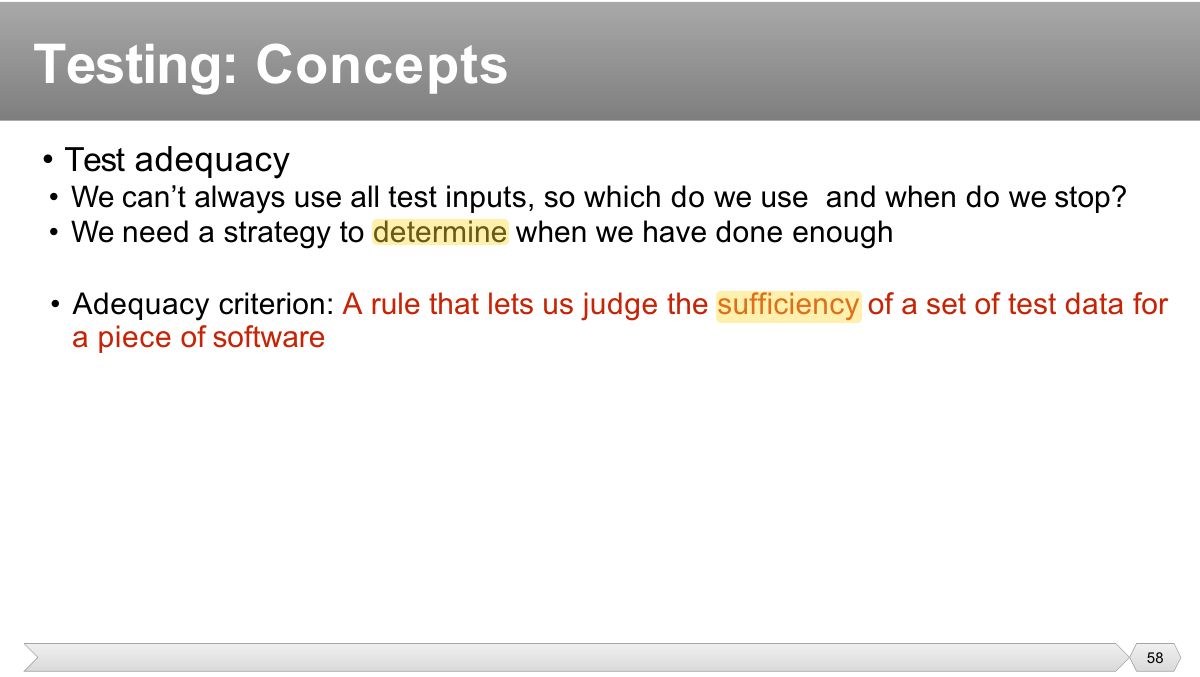
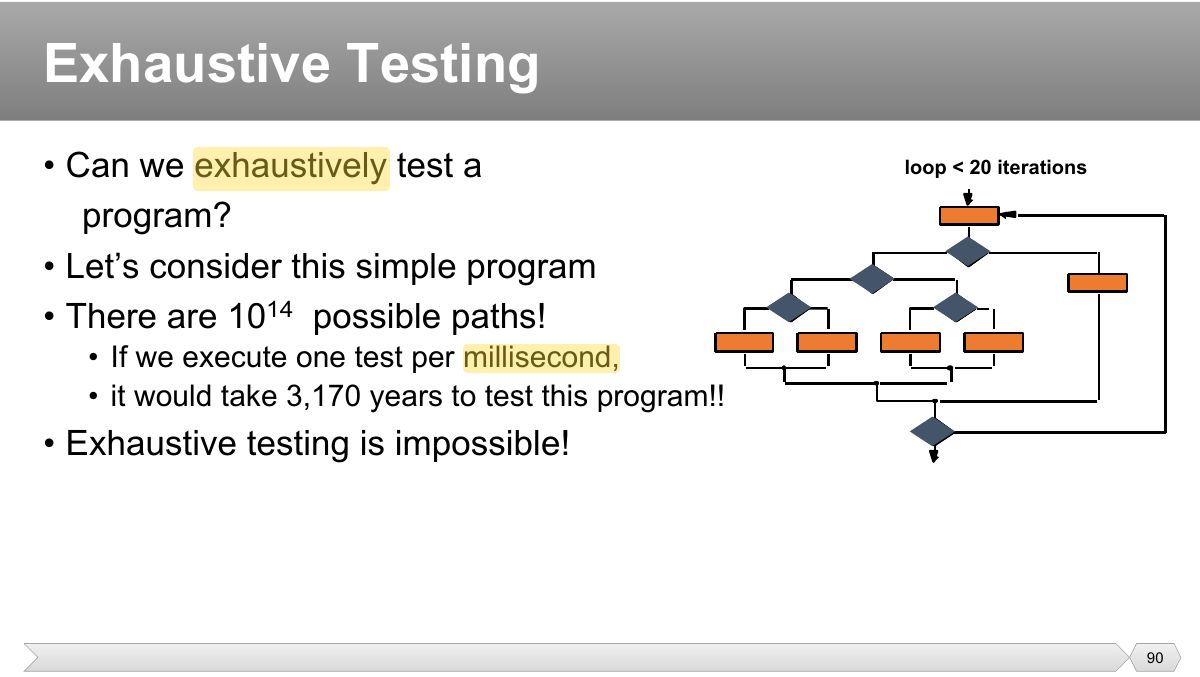
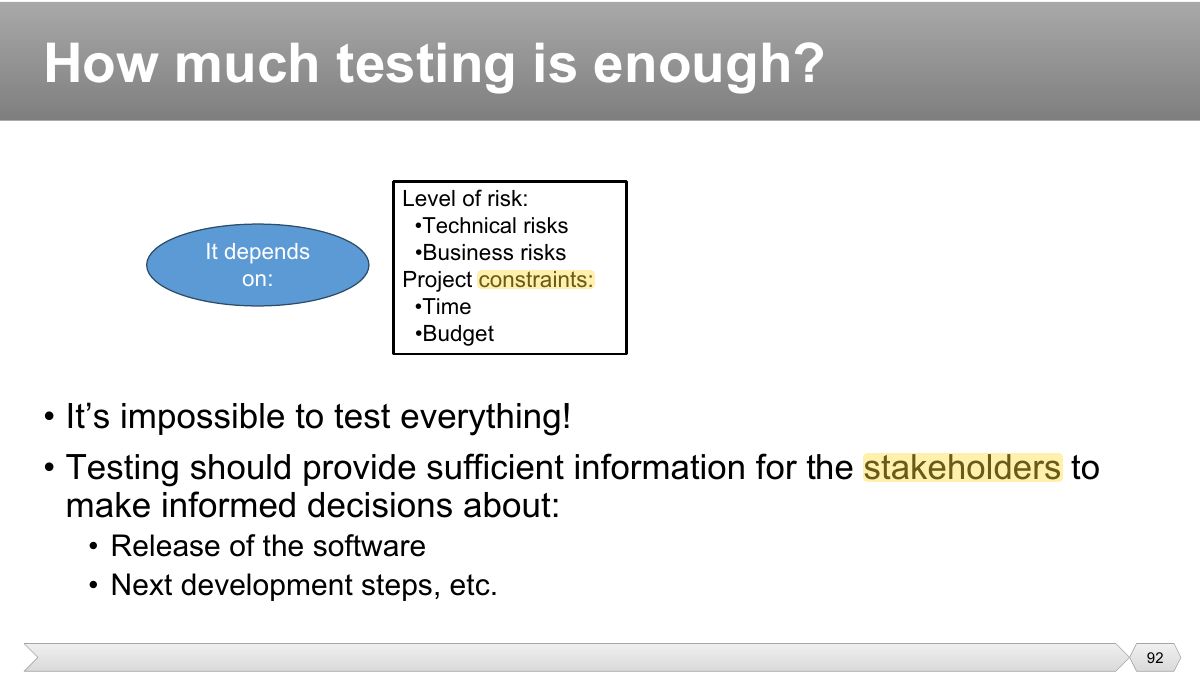
- Exhaustive testing is impossible except in trivial cases: use risk and priorities.
- Defect clustering: a small number of modules contain most of the defects (Pareto).
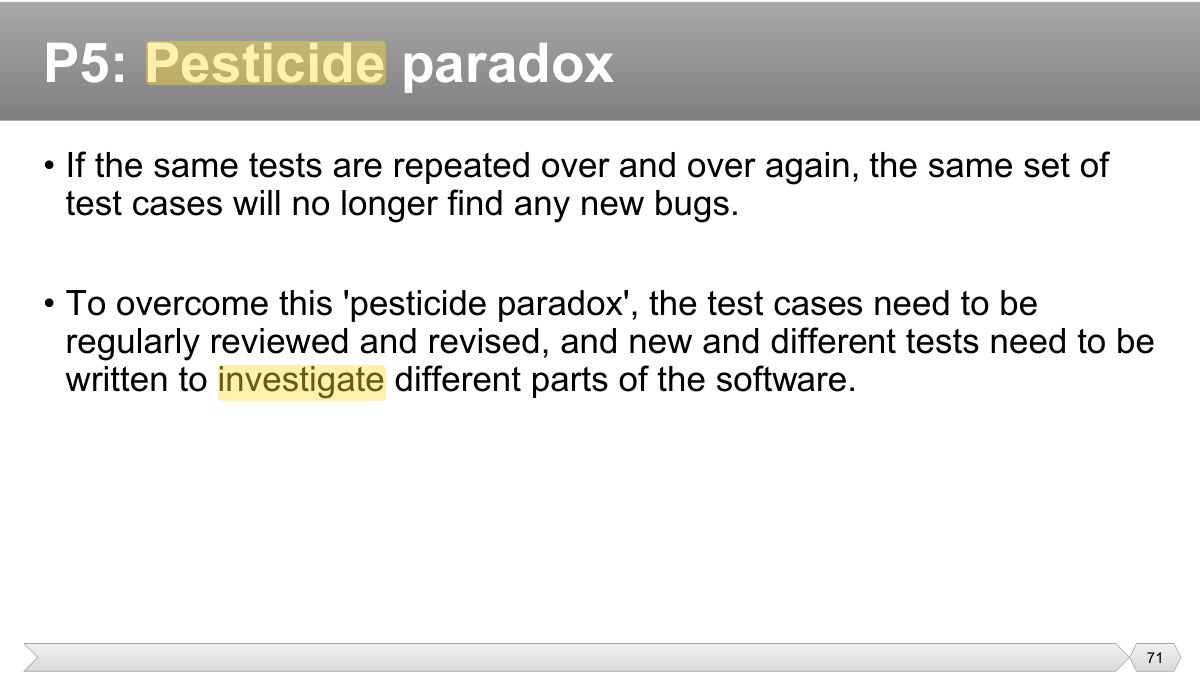
- Pesticide paradox: repeating the same tests finds no new bugs: review and add tests regularly.
🎯 How this can come up · 1 question
Running the same tests over and over stops finding new defects. This is the:
Correct: Pesticide paradox.
- Absence-of-errors fallacy: a bug-free system that doesn’t meet users’ needs is still a failure.
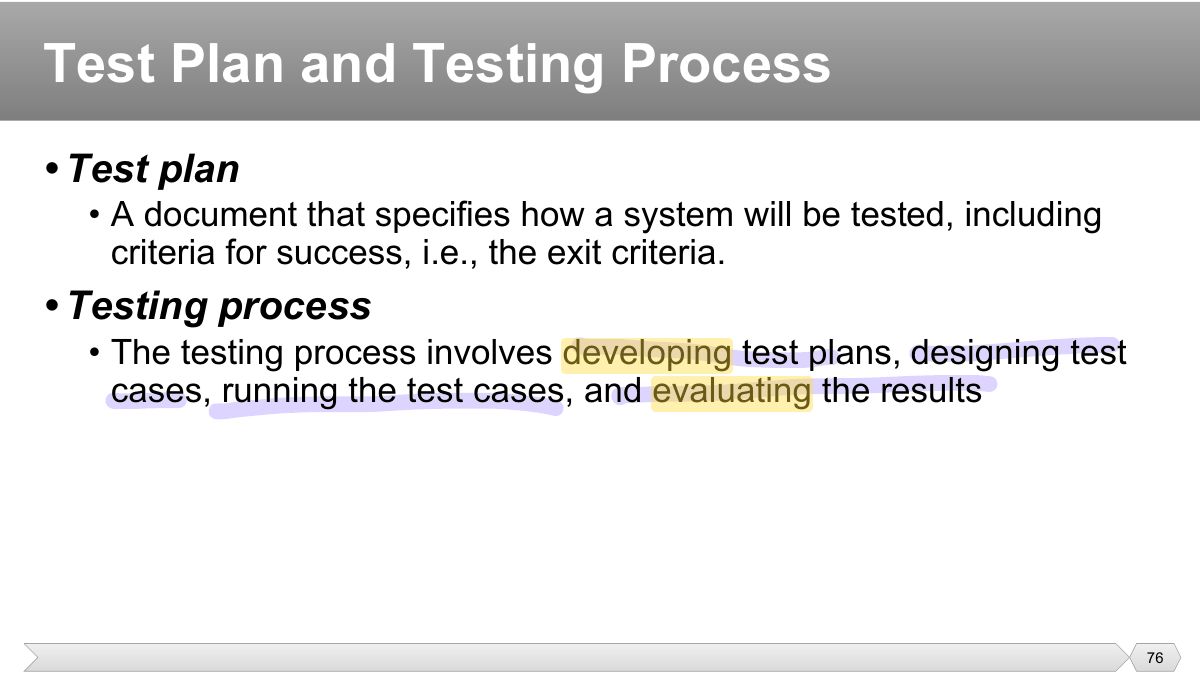
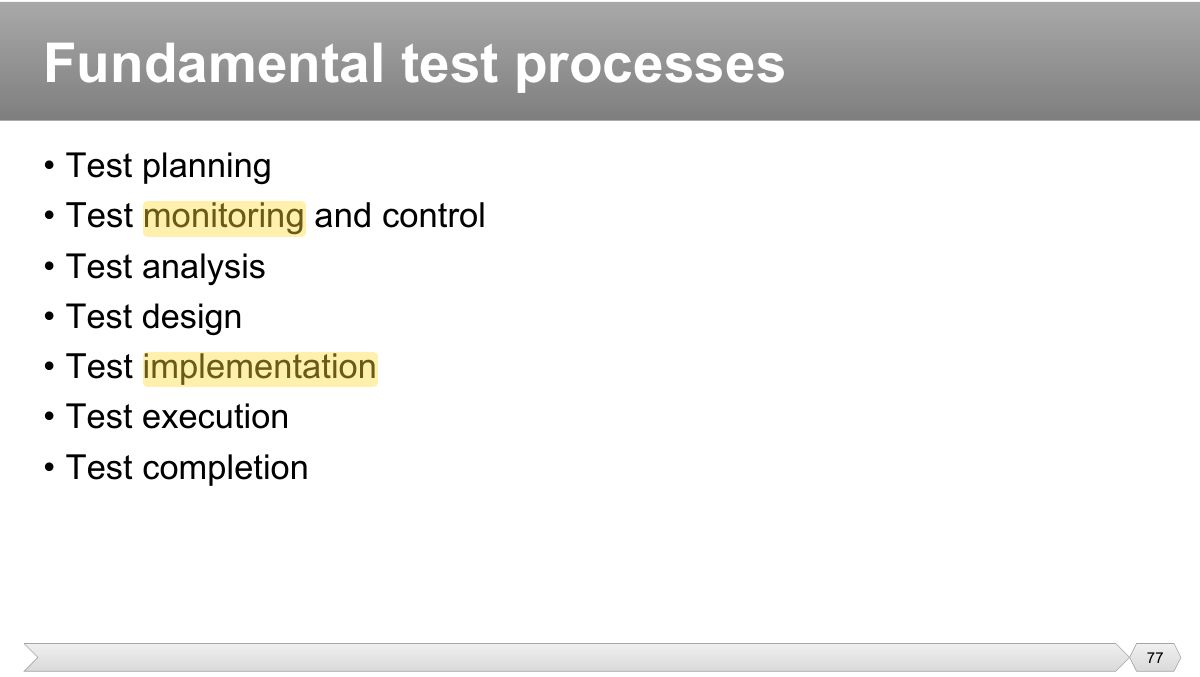
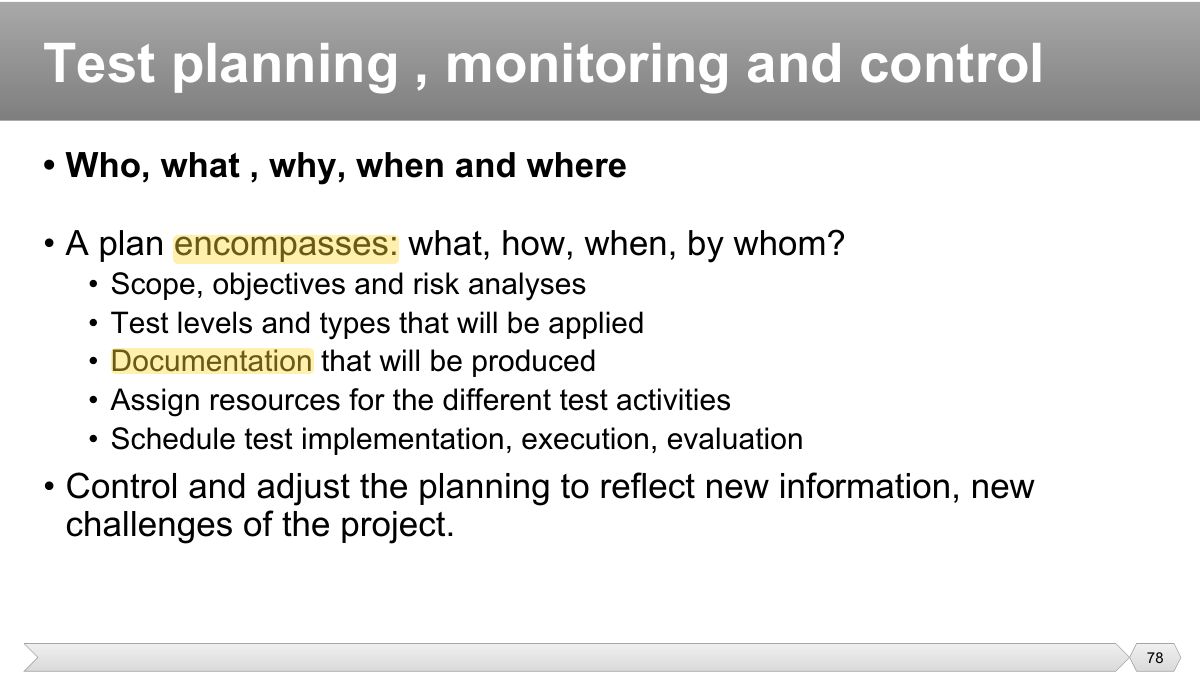
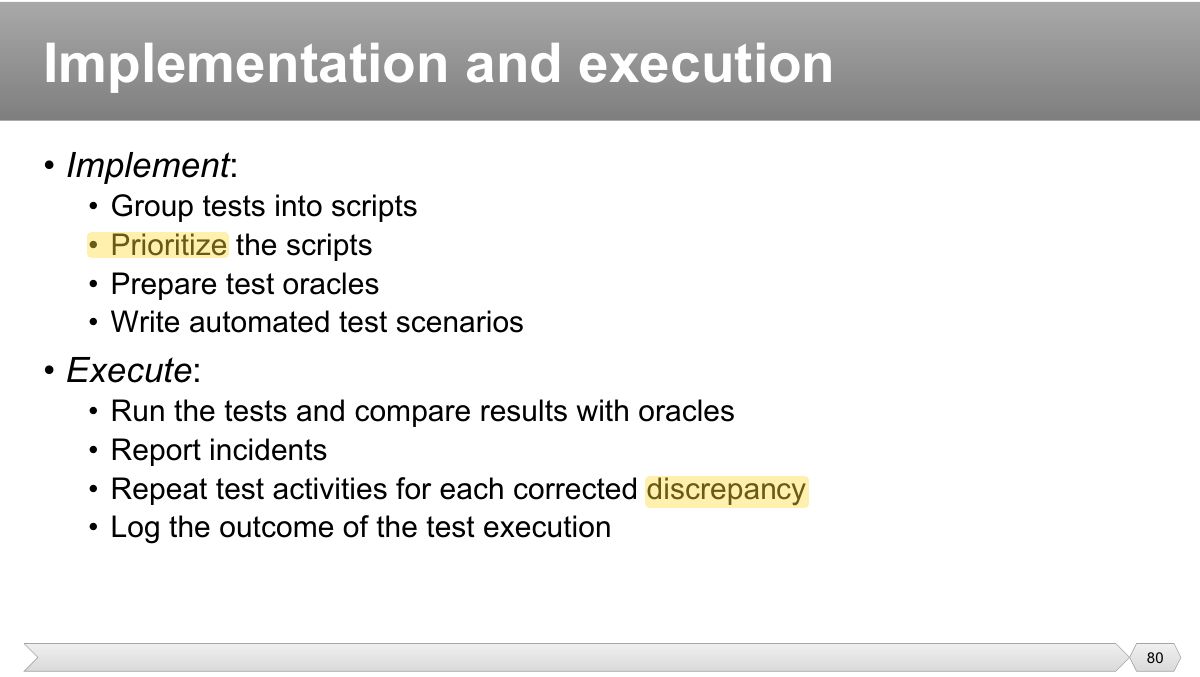
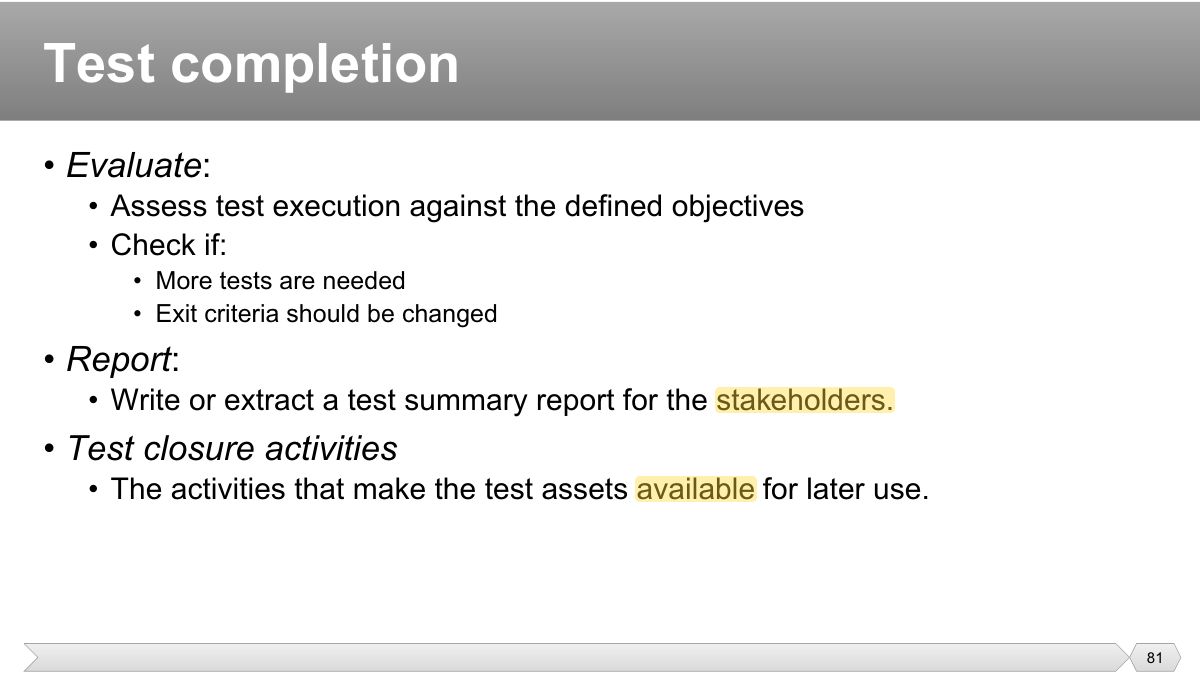
- Fundamental test process: planning and control → analysis and design → implementation and execution → evaluating exit criteria and reporting → test closure.
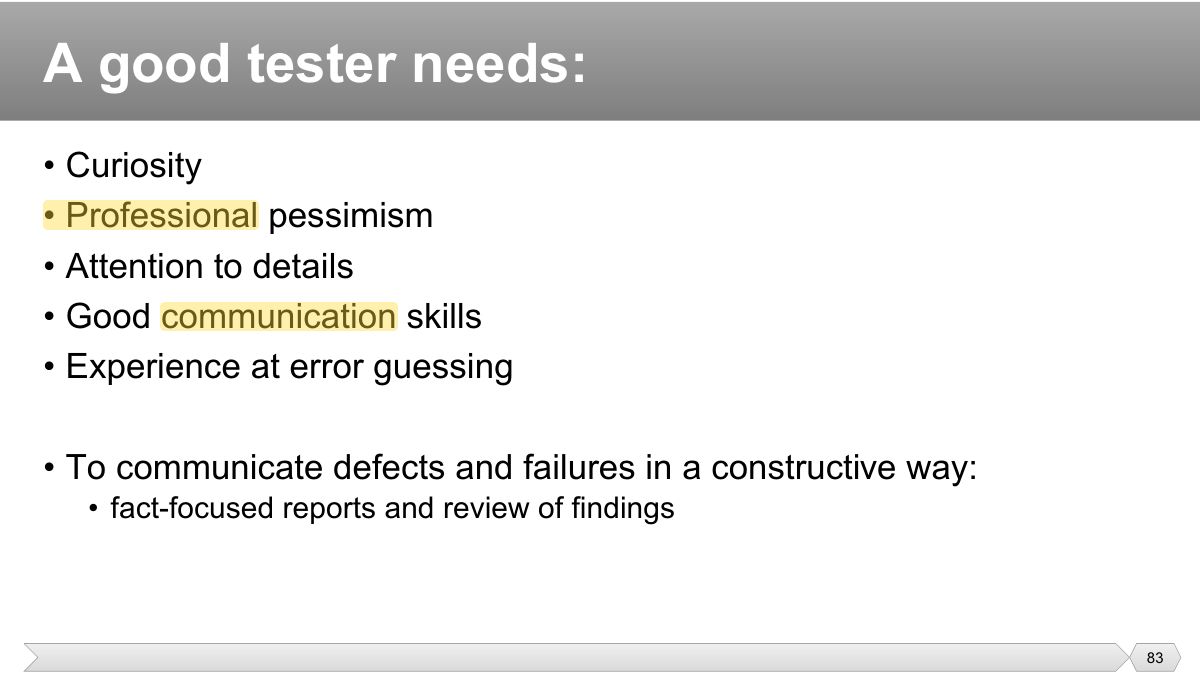
- Psychology: testers need curiosity, professional pessimism, attention to detail, good communication; report defects objectively.
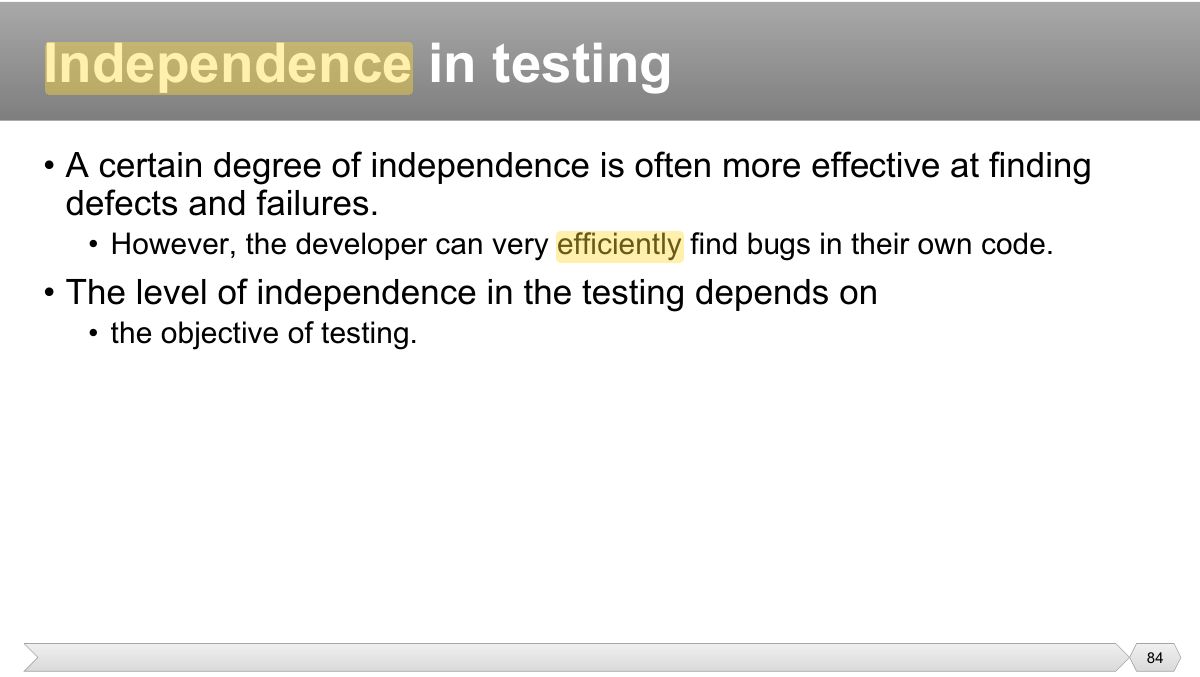
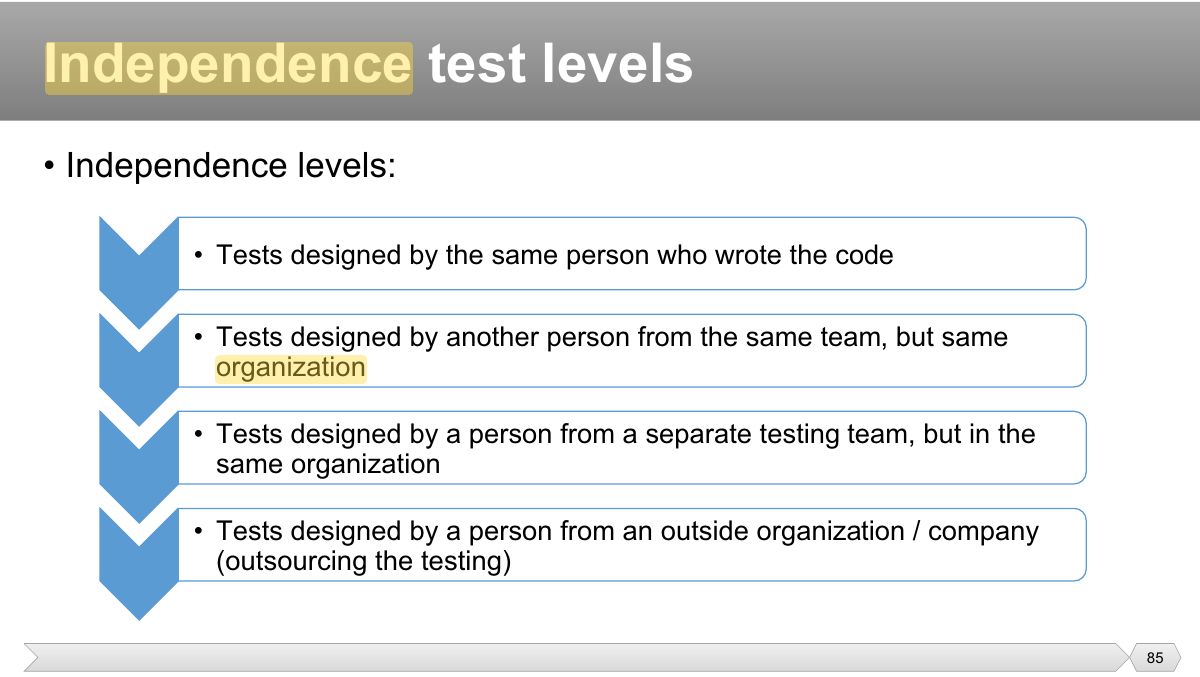
- Independence levels: the author tests their own code → another developer → an independent test team → outside organization. More independence finds different defects.
- "Program testing can be used to show the presence of bugs, but never to show their absence." (Dijkstra)
No slides match this filter.