SE365 · Annotated SlidesLecture 12 — DECIDE, Usability Testing and Experiments
Lecture 12 · Annotated slides

DECIDE, Usability Testing and Experiments

The DECIDE framework, usability testing (labs, portable and remote testing, eye tracking, data types, how many participants), experiments and experimental design (different, same or matched participants), and field studies.
Slide text Study notes Highlight: key words Tips, tricks & traps Seen again elsewhere How it can come up
Slide 1: Slide 1
Exam weight Low

    Overview

    • DECIDE framework
    • Usability testing
    • Basic experimental design
    • Field studies Based on material from: Sharp, H., Preece, J. and Rogers, Y. (2019). Interaction Design Beyond Human-Computer Interaction. 5th Ed. Sussex: John Wiley & Sons Ltd.
    2
    Exam weight Low

      Learning Outcomes

      • Explain the DECIDE framework
      • Explain how to do usability testing
      • Outline the basics of experimental design
      • Describe how to do field studies
      3
      Exam weight Low
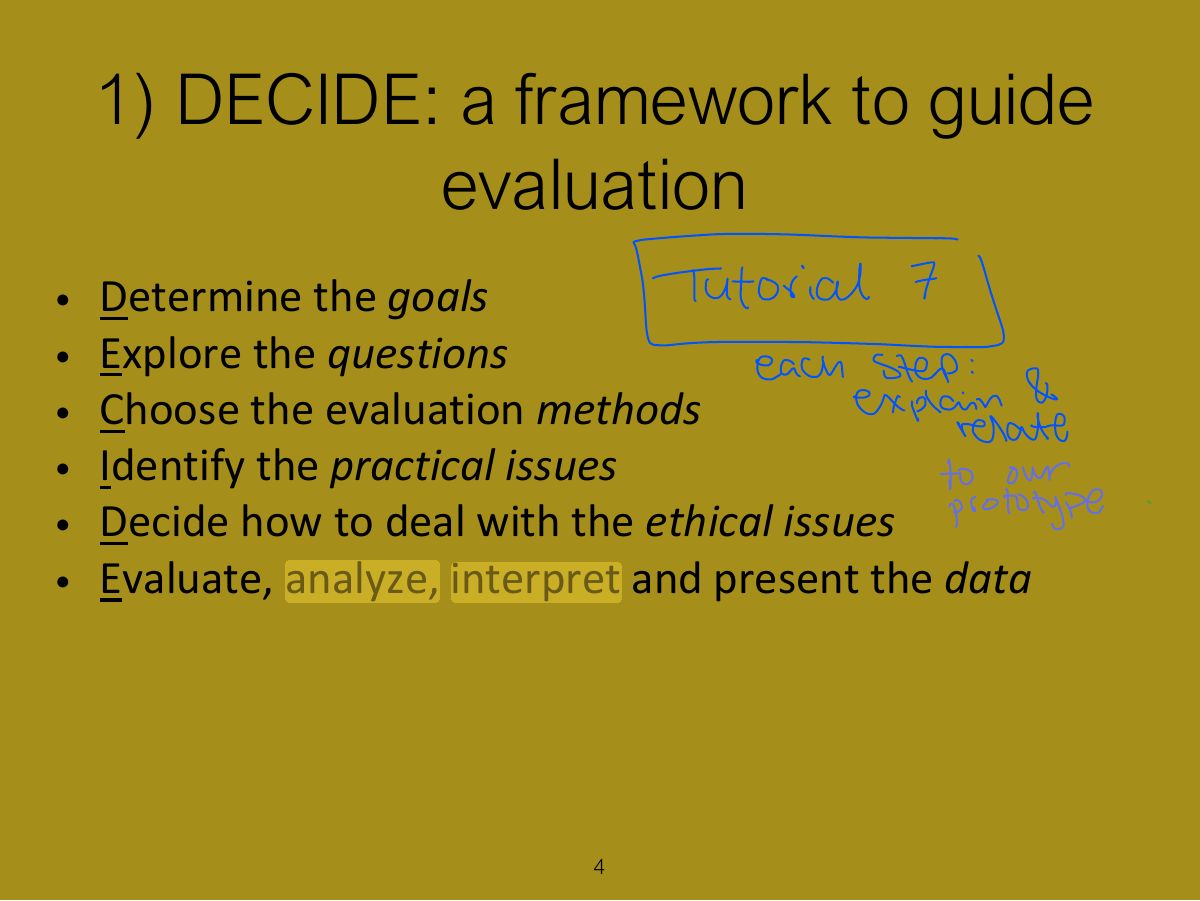
        Slide 4: 1) DECIDE: a framework to guide evaluation
        Exam weight High
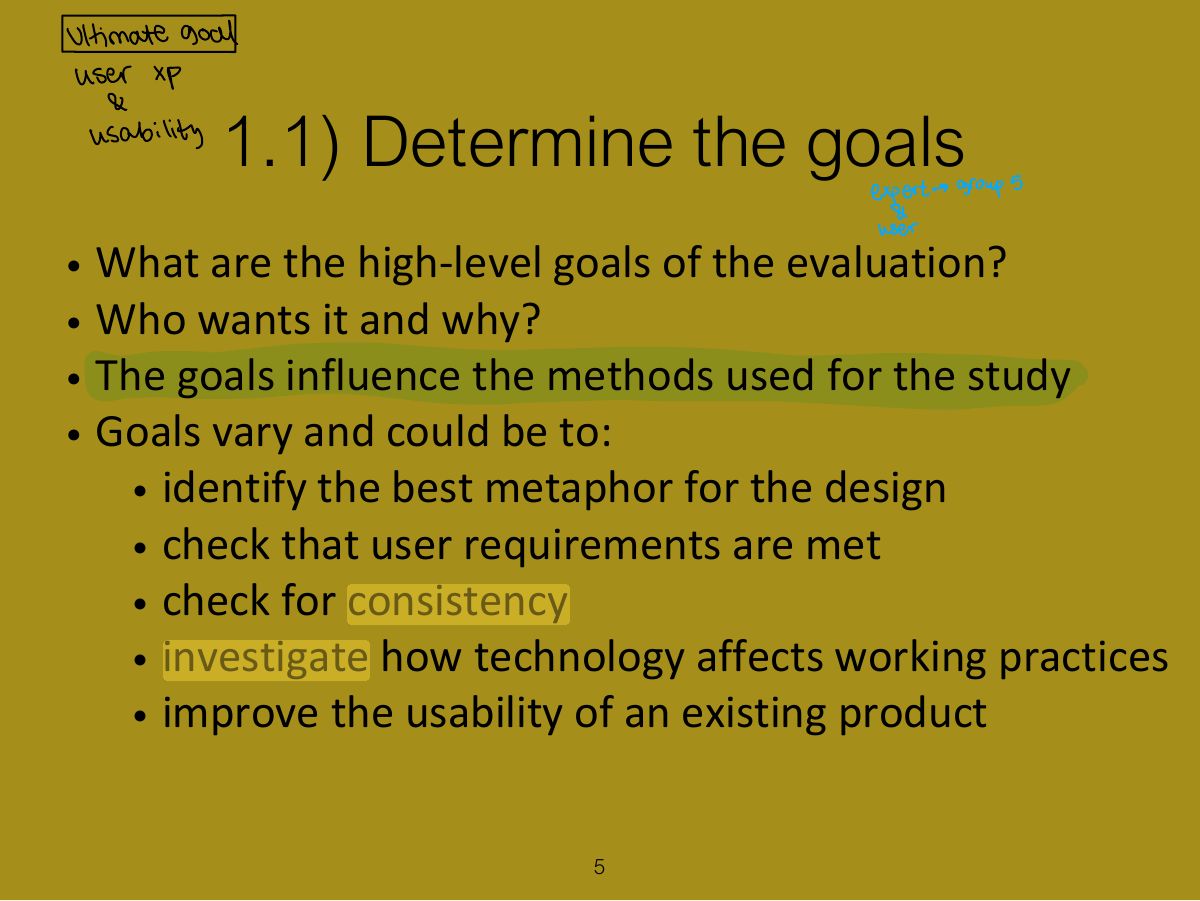
        1. DECIDE: Determine the goals, Explore the questions, Choose the approach and methods, Identify practical issues, Decide about ethical issues, Evaluate, interpret and present the data.
        TipDECIDE: Determine the goals, Explore the questions, Choose the approach and methods, Identify practical issues, Decide about ethical issues, Evaluate, interpret and present the data.
        🎯 How this can come up · 1 question
        MCQ

        In DECIDE, the "I" stands for:

        Slide 5: 1.1) Determine the goals
        Exam weight Low
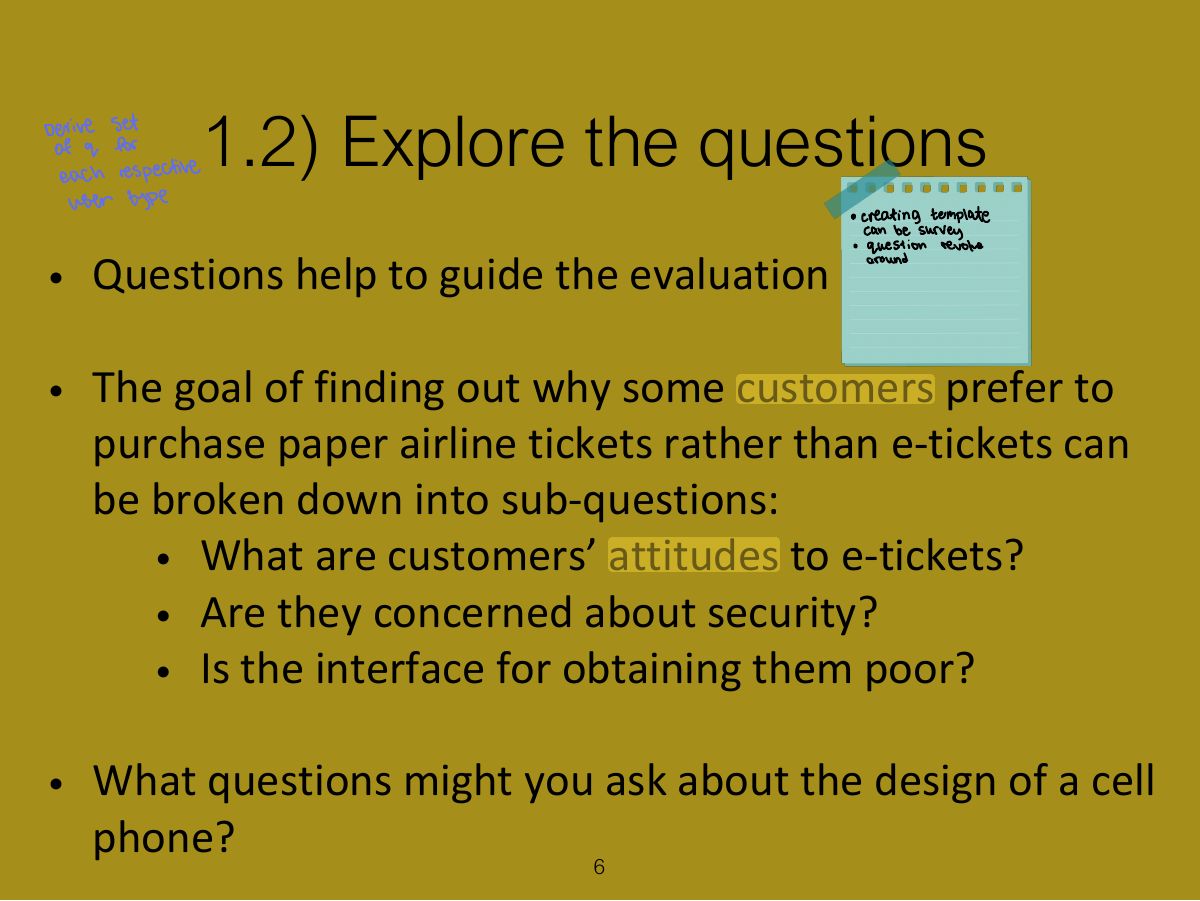
          Slide 6: 1.2) Explore the questions
          Exam weight Low
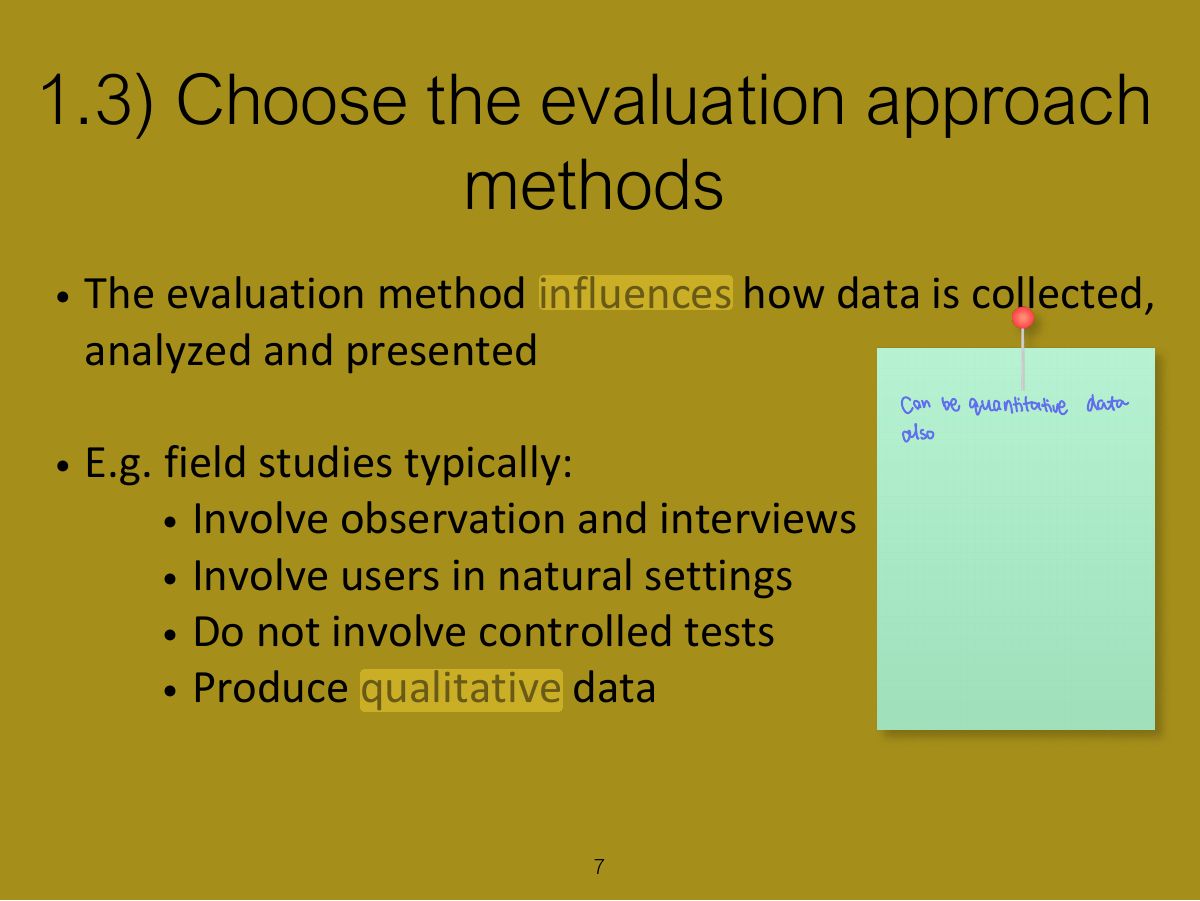
            Slide 7: 1.3) Choose the evaluation approach methods
            Exam weight Low
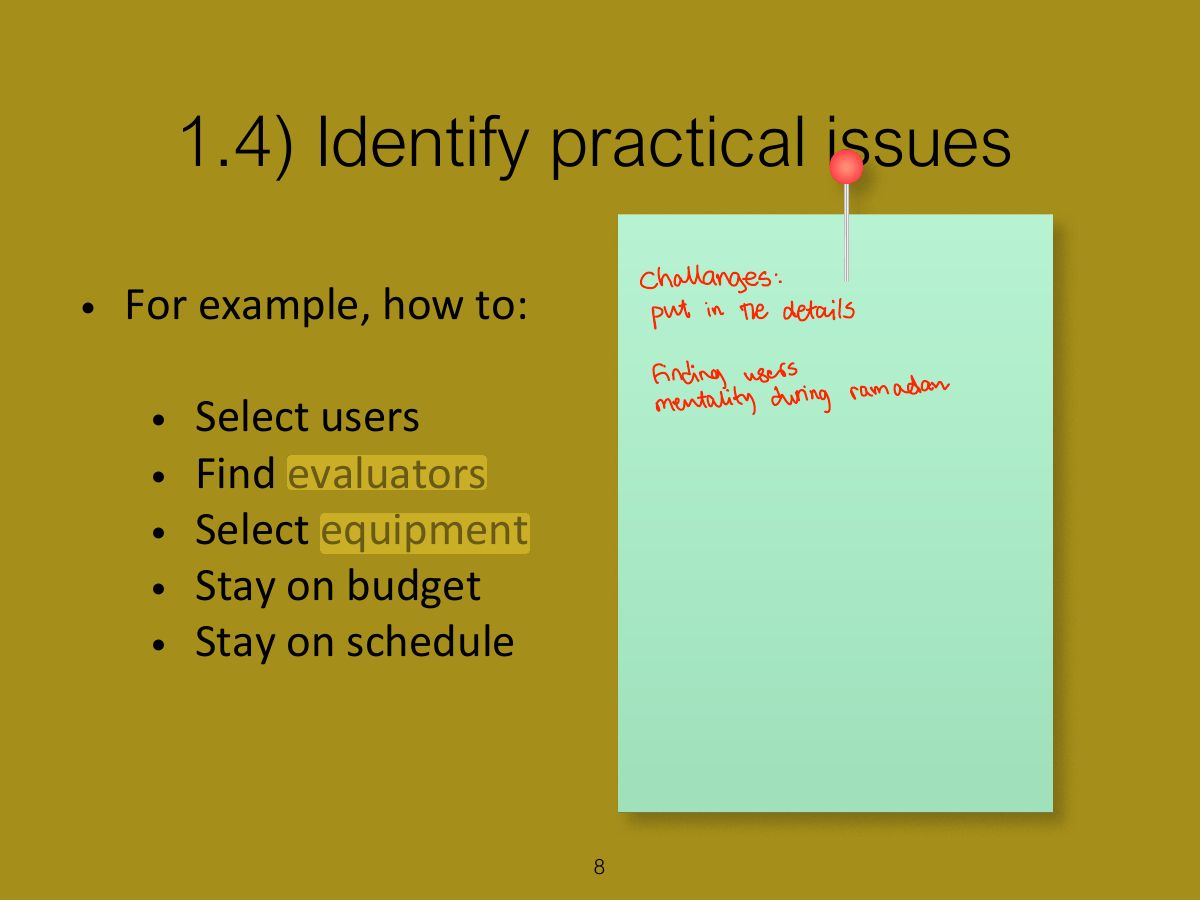
              Slide 8: Slide 8
              Exam weight Low
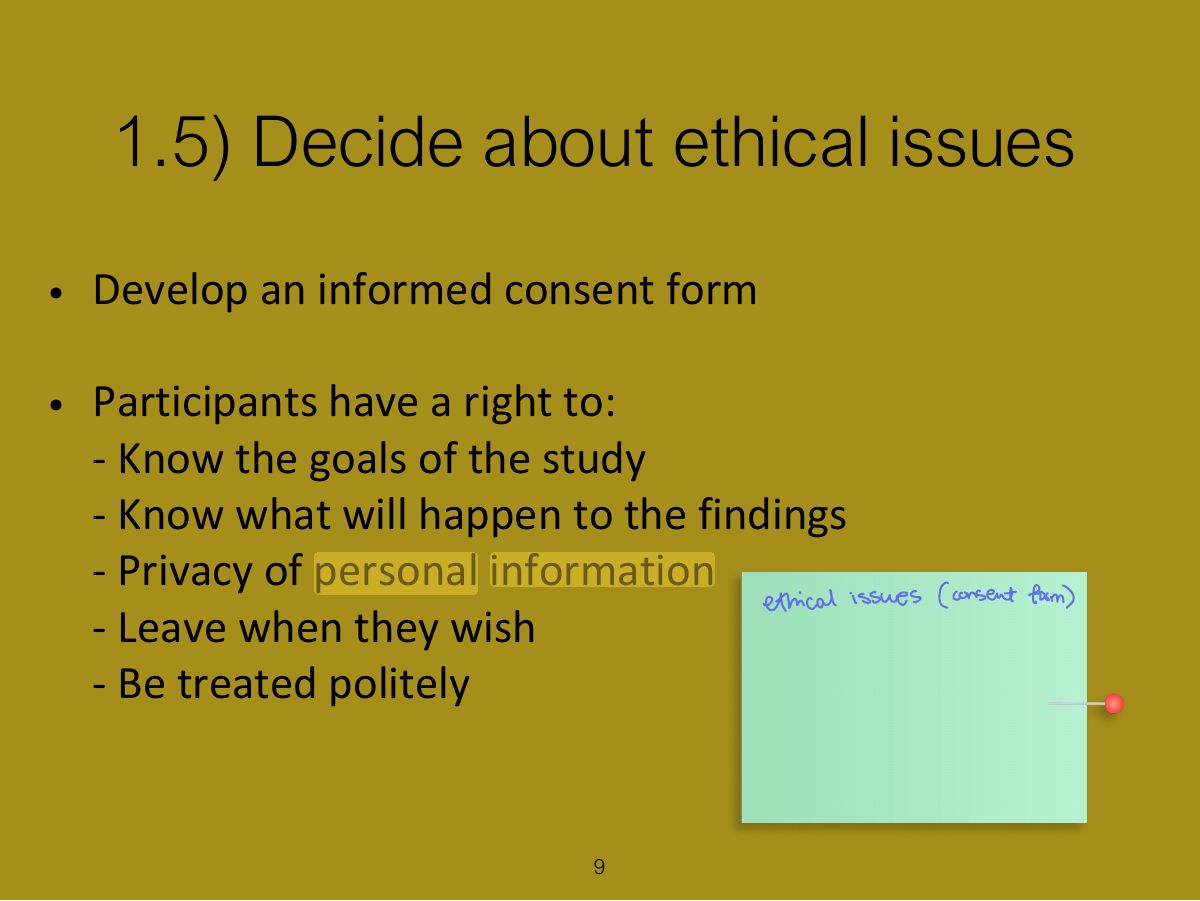
                Slide 9: 1.5) Decide about ethical issues
                Exam weight Low
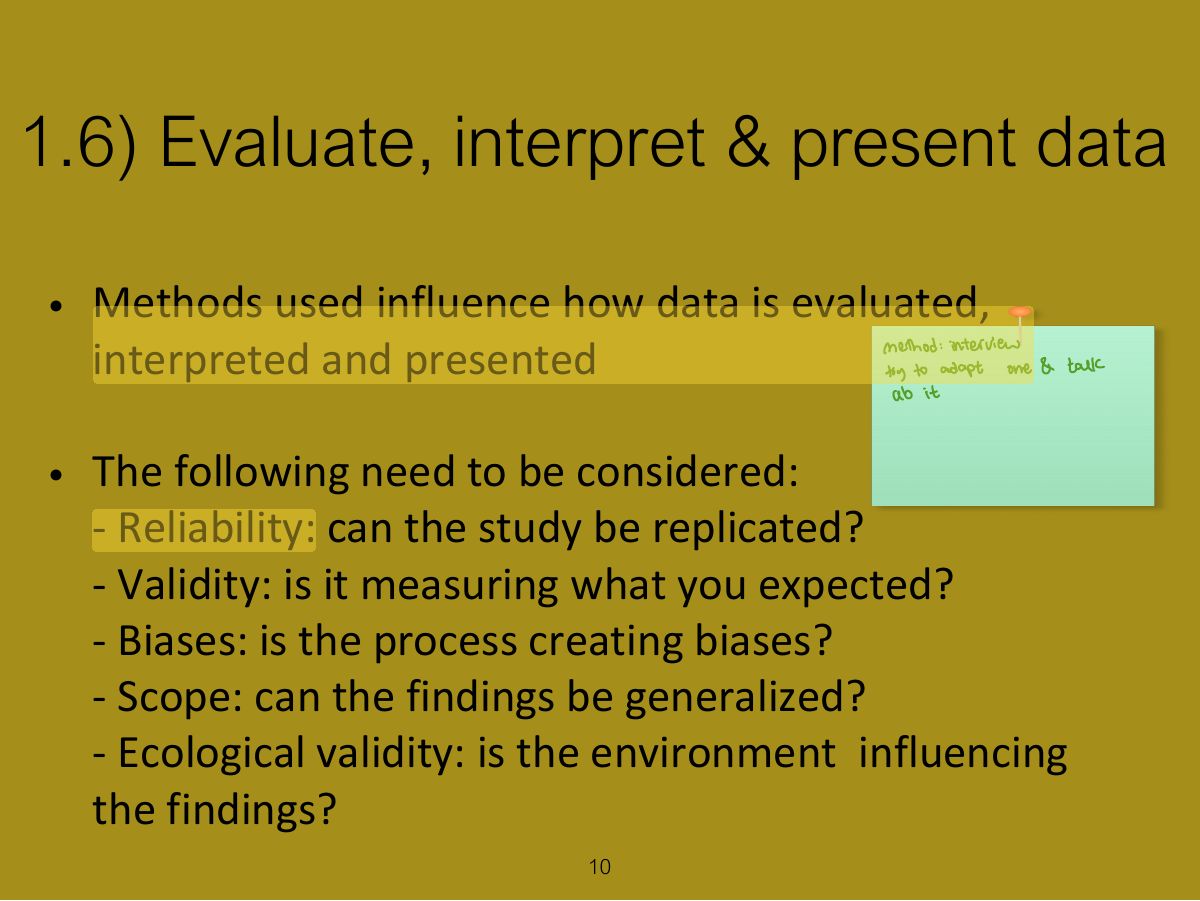
                  Slide 10: 1.6) Evaluate, interpret & present data
                  Exam weight Low
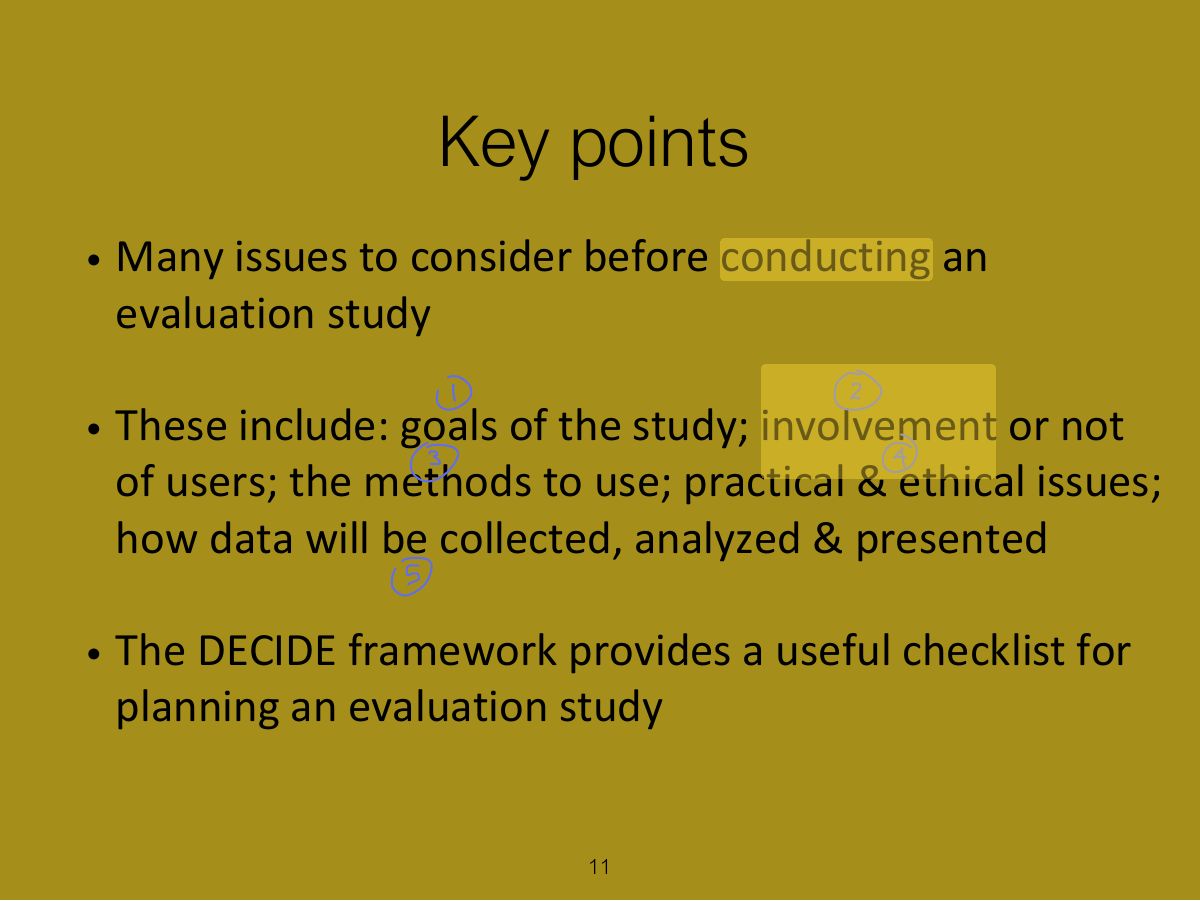
                    Slide 11: Key points
                    Exam weight Low

                      2. Usability testing

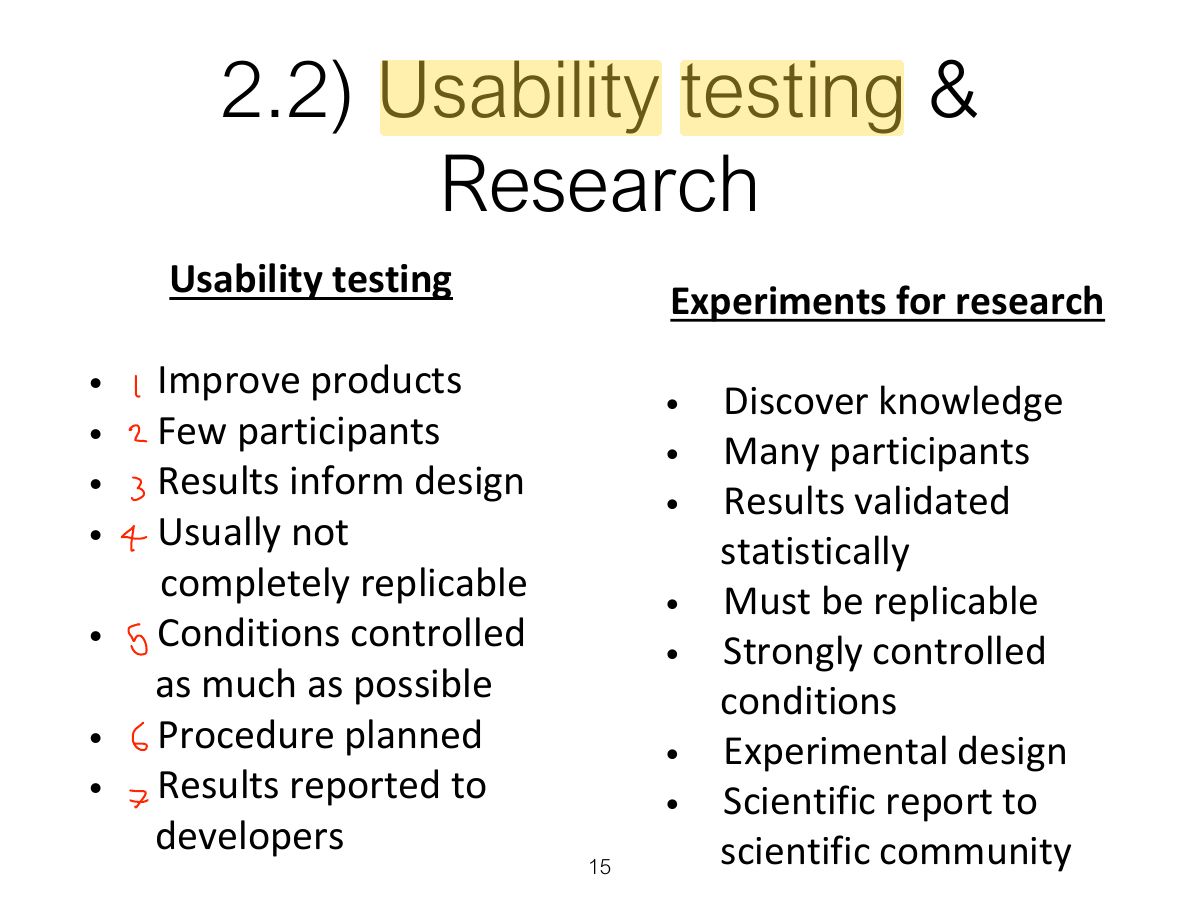
                      • Involves recording performance of typical users doing typical tasks
                      • Controlled settings
                      • Users are observed and timed
                      • Data is recorded on video & key presses are logged
                      • The data is used to calculate performance times, and to identify & explain errors
                      • User satisfaction is evaluated using questionnaires & interviews
                      • Field observations may be used to provide contextual understanding
                      12
                      Exam weight Low
                      1. Usability testing: measure users’ performance on typical tasks in controlled conditions (time, errors, satisfaction, think-aloud).

                      2. Usability testing (cont)

                      • Goals & questions focus on how well users perform tasks with the product
                      • Comparison of products or prototypes common
                      • Focus is on time to complete task & number & type of errors
                      • Data collected by video & interaction logging.
                      • Testing is central
                      • User satisfaction questionnaires & interviews provide data about users’ opinions
                      13
                      Exam weight Low

                        2.1) Experiment & Usability testing

                        • Experiments test hypotheses to discover new knowledge by investigating the relationship between two or more things – i.e., variables
                        • Usability testing is applied experimentation
                        • Developers check that the system is usable by the intended user population for their tasks
                        • Experiments may also be done in usability testing
                        14
                        Exam weight Low
                          Slide 15: 2.2) Usability testing & Research
                          Exam weight Low
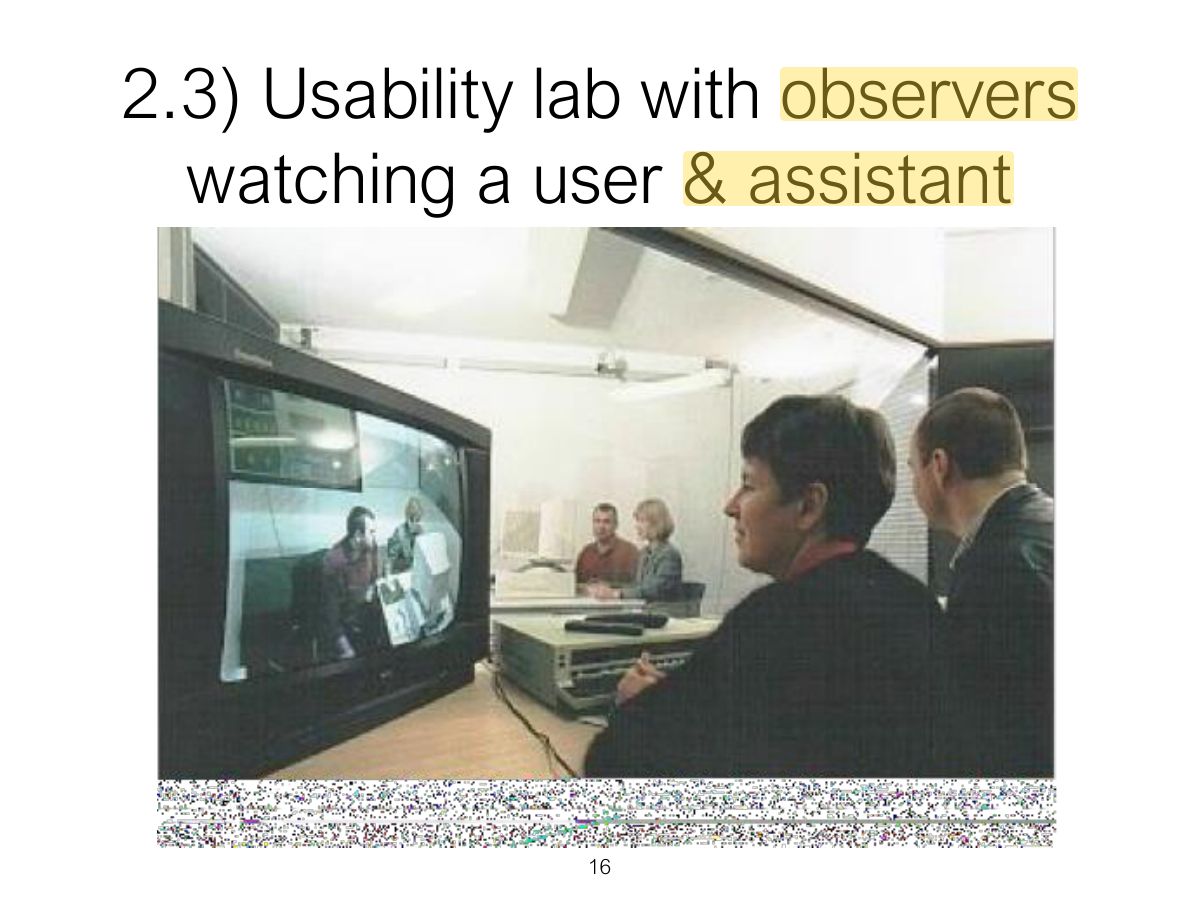
                            Slide 16: 2.3) Usability lab with observers watching a user & assistant
                            Exam weight Low
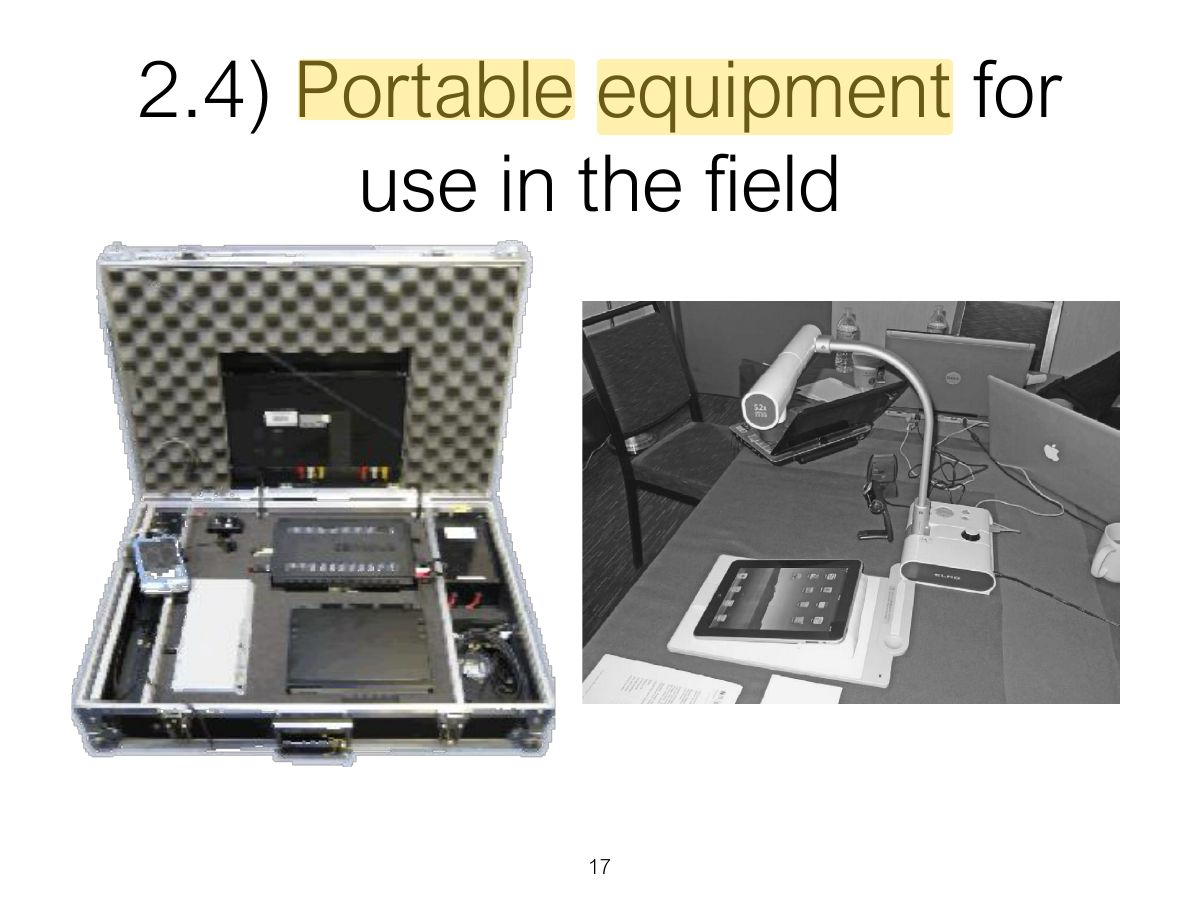
                              Slide 17: 2.4) Portable equipment for use in the field
                              Exam weight Low
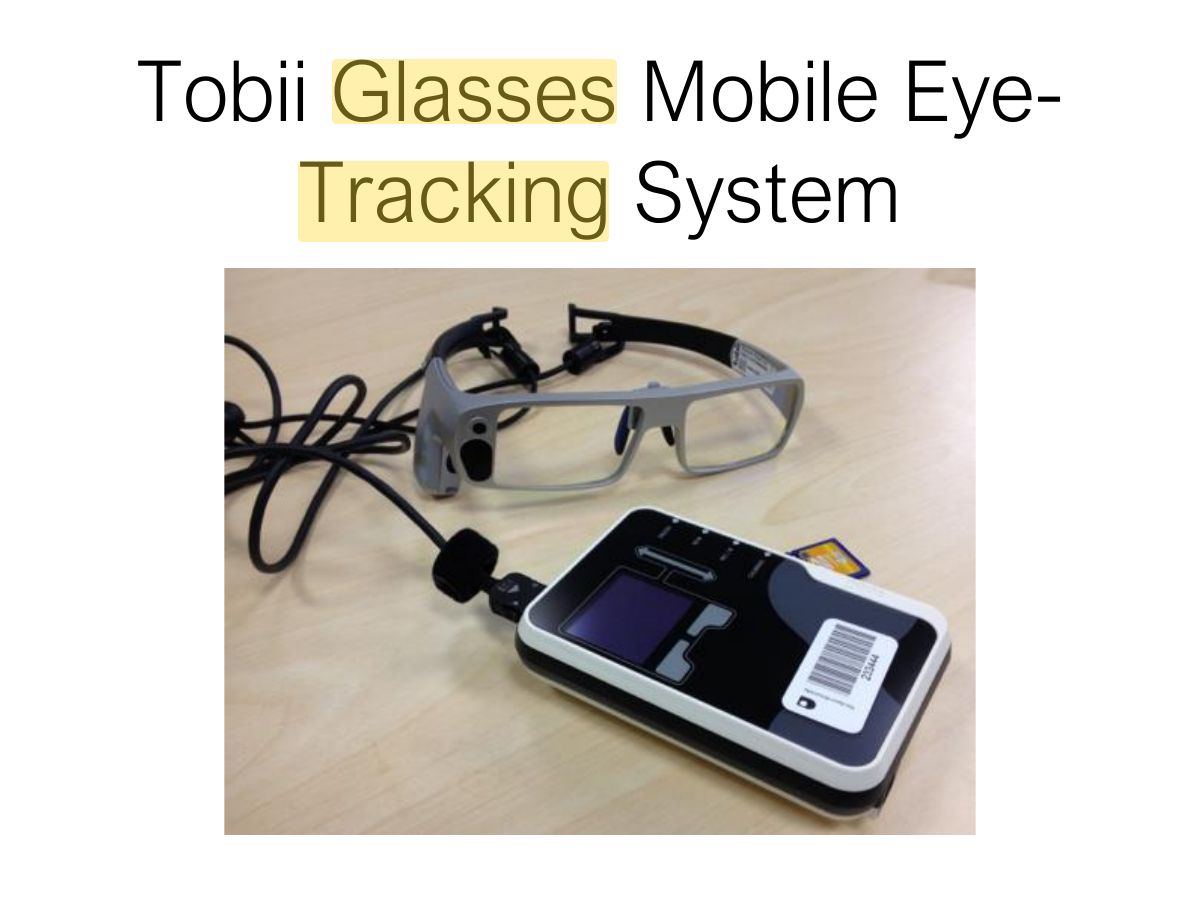
                                Slide 18: Tobii Glasses Mobile Eye- Tracking System
                                Exam weight Low
                                1. Eye tracking shows where users look (heat maps, gaze plots).
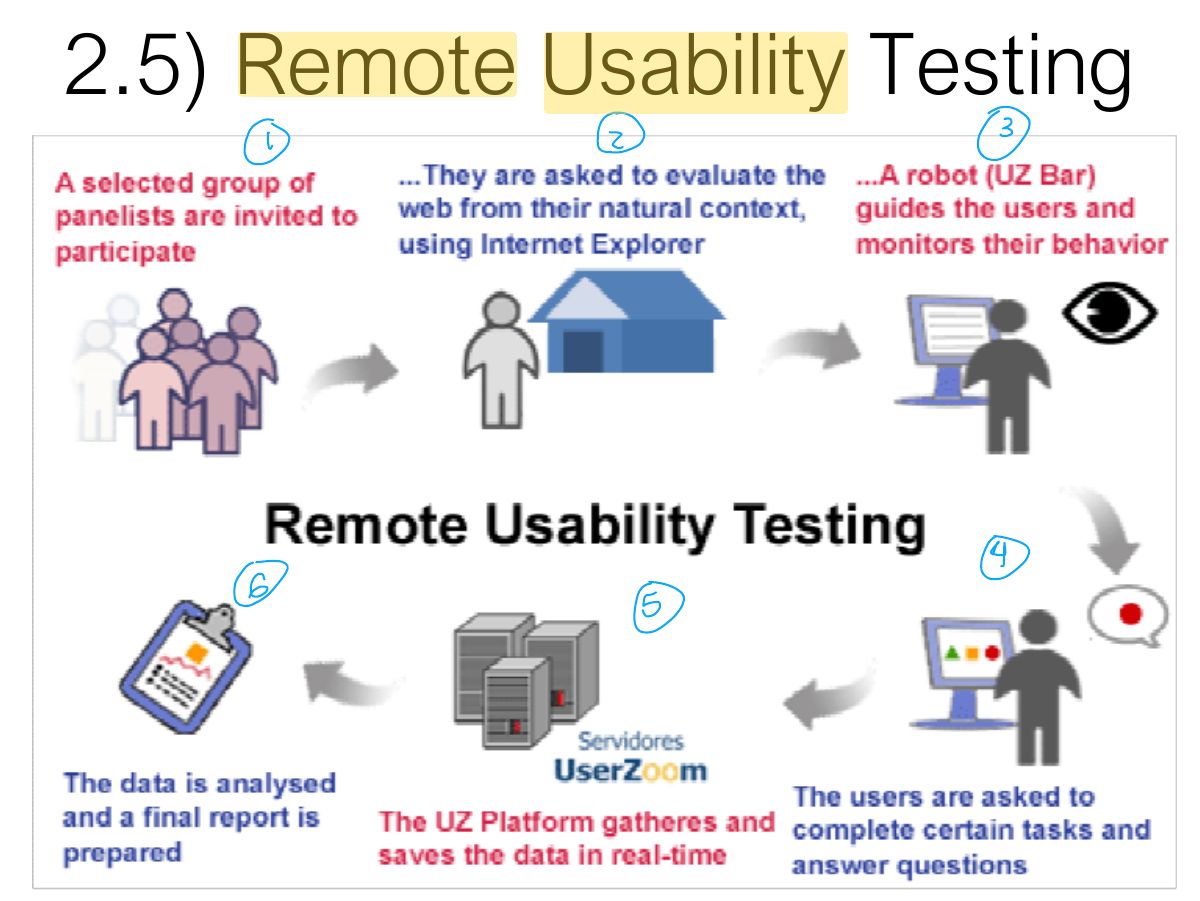
                                Slide 19: 2.5) Remote Usability Testing
                                Exam weight Low
                                1. Remote usability testing: users test from their own location; recorded online.

                                2.5) Testing conditions

                                • Usability lab or other controlled space
                                • Emphasis on:
                                  • selecting representative users
                                  • developing representative tasks
                                • 5-10 users typically selected
                                • Tasks usually last no more than 30 minutes
                                • The test conditions should be the same for every participant
                                • Informed consent form explains procedures and deals with ethical issues
                                20
                                Exam weight Low

                                  2.6) Some type of data

                                  • Time to complete a task
                                  • Time to complete a task after a specified. time away from the product
                                  • Number and type of errors per task
                                  • Number of errors per unit of time
                                  • Number of navigations to online help or manuals
                                  • Number of users making a particular error
                                  • Number of users completing task successfully
                                  21
                                  Exam weight Low

                                    2.7) How many participants is enough for user testing?

                                    • The number is a practical issue
                                    • Depends on:
                                      • schedule for testing
                                      • availability of participants
                                      • cost of running tests
                                    • Typically 5-10 participants
                                    • Some experts argue that testing should continue until no new insights are gained
                                    22
                                    Exam weight High
                                    1. About 5–12 participants are often enough for a usability test (Nielsen: 5 users find most problems).
                                    🎯 How this can come up · 1 question
                                    MCQ

                                    According to Nielsen, about how many users find most usability problems in a test?

                                    3. Experiments

                                    • Test hypothesis
                                    • Predict the relationship between two or more variables
                                    • Independent variable is manipulated by the researcher
                                    • Dependent variable depends on the independent variable
                                    • Typical experimental designs have one or two independent variable
                                    • Validated statistically & replicable
                                    23
                                    Exam weight High
                                    1. Experiments test a hypothesis: independent variable (what you change) → dependent variable (what you measure).
                                    🎯 How this can come up · 1 question
                                    MCQ

                                    In an experiment comparing two menu designs on task time, the menu design is the:

                                    3.1 Experimental design

                                    • Different participants (between subjects) - single group of participants is allocated randomly to the experimental conditions
                                    • Same participants (within subjects) - all participants appear in both conditions
                                    • Matched participants (pairwise) - participants are matched in pairs, e.g., based on expertise, gender, etc
                                    24
                                    Exam weight Low

                                      3.2 Different, same, matched participant design

                                      25
                                      Exam weight High
                                      1. Designs: different participants (between-subjects: no order effects, needs more people), same participants (within-subjects: fewer people, order effects → counterbalance), matched participants.
                                      Exam trapWithin-subjects (same participants) designs suffer from ORDER effects; fix with counterbalancing.
                                      🎯 How this can come up · 1 question
                                      MCQ

                                      Each participant tries both designs. This is a:

                                      4. Field Studies

                                      • Field studies are done in natural settings.
                                      • “in the wild” is a term for prototypes being used freely in natural settings
                                      • Aim to understand what users do naturally and how technology impacts them
                                      • Field studies are used in product design to:
                                        • identify opportunities for new technology
                                        • determine design requirements
                                        • decide how best to introduce new technology
                                        • evaluate technology in use
                                      26
                                      Exam weight Low
                                      1. Field studies: observe real use in natural settings; less control, more realism.

                                      Key points

                                      • Usability testing takes place in controlled usability labs or temporary labs.
                                      • Usability testing focuses on performance measures, eg. how long and how many errors are made when completing a set of predefined tasks. Indirect observation (video and keystroke logging), user satisfaction questionnaires and interviews are also collected.
                                      • Affordable, remote testing systems are more portable than usability labs. Many also contain mobile eye-tracking and other devices.
                                      27
                                      Exam weight Low

                                        Key points

                                        • Experiments aim to test hypotheses by manipulating certain variables while keeping others constant.
                                        • The experimenter controls the independent variable(s) but not the dependent variable(s).
                                        • Field studies are evaluation studies that are carried out in natural settings to discover how people interact with technology in the real world.
                                        • Field studies that involve the deployment of prototypes or technologies in natural settings may also be referred to as ‘in the wild’ studies.
                                        • Sometimes the findings of a field study are unexpected, especially for in the wild studies that explore how novel technologies are used by participants in their own homes, places of work, or outside.
                                        28
                                        Exam weight Low