SE365 · Annotated SlidesLecture 3 — Emotional Interaction
Lecture 3 · Annotated slides

Emotional Interaction

Emotions and the user experience, the three levels of emotional design (visceral, behavioral, reflective), expressive and frustrating interfaces and error messages, affective computing and emotion detection, persuasive technologies, and anthropomorphism.
Slide text Study notes Highlight: key words Tips, tricks & traps Seen again elsewhere How it can come up
Slide 1: Slide 1
Exam weight Low

    Overview

    • Emotions and the user experience
    • Expressive and emotional design
    • Affective computing and emotional AI
    • Persuasive technologies and behavioral change
    • Anthropomorphism Based on material from: Sharp, H., Preece, J. and Rogers, Y.(2019). Interaction Design Beyond Human-Computer Interaction. 5th Ed. Sussex: John Wiley & Sons Ltd.
    2
    Exam weight Low

      Learning Outcomes

      • How emotion relate to the user experience
      • Provide examples of interfaces that are both pleasurable and usable
      • Describe how technologies can be designed to change people’s attitudes and behaviour
      3
      Exam weight Low
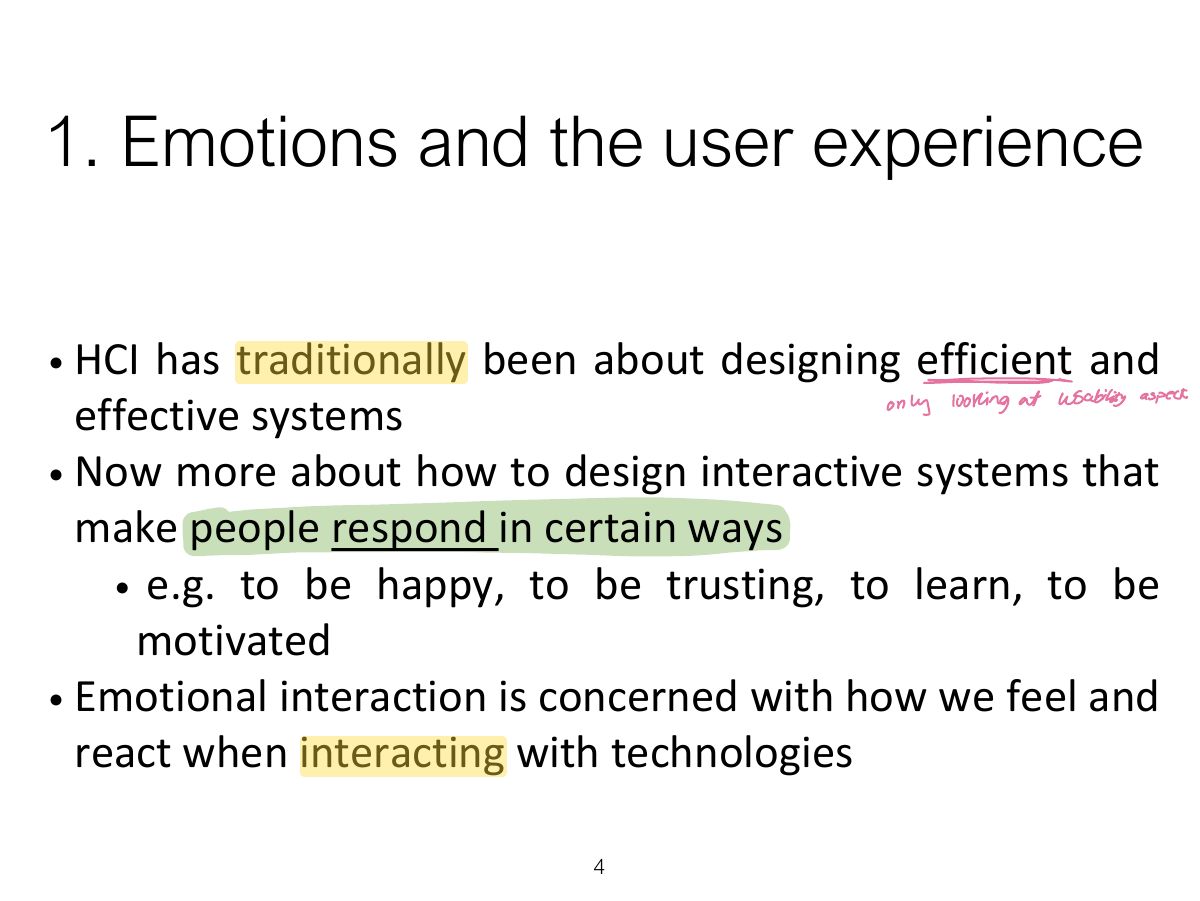
        Slide 4: 1. Emotions and the user experience
        Exam weight Low
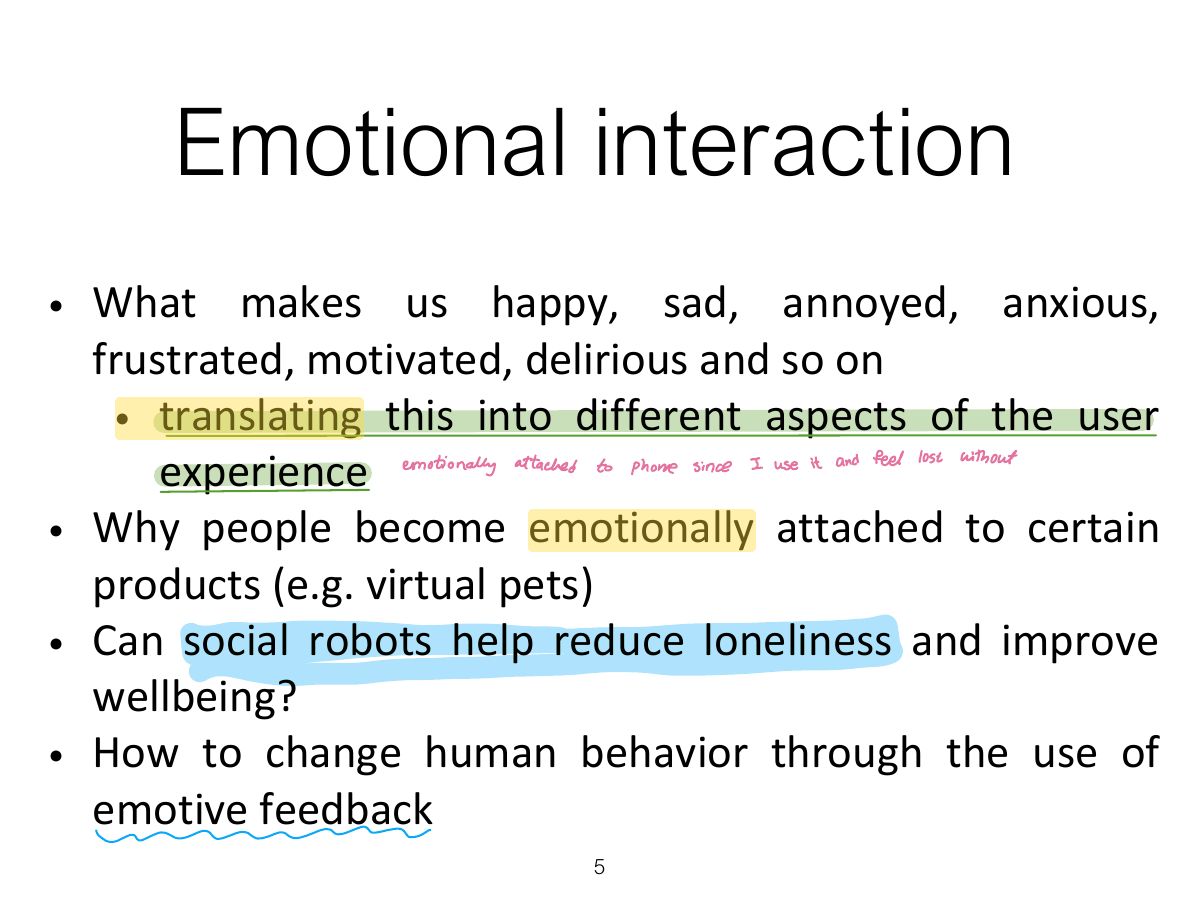
          Slide 5: Emotional interaction
          Exam weight Low
          1. Emotional interaction: what makes people feel happy, sad, annoyed, anxious, frustrated, and how that affects how they use a product.
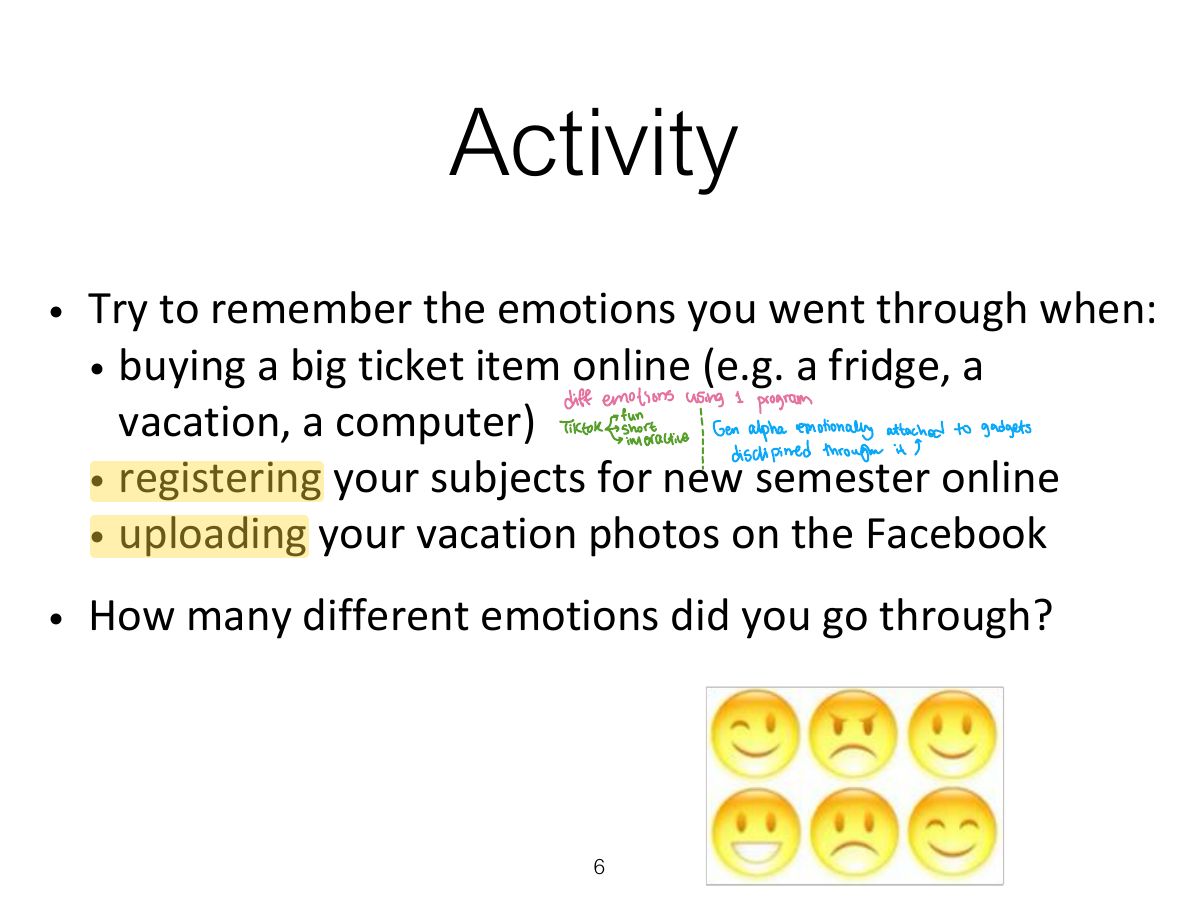
          Slide 6: Activity
          Exam weight Low
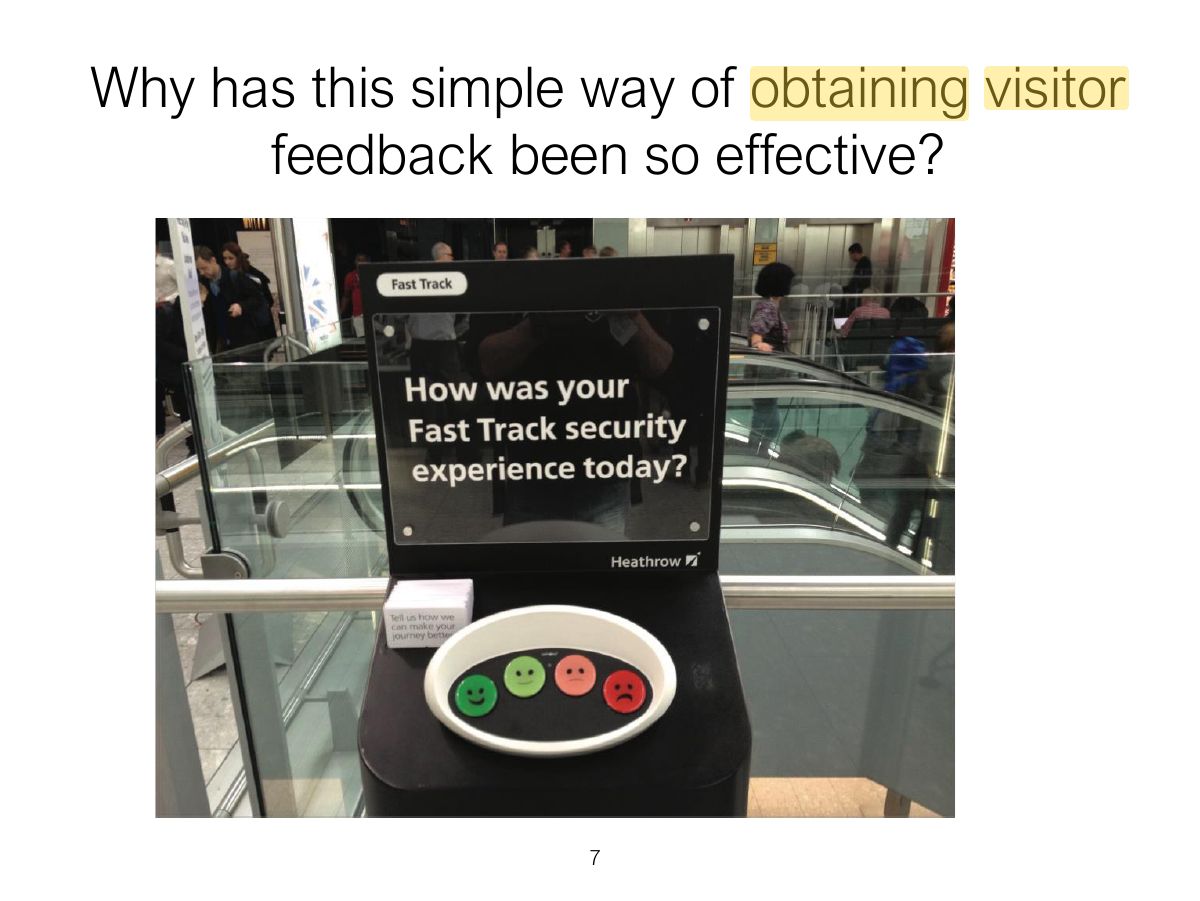
            Slide 7: Why has this simple way of obtaining visitor feedback been so effective?
            Exam weight Low
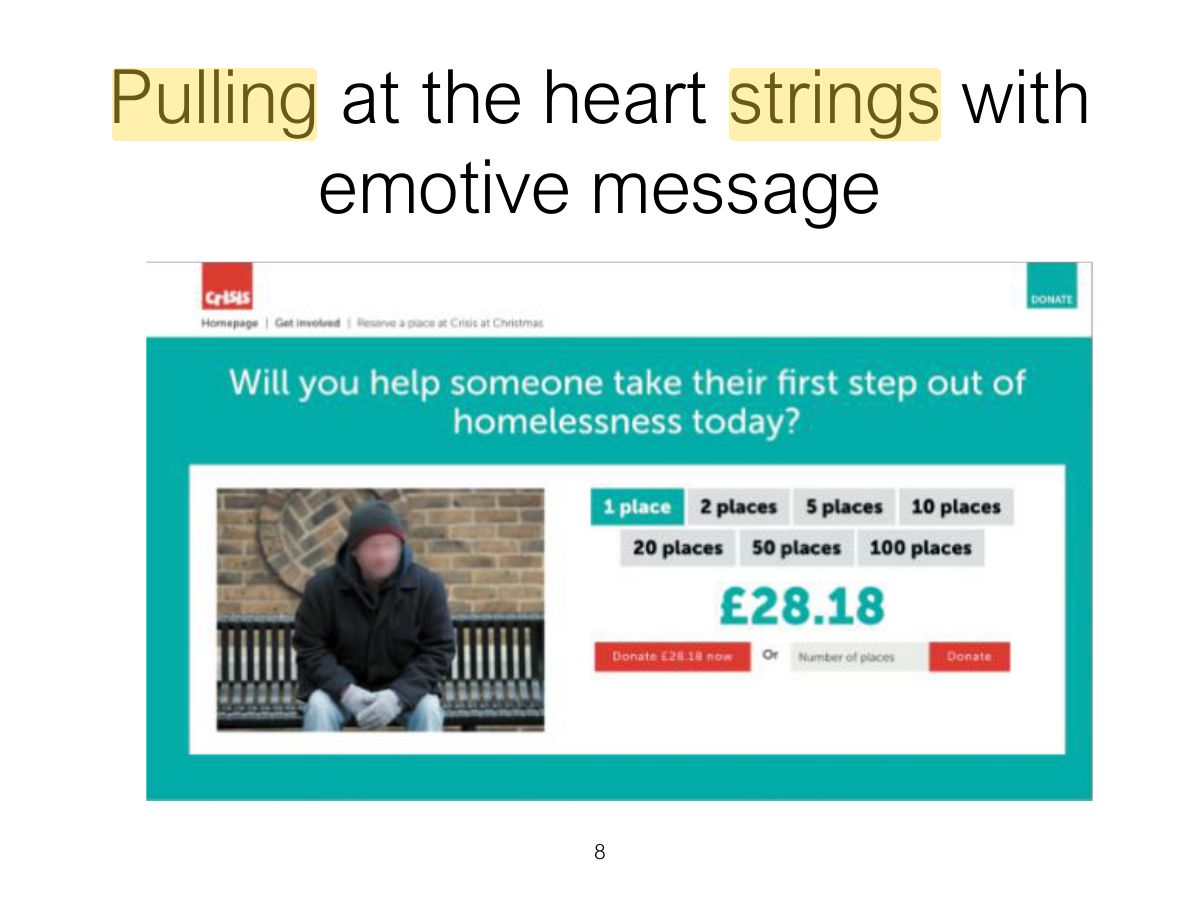
              Slide 8: Pulling at the heart strings with emotive message
              Exam weight Low

                How easy is it to design an interface to match or change how we are feeling?

                • Should an interface be designed to improve how we feel?
                  • If so how?
                • Our moods and feelings are continuously changing
                  • How does the interface keep track and know when to do something?
                • What moods match which kinds of interfaces?
                • How would you design an interface for when someone is happy, angry, sad, bored, focussed?
                9
                Exam weight Low

                  How do emotions affect behavior and behavior emotions?

                  • Examine how people express themselves and read each other (emotional intelligence)
                    • understand relationship between facial expressions, body language, gestures and tone of voice, e.g.
                    • when people are happy they laugh and relax body posture
                    • when they are angry they screw up their face
                  • Does being angry make you concentrate better or more distracted?
                  • When you are happy do you take more risks such as spend more money or buy more?
                  • Baumeister et al (2007) argue the relationship is more complex than a single cause-and-effect model
                  10
                  Exam weight Low
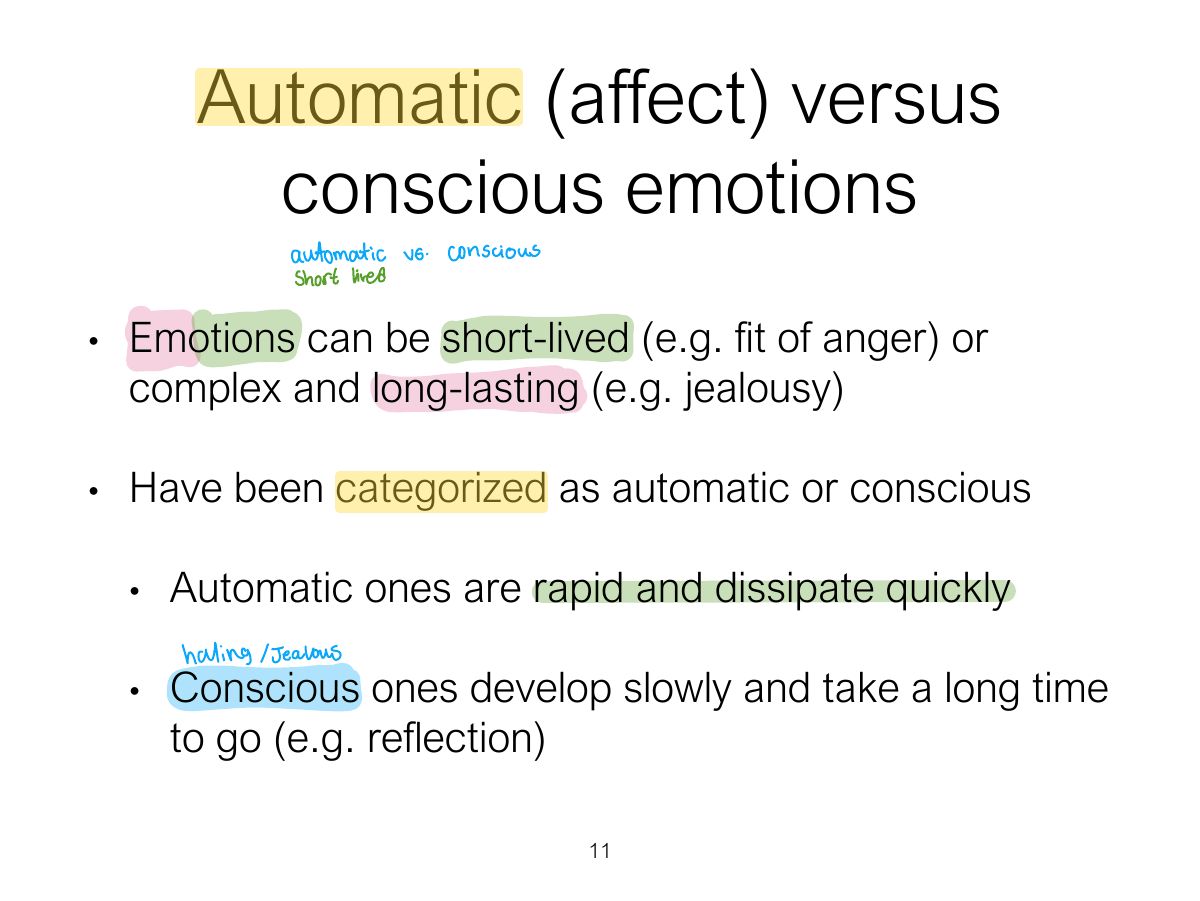
                    Slide 11: Automatic (affect) versus conscious emotions
                    Exam weight Low
                    1. Automatic (affect) responses are fast; conscious appraisal is slower and reflective.
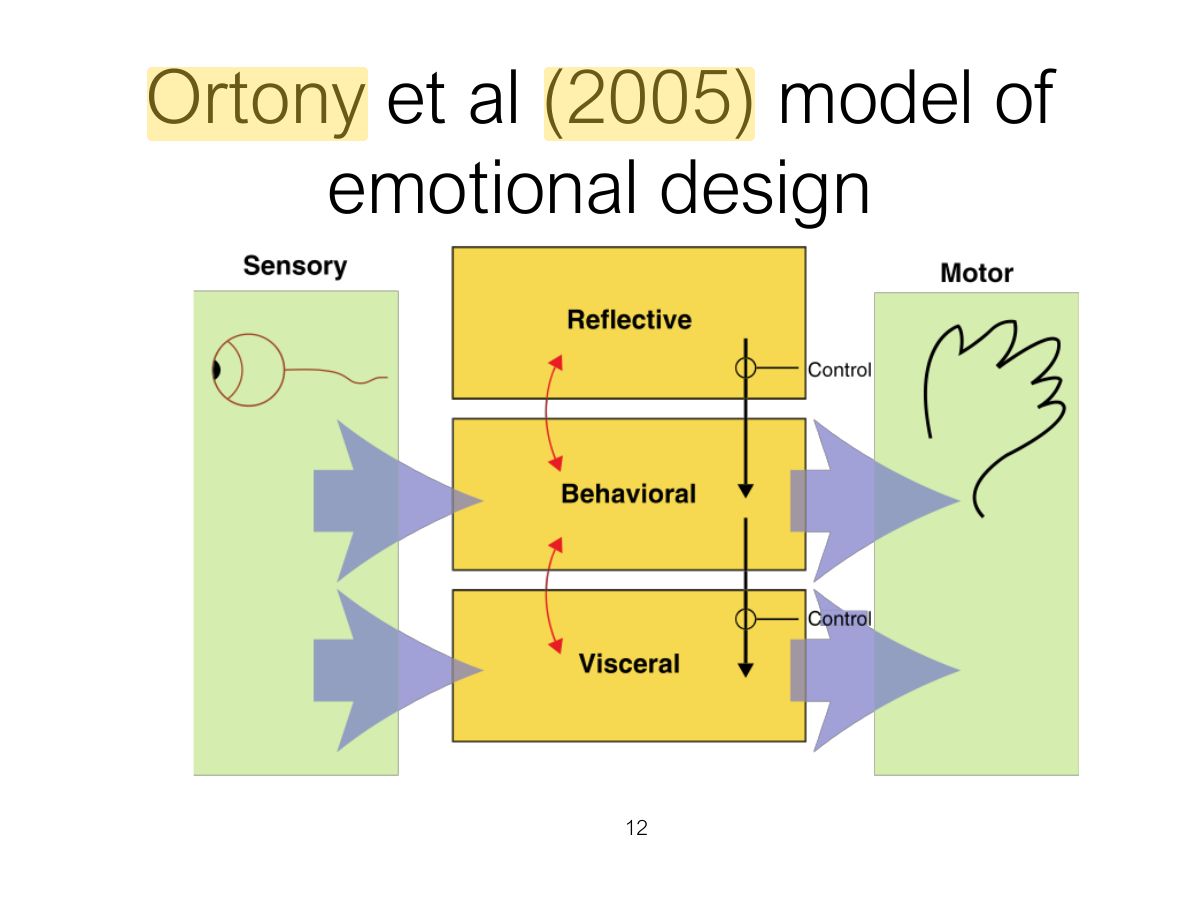
                    Slide 12: Ortony et al (2005) model of emotional design
                    Exam weight High
                    1. Norman / Ortony: three levels: VISCERAL (looks and feel), BEHAVIORAL (use: usability), REFLECTIVE (meaning, self-image, memories).
                    Memory trickVisceral = first look; Behavioral = while using; Reflective = afterwards, what it says about me.
                    🎯 How this can come up · 1 question
                    MCQ

                    Buying a watch because of what it says about your status is at which level?

                    Claims from model

                    • Our emotional state changes how we think
                      • when frightened or angry we focus narrowly and body responds by tensing muscles and sweating
                        • more likely to be less tolerant
                      • when happy we are less focused and the body relaxes
                      • More likely to overlook minor problems and be more creative
                    13
                    Exam weight Low
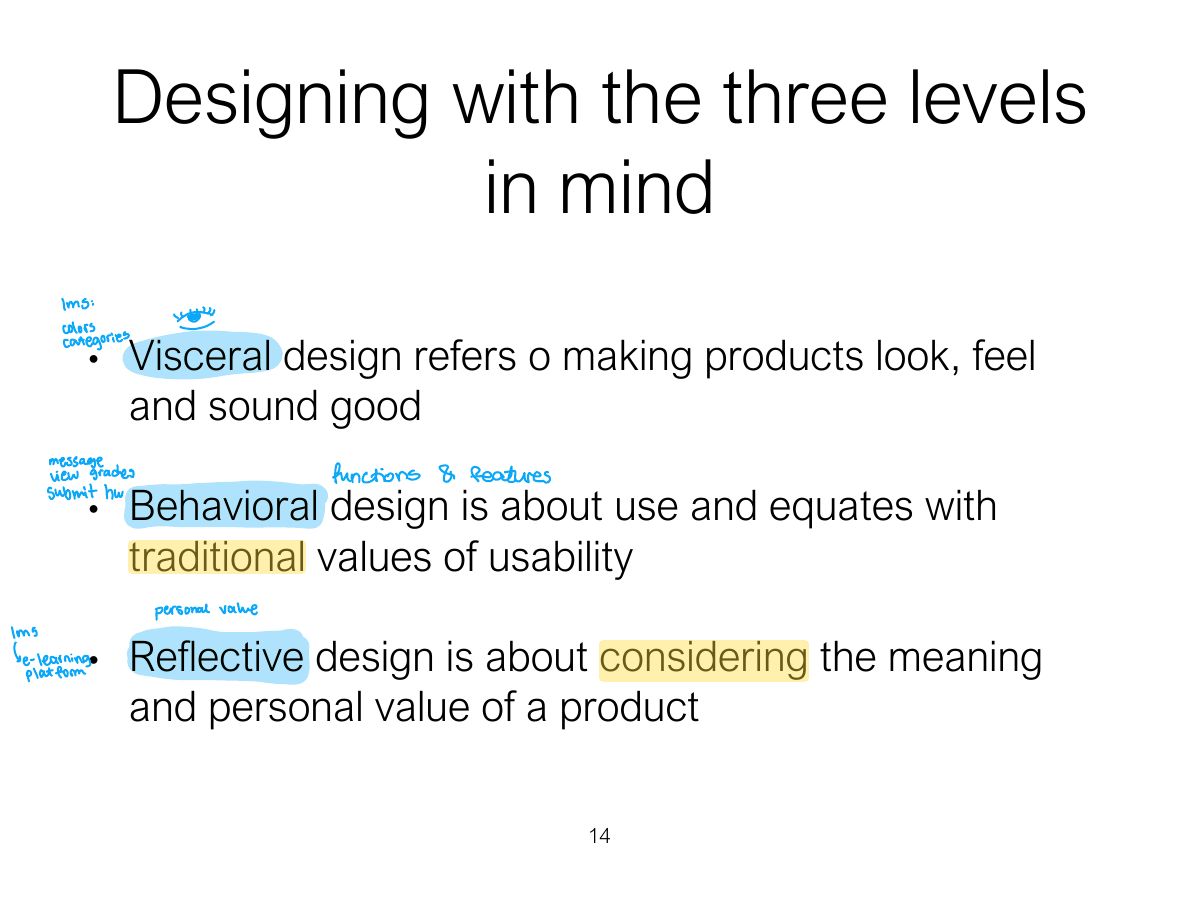
                      Slide 14: Designing with the three levels in mind
                      Exam weight Low
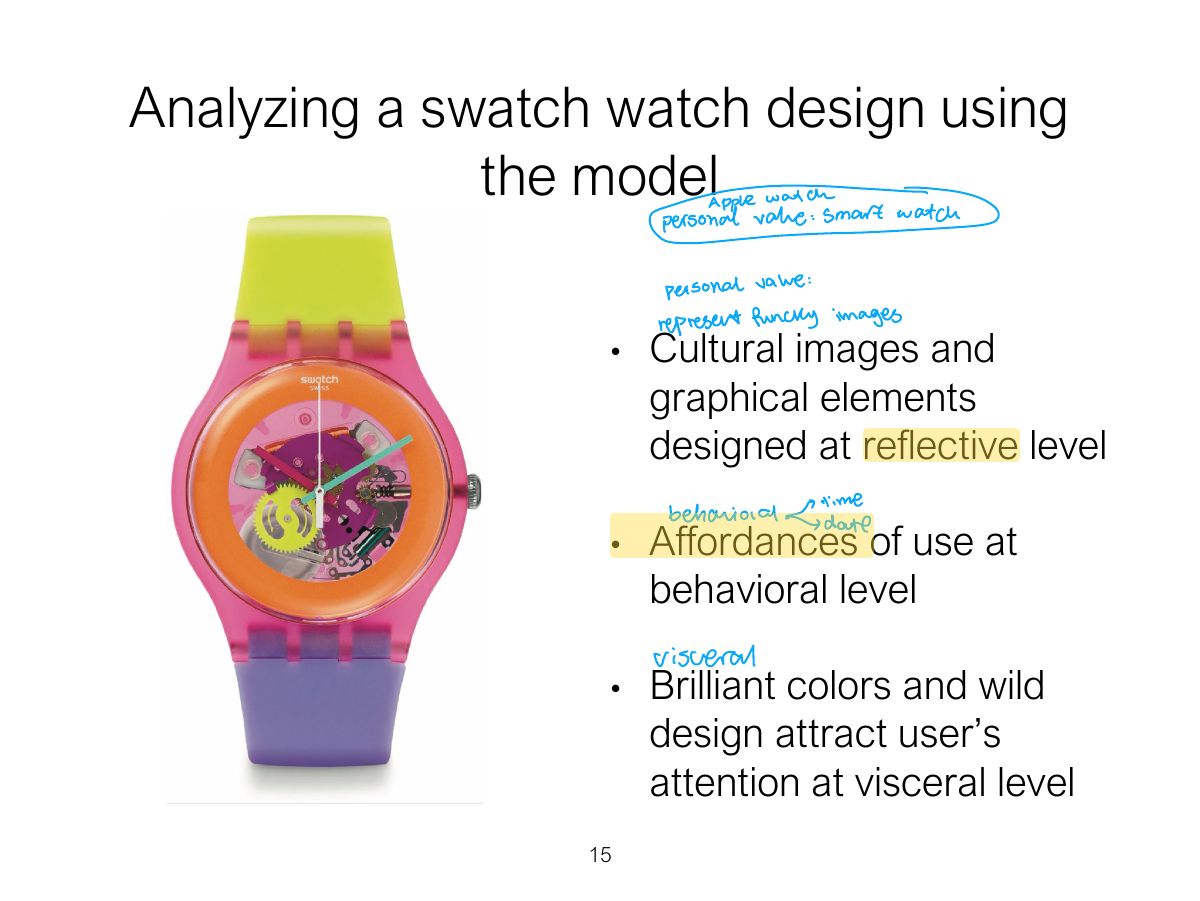
                        Slide 15: Analyzing a swatch watch design using the model
                        Exam weight Low
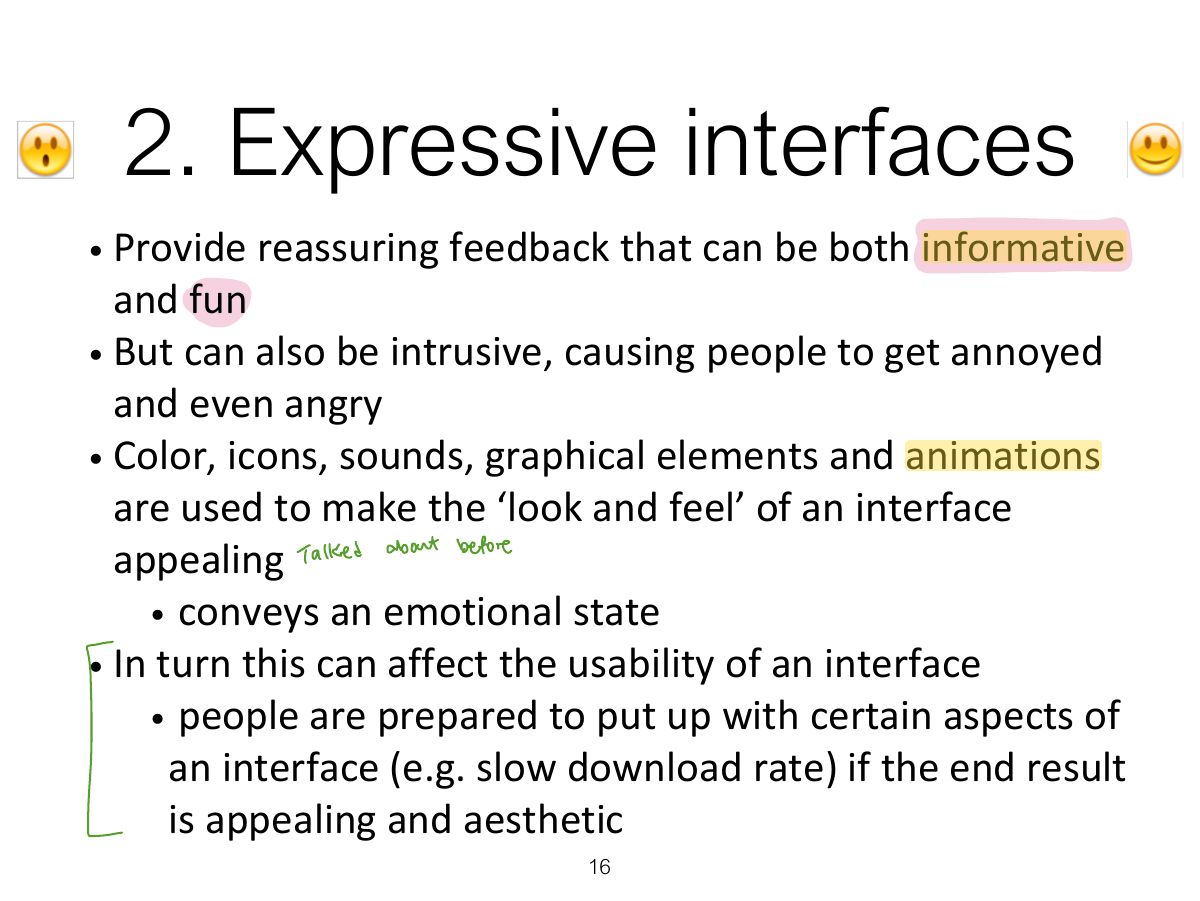
                          Slide 16: 2. Expressive interfaces
                          Exam weight Low
                          1. Expressive interfaces: colours, icons, sounds, animations that convey emotion and make interaction pleasurable.
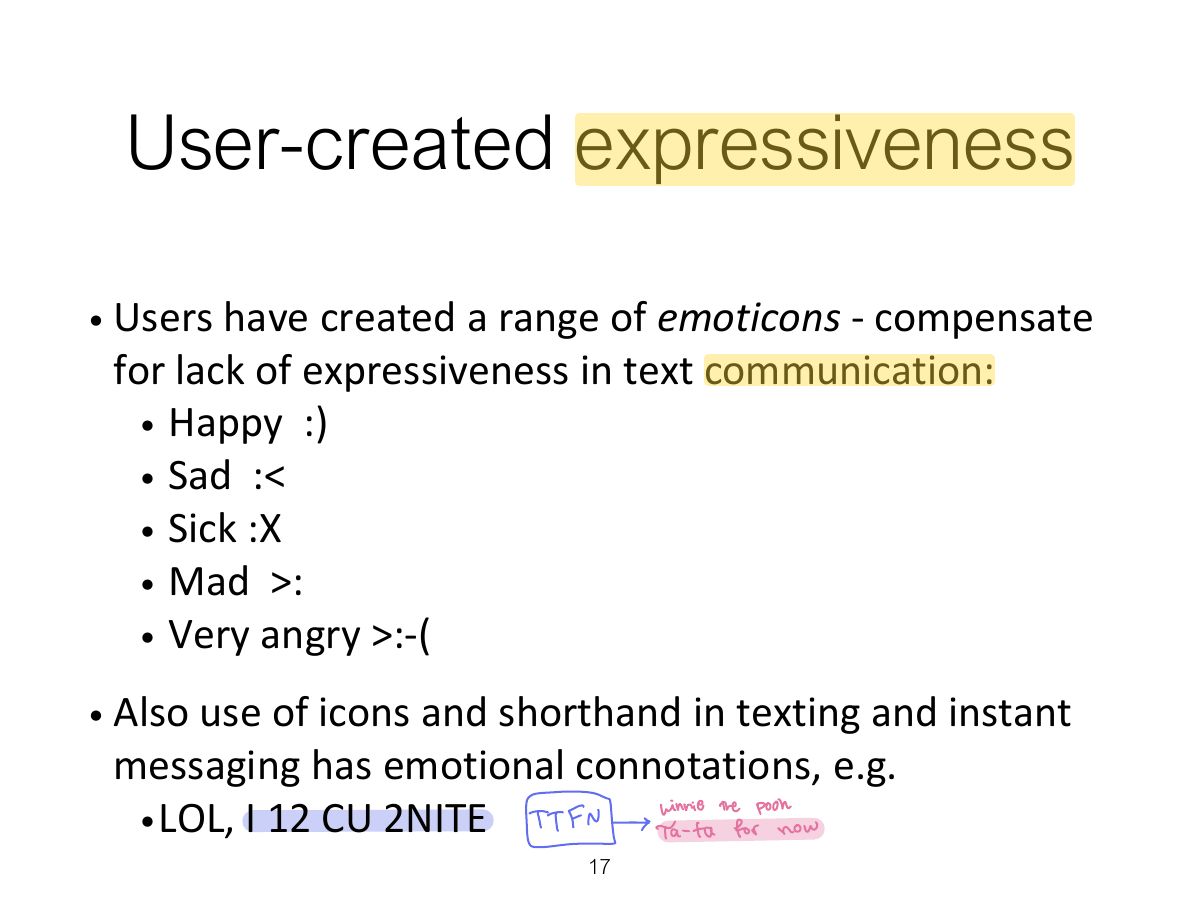
                          Slide 17: User-created expressiveness
                          Exam weight Low
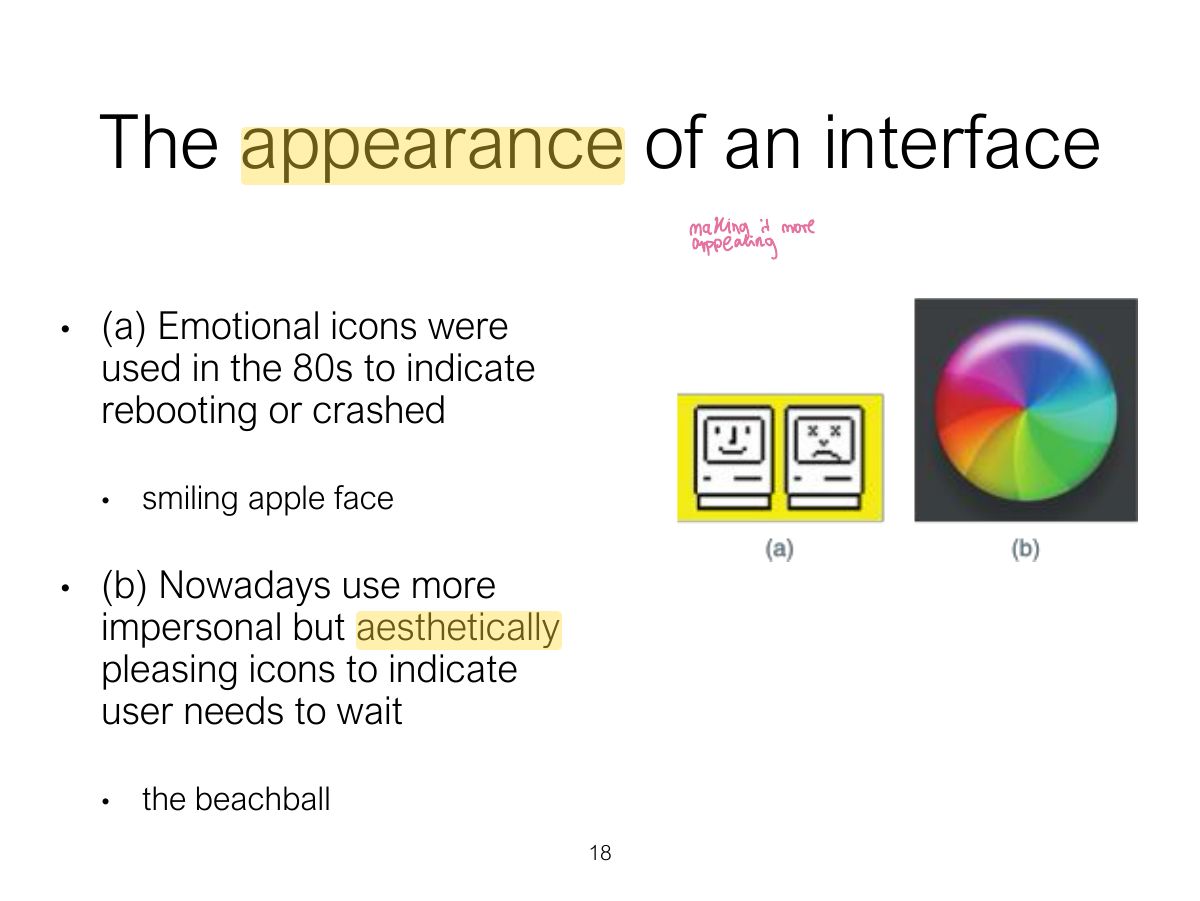
                            Slide 18: The appearance of an interface
                            Exam weight Low
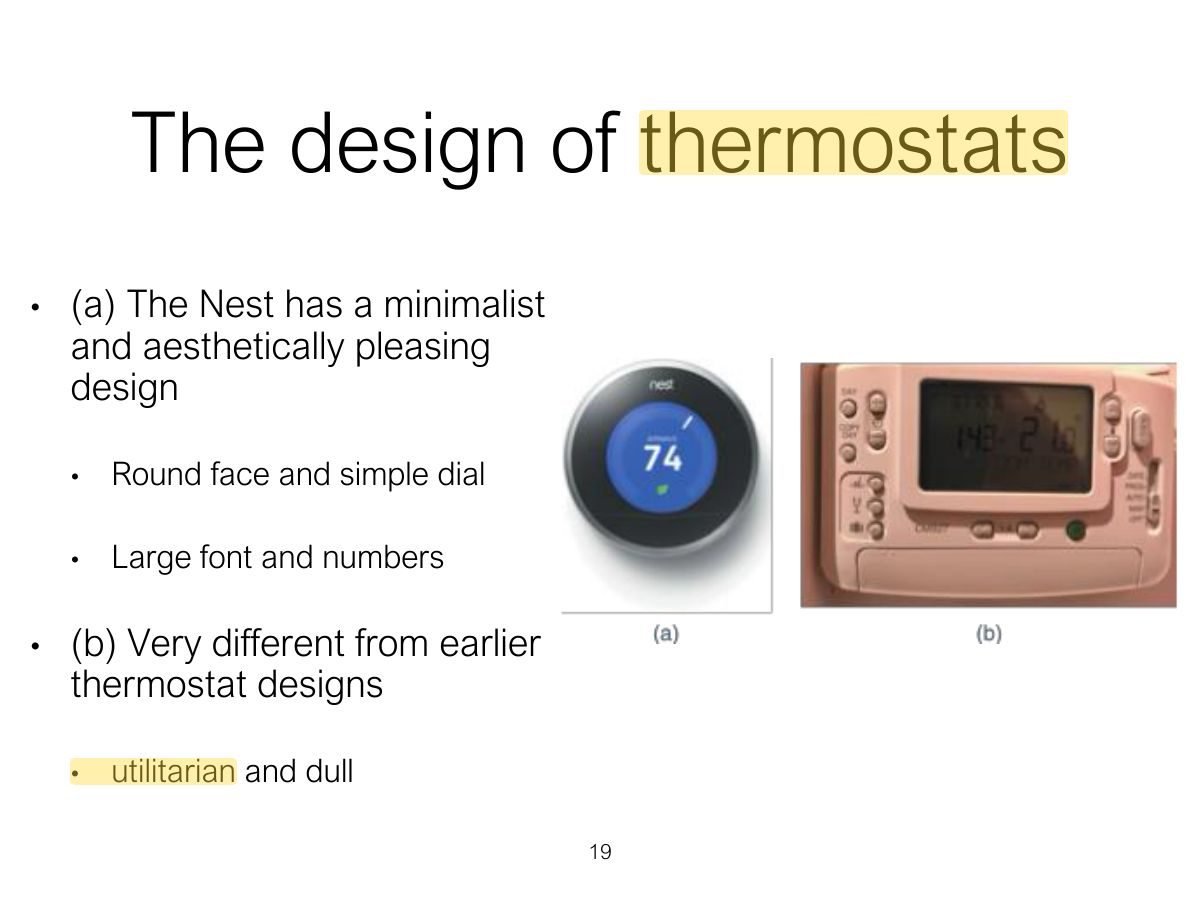
                              Slide 19: The design of thermostats
                              Exam weight Low
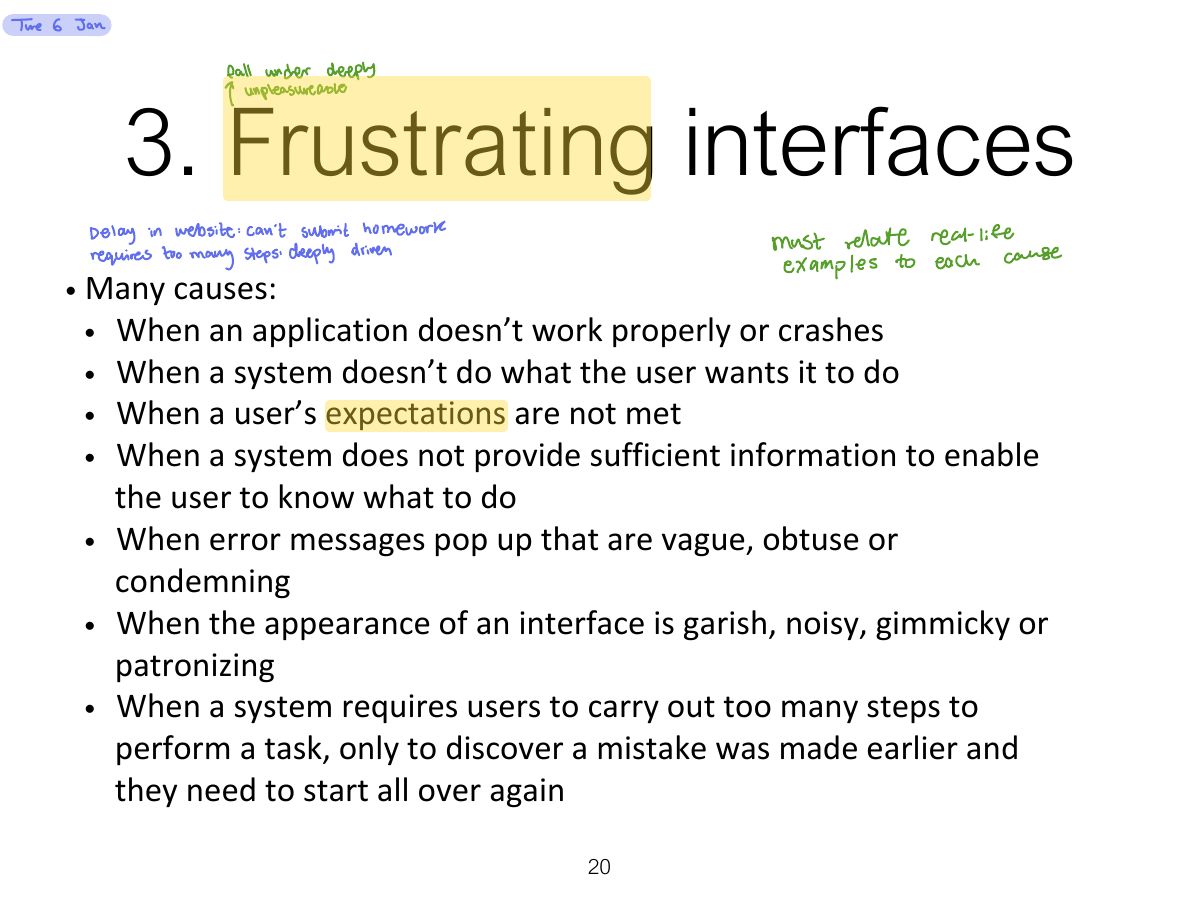
                                Slide 20: 3. Frustrating interfaces
                                Exam weight Low
                                1. Frustrating interfaces: gimmicks, vague error messages, too many steps, bad appearance.
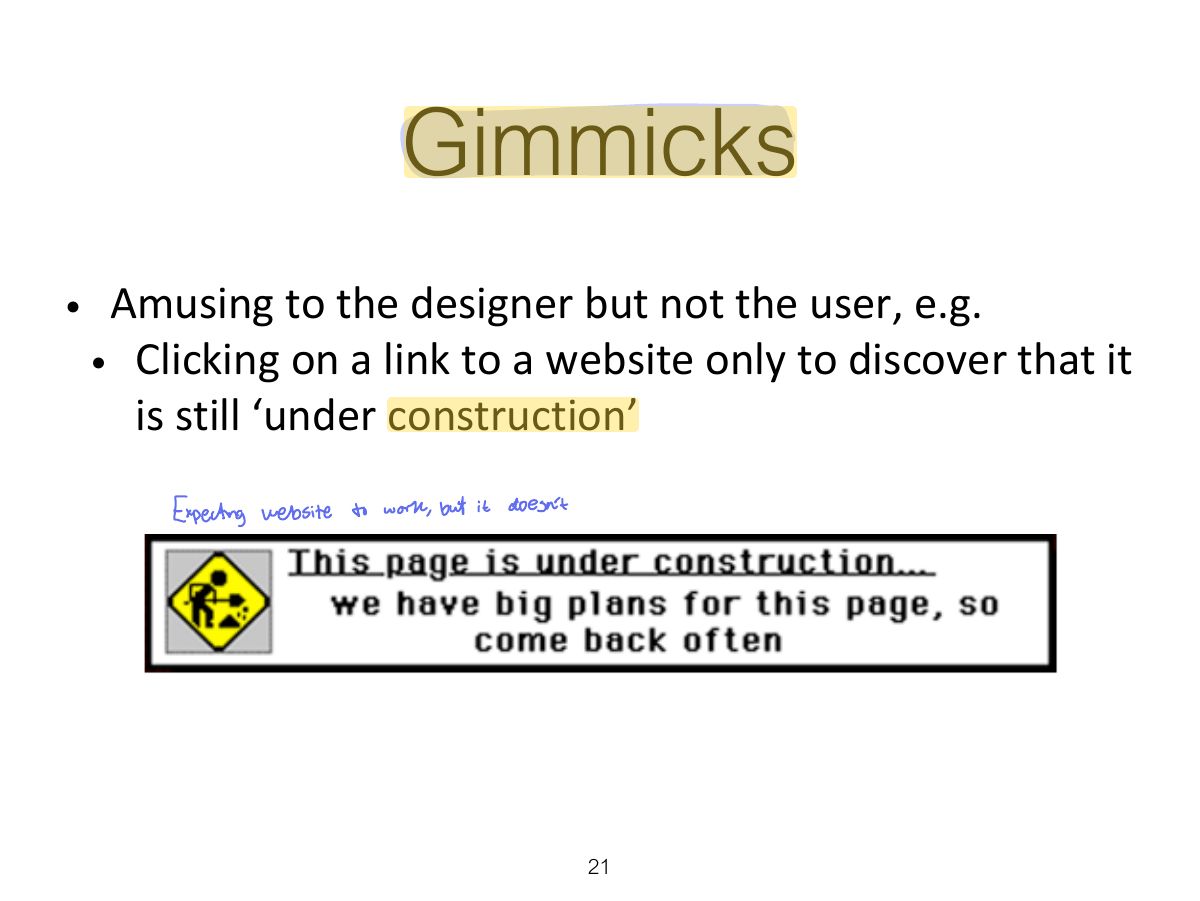
                                Slide 21: Gimmicks
                                Exam weight Low
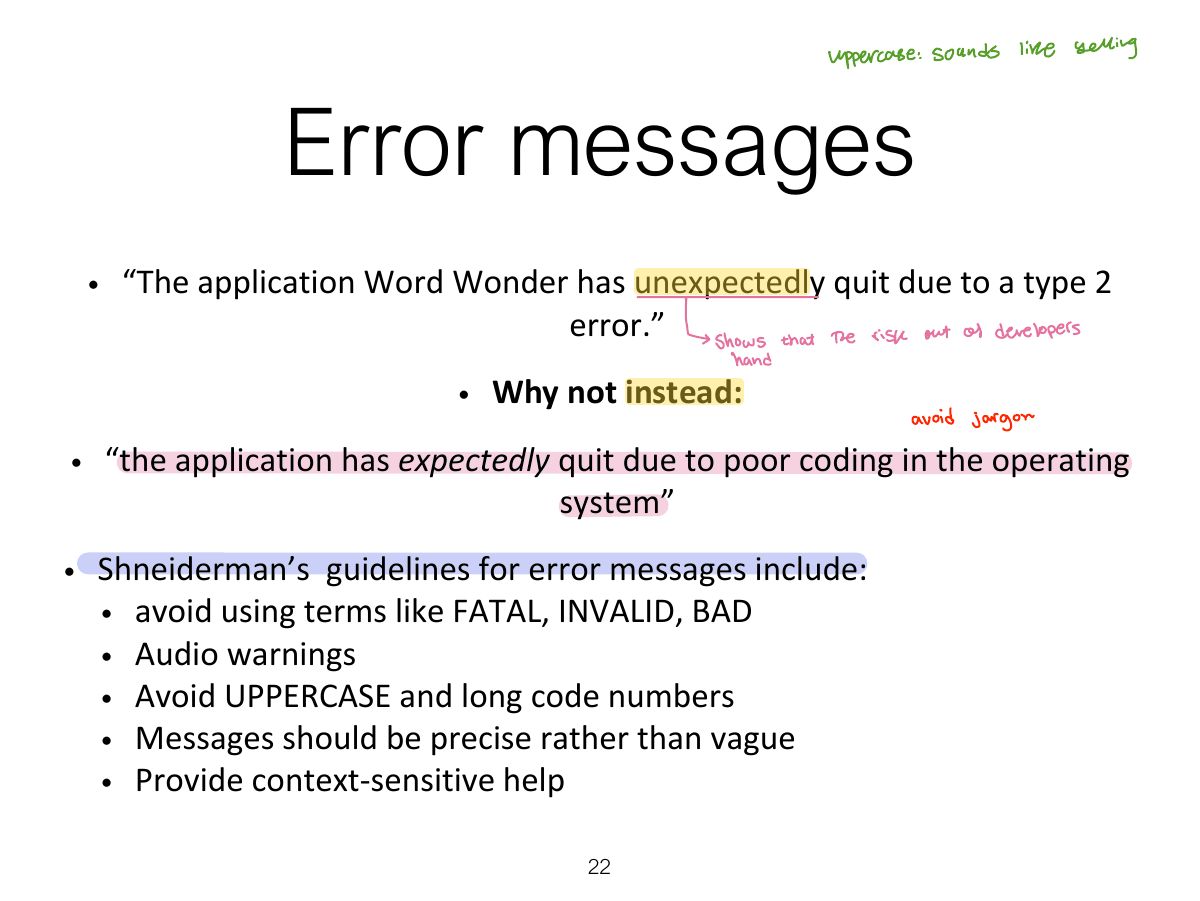
                                  Slide 22: Error messages
                                  Exam weight High
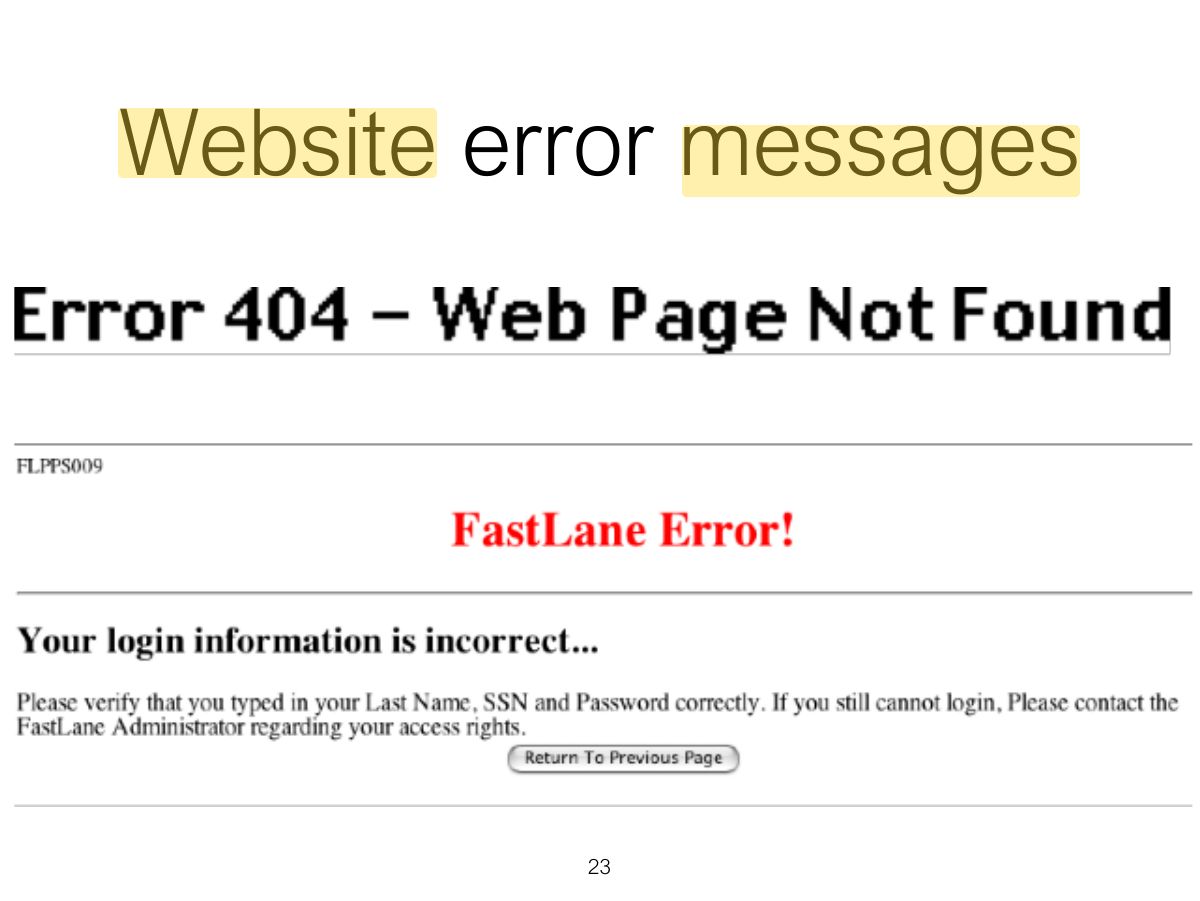
                                  1. Good error messages: say what went wrong and how to fix it, in plain language, without blaming the user.
                                  🎯 How this can come up · 1 question
                                  MCQ

                                  Which is the best error message?

                                  Slide 23: Website error messages
                                  Exam weight Low
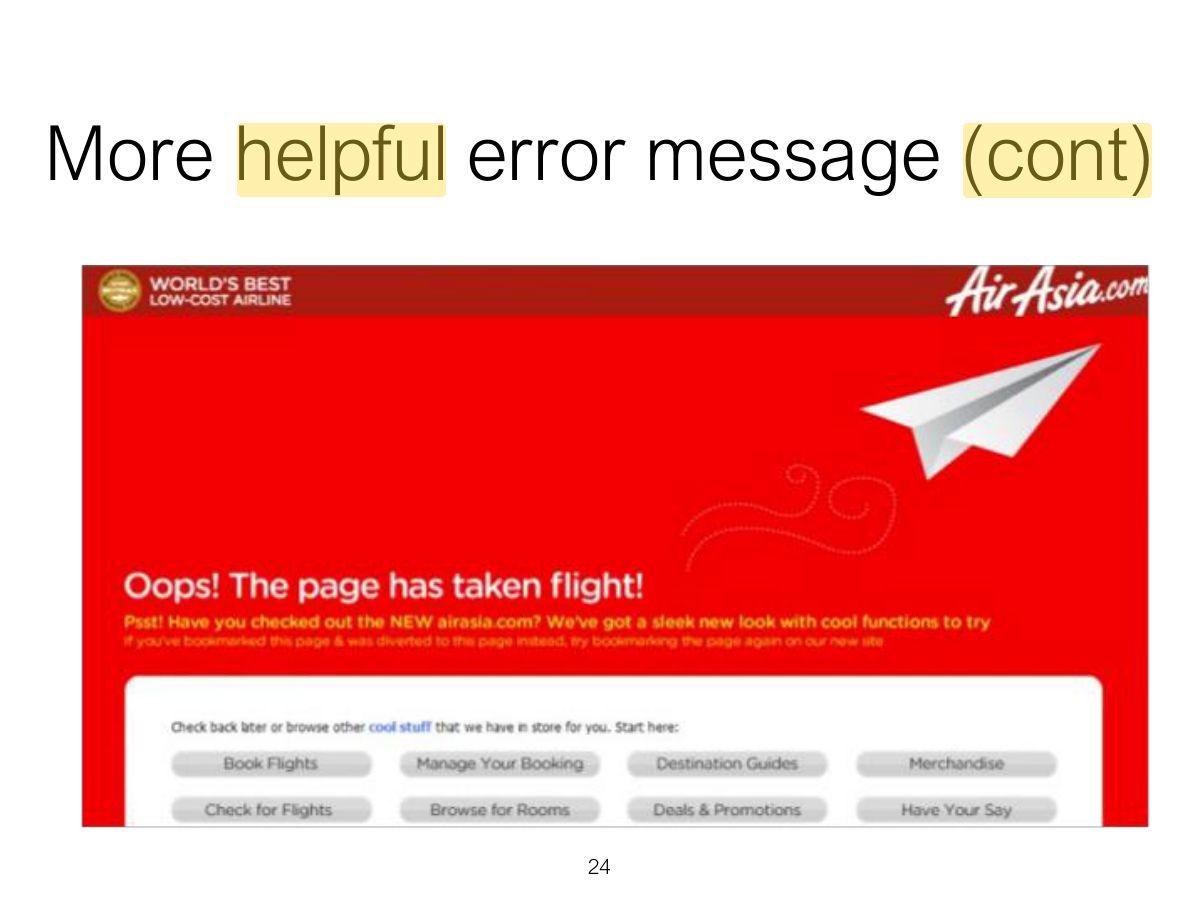
                                    Slide 24: More helpful error message (cont)
                                    Exam weight Low
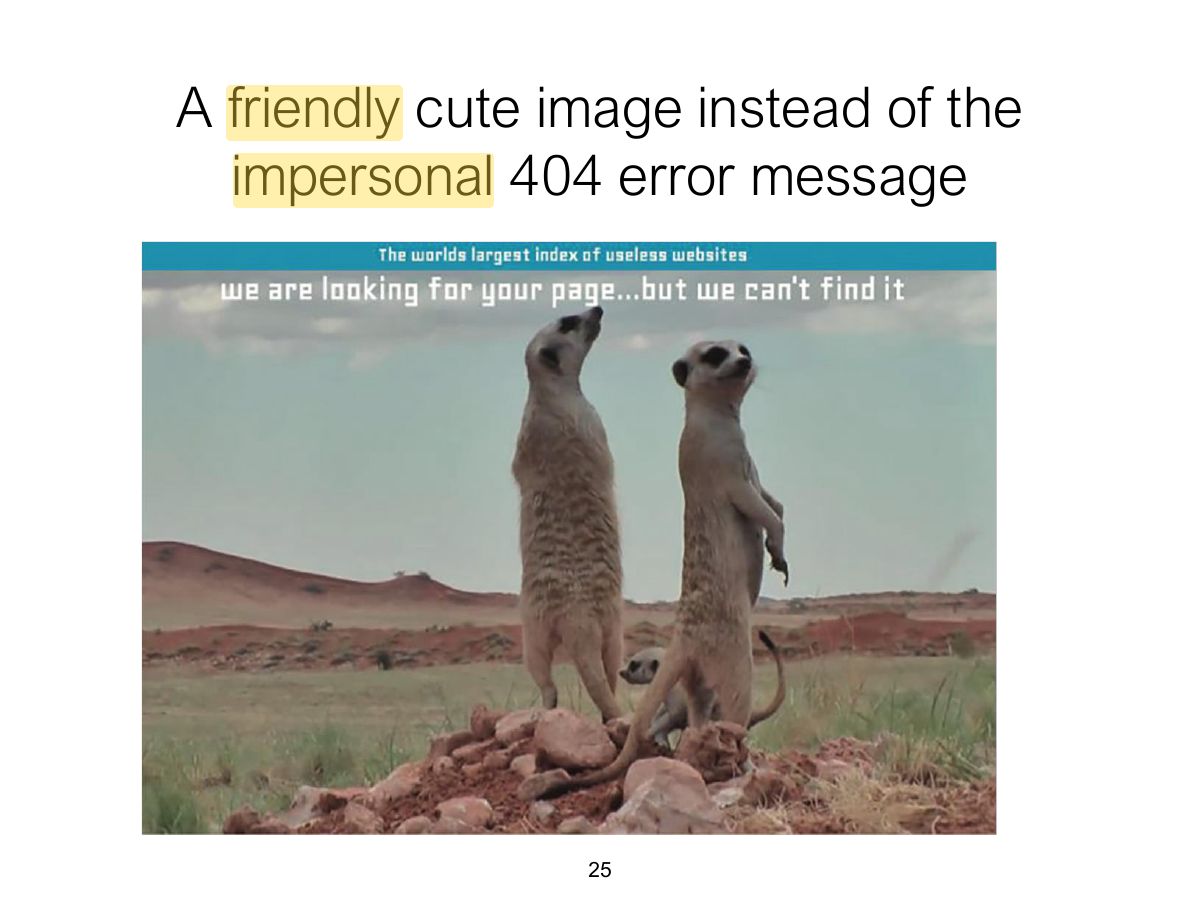
                                      Slide 25: A friendly cute image instead of the impersonal 404 error message
                                      Exam weight Low

                                        Should computers say they’re sorry?

                                        • Reeves and Naas (1996) argue that computers should be made to apologize
                                        • Should emulate human etiquette
                                        • Would users be as forgiving of computers saying sorry as people are of each other when saying sorry?
                                        • How sincere would they think the computer was being? For example, after a system crash:
                                          • “I’m really sorry I crashed. I’ll try not to do it again”
                                        • How else should computers communicate with users?
                                        26
                                        Exam weight Low

                                          Dilemma: Should Voice assistants teach kids good manners?

                                          • Many children talk to Alexa as if she was their friend
                                          • They also learn that it is not necessary to say please and thank you to her when asking questions
                                          • Is this lack of using etiquette a problem?
                                          • Would it transfer over to real life situations?
                                            • e.g. demanding “Aunty, get me my drink.”
                                          • Parents should still teach their kids good manners
                                          • Alexa can be configured to be polite as well
                                          • How much parental control should voice assistants be given?
                                          • Would children find it weird or creepy that their Alexa (who is their friend) nags them to clean their teeth?
                                          27
                                          Exam weight Low

                                            Affective Computing and Emotional AI

                                            • Affective computing concerned with how to use computers to recognize and express emotions as humans do (Picard, 1998)
                                            • Involves designing ways for people to communicate their emotional state
                                            • Uses sensing technologies to measure GSR, facial expressions, gestures, body movement
                                            • Explores how affect influences personal health
                                            • Emotional AI aims to automate the measurement of feelings and behavior using AI to infer them from facial expressions and voice
                                            • Aim is to predict user’s emotions and aspects of their behavior
                                              • e.g. what is someone most likely to buy online when feeling sad, bored or happy
                                            28
                                            Exam weight Low
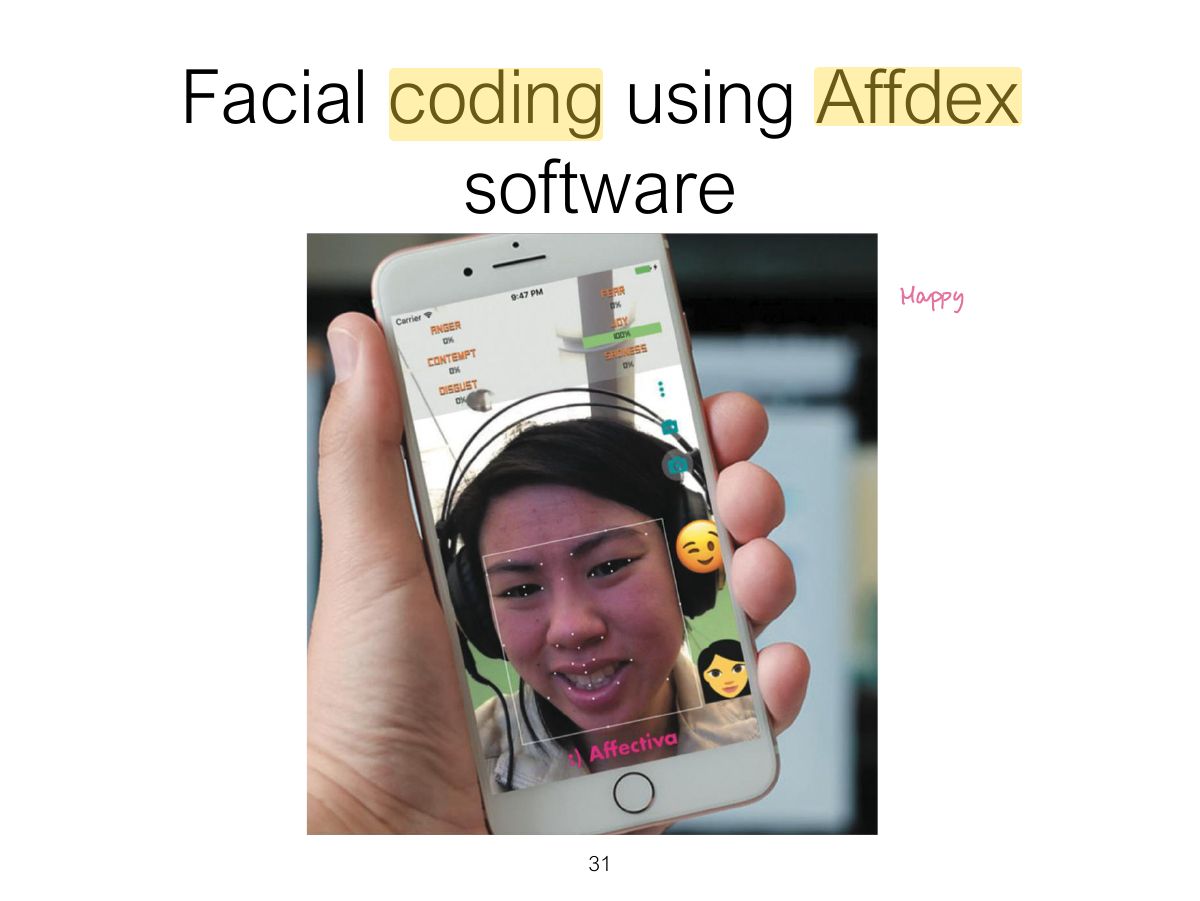
                                            1. Affective computing: systems that recognize and express emotions (facial coding, voice, body signals).

                                            Techniques used

                                            • Cameras for measuring facial expressions
                                            • Biosensors placed on fingers or palms to measure GSR
                                            • Affective expression in speech (e.g. intonation, pitch, loudness)
                                            • Body movement and gestures using accelerometers and motion capture systems
                                            29
                                            Exam weight Low
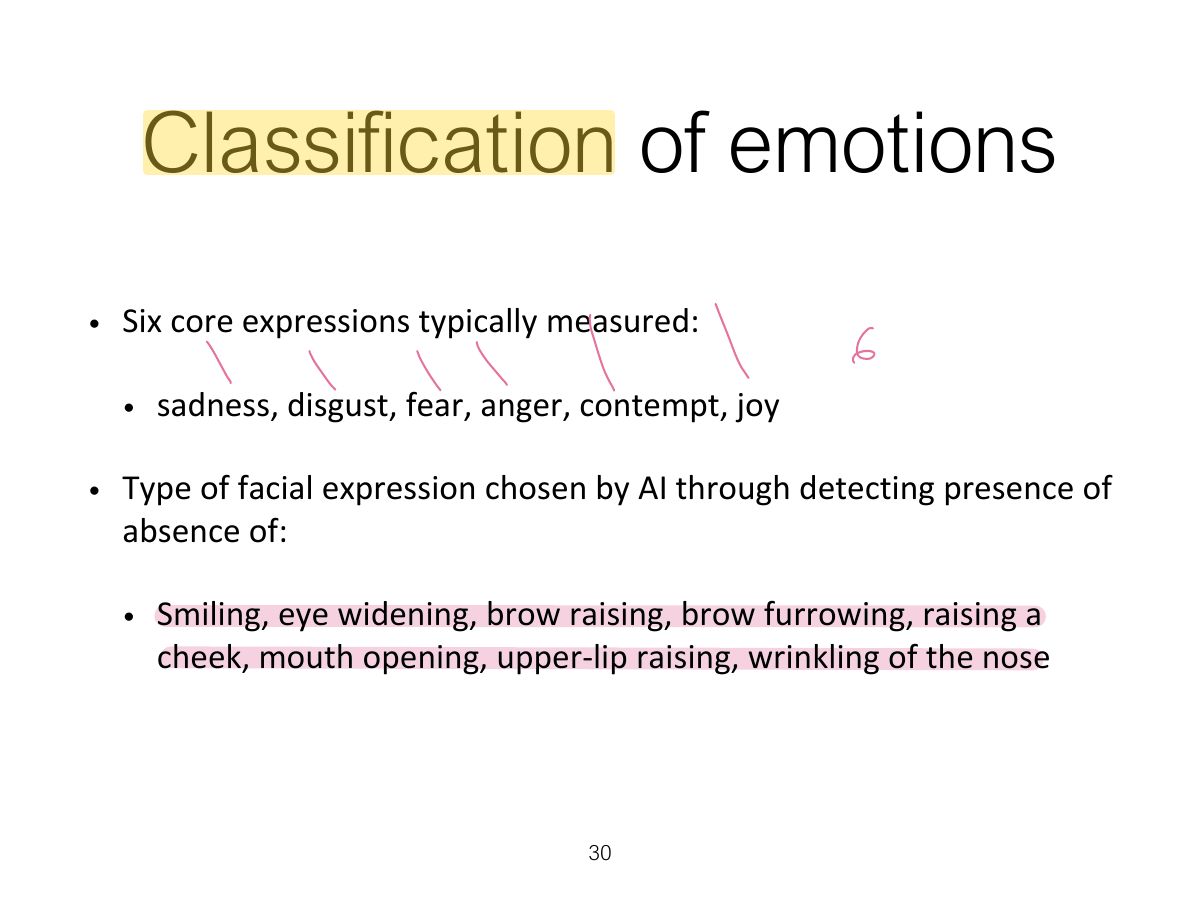
                                              Slide 30: Classification of emotions
                                              Exam weight Low
                                                Slide 31: Facial coding using Affdex software
                                                Exam weight Low
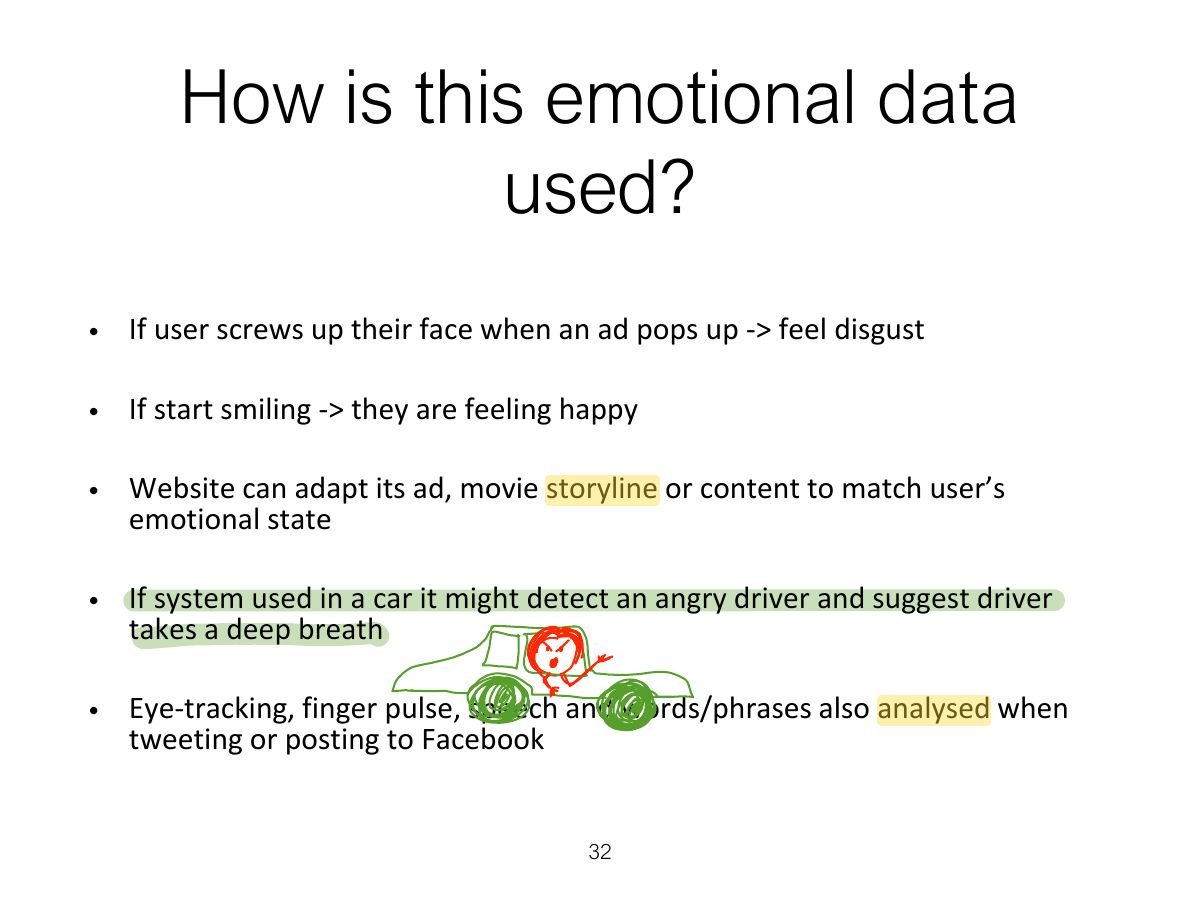
                                                  Slide 32: How is this emotional data used?
                                                  Exam weight Low

                                                    Indirect emotion detection

                                                    • Also used more to infer or predict someone’s behavior
                                                      • e.g. determining a person’s suitability for a job or how they will vote at an election
                                                    • Do you think it is ethical that technology can read your emotions from your facial expressions or from your tweets?
                                                    33
                                                    Exam weight Low
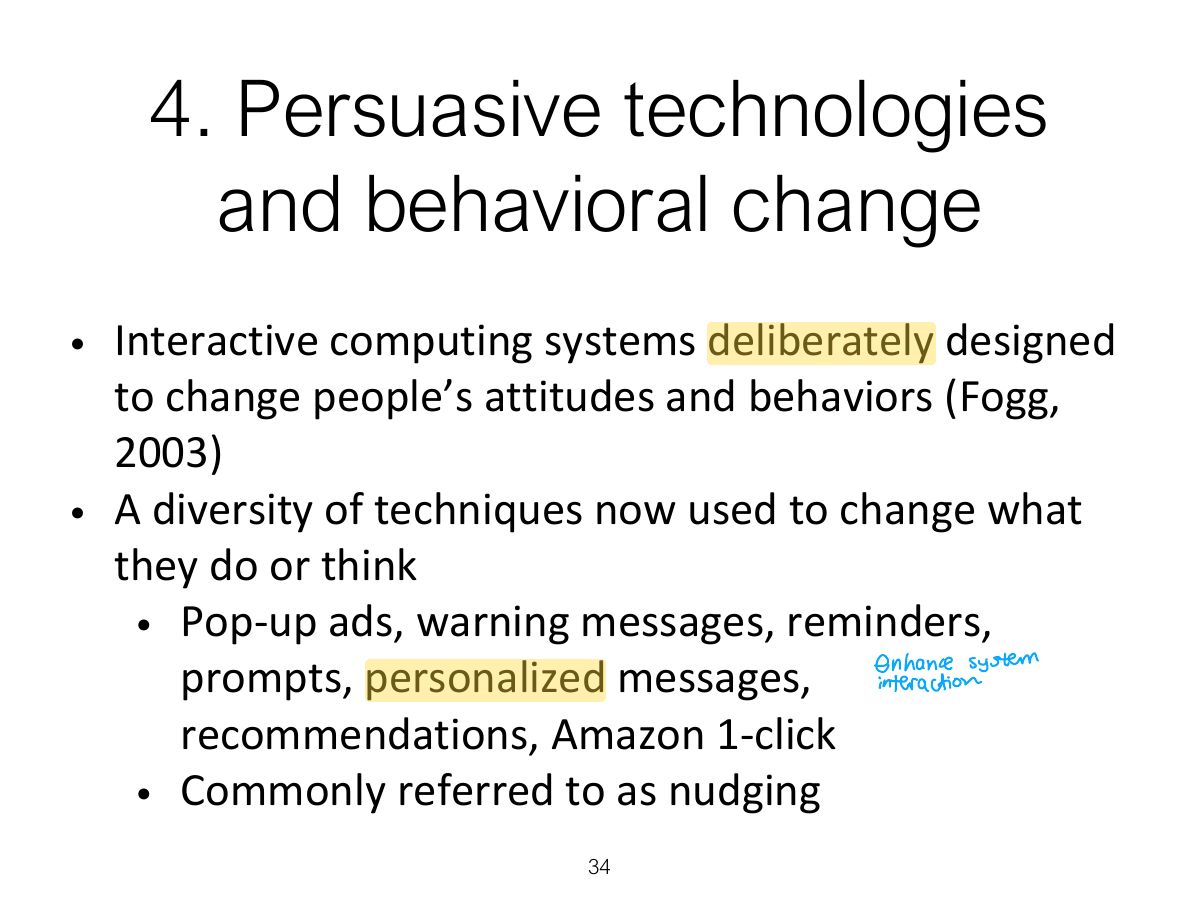
                                                      Slide 34: 4. Persuasive technologies
                                                      Exam weight Low
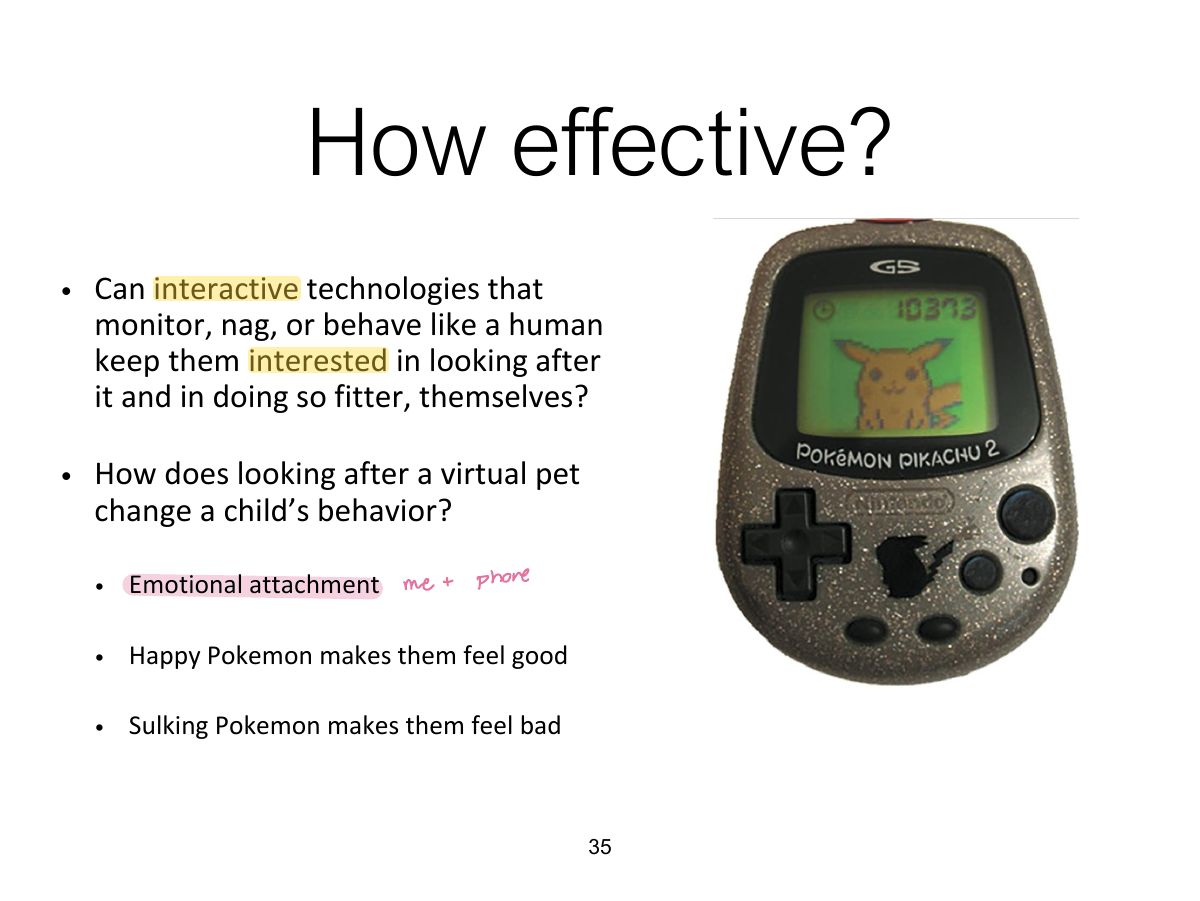
                                                      1. Persuasive technologies: designed to change attitudes or behaviour (fitness trackers, energy displays, nudges).
                                                      Slide 35: How effective?
                                                      Exam weight Low

                                                        Tracking devices

                                                        • Mobile apps designed to help people monitor and change their behaviour (e.g. fitness, sleeping, weight)
                                                        • Can compare with online leader boards and charts, to show how they have done in relation to their peers and friends
                                                        • Also apps that encourage reflection that in turn increase well-being and happiness
                                                        36
                                                        Exam weight Low

                                                          Sustainable HCI

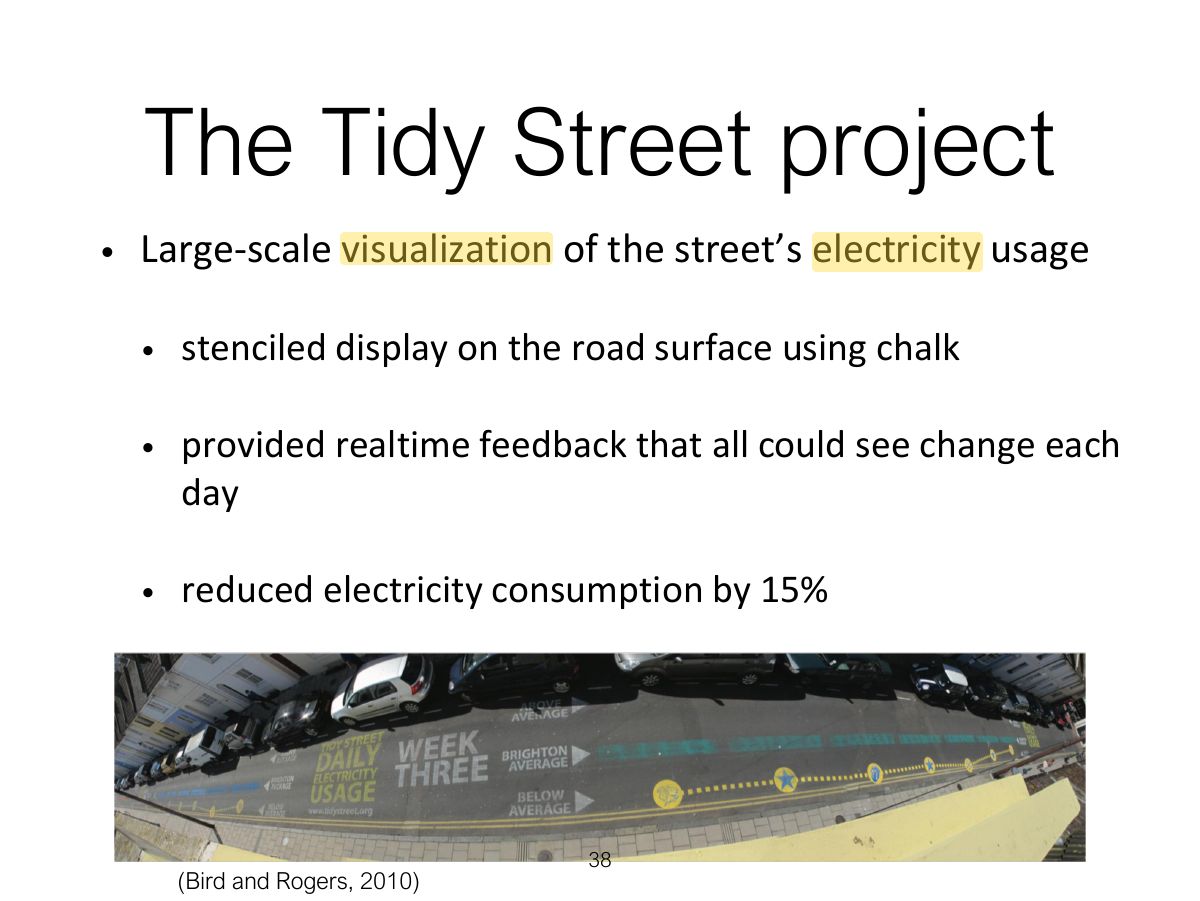
                                                          • Focus on designing tech interventions to help people reduce their energy consumption
                                                          • An effective technique is to provide householders with feedback on their consumption
                                                          • Simple infographics and emoticons are often most powerful
                                                            • Encourage people to reflect and see what they can change to reduce their energy consumption
                                                          • Peer pressure and social norms are also powerful methods
                                                          37
                                                          Exam weight Low
                                                            Slide 38: The Tidy Street project
                                                            Exam weight Low

                                                              Phishing scams

                                                              • Web used to deceive people into parting with personal details
                                                                • e.g. Paypal, eBay, and won the lottery letters
                                                              • Allows Internet fraudsters to access their bank accounts and draw money from them
                                                              • Many vulnerable people fall for it
                                                              • The art of deception is centuries old but internet allows ever more ingenious ways to trick people
                                                              39
                                                              Exam weight Low
                                                              1. Phishing exploits trust: emotional design can be used against users.

                                                              Phishing & trust

                                                              • Web used to deceive people into parting with personal details
                                                                • e.g. Paypal, eBay and won the lottery letters
                                                              • Allows Internet fraudsters to access their bank accounts and draw money from them
                                                              • Many vulnerable people fall for it
                                                              • The art of deception is centuries old but internet allows ever more ingeniuos ways to trick people
                                                              Phishing & trust
                                                              40
                                                              Exam weight Low

                                                                5. Anthropomorphism

                                                                • Attributing human-like qualities to inanimate objects (e.g. cars, computers)
                                                                • Well known phenomenon in advertising
                                                                  • Dancing butter, drinks, breakfast cereals
                                                                • Much exploited in human-computer interaction
                                                                  • Make user experience more enjoyable, more motivating, make people feel at ease, reduce anxiety
                                                                41
                                                                Exam weight Low
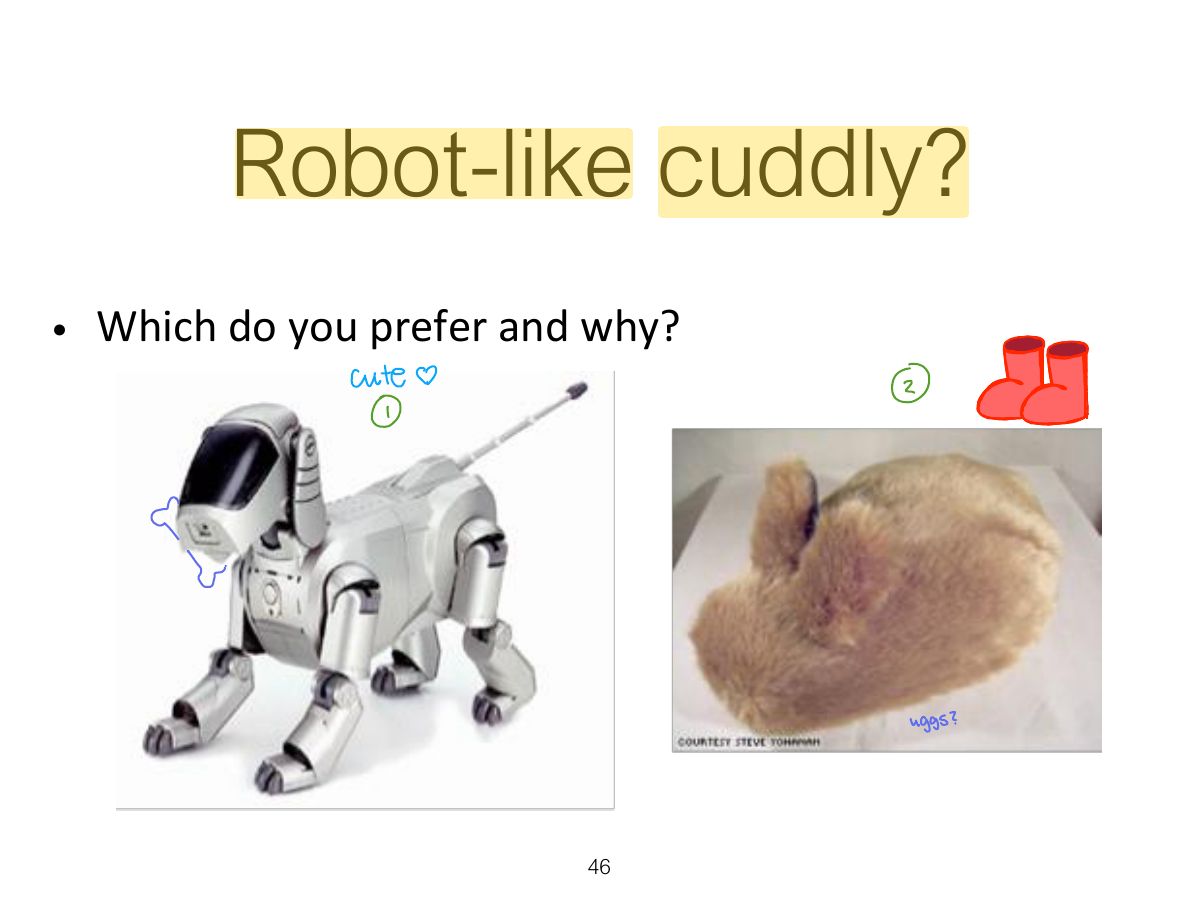
                                                                1. Anthropomorphism: giving human qualities to objects (cuddly robots, chatbots). Can make interaction enjoyable, but can also deceive or annoy.

                                                                Anthropomorphism

                                                                • Attributing human-like qualities to inanimate objects (e.g. cars, computers)
                                                                • Well known phenomenon in advertising
                                                                  • dancing butter, drinks, breakfast cereals
                                                                • Much exploited in human-computer interaction
                                                                  • make user experience enjoyable, motivating, make people feel at ease, reduce anxiety
                                                                • Furnishing technologies with personalities can make them enjoyable to interact with
                                                                42
                                                                Exam weight Low
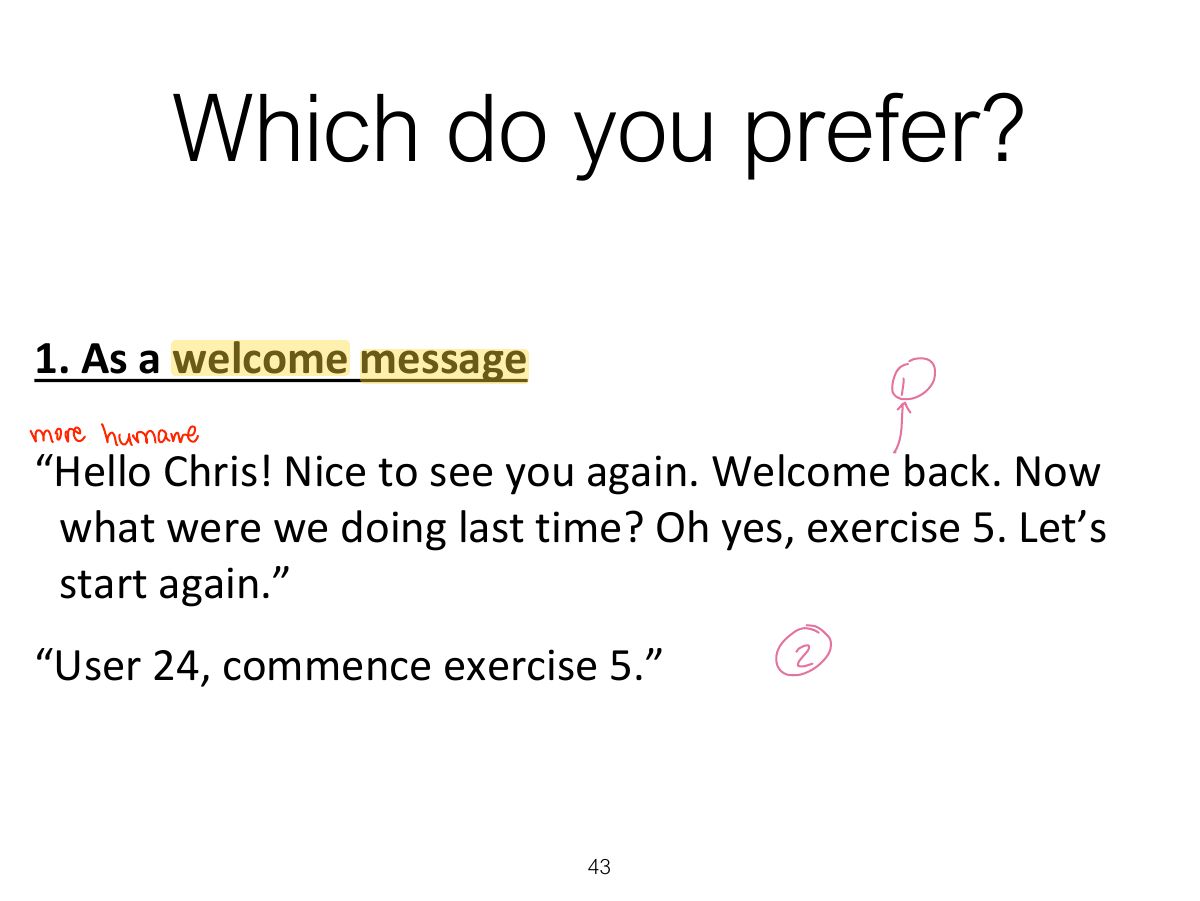
                                                                  Slide 43: Which do you prefer?
                                                                  Exam weight Low
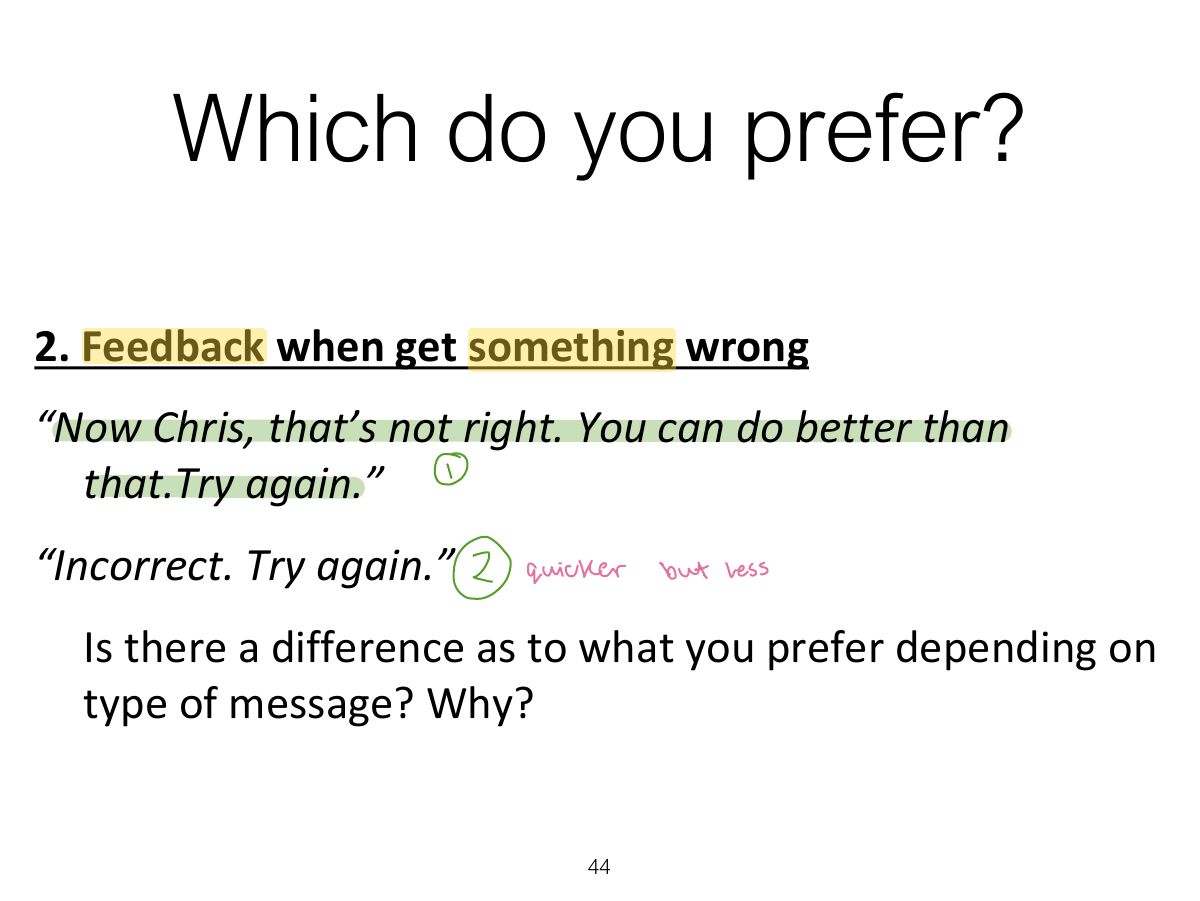
                                                                    Slide 44: Which do you prefer?
                                                                    Exam weight Low

                                                                      Evidence to support

                                                                      anthropomorphism

                                                                      • Reeves and Naas (1996) found that computers that flatter and praise users in education software programs - > positive impact on them
                                                                      • “Your question makes an important and useful distinction. Great job!”
                                                                      • Students were more willing to continue with exercises with this kind of feedback
                                                                      45
                                                                      Exam weight Low
                                                                        Slide 46: Robot-like cuddly?
                                                                        Exam weight Low
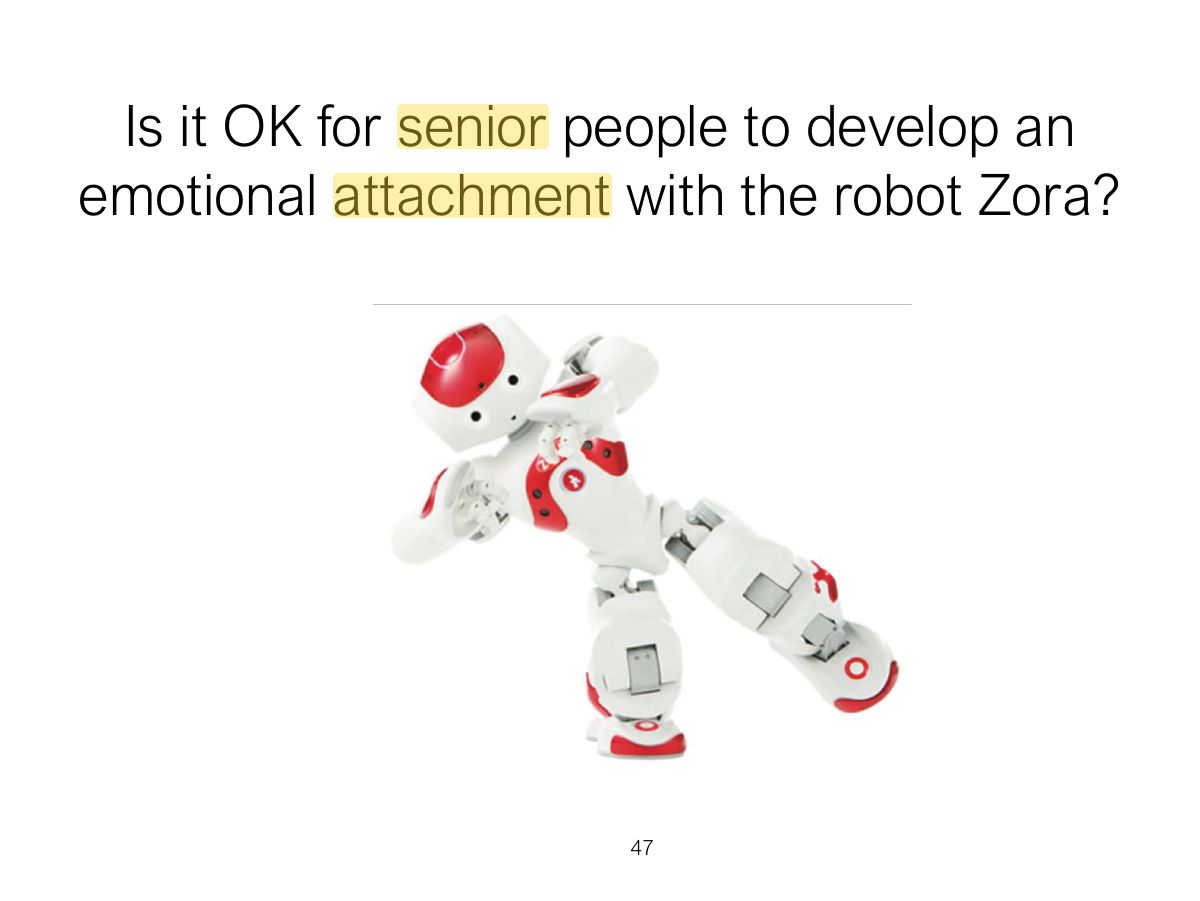
                                                                          Slide 47: Is it OK for senior people to develop an
                                                                          Exam weight Low

                                                                            Summary

                                                                            • Emotional aspects of interaction design are concerned with how to facilitate certain states (e.g. pleasure) or avoid reactions (e.g. frustration)
                                                                            • Well-designed interfaces can elicit good feelings in people
                                                                            • Aesthetically pleasing interfaces can be a pleasure to use
                                                                            • Expressive interfaces can provide reassuring feedback to users
                                                                            • Badly designed interfaces make people frustrated, annoyed, or angry
                                                                            • Emotional AI and affective computing use AI and sensor technology for detecting people’s emotions through analyzing their facial expressions and conversations
                                                                            • Emotional technologies can be designed to persuade people to change their behaviors
                                                                            • Anthropomorphism is the attribution of human qualities to objects
                                                                            • Increasingly robots are being used as companions in the home
                                                                            48
                                                                            Exam weight Low