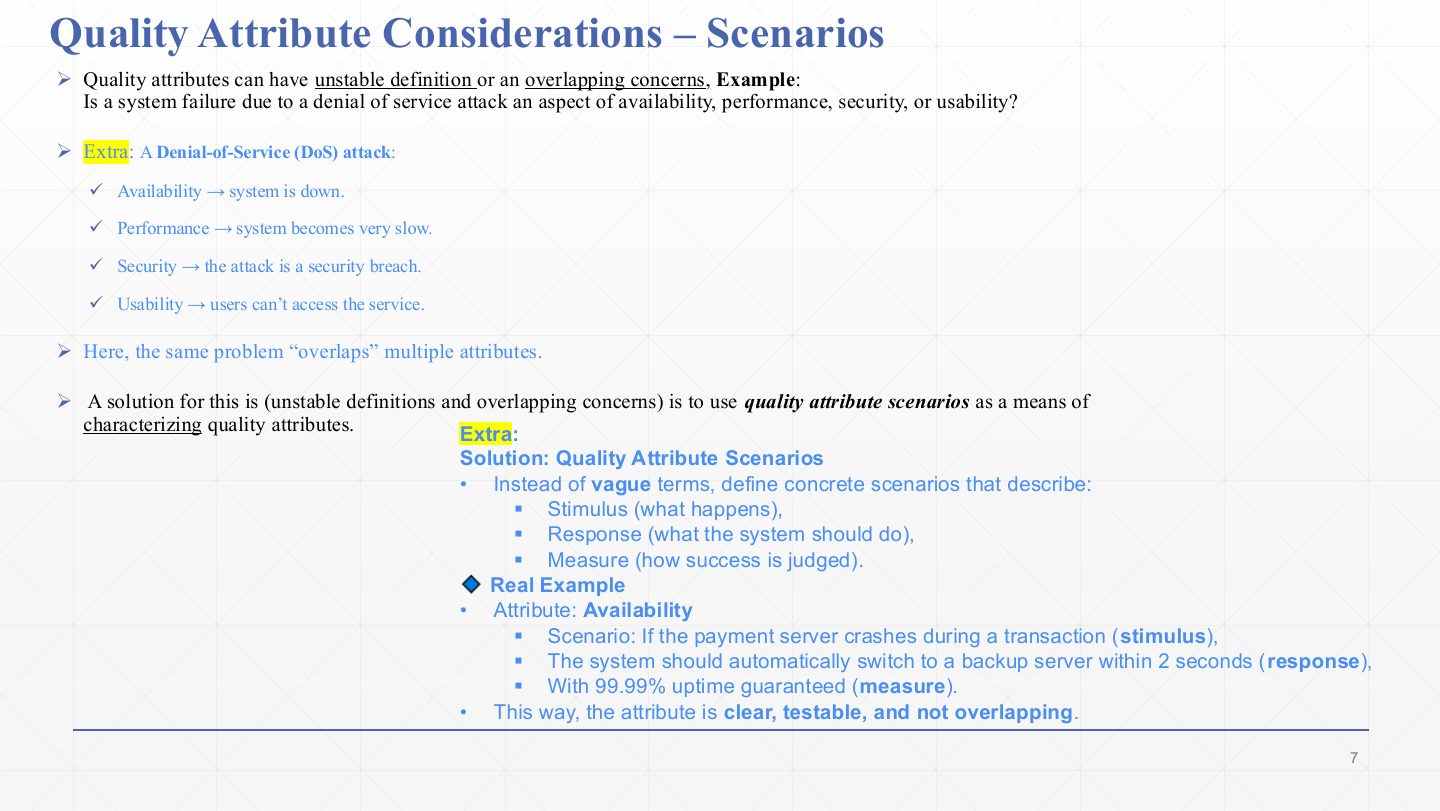
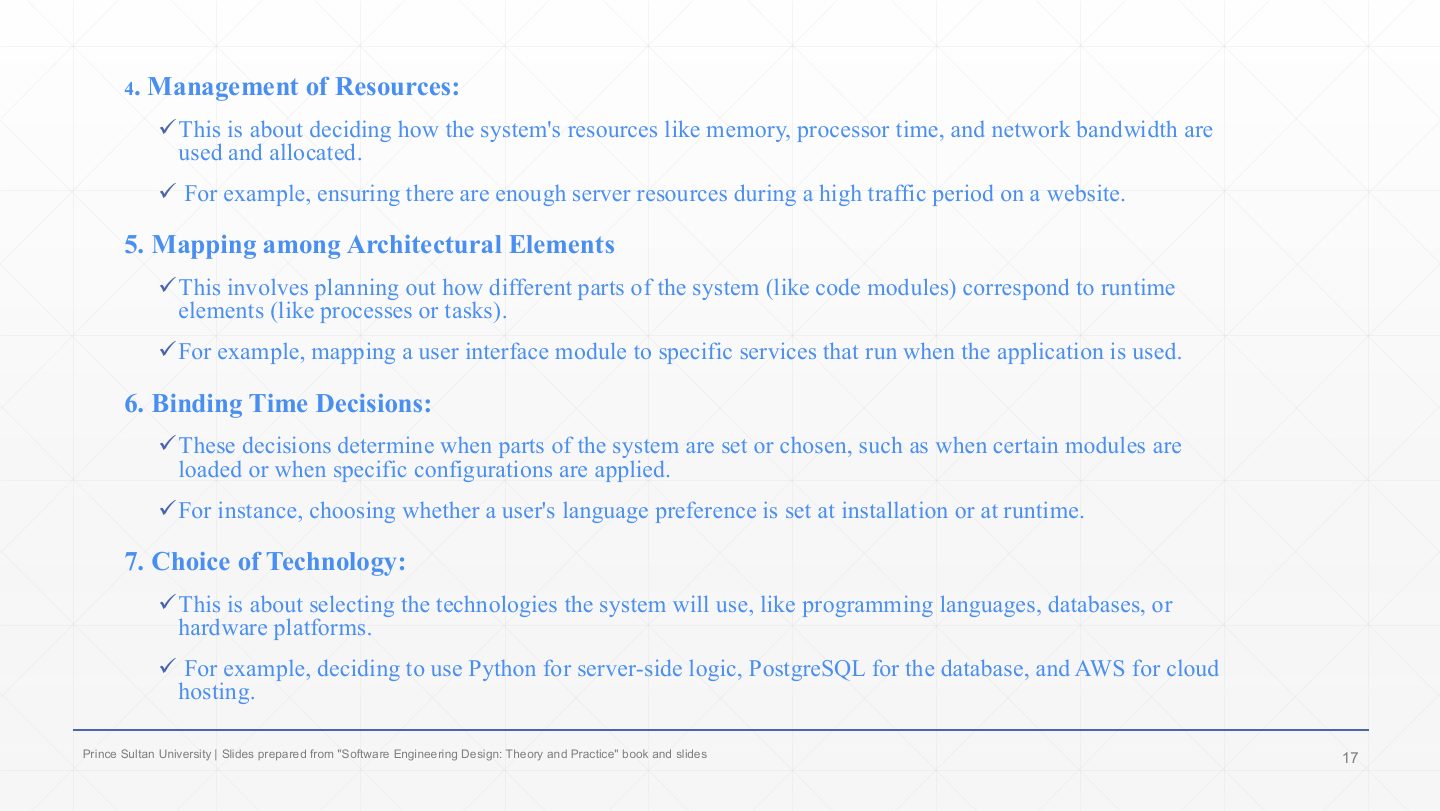
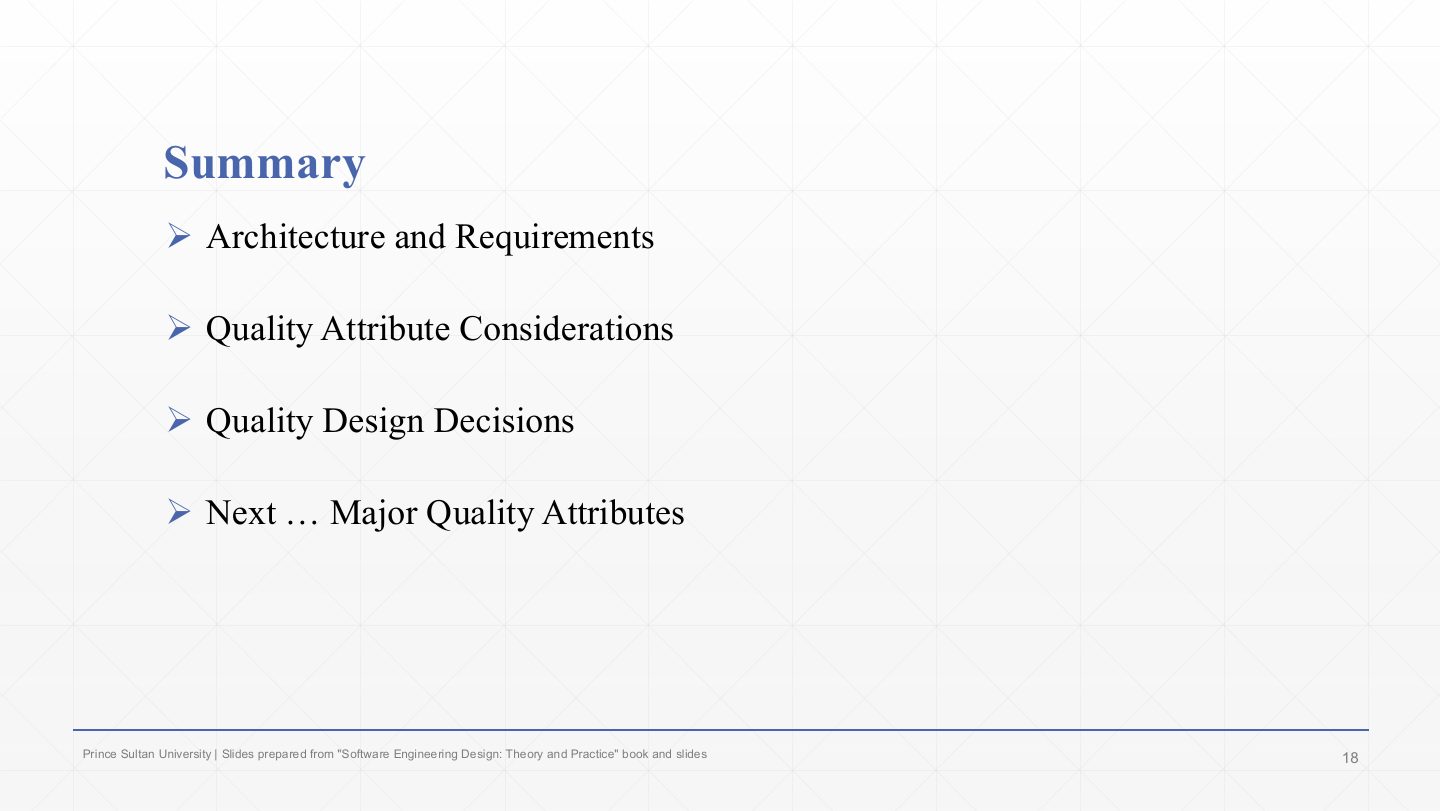
Functional requirements say what the system does; quality attributes say how well it does it, and the plan for meeting them lives in the architecture. Because quality words are vague and overlap (is a denial-of-service attack an availability, performance or security problem?), qualities are pinned down with quality attribute scenarios: six parts from source to response measure. Tactics are the design techniques that achieve a scenario’s response, and the lecture ends with the seven categories of design decision through which an architect shapes quality.
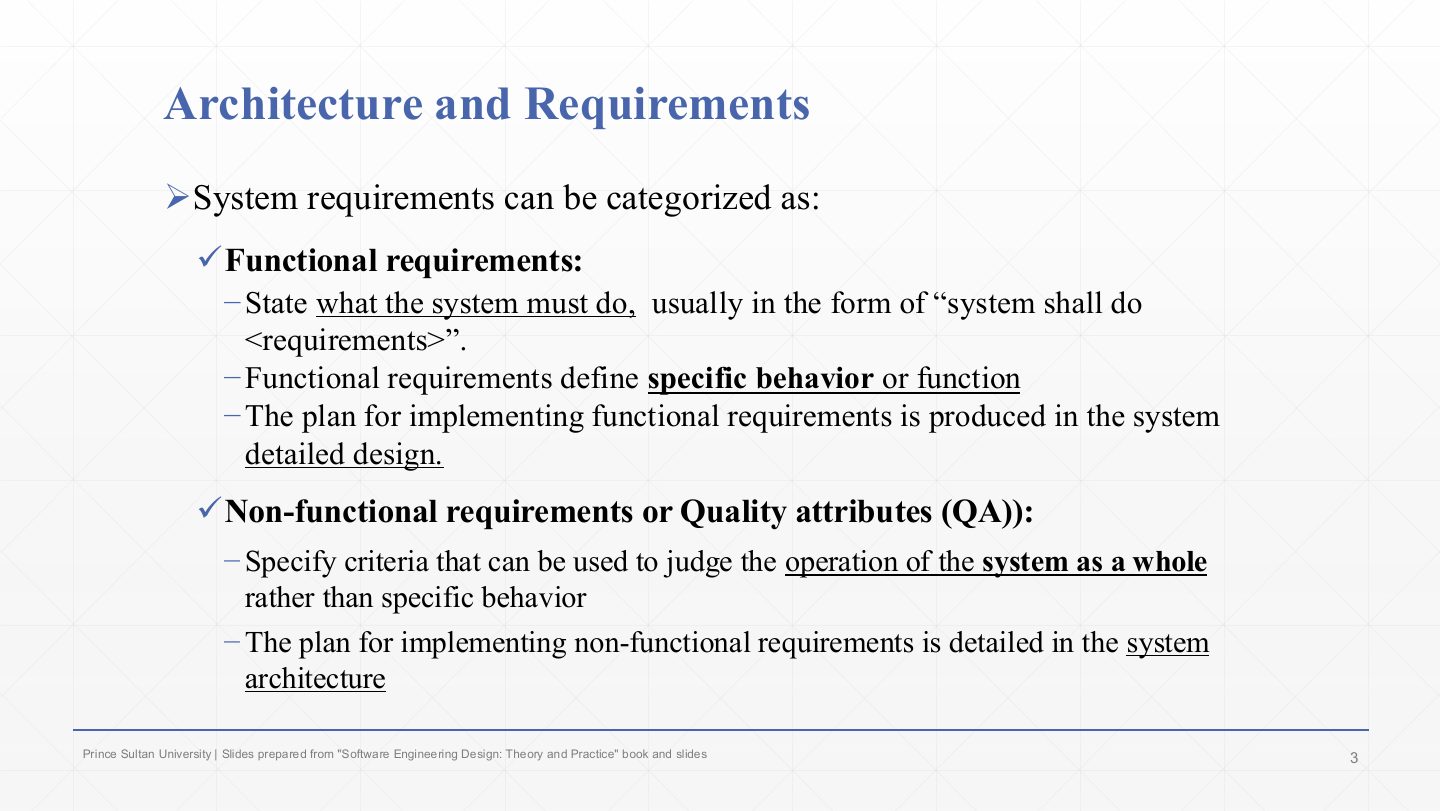
QA vs. functional
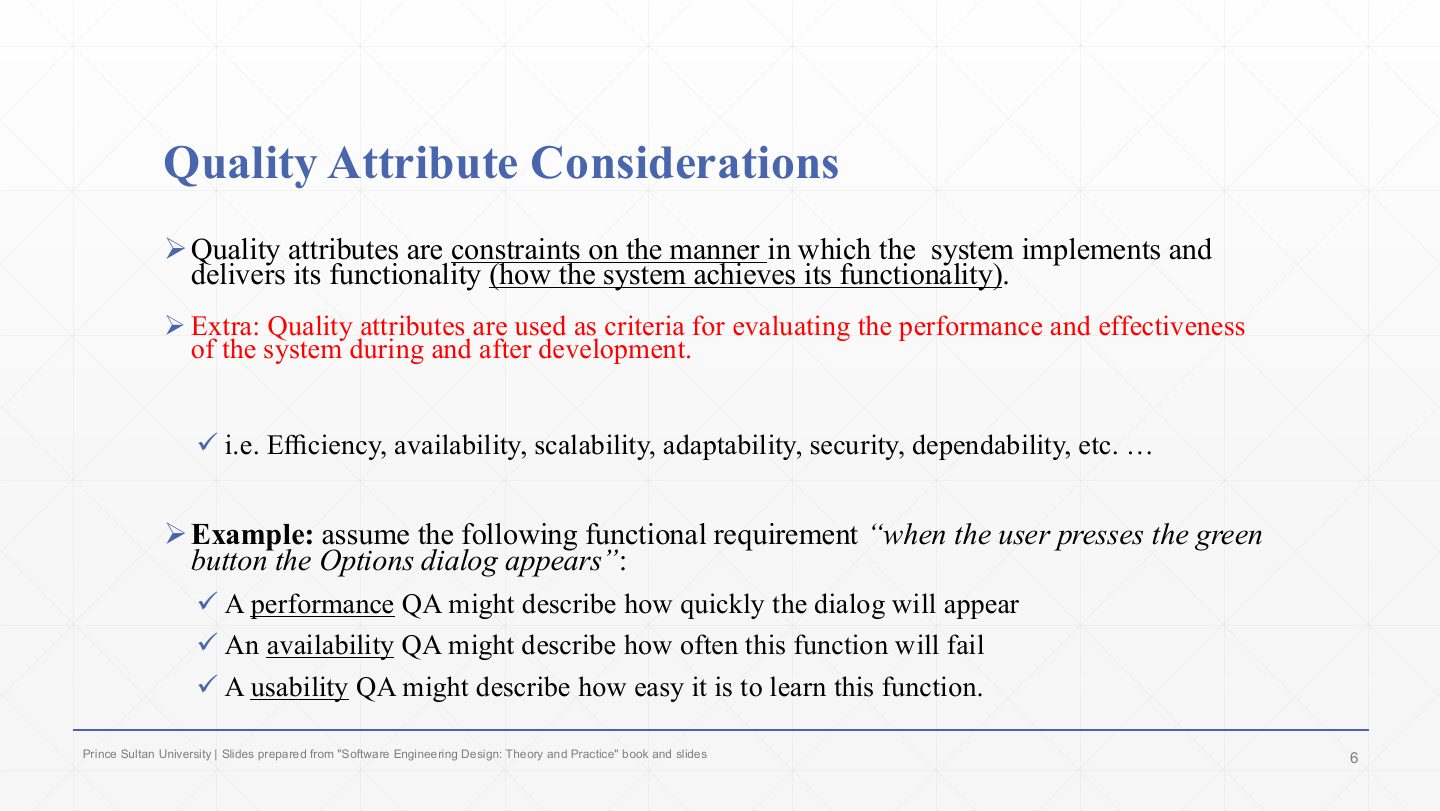
Functional = what the system shall do (planned in detailed design). Quality = criteria for judging the system as a whole (planned in the architecture).
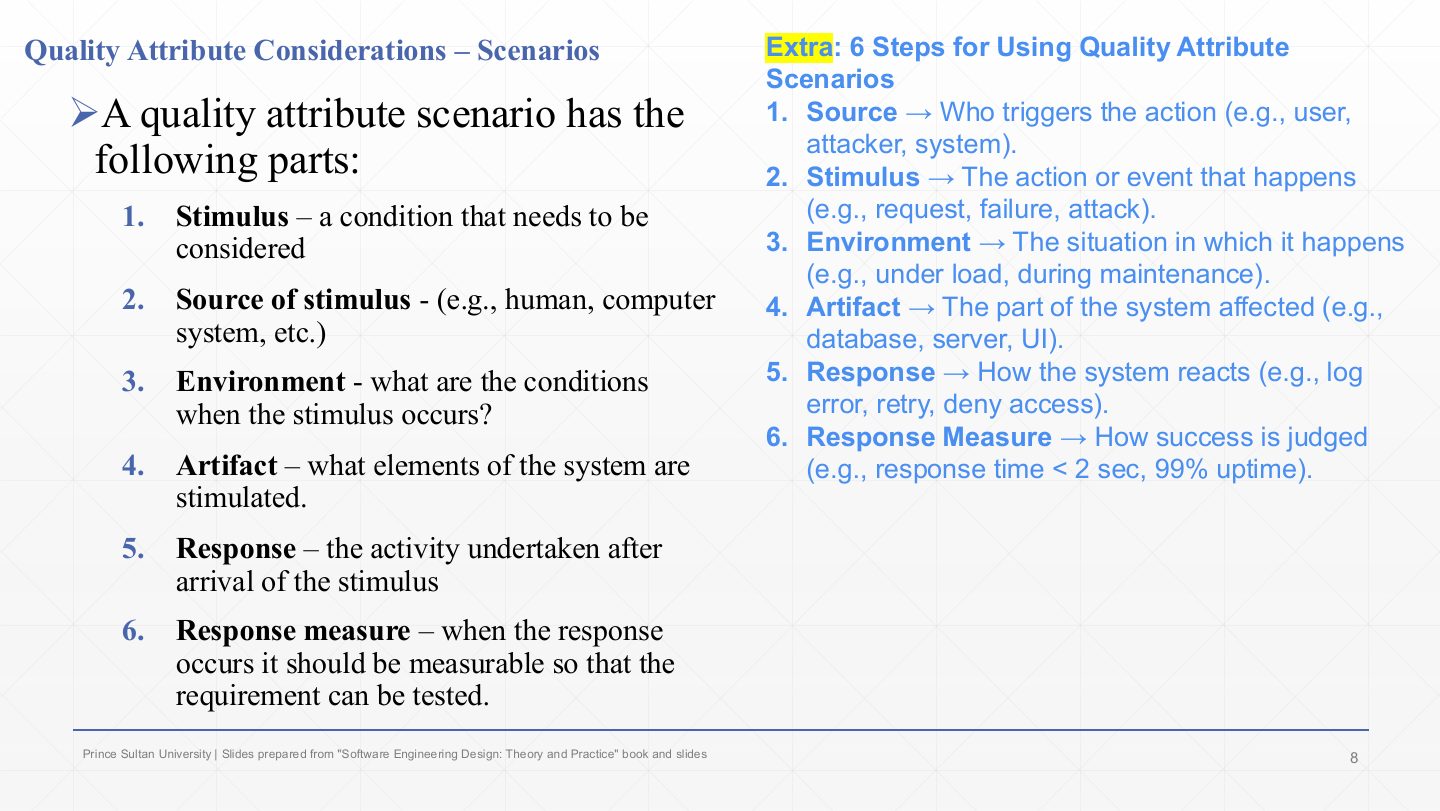
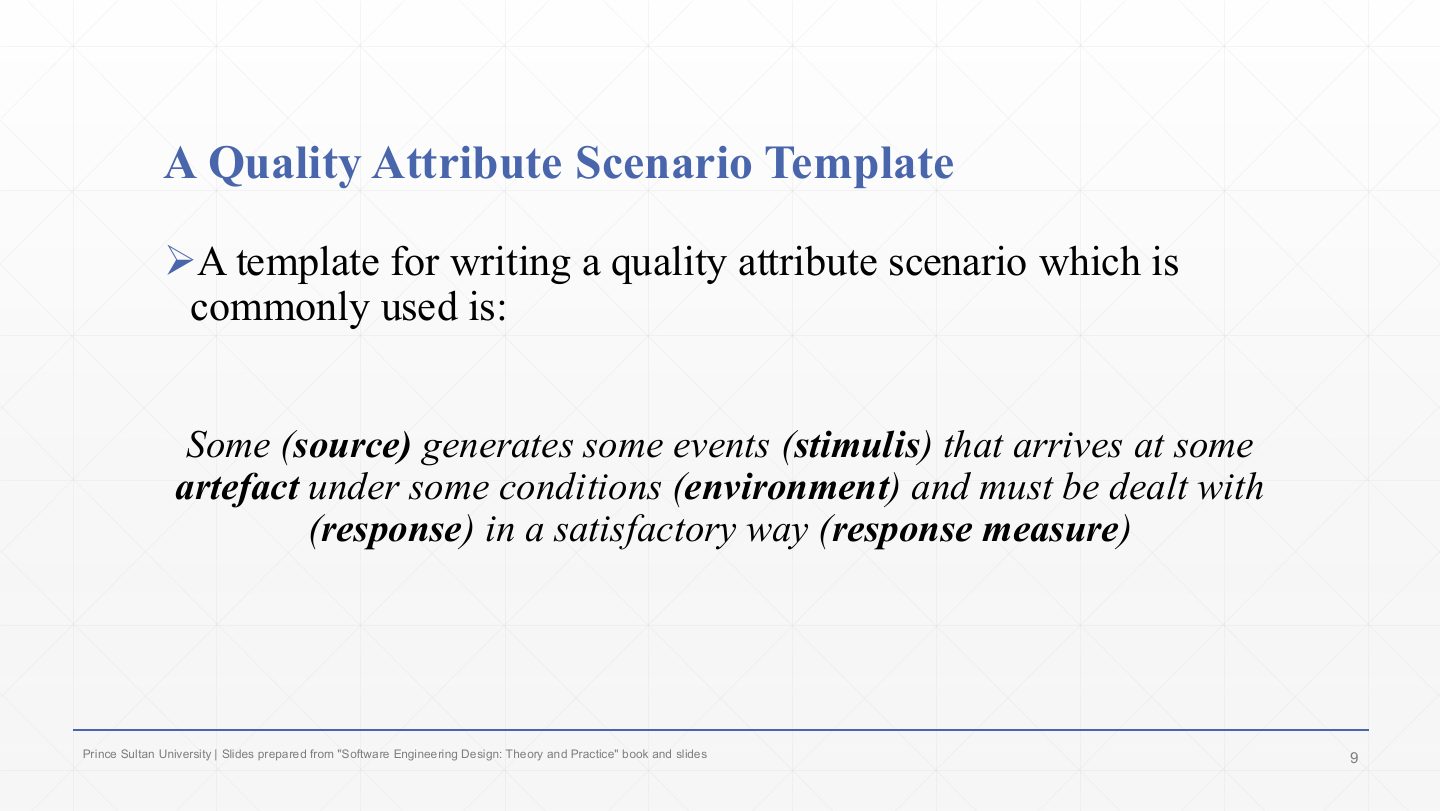
Six-part scenario
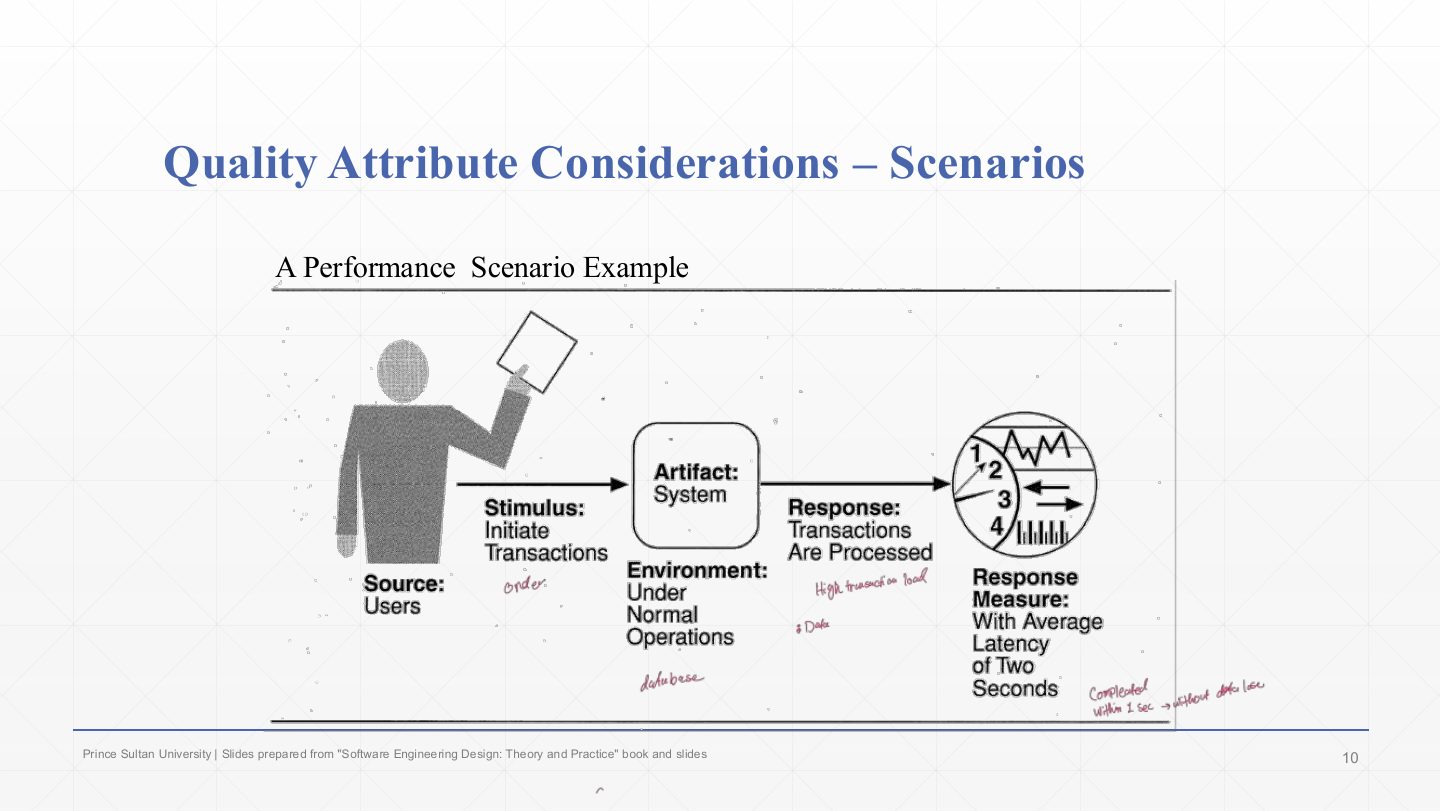
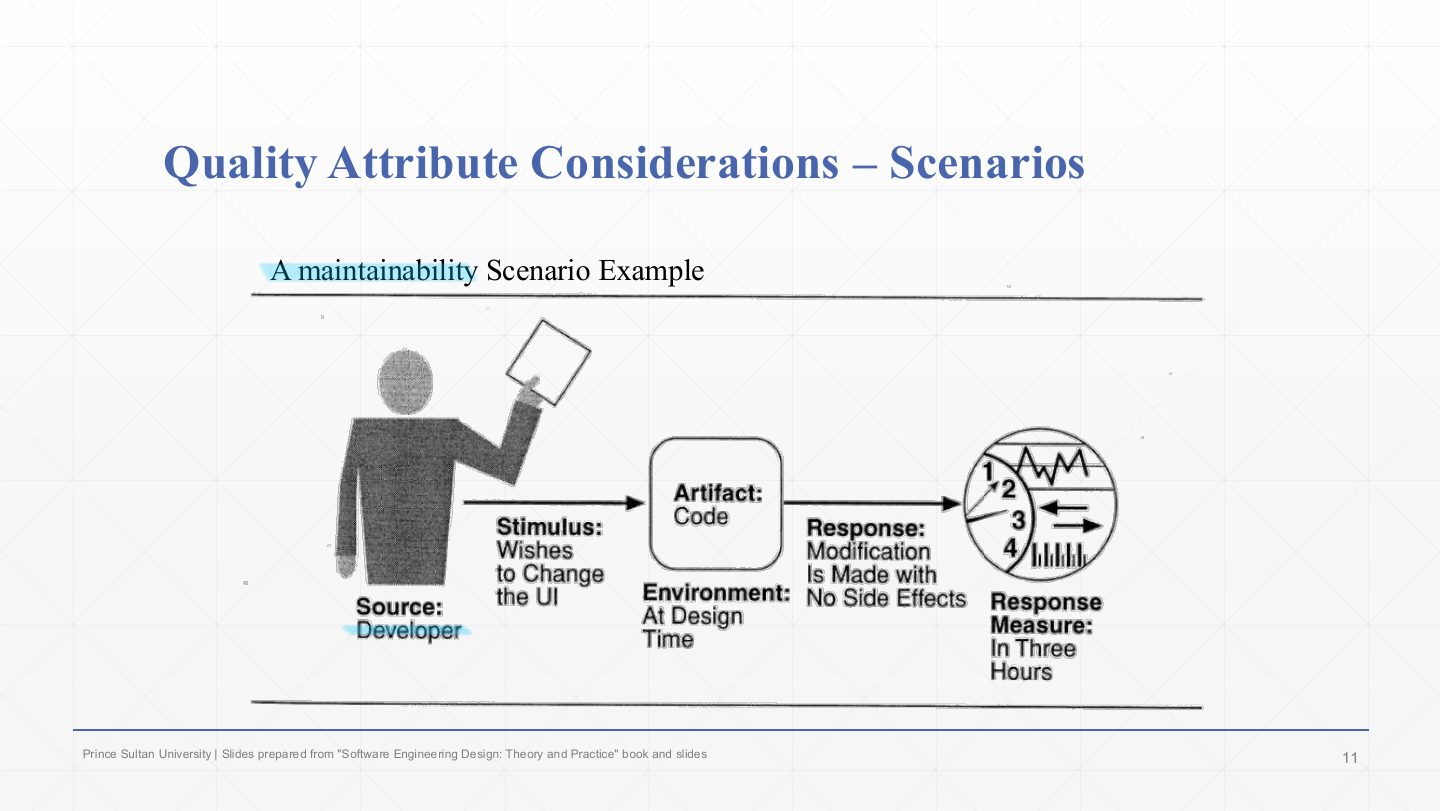
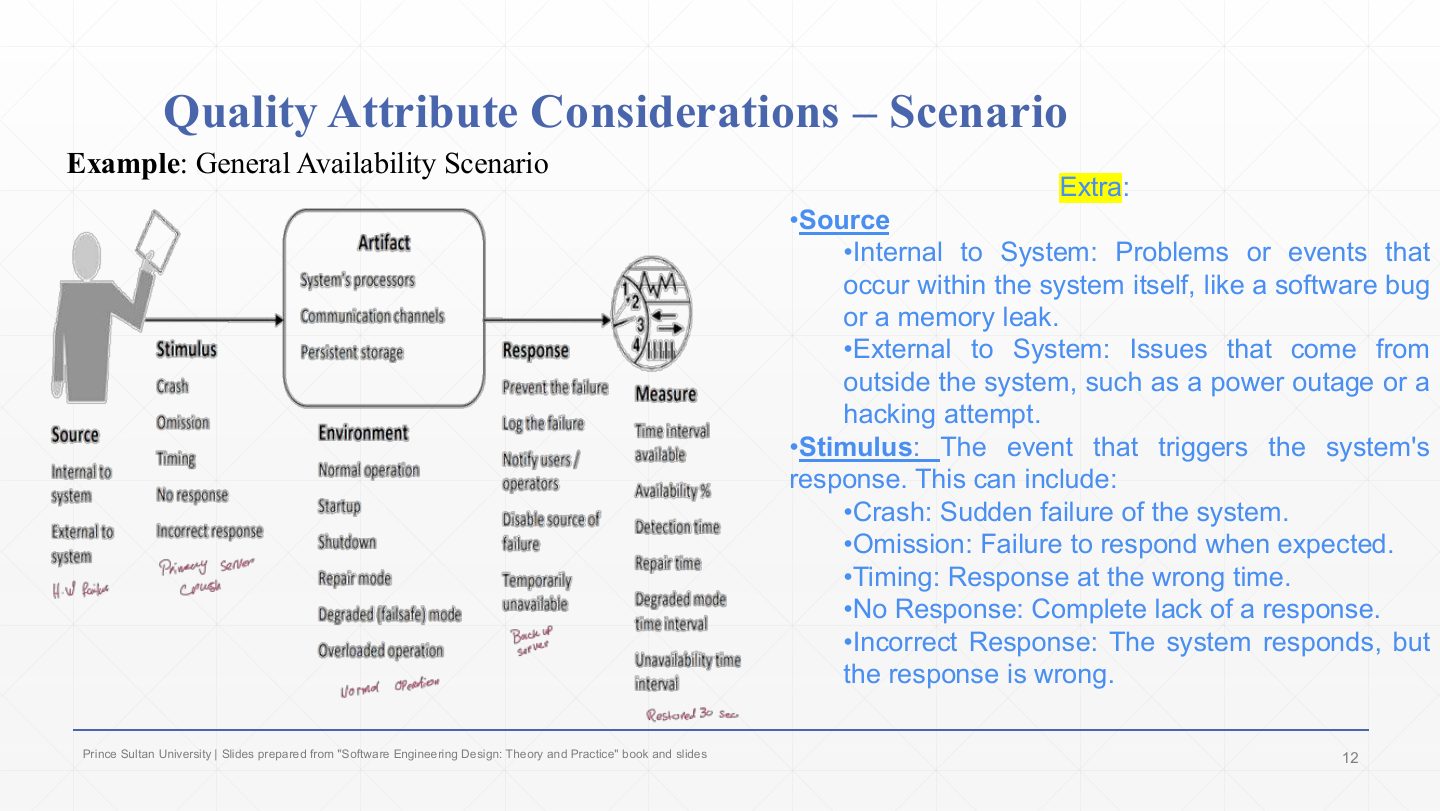
Source, stimulus, environment, artifact, response, response measure. The measure is what makes it testable.
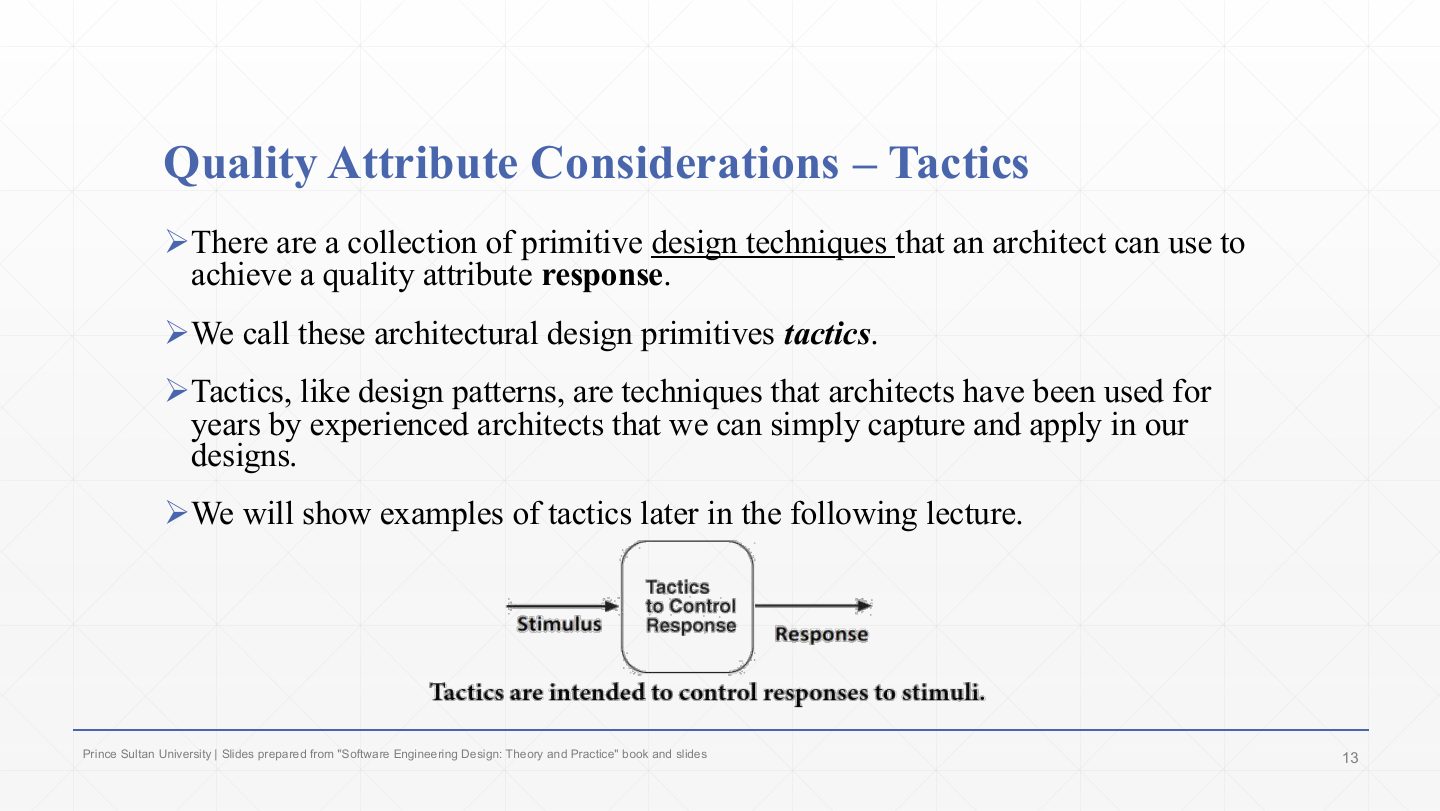
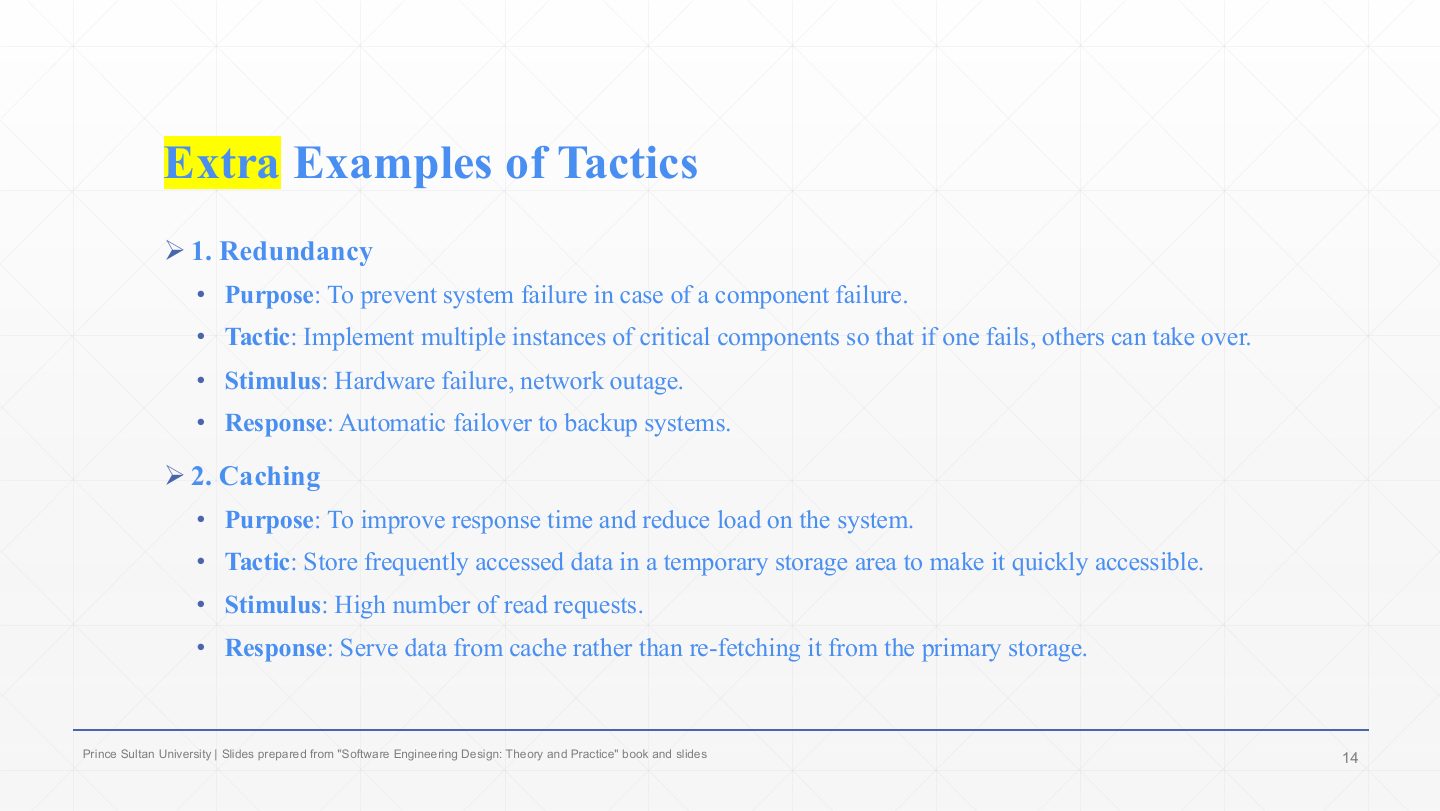
Tactics
Primitive, proven design techniques that control a quality attribute response (redundancy, caching…).
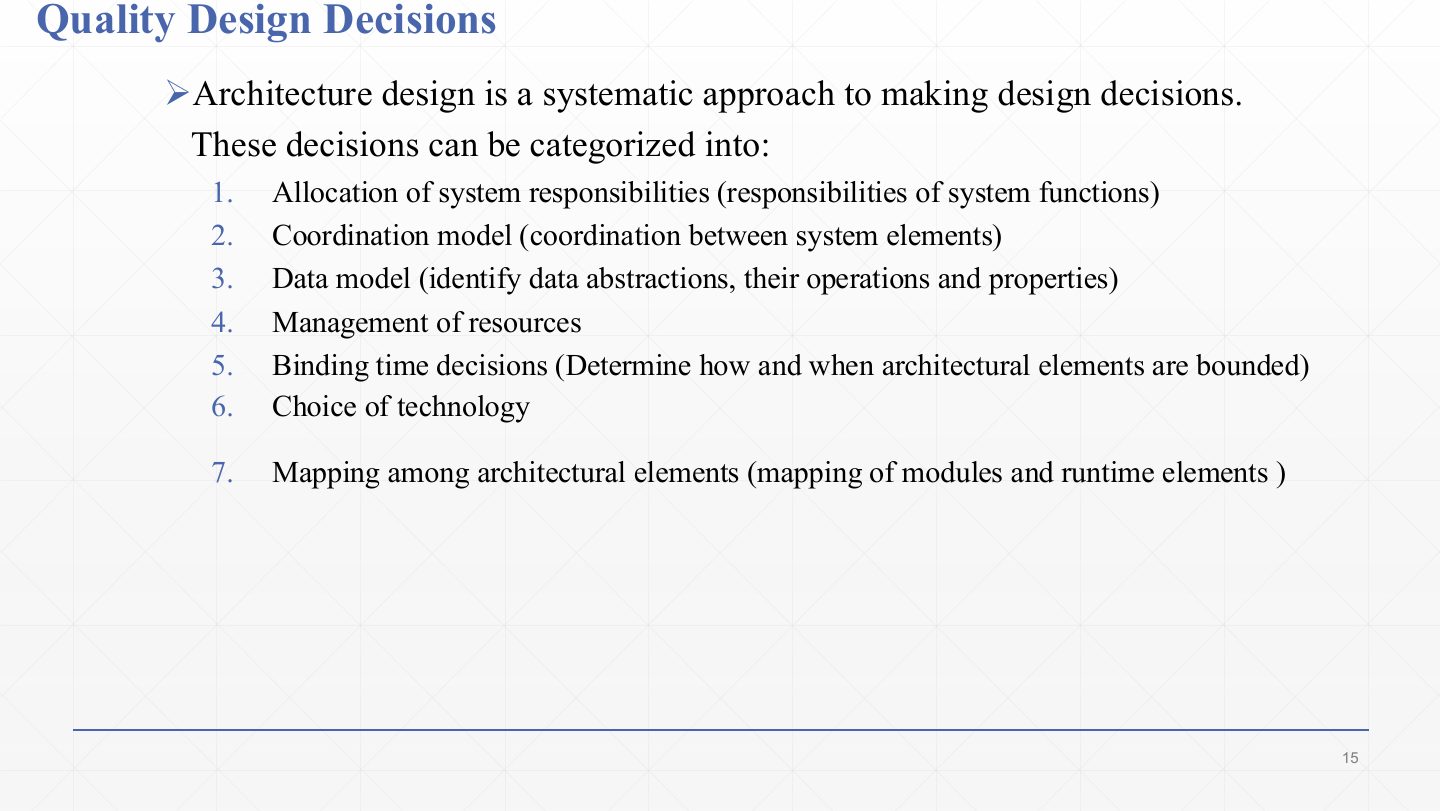
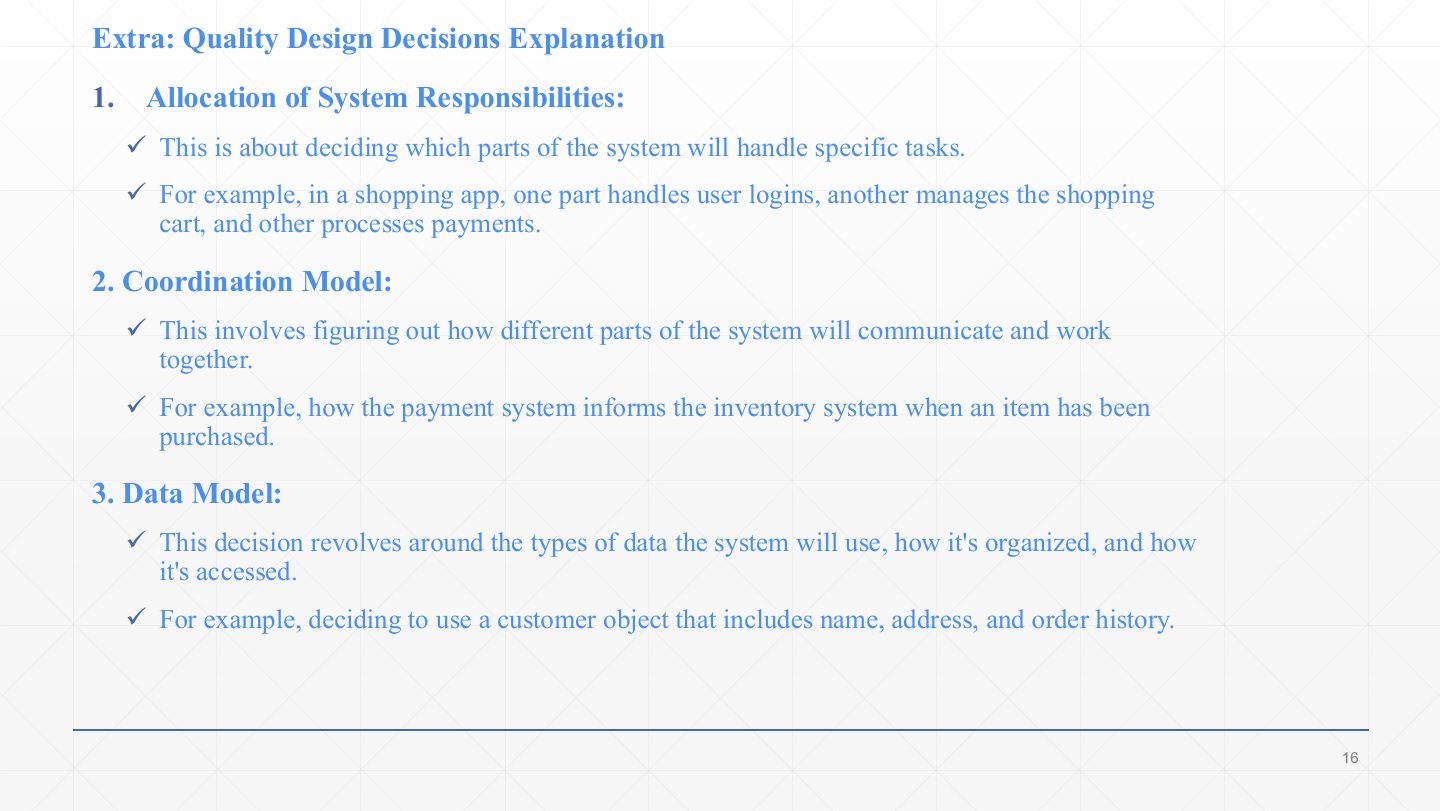
Seven decision types
Responsibilities, coordination, data model, resources, binding time, technology, mapping.
How the lecture is organized
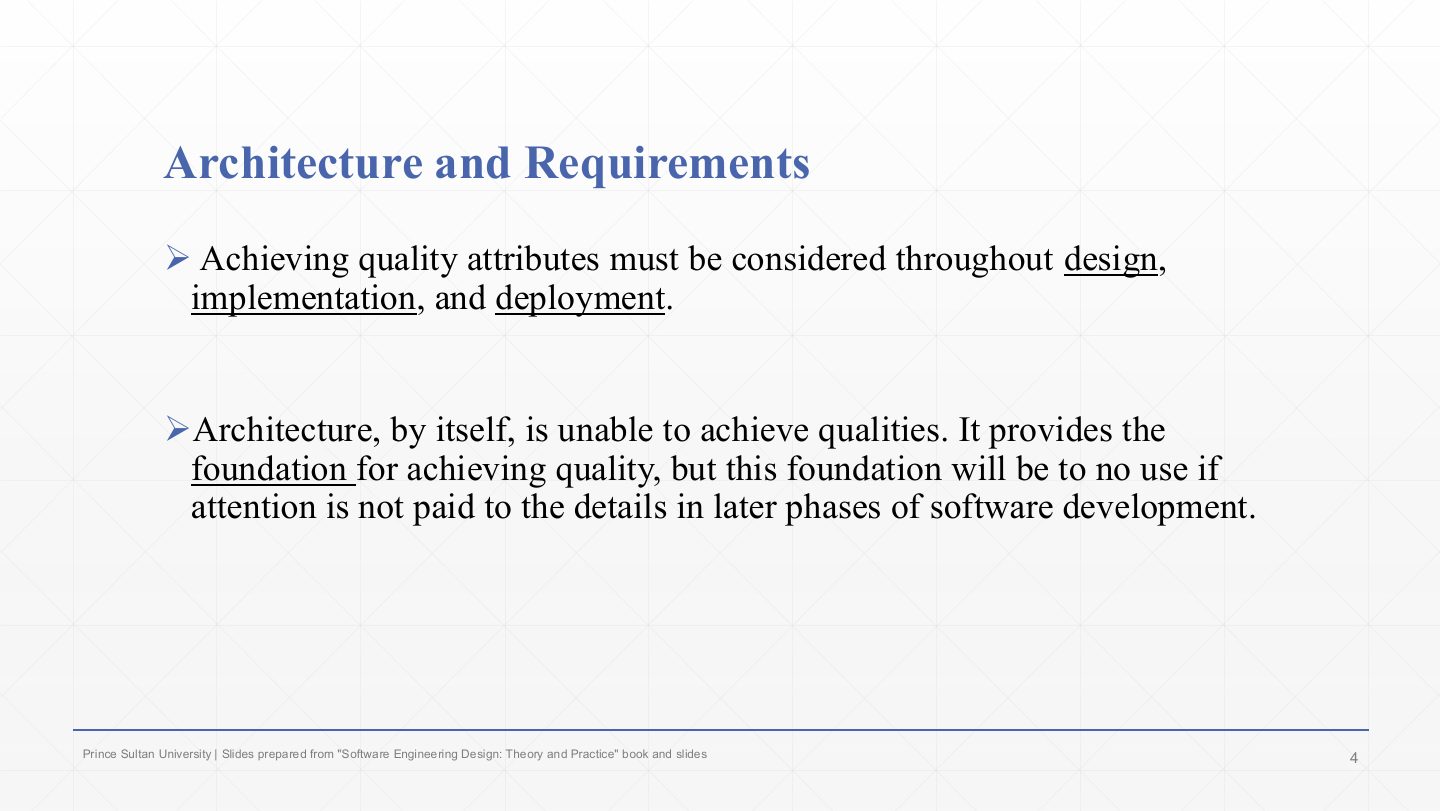
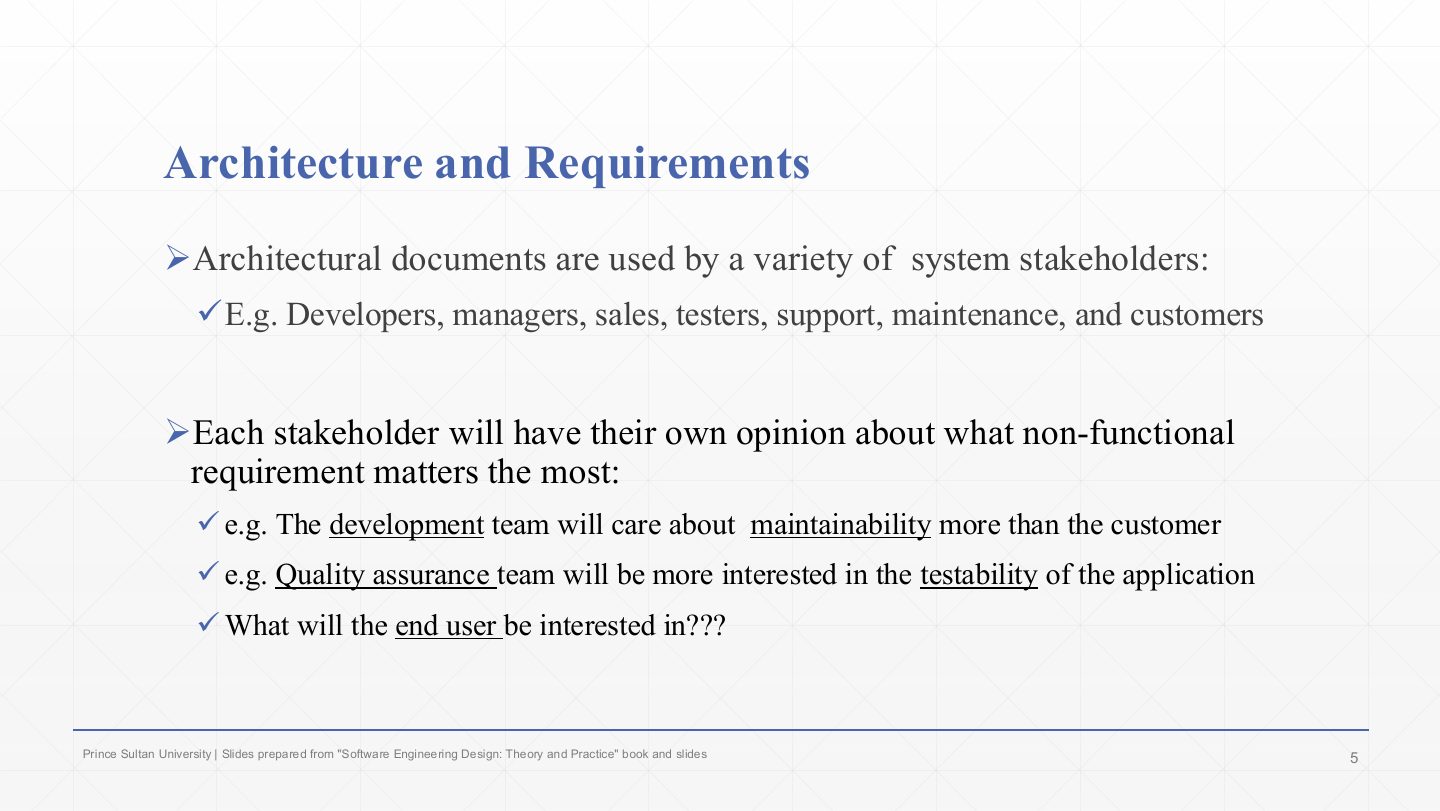
- Slides 1–5Architecture and requirements: functional vs. quality, who cares about which quality
- Slides 6–12Quality attribute considerations and scenarios, with three worked examples
- Slides 13–14Tactics
- Slides 15–18The seven categories of quality design decisions
Exam focus
Scenarios are the most examined idea in SE322. Quiz 1 261 had six matching questions on scenario parts (one on the definitions, five on usability, performance, availability, testability and security examples), Midterm 261 Q10 (3 marks) asked for the six parts of an online-voting scenario, Midterm 252 Q5 asked for an availability scenario, and Final 252 Q3-2 asked you to construct a general availability scenario.
How to read this page
Every original slide is shown unchanged. Yellow marks on a slide point to a numbered note: hover or tap a mark to jump to its note, and hover a note to see its marks. Questions tagged Past exam appeared on a real paper; Prediction questions are likely angles, not confirmed.
All 18 slides
- 1 Slide 1
- 2 Lecture Outlines
- 3 Architecture and Requirements
- 4 Architecture and Requirements
- 5 Architecture and Requirements
- 6 Quality Attribute Considerations
- 7 Quality Attribute Considerations Scenarios
- 8 A quality attribute scenario has the
- 9 A Quality Attribute Scenario Template
- 10 Quality Attribute Scenarios: a performance example
- 11 Quality Attribute Scenarios: a maintainability example
- 12 Quality Attribute Considerations Scenario
- 13 Quality Attribute Considerations Tactics
- 14 Extra Examples of Tactics
- 15 Quality Design Decisions
- 16 Extra: Quality Design Decisions explained
- 17 Extra: Quality Design Decisions explained (cont.)
- 18 Summary