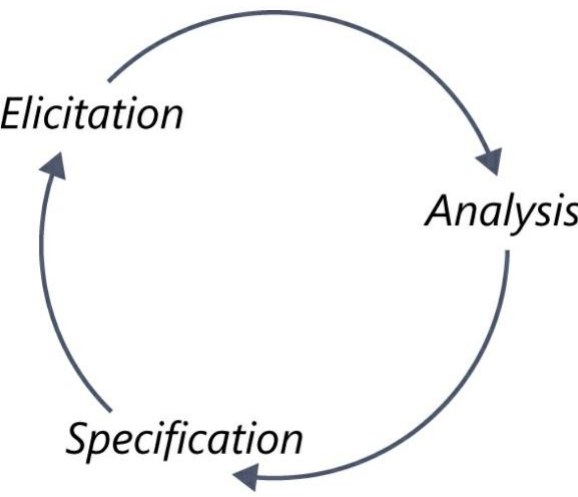
- Elicitation: discovering requirements from stakeholders and other sources (not just "gathering").
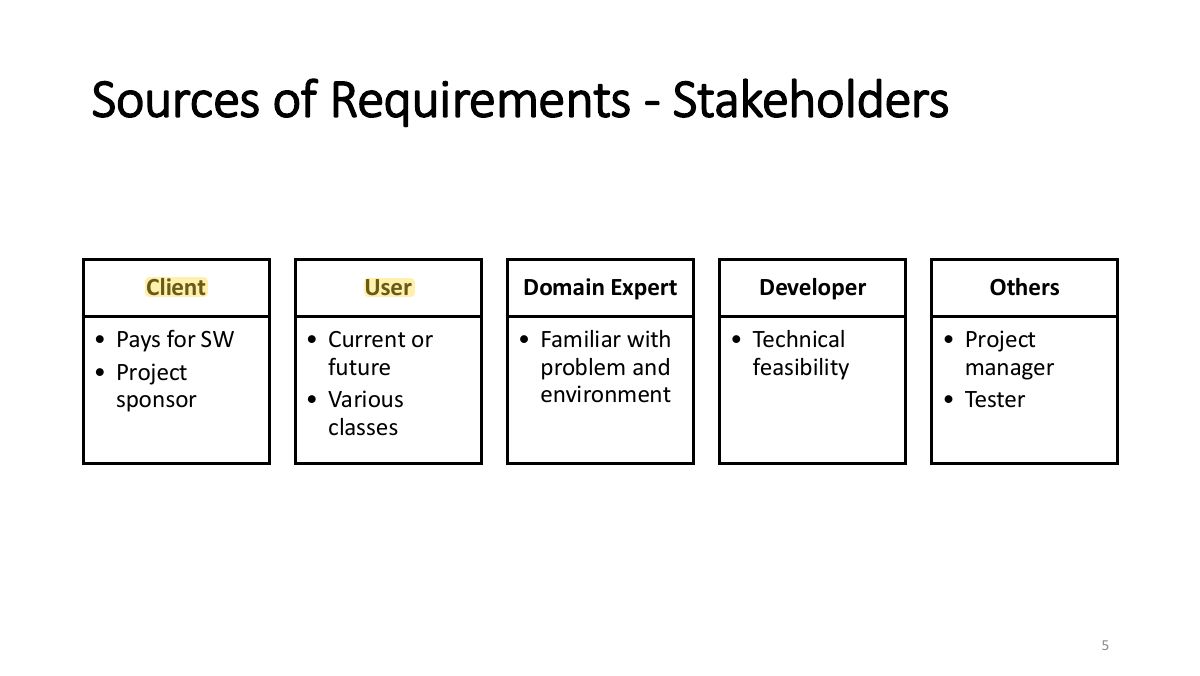
- Sources: stakeholders and users, documents, existing systems, regulations, competitors, problem reports.
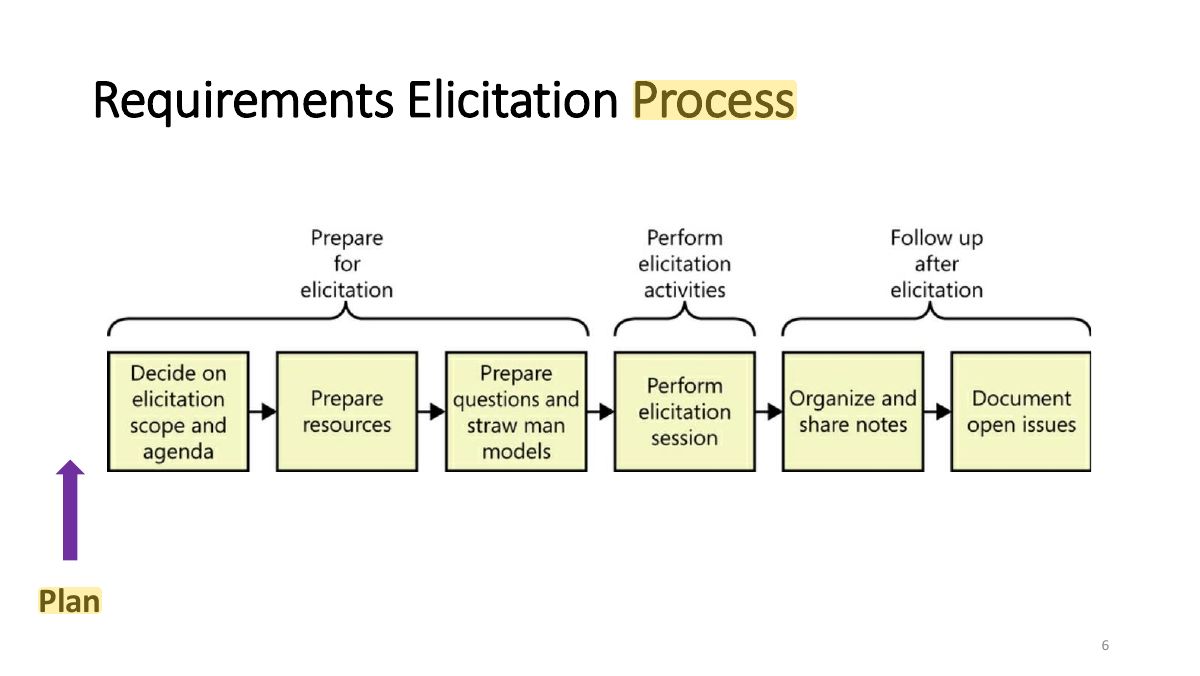
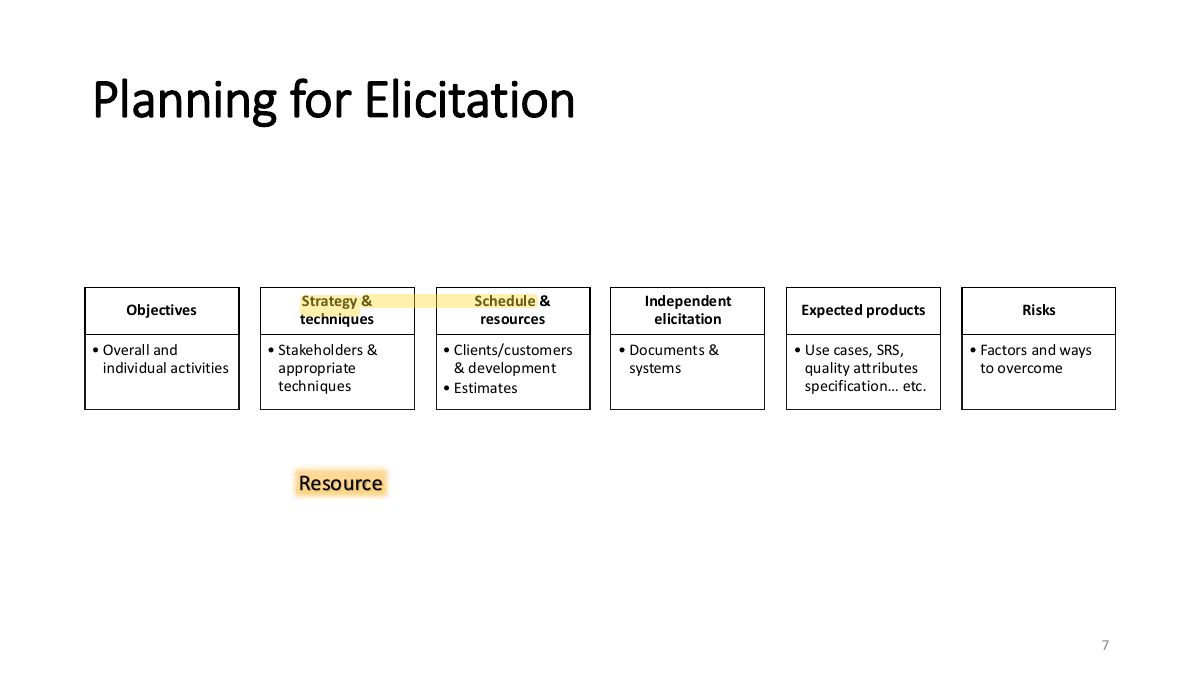
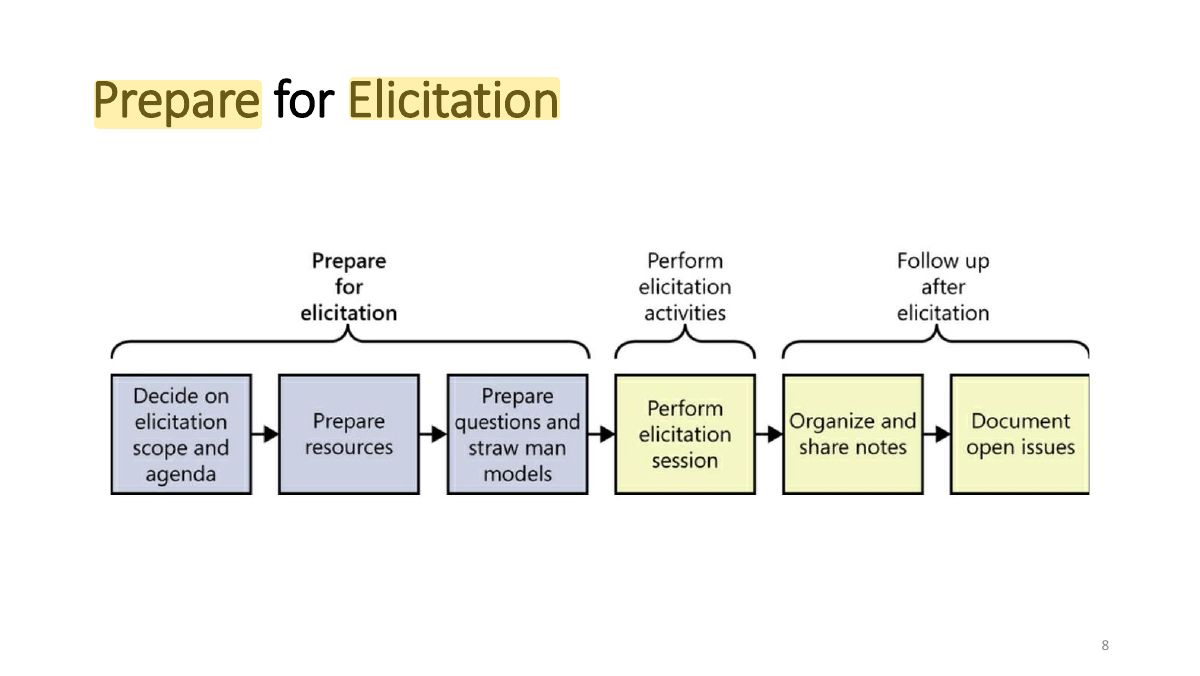
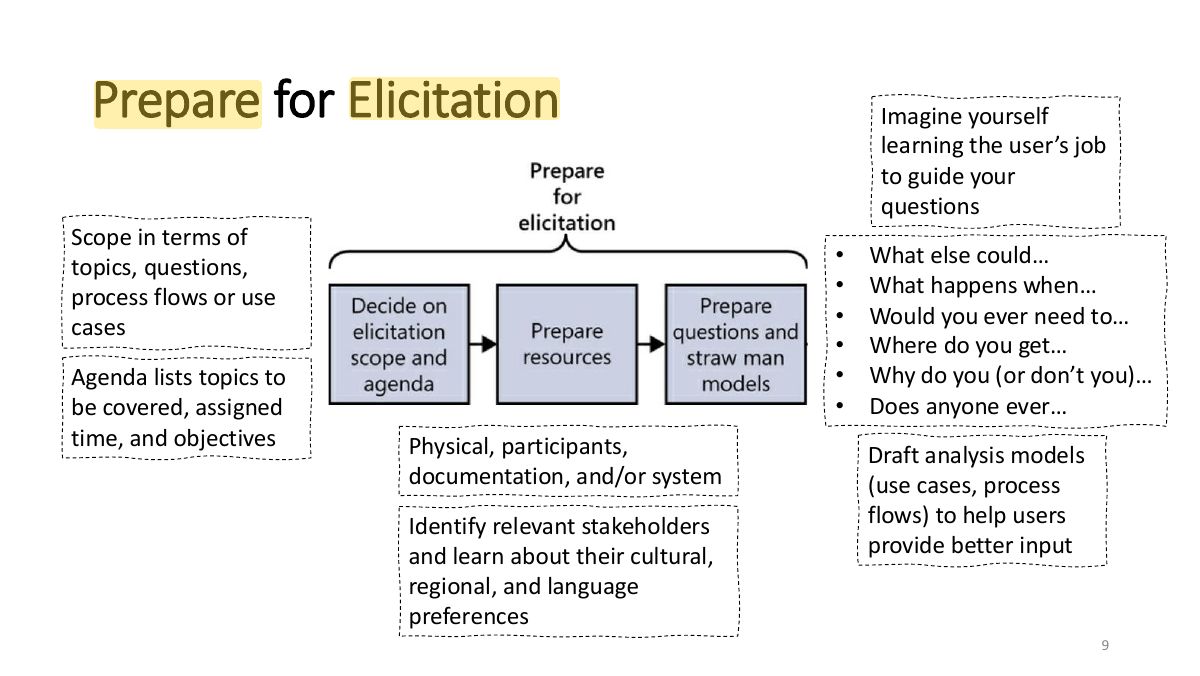
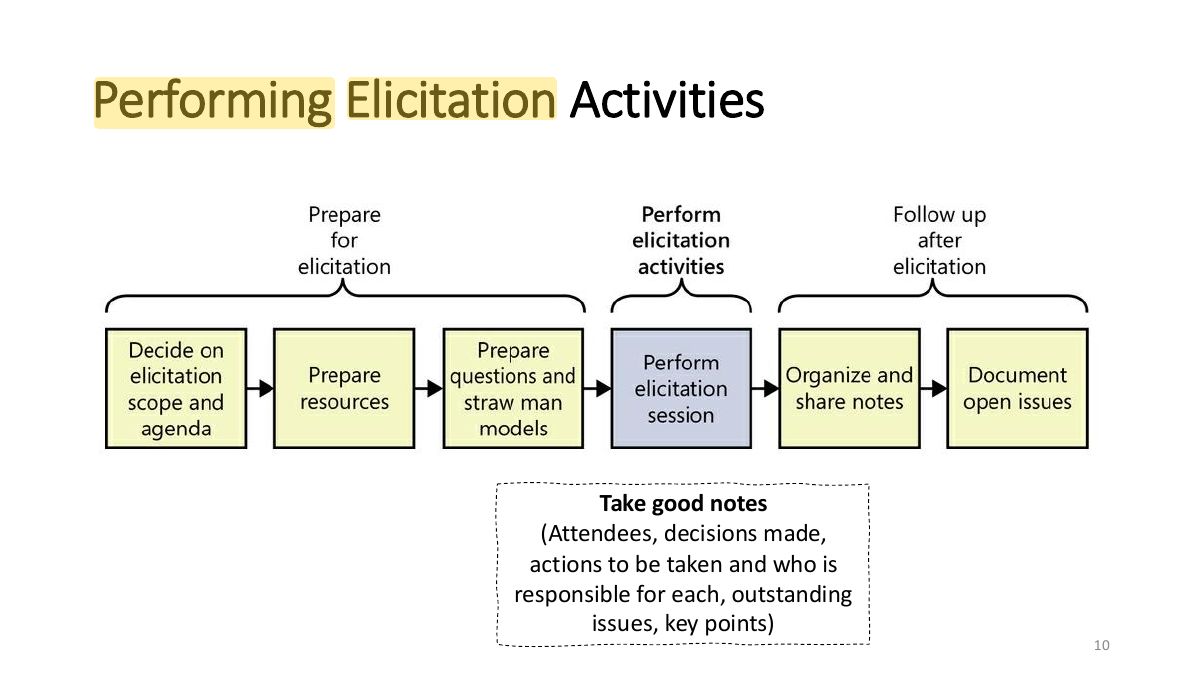
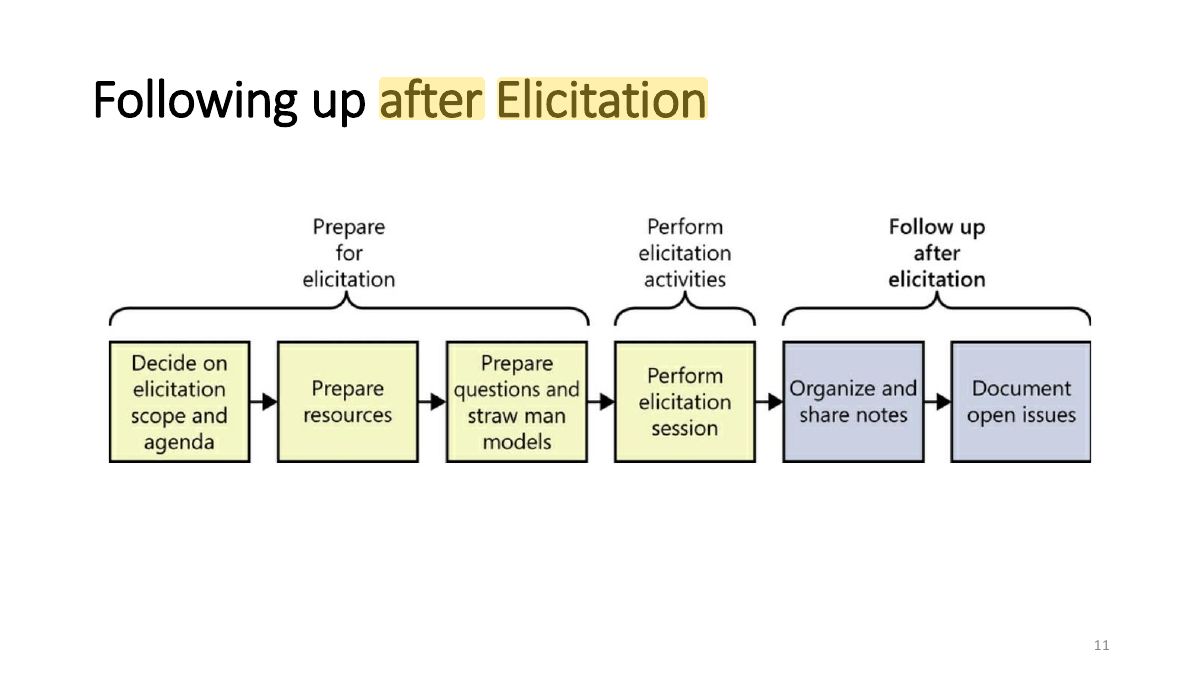
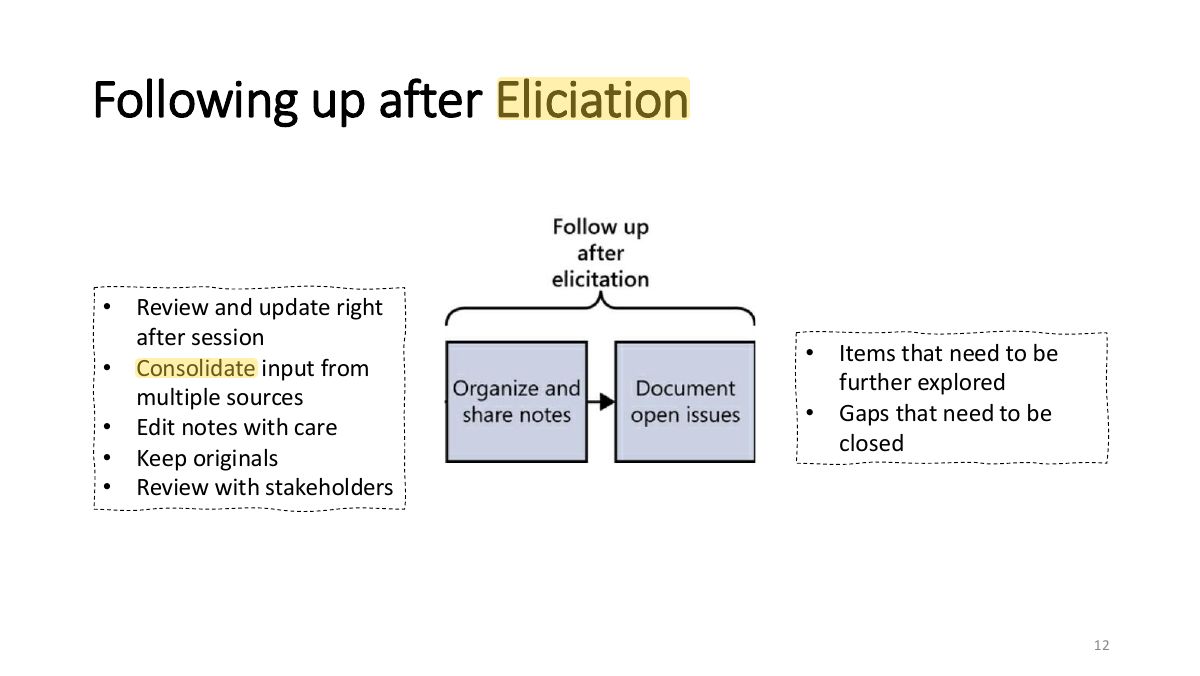
- Process: plan → prepare → perform → follow up (organize, share notes, record open issues).
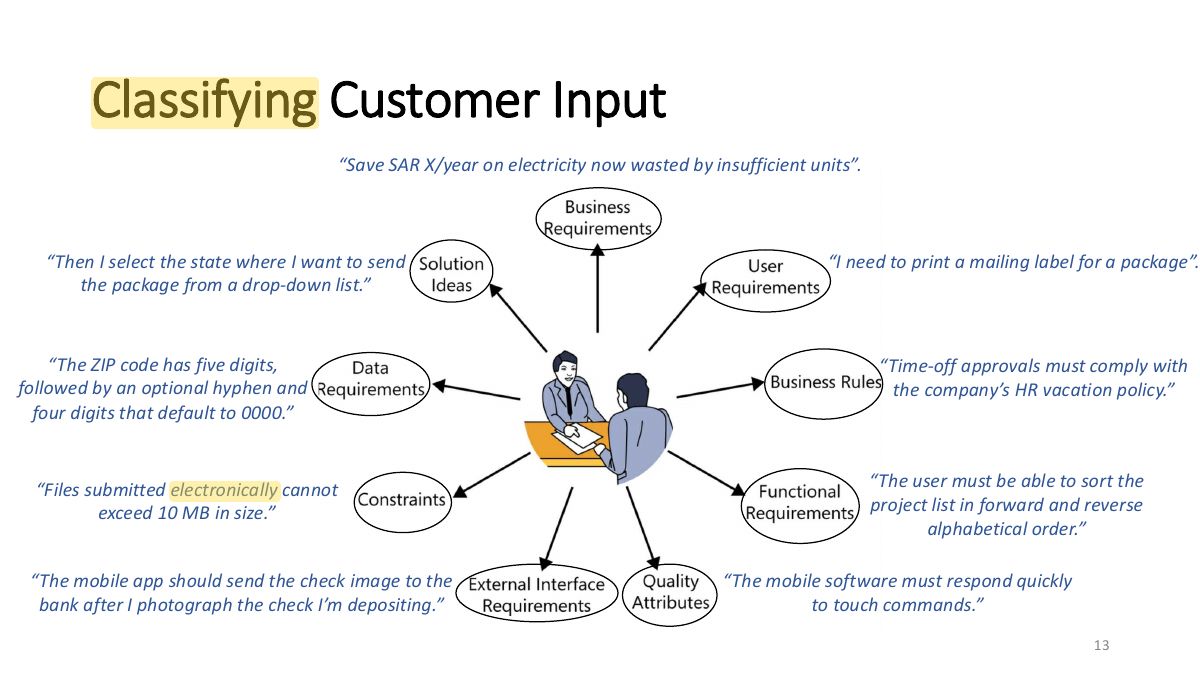
- Classify input as: business requirement, user requirement, business rule, functional, quality attribute, external interface, constraint, data definition, solution idea.
- Done when: users can’t think of more use cases; new ideas are out of scope or low priority; proposed requirements repeat earlier ones; ideas are future, not current; the remaining issues are understood.
Asked in a real exam
🎯 How this can come up · 1 question
When do you know you are done with elicitation? Give two signs.
Users can’t think of any more use cases or user stories; new suggestions are out of scope or already captured (repeating earlier requirements); remaining ideas are “nice to have” for future releases; the team can explain the requirements well enough to build and test.
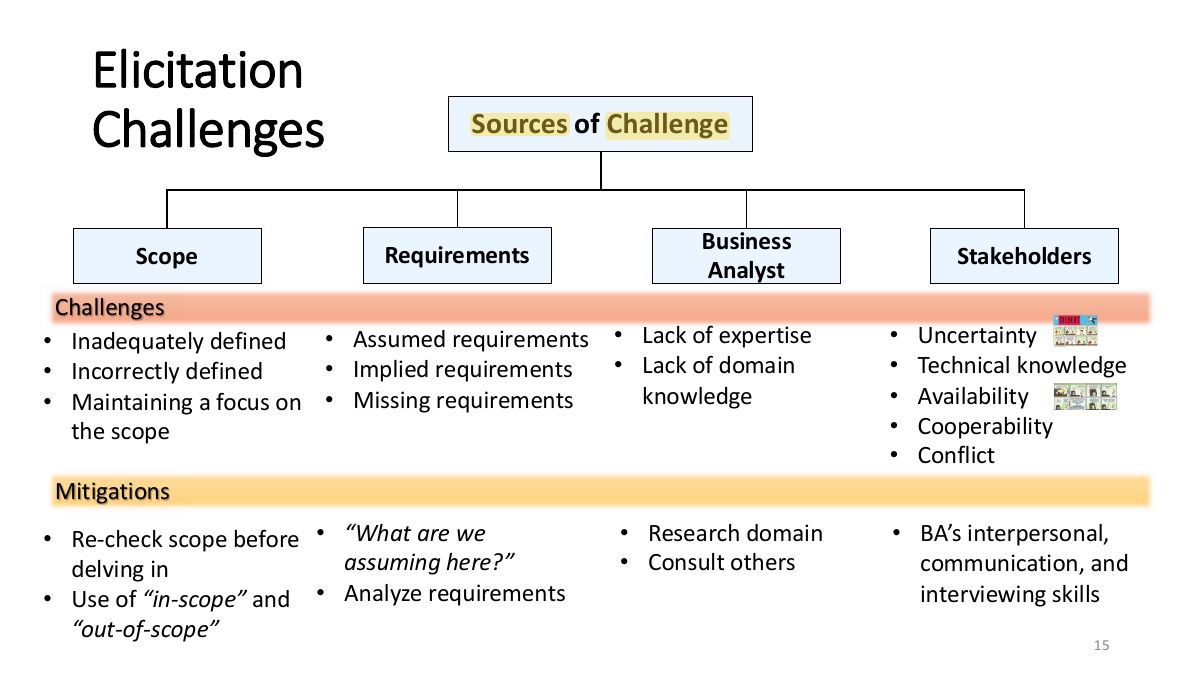
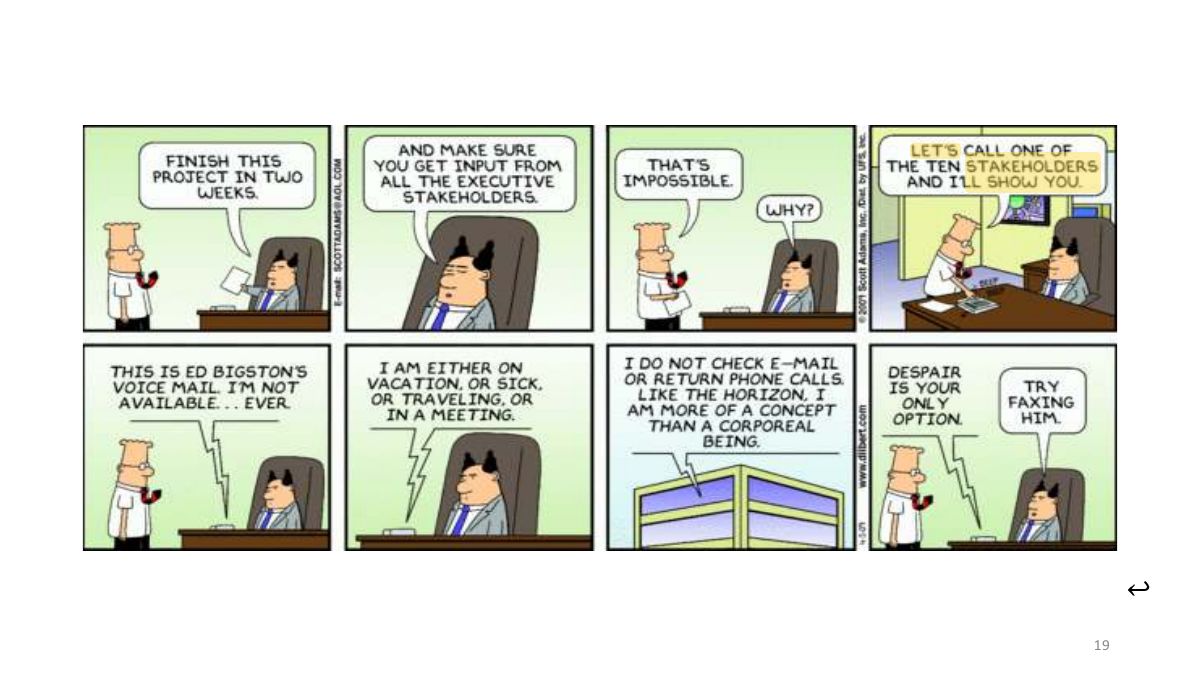
- Challenges: stakeholders unavailable, don’t know what they want, use jargon, conflict; scope creep; solution ideas disguised as requirements.
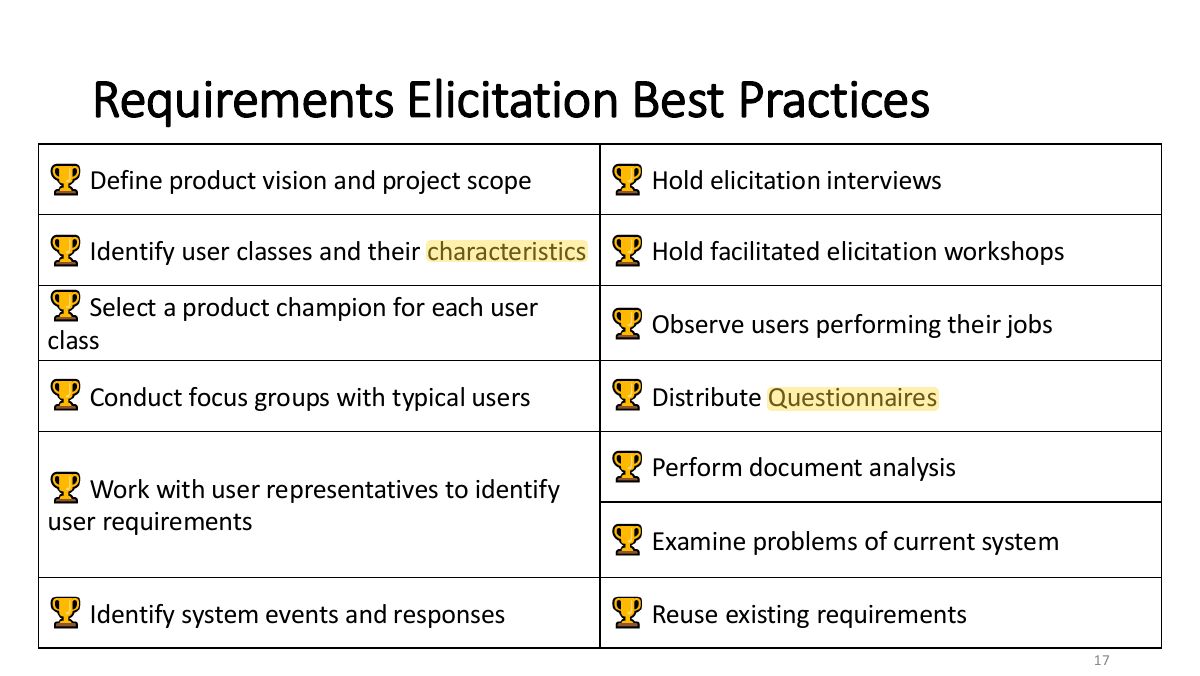
- Best practices: define scope first, identify user classes, select product champions, use several techniques, document as you go.
No slides match this filter.