MATH221 · Annotated SlidesChapter 7 — The Jacobi and Gauss–Seidel Iterative Techniques
Chapter 7 · Annotated slides

The Jacobi and Gauss–Seidel Iterative Techniques

The Jacobi and Gauss–Seidel iterative techniques and their convergence.
Slide text Study notes Highlight: key words Tips, tricks & traps Seen again elsewhere How it can come up
Slide 1: 7.3
Exam weight Low
    Slide 2: Slide 2
    Exam weight Low
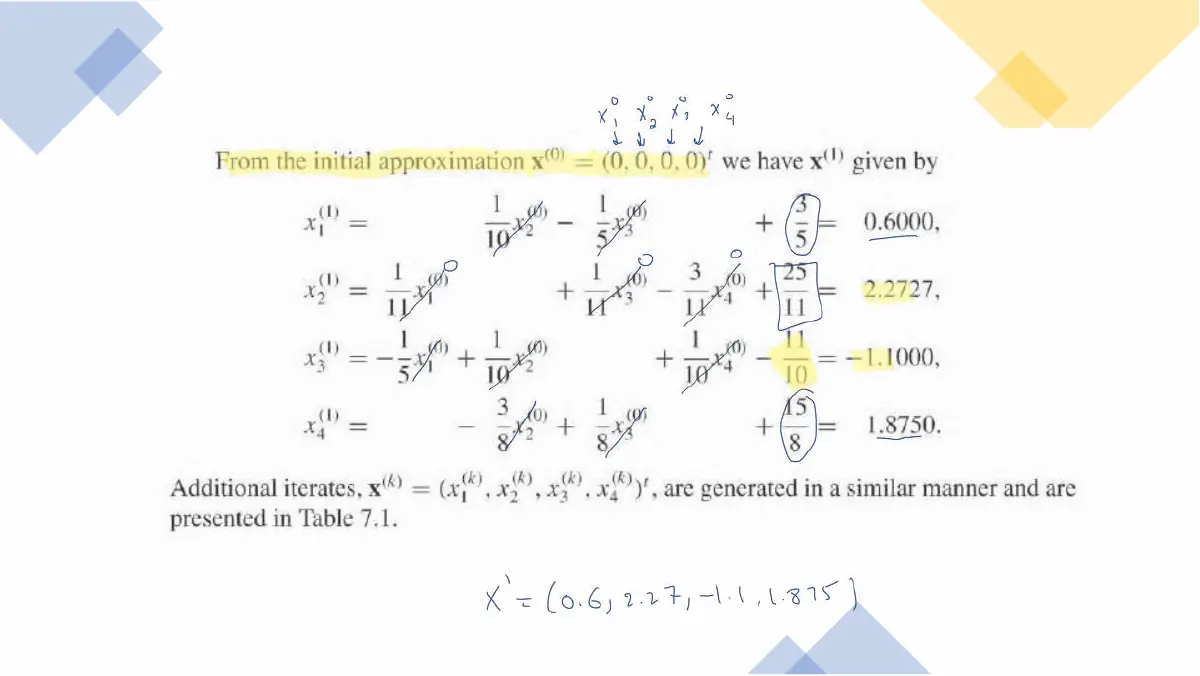
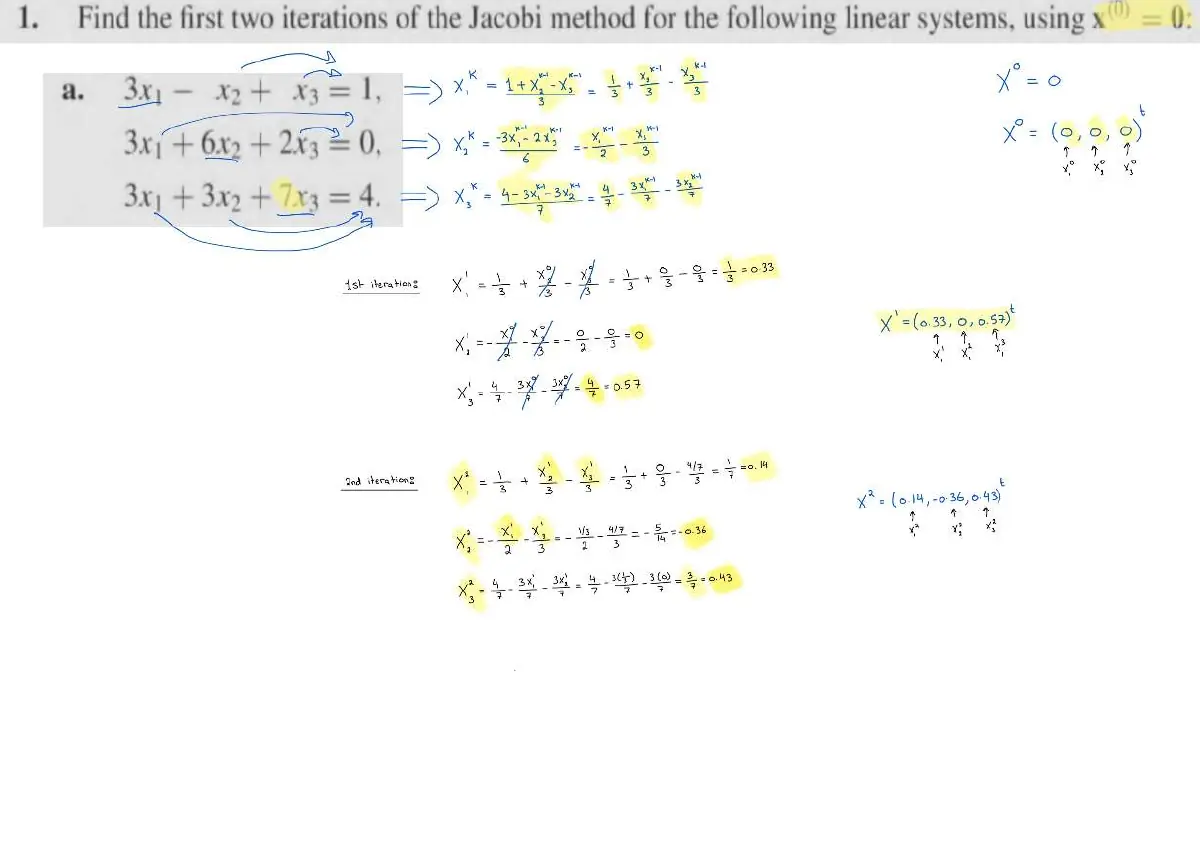
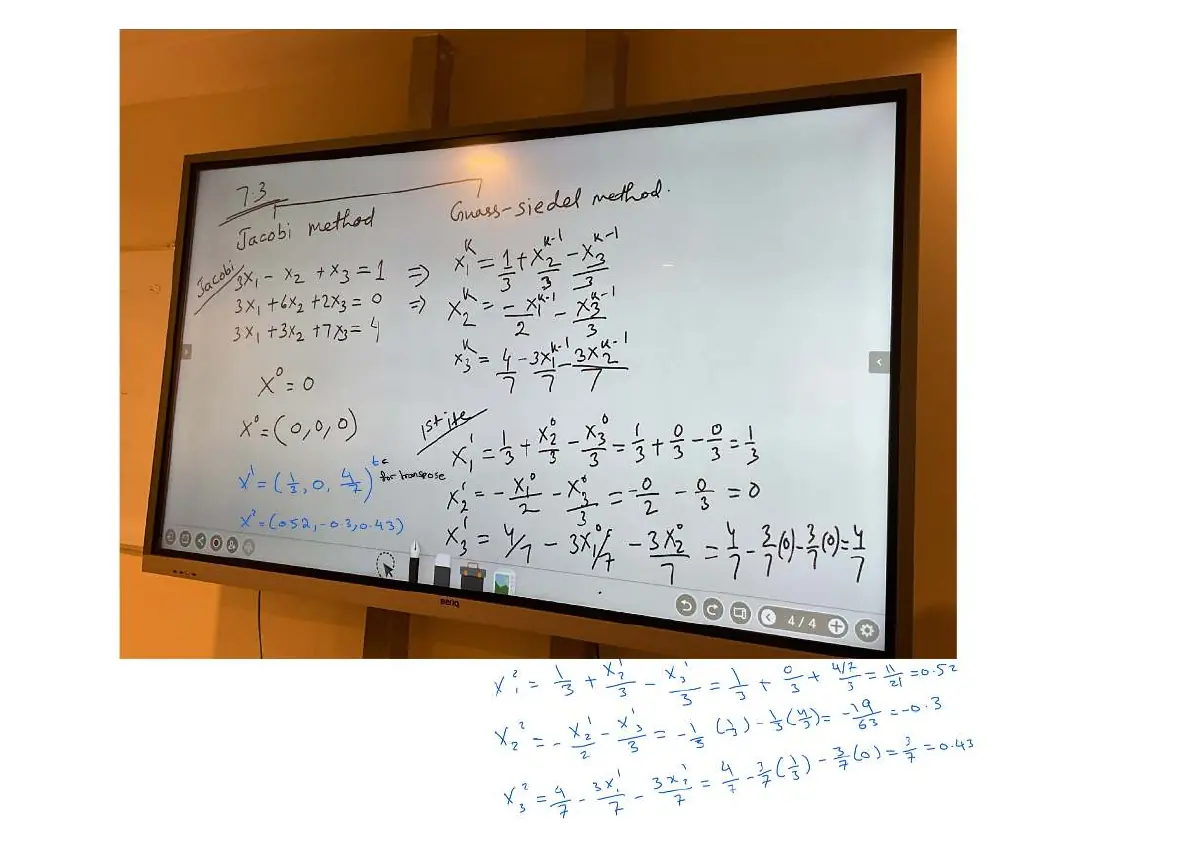
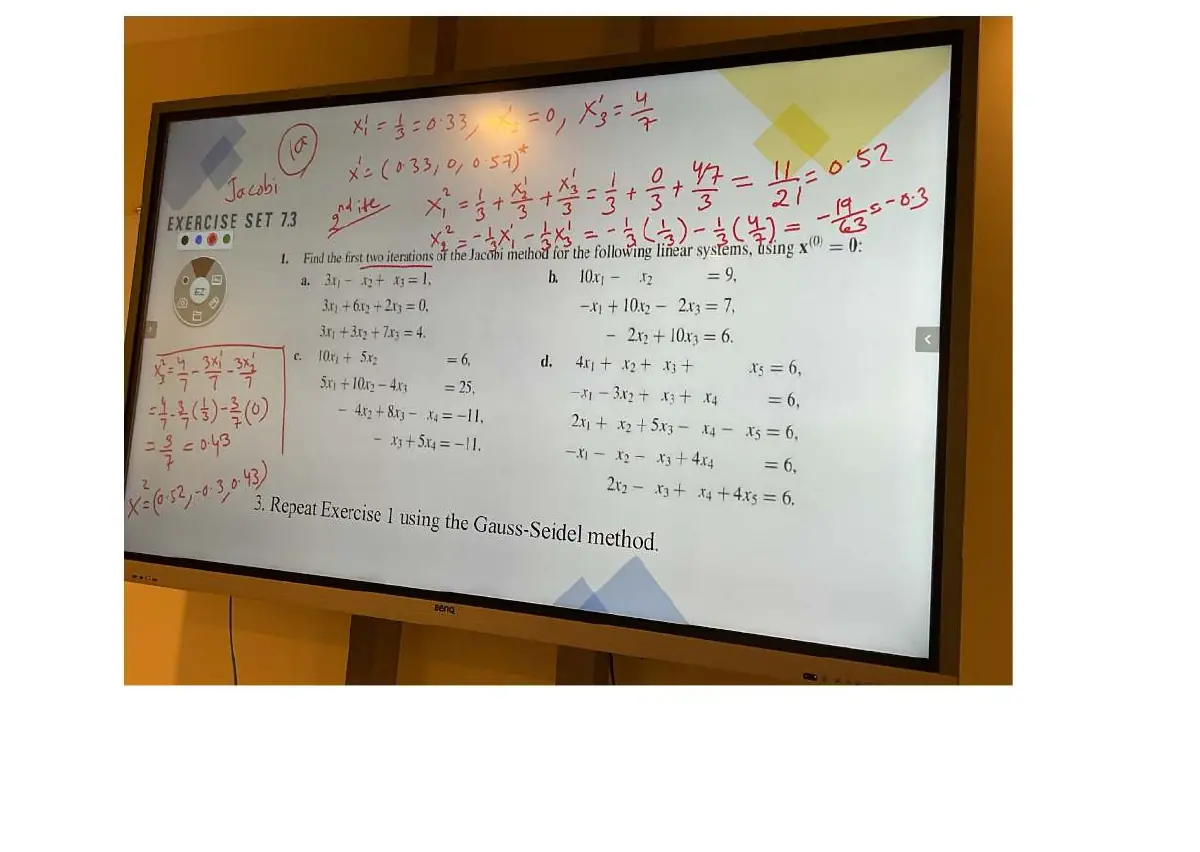
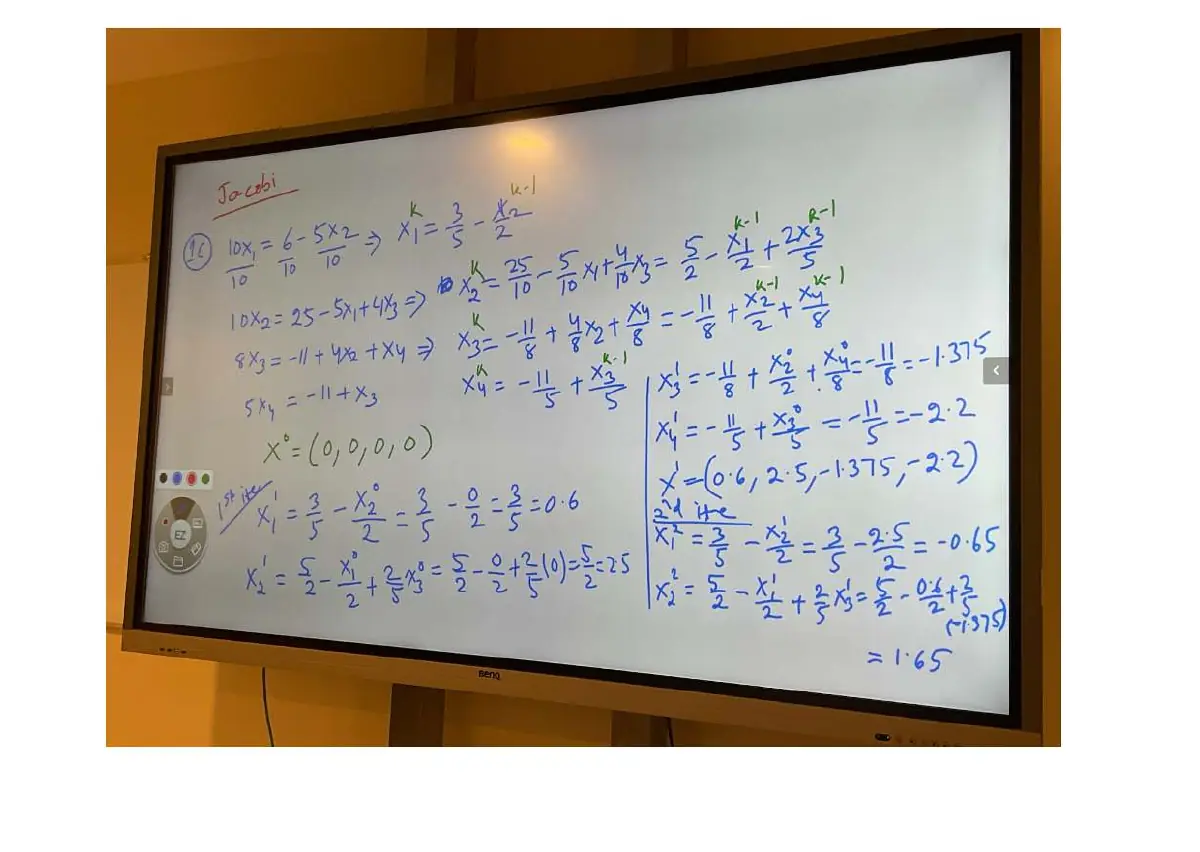
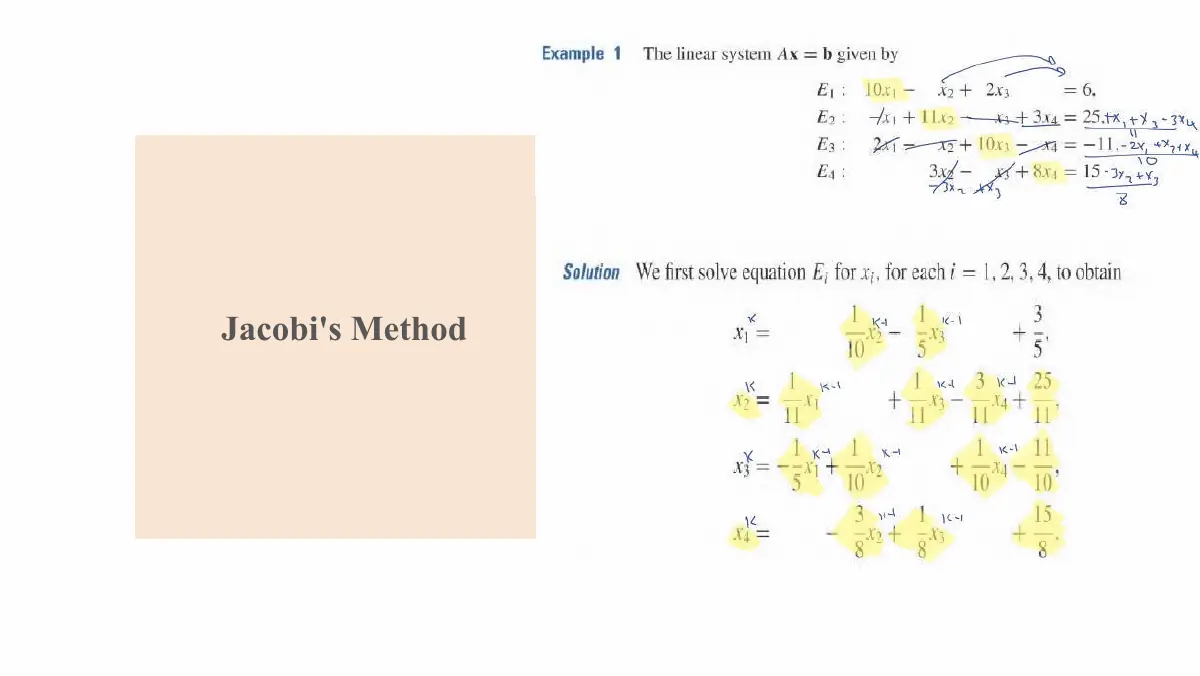
    1. Jacobi: xᵢ⁽ᵏ⁾ = (bᵢ − Σ_{j≠i} aᵢⱼxⱼ⁽ᵏ⁻¹⁾)/aᵢᵢ (all old values).
    Slide 3: Slide 3
    Exam weight Low
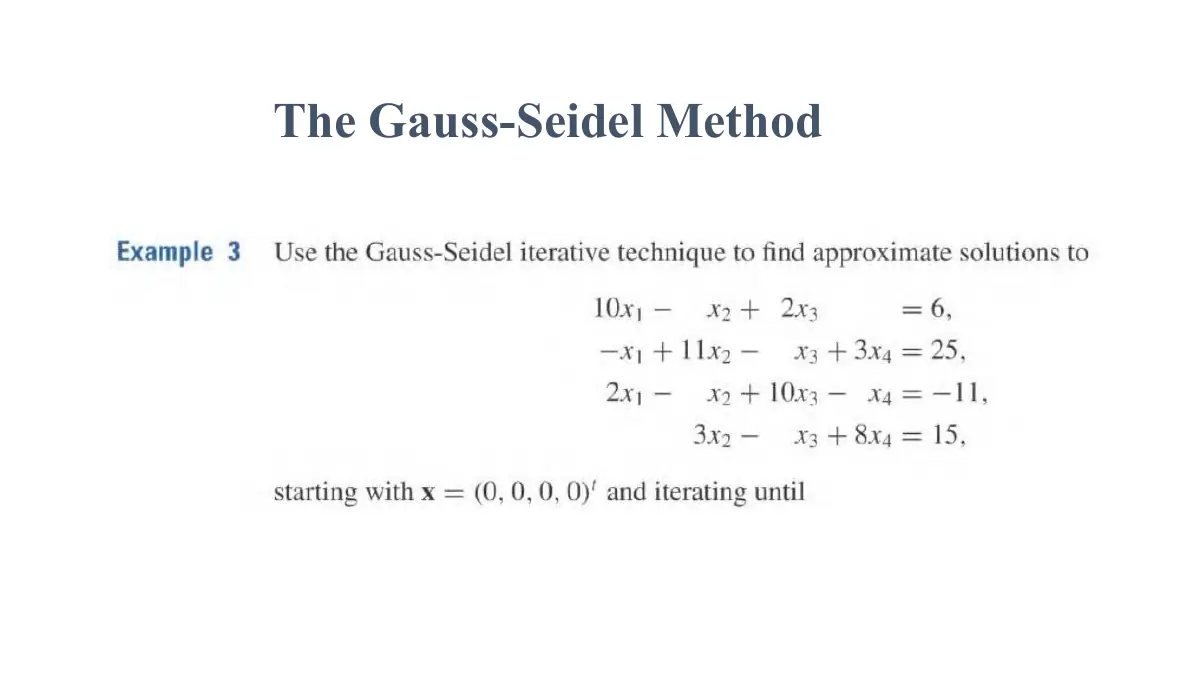
      Slide 4: The Gauss-Seidel Method
      Exam weight High
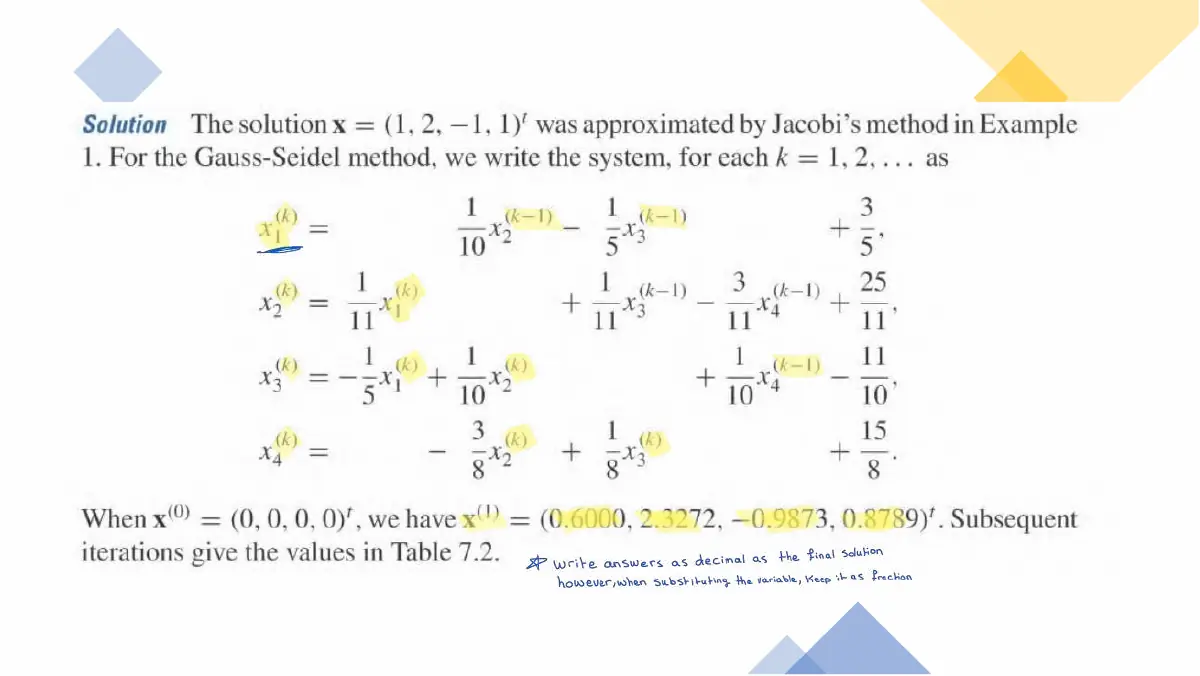
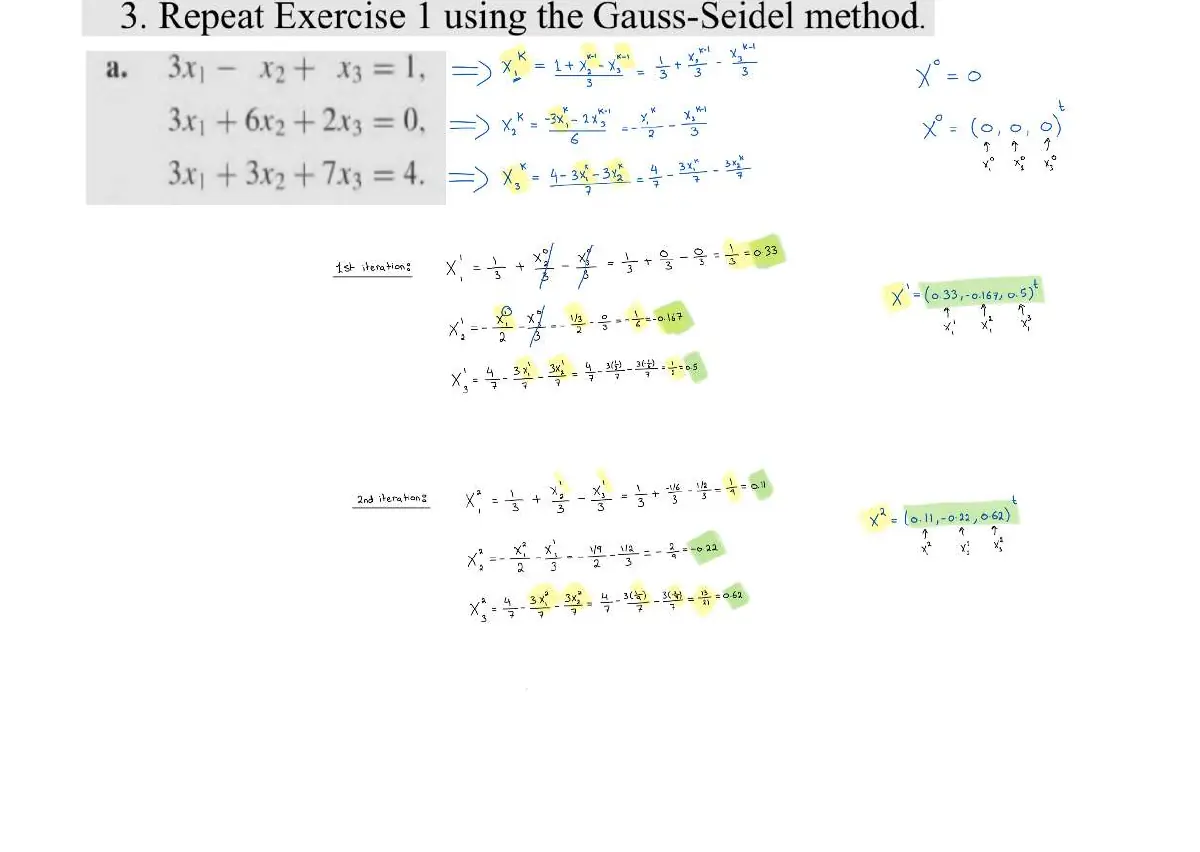
      1. Gauss–Seidel: uses the newest values as soon as they are computed; usually faster. Both converge if A is strictly diagonally dominant.
      Memory trickJacobi = old values; Gauss–Seidel = newest values.
      🎯 How this can come up · 1 question
      Written

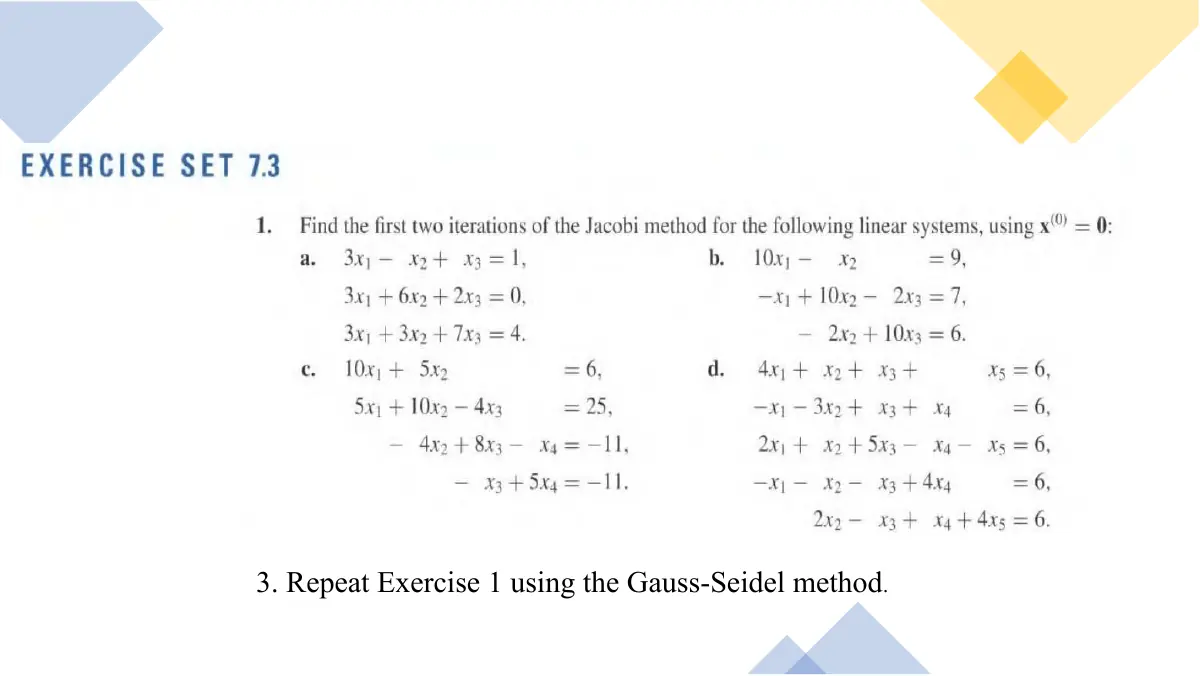
      One Gauss–Seidel step for 10x − y = 9, −x + 10y = 9 from (0, 0).

      Slide 5: Slide 5
      Exam weight Low
        Slide 6: Slide 6
        Exam weight Low
          Slide 7: Slide 7
          Exam weight Low
            Slide 8: Slide 8
            Exam weight Low
              Slide 9: Slide 9
              Exam weight Low
                Slide 10: Slide 10
                Exam weight Low
                  Slide 11: Slide 11
                  Exam weight Low