Exam weight Low
Exam weight Low
Exam weight
High
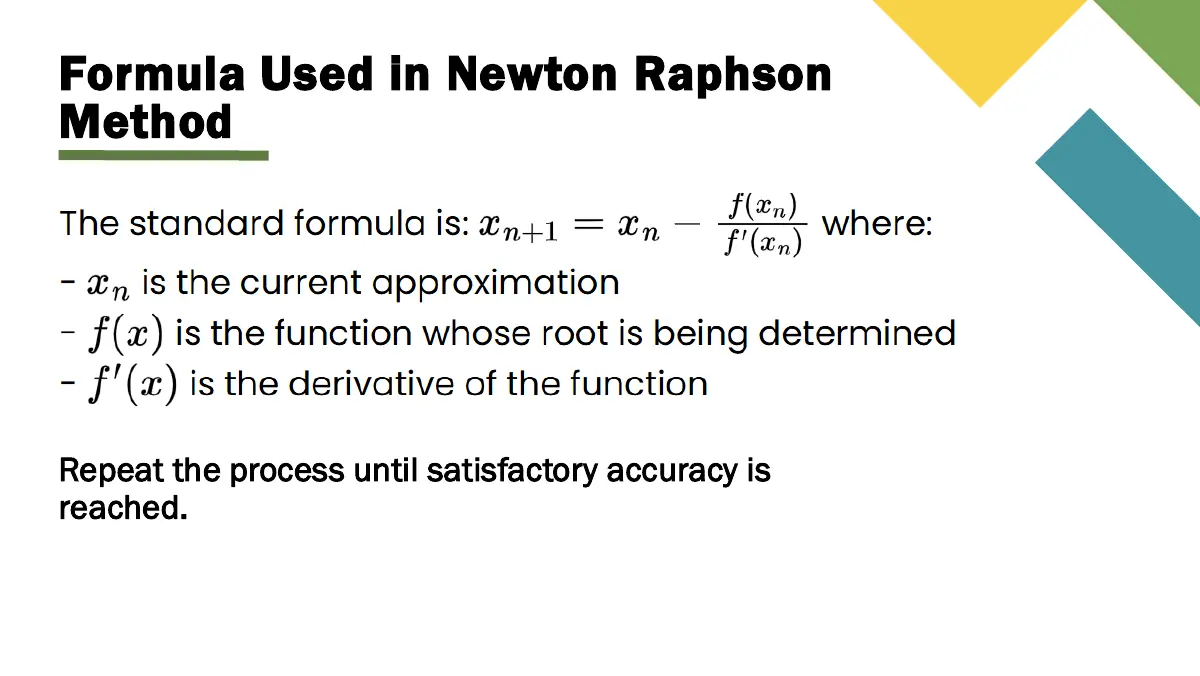
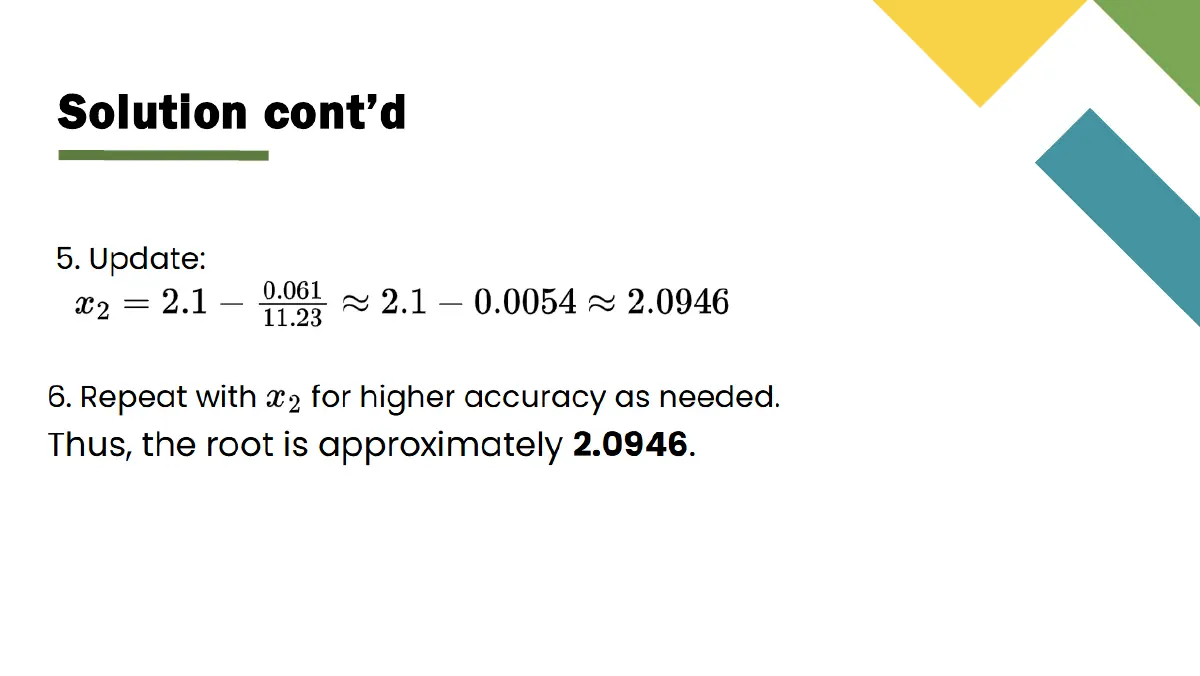
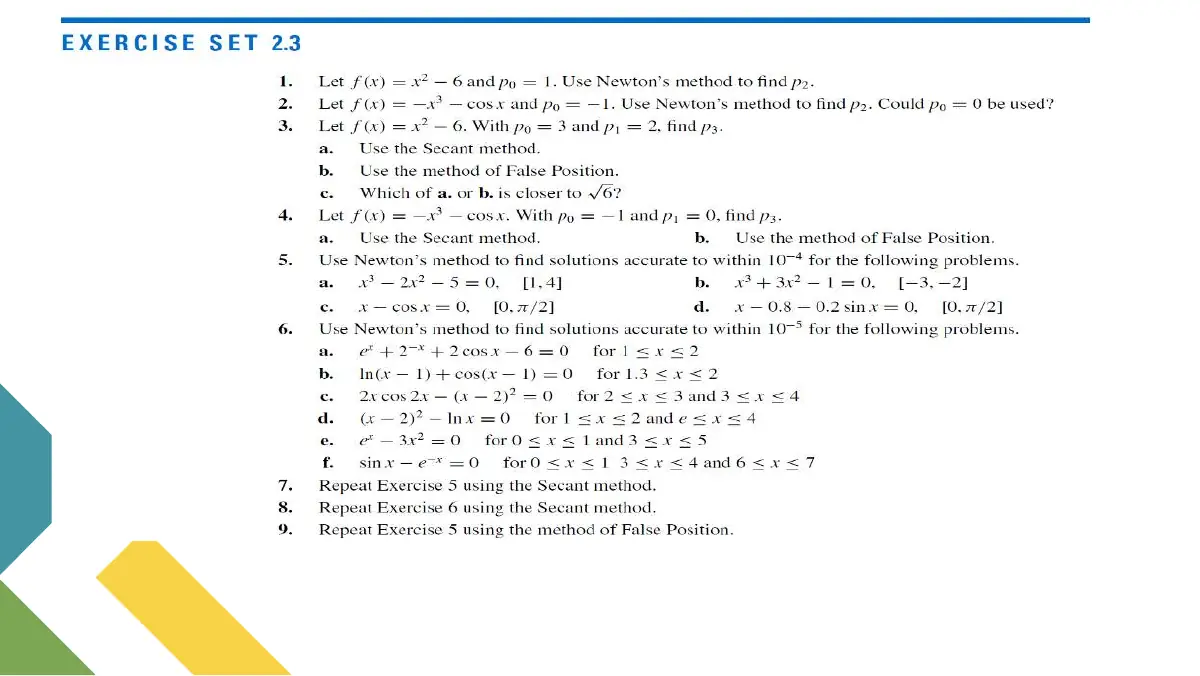
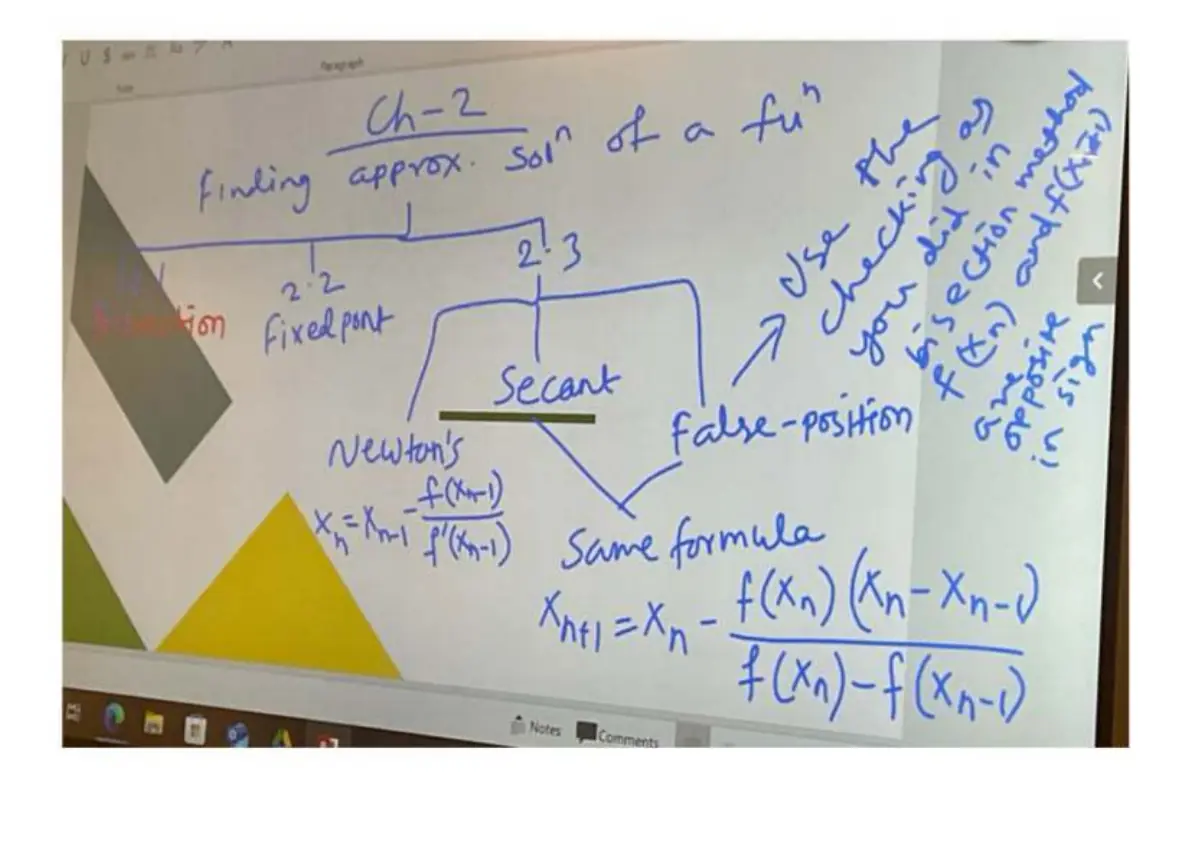
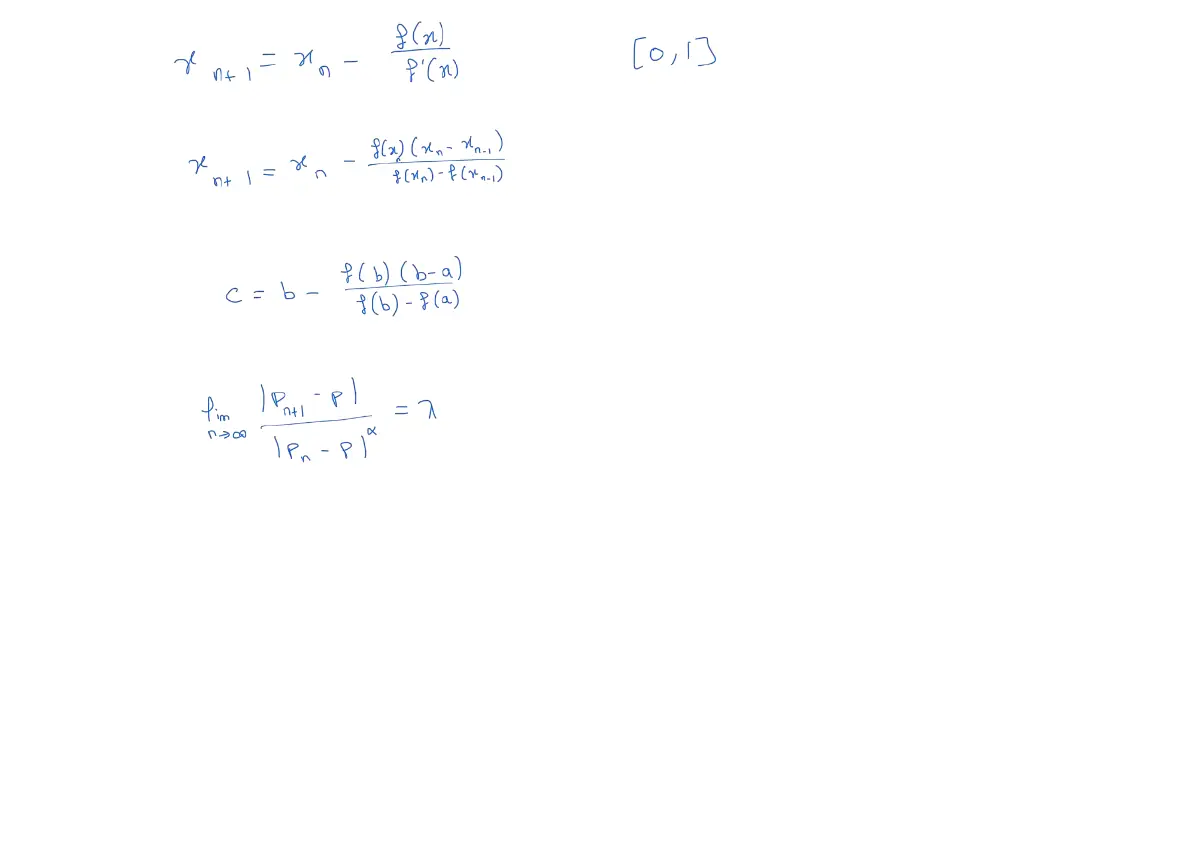
- Newton: pₙ = pₙ₋₁ − f(pₙ₋₁)/f′(pₙ₋₁). Quadratic convergence near a simple root, but needs f′ and a good starting point.
🎯 How this can come up · 1 question
Written
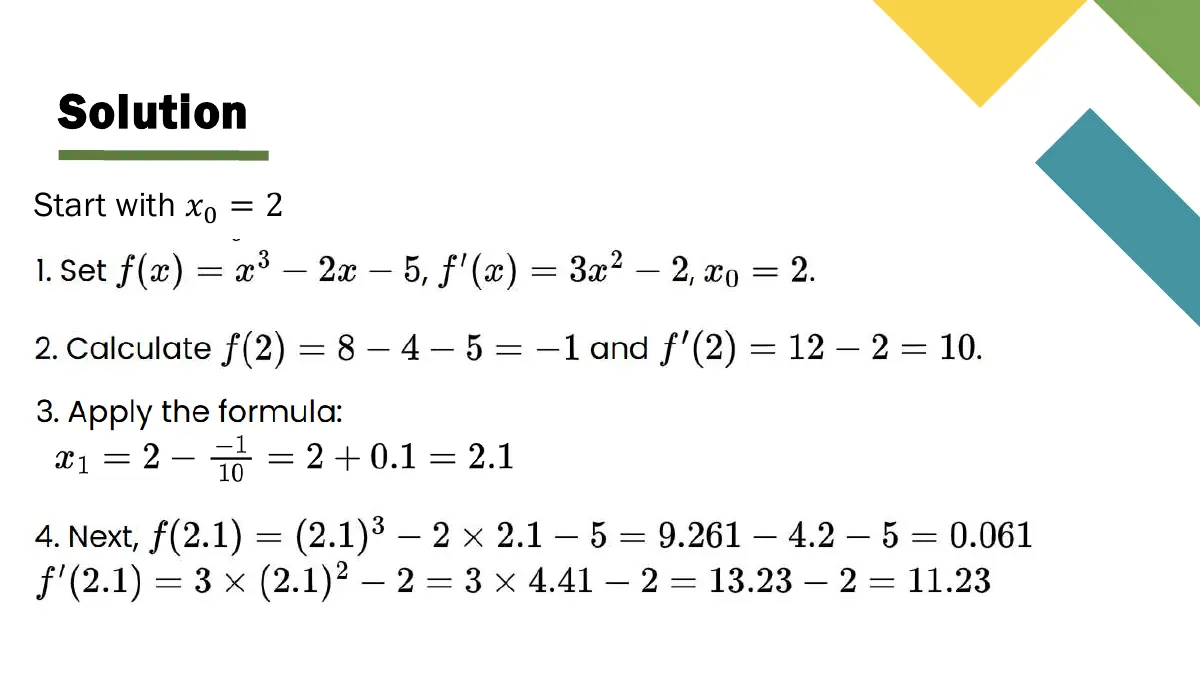
One Newton step for f(x) = x² − 2 from p₀ = 1.
p₁ = 1 − (1 − 2)/(2·1) = 1.5.

Exam weight Low
Exam weight Low
Exam weight Low
Exam weight Low
Exam weight Low
Exam weight Low
Exam weight Low
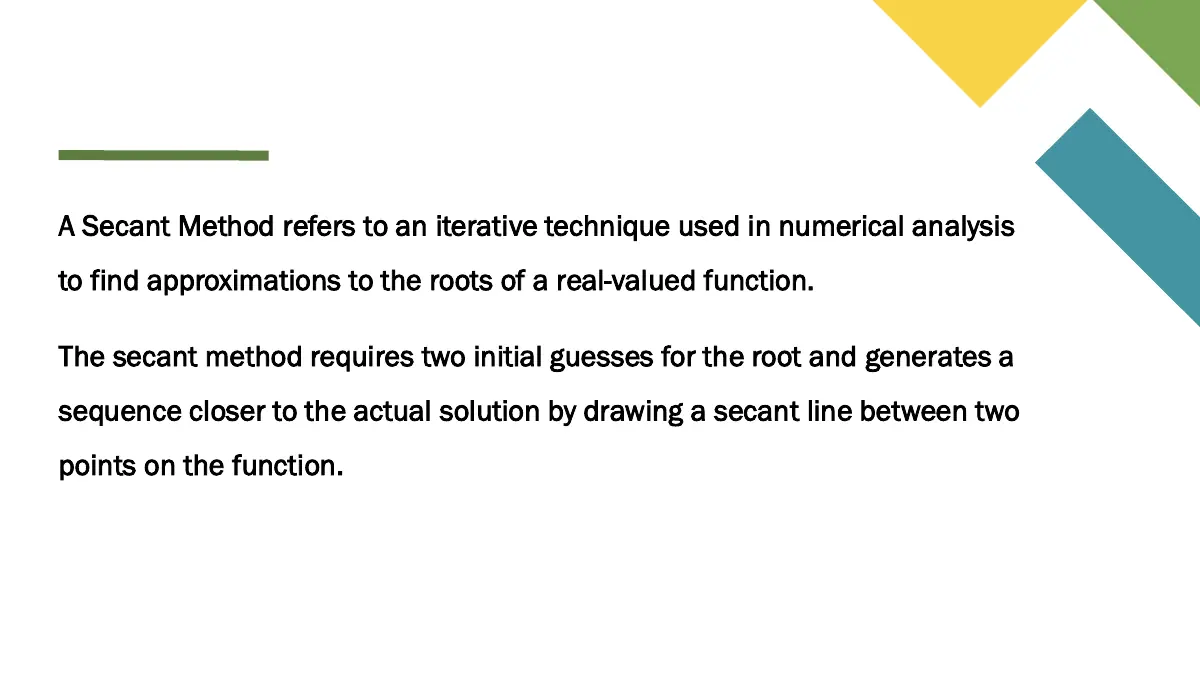
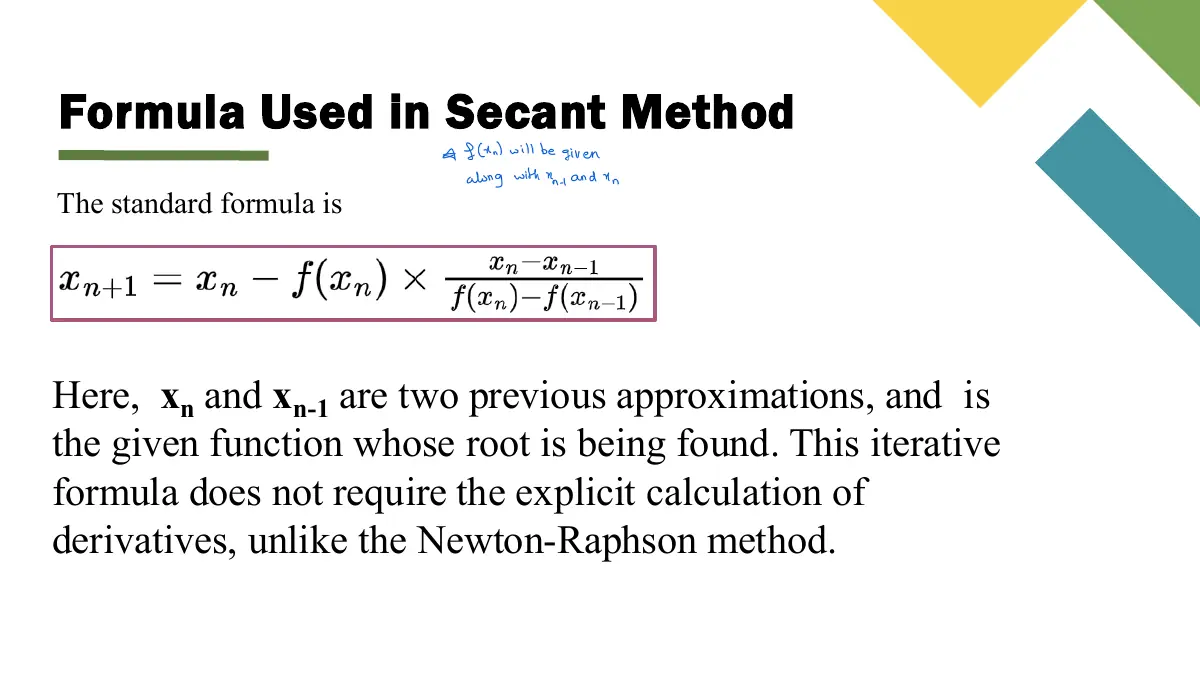
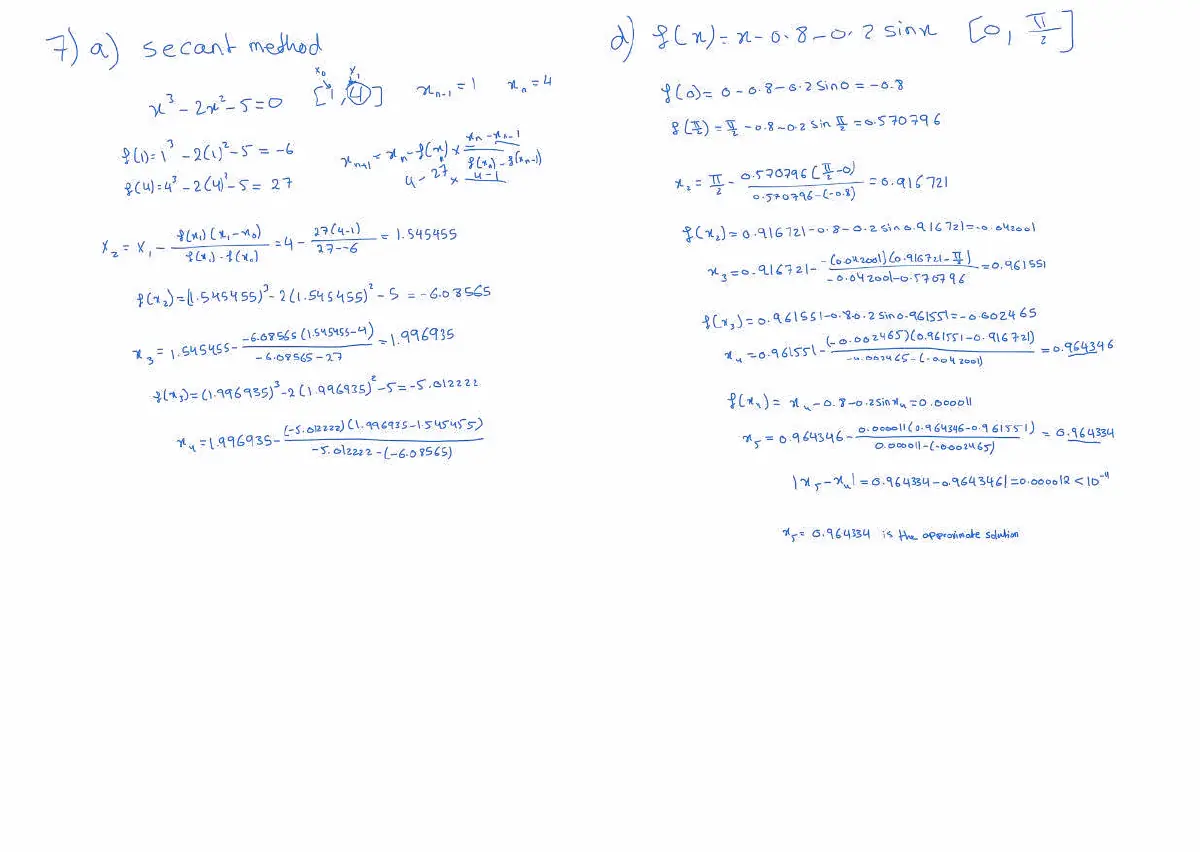
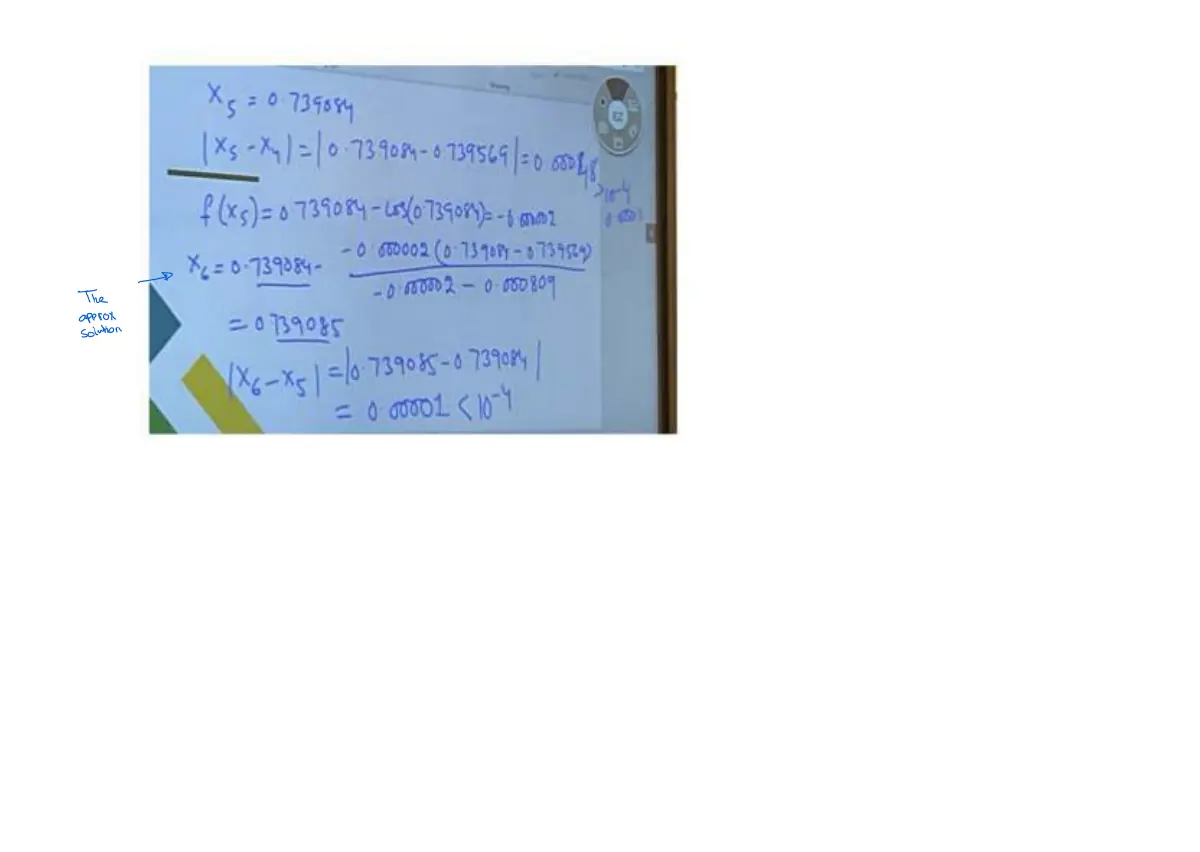
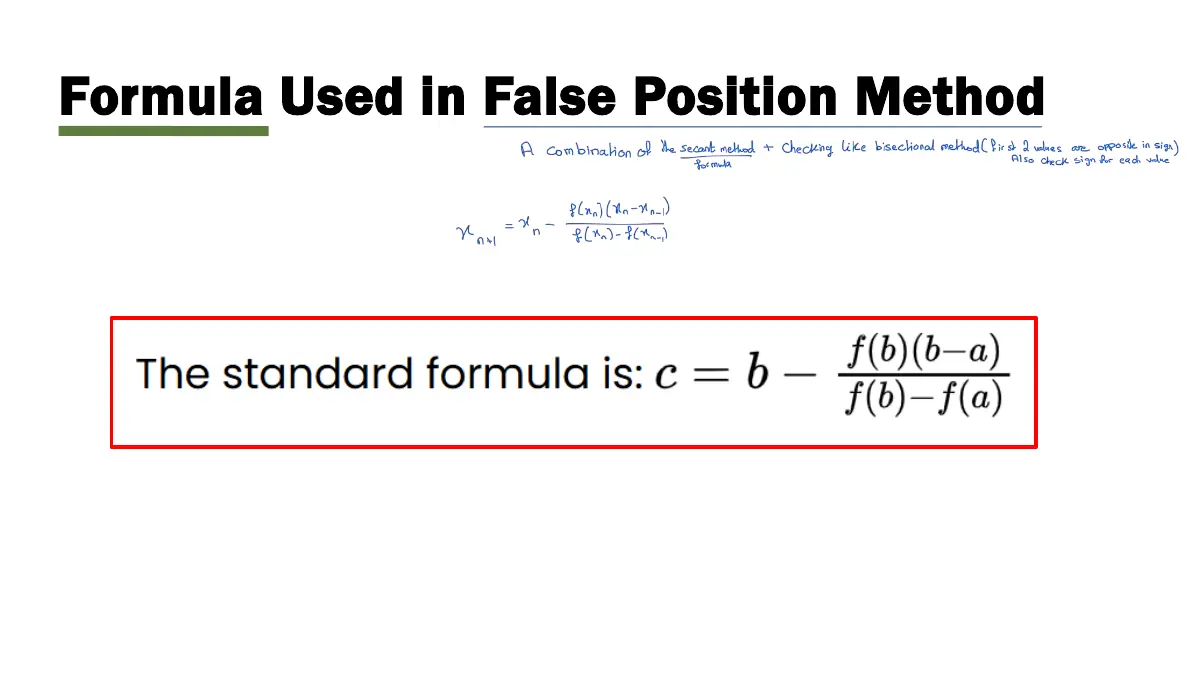
- Secant: replaces f′ with the slope through the last two points: pₙ = pₙ₋₁ − f(pₙ₋₁)(pₙ₋₁ − pₙ₋₂)/(f(pₙ₋₁) − f(pₙ₋₂)). No derivative needed.
Exam weight Low
Exam weight
High
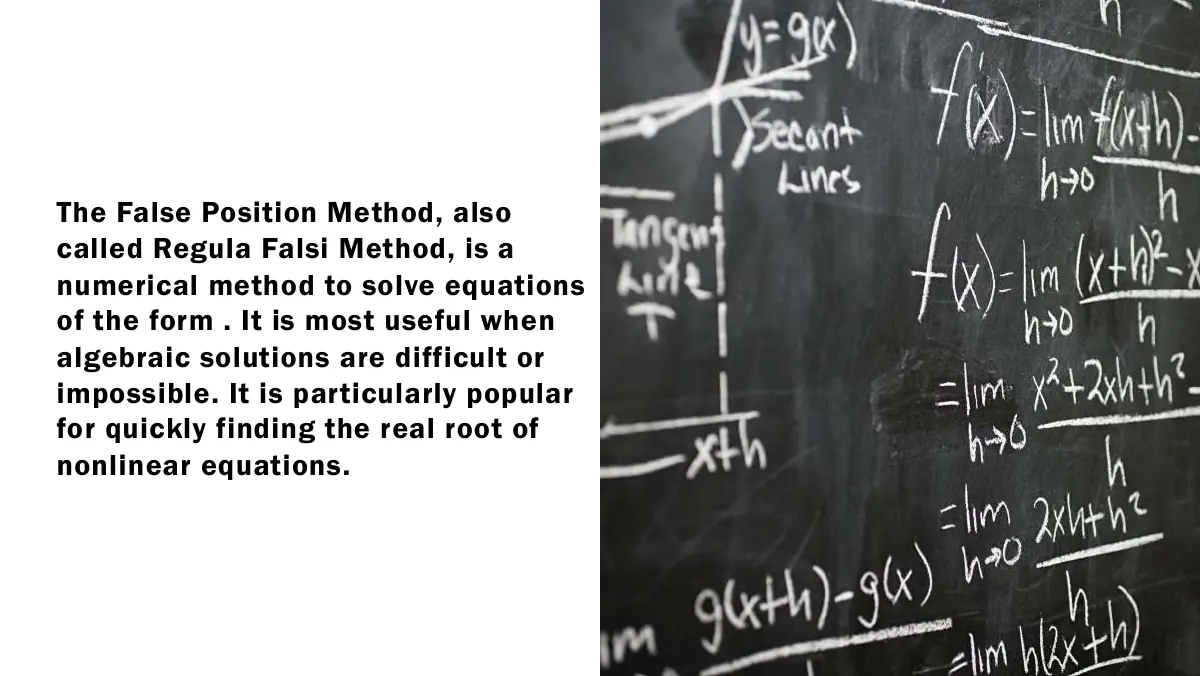
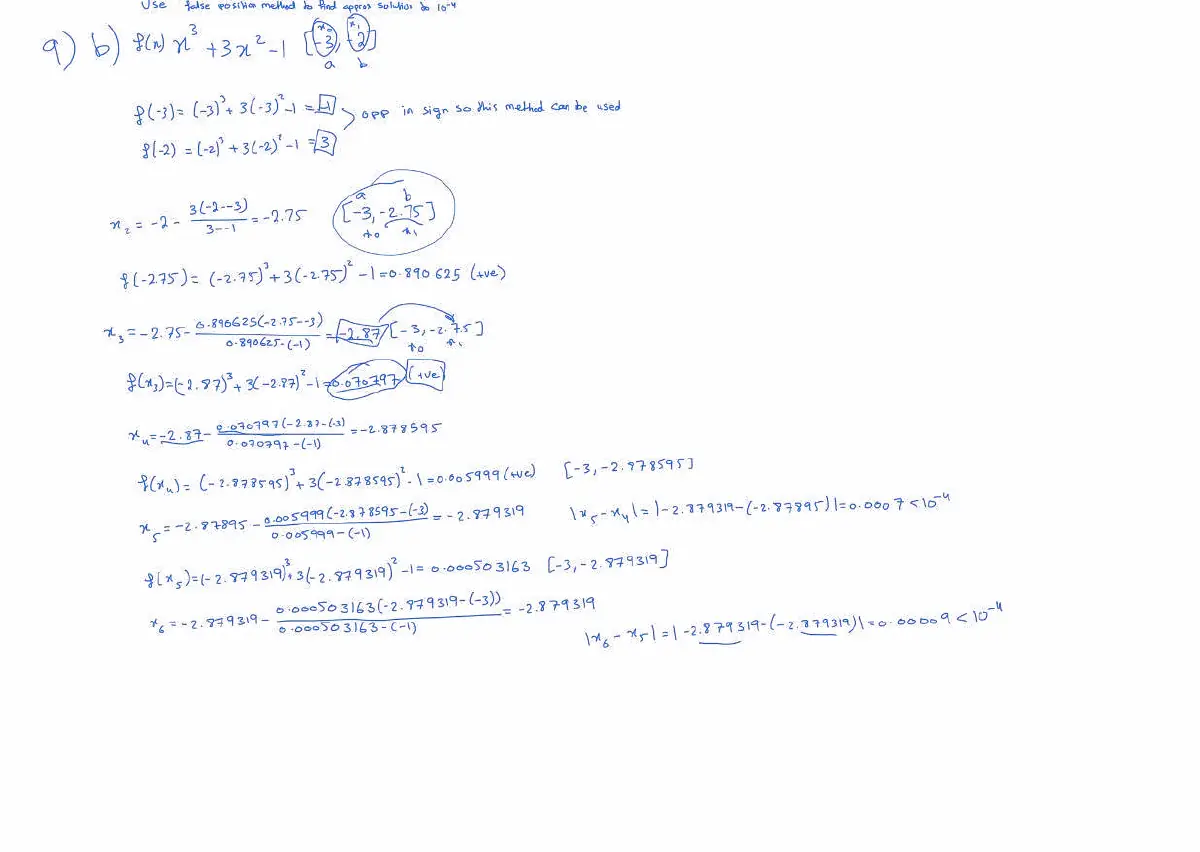
- False position: secant formula but keeps the two points that bracket the root (like bisection), so it always converges.
Memory trickNewton needs f′; secant drops f′; false
position = secant + bracketing.
🎯 How this can come up · 1 question
MCQ
Which method keeps the root bracketed at every step?
Correct: False position.
Exam weight Low
Exam weight Low
Exam weight Low
Exam weight Low
Exam weight Low
Exam weight Low
Exam weight Low
No slides match this filter.