MATH221 · Annotated SlidesChapter 2 — The Bisection Method
Chapter 2 · Annotated slides

The Bisection Method

The bisection method: halving [a, b] on the sign change, stopping criteria and the error bound |pₙ − p| ≤ (b − a)/2ⁿ.

Slide text Study notes Highlight: key words Tips, tricks & traps Seen again elsewhere How it can come up
Slide 1: Slide 1
Exam weight High
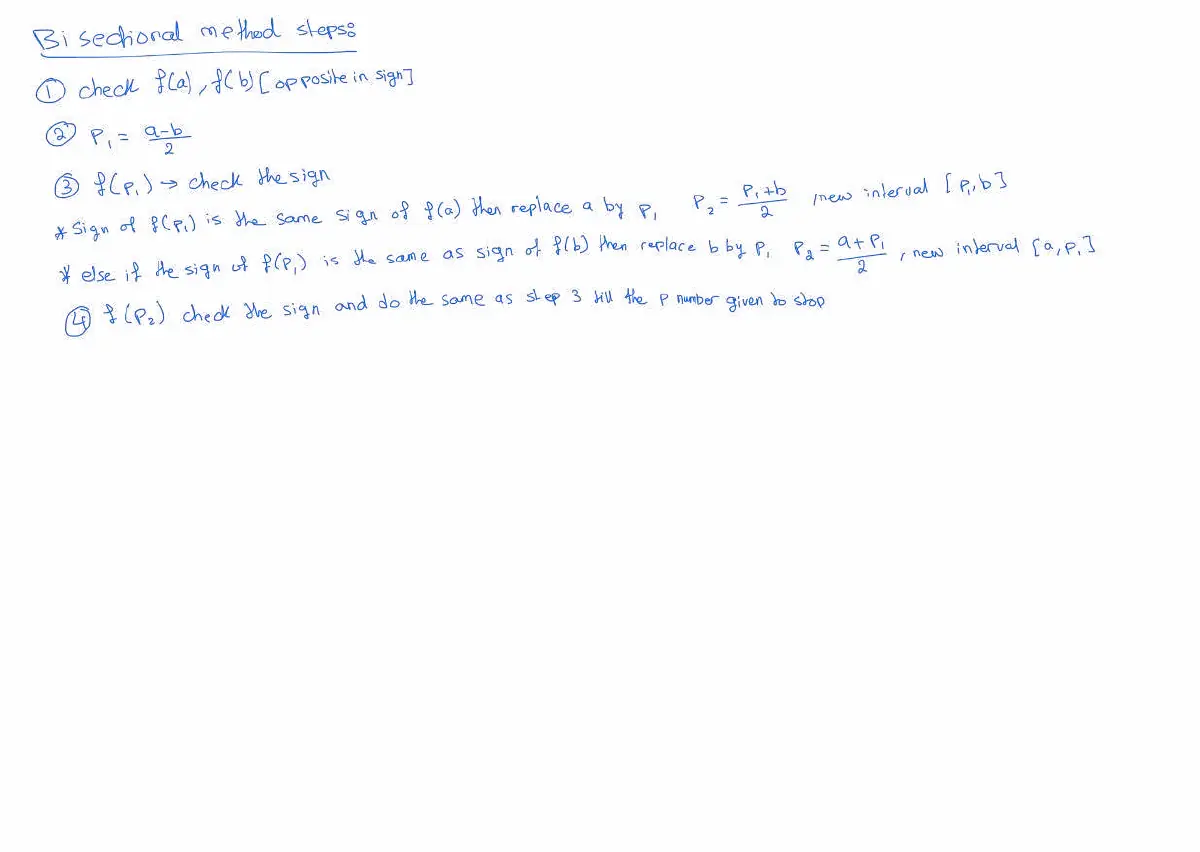
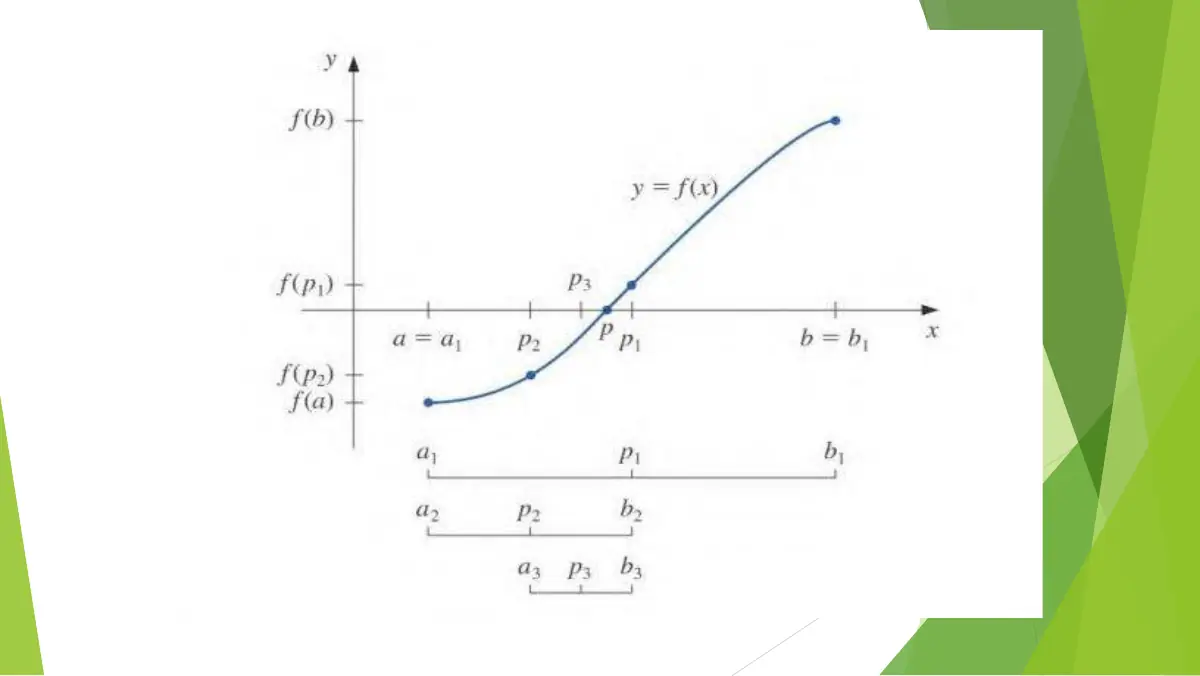
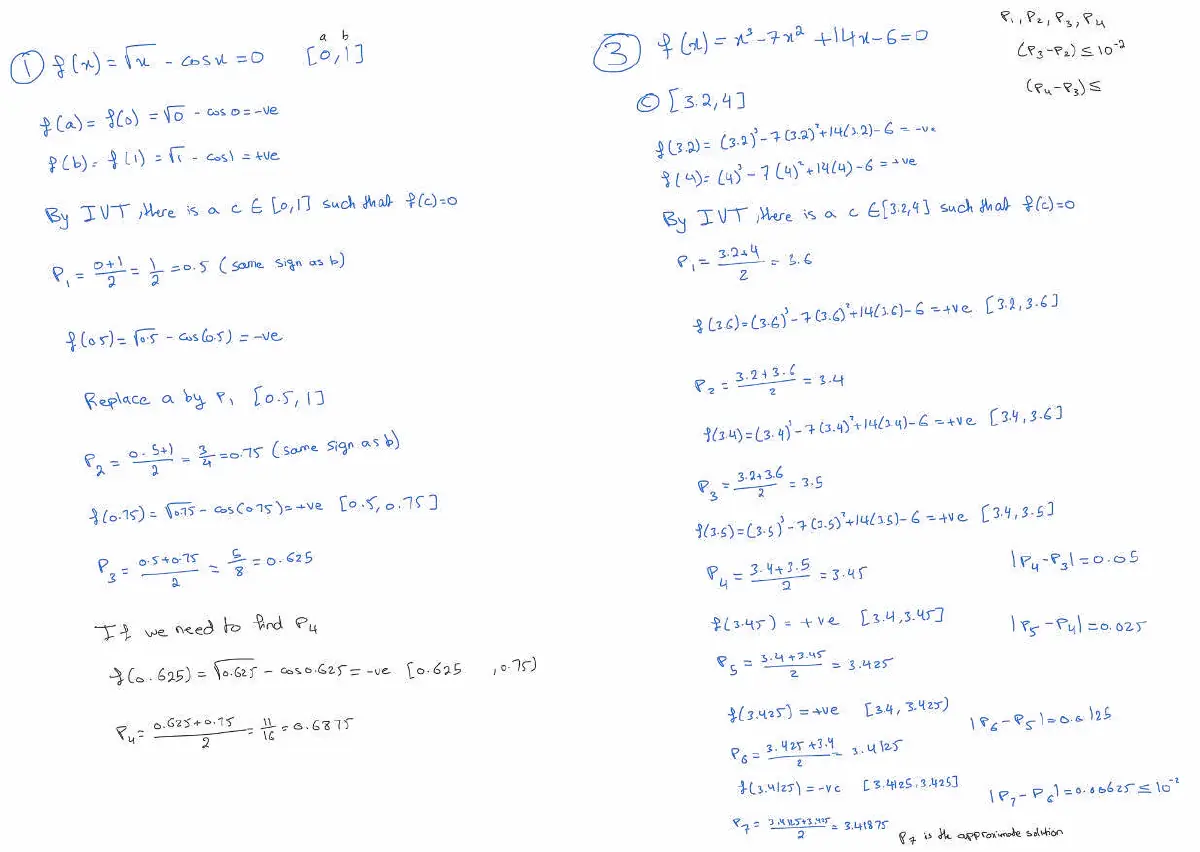
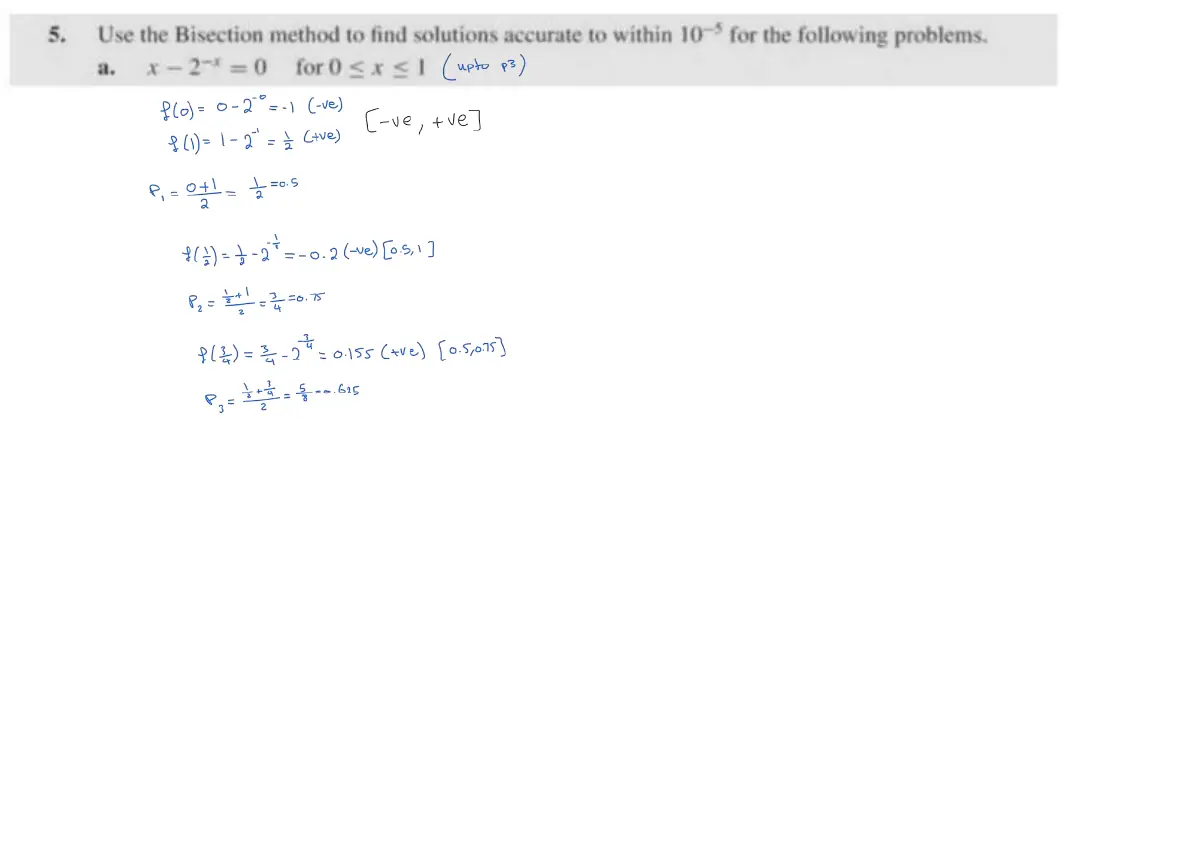
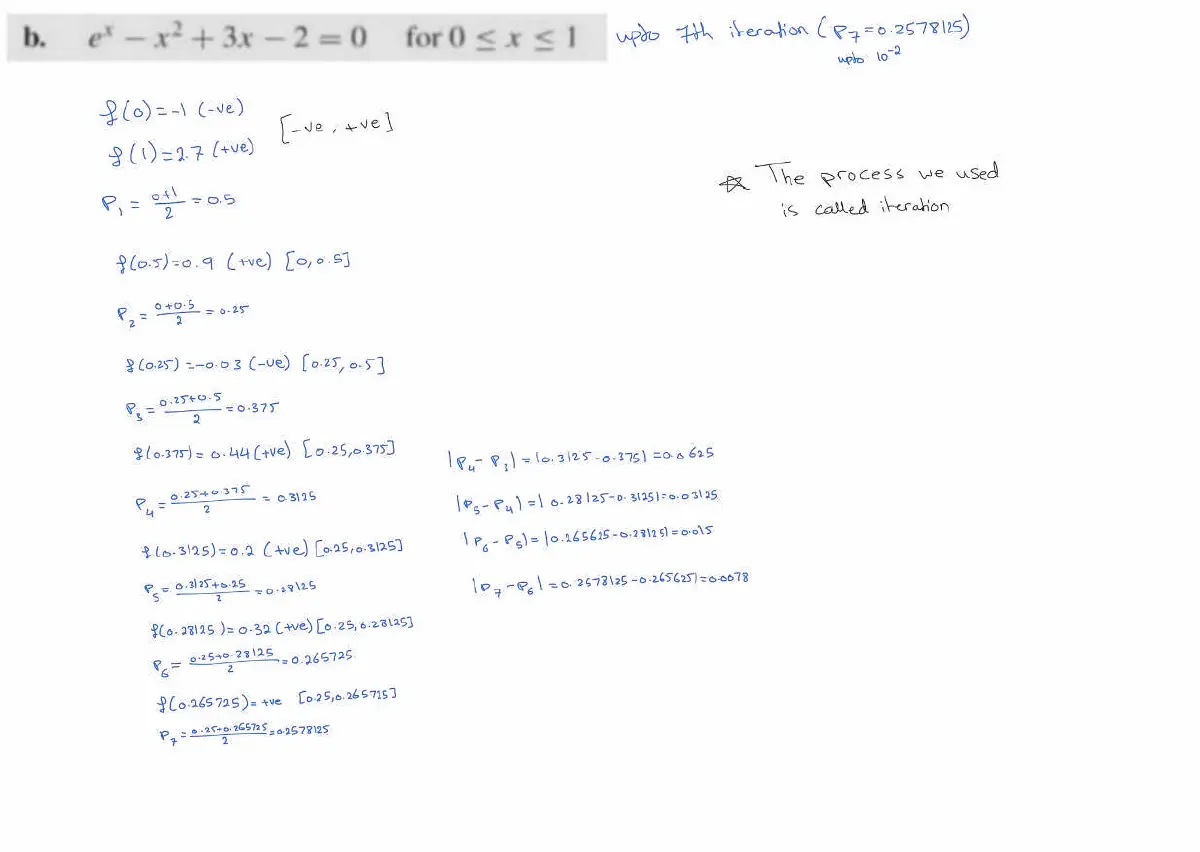
  1. Bisection: pₙ = (aₙ + bₙ)/2; keep the half where f changes sign. Always converges (slowly, linearly).
TipError bound: |pₙ − p| ≤ (b − a)/2ⁿ. To reach tolerance ε, need n ≥ log₂((b − a)/ε).
🎯 How this can come up · 2 questions
MCQ

How many bisection steps on [1, 2] guarantee an error below 10⁻³?

Written

Do one bisection step for f(x) = x³ + 4x² − 10 on [1, 2].

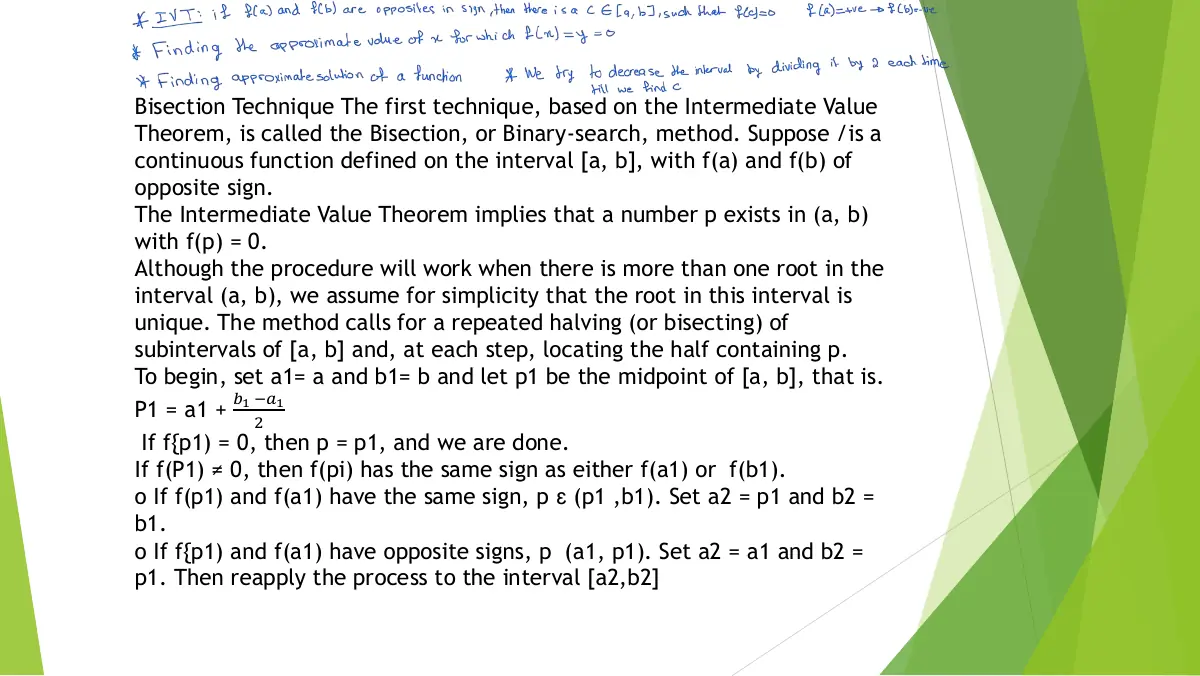
Slide 2: Bisection Technique The first technique, based on the Intermediate Value Theorem, is called the Bisection, or Binary-search, method. Suppose /is a continuous function defined on the interval [a, b], with f(a) and f(b) of opposite sign. The Intermediate Value Theorem implies that a number p exists in (a, b) with f(p) = 0. Although the procedure will work when there is more than one root in the
Exam weight Low
    Slide 3: Slide 3
    Exam weight Low
      Slide 4: Slide 4
      Exam weight Low
        Slide 5: Slide 5
        Exam weight Low
          Slide 6: Slide 6
          Exam weight Low
            Slide 7: Slide 7
            Exam weight Low
              Slide 8: Slide 8
              Exam weight Low