CS223 · Annotated SlidesChapter 6 — Orthogonal Sets and Orthogonal Matrices
Chapter 6 · Annotated slides

Orthogonal Sets and Orthogonal Matrices

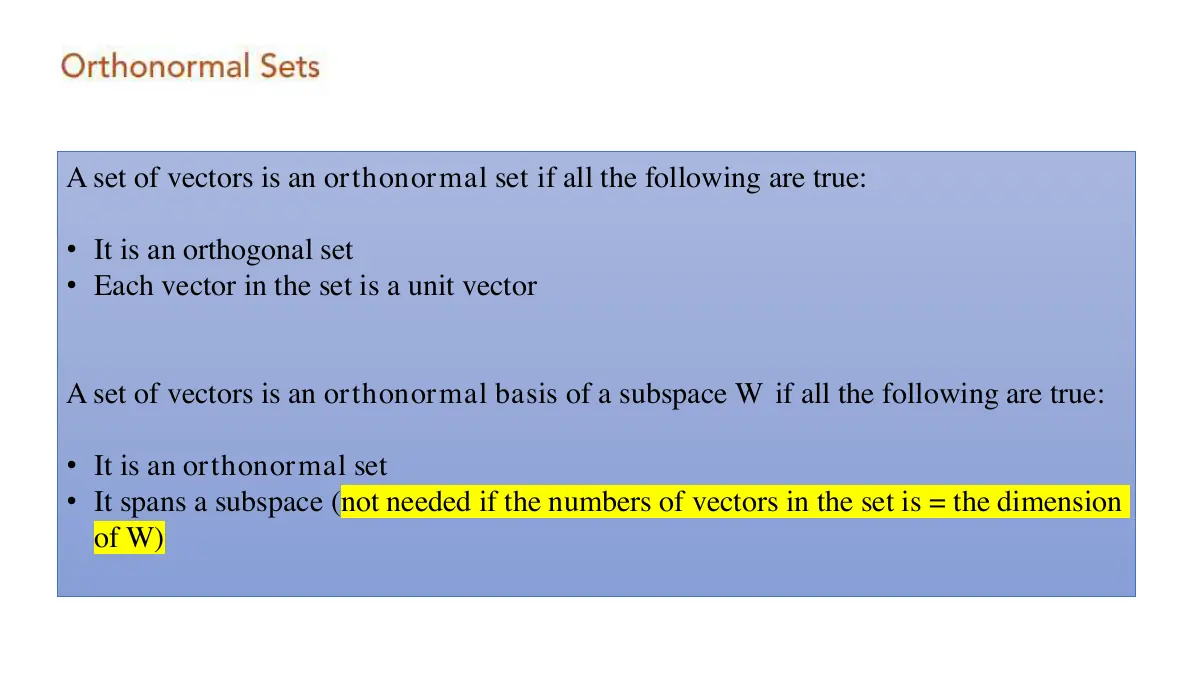
Orthogonal and orthonormal sets and bases, weights in an orthogonal basis cⱼ = (y · uⱼ)/(uⱼ · uⱼ), and matrices with orthonormal columns (UᵀU = I).
Slide text Study notes Highlight: key words Tips, tricks & traps Seen again elsewhere How it can come up
Slide 1: Slide 1
Exam weight High
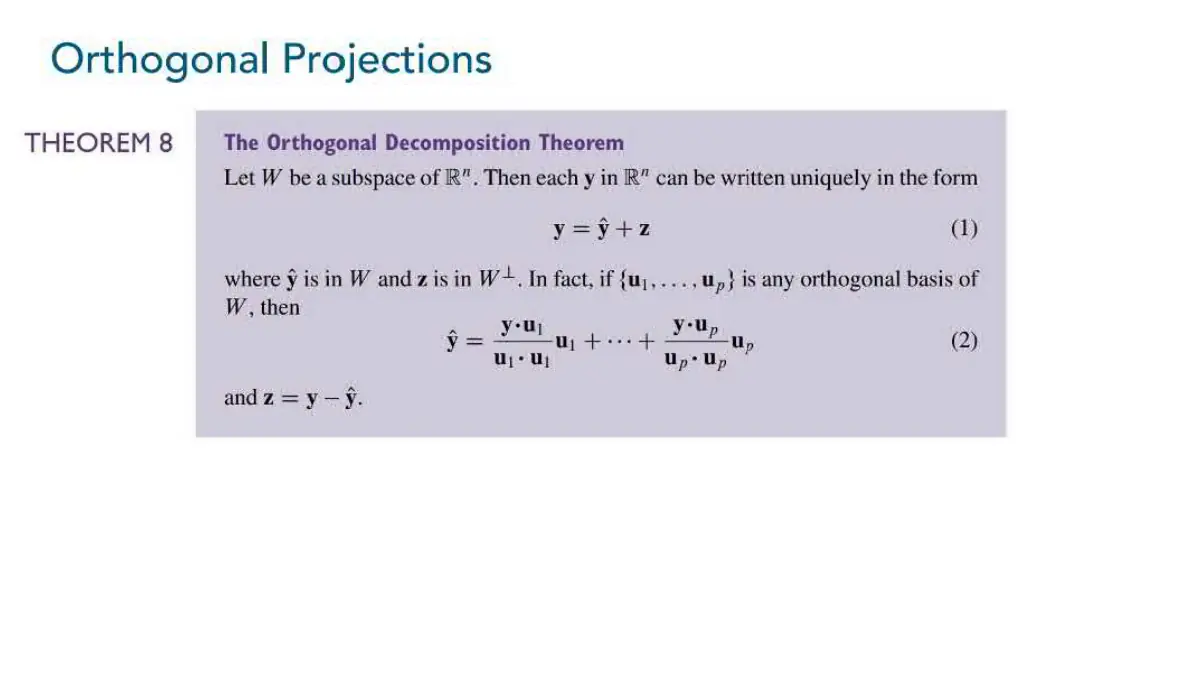
  1. An orthogonal set of nonzero vectors is linearly independent. In an orthogonal basis, y = Σ cⱼuⱼ with cⱼ = (y · uⱼ)/(uⱼ · uⱼ): no row reduction needed.

2
Exam weight Low
    Slide 3: Slide 3
    Exam weight Low
      Slide 4: Orthogonal Matrix
      Exam weight High
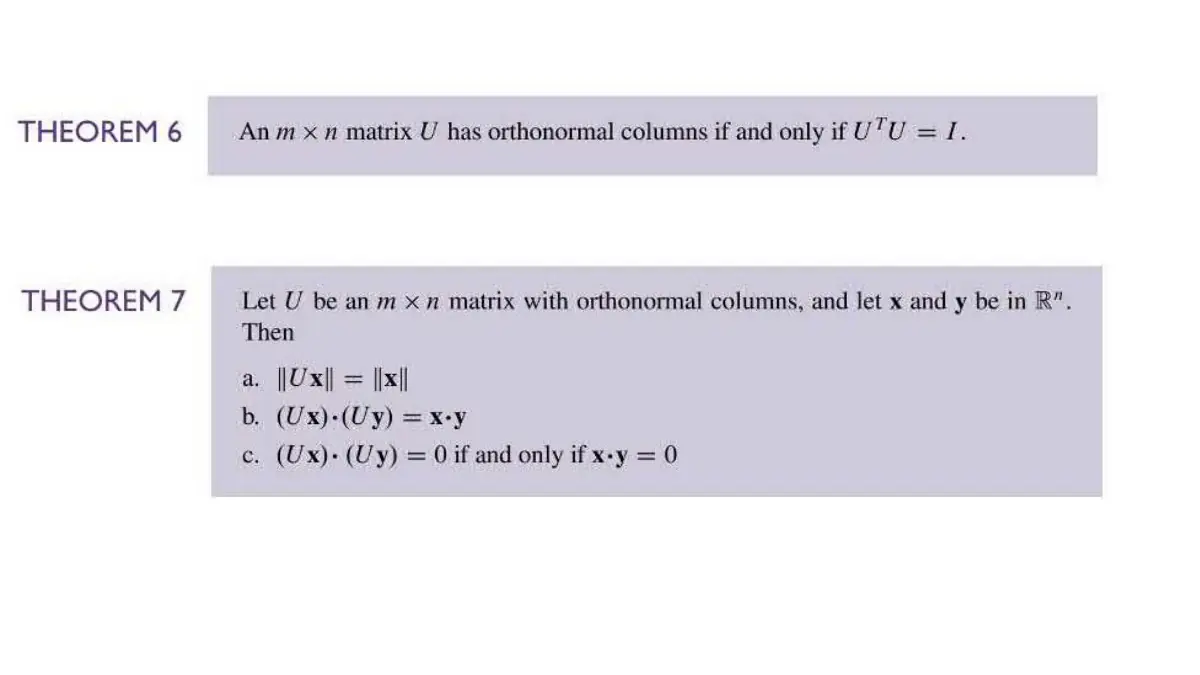
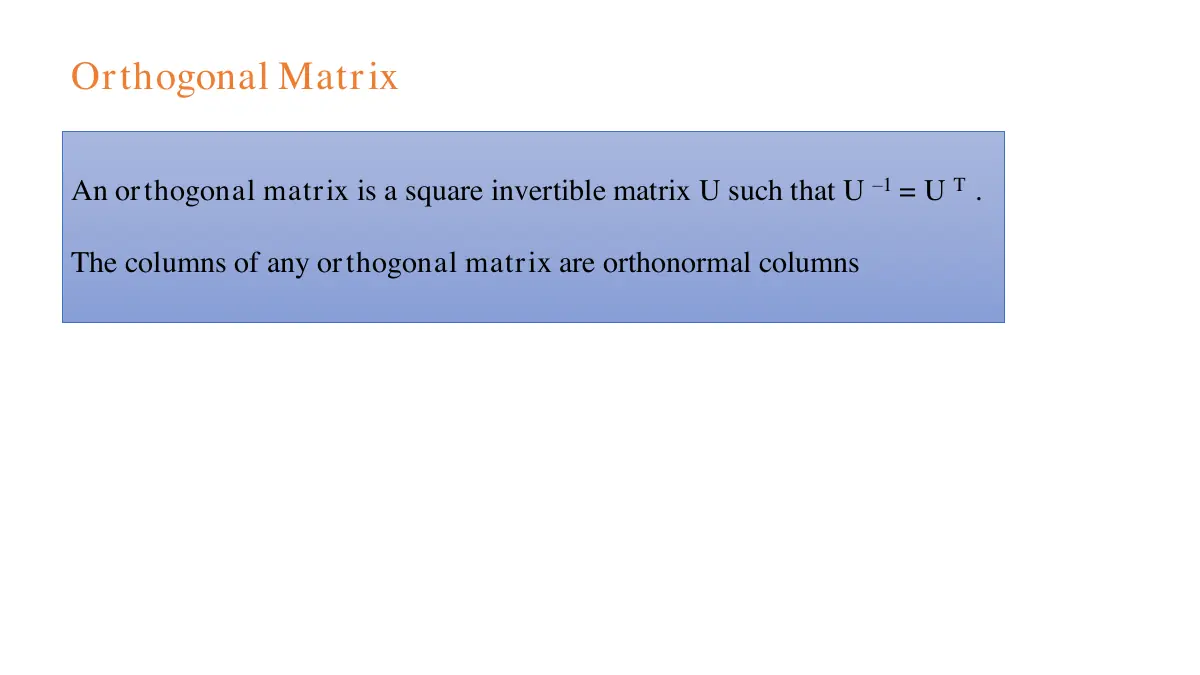
      1. Orthonormal columns ⇔ UᵀU = I. A square such U is an orthogonal matrix: U⁻¹ = Uᵀ, and it preserves lengths and angles.
      🎯 How this can come up · 1 question
      MCQ

      For an orthogonal (square) matrix U, U⁻¹ equals:

      Slide 5: Slide 5
      Exam weight Low

        6
        Exam weight Low