Chapter 16 · Annotated slides
Data Security
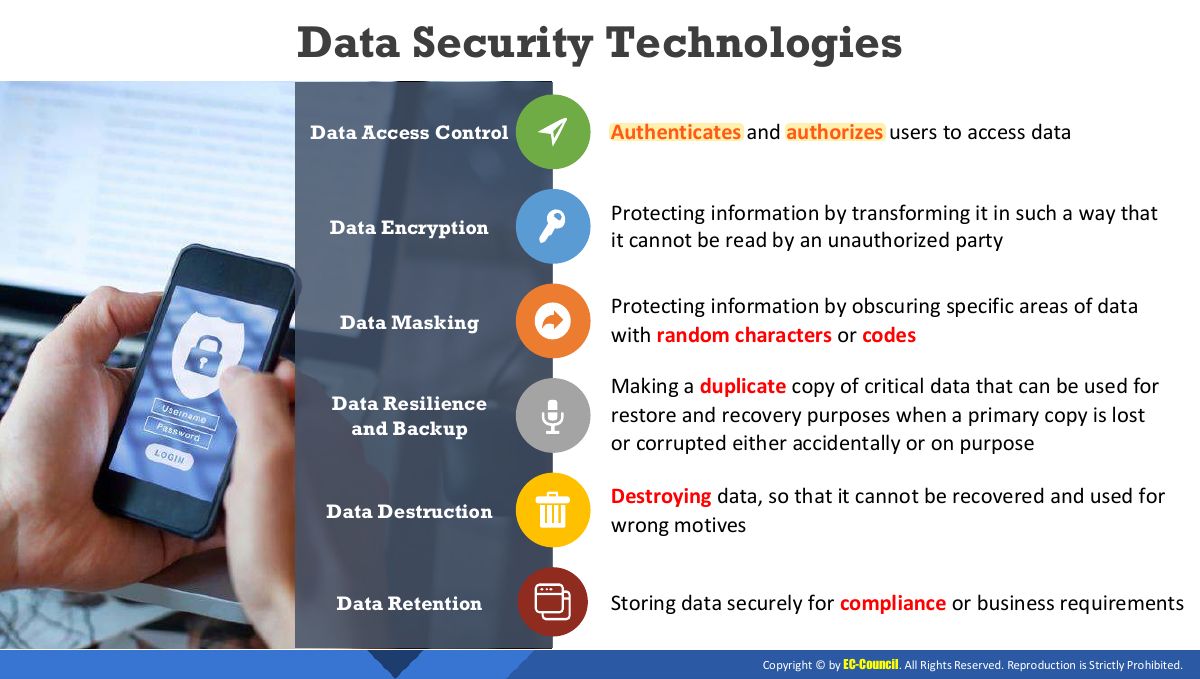
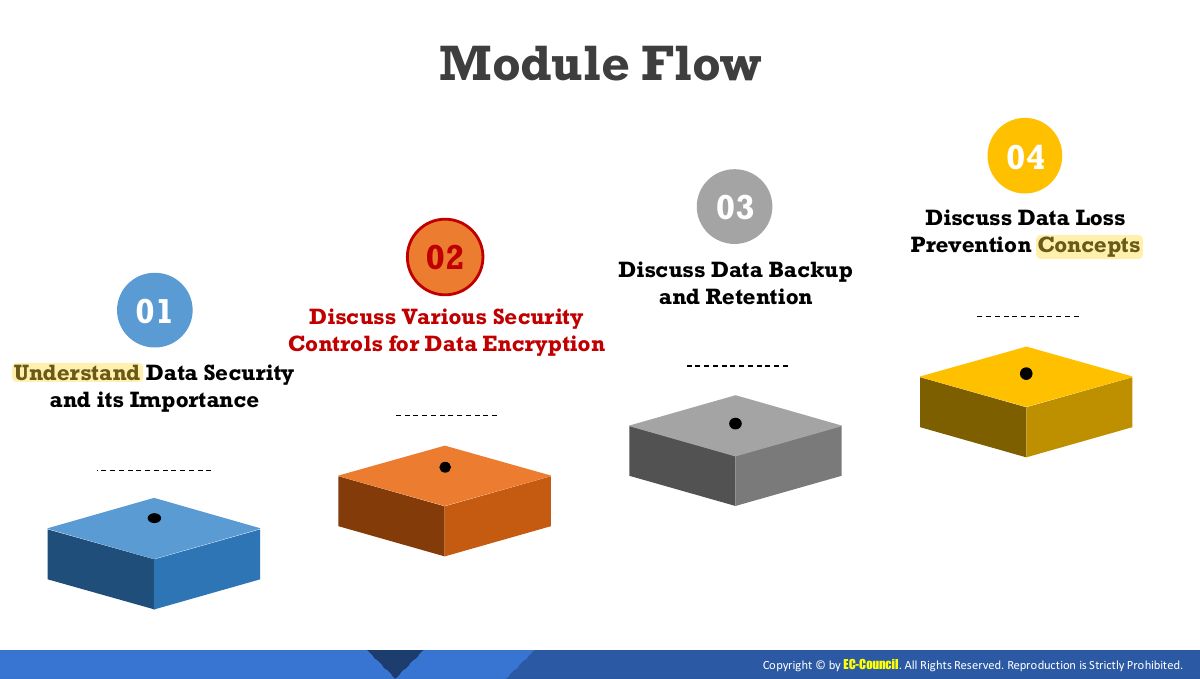
Business-critical data and data at rest vs. in transit vs. in use, disk, file and removable-media encryption, backup strategy and media, RAID levels, SAN and NAS, backup types (full, incremental, differential), retention, recovery, and data loss prevention.
- 50 slides
- 0 asked in real exams
- 0 related to real exam questions
- 6 practice questions
Slide text
Study notes
Highlight: key words
Tips, tricks & traps
Seen again elsewhere
How it can come up
Exam weight ●●● High
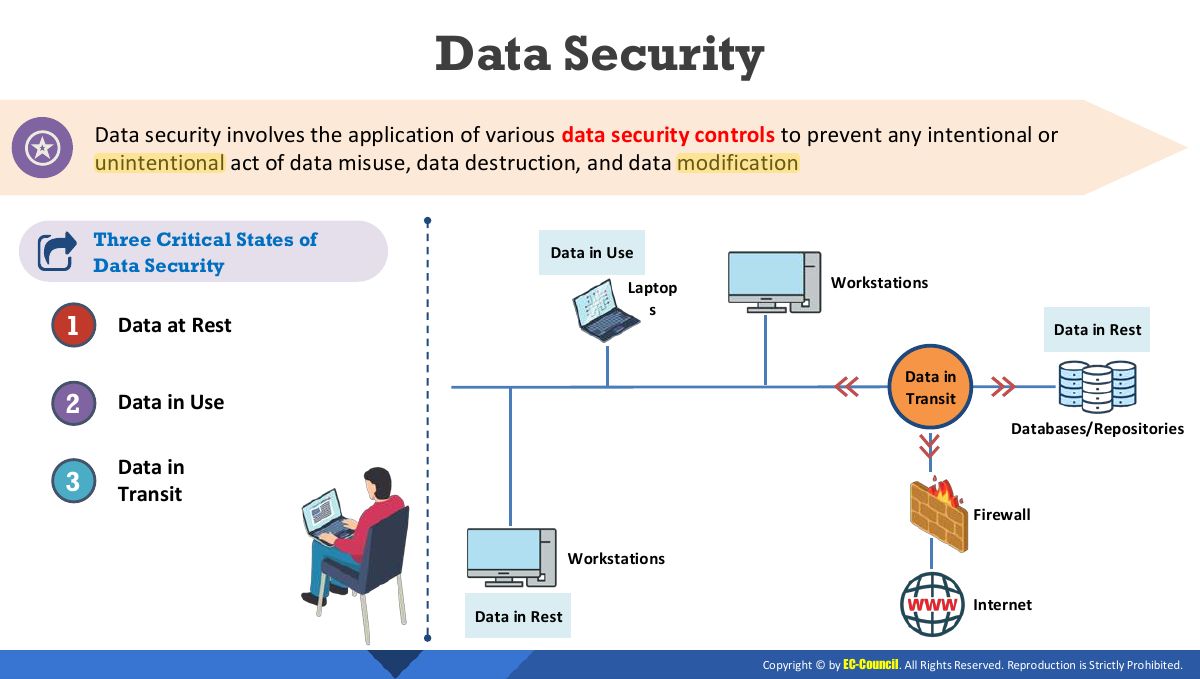
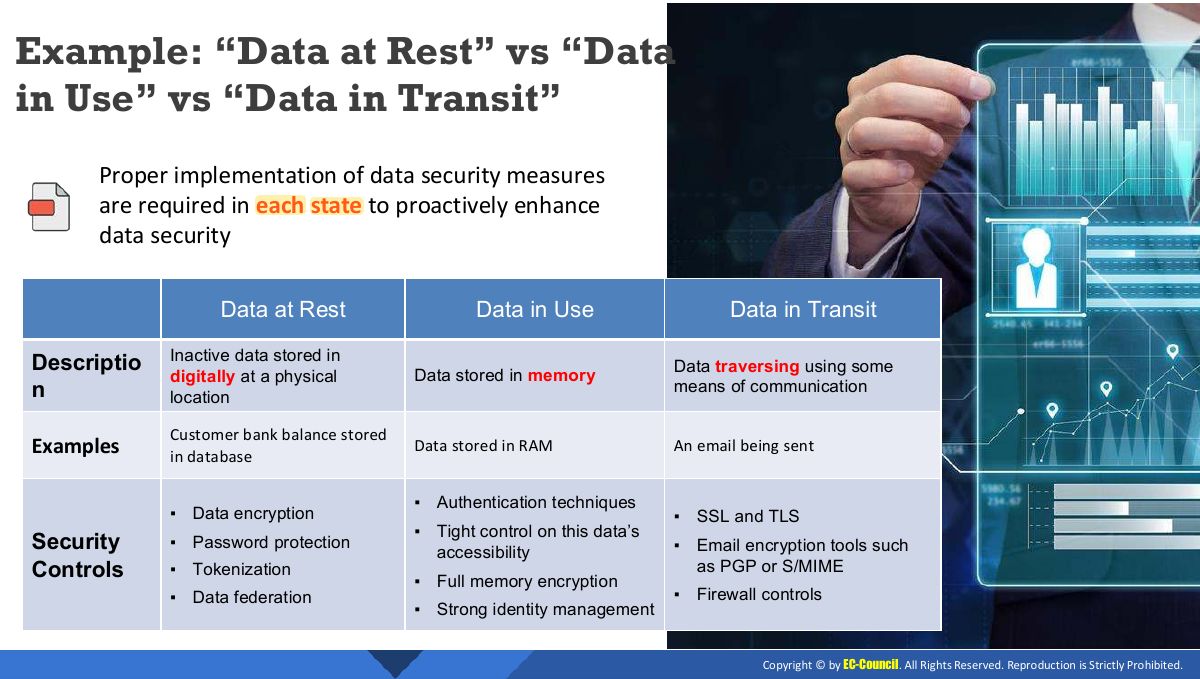
- Data at rest (stored), in transit (moving over a network), in use (being processed): each needs its own protection.
Exam weight ●○○ Low
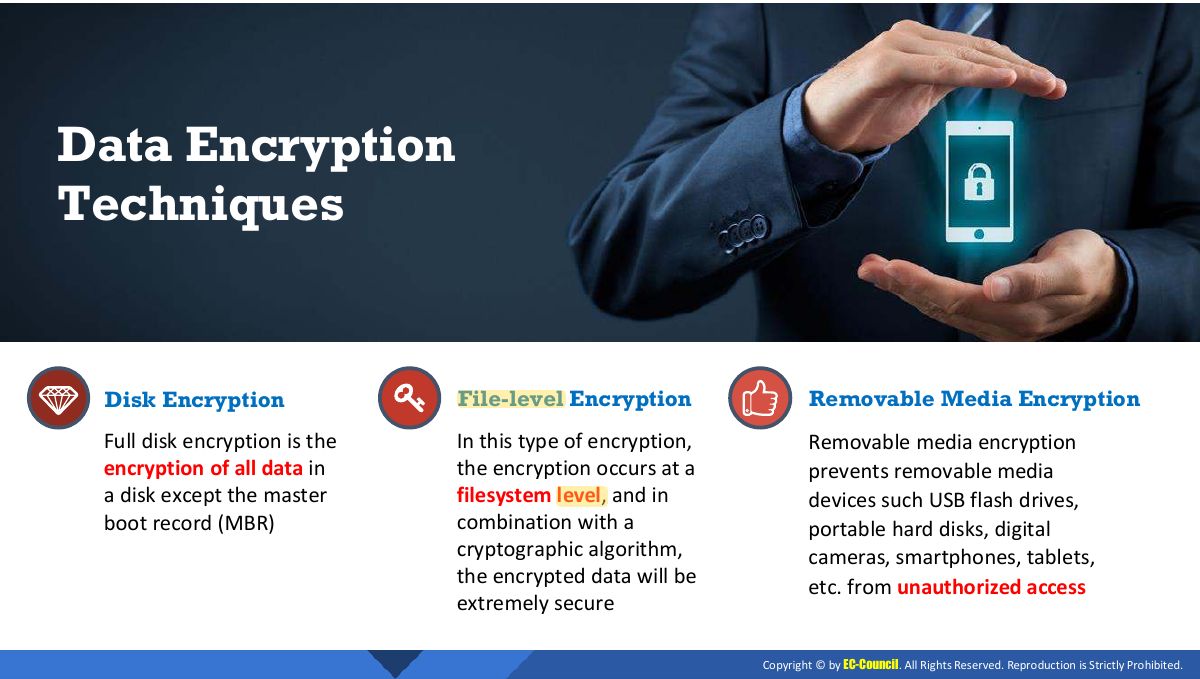
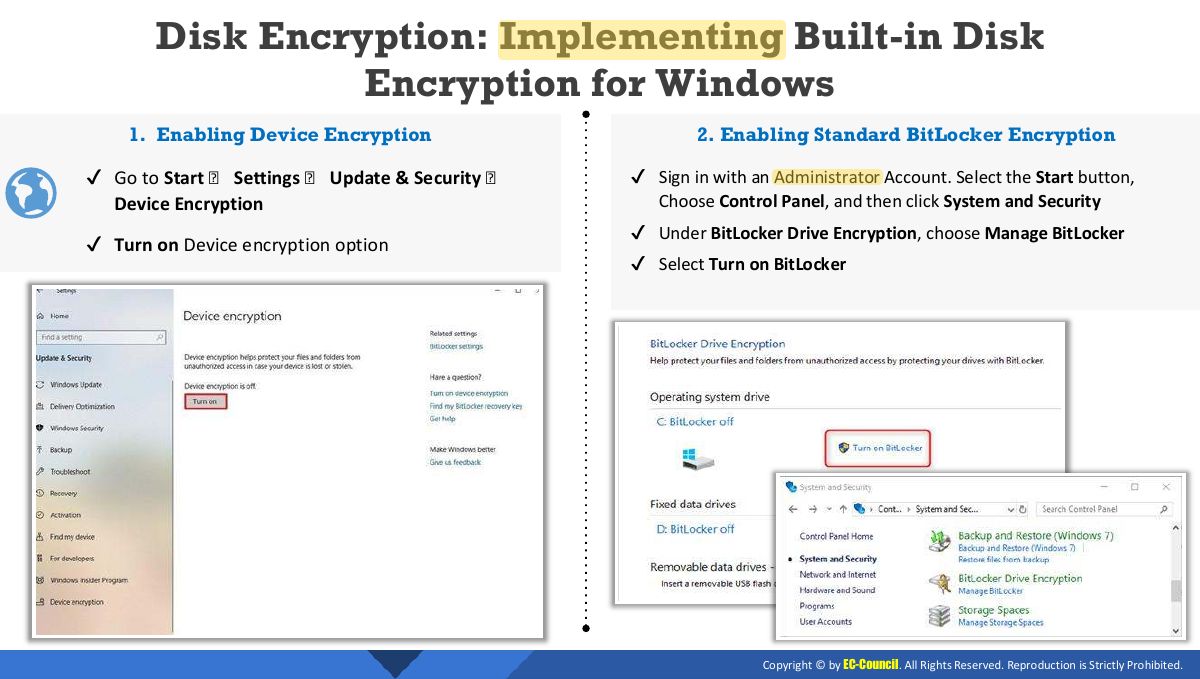
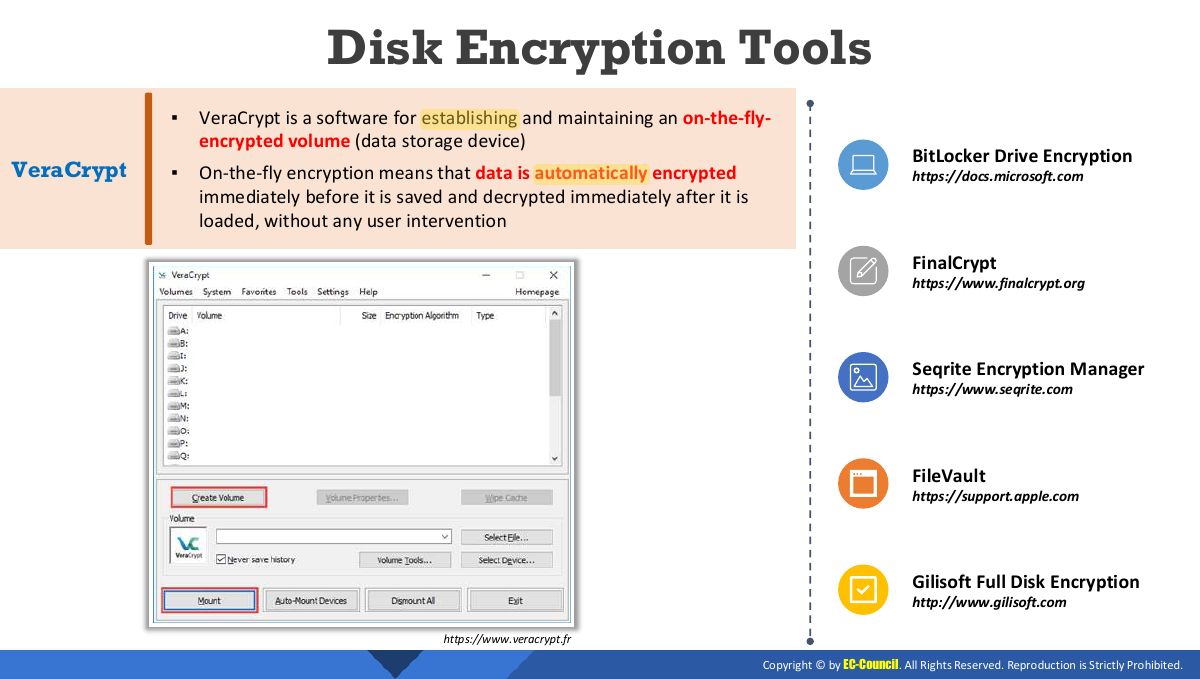
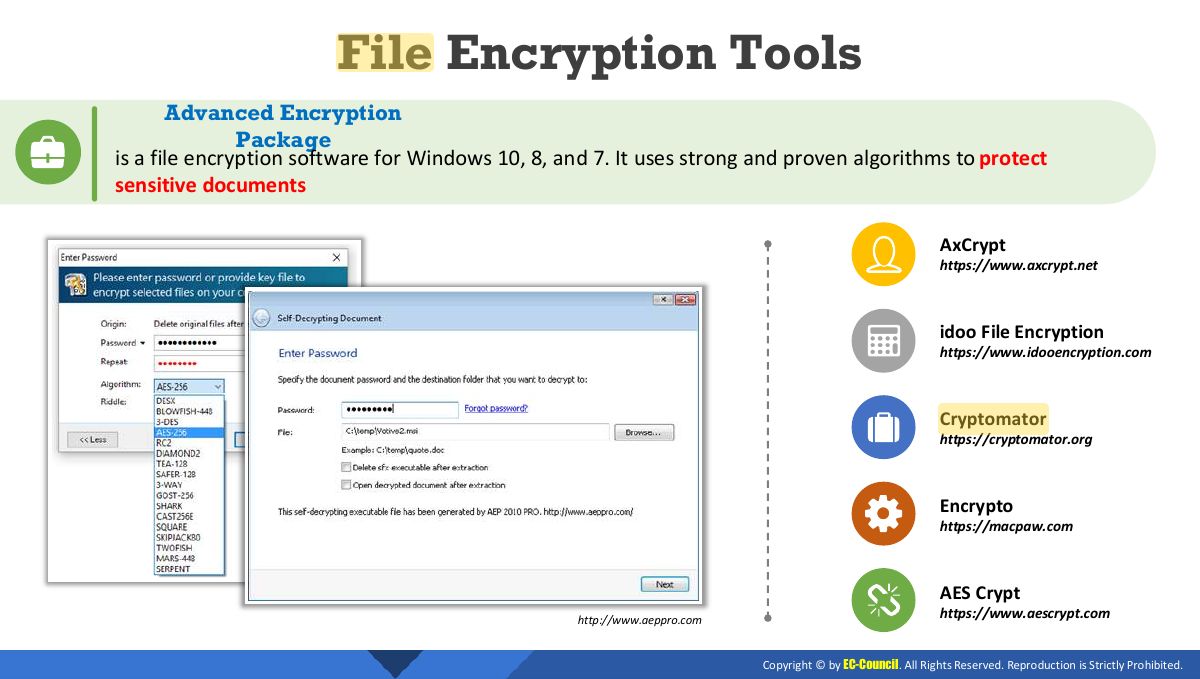
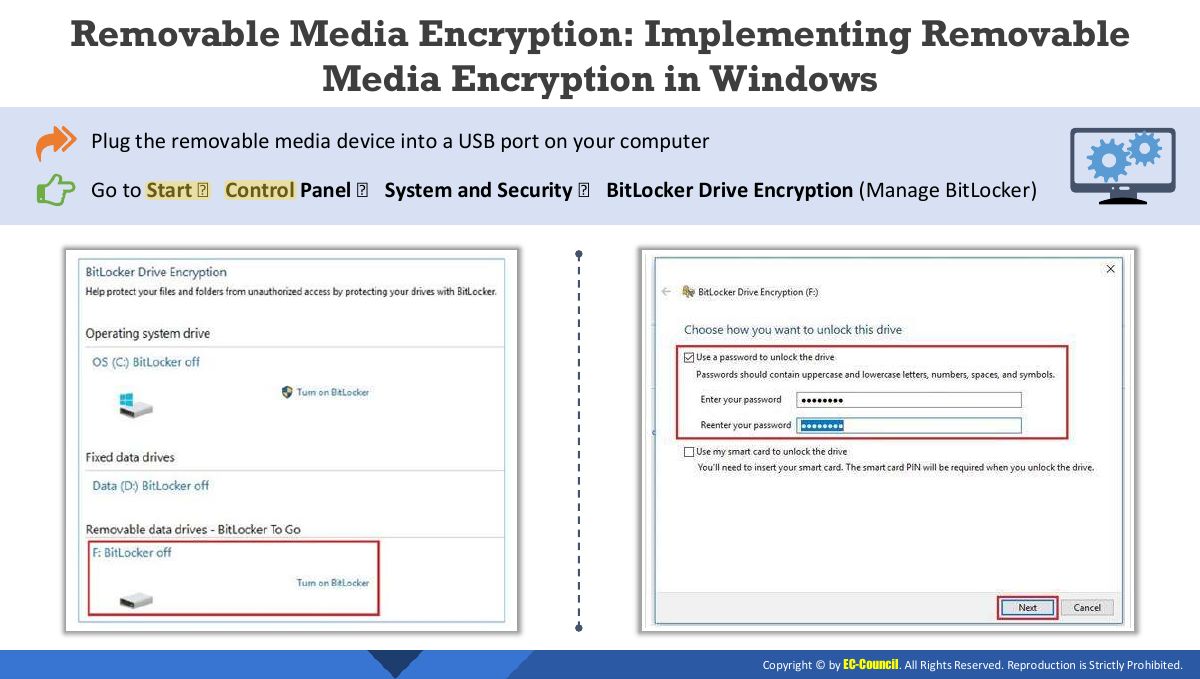
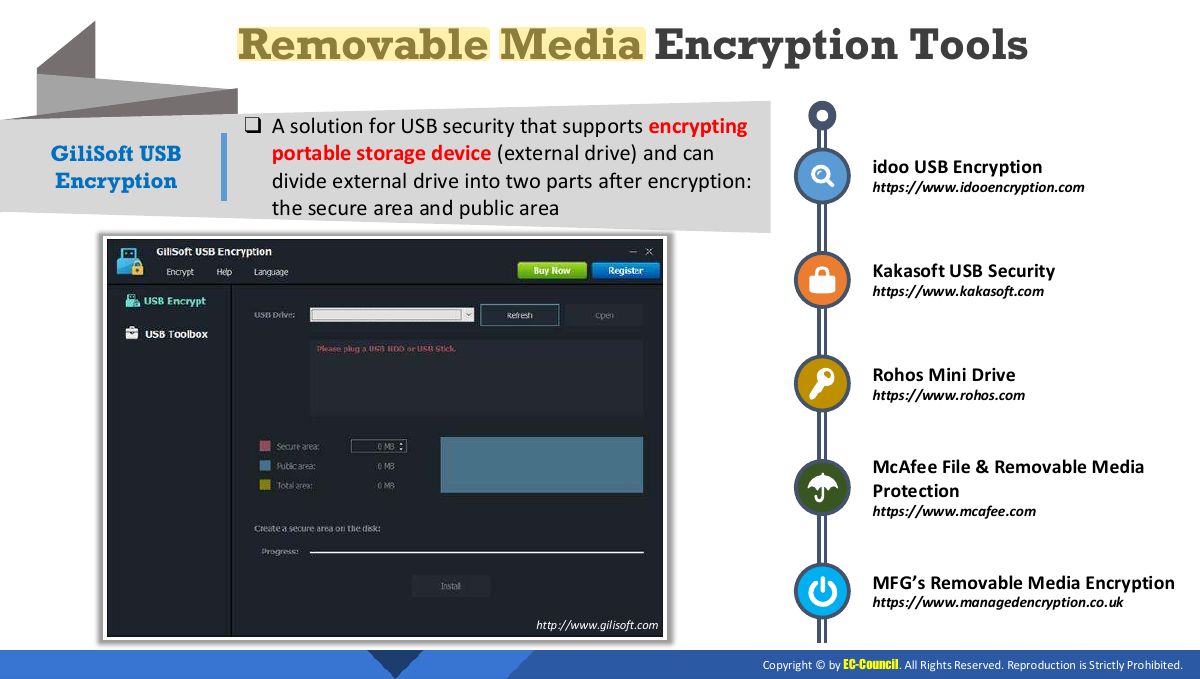
- Full-disk encryption (e.g. BitLocker) protects everything on a lost or stolen device.
Exam weight ●○○ Low
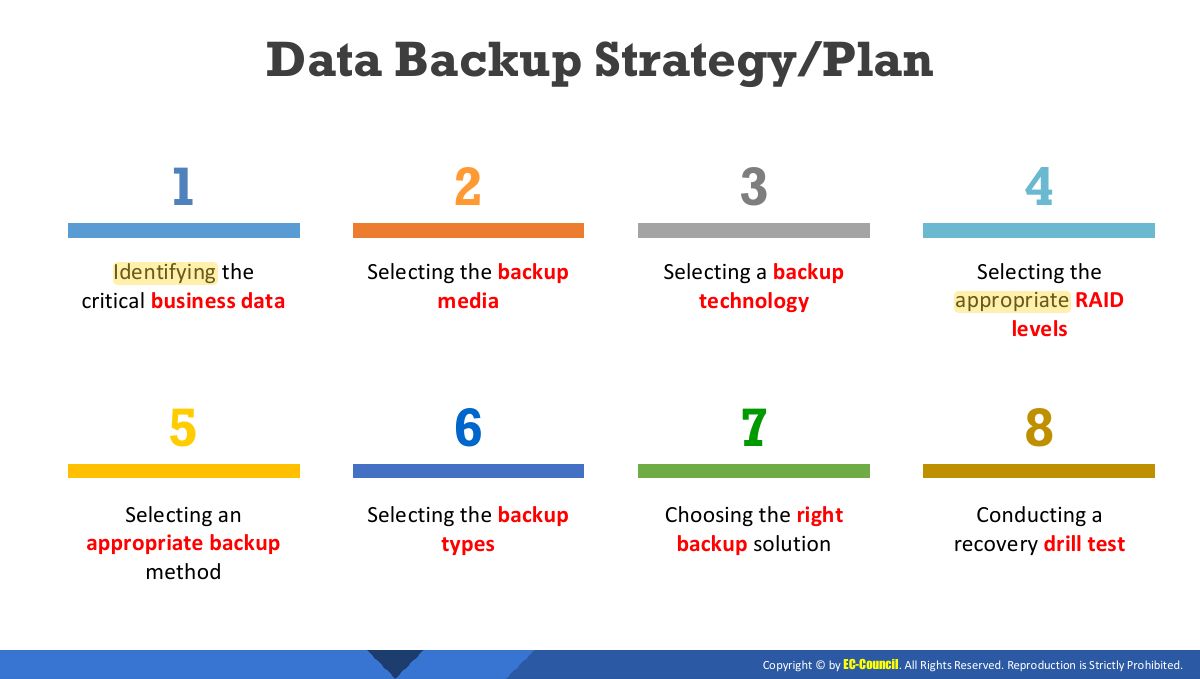
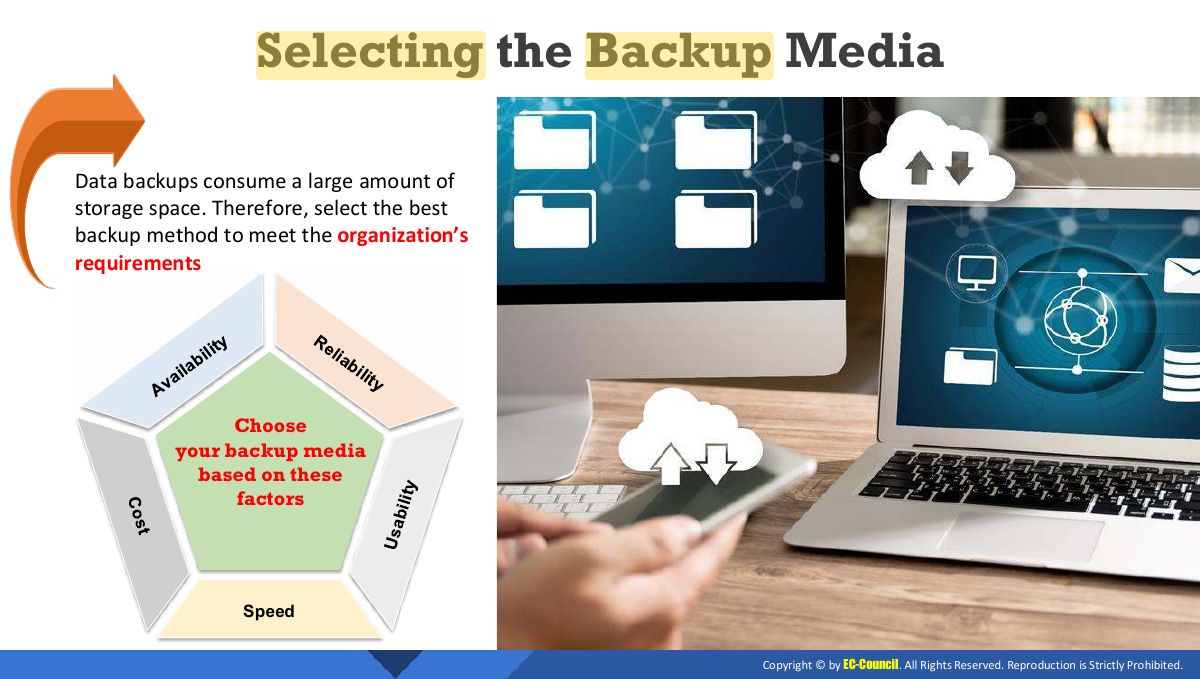
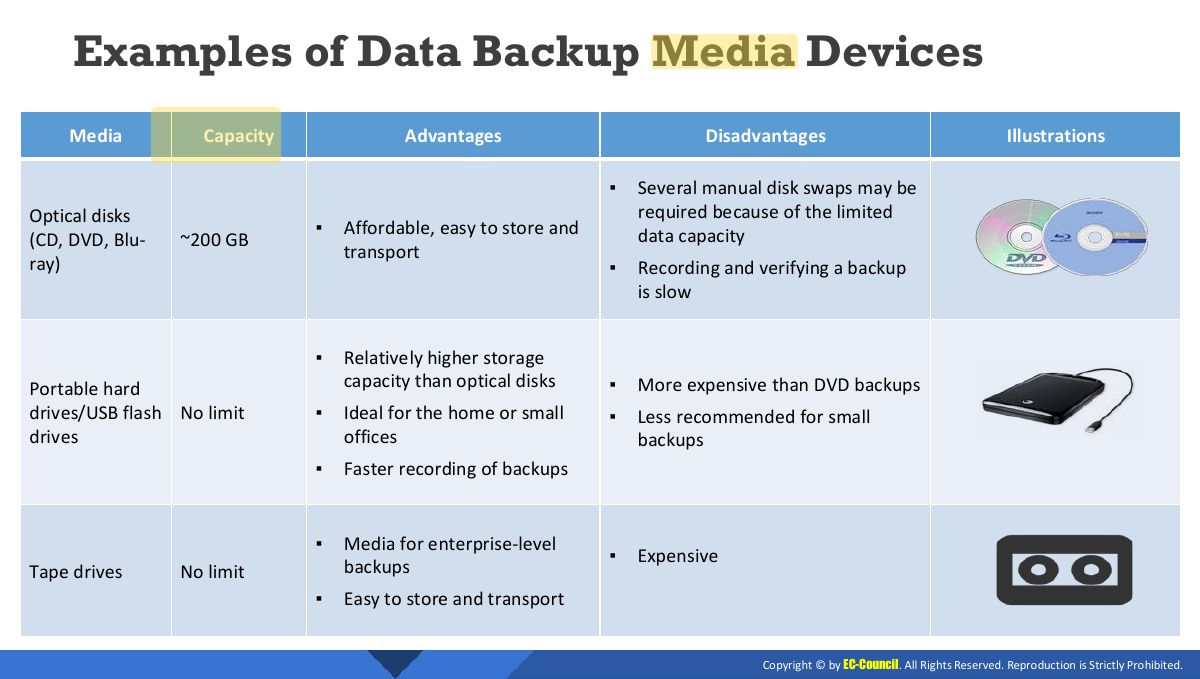
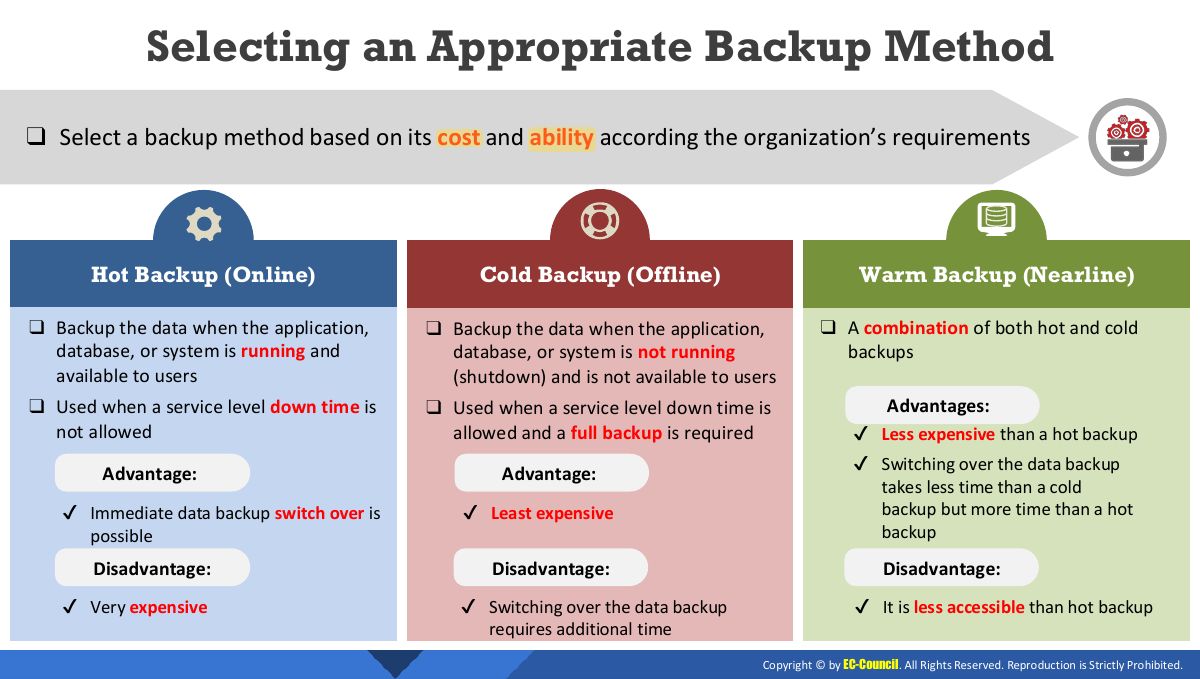
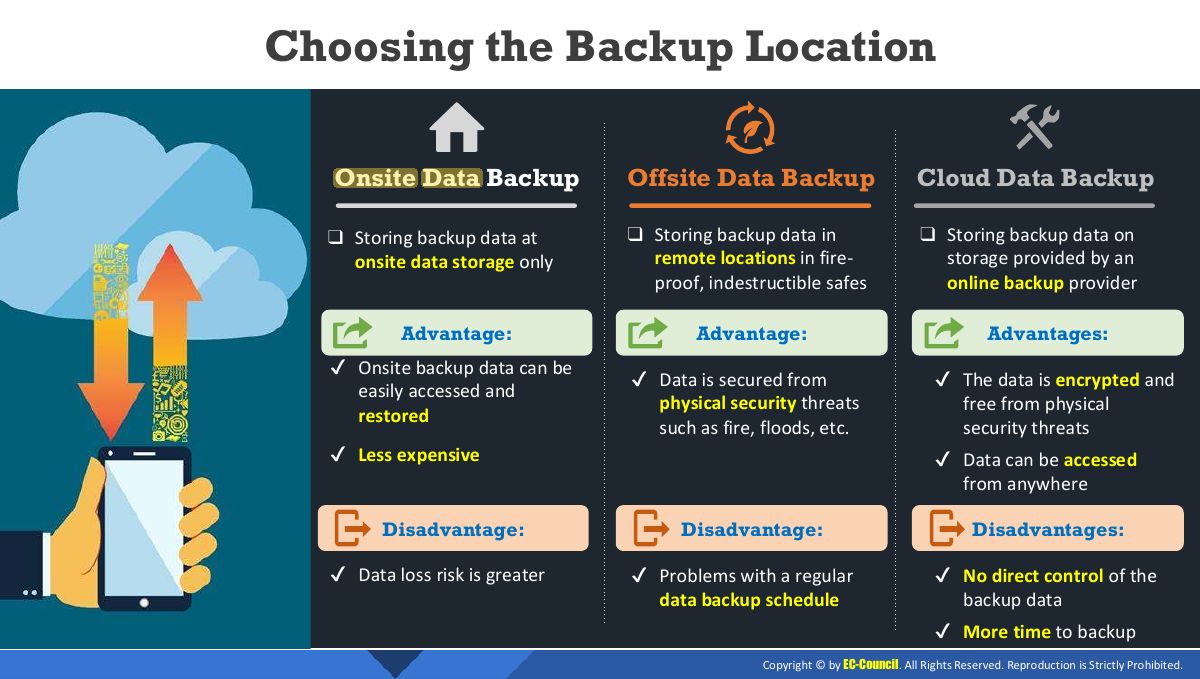
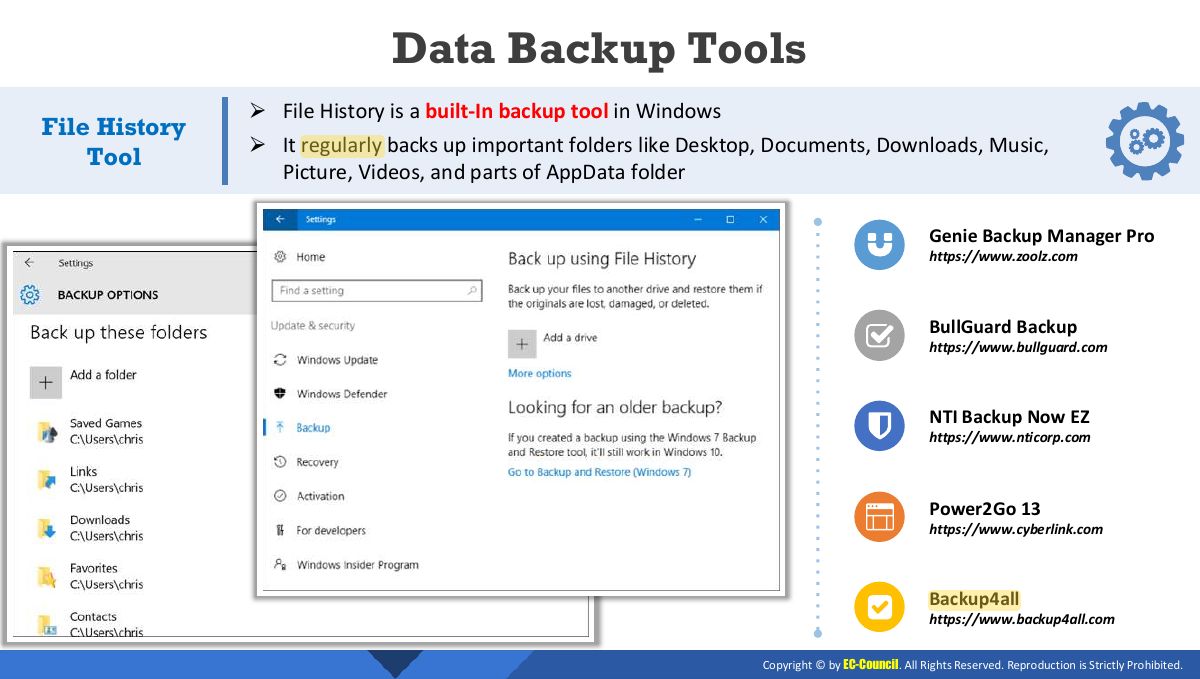
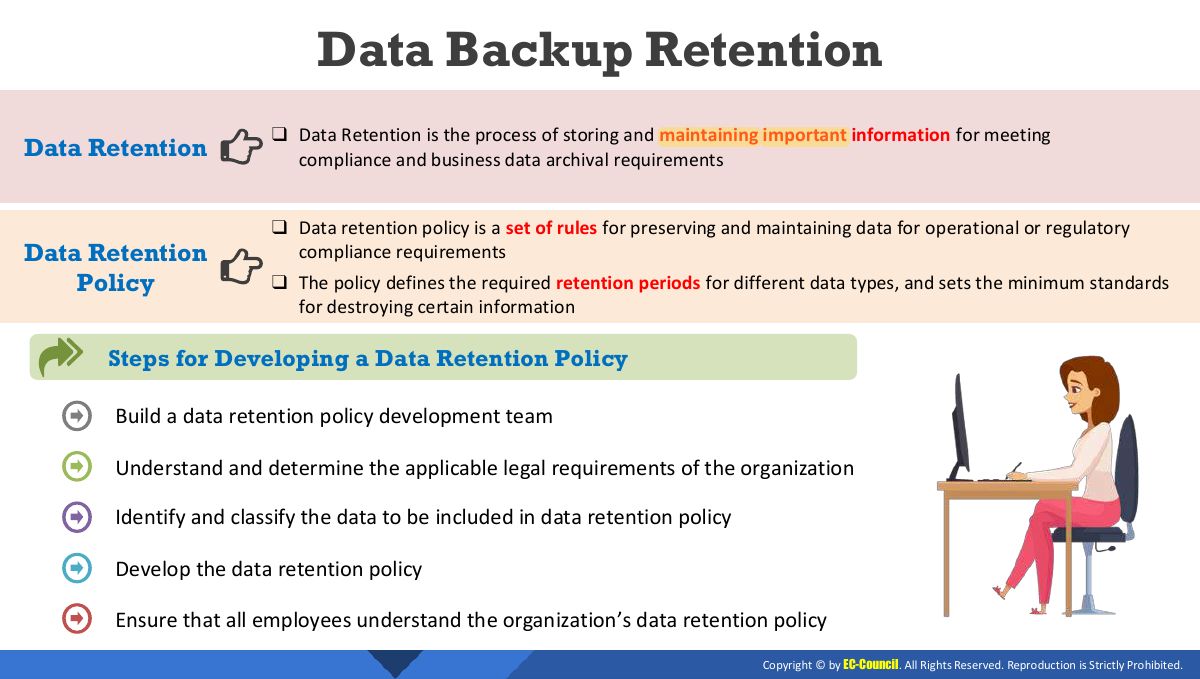
- Backup strategy: what, how often, which media, where (offsite/cloud), how long, test restores. 3-2-1 rule: 3 copies, 2 media, 1 offsite.
Exam weight ●○○ Low
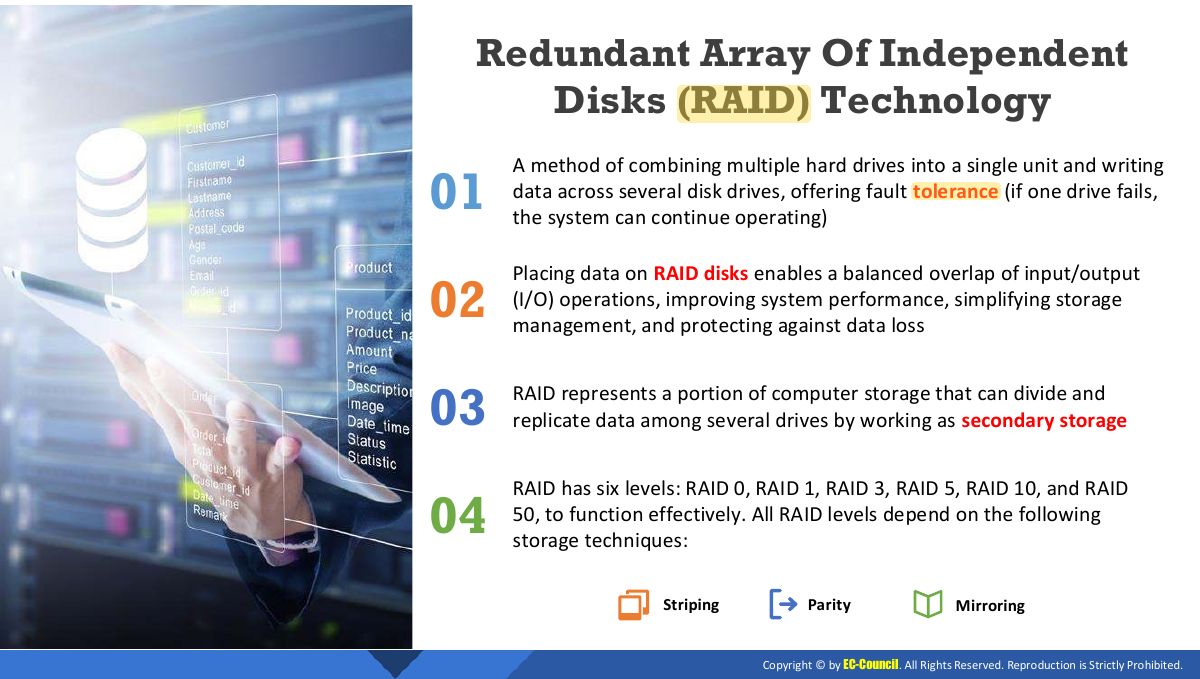
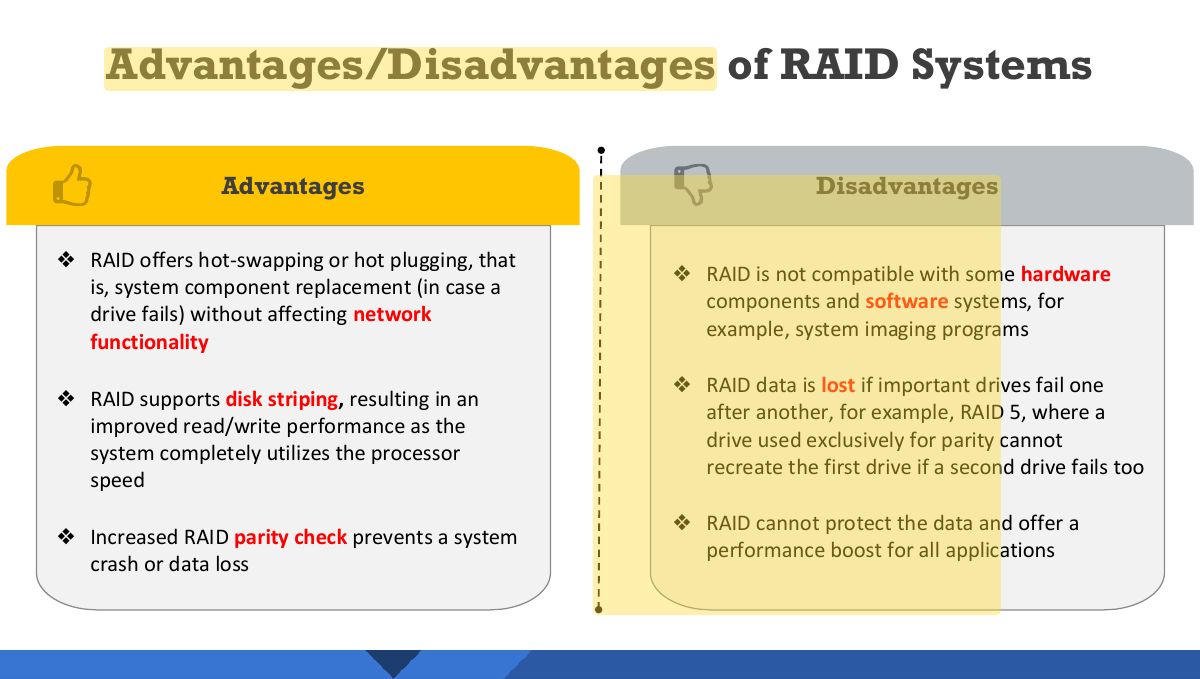
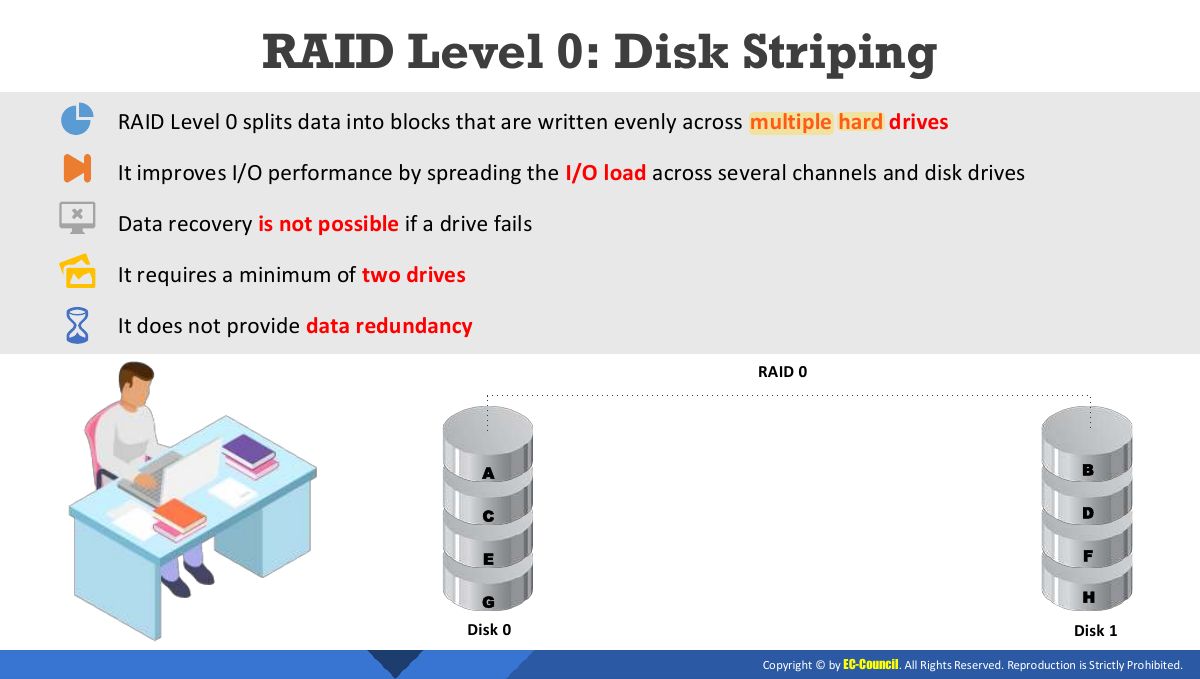
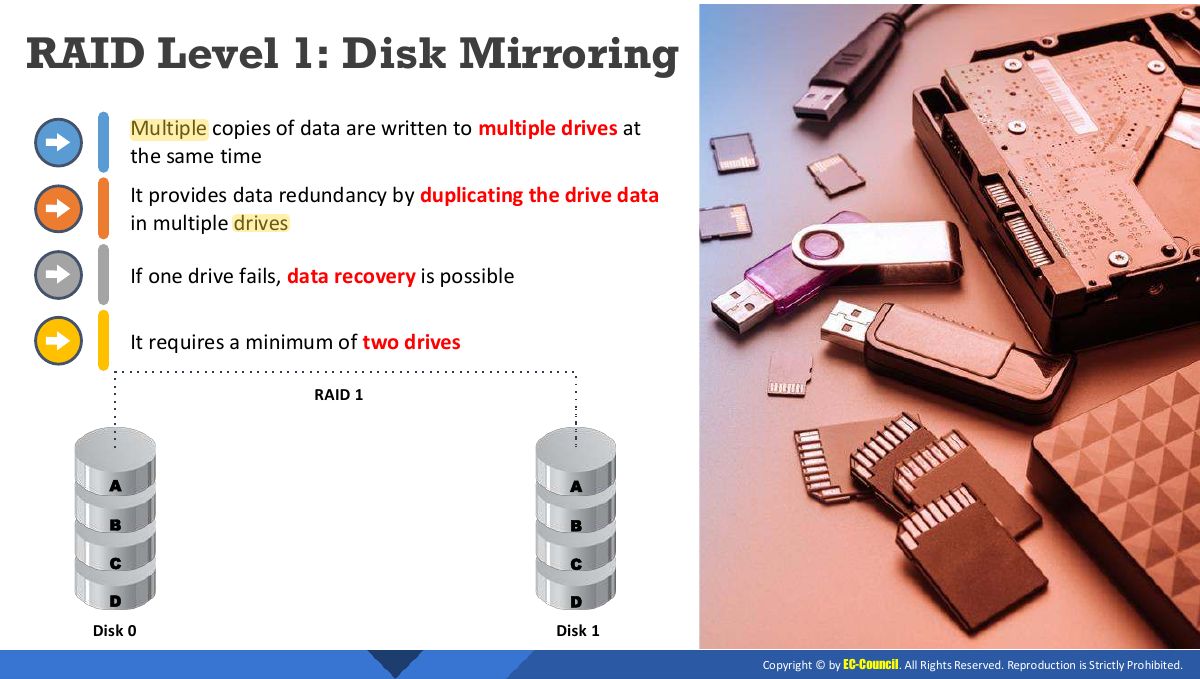
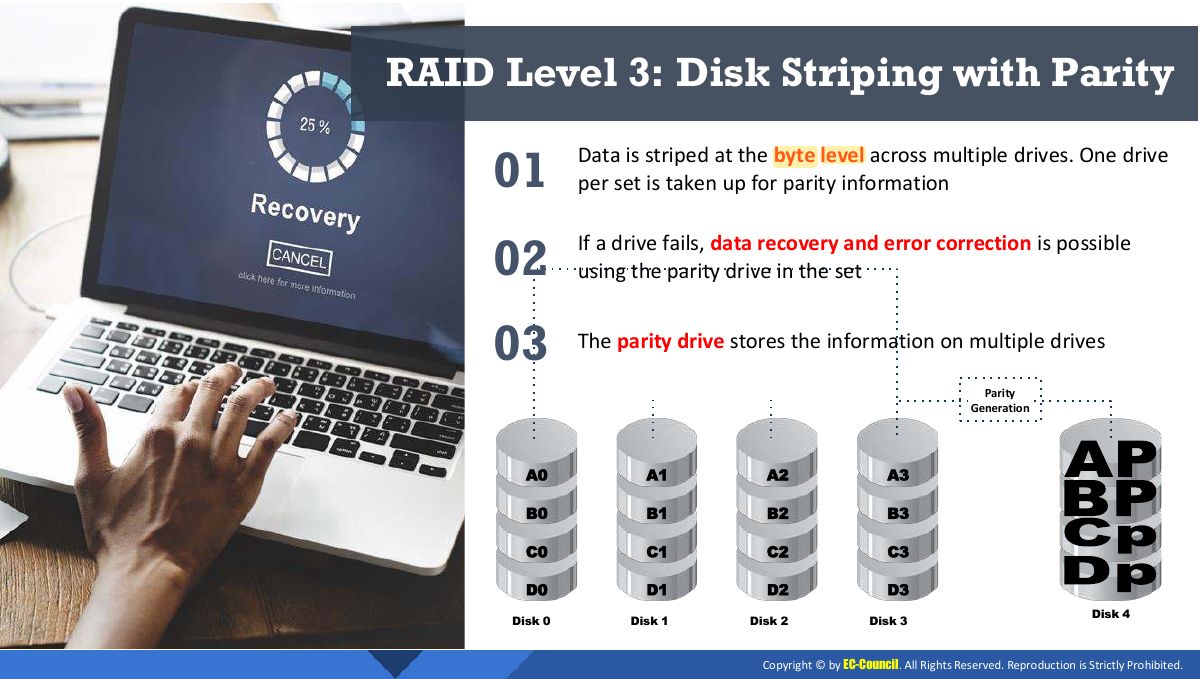
- RAID combines disks for performance and/or redundancy (not a backup!).
Exam weight ●○○ Low
- RAID 0: striping, no redundancy (fast, any disk failure loses all).
Exam weight ●○○ Low
- RAID 1: mirroring (two copies; 50% capacity).
Exam weight ●●● High
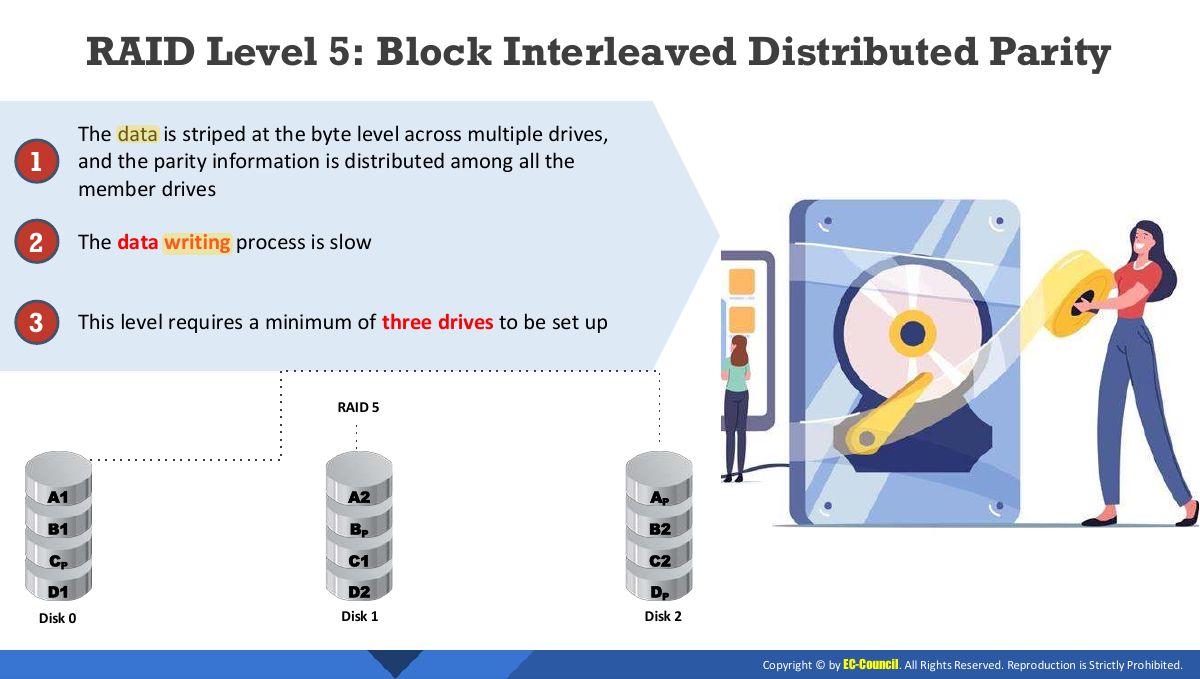
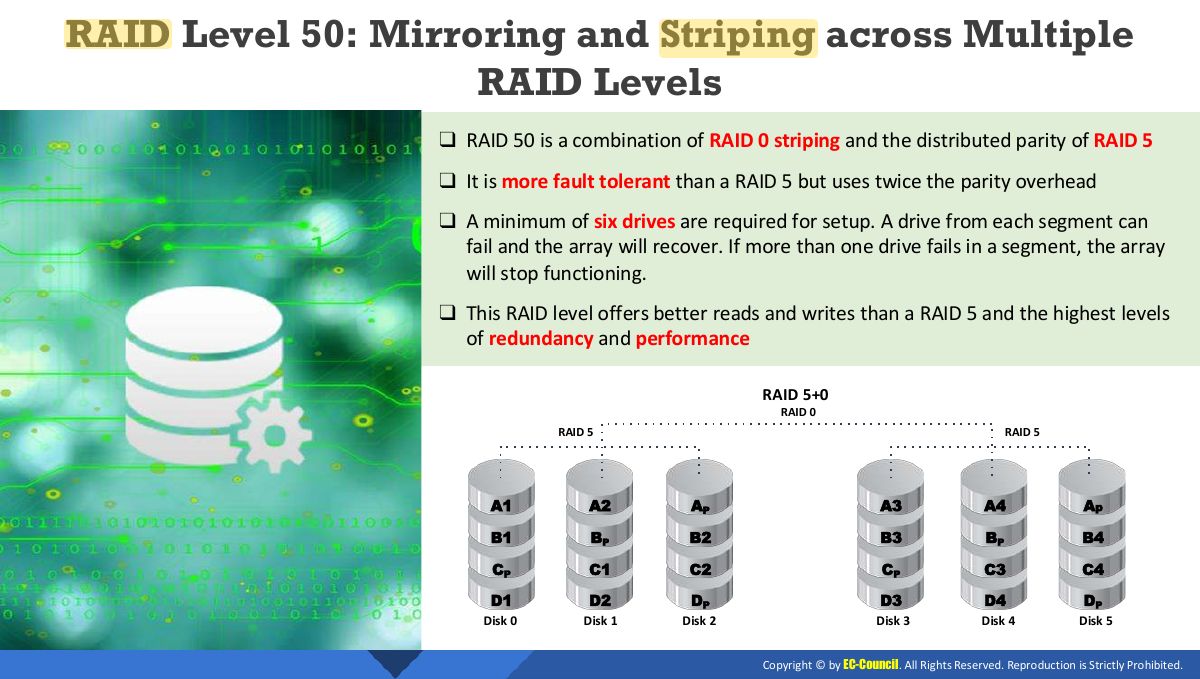
- RAID 5: block striping with distributed parity; survives one disk failure; needs ≥ 3 disks.
Exam weight ●○○ Low
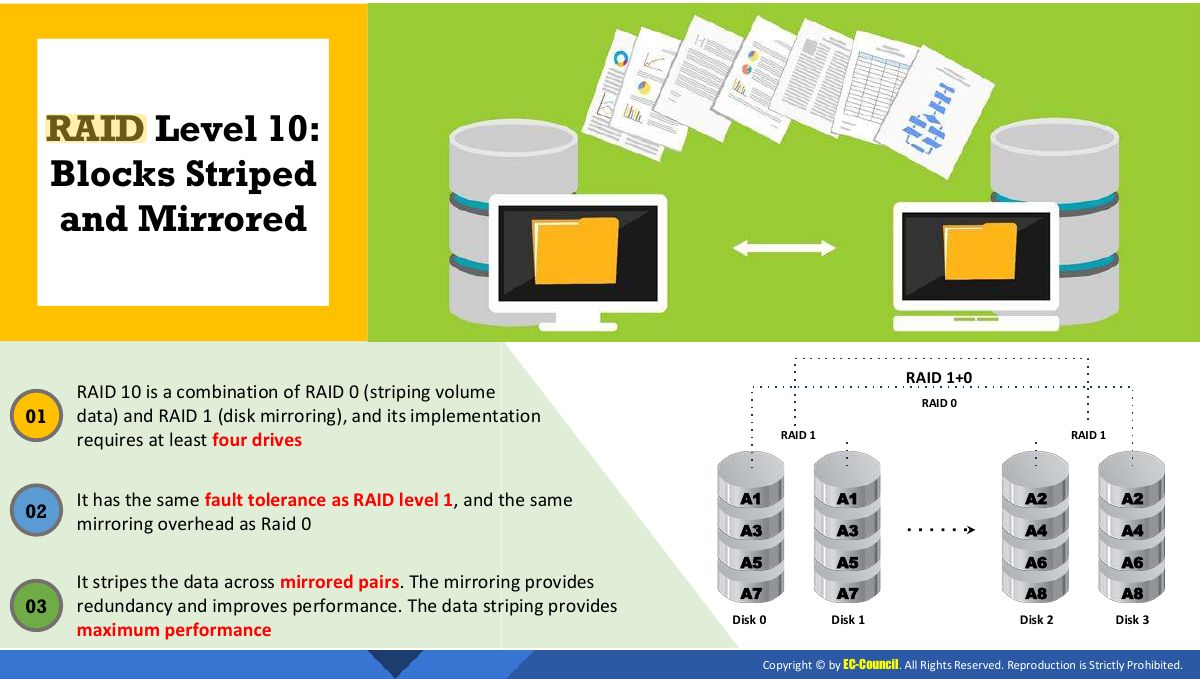
- RAID 10: mirrored pairs that are then striped (fast and redundant; ≥ 4 disks).
Exam weight ●○○ Low
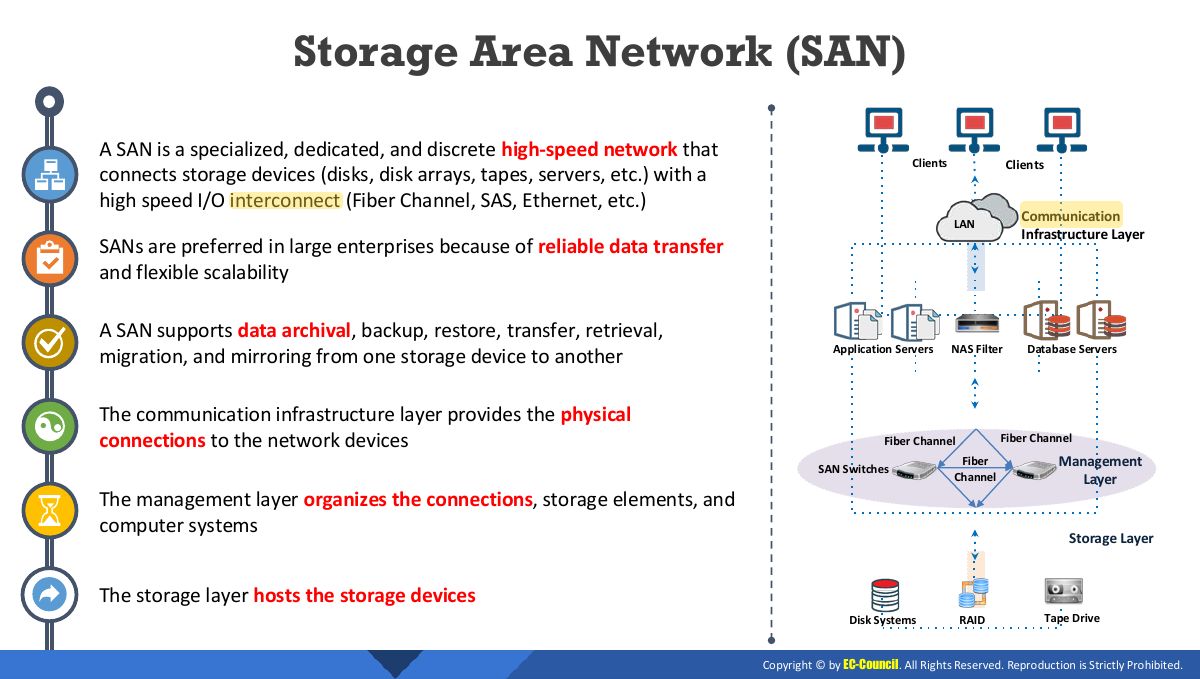
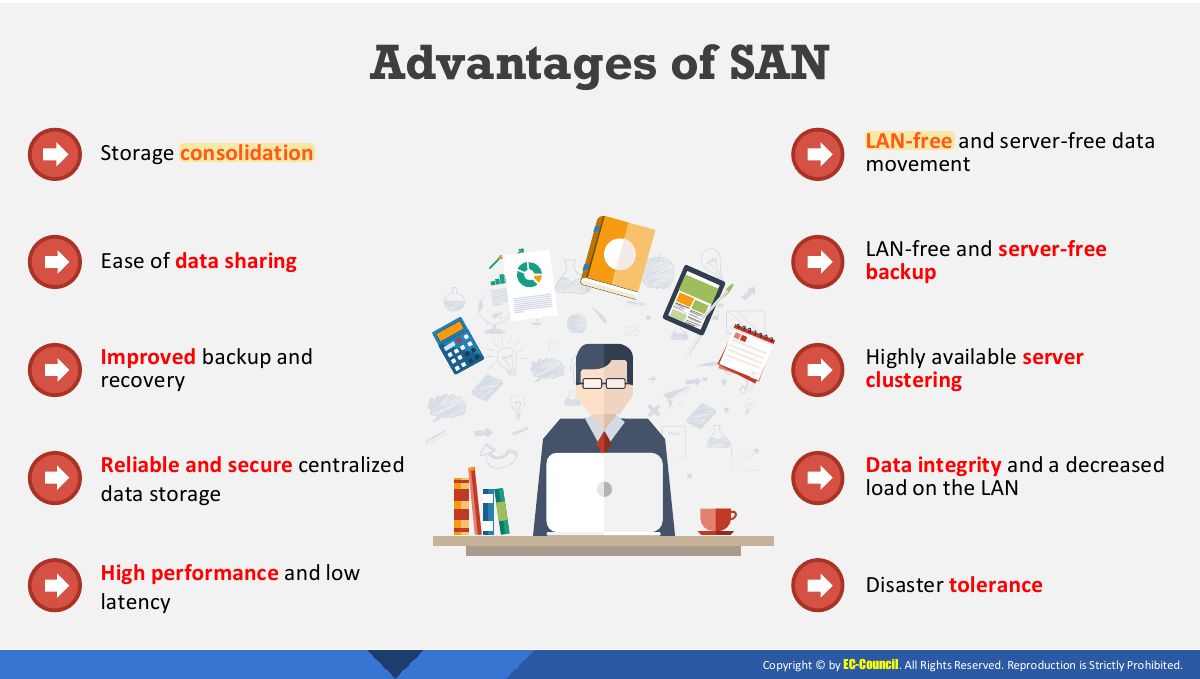
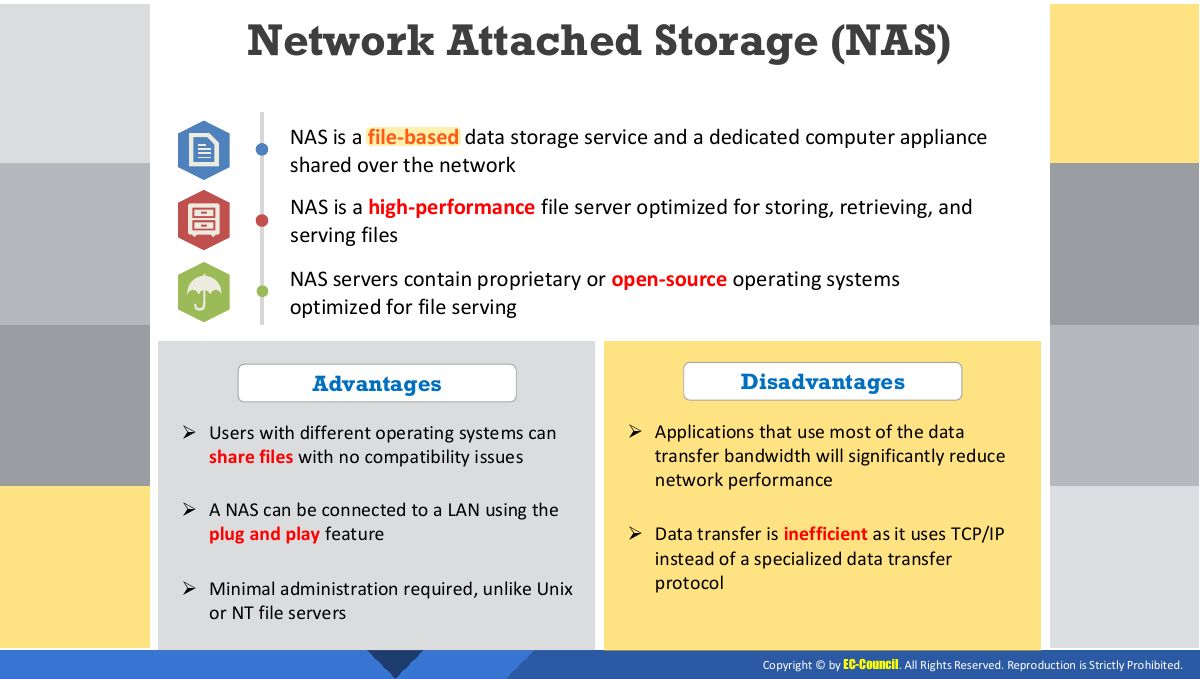
- SAN: dedicated block-level storage network. NAS: file-level storage on the LAN.
Exam weight ●●● High
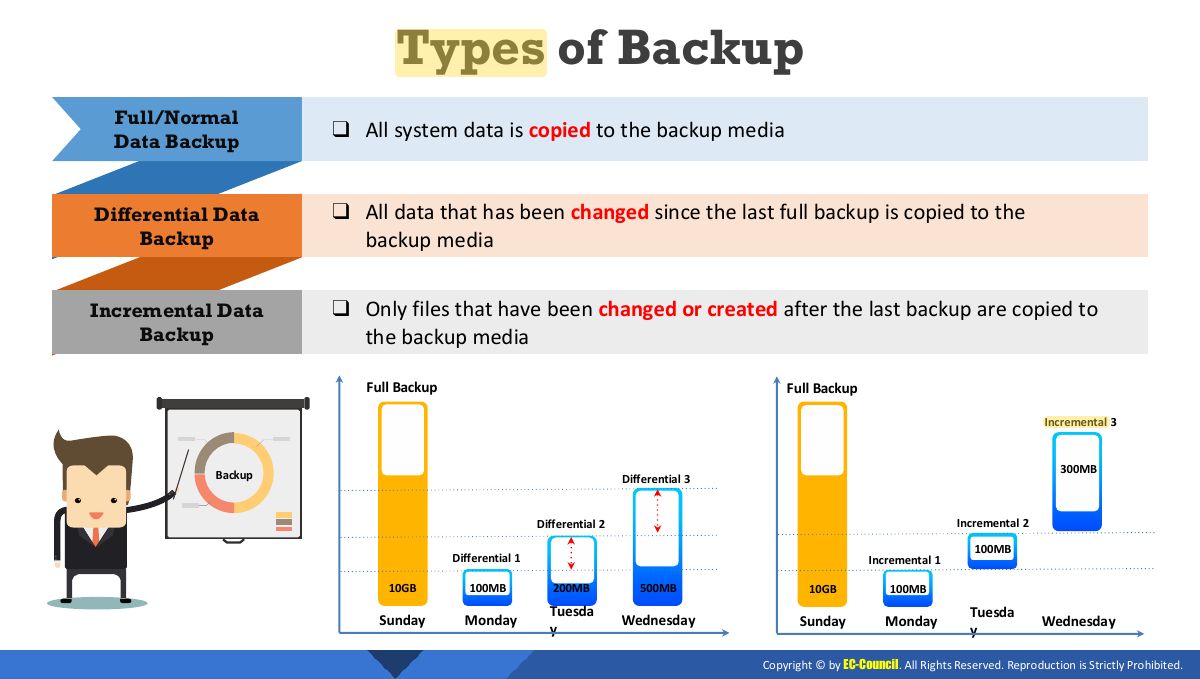
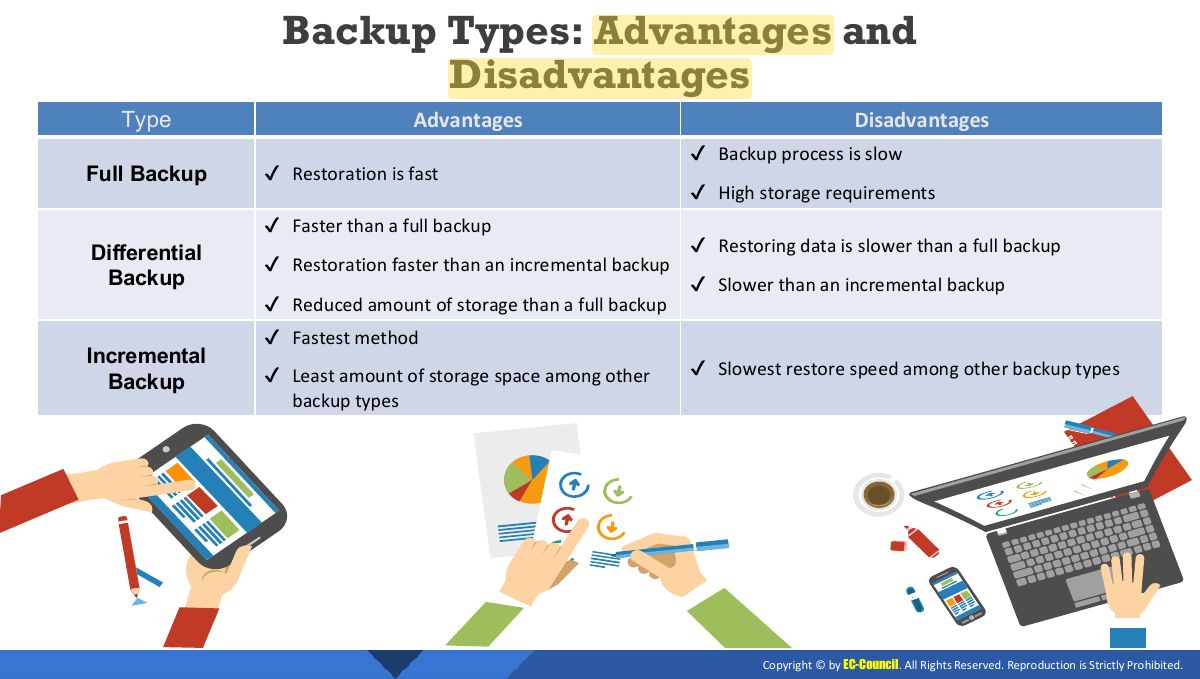
- Full: everything (slow backup, fast restore). Incremental: changes since the LAST backup (fast backup, slow restore: full + every incremental). Differential: changes since the last FULL (restore = full + latest differential).
Exam weight ●●● High
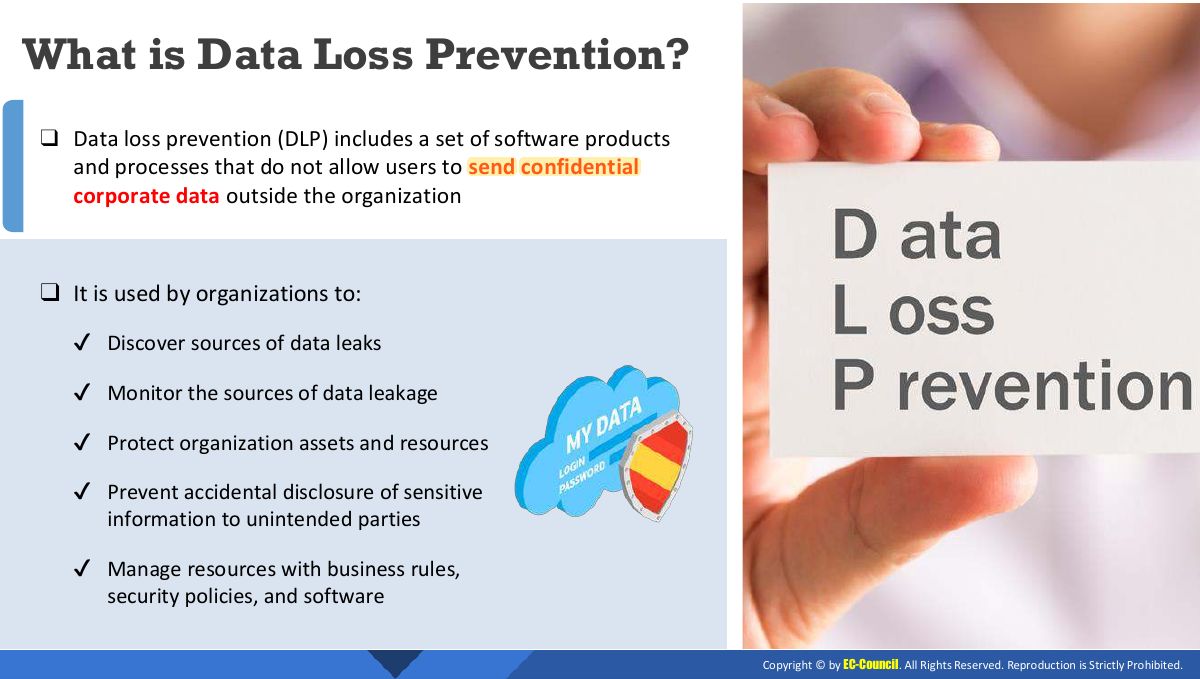
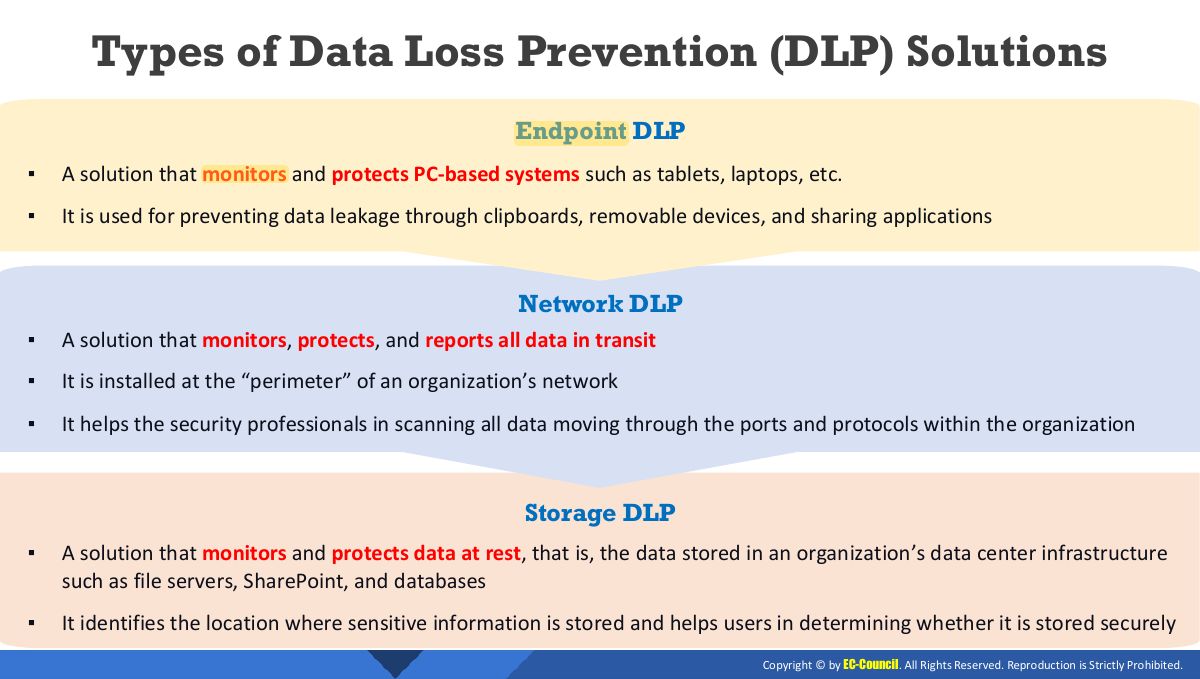
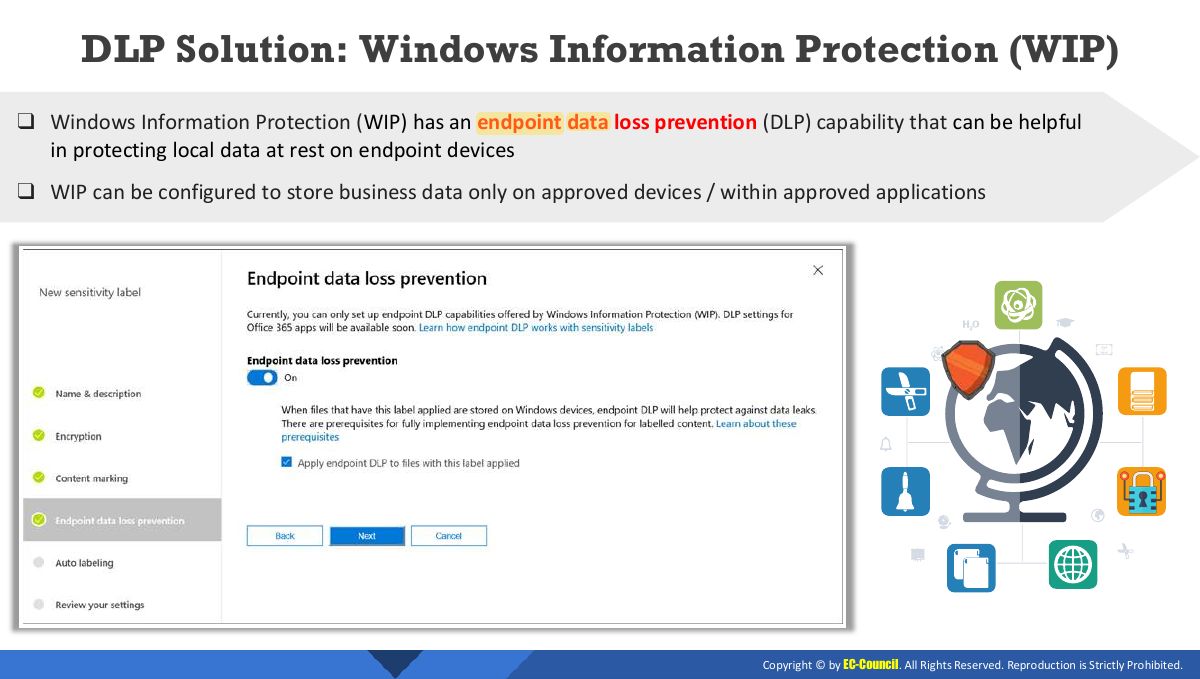
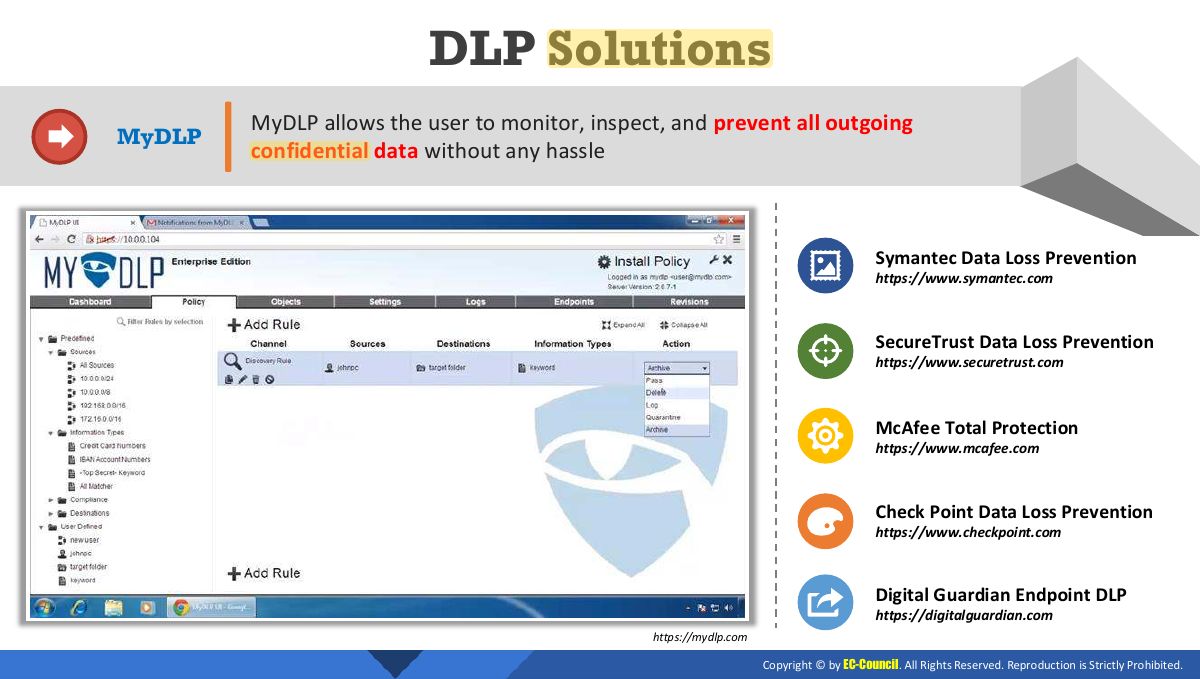
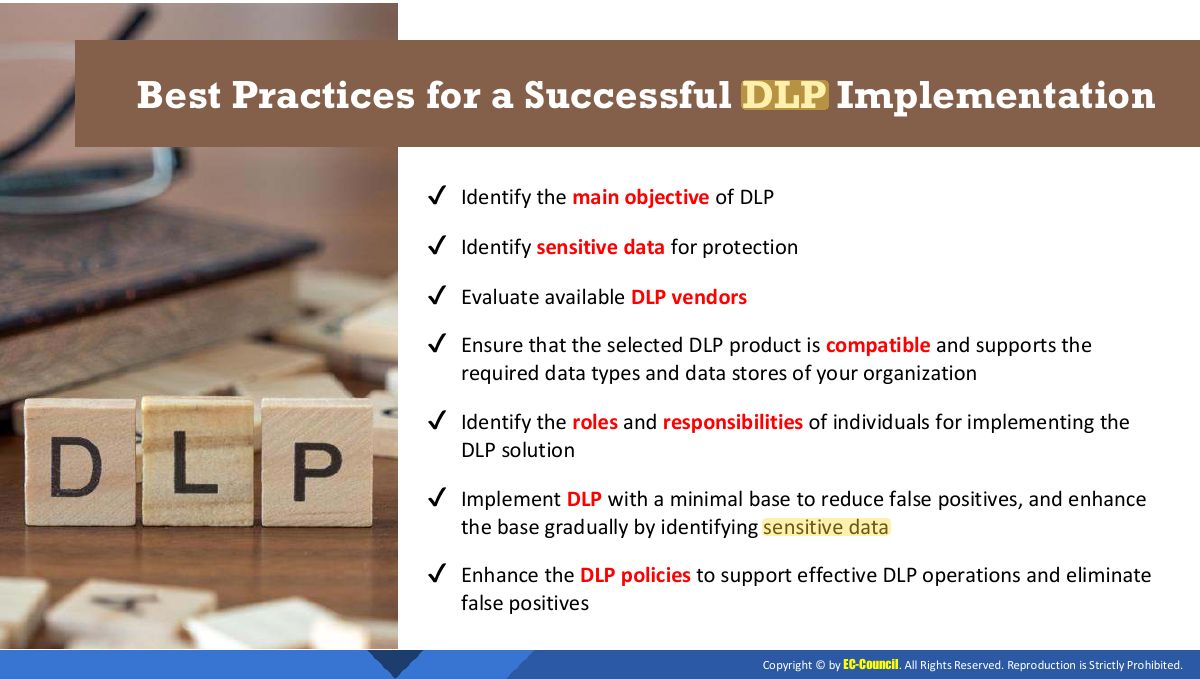
- DLP: tools and policies that detect and block sensitive data leaving the organization (network, endpoint, storage).
No slides match this filter.