CYS406 · Annotated SlidesChapter 14 — Honeypots and Proxy Servers
Chapter 14 · Annotated slides

Honeypots and Proxy Servers

Honeypots and their types (low, medium and high interaction, production vs. research), honeypot tools, then proxy servers: benefits, how they work, proxy vs. packet filter, transparent, non-transparent, SOCKS, anonymous and reverse proxies, configuration and limitations.

Slide text Study notes Highlight: key words Tips, tricks & traps Seen again elsewhere How it can come up
Slide 1: Module Flow
Exam weight Low
    Slide 2: Honeypot
    Exam weight High
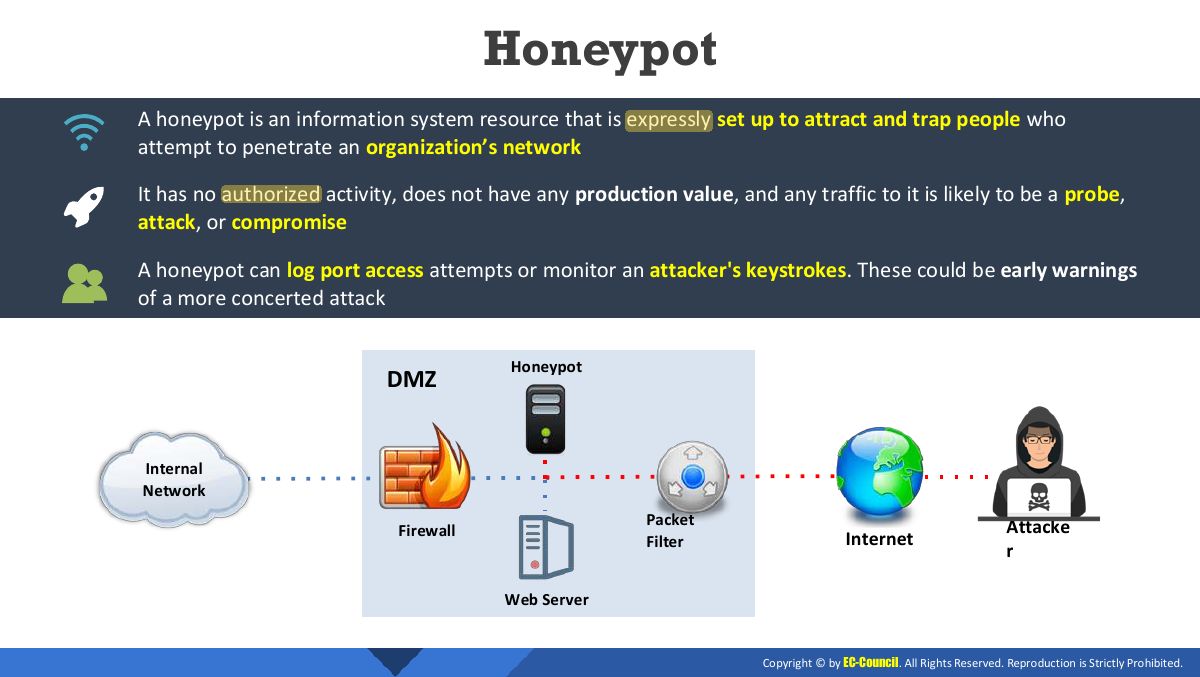
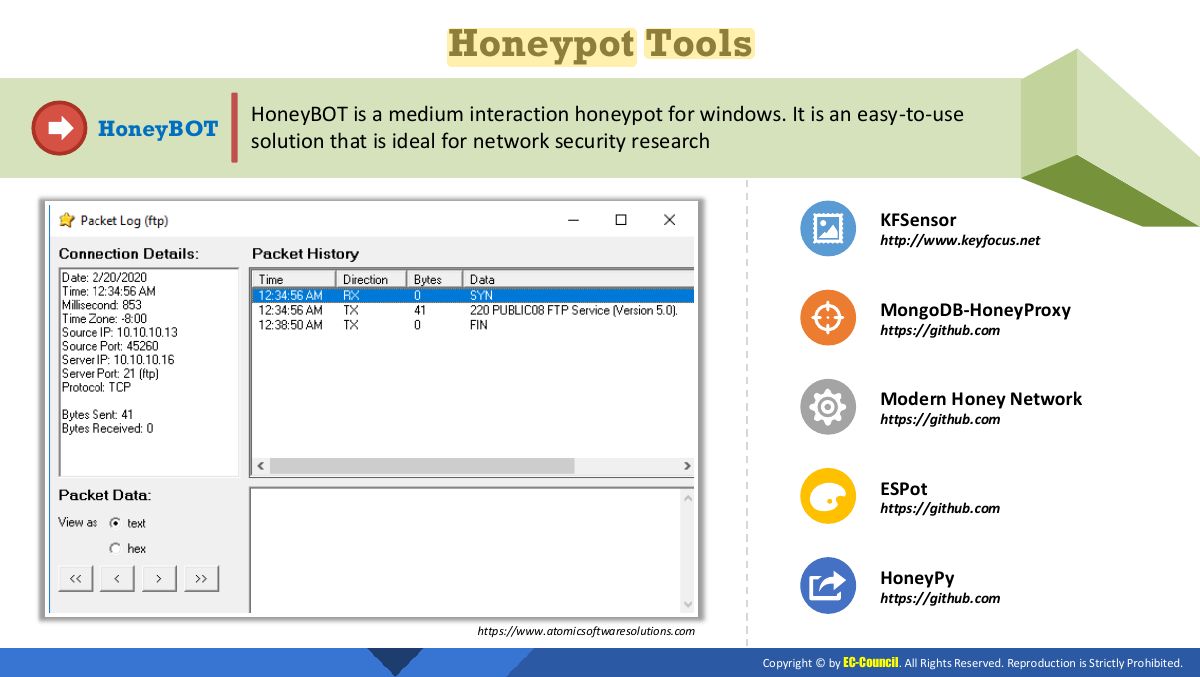
    1. Honeypot: a decoy system with no production value; any interaction with it is suspicious. Used to detect and study attackers.
    🎯 How this can come up · 1 question
    MCQ

    The purpose of a honeypot is to:

    Slide 3: Types of Honeypots
    Exam weight High
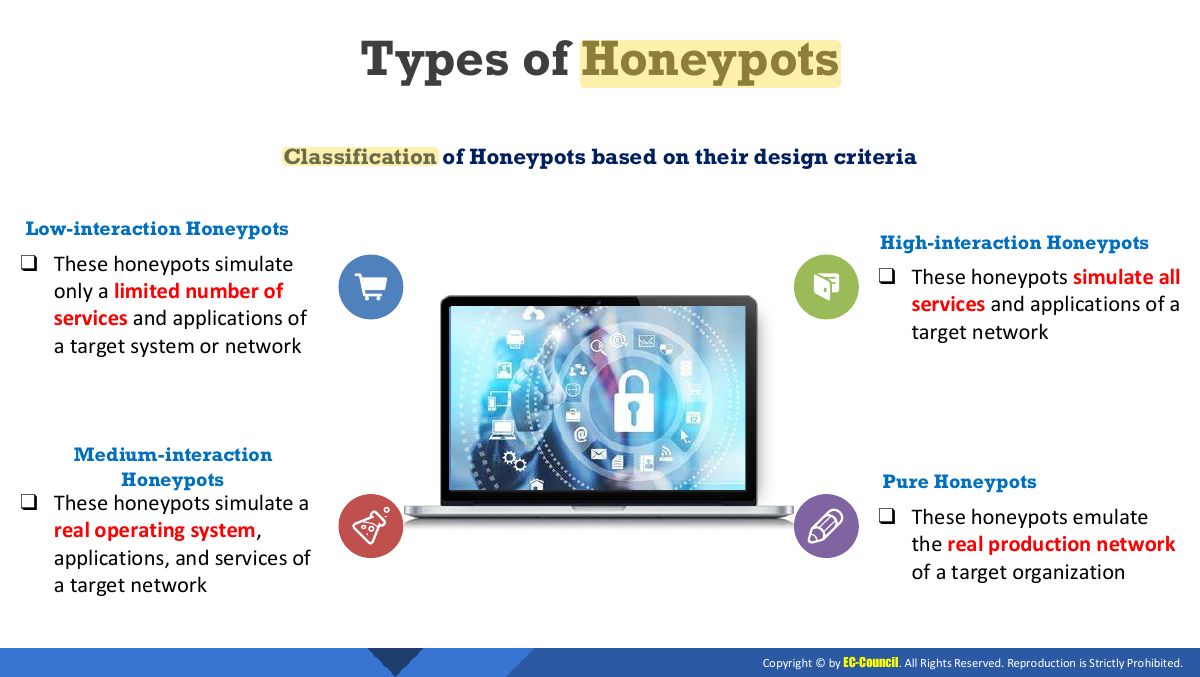
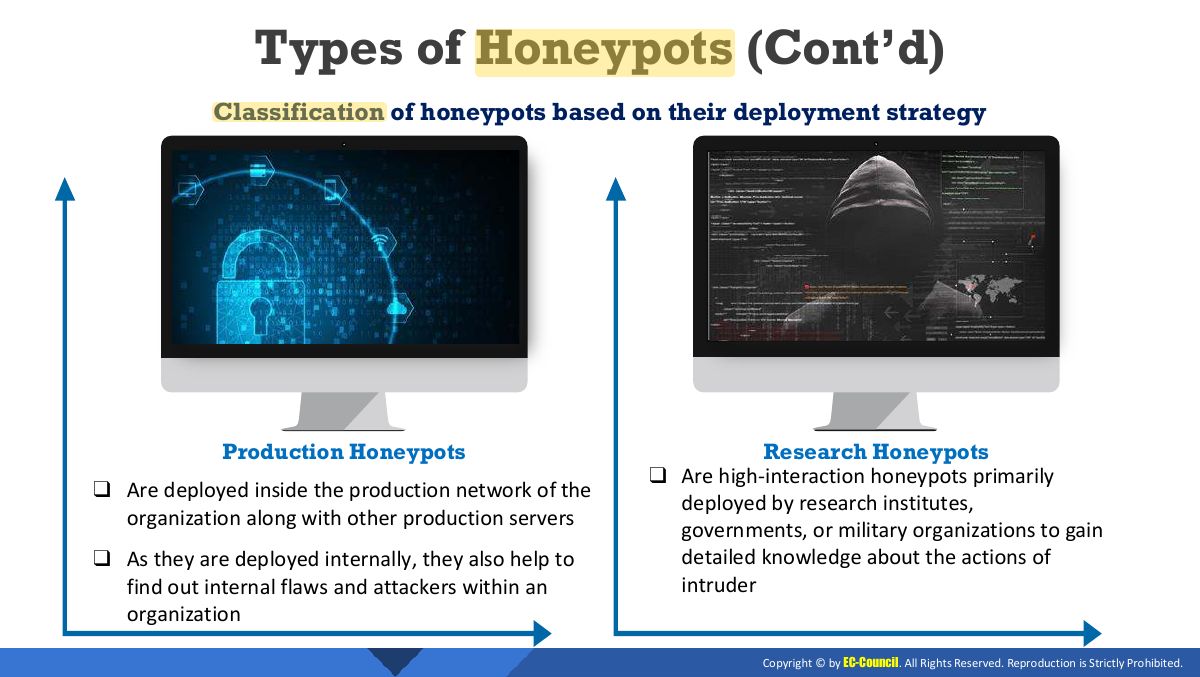
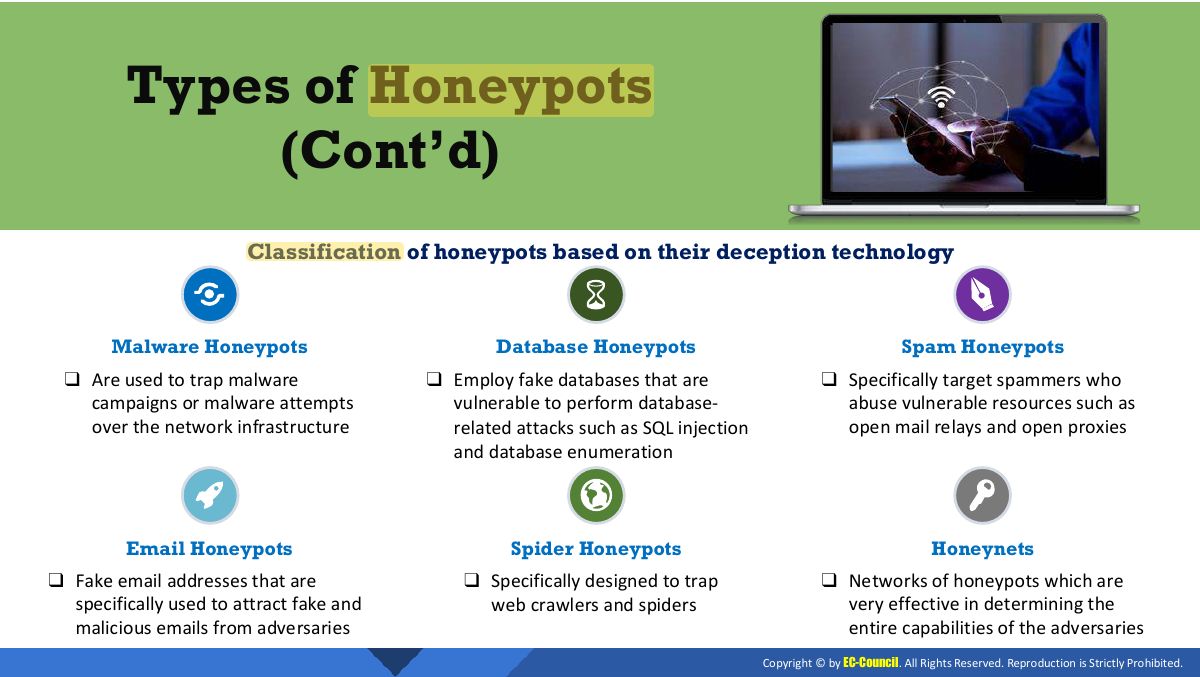
    1. Low-interaction: emulates a few services (safe, limited data). High-interaction: real OS and services (rich data, more risk). Production vs. research honeypots.
    🎯 How this can come up · 1 question
    MCQ

    Which honeypot gives the most information but carries the most risk?

    Slide 4: Types of Honeypots (Cont’d)
    Exam weight Low
      Slide 5: Types of Honeypots (Cont’d)
      Exam weight Low
        Slide 6: Honeypot Tools
        Exam weight Low
          Slide 7: Module Flow
          Exam weight Low
            Slide 8: What are Proxy Servers?
            Exam weight Low
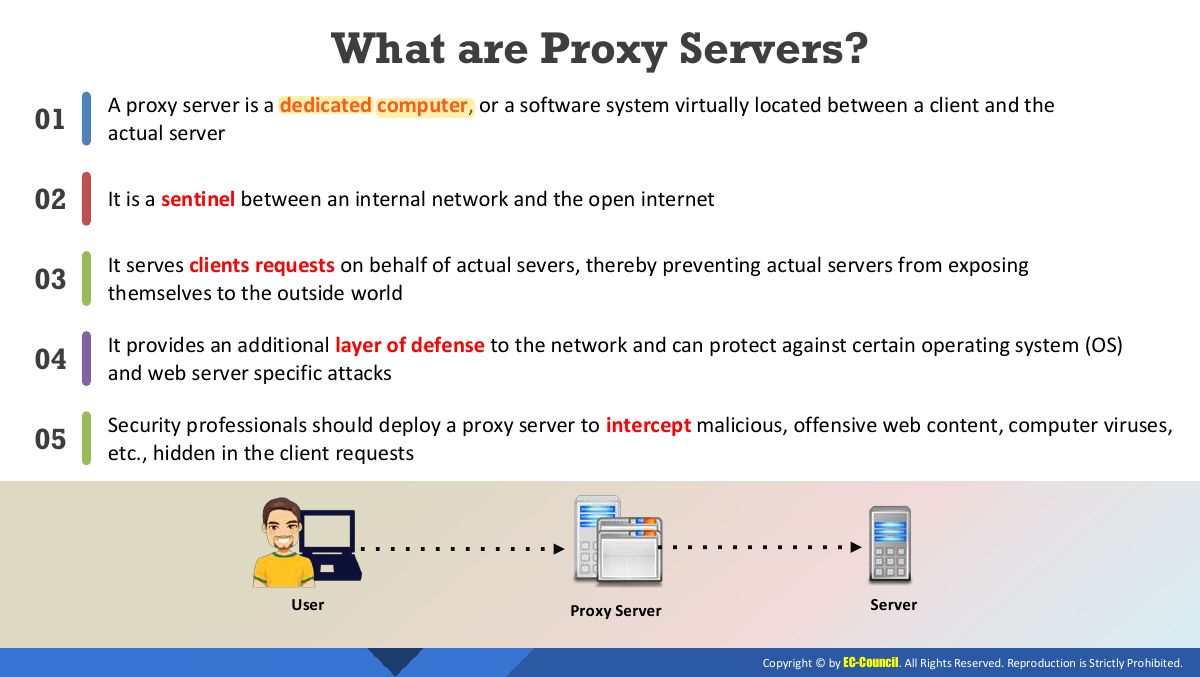
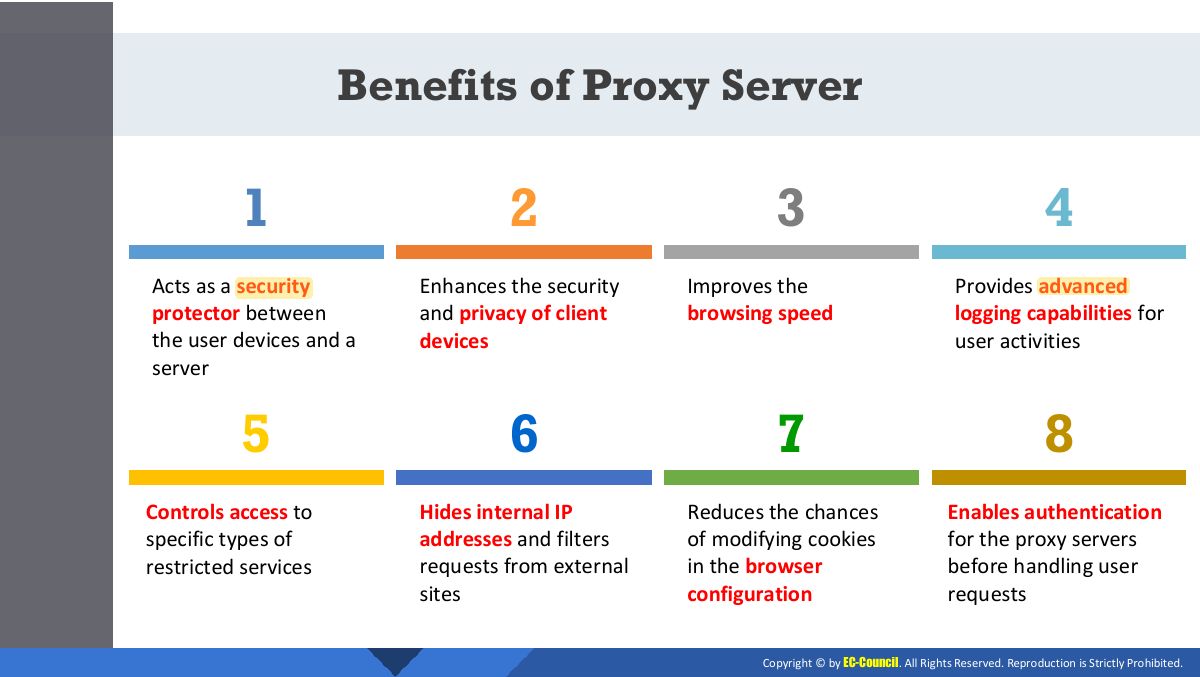
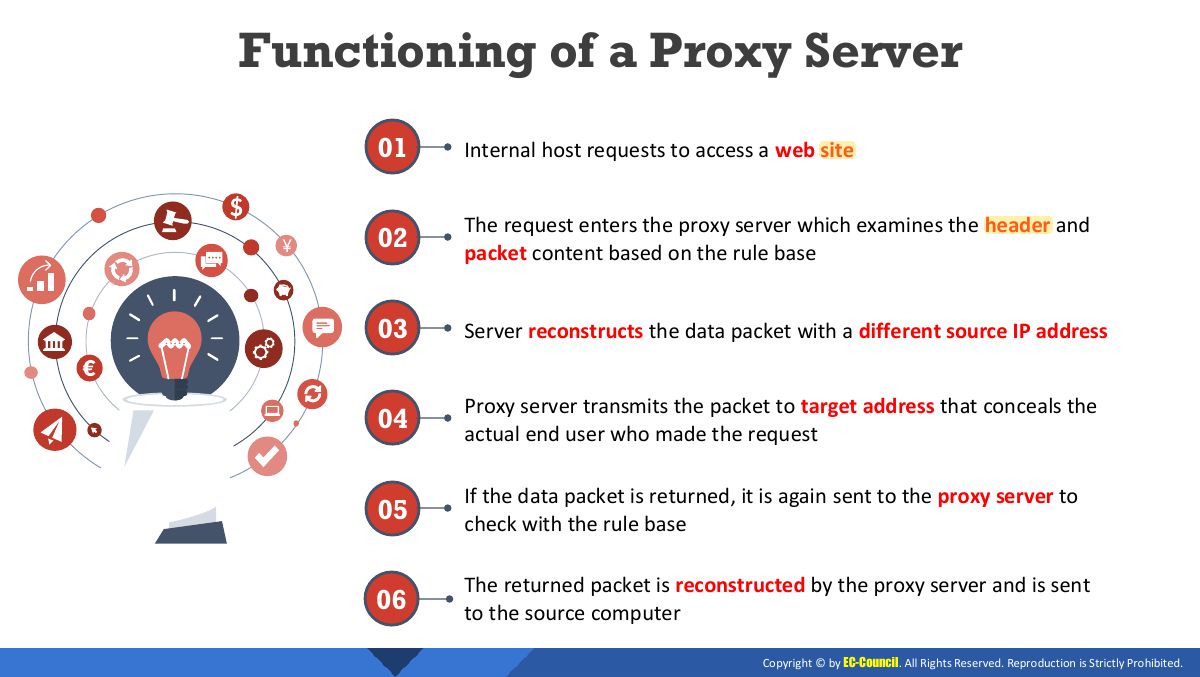
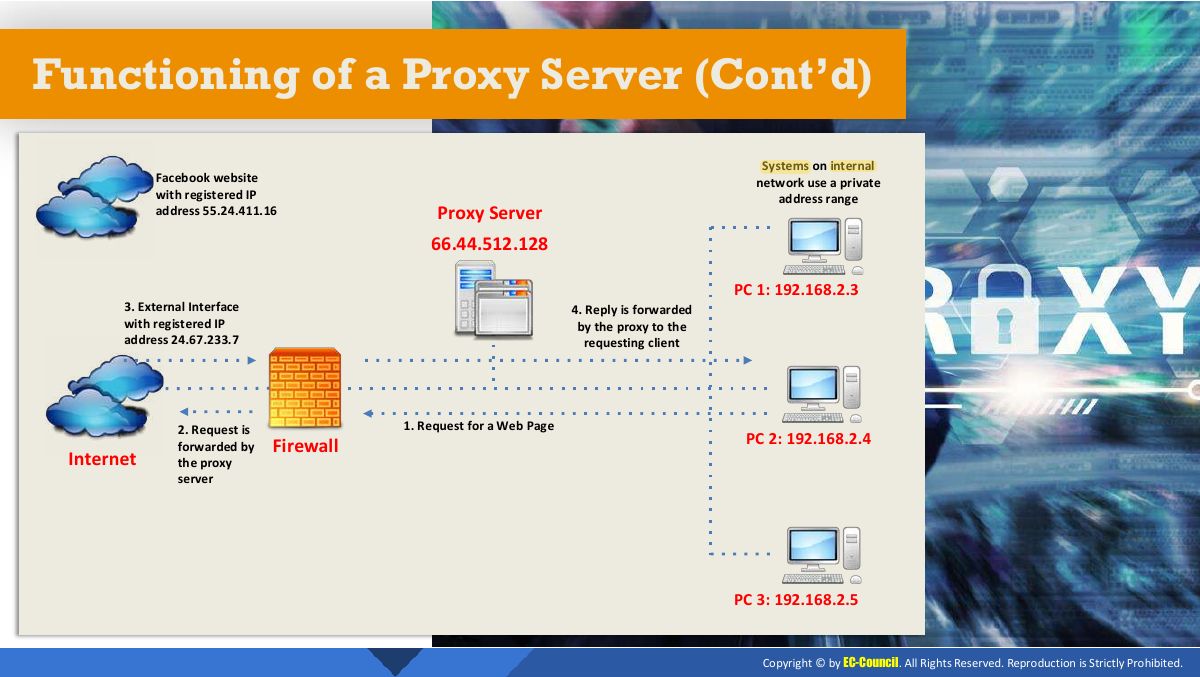
            1. Proxy server: an intermediary that makes requests on behalf of clients (hides them, filters content, caches).
            Slide 9: Benefits of Proxy Server
            Exam weight Low
              Slide 10: Functioning of a Proxy Server
              Exam weight Low
                Slide 11: Slide 11
                Exam weight Low
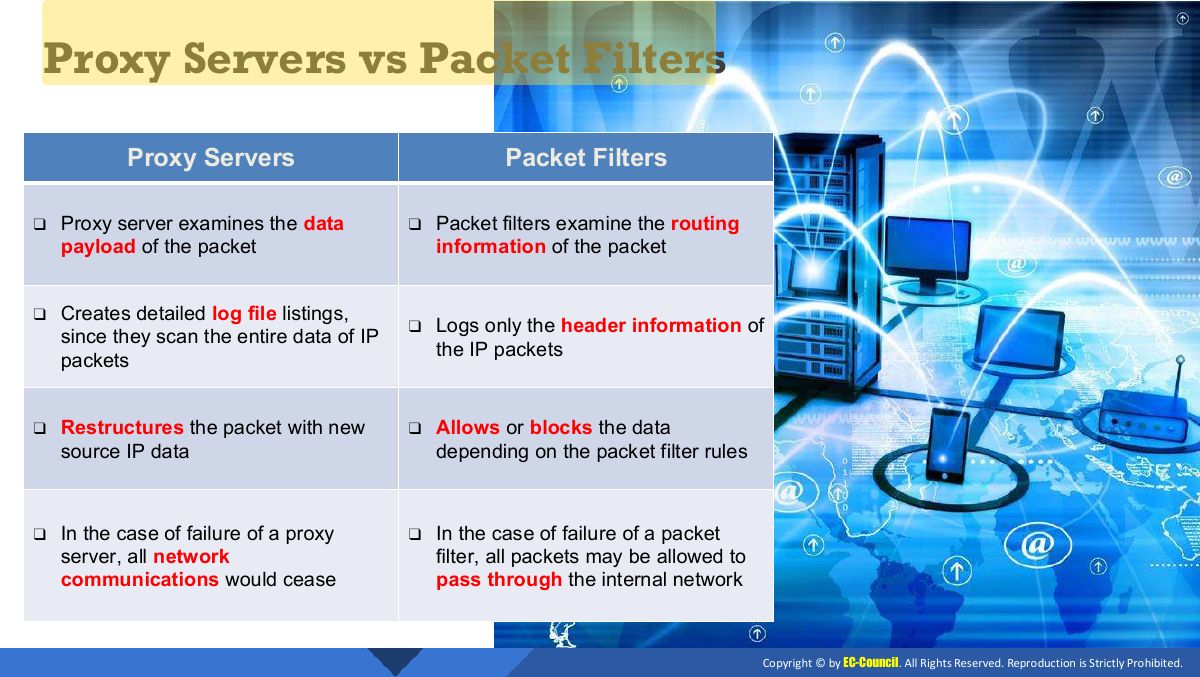
                  Slide 12: Proxy Servers vs Packet Filters
                  Exam weight Low
                  1. Proxy vs. packet filter: a proxy inspects application data; a packet filter only headers.
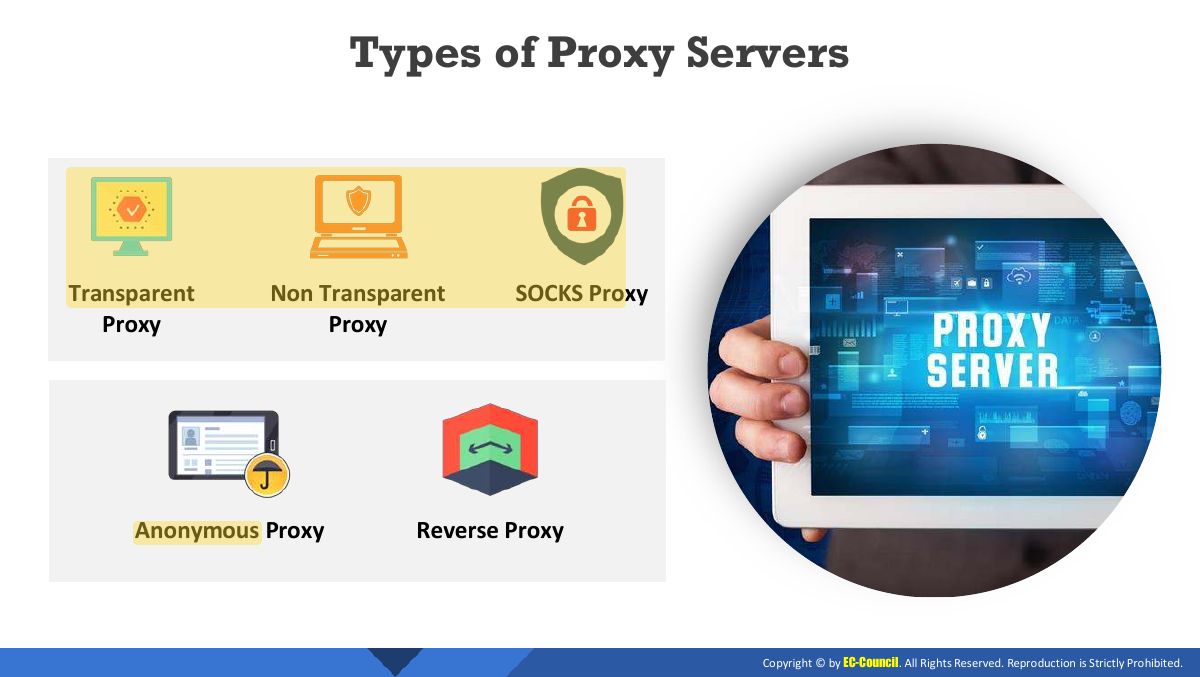
                  Slide 13: Types of Proxy Servers
                  Exam weight Low
                    Slide 14: Transparent Proxy
                    Exam weight Low
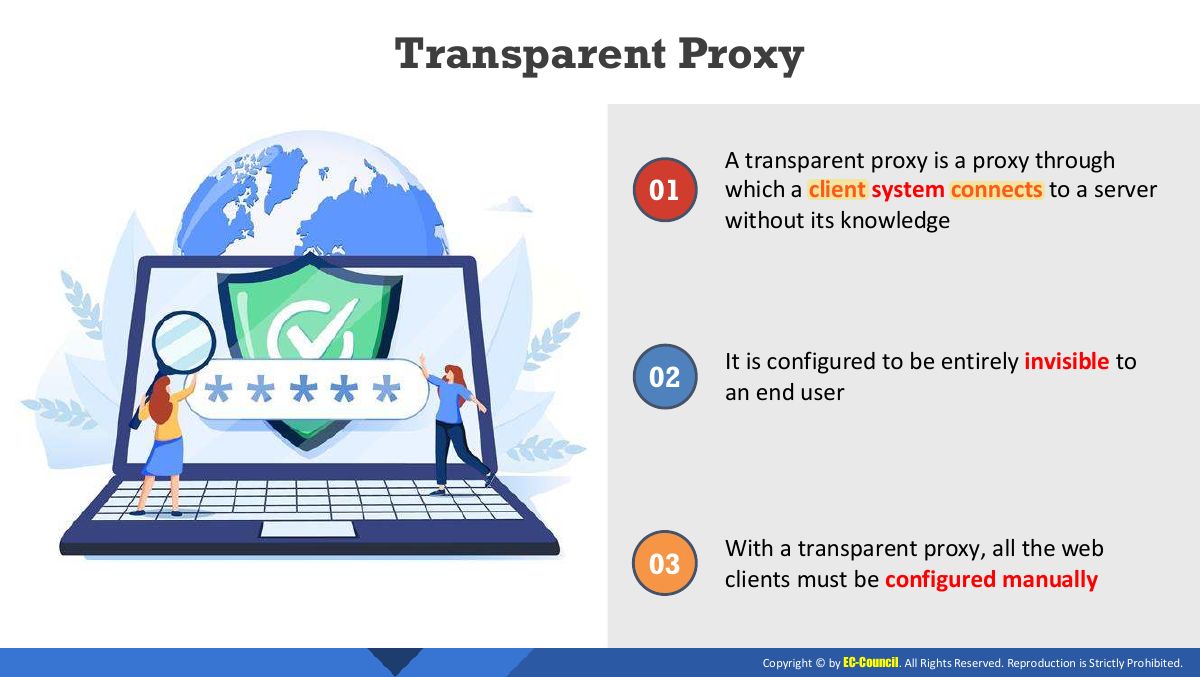
                    1. Transparent proxy: clients don’t know it’s there (no configuration).
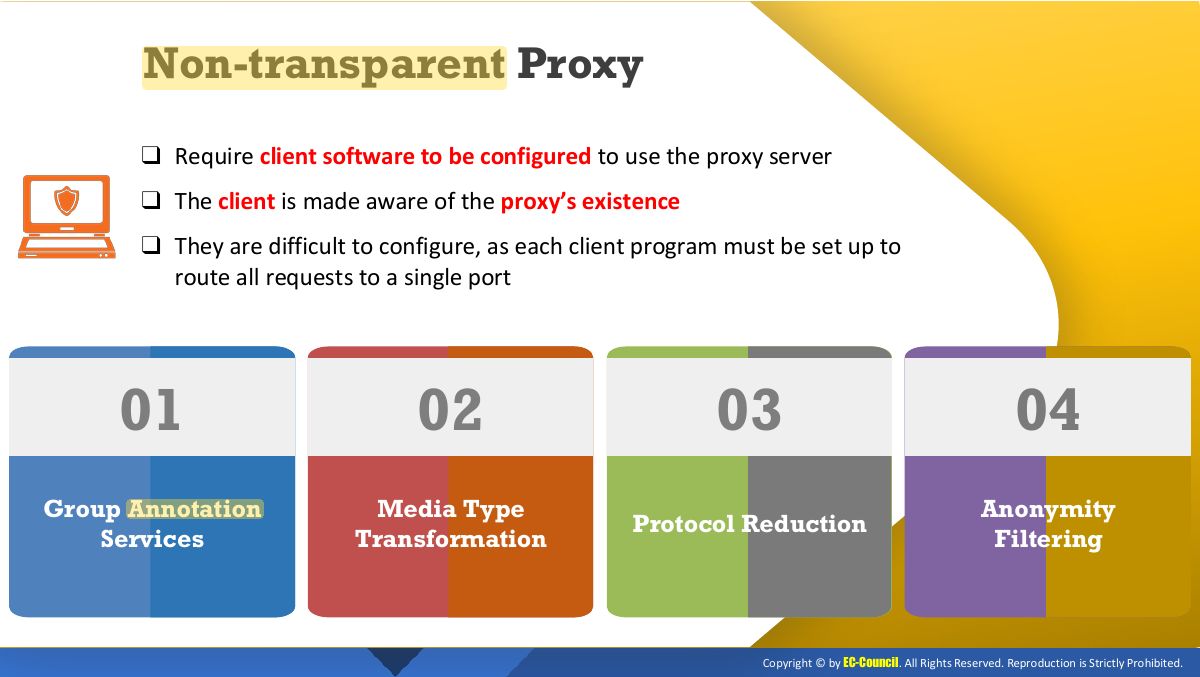
                    Slide 15: Non-transparent Proxy
                    Exam weight Low
                      Slide 16: Slide 16
                      Exam weight Low
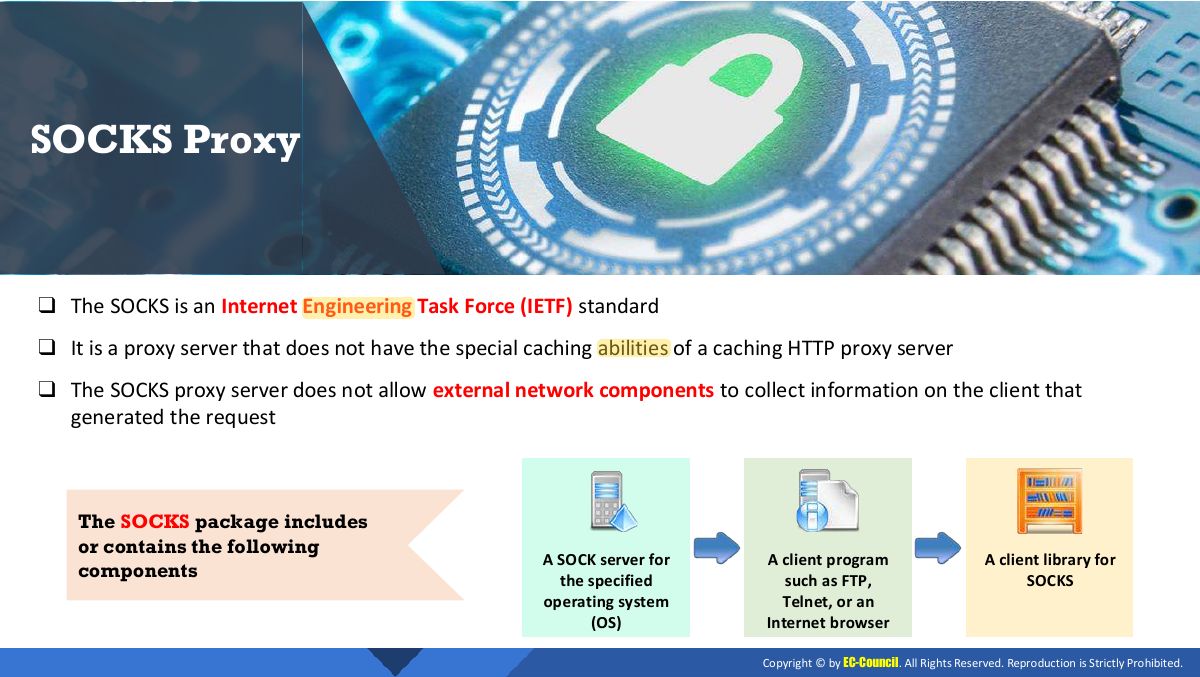
                      1. SOCKS proxy: generic, works for any TCP/UDP application.
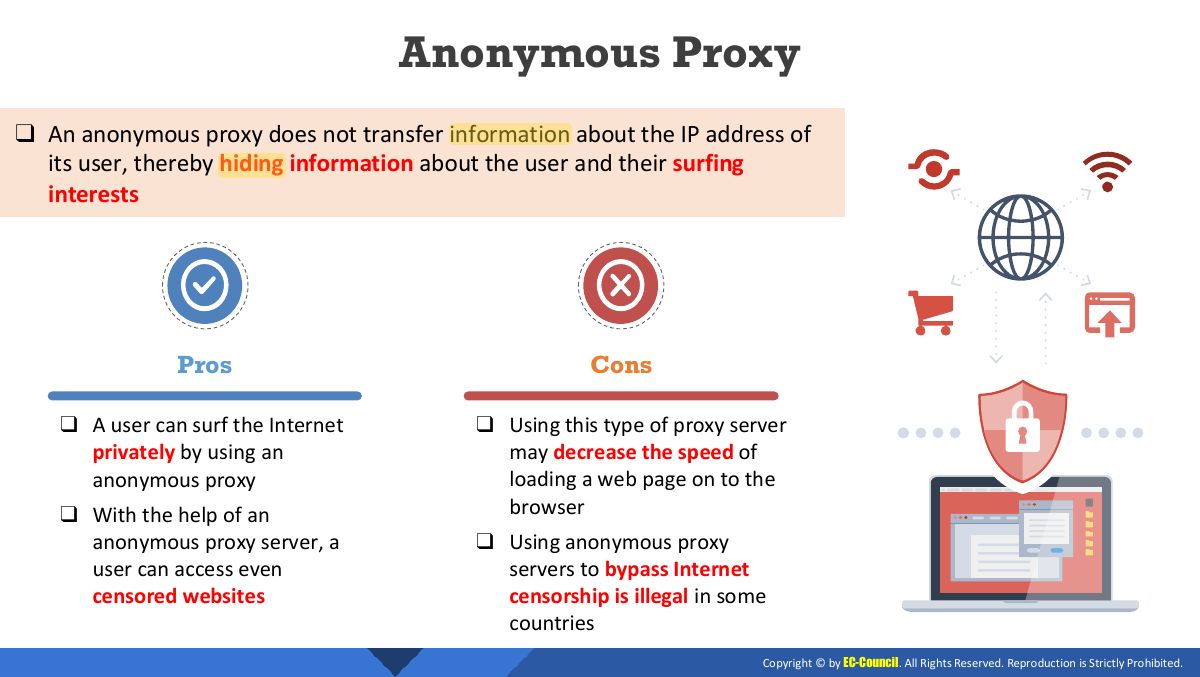
                      Slide 17: Anonymous Proxy
                      Exam weight Low
                      1. Anonymous proxy hides the client’s IP from the server.
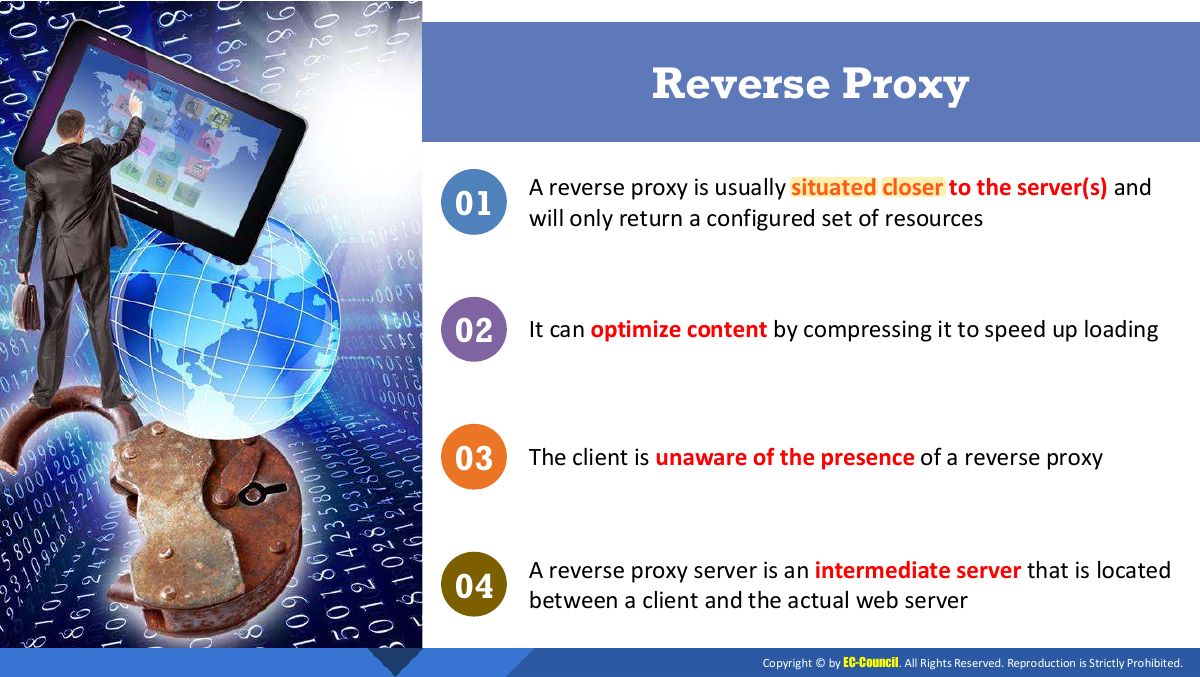
                      Slide 18: Reverse Proxy
                      Exam weight High
                      1. Reverse proxy: sits in front of SERVERS (load balancing, TLS termination, protection).
                      Exam trapForward proxy protects/represents clients; reverse proxy protects/represents servers.
                      🎯 How this can come up · 1 question
                      MCQ

                      A proxy that receives requests on behalf of a company’s web servers is a:

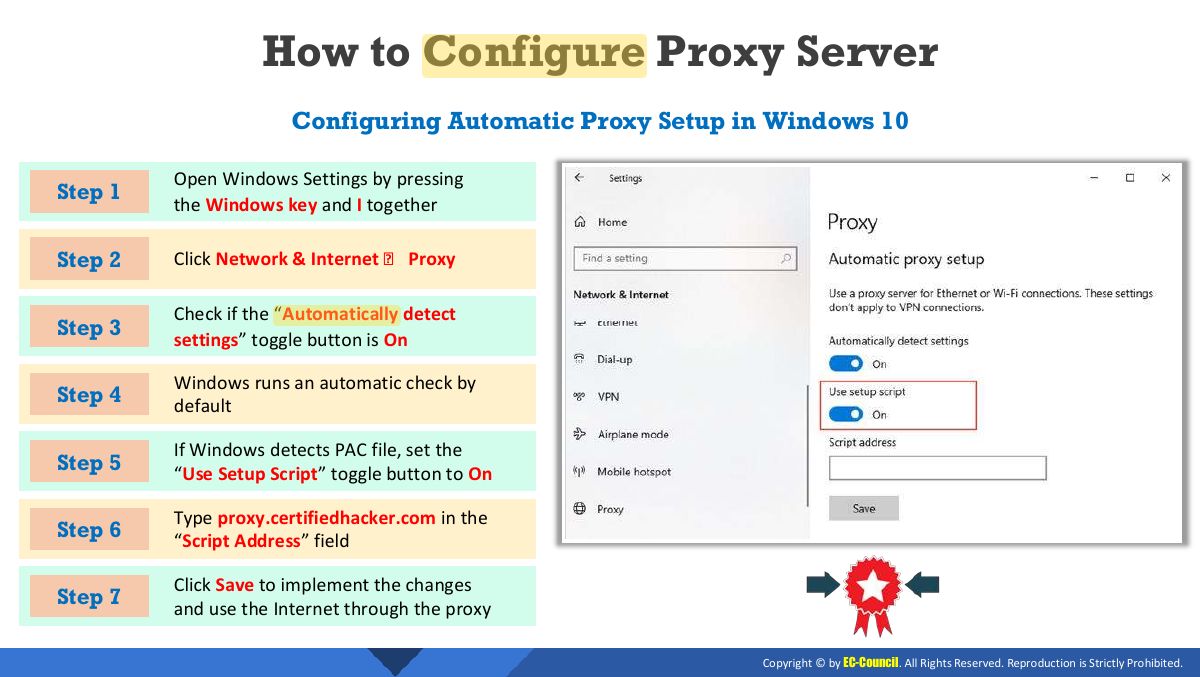
                      Slide 19: How to Configure Proxy Server
                      Exam weight Low
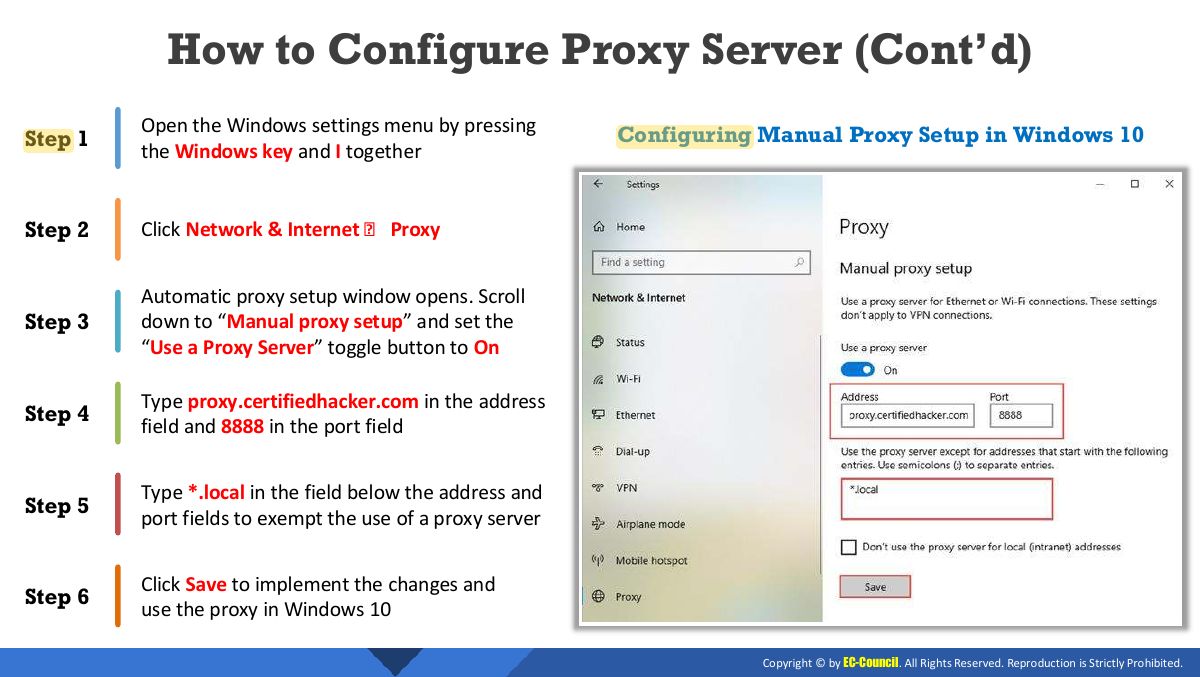
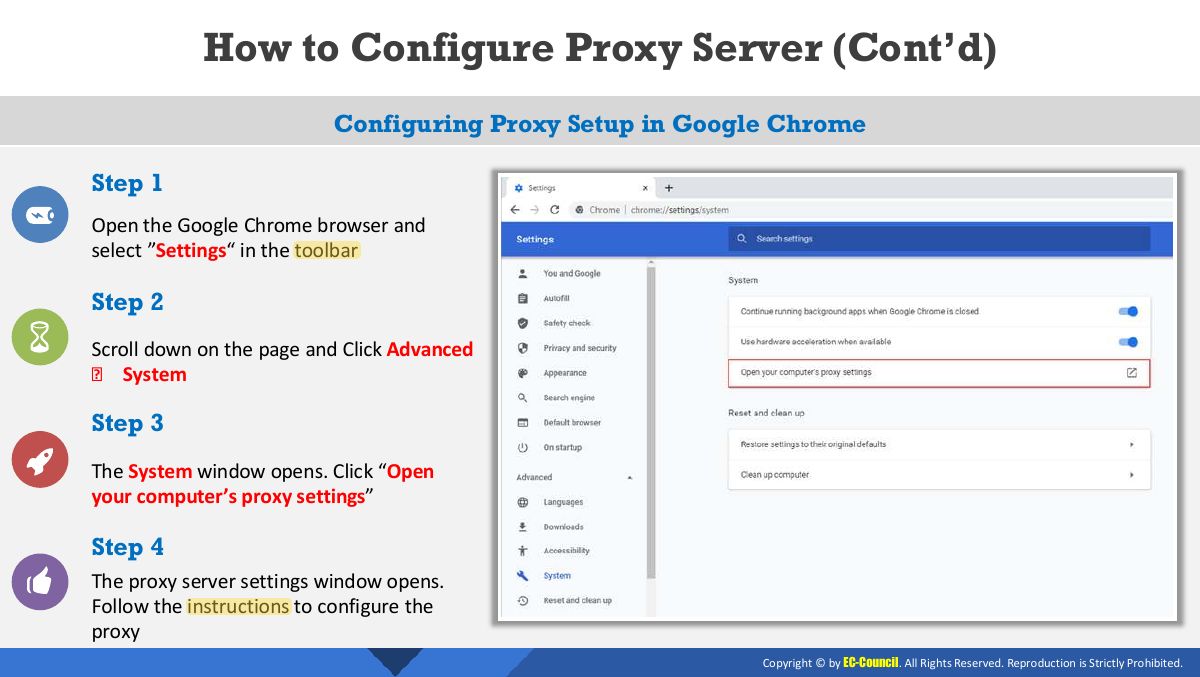
                        Slide 20: How to Configure Proxy Server (Cont’d)
                        Exam weight Low
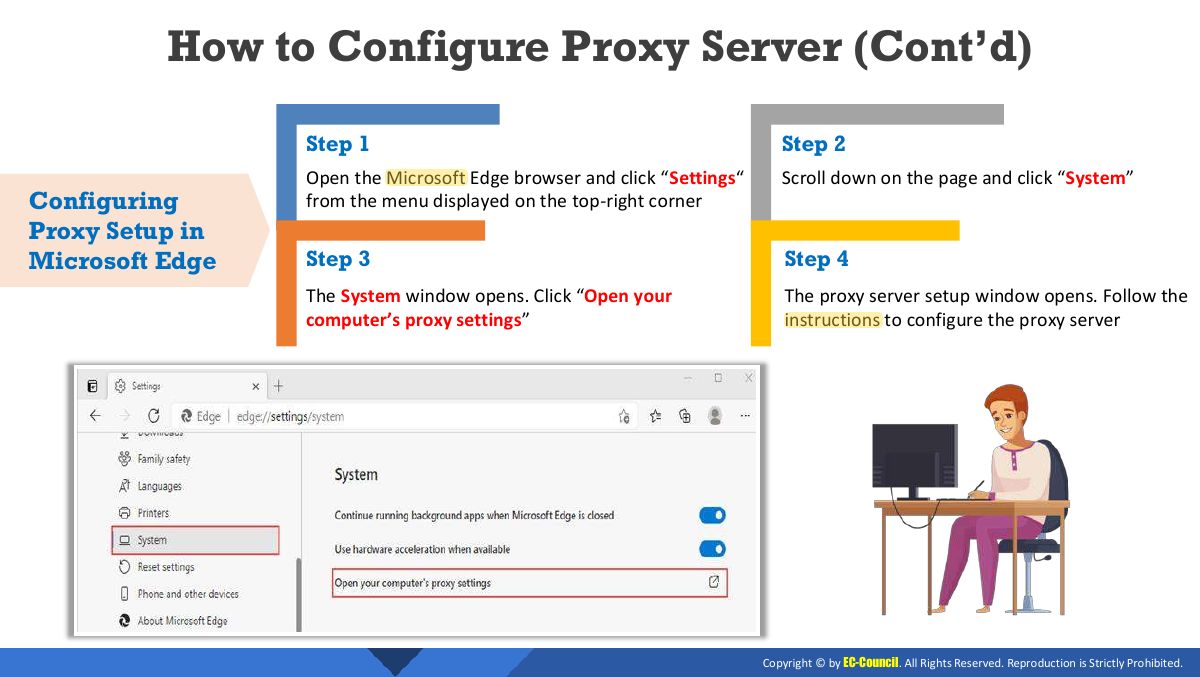
                          Slide 21: How to Configure Proxy Server (Cont’d)
                          Exam weight Low
                            Slide 22: How to Configure Proxy Server (Cont’d)
                            Exam weight Low
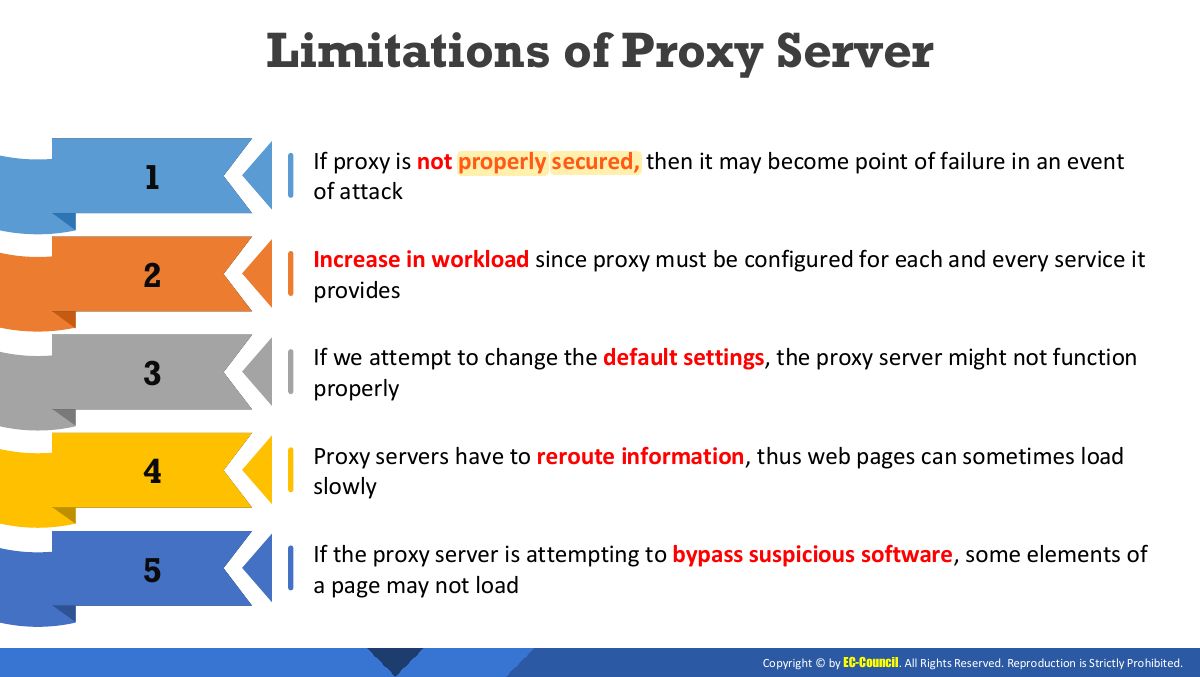
                              Slide 23: Limitations of Proxy Server
                              Exam weight Low
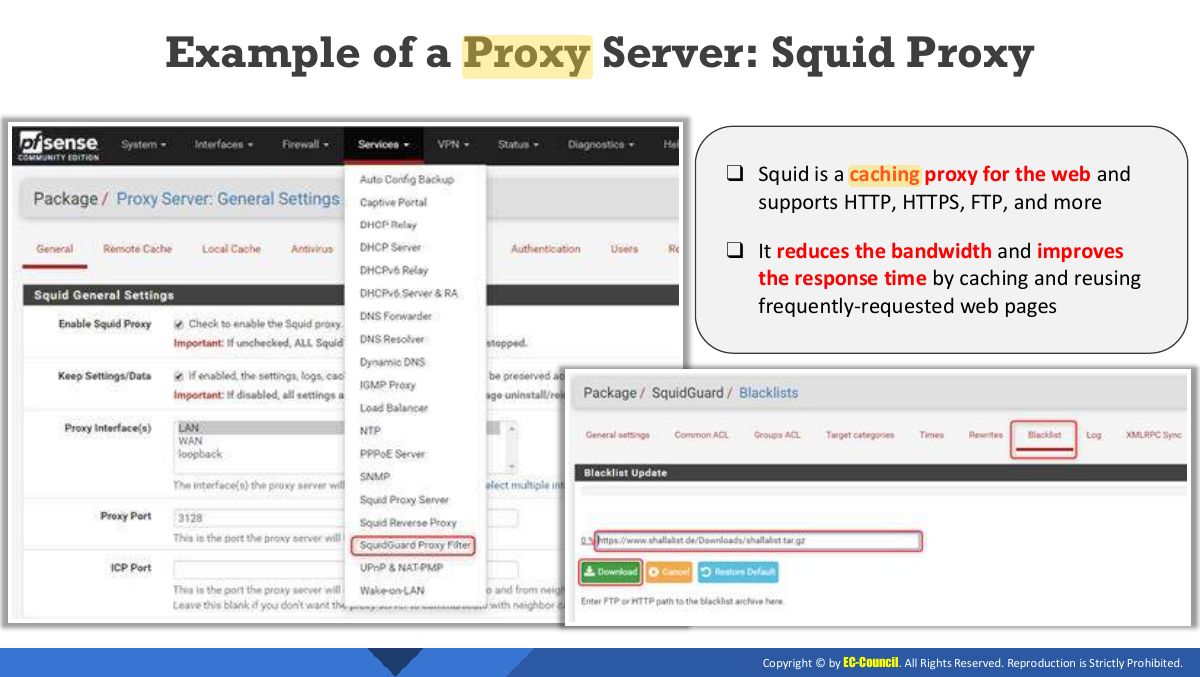
                                Slide 24: Example of a Proxy Server: Squid Proxy
                                Exam weight Low
                                1. Squid: a common caching proxy server.
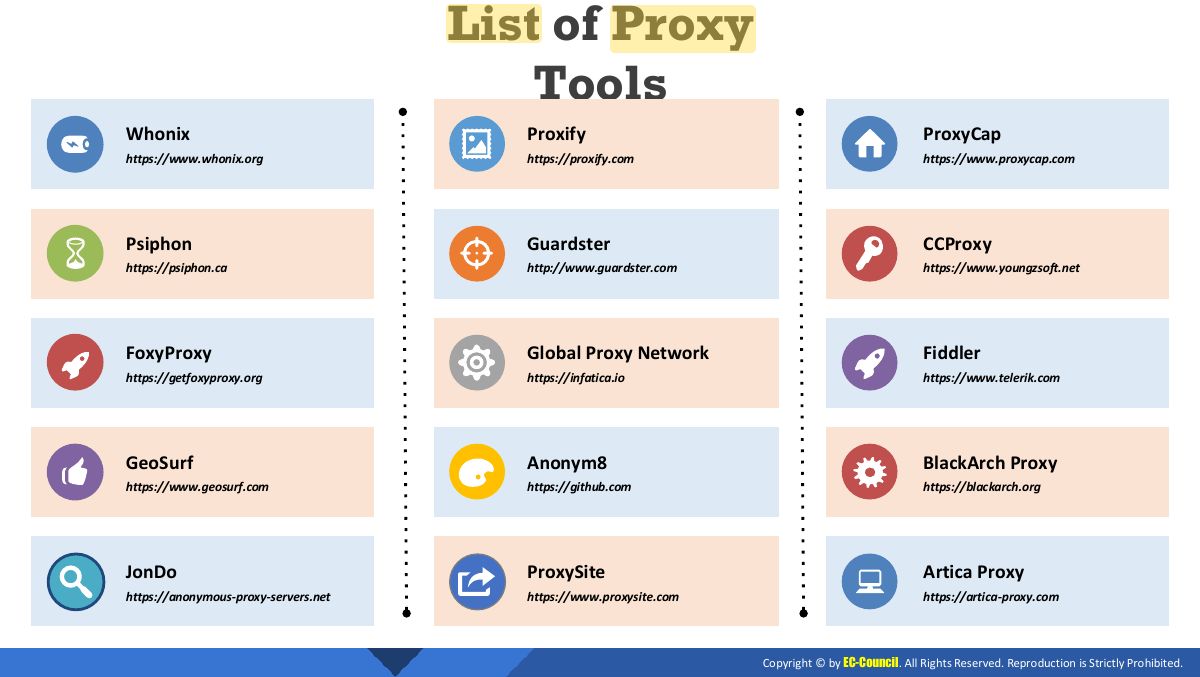
                                Slide 25: List of Proxy Tools
                                Exam weight Low