Chapter 12 · Annotated slides
Intrusion Detection and Prevention Systems
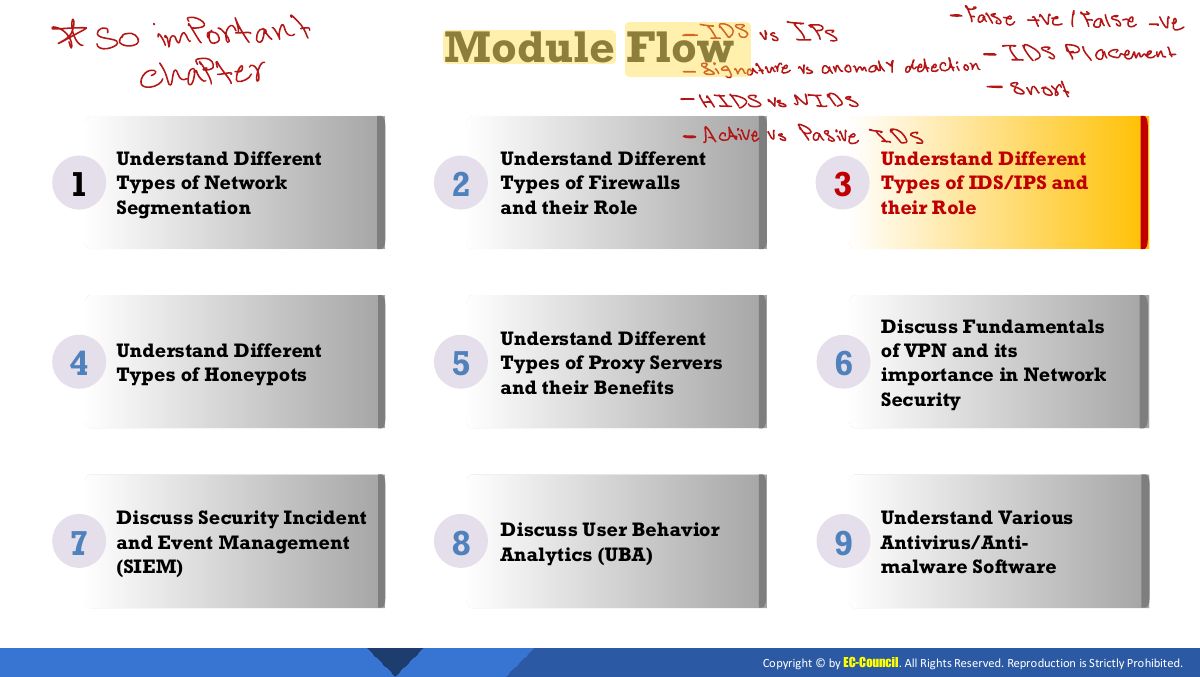
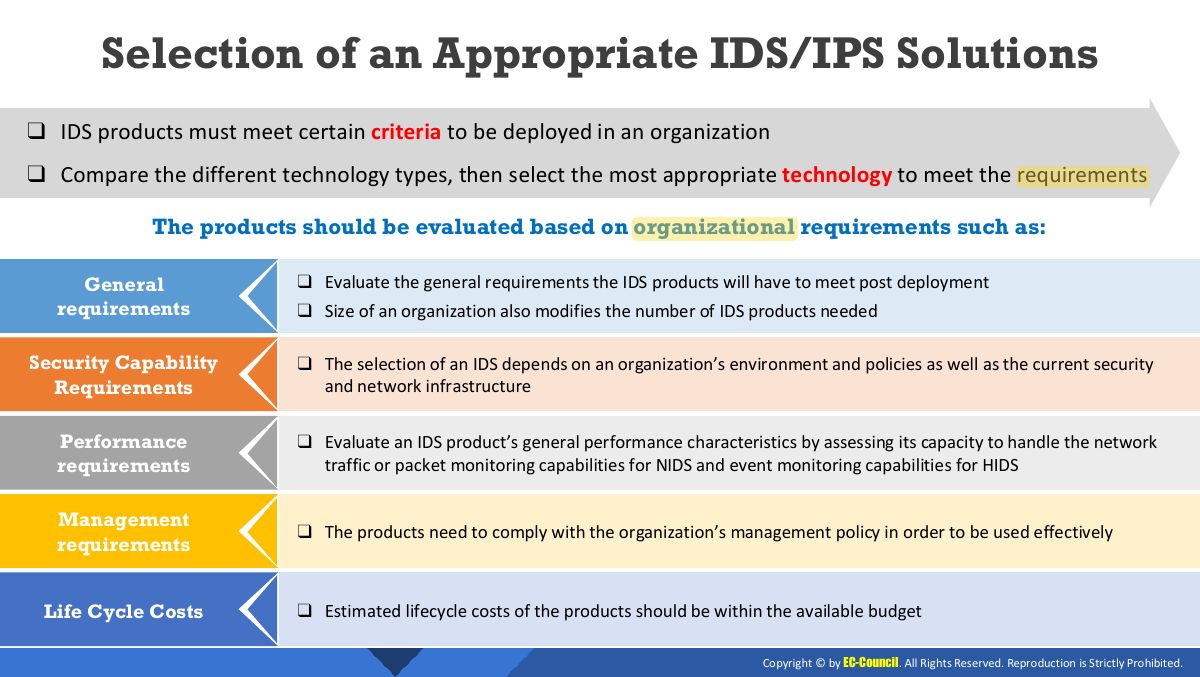
How an IDS works and what it can and can’t do, indications of intrusion, IDS classifications (signature vs. anomaly, active vs. passive, network vs. host), IDS components, deployment, alert types (true/false positives and negatives), choosing an IDS/IPS, and Snort.
- 40 slides
- 0 asked in real exams
- 0 related to real exam questions
- 4 practice questions
Slide text
Study notes
Highlight: key words
Tips, tricks & traps
Seen again elsewhere
How it can come up
Exam weight ●●● High
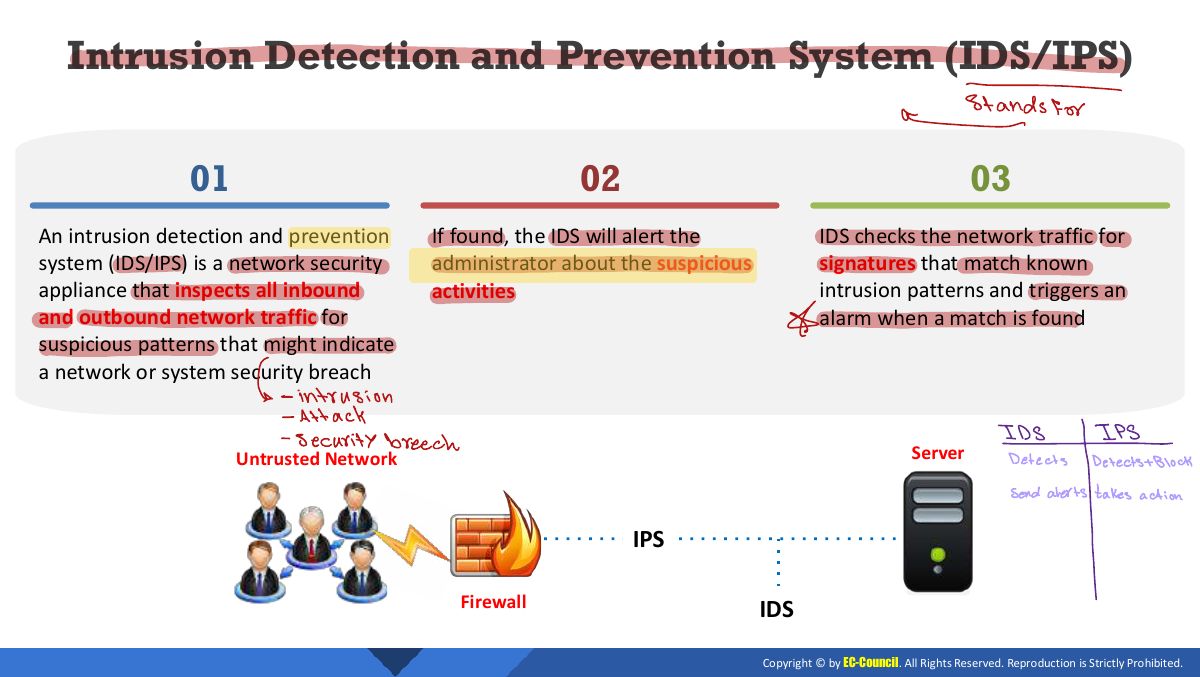
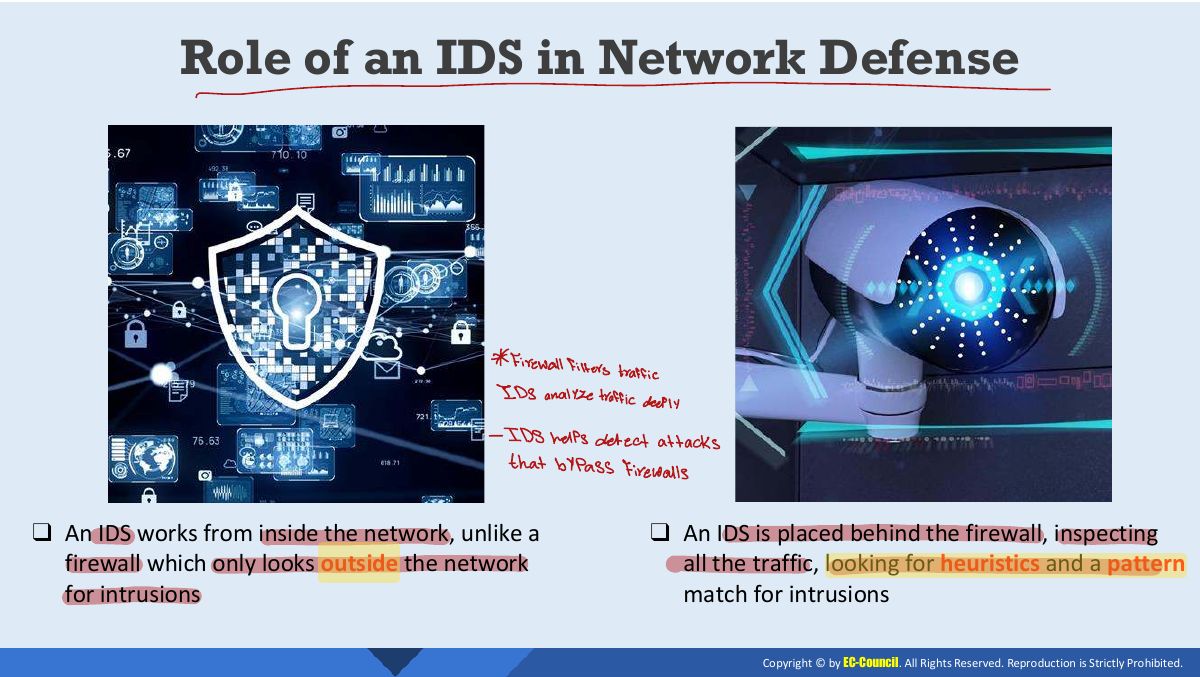
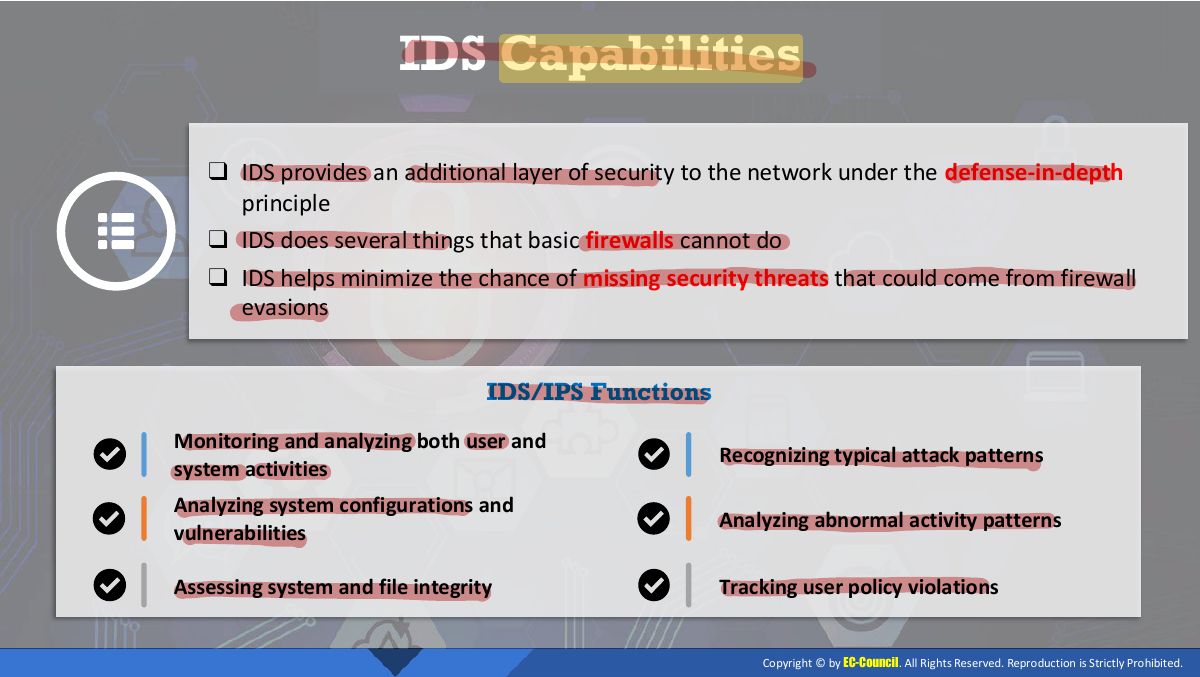
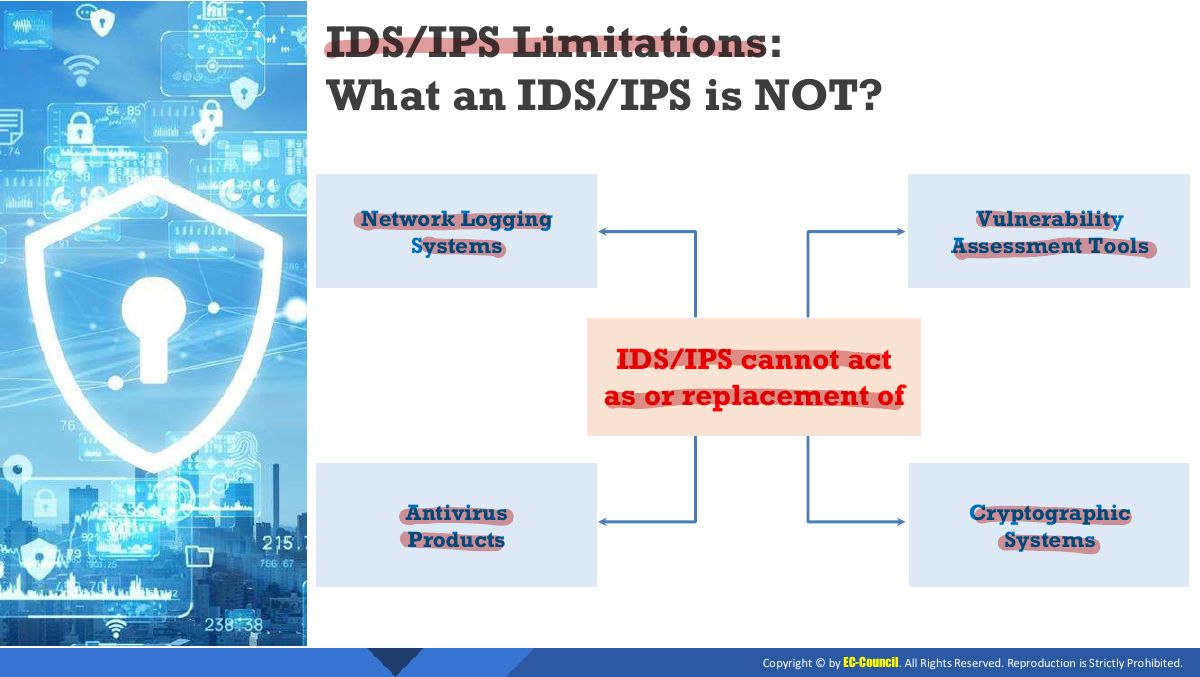
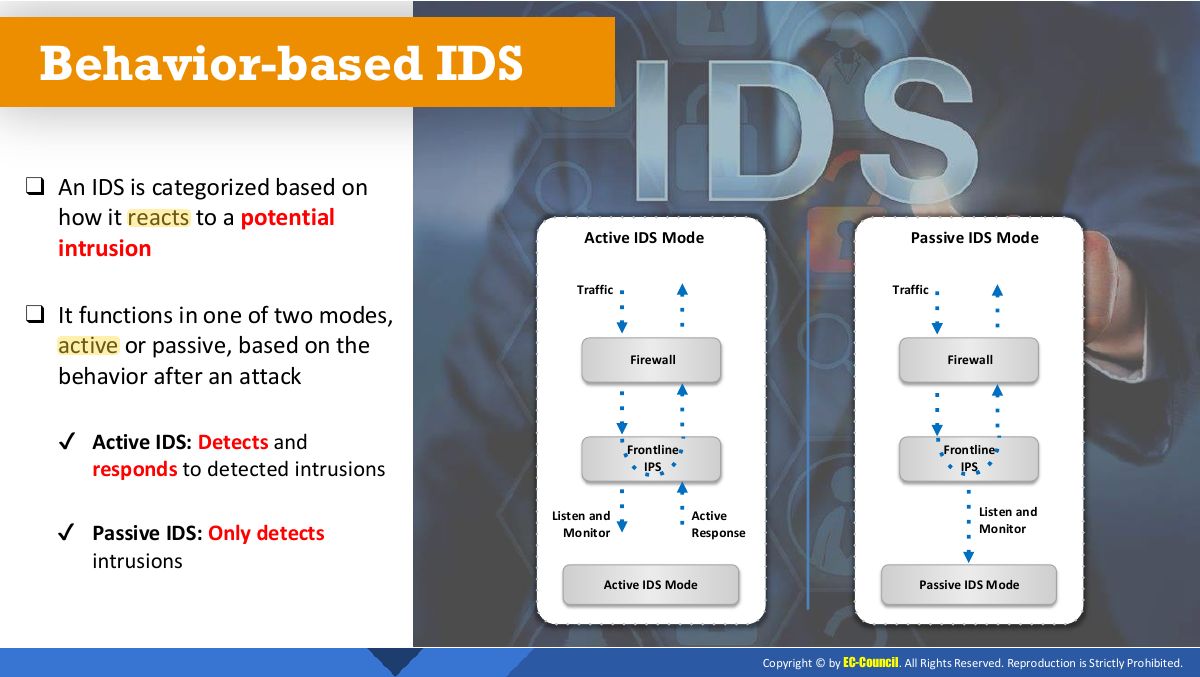
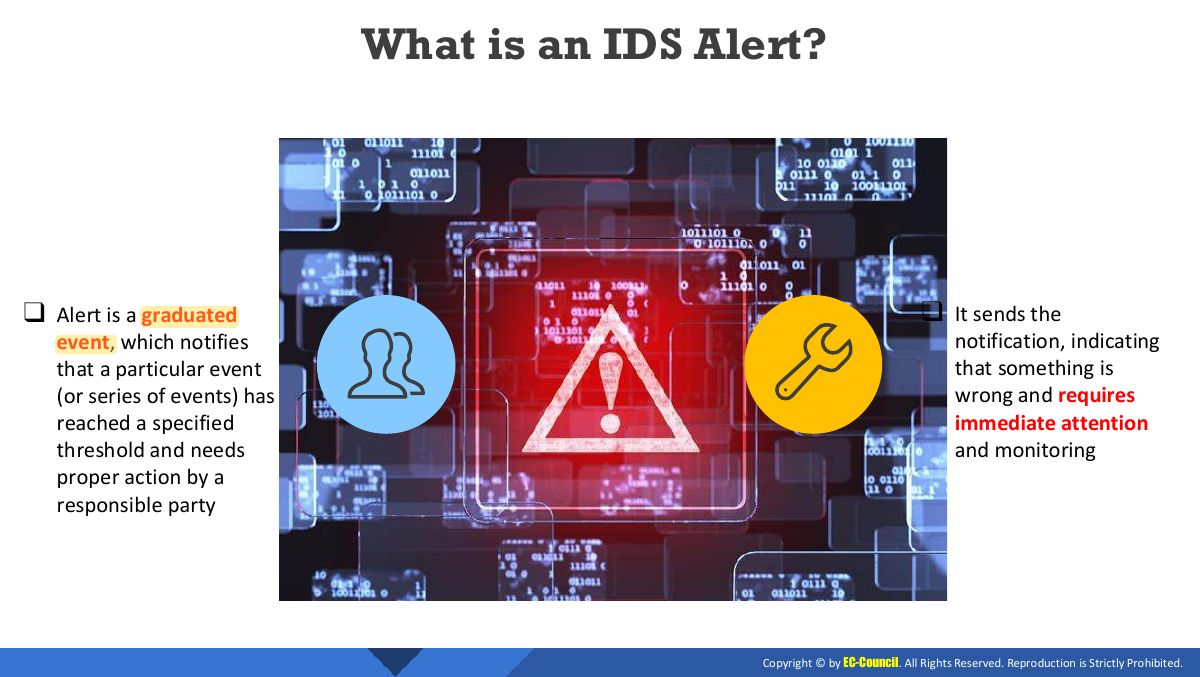
- IDS detects and alerts (passive, out of band); IPS sits inline and can block.
Exam weight ●○○ Low
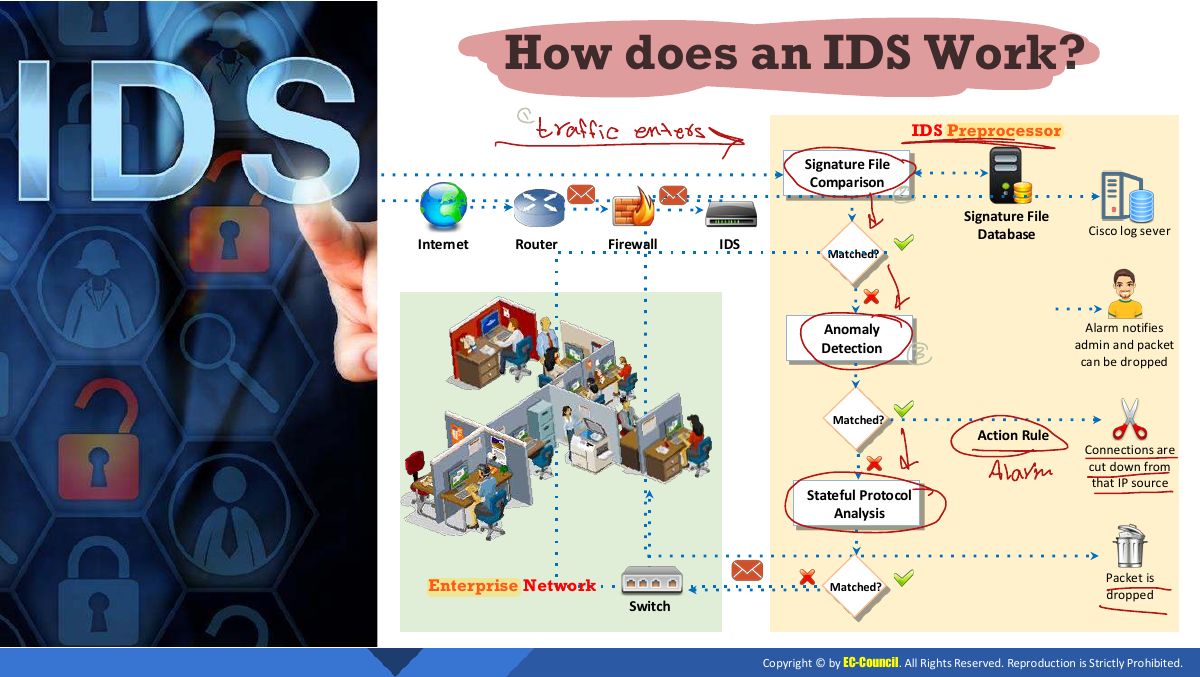
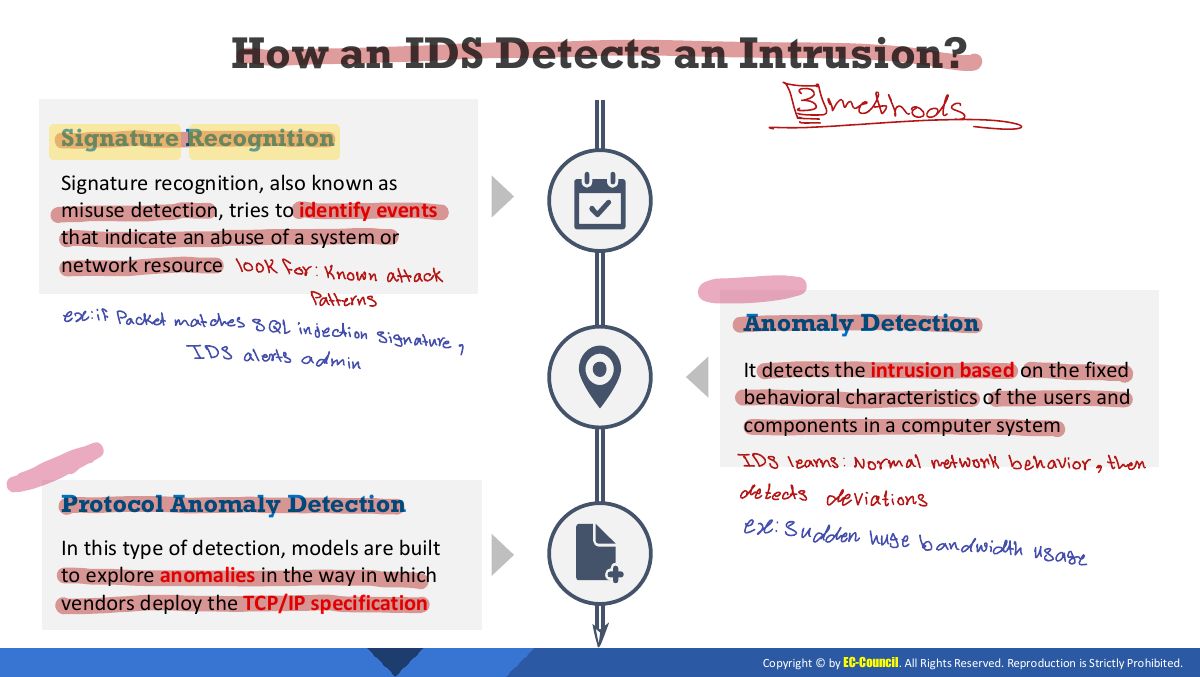
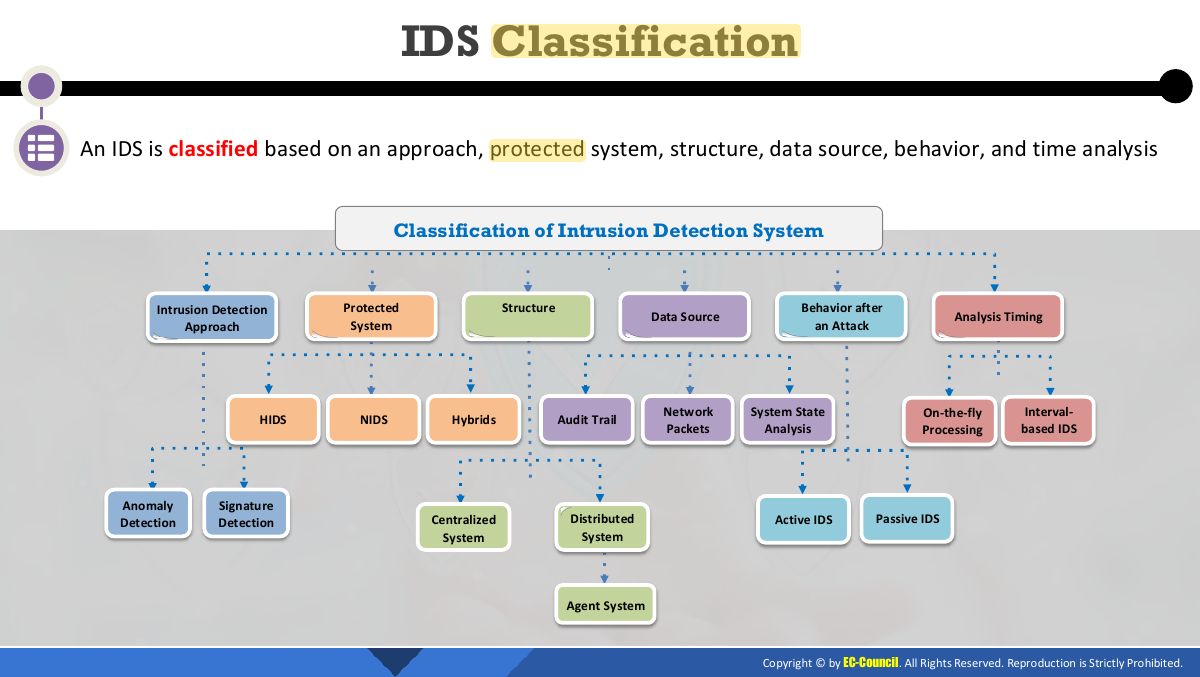
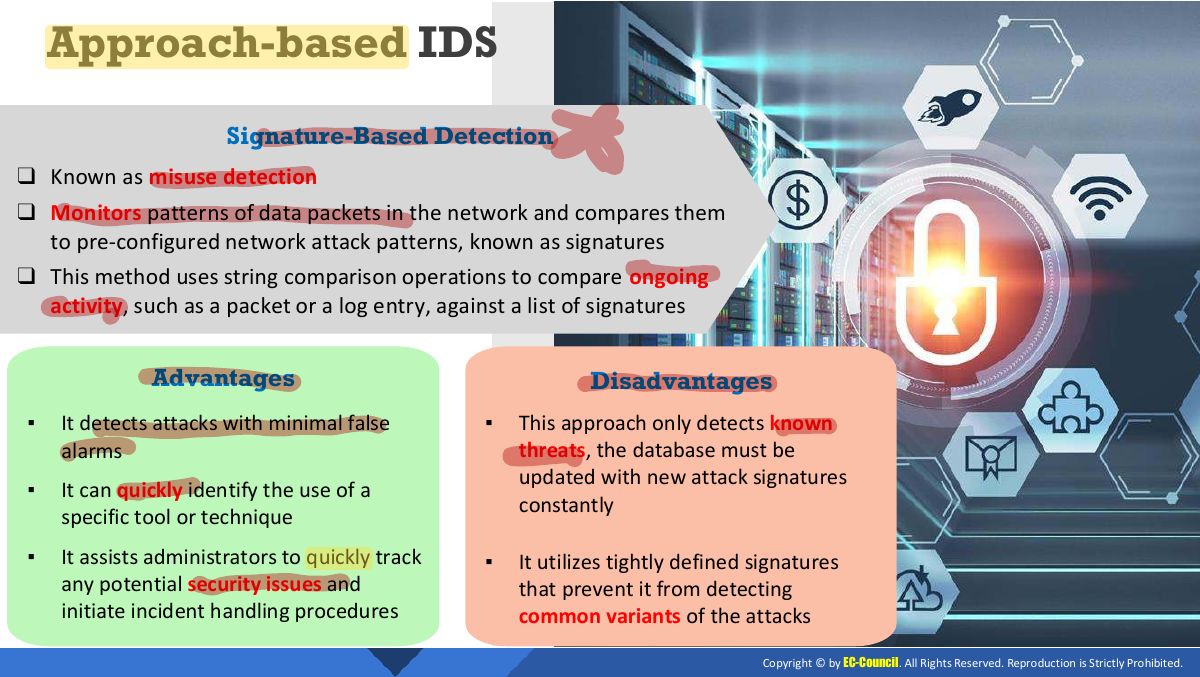
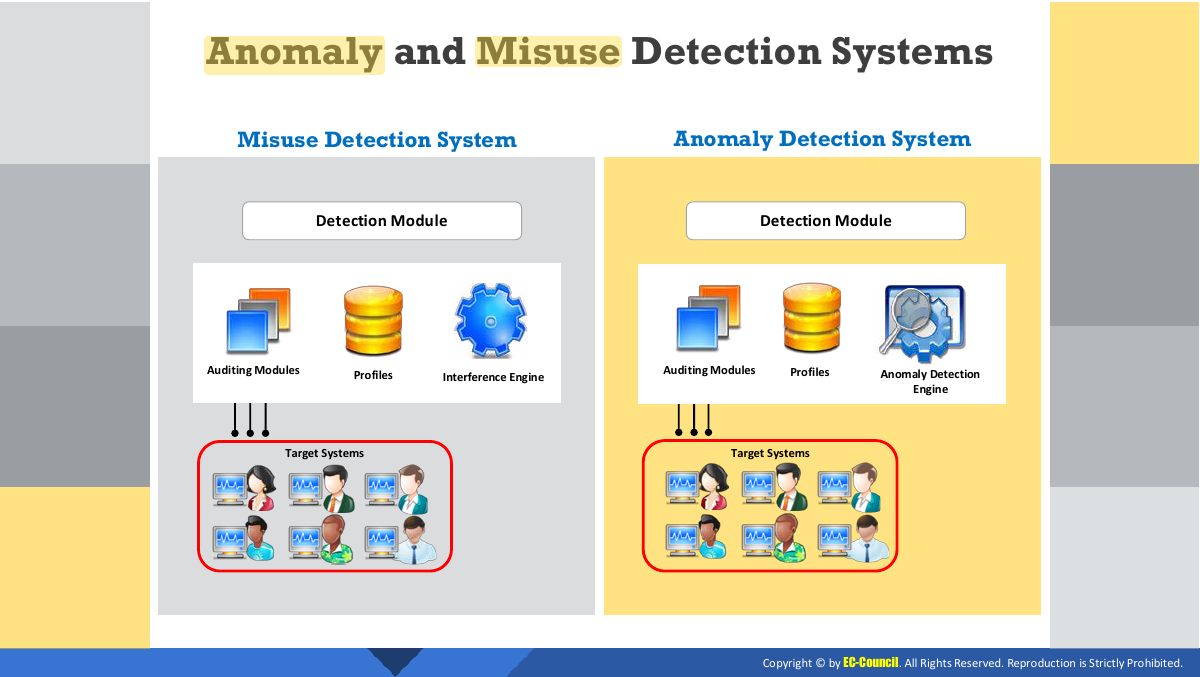
- Signature (misuse) detection: matches known attack patterns. Low false positives; misses new (zero-day) attacks.
Exam weight ●●● High
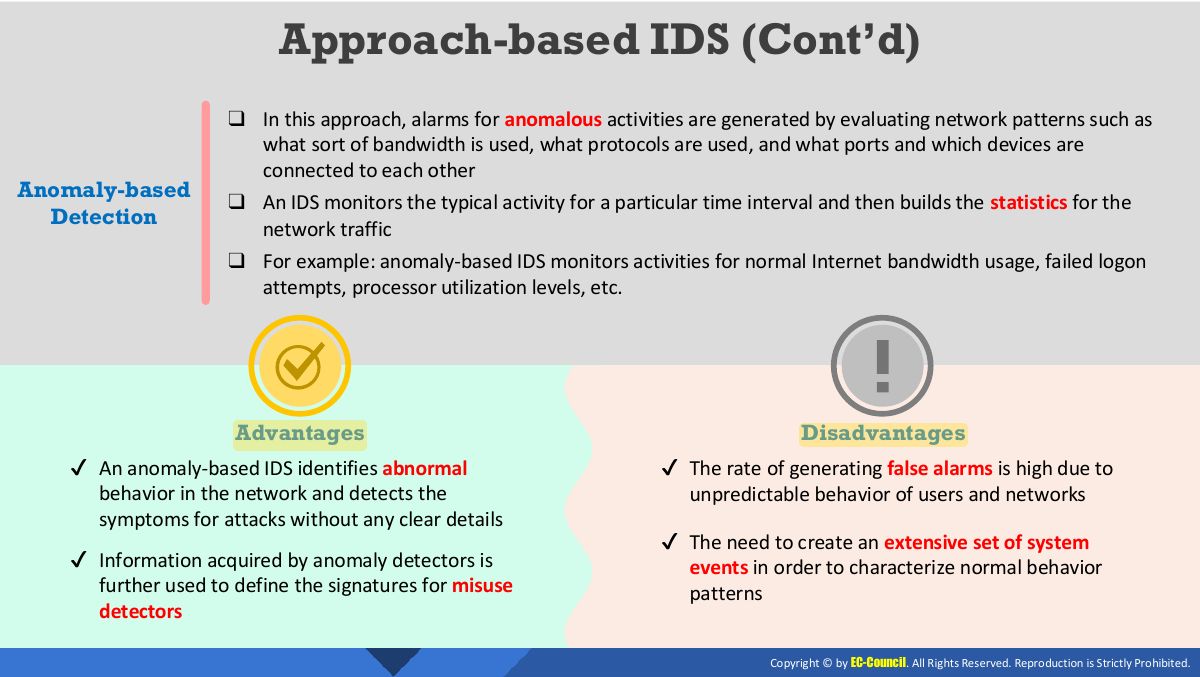
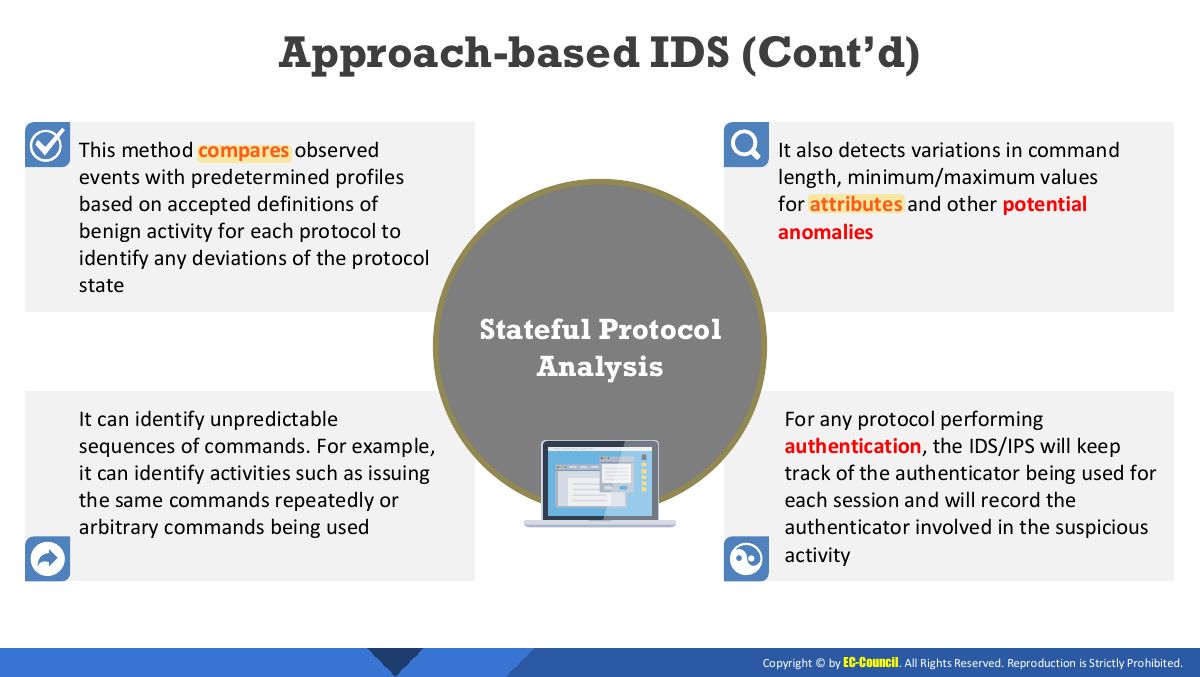
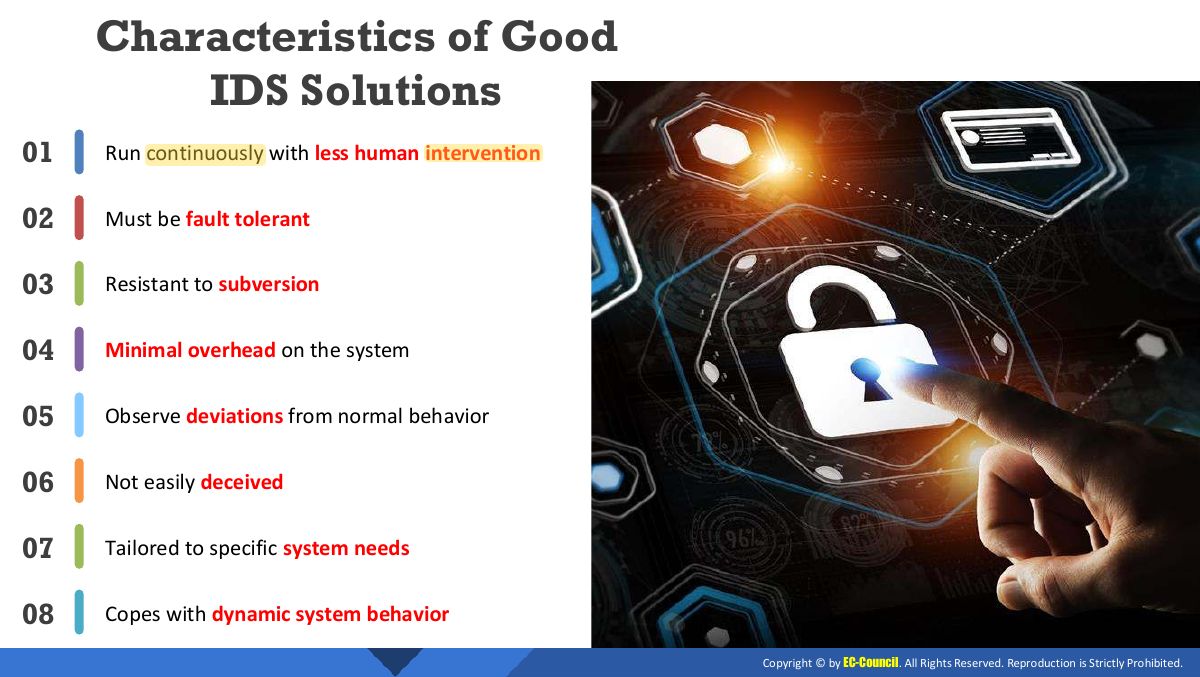
- Anomaly detection: learns normal behaviour and flags deviations. Can catch new attacks; more false positives.
Exam weight ●●● High
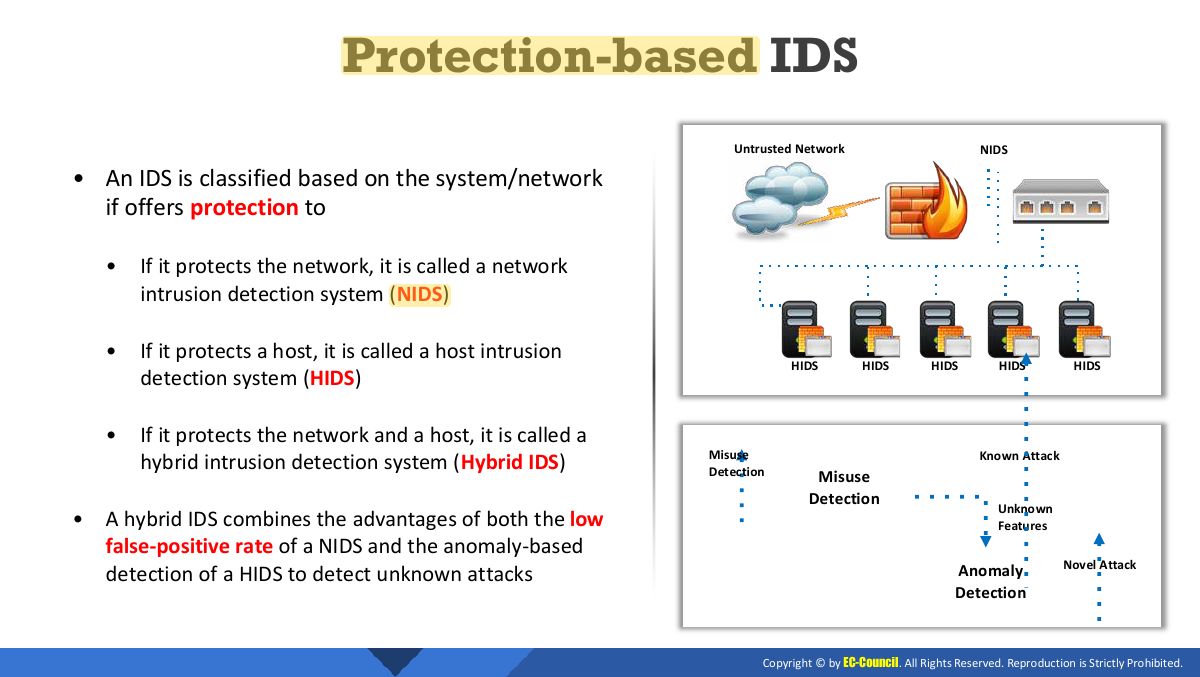
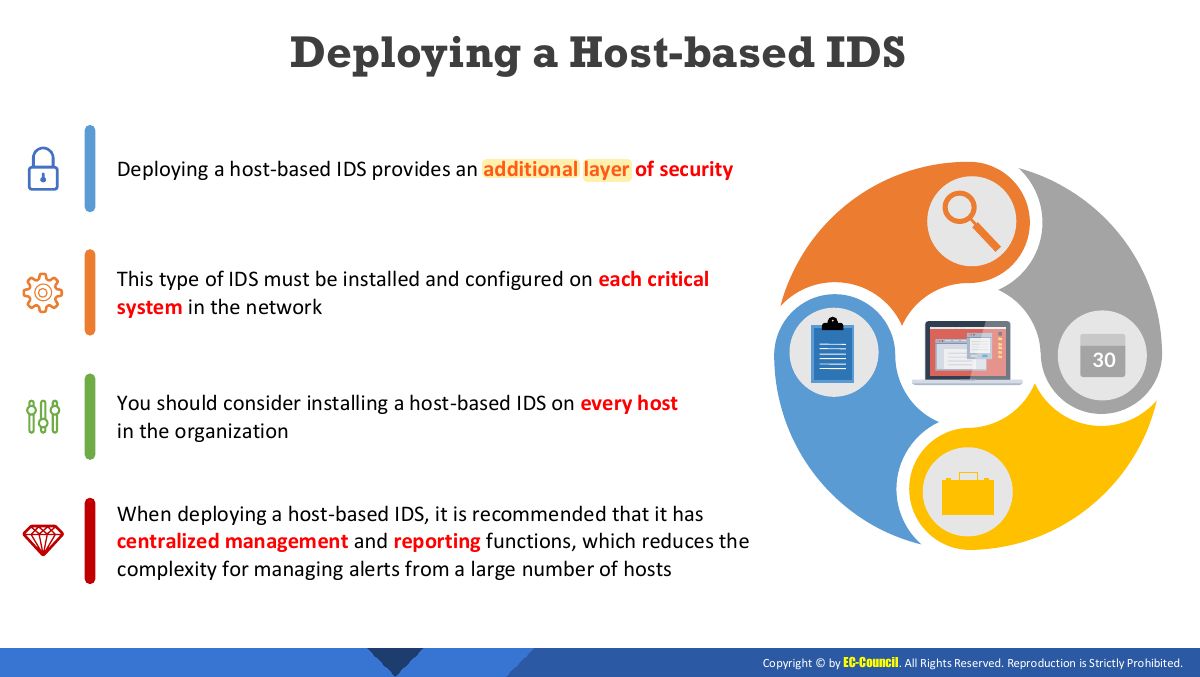
- NIDS monitors network traffic (sensors on segments); HIDS monitors one host (logs, files, system calls).
Exam weight ●○○ Low
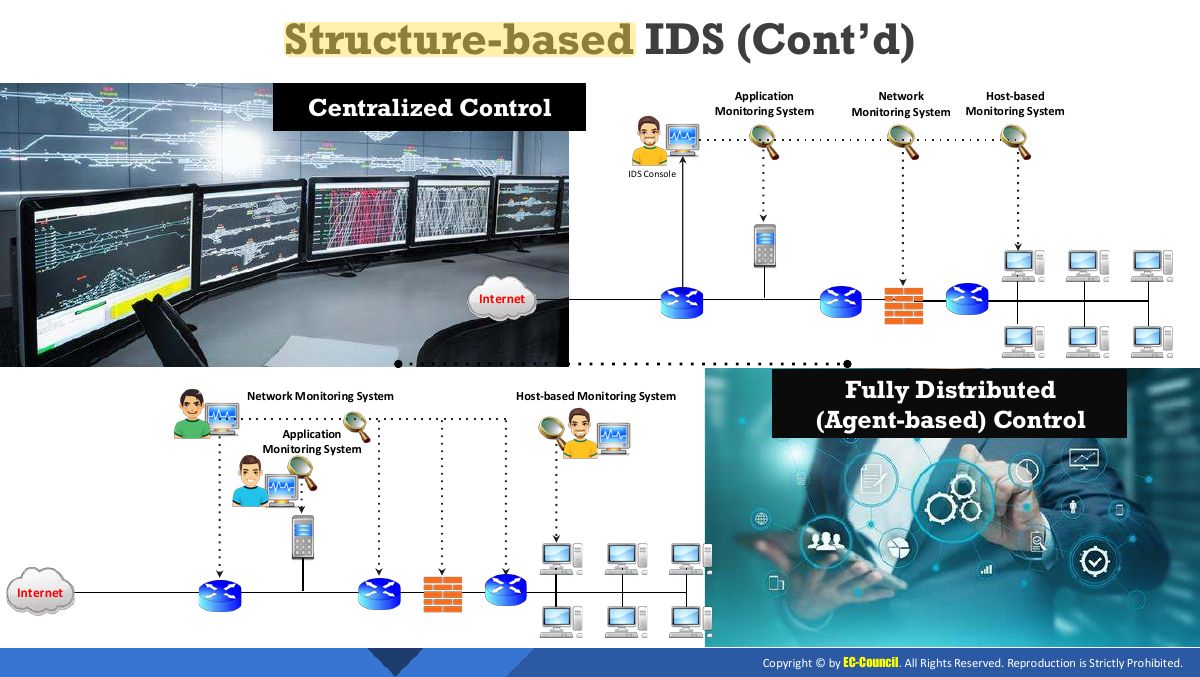
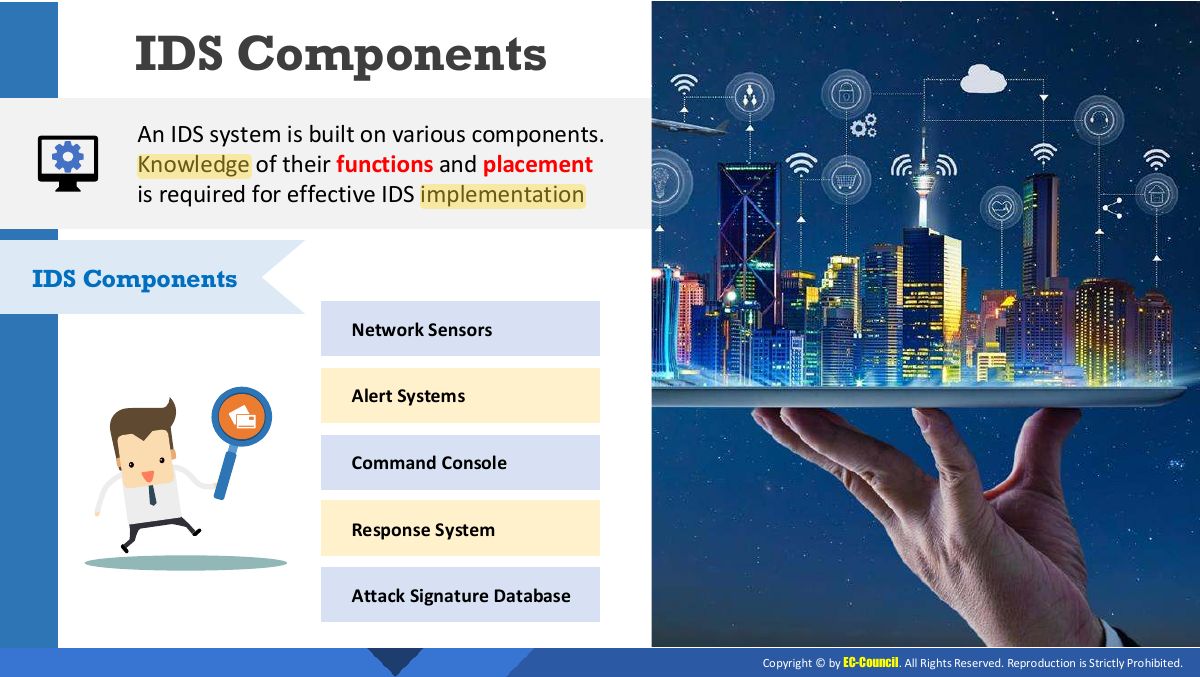
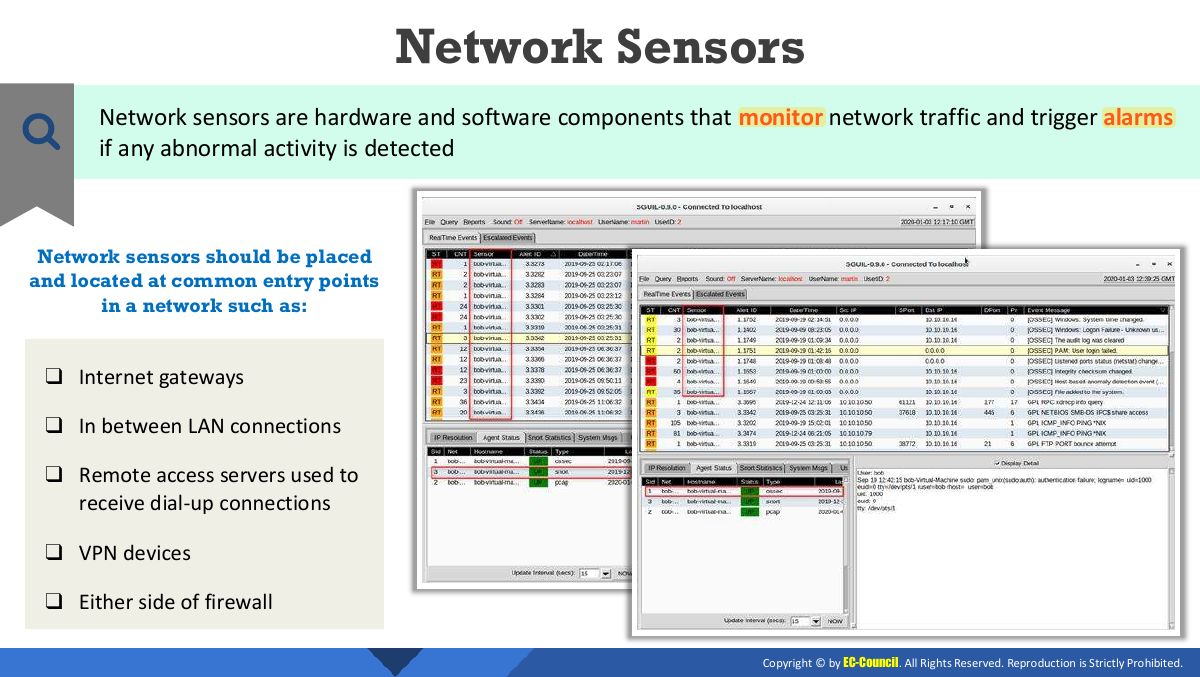
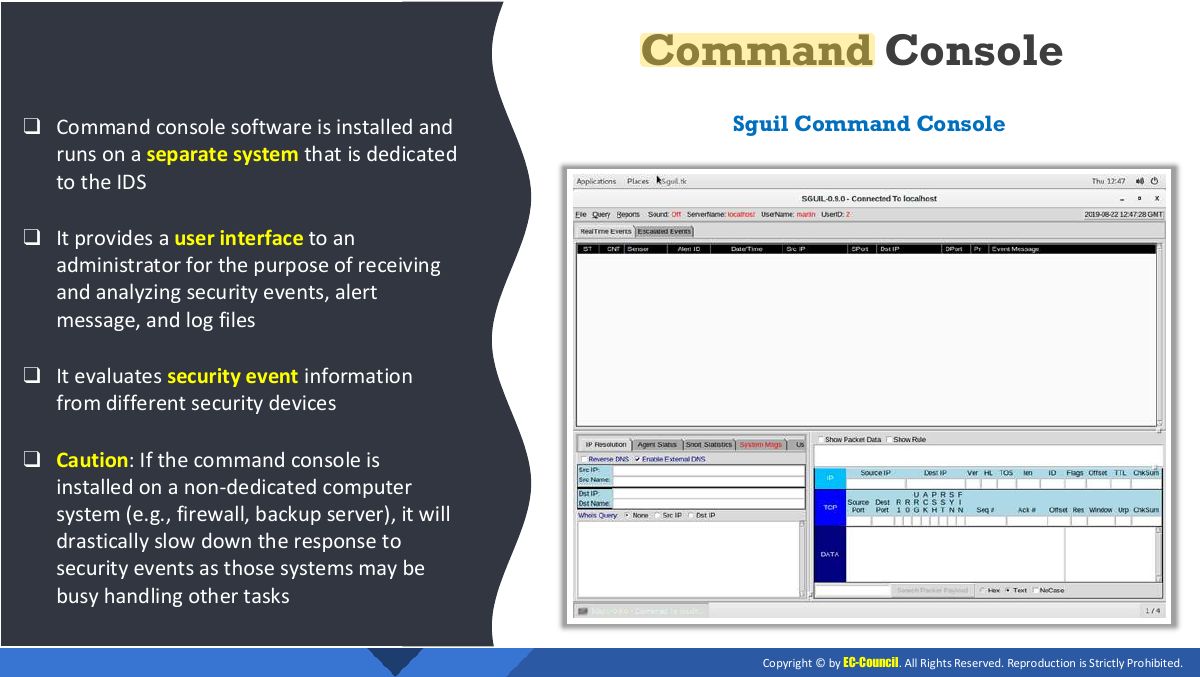
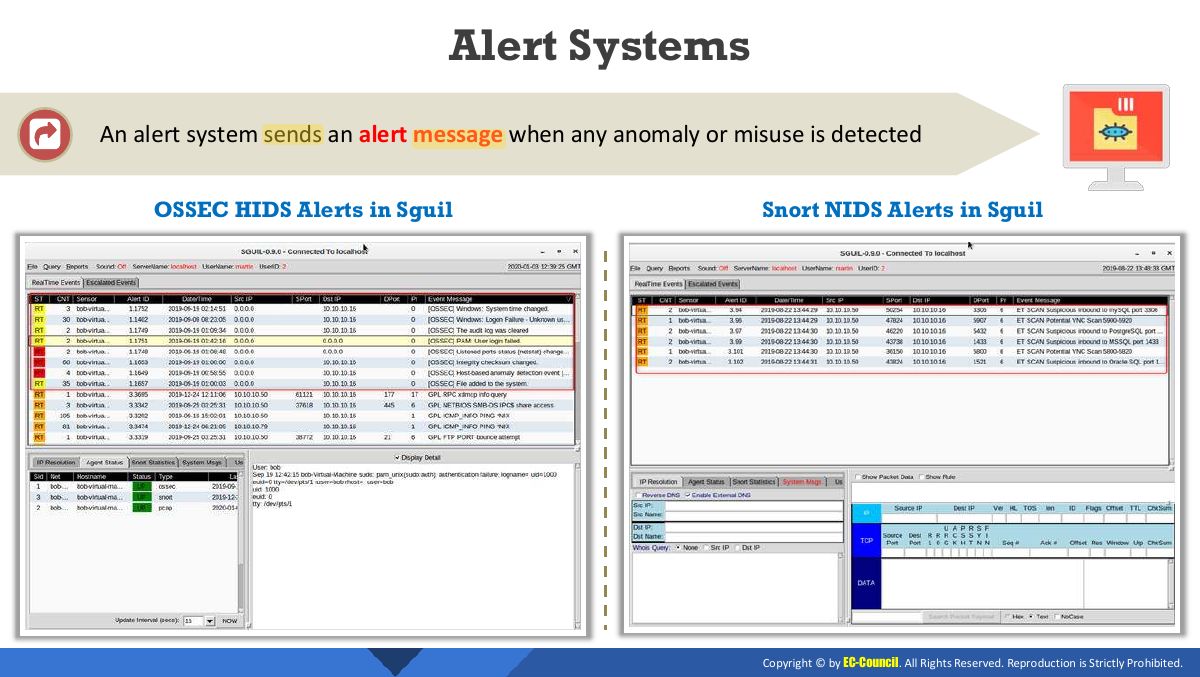
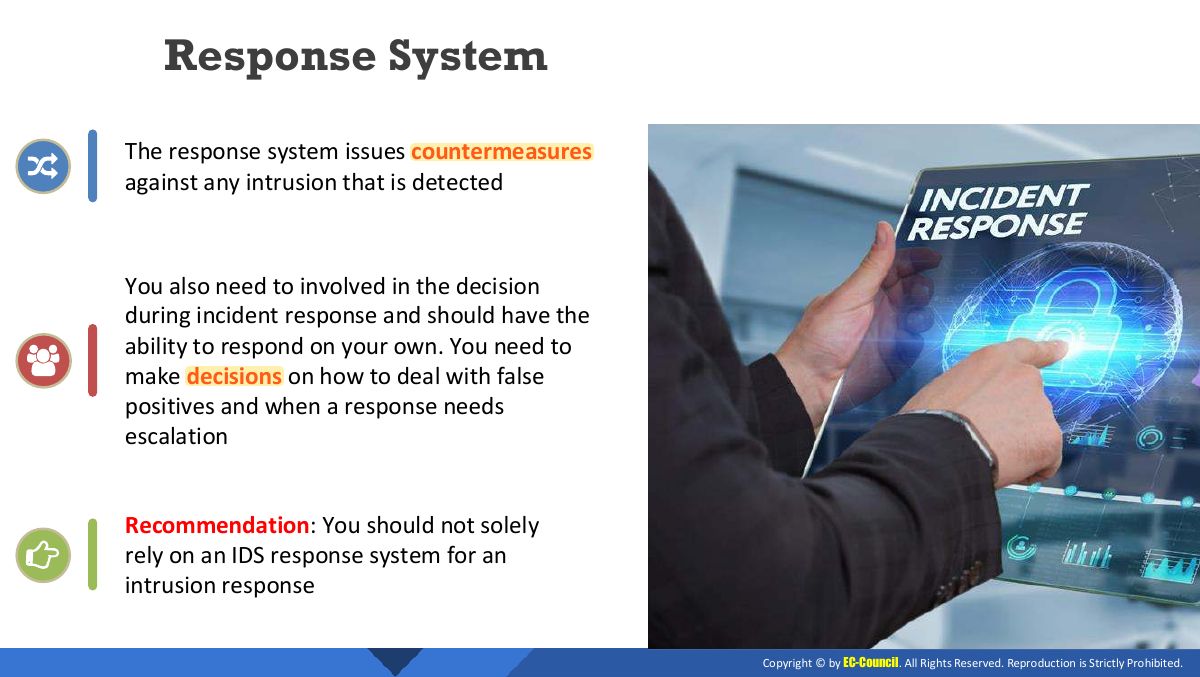
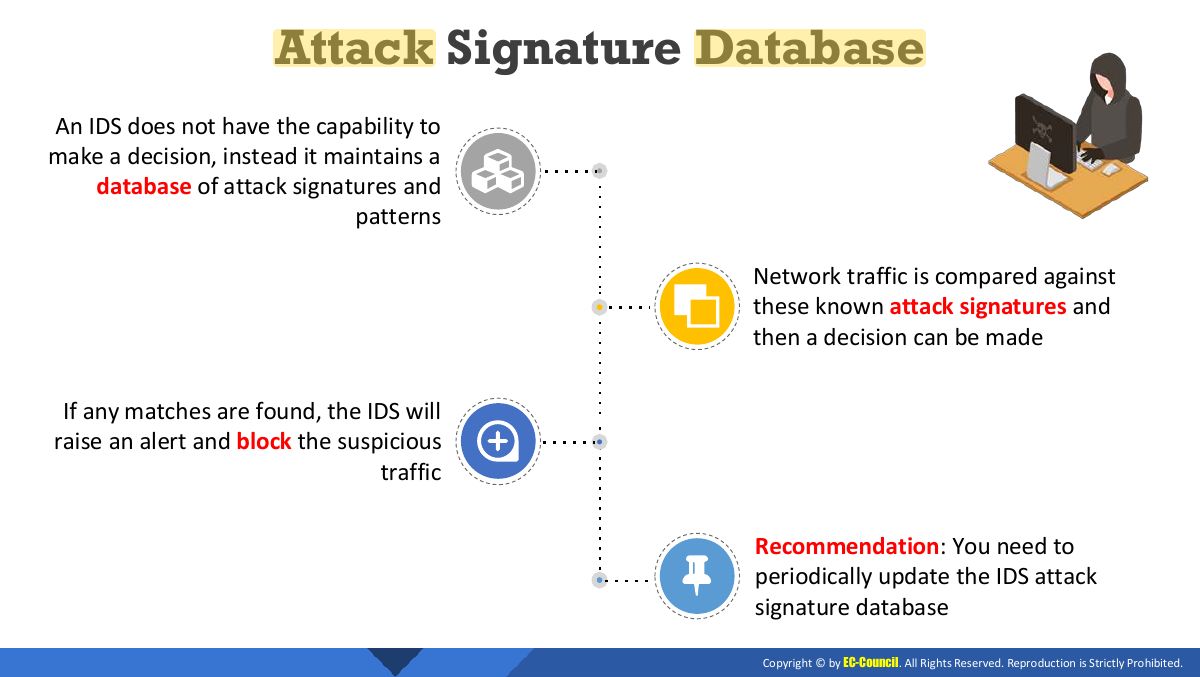
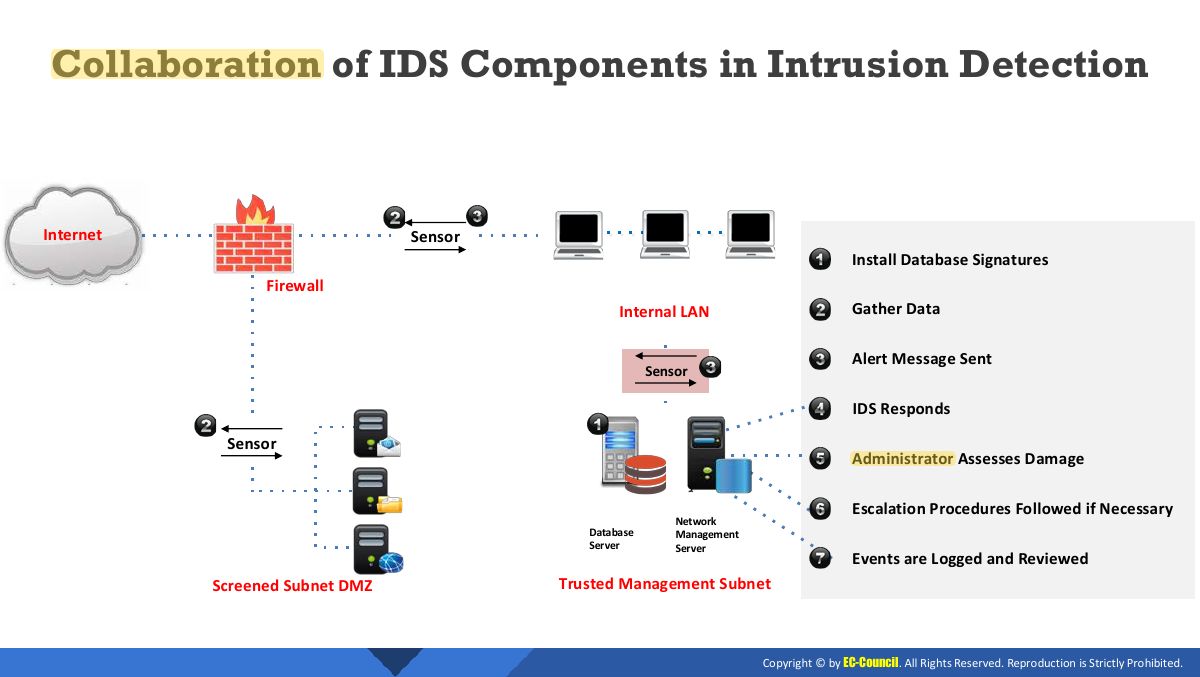
- Components: network sensors, command console, alert system, response system, attack-signature database.
Exam weight ●●● High
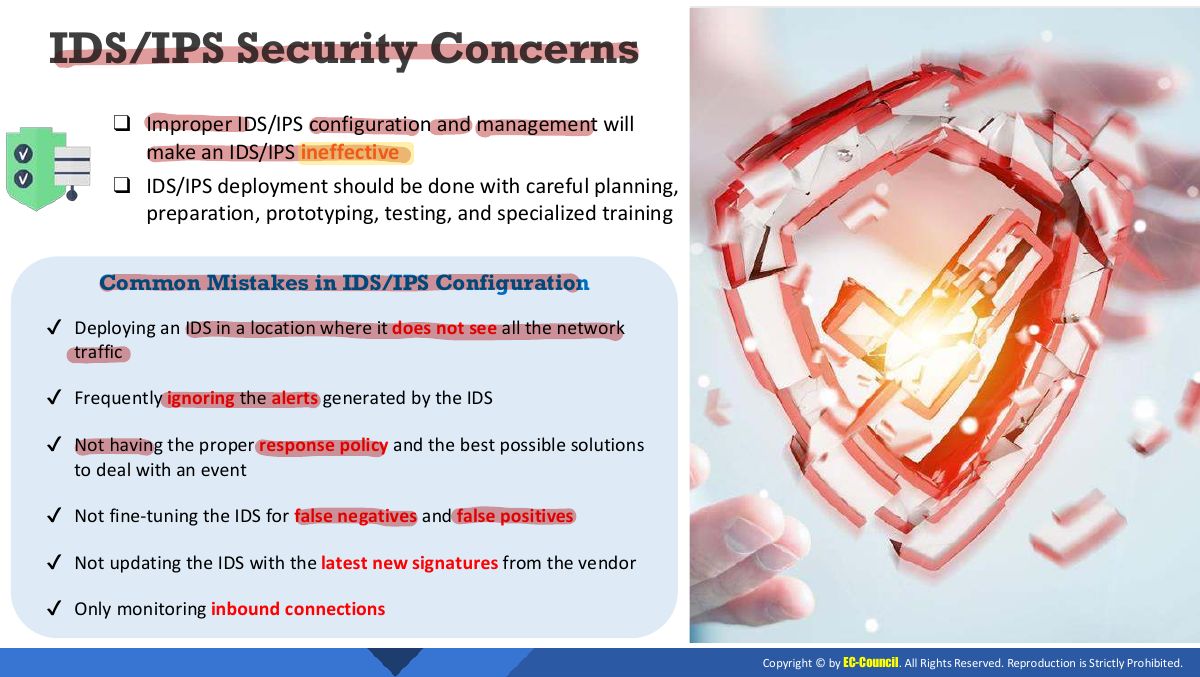
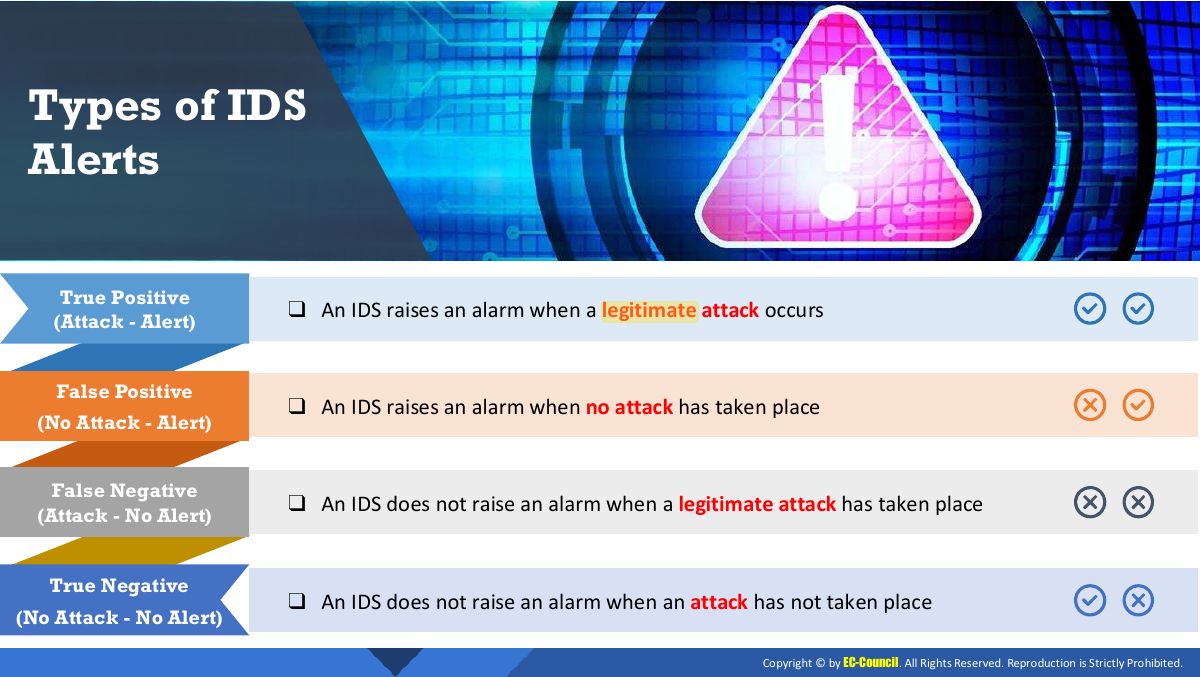
- True positive: real attack, alert. False positive: no attack, alert. False negative: real attack, NO alert (the most dangerous). True negative: no attack, no alert.
Exam weight ●○○ Low
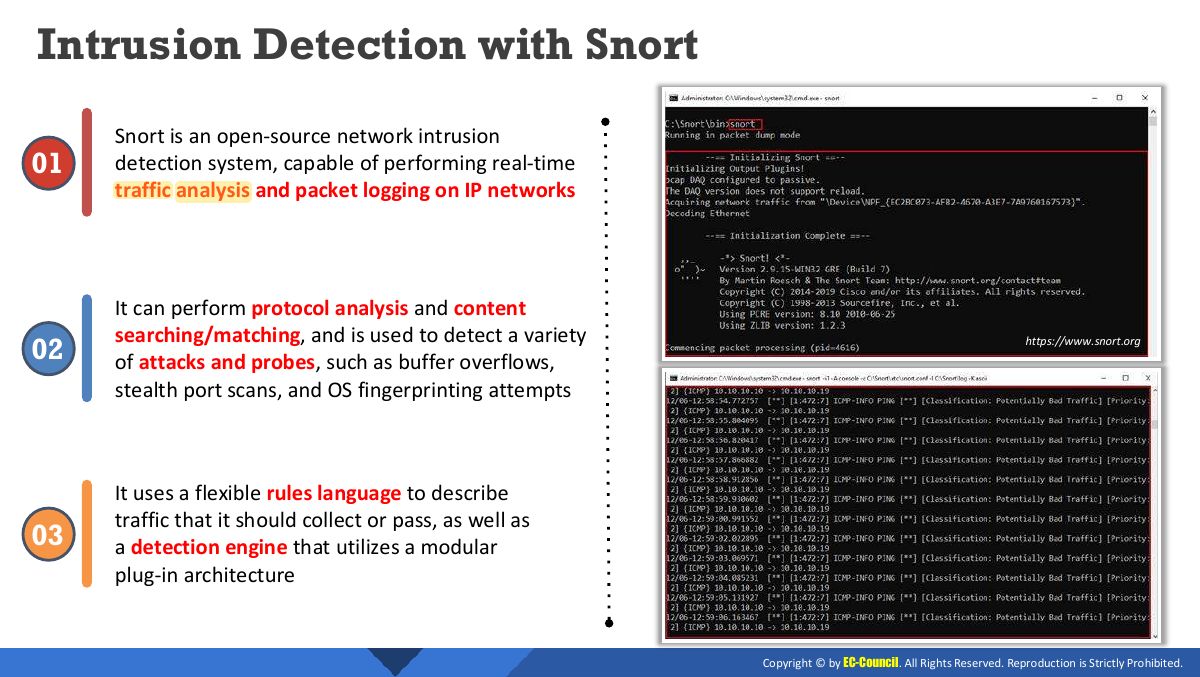
- Snort: open-source NIDS/IPS; rules: action protocol src_ip src_port -> dst_ip dst_port (options).
No slides match this filter.