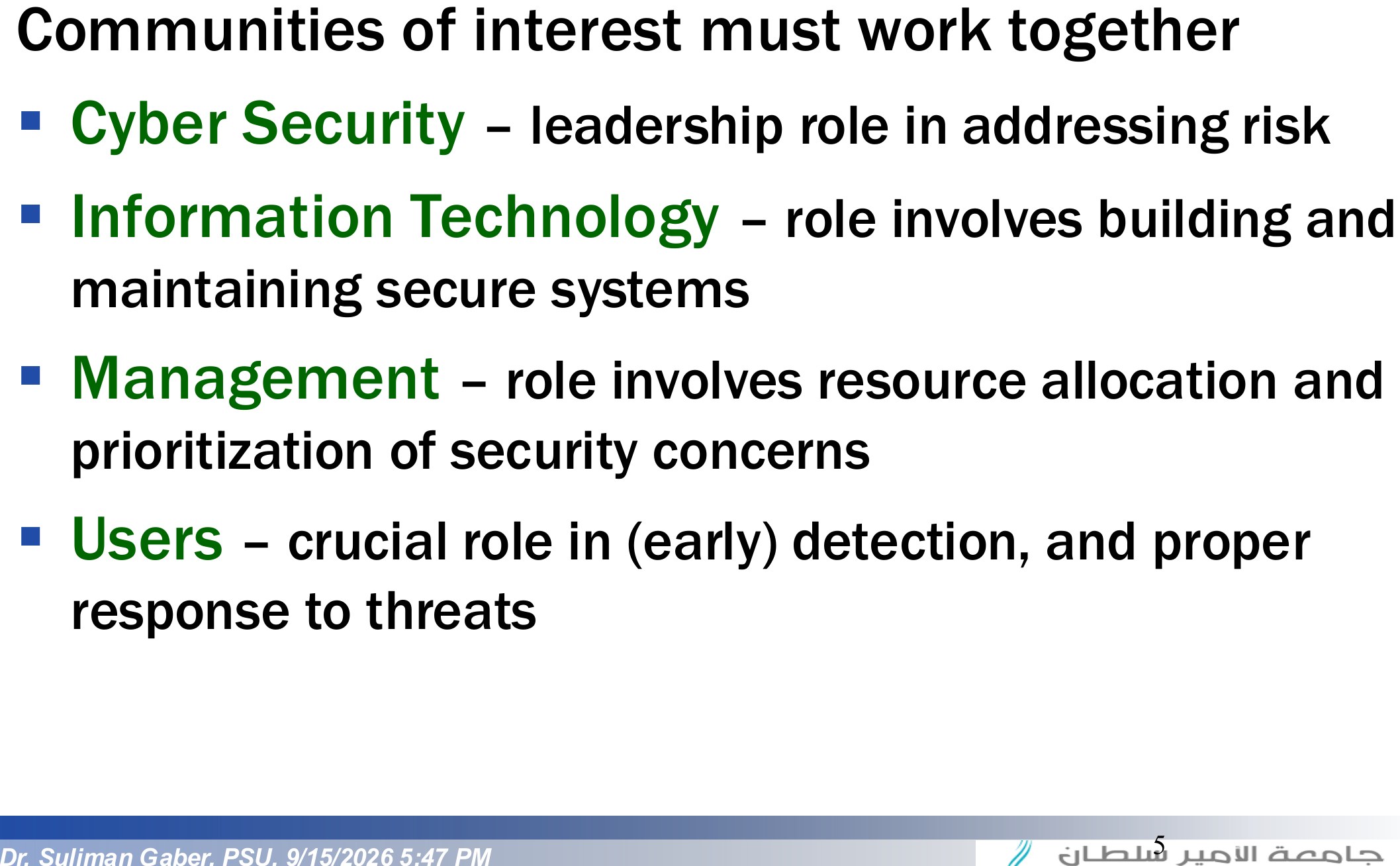
- Everyone has a role: management sets direction, IT/security implement, users follow policy, auditors check.
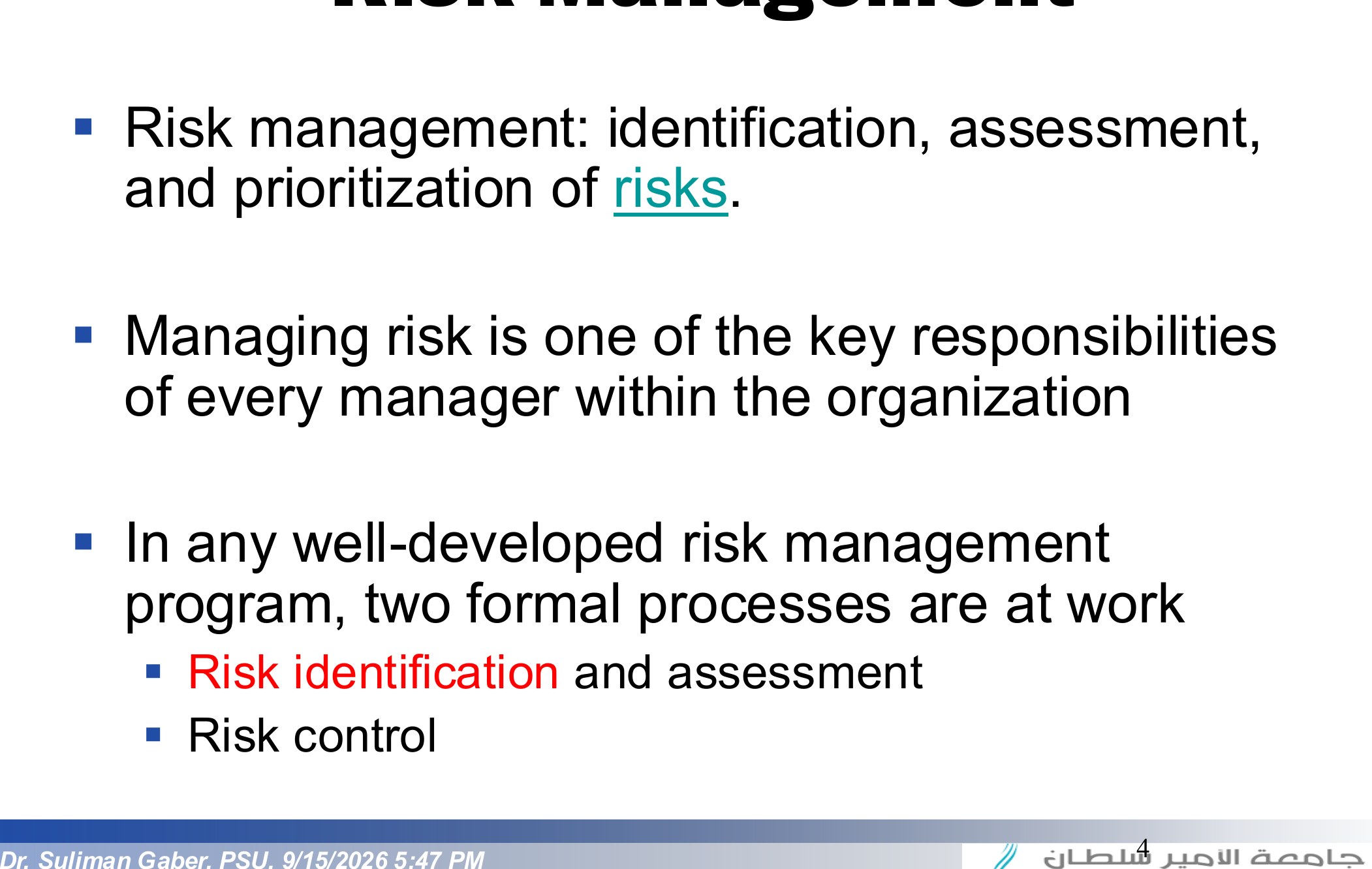
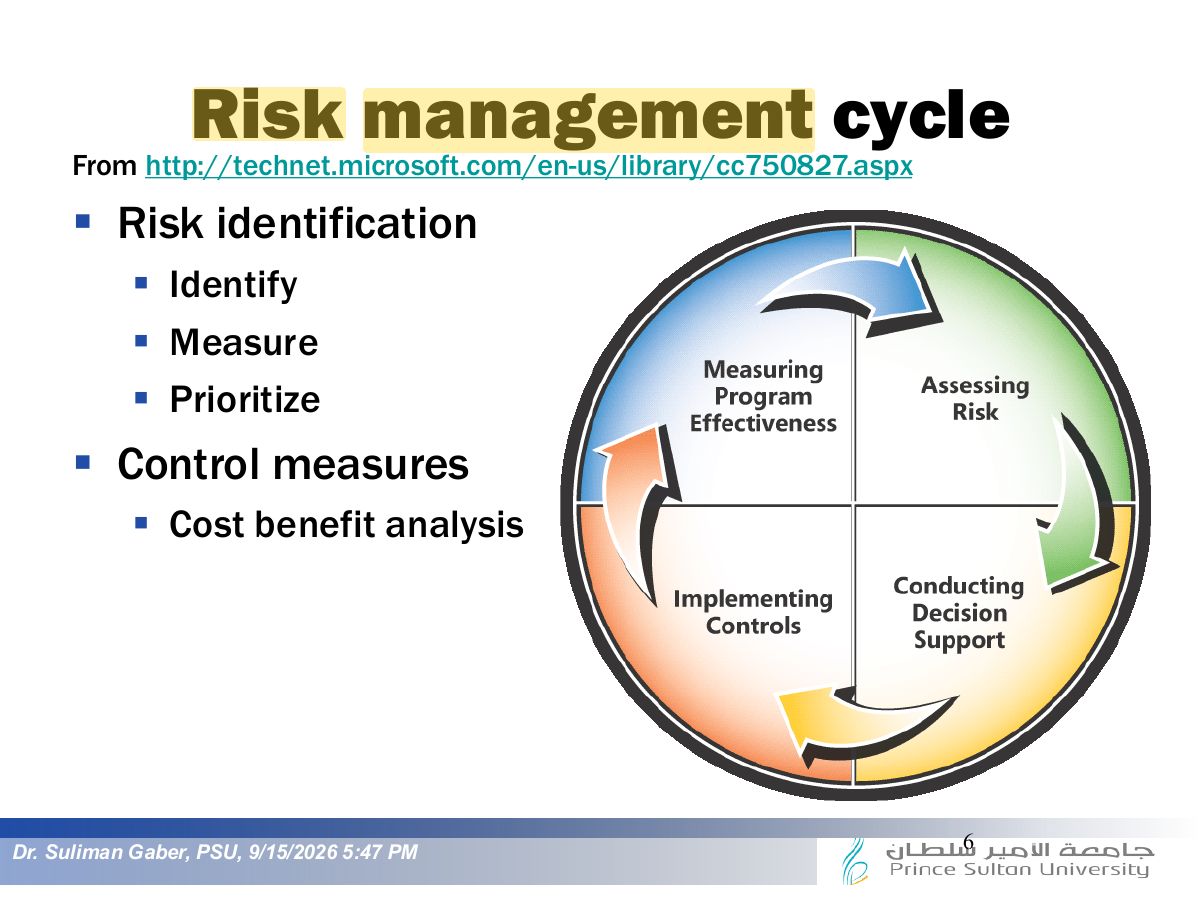
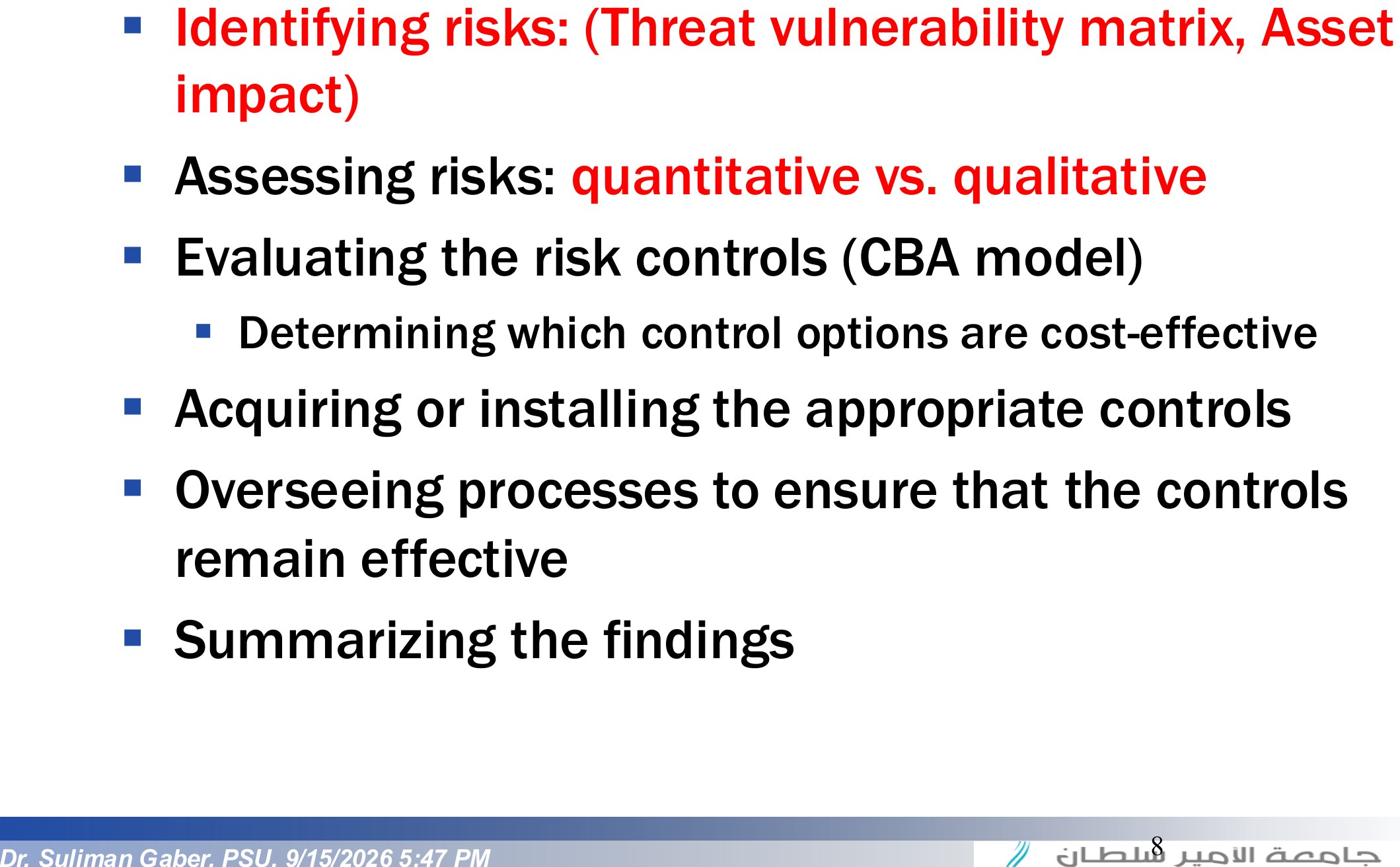
- Cycle: identify → assess → treat → monitor and review → repeat. Risk identification happens continuously, not once.
Asked in a real exam
🎯 How this can come up · 1 question
Risk identification should be performed:
Correct: Continuously, throughout the lifecycle.
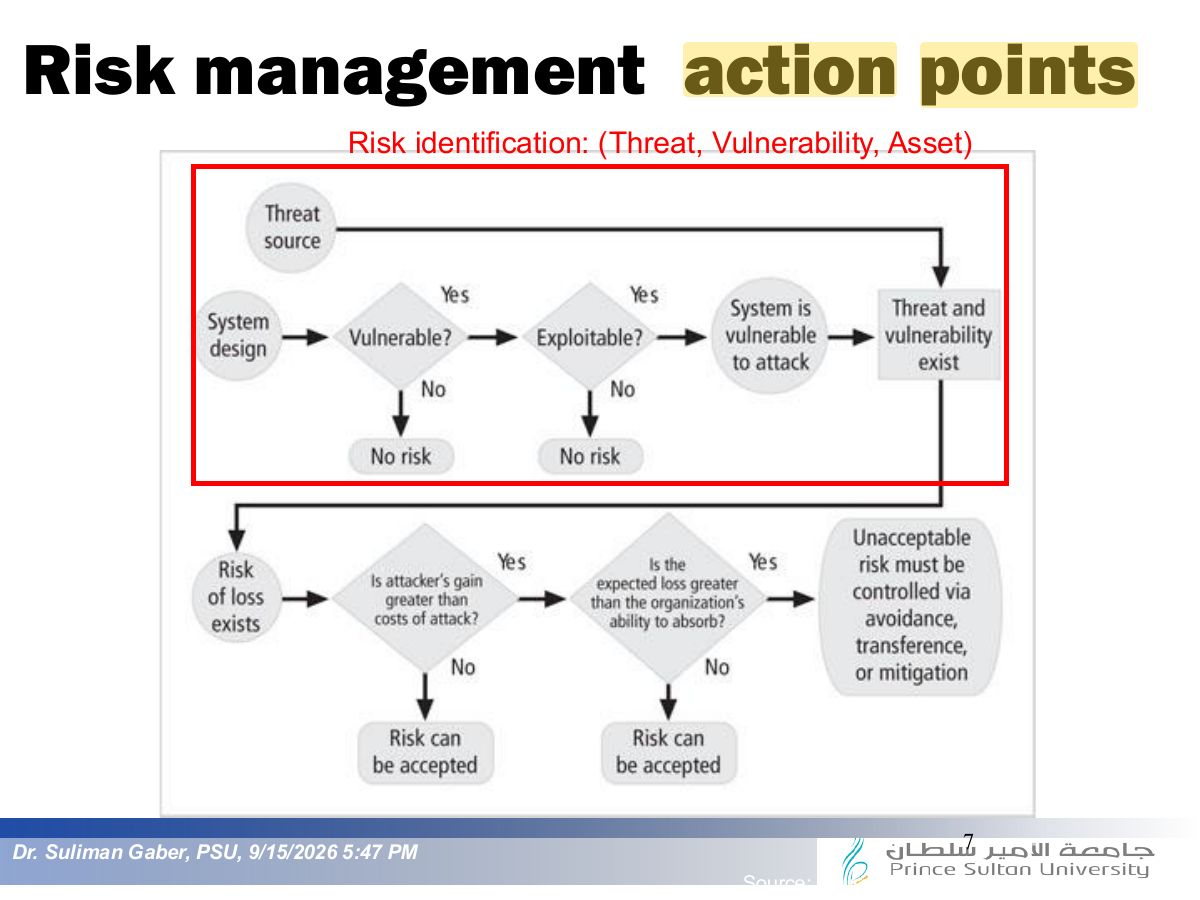
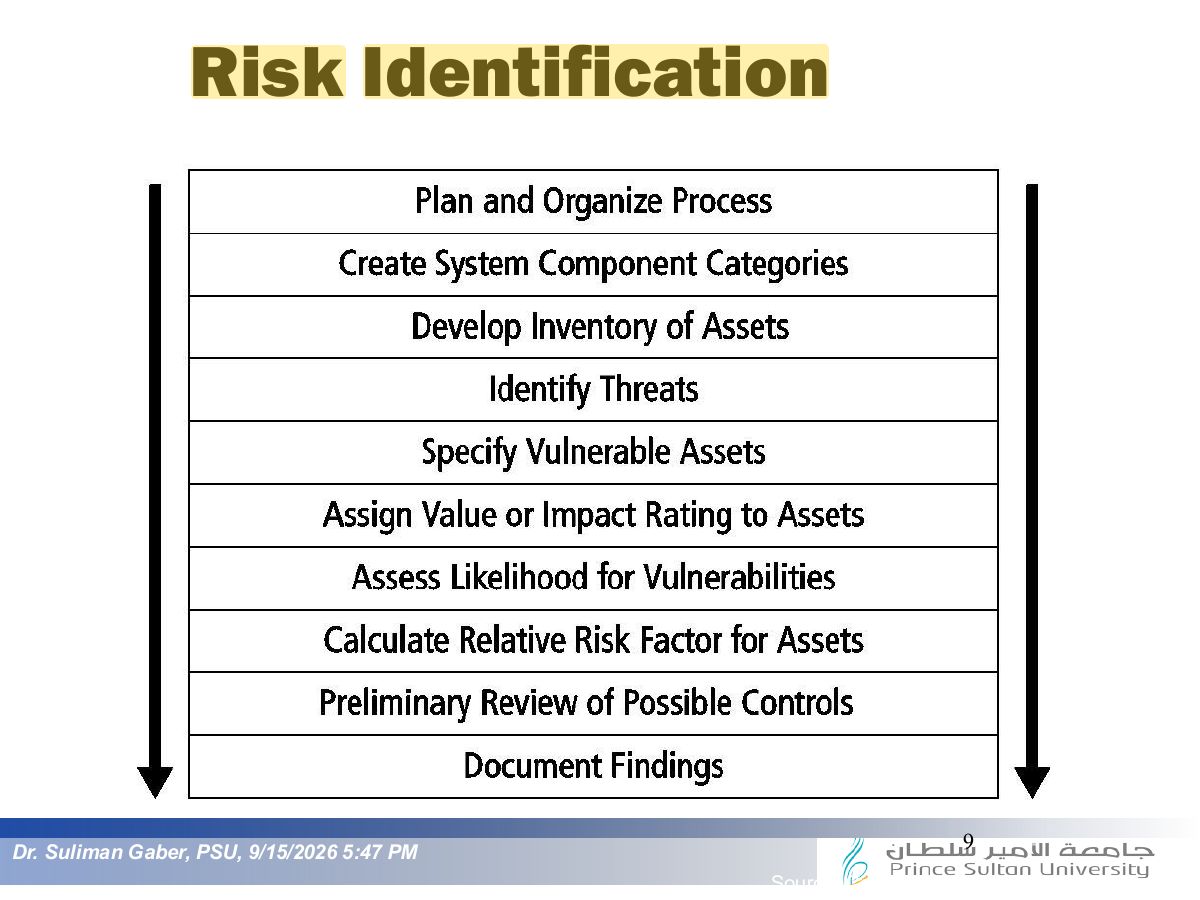
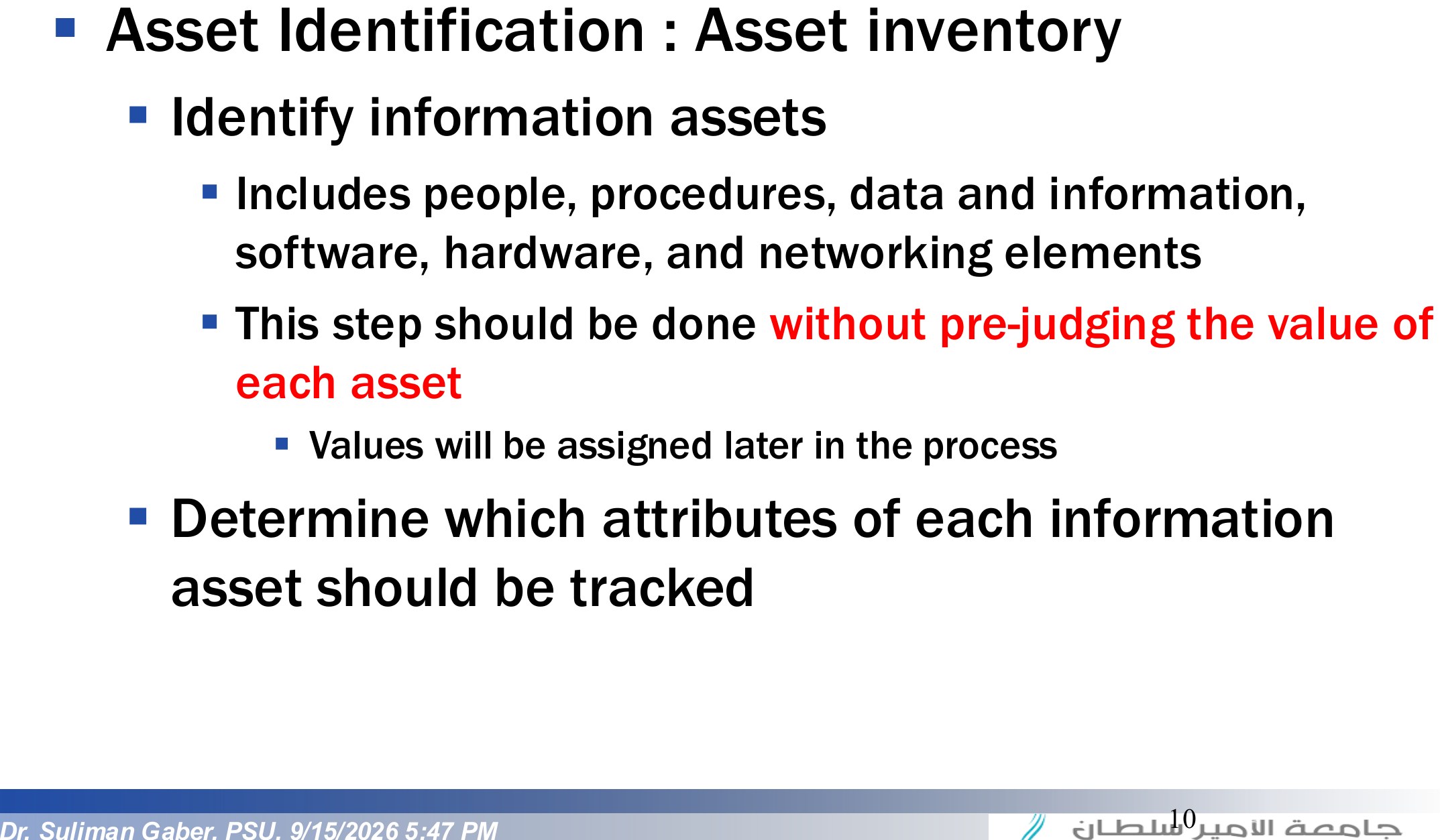
- Risk identification = identify, classify and prioritize assets, then the threats and vulnerabilities against them.
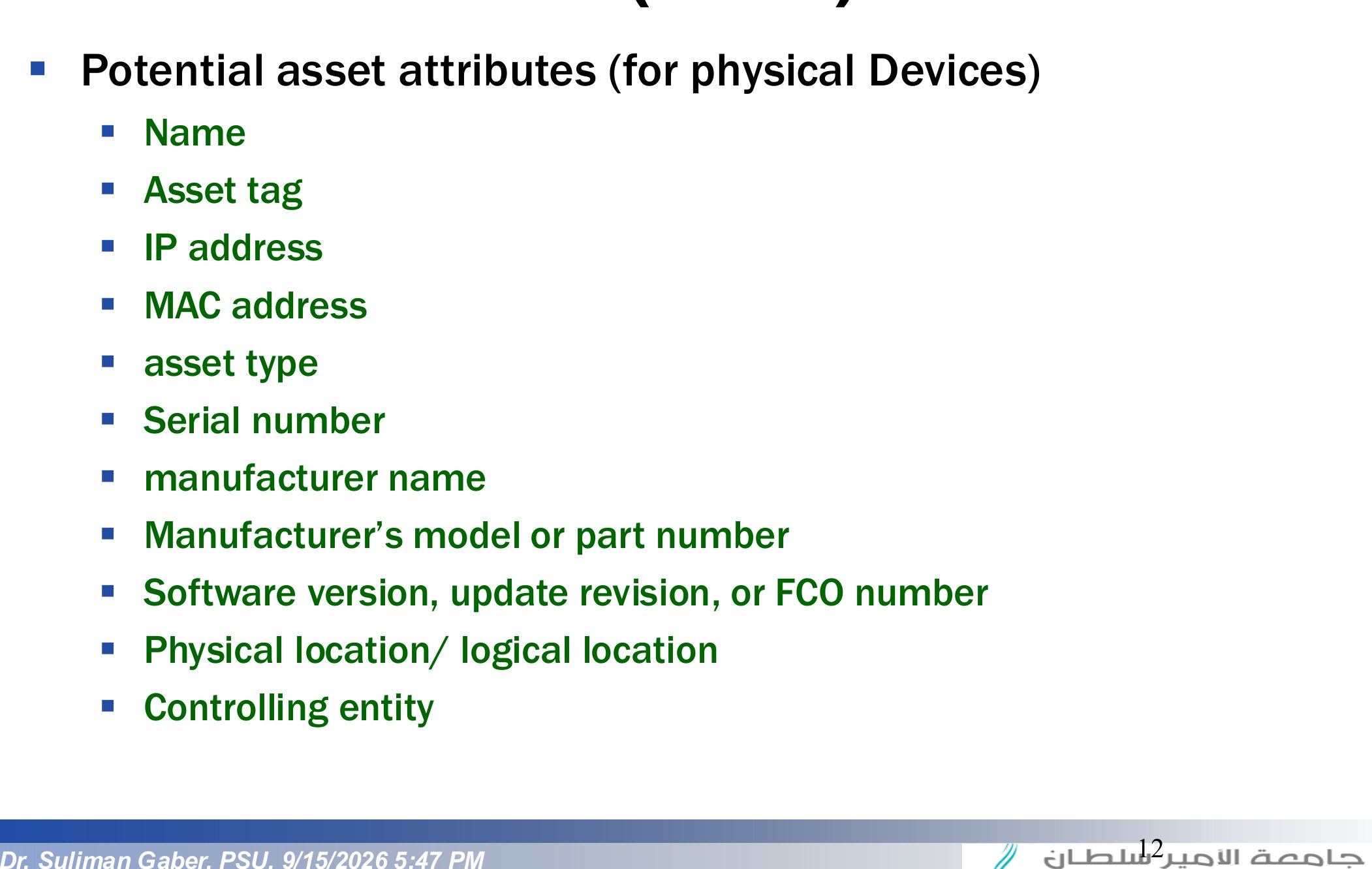
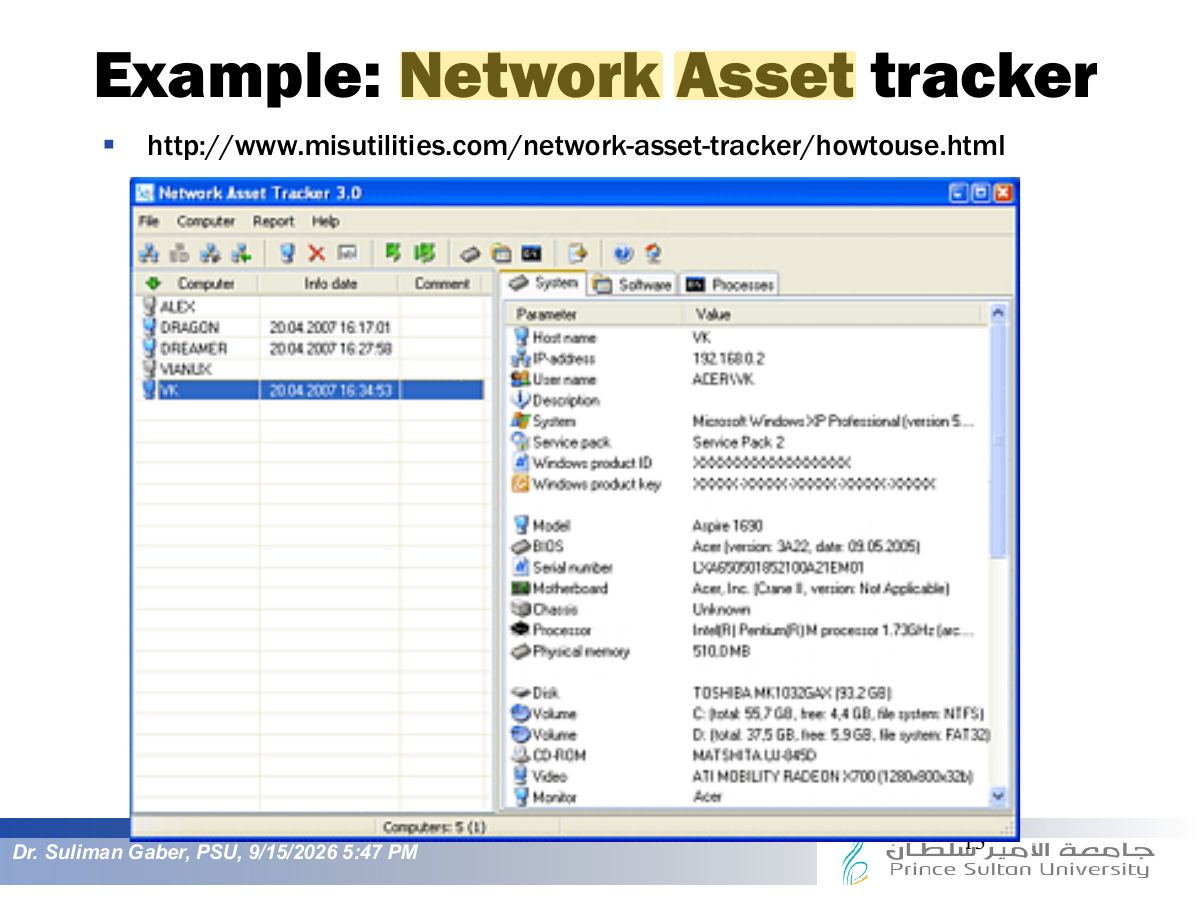
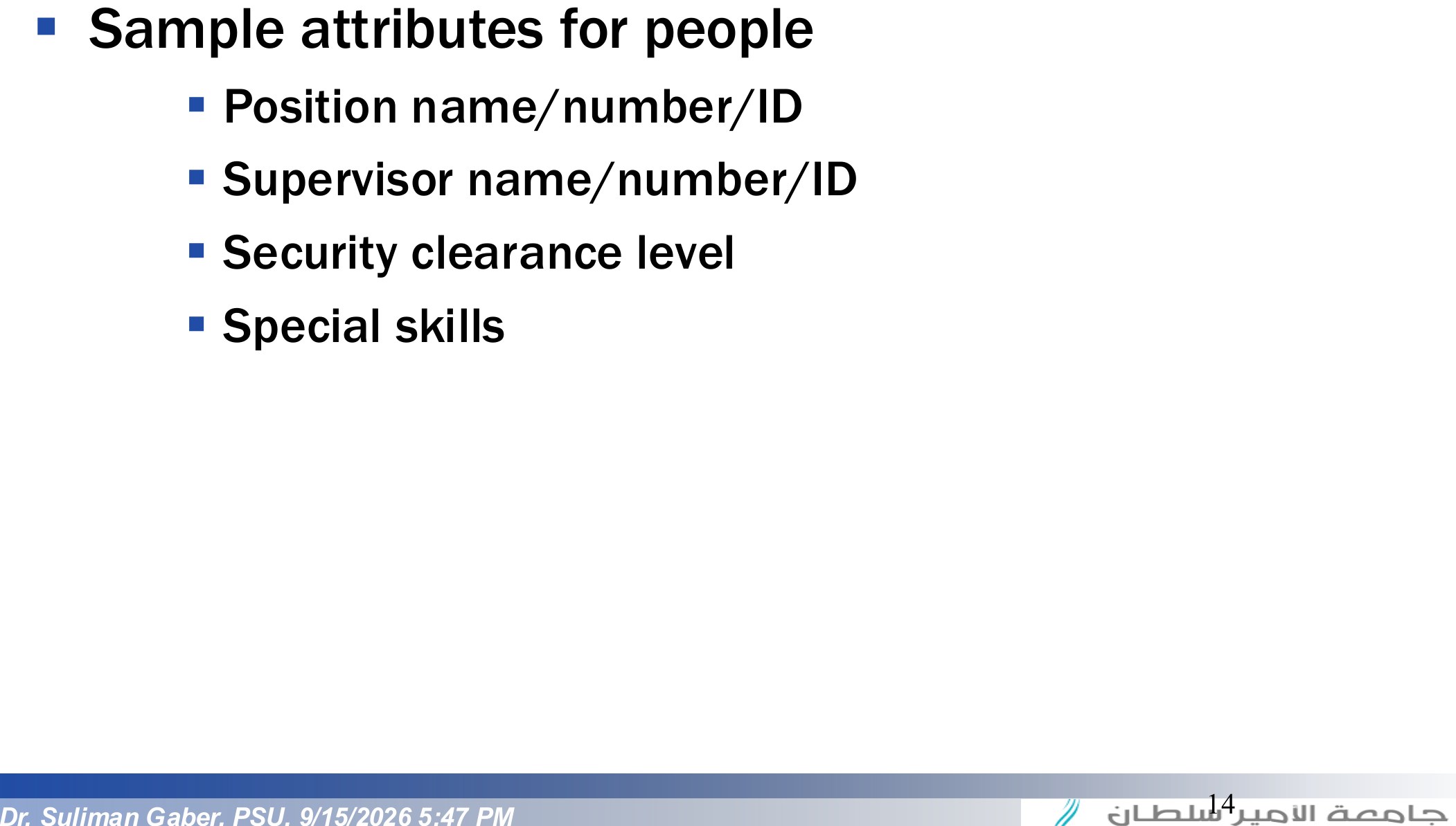
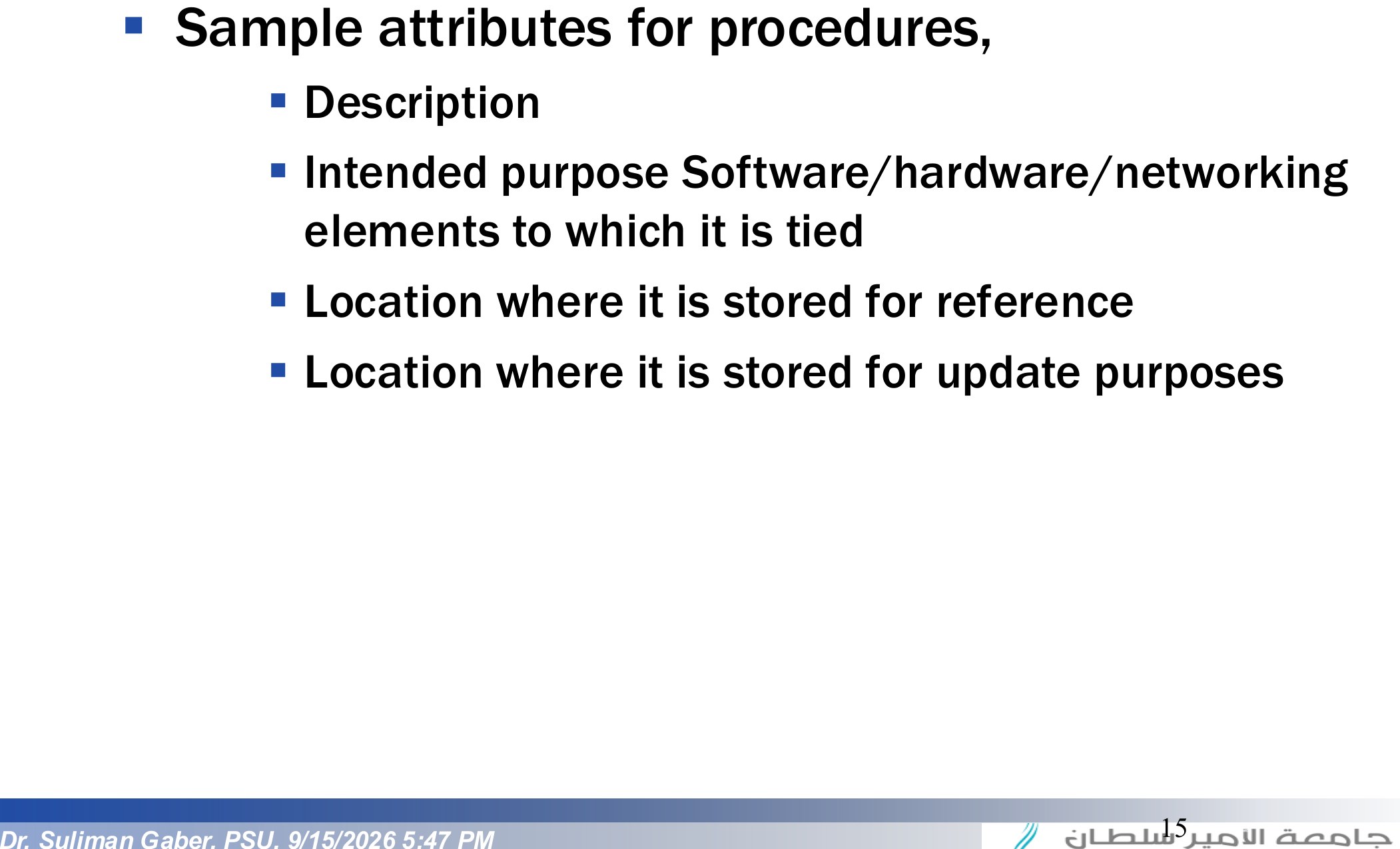
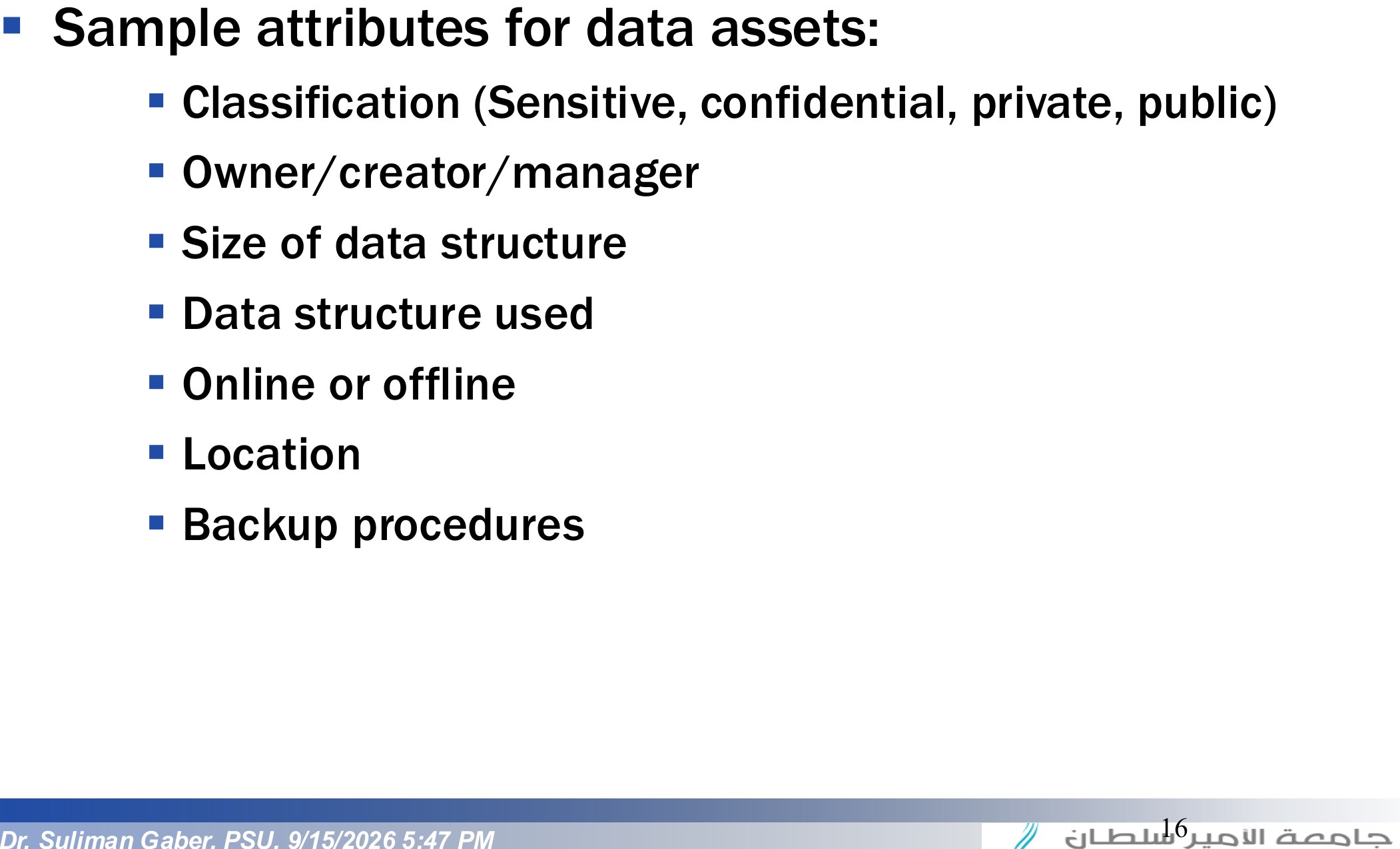
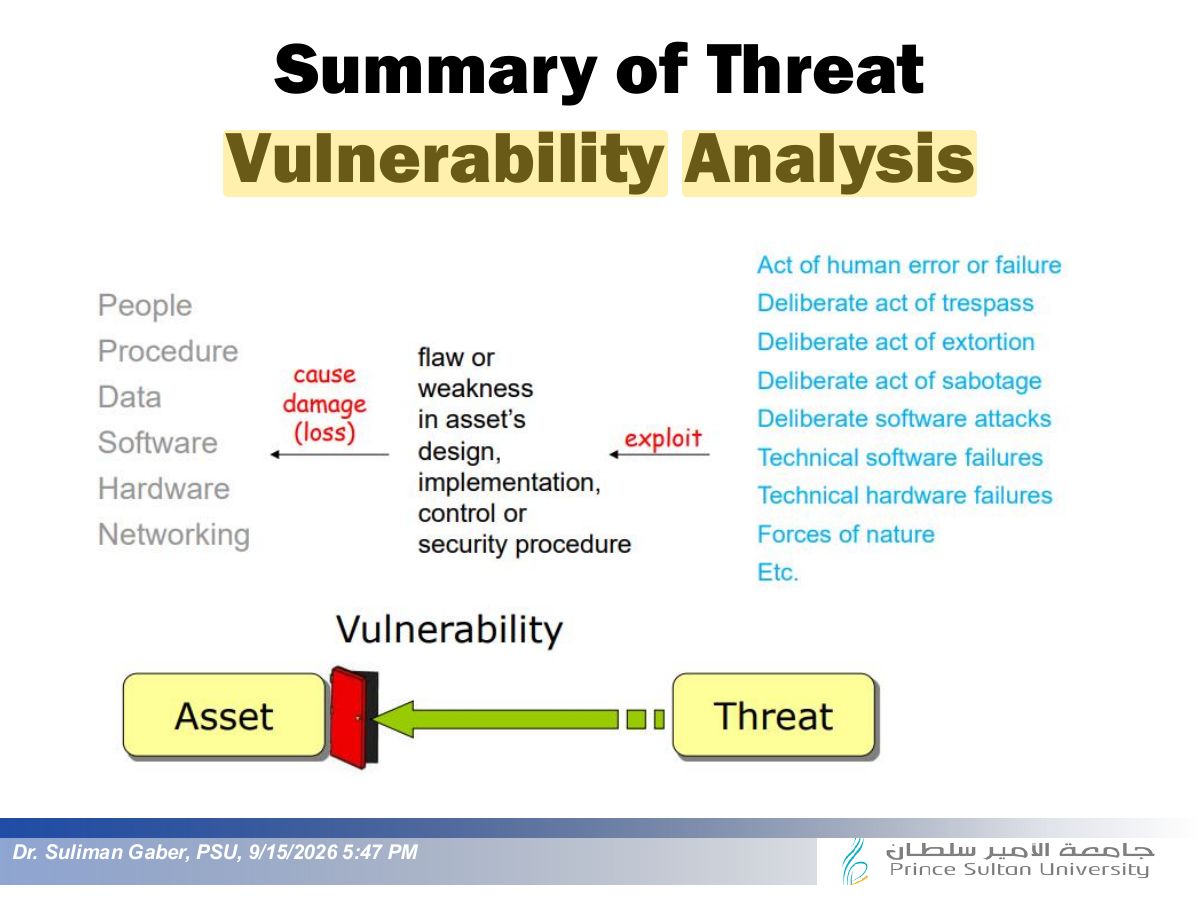
- Asset types: people, procedures, data, software, hardware, networking.
Asked in a real exam
🎯 How this can come up · 1 question
List two information assets with two attributes each.
Server: name/IP address, location (or MAC, serial number). Customer database: data owner, classification level (or format, size). Any asset with identifying attributes such as name, ID, location, owner, version, classification.
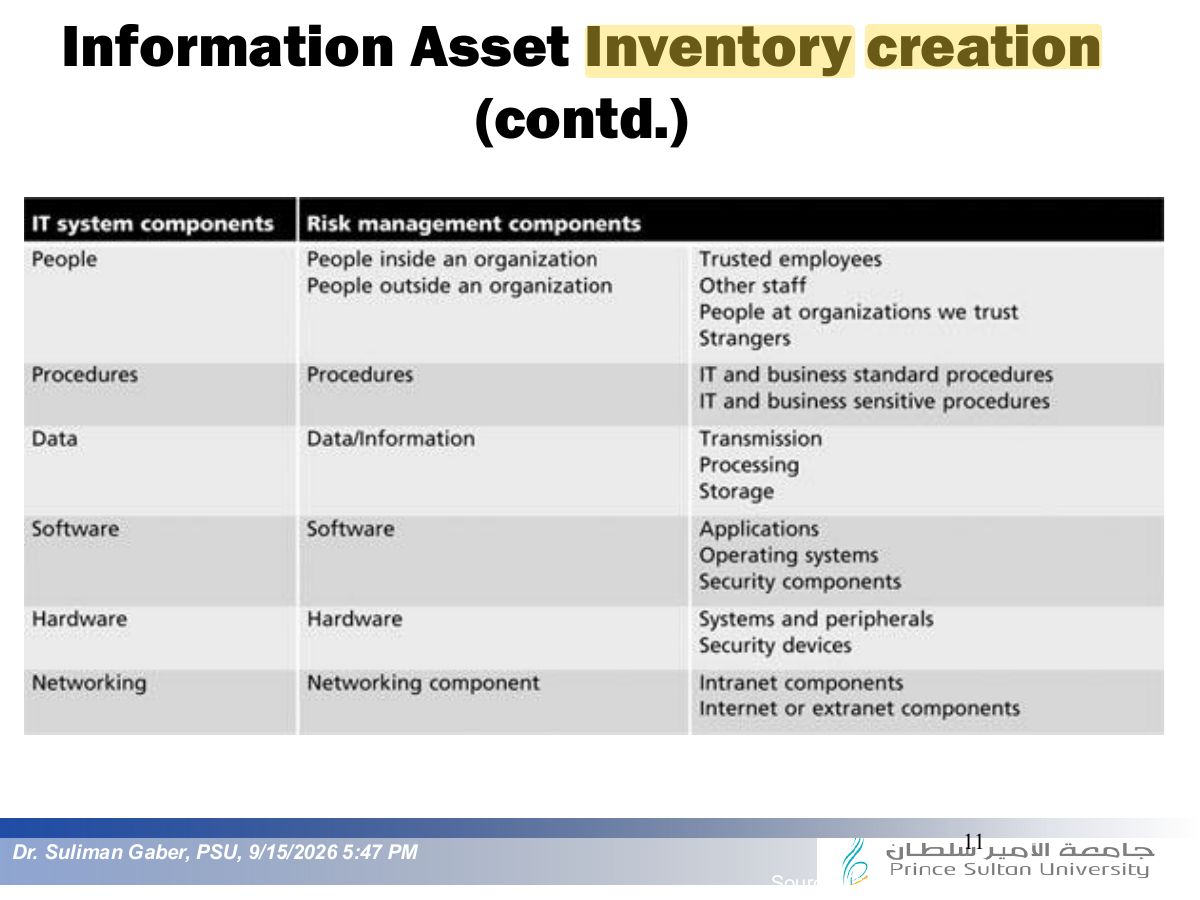
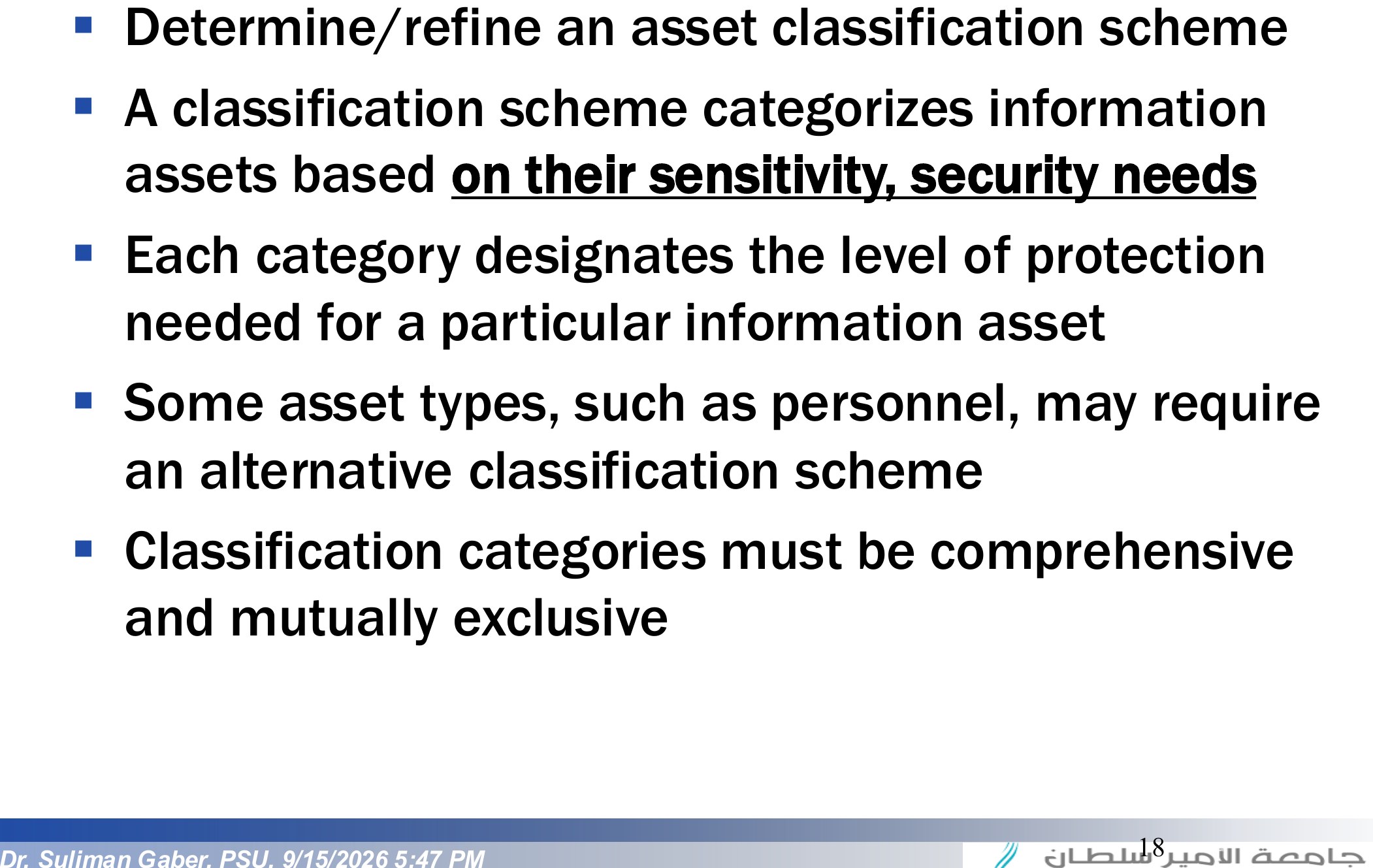
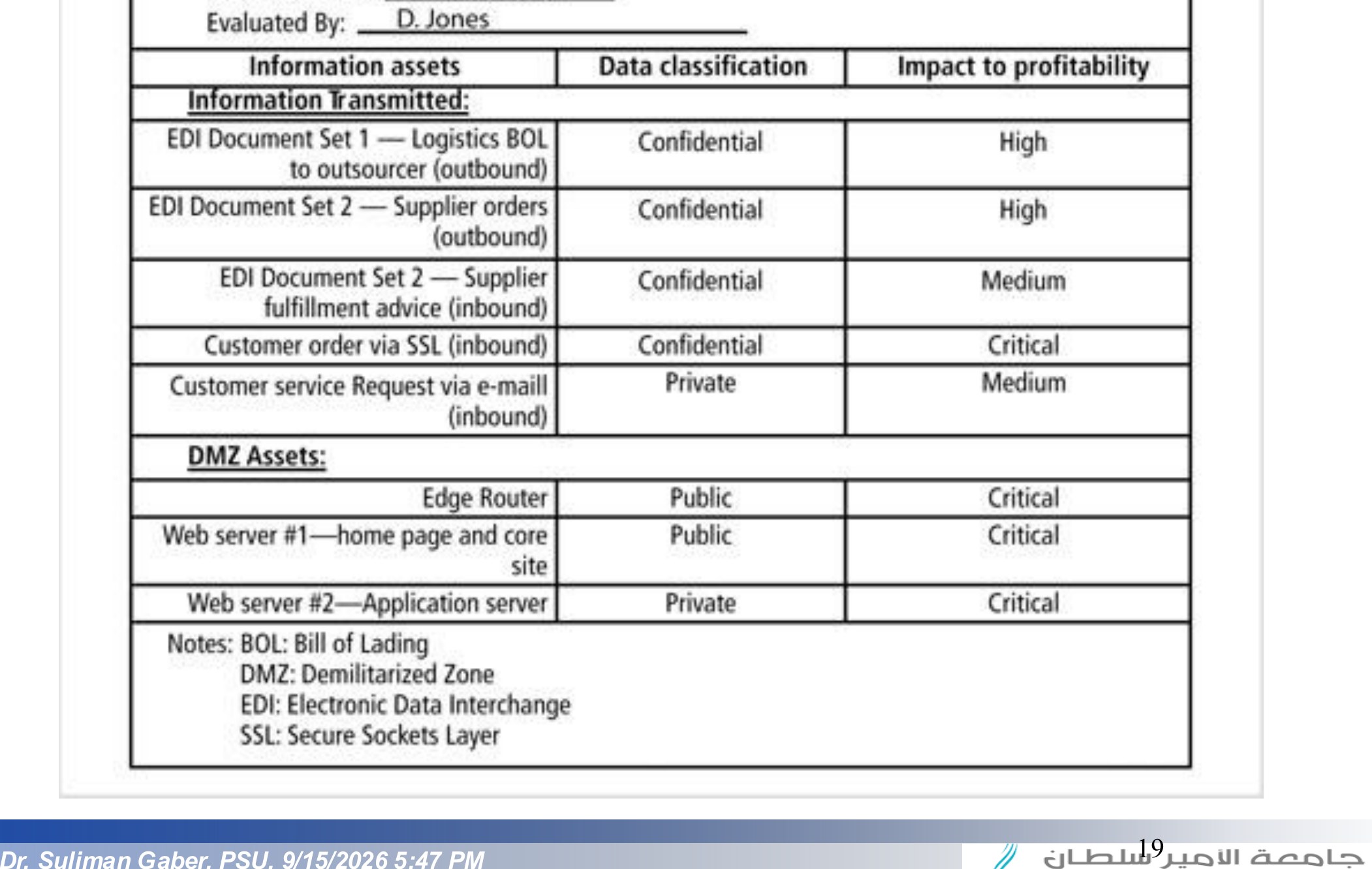
- Classify assets (confidential, internal, public…) and categorize them so their importance can be compared.
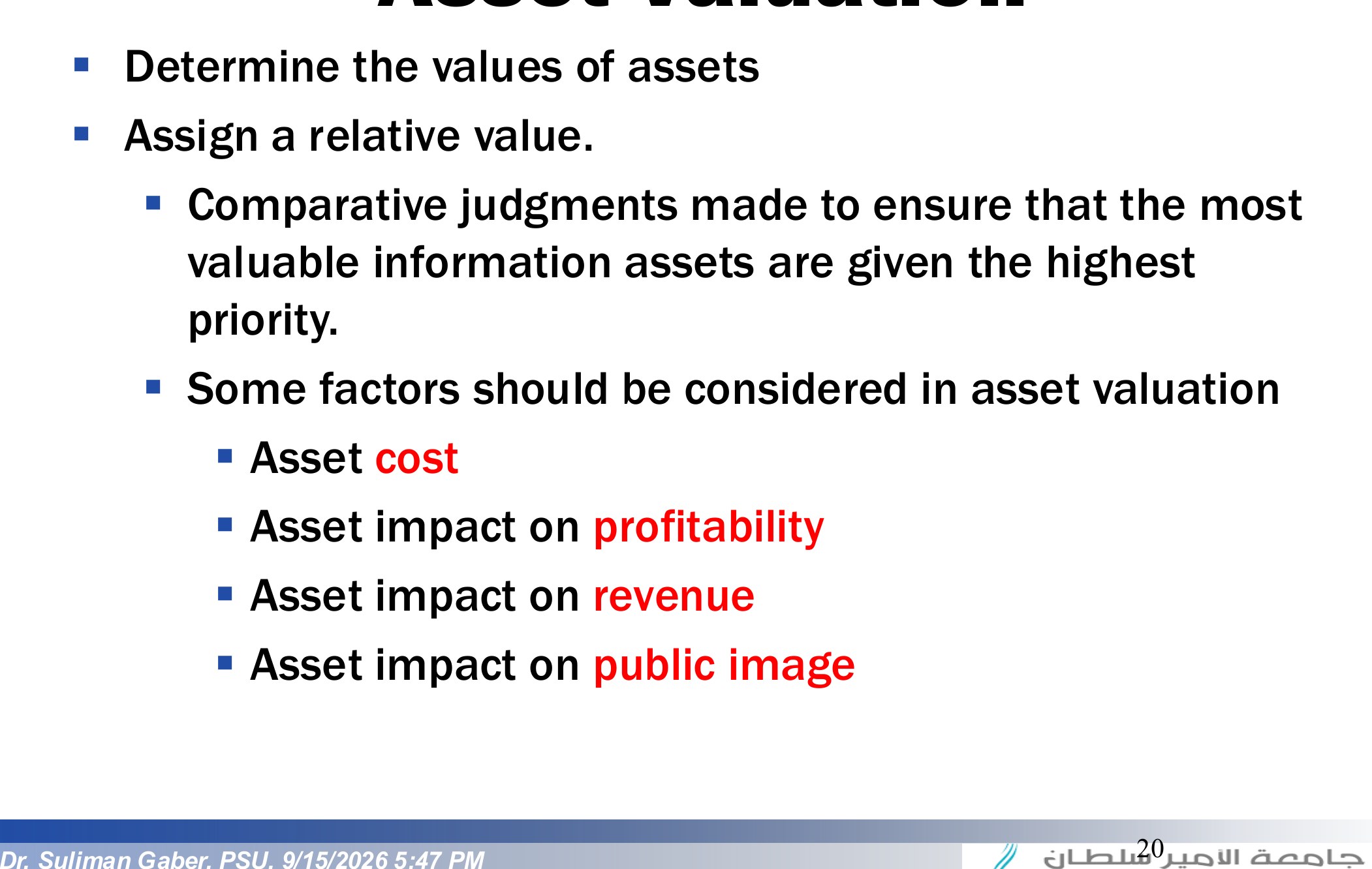
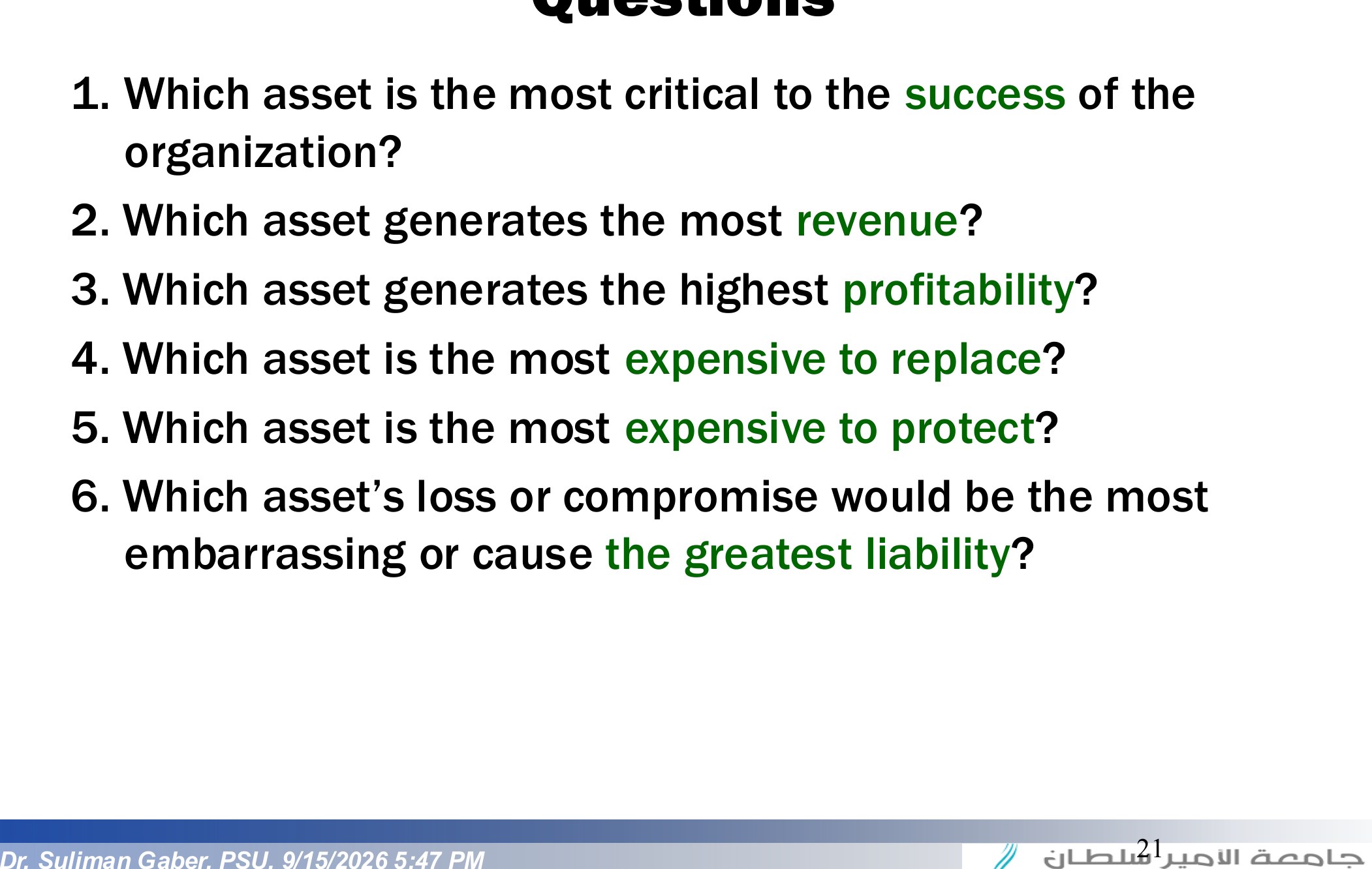
- Valuation questions: how critical to the mission, how much revenue or profit, cost to replace or protect, embarrassment if lost.
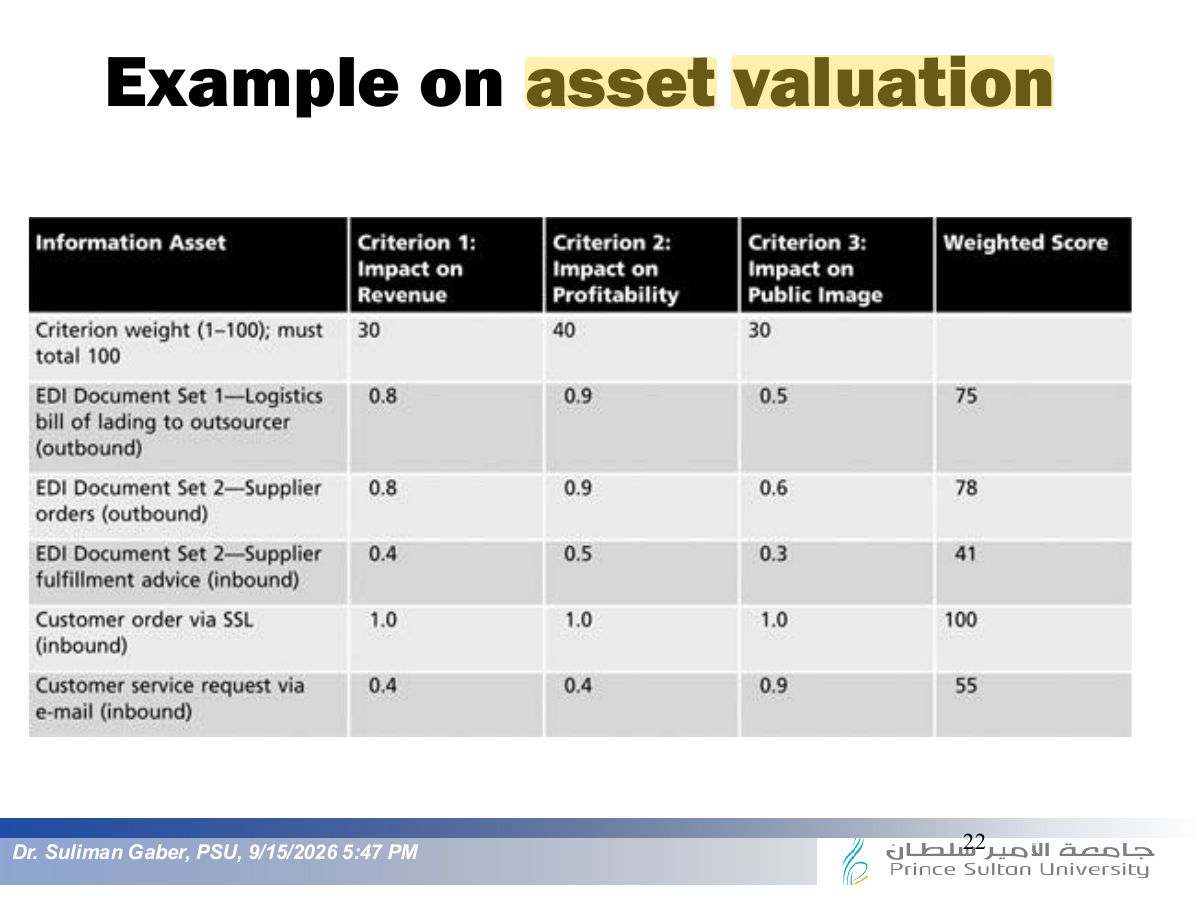
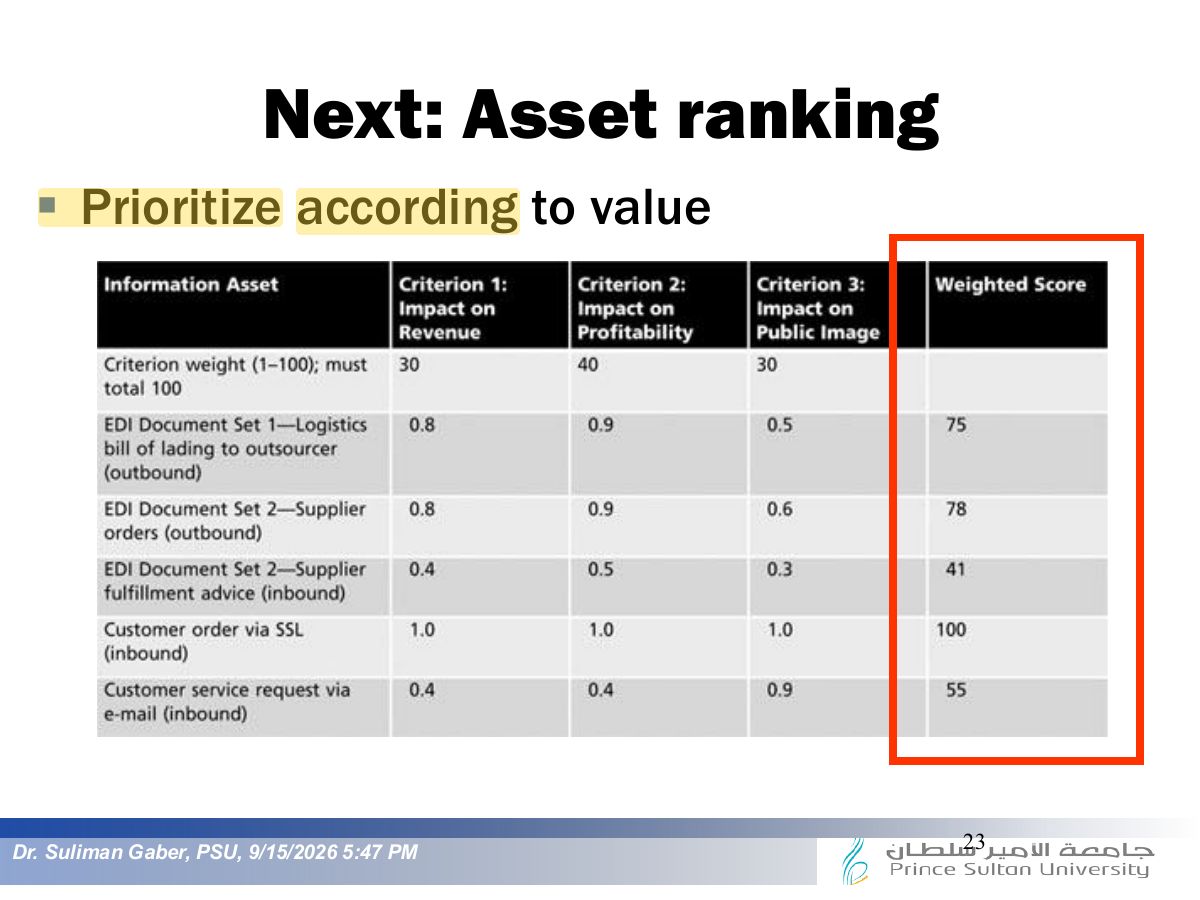
- Rank assets by weighted factor analysis to decide what to protect first.
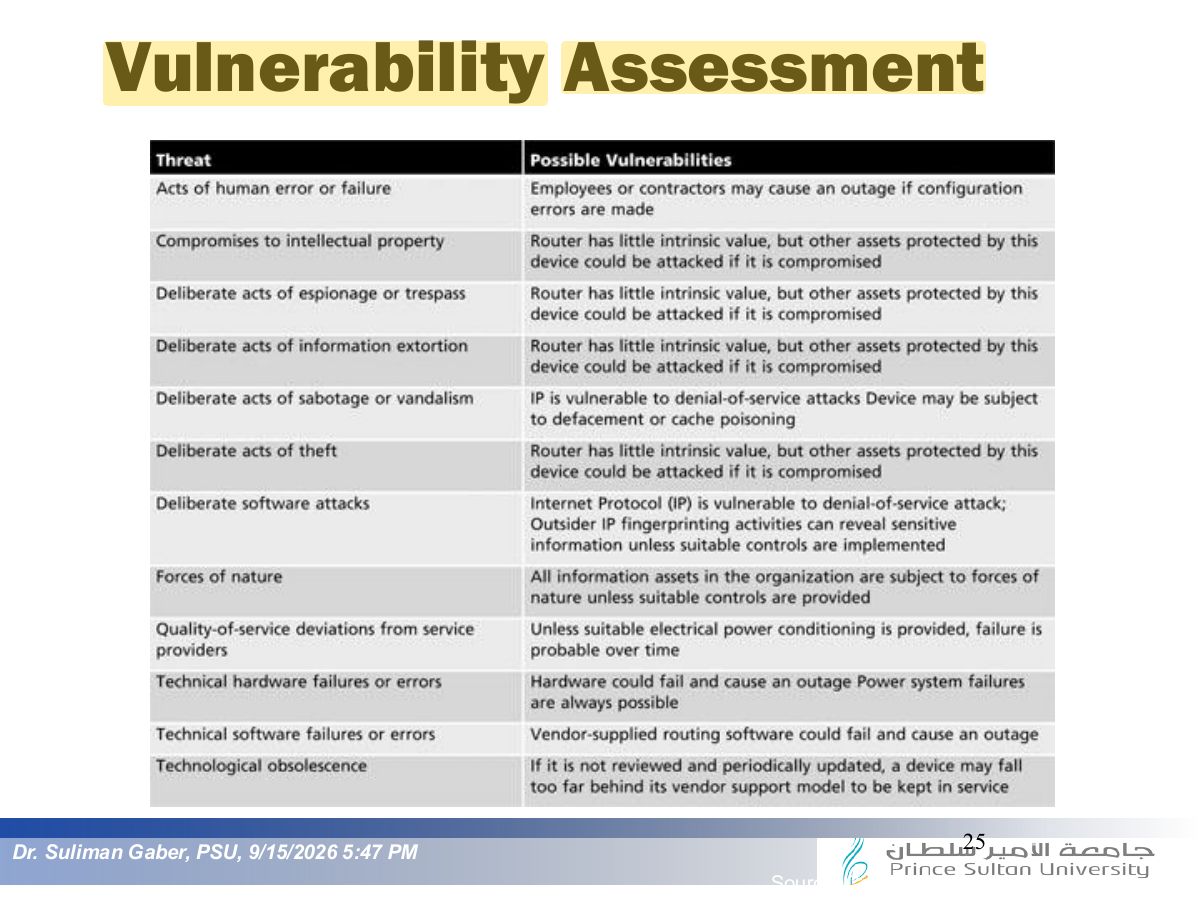
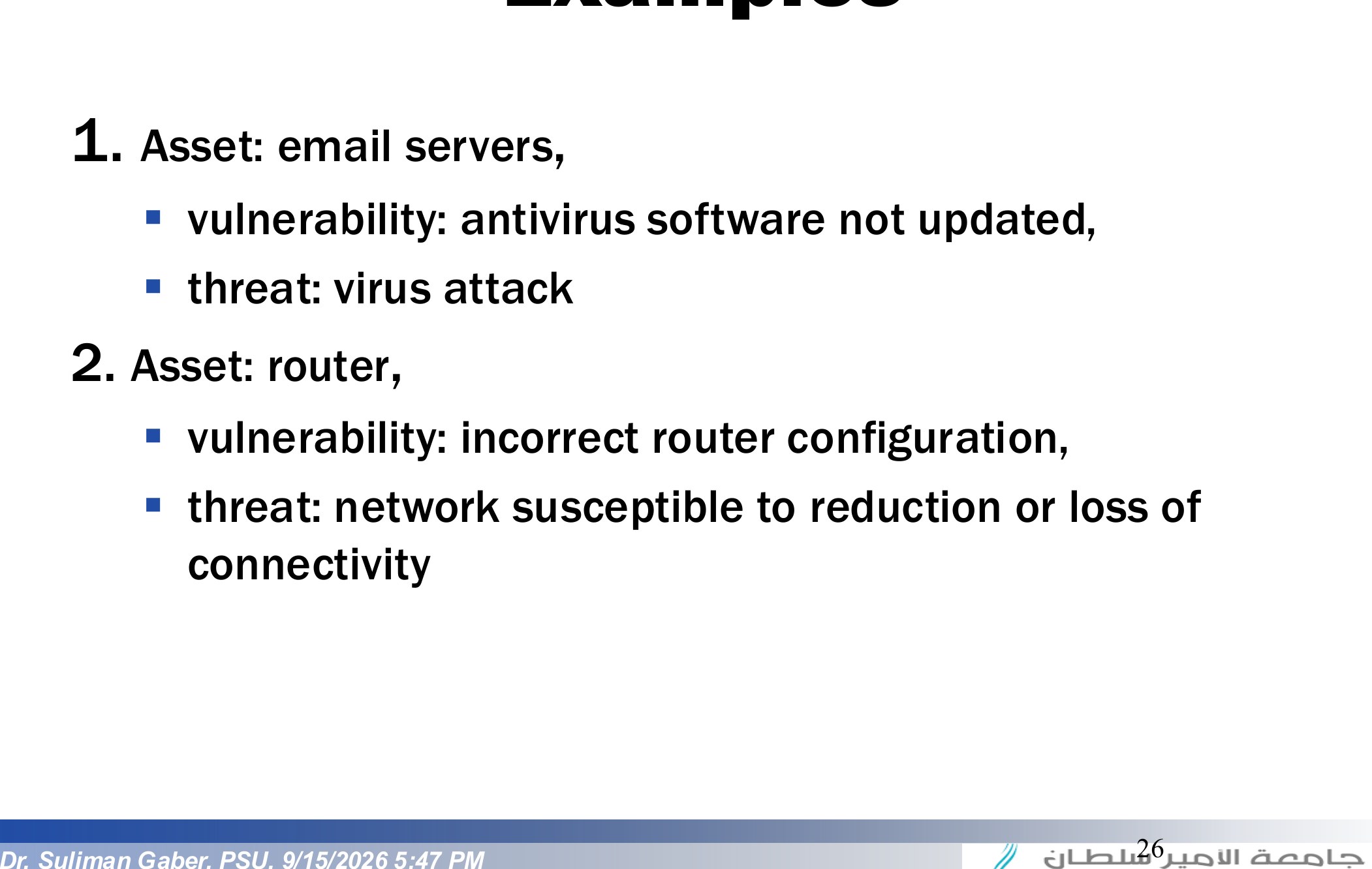
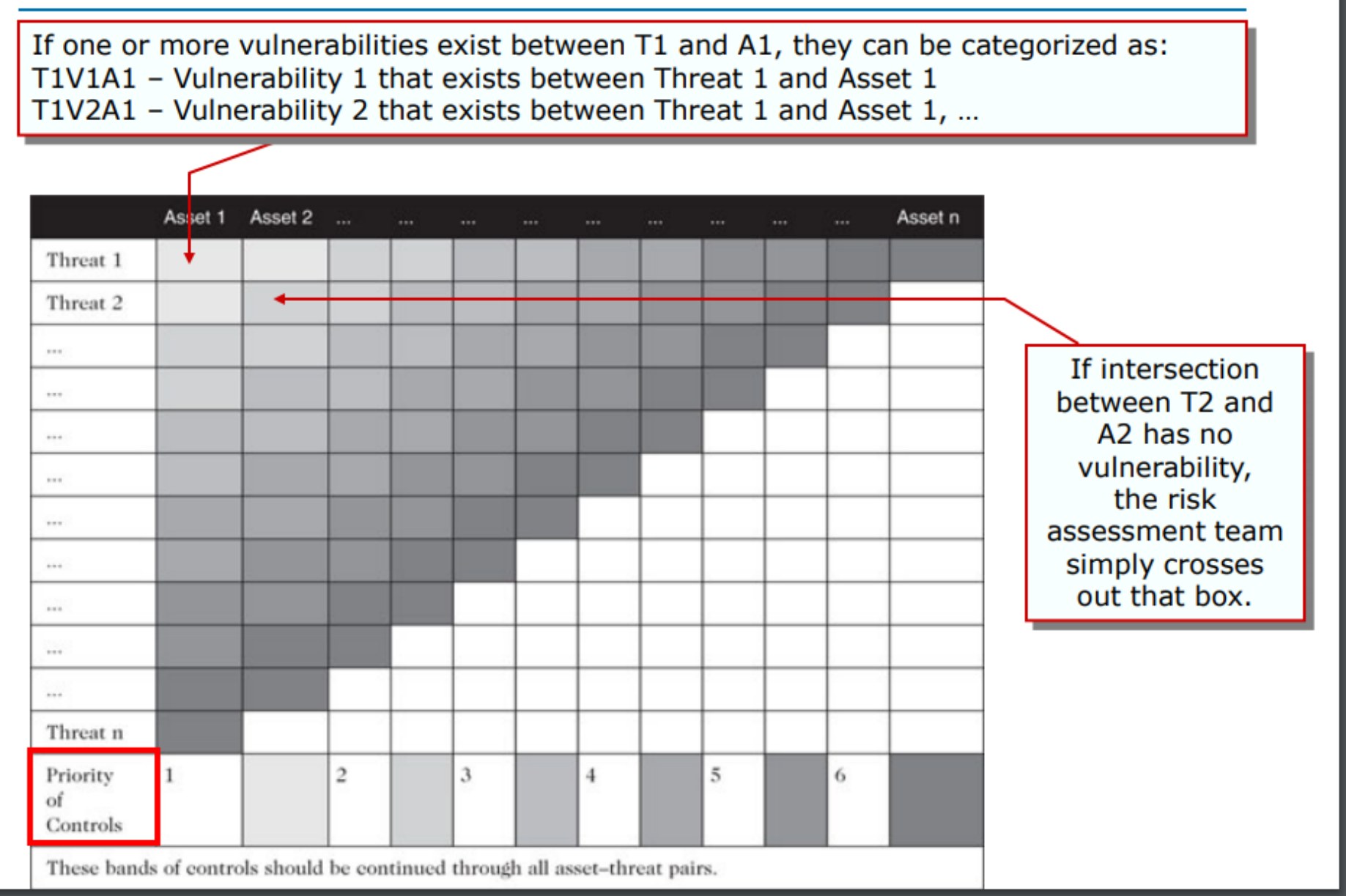
- Vulnerability assessment: for each threat to each asset, list how it could be exploited.
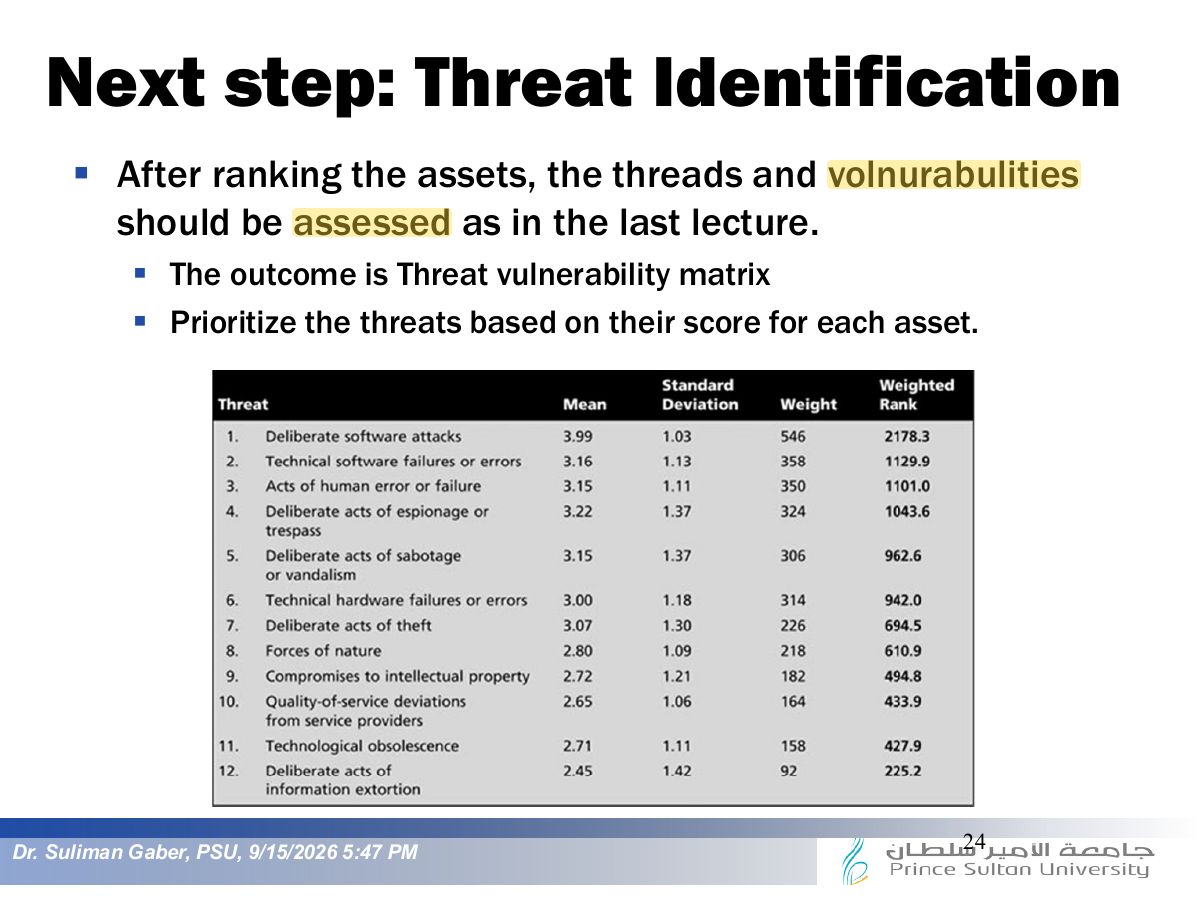
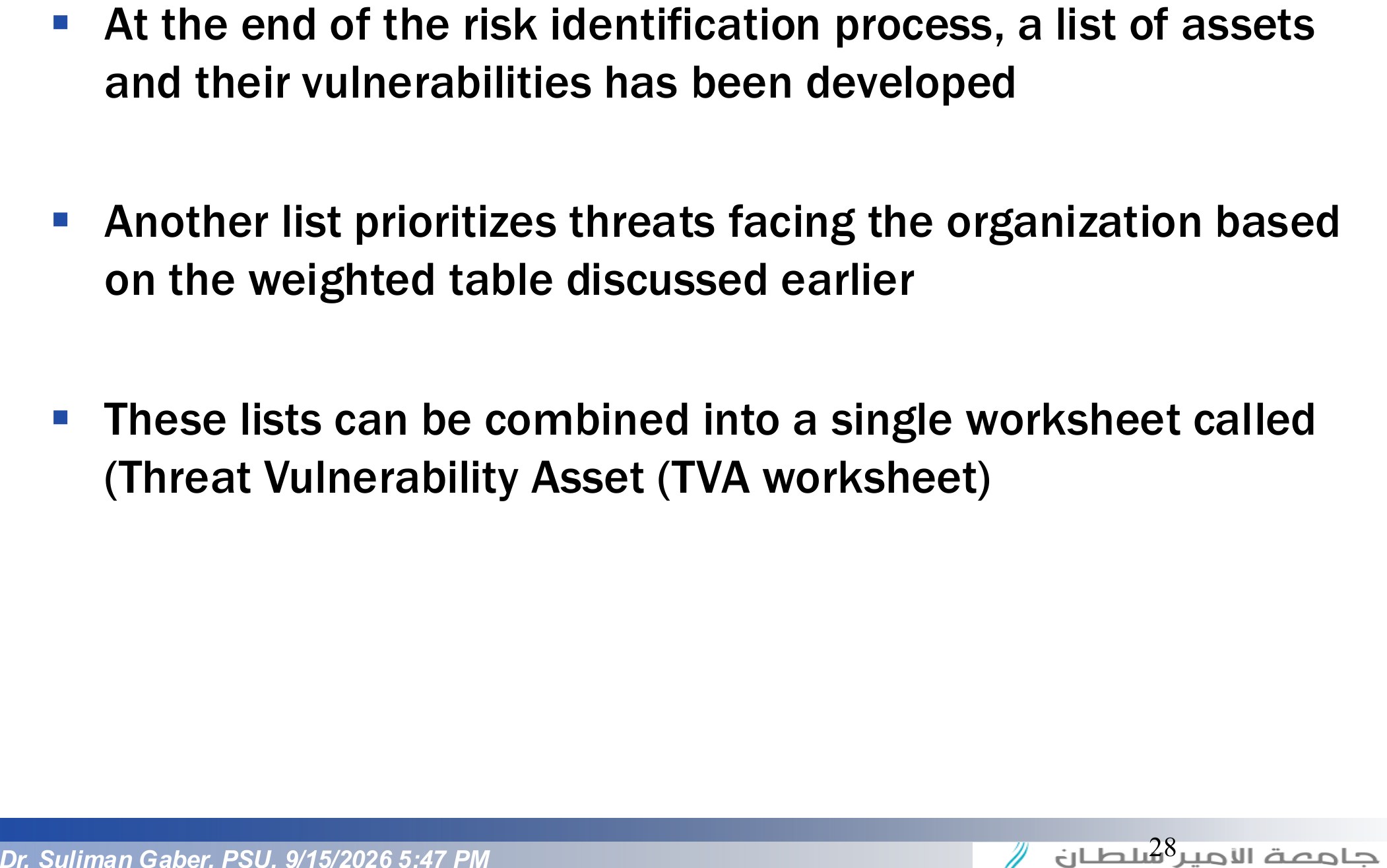
- TVA worksheet: assets (ranked) on one axis, threats (ranked) on the other; each cell lists the vulnerabilities; work from the top-left (highest priority).
🎯 How this can come up · 1 question
In a TVA worksheet, the highest-priority cells are:
Correct: Most valuable asset × most dangerous threat.
No slides match this filter.