CYS403 · Annotated SlidesChapter 2 — Risk Management Fundamentals
Chapter 2 · Annotated slides

Risk Management Fundamentals

Definitions of risk, threat, vulnerability, asset, exposure and safeguard, risk factors, the risk equation, risk-management steps and the risk register, quantitative (SLE, ARO, ALE) vs. qualitative analysis, mitigation options, countermeasure selection and types of security controls.
Slide text Study notes Highlight: key words Tips, tricks & traps Seen again elsewhere How it can come up
Slide 1: Slide 1
Exam weight Low

    Intended Learning Outcomes

    • CLO 1: Evaluate the issues and concerns indicative to protecting information, systems and users.
    Intended Learning Outcomes
    2
    Exam weight Low

      Agenda

      • The Shangri-La of Risk Management
      • Applying Risk Management to cyber security
      • Qualitative vs. Quantitative risk management
      Agenda
      3
      Exam weight Low
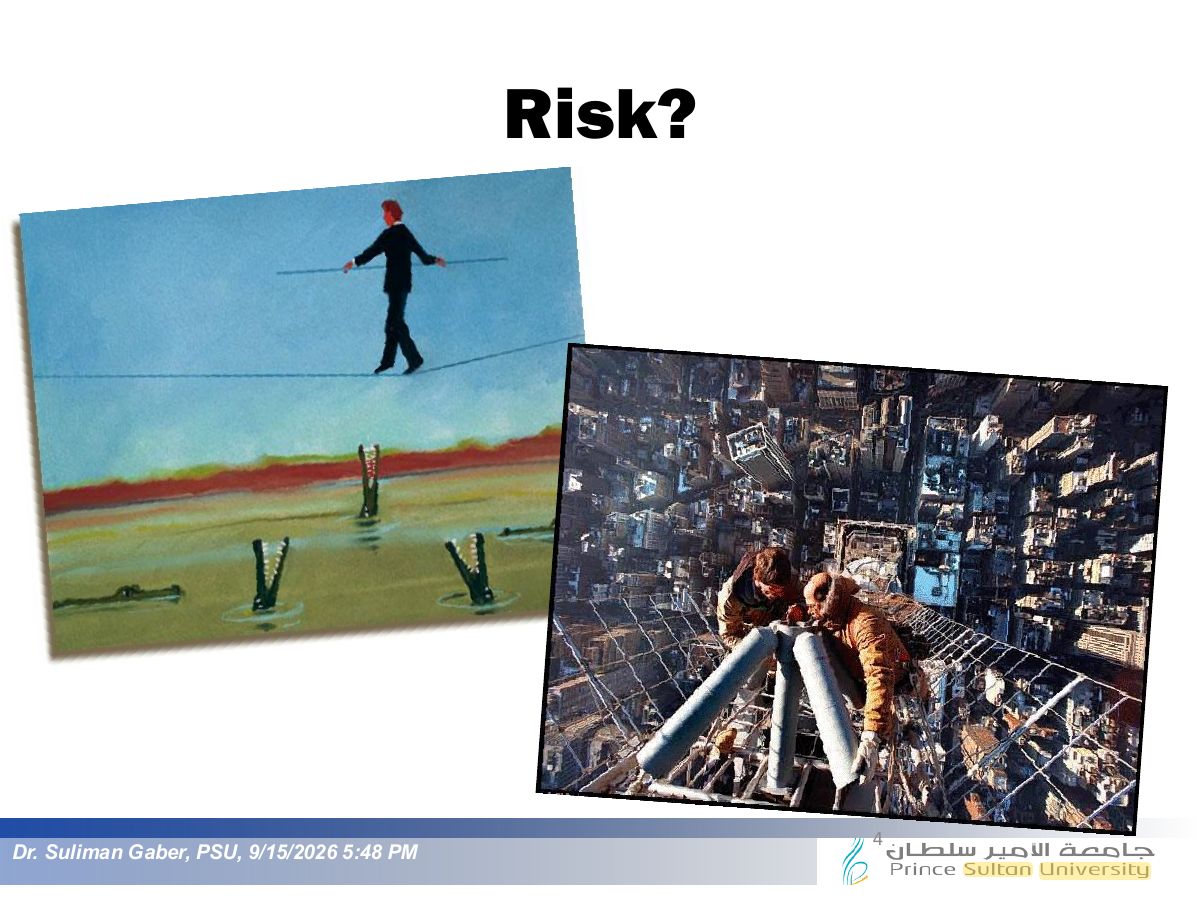
        Slide 4: Risk?
        Exam weight Low
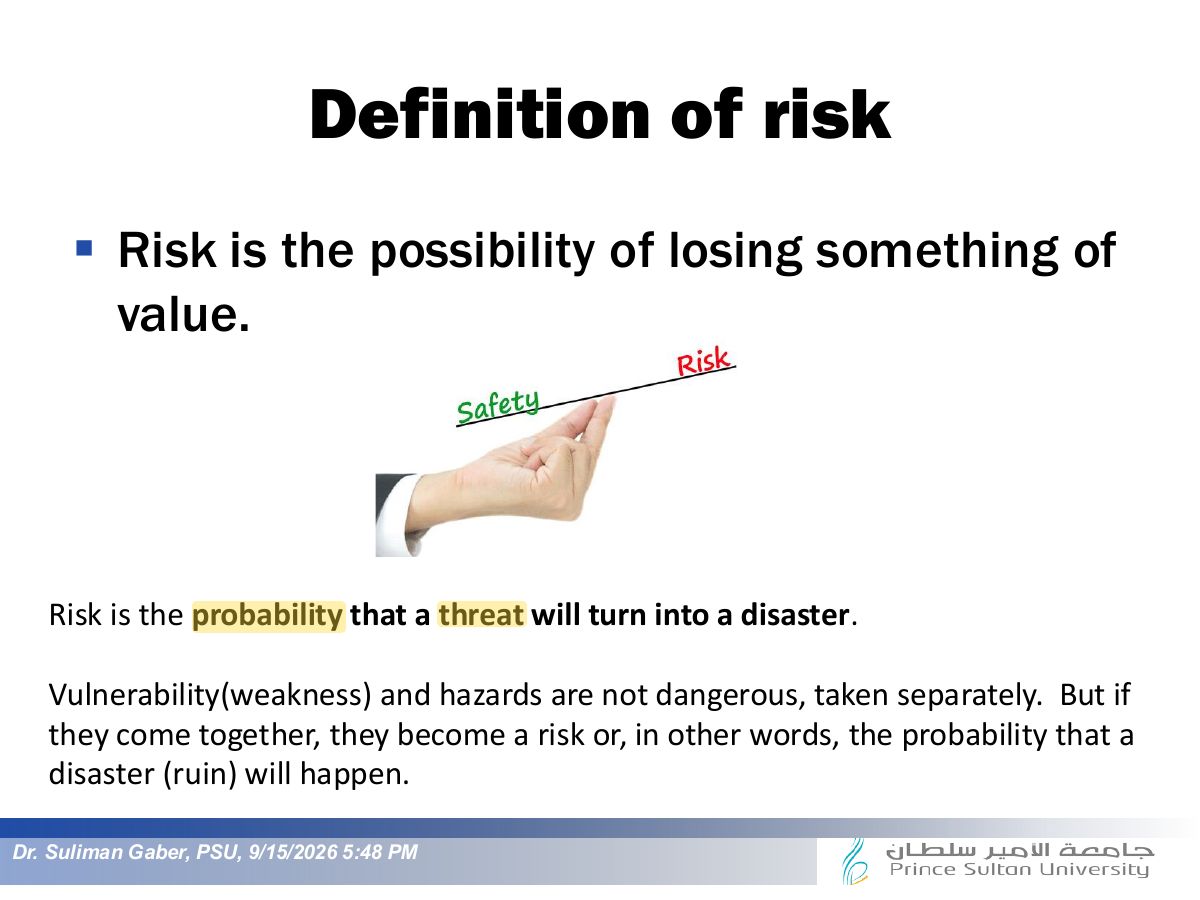
          Slide 5: Definition of risk
          Exam weight Low
          1. Risk = the likelihood that a threat exploits a vulnerability, and the impact if it does.

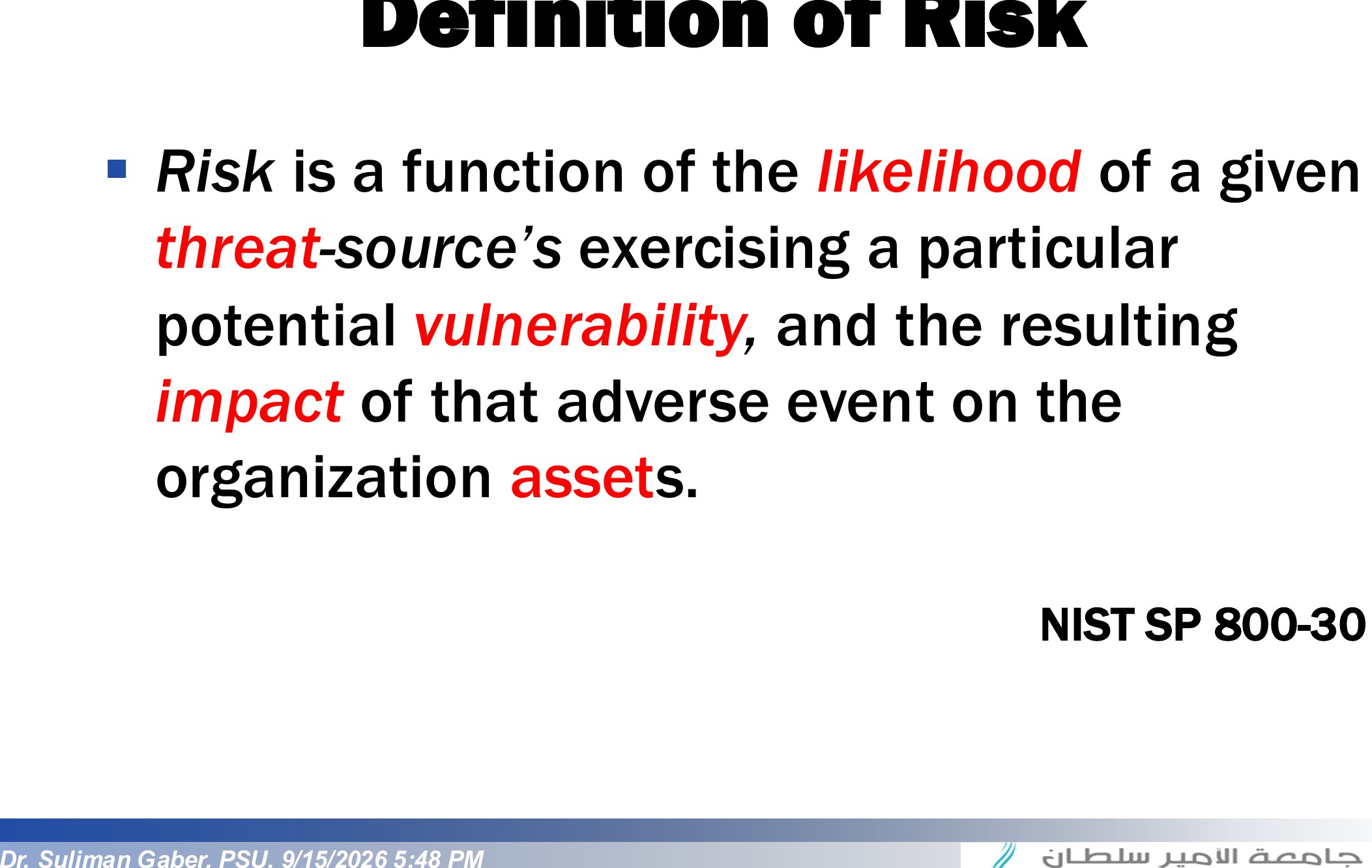
          Definition of Risk

          • Risk is a function of the likelihood of a given threat- source’s exercising a particular potential vulnerability, and the resulting impact of that adverse event on the organization assets. NIST SP 800-30
          Definition of Risk
          6
          Exam weight Low
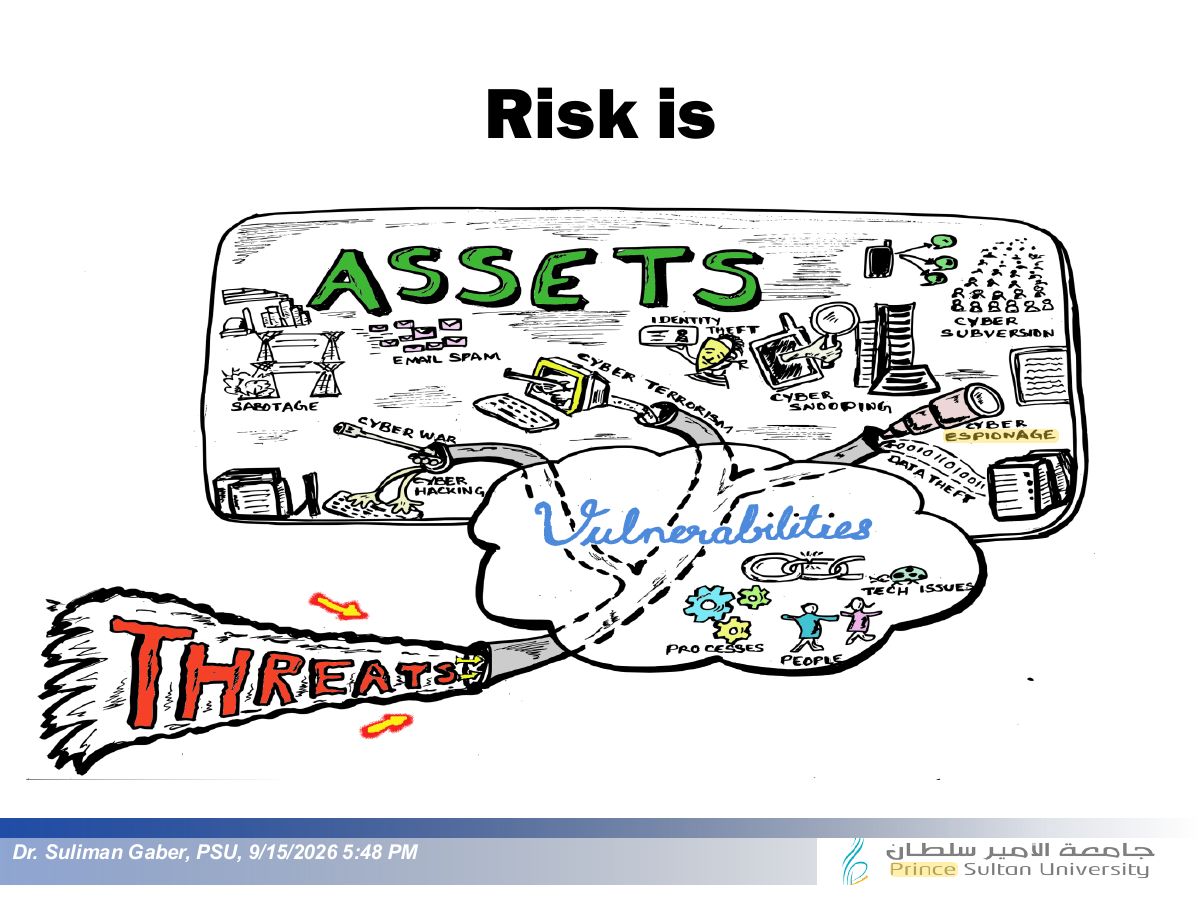
            Slide 7: Risk is
            Exam weight Low

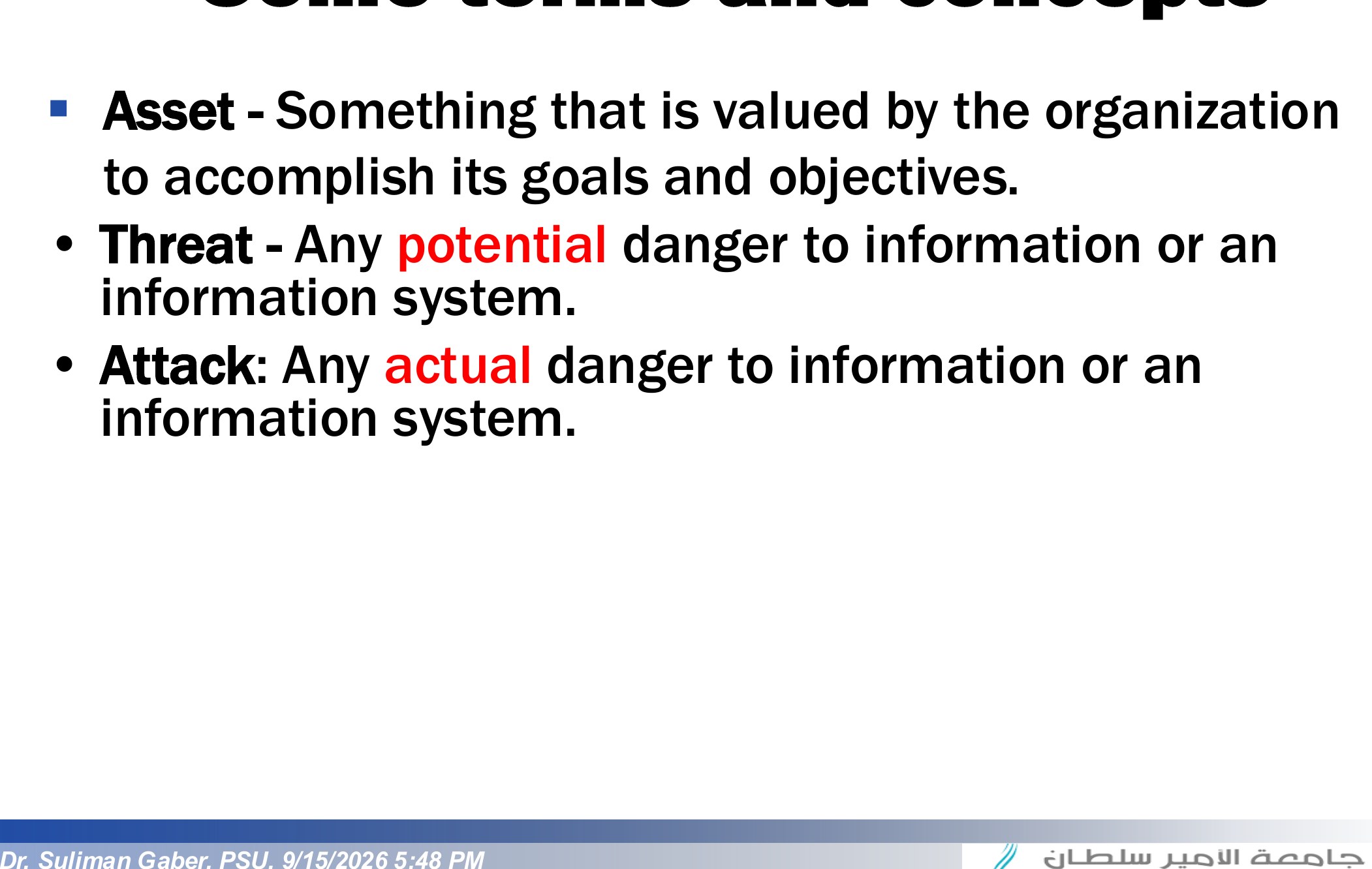
              Some terms and concepts

              • Asset - Something that is valued by the organization to accomplish its goals and objectives.
              • Threat - Any potential danger to information or an information system.
              • Attack: Any actual danger to information or an information system.
              Some terms and concepts
              8
              Exam weight High
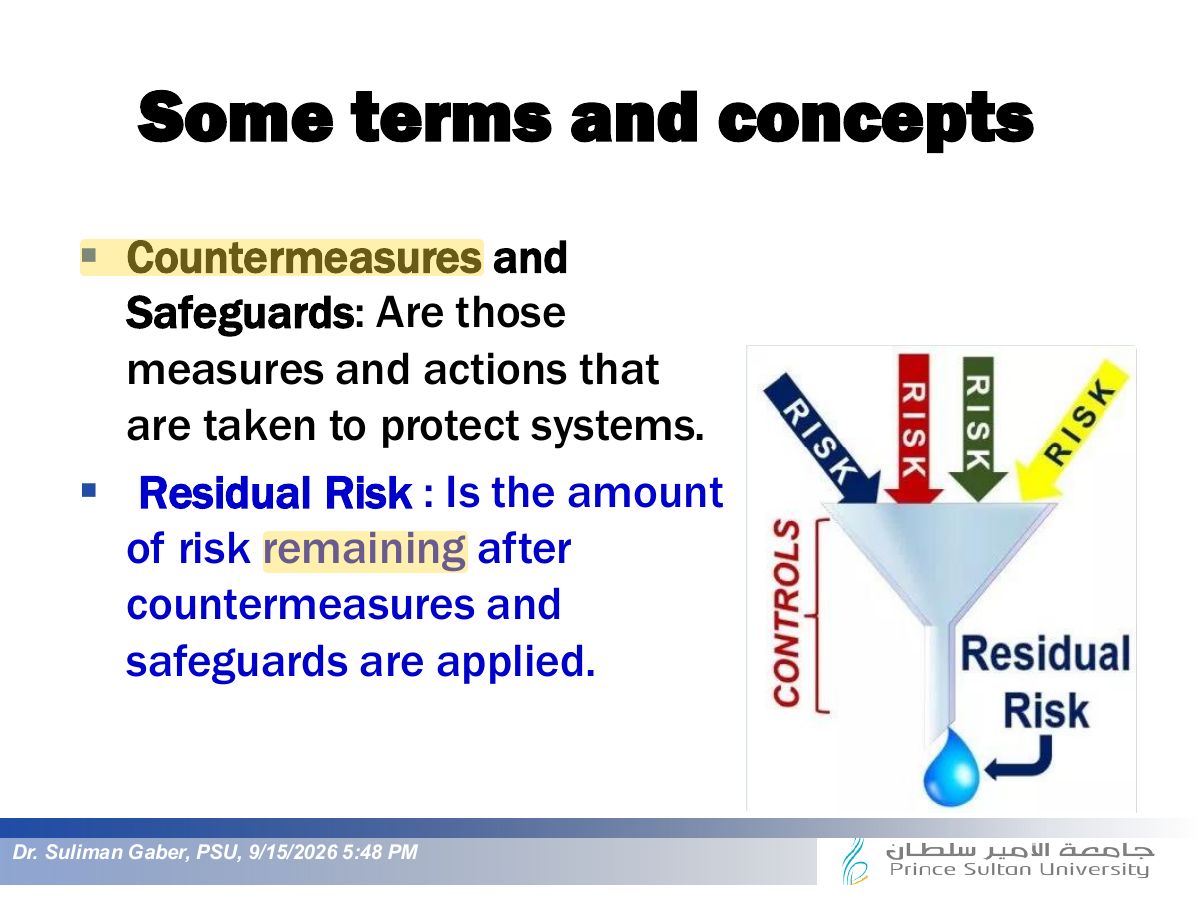
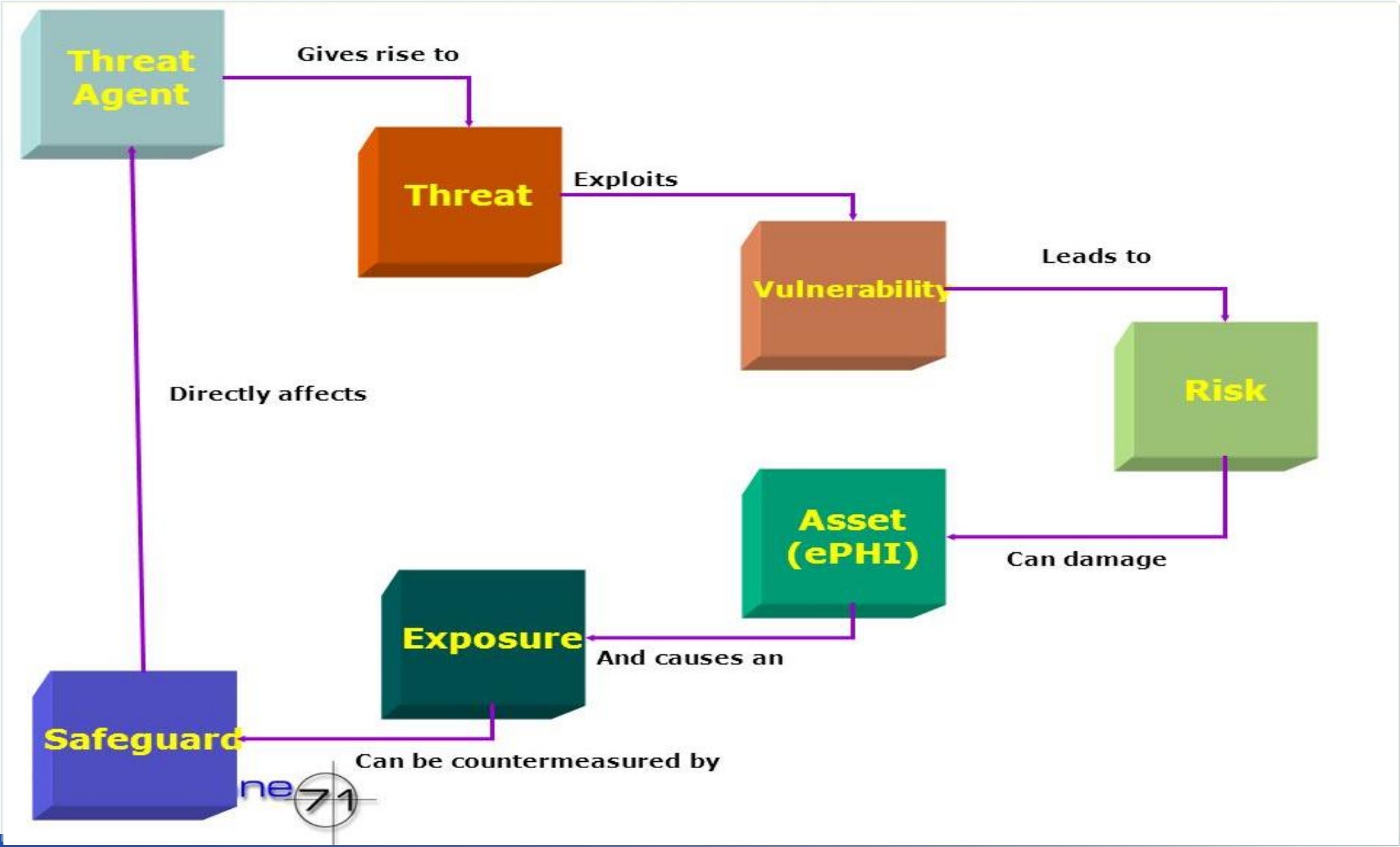
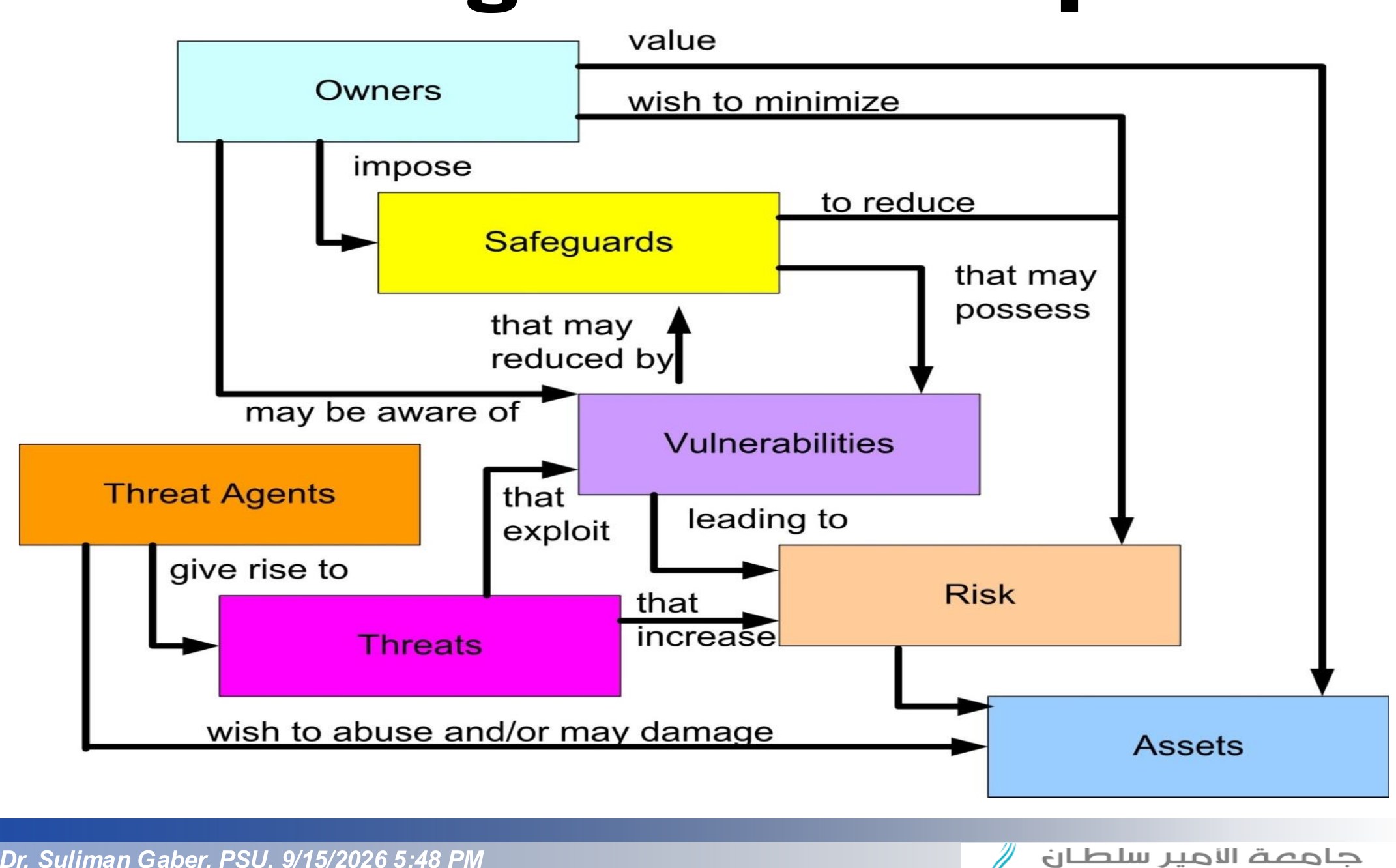
              1. Asset: anything of value. Threat: potential cause of harm. Vulnerability: a weakness. Exposure: being open to loss. Safeguard/countermeasure: reduces risk.
              🎯 How this can come up · 1 question
              MCQ

              A weakness that a threat can exploit is a:

              Some terms and concepts

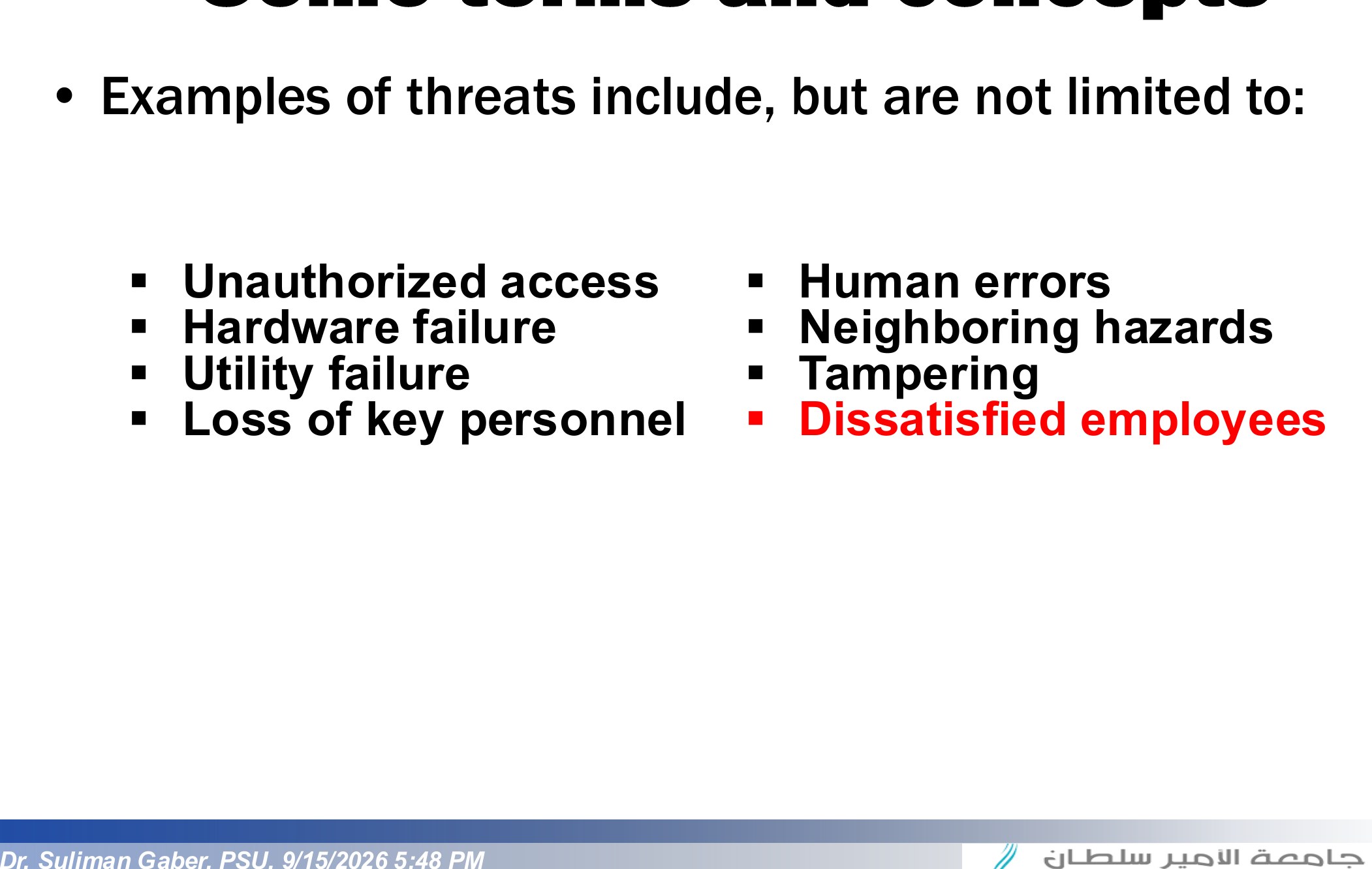
              • Examples of threats include, but are not limited to:
                • Unauthorized access
                  • Human errors
                • Hardware failure
                  • Neighboring hazards
                • Utility failure
                  • Tampering
                • Loss of key personnel ▪ Dissatisfied employees
              Some terms and concepts
              9
              Exam weight Low

                Some terms and concepts

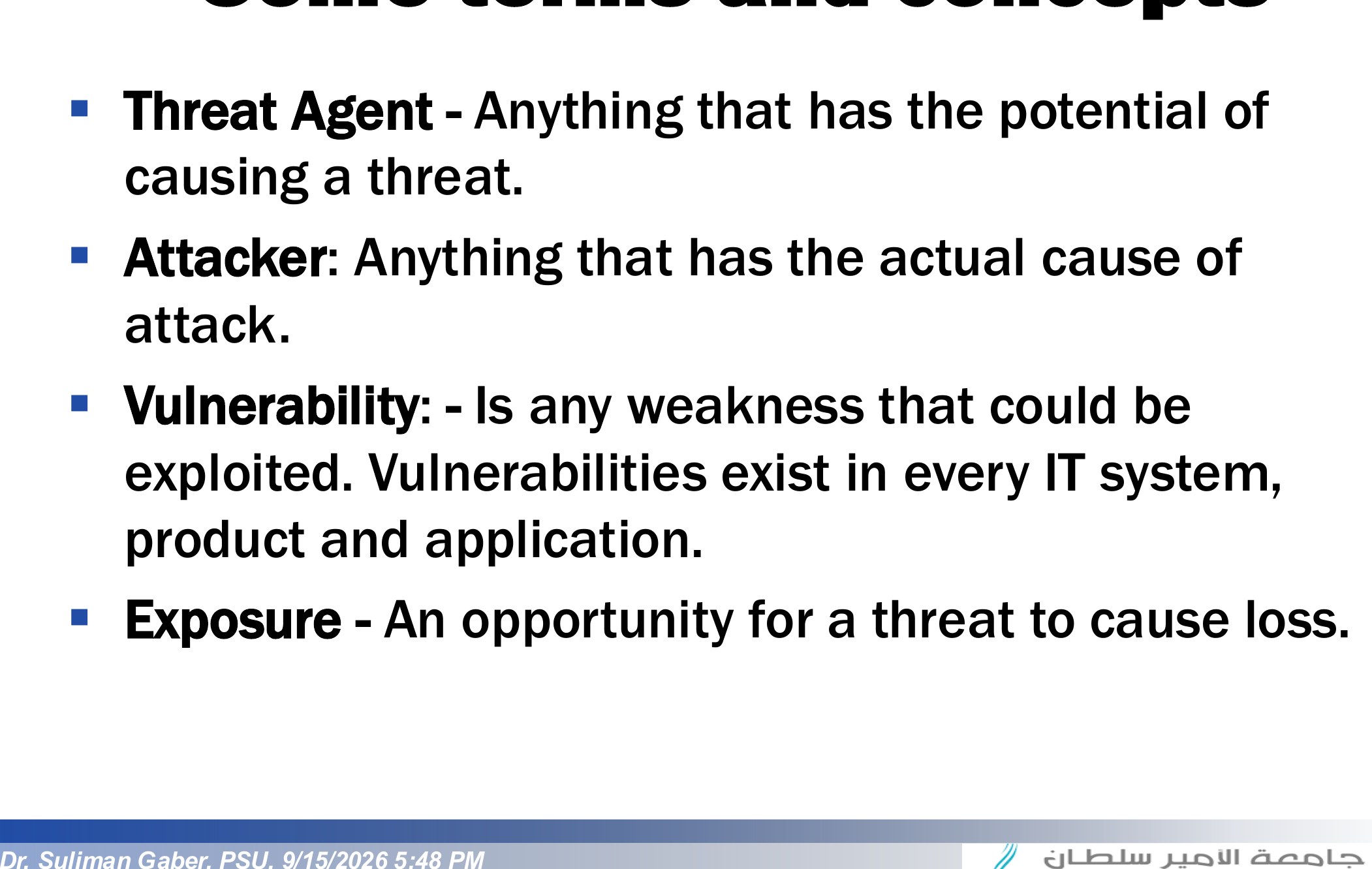
                • Threat Agent - Anything that has the potential of causing a threat.
                • Attacker: Anything that has the actual cause of attack.
                • Vulnerability: - Is any weakness that could be exploited. Vulnerabilities exist in every IT system, product and application.
                • Exposure - An opportunity for a threat to cause loss.
                Some terms and concepts
                10
                Exam weight Low
                  Slide 11: Some terms and concepts
                  Exam weight Low
                    ★ Past exam
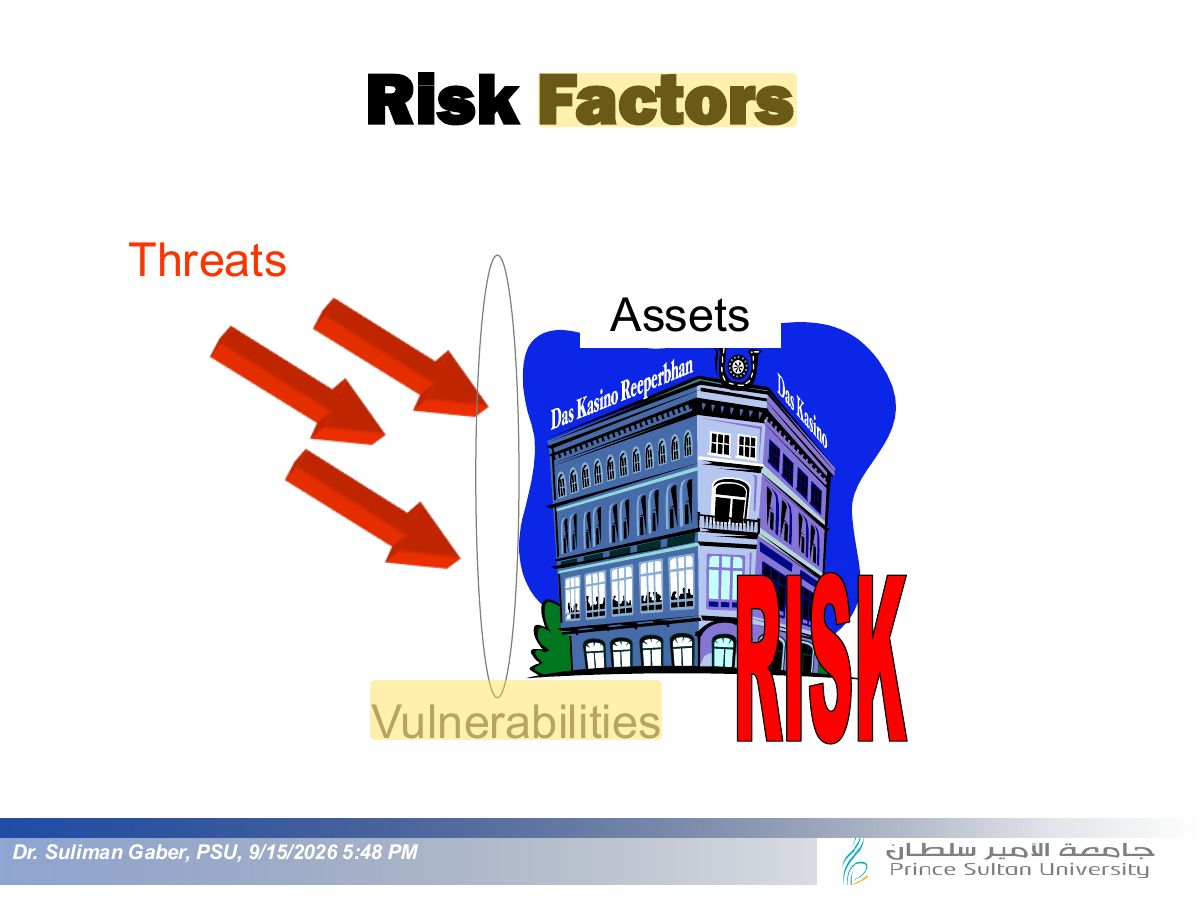
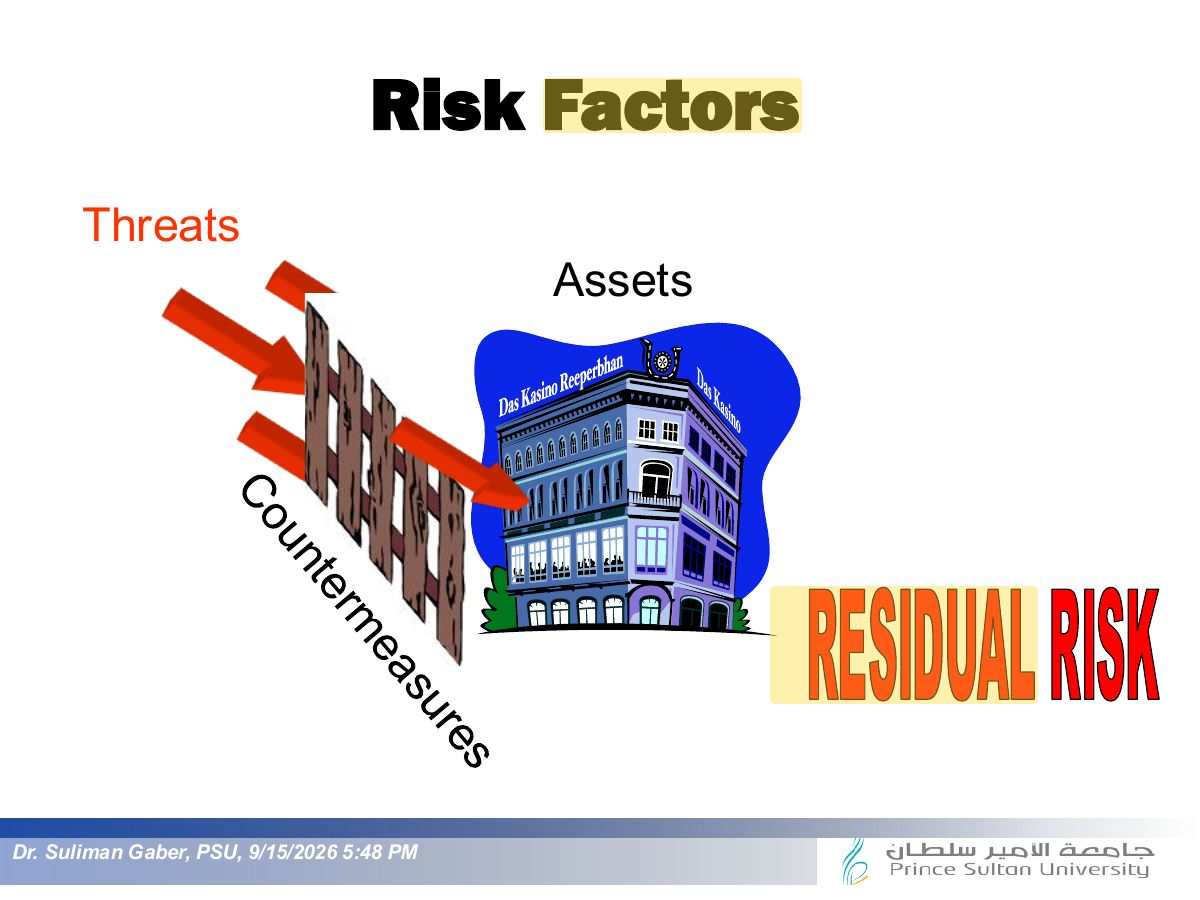
                    Slide 12: Risk Factors
                    Exam weight Medium
                    1. Threat amplifiers raise the chance of an attack (publicity, a known weakness); threat inhibitors lower it (fear of capture, strong controls).
                    Slide 13: Risk Factors
                    Exam weight Low

                      Understanding Risk

                      Understanding Risk
                      14
                      Exam weight Low

                        Risk Management Concept Flow

                        Risk Management Concept Flow
                        15
                        Exam weight Low
                          ★ Past exam

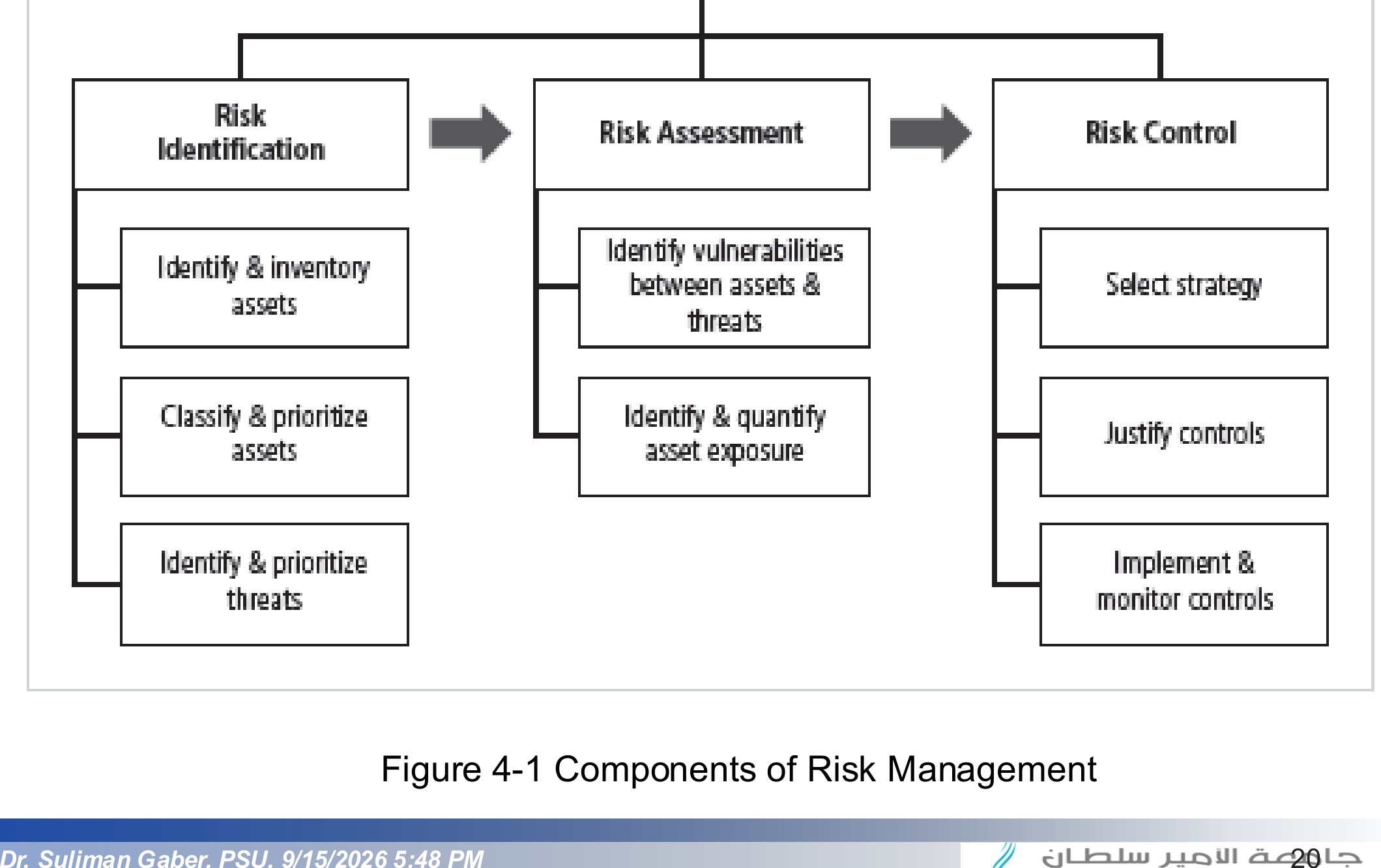
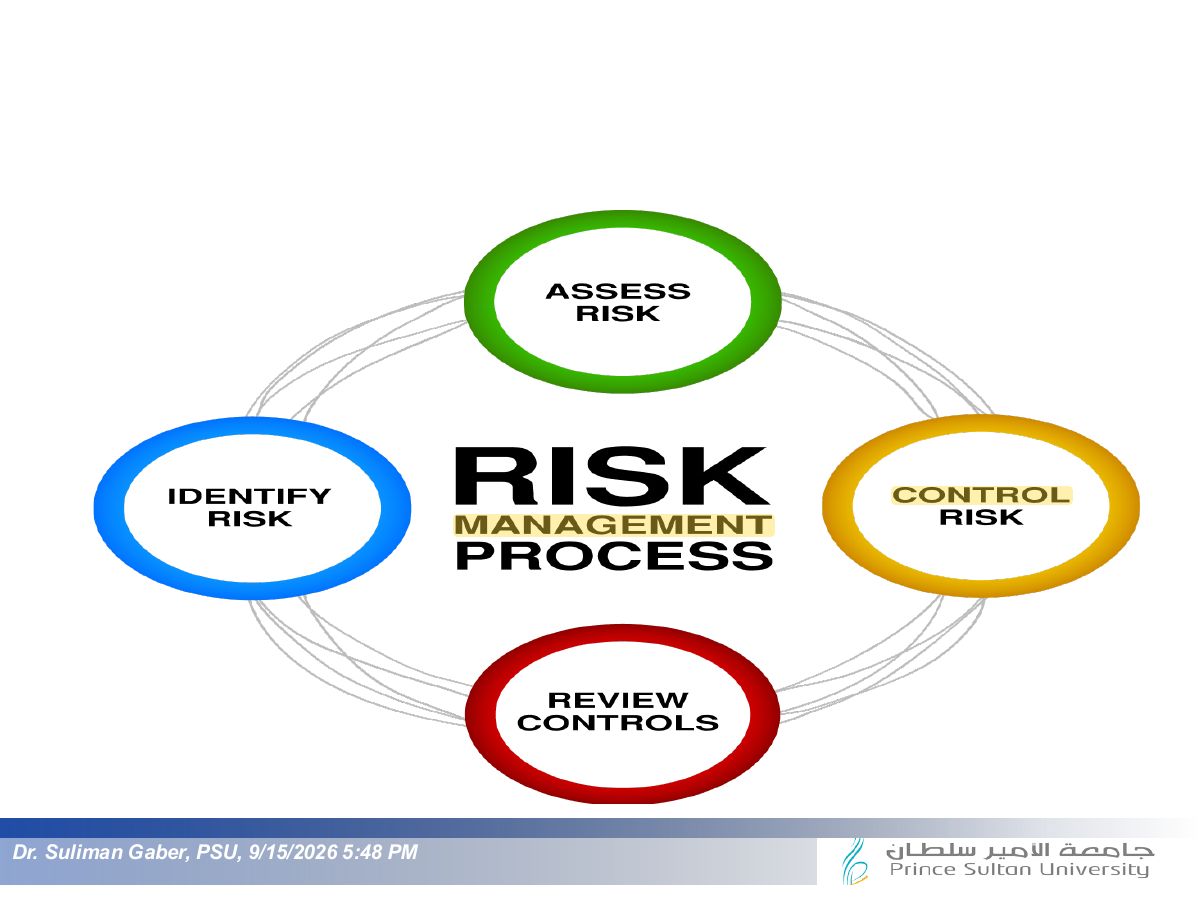
                          An Overview on Risk Management

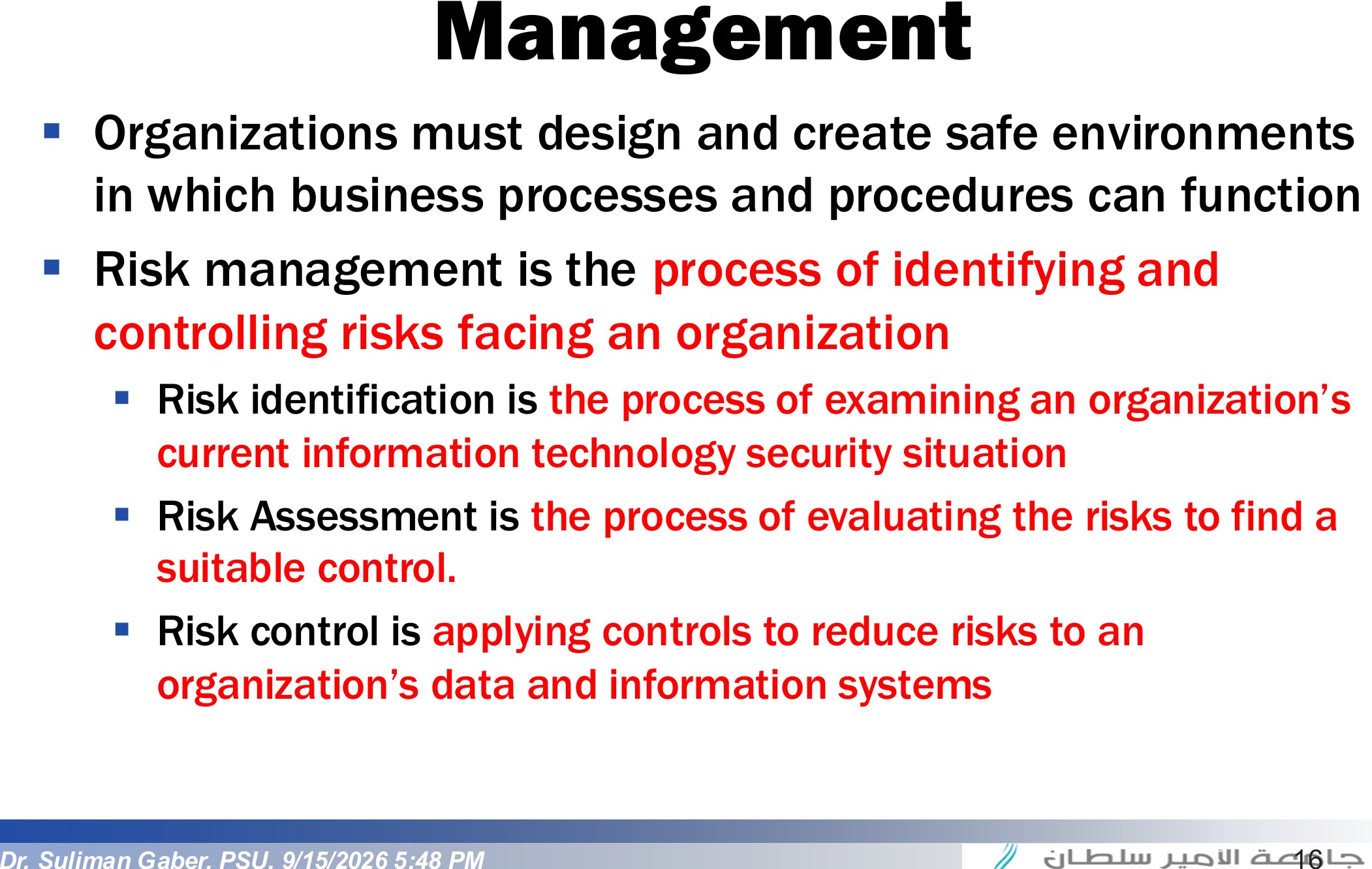
                          • Organizations must design and create safe environments in which business processes and procedures can function
                          • Risk management is the process of identifying and controlling risks facing an organization
                            • Risk identification is the process of examining an organization’s current information technology security situation
                            • Risk Assessment is the process of evaluating the risks to find a suitable control.
                            • Risk control is applying controls to reduce risks to an organization’s data and information systems
                          An Overview on Risk Management
                          16
                          Exam weight High
                          1. Risk management = identify, assess, and reduce risk to an acceptable level. It never removes ALL risk.
                          🎯 How this can come up · 1 question
                          MCQ

                          The goal of risk management is to:

                          An Overview on Risk Management

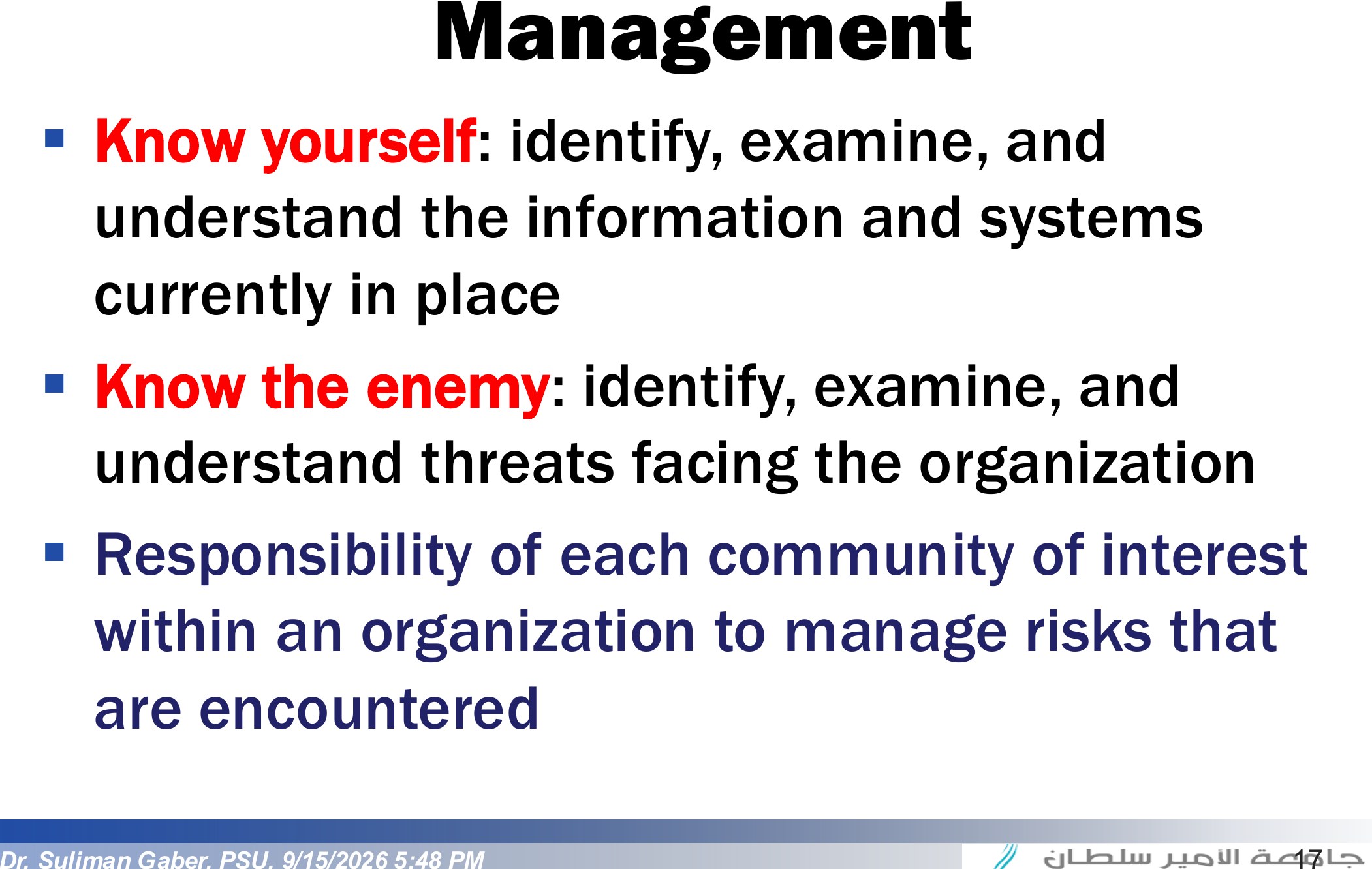
                          • Know yourself: identify, examine, and understand the information and systems currently in place
                          • Know the enemy: identify, examine, and understand threats facing the organization
                          • Responsibility of each community of interest within an organization to manage risks that are encountered
                          An Overview on Risk Management
                          17
                          Exam weight Low

                            Risk Management

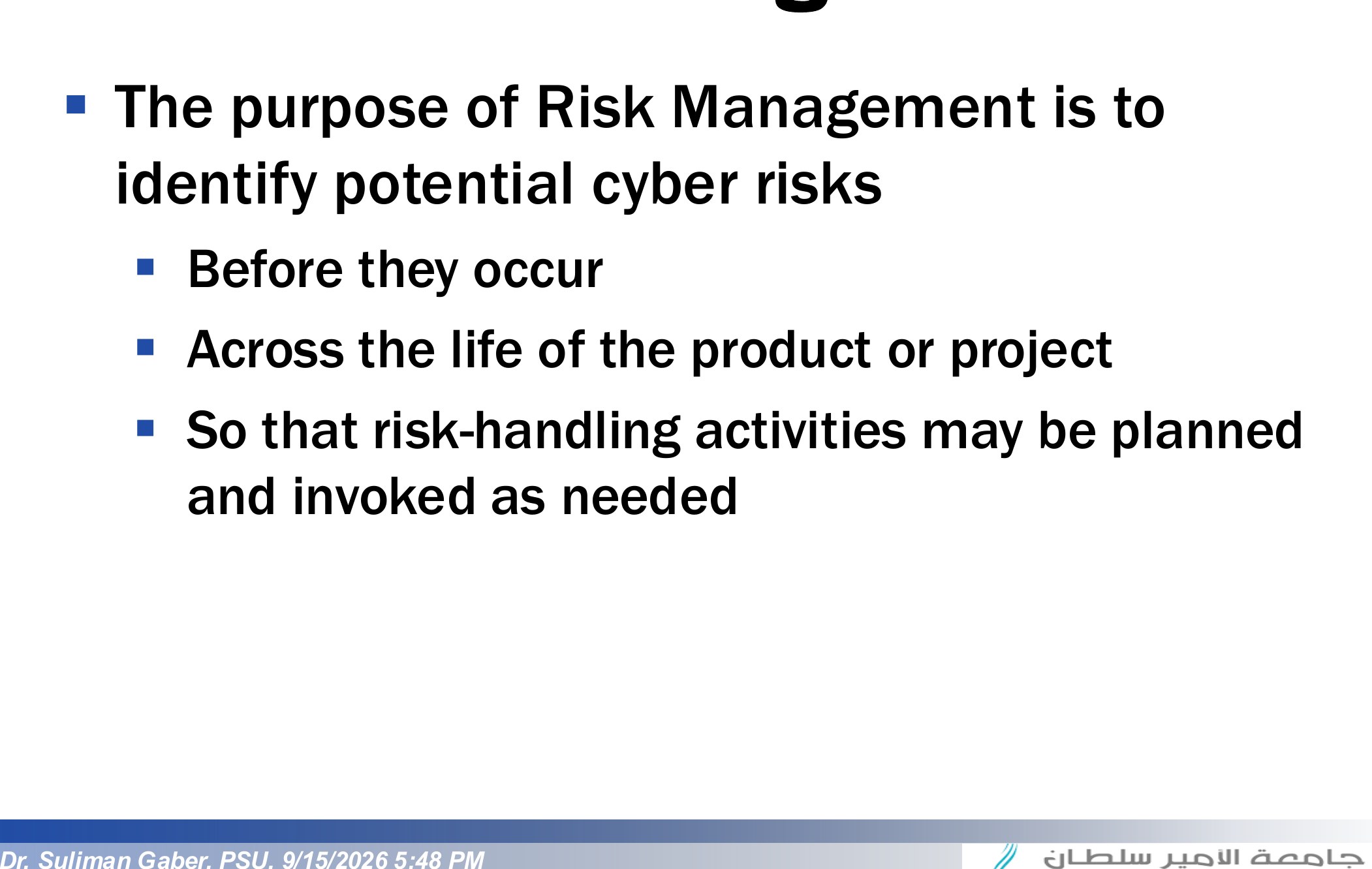
                            • The purpose of Risk Management is to identify potential cyber risks
                              • Before they occur
                              • Across the life of the product or project
                              • So that risk-handling activities may be planned and invoked as needed
                            Risk Management
                            18
                            Exam weight Low
                              Slide 19: Risk Management
                              Exam weight Low

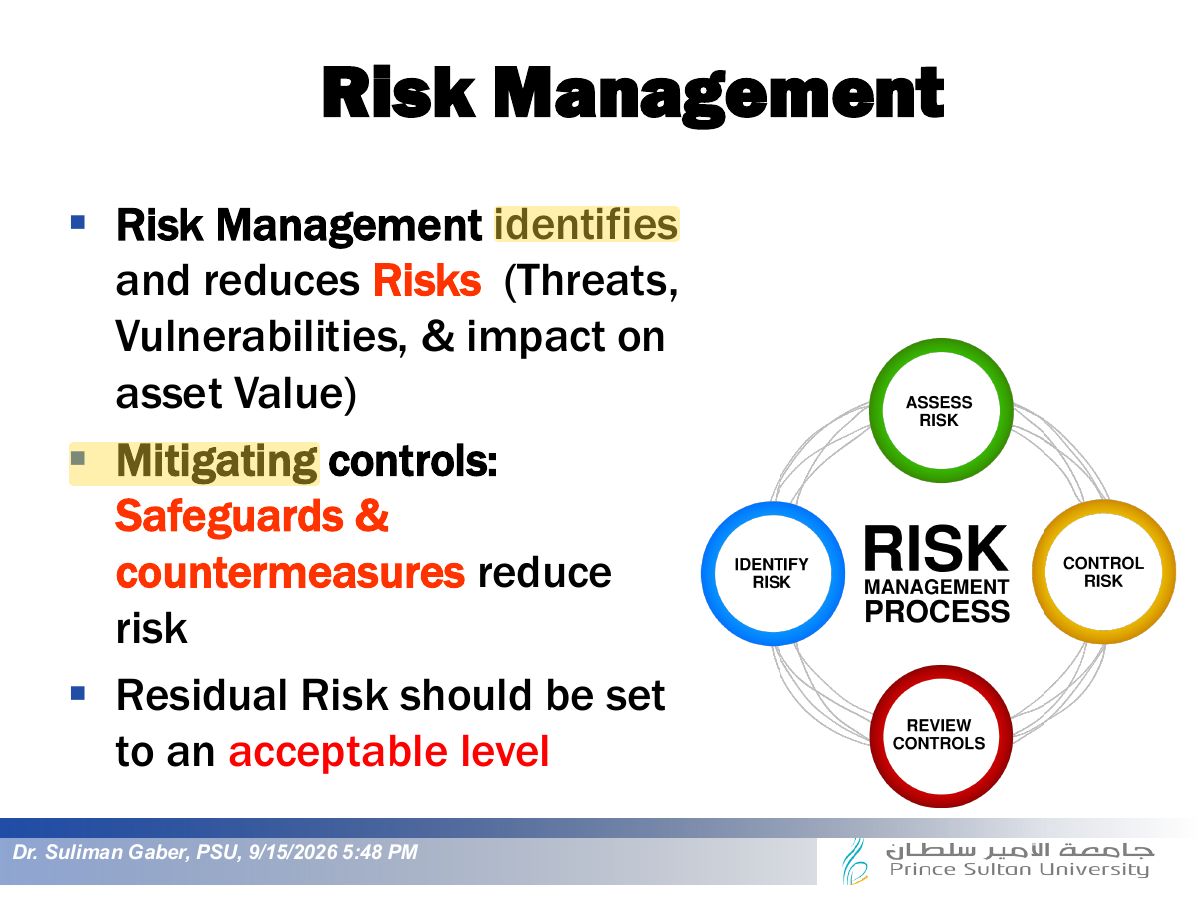
                                Figure 4-1 Components of Risk Management

                                Slide 20
                                20
                                Exam weight Low
                                  ★ Past exam
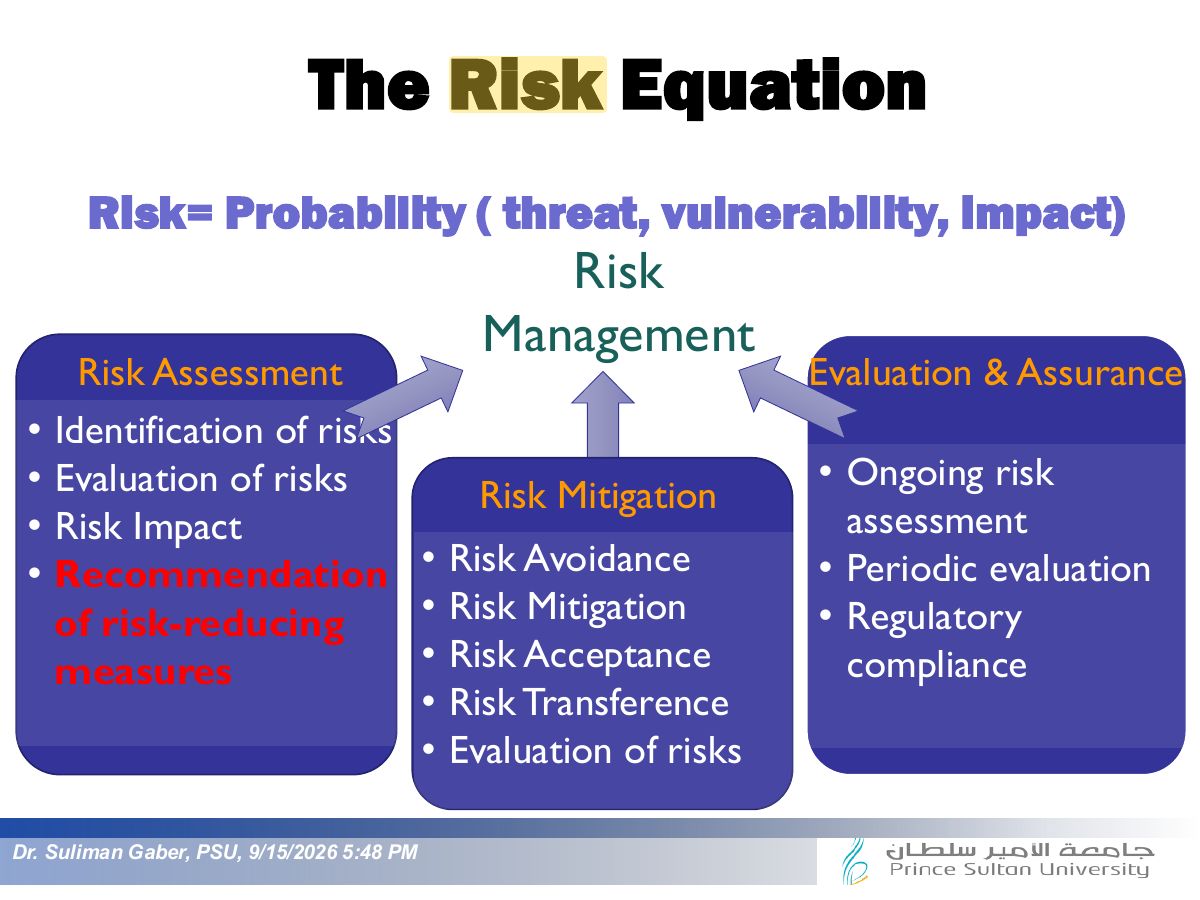
                                  Slide 21: The Risk Equation
                                  Exam weight High
                                  1. Total risk = threats × vulnerabilities × asset value. Residual risk = total risk − controls gap (what is left after controls).
                                  🎯 How this can come up · 1 question
                                  MCQ

                                  Total risk is represented by:

                                  ★ Past exam
                                  Slide 22: Risk Management Steps
                                  Exam weight Medium
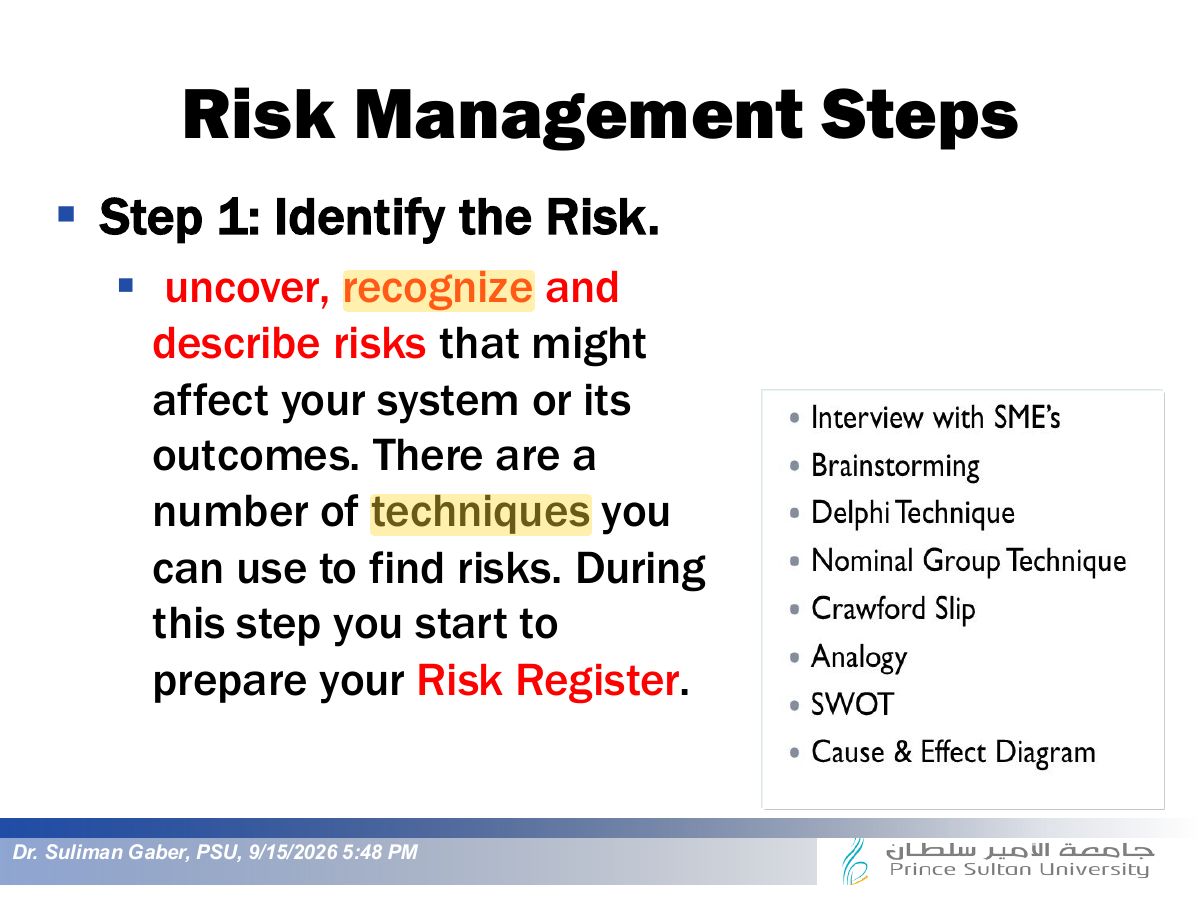
                                  1. Steps: identify assets → identify threats and vulnerabilities → assess (likelihood, impact) → choose responses → monitor.

                                  Risk Management Steps

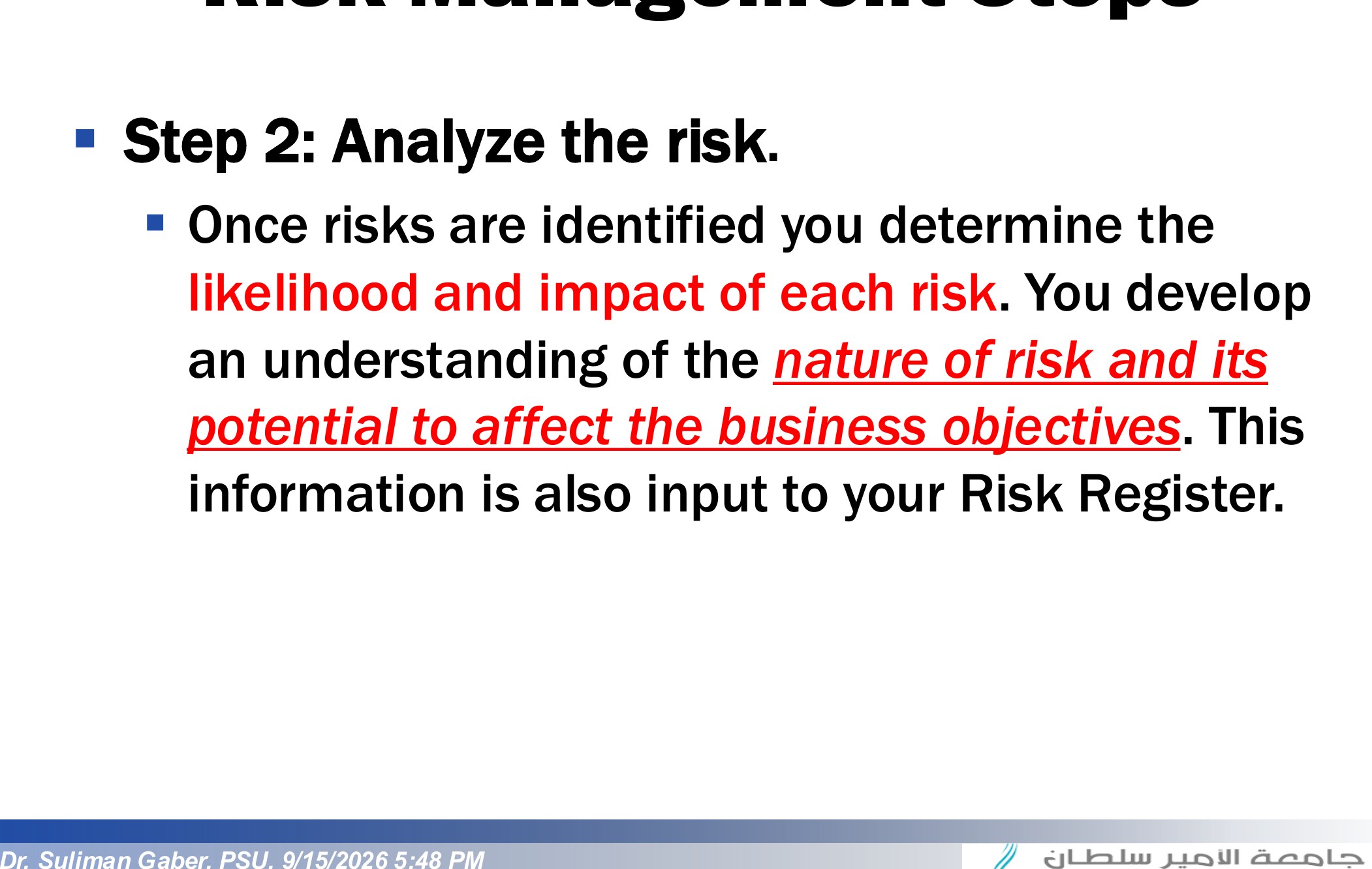
                                  • Step 2: Analyze the risk.
                                    • Once risks are identified you determine the likelihood and impact of each risk. You develop an understanding of the nature of risk and its potential to affect the business objectives. This information is also input to your Risk Register.
                                  Risk Management Steps
                                  23
                                  Exam weight Low

                                    Risk Management Steps

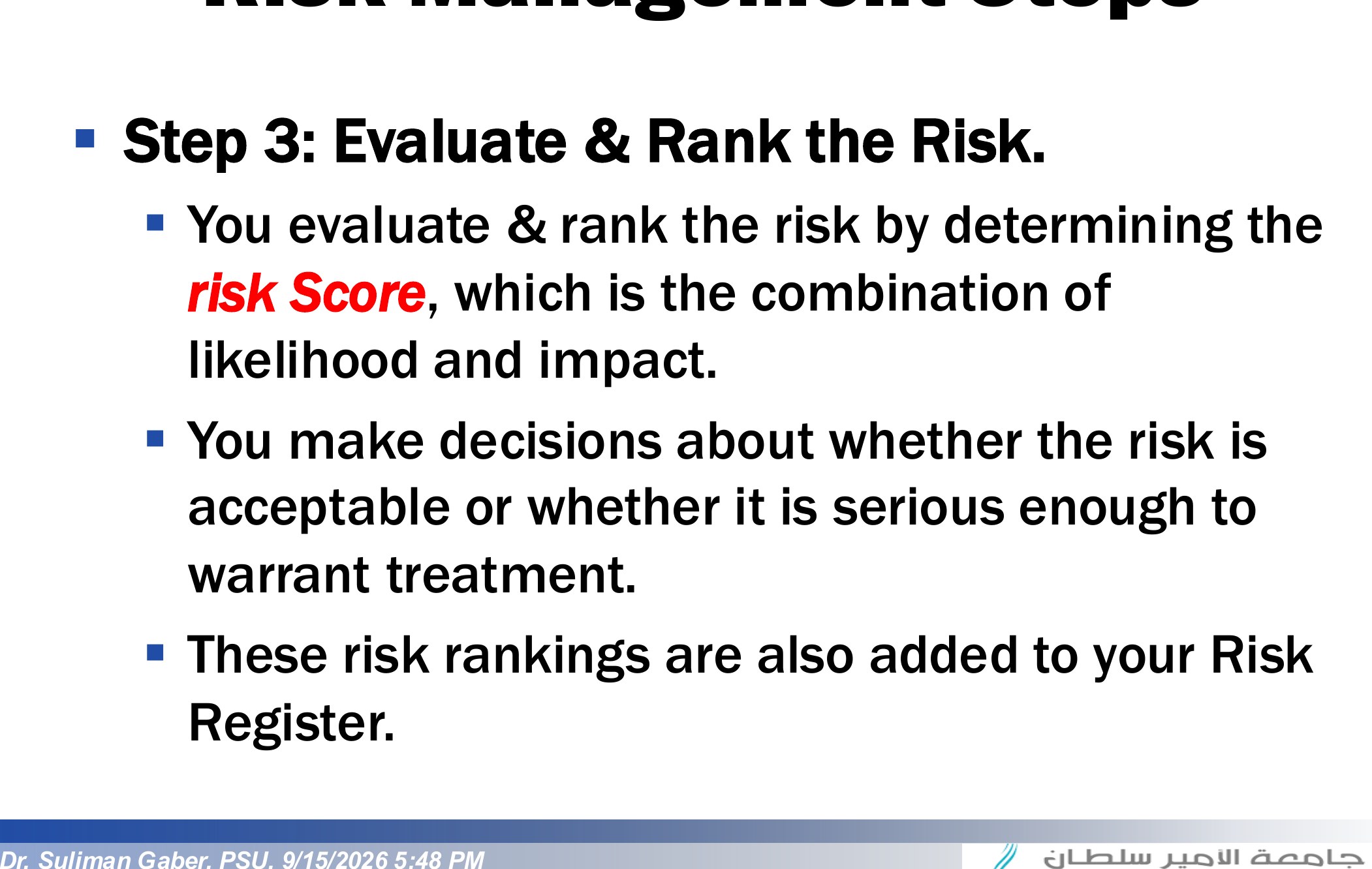
                                    • Step 3: Evaluate & Rank the Risk.
                                      • You evaluate & rank the risk by determining the risk Score, which is the combination of likelihood and impact.
                                      • You make decisions about whether the risk is acceptable or whether it is serious enough to warrant treatment.
                                      • These risk rankings are also added to your Risk Register.
                                    Risk Management Steps
                                    24
                                    Exam weight Low

                                      Risk Management Steps

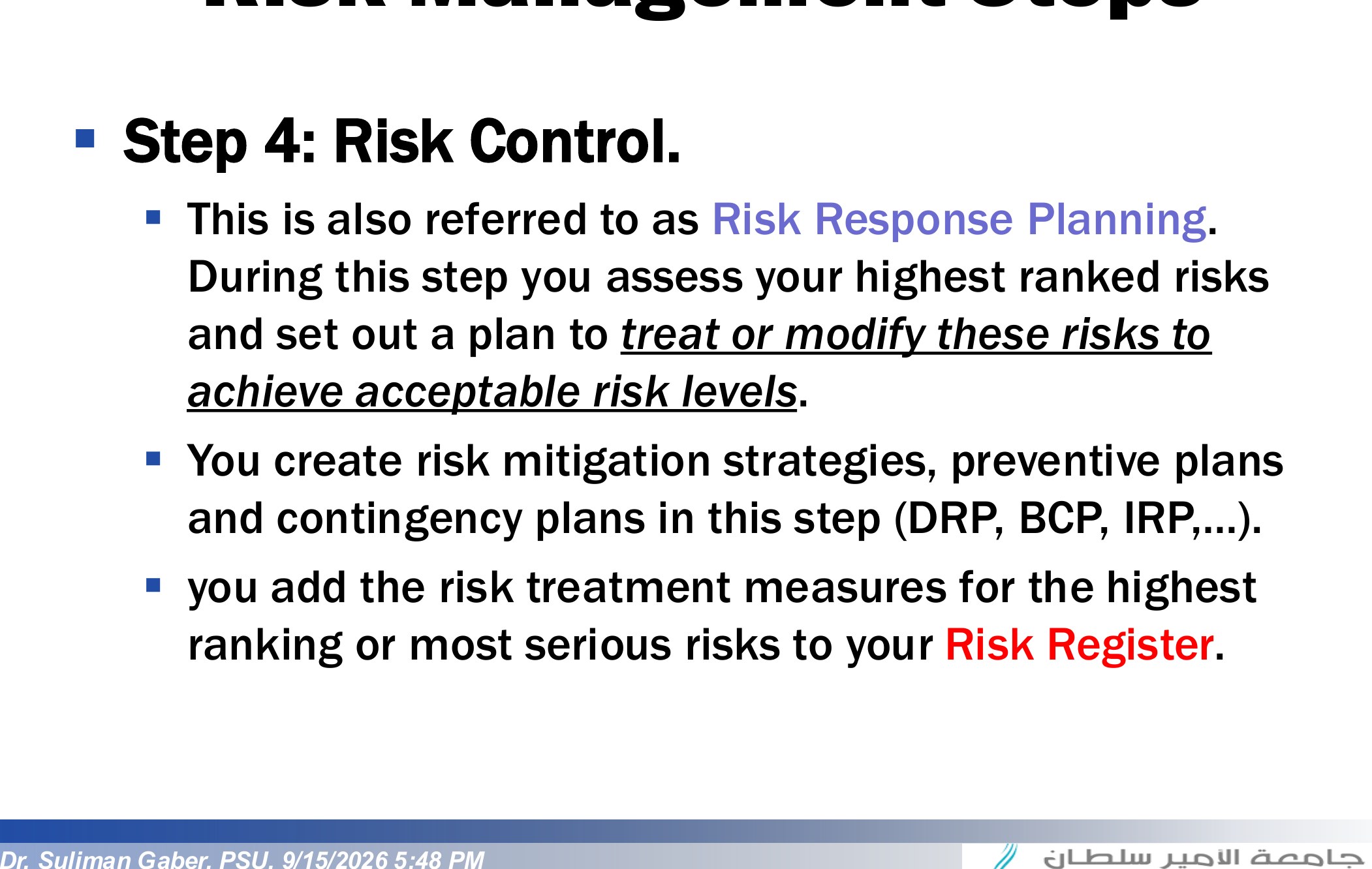
                                      • Step 4: Risk Control.
                                        • This is also referred to as Risk Response Planning. During this step you assess your highest ranked risks and set out a plan to treat or modify these risks to achieve acceptable risk levels.
                                        • You create risk mitigation strategies, preventive plans and contingency plans in this step (DRP, BCP, IRP,...).
                                        • you add the risk treatment measures for the highest ranking or most serious risks to your Risk Register.
                                      Risk Management Steps
                                      25
                                      Exam weight Low

                                        Risk Management Steps

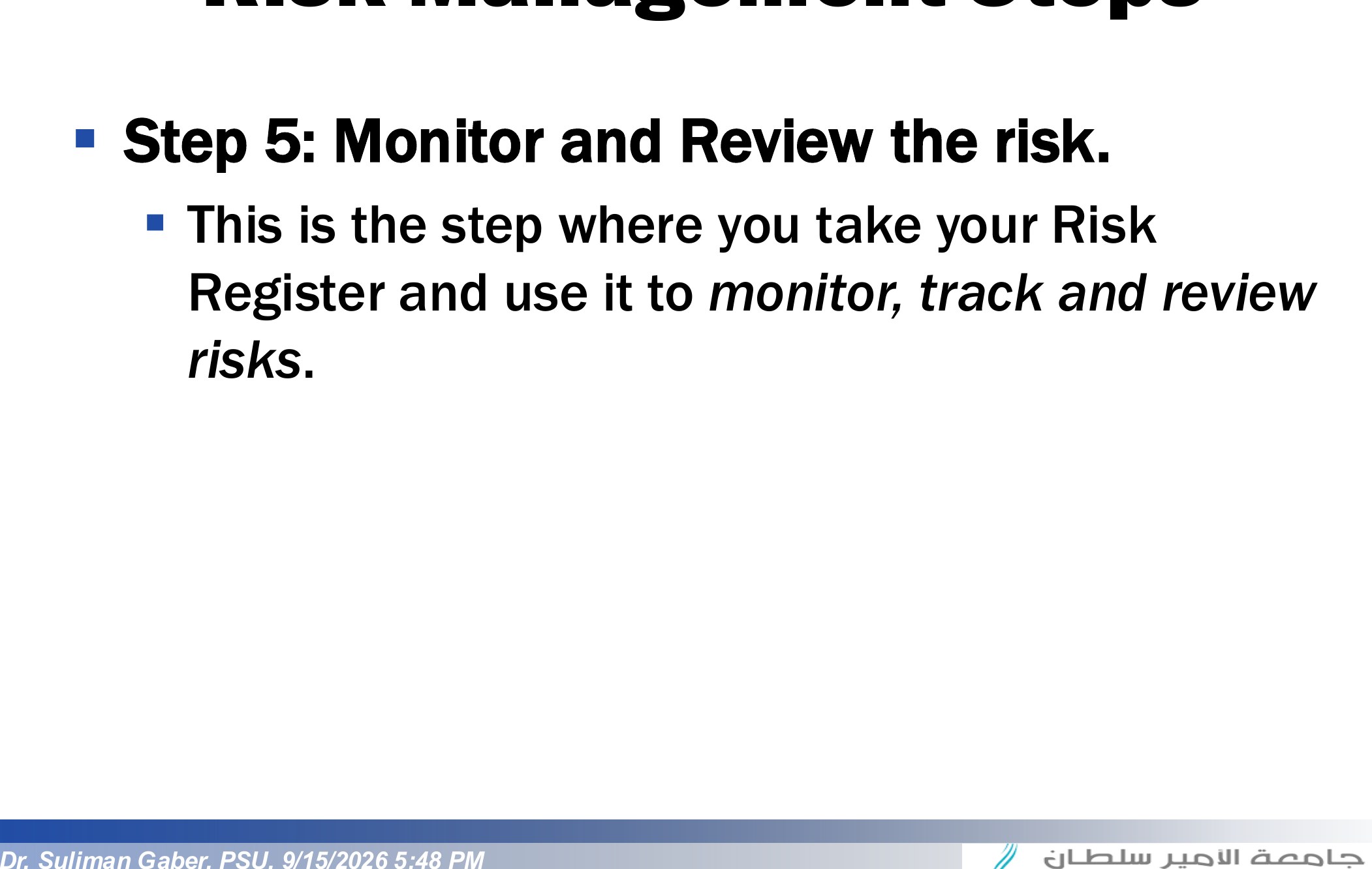
                                        • Step 5: Monitor and Review the risk.
                                          • This is the step where you take your Risk Register and use it to monitor, track and review risks.
                                        Risk Management Steps
                                        26
                                        Exam weight Low

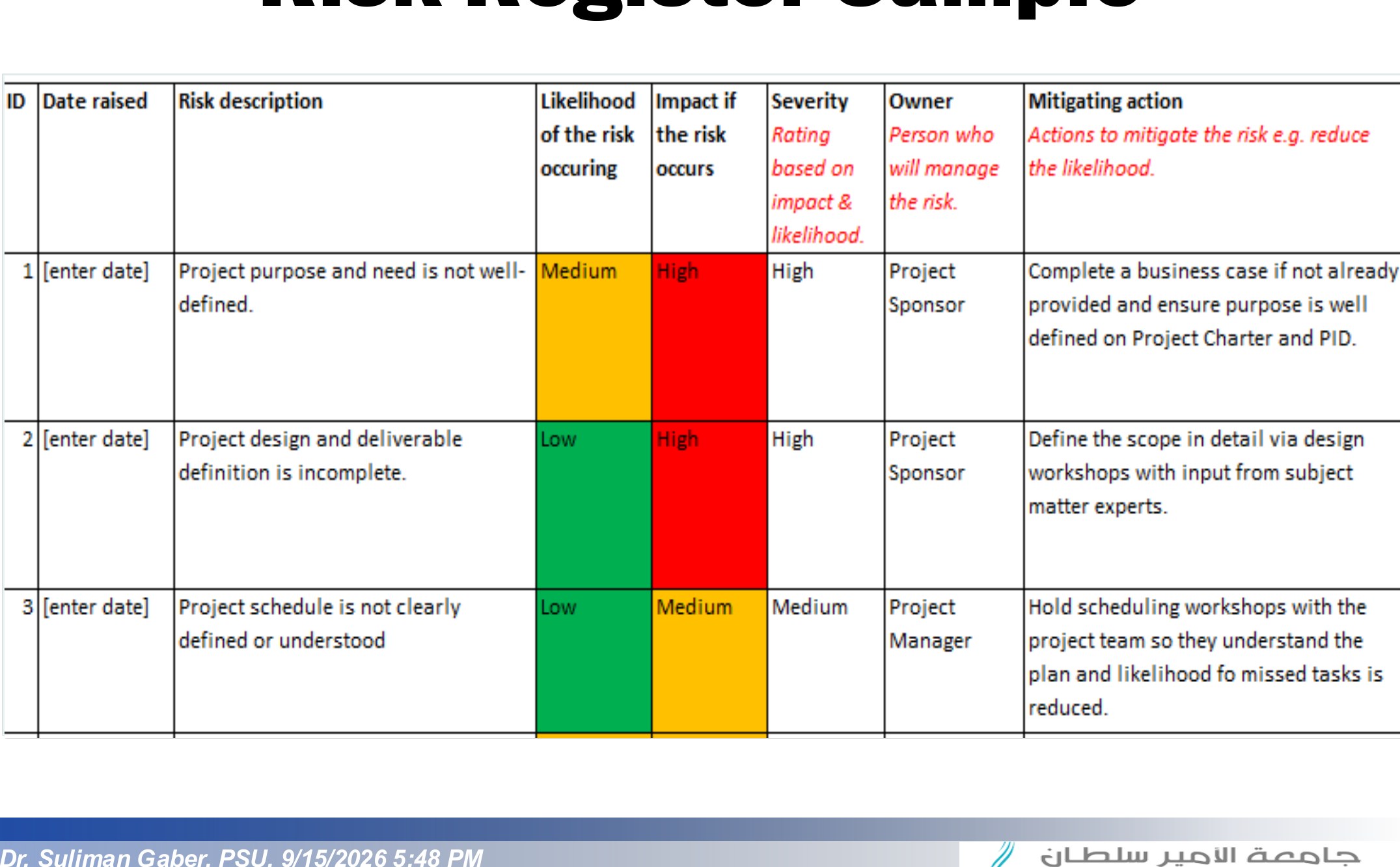
                                          Risk Register Sample

                                          Risk Register Sample
                                          27
                                          Exam weight Low
                                          1. Risk register: one row per risk with owner, likelihood, impact, rating, response and status.

                                          Automated Tools for Risk Management

                                          • Aims to minimize manual effort
                                          • Can be time consuming to setup
                                          • Perform calculations quickly
                                          Automated Tools for Risk Management
                                          28
                                          Exam weight Low
                                            ★ Past exam

                                            Qualitative versus Quantitative

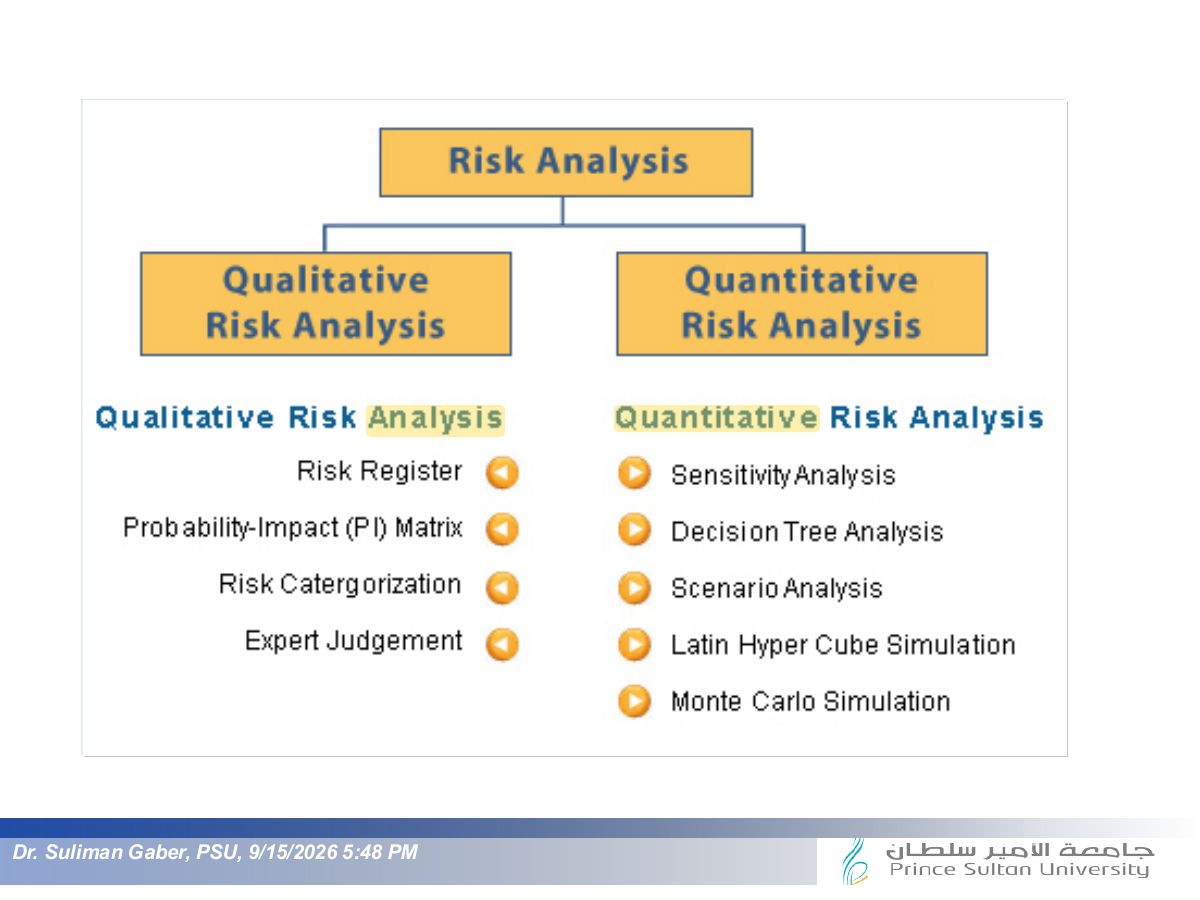
                                            • Two types of Risk Analysis
                                              • Quantitative Risk Analysis
                                              • Qualitative Risk Analysis
                                            • Both provide unique capabilities
                                            • Both are often required to get a full picture
                                            Qualitative versus Quantitative
                                            29
                                            Exam weight Medium
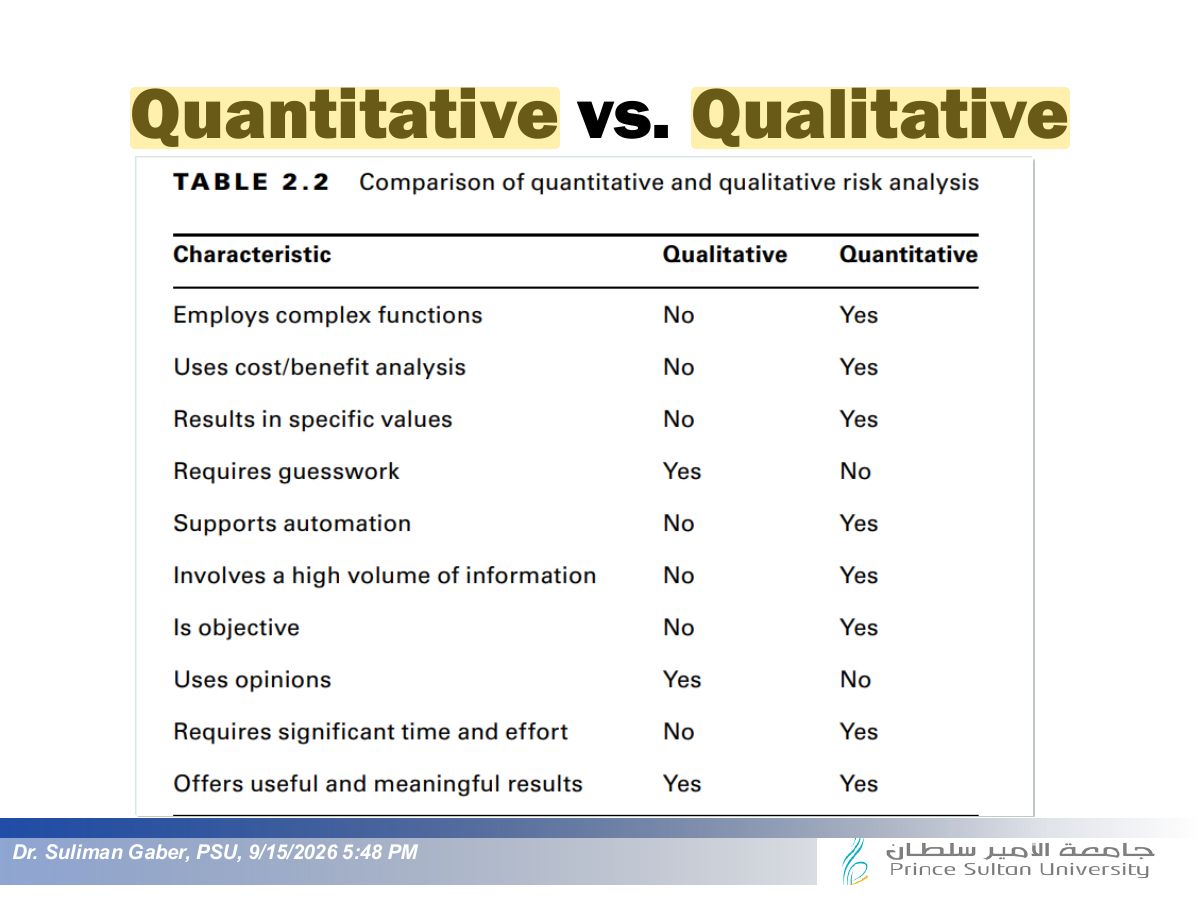
                                            1. Quantitative: numbers and money (objective, costly). Qualitative: ratings like high/medium/low (fast, subjective).
                                            ★ Past exam

                                            Quantitative Risk Analysis

                                            • Assign independently objective numeric monetary values
                                            • Fully quantitative if all elements of the risk analysis are quantified
                                            • Sometimes, Difficult to achieve
                                            • Requires substantial time and personnel resources RISK = MONEY
                                            Quantitative Risk Analysis
                                            30
                                            Exam weight High
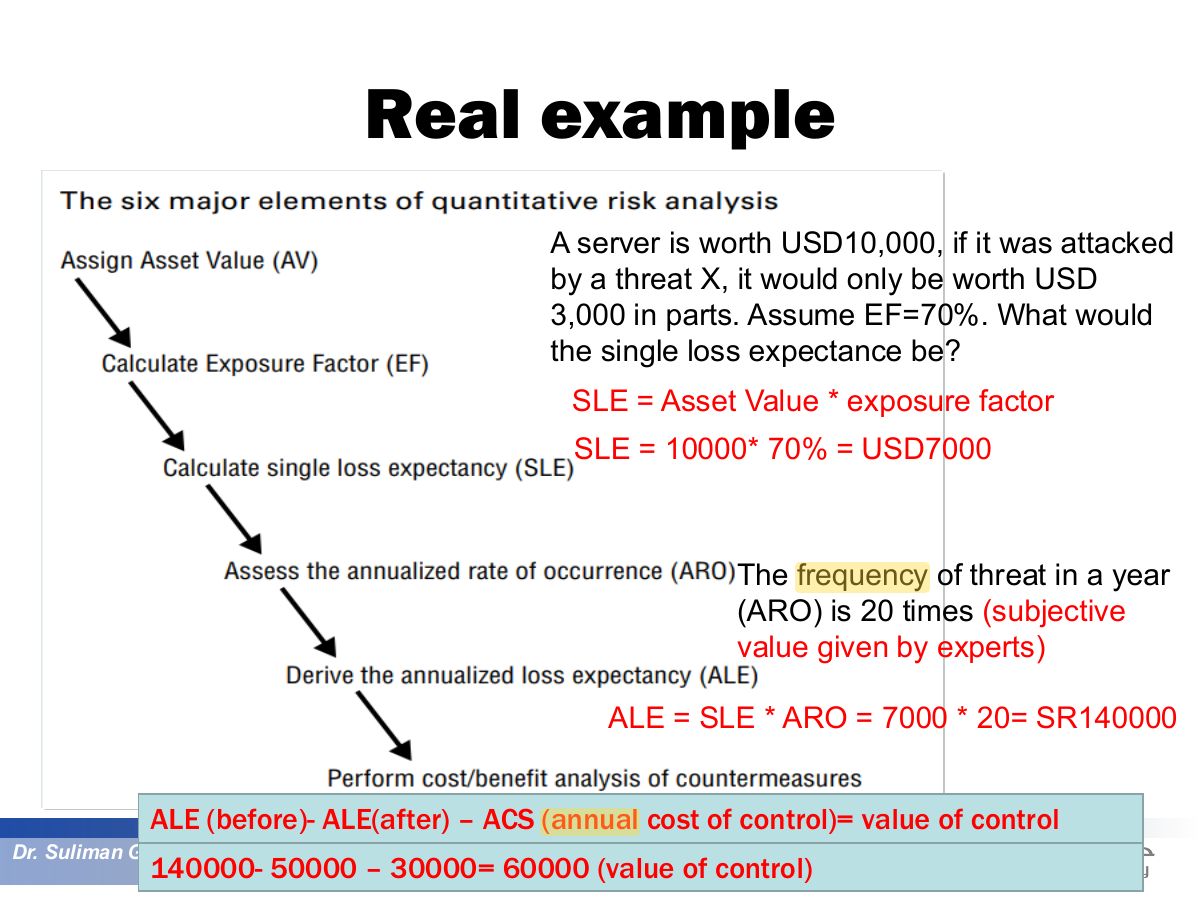
                                            1. SLE = AV × EF · ARO = how many times a year · ALE = SLE × ARO · Value of a control = ALE(before) − ALE(after) − annual cost of the control.
                                            TipSLE = AV × EF · ARO = how many times a year · ALE = SLE × ARO · Value of a control = ALE(before) − ALE(after) − annual cost of the control.
                                            🎯 How this can come up · 2 questions
                                            MCQ

                                            Asset value $100,000, exposure factor 25%, ARO 0.5. ALE =

                                            Written

                                            Profit is $20,000 a week and a DoS attack lowers sales by 40%. Four attacks happen every 6 months. Find SLE, ARO and ALE.

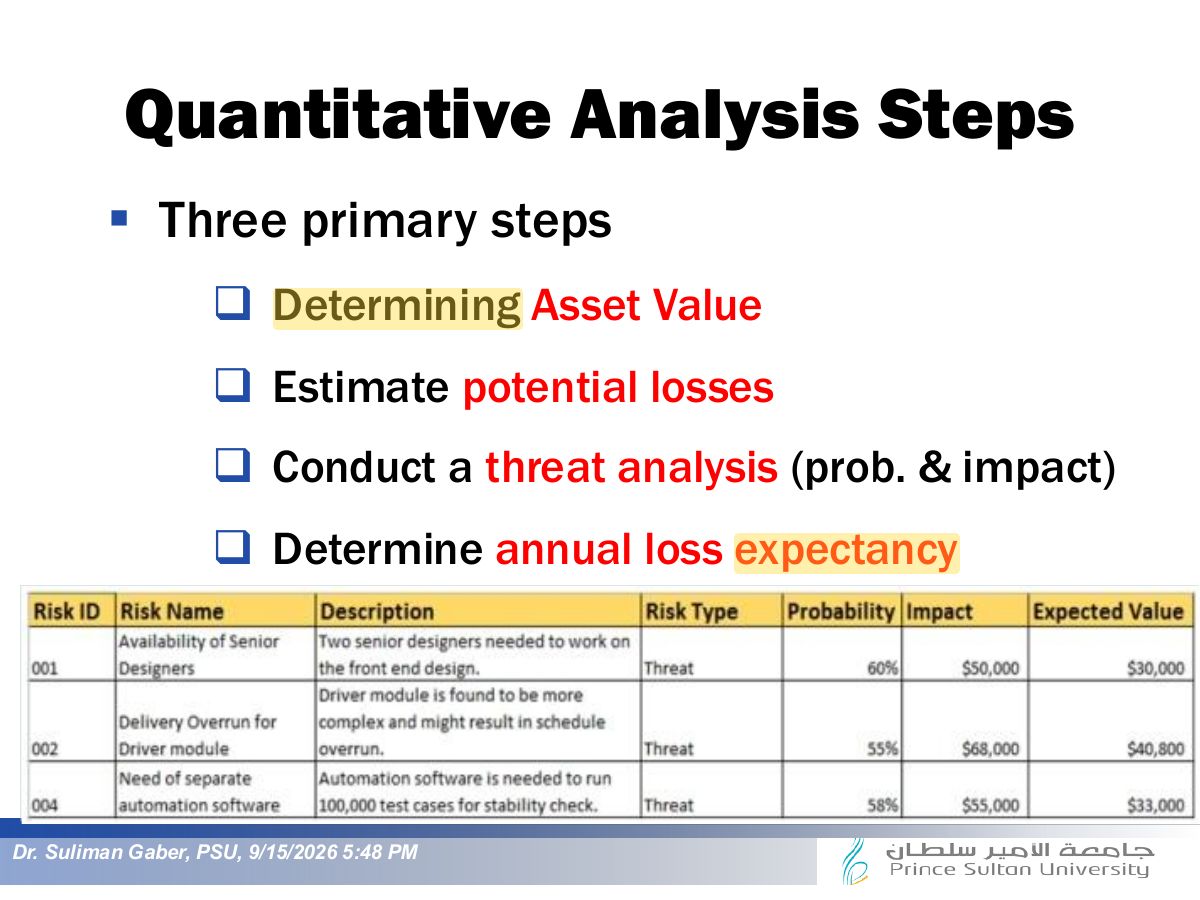
                                            Slide 31: Quantitative Analysis Steps
                                            Exam weight Low
                                              Slide 32: Real example
                                              Exam weight Low

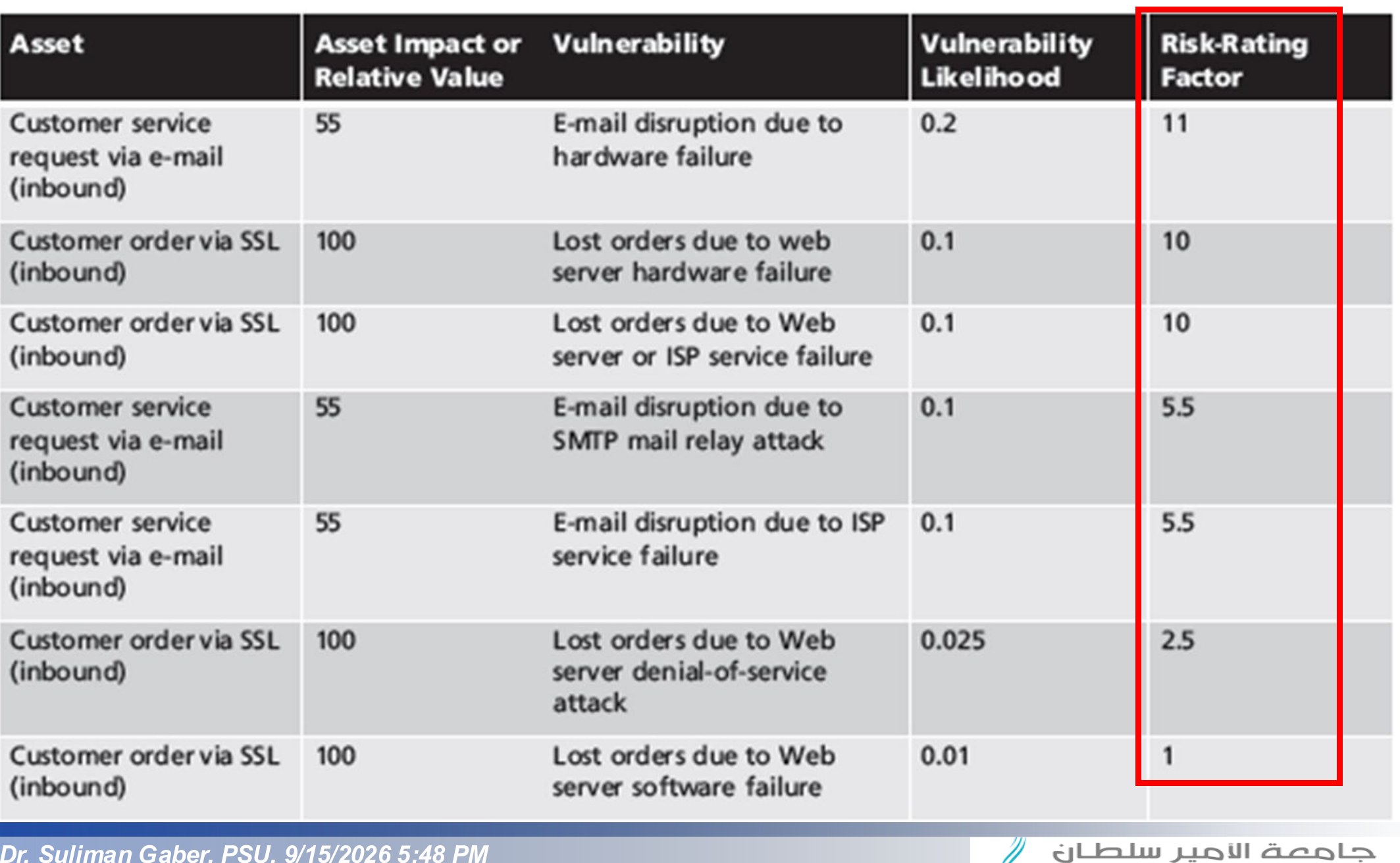
                                                Ranked Risk Worksheet

                                                Ranked Risk Worksheet
                                                33
                                                Exam weight Low
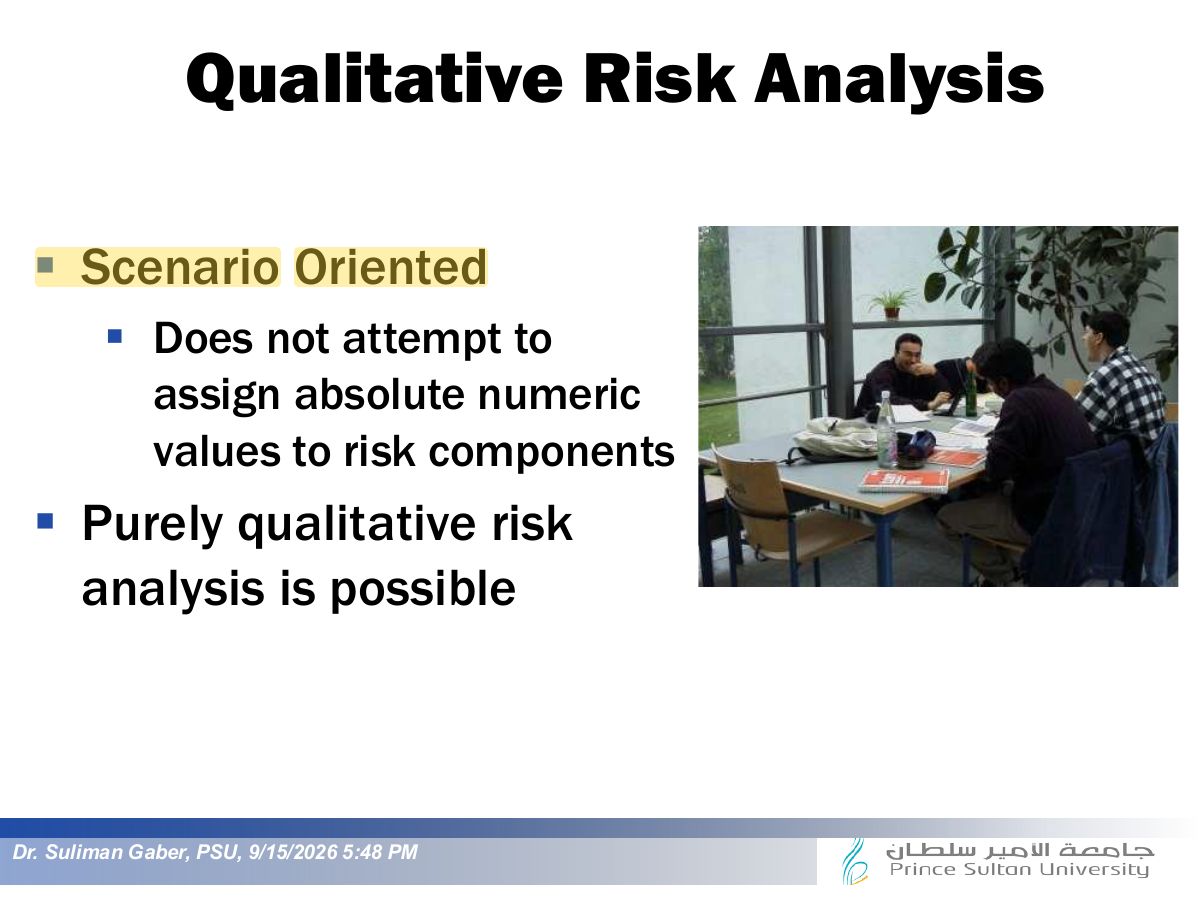
                                                  Slide 34: Qualitative Risk Analysis
                                                  Exam weight Low
                                                  1. Qualitative analysis uses scenarios, ratings and expert judgement (Delphi, brainstorming, checklists).
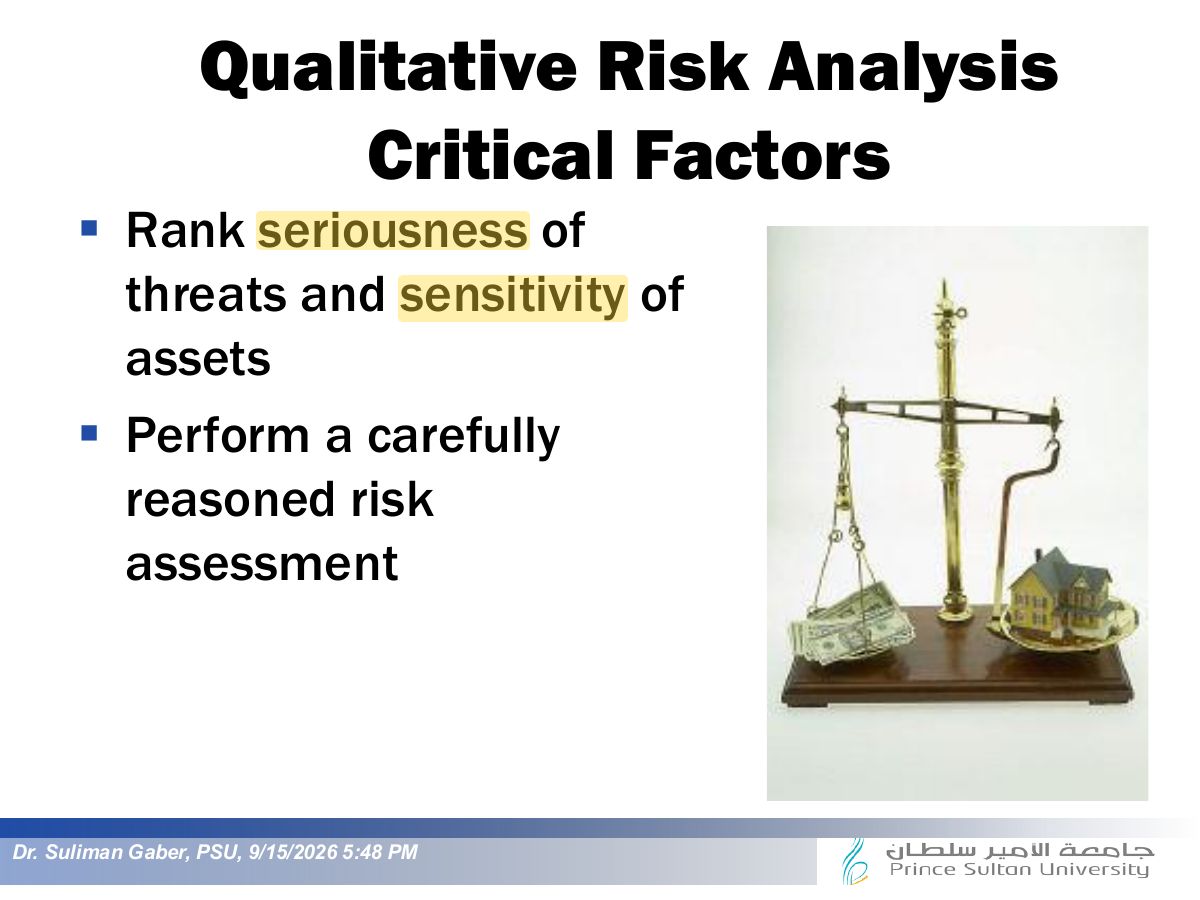
                                                  Slide 35: Qualitative Risk Analysis Critical Factors
                                                  Exam weight Low
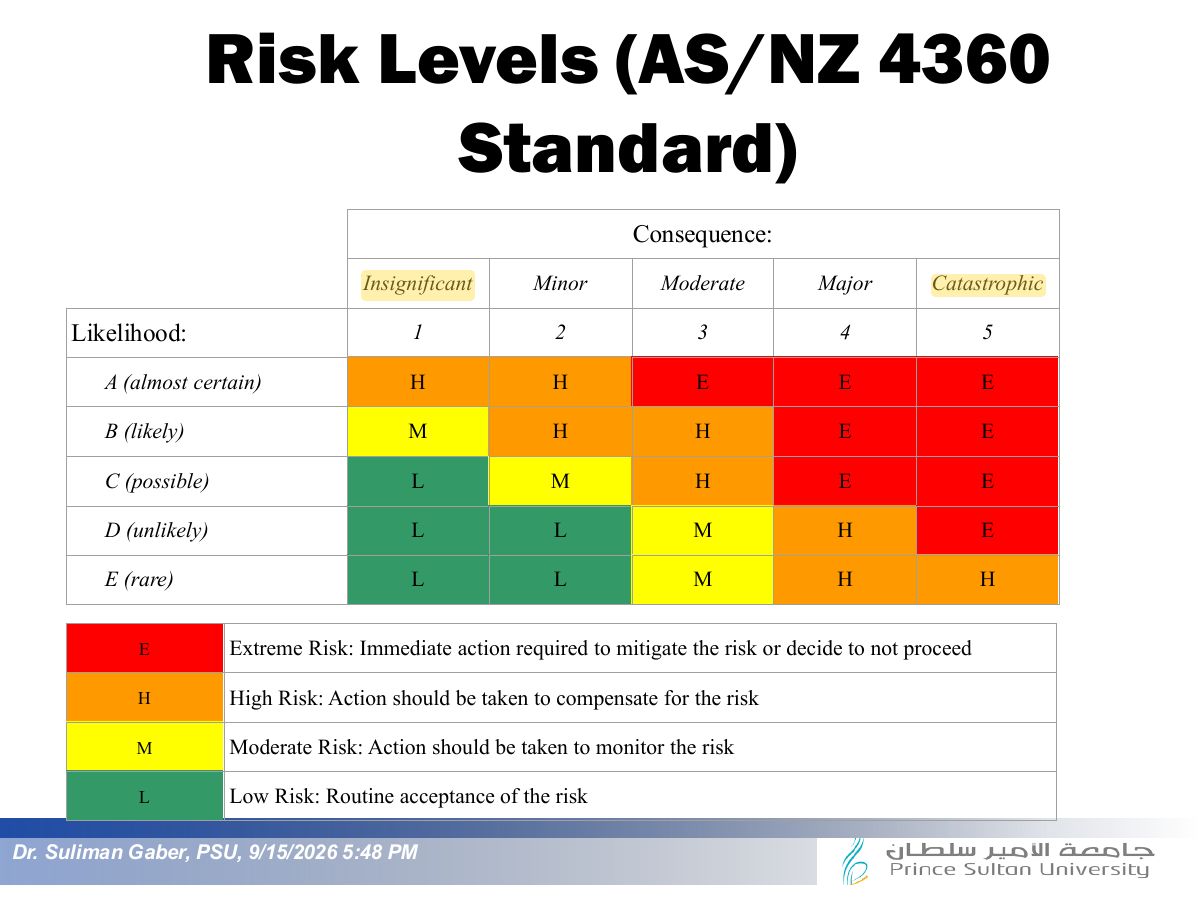
                                                    Slide 36: Risk Levels (AS/NZ 4360 Standard)
                                                    Exam weight Low

                                                      5 top Qualitative RA Techniques

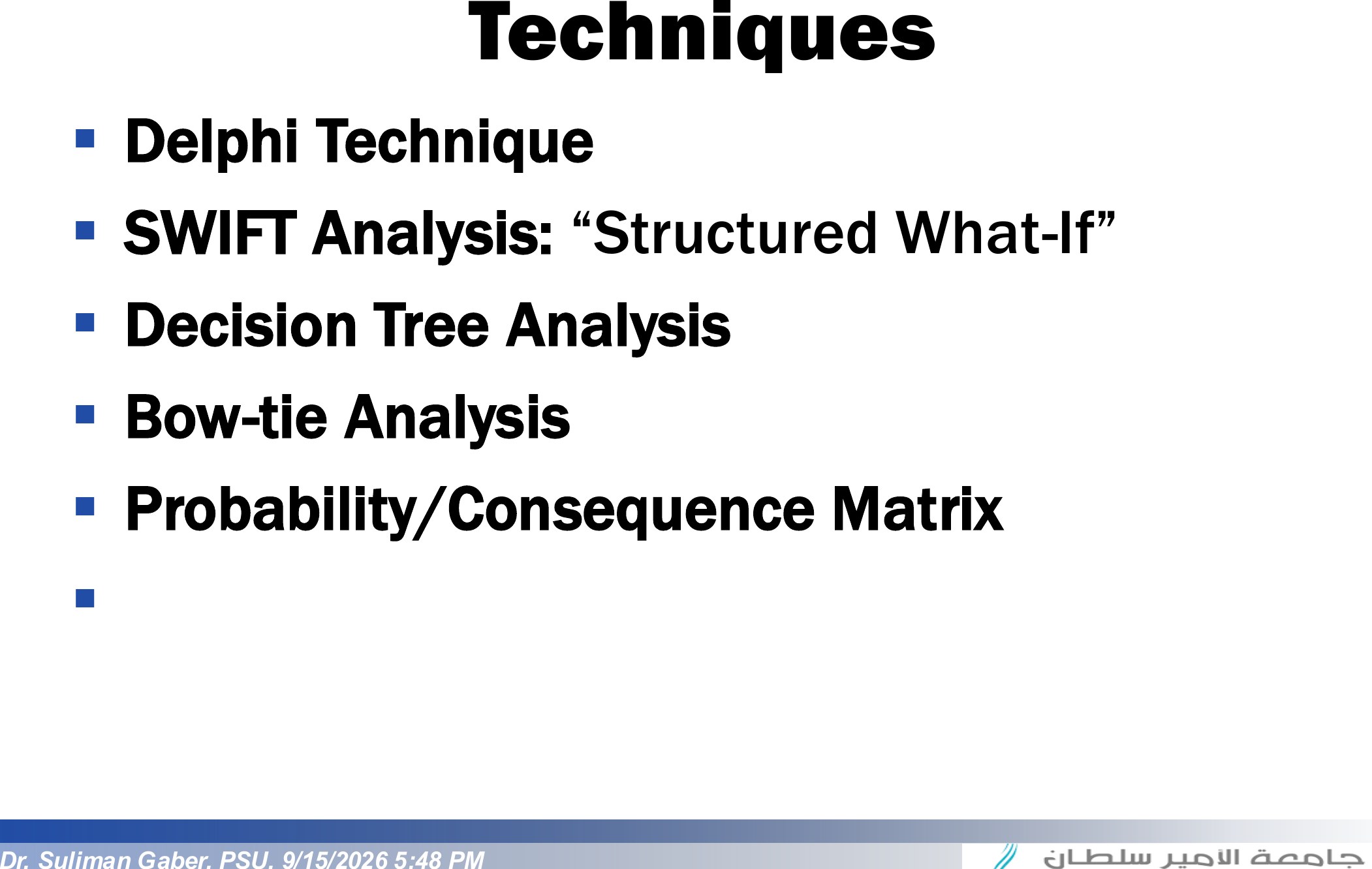
                                                      • Delphi Technique
                                                      • SWIFT Analysis: “Structured What - If”
                                                      • Decision Tree Analysis
                                                      • Bow-tie Analysis
                                                      • Probability/Consequence Matrix
                                                      5 top Qualitative RA Techniques
                                                      37
                                                      Exam weight Low
                                                        Slide 38: Slide 38
                                                        Exam weight Low
                                                          Slide 39: Quantitative vs. Qualitative
                                                          Exam weight Low
                                                            ★ Past exam

                                                            Risk Mitigation Options

                                                            • Risk Acceptance :
                                                              • if cost is higher than the expected loss
                                                            • Risk Reduction:
                                                              • implement countermeasure to reduce the risk impact.
                                                            • Risk Transference:
                                                              • outsource or transfer to third party.
                                                            • Risk Avoidance
                                                              • Stop the activities that are having the risks.
                                                            Risk Mitigation Options
                                                            40
                                                            Exam weight High
                                                            1. Four responses: mitigate (reduce), transfer (insurance, outsourcing), avoid (stop the activity), accept (document and live with it).
                                                            Exam trapAccepting a risk is a valid, documented decision when the cost of a control exceeds the expected loss.
                                                            🎯 How this can come up · 2 questions
                                                            MCQ

                                                            Buying cyber insurance is risk:

                                                            MCQ

                                                            It is acceptable not to act on an identified risk when:

                                                            Slide 41: The Right Amount of Security
                                                            Exam weight Low
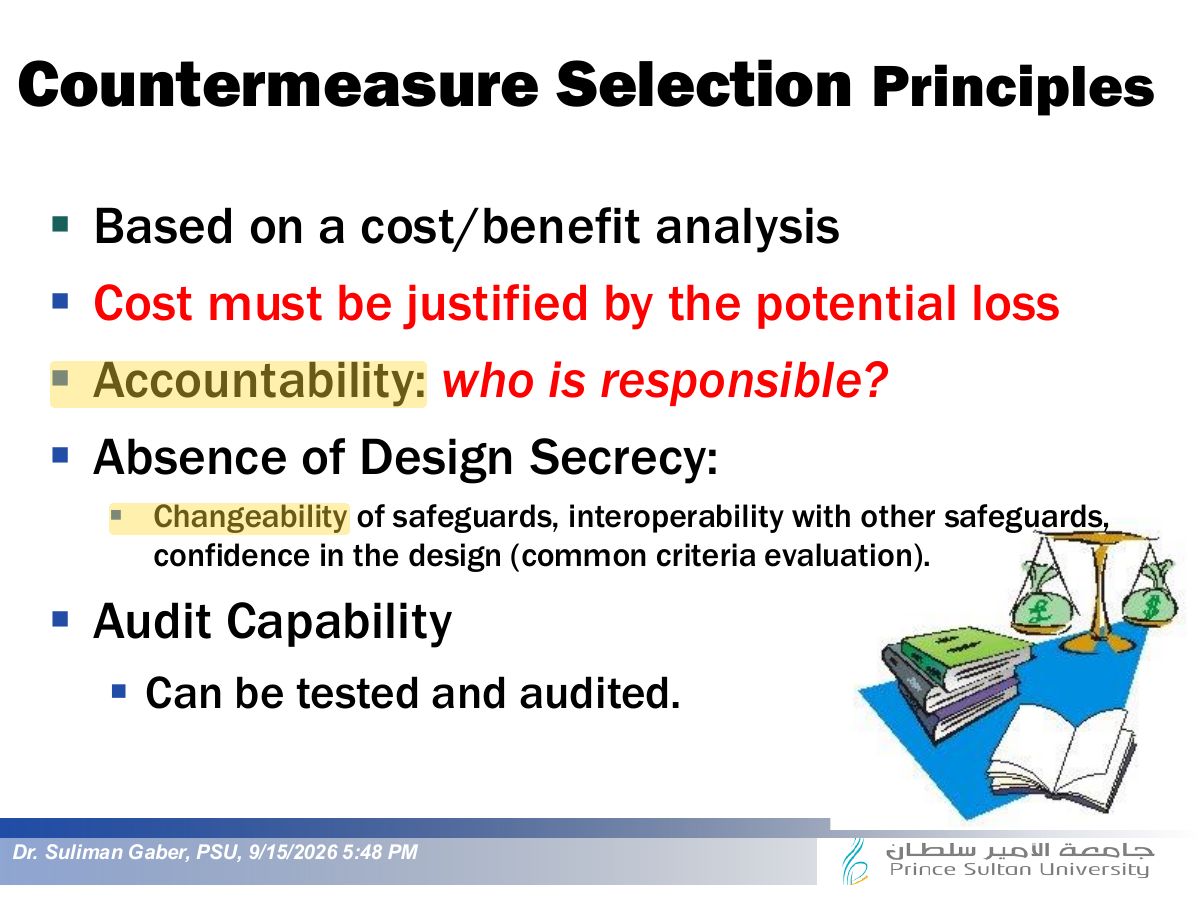
                                                              Slide 42: Countermeasure Selection
                                                              Exam weight High
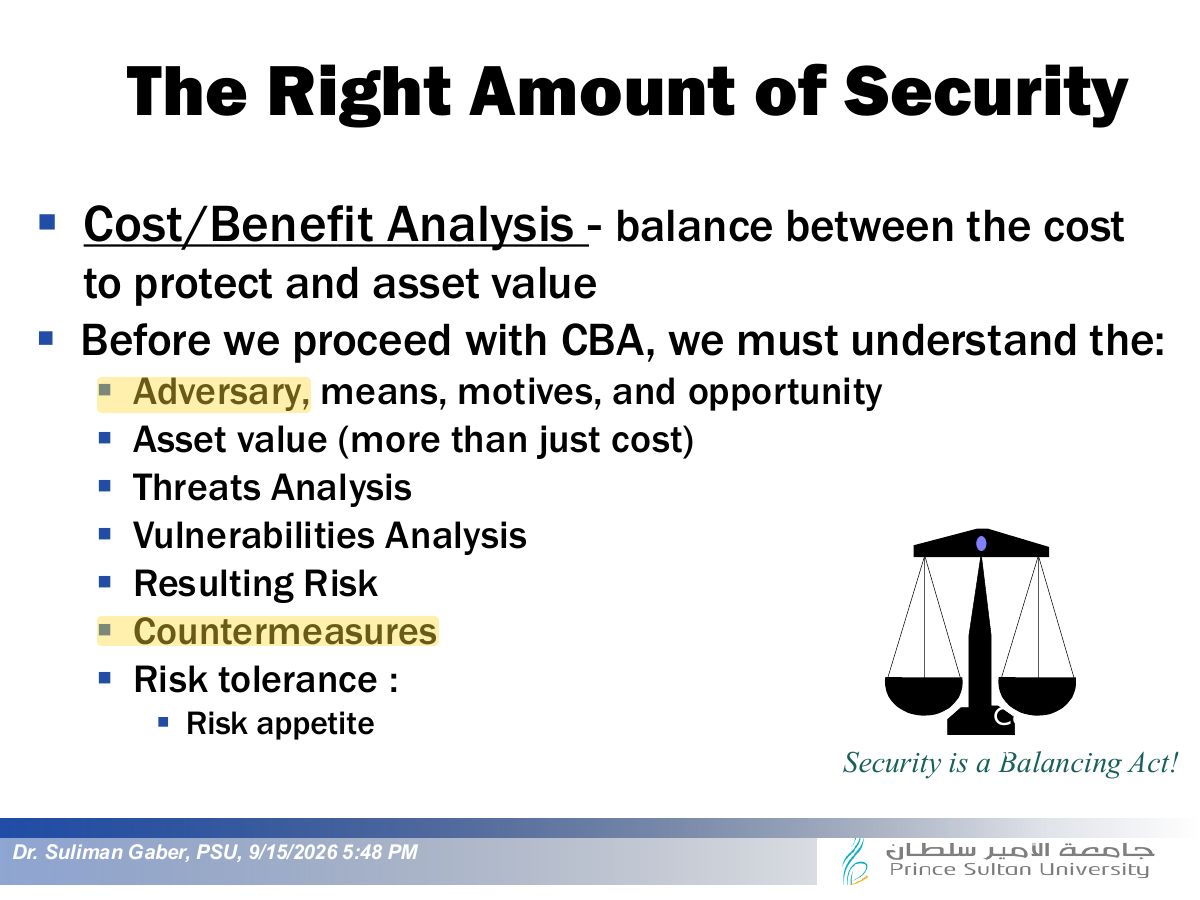
                                                              1. Choose a countermeasure when its value is positive: ALE before − ALE after − annual cost > 0 (cost–benefit analysis).

                                                              Countermeasure Selection Principles

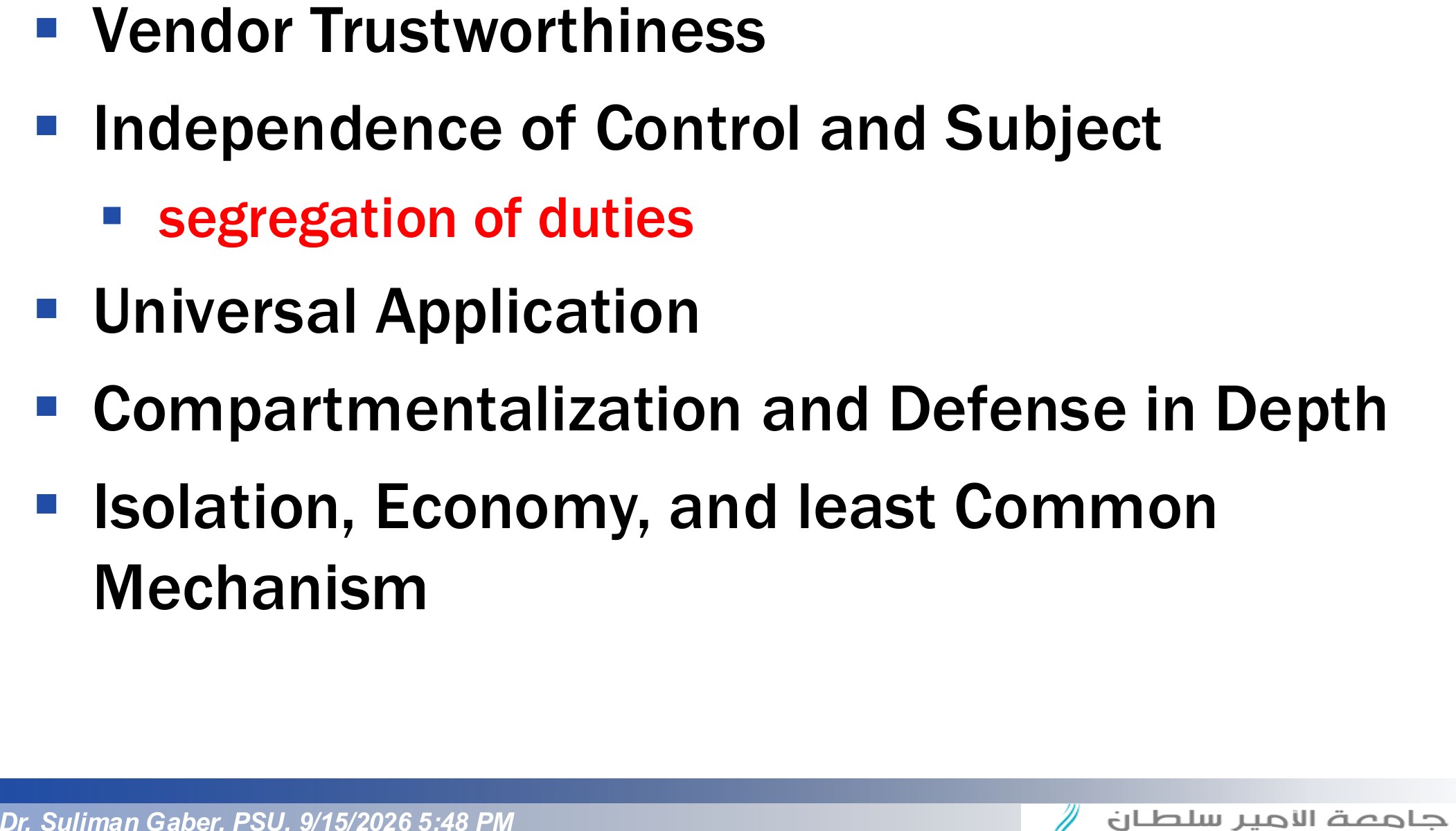
                                                              • Vendor Trustworthiness
                                                              • Independence of Control and Subject
                                                                • segregation of duties
                                                              • Universal Application
                                                              • Compartmentalization and Defense in Depth
                                                              • Isolation, Economy, and least Common Mechanism
                                                              Countermeasure Selection Principles
                                                              43
                                                              Exam weight Low

                                                                Countermeasure Selection Principles

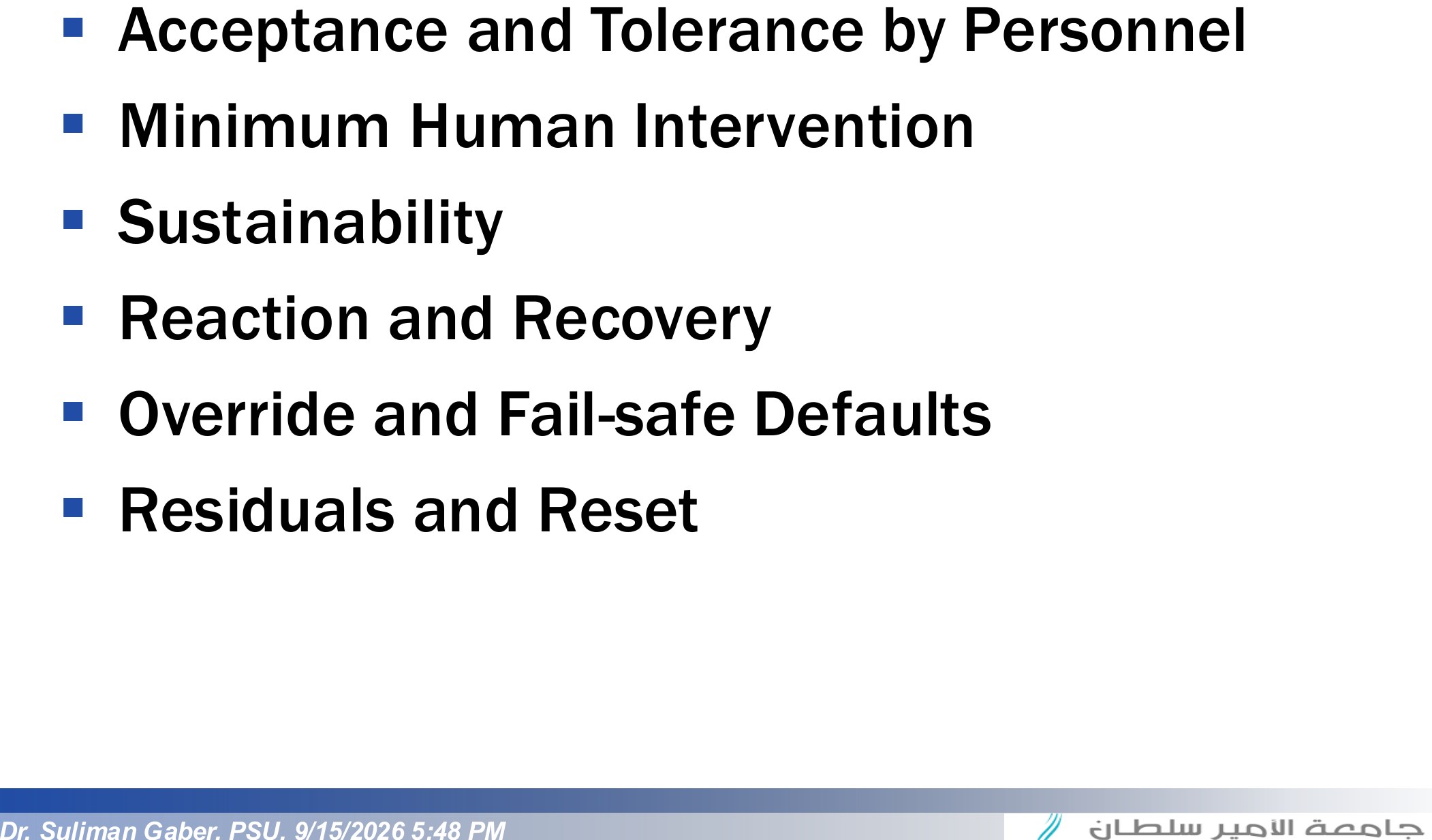
                                                                • Acceptance and Tolerance by Personnel
                                                                • Minimum Human Intervention
                                                                • Sustainability
                                                                • Reaction and Recovery
                                                                • Override and Fail-safe Defaults
                                                                • Residuals and Reset
                                                                Countermeasure Selection Principles
                                                                44
                                                                Exam weight Low
                                                                  ★ Past exam

                                                                  Types of Security Controls

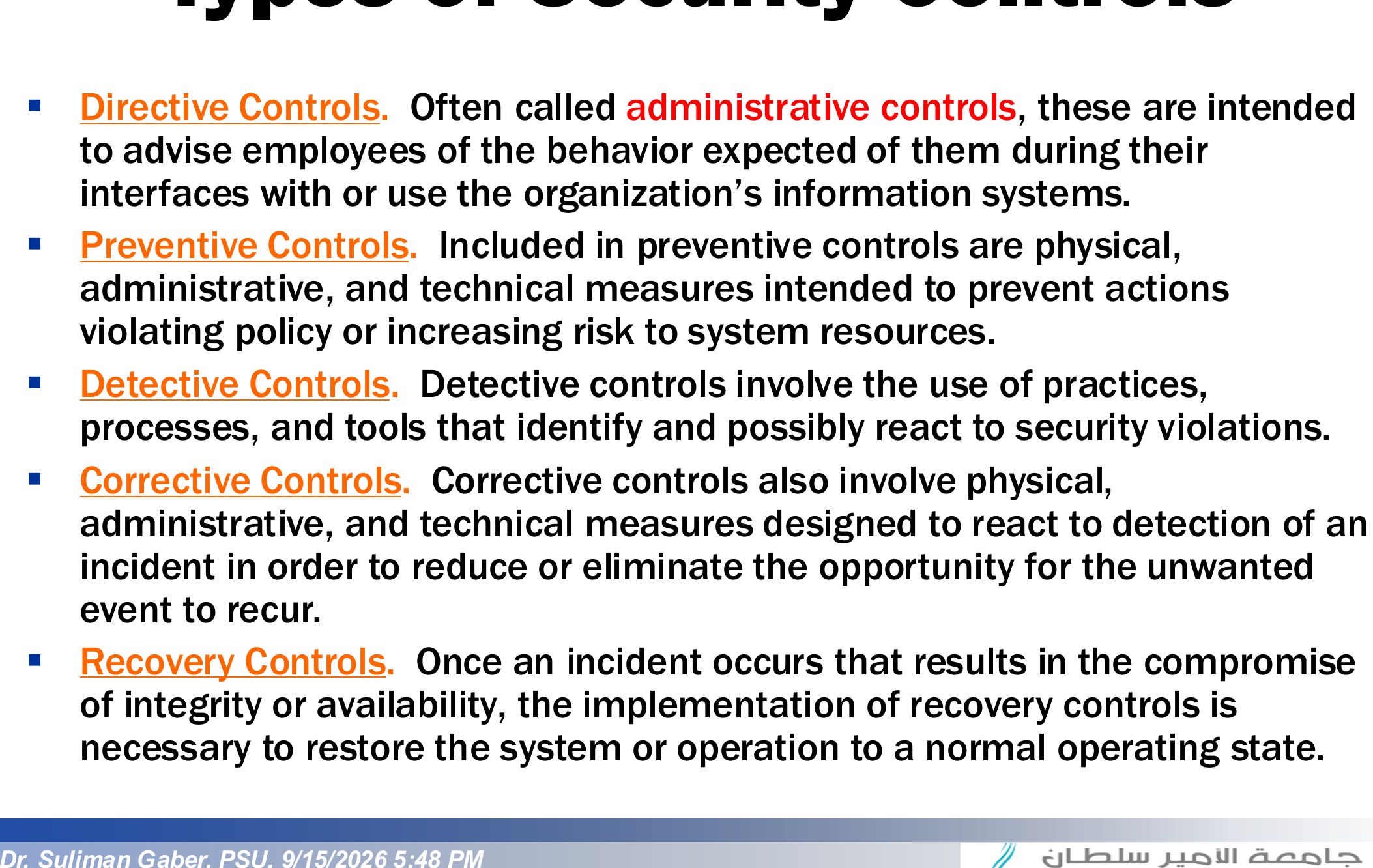
                                                                  • Directive Controls. Often called administrative controls, these are intended to advise employees of the behavior expected of them during their interfaces with or use the organization’s information systems.
                                                                  • Preventive Controls. Included in preventive controls are physical, administrative, and technical measures intended to prevent actions violating policy or increasing risk to system resources.
                                                                  • Detective Controls. Detective controls involve the use of practices, processes, and tools that identify and possibly react to security violations.
                                                                  • Corrective Controls. Corrective controls also involve physical, administrative, and technical measures designed to react to detection of an incident in order to reduce or eliminate the opportunity for the unwanted event to recur.
                                                                  • Recovery Controls. Once an incident occurs that results in the compromise of integrity or availability, the implementation of recovery controls is necessary to restore the system or operation to a normal operating state.
                                                                  Types of Security Controls
                                                                  45
                                                                  Exam weight High
                                                                  1. Control types by nature: administrative, technical (logical), physical. By function: preventive, detective, corrective, deterrent, recovery, compensating.
                                                                  🎯 How this can come up · 2 questions
                                                                  MCQ

                                                                  Logical mechanisms that control access and authenticate users are:

                                                                  MCQ

                                                                  Encrypting payment files to stop tampering is a:

                                                                  Slide 46: Slide 46
                                                                  Exam weight Low
                                                                    Slide 47: Slide 47
                                                                    Exam weight Low