TipSTRIDE → property violated: Spoofing → authentication
· Tampering → integrity · Repudiation → non-repudiation ·
Information disclosure → confidentiality · Denial of service →
availability · Elevation of privilege → authorization.
Exam weight Low
- Terminology → proactive vs. reactive → identifying threats → STRIDE → supply chain.
Exam weight Low
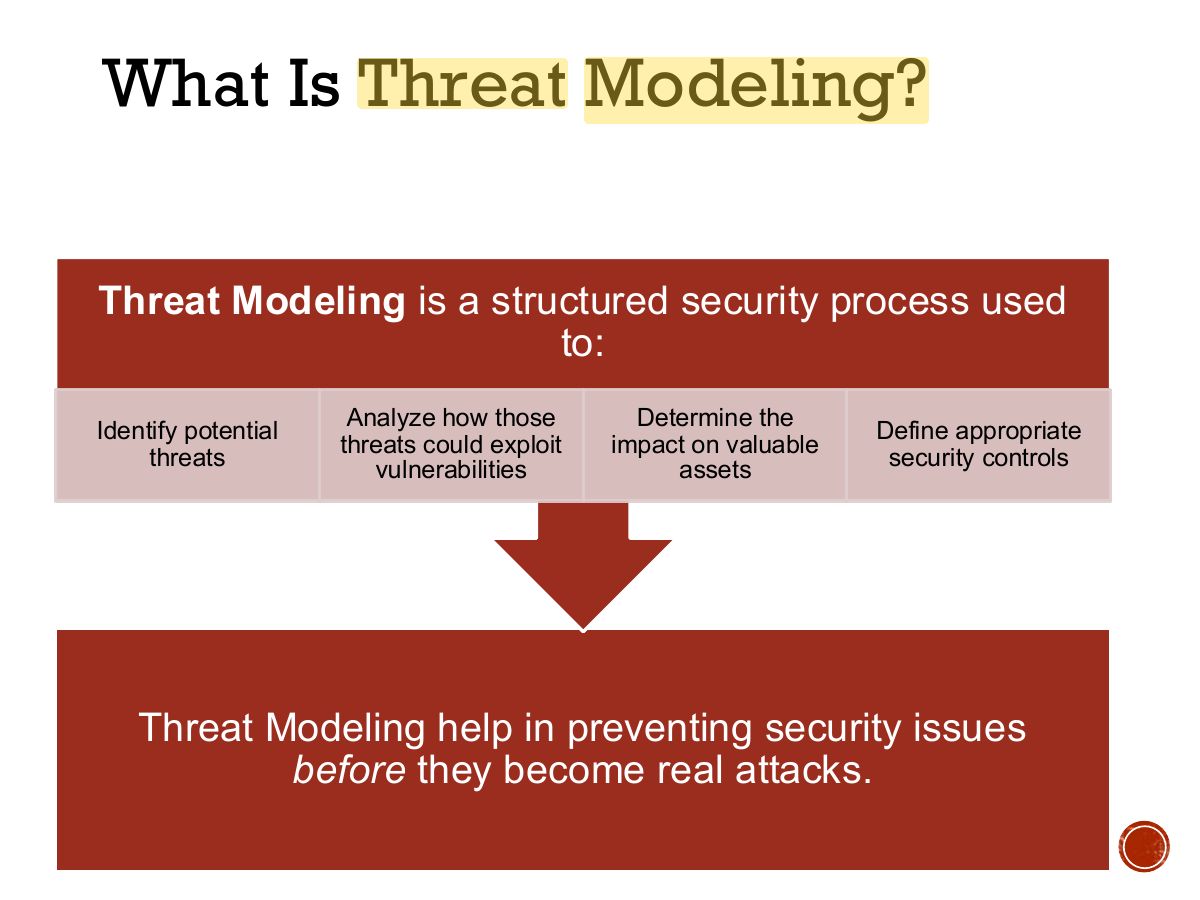
- Threat modelling: a structured process to identify assets, find threats, analyse how they could be exploited, and decide mitigations.
Exam weight Low
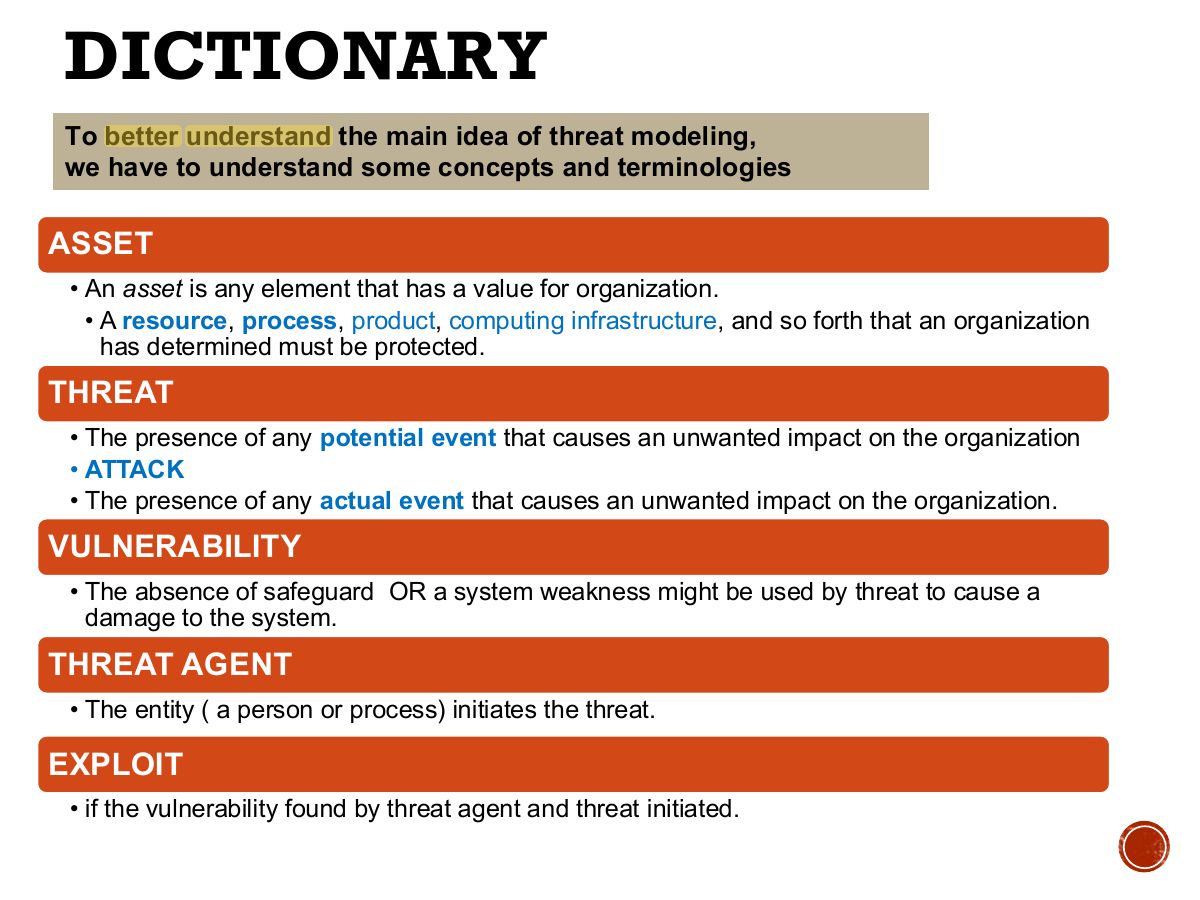
- Asset: anything of value to the organization.
Exam weight Low
- Threat: a potential occurrence that may cause harm.
Exam weight Low
- Vulnerability: a weakness. Exposure: being open to asset loss through a threat.
Exam weight Low
- Risk: likelihood that a threat exploits a vulnerability.
★ Past exam
Exam weight
Medium
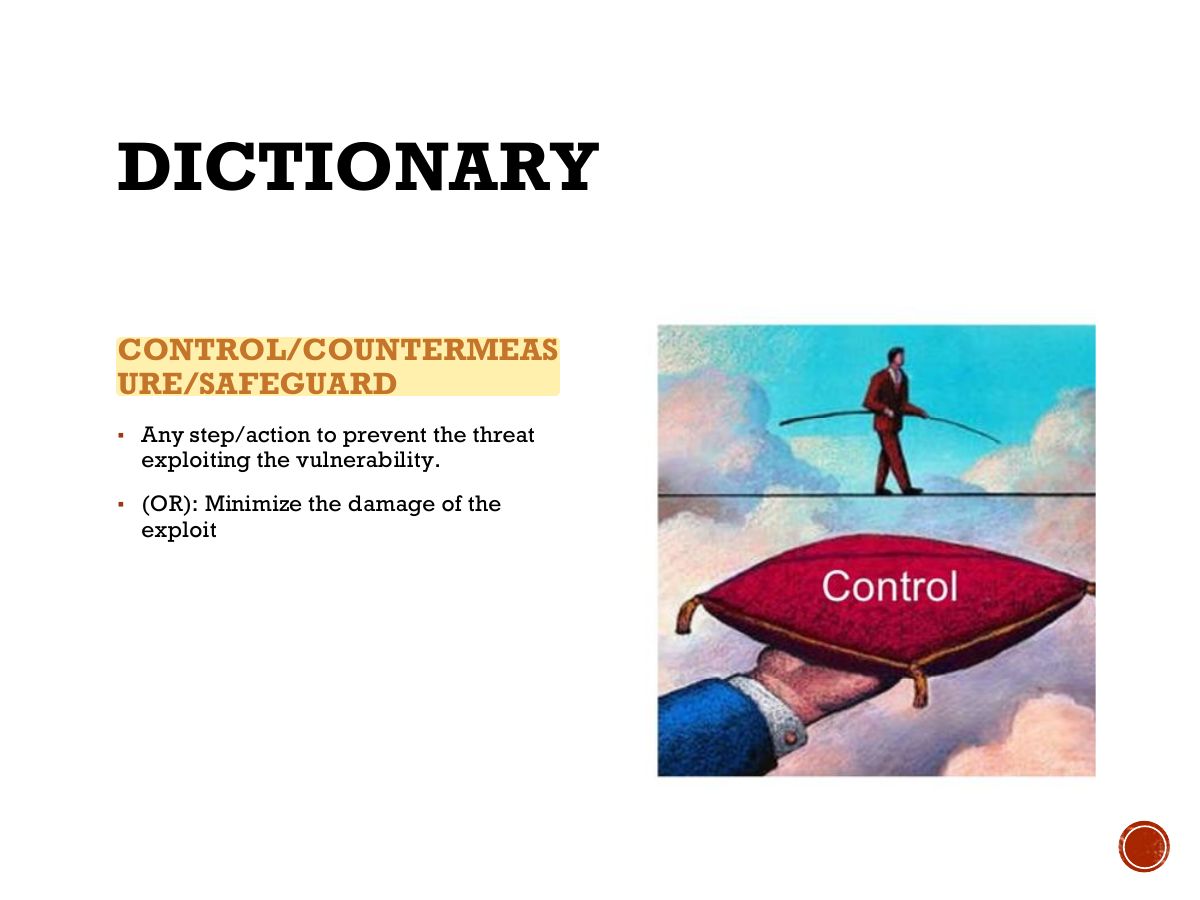
- Control/countermeasure/safeguard: any action that prevents the exploit or minimizes its damage.
Asked in a real exam
Exam weight
High
- Risk management reduces vulnerabilities or threat impact with controls. Risk elements: assets, threats, vulnerabilities, exposure, risk, safeguards, attack, breach.
🎯 How this can come up · 1 question
MCQ
The likelihood that a threat will exploit a vulnerability and cause loss is:
Correct: Risk.
Exam weight Low
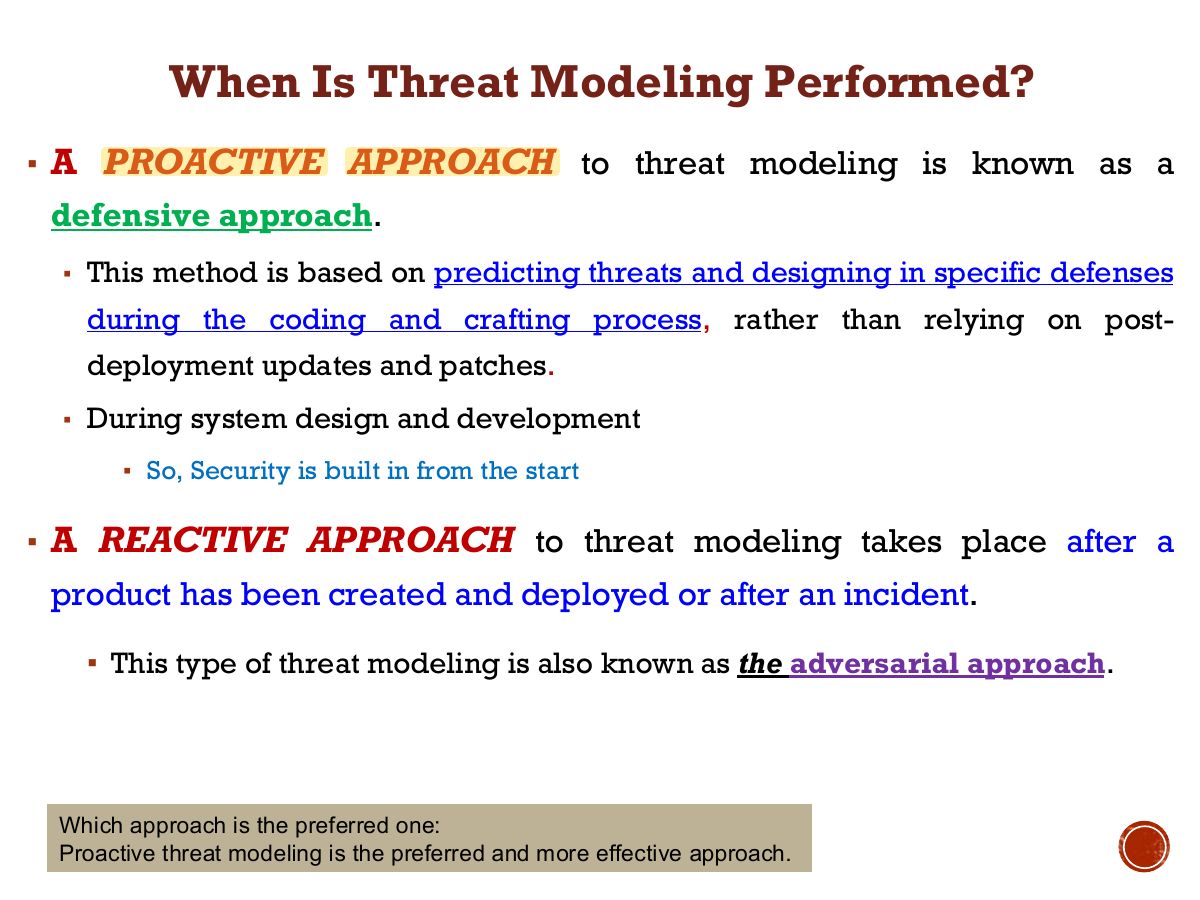
- Threat modelling can be proactive (during design and development) or reactive (after deployment).
Exam weight
High
- Proactive = defensive approach: predict threats and design defences in. Reactive = adversarial approach: after deployment, e.g., penetration testing, fuzzing.
Memory trickProactive = Prevent in design. Reactive =
React after release.
🎯 How this can come up · 1 question
True / False
Penetration testing an already deployed system is a proactive threat modelling approach.
False. It is reactive (adversarial).
Exam weight
Medium
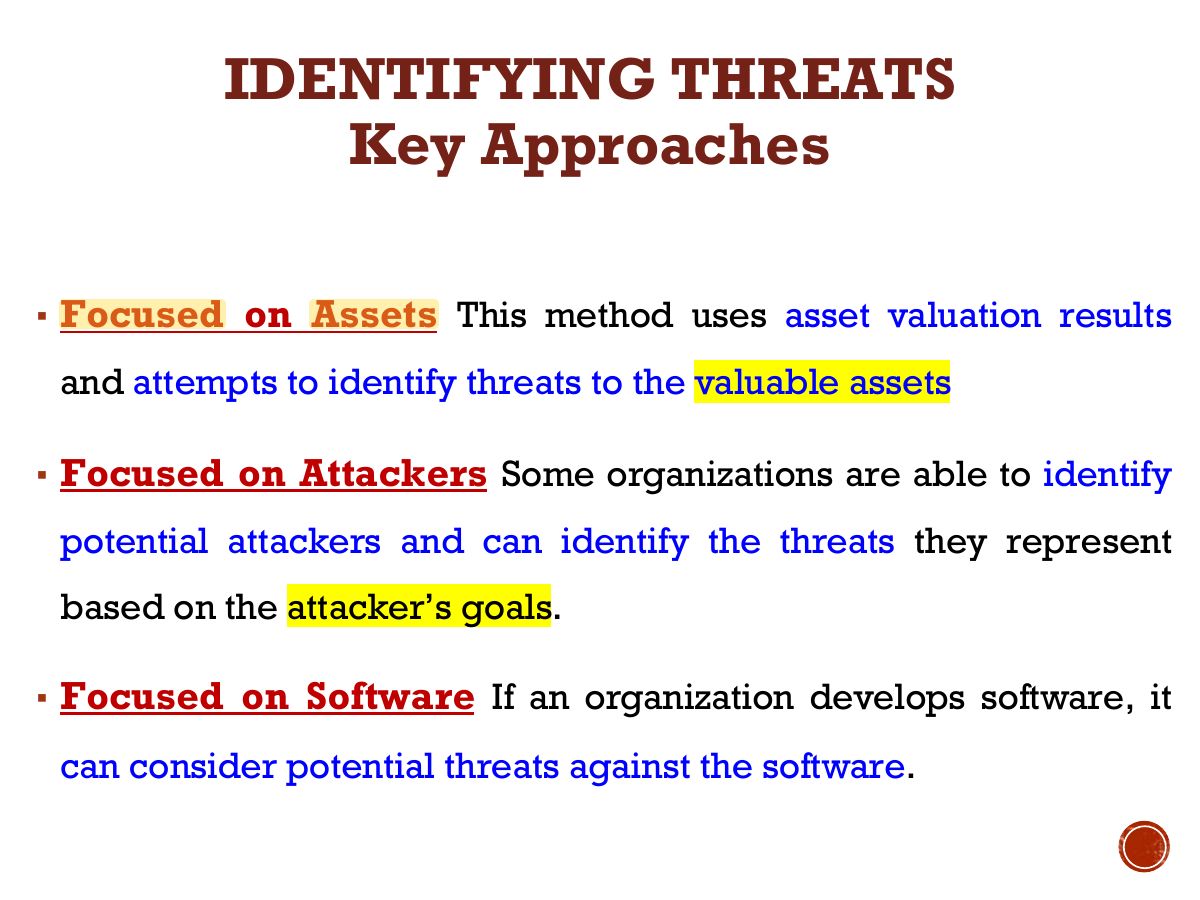
- Identify threats by focusing on assets, on attackers, or on software.
🎯 How this can come up · 1 question
MCQ
An organization that lists likely attackers and their goals is using which threat identification focus?
Correct: Attacker-focused.
Exam weight Low
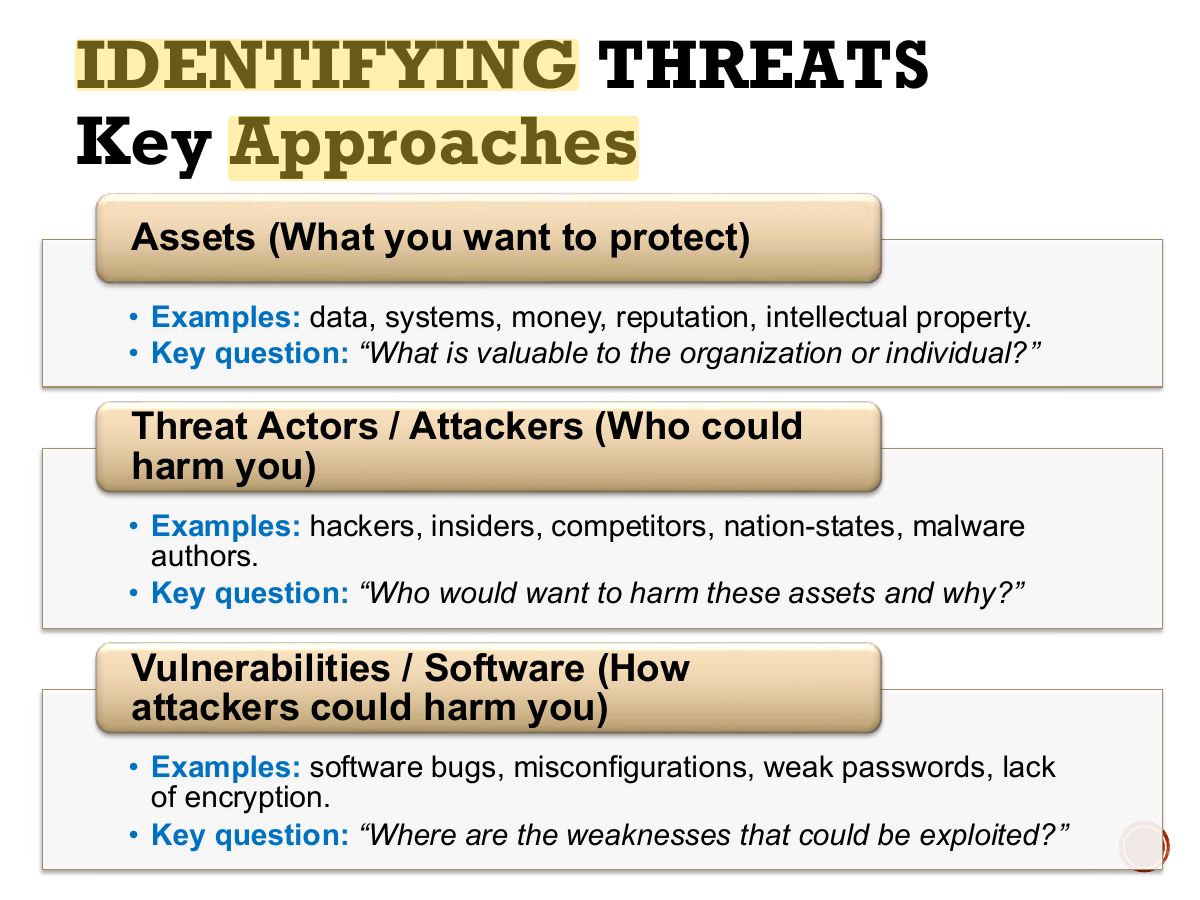
- Approaches, continued.
Exam weight Low
- Approaches illustrated.
Exam weight Low
- Modern: system/architecture-focused (components, interactions, trust boundaries).
Exam weight Low
- Data-focused: sensitive data at rest, in transit, in use. Breaches are the most common impact.
Exam weight Low
- Supply chain / third-party focused: vendors, libraries, APIs.
Exam weight Low
- Environment/deployment-focused: cloud, on-prem, configuration, patching, CI/CD pipelines.
Exam weight Low
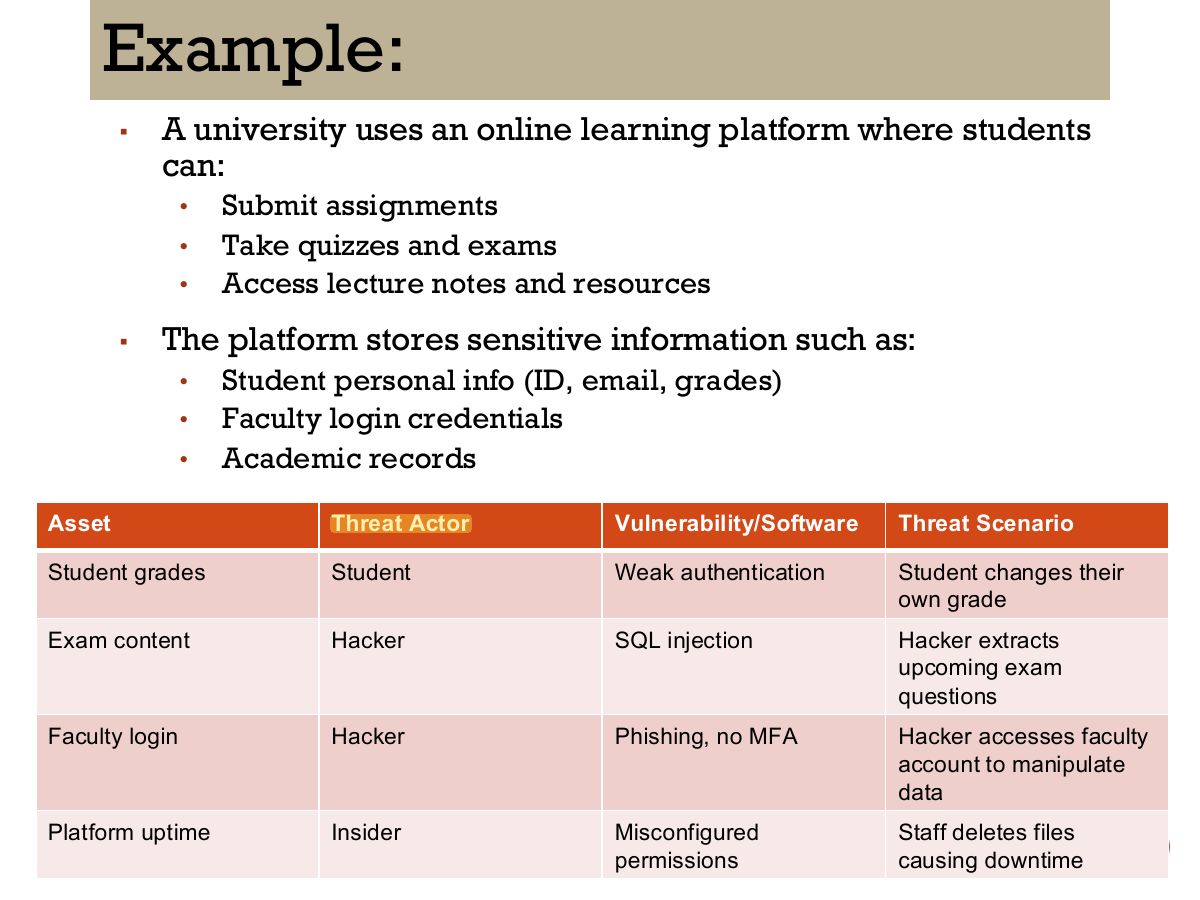
- Example: a university learning platform: assignments, quizzes, grades.
Exam weight Low
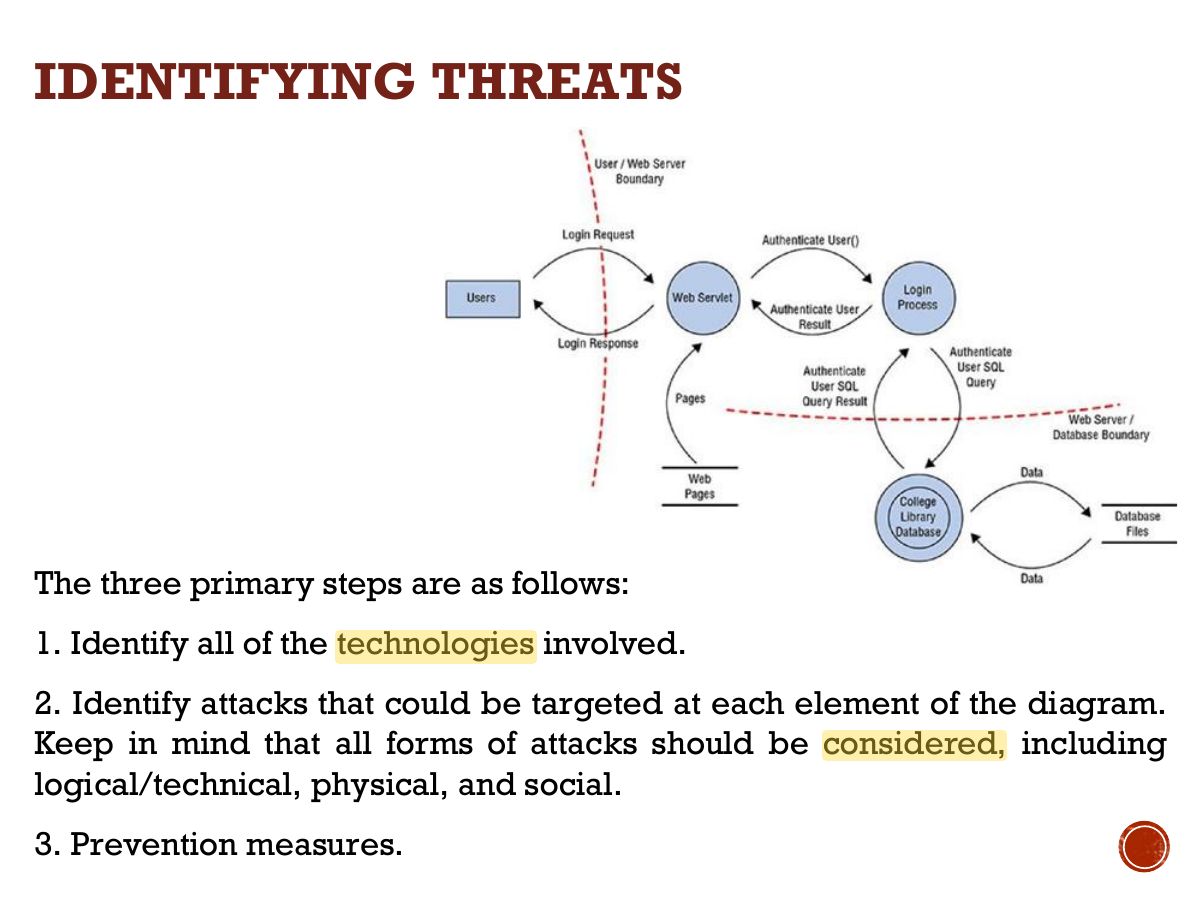
- Three steps: identify technologies (diagram the system), identify attacks against each element, determine reduction (mitigation) analysis.
★ Past exam
Exam weight
High
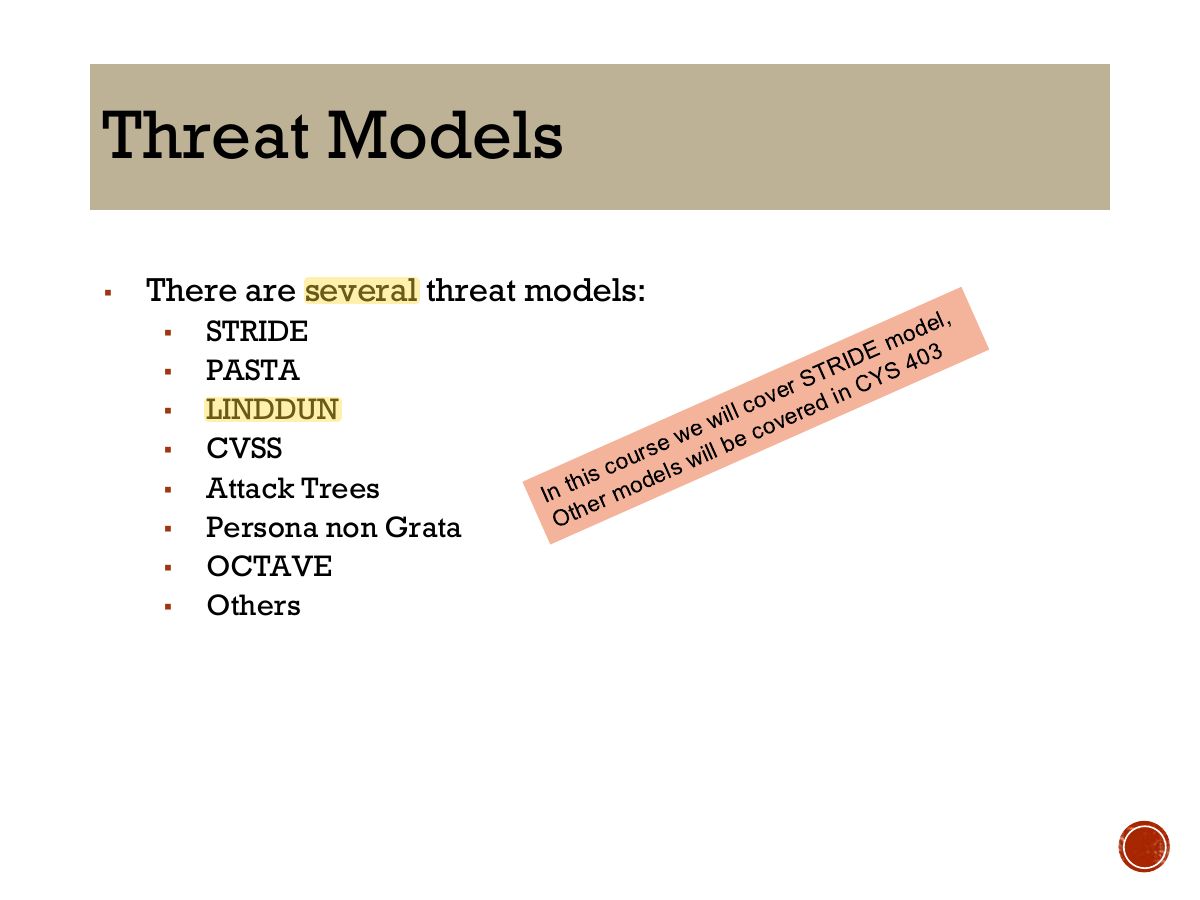
- Threat models: STRIDE, PASTA, VAST, Trike, DREAD…
Asked in a real exam
🎯 How this can come up · 1 question
MCQ
PASTA aims at selecting countermeasures in relation to the value of the assets. It is a ___ methodology.
Final 221 B.
Exam weight
High
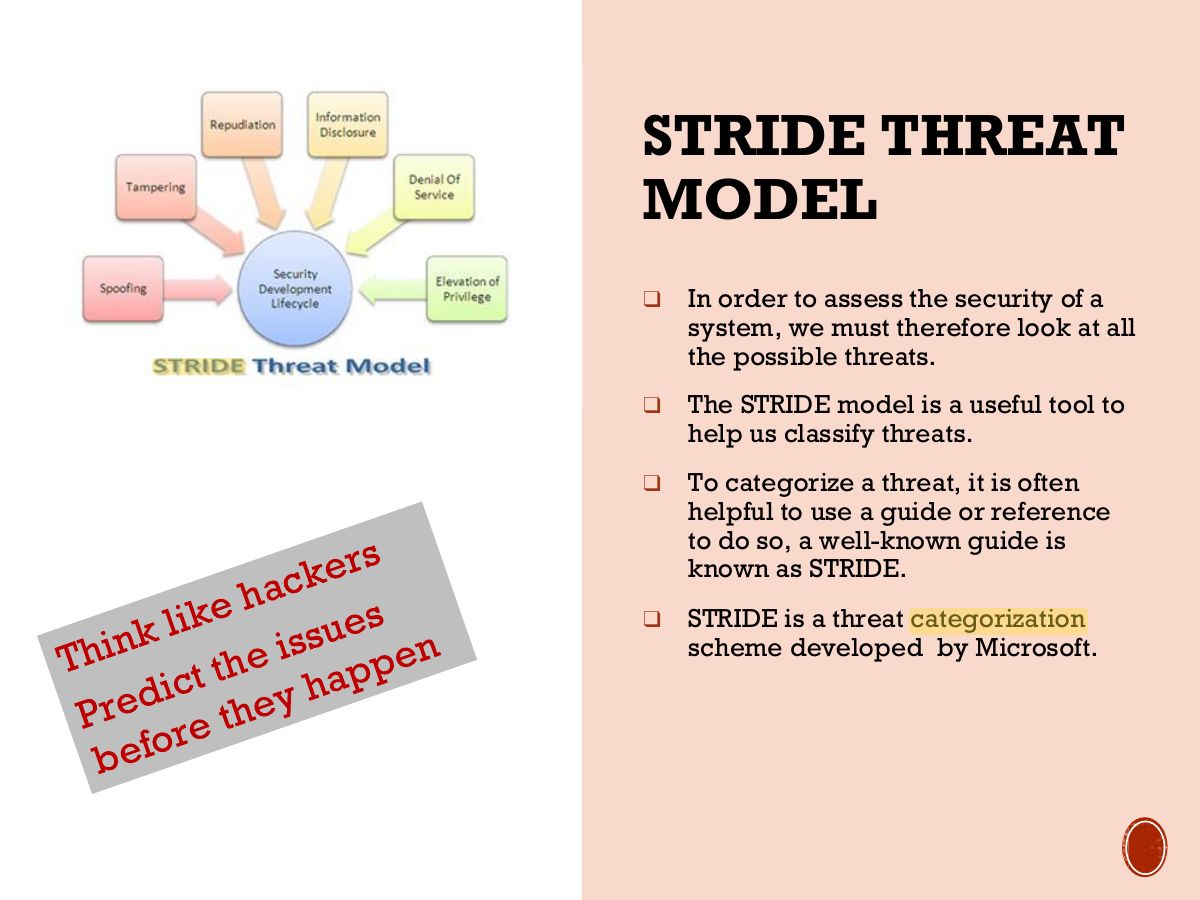
- STRIDE (Microsoft) classifies threats into six categories.
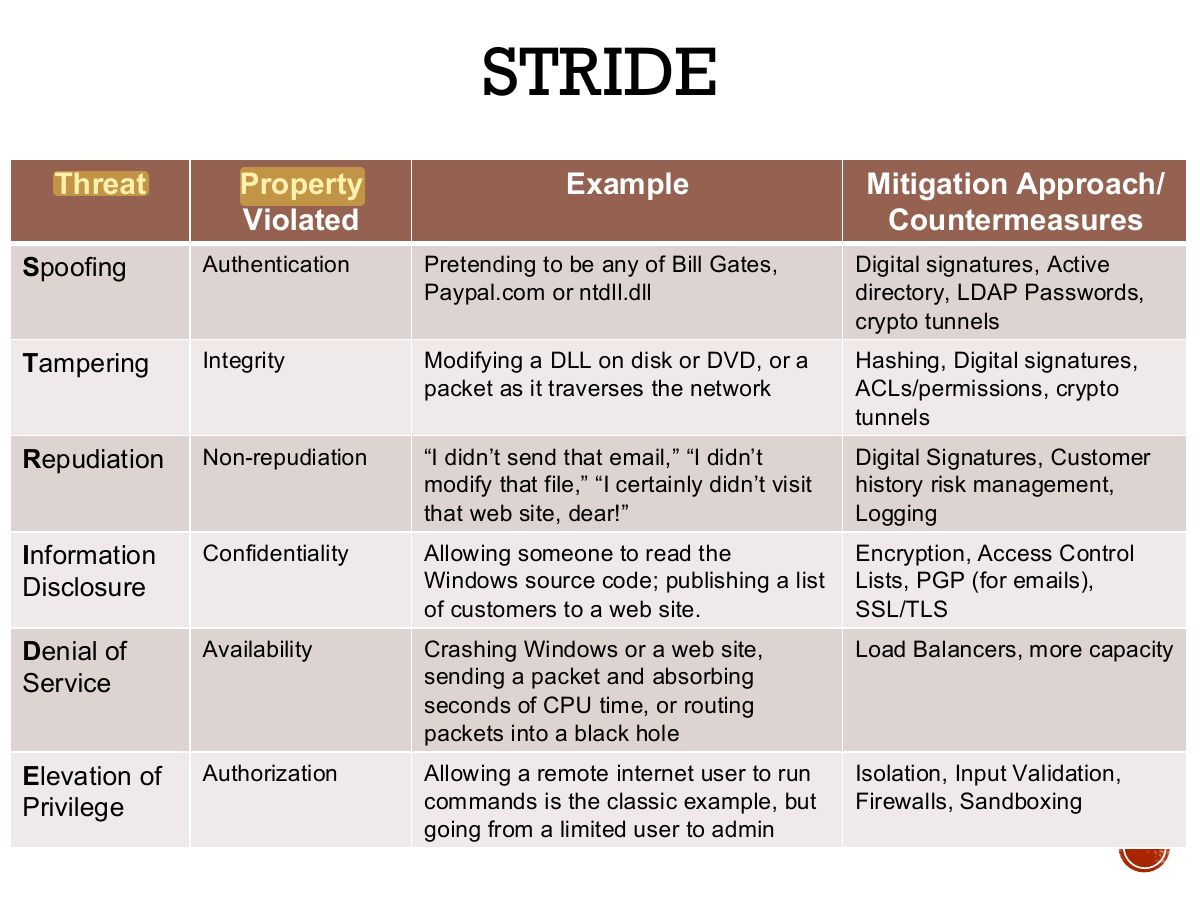
TipSTRIDE → property violated: Spoofing → authentication
· Tampering → integrity · Repudiation → non-repudiation ·
Information disclosure → confidentiality · Denial of service →
availability · Elevation of privilege → authorization.
Exam weight
High
- Spoofing (falsified identity), Tampering (unauthorised change), Repudiation (denying an action), Information disclosure, Denial of service, Elevation of privilege.
Asked in a real exam
🎯 How this can come up · 3 questions
MCQ
A customer denies making a transfer and there are no logs to prove otherwise. STRIDE category?
Major A.
MCQ
Which property does Spoofing violate?
Major C.
MCQ
Elevation of privilege violates:
Correct: Authorization.
Exam weight
High
- Table: threat, property, example.
TipSTRIDE → property violated: Spoofing → authentication
· Tampering → integrity · Repudiation → non-repudiation ·
Information disclosure → confidentiality · Denial of service →
availability · Elevation of privilege → authorization.
🎯 How this can come up · 1 question
Written
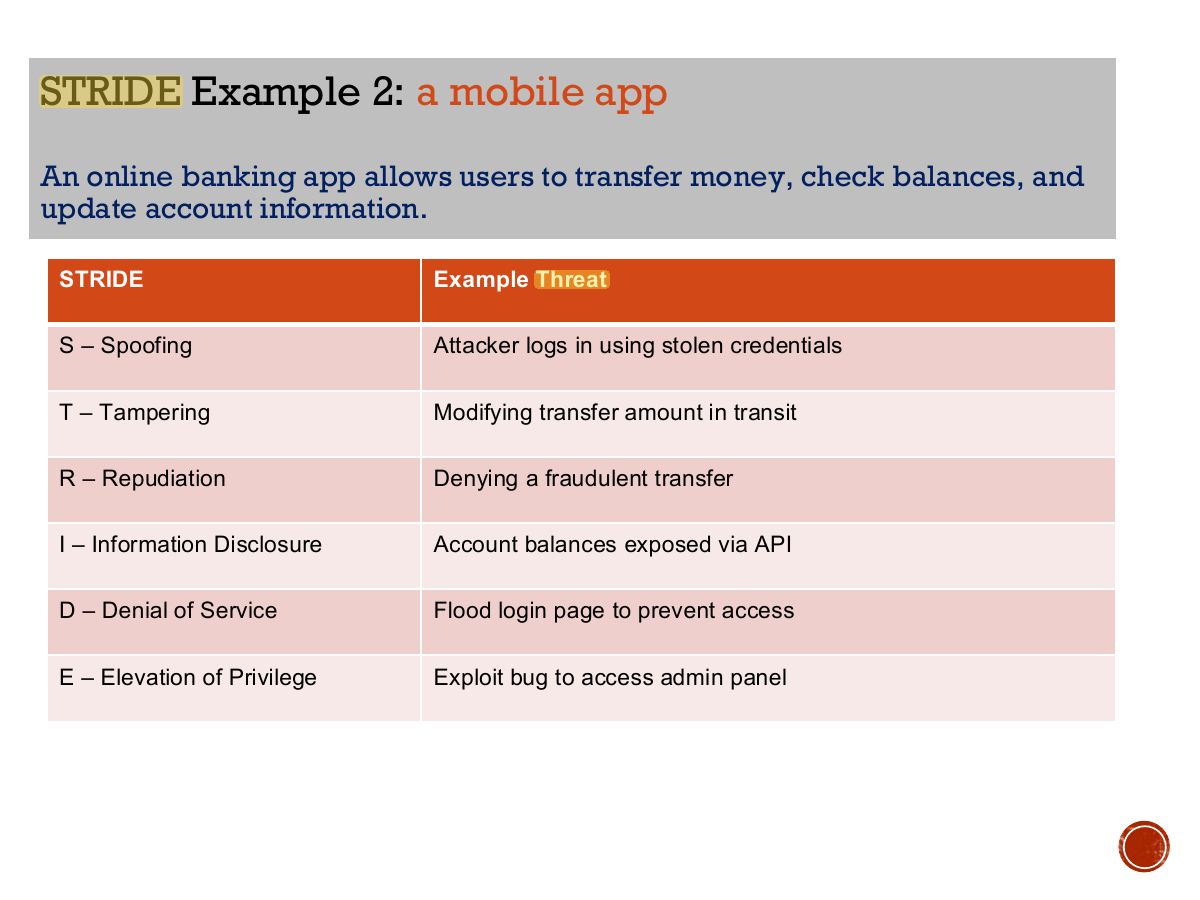
For a mobile banking app, give one STRIDE threat example, its violated property and a mitigation for Spoofing, Tampering and Denial of service. (Major C)
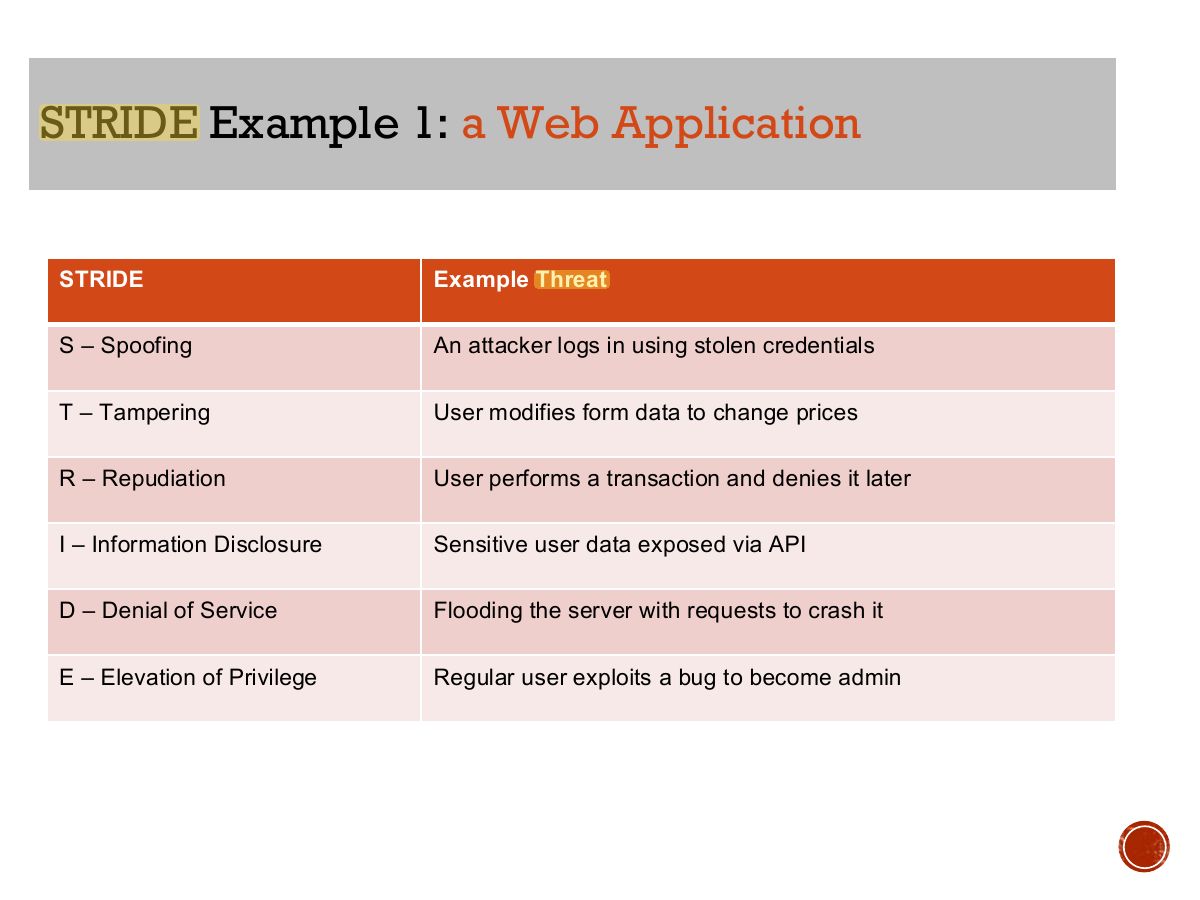
Spoofing: an attacker logs in with stolen credentials → authentication → enforce MFA, strong passwords, account lockout. Tampering: a man in the middle changes the amount of a transfer → integrity → TLS for all API traffic, sign/HMAC requests. Denial of service: flooding the transaction API → availability → rate limiting, WAF rules, DDoS protection, load balancing.
Exam weight Low
- STRIDE example 1: a web application.
Exam weight Low
- STRIDE example 2: an online banking app (transfers, balances, account updates).
Exam weight Low
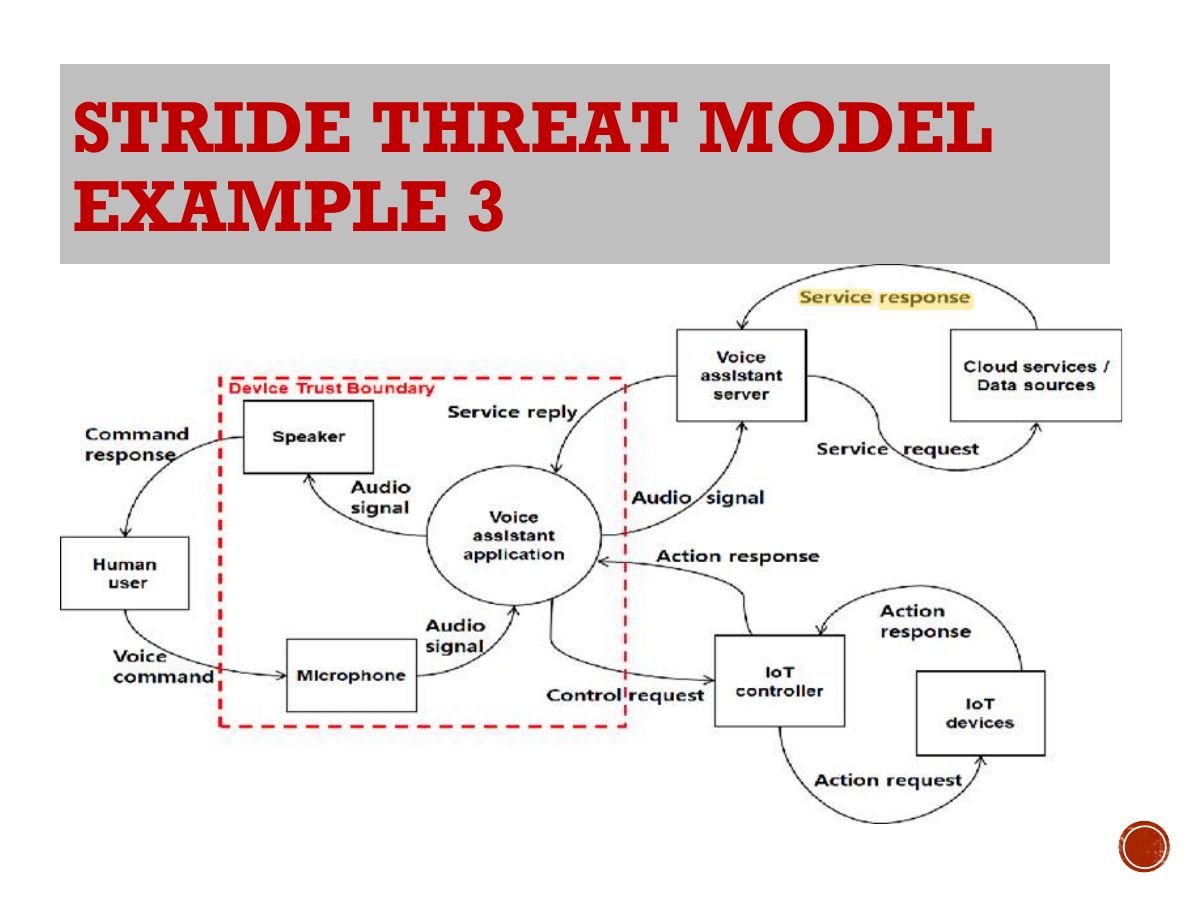
- STRIDE example 3.
Exam weight Low
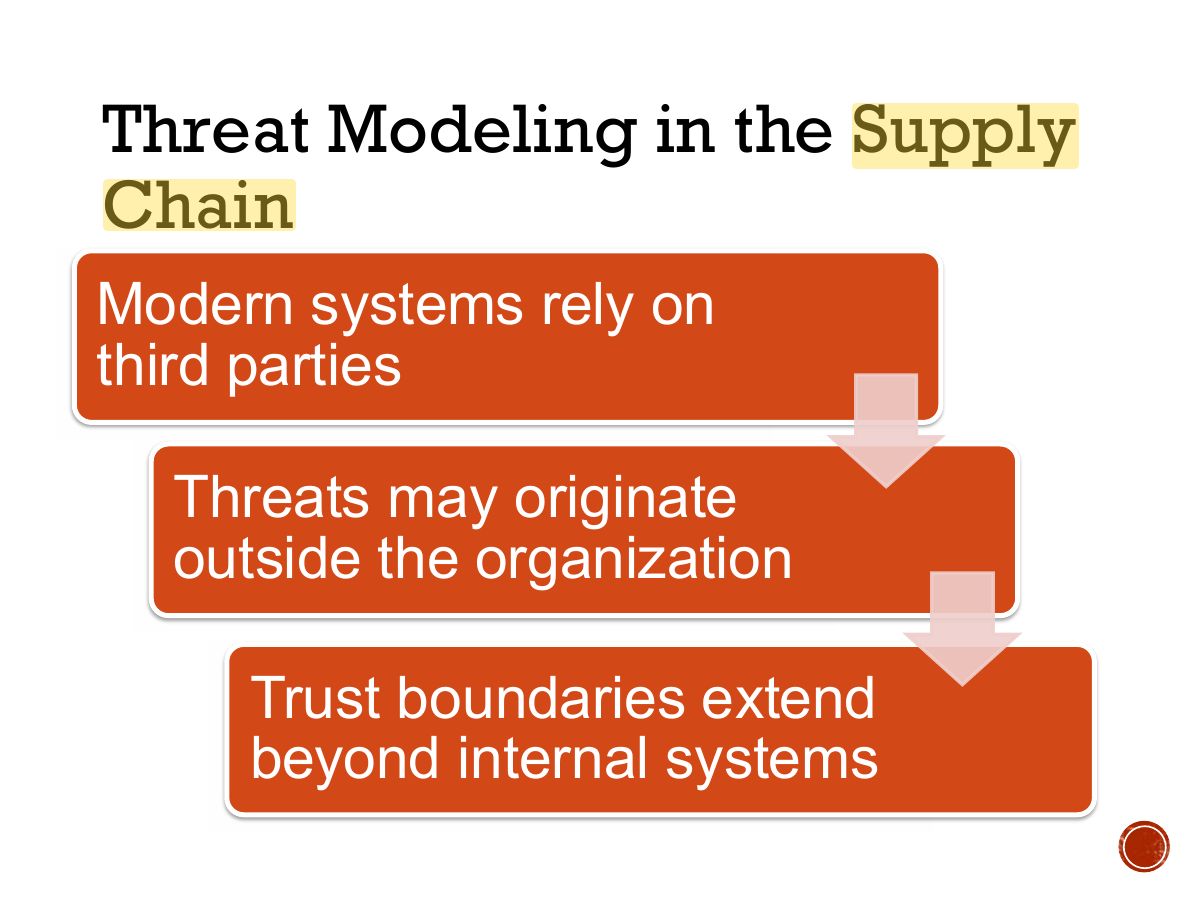
- Threat modelling in the supply chain.
Exam weight Low
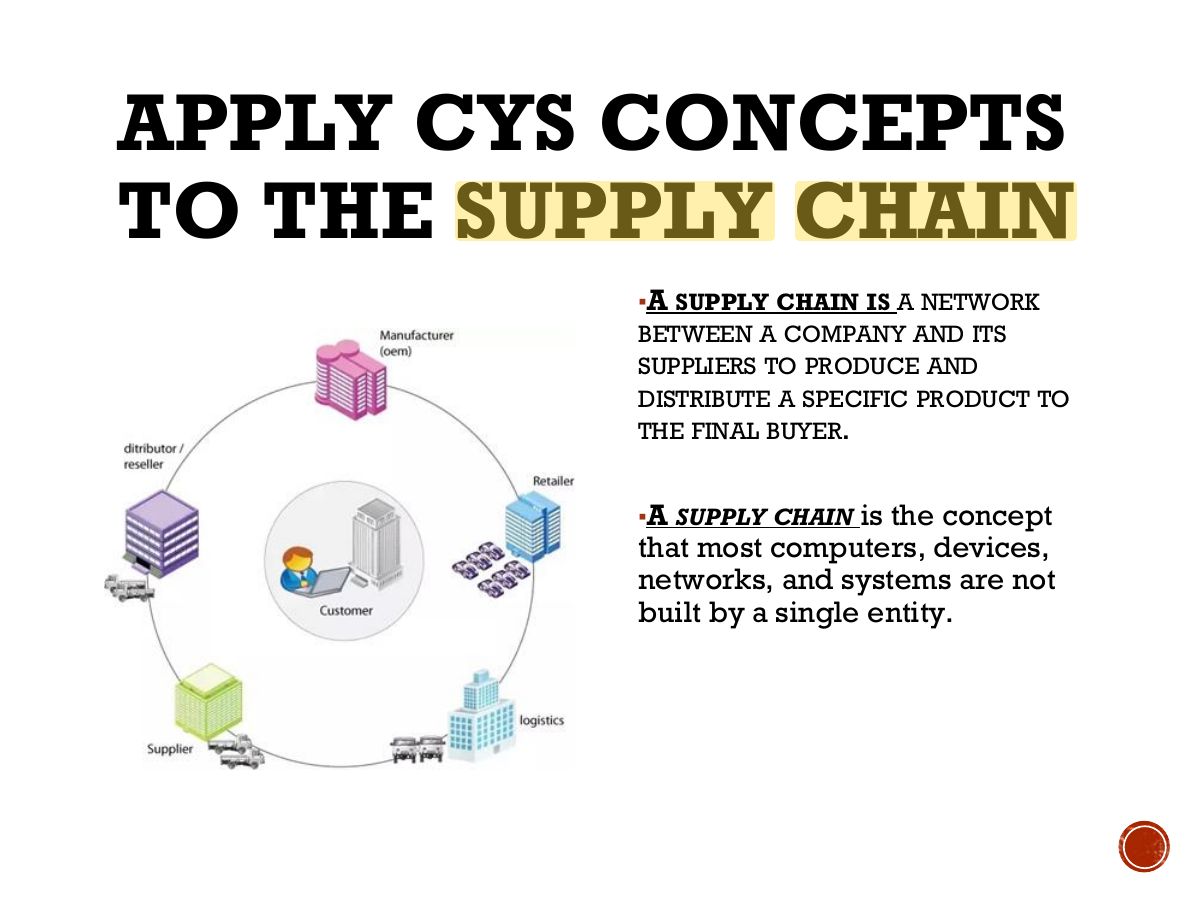
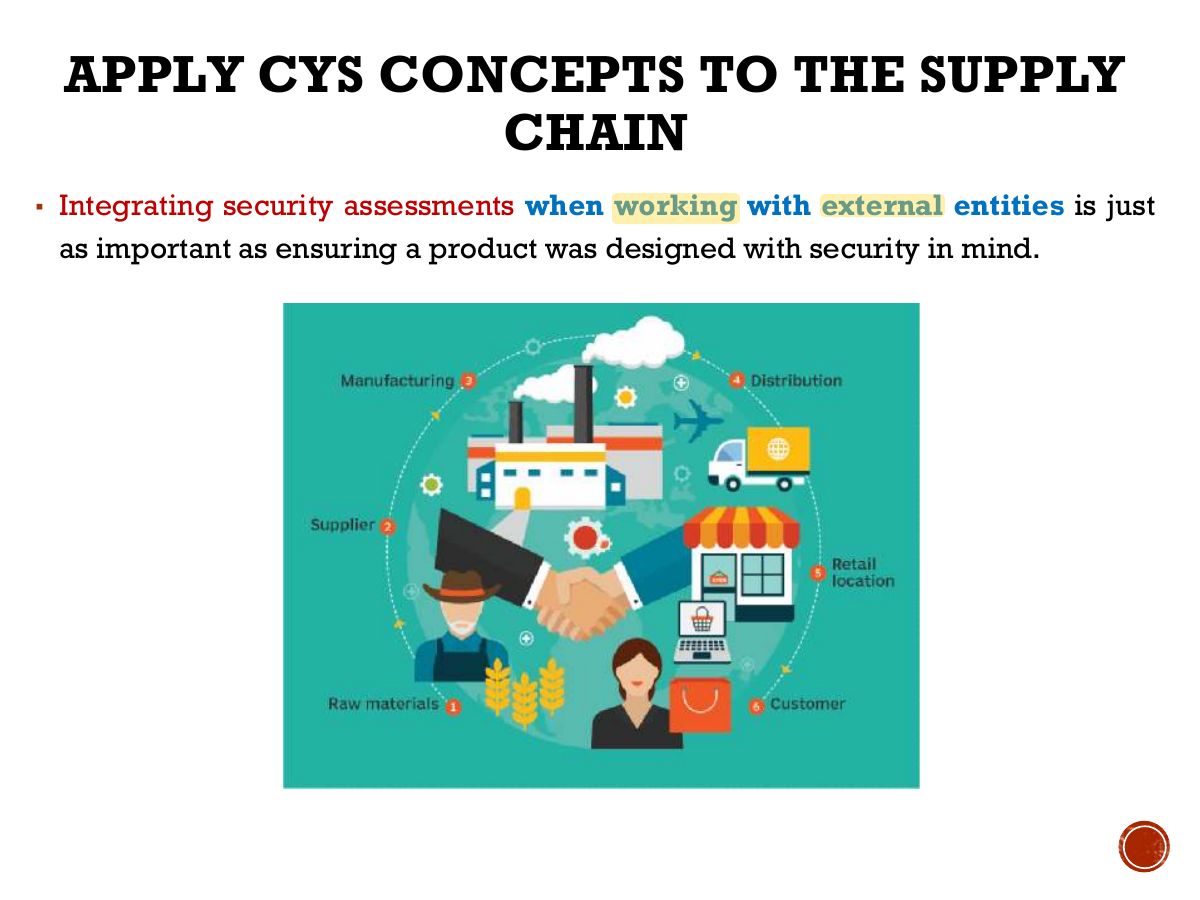
- A supply chain is the network between a company and its suppliers that produces and distributes a product.
Exam weight Low
- A secure supply chain: reliable, trustworthy, transparent vendors.
Exam weight Low
- Security assessments must cover external entities too.
Exam weight Low
- Inspect connected systems: on-site assessment, document exchange and review, process/policy review, third-party audit.
Exam weight Low
- End of chapter.
No slides match this filter.