Functional Dependencies and Normalization
CS340 · Chapter 9
1
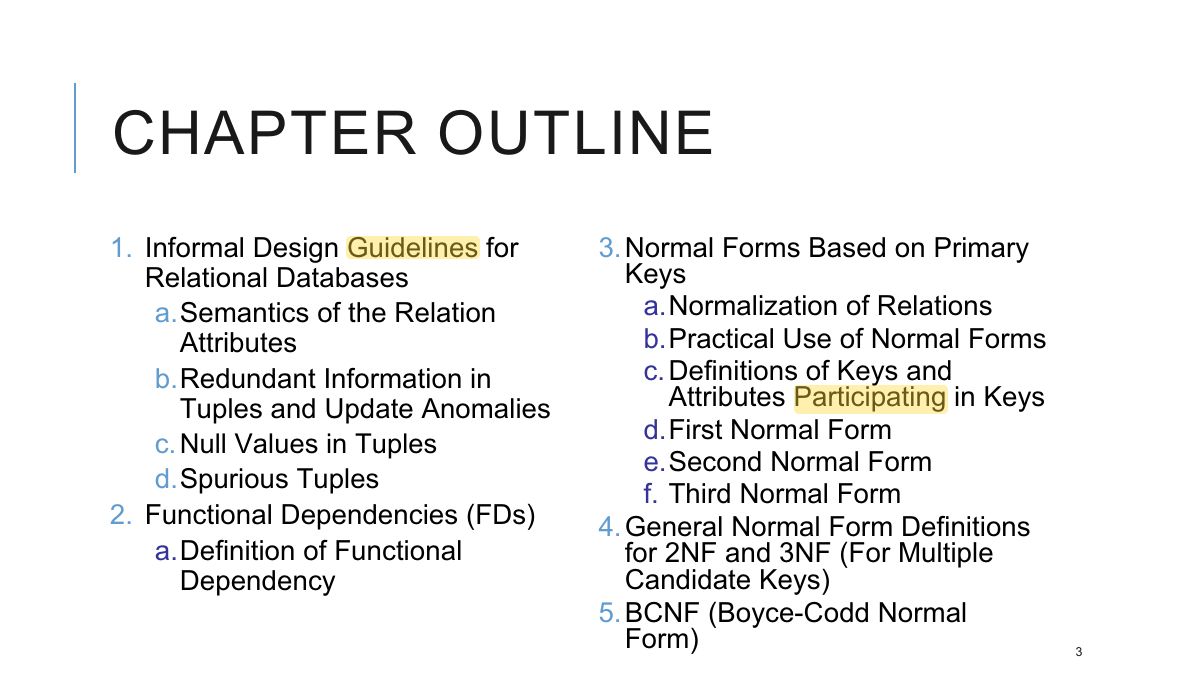
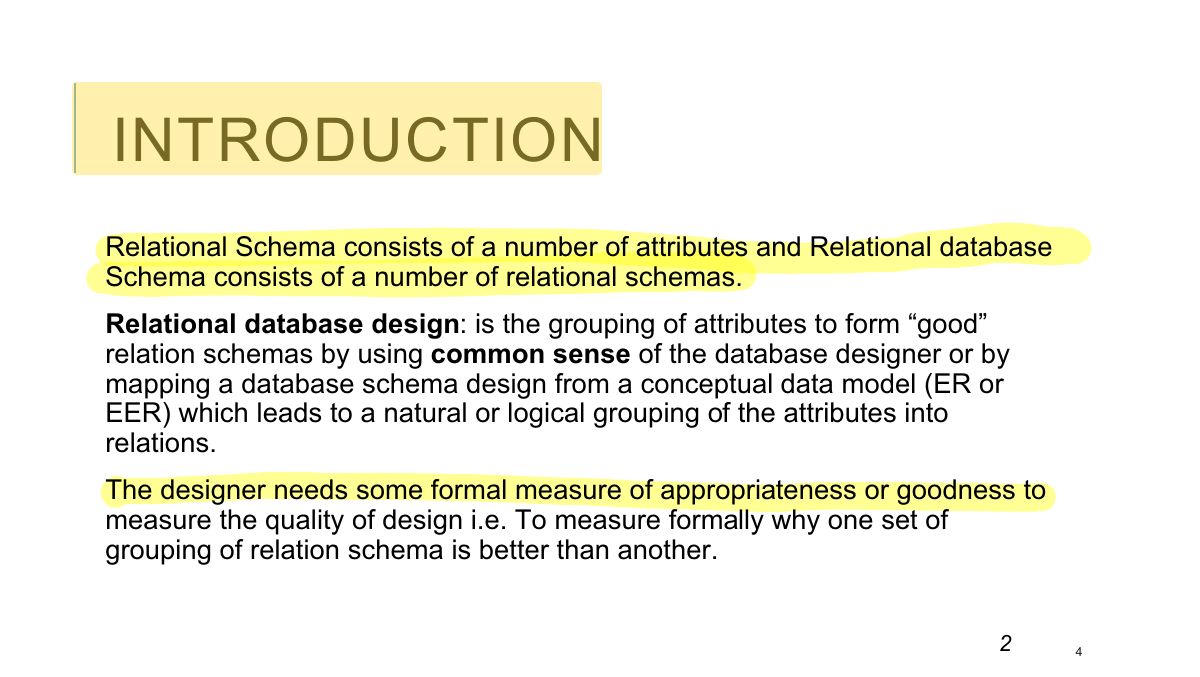
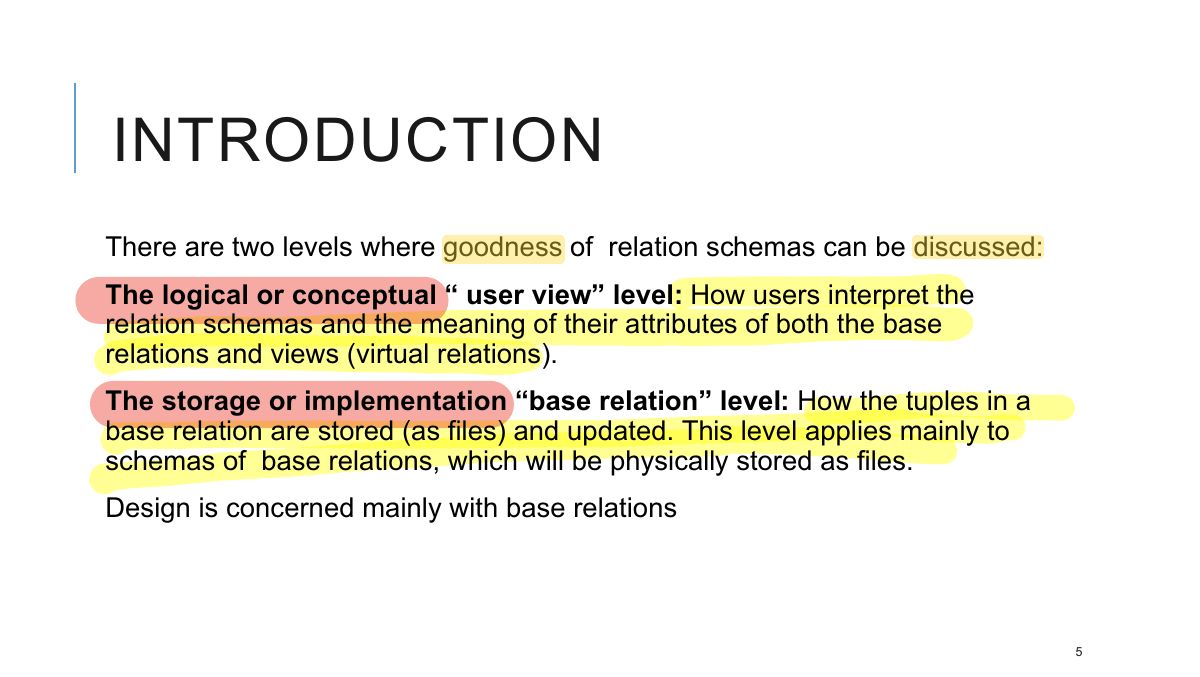
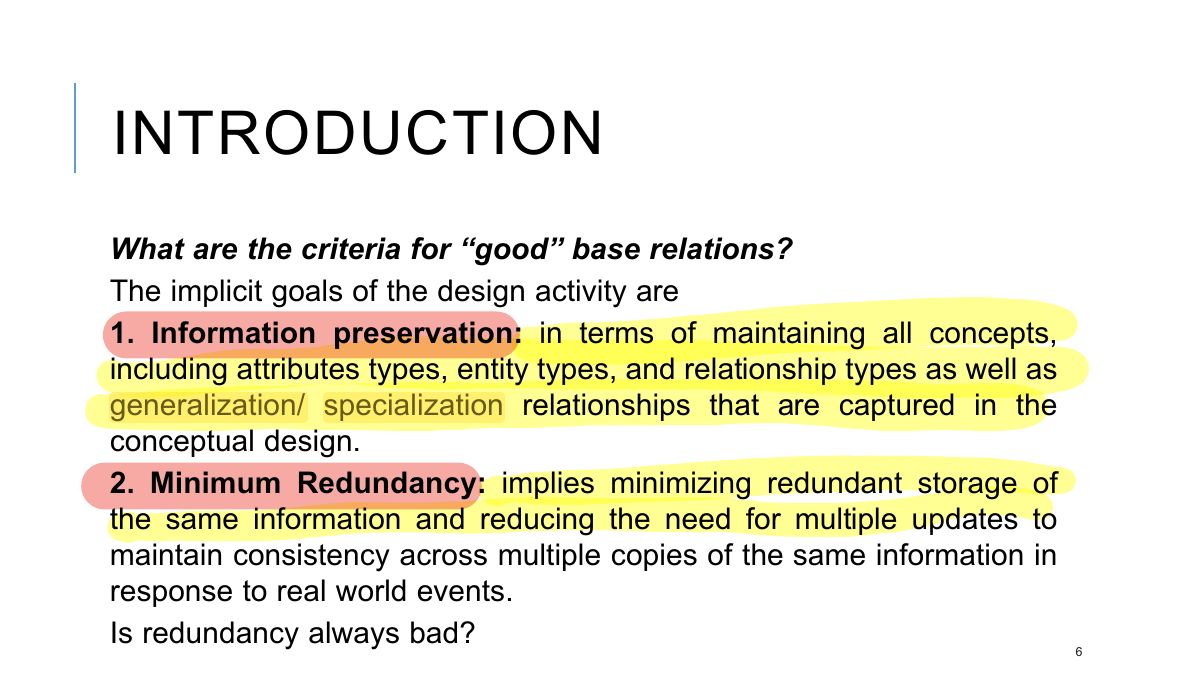
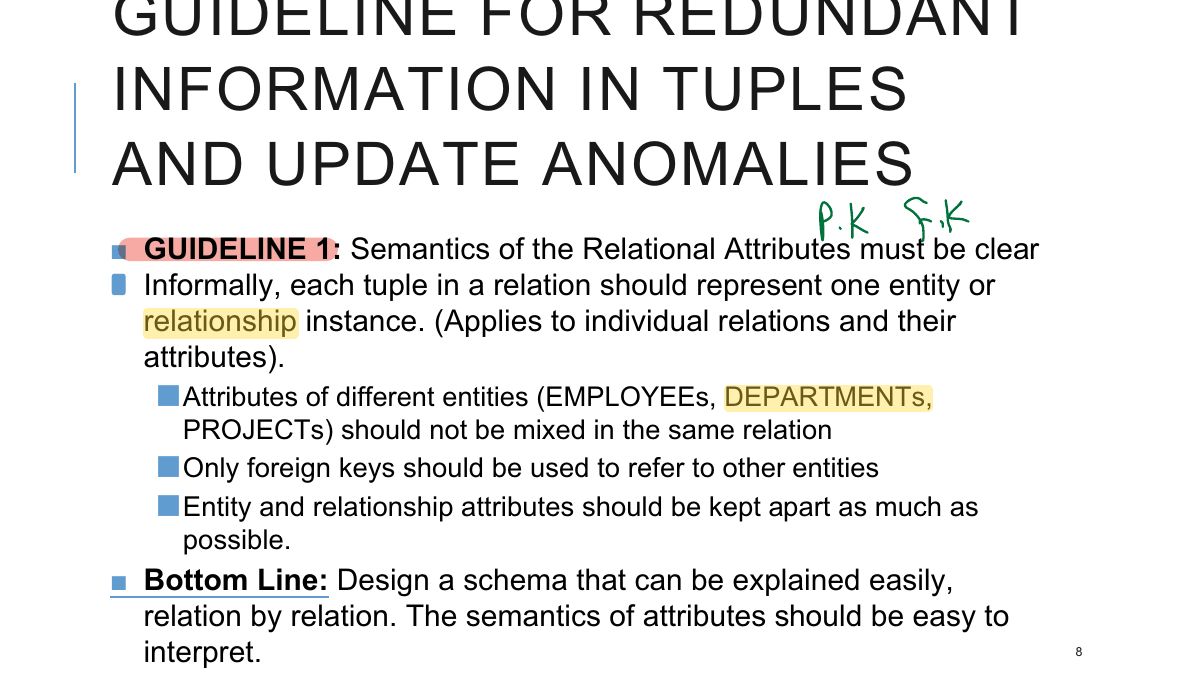
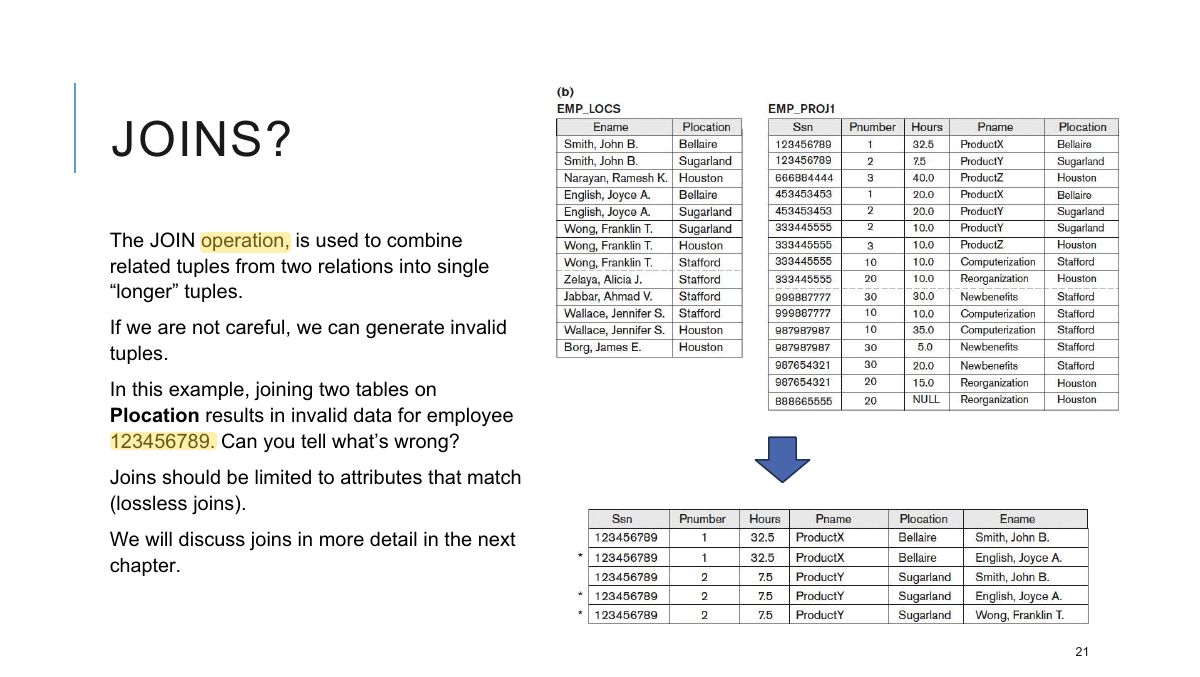
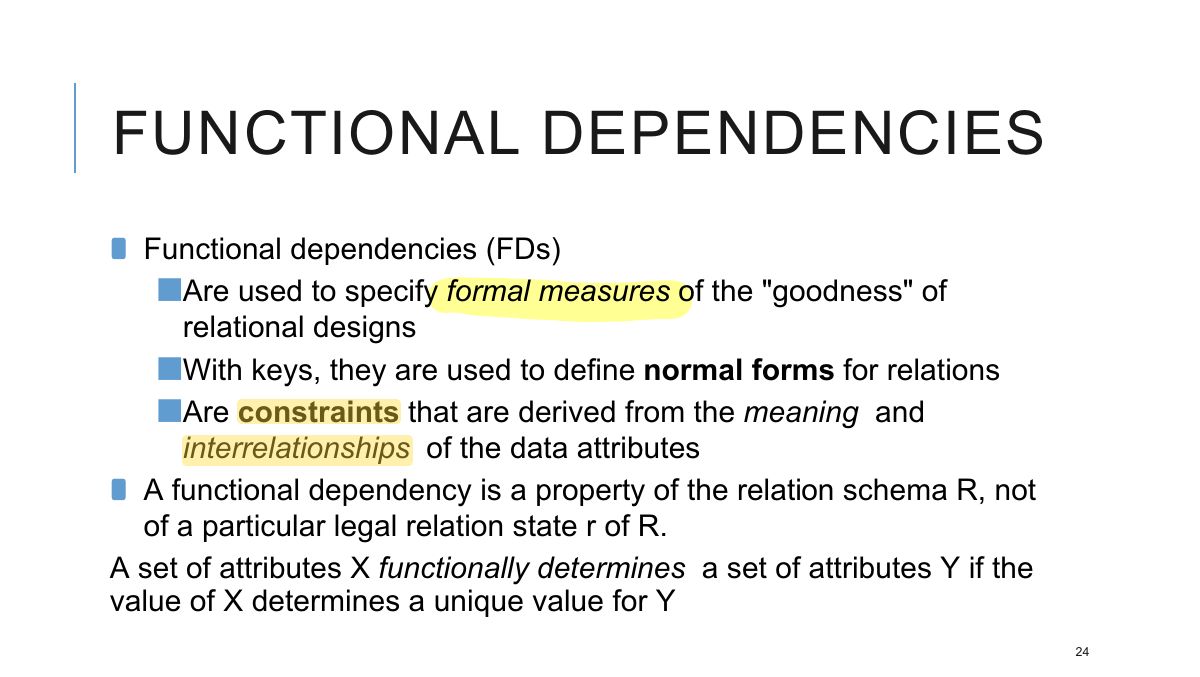
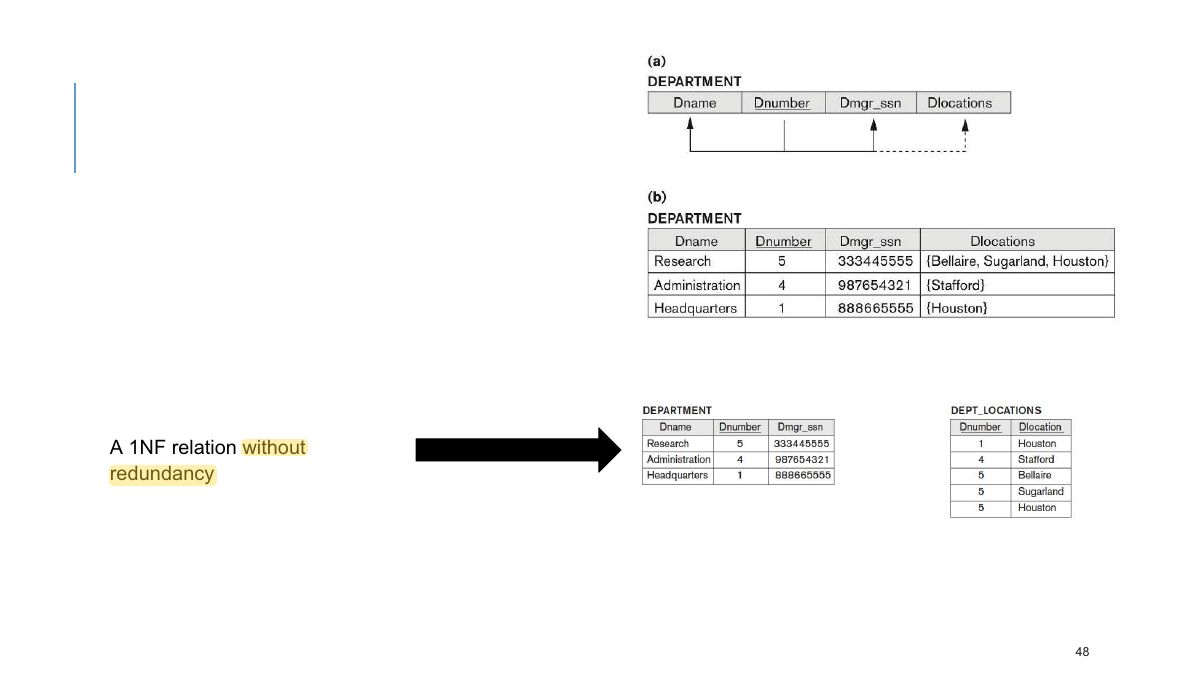
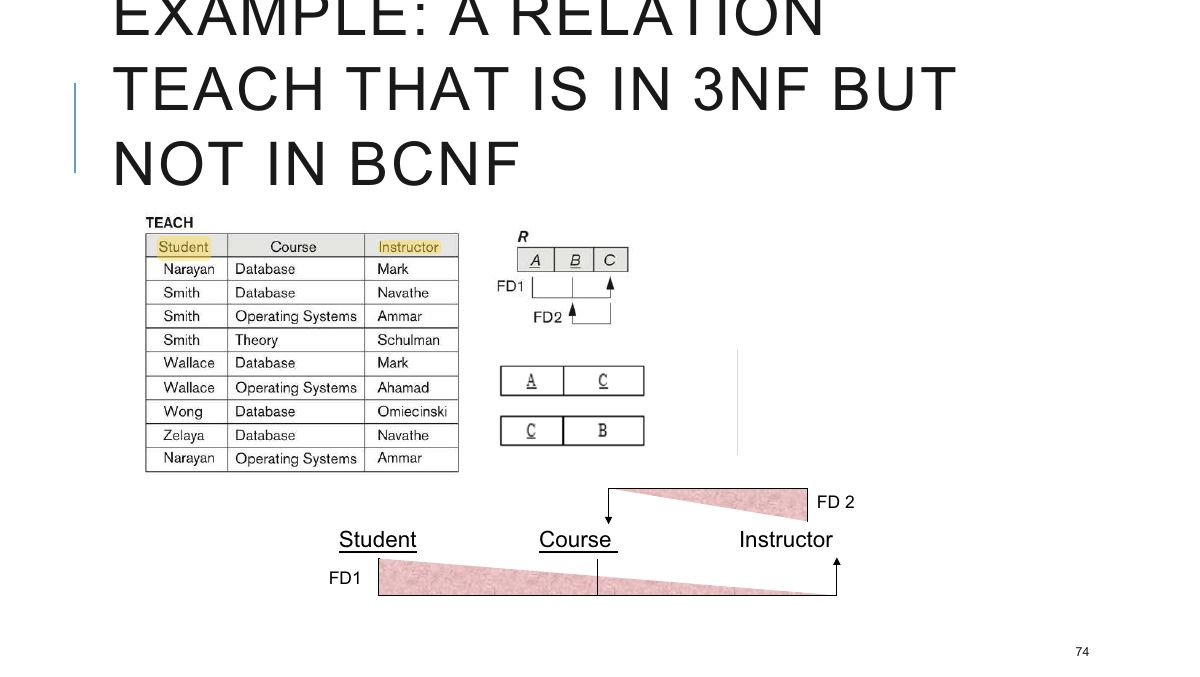
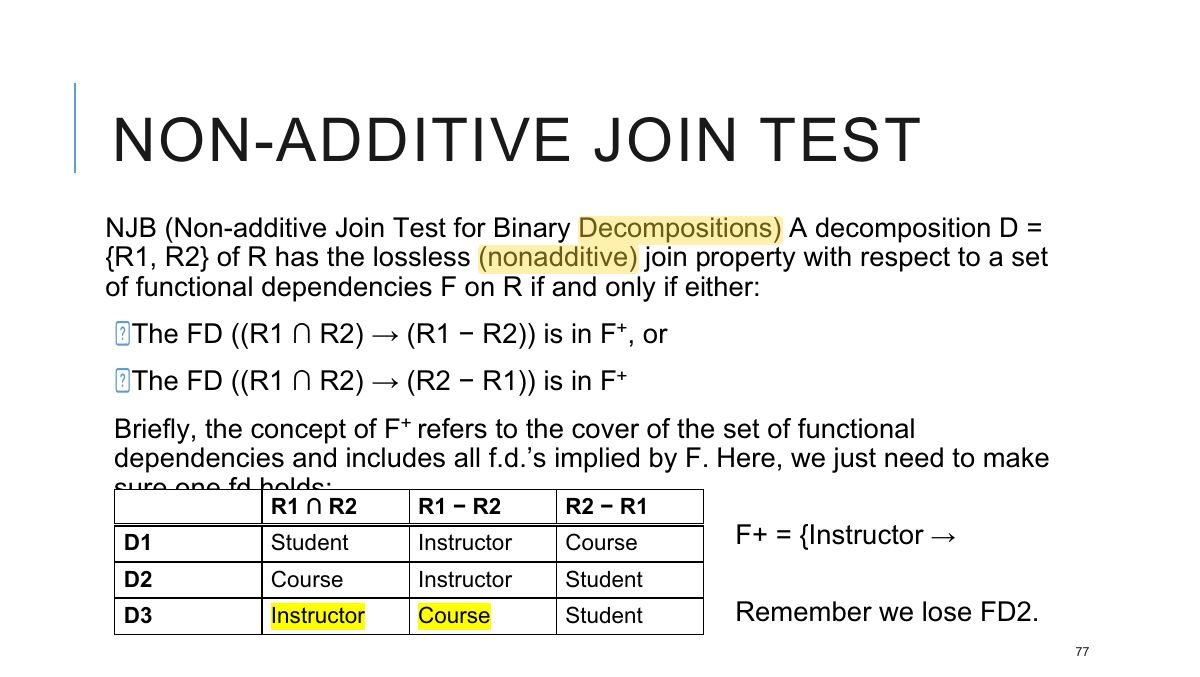
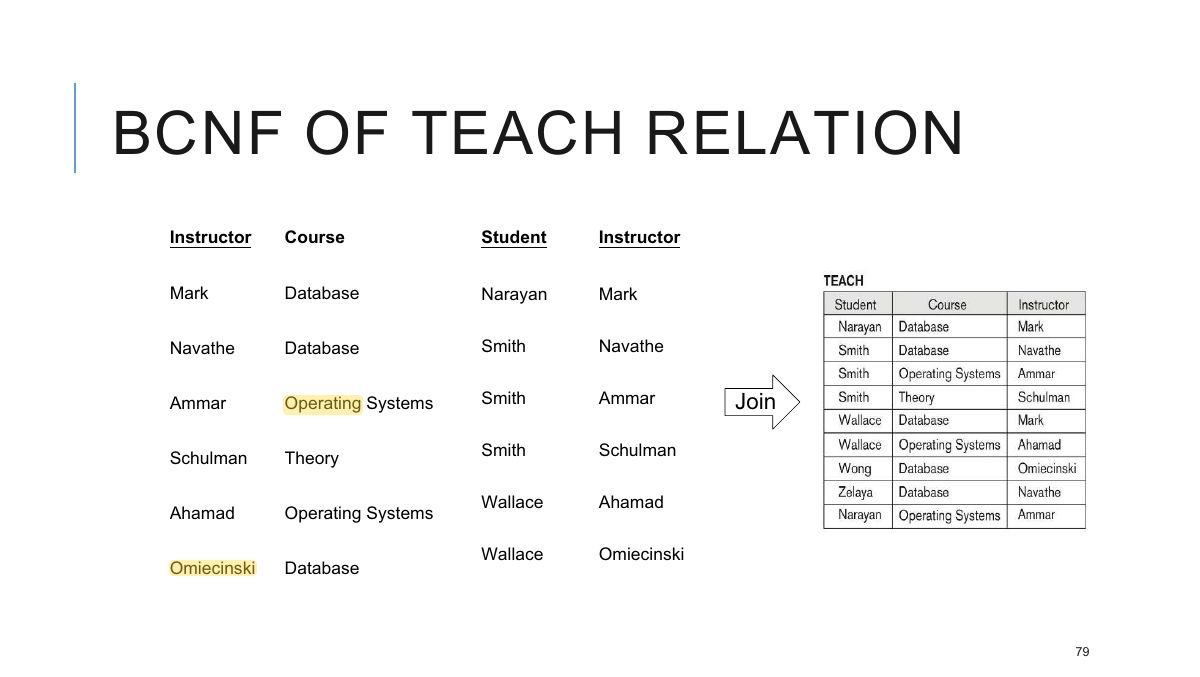
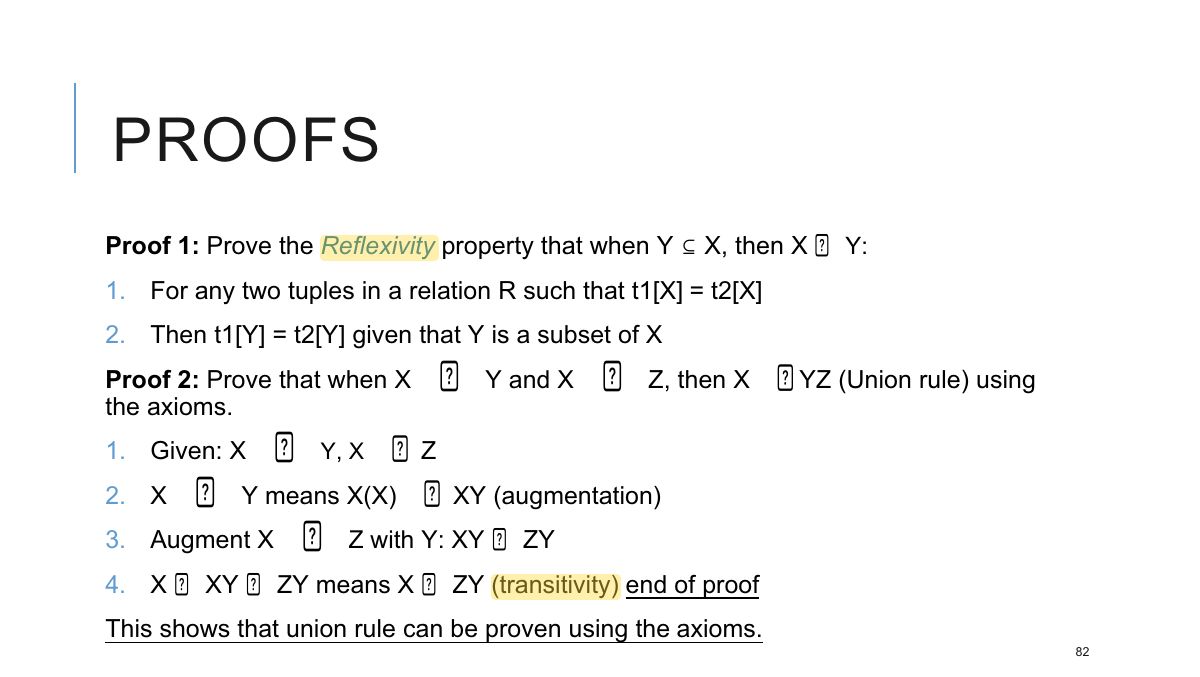
Informal design guidelines (clear semantics, no anomalies, few NULLs, no spurious tuples), functional dependencies, keys and prime attributes, 1NF, 2NF, 3NF and BCNF with their general definitions, lossless decomposition, inference rules and attribute closure, and a full worked example.
Asked in a real exam
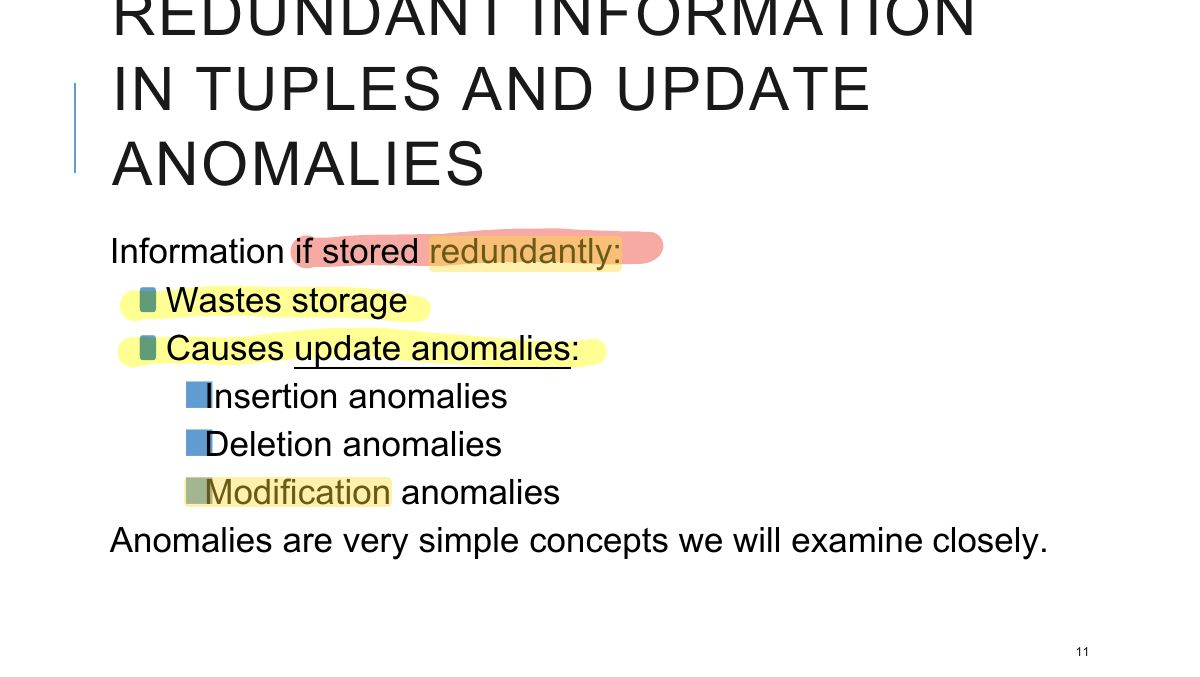
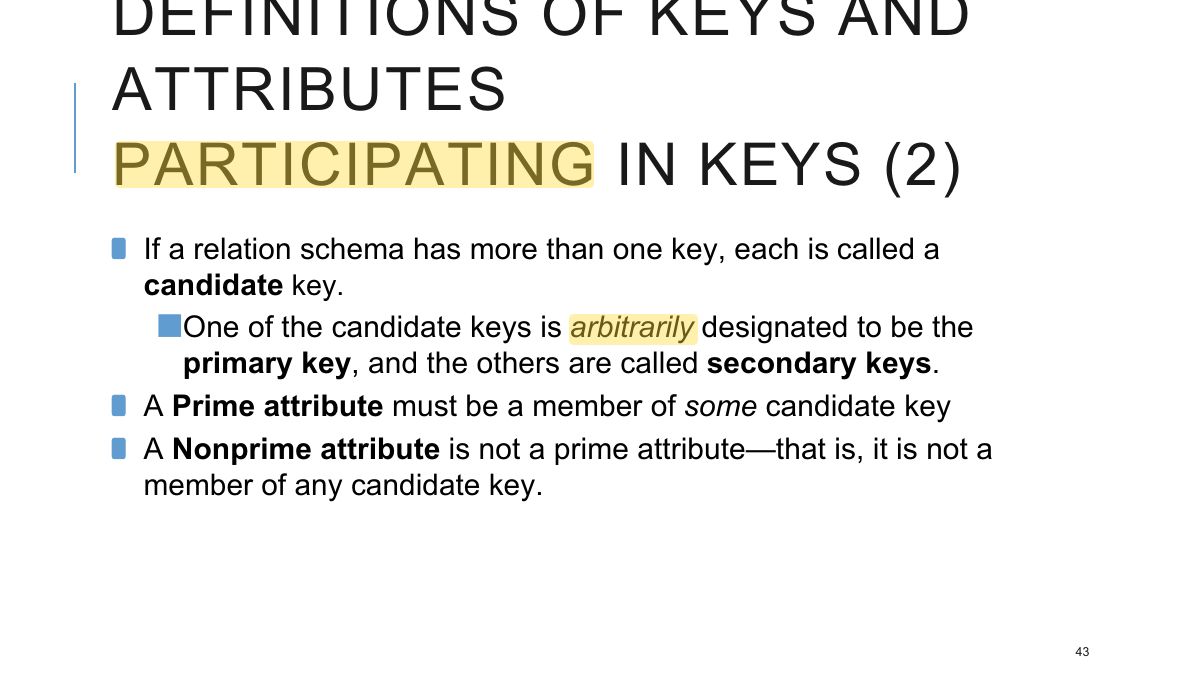
You can’t record a new department until it has an employee. This is a(n):
Correct: Insertion anomaly.
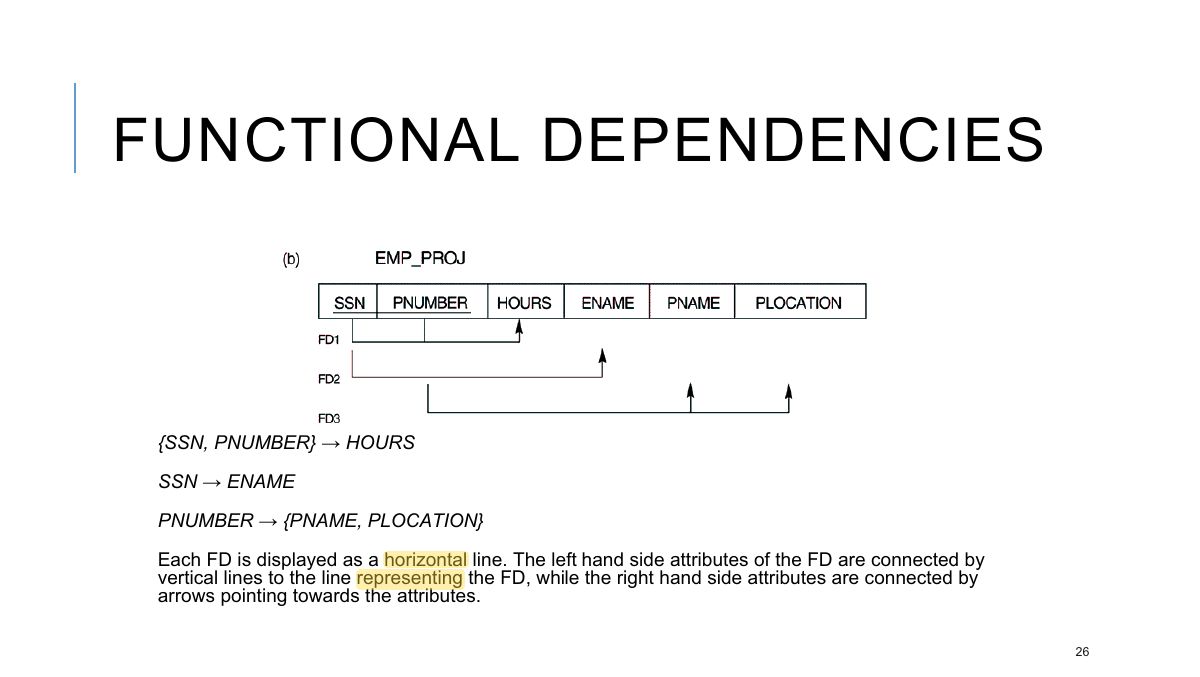
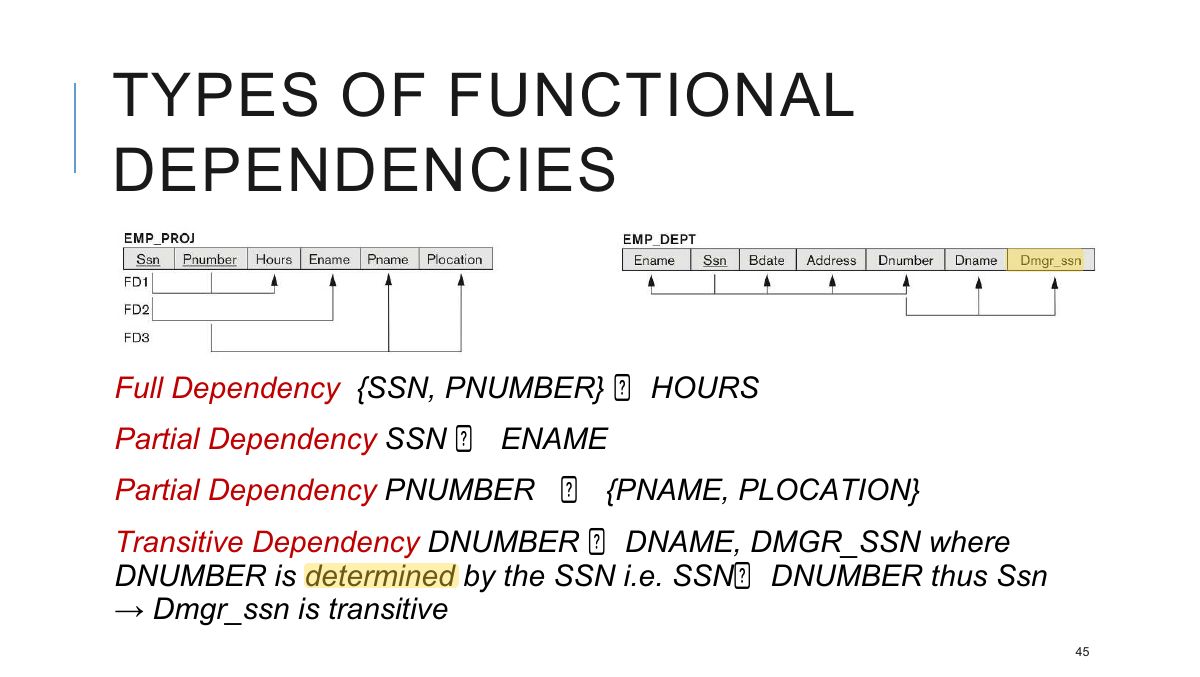
Ssn → Ename means:
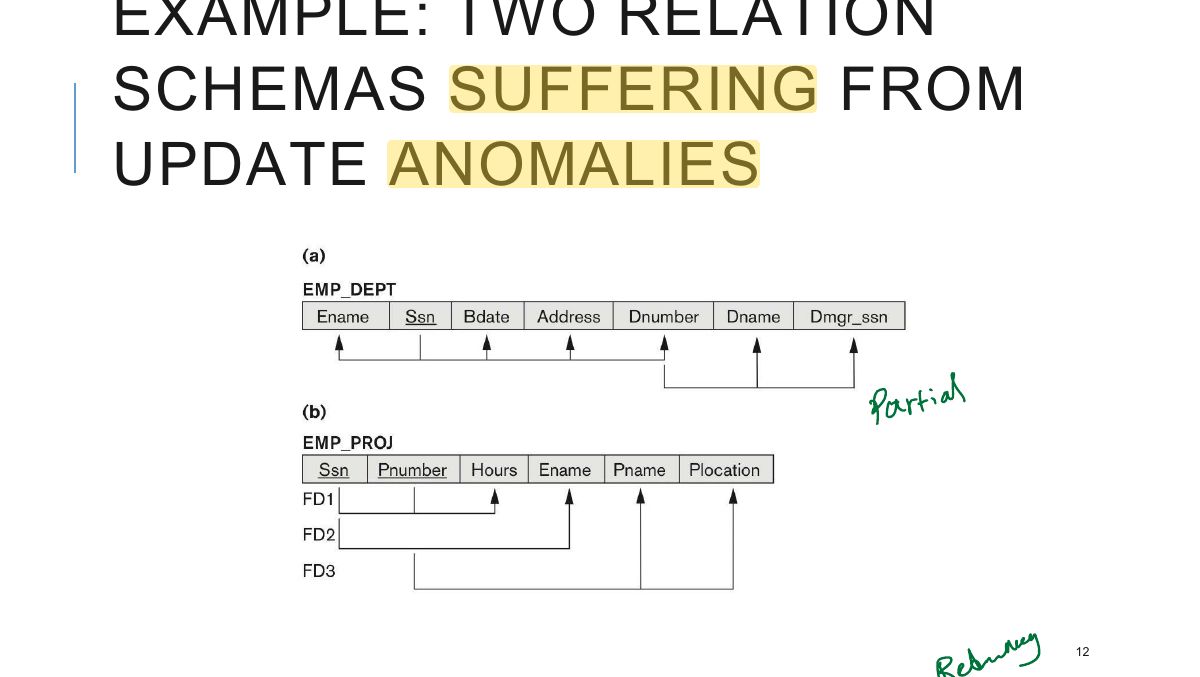
Correct: Each Ssn has exactly one Ename.
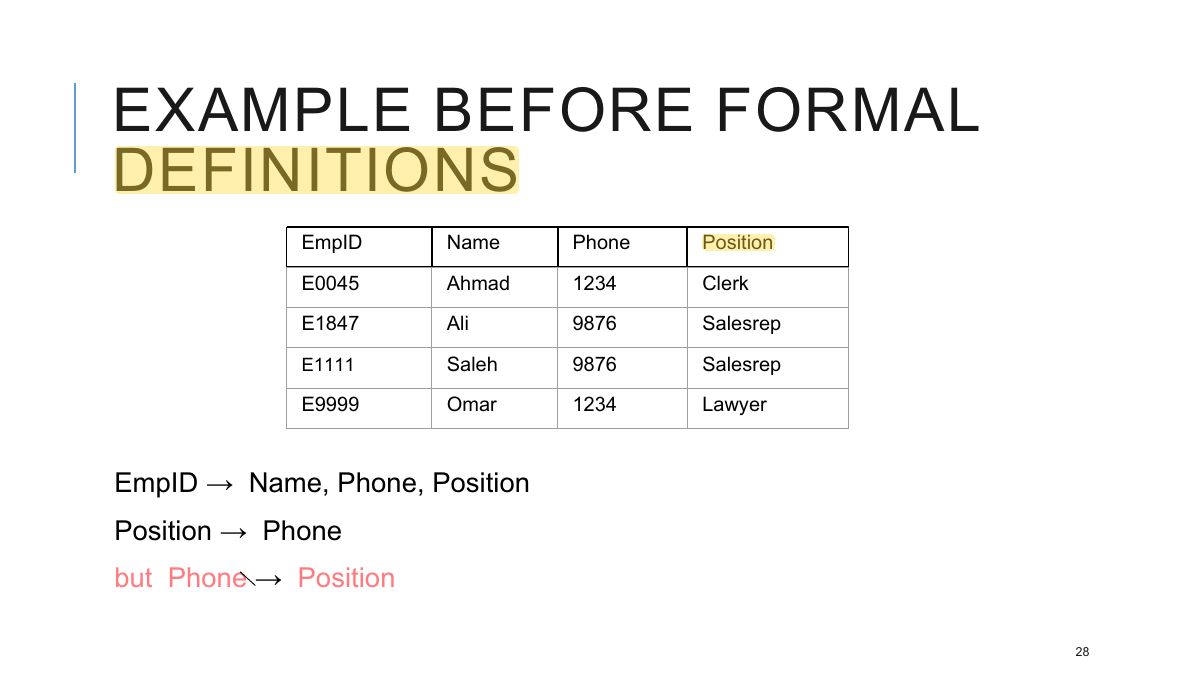
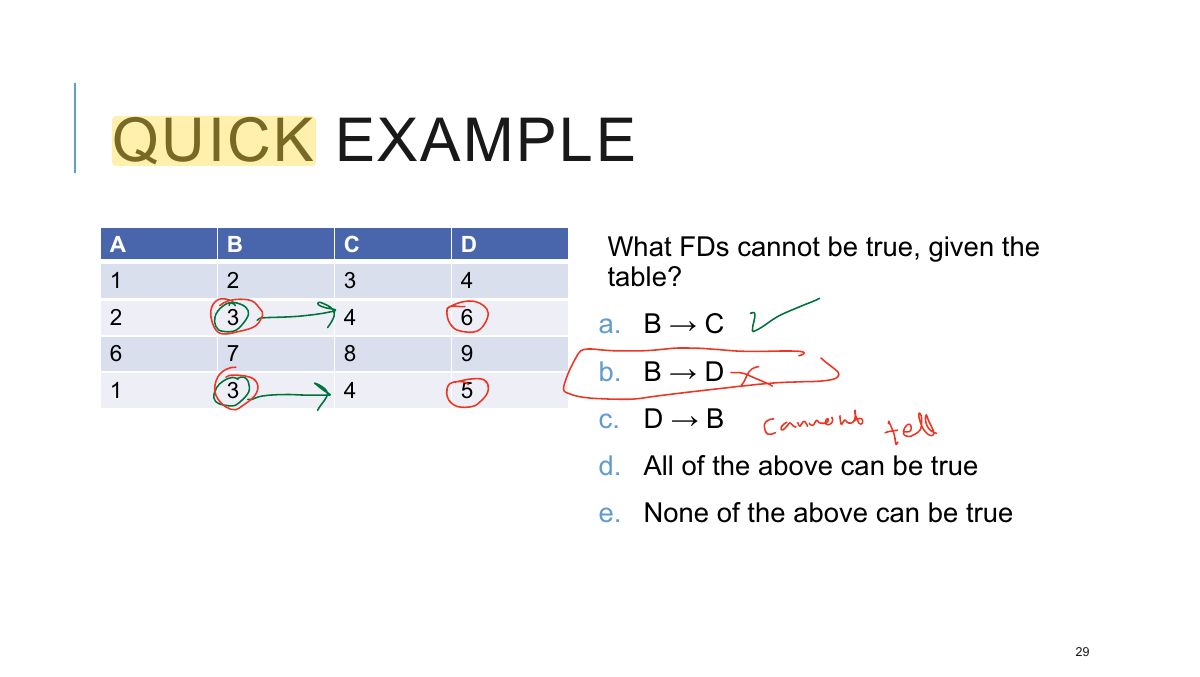
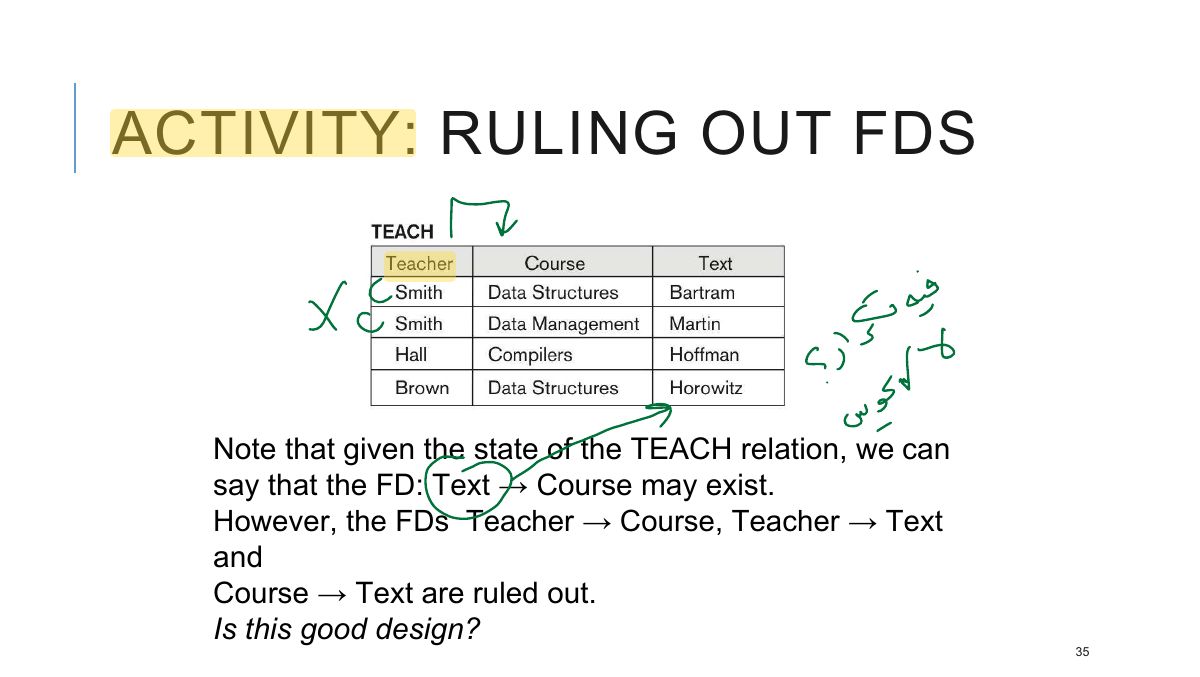
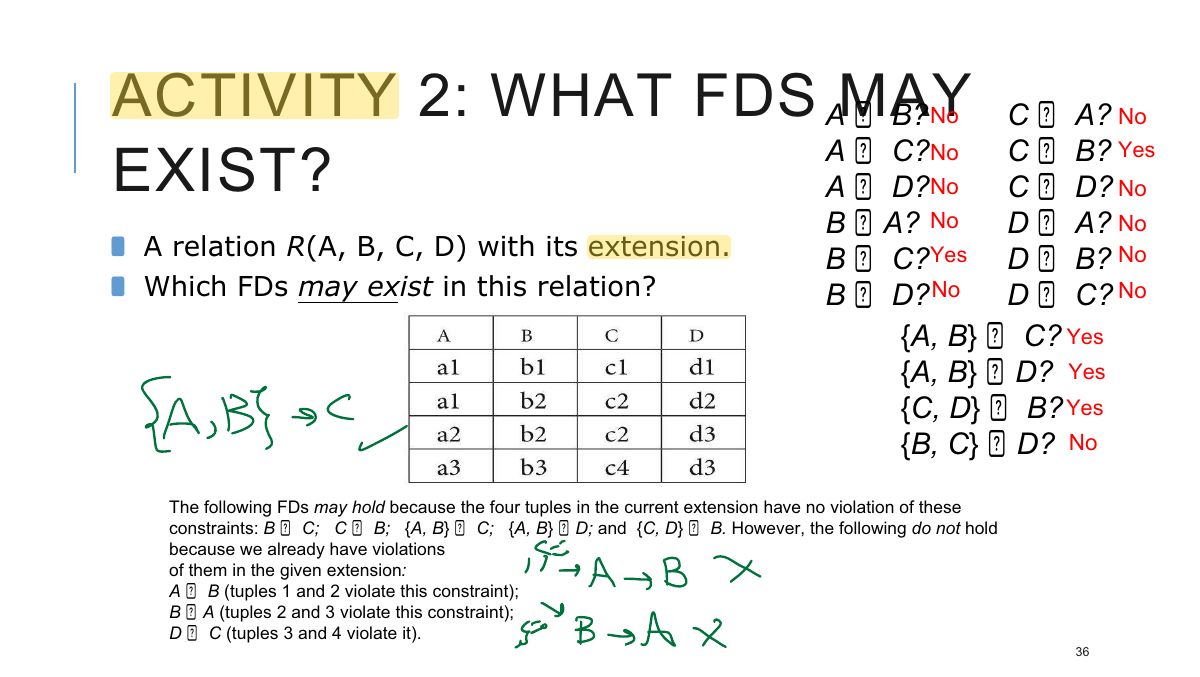
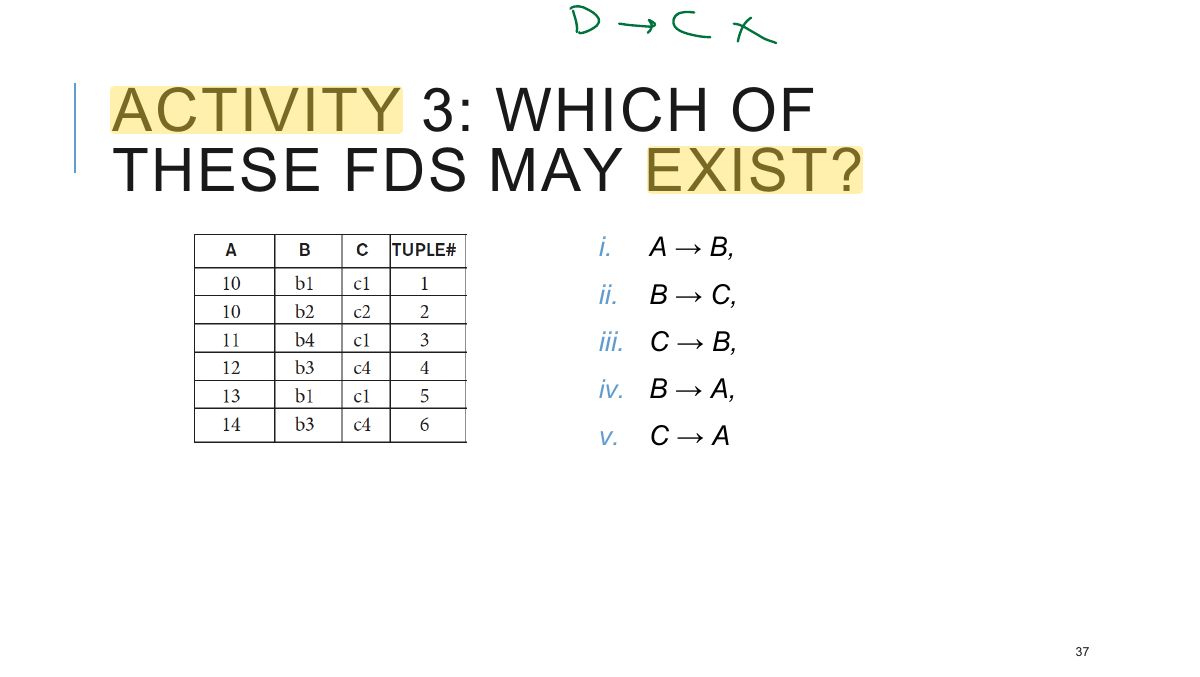
A sample table can prove that an FD holds for all possible data.
False. It can only rule FDs out.
Asked in a real exam
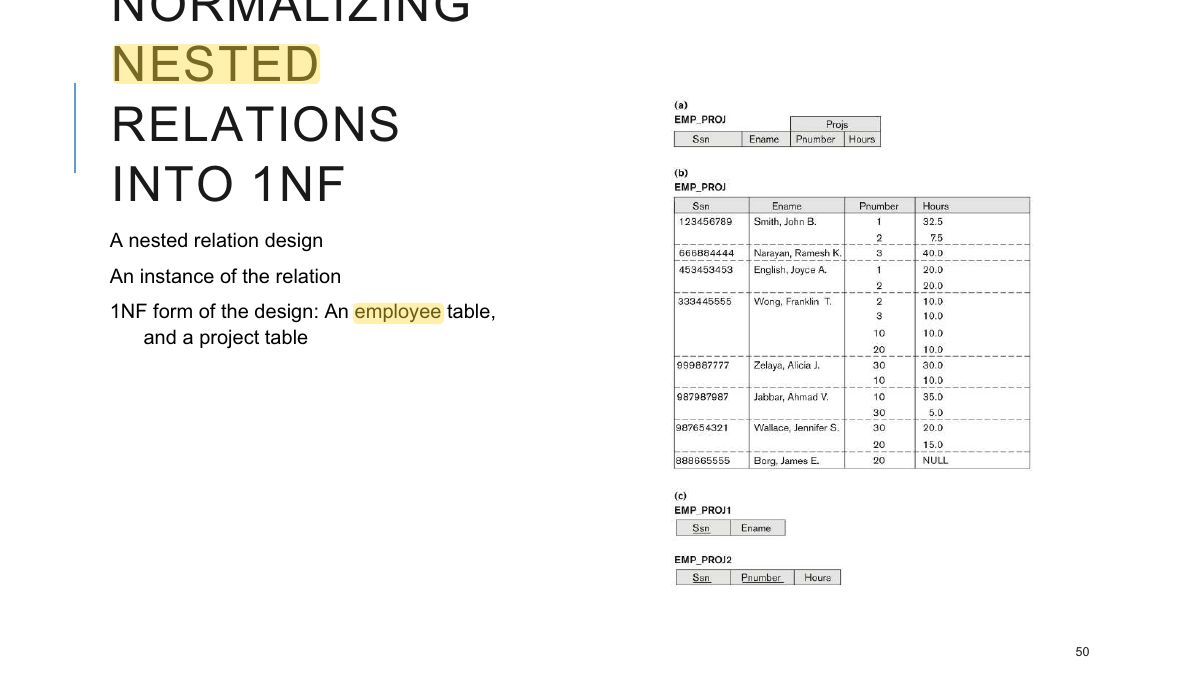
Asked in a real exam
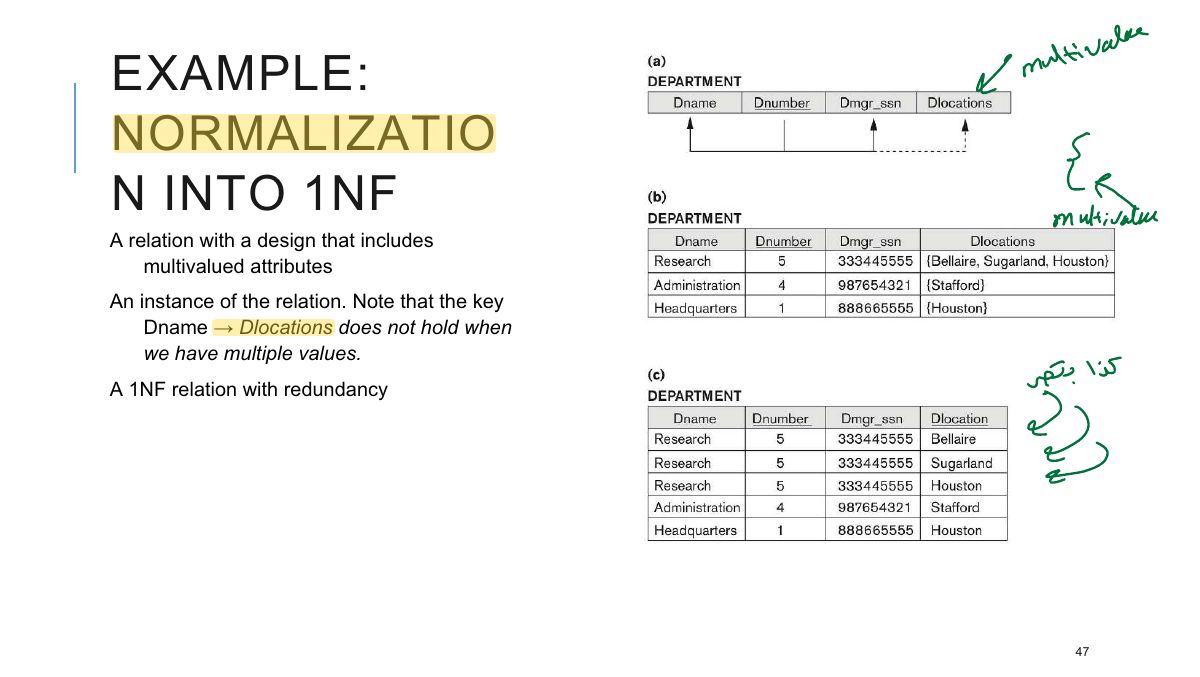
2NF removes:
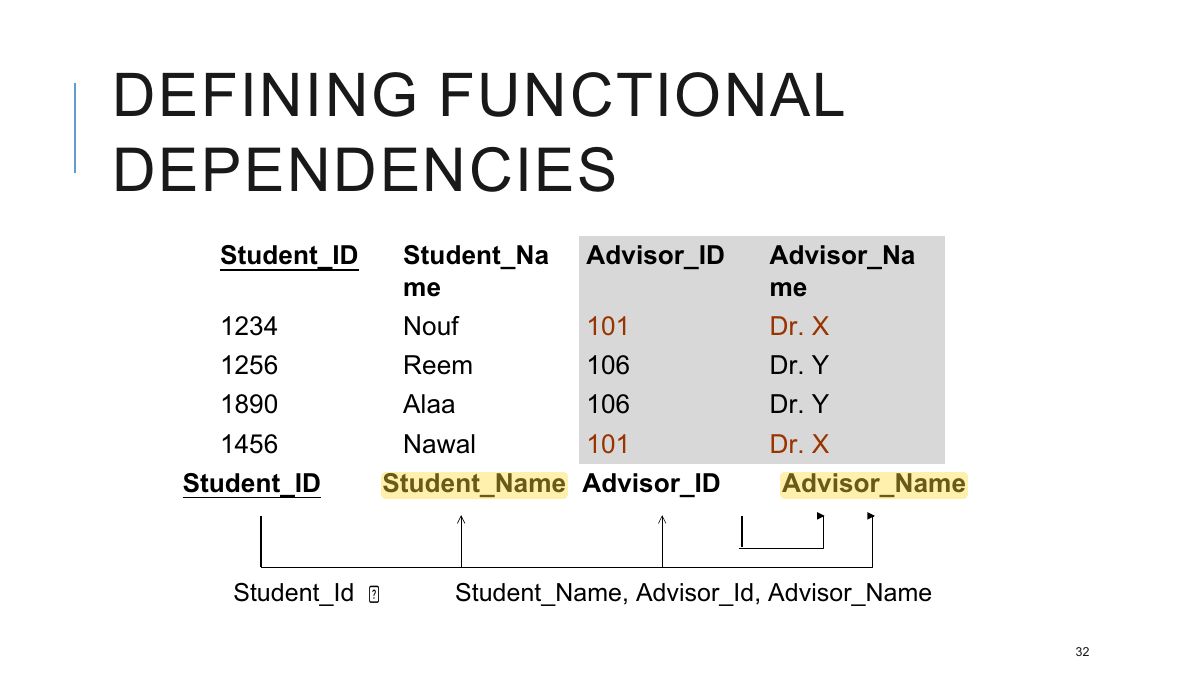
Correct: Partial dependencies on the key.
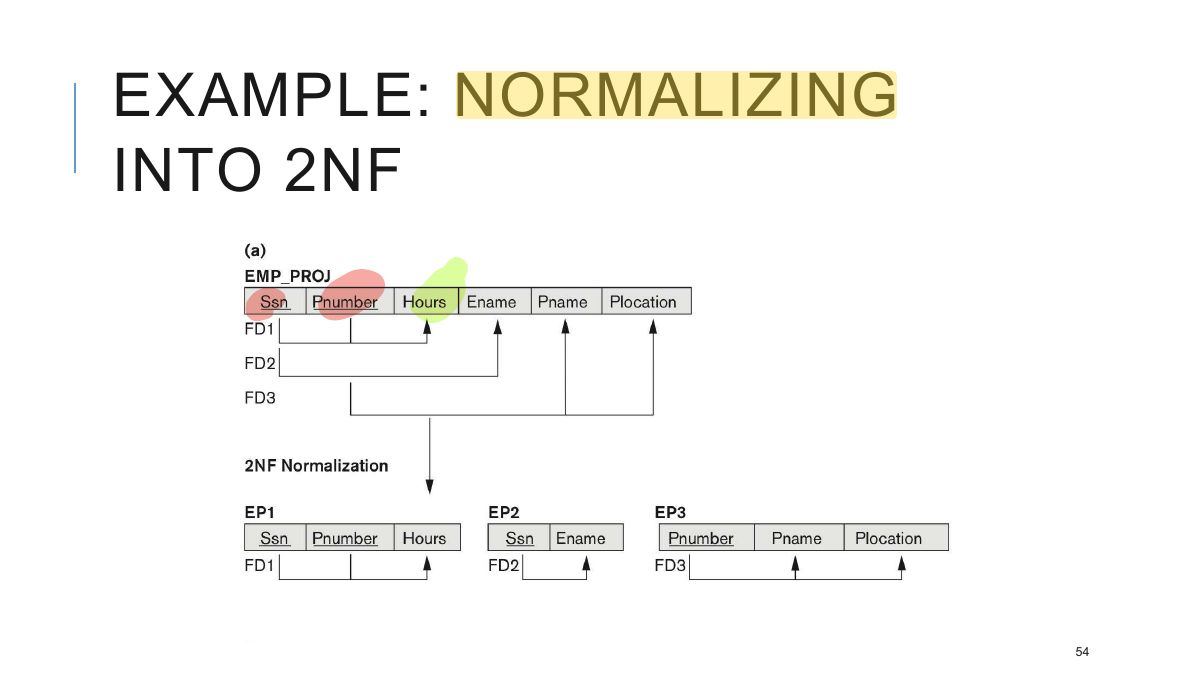
Asked in a real exam
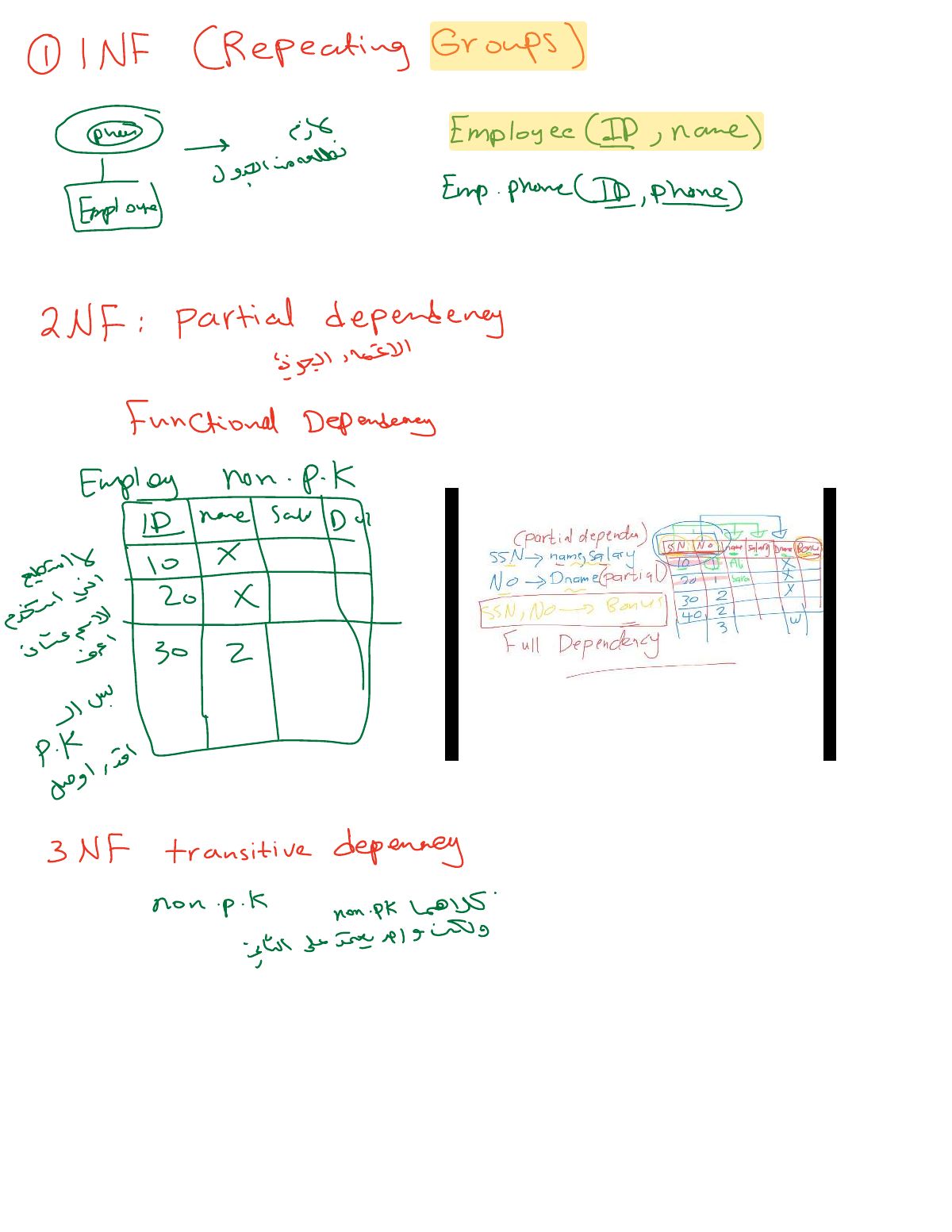
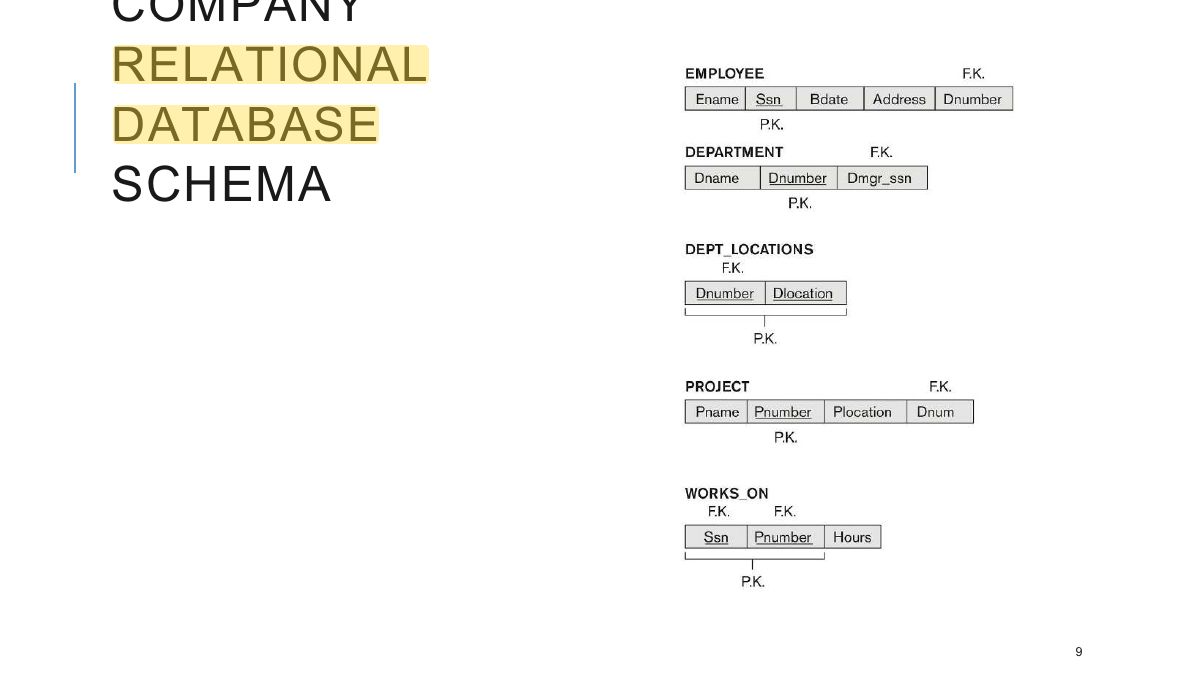
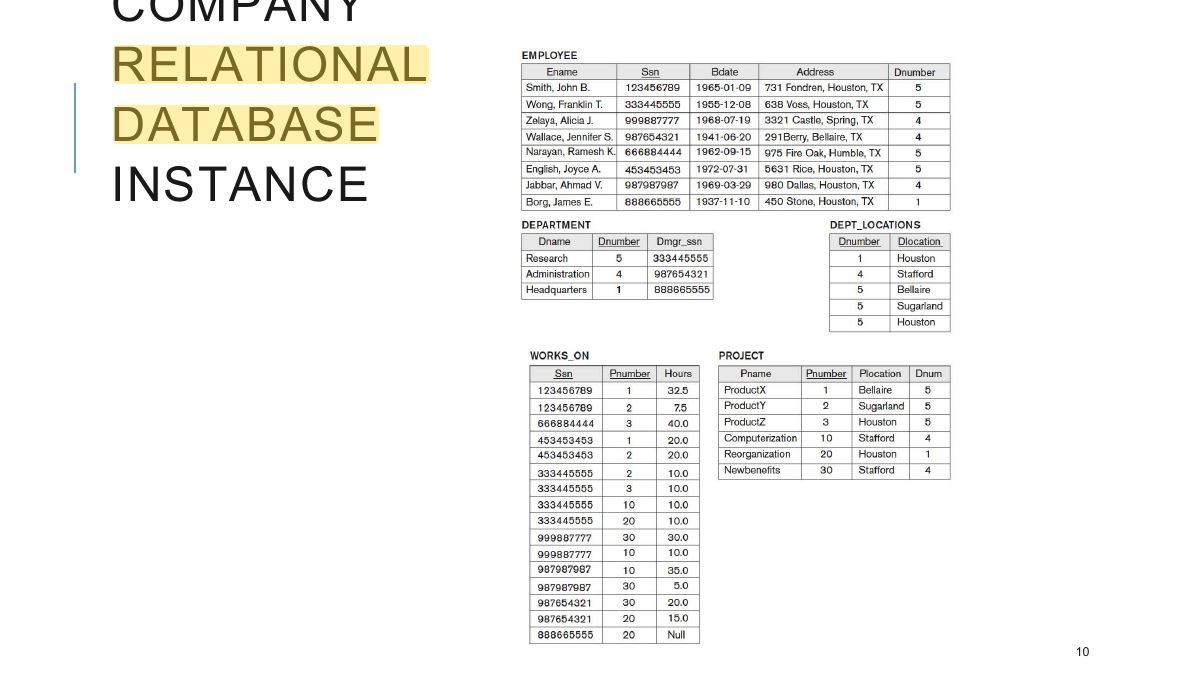
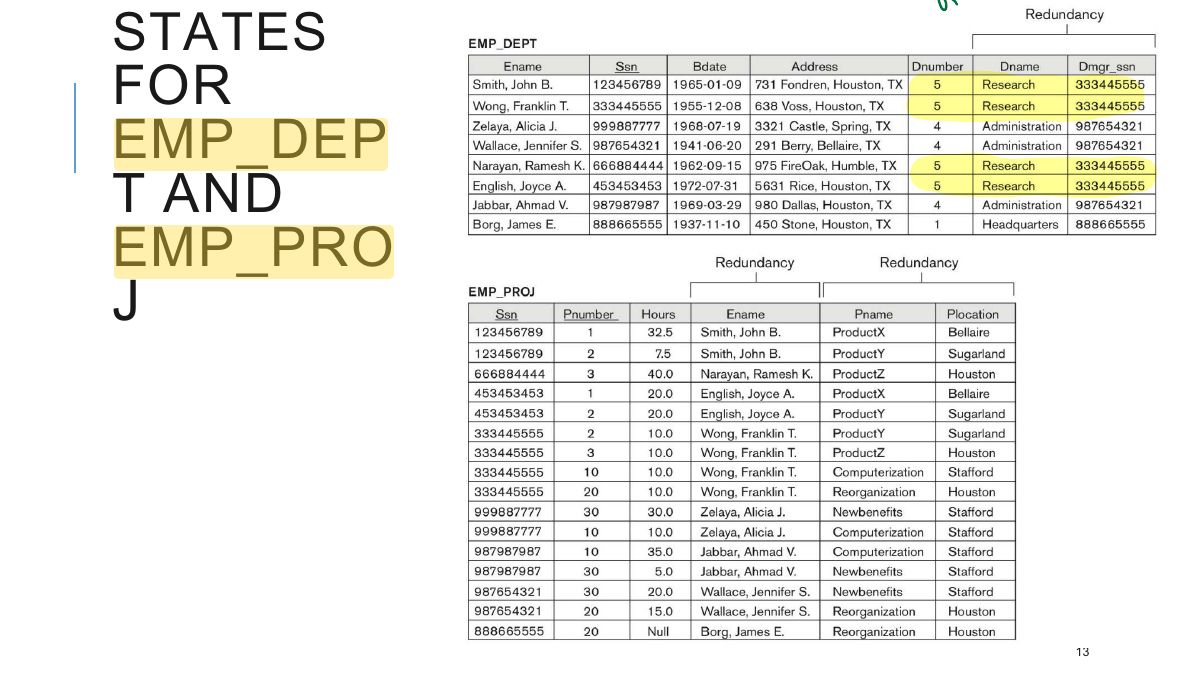
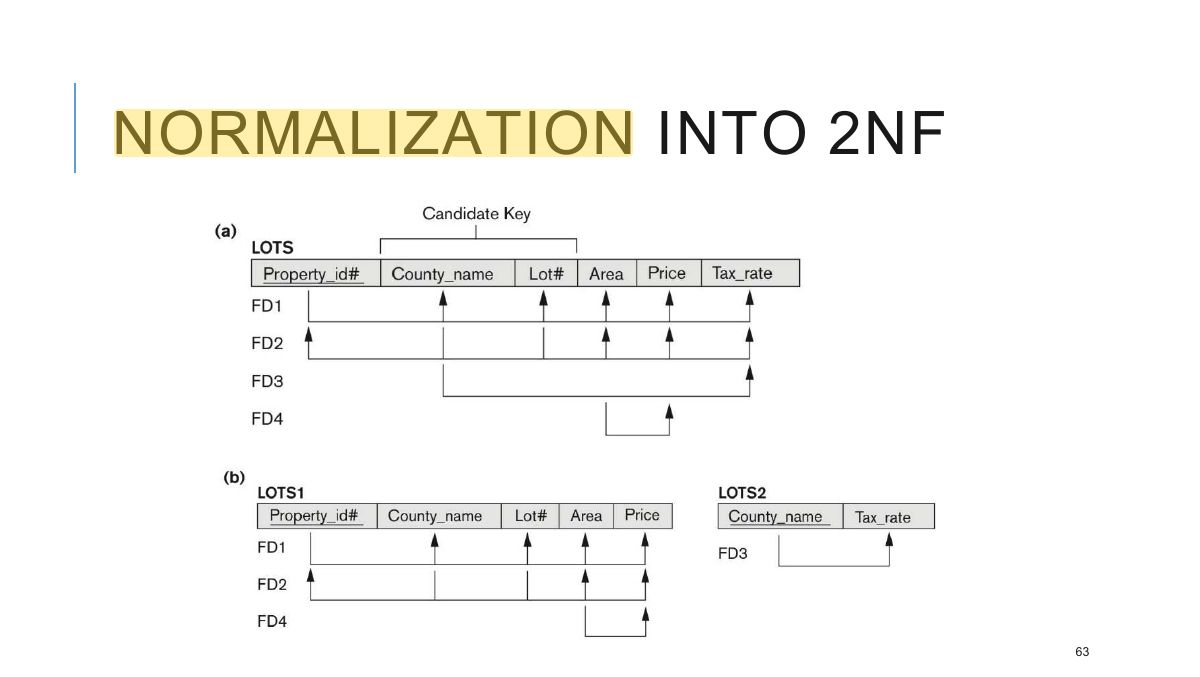
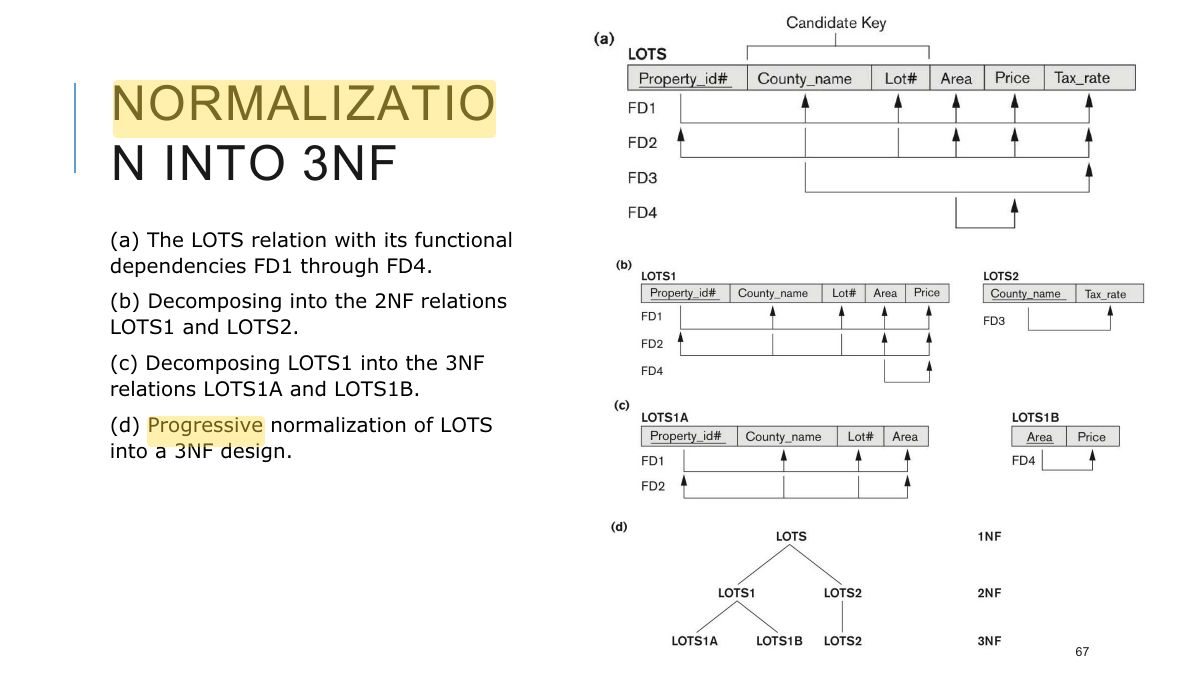
EMP_DEPT(Ssn, Ename, Dnumber, Dname) with Ssn → Ename, Dnumber and Dnumber → Dname. Normalize to 3NF.
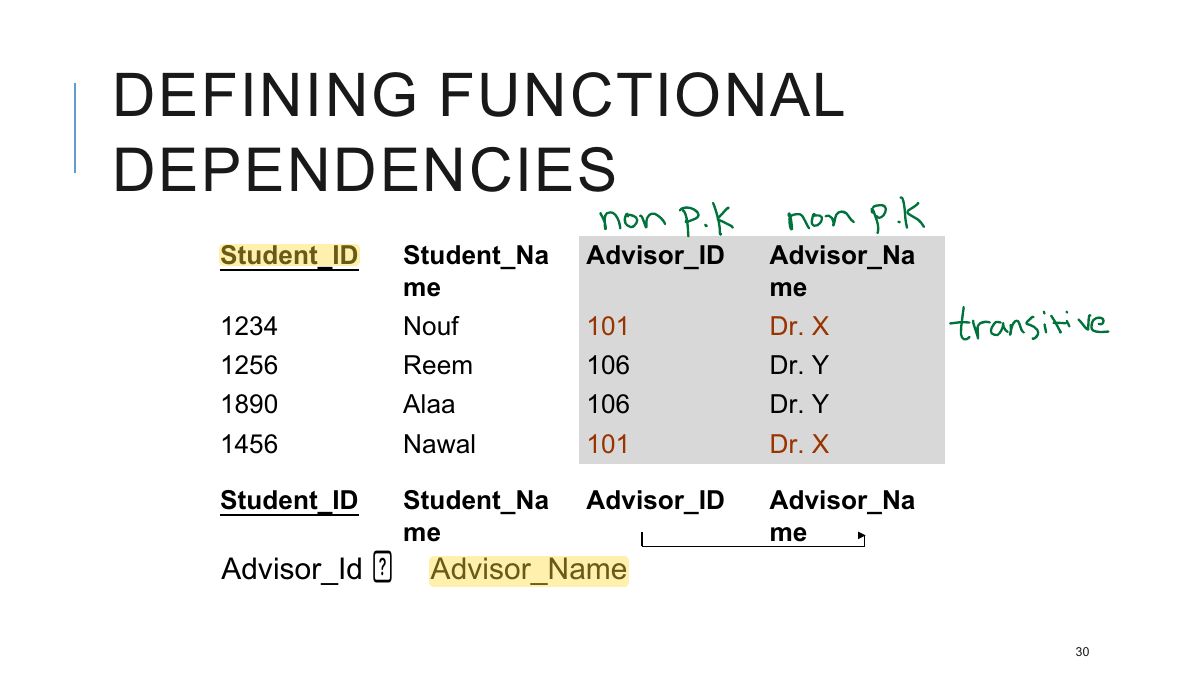
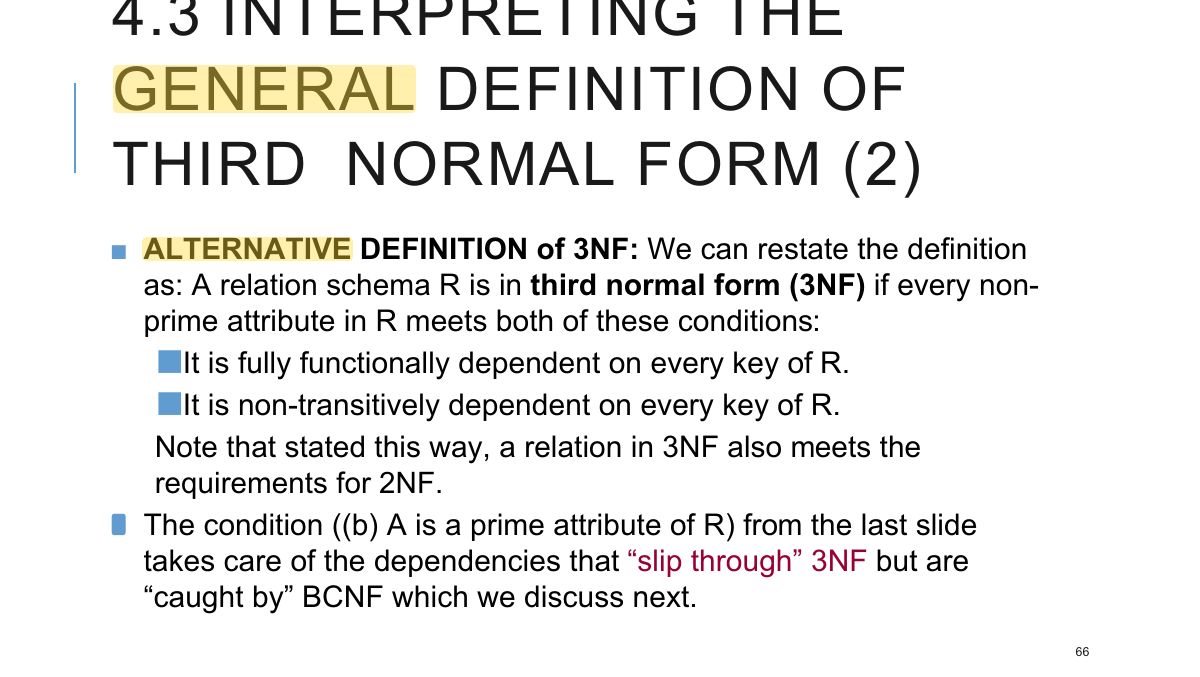
Dname depends transitively on Ssn through Dnumber. Split into EMP(Ssn, Ename, Dnumber) with Dnumber as an FK, and DEPT(Dnumber, Dname).
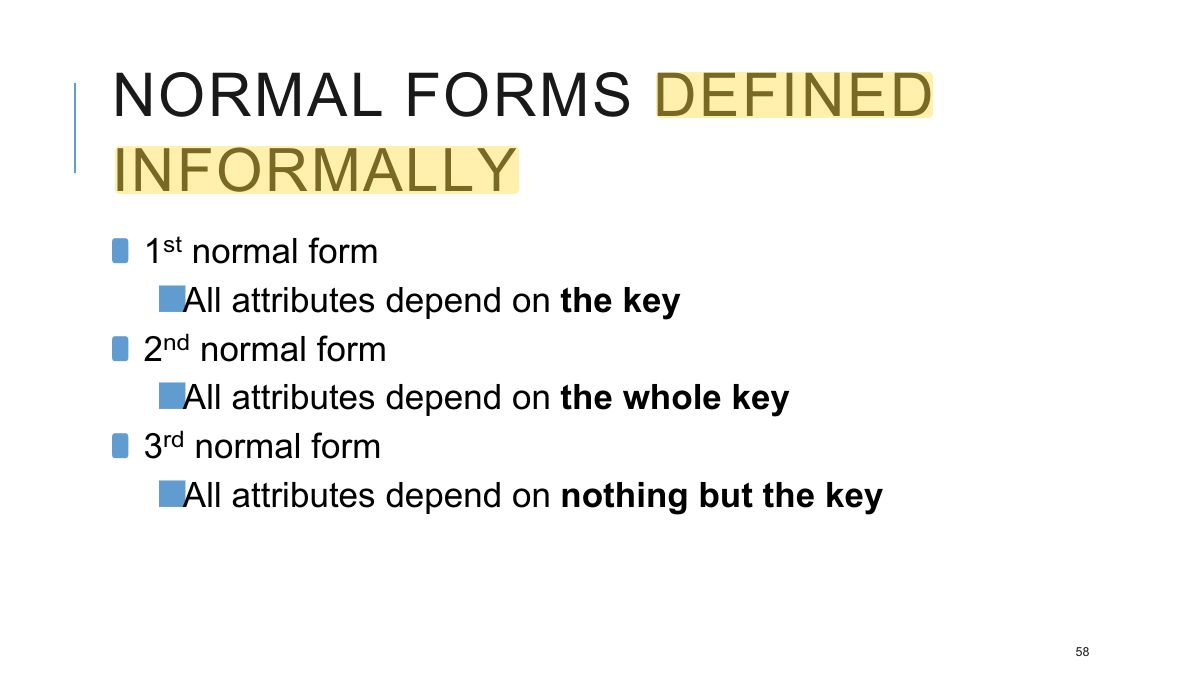
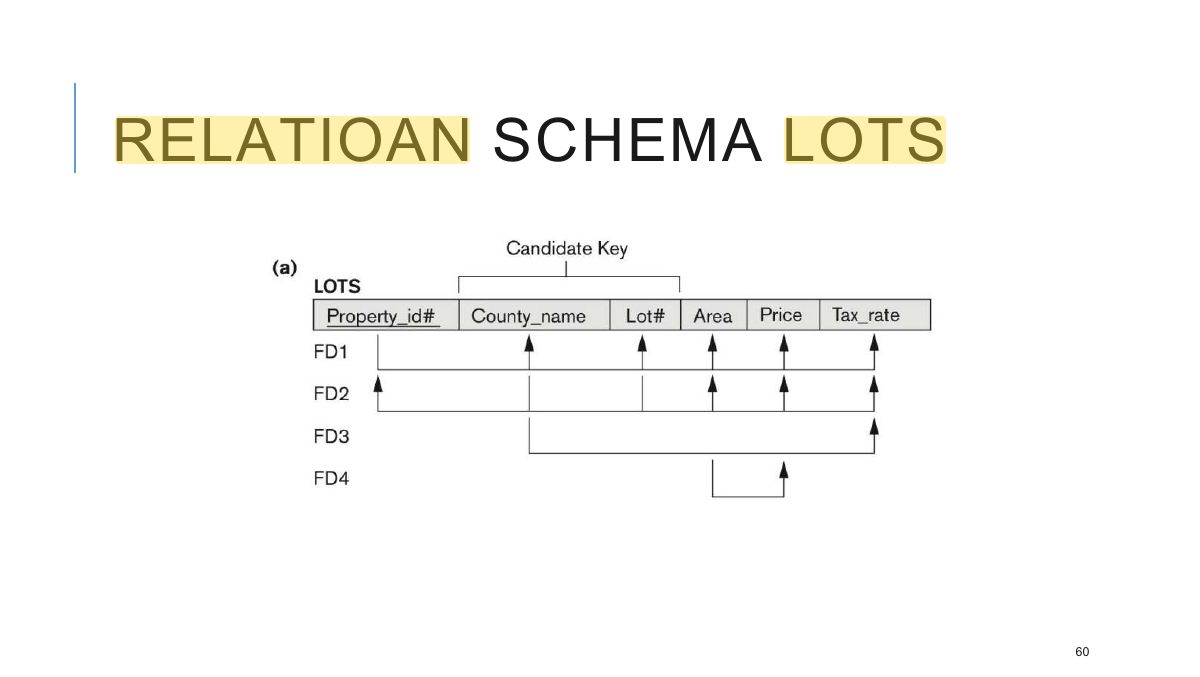
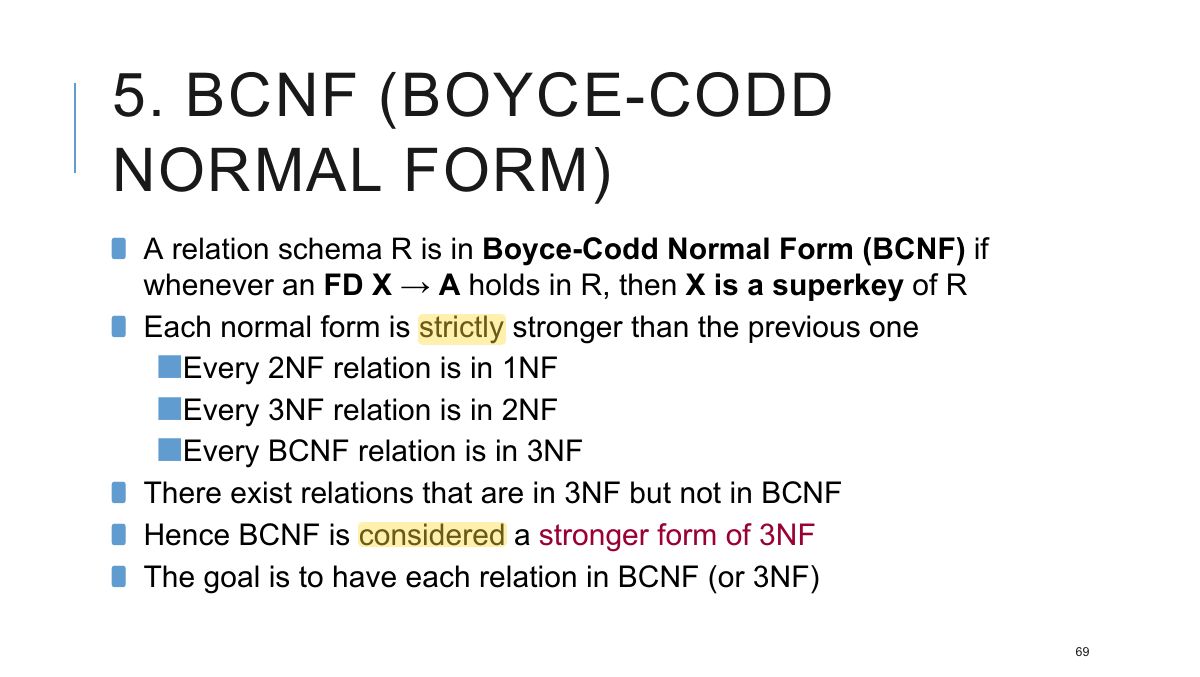
A relation is in BCNF if for every nontrivial FD X → A:
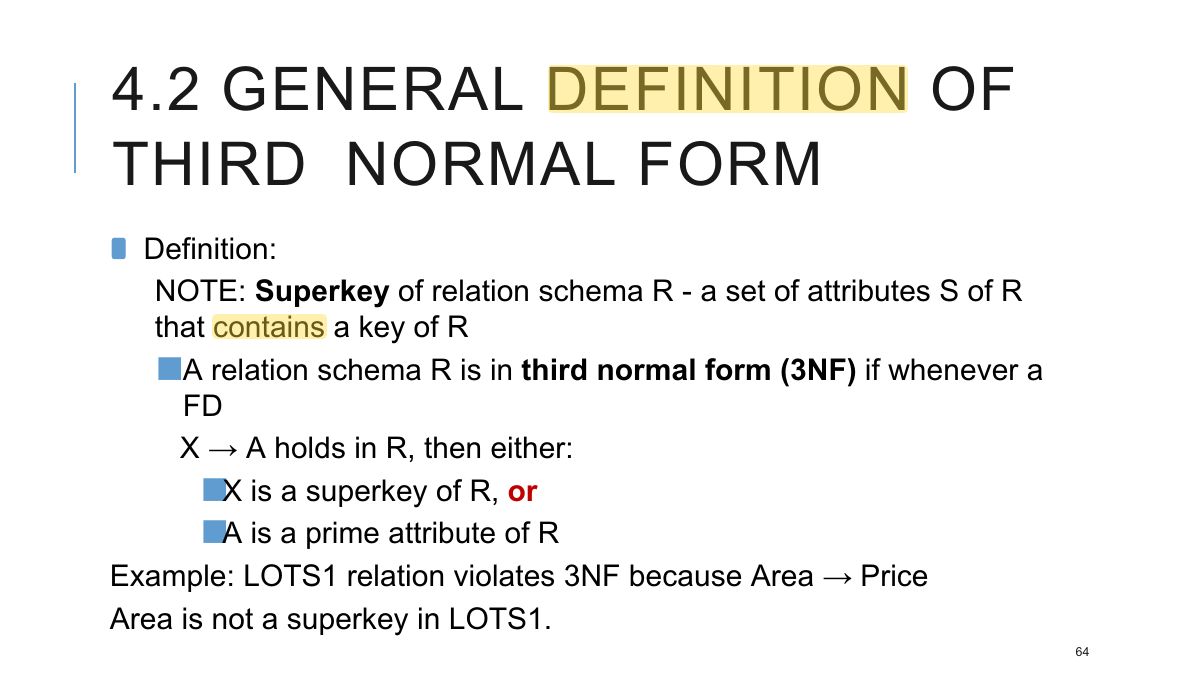
Correct: X is a superkey.
Asked in a real exam
R(A, B, C, D) with A → B, B → C, C → D. A candidate key is:
A⁺ = ABCD.
No slides match this filter.