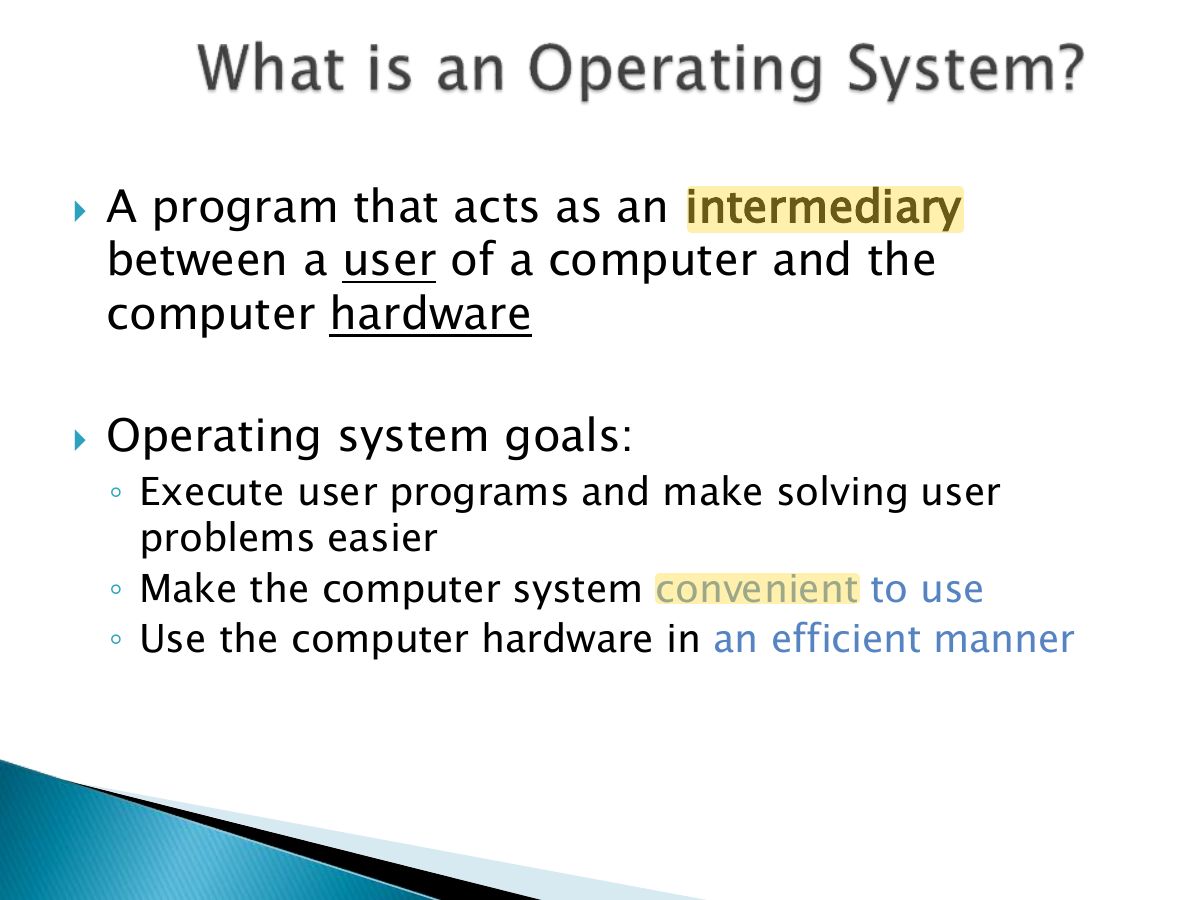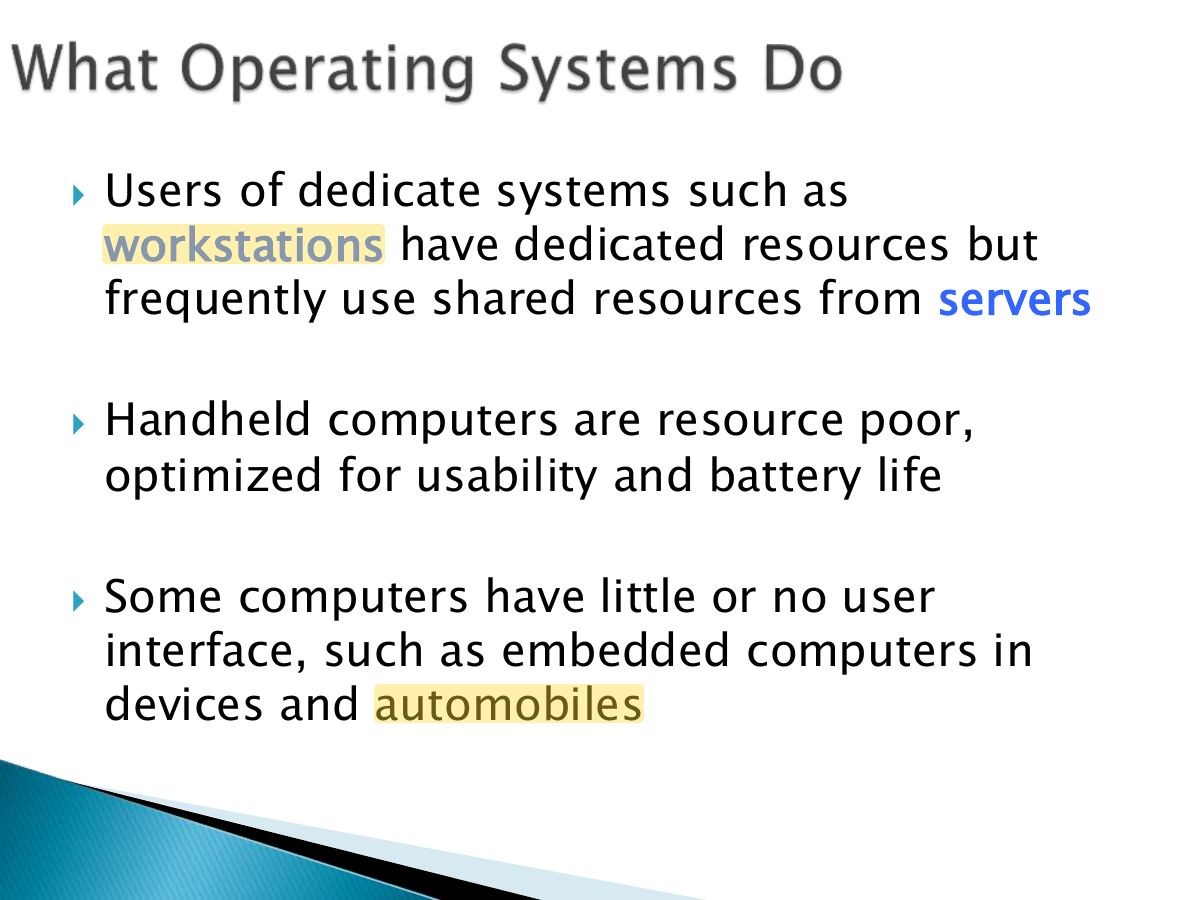
- OS = a program that acts as an intermediary between the user and the hardware.
Asked in a real exam
🎯 How this can come up · 1 question
A program that acts as an intermediary between a user of a computer and the hardware is:
Correct: Operating system.
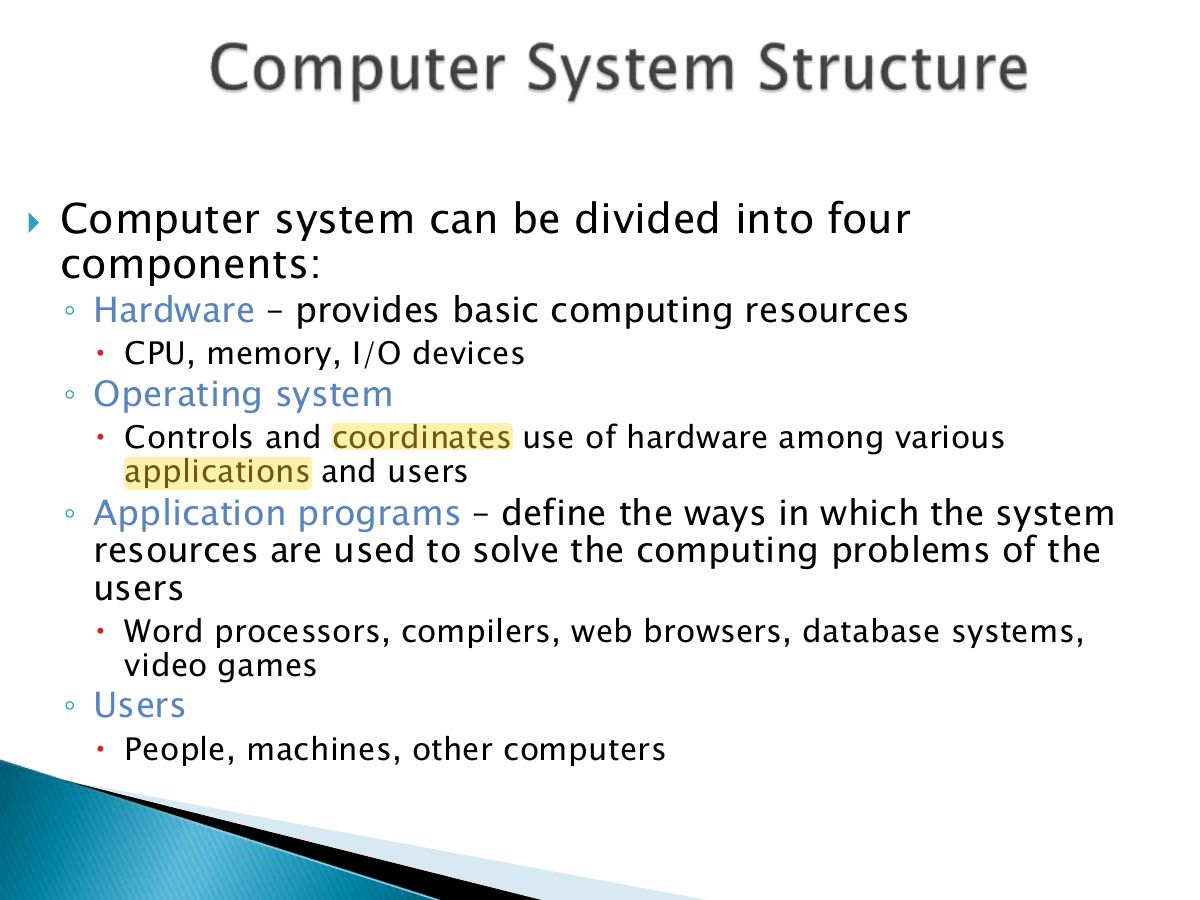
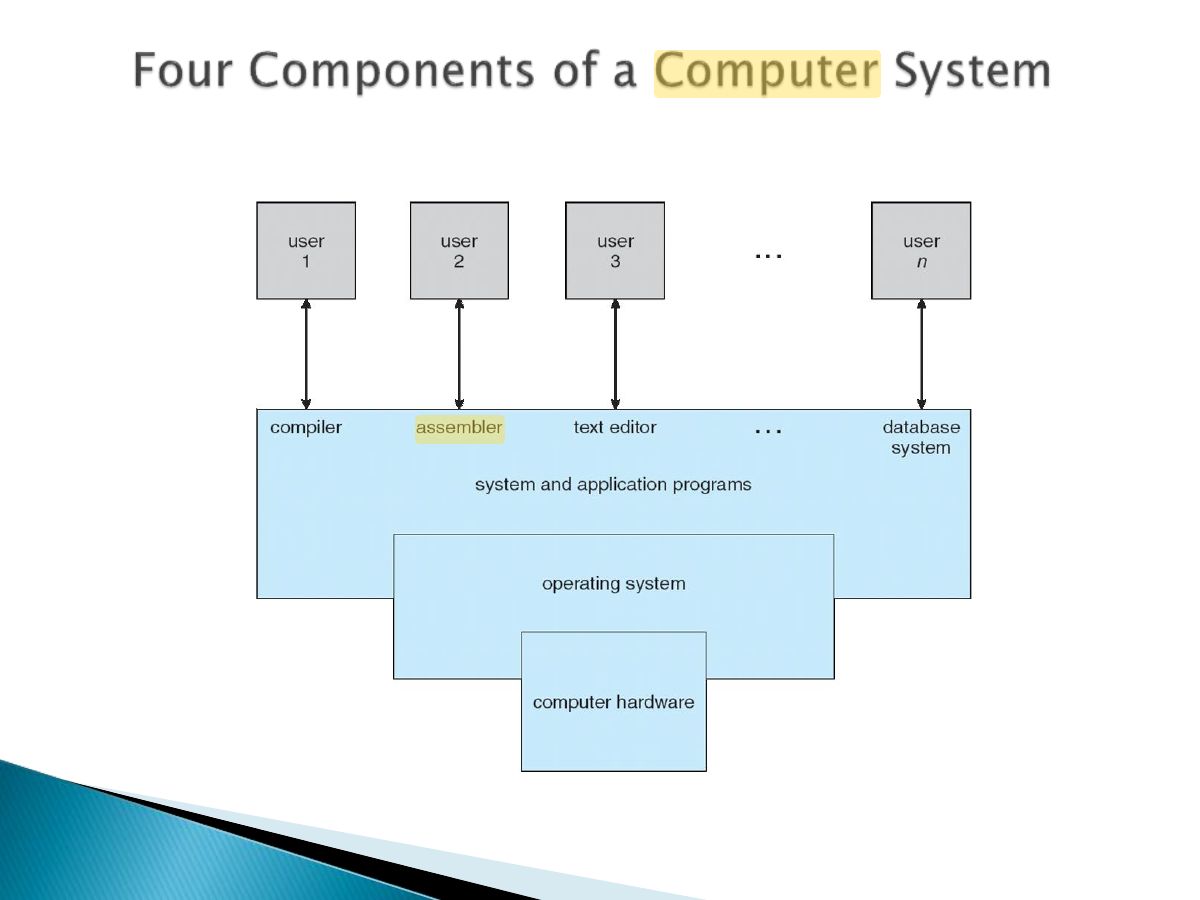
- Four components: hardware, operating system, application programs, users.
Asked in a real exam
🎯 How this can come up · 1 question
List the four main components of a computer system.
Hardware (CPU, memory, I/O), operating system (controls and coordinates hardware use), application programs (solve the users’ problems with the resources), and users (people, machines, other computers).
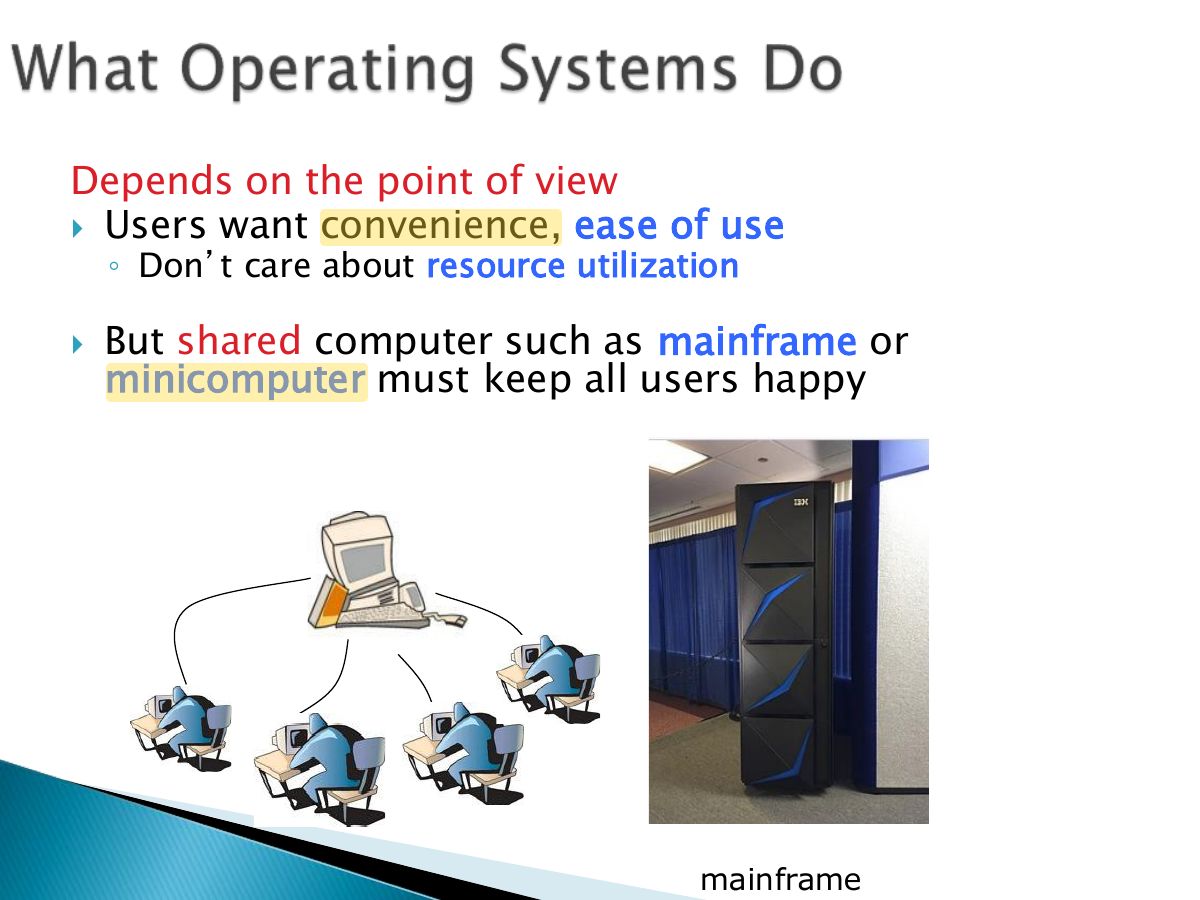
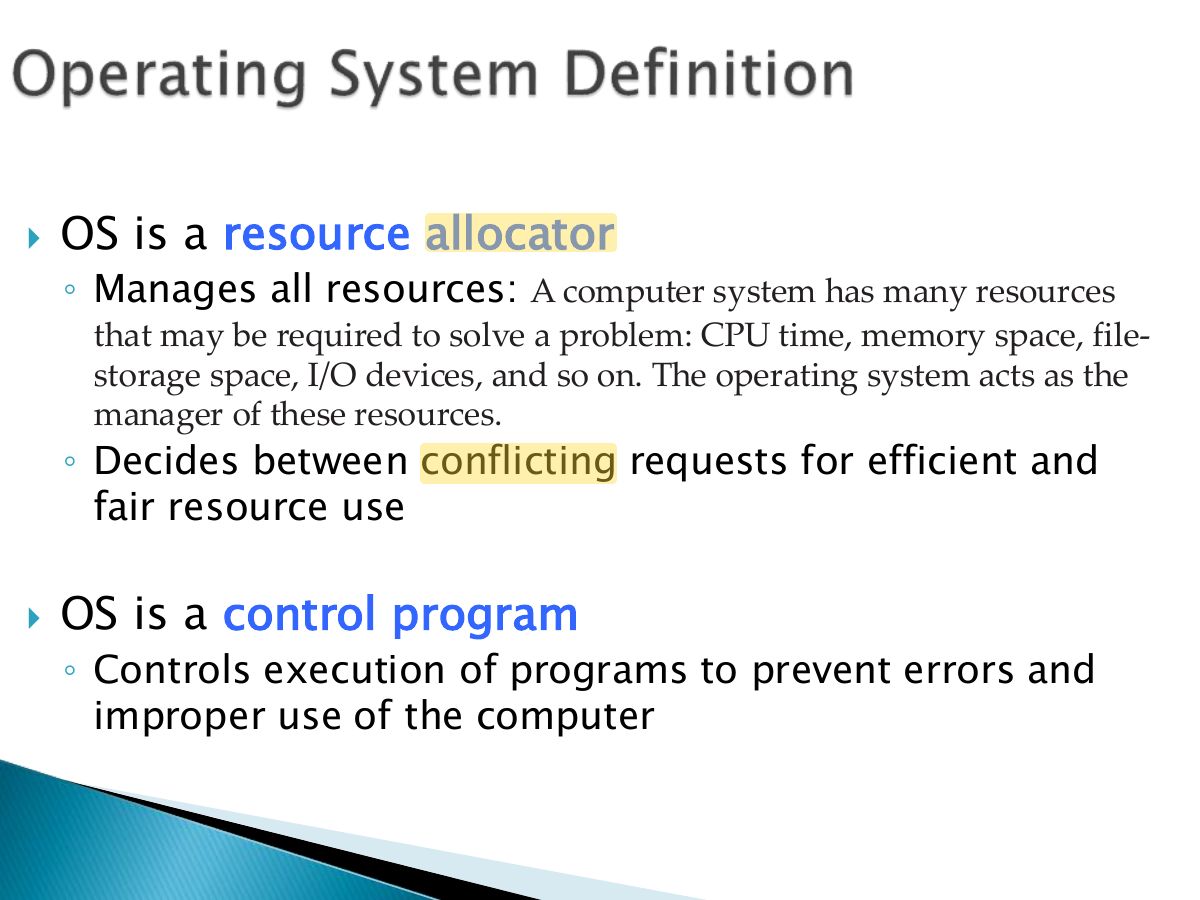
- OS is a resource allocator (decides between conflicting requests) and a control program (prevents errors and misuse).
Asked in a real exam
🎯 How this can come up · 1 question
When the OS decides between conflicting requests for CPU, memory and I/O, it acts as a:
Correct: Resource allocator.
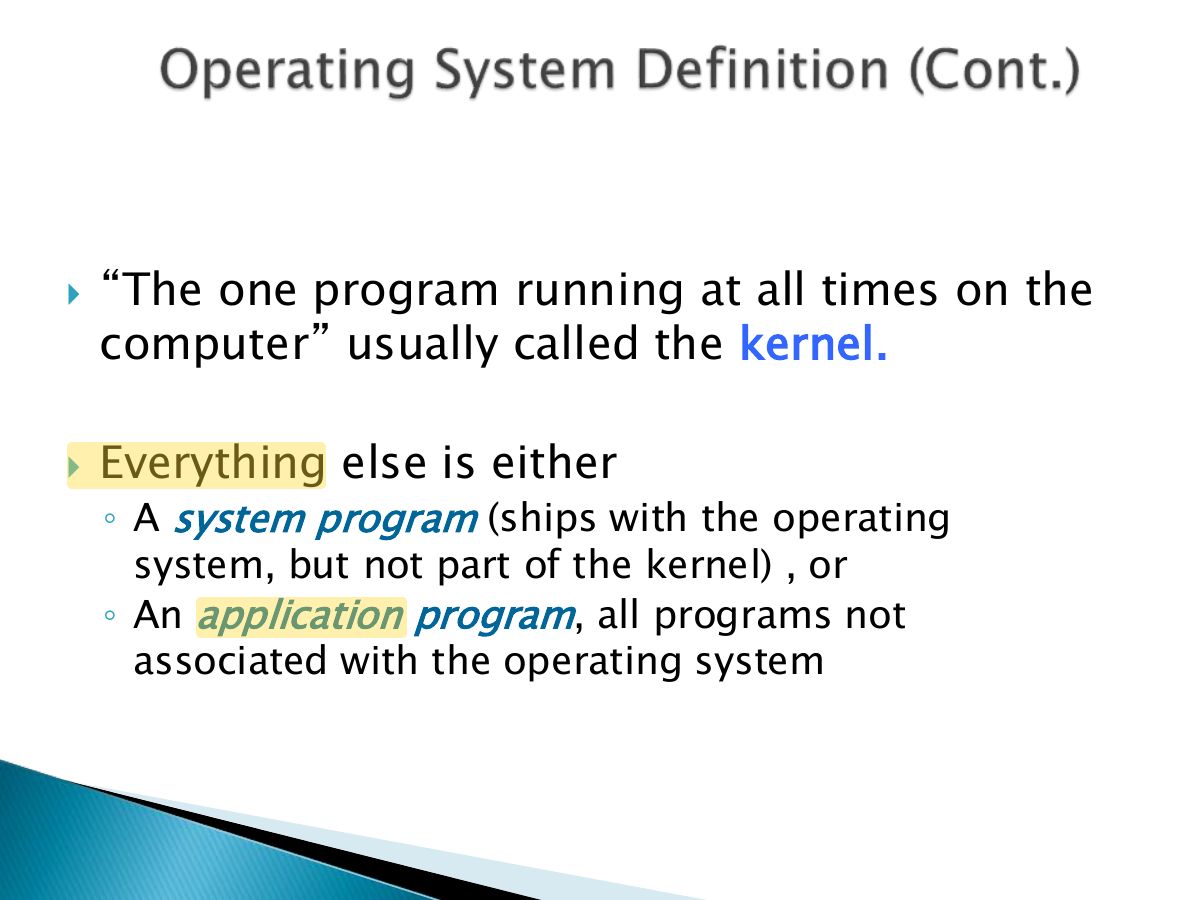
- The kernel is "the one program running at all times"; everything else is a system program or an application.
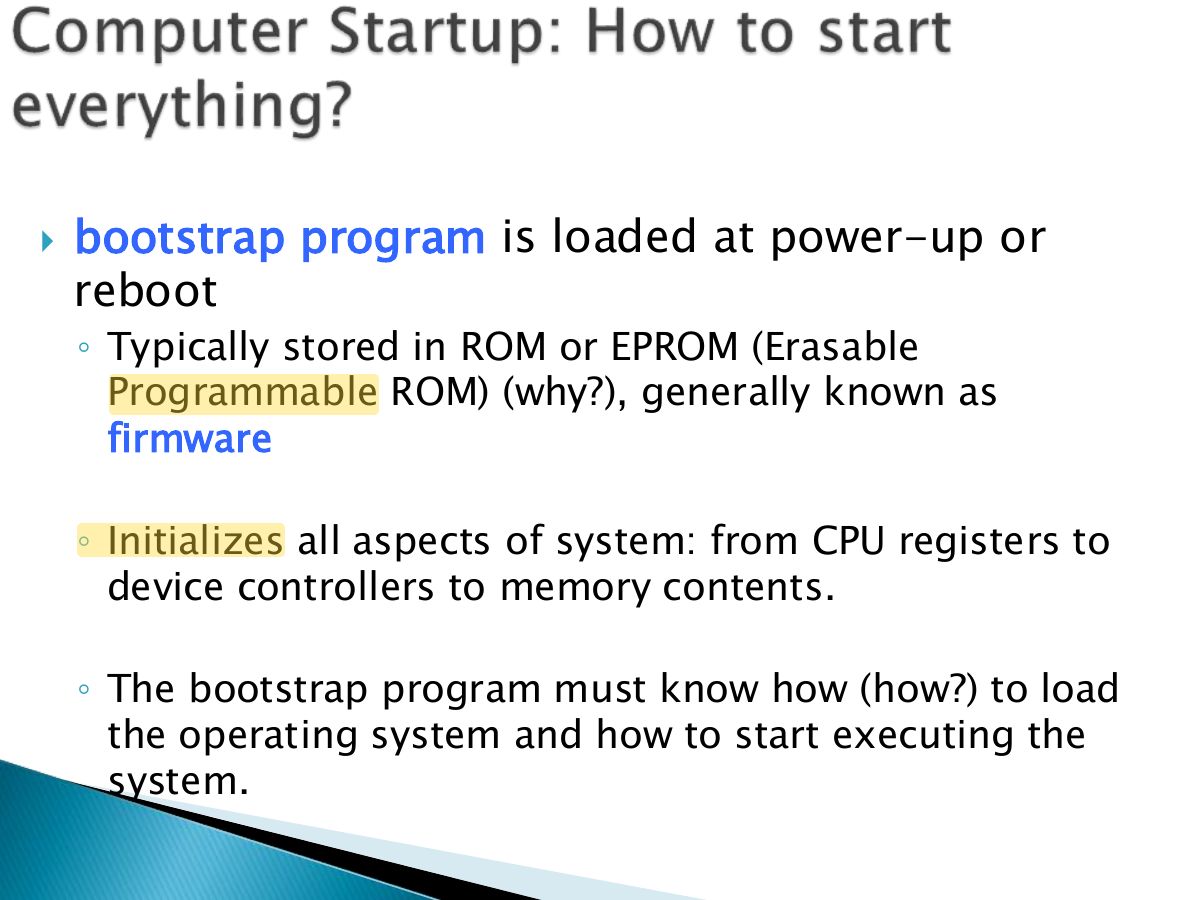
- Bootstrap program: loaded at power-up (in ROM/firmware), initializes the system and loads the kernel.
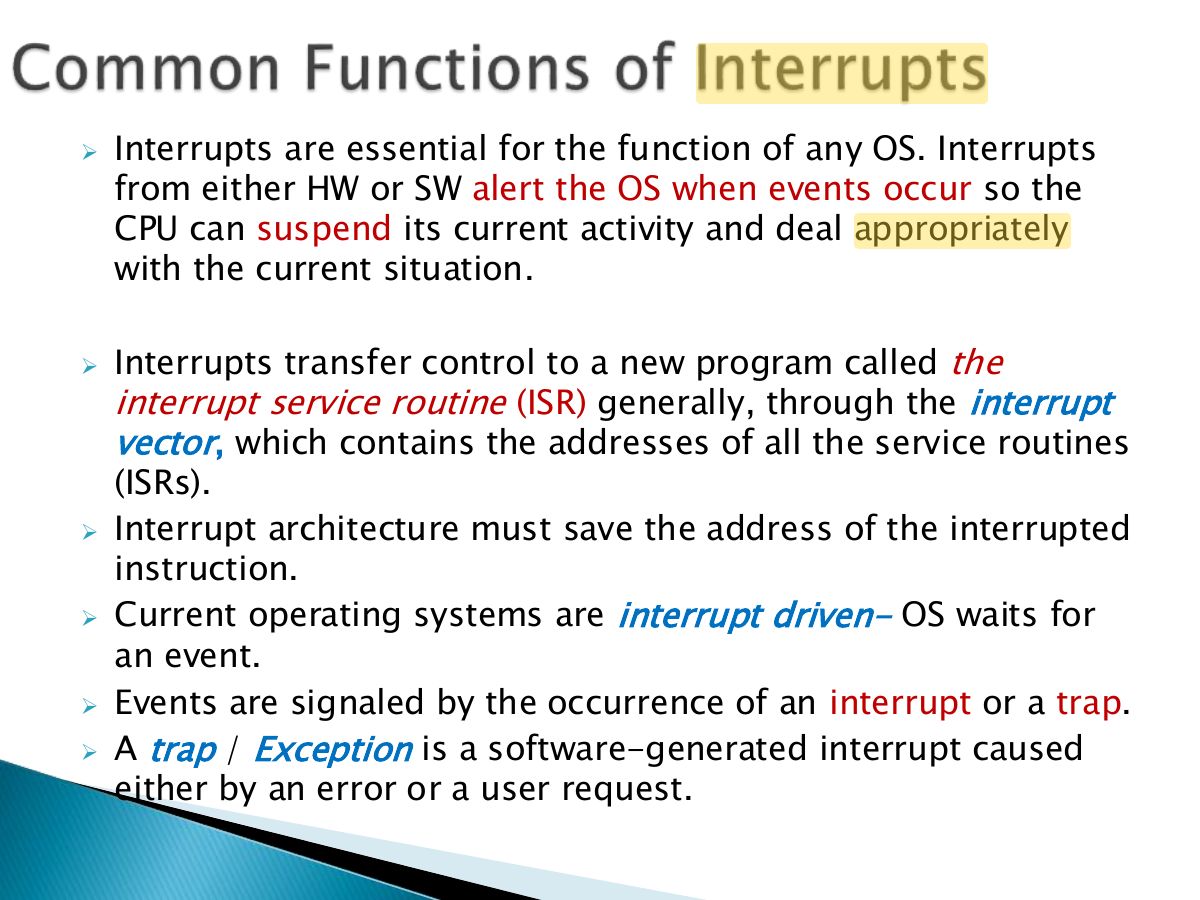
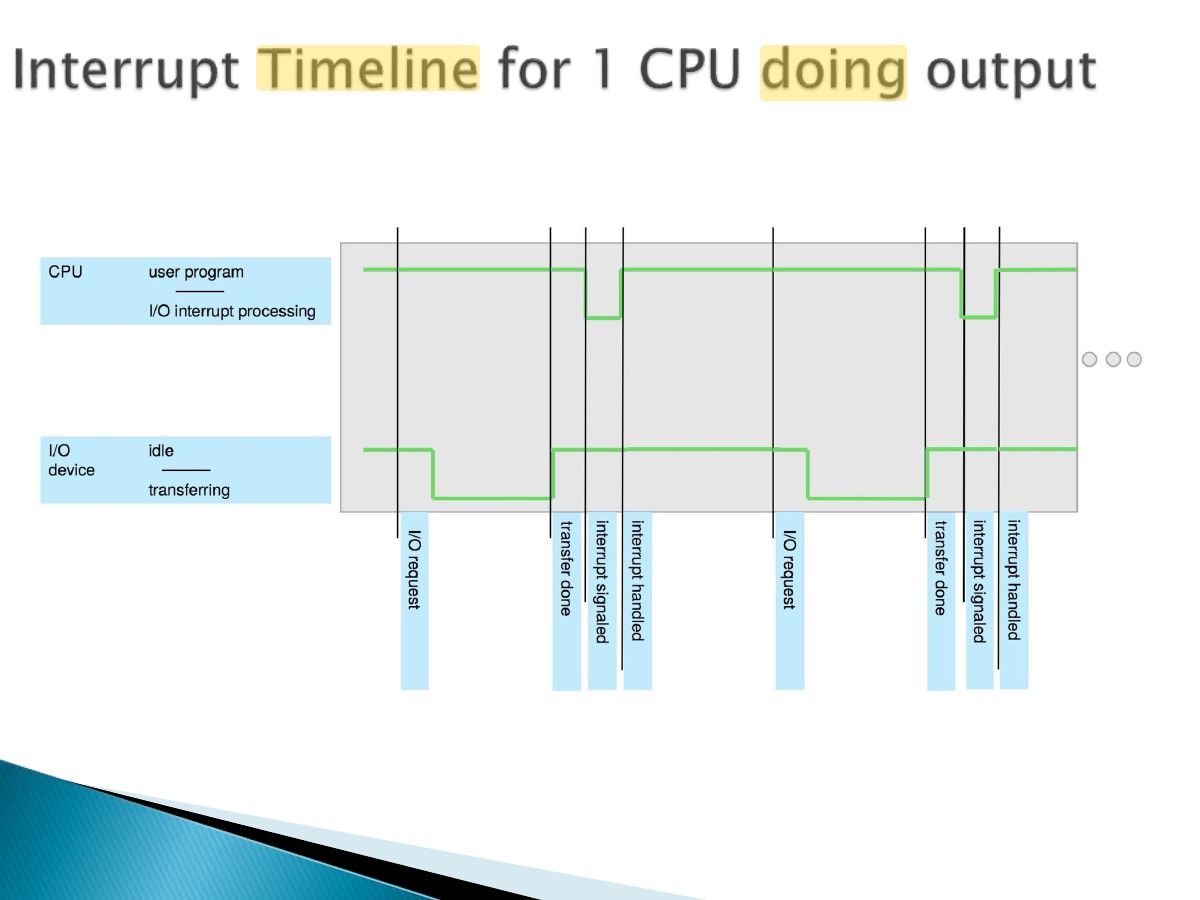
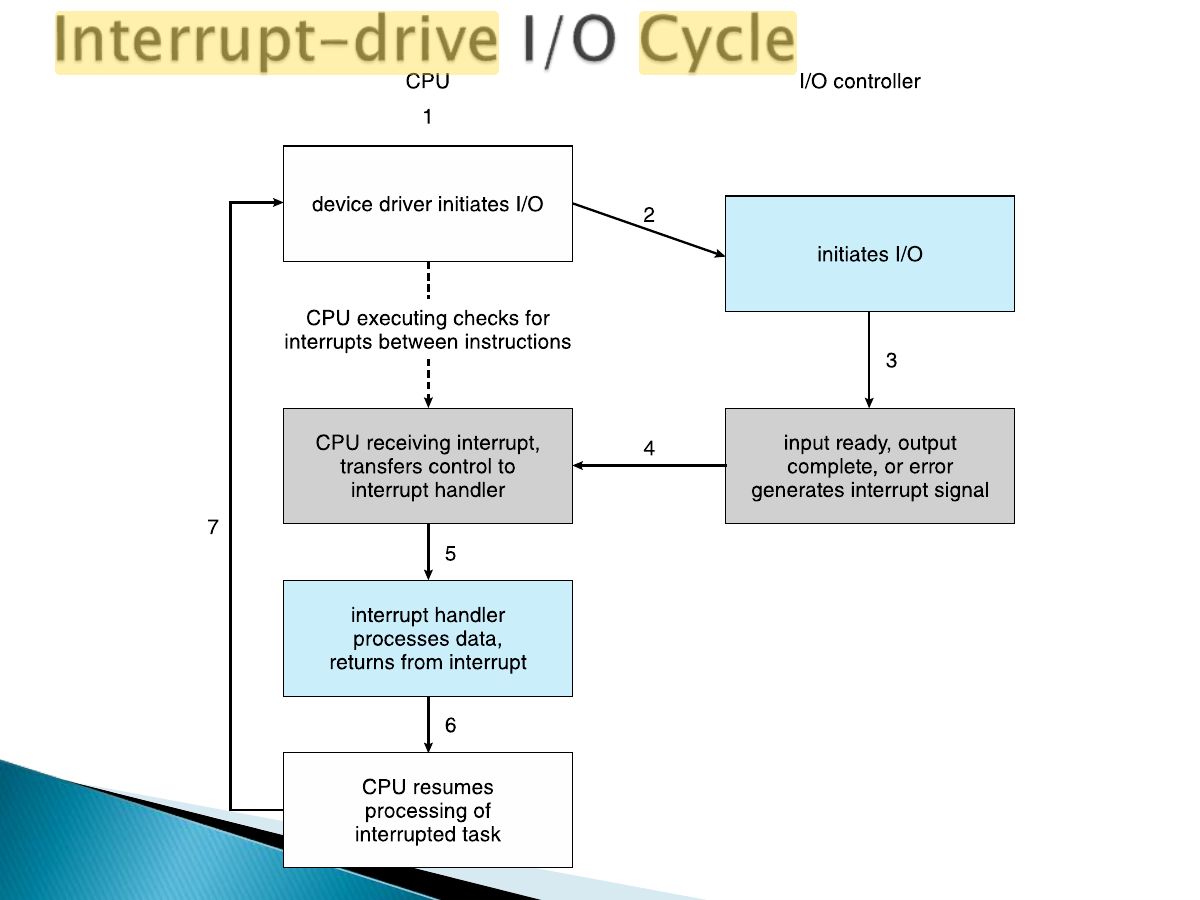
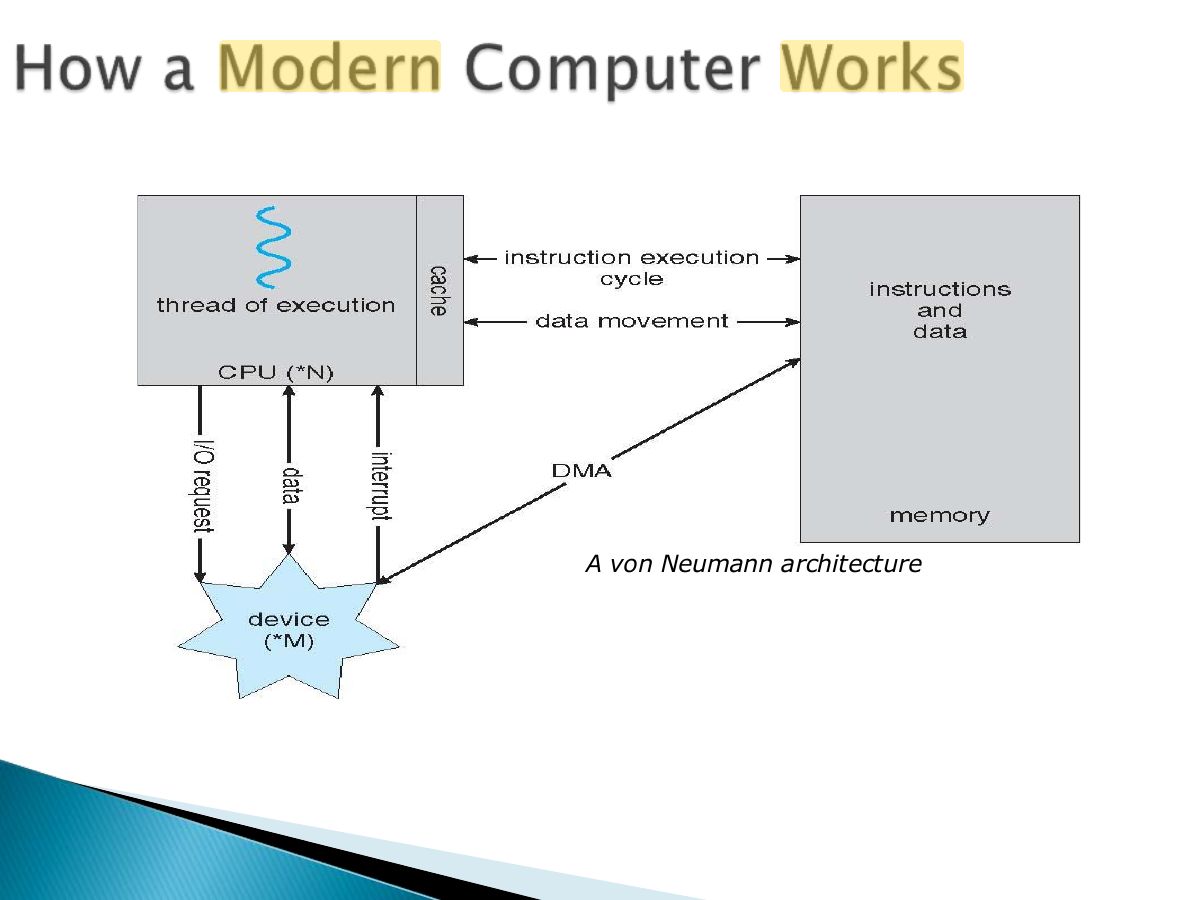
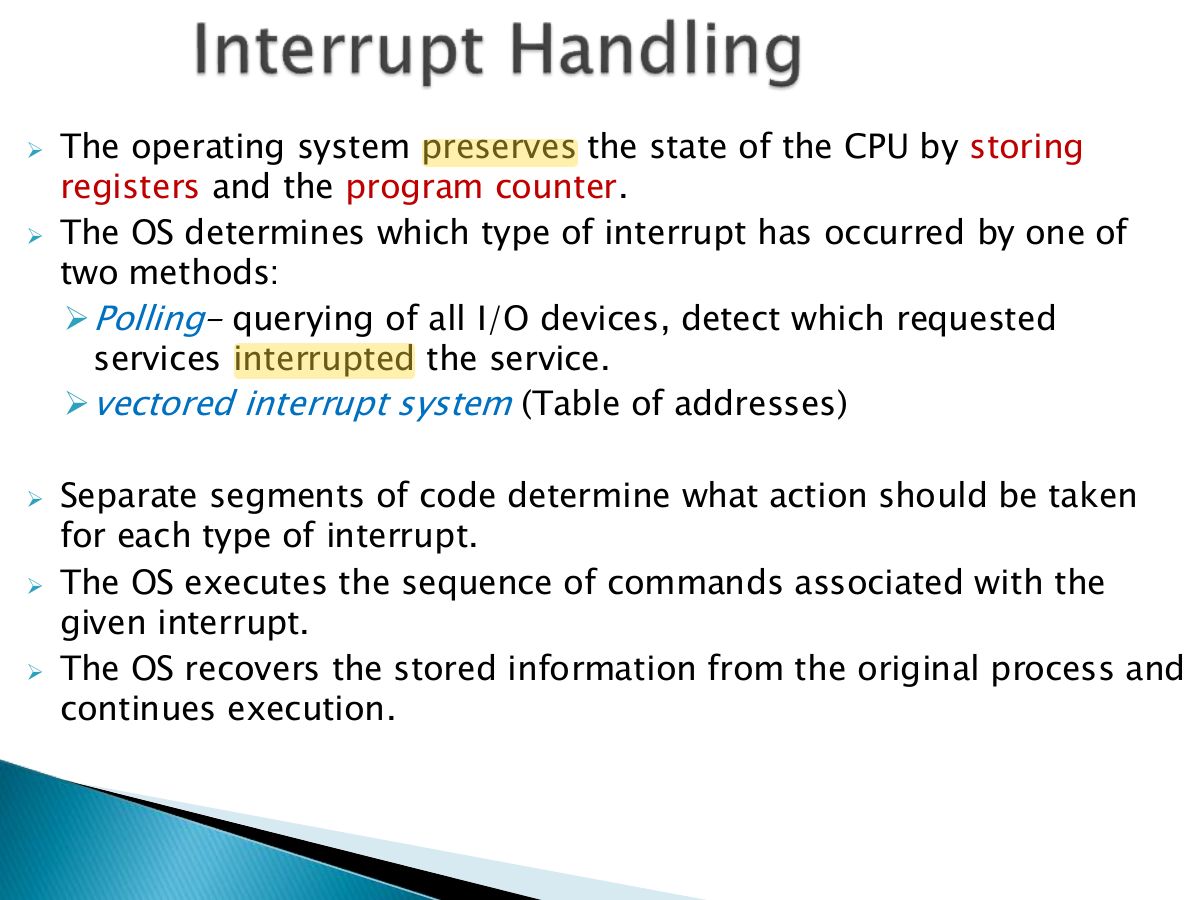
- Interrupts transfer control to an interrupt service routine through the interrupt vector. A trap (exception) is a SOFTWARE-generated interrupt (error or system call).
Asked in a real exam
🎯 How this can come up · 1 question
Which is a software-generated interrupt?
Correct: Trap.
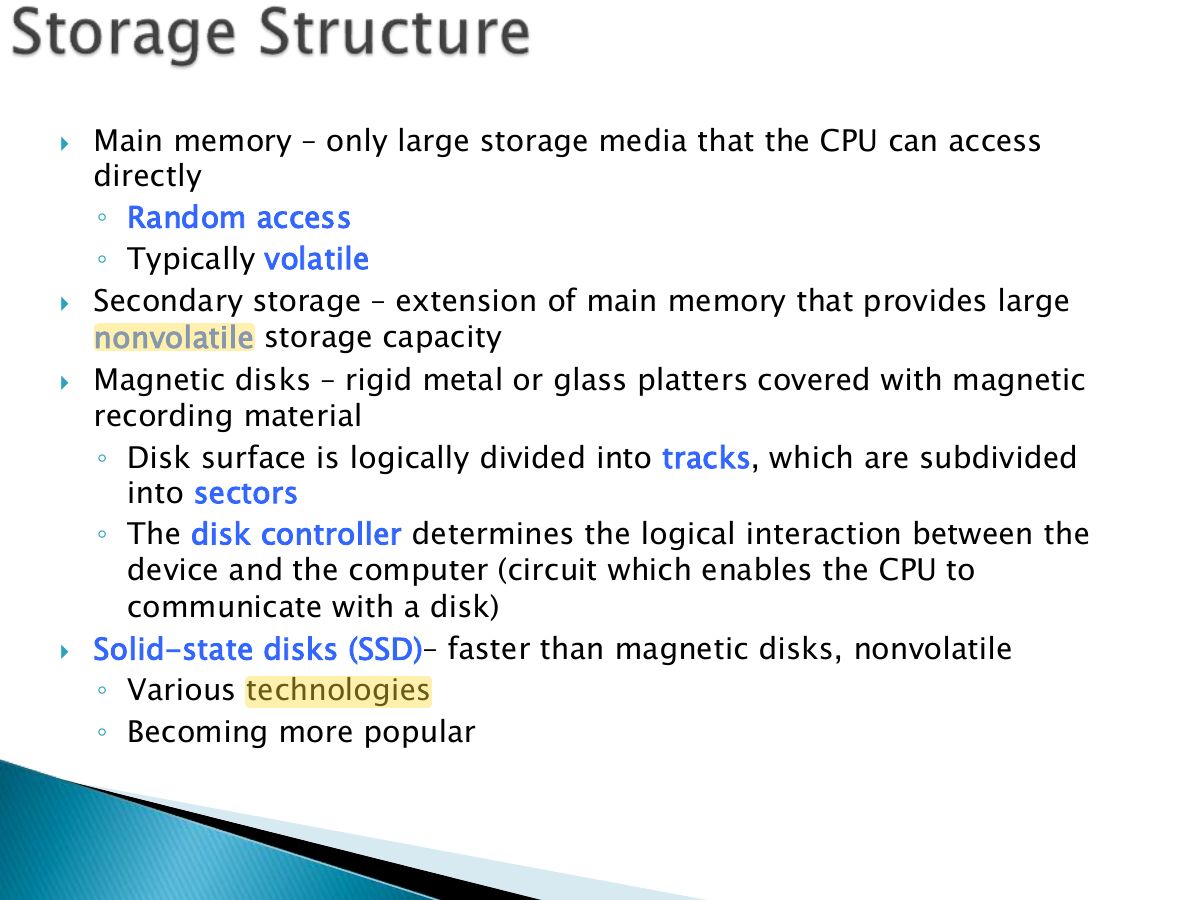
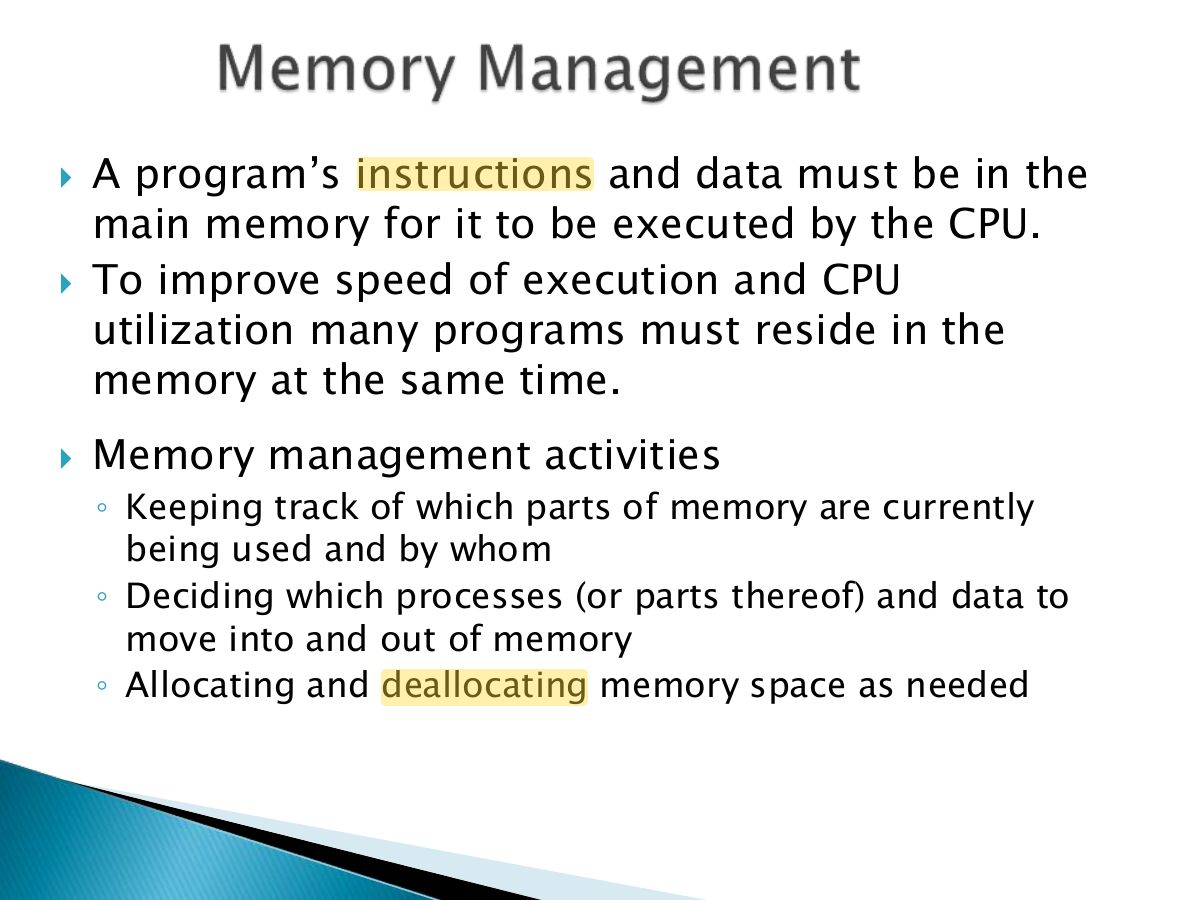
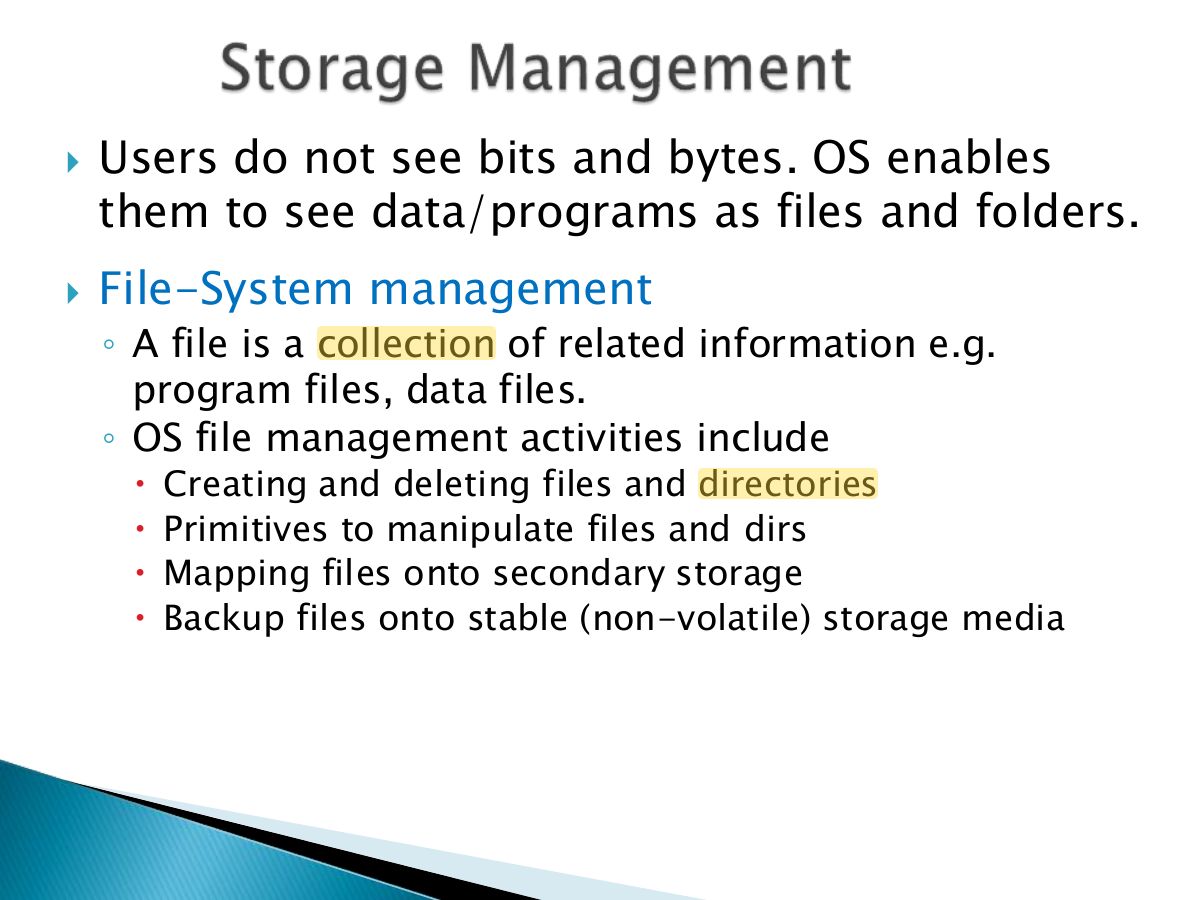
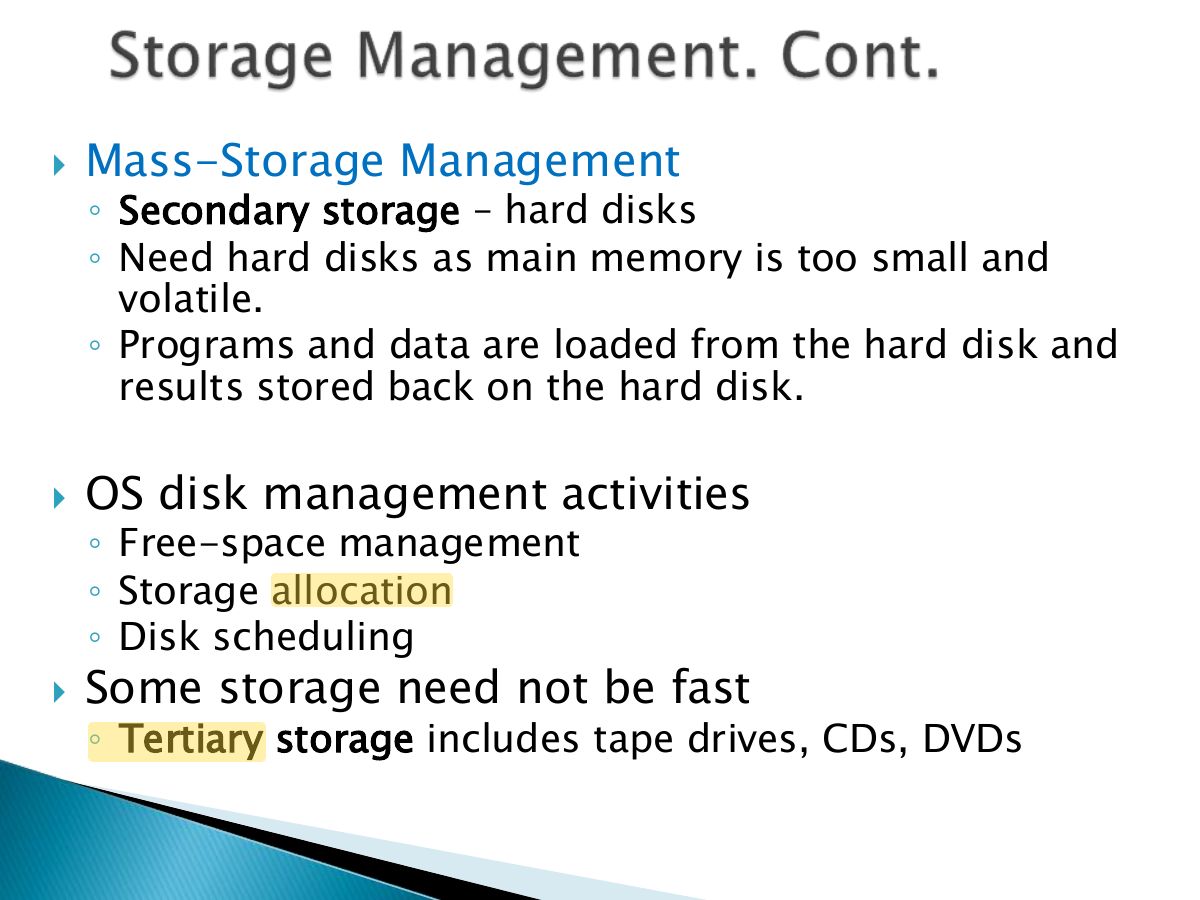
- Main memory is the only large storage the CPU accesses directly; it is volatile. Secondary storage (disks, SSDs) is nonvolatile.
Asked in a real exam
🎯 How this can come up · 2 questions
The only large storage media that the CPU can access directly is:
Correct: Main memory.
Compared with magnetic disks, SSDs are:
Correct: Faster and nonvolatile.
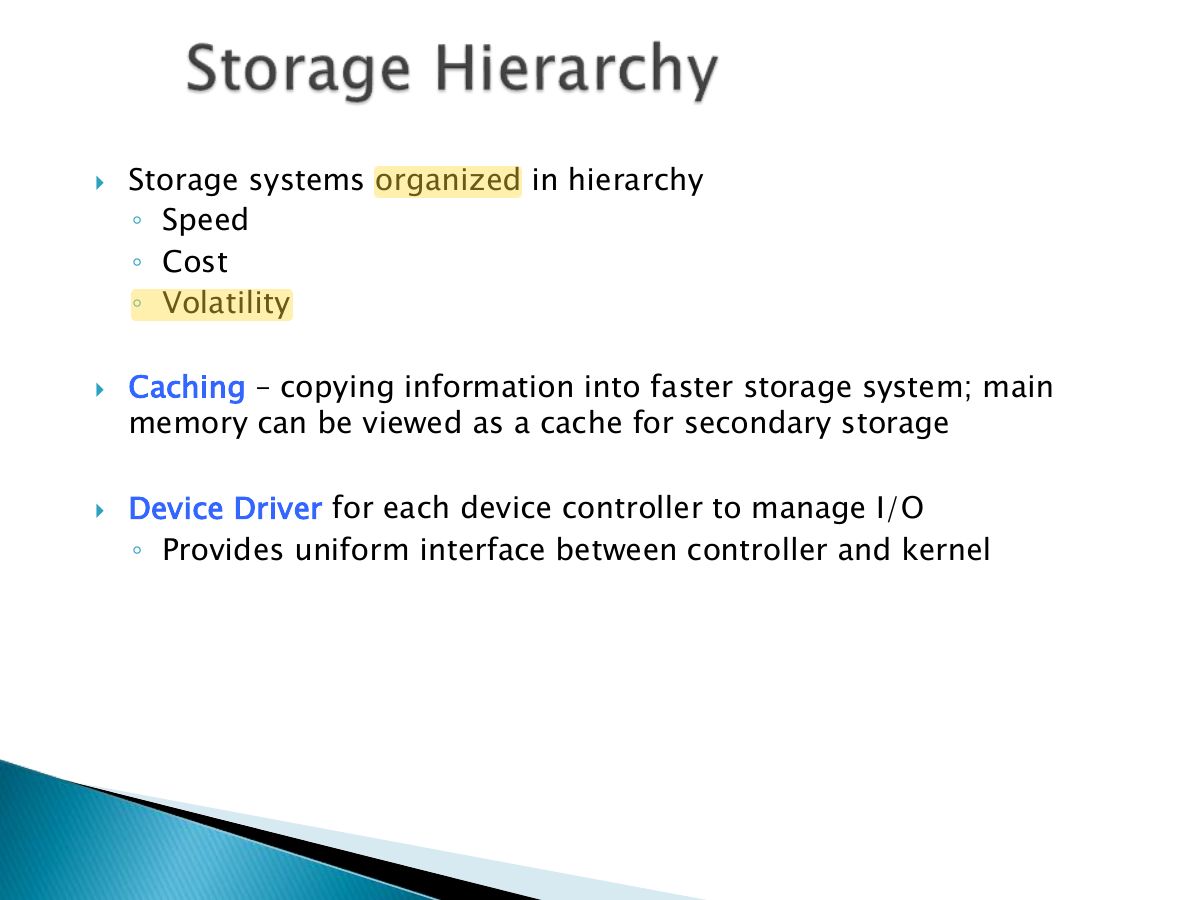
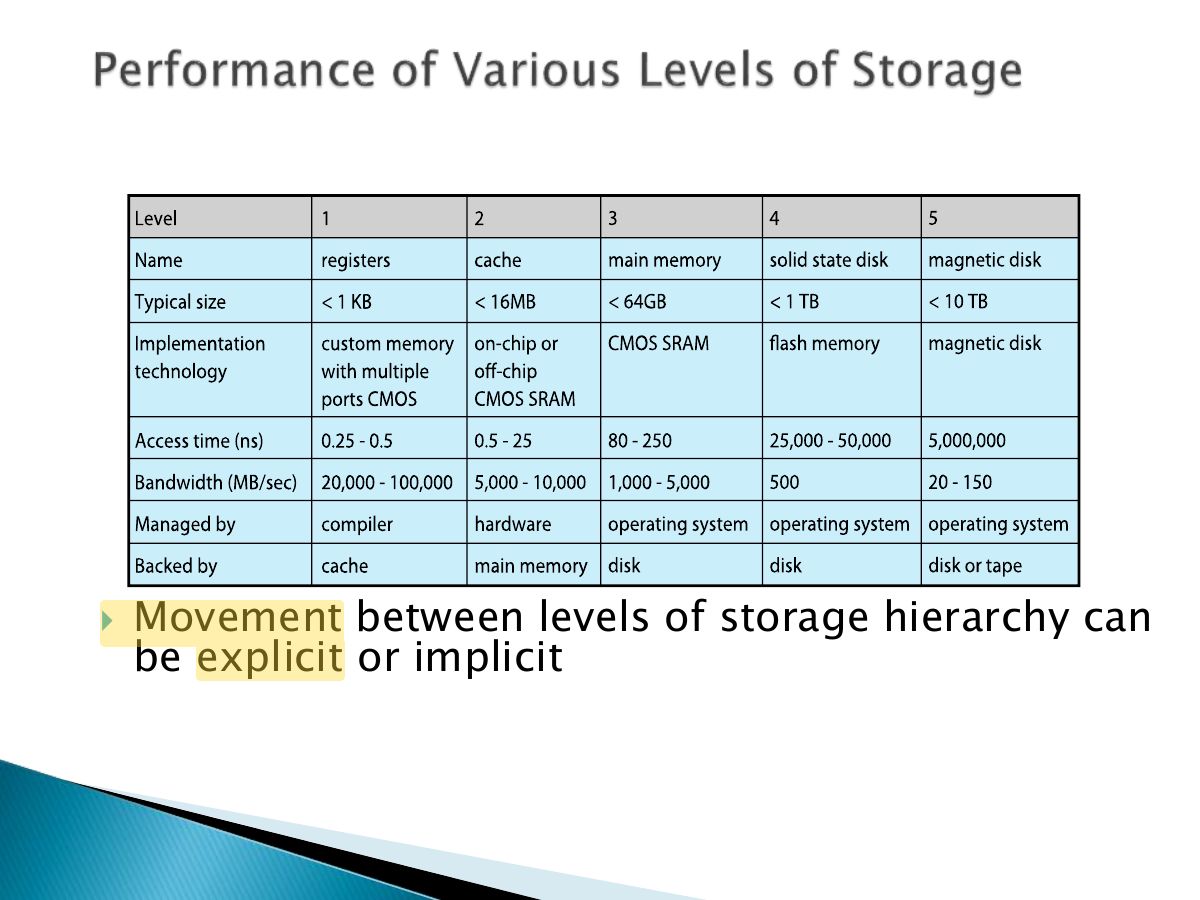
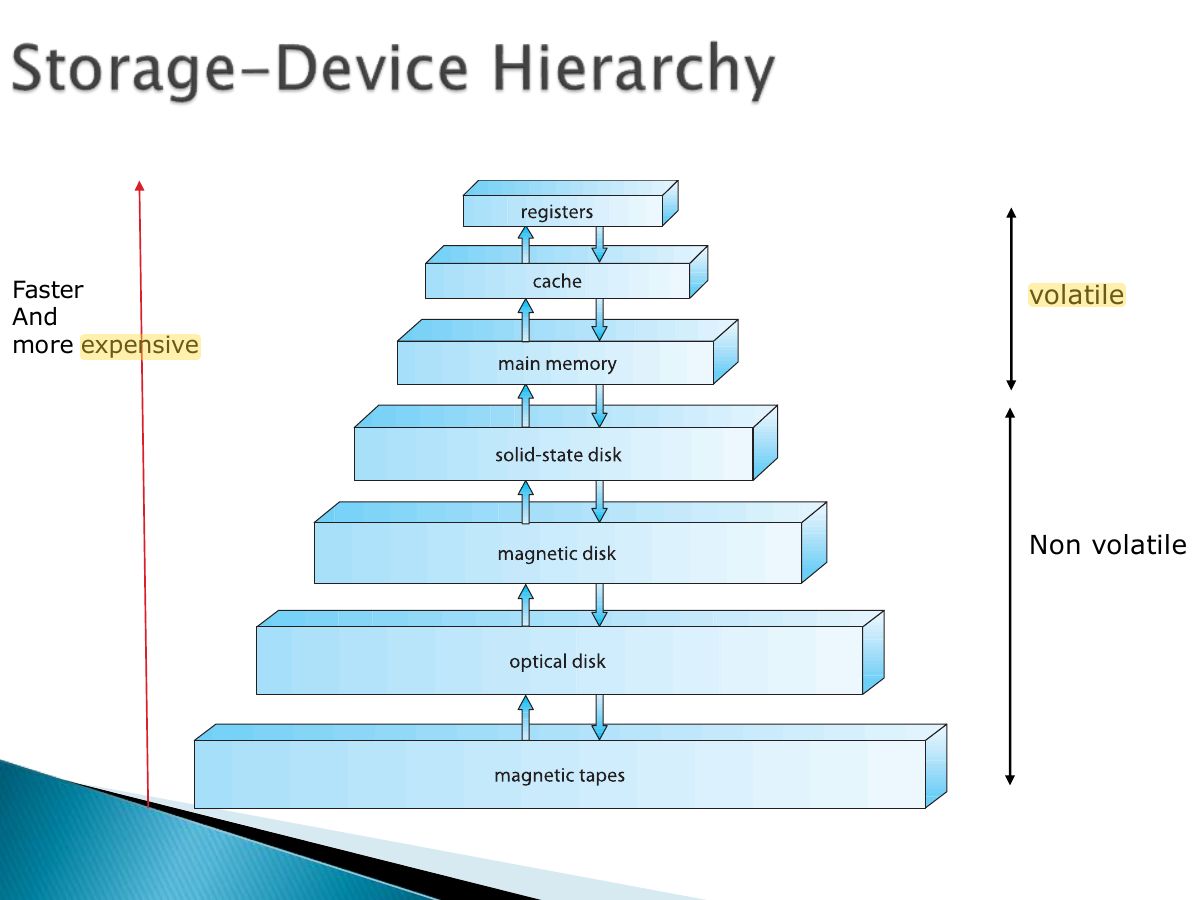
- Storage hierarchy: registers → cache → main memory → SSD → disk → optical/tape. Higher = faster, smaller, costlier, usually volatile.
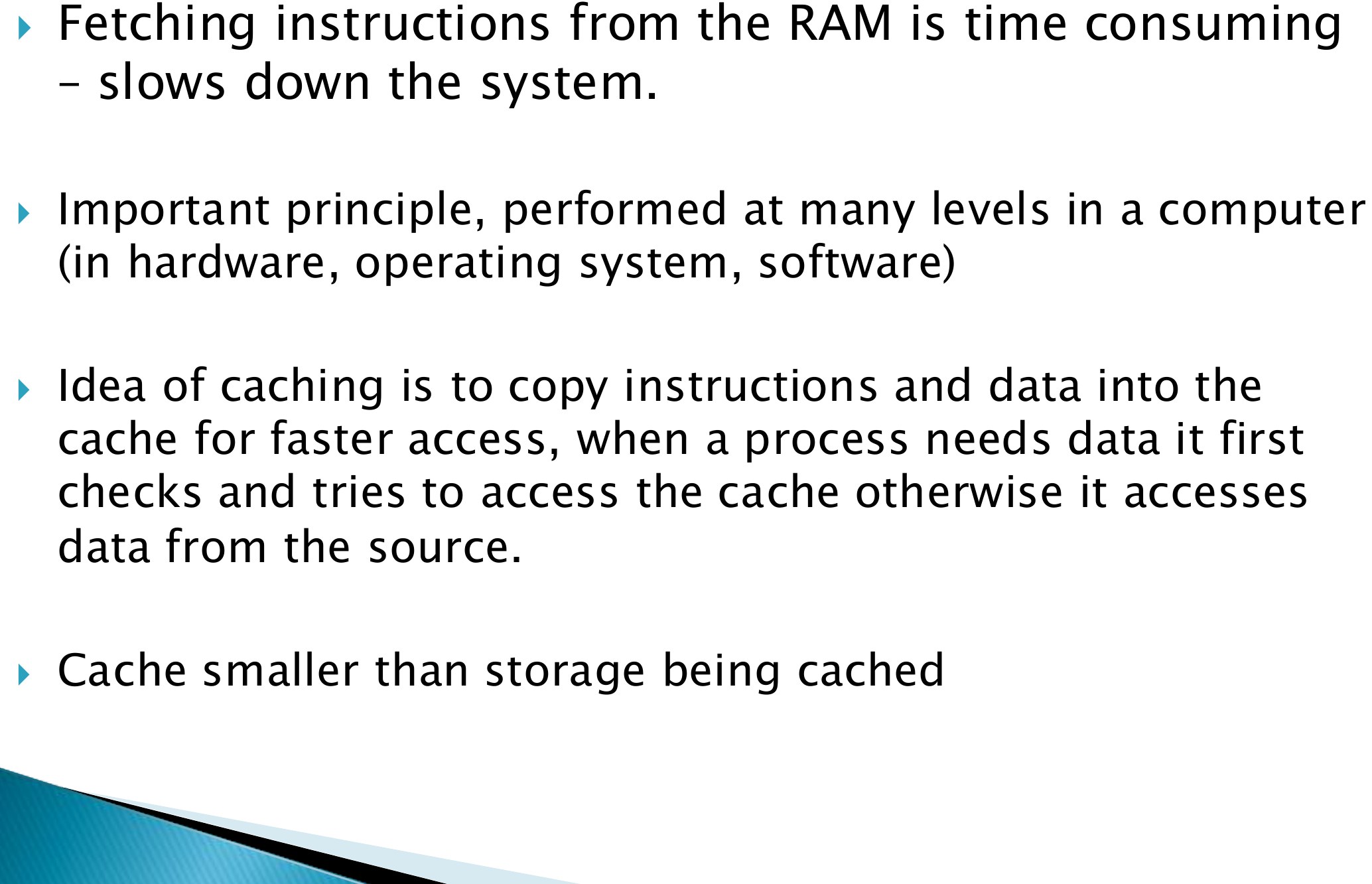
- Caching: copy data into faster storage temporarily to minimize access time.
Asked in a real exam
🎯 How this can come up · 1 question
Caching is important in OS design to:
Correct: Minimize access time.
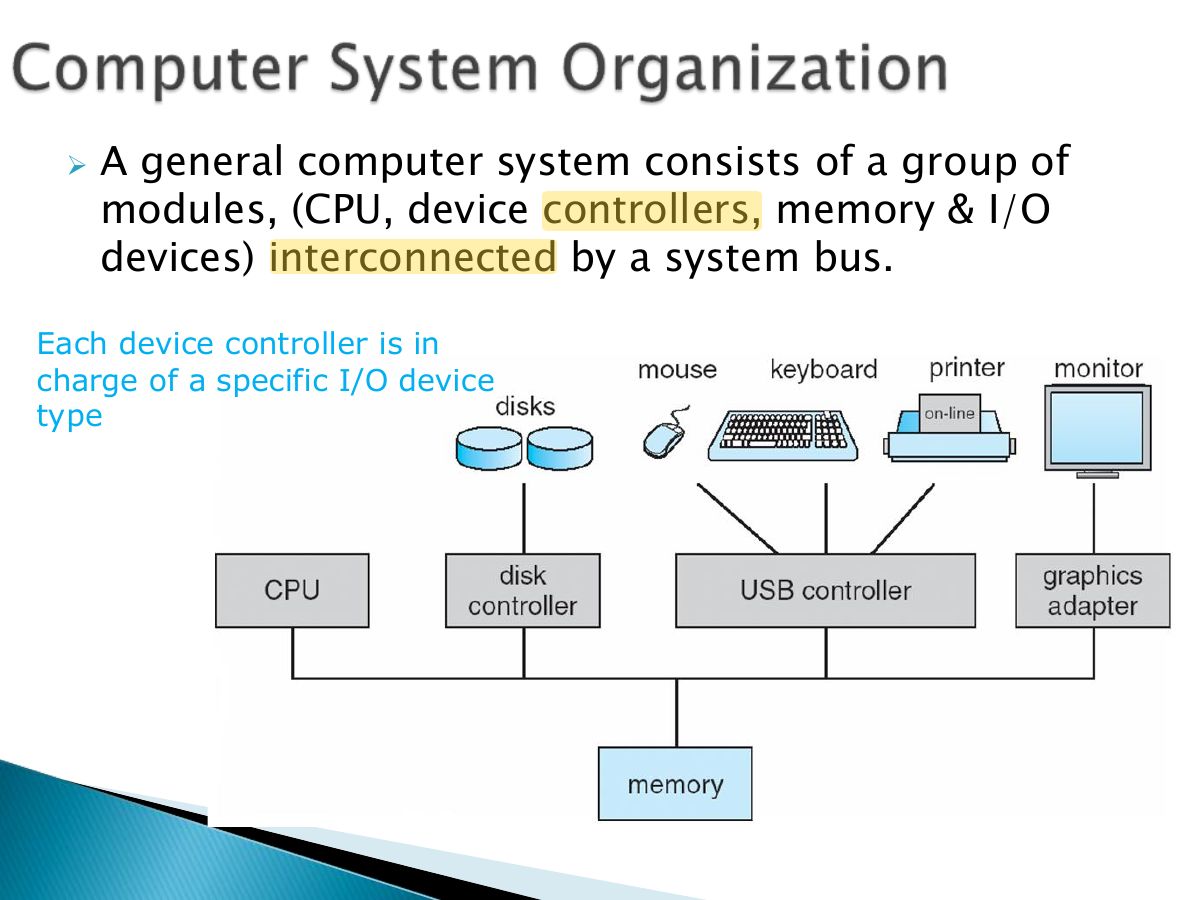
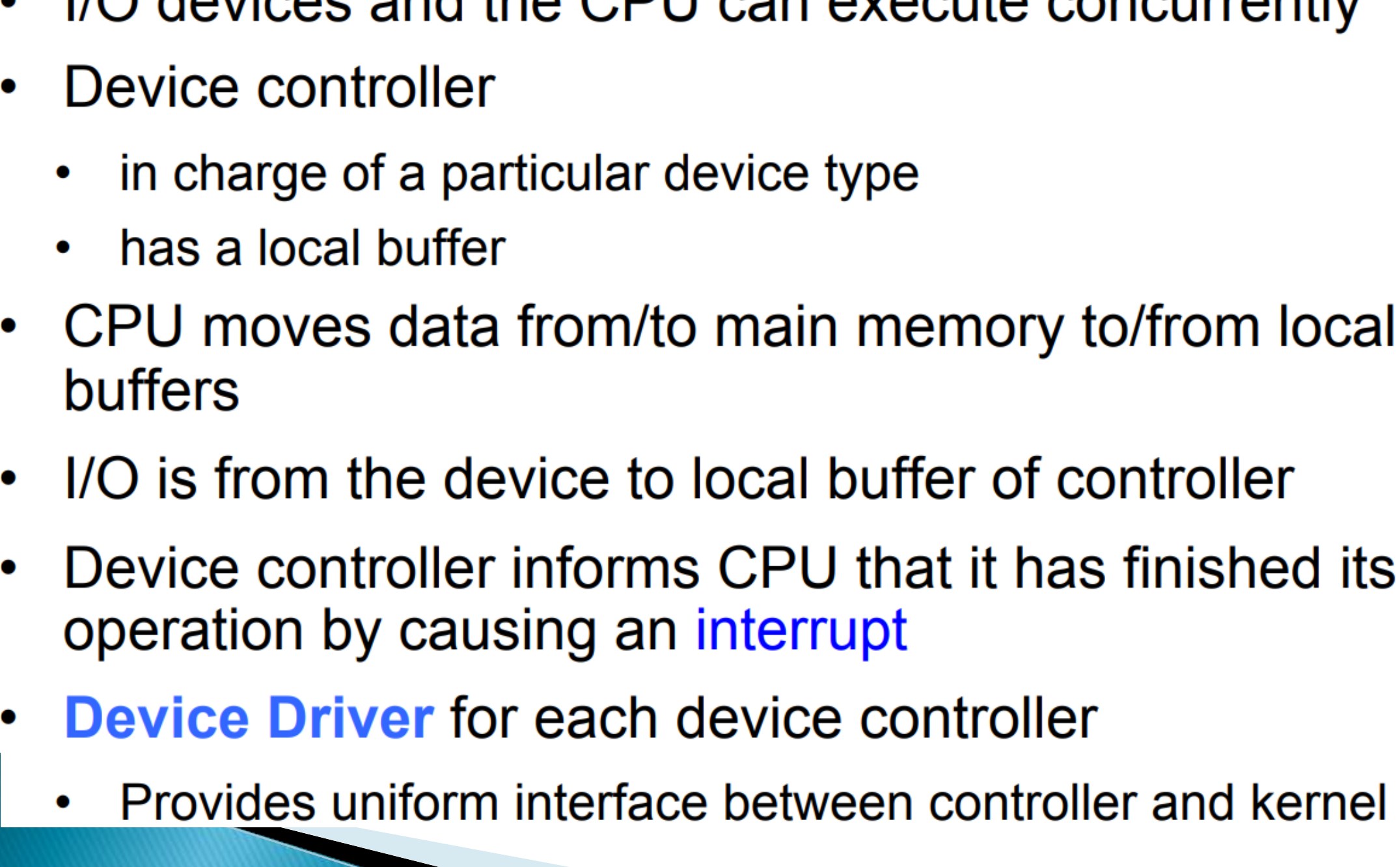
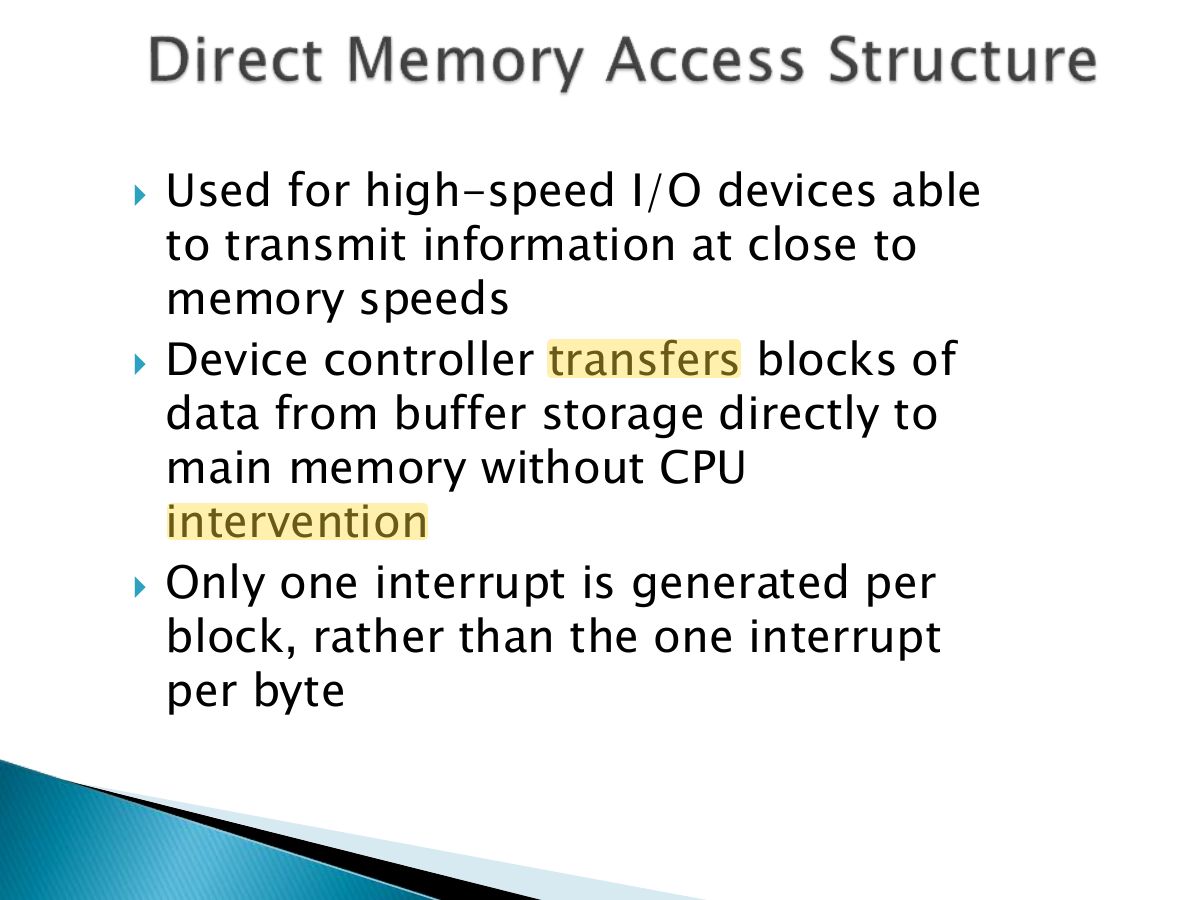
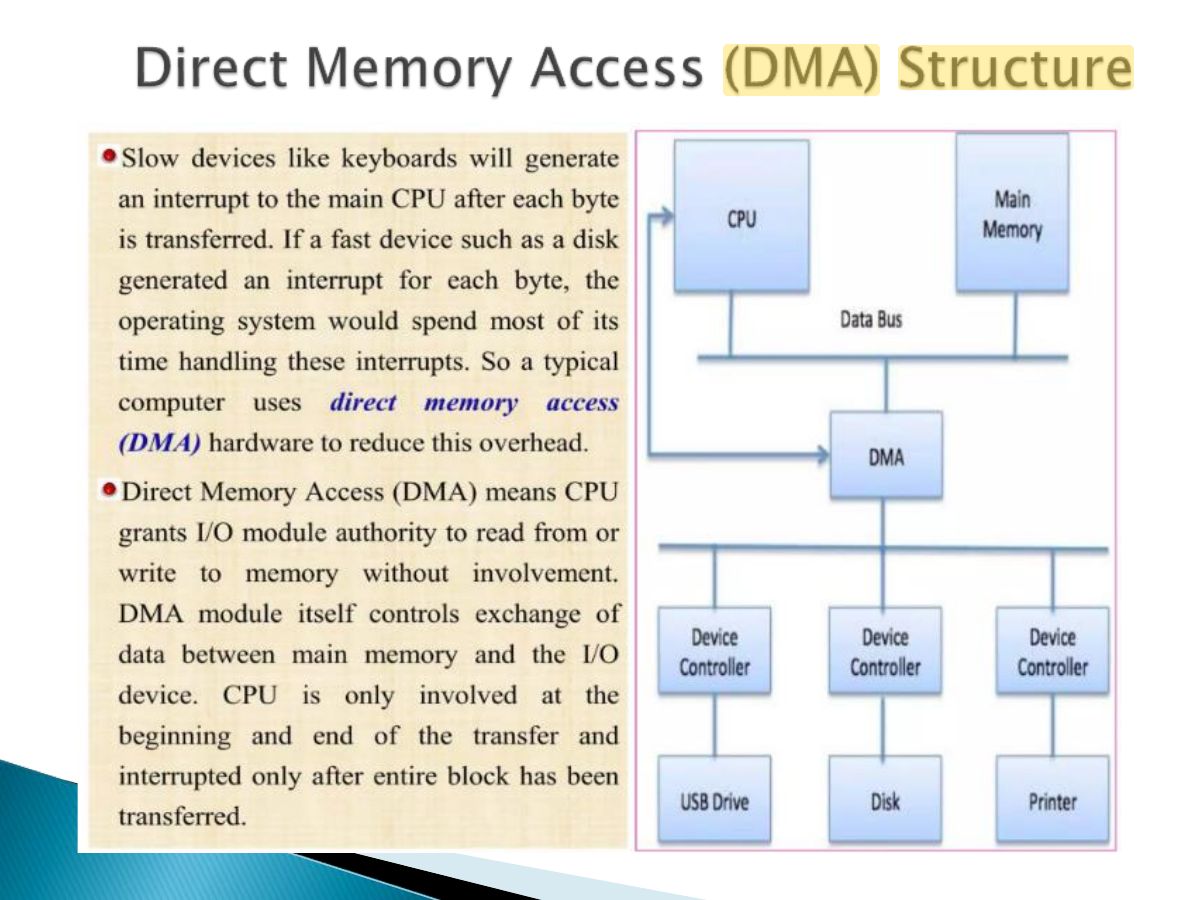
- DMA: the device controller moves a whole block between the device and memory without the CPU; one interrupt per block, not per byte.
Asked in a real exam
🎯 How this can come up · 1 question
______ moves large amounts of data between I/O devices and main memory without the CPU.
Correct: DMA.
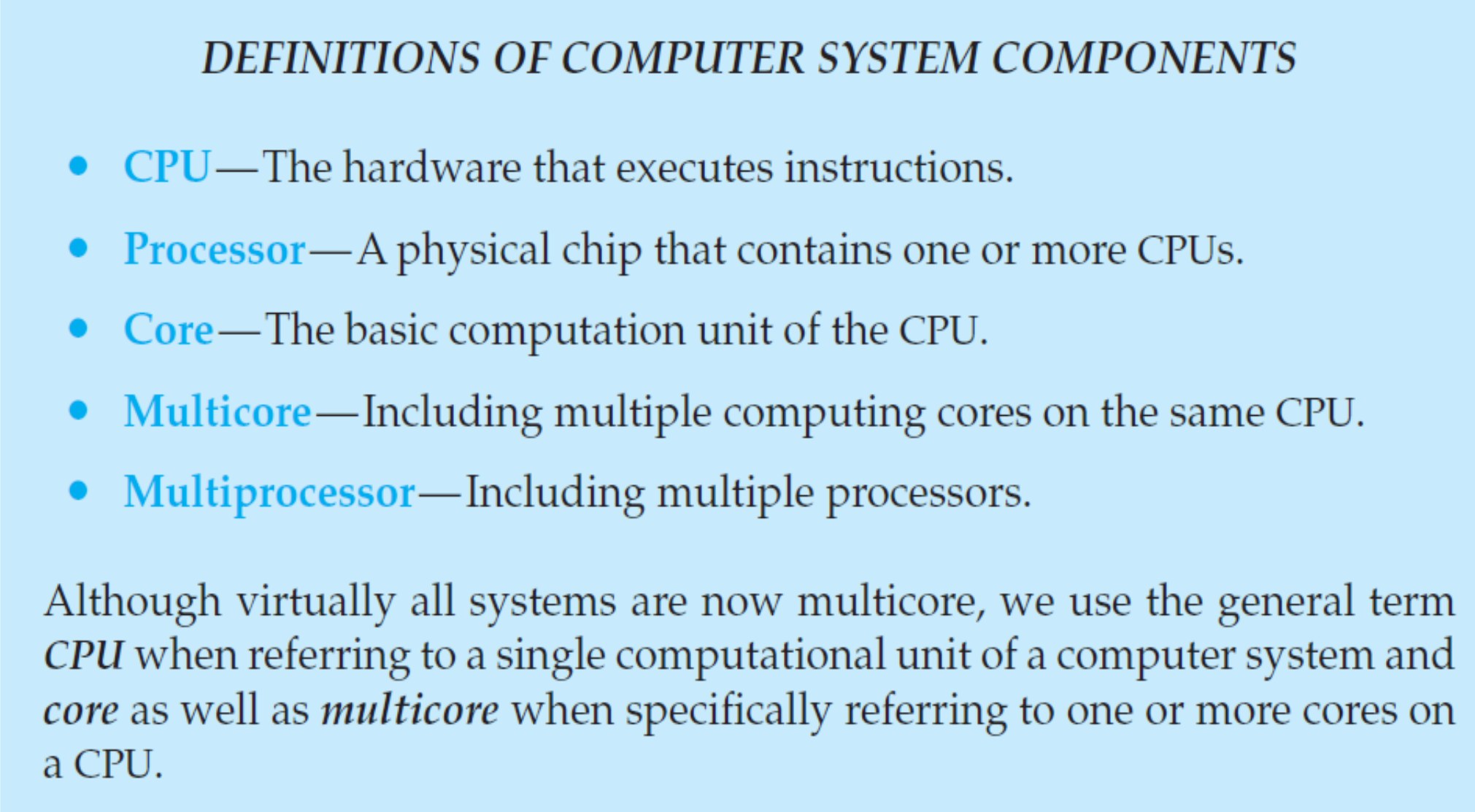
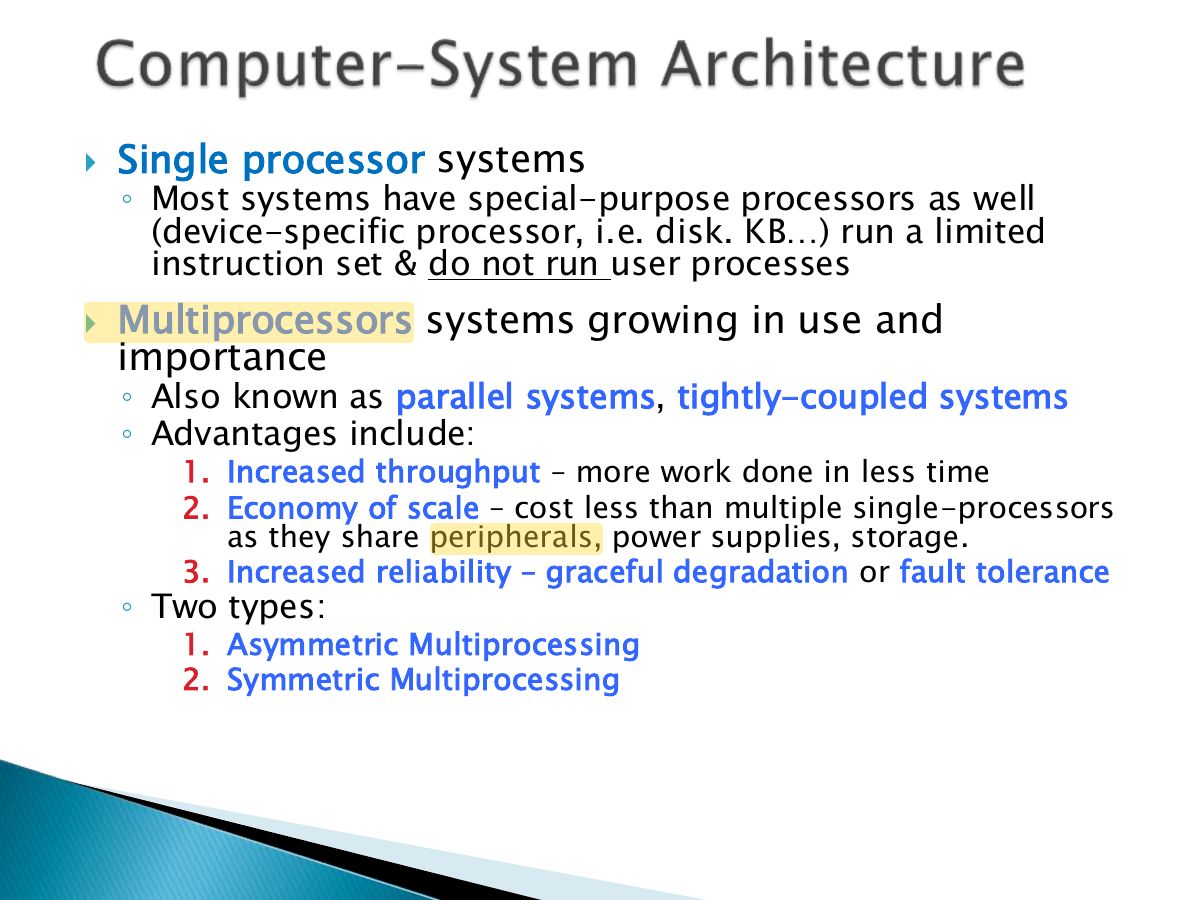
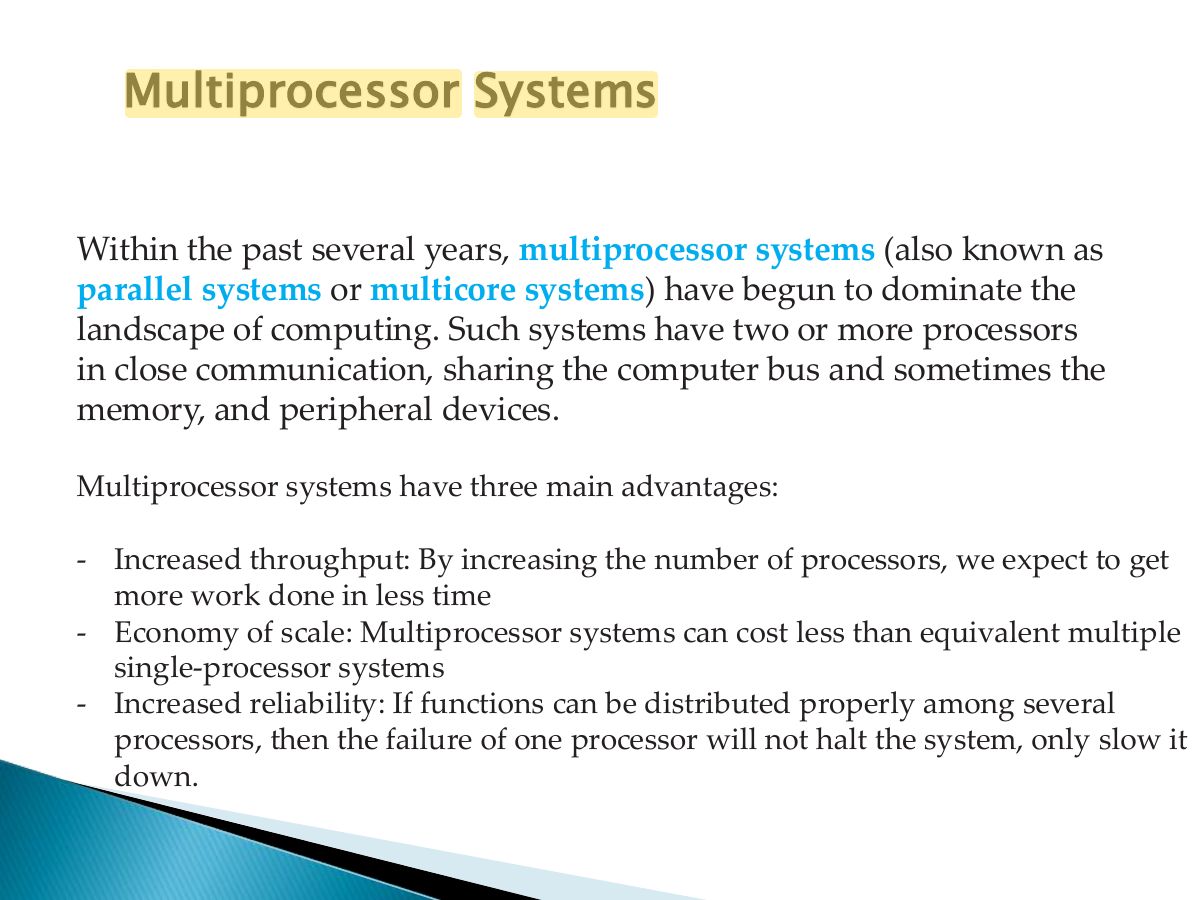
- Multiprocessor advantages: increased throughput, economy of scale, increased reliability (graceful degradation / fault tolerance).
Asked in a real exam
🎯 How this can come up · 1 question
Multiprocessor systems’ advantage is:
Correct: All of the above.
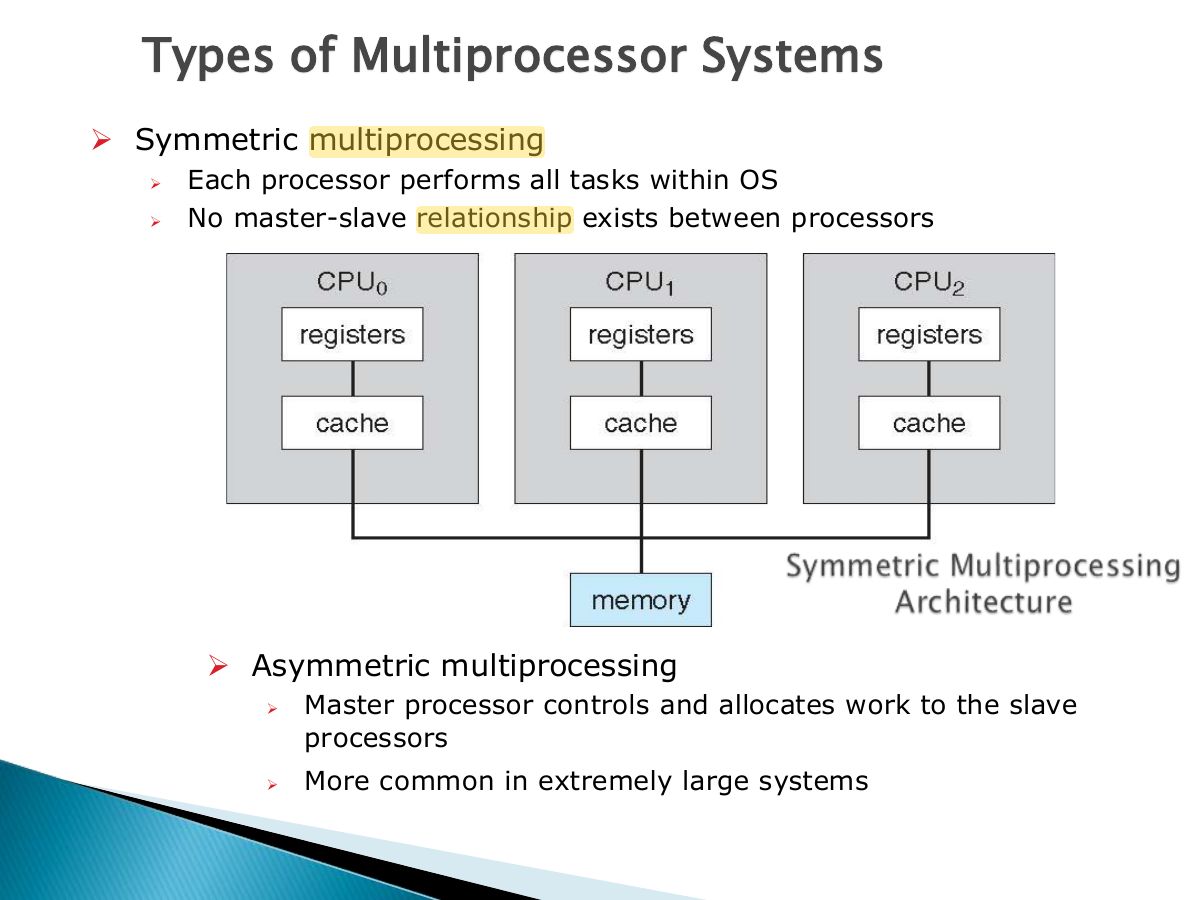
- Asymmetric: boss–worker, each processor has a specific task. Symmetric (SMP): each processor performs all tasks.
Asked in a real exam
🎯 How this can come up · 1 question
Which indicates a symmetric multiprocessing system?
Correct: Each processor performs all tasks in the OS.
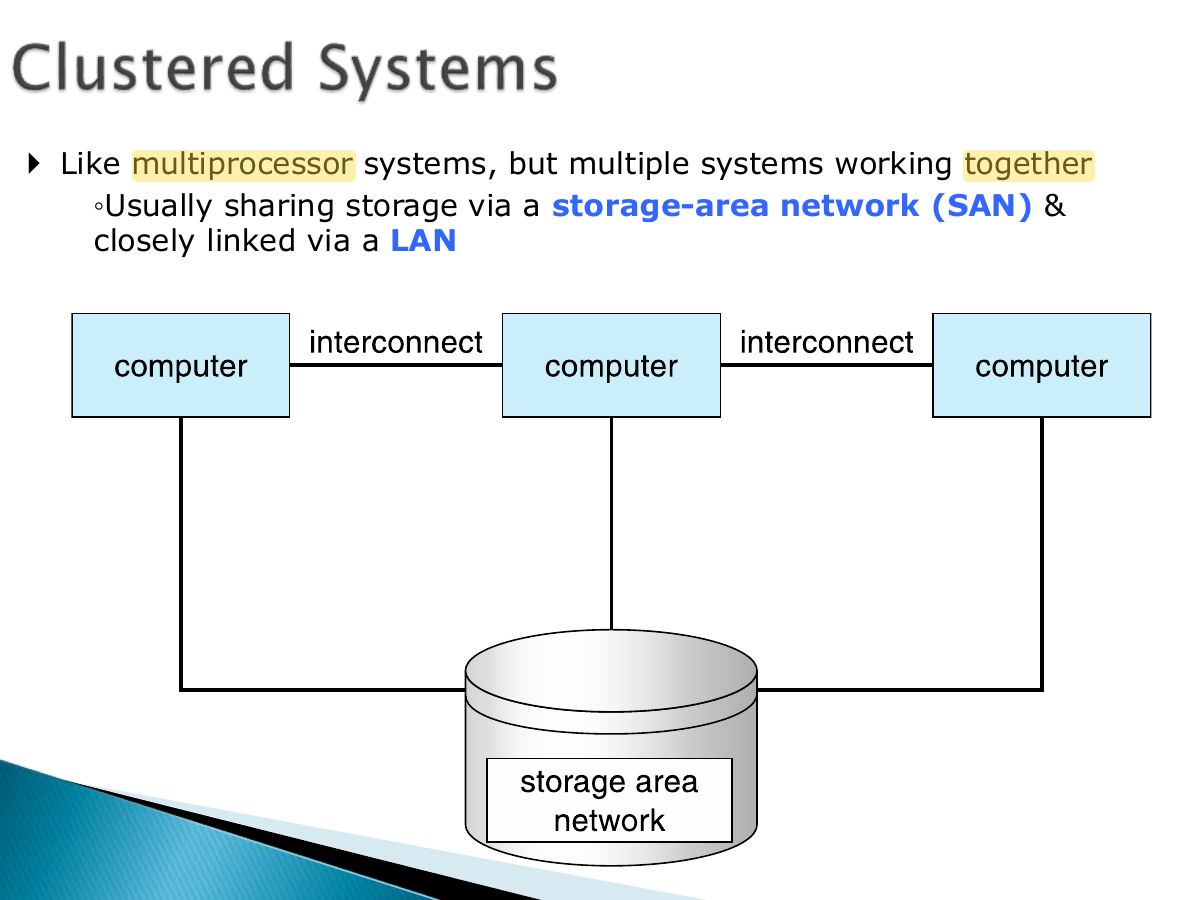
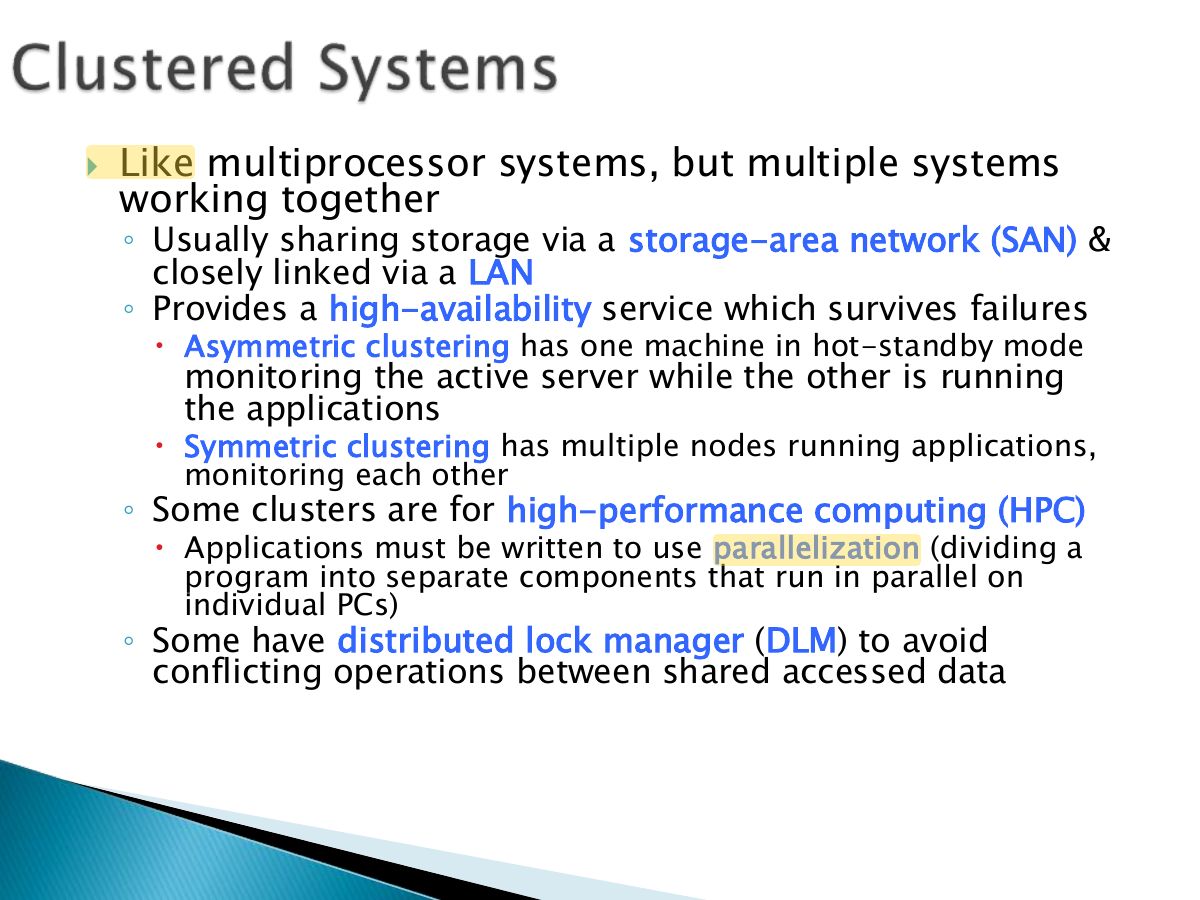
- Clustered systems: multiple systems working together over a network, usually sharing storage; high availability.
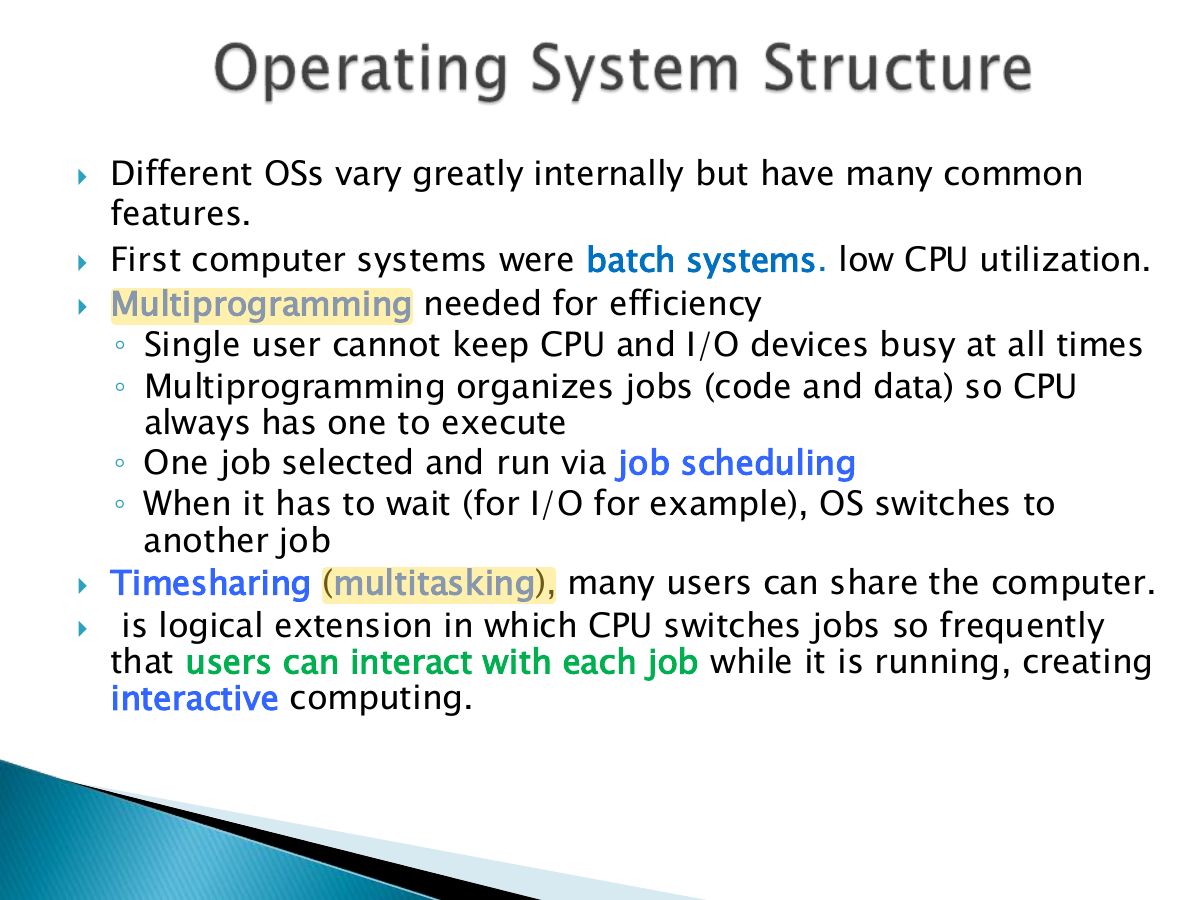
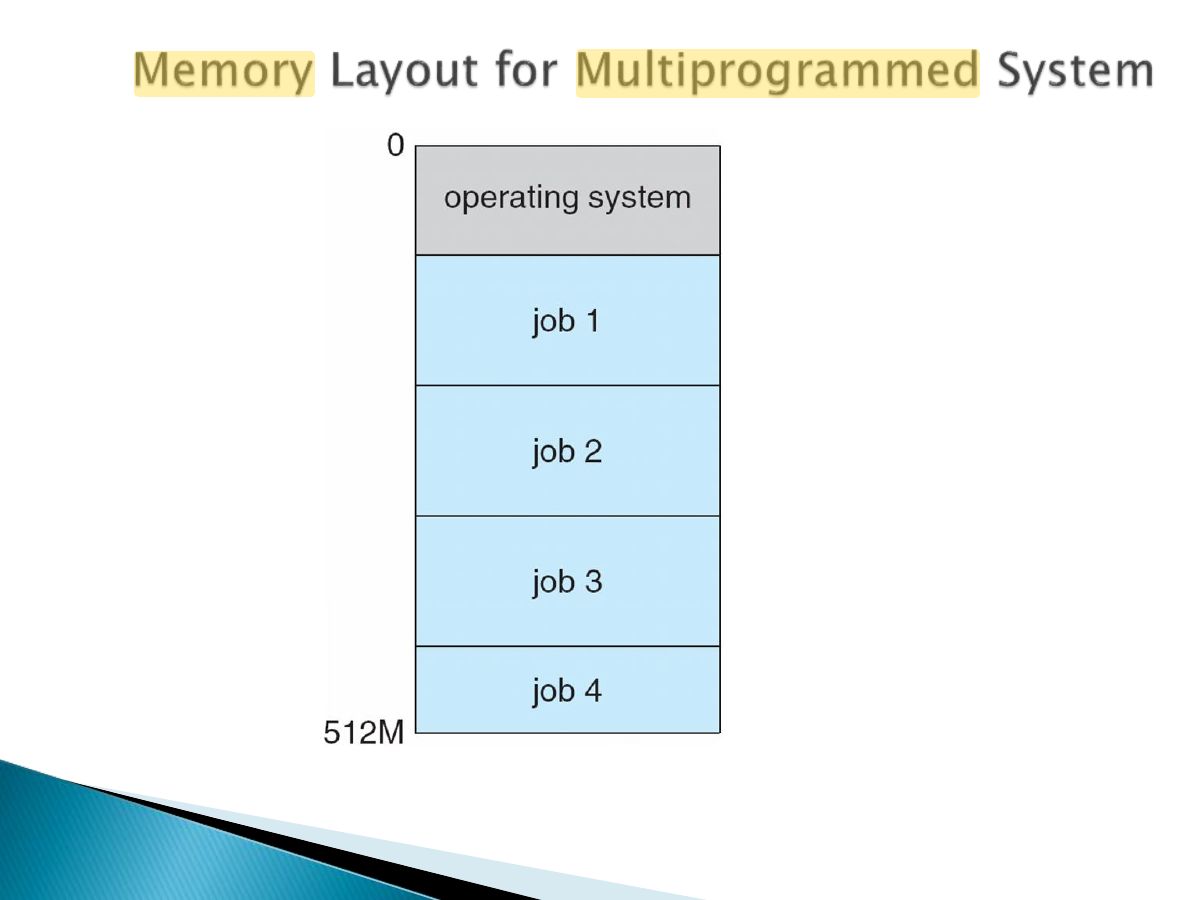
- Multiprogramming keeps several jobs in memory so the CPU always has one to run (overlaps CPU with I/O). Time-sharing switches so often that users can interact with each job.
Asked in a real exam
🎯 How this can come up · 1 question
What is the difference between multiprogramming and time-sharing?
Multiprogramming organizes jobs so the CPU always has one to execute: when a job waits (e.g. for I/O) the OS switches to another, increasing CPU utilization. Time-sharing extends this by switching so frequently that users can interact with each program while it runs (interactive computing, short response time).
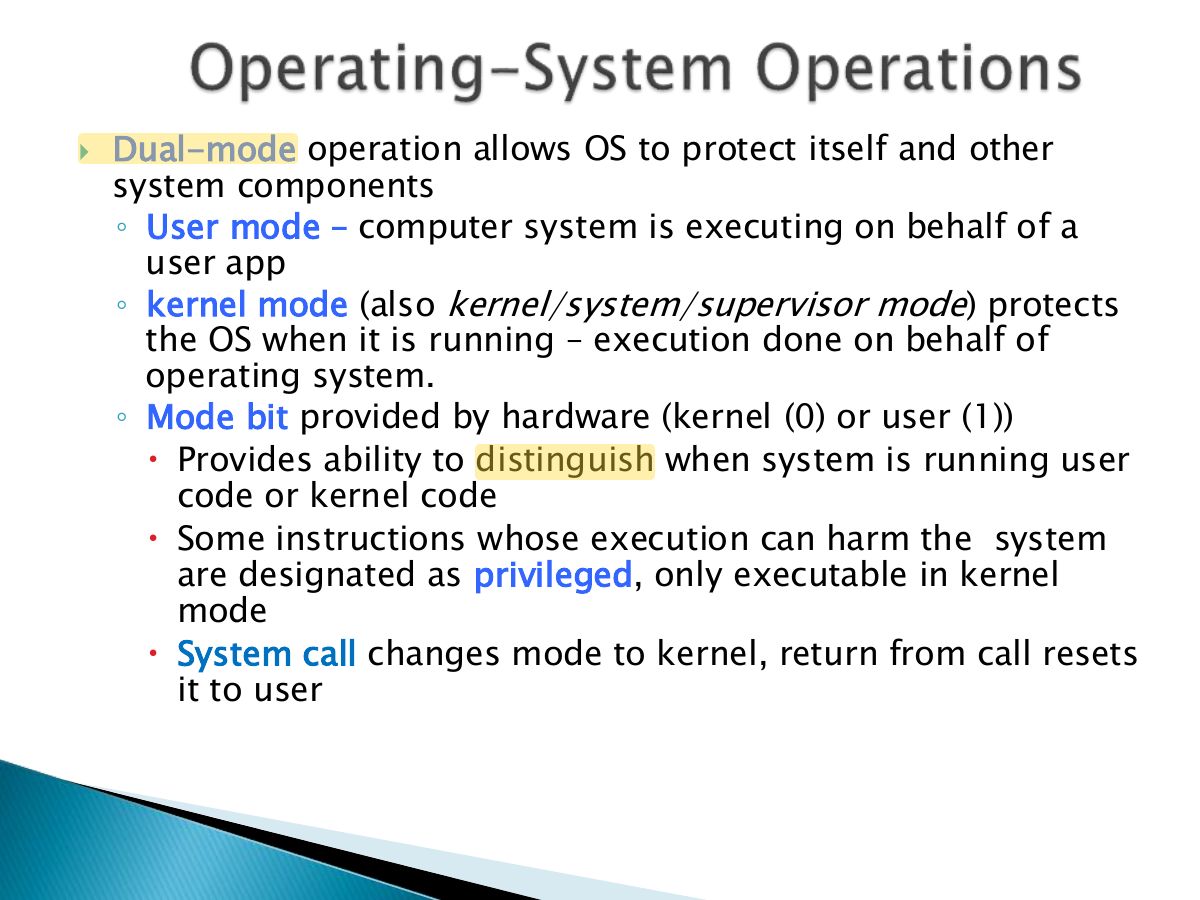
- Dual mode: user mode and kernel mode (mode bit). Privileged instructions run only in kernel mode; a system call switches to kernel mode.
🎯 How this can come up · 1 question
Privileged instructions can be executed in user mode.
False. They trap to the OS if attempted in user mode.
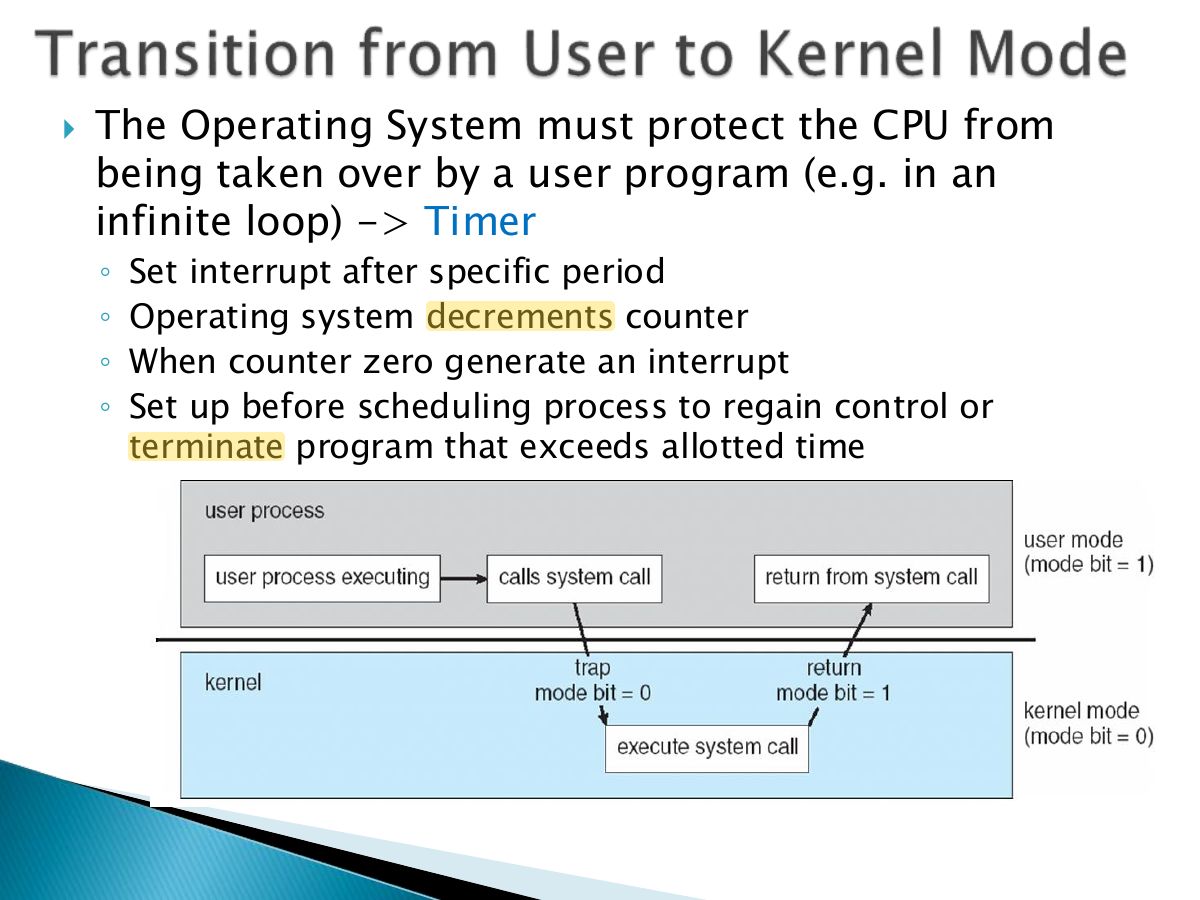
- The timer interrupts after a set period so a user program can’t run forever and keep the CPU from the OS.
Asked in a real exam
🎯 How this can come up · 1 question
A ____ prevents a user program from never returning control to the OS.
Correct: Timer.
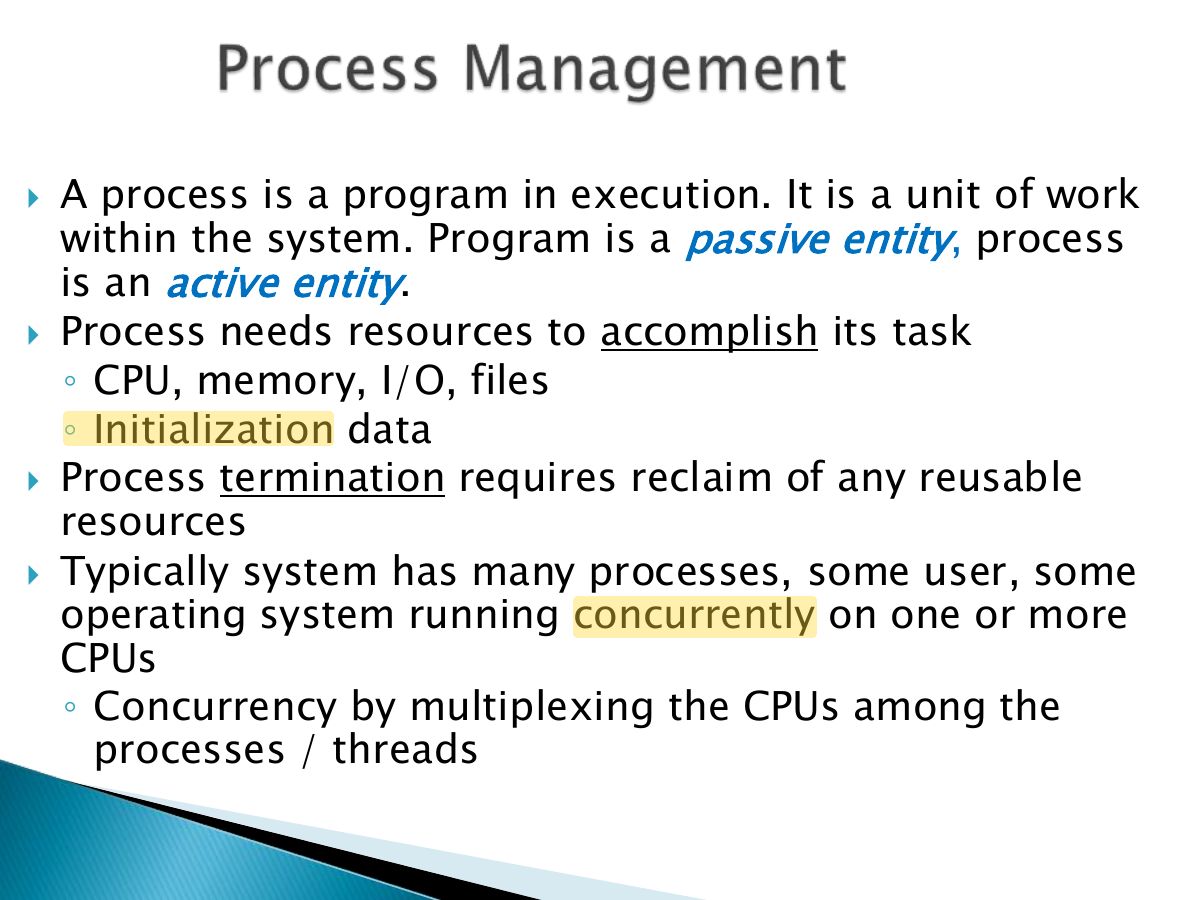
- A process is a program in execution (active); a program is passive.
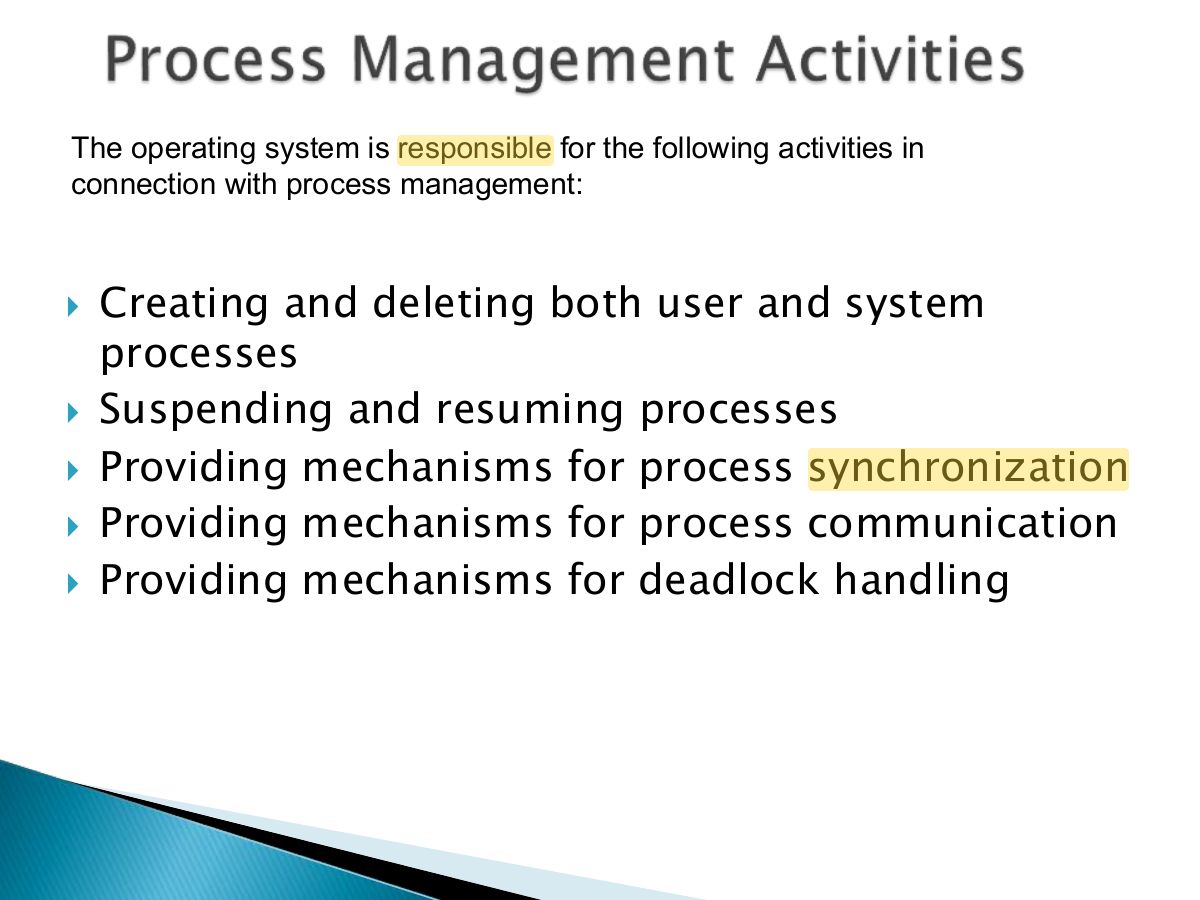
- Process management: create/delete, suspend/resume, and mechanisms for synchronization, communication and deadlock handling.
Asked in a real exam
No slides match this filter.