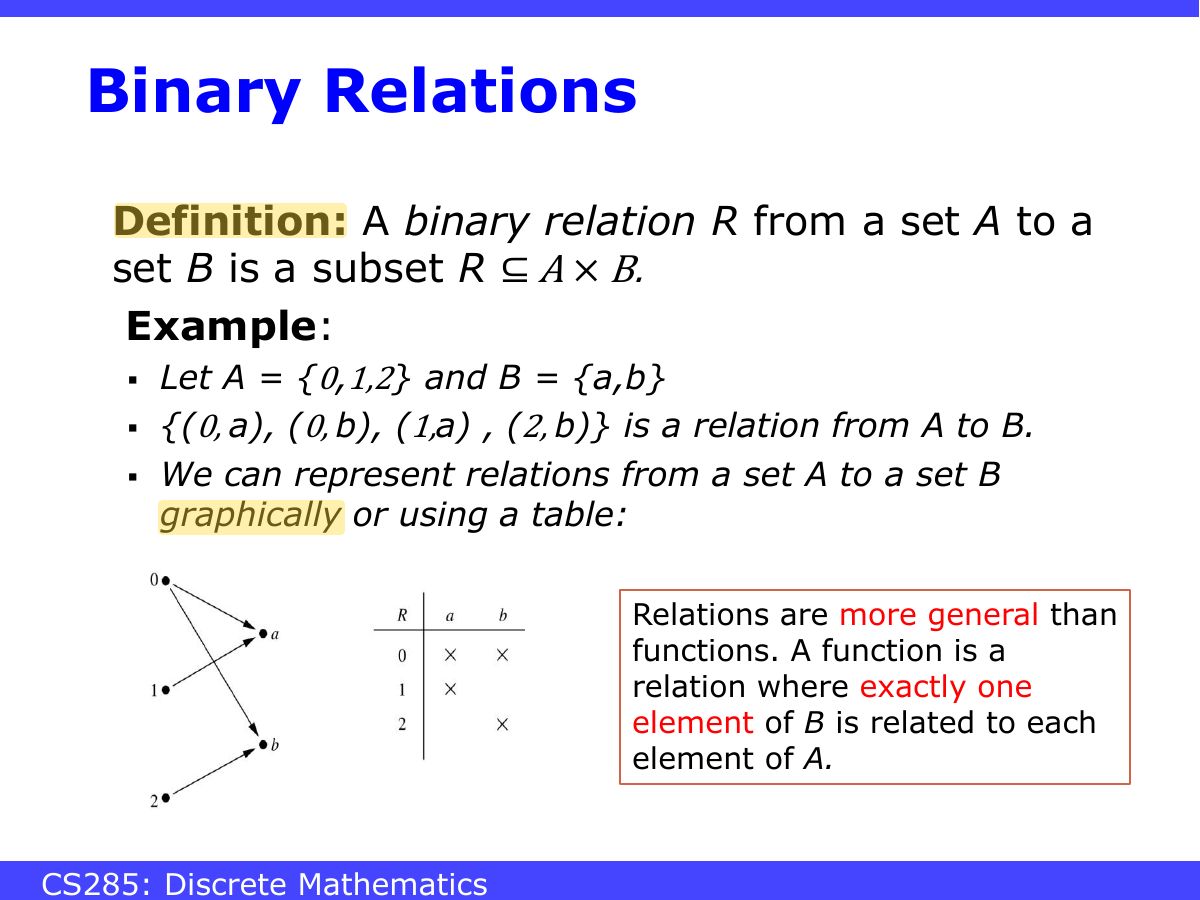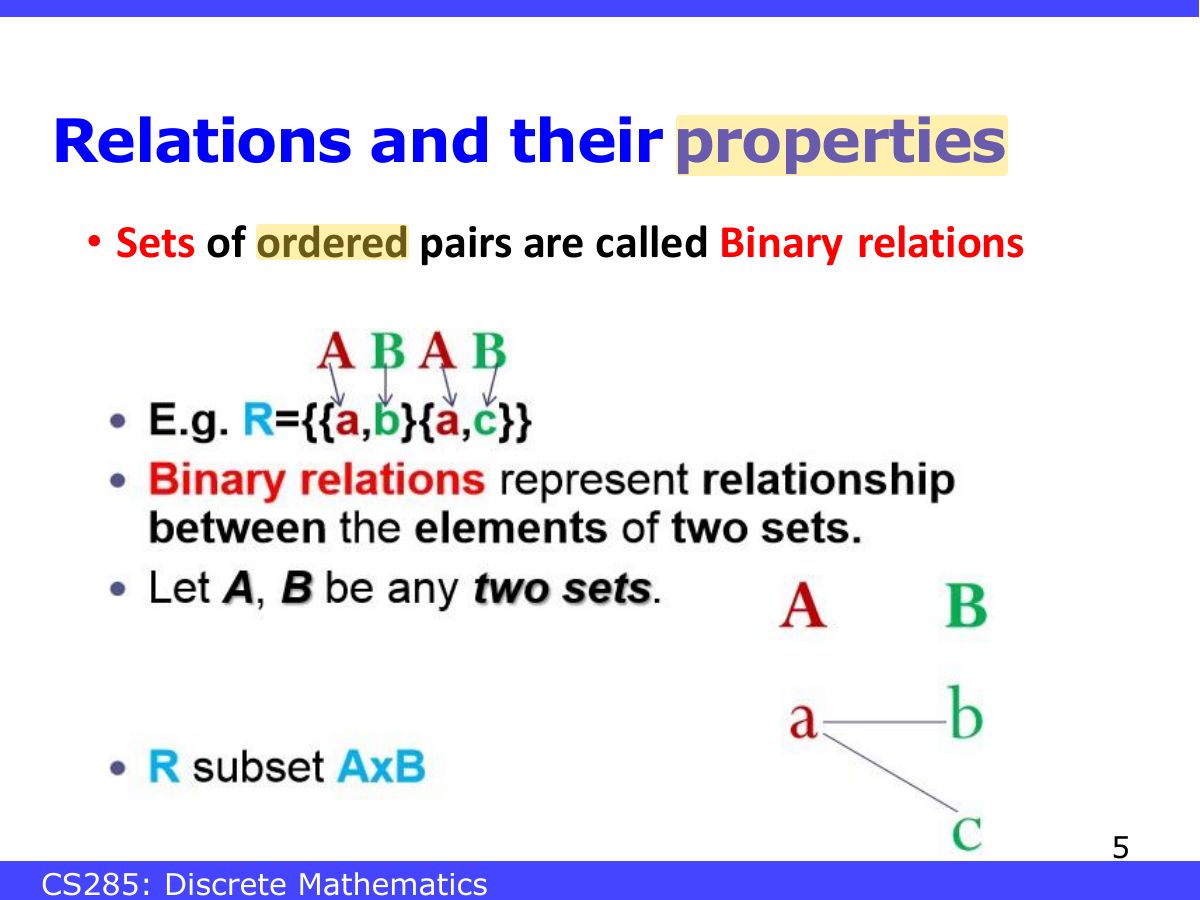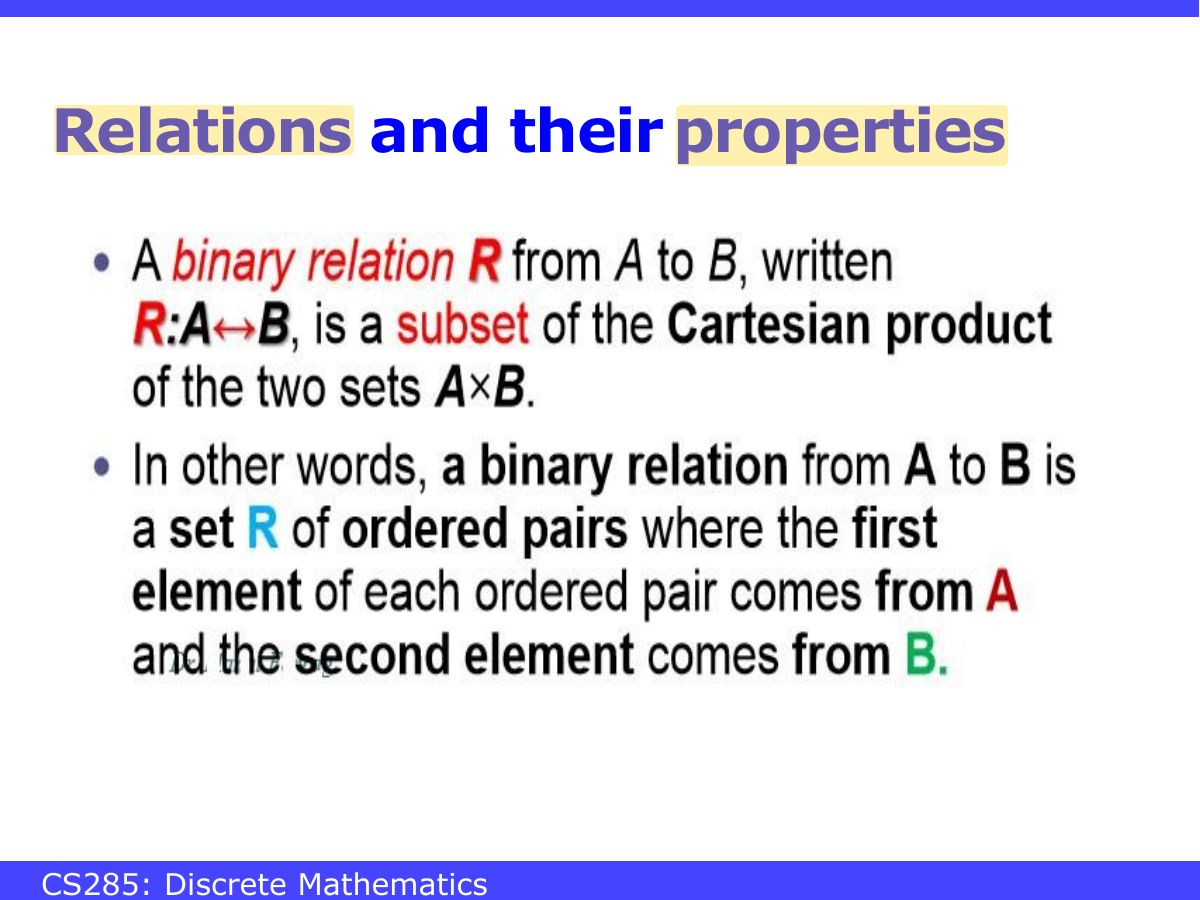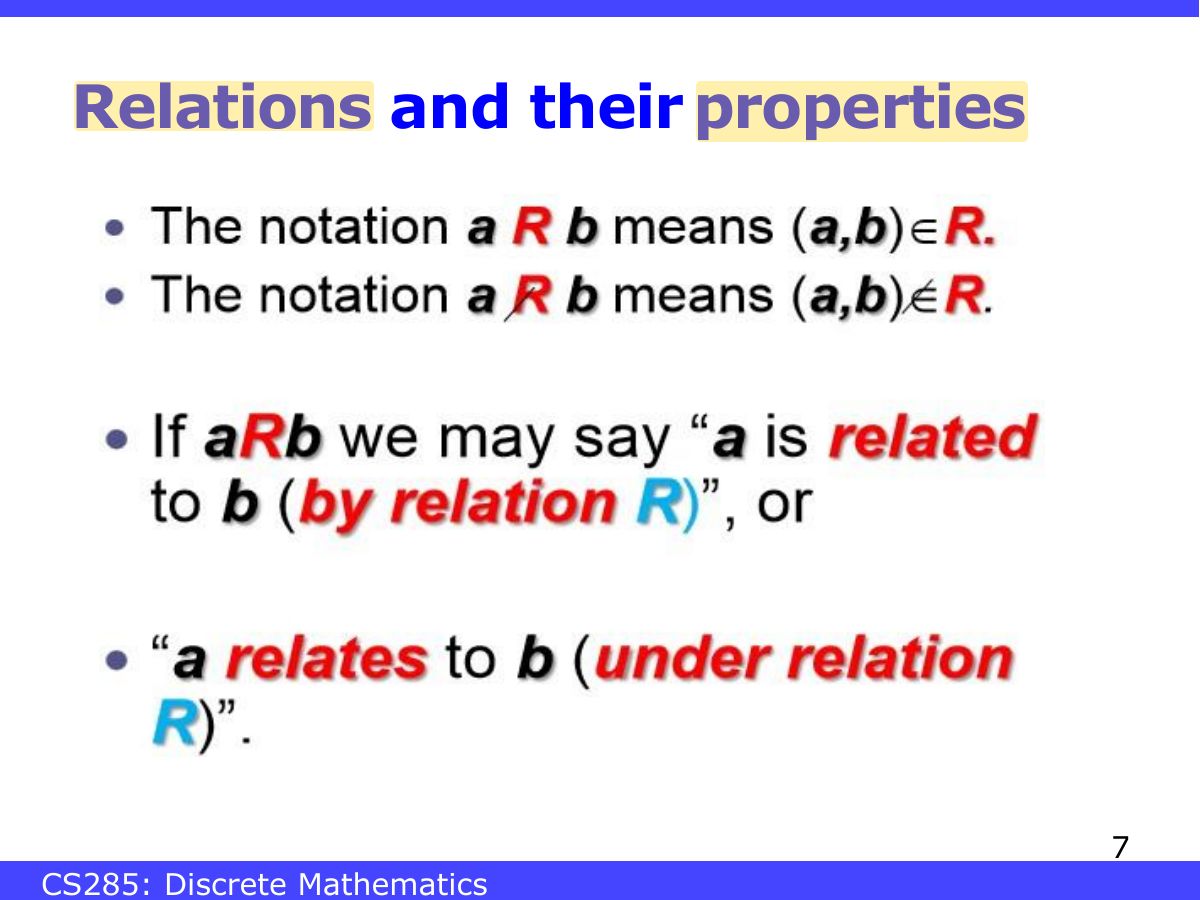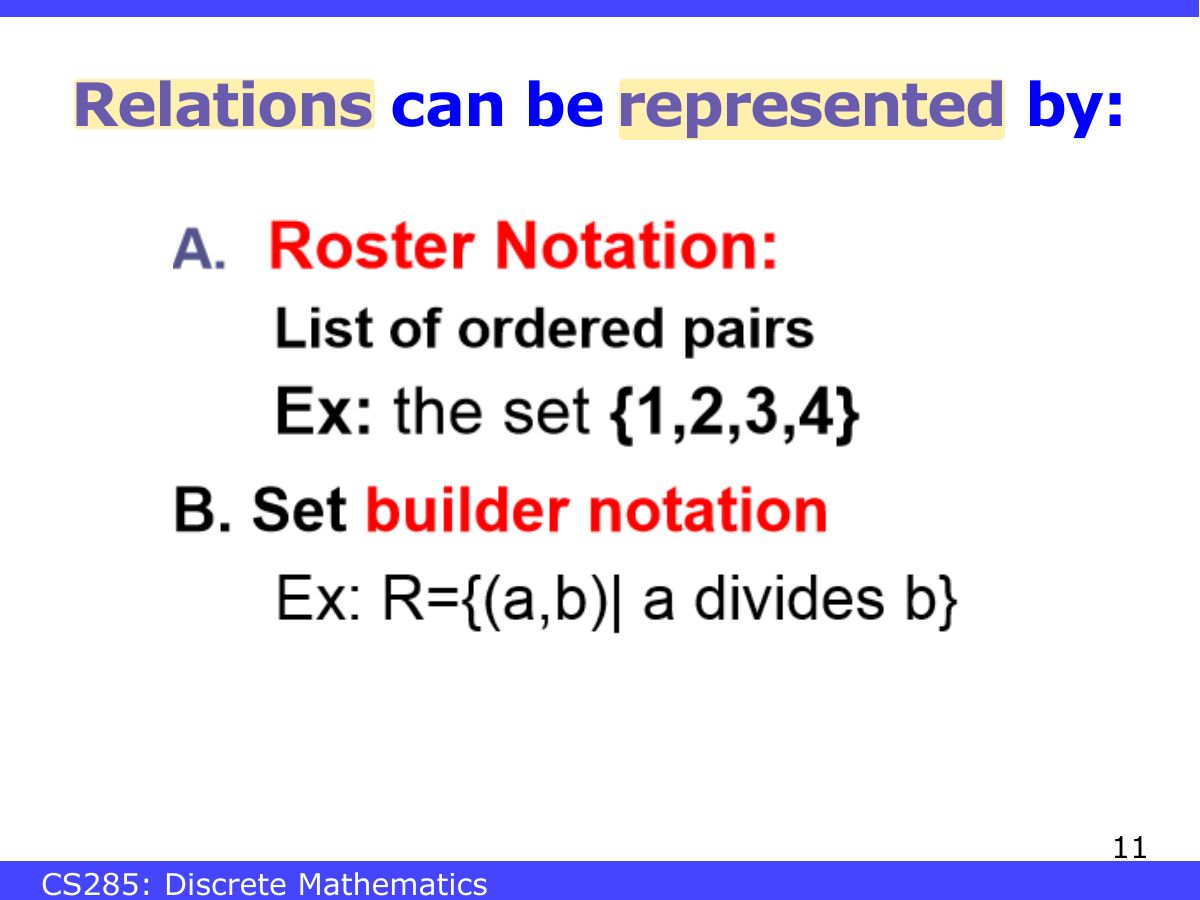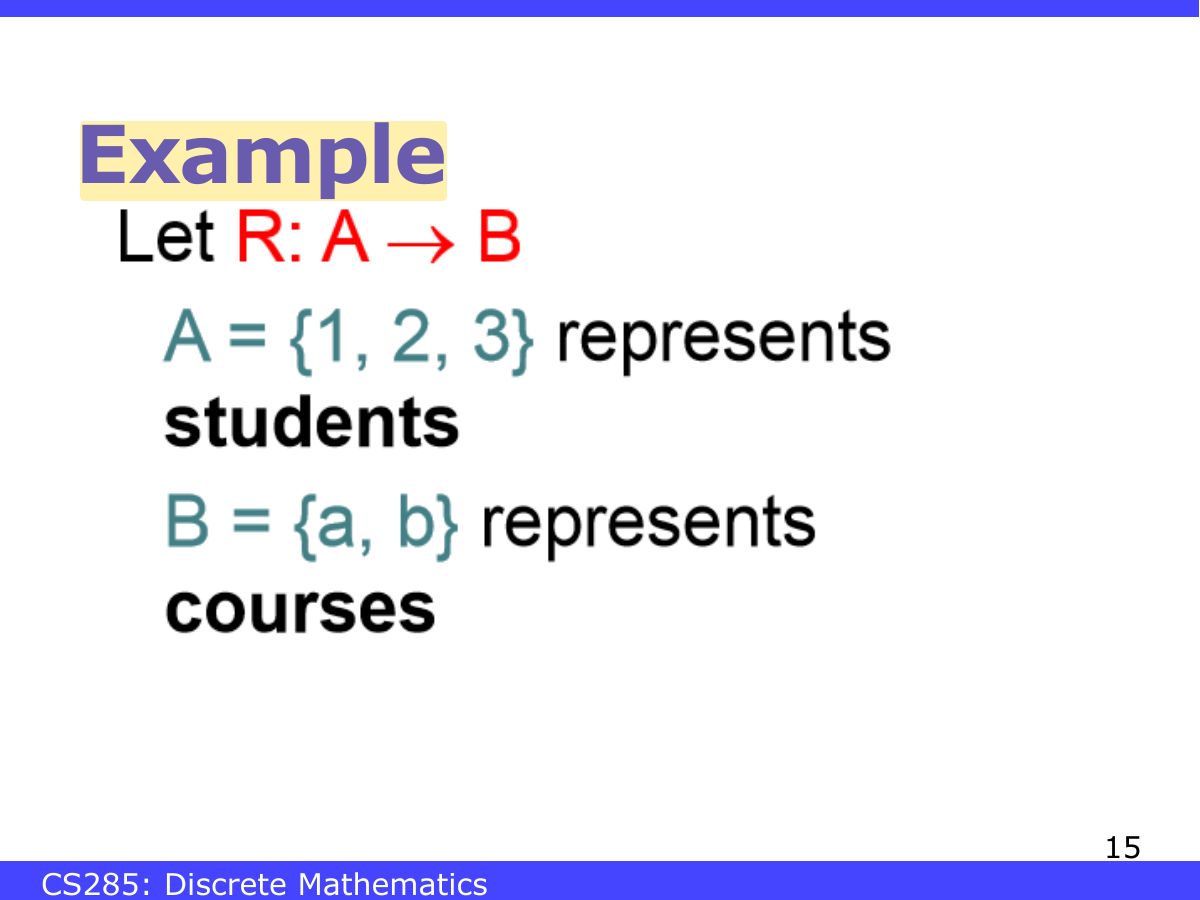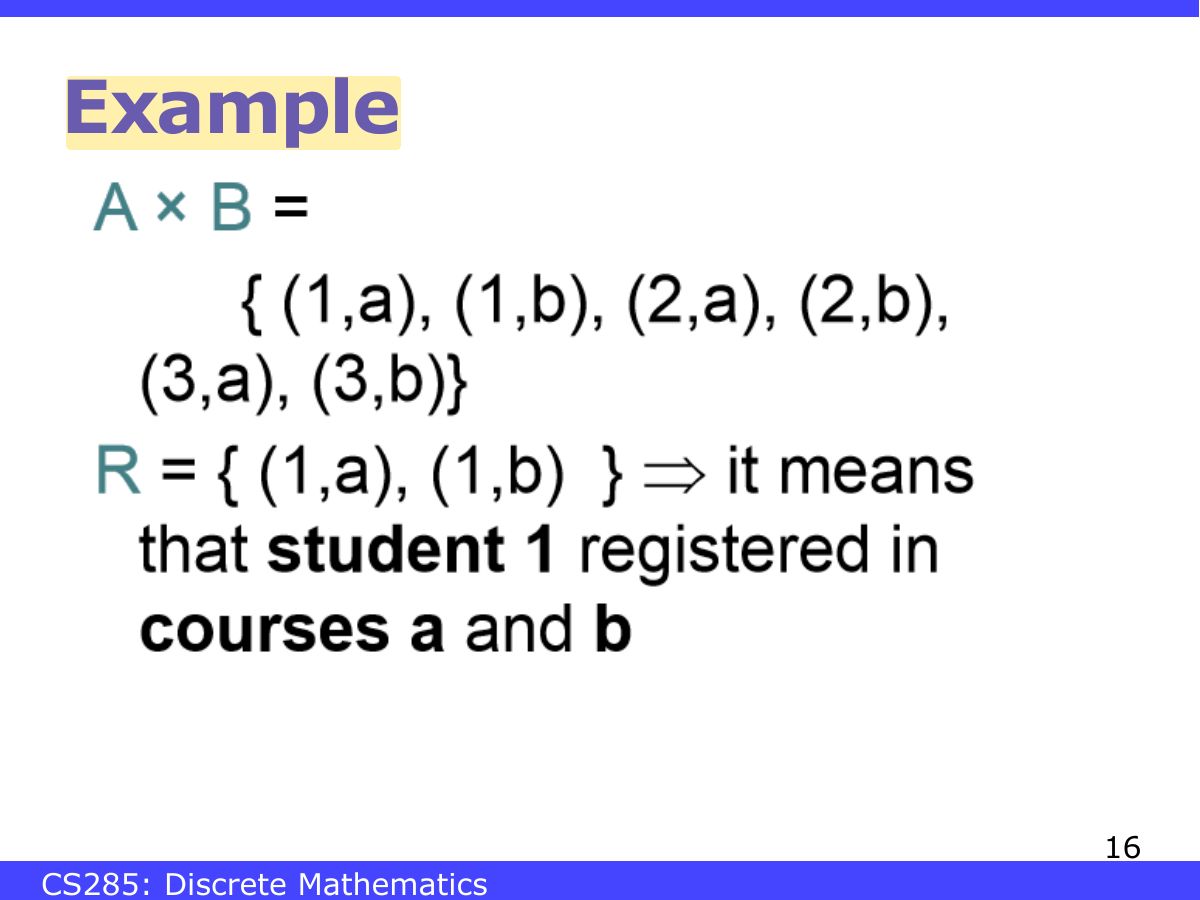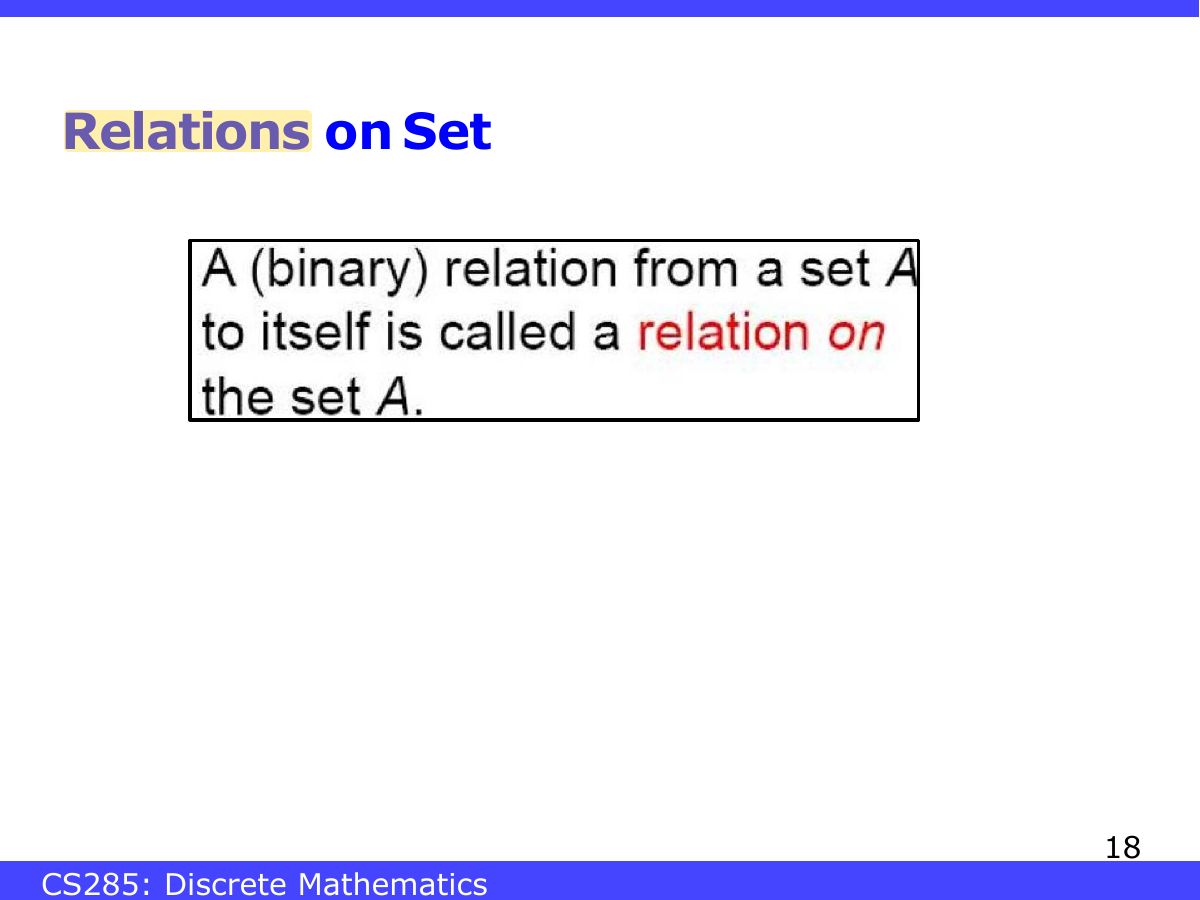
- A binary relation from A to B is a subset of A × B; (a, b) ∈ R is written aRb.
- A relation on A is a subset of A × A. There are 2^(n²) relations on a set with n elements.
🎯 How this can come up · 1 question
How many relations are there on a set with 3 elements?
2⁹.
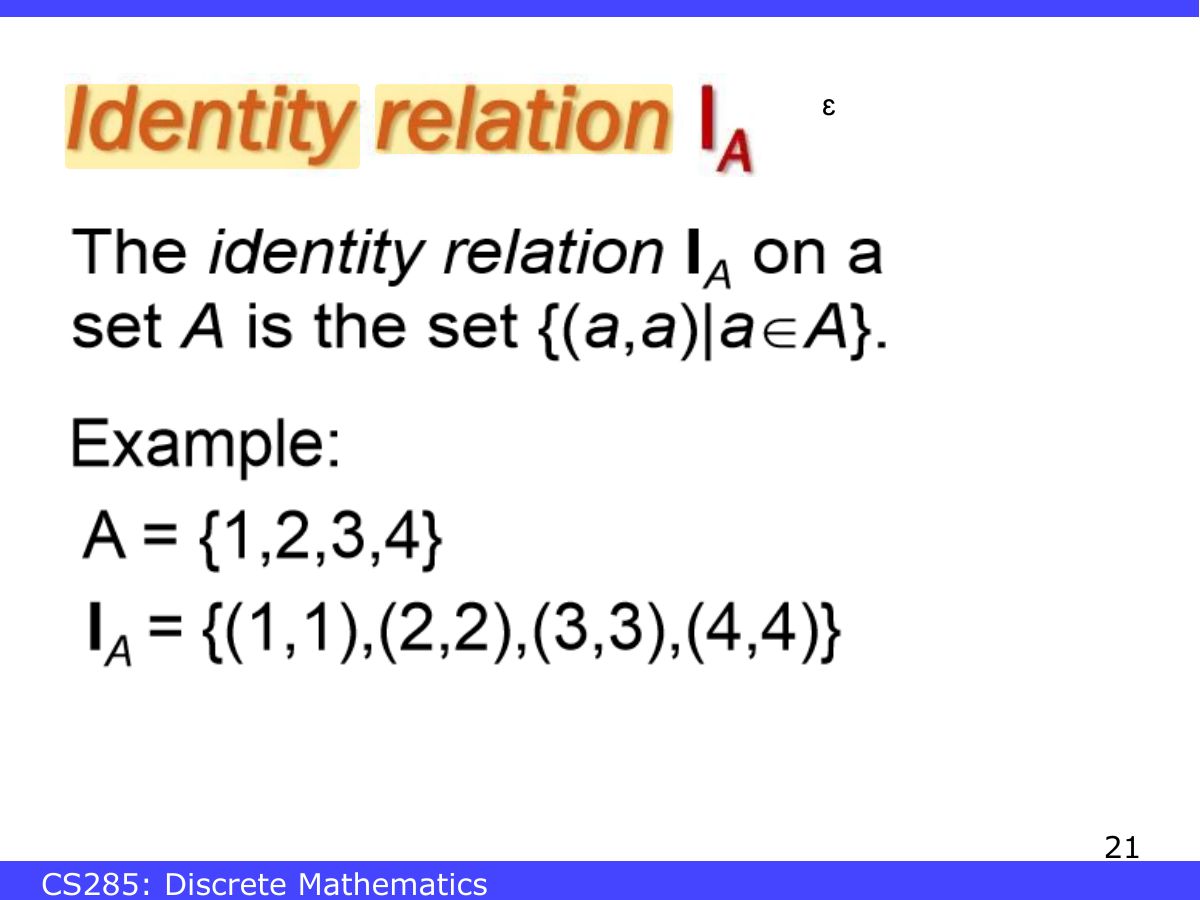
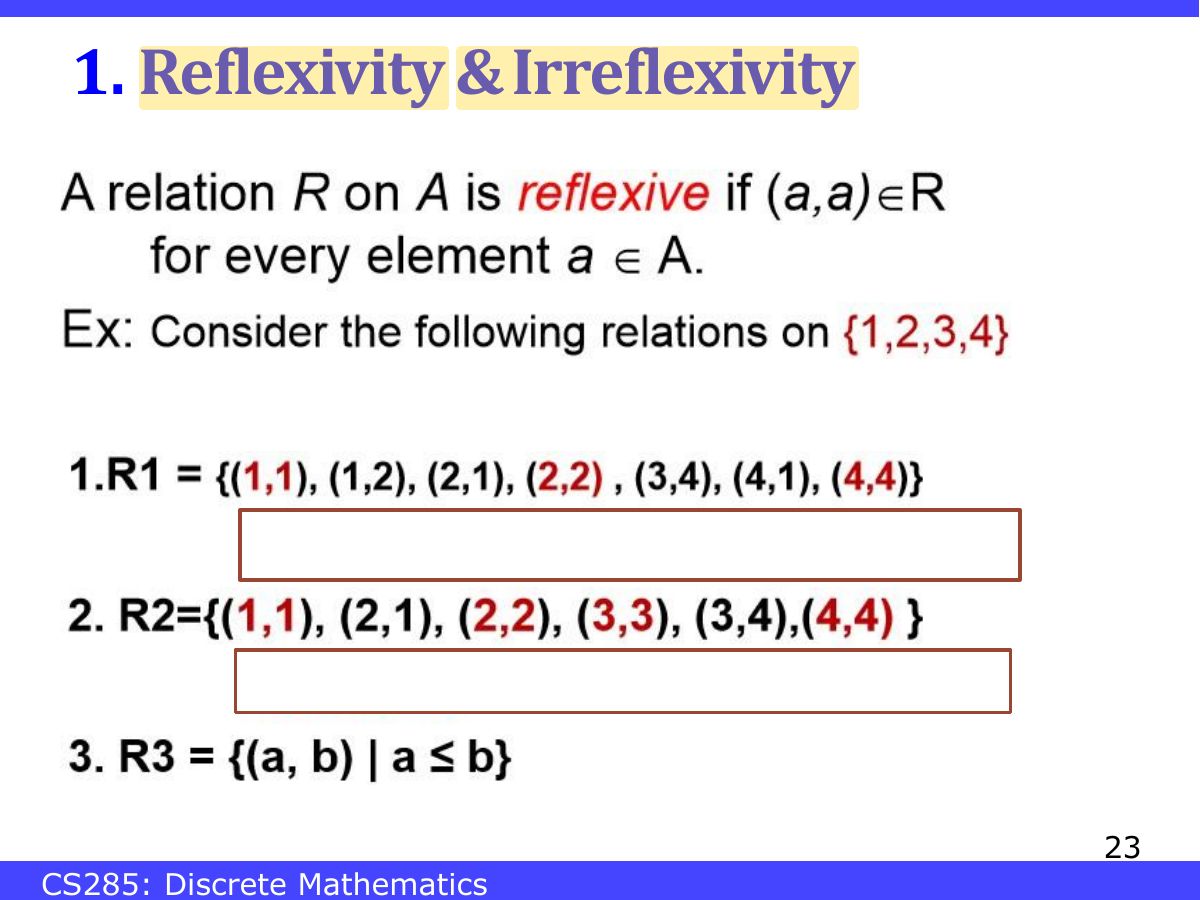
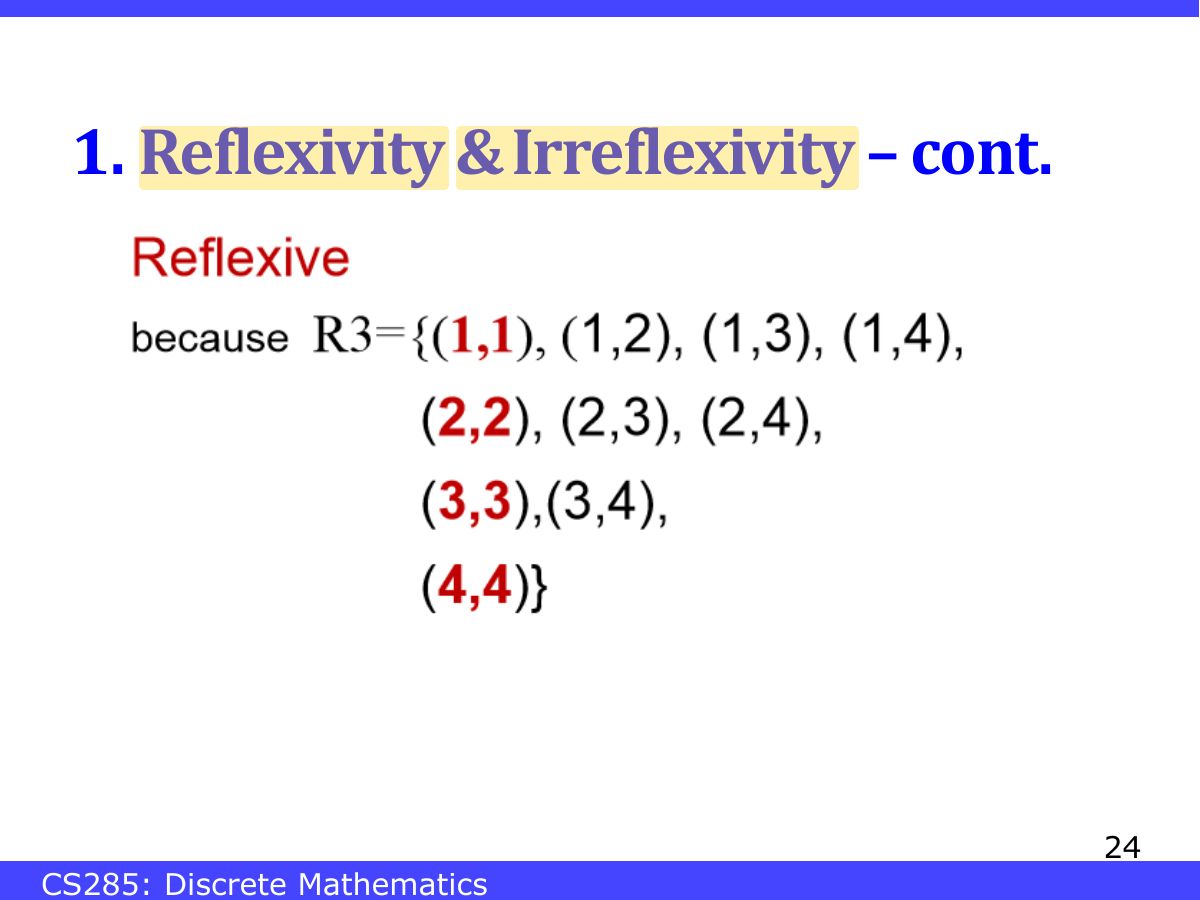
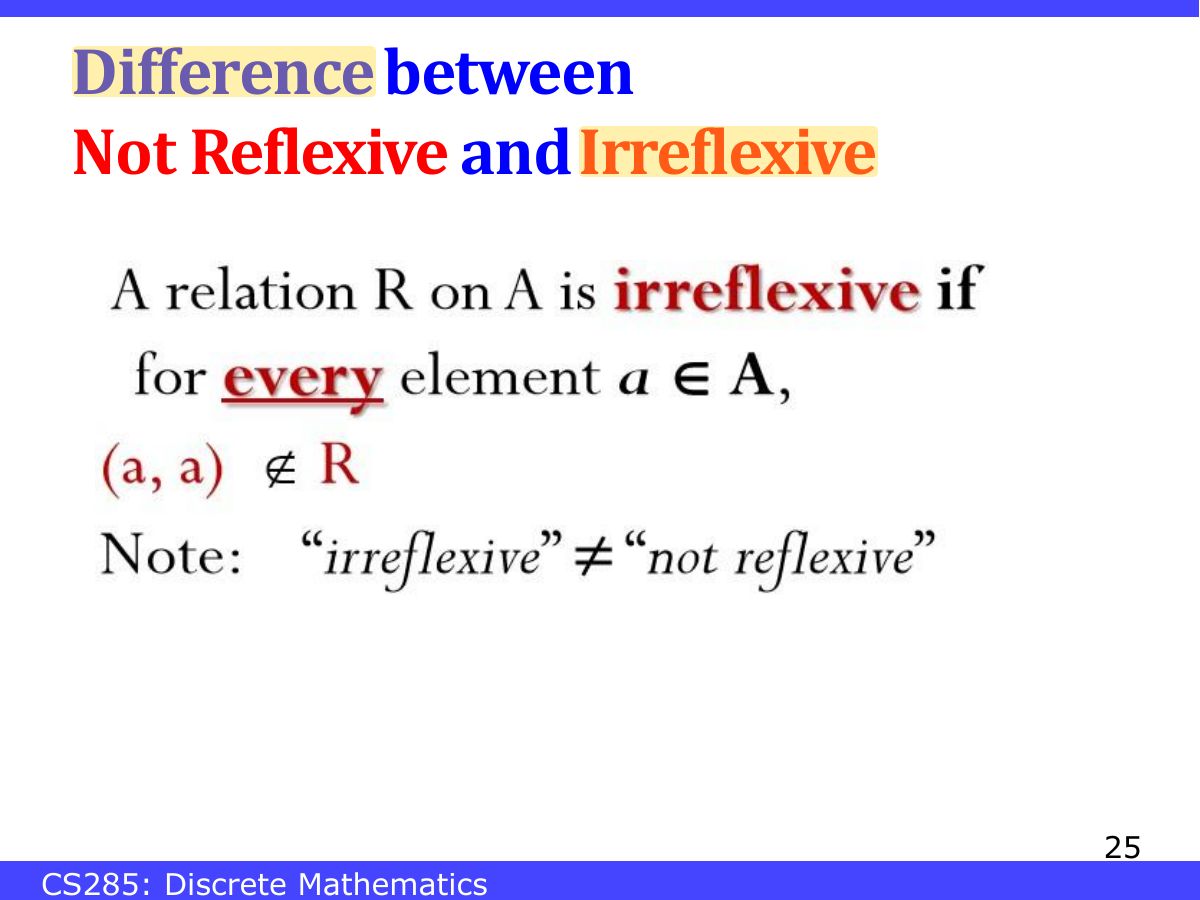
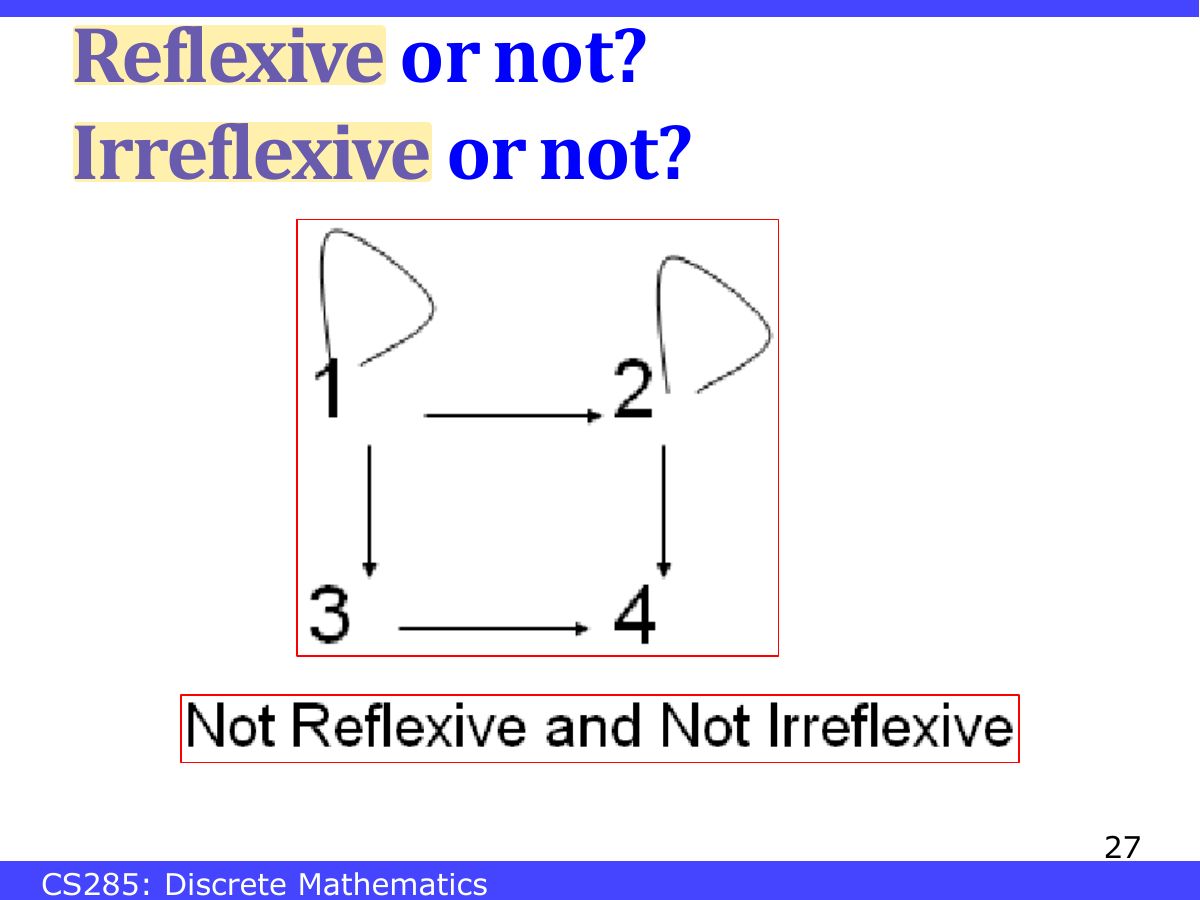
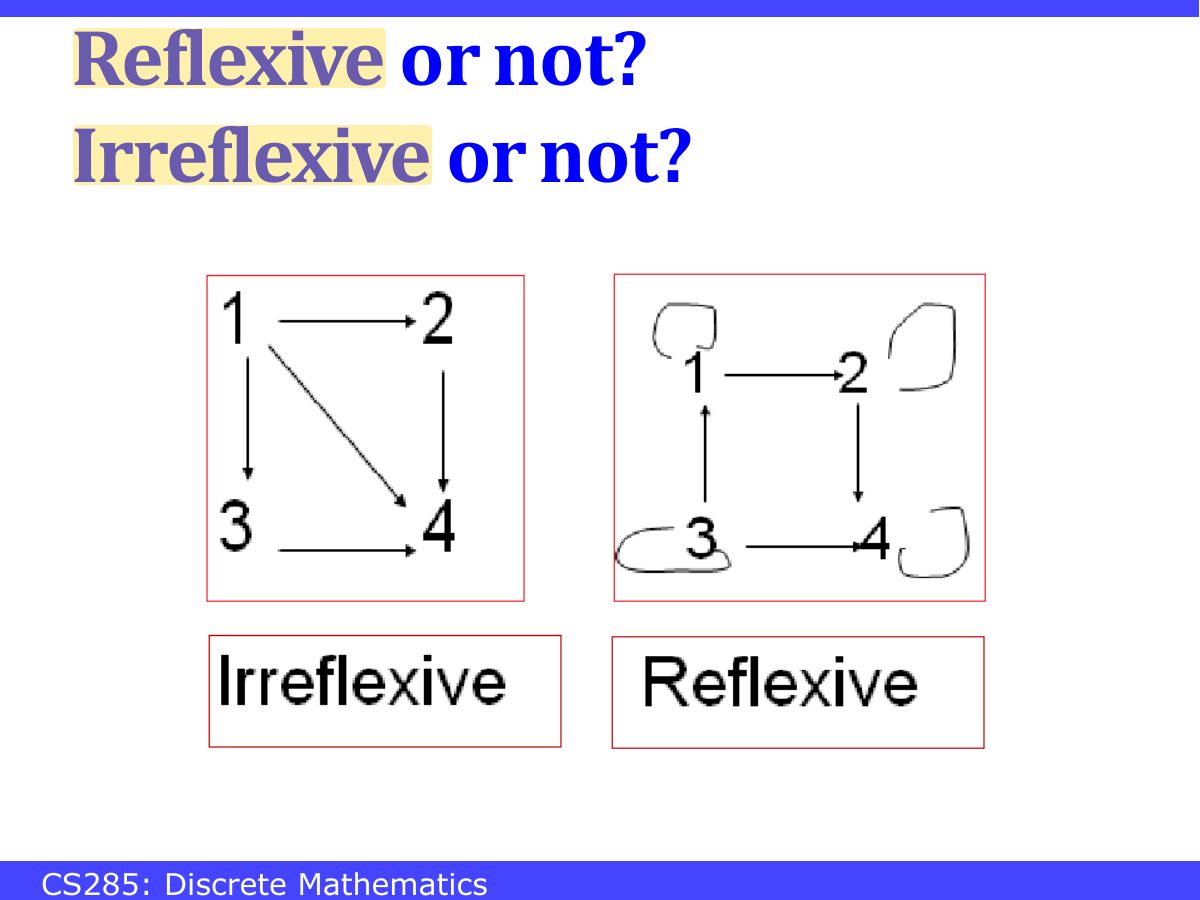
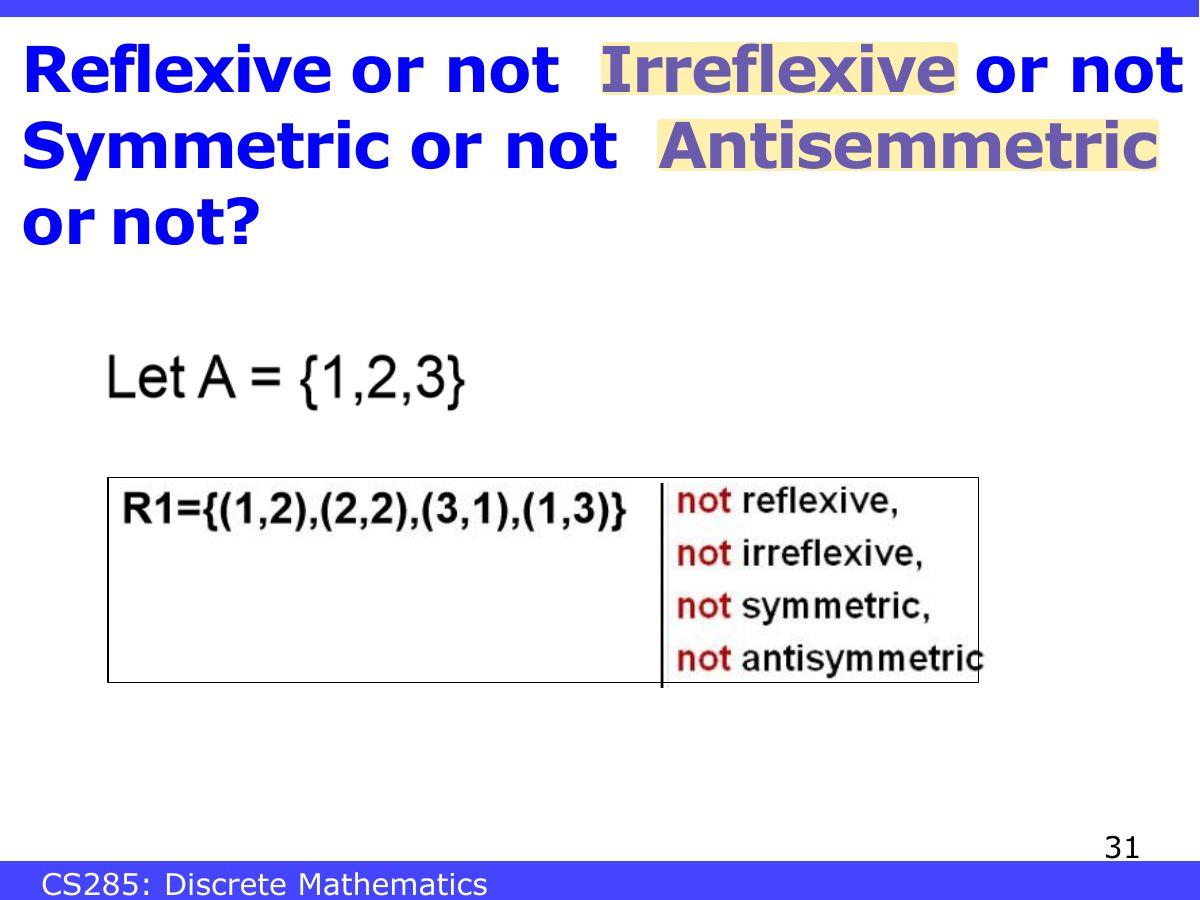
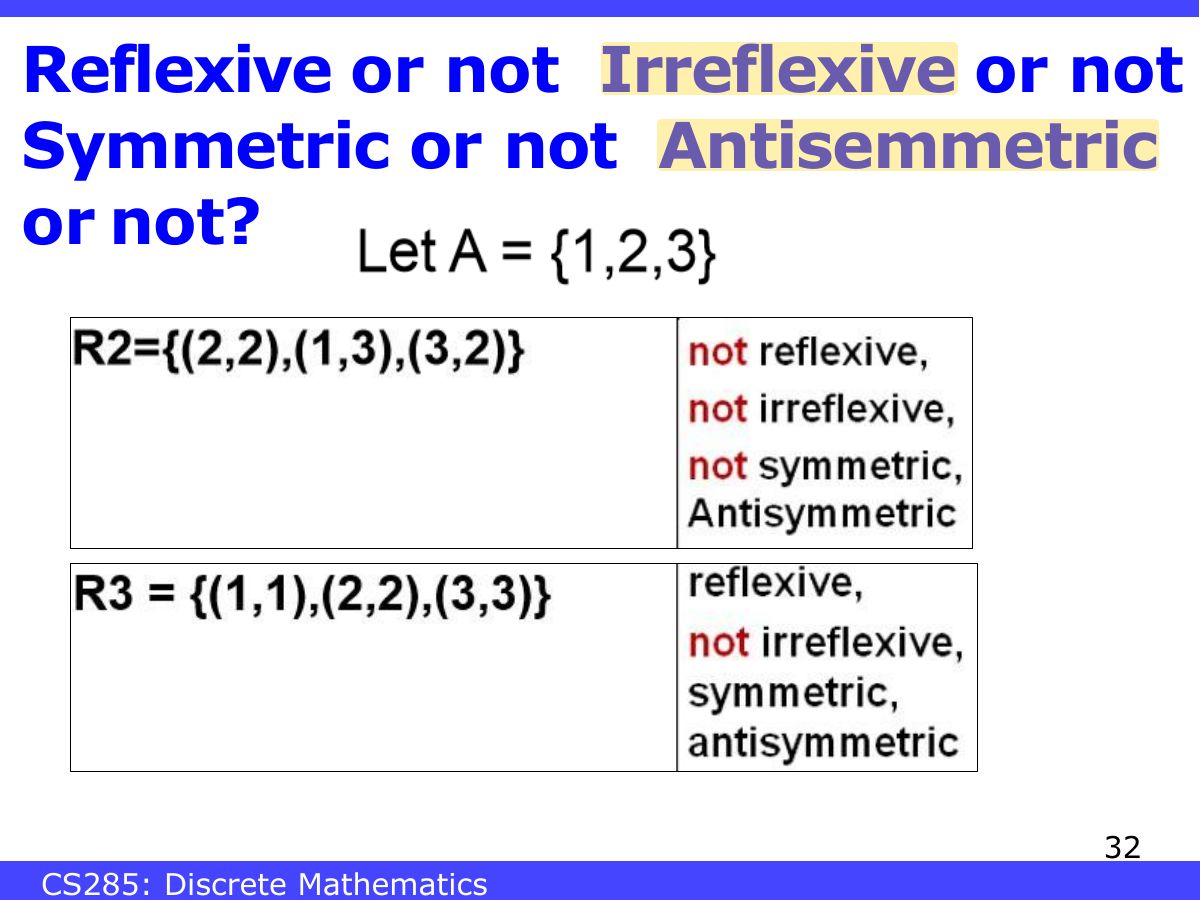
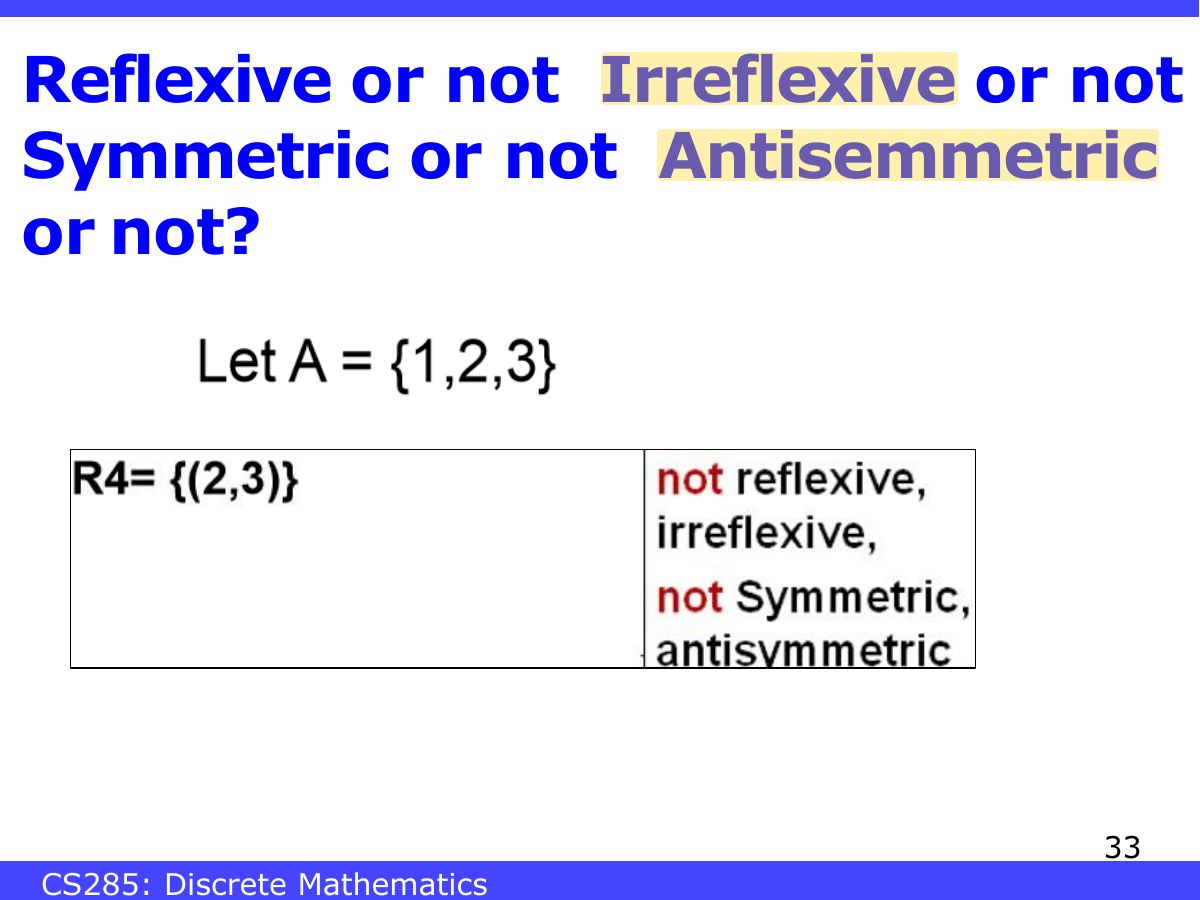
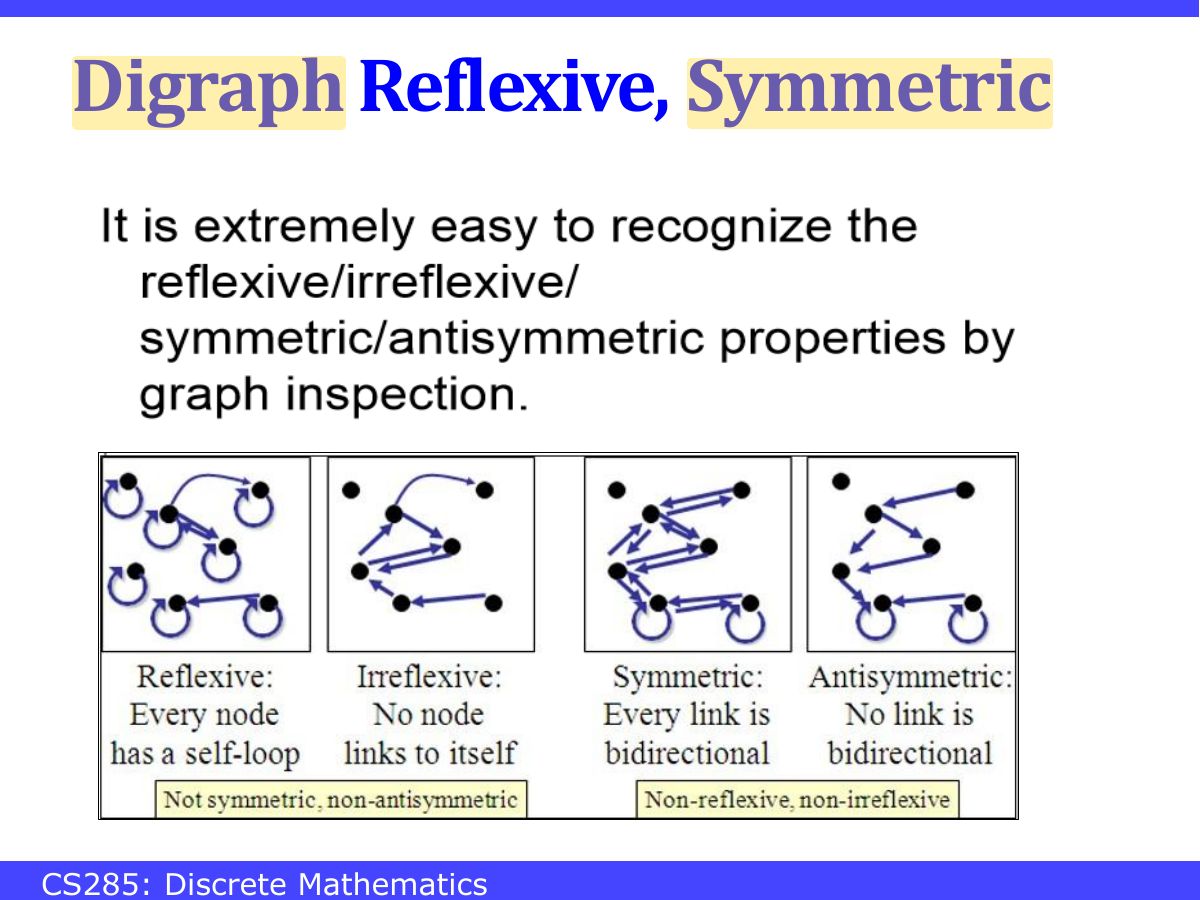
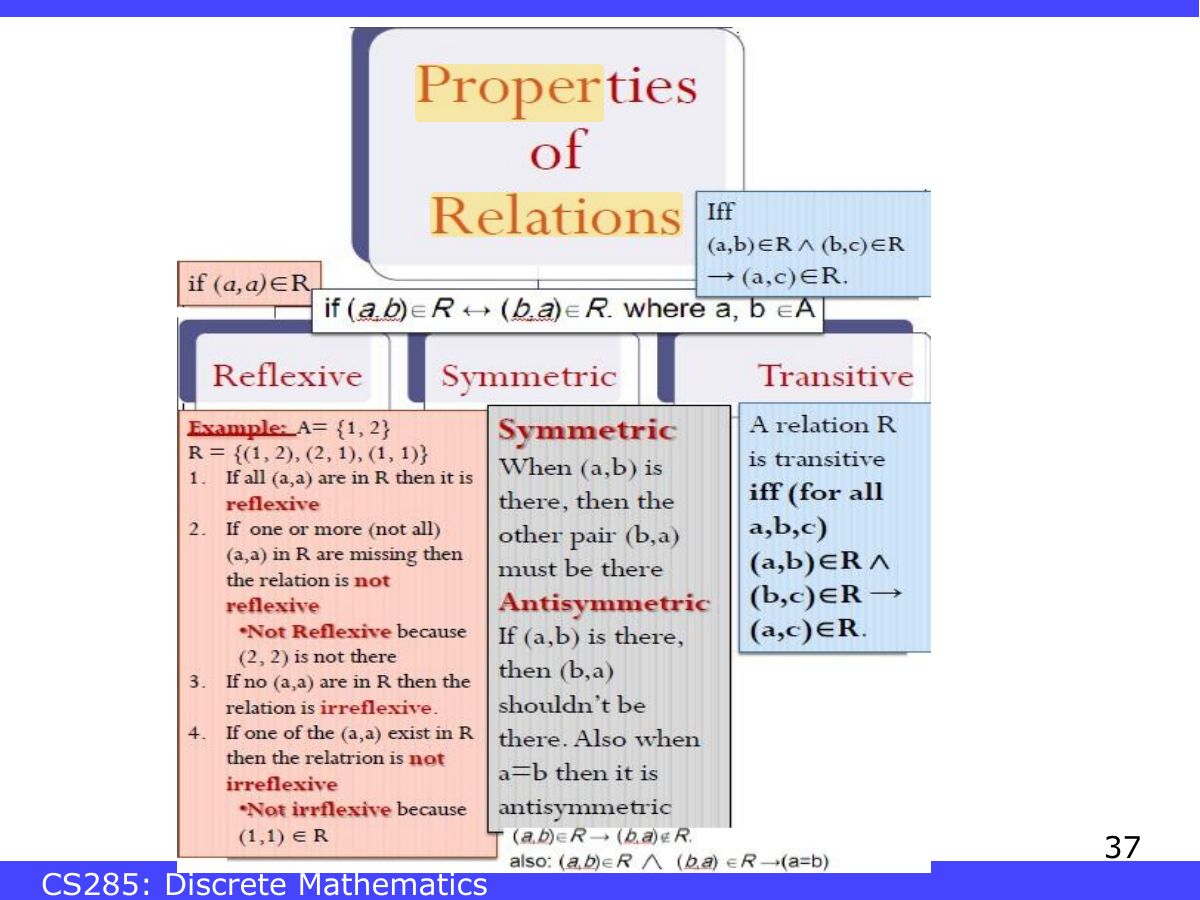
- Reflexive: (a, a) ∈ R for EVERY a. Irreflexive: (a, a) ∉ R for every a.
- "Not reflexive" ≠ "irreflexive": a relation can be neither (some loops but not all).
🎯 How this can come up · 1 question
A relation that is not reflexive must be irreflexive.
False. It can have some loops and not others.
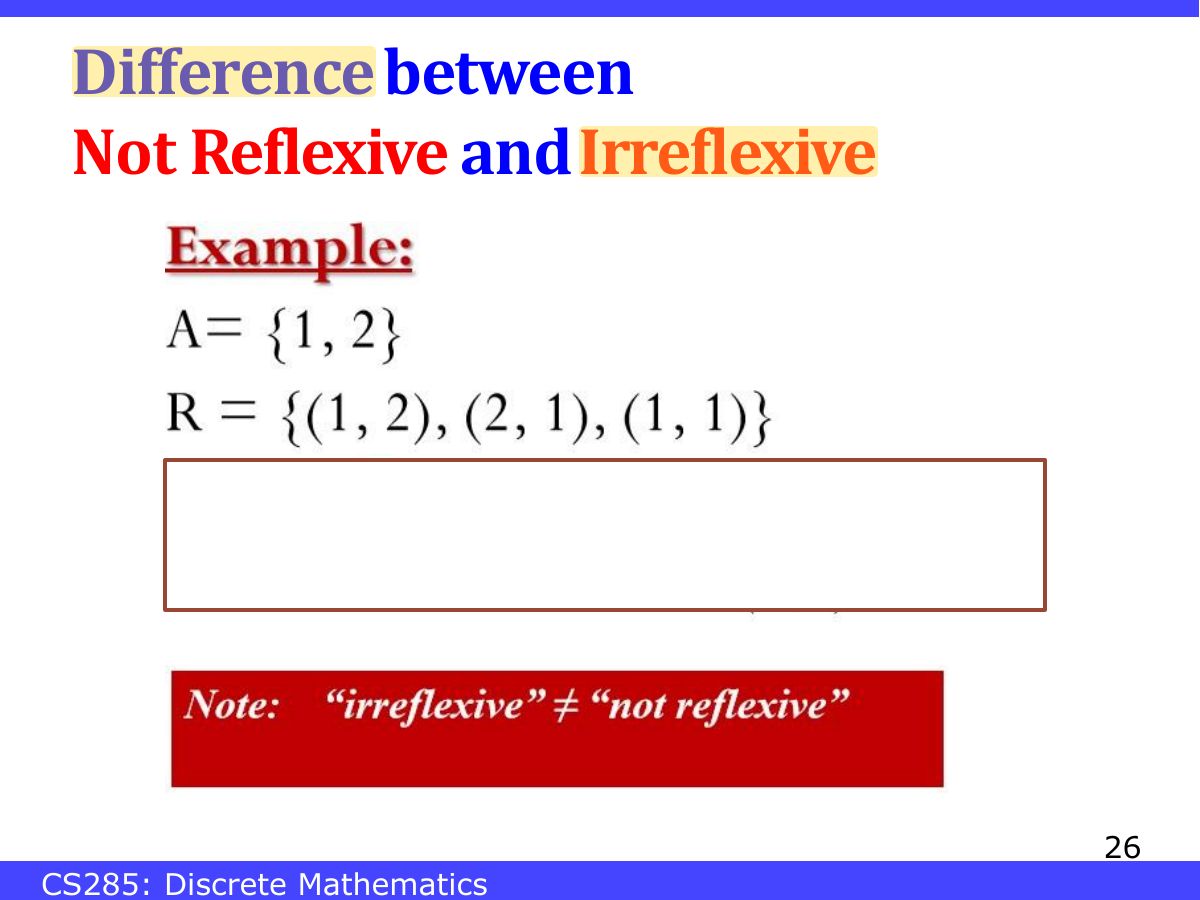
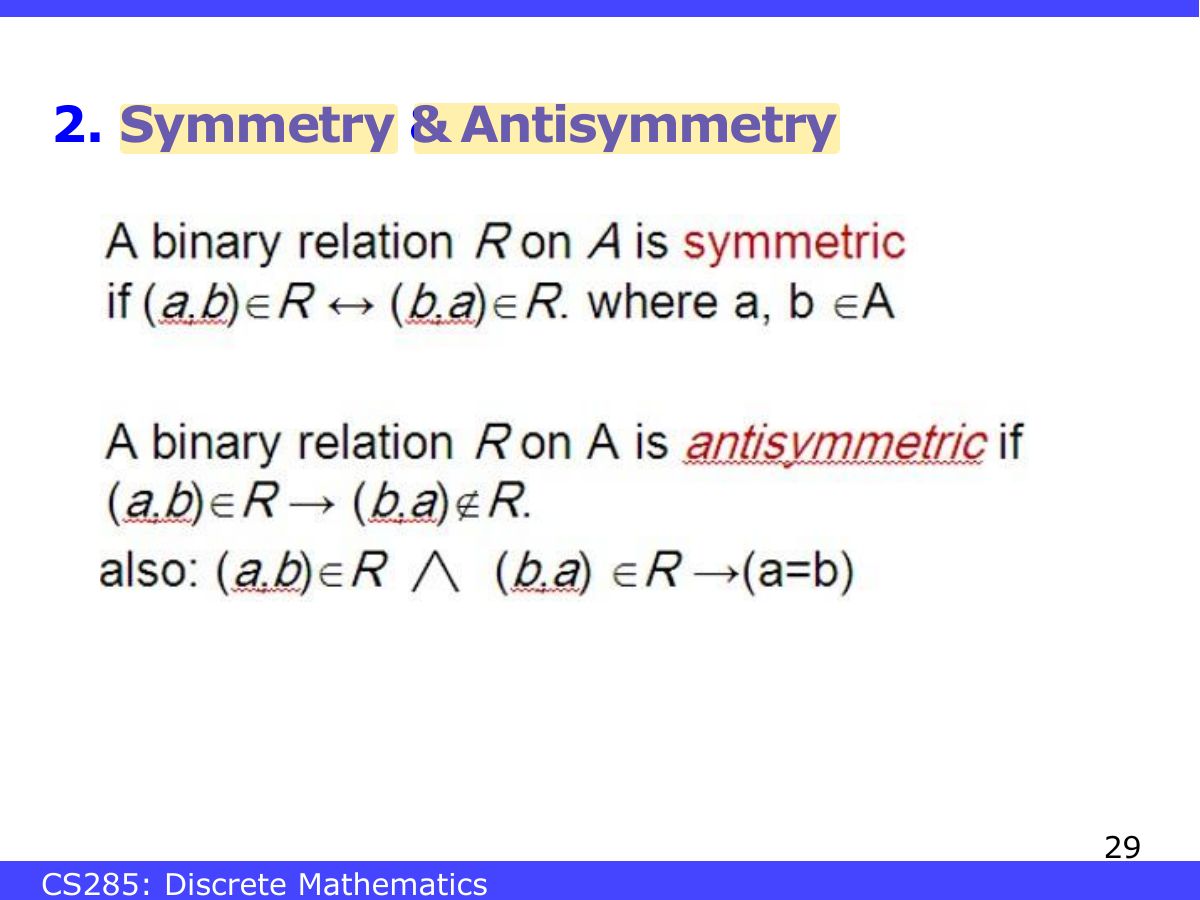
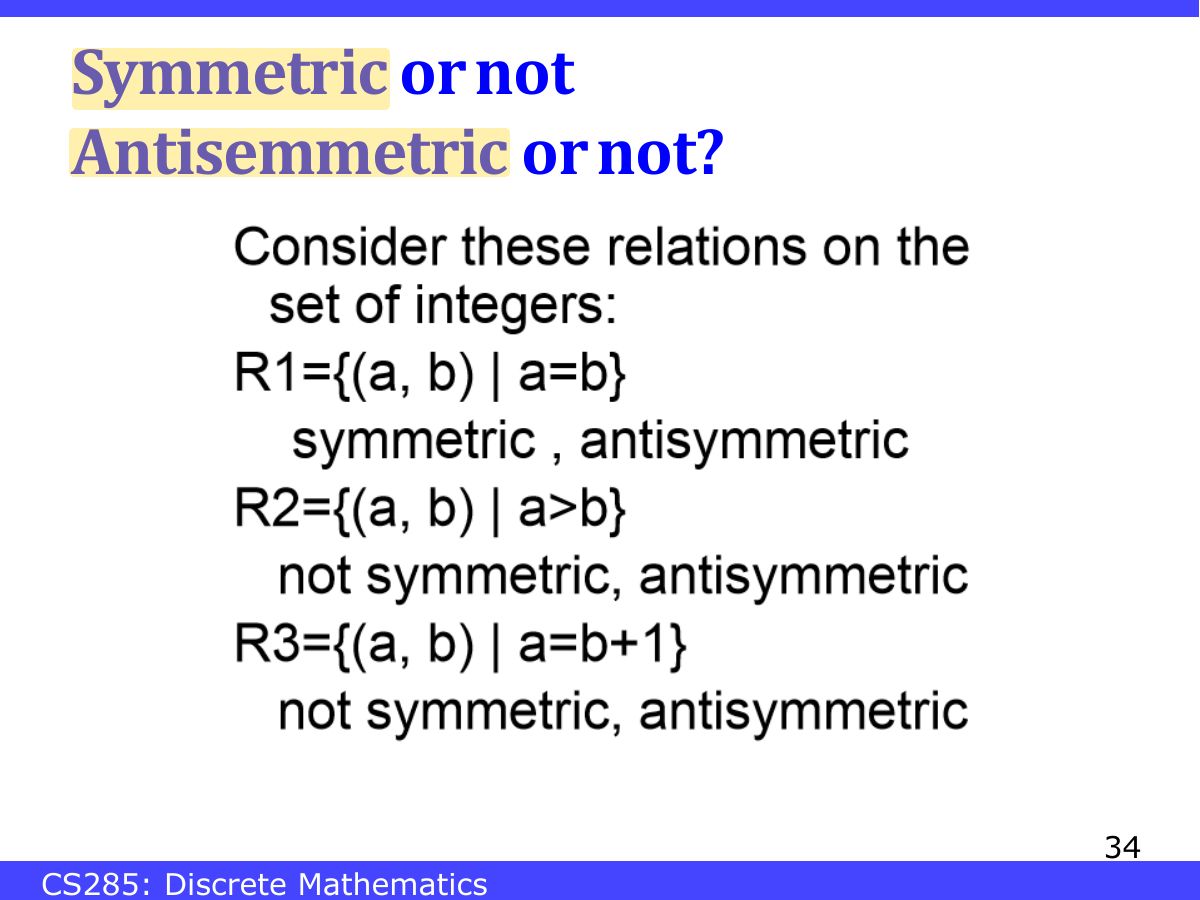
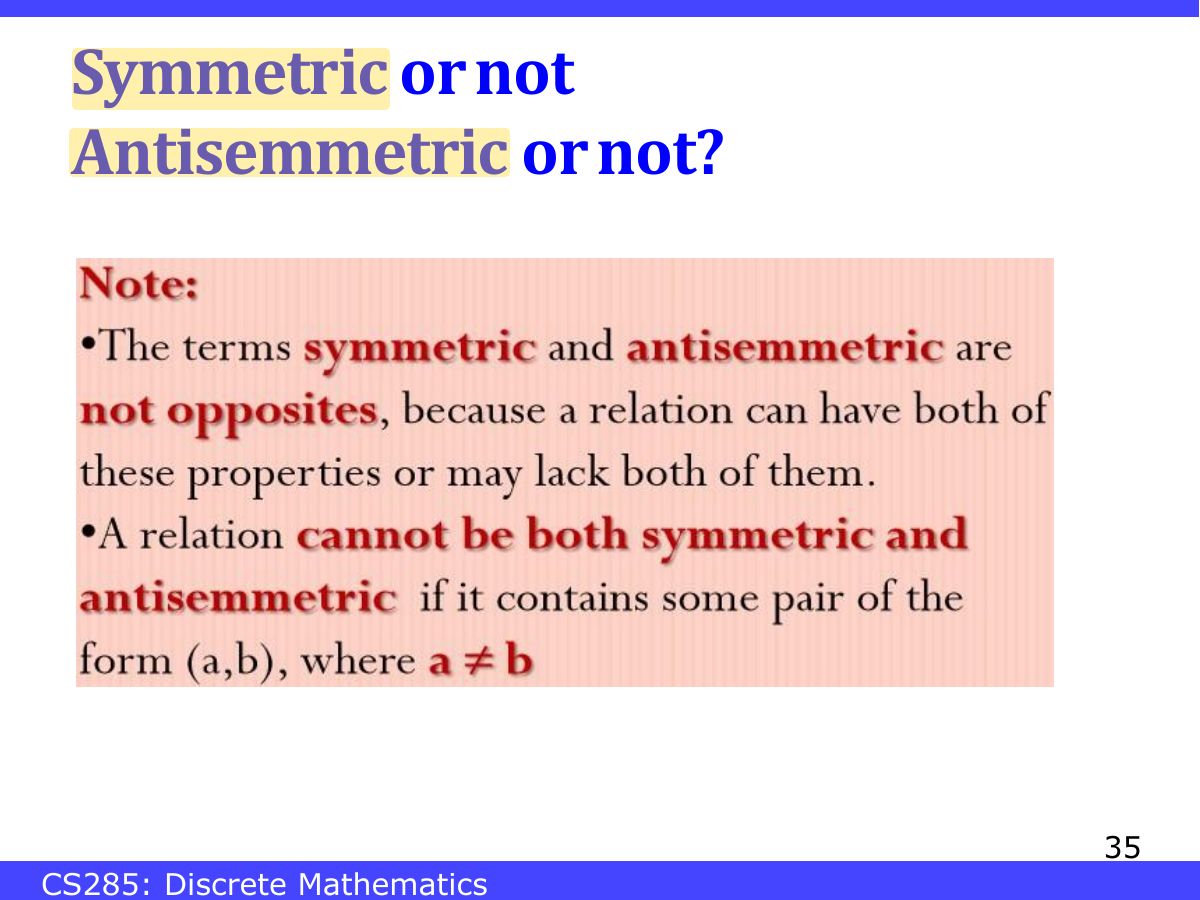
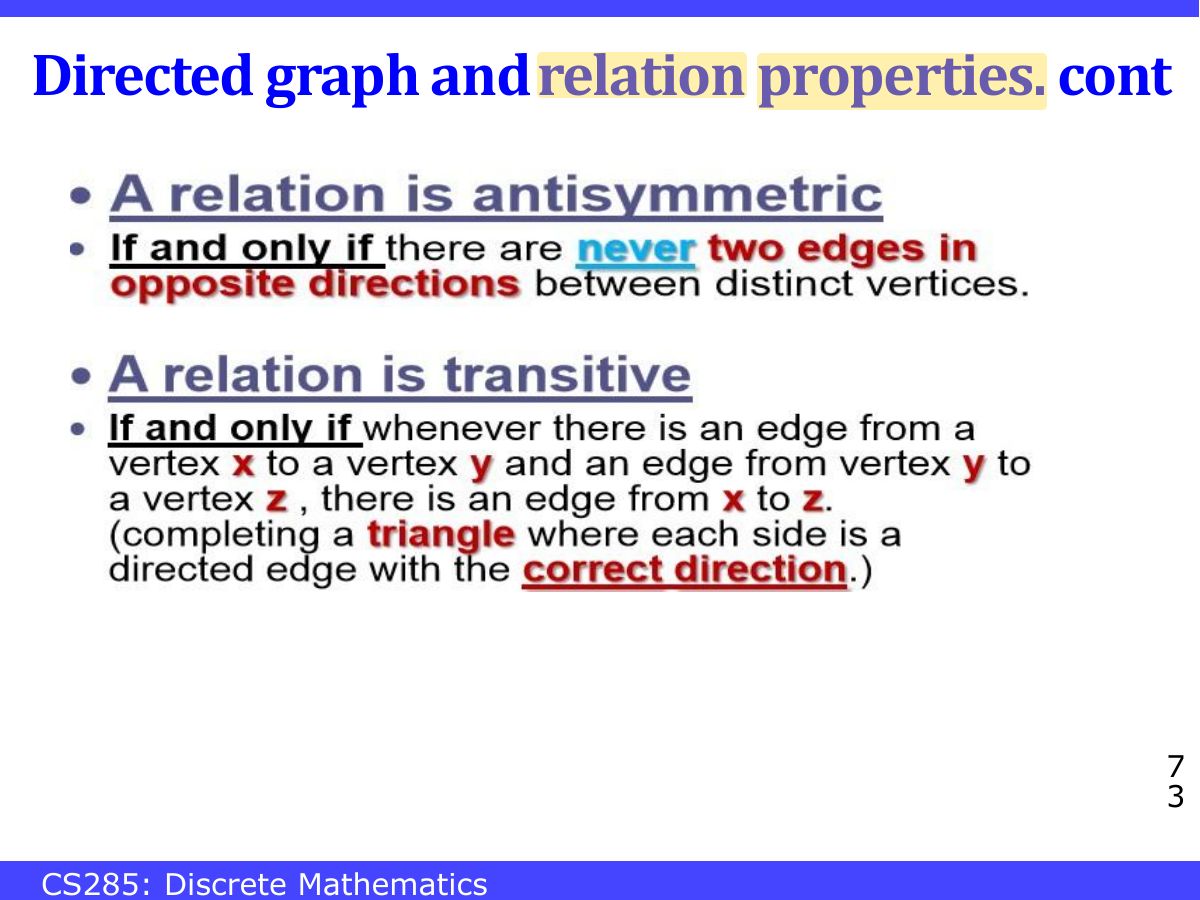
- Symmetric: aRb ⇒ bRa. Antisymmetric: aRb and bRa ⇒ a = b.
- A relation can be both (e.g. equality) or neither.
🎯 How this can come up · 2 questions
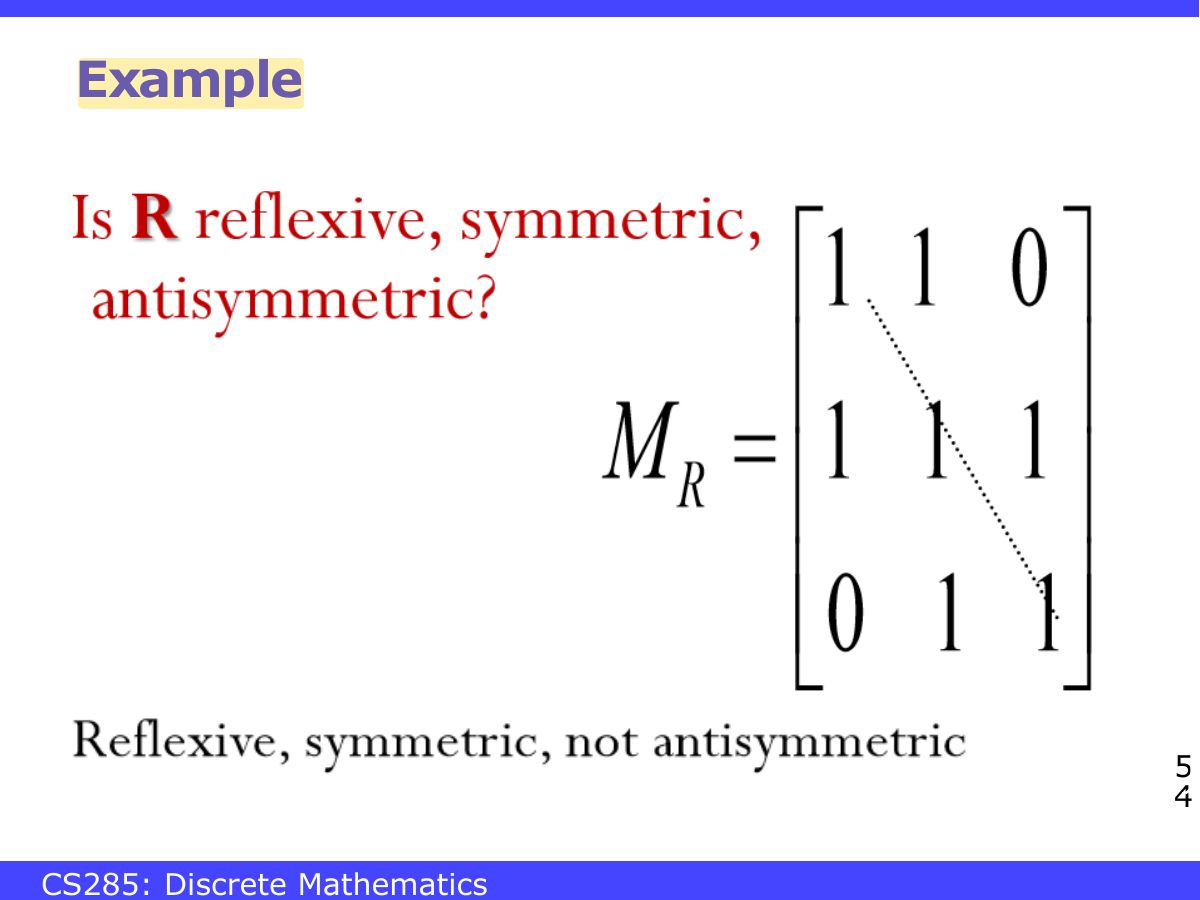
R = {(1,1), (1,2), (2,1)} on {1, 2} is:
Correct: Symmetric, not antisymmetric.
A relation can be both symmetric and antisymmetric.
True. E.g. {(1,1), (2,2)}.
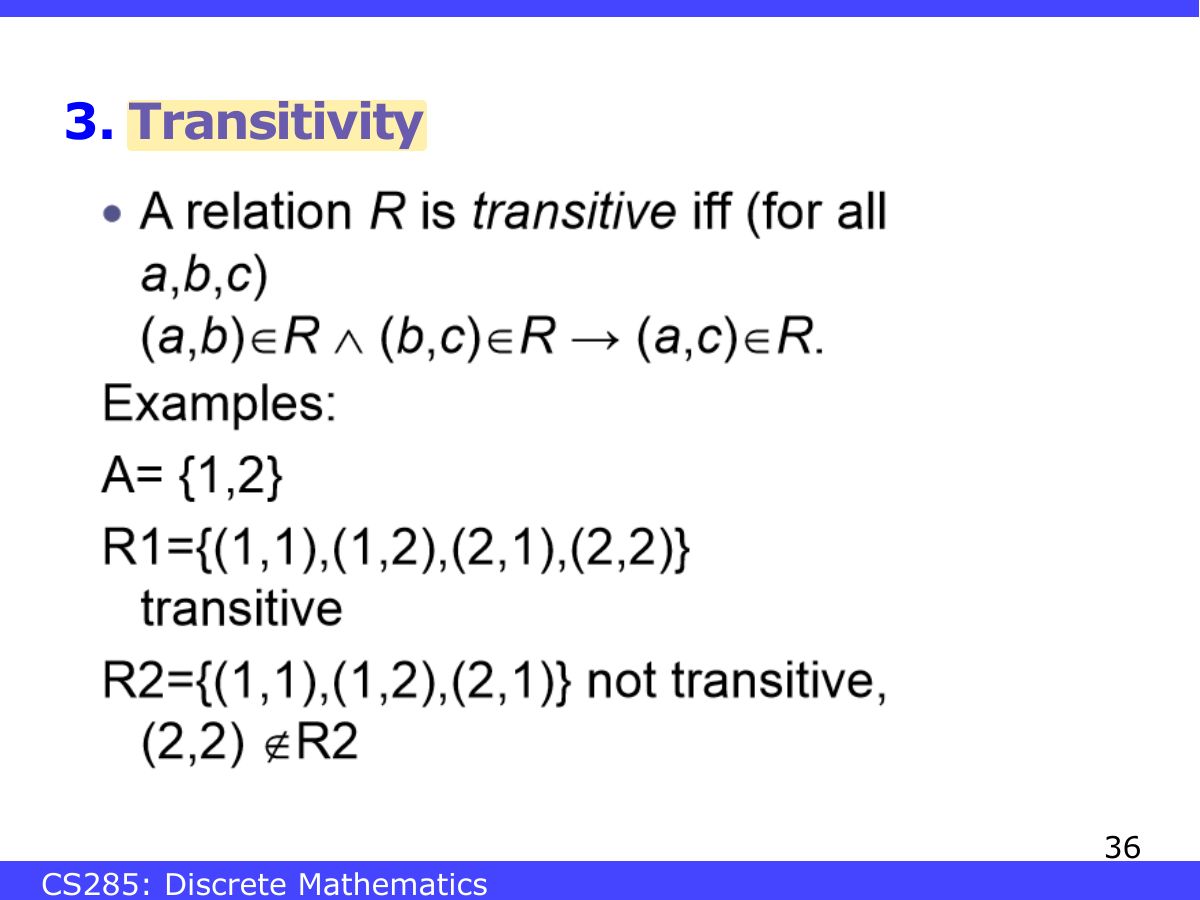
- Transitive: aRb and bRc ⇒ aRc.
🎯 How this can come up · 1 question
R = {(1,2), (2,3)} on {1, 2, 3} is not transitive because it lacks:
Correct: (1,3).
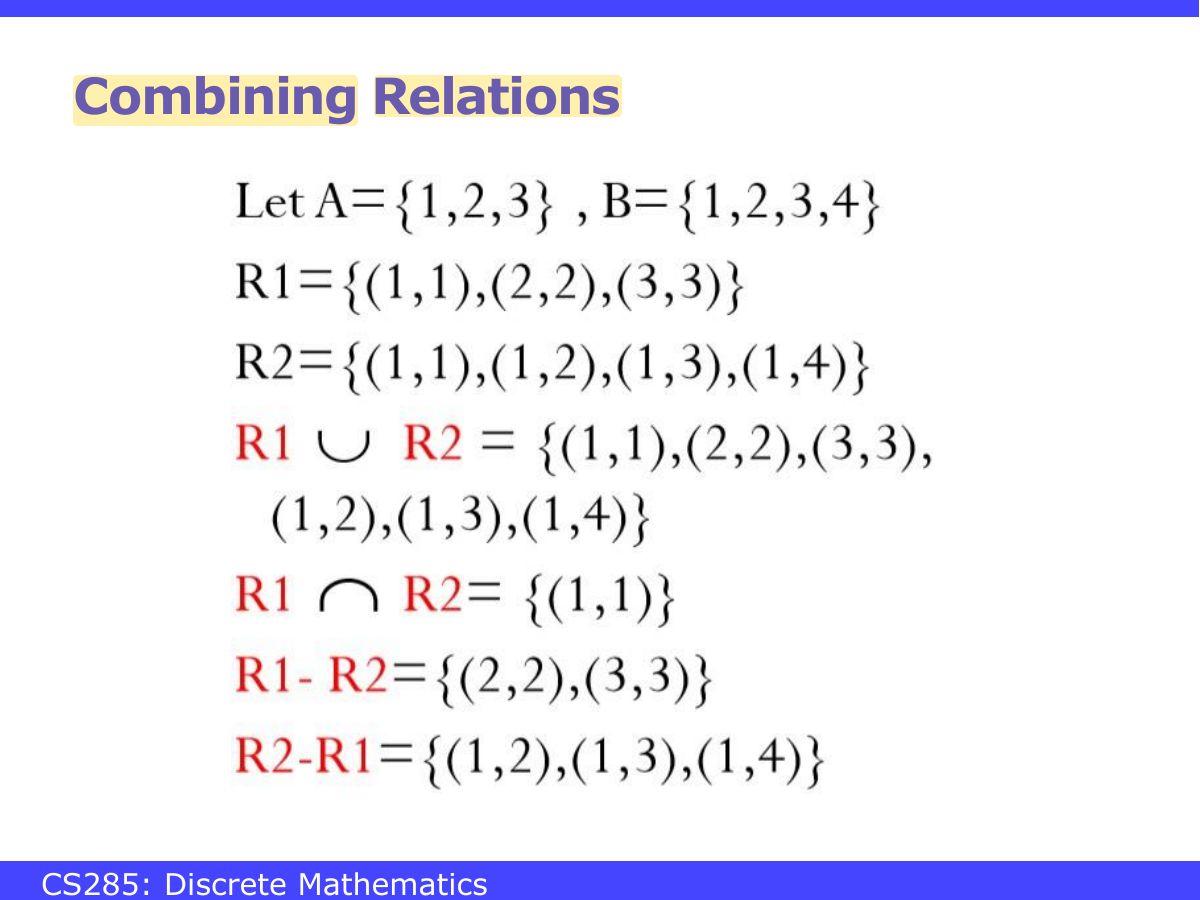
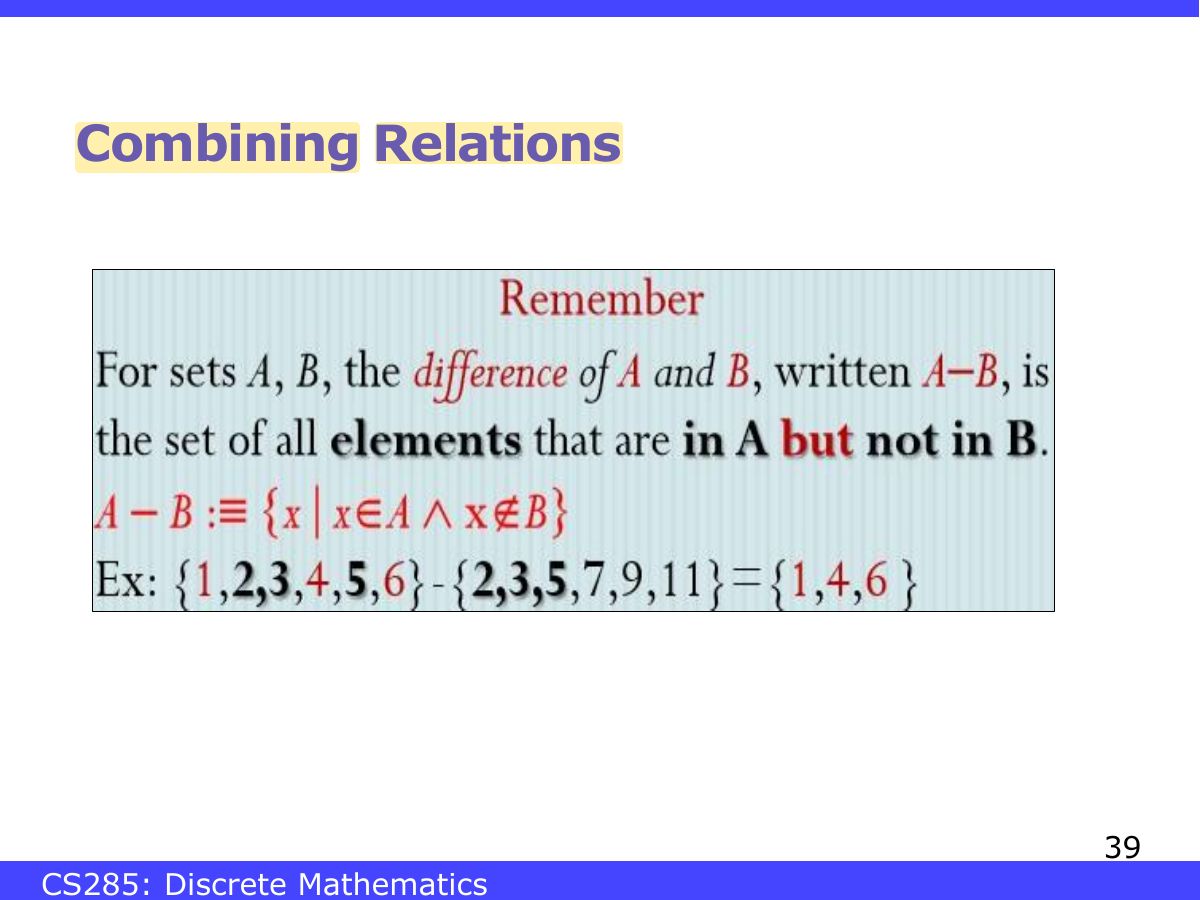
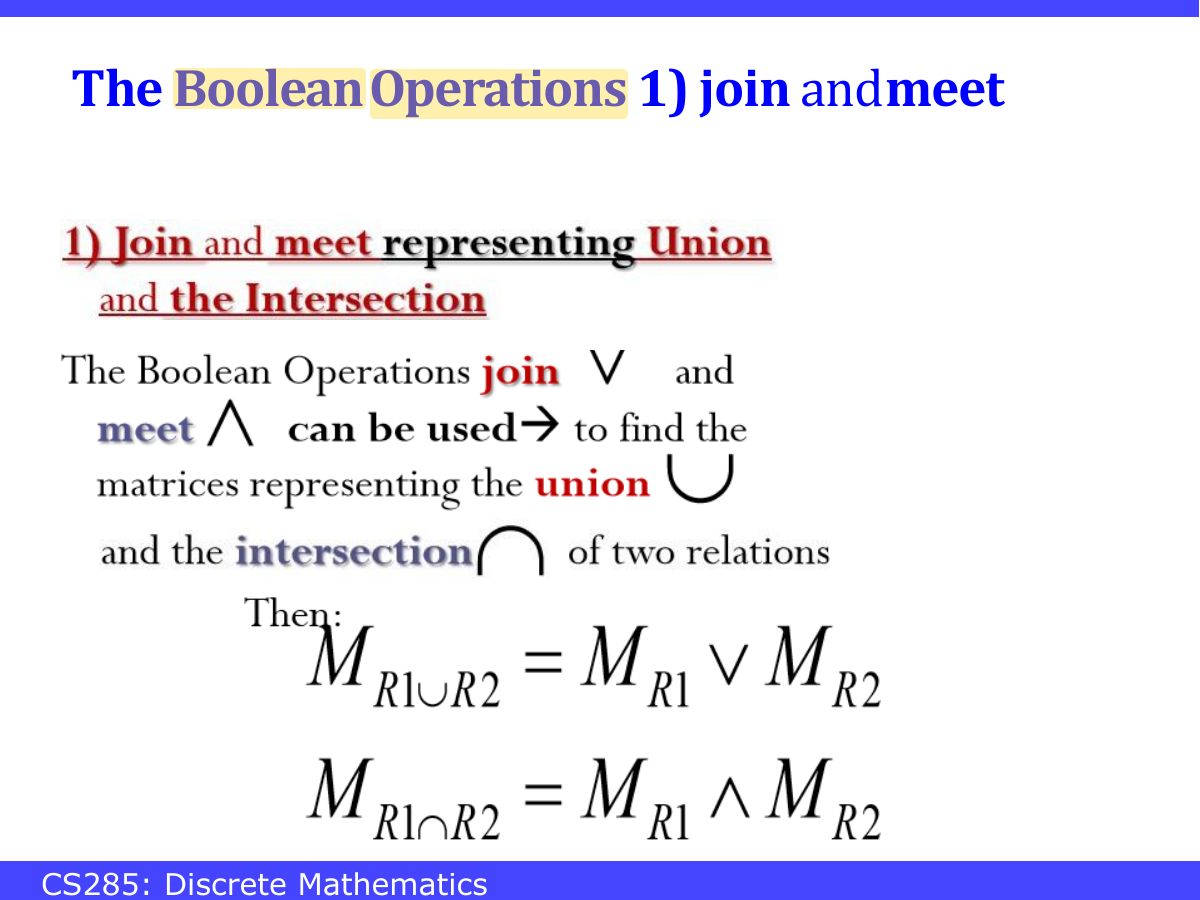
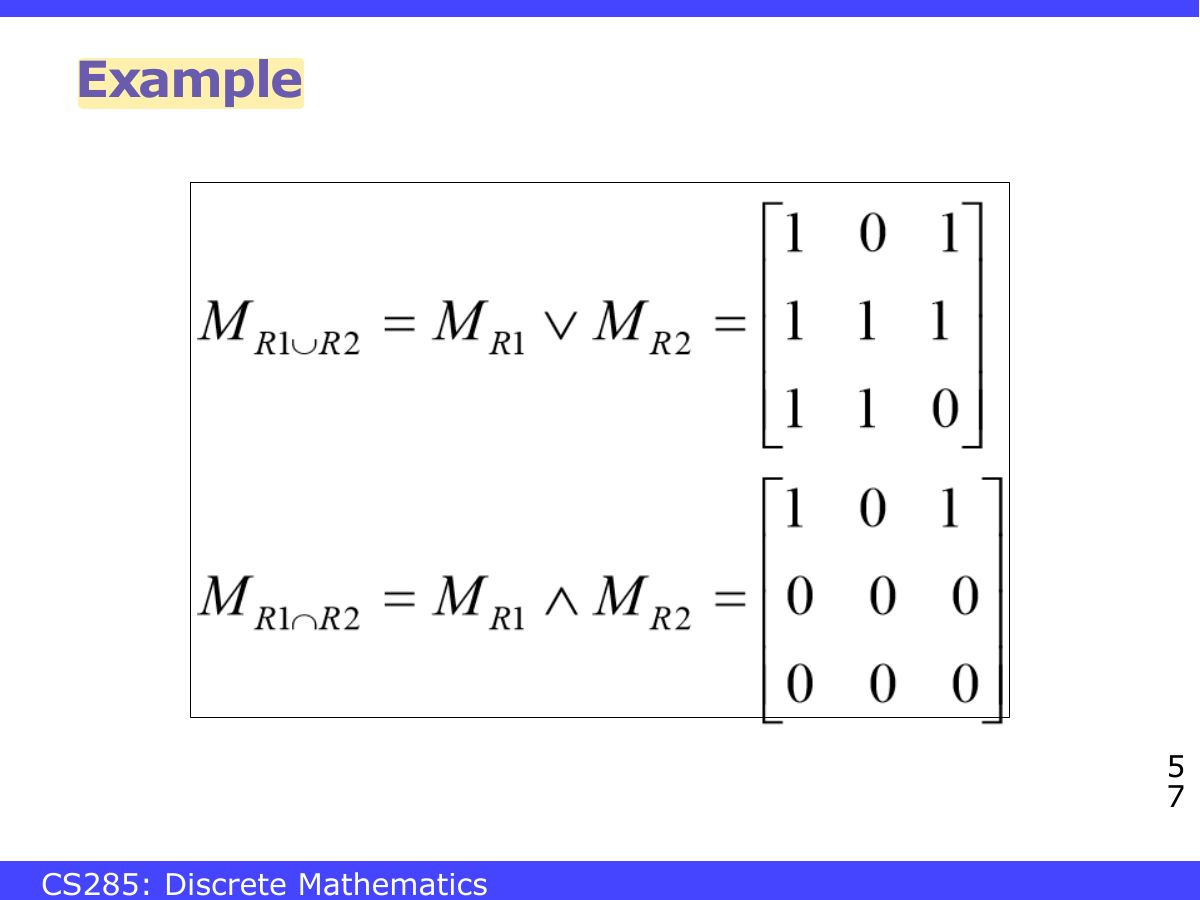
- Relations are sets: combine with ∪, ∩, −, ⊕.
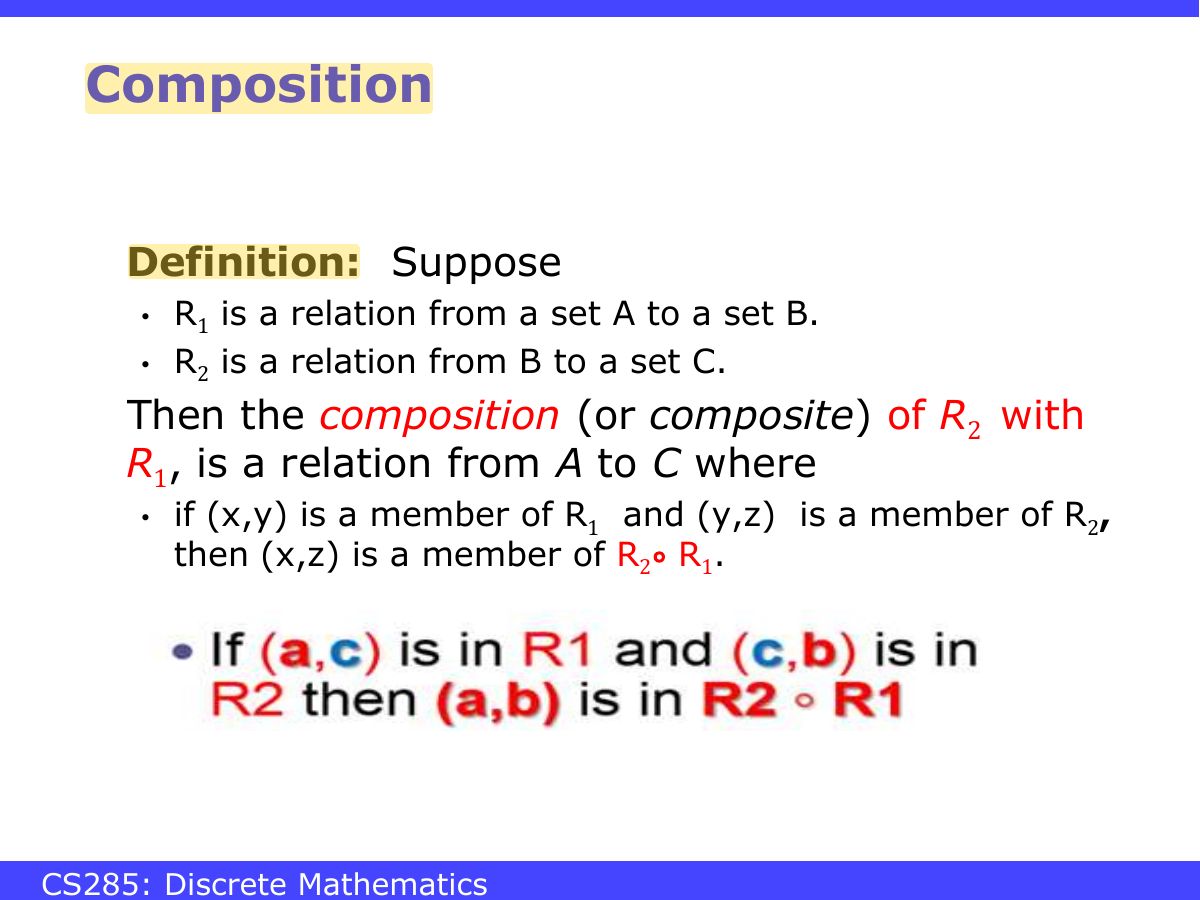
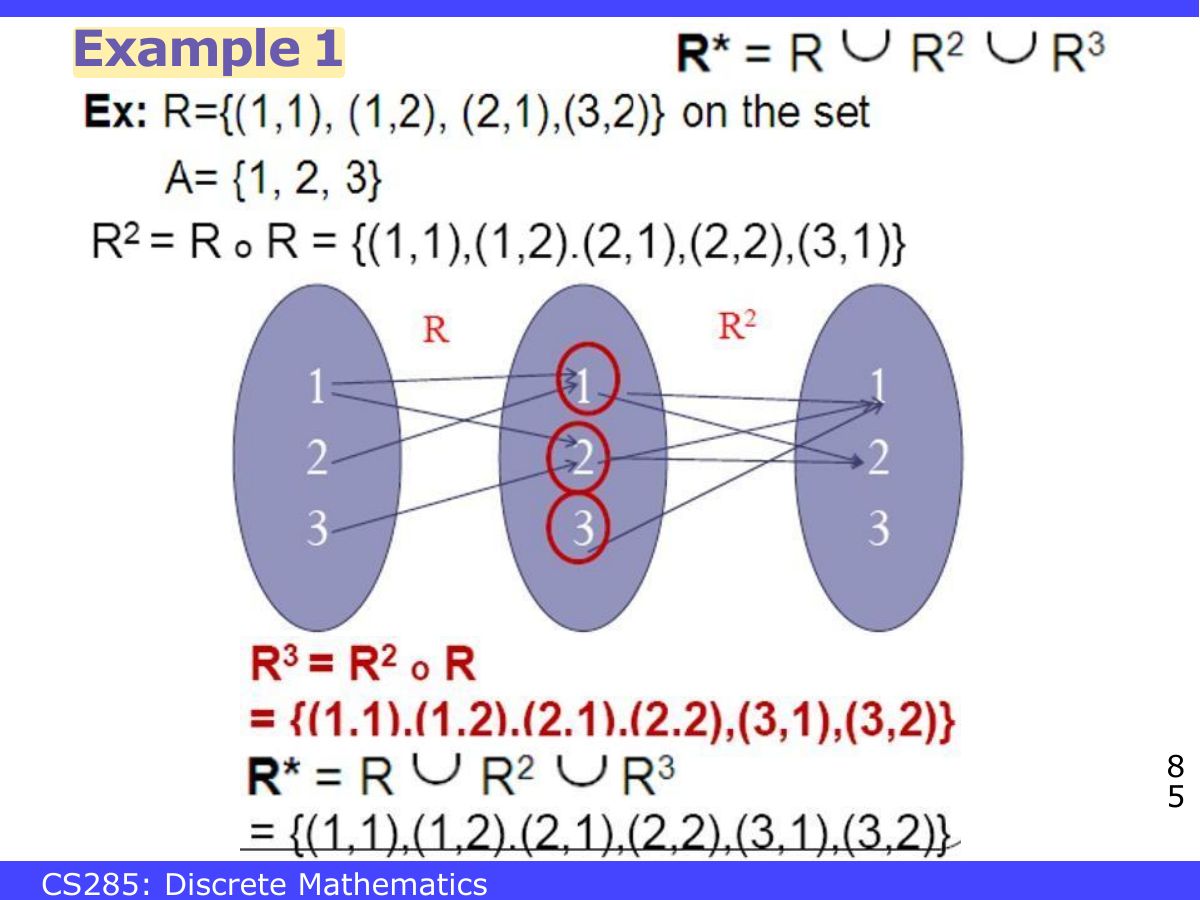
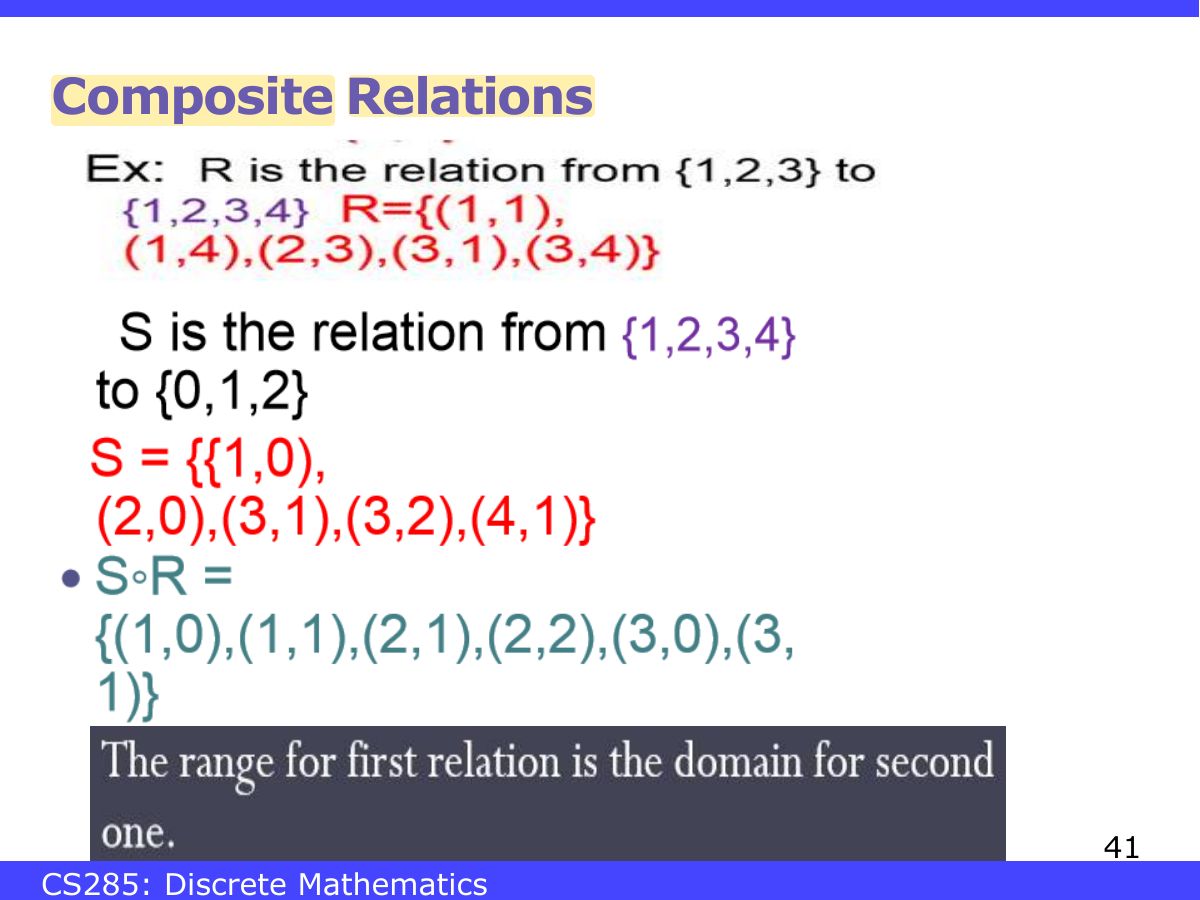
- Composite S ∘ R = {(a, c) | ∃b: (a, b) ∈ R and (b, c) ∈ S}: R first, then S.
🎯 How this can come up · 1 question
R = {(1,2)}, S = {(2,3)}. S ∘ R =
Correct: {(1,3)}.
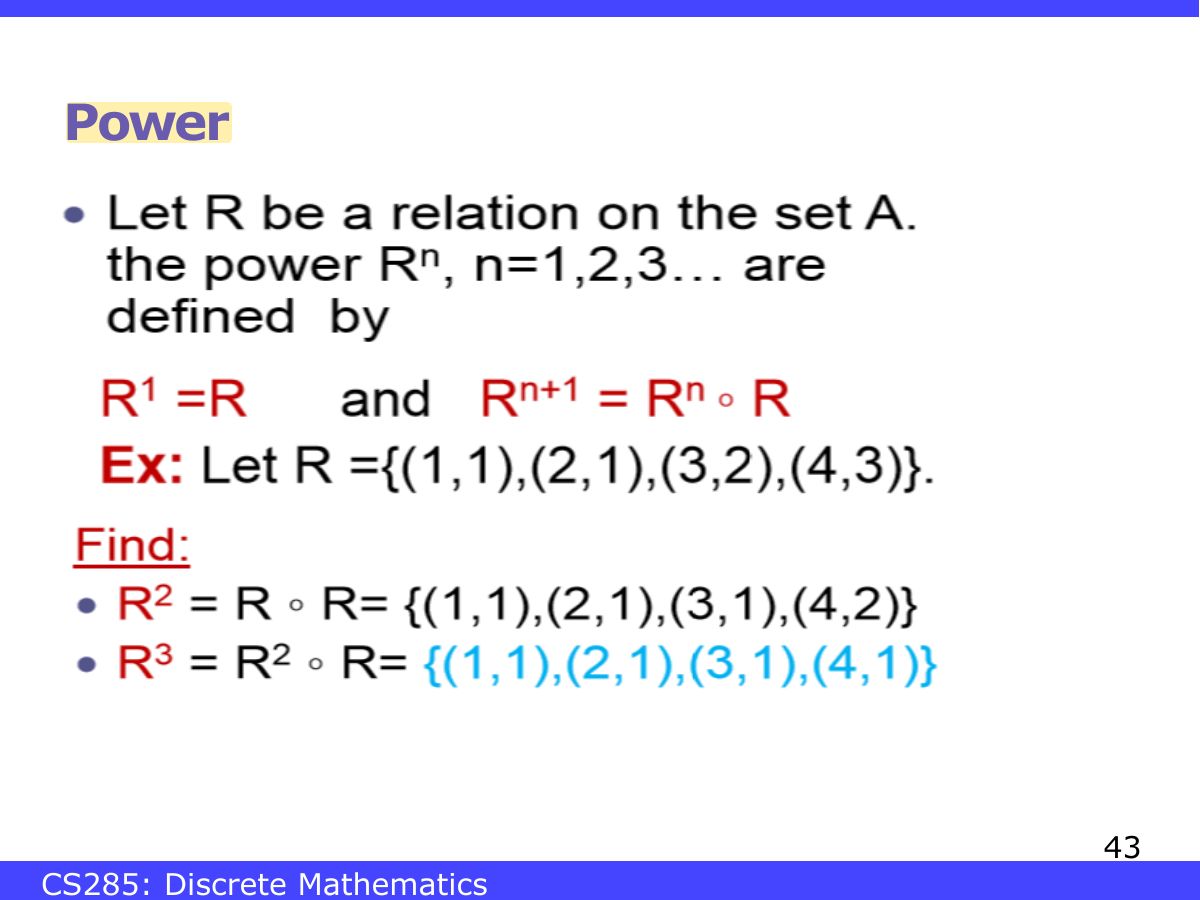
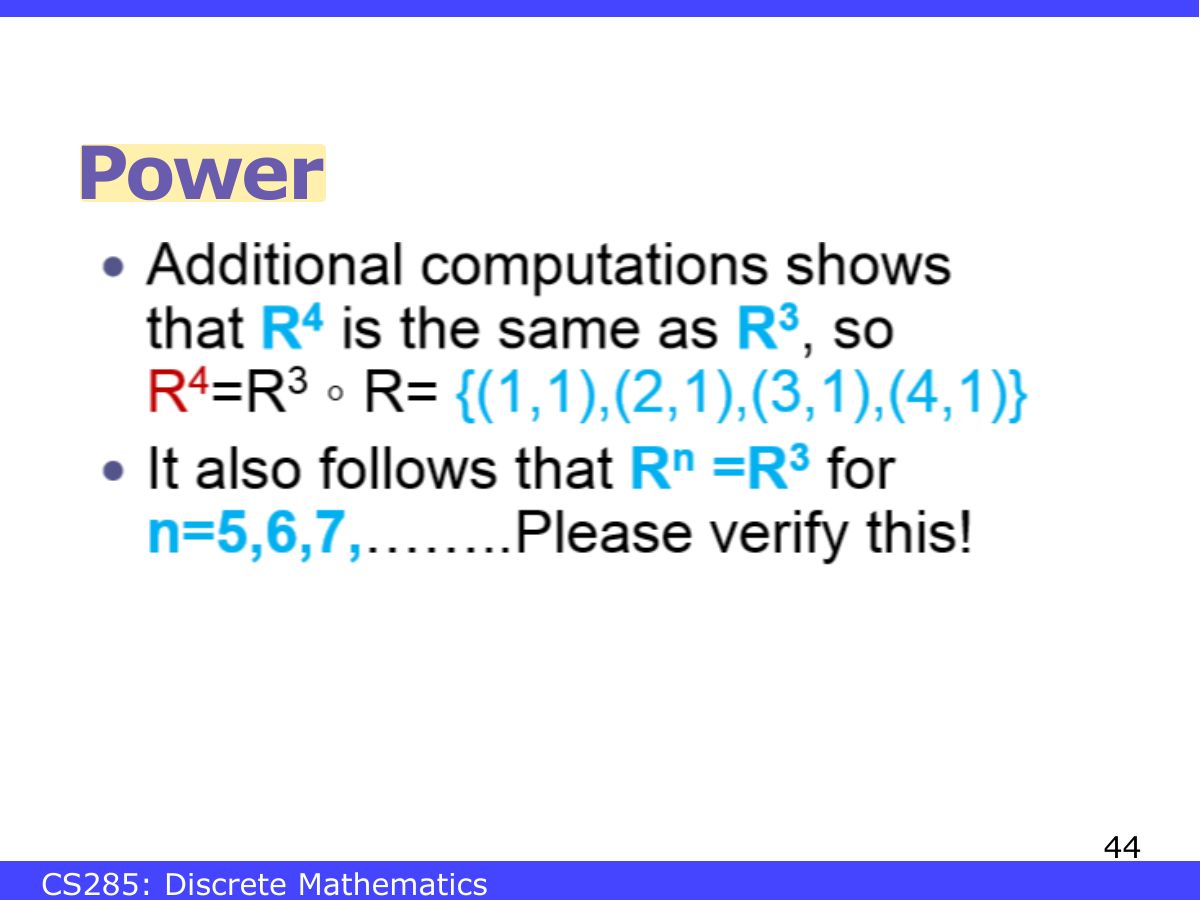
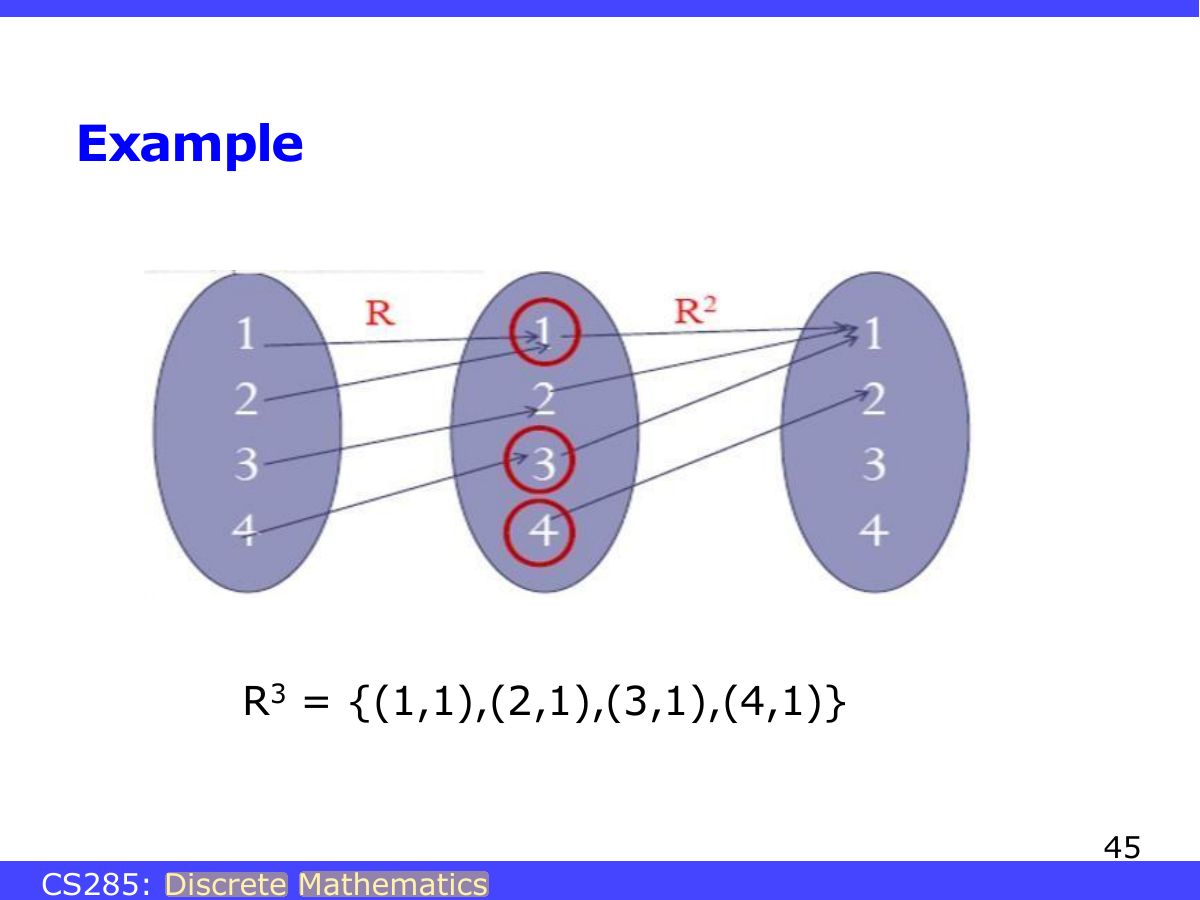
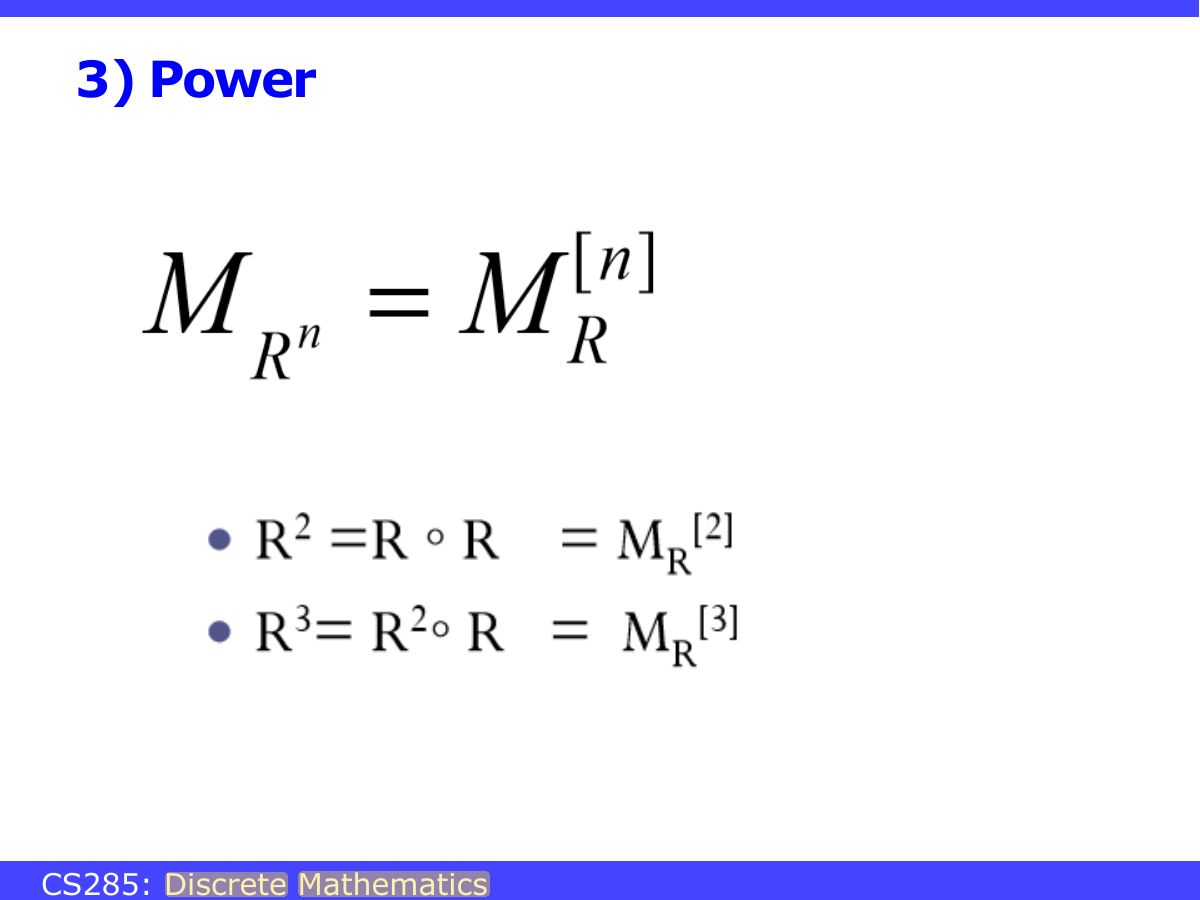
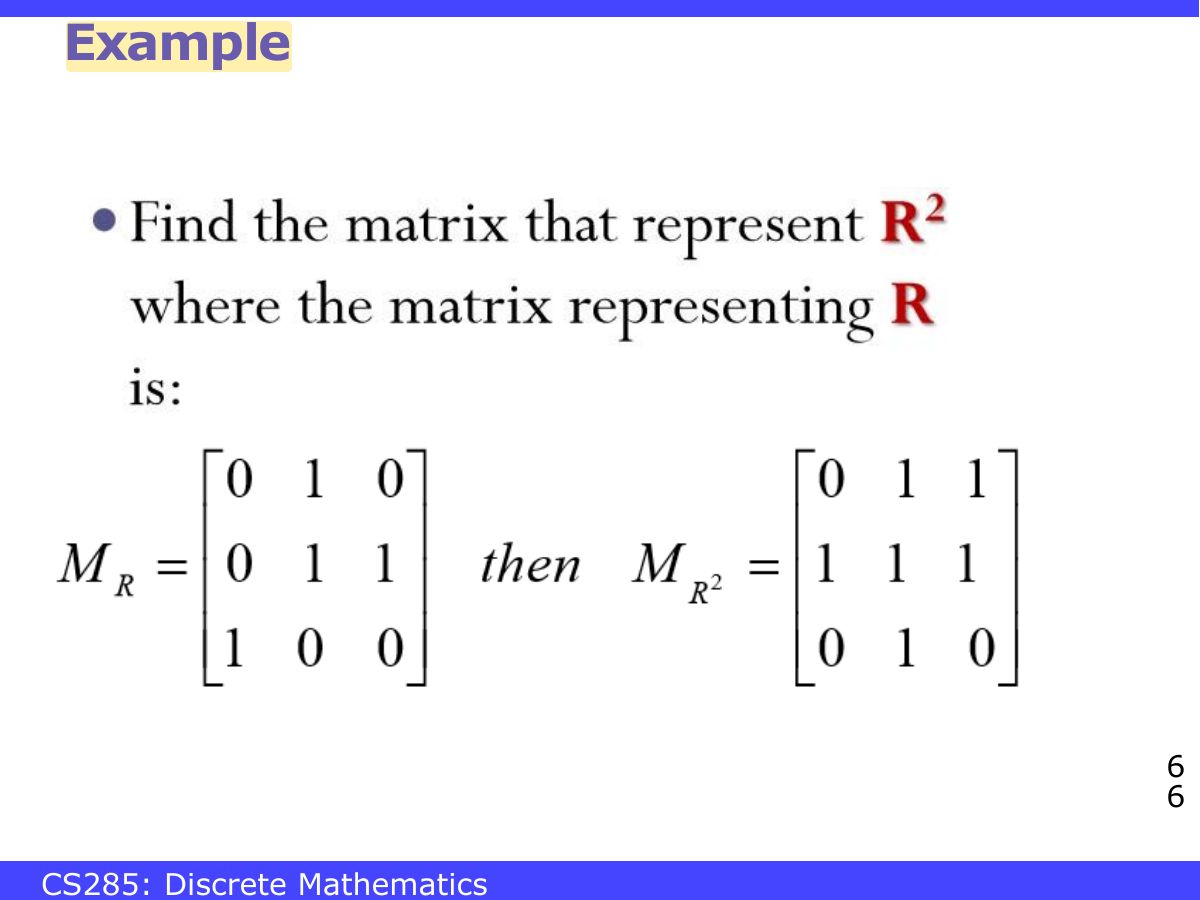
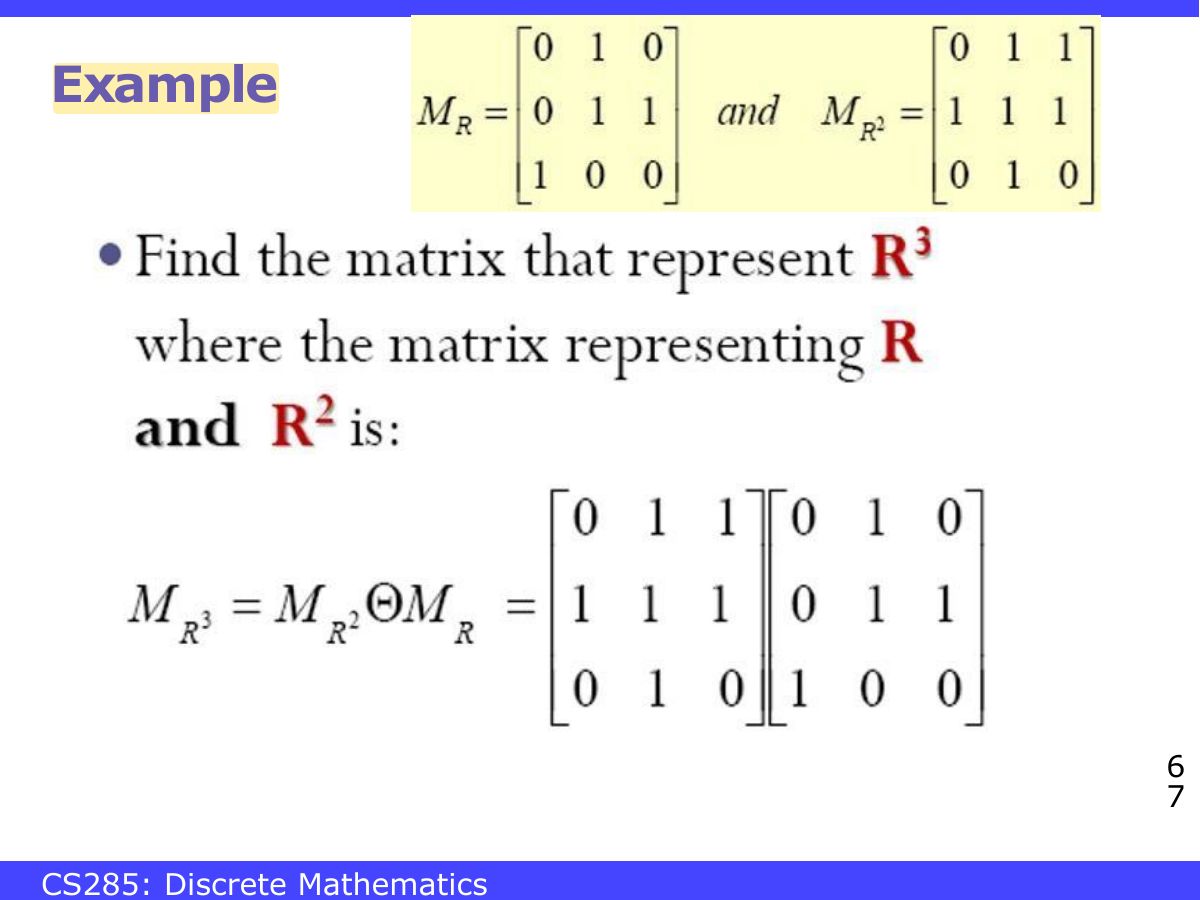
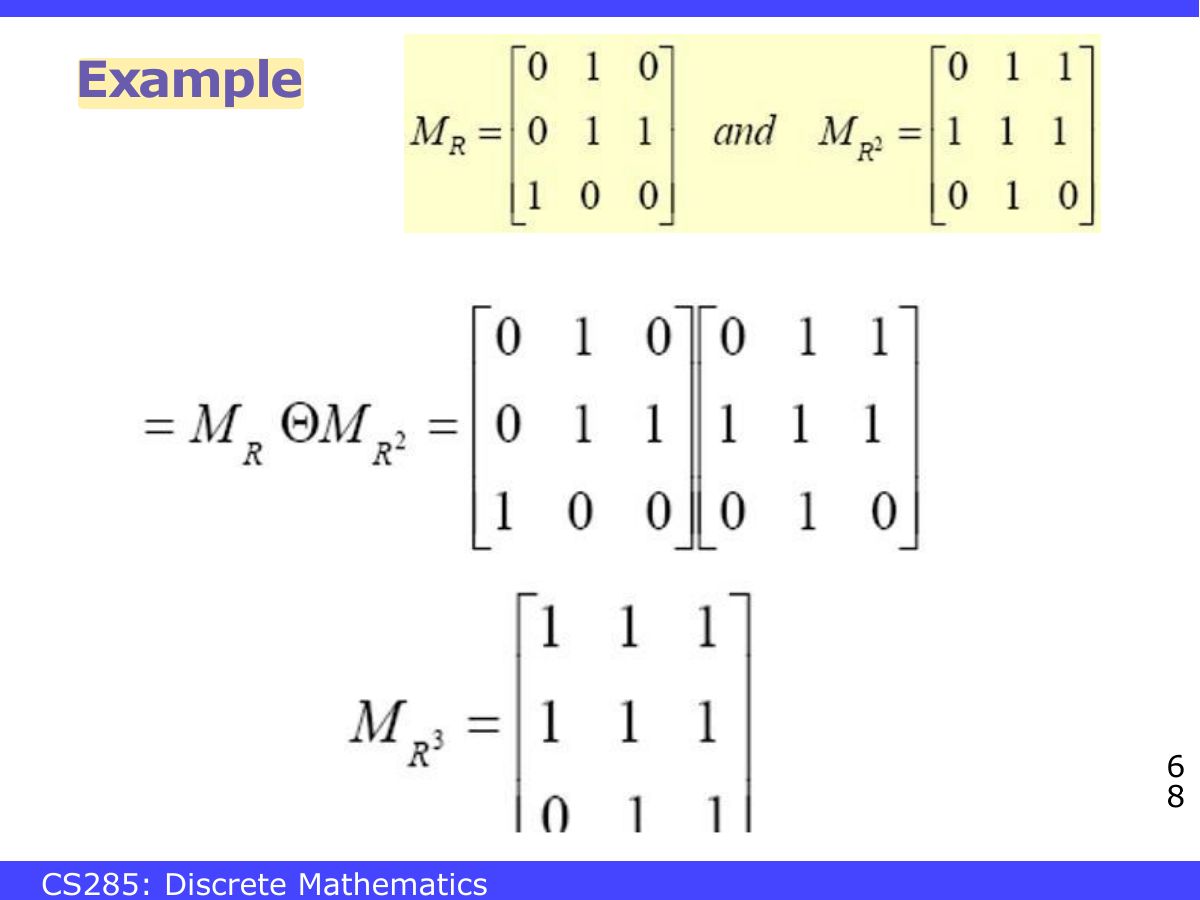
- Powers: R¹ = R, Rⁿ⁺¹ = Rⁿ ∘ R. R is transitive iff Rⁿ ⊆ R for all n.
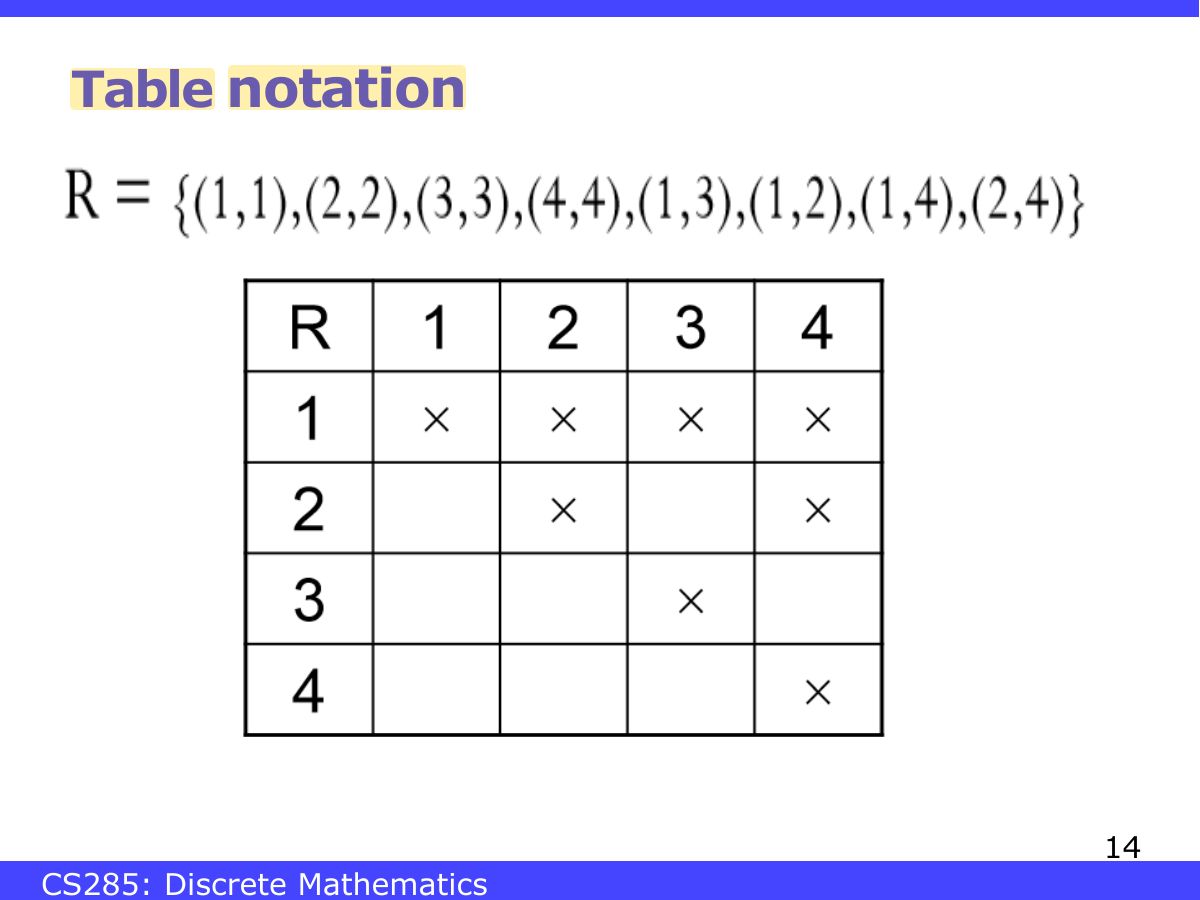
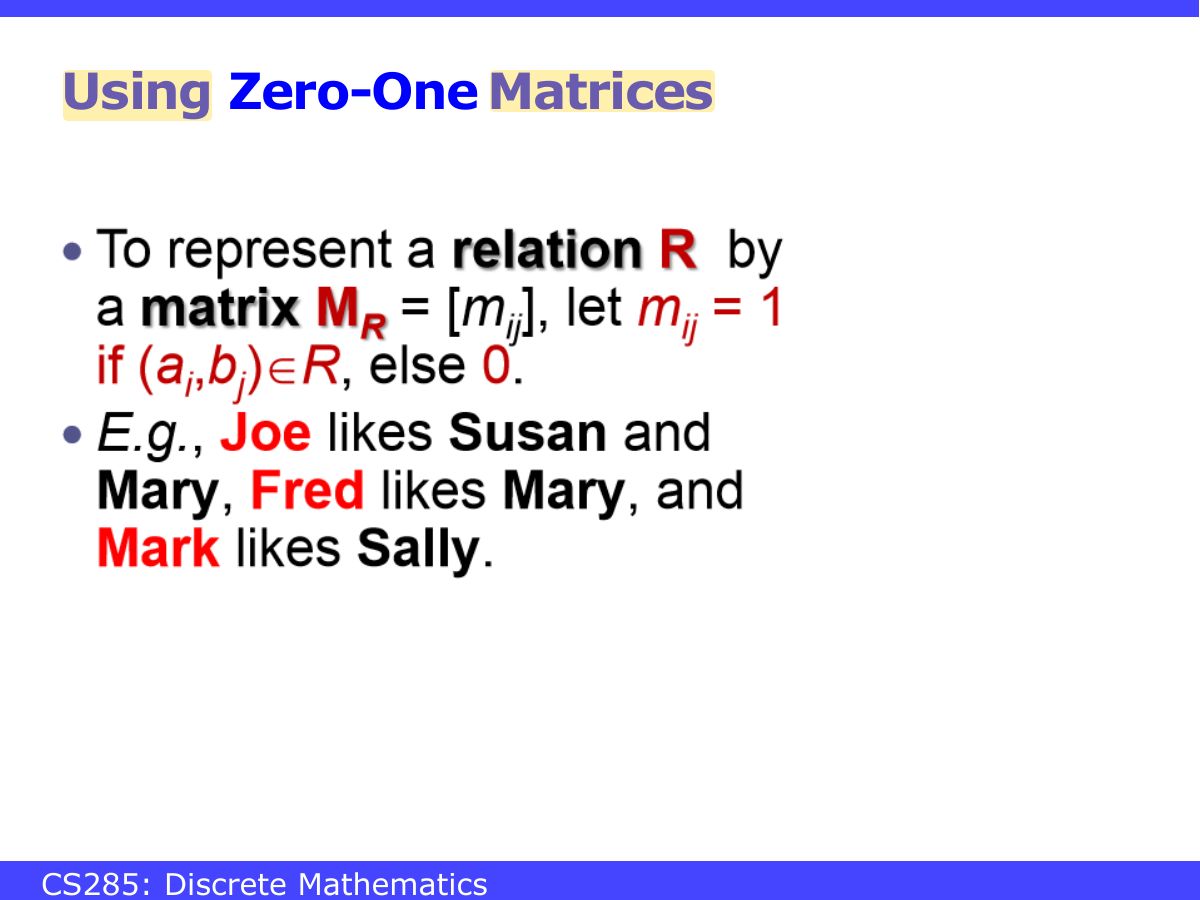
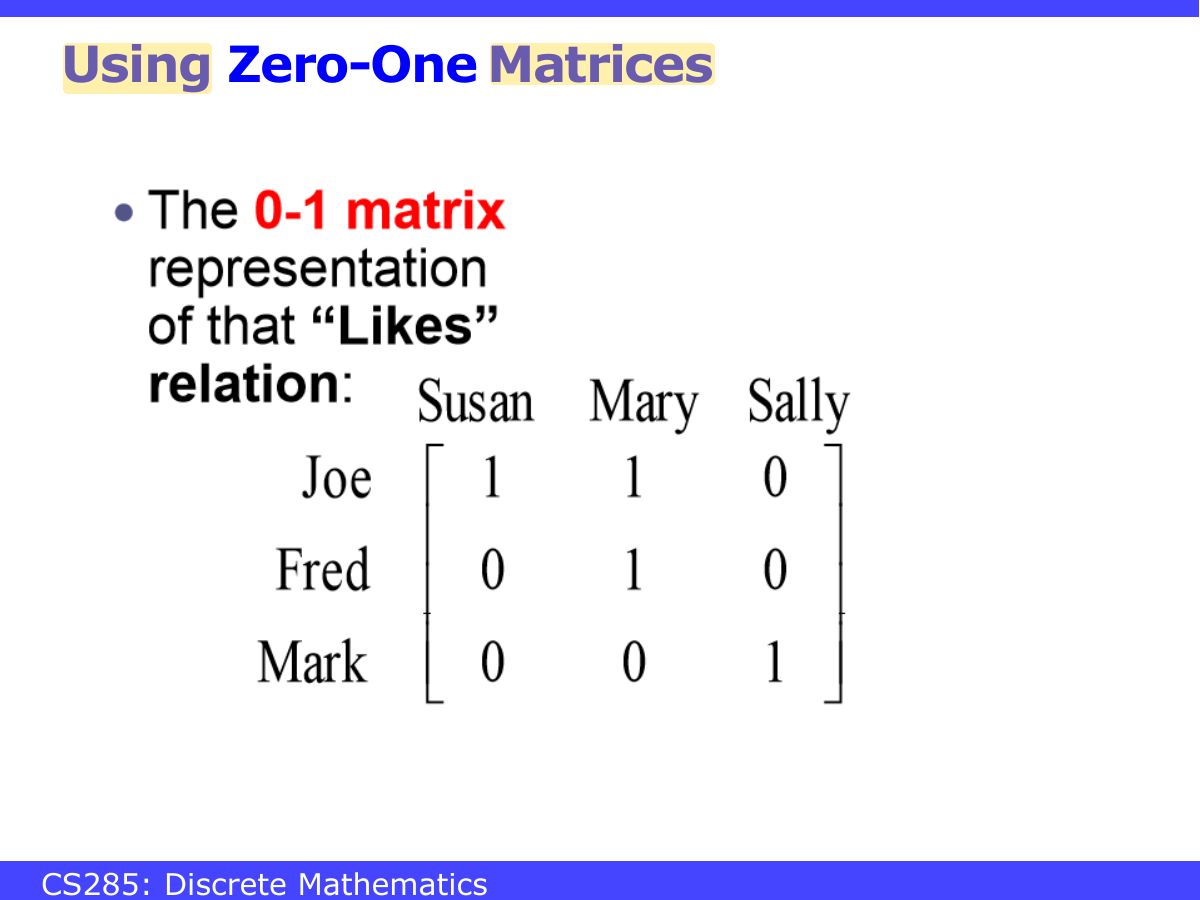
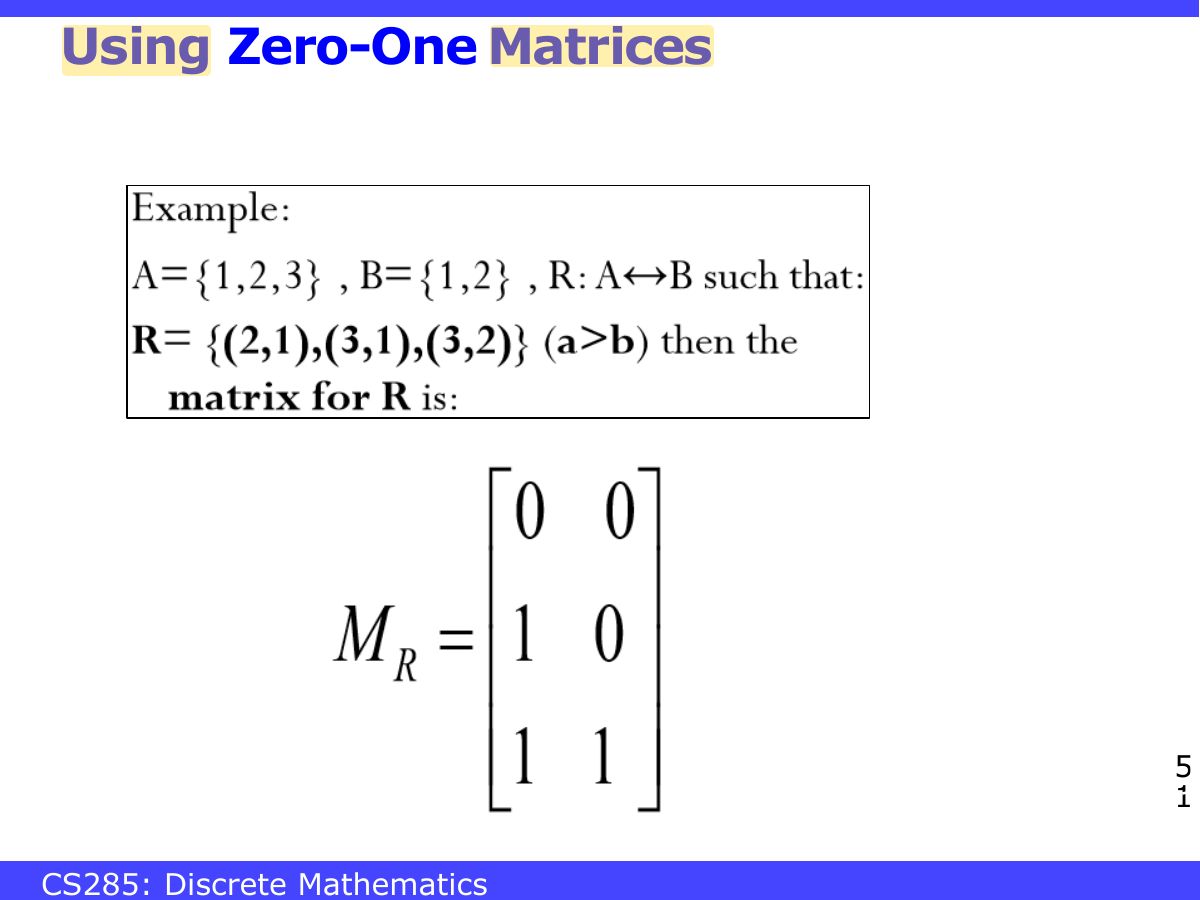
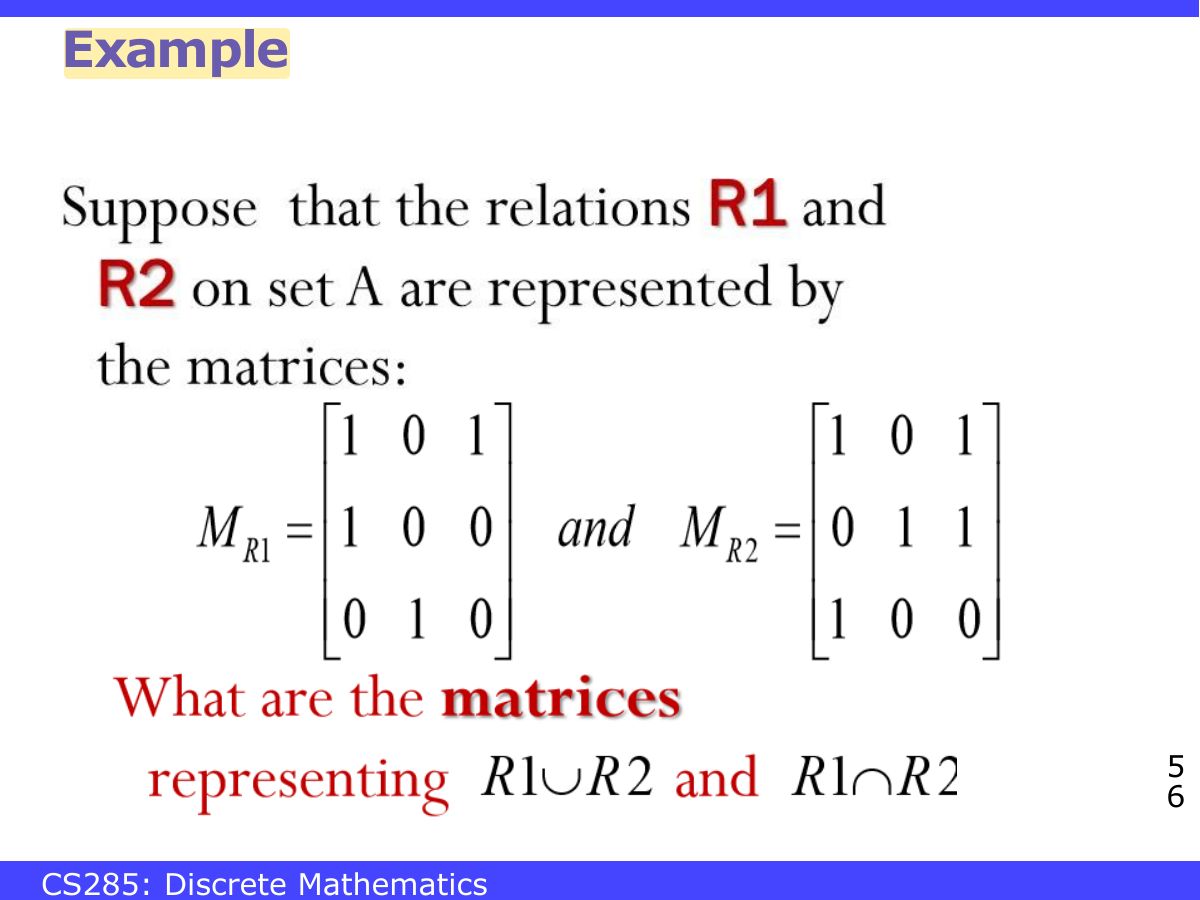
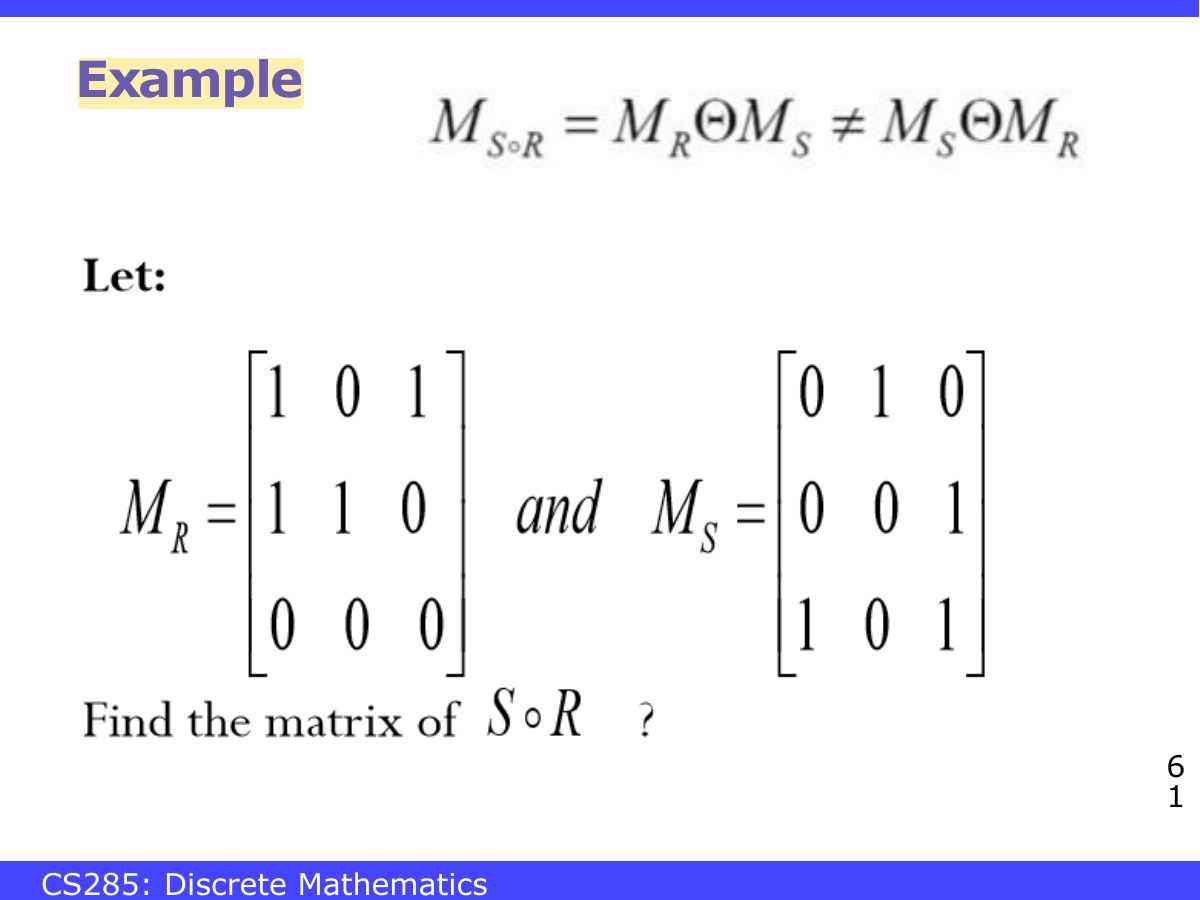
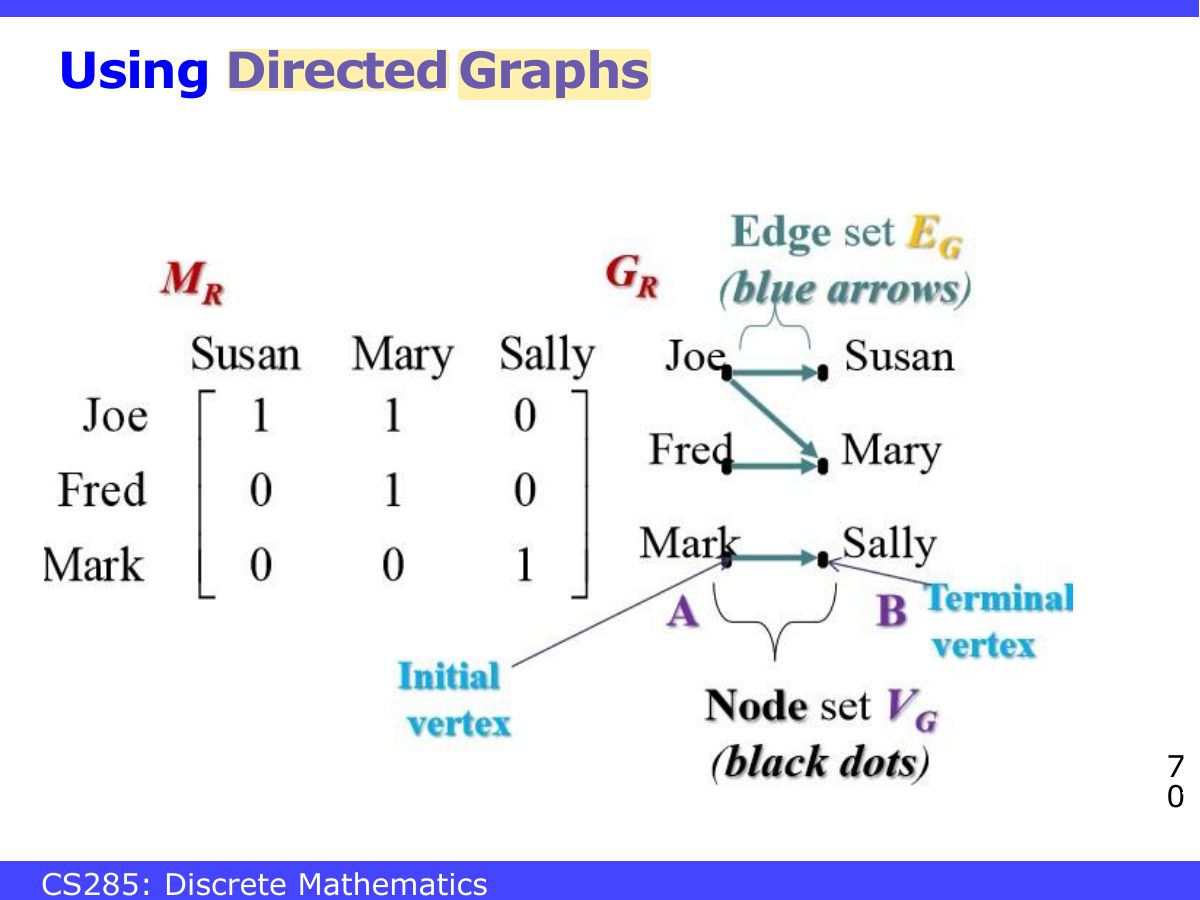
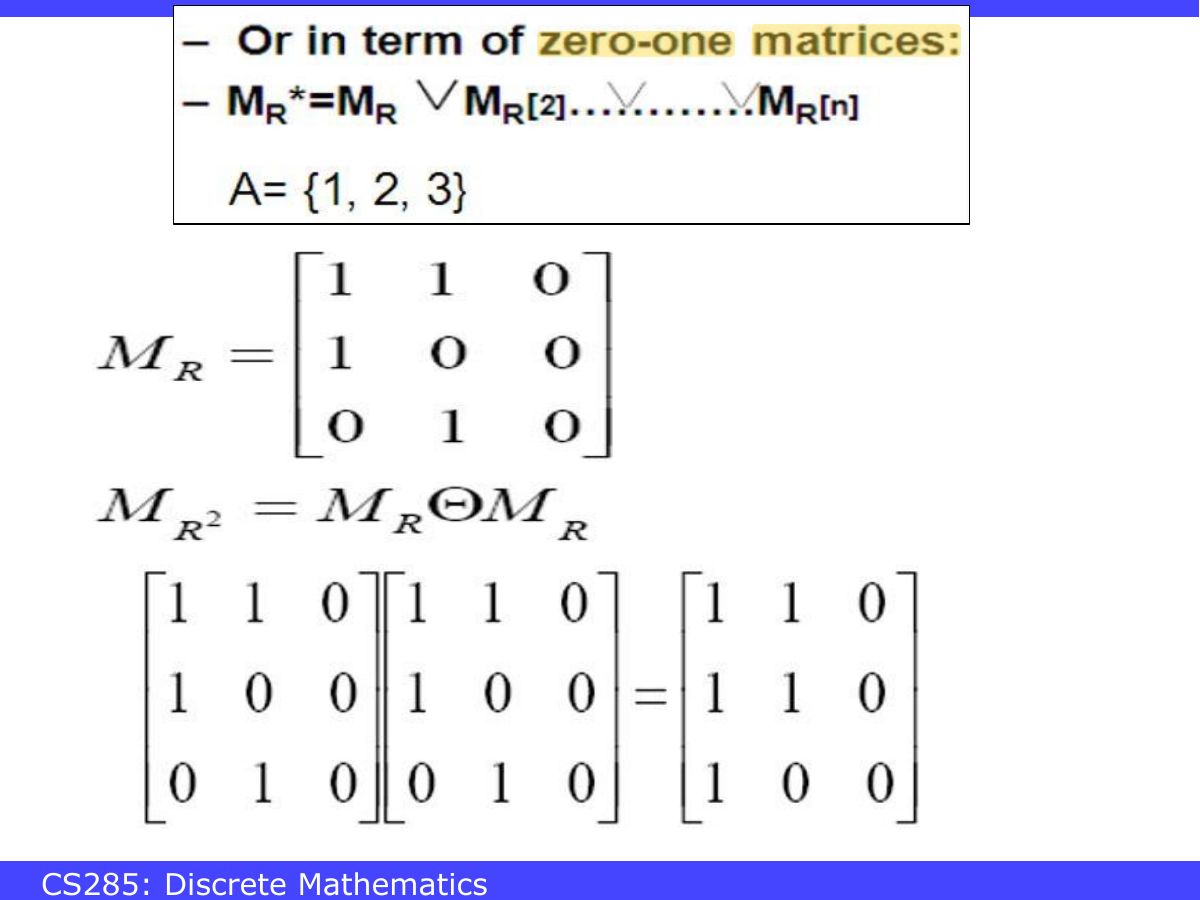
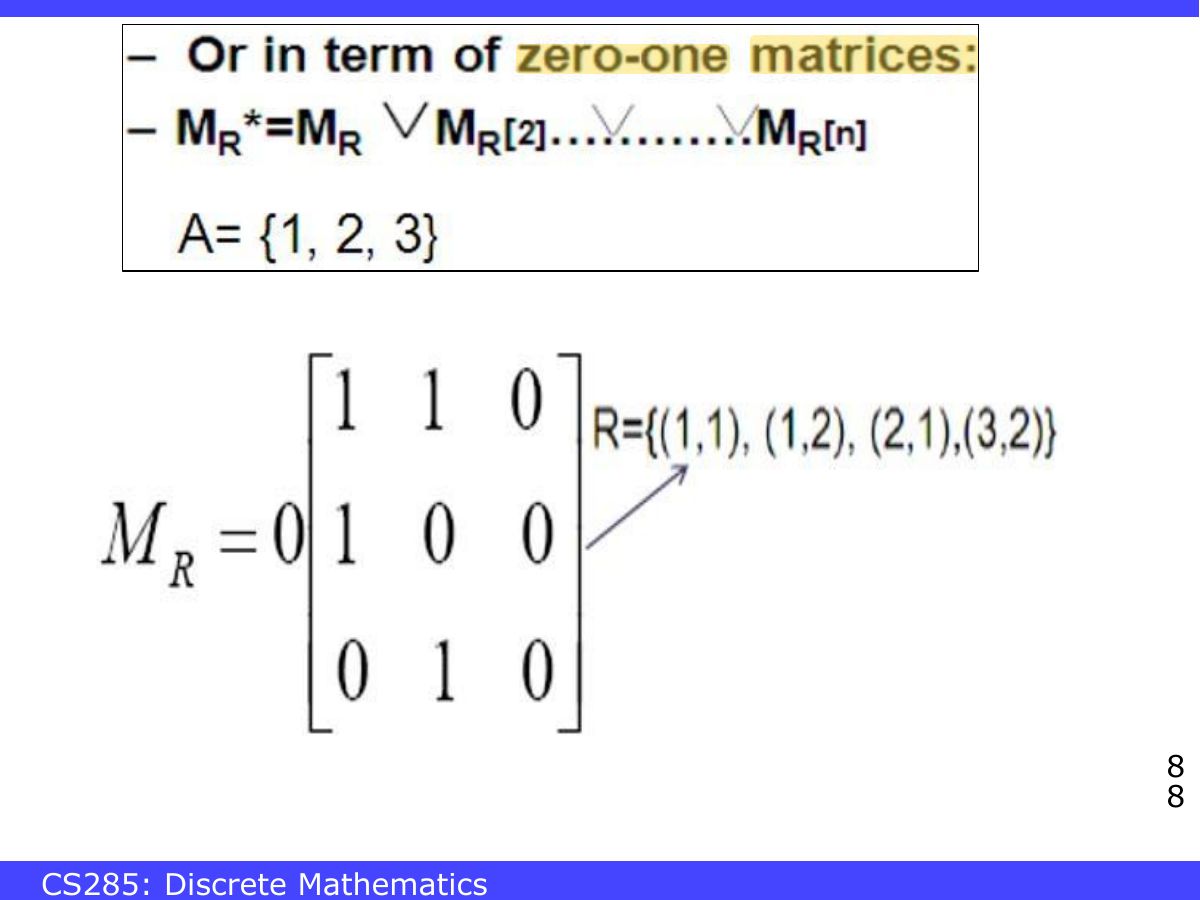
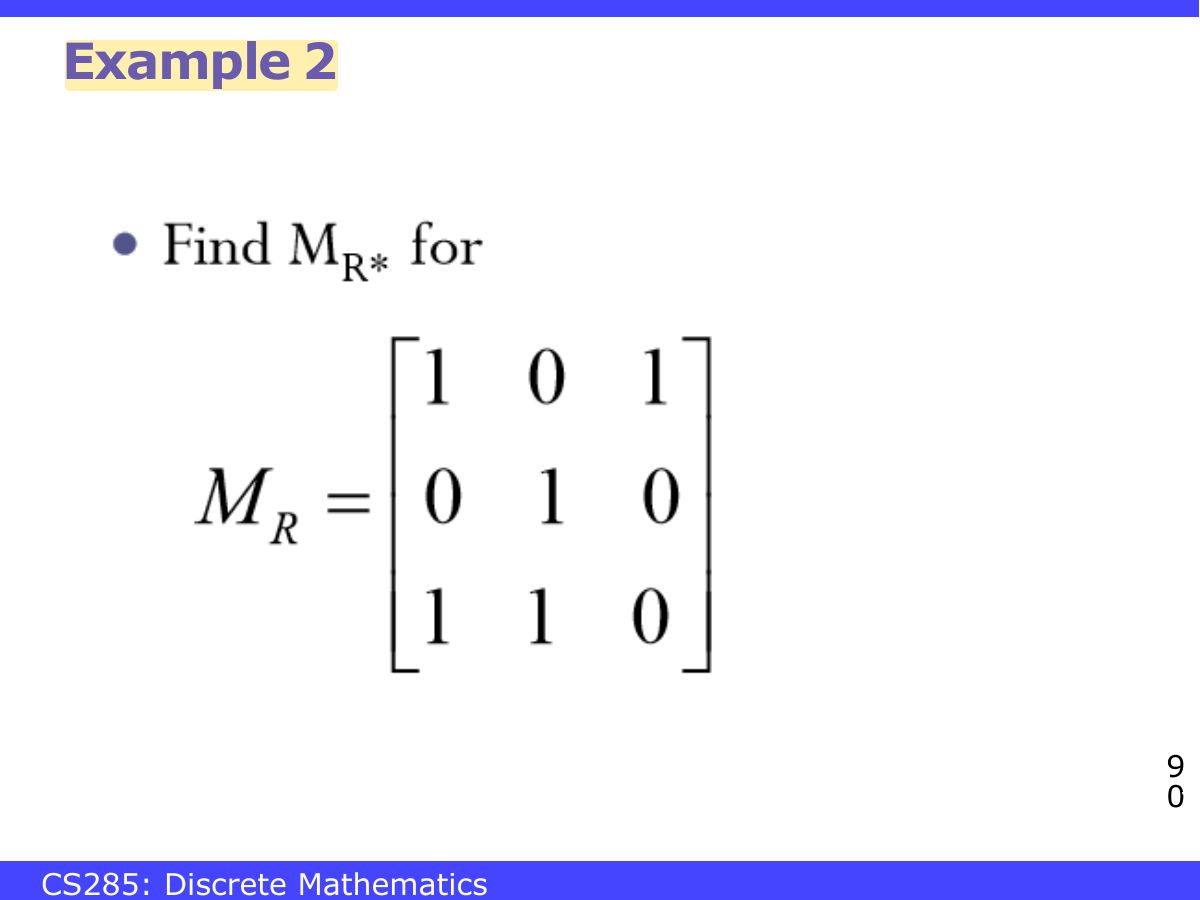
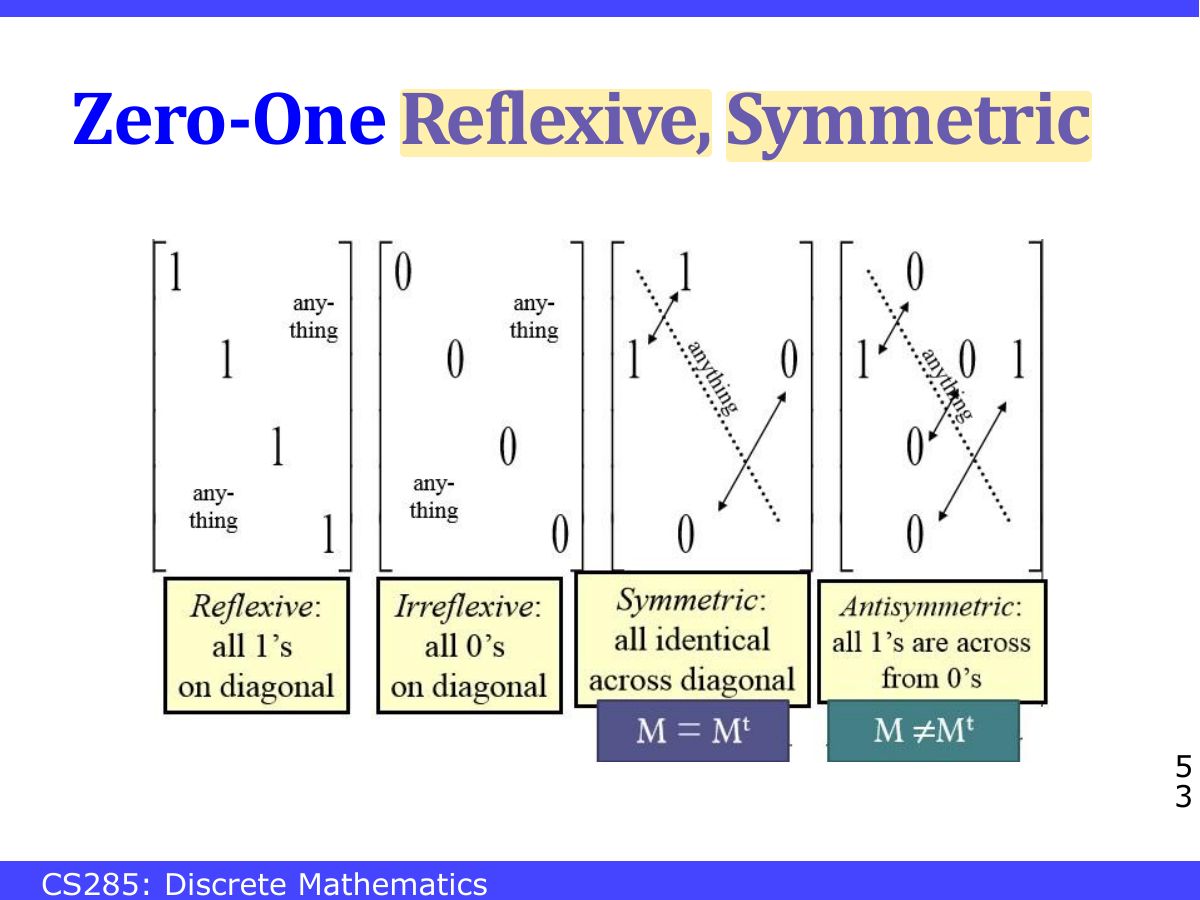
- Zero-one matrix M_R: mᵢⱼ = 1 if (aᵢ, bⱼ) ∈ R.
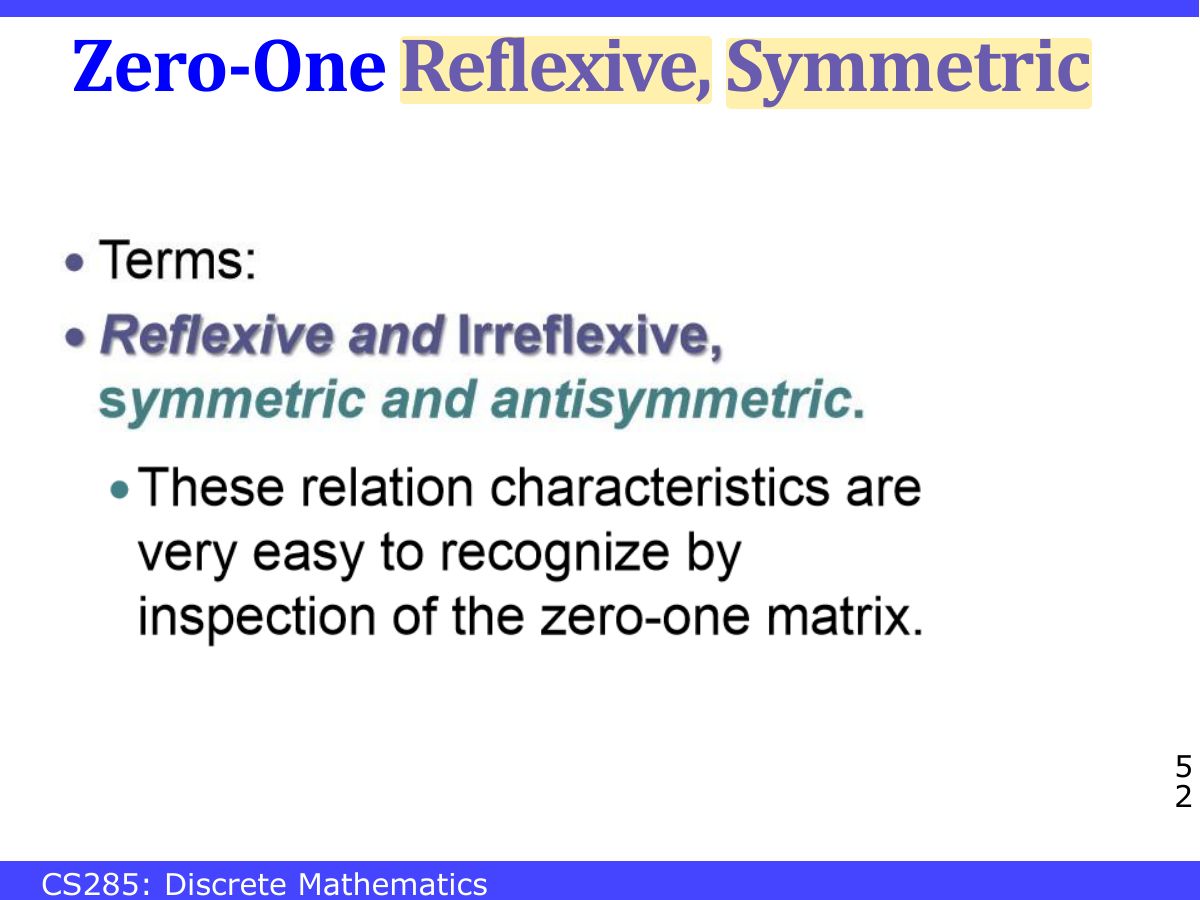
- Reflexive ⇔ all 1s on the diagonal; symmetric ⇔ M = Mᵗ; antisymmetric ⇔ no pair of 1s mirrored off the diagonal.
🎯 How this can come up · 1 question
In the matrix of a reflexive relation:
Correct: Every diagonal entry is 1.
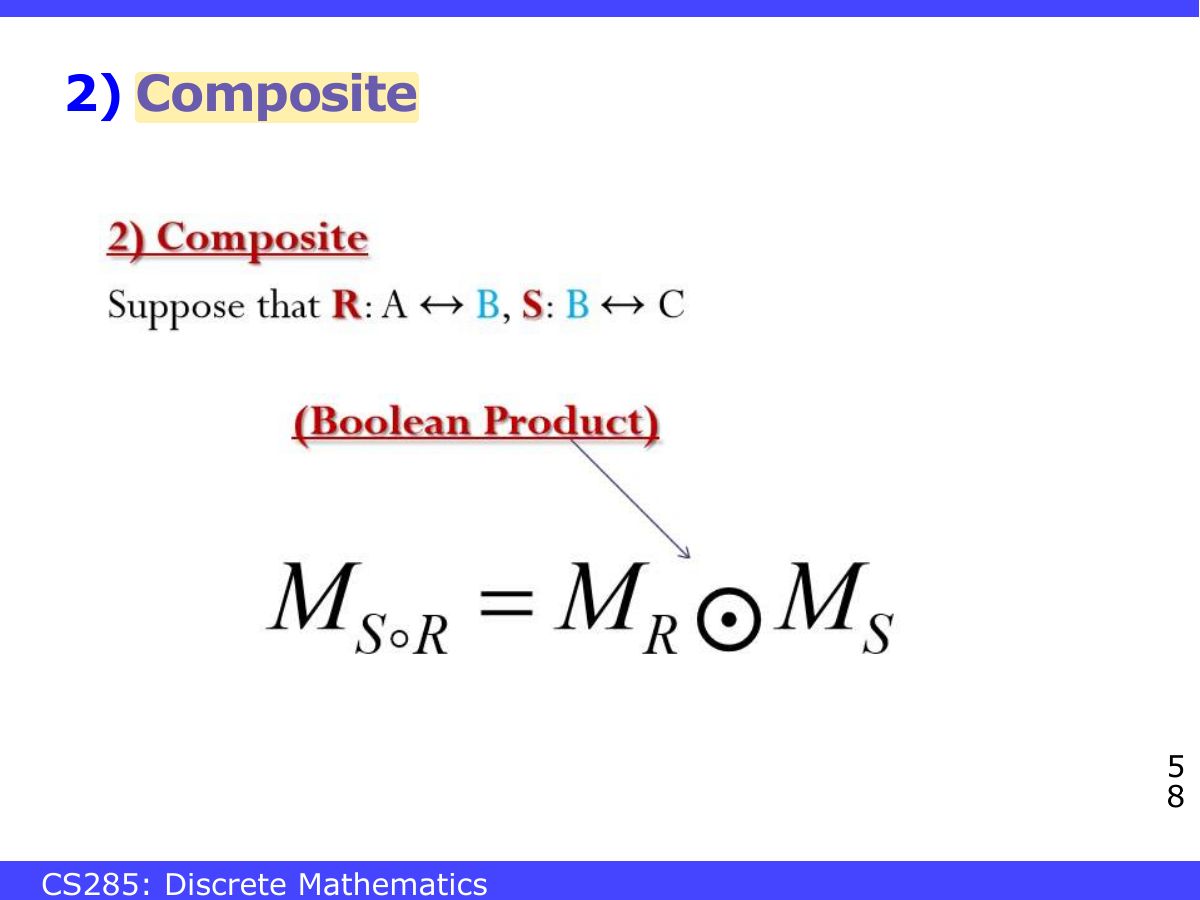
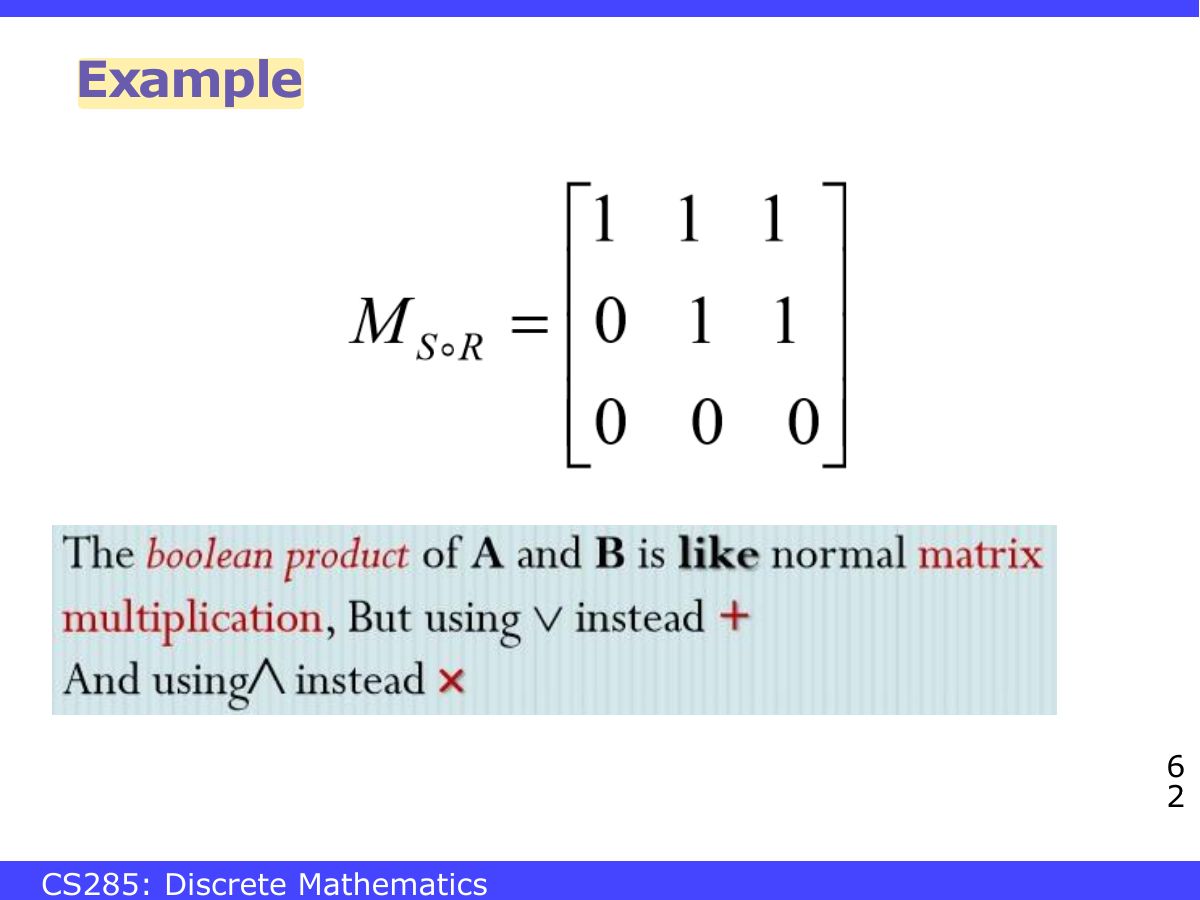
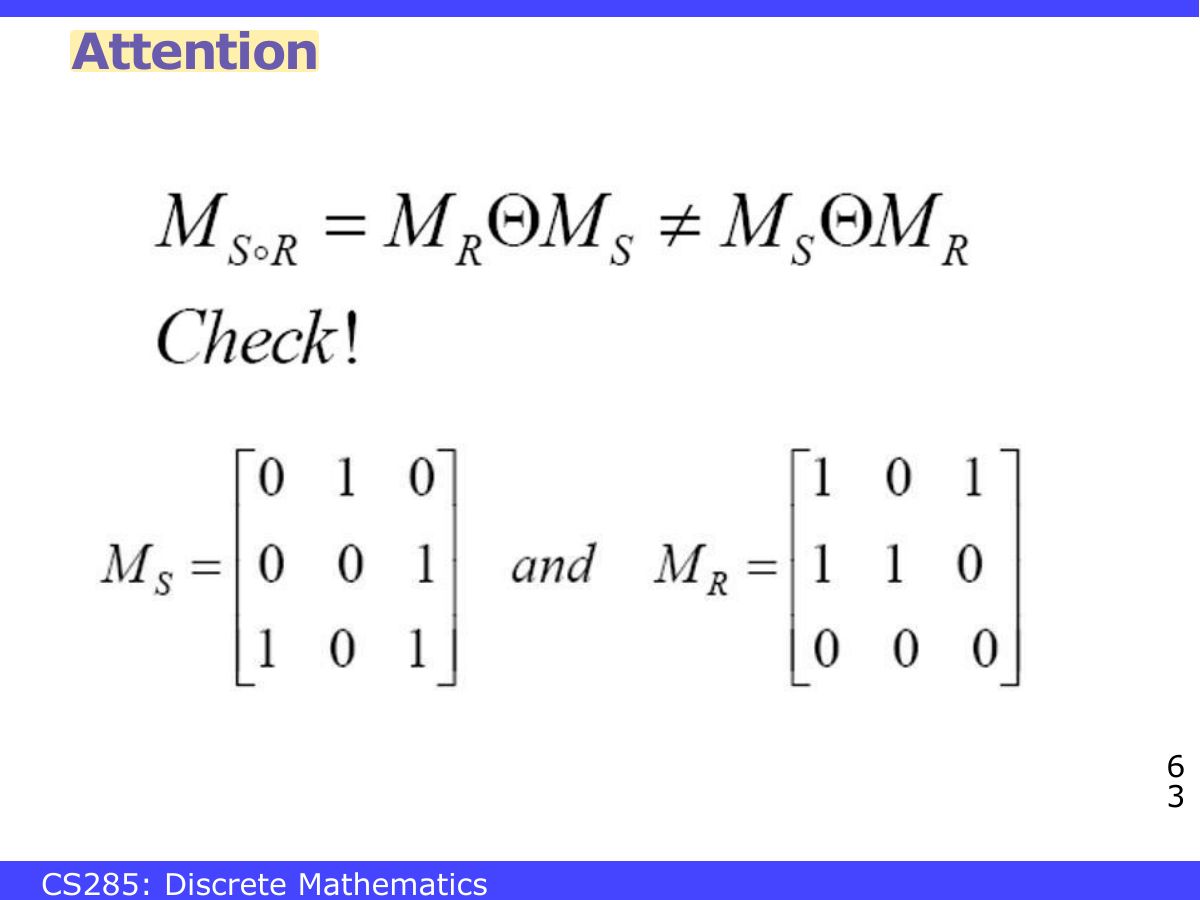
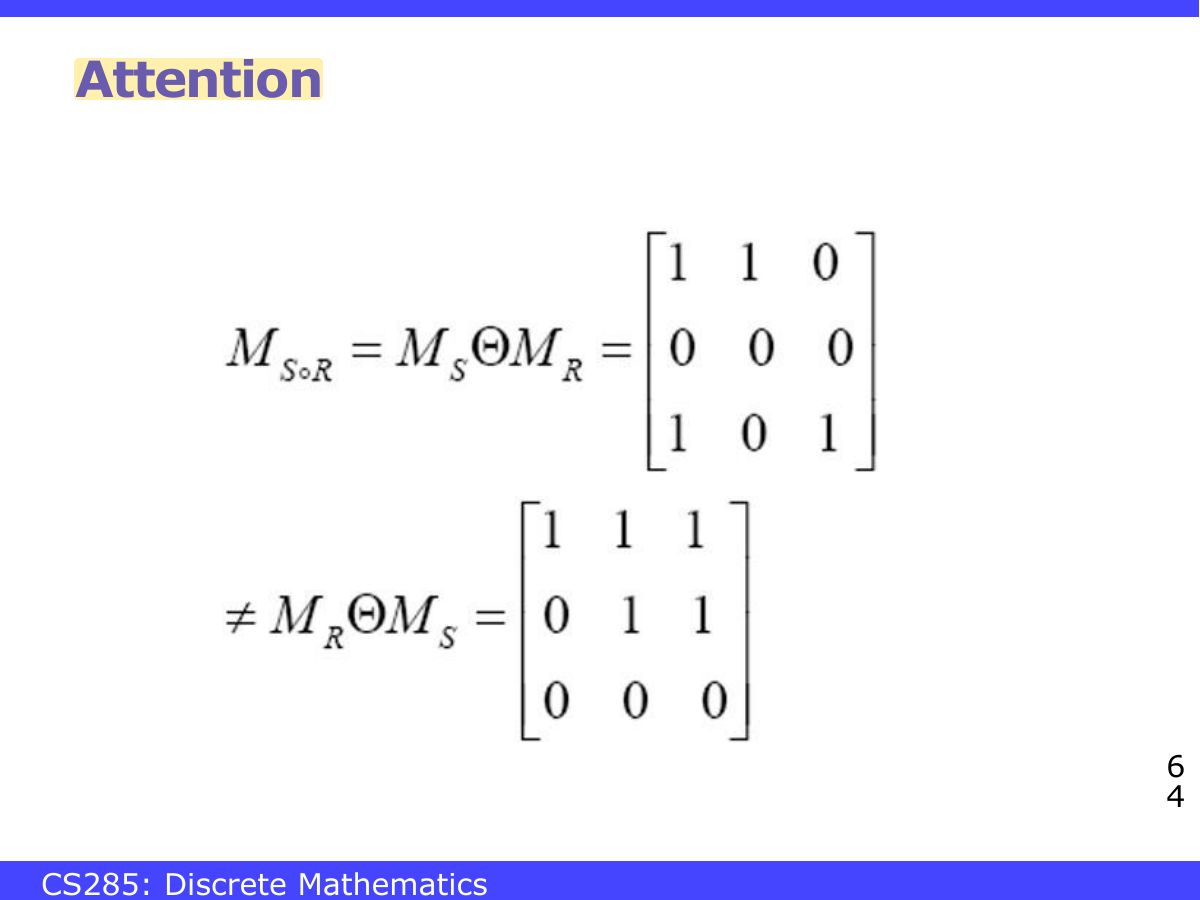
- M_(S∘R) = M_R ⊙ M_S (Boolean product, R’s matrix on the left).
- M_(Rⁿ) = M_R ⊙ … ⊙ M_R (n times).
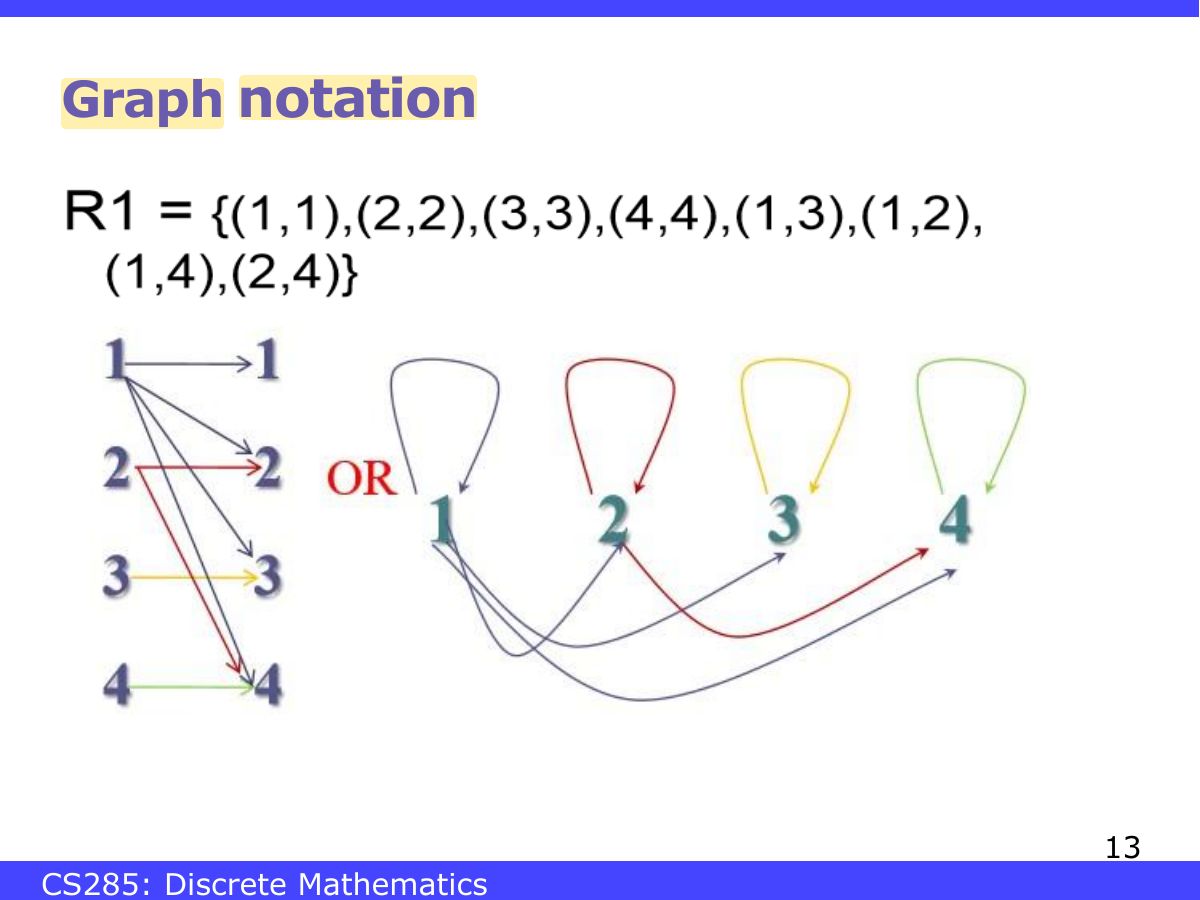
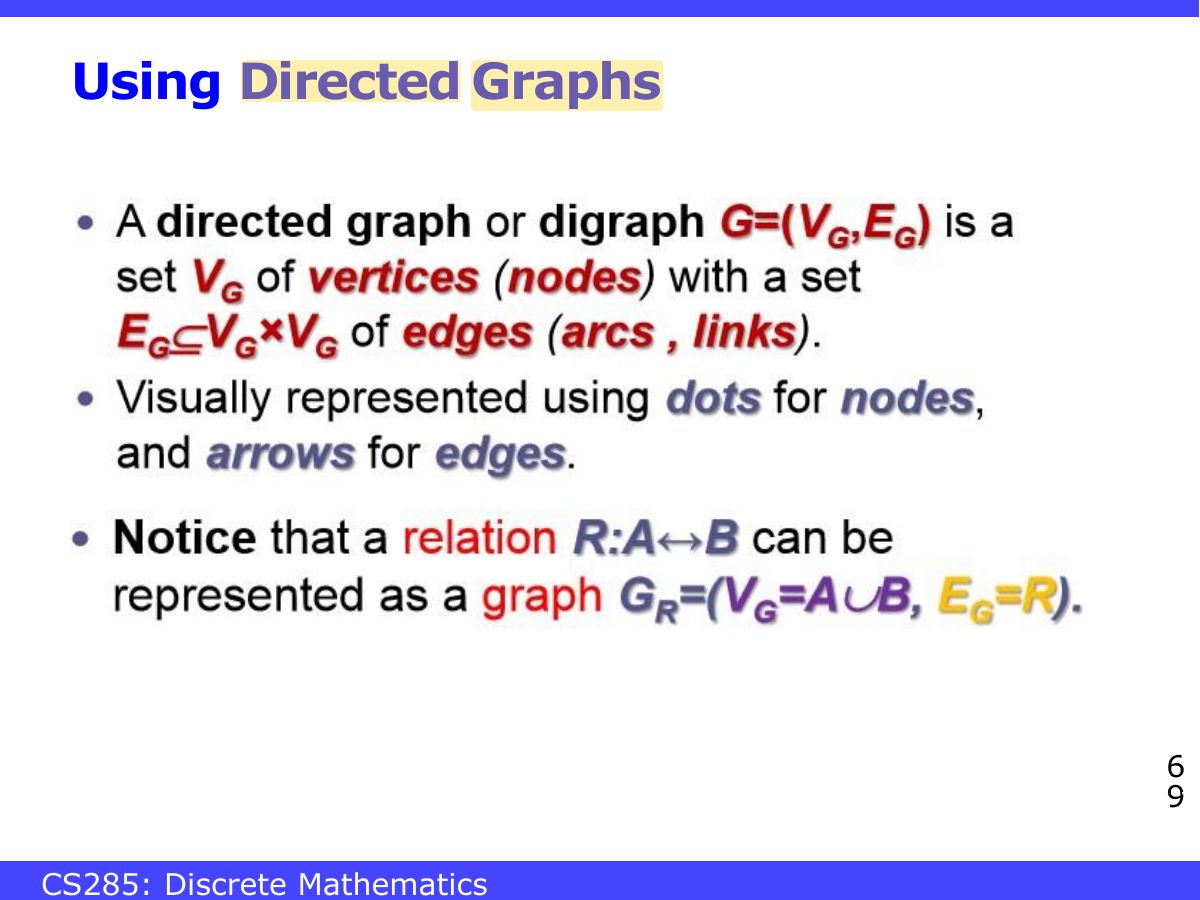
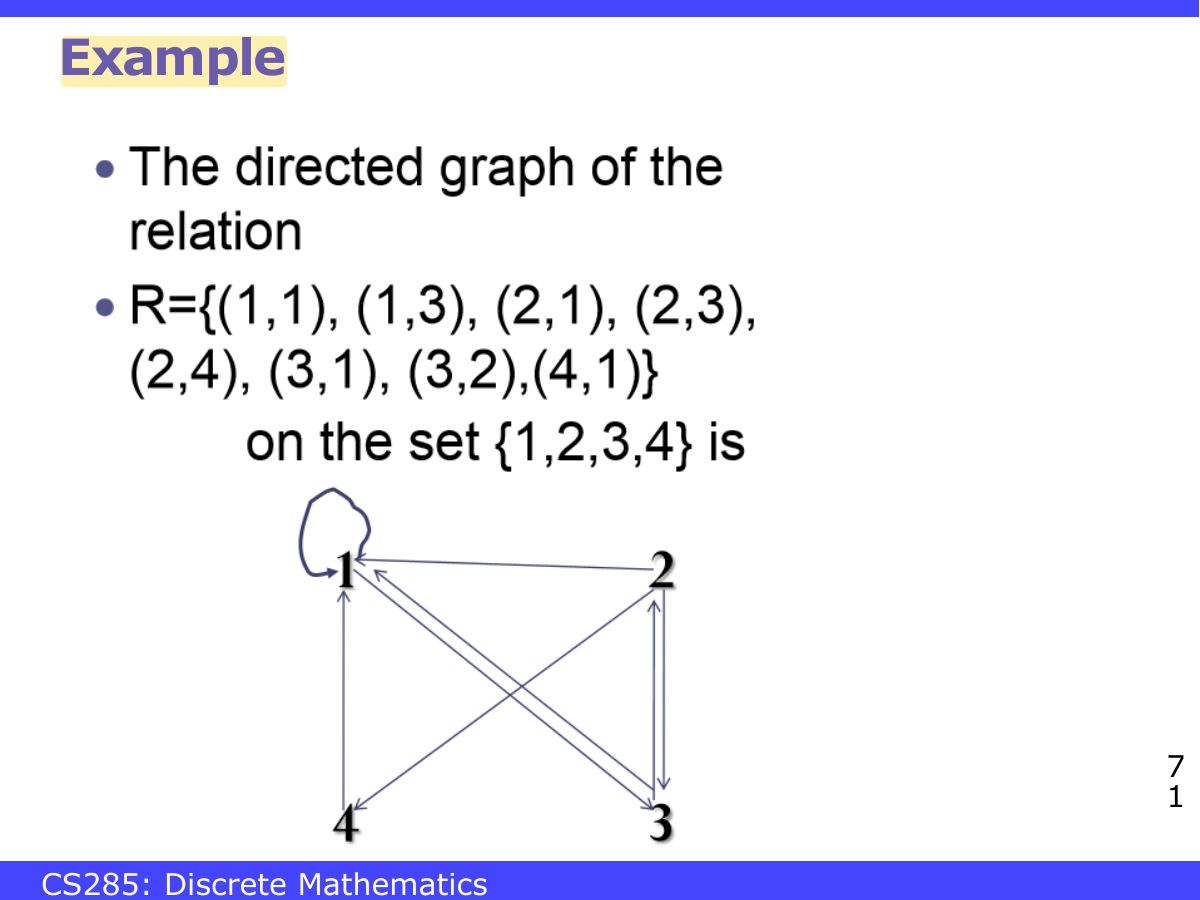
- Digraph: an edge a → b for each (a, b); a loop at a for (a, a).
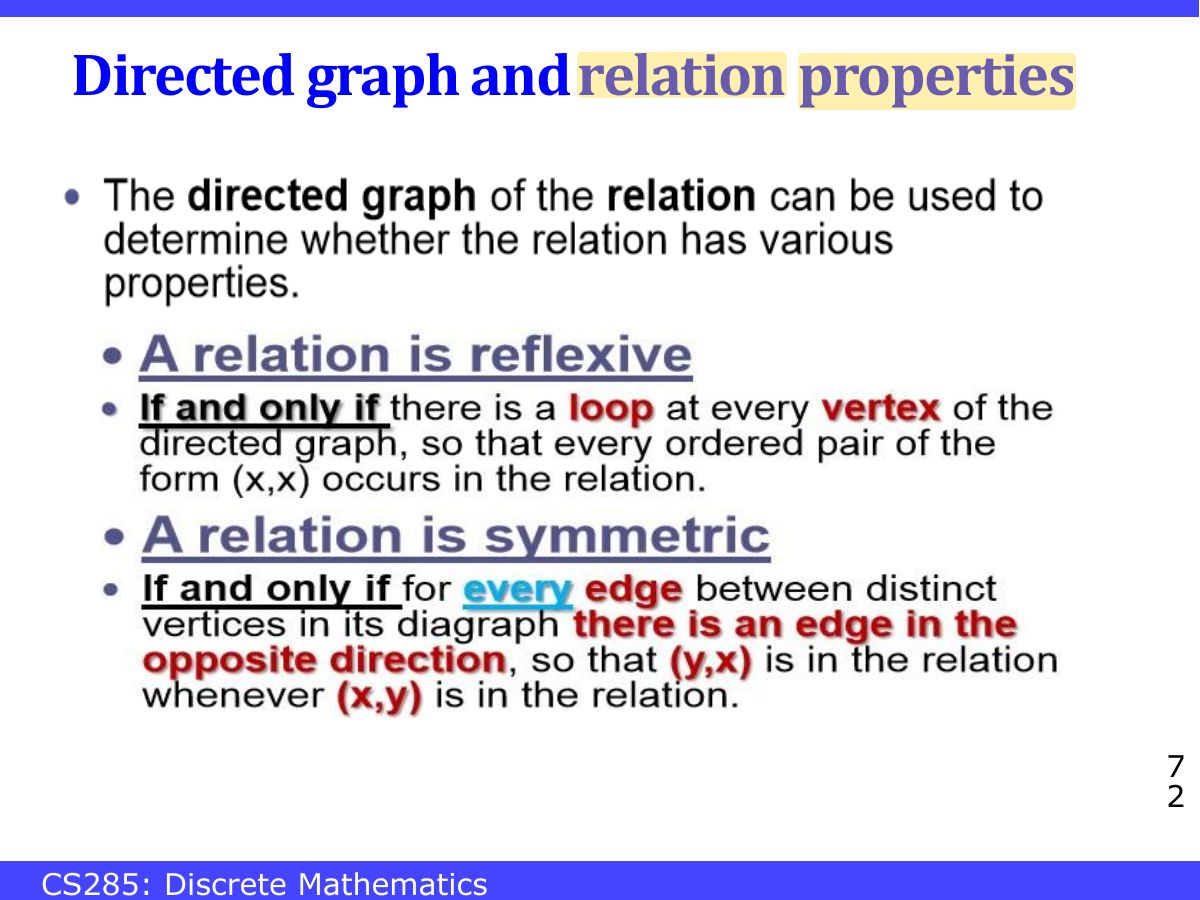
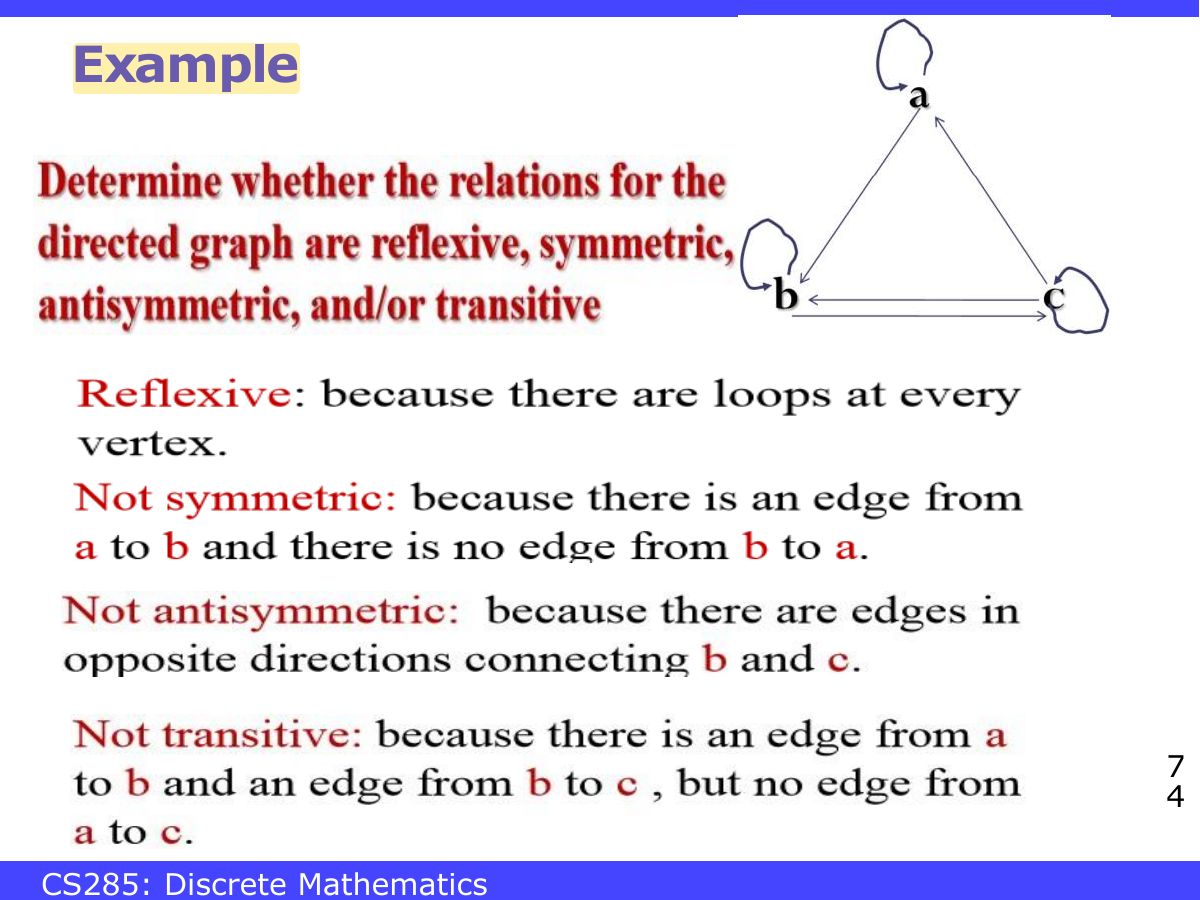
- Digraph test: reflexive = loop at every vertex; symmetric = every edge has a reverse edge; antisymmetric = no two-way edges between distinct vertices; transitive = every 2-step path has a shortcut.
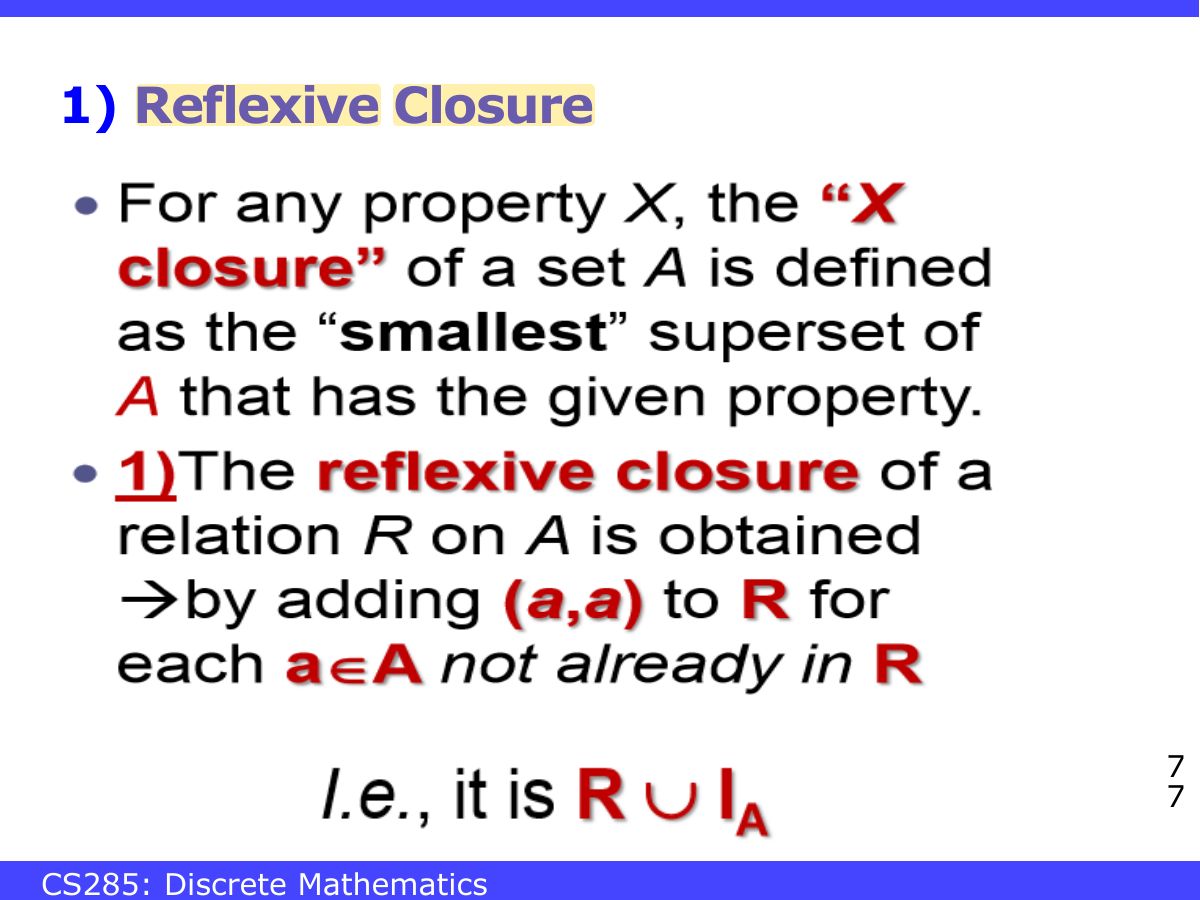
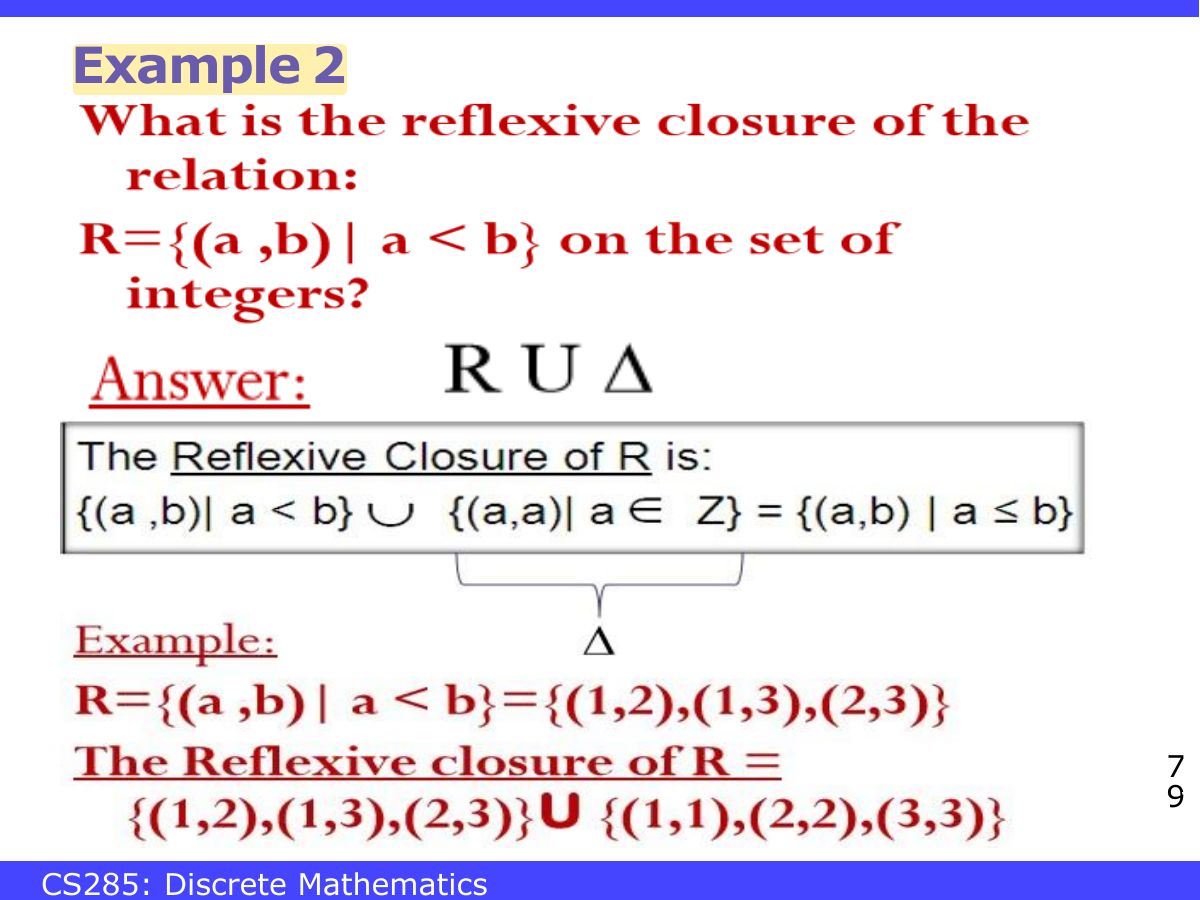
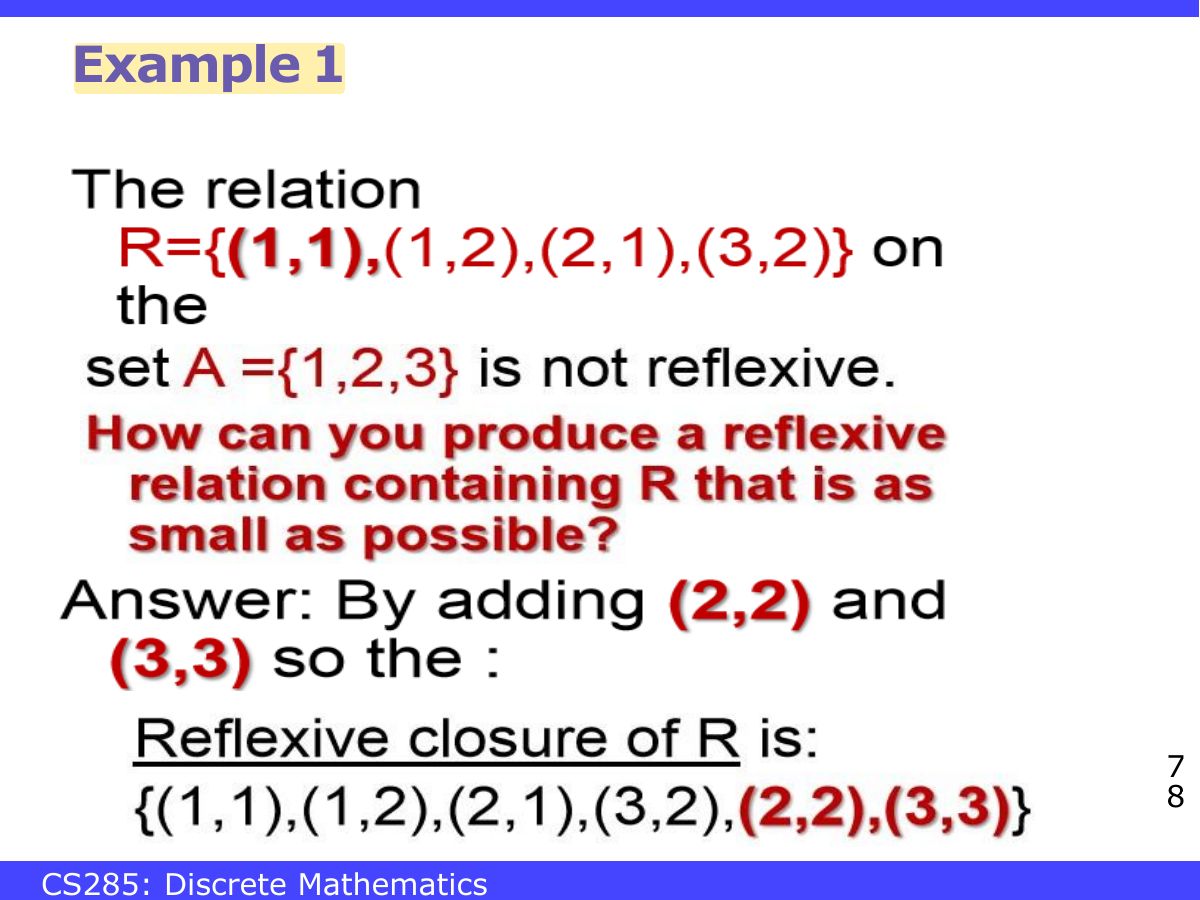
- Reflexive closure: R ∪ Δ (add all missing loops).
🎯 How this can come up · 1 question
The reflexive closure of R = {(1,2)} on {1, 2} is:
Correct: {(1,1), (1,2), (2,2)}.
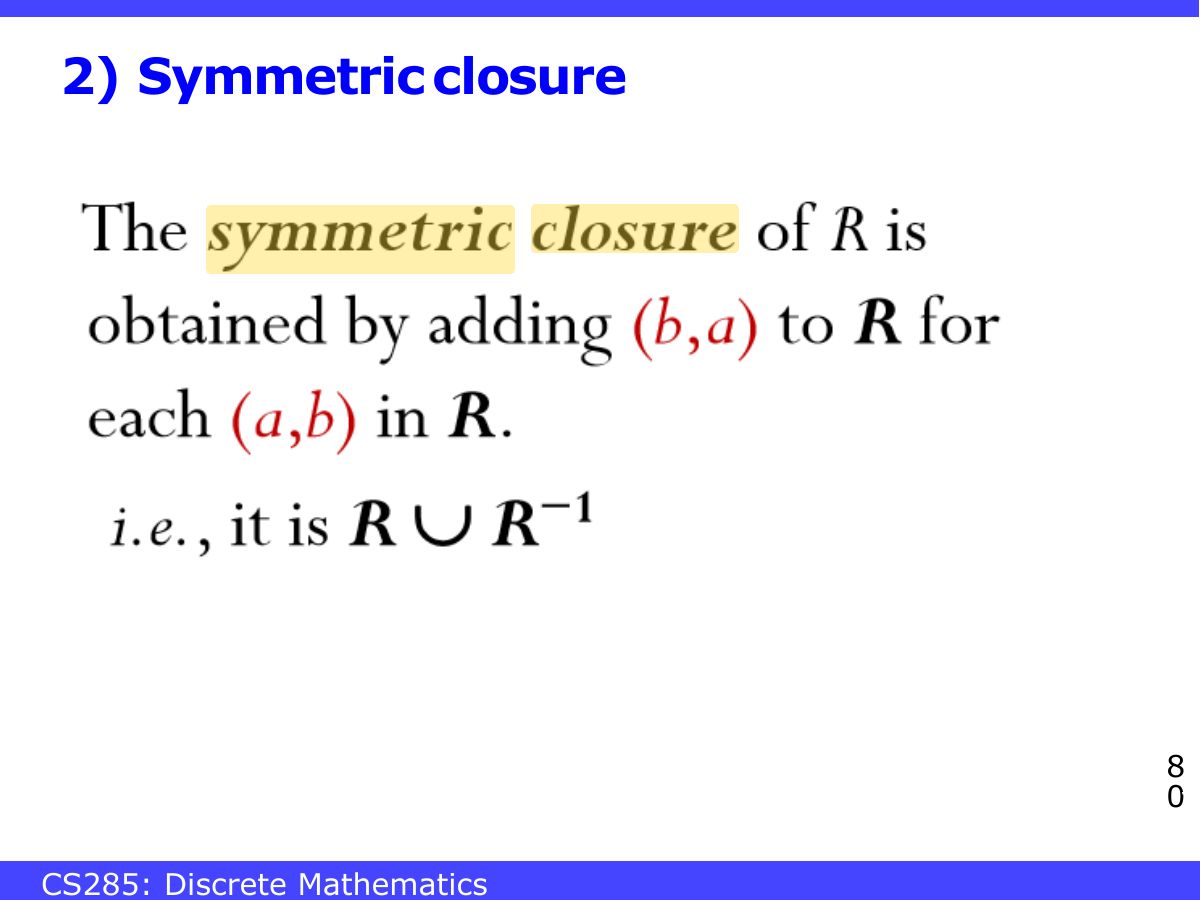
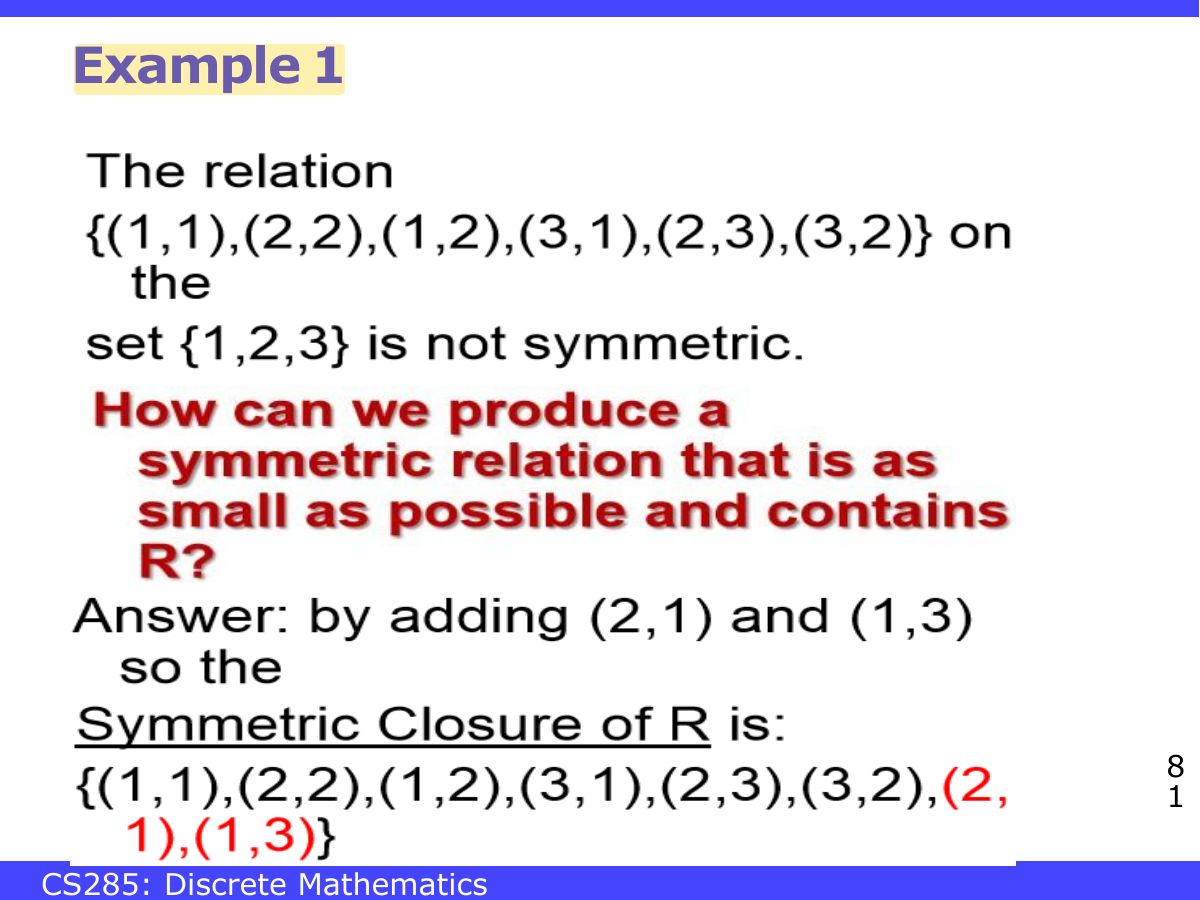
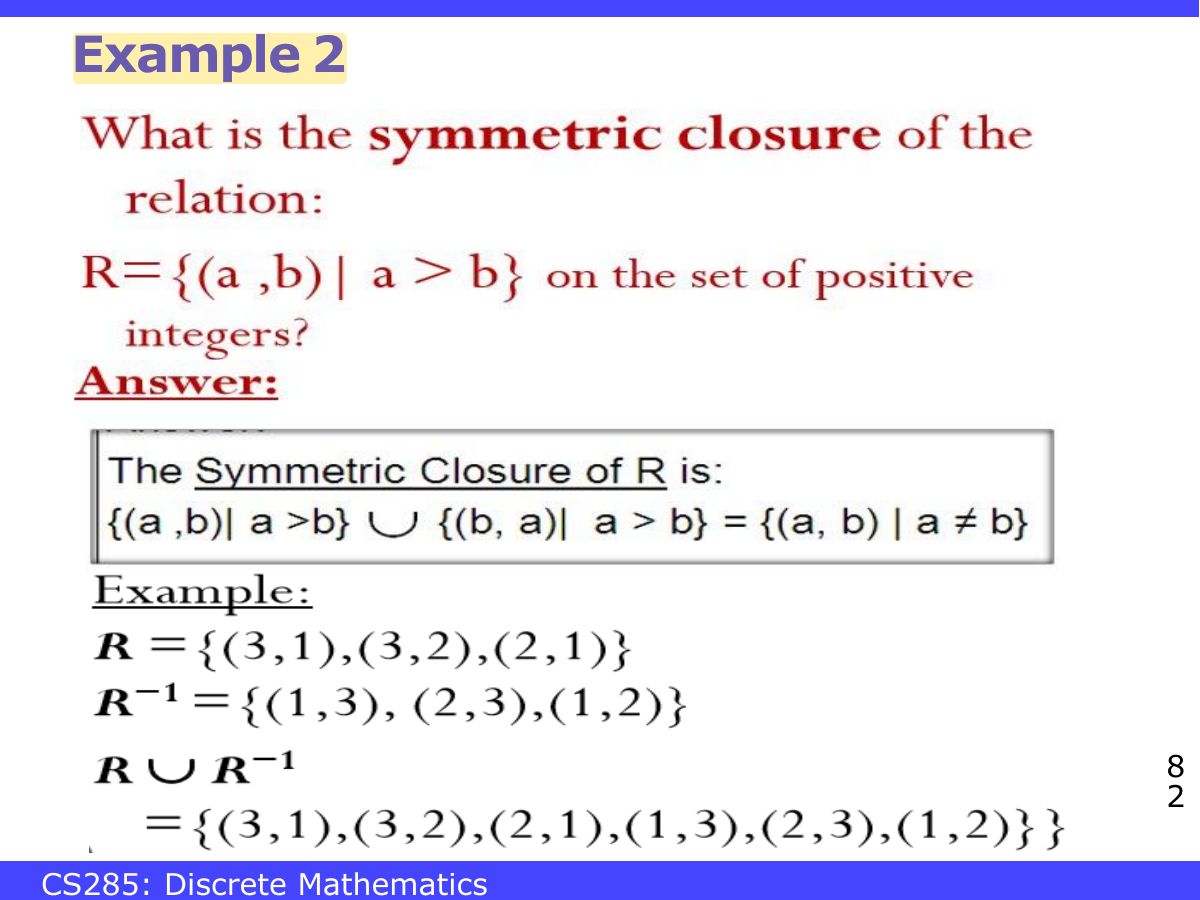
- Symmetric closure: R ∪ R⁻¹ (add the reverse of every pair).
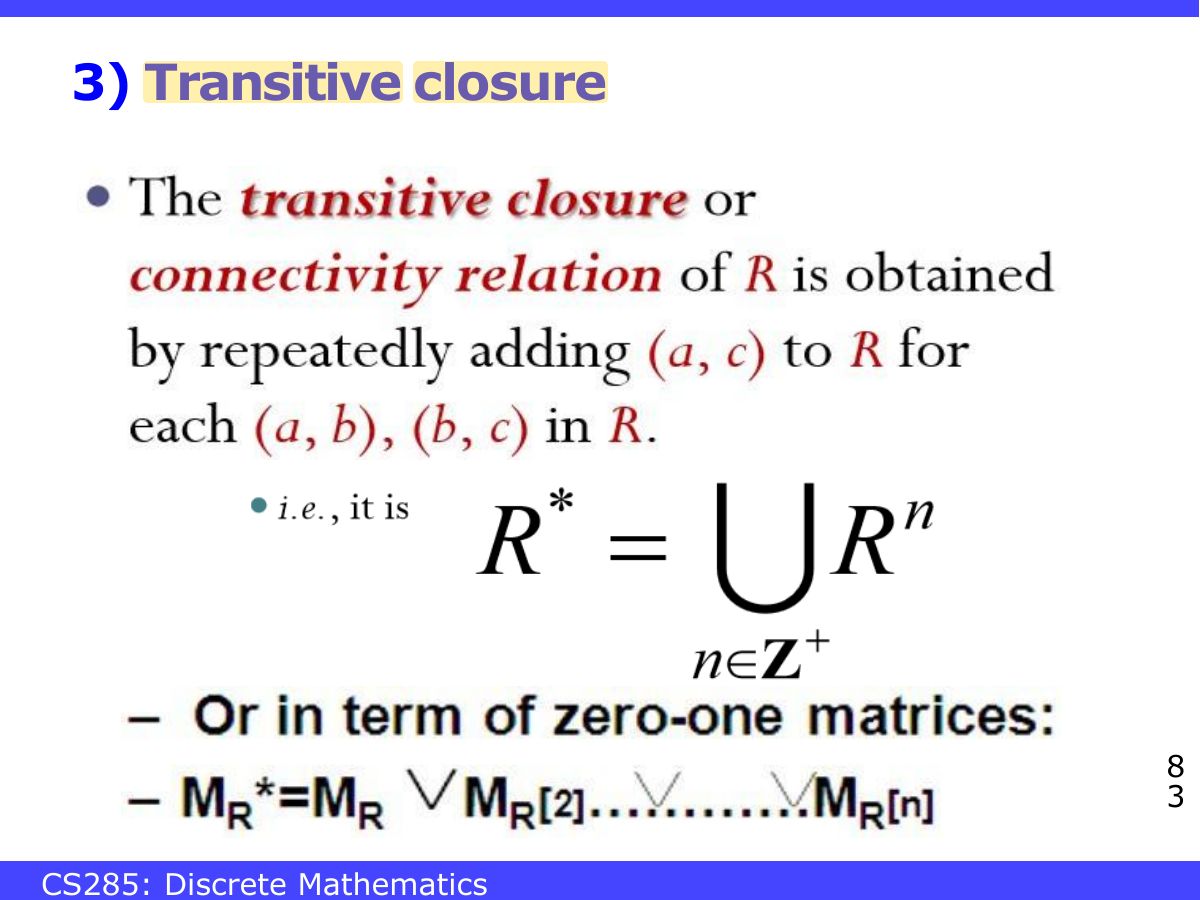
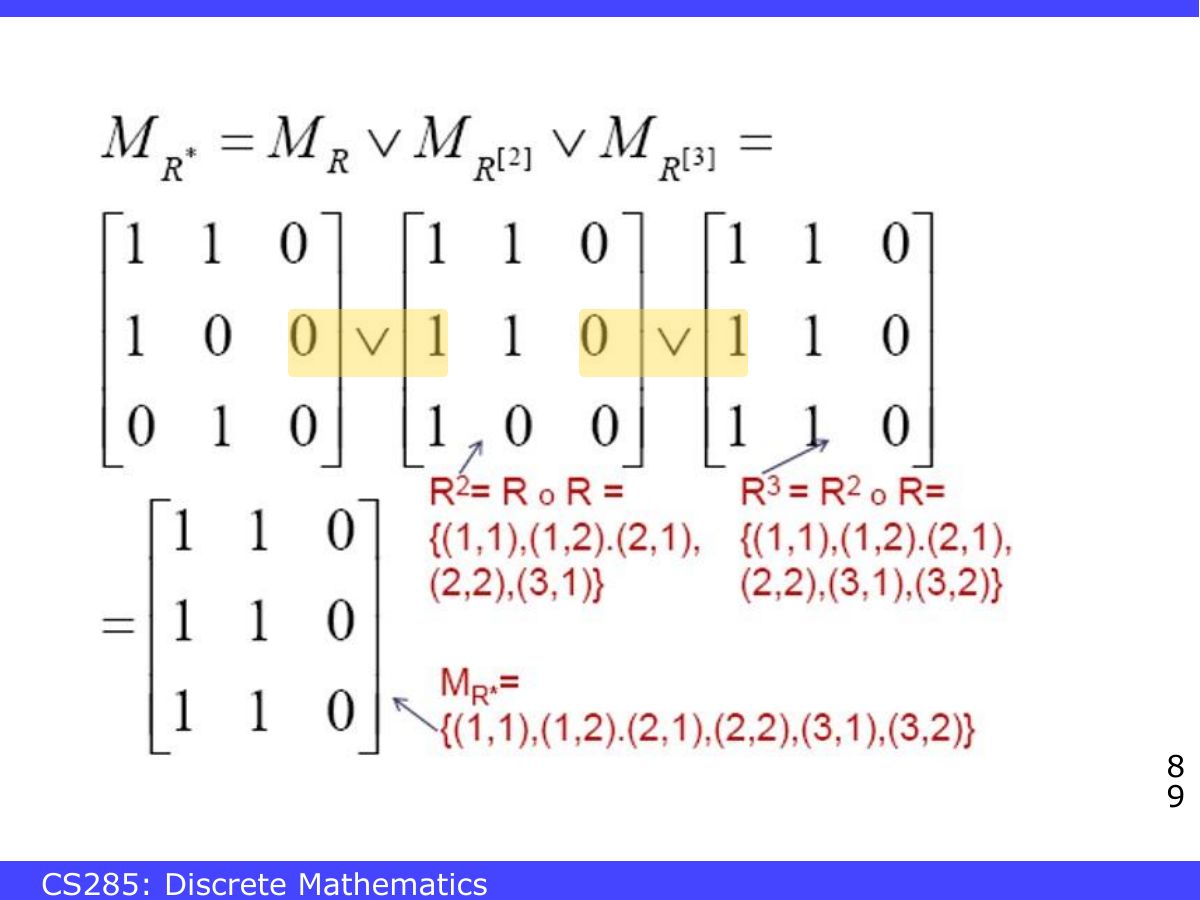
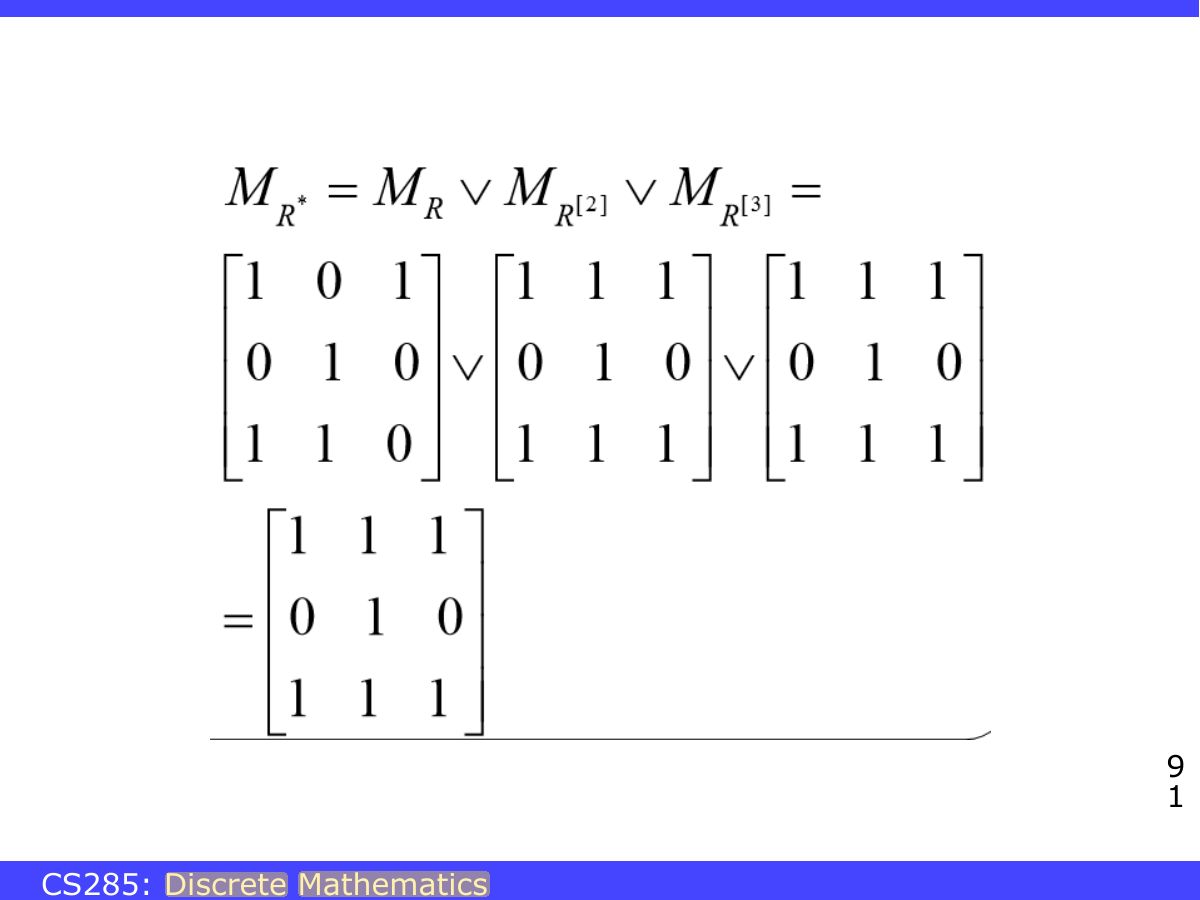
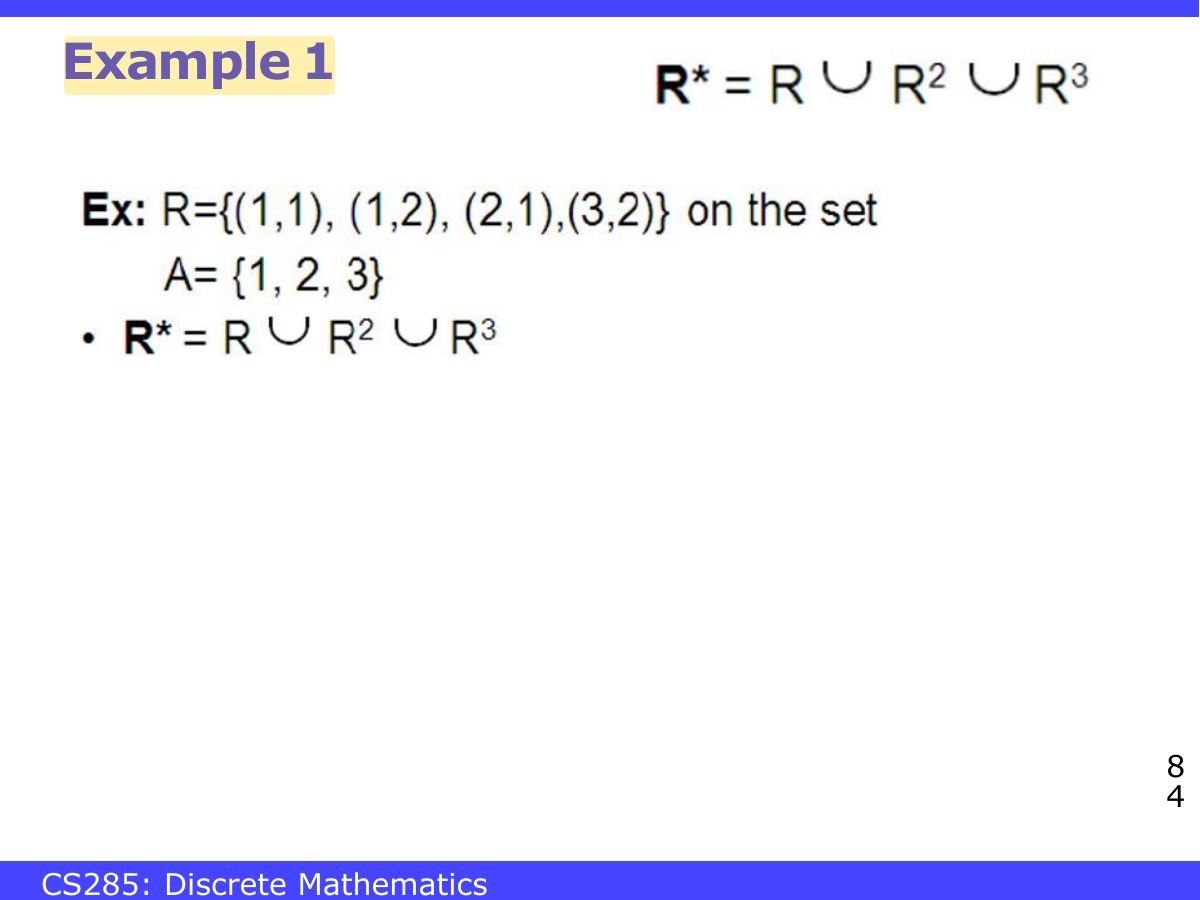
- Transitive closure R*: R ∪ R² ∪ … ∪ Rⁿ (keep adding shortcuts until nothing changes).
🎯 How this can come up · 1 question
Find the transitive closure of R = {(1,2), (2,3), (3,4)} on {1, 2, 3, 4}.
R ∪ R² ∪ R³ = {(1,2), (2,3), (3,4), (1,3), (2,4), (1,4)}.
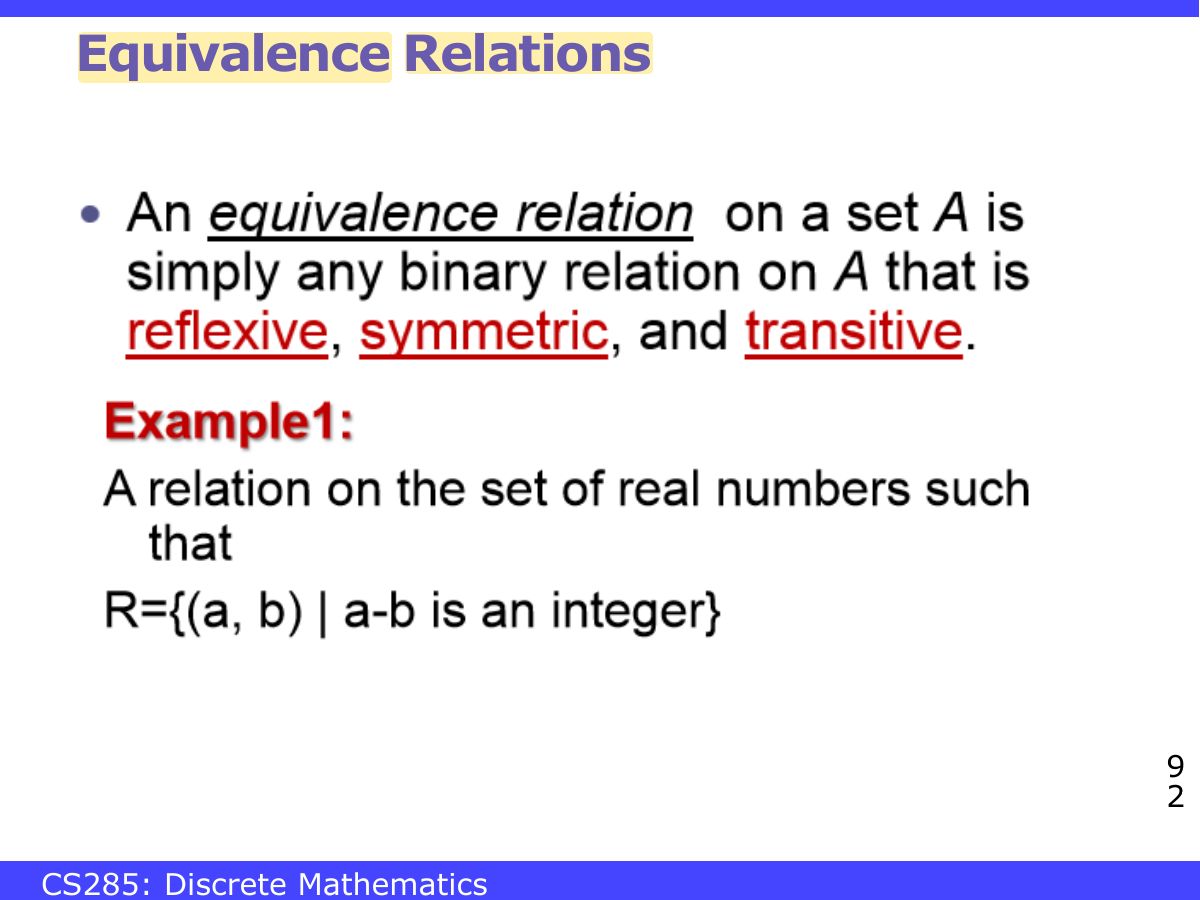
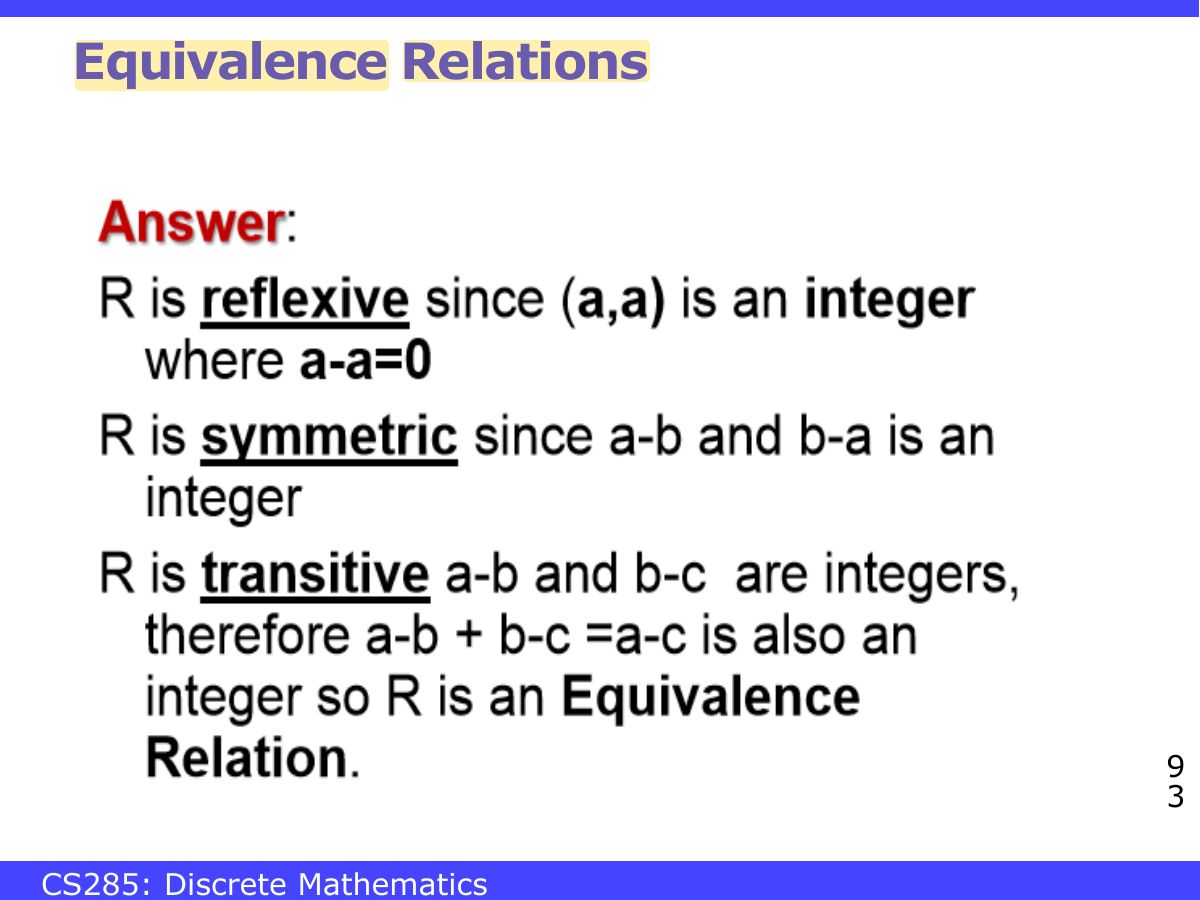
- Equivalence relation: reflexive + symmetric + transitive (e.g. congruence mod m). Its equivalence classes partition the set.
🎯 How this can come up · 2 questions
Which is an equivalence relation on ℤ?
Correct: a ≡ b (mod 4).
A partial order is reflexive, transitive and:
Correct: Antisymmetric.
No slides match this filter.