Exam weight Low
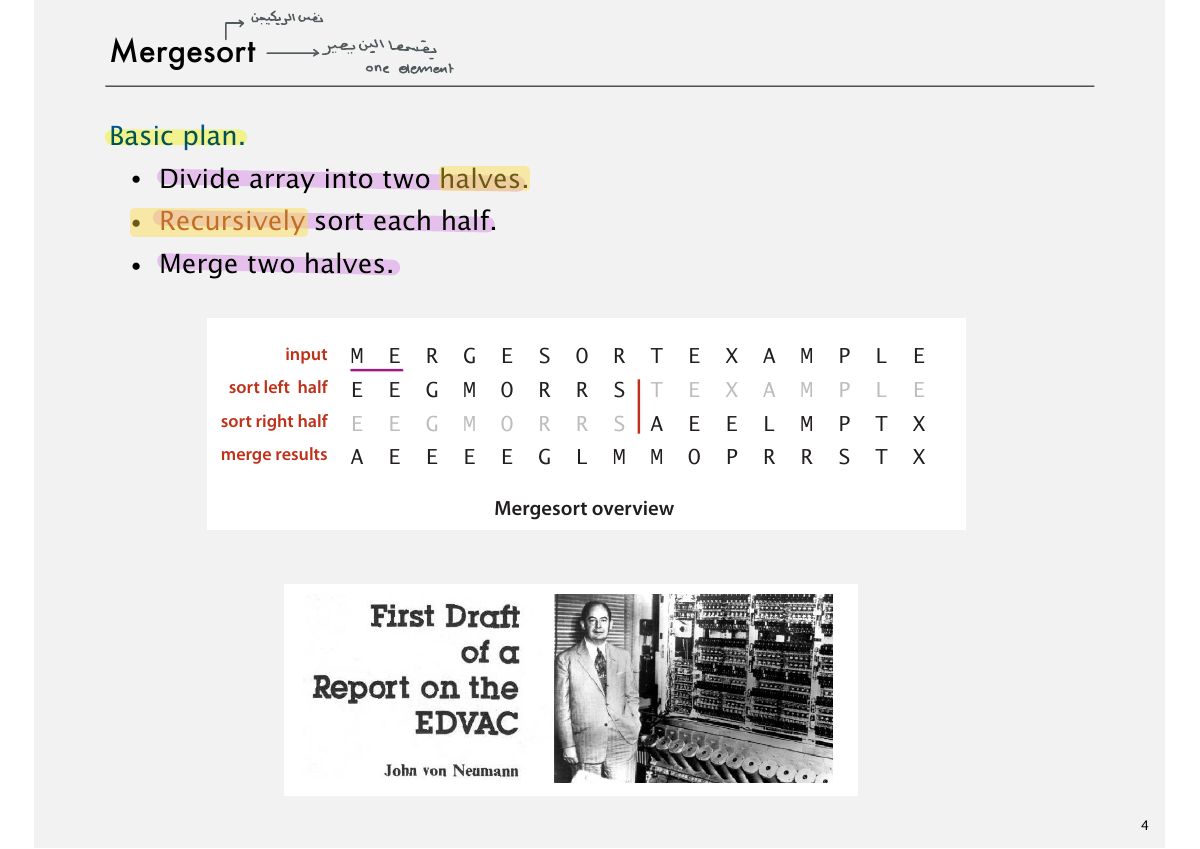
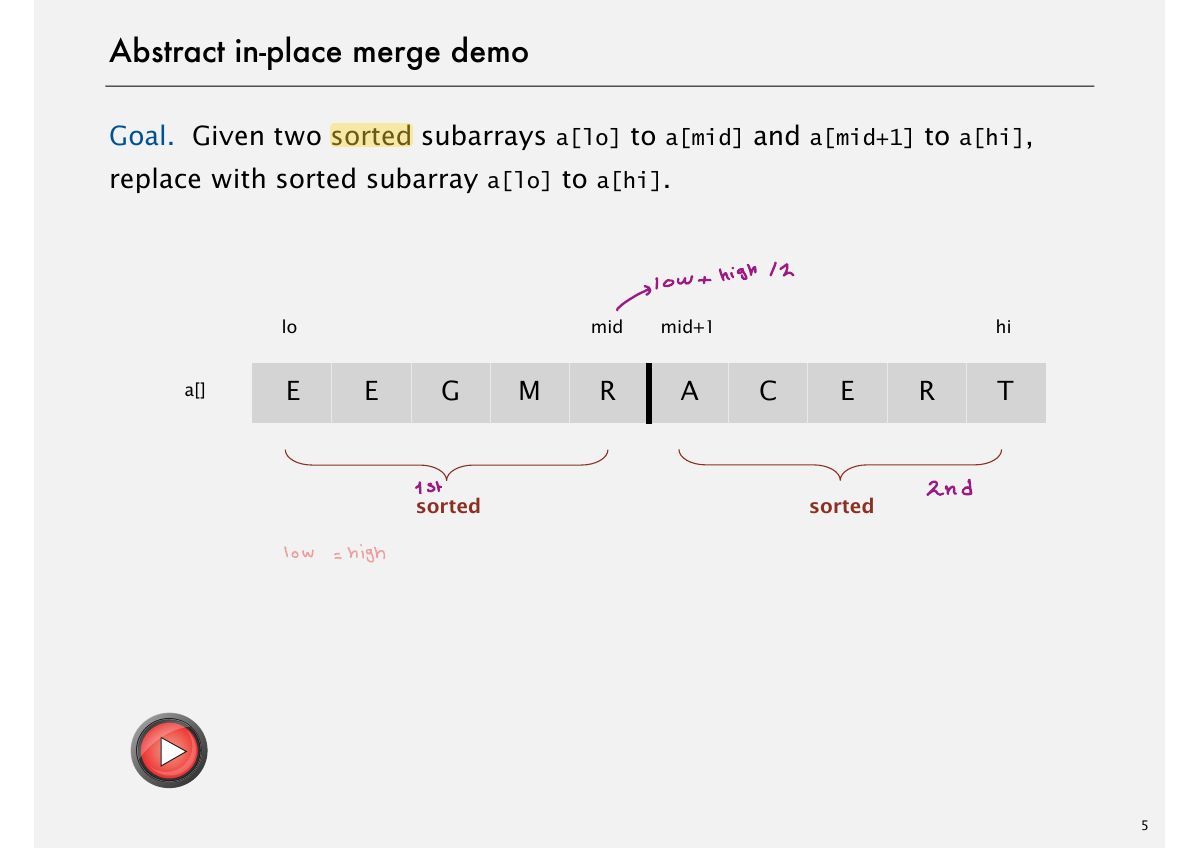
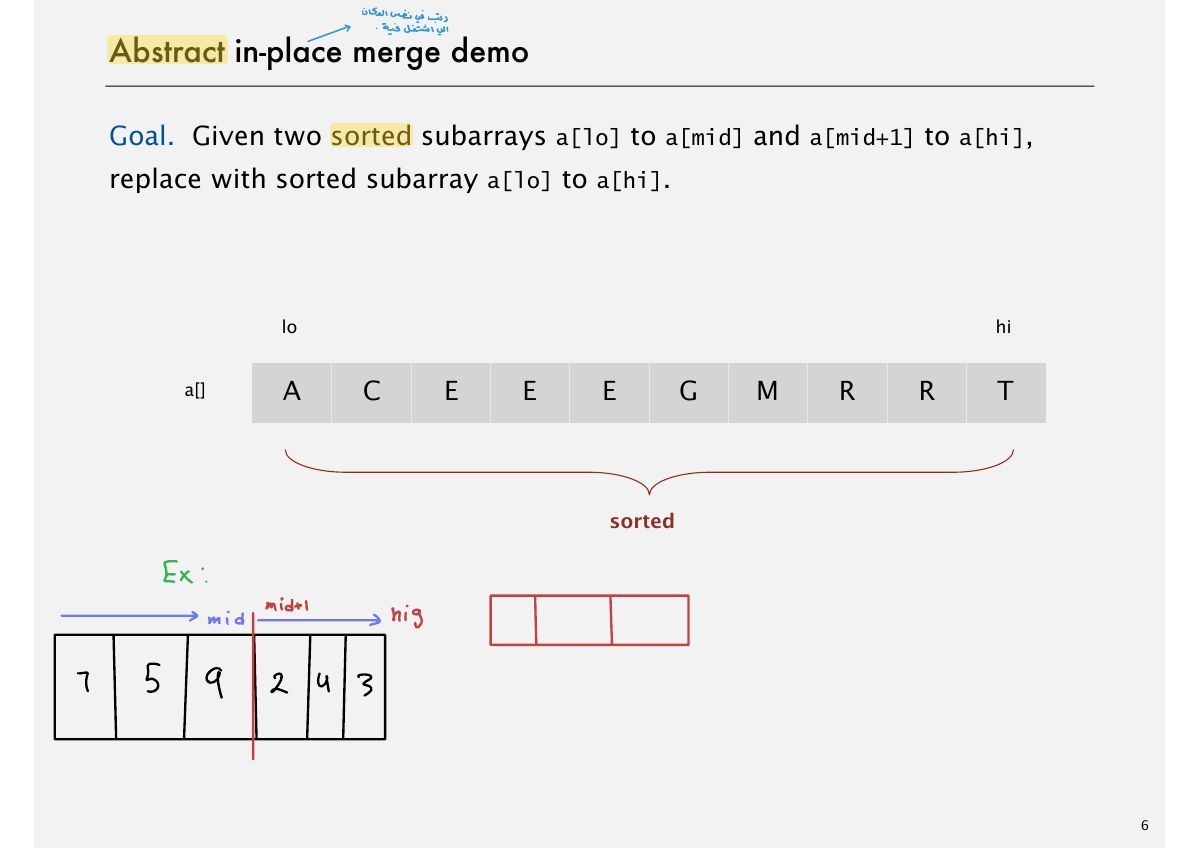
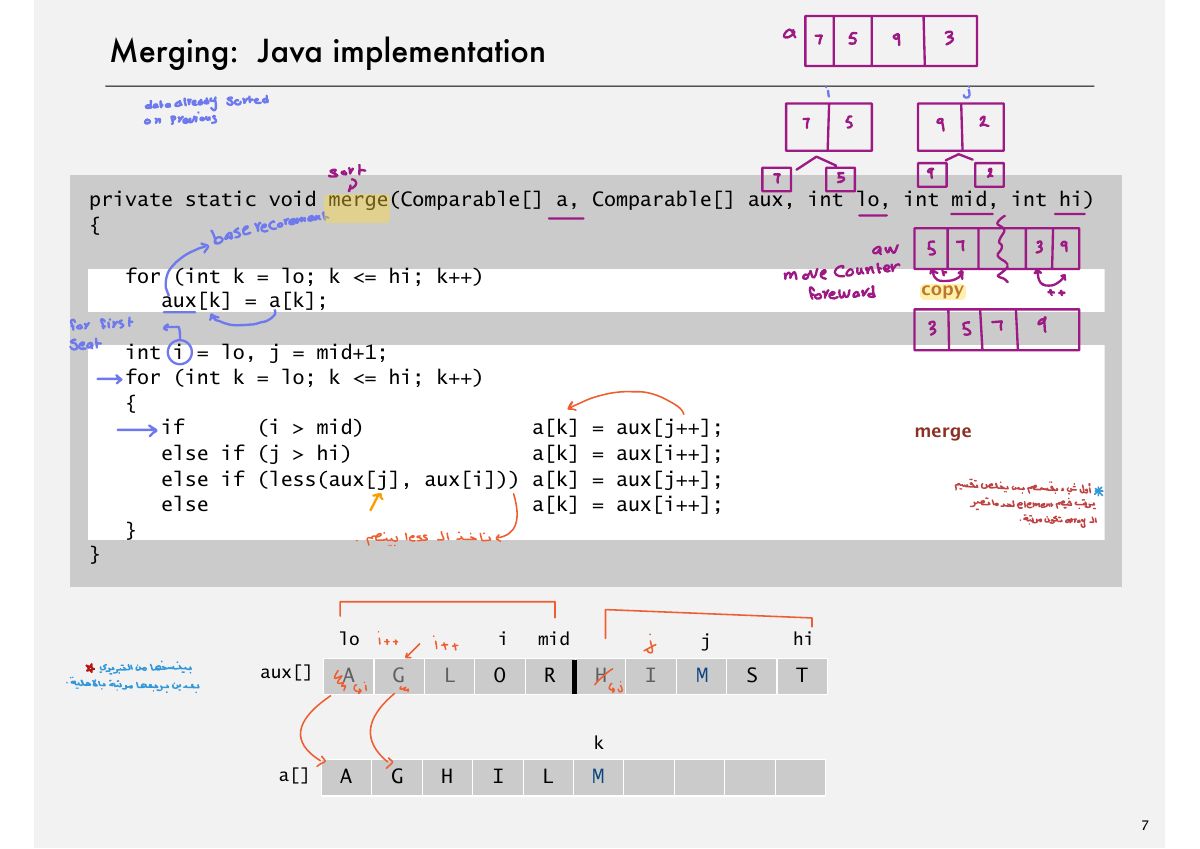
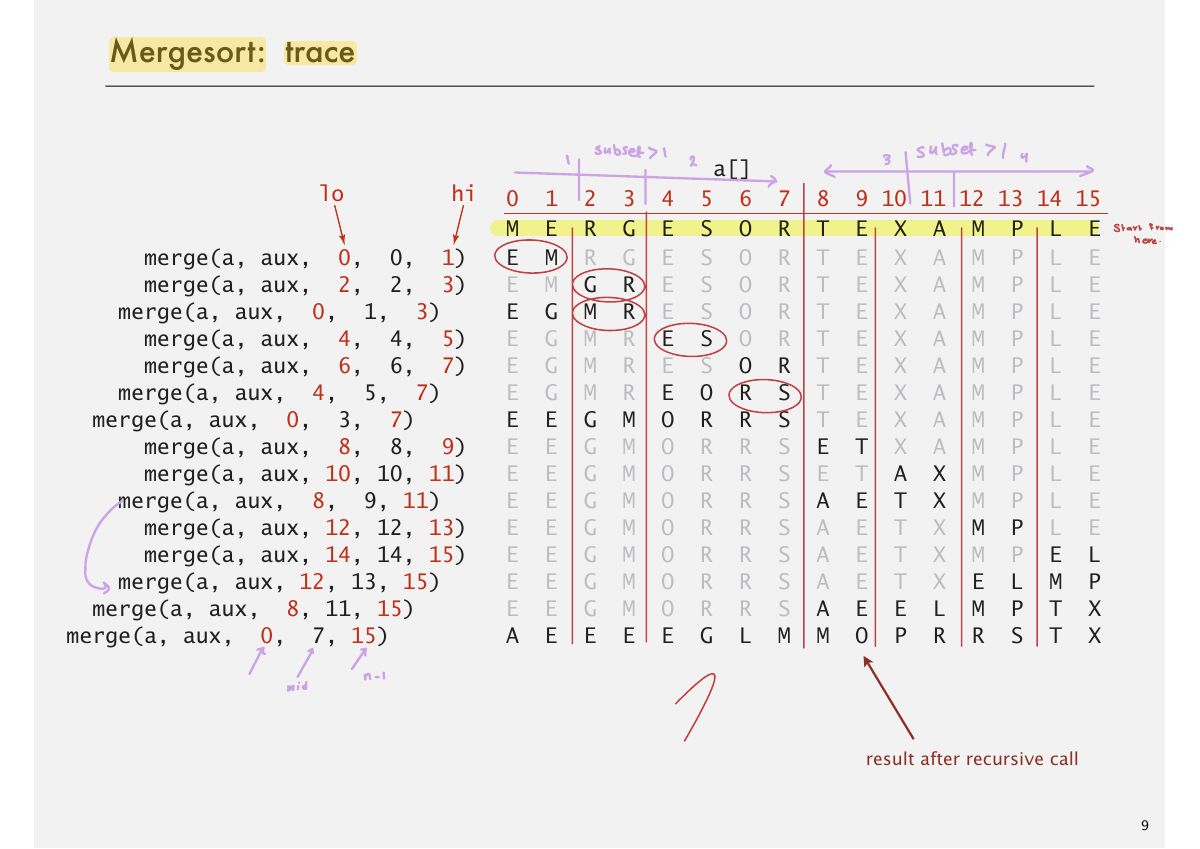
Mergesort: merging, the recursive top-down sort and bottom-up version, its N log N analysis and extra memory, comparators, and stability.

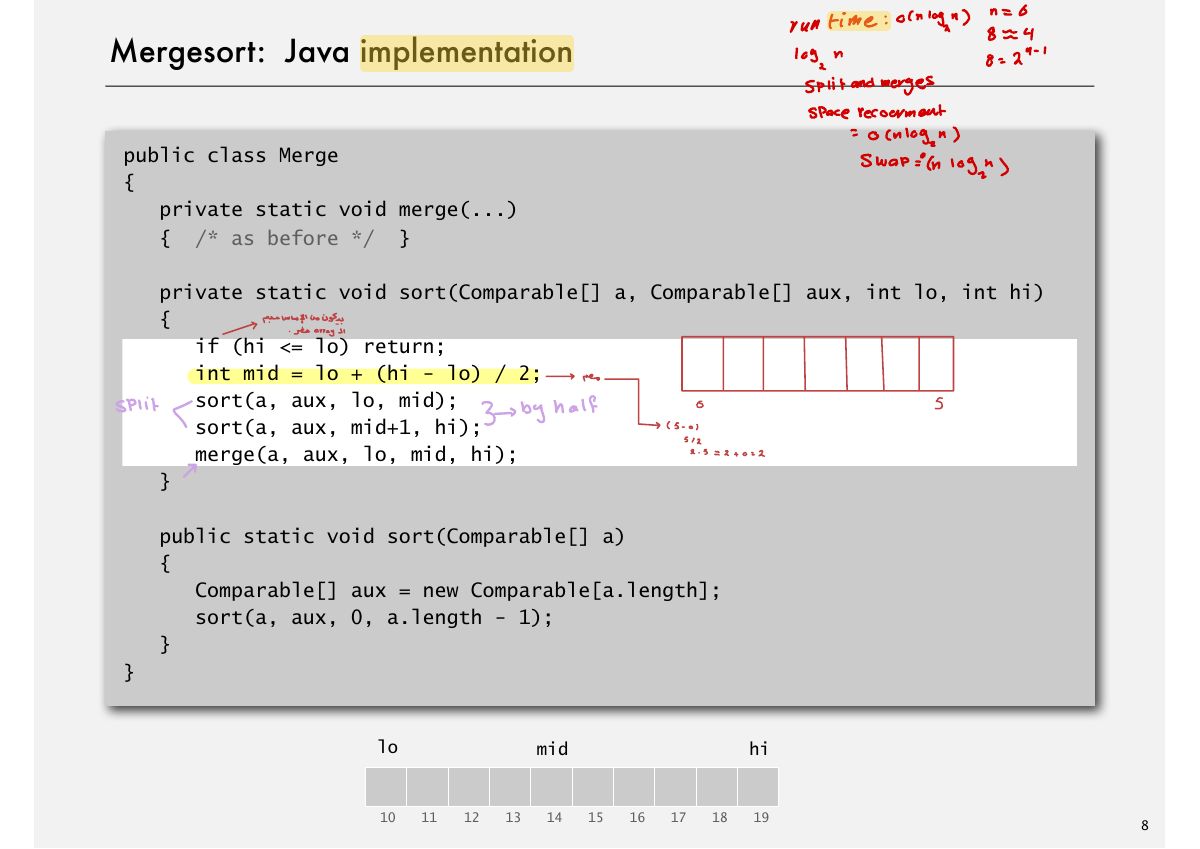
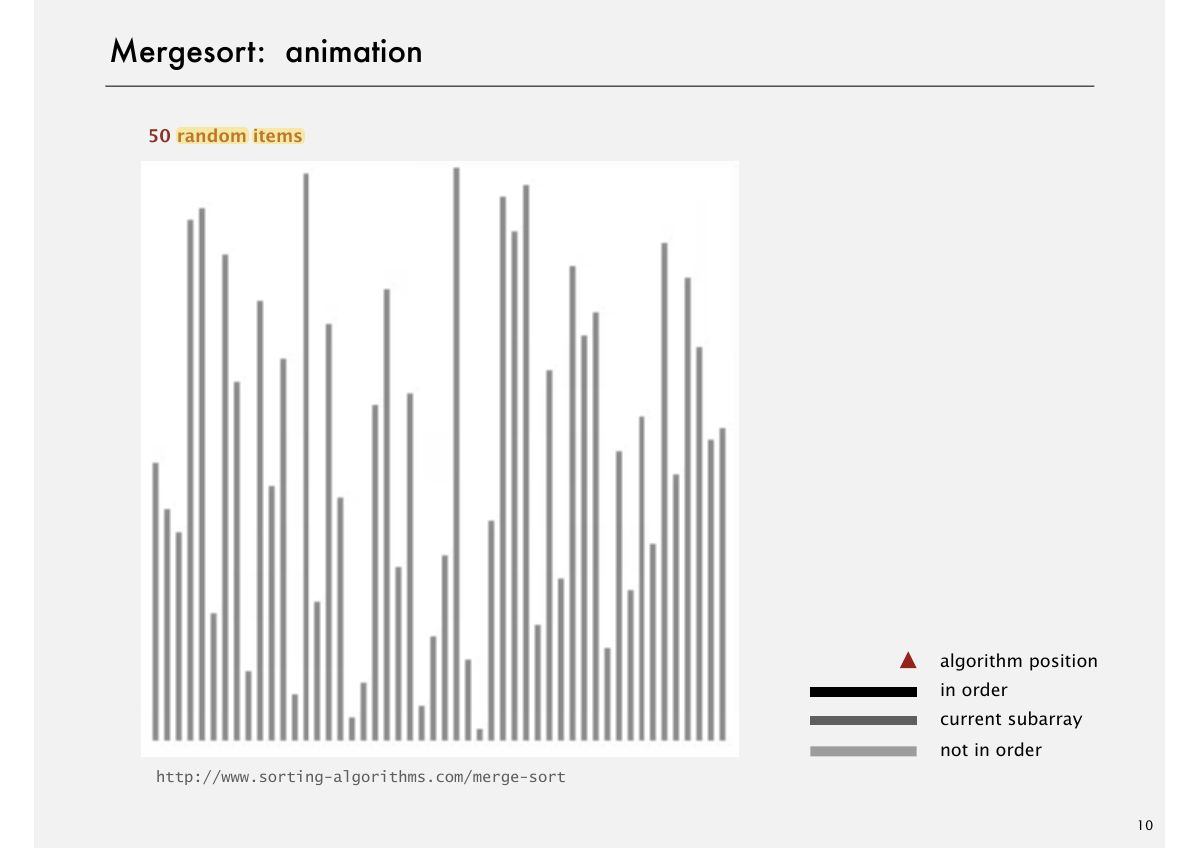
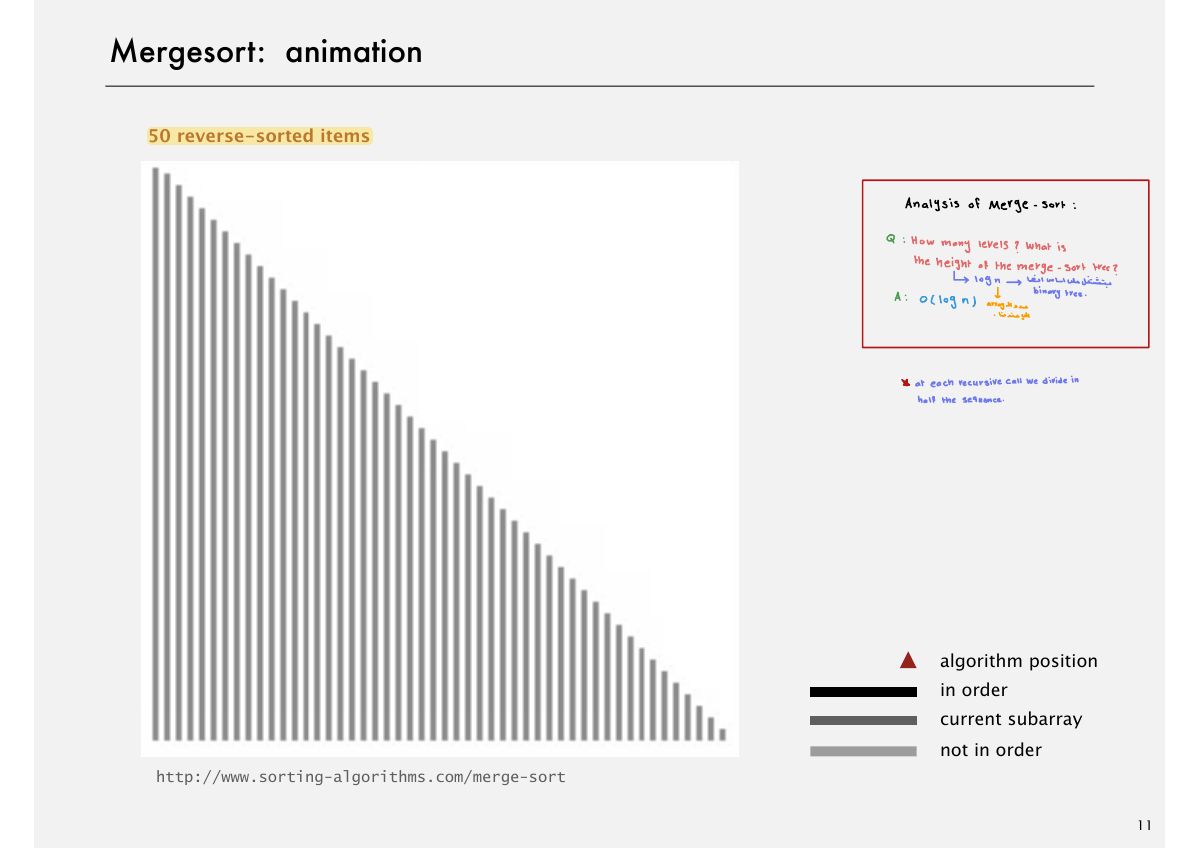
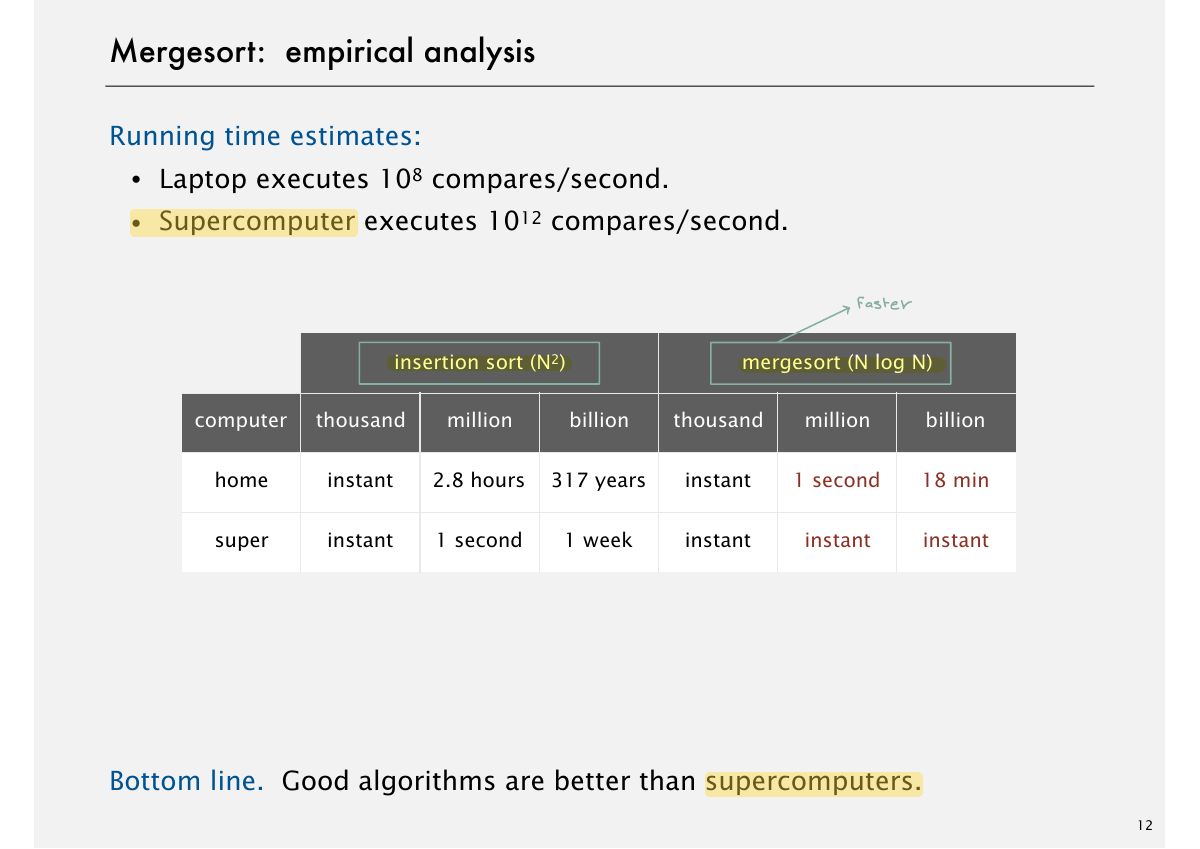
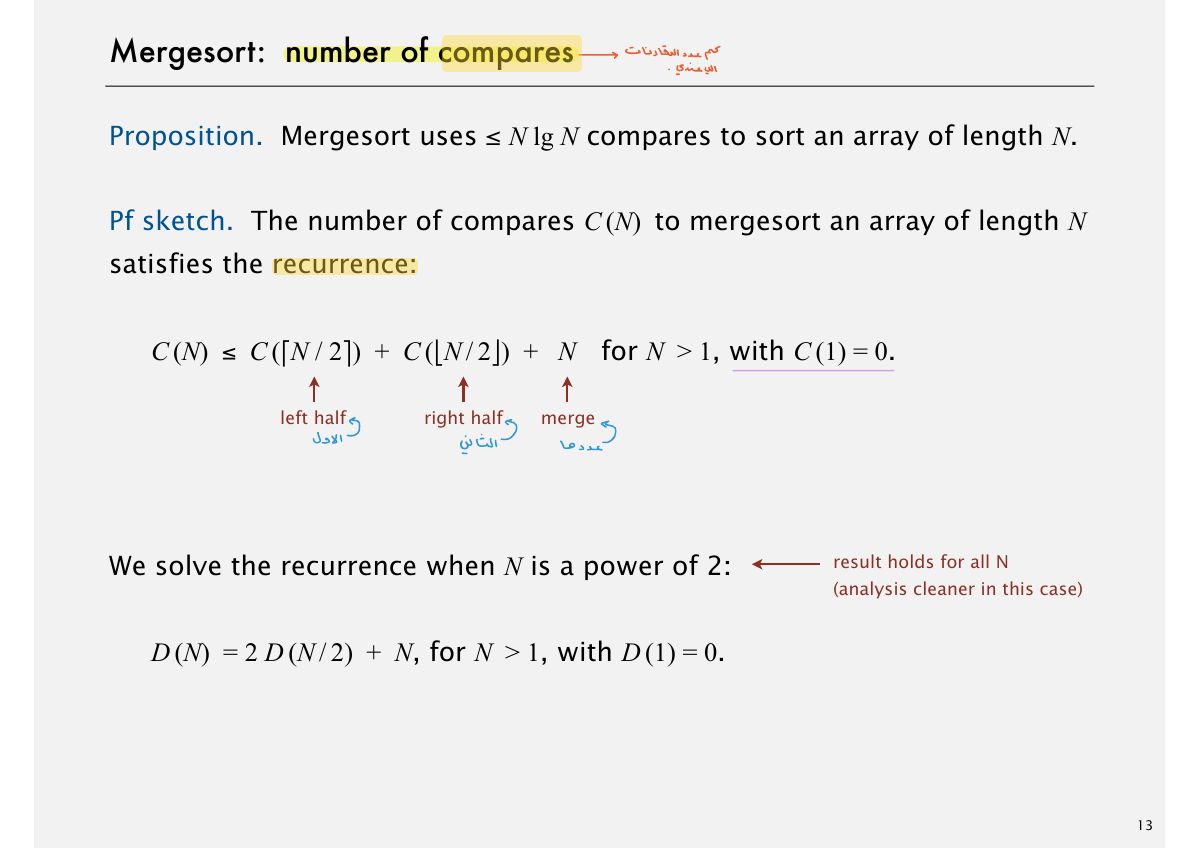
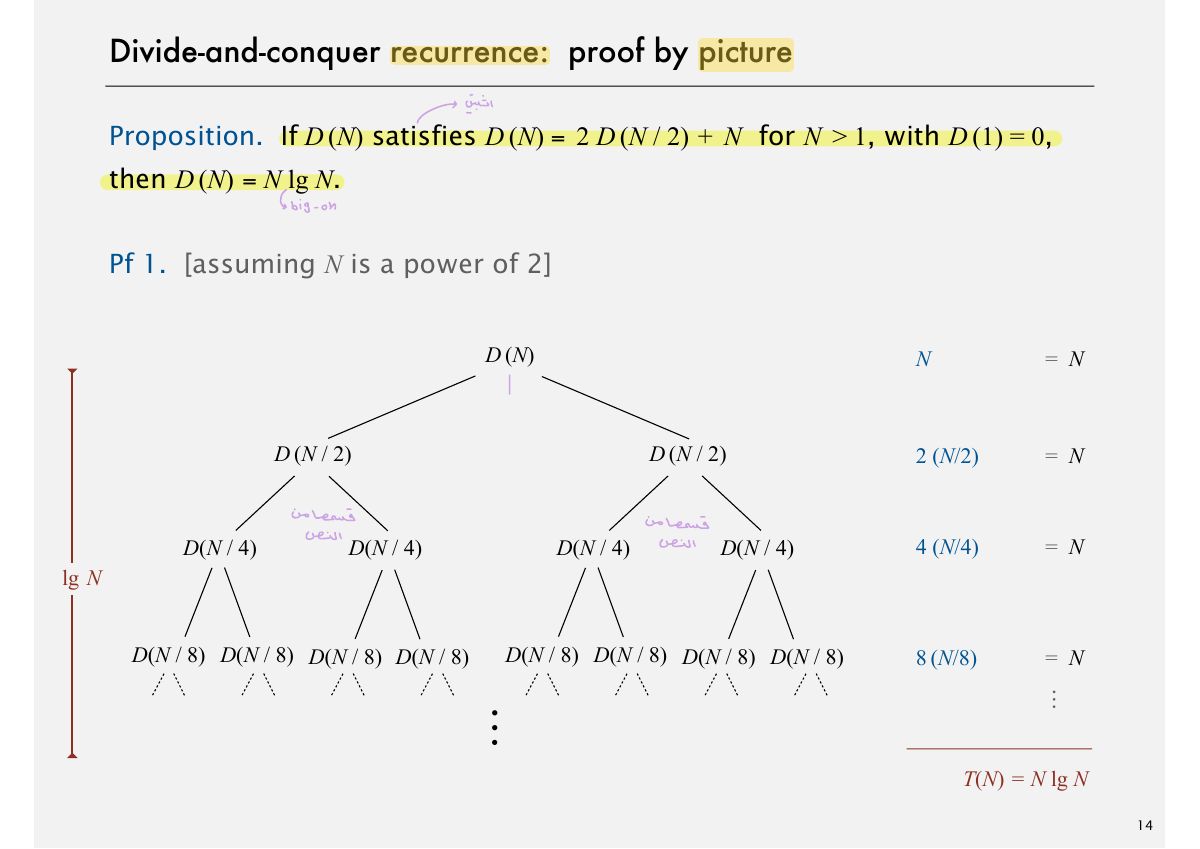
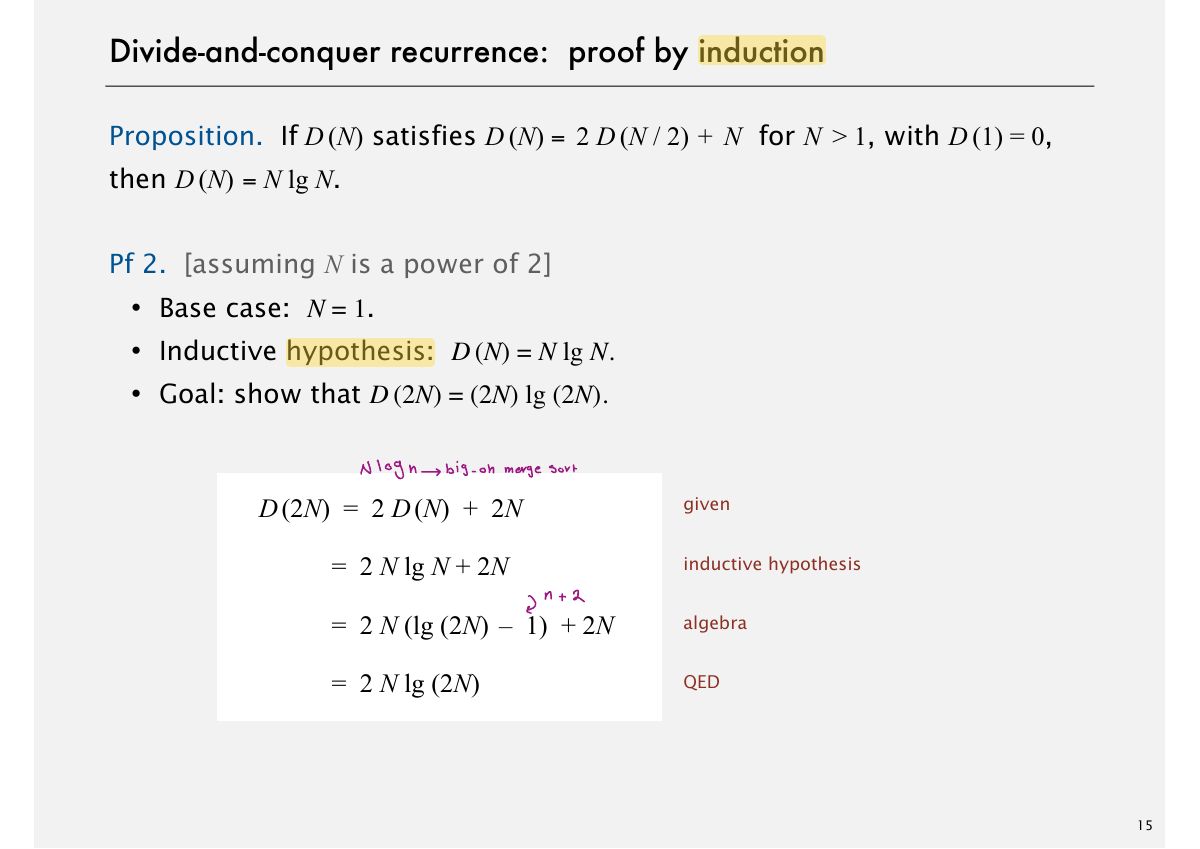
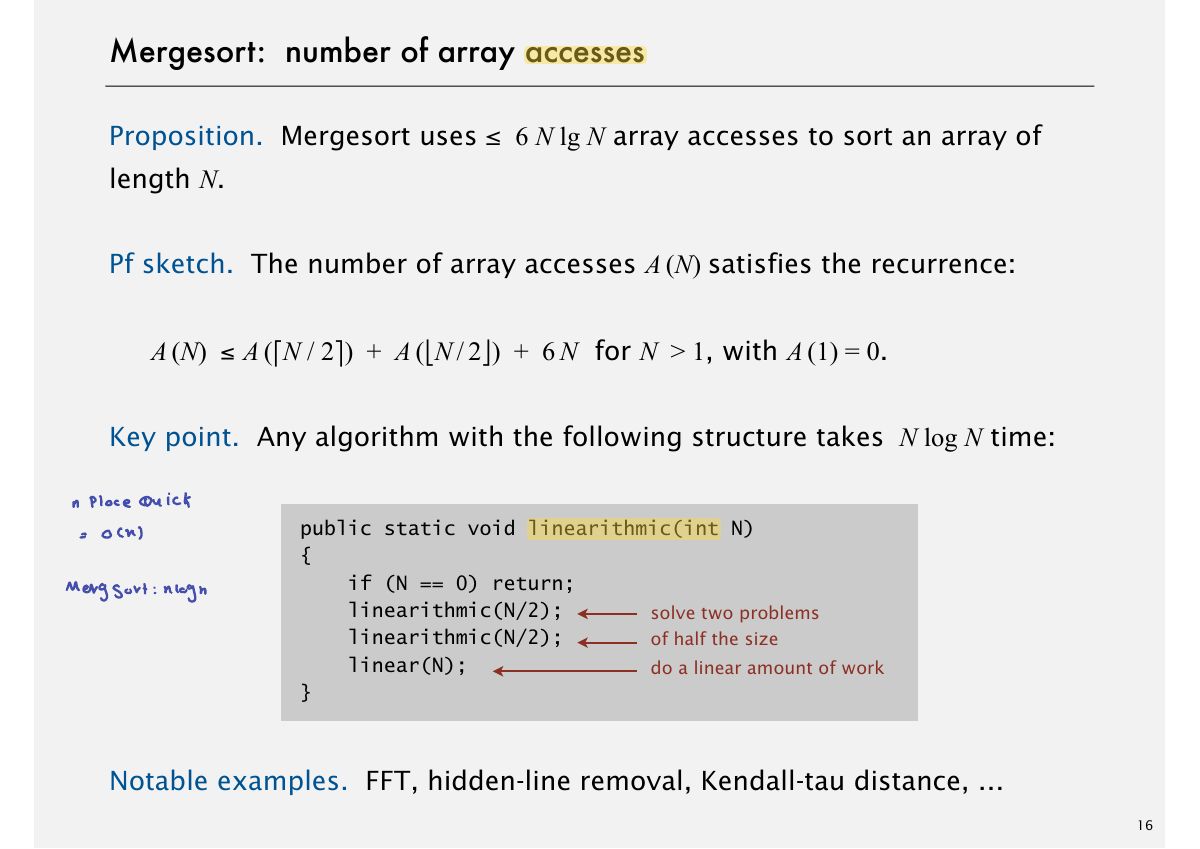
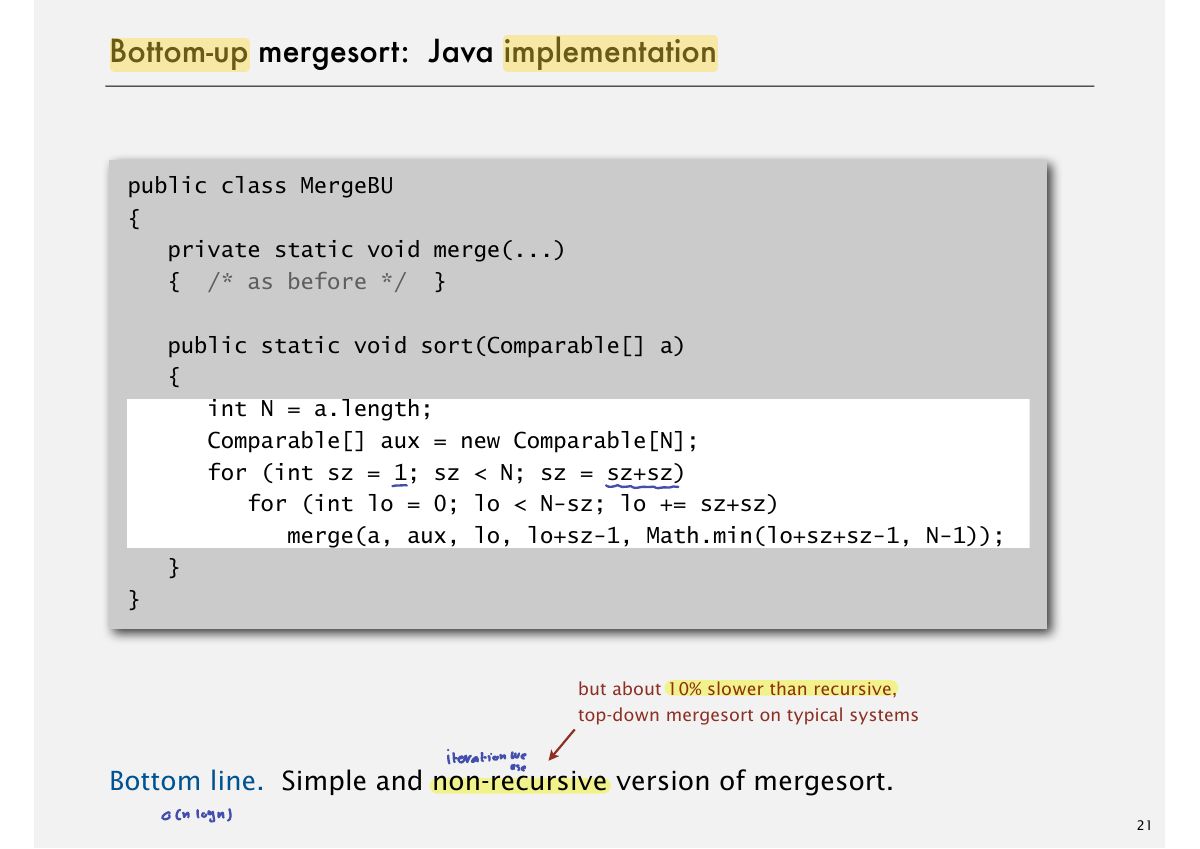
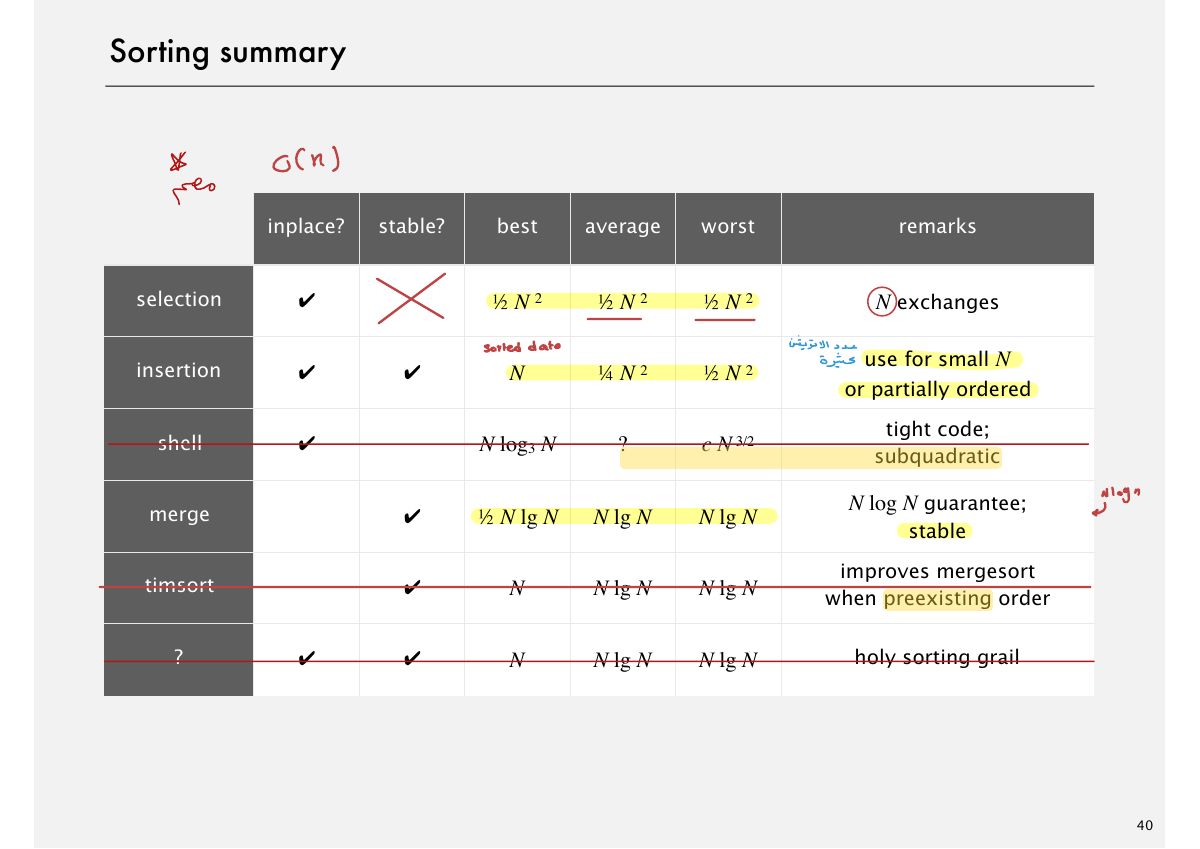
Mergesort’s running time in the worst case is:
Correct: O(n log n).
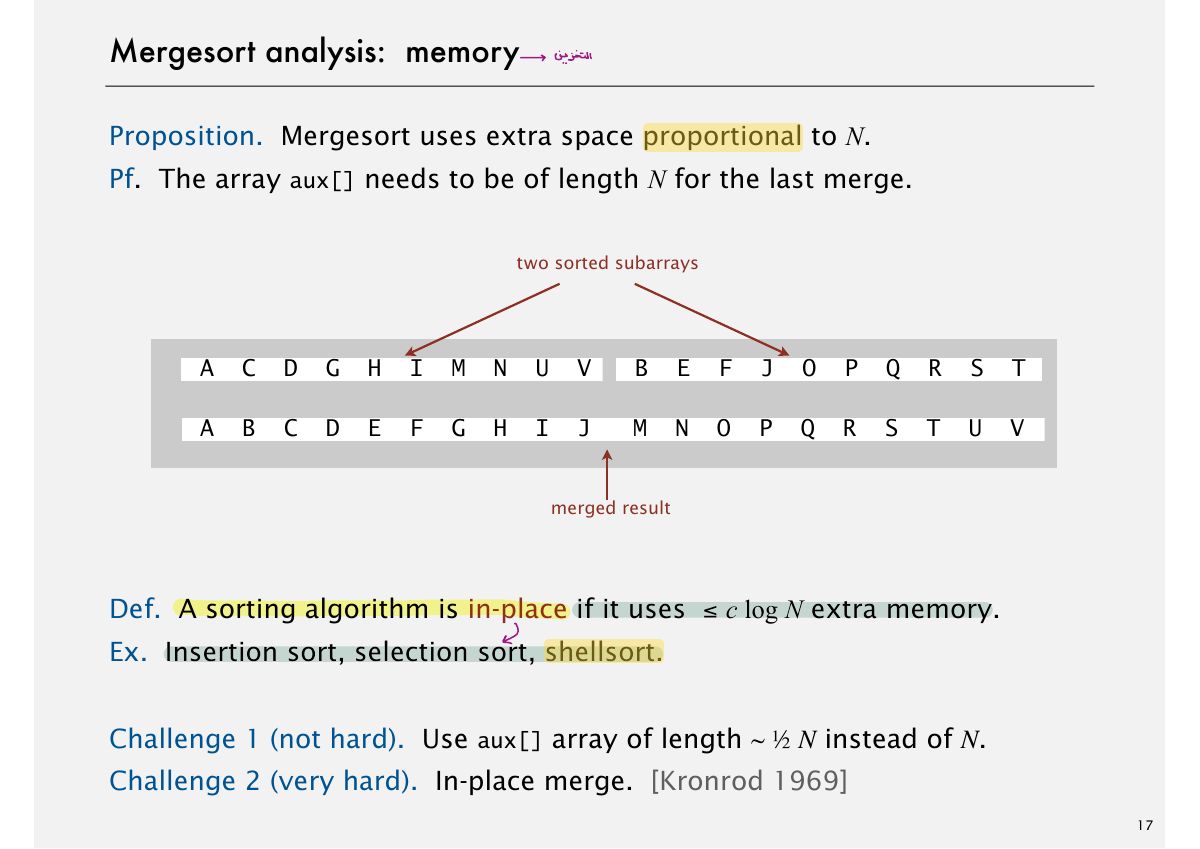
Standard mergesort sorts in place with constant extra memory.
False. It needs an auxiliary array of size N.
Asked in a real exam
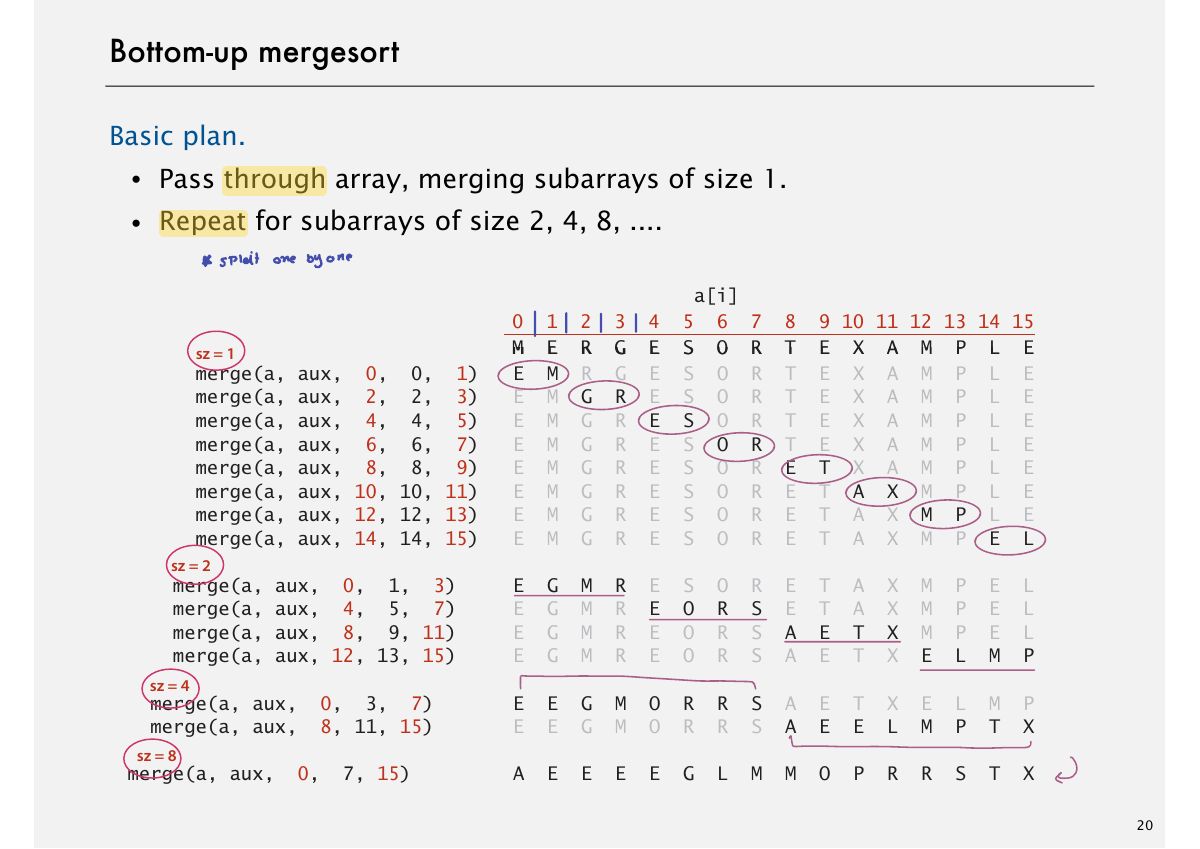
Merge sort [RUH, AMM, DMM, JED, KWI, DXB, SFO]. (Quiz 2)
Split to single items, then merge: [AMM, RUH] [DMM, JED] [DXB, KWI] [SFO] → [AMM, DMM, JED, RUH] [DXB, KWI, SFO] → [AMM, DMM, DXB, JED, KWI, RUH, SFO].
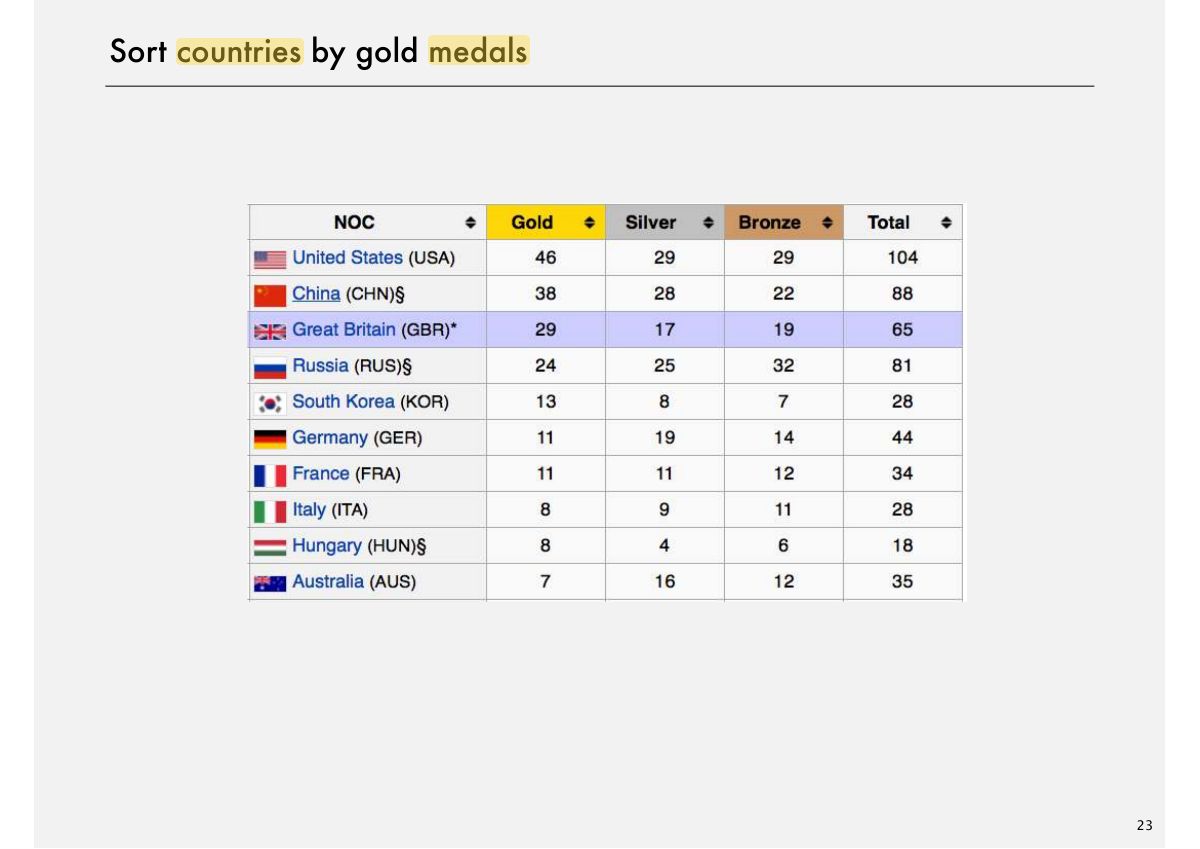
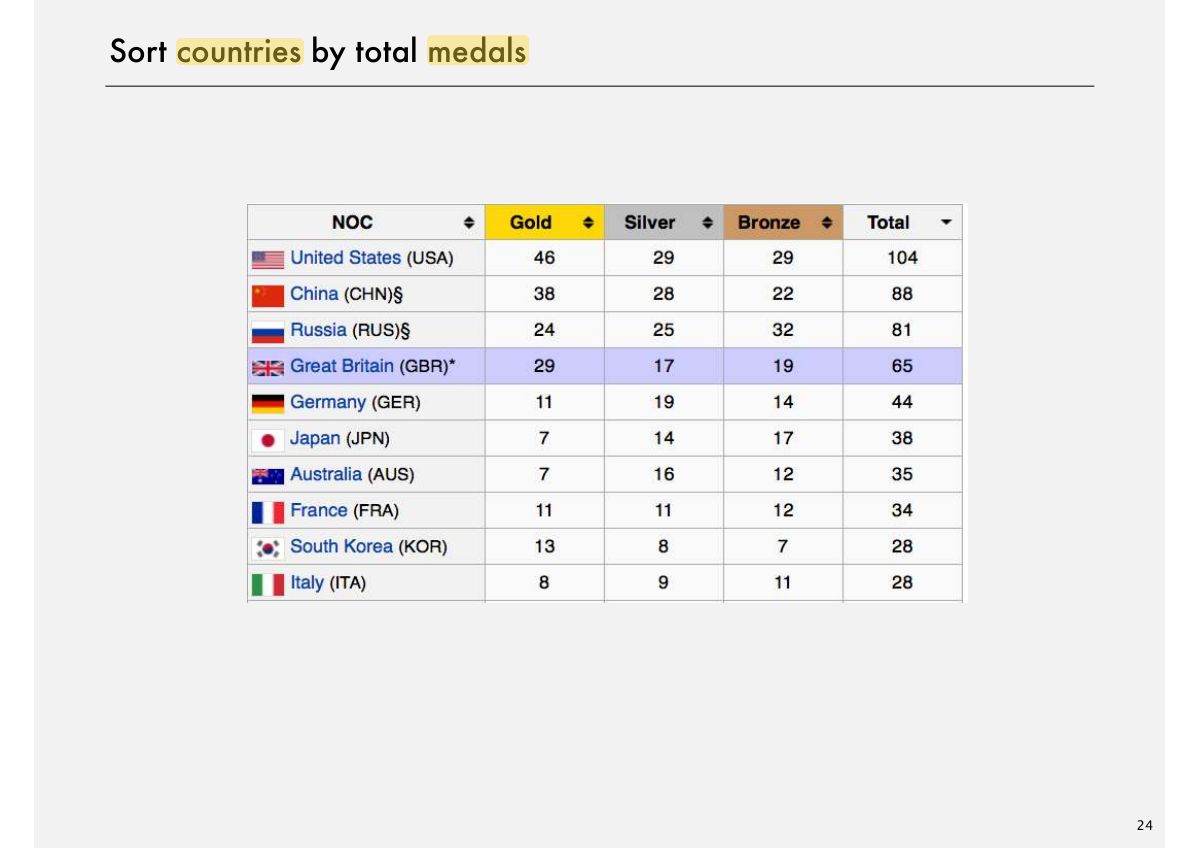

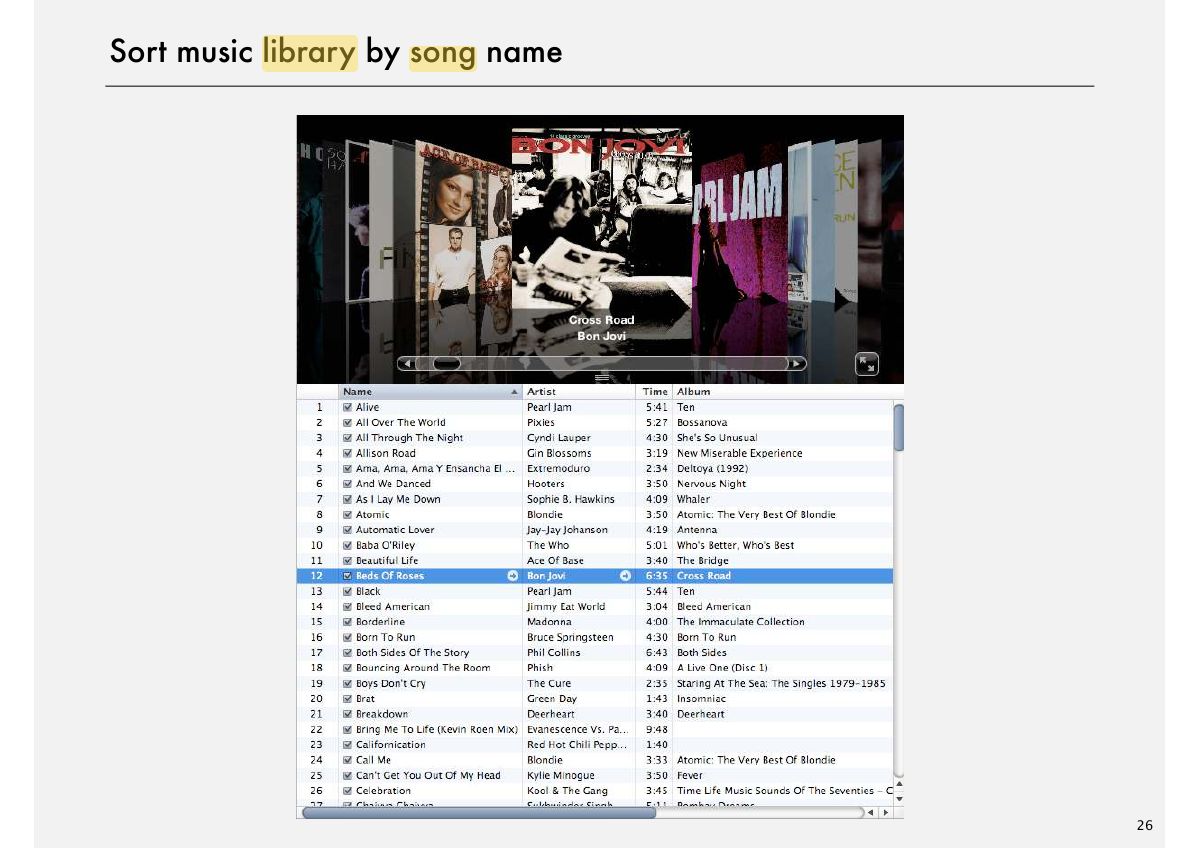
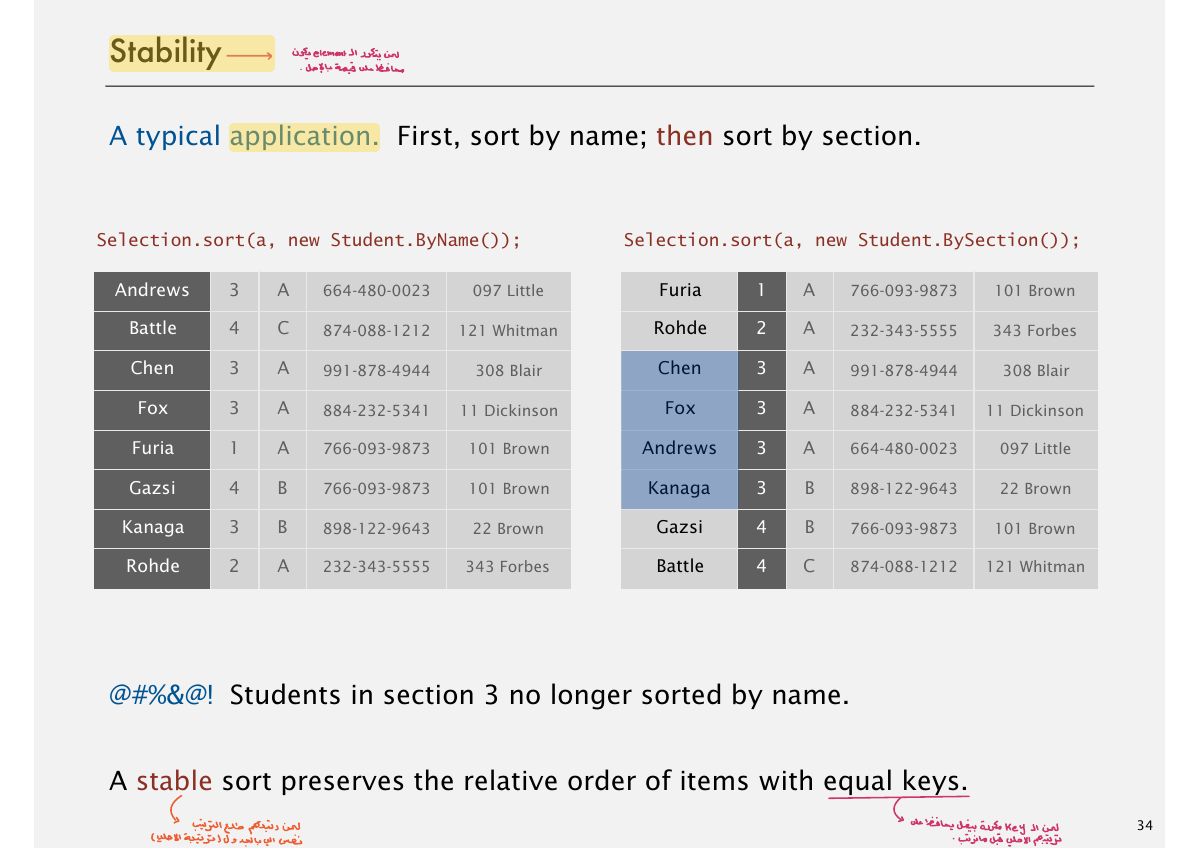
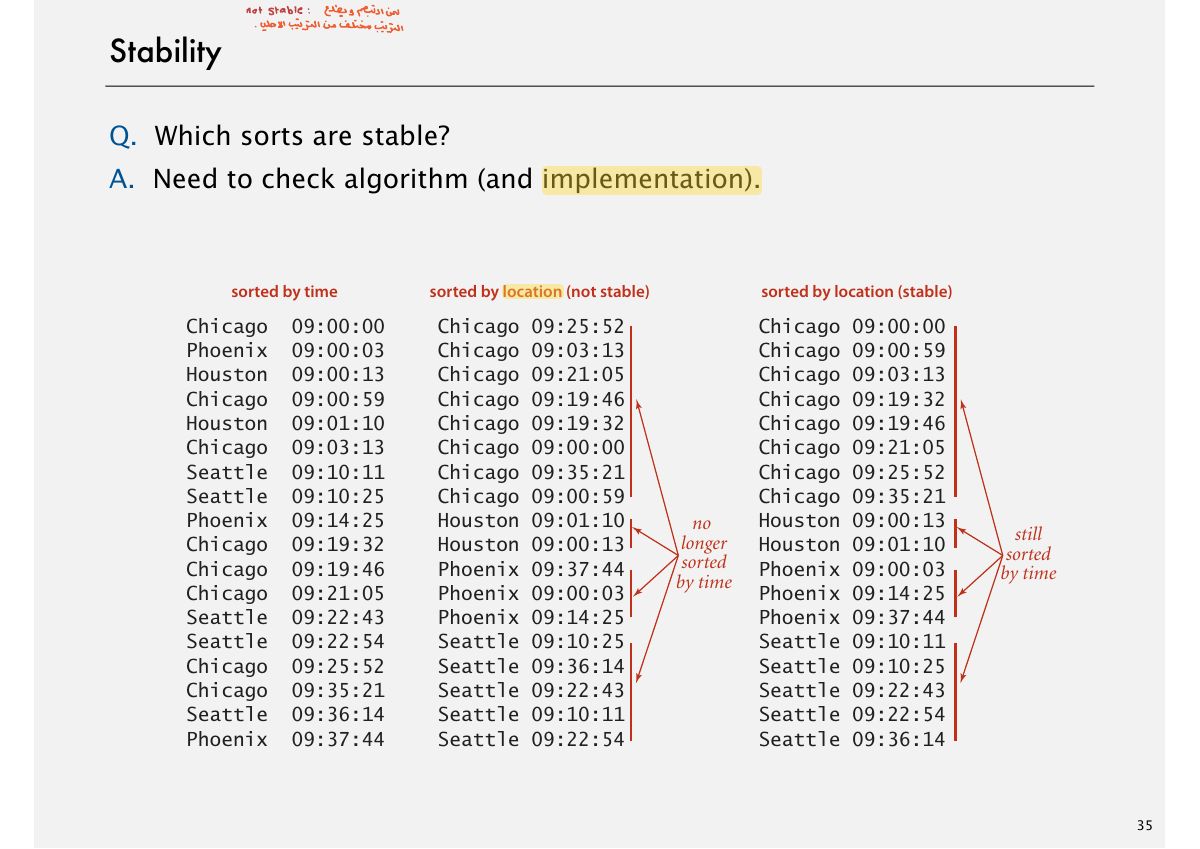
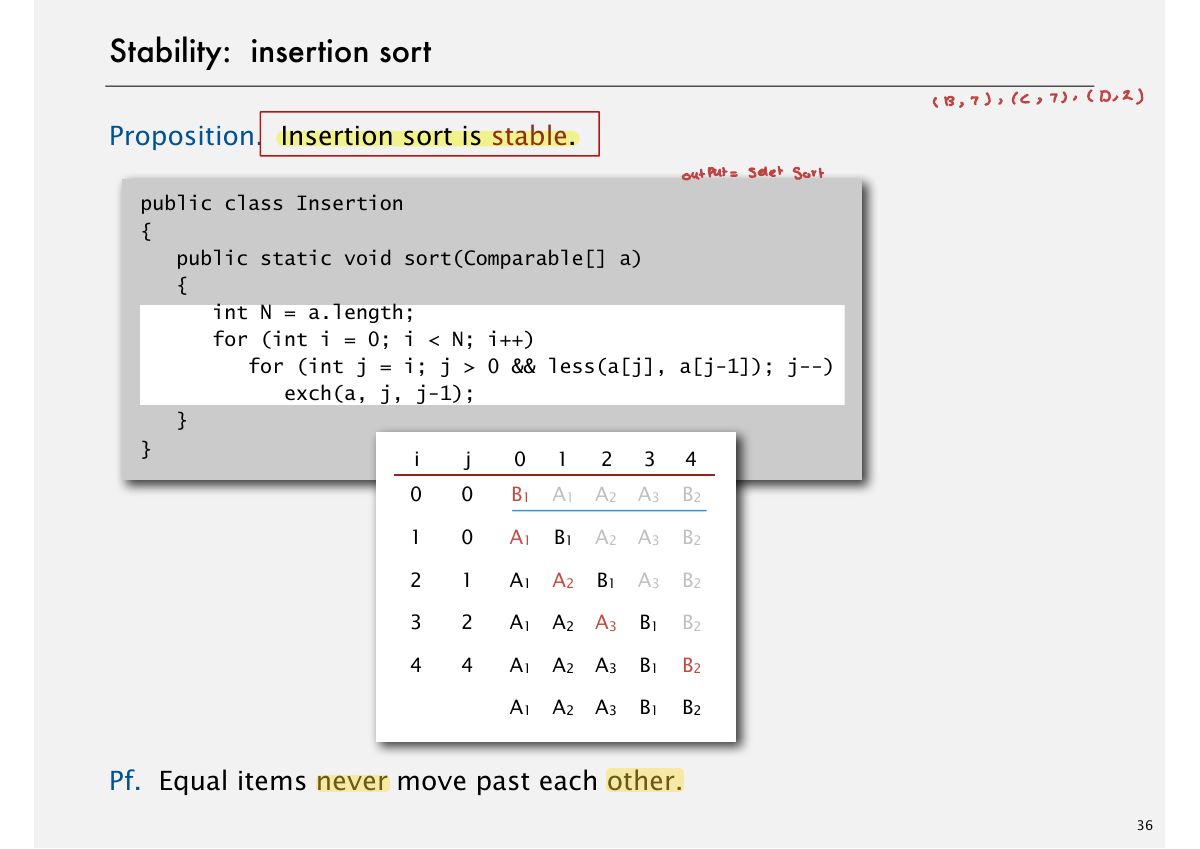
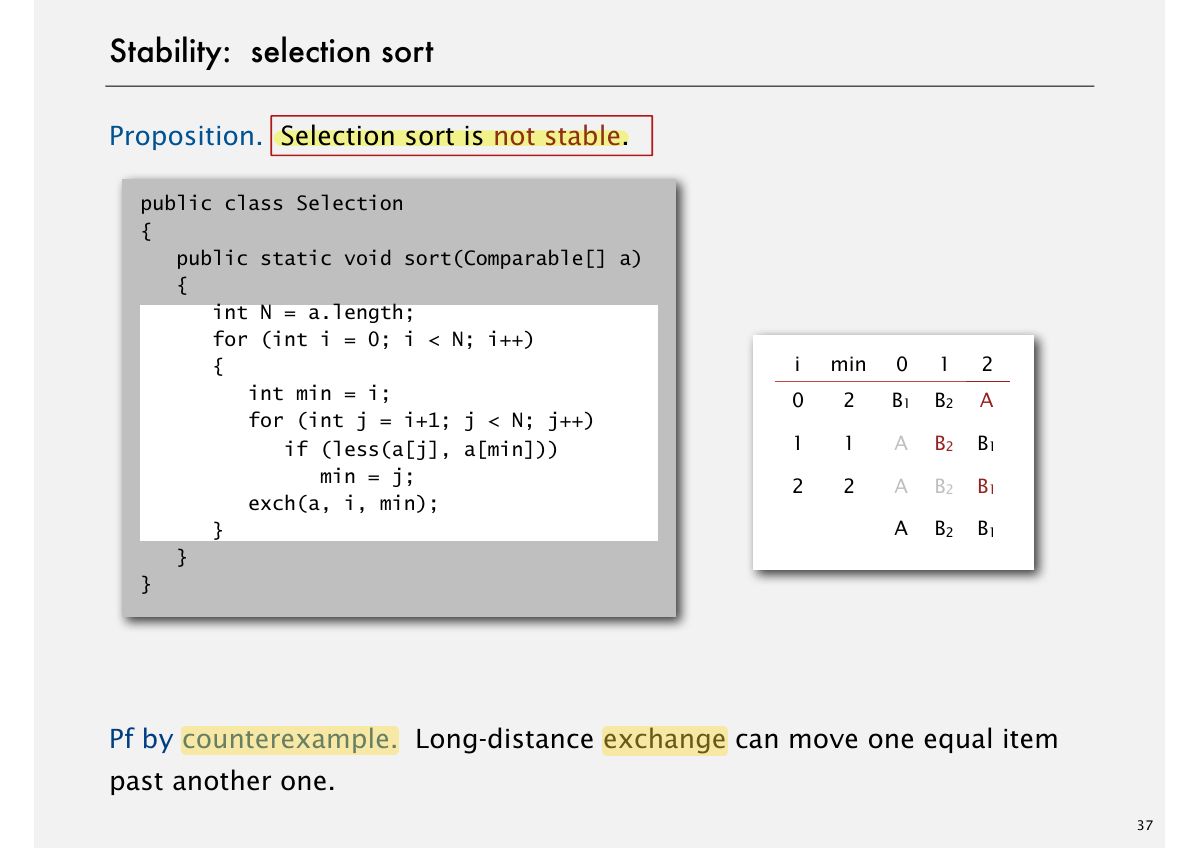
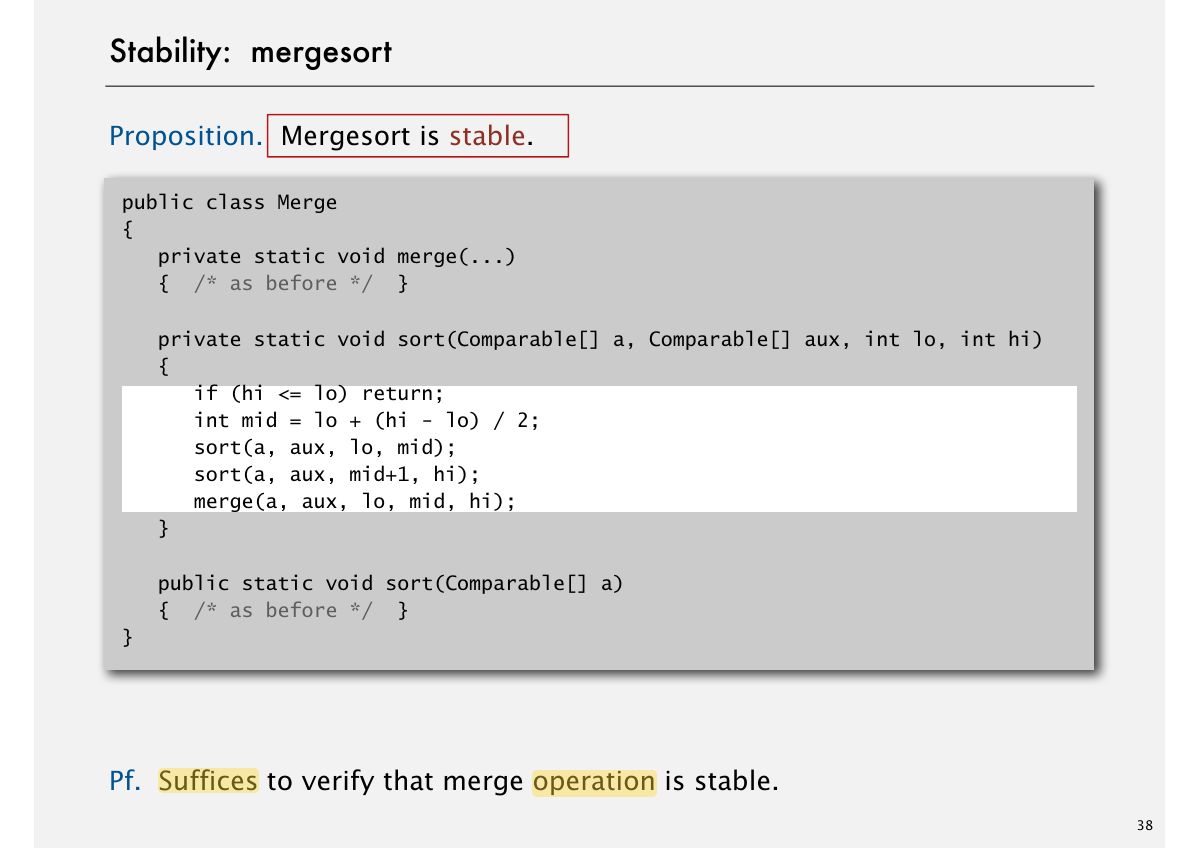
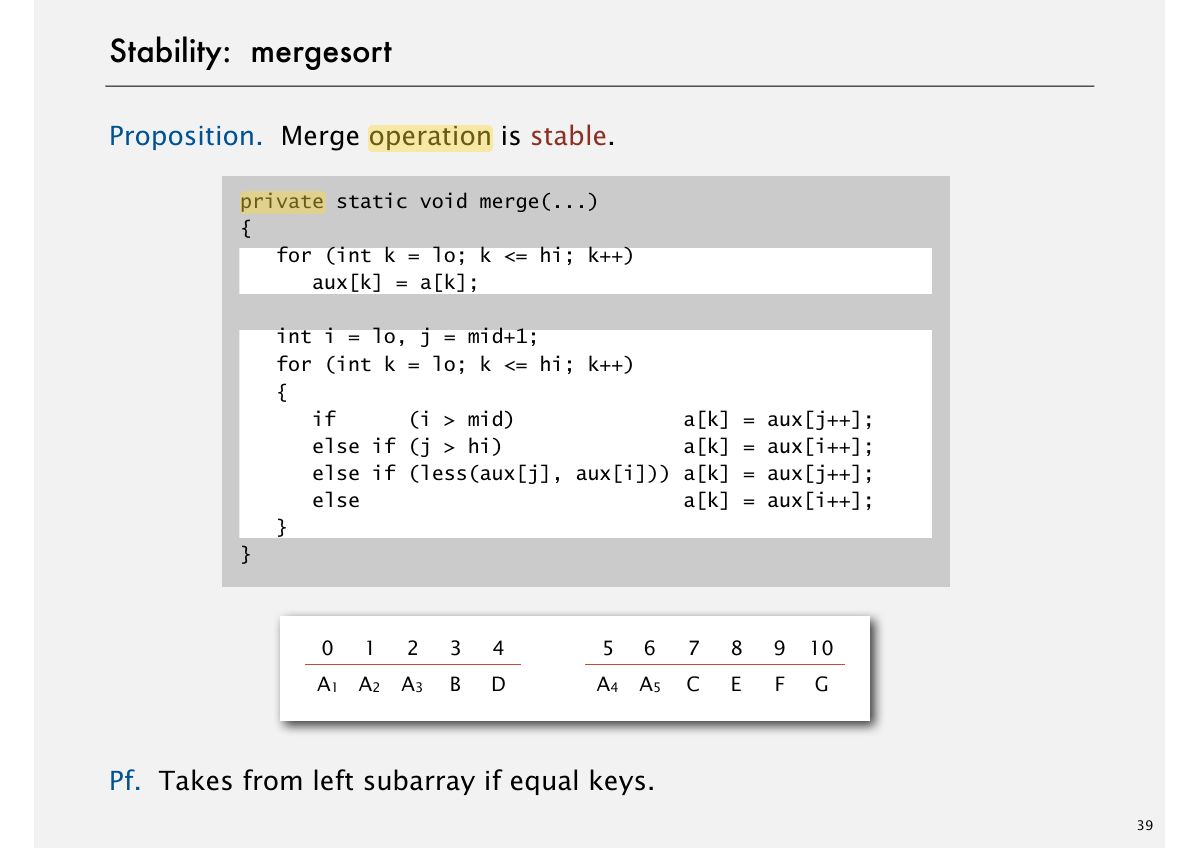
Which sort is stable?
Correct: Mergesort.
No slides match this filter.